Bosnia Herzegovina
Bosnia and Herzegovina sits on the Balkan Peninsula between Croatia, Serbia and Montenegro, with twenty kilometres of Adriatic coast at its southern tip and about 3.8 million people. It is mostly mountainous — the Dinaric Alps fill the centre and east, and the rivers have cut deep canyons through them — with hot summers and cold, snowy winters inland, and a Mediterranean climate in Herzegovina, the smaller southern half. Sarajevo, the capital and largest city, lies in a valley ringed by mountains.
The railways follow the water, because in country this steep the rivers are the only level ground. Two companies share the network — ŽFBH in the Federation and ŽRS in Republika Srpska — and between them they run a modest number of passenger trains over a system built largely for freight and heavy industry. Timetables are thin and can change at short notice, so a departure is worth confirming close to the day. What the sparse service buys is scenery that few European railways can match, on fares of a couple of convertible marks for a local train.
Rail journeys in Bosnia Herzegovina
The Banovići Steam Railway
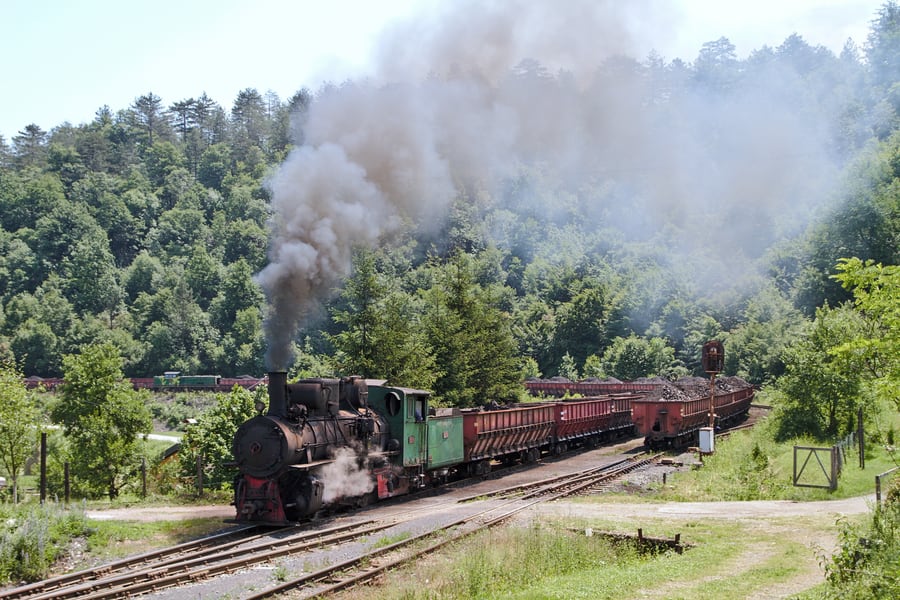
In a coal town in northern Bosnia, wood-and-coal steam locomotives — one built in 1925 — still work a narrow-gauge line every day. The last of its kind.
View journey →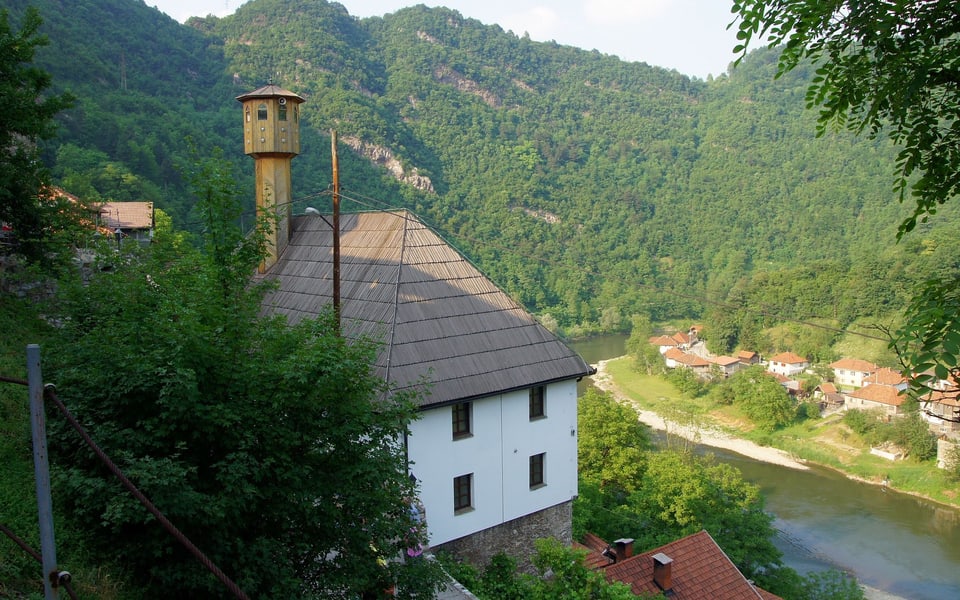
The Youth Railway — Sarajevo to Maglaj down the Bosna
The line 212,000 teenagers built in seven months in 1947, running north from Sarajevo to a gorge where a fortress sits on a hairpin above the river.
View journey →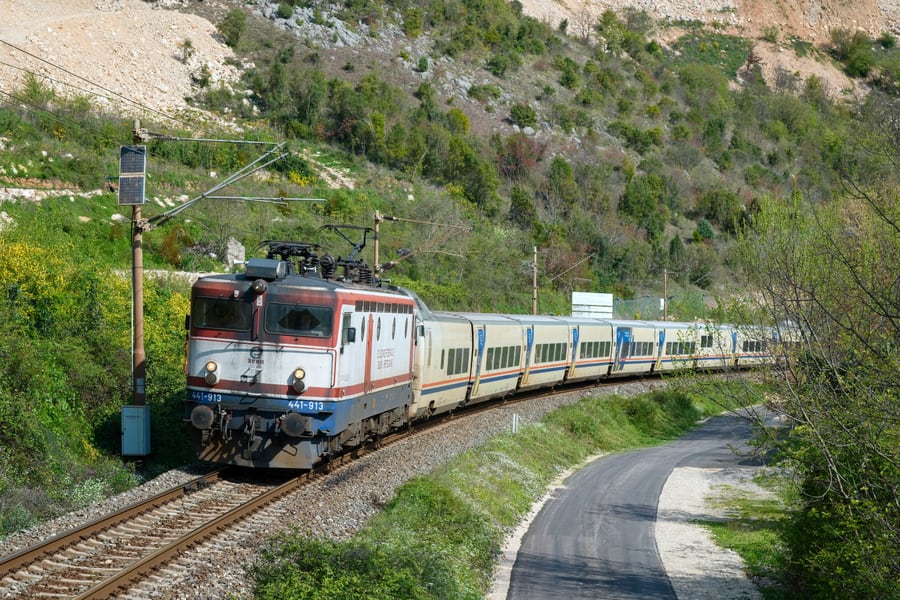
Sarajevo to Mostar — the Neretva Canyon Railway
One of the most beautiful rides in the Balkans — south from Sarajevo down the emerald Neretva canyon, through a hundred tunnels to Ottoman Mostar.
View journey →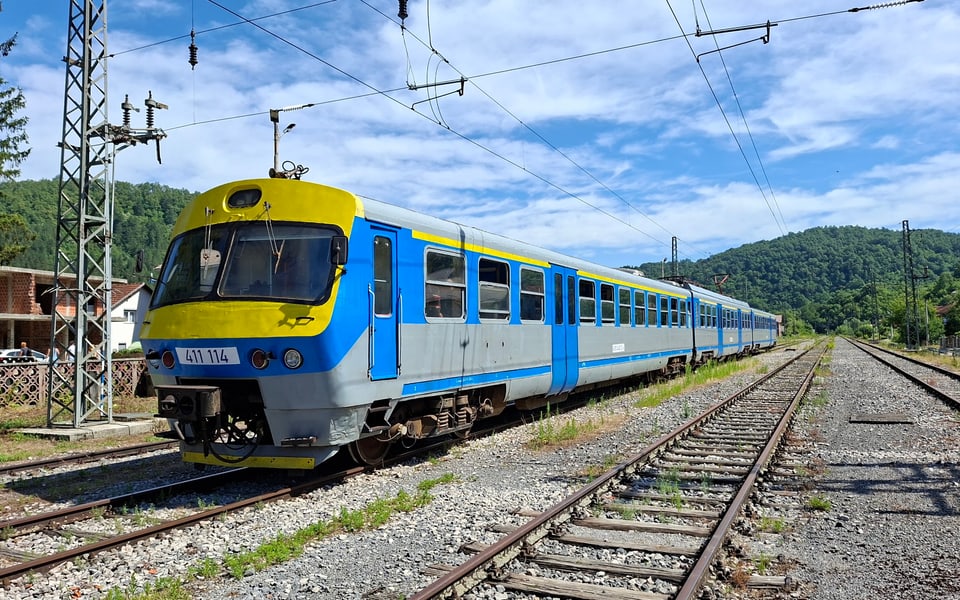
The Una Valley Tourist Train — Bihać to Bosanska Otoka
A two-mark ticket, a weekend timetable and one of the greenest rivers in Europe — the summer train that put passengers back on the Una line.
View journey →Good to know
What is the best train journey in Bosnia and Herzegovina?
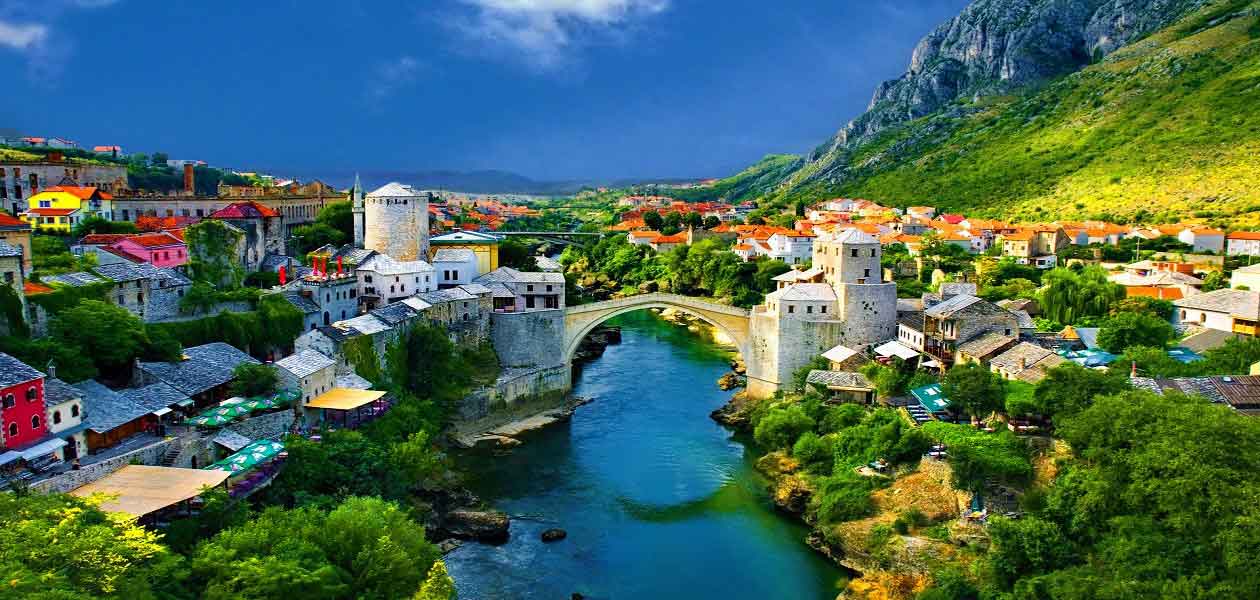
The Sarajevo to Mostar railway, without question. It runs south from the capital up the Neretva river canyon — between the Prenj and Čvrsnica mountains, past the Jablanica lake and through more than a hundred tunnels — to the Ottoman city of Mostar and on to the Croatian coast at Ploče. It is widely considered one of the most scenic rail rides in the Balkans, and it is run by comfortable, air-conditioned Talgo trains.
Can you still ride a steam train in Bosnia?
Yes — and it's the real thing. The Banovići coal railway in northern Bosnia still runs genuine 760 mm narrow-gauge steam locomotives, including WWII-era "Kriegslok" engines and one built in 1925, said to be the last of its type working anywhere in the world. In summer the mine offers tourist rides on the line — a favourite with railway enthusiasts, and quite unlike a polished heritage railway.
Is there a scenic train in the Bihać and Una region?
Yes, but only in summer and only at weekends. The Una valley tourist train runs on Saturdays and Sundays in June, July and August, north from Bihać along the emerald Una to Bosanska Krupa and Bosanska Otoka. It was reintroduced by ŽFBH in June 2026, putting scheduled passengers back on this stretch of the Una railway after many years, and the fare is a symbolic 2 KM — about one euro. Departures from Bihać are at 09:00 and 16:00. There is no service outside the summer.
What was the "Ćiro" train?
Ćiro was the affectionate nickname for the little steam trains of Bosnia's once-huge network of 760 mm narrow-gauge railways, built under Austria-Hungary from the 1880s. The most romantic ran from Sarajevo and Mostar down to Dubrovnik on the Adriatic. Most of the network closed in the 1970s; the famous Mostar–Dubrovnik line is now the "Ćiro Trail" cycle route, not a railway. Living narrow-gauge steam survives at Banovići.
Can you travel by train north from Sarajevo?
Yes. The Bosna valley line runs north from Sarajevo through Visoko and Zenica to Maglaj, following the Bosna river. One through train covers the whole route each way — 710 leaves Sarajevo at 16:28 (not Saturdays) and 711 leaves Maglaj at 06:07 (not Sundays) — with extra local trains to Zenica and Visoko on weekdays. The line was built by youth work brigades in 1947, and its finest moment is the gorge at Vranduk, just downstream of Zenica.
How do you get from Sarajevo to Mostar, and on to the coast?
By the Neretva canyon train. A daily service links Sarajevo, Mostar and Čapljina, and in the tourist season (currently Friday to Sunday) it continues across the Croatian border to Ploče on the Adriatic. The Sarajevo–Mostar leg takes about two hours; it is inexpensive, scenic and far more relaxing than the mountain road. Buy tickets at ŽFBH stations, or on board for the international service.
Can you travel by train from Sarajevo to Banja Luka?
Not at present, and it is worth knowing before you build a route around it. The country has two railway companies — ŽFBH in the Federation and ŽRS in Republika Srpska — and the through Talgo service that once joined Sarajevo to Banja Luka and Bihać was suspended in March 2020. It has not returned: ŽFBH's northbound trains from Sarajevo now run only as far as Maglaj, in the Bosna valley. Banja Luka sits on the ŽRS network, which is reached separately and whose passenger service is sparse — ŽRS publishes its fares but not a public timetable, so departures there have to be checked at the station. Between the two cities, travellers go by road.