The Una Valley Tourist Train — Bihać to Bosanska Otoka
Rl91 / Wikimedia Commons · CC BY-SA 4.0
- DistanceBihać–Bosanska Krupa: 32.2 km, then on to Bosanska Otoka
- DurationAbout 40 minutes to Bosanska Krupa, about 55 to Bosanska Otoka
- Best seasonWeekends in June, July and August — the only time it runs
Introduction
In the far north-west corner of Bosnia and Herzegovina, where the country narrows to a point between two arms of Croatia, there is a river that people travel a long way to look at. The Una runs clear and cold off the Dinaric karst, and it is green — not the vague green of most rivers, but a bright mineral jade that turns white every few hundred metres as it drops over limestone shelves. Bosnians call it a beauty and mean it literally.
A railway was laid along that valley a century ago, for the ordinary reason that the valley was the only flat ground. For most of the last thirty years no scheduled passenger train has used the stretch north of Bihać. In June 2026 that changed: the state operator put a short train back on the line for the summer weekends, charged two convertible marks for a ticket — about a euro — and discovered it had a hit on its hands. Five thousand people rode it in the first month.
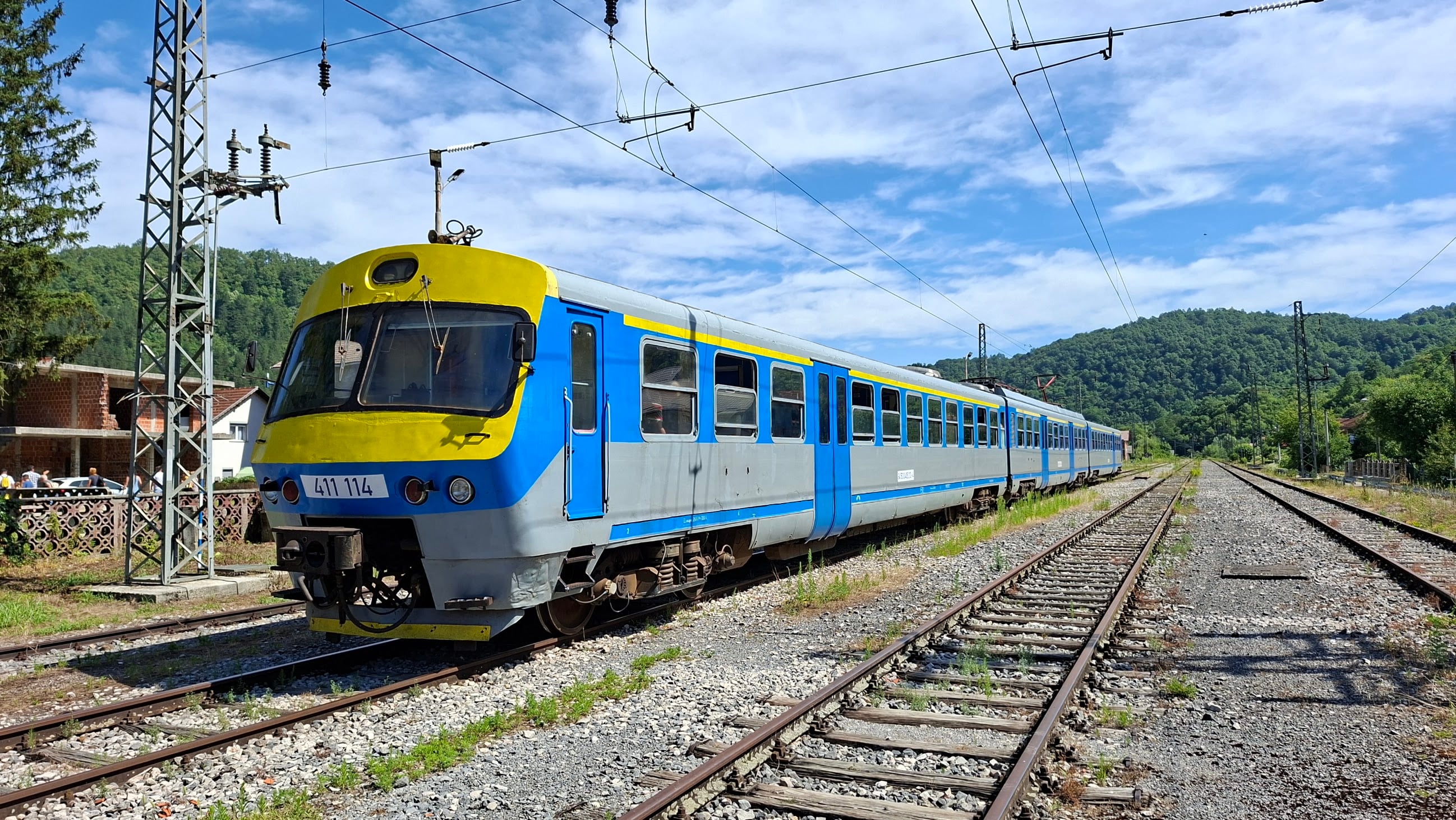
This is not a heritage railway. There is no polished steam locomotive, no restored dining car, no guide with a microphone. It is a plain electric train of the sort that works branch lines all over the Balkans, running an hour up a river valley and an hour back, and the whole appeal is that the valley is lovely and the fare is nothing. You buy a paper ticket at the window, you sit by a big window, and the Una is there beside you for most of the way.
The run goes north from Bihać — a town first written down in 1260, with a Gothic church that has been a mosque since 1592 — through the wooded narrows to Bosanska Krupa, where the river comes down through the middle of town in a broad staircase of falls beneath a ruined fortress, and on to Bosanska Otoka. Most passengers get off at Krupa, spend a couple of hours by the water, and come back on the afternoon train.
It runs on Saturdays and Sundays, in June, July and August, and at the time of writing the operator has promised nothing beyond that. If you are in this corner of the country on a summer weekend, take it while it is there.
The Journey
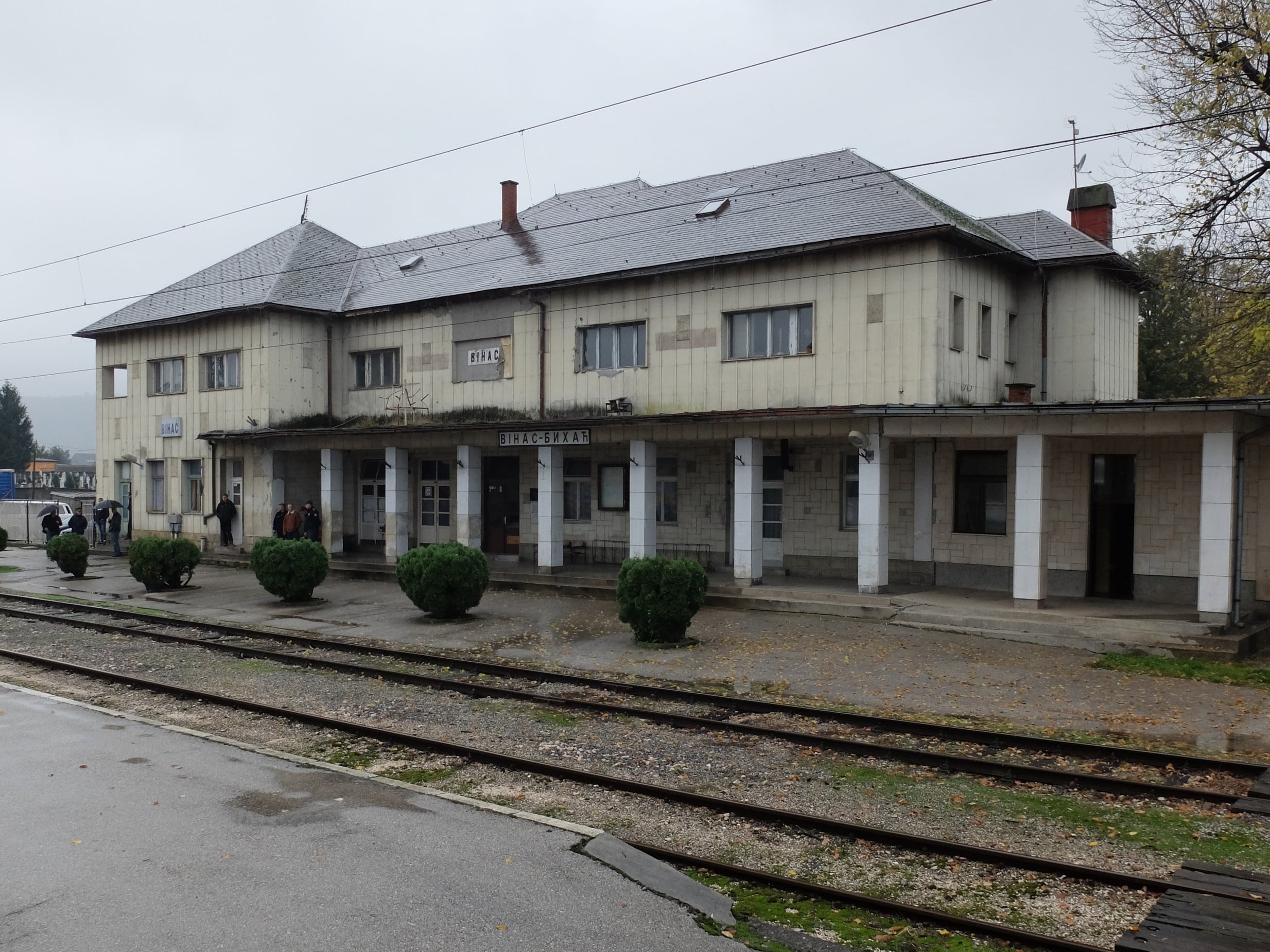
The train leaves Bihać at nine in the morning. The station is a low inter-war building with its name painted up in both alphabets, a few tracks, and none of the ceremony of a tourist attraction — which is part of the charm, because for an hour either side of departure it is the busiest place in town.
Out of Bihać
The line runs north, downstream. Bihać sits in a basin where the Una briefly slows and spreads, and the first few kilometres are gentle: gardens, allotments, the backs of houses, the river appearing on the right between trees. At Brvice, on the edge of town, the water comes over a long low weir into a pool the colour of bottle glass — one of the places locals swim on a hot afternoon.
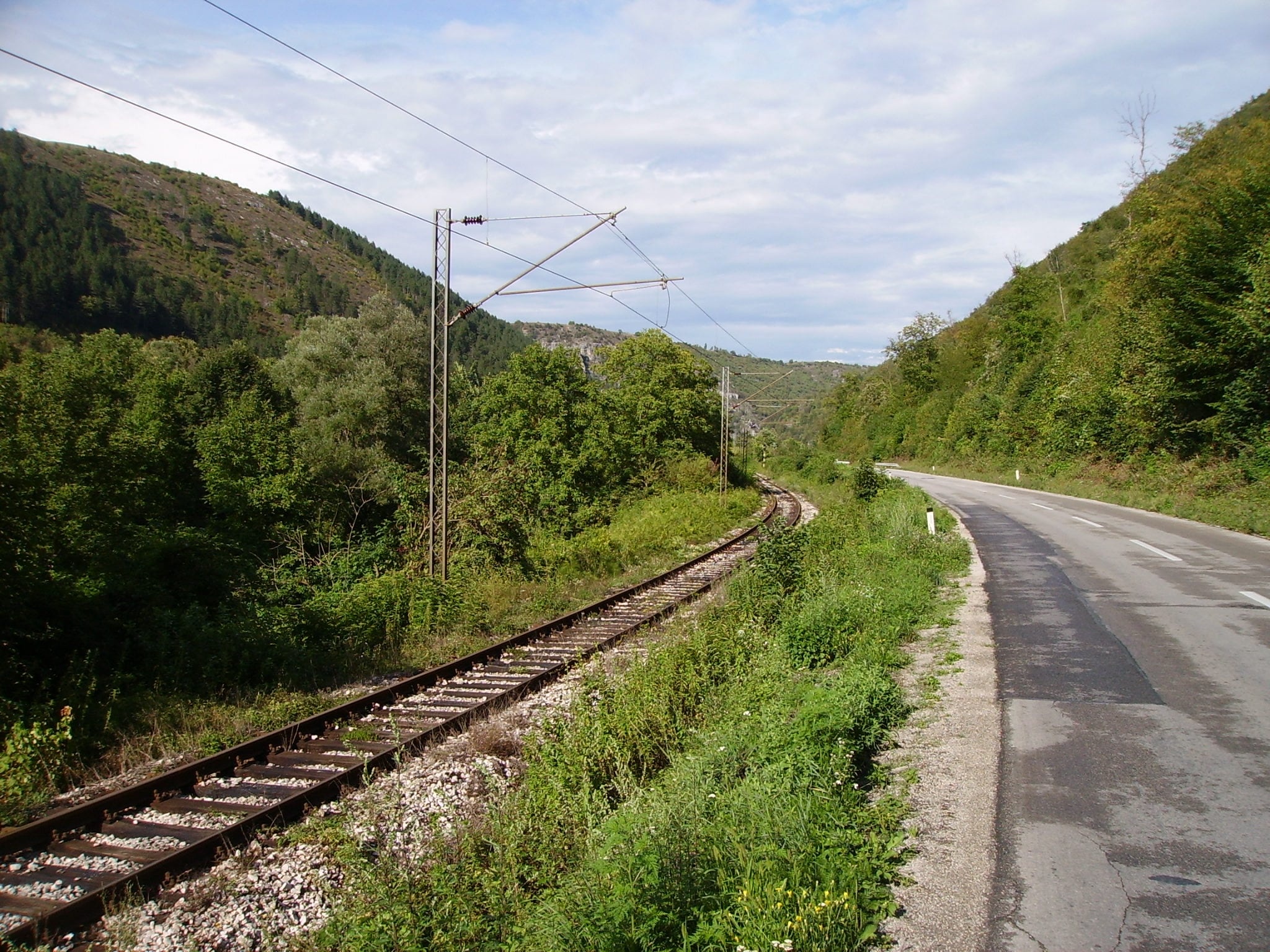
Then the hills close in. The valley between Bihać and Bosanska Krupa is wooded on both sides and narrow enough that the railway, the road and the river have to share it, and for long stretches you can see all three at once. There is nothing dramatic here — no great viaducts, no tunnels through cliffs — but it is continuously pretty in a way that a fast road never is, and the train is slow enough to look at it.
Bosanska Krupa
About forty minutes out, the valley opens and the train comes into Bosanska Krupa. This is the stop that matters. The Una arrives in the middle of the town across a wide bed of limestone terraces and comes down in a staircase of white cascades, with islands and footbridges and a park on the bank; above it, on a crag, stand the walls of the old fortress. Nearly everyone gets off.
If you are doing the classic day out, this is where you spend it: the morning train gives you until 11:45, which is time enough to walk the riverside, climb to the fortress for the view back down the valley, and drink a coffee somewhere with the sound of falling water in it.
On to Bosanska Otoka
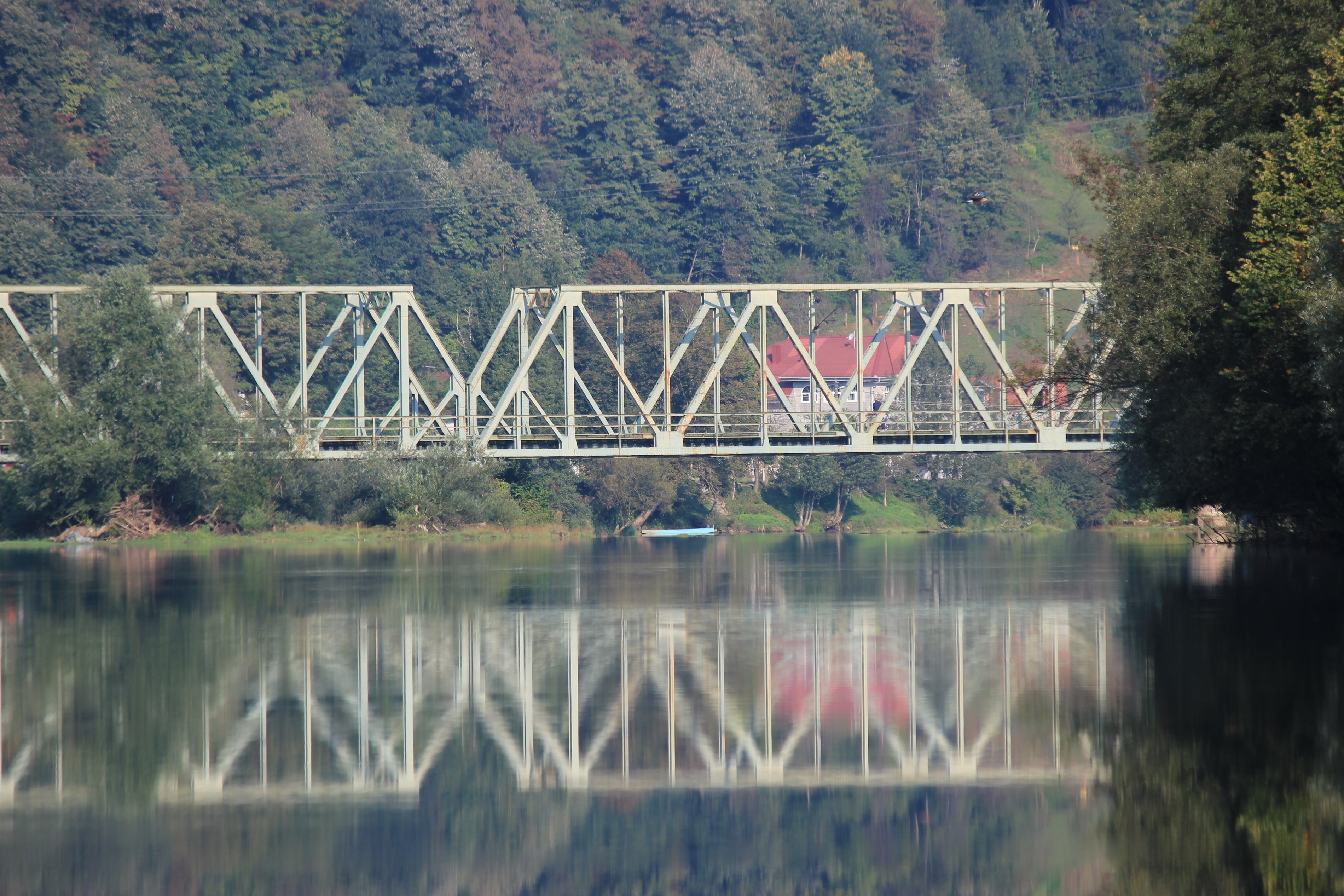
The train carries on for another quarter of an hour to Bosanska Otoka, crossing the Una line's old truss bridge at Podvran on the way. Otoka is smaller and quieter — a village on a slow green reach of the river, and the northern end of the run. There is less to do here than at Krupa, which is precisely why some people prefer it.
The train itself
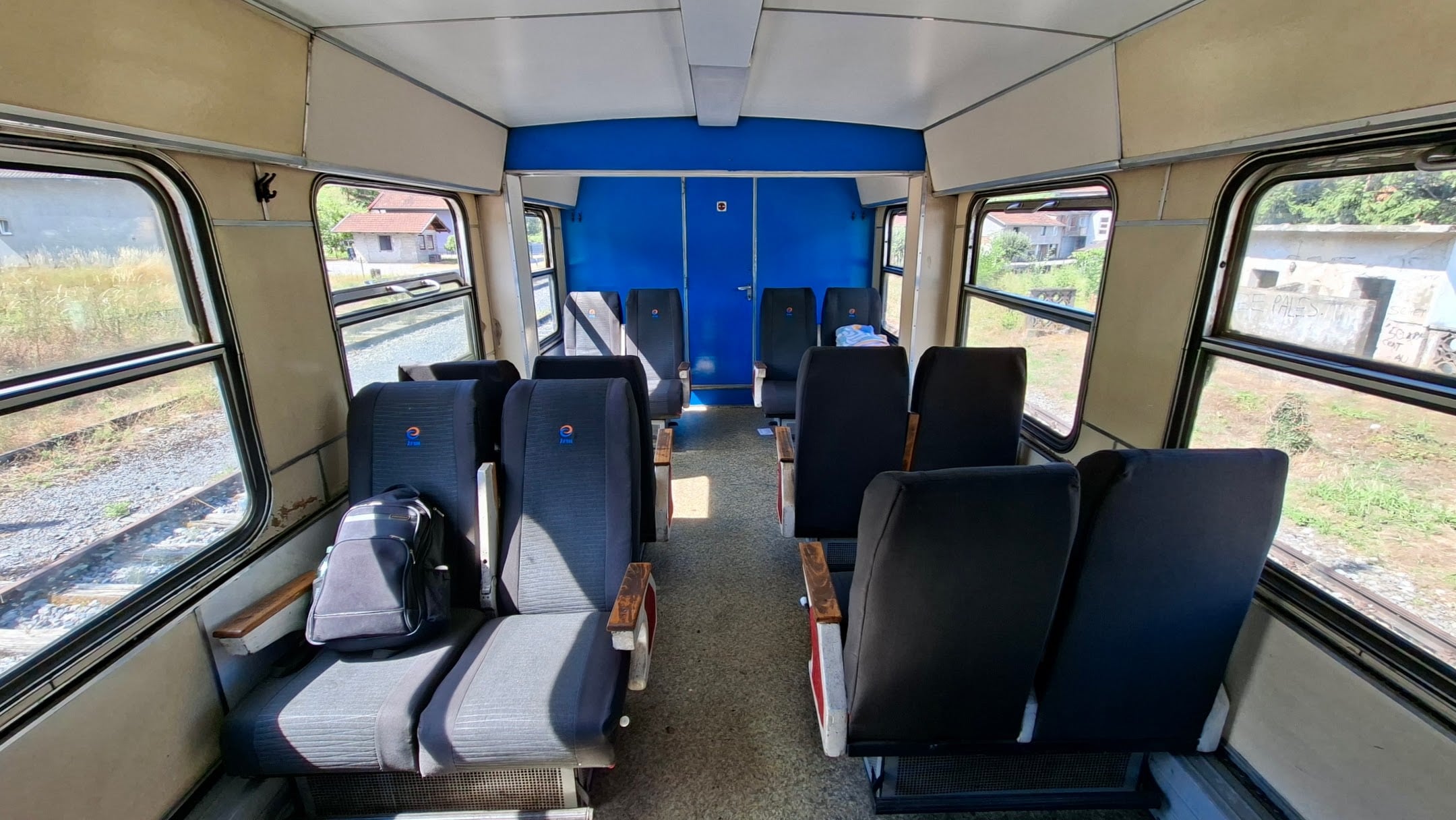
The service is worked electrically, under wires strung when the line was upgraded in 1987. The railway prepared several vehicles for it — an electric locomotive with a coach, and a two-car electric unit, 411-114, of a Hungarian design that has been running in this part of the world for decades. Which one turns up depends on the day. Either way the interior is plain: fabric seats in facing pairs, wide windows that open, and a good deal of legroom. Nobody serves anything. Bring water in August.
Before the season could start, crews spent late May clearing the track corridor and repairing the overhead line, which storms had damaged; the contact wire was back in order on 3 June, two days before the first train ran.
Along the route
Miha Peče / Wikimedia Commons · CC BY-SA 4.0The greenest river in Bosnia
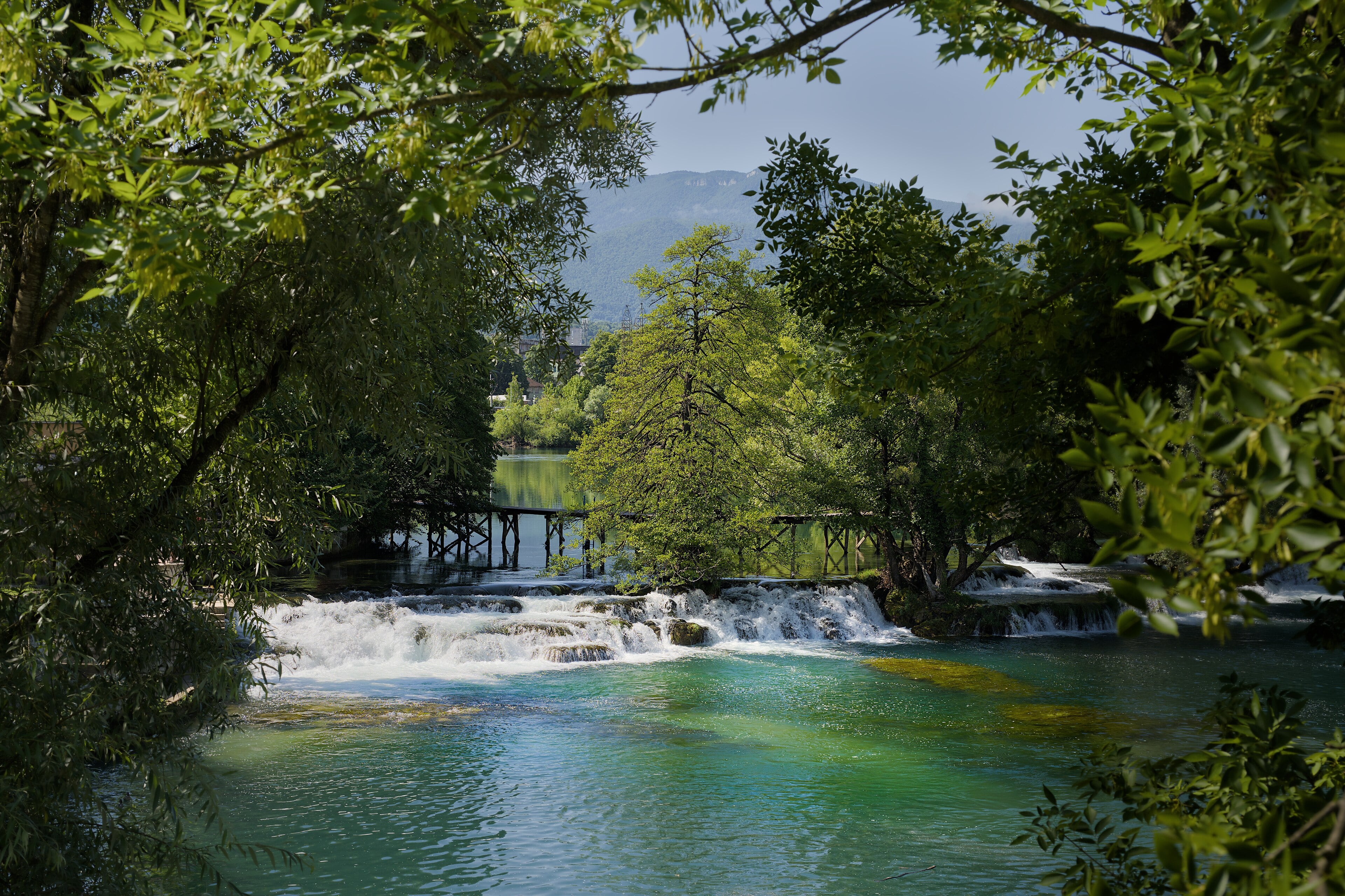
The Una is the point of this journey: clear water over pale limestone shelves, breaking into cascades every few hundred metres, in a colour somewhere between jade and turquoise. The railway was laid along the valley because that is where the flat ground was, so the water is beside you for most of the ride.Julian Nyča / Wikimedia Commons · CC BY-SA 3.0A line that had lost its passengers
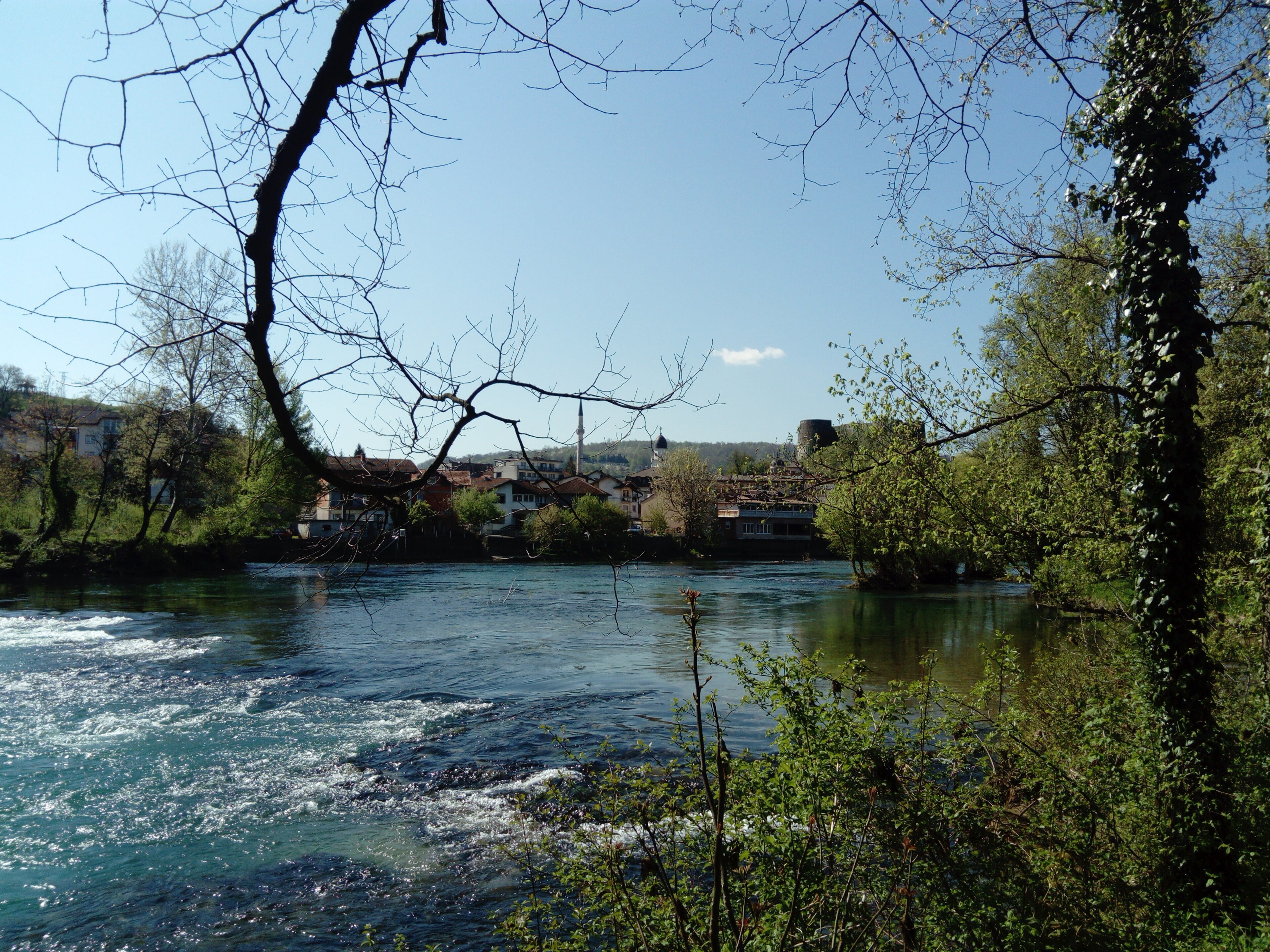
The Bosanska Krupa–Bihać section opened in 1924 and the whole line was electrified in 1987 for speeds up to 120 km/h. Then the war and the decades after it stripped the timetable away, until the summer of 2026 put scheduled passenger trains back.Rl91 / Wikimedia Commons · CC BY-SA 4.0Two marks
A single fare is about one euro, held deliberately at what the operator calls a symbolic level — and it has worked: 5,048 people rode in June and 4,423 in July. Not a heritage railway with a heritage price, but a cheap, useful train that happens to run somewhere beautiful.A bit of history
Culture & experiences along the way
Rl91 / Wikimedia Commons · CC BY-SA 4.0Sit on the right going north
Leaving Bihać the river is on your right, and it stays the more interesting side for most of the run down to Bosanska Krupa. The train is short and rarely full outside the middle of the day, so moving across is easy — and worth doing, because the valley opens and closes repeatedly and the good view swaps sides more than once.Golden Bosnian Lily / Wikimedia Commons · CC BY-SA 4.0Make Bosanska Krupa the day
The morning train gives you the best part of two hours at the far end before the 11:45 comes back. That is comfortably enough for Bosanska Krupa — the cascades right in the middle of town, the fortress on its rock, a coffee by the water — and it is what most people aboard are doing.Julian Nyča / Wikimedia Commons · CC BY-SA 3.0Go when something is on
The railway has taken to running extra trains for local events — a special for the Una regatta on 25 July 2026, another carrying performers to the Avantura Film Festival on 29 July, and on regatta night a service that did not leave Bosanska Otoka until 23:15 and reached Bihać at 00:40. Check the operator's notices before you plan a weekend around it; the timetable bends for the town.Timetables
The Una tourist train runs Saturdays and Sundays only, during June, July and August. There is no weekday service and nothing at all outside the summer.
Departures — as of August 2026
| From | Departures |
|---|---|
| Bihać → Bosanska Krupa → Bosanska Otoka | 09:00 and 16:00 |
| Bosanska Otoka → Bosanska Krupa → Bihać | 11:45 and 18:20 |
Two round trips a day, then. The morning pair is the one to take if you want time at the far end: leave Bihać at 09:00 and you have until 11:45 before the return. The afternoon pair — out at 16:00, back at 18:20 — is the shorter, cooler option, and pleasant in high summer when the middle of the day is too hot to enjoy the riverbank anyway.
How long it takes
The operator does not publish a full station-by-station timetable for this service, but it did publish intermediate times for one late-night special. Those give the shape of the run: Bosanska Krupa to Bihać took 39 minutes, and Bosanska Otoka to Bosanska Krupa 15 minutes. Reckon on roughly 40 minutes from Bihać to Bosanska Krupa and a little under an hour end to end.
Changes happen
This is a young service on a line that has only just got its passengers back, and the timetable moves for local events. On Saturday 1 August 2026, for the sixth Bosanska Krupa Una regatta, the evening return was retimed at the canton's request to leave Bosanska Otoka at 23:15, reaching Bihać at 00:40 the following morning — while the 09:00 and 16:00 departures from Bihać and the 11:45 from Otoka ran as normal. Extra trains have also been laid on for the regatta itself and for the Avantura Film Festival.
Two practical consequences. First, check the operator's notices in the week you travel rather than trusting a timetable printed earlier in the season. Second, be careful with press reports: the service was launched in June as a Bihać–Bosanska Krupa run with a 10:15 and 18:10 return, and a good deal of coverage still says so. It has since been extended to Bosanska Otoka and the return times have changed.
Where to check
Notices and schedules are published by the operator, Željeznice Federacije Bosne i Hercegovine, at zfbh.ba (opens in a new tab). The tourist-train announcements appear on the front page as news items rather than in the main timetable, so scroll rather than search.
Timetable confirmed against the operator's own published notices, August 2026.
Tickets
A single ticket costs 2 KM — two convertible marks, a little over one euro — in either direction, whatever distance you travel. The operator describes the fare as symbolic, and it is: the point of the price is to get people onto the train, and it has worked. Buy at the station window before you board; there is no online sale and no reservation, and cash in convertible marks is the safe assumption.
The train is short, typically a two-car unit, and on a fine July weekend it fills, so turn up at Bihać fifteen or twenty minutes early. For two marks you get the ride and nothing else — no catering, no commentary, no first class — so bring water and something to eat if you are making a day of it. For a bicycle on a busy summer train, ask at the window rather than assuming.
Book your tickets
Bihać → Bosanska Krupa → Bosanska Otoka
The Una summer weekend train
Saturdays and Sundays through June, July and August, north from Bihać along the Una. A single is 2 KM, bought at the station. Run by ŽFBH; there is no online sale for this service and no reservation, so arrive in good time on a busy weekend.
Book Tickets (opens in a new tab, on ŽFBH (Railways of the Federation of BiH))via ŽFBH (Railways of the Federation of BiH)Rail Passes
Short version: do not buy a rail pass for this train. A single costs 2 KM — about one euro — and no pass in Europe can improve on that.
Why a pass makes no sense here
The Una tourist train is priced deliberately low, and the whole round trip from Bihać to Bosanska Otoka and back costs about the same as a coffee. Even if a pass covered it outright, the saving would be two marks. A Global Pass costs many times that for a single day of validity.
If you are carrying one anyway
There is no One Country Pass for Bosnia and Herzegovina — Interrail states it "is not available" — so the only pass that covers the country at all is the Interrail Global Pass, or the Eurail Global Pass from outside Europe. If you already hold one for a wider Balkans trip, it is worth knowing two things.
First, Bosnian trains carry no seat reservations: in Interrail's words, "you can board all trains and find your preferred seat." Nothing to book here in any case.
Second, ⚠️ on ŽRS trains only a paper Interrail pass is accepted, not a mobile one. That does not bite on this journey — the Una tourist train is run by ŽFBH — but it will if you continue east or north into the Republika Srpska network.
What a pass will not do
⚠️ This is a seasonal tourist service, run weekends only in June, July and August, and it is not part of the standard ŽFBH timetable. Do not assume a pass entitles you to a seat on it. Buy the two-mark ticket at the window like everyone else — it is simpler, it is certain, and the money goes to the canton that pays for the train.
Pass conditions checked against Interrail's Bosnia-Herzegovina page, August 2026.
Places to Visit
The train links two towns that are worth your time and one village that is worth your quiet, and everything of interest is within a short walk of a station — which is unusual, and part of why the service works as a day out.
Bihać is the base. It has been a town since at least 26 February 1260, when a charter of the Hungarian king Béla IV described a settlement on an island in the Una, and its two best buildings both stand a few minutes from the water. The Fethija was built in 1266 as the Church of St Anthony of Padua and is the oldest Gothic building in the country; it became a mosque after the Ottoman conquest of 1592, and the medieval shell came through the change intact. Down the street, the Captain's Tower — a square keep of uncertain age, on the maps by 1697 — spent the Austro-Hungarian period and beyond as a prison and now holds the Una-Sana Canton museum.
Bosanska Krupa, forty minutes up the line, is where the river performs. The Una arrives across a wide bed of limestone and comes down through the middle of the town in a staircase of cascades, with a park, footbridges and islands, and the ruined fortress on its crag above. It is a small place and you will have seen it properly in two hours.
Bosanska Otoka, at the end of the run, is a village on a slow green reach of the Una with a bridge, a few cafés and not much else. That is the appeal.
One important thing lies in the other direction. Štrbački buk, the Una's great waterfall, is upstream of Bihać inside the national park, and the railway does not go there — it needs a separate trip by road. It is the finest single sight in the region and worth a day of its own.
 Golden Bosnian Lily / Wikimedia Commons · CC BY-SA 4.0 · cropped
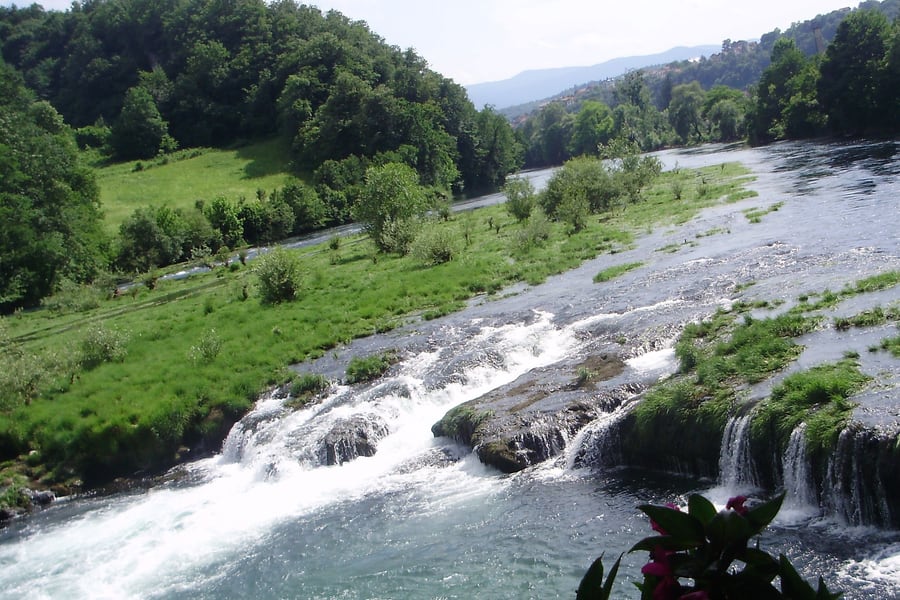
The Una at Bosanska Krupa
The river does something remarkable here: it spreads out across low limestone shelves and comes down in a broad staircase of cascades, right between the houses. There are benches and cafés along the bank, islands in midstream, and in summer people simply get in. It is a two-minute walk from the station, and it is the reason the train fills up.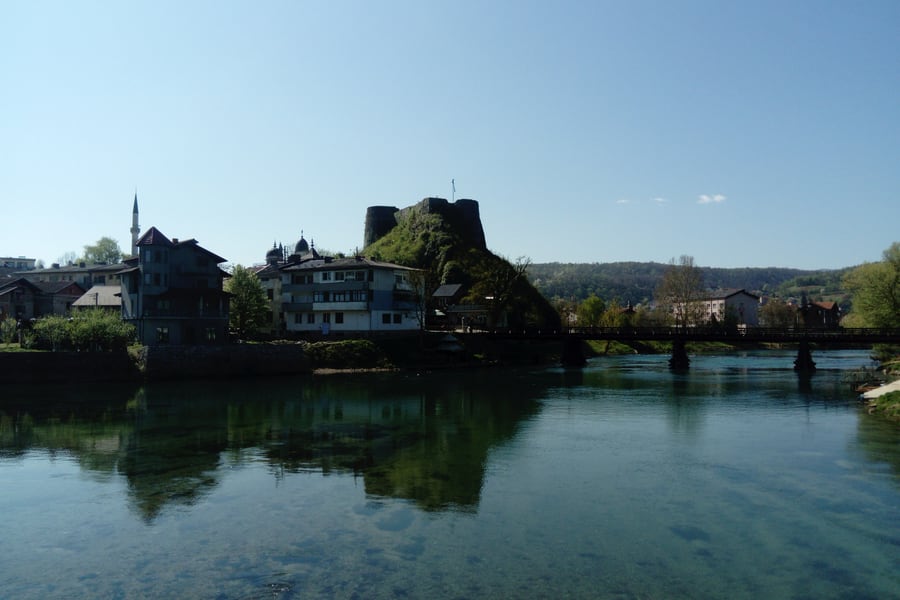 Golden Bosnian Lily / Wikimedia Commons · CC BY-SA 4.0 · cropped
The Krupa fortress
The ruin of the old town stands on a crag directly over the Una, looking down on the bridge and the cascades. Enough of the walls and a tower survive to make the climb worth it, and the view from the top — river, roofs, minaret, wooded hills closing in on both sides — explains at a glance why somebody fortified this particular rock.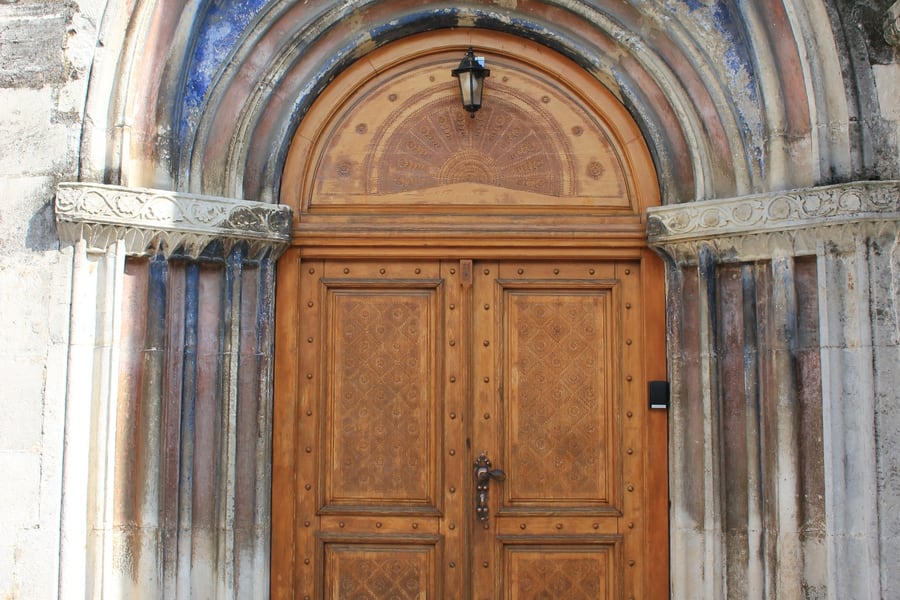 Julian Nyča / Wikimedia Commons · CC BY-SA 3.0 · cropped
The Fethija
Built in 1266 as the Church of St Anthony of Padua, this is the oldest Gothic building in Bosnia and Herzegovina — and, after the Ottoman conquest of 1592, a mosque. The Gothic shell survived the change: the pointed portal is unmistakably a medieval church door. Its bell tower served as the minaret until 1863, when it was taken down and replaced.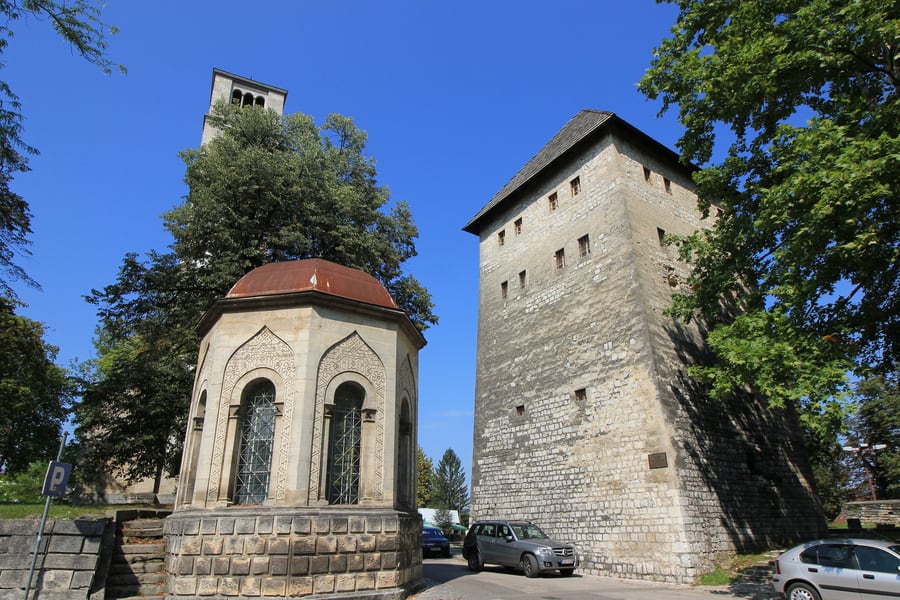 Julian Nyča / Wikimedia Commons · CC BY-SA 3.0 · cropped
The Captain's Tower
A square stone keep with a steep hipped roof, standing beside a small domed turbe in the centre of Bihać. Nobody is certain when it went up — maps show it before 1697, and some historians argue for around 1205. The Austro-Hungarians turned it into a prison, which it remained until 1959; since the war it has housed the Una-Sana Canton museum.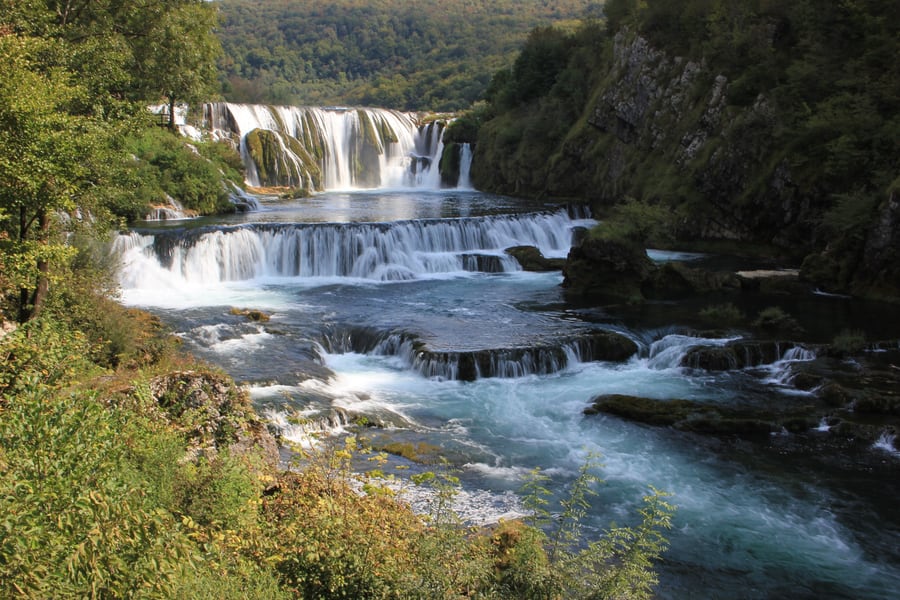 Julian Nyča / Wikimedia Commons · CC BY-SA 3.0 · cropped
Štrbački buk
The Una's great waterfall, in the national park upstream of Bihać — a wide travertine staircase where the whole river comes down at once between wooded cliffs. It is the most photographed thing in the north-west of the country and deservedly so. It lies in the opposite direction from the train, so it needs a separate trip by road.Where to Sleep
Because the train runs out and back twice in a day, this is a journey you sleep at one end of rather than along. Bihać is the obvious base: it is the largest town in the region, the train starts and finishes there, and it is the natural jumping-off point for Una National Park as well.
The town has the usual range of a mid-sized Bosnian centre — a handful of hotels, a larger number of small guest houses and rented apartments, and a scattering of riverside places a little way out towards the national park. Prices in this corner of the country are low by European standards, but July and August are the season for both the river and the rafting trade, and weekends fill.
Bosanska Krupa has less choice and makes more sense as a day trip than a base, though staying there does put the cascades outside your window in the evening after the last train has gone. If you are travelling on to Croatia, note that Bihać is close to the border and the crossings north and west of it are the usual routes towards Zagreb and the coast.
A practical note about the train rather than the beds: the service runs only at weekends, so build the ride into a Saturday or Sunday and use the weekdays for the national park, the rafting, or the road down the valley. There is nothing to be gained from timing an arrival for a Tuesday.
We do not yet list individual hotels for this journey. When we do, they will be places we have checked rather than places that have paid to appear.
Where to stay
Hotel Kostelski Buk
On the Una, 8 km from Bihać
A riverside hotel and restaurant on the Bihać–Banja Luka road, out where the Una breaks over the rapids that give the place its name. Forty-five rooms, most with balconies facing the water. It is a drive from the station rather than a walk, but it is the one place on this journey where you sleep beside the river the train follows.
Check Availability (opens in a new tab, on kostelski-buk.com)via kostelski-buk.comQuestions or corrections
Planning this trip and stuck on something, or spotted a time, fare or detail that has changed? Send us a message about The Una Valley Tourist Train — Bihać to Bosanska Otoka. We read every one, and we update this page when something has changed.