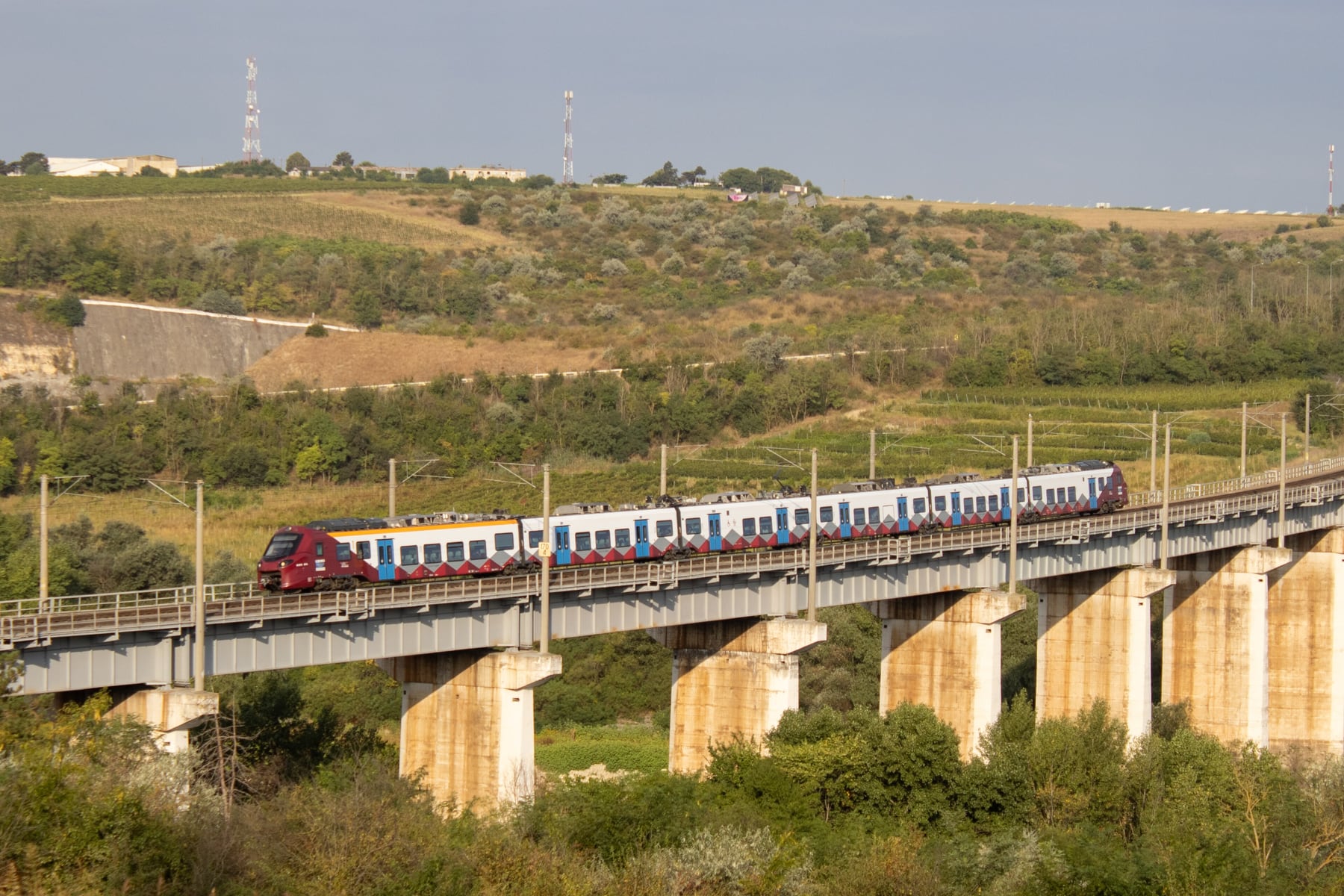
Bucharest–Constanța
Lucas Ionica / Wikimedia Commons · CC BY 4.0
- DistanceBucurești Nord–Constanța · 225 km
- Duration2 hours on the InterCity, 2¼ hours on the InterRegio, 4½ hours on the Regio
- Best seasonAll year; in summer extra trains run on to the coast at Mangalia
Introduction
In January 1856 the Sultan granted an Anglo-French–Austrian consortium the concession for a canal across Dobruja, from the Danube at Cernavodă to the Black Sea, so that ships could skip the river's long loop north through its delta. By May the plan had been dropped, and a railway was to be built instead. The Danube and Black Sea Railway, drawn up by the engineers John Trevor and Henry Barkley and backed in London, opened on 4 October 1860: 65 km from the river port at Cernavodă to the sea at Constanța, then an Ottoman town, with grain stores at its stations. With the railway running, the canal was shelved again.
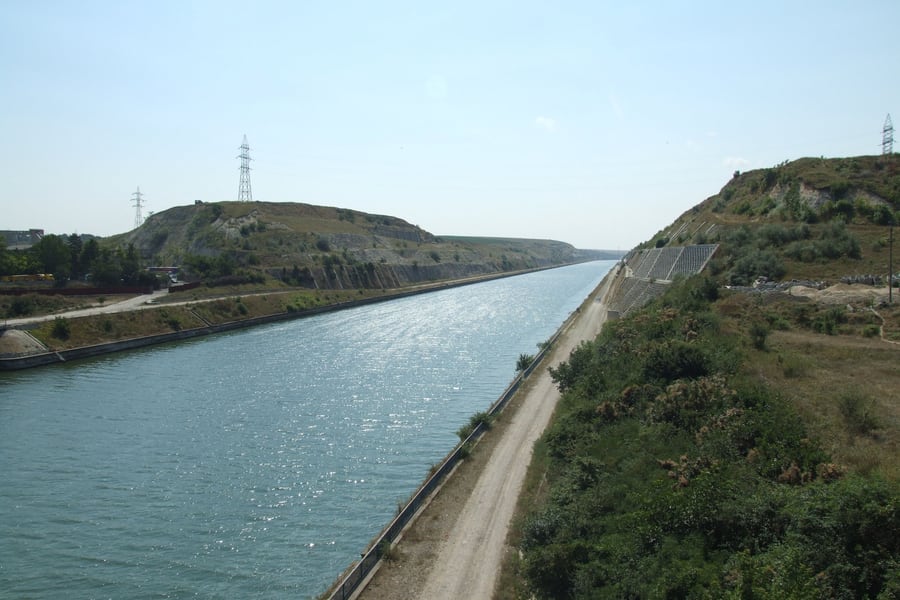
It was dug in the end. The Danube–Black Sea Canal opened in 1984, 64 km long, and it runs beside the railway past the same stations, Saligny, Mircea Vodă and Medgidia. Today CFR Călători runs fifteen trains a day each way over the 225 km from București Nord to Constanța, across the Bărăgan plain and over the Danube at Cernavodă, and from there to the sea the train keeps the canal company.
The Journey
The train leaves București Nord by Băneasa and Pantelimon and heads out onto the Bărăgan, the steppe plain of black soil between Bucharest and the Danube that was turned over to grain in the second half of the nineteenth century. The InterRegios stop at Ciulnița, km 109, and Fetești, km 146. Romania began building this half of the line in 1879, once Dobruja was its own.
Over the Danube
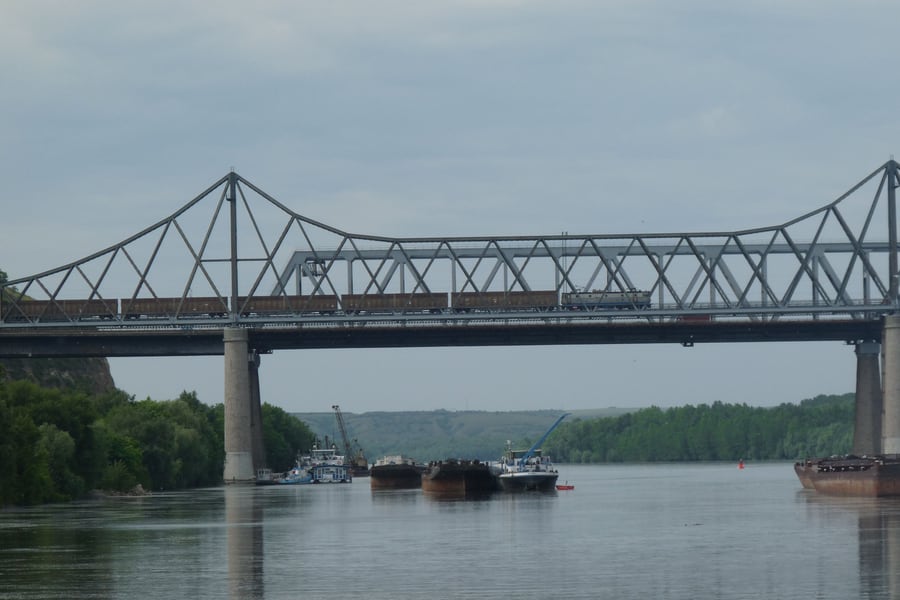
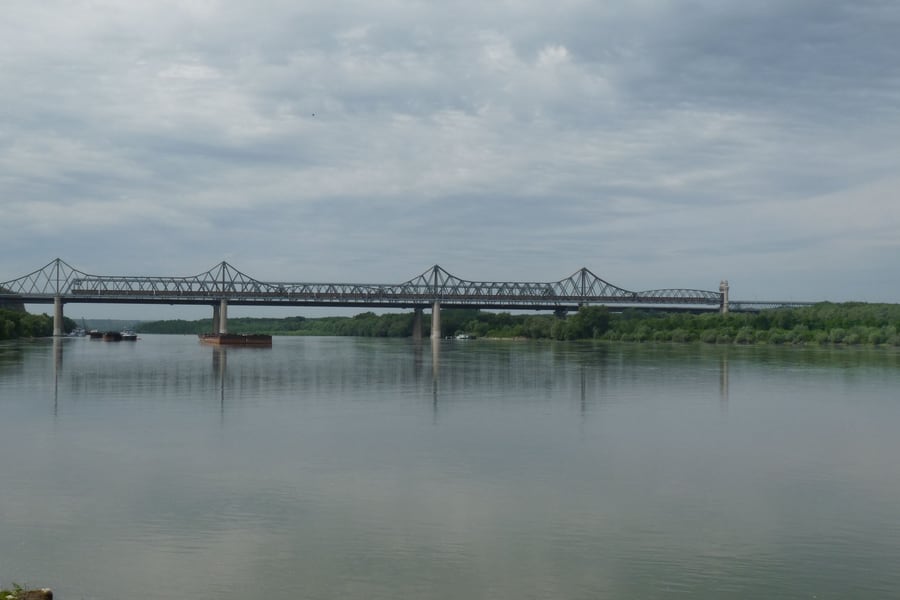
Between Fetești and Cernavodă, 21 km, the line crosses the Borcea arm of the Danube, the island between, and the river itself. Anghel Saligny led the design and the building of the bridges, begun on 26 November 1890 in the presence of King Carol I and opened on 26 September 1895. The Danube bridge has a central span of 190 m, 30 m above high water so that the tallest masts could pass. At the opening fifteen locomotives crossed together at 60 km/h, then a train of guests at 80 km/h, and Saligny, by one account, waited under the bridge in a launch with his workmen while they did. The Borcea bridge was destroyed by the retreating Romanian army in 1916 and rebuilt by 1921.
Since 1987 the trains have crossed on a new bridge beside Saligny's. In 2013, when the new bridge was to go in for repairs, CFR decided to reopen a single track on the old one for the duration. The first station across the river is Cernavodă Pod, km 166, and the next, at km 172, is called Saligny.
Beside the canal
From Cernavodă the line and the Danube–Black Sea Canal run east together, through Mircea Vodă and Medgidia, km 190, to Poarta Albă, where the canal turns south for the port at Agigea. The canal's first attempt, in 1949–53, was a forced-labour site where thousands of political prisoners died; one of its camps was at Poarta Albă, where the Regio still calls. The work was resumed twenty years later, and the main branch was finished in 1984.
The railway runs on through Basarabi, the station of Murfatlar, and Valu lui Traian, named for the earthwork walls across Dobruja called Trajan's, which are most likely Byzantine, of the tenth and eleventh centuries. It reaches Constanța at km 225.
The trains
The line was electrified on 31 May 1977 and is double track all the way; most of it is cleared for 160 km/h. On 4 July 2014 a summer train covered the 225 km in 1 hour 55 minutes. The fastest service now is the InterCity, two hours and one minute without a stop, among them the Tomis Expres from Brașov with its restaurant car.
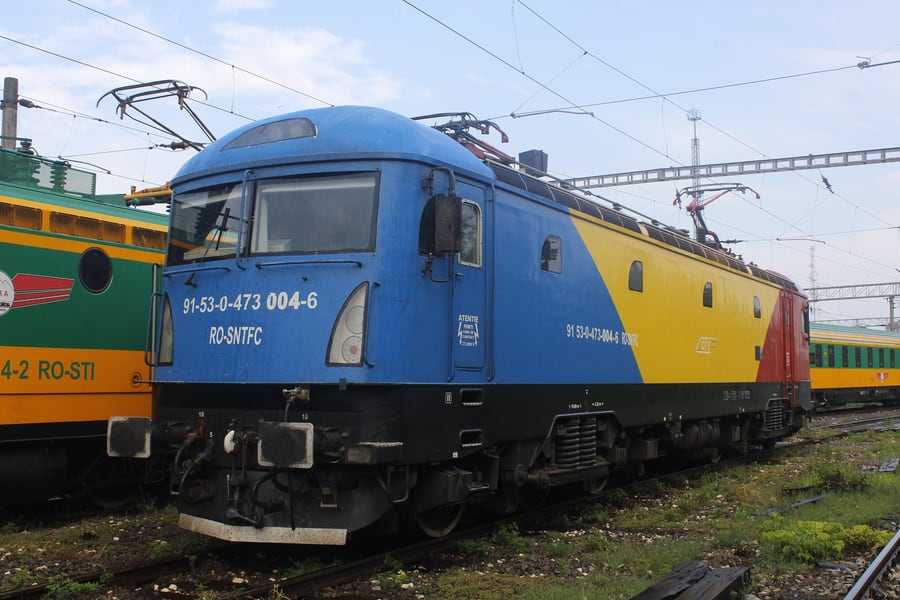
The InterRegios are worked by CFR Călători's locomotives and coaches and by the Alstom Coradia Stream, the first long-distance electric trains CFR Călători has bought in two decades; Bucharest–Constanța heads the list of five routes their first lot of twelve units was bought for.
Along the route
 Gabriel / Wikimedia Commons · CC BY 2.0 · cropped
Across the Bărăgan
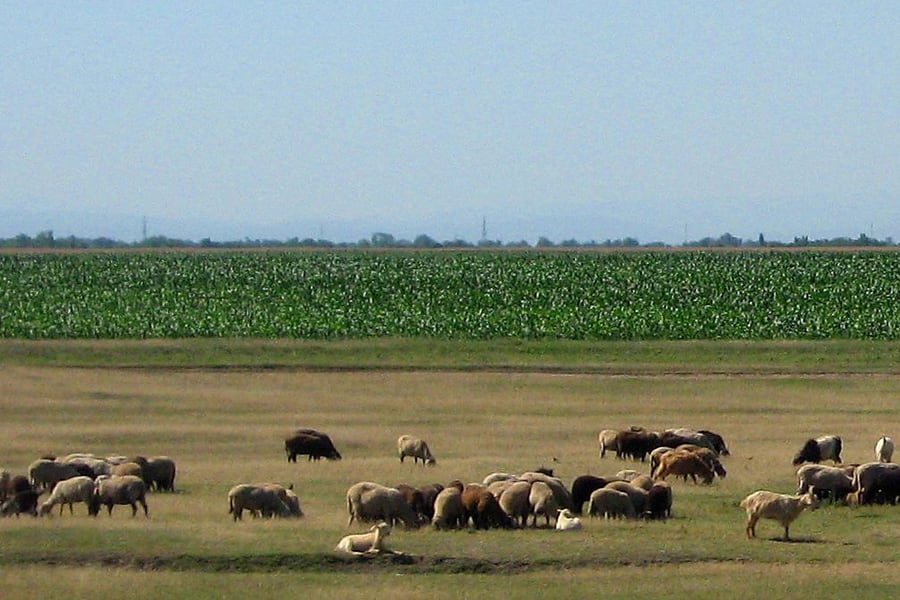
Out of Bucharest the line runs east across the Bărăgan, a steppe plain of black soil turned over to grain, to Fetești at km 146. Romania began this half in 1879, after the war that brought Dobruja and its railway of 1860 into the country.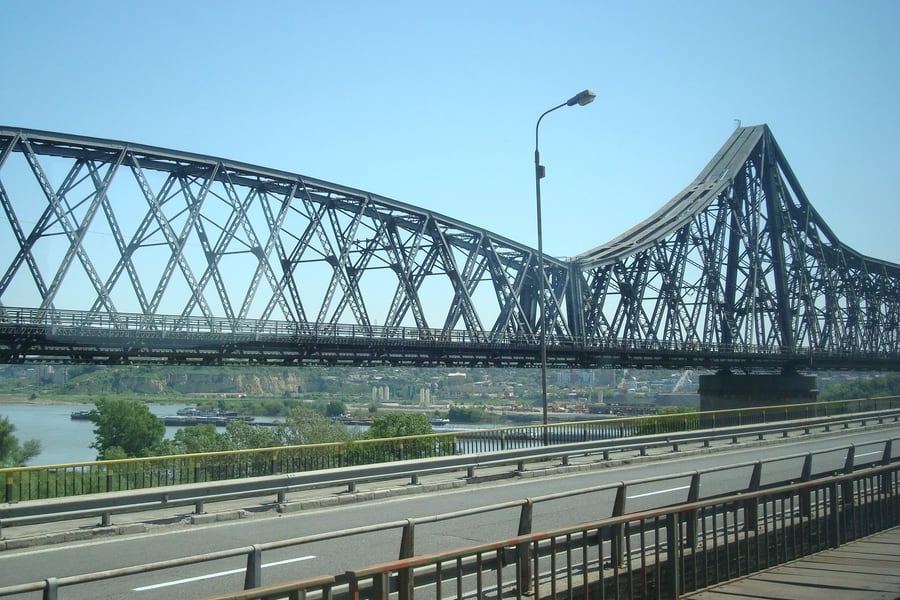 vizualizare.stradala / Wikimedia Commons · CC BY 3.0 · cropped
Saligny's bridge
Anghel Saligny's bridges over the Borcea and the Danube opened on 26 September 1895, the Danube span 190 m wide and 30 m above the water. The trains have crossed on a new bridge beside it since 1987.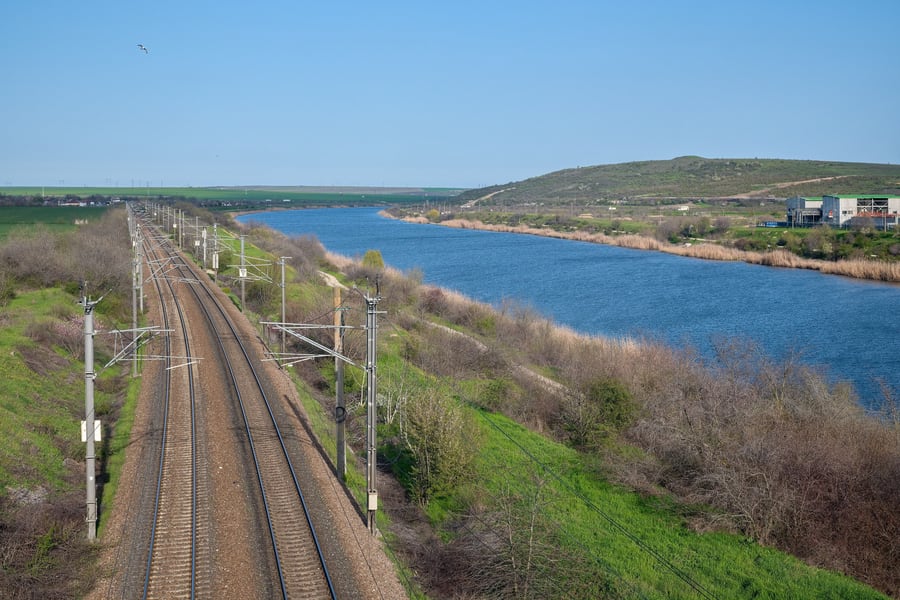 Petr Štefek / Wikimedia Commons · CC BY-SA 3.0 cz
Beside the canal
From Cernavodă to Poarta Albă the Danube–Black Sea Canal of 1984 runs beside the line, past the same stations, Saligny, Mircea Vodă and Medgidia: the waterway the railway was built instead of, in 1860.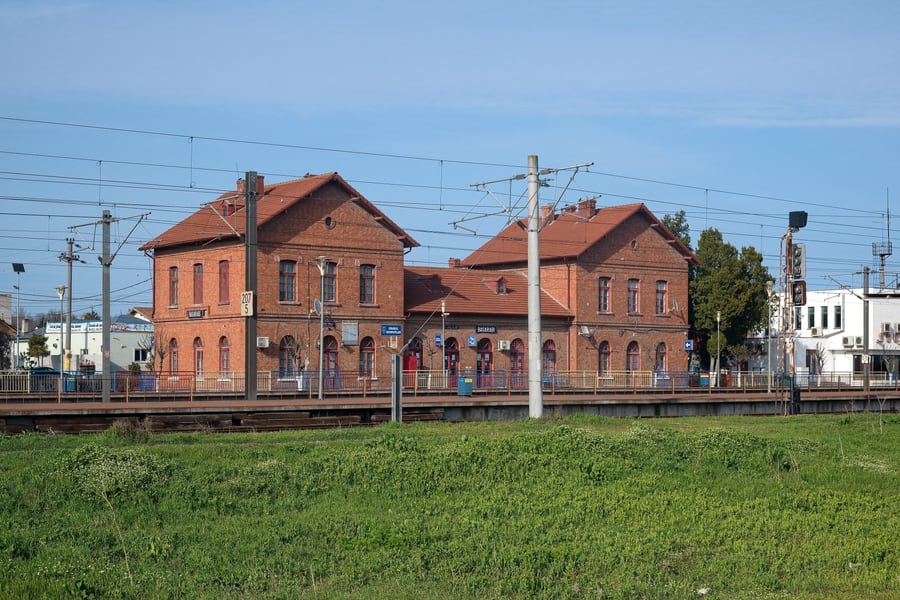 Petr Štefek / Wikimedia Commons · CC BY-SA 3.0 cz
Basarabi
Murfatlar was one of the four stations of 1860. The town was called Basarabi for much of the twentieth century, until 2007, and its station still is. Near the town, rock churches carved into a chalk hill were discovered in 1957.A bit of history
Culture & experiences along the way
 HaSt / Wikimedia Commons · CC BY-SA 4.0 · cropped
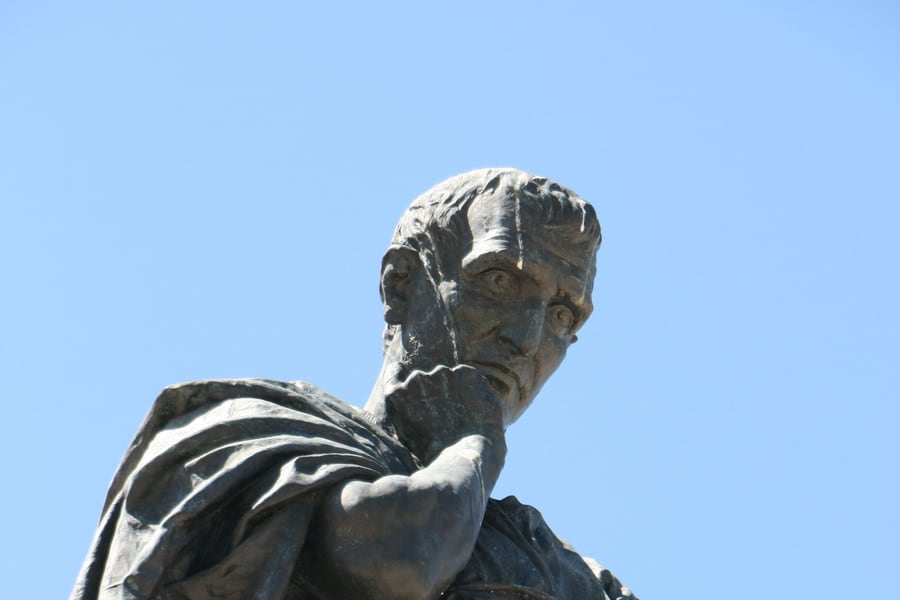
Ovid in Tomis
Augustus banished the poet Ovid to Tomis, the Greek town under Constanța, in AD 8, and he died there in AD 17 or 18, having written the Tristia and the Letters from the Black Sea. Ettore Ferrari's bronze of him was unveiled in Piața Ovidiu in August 1887.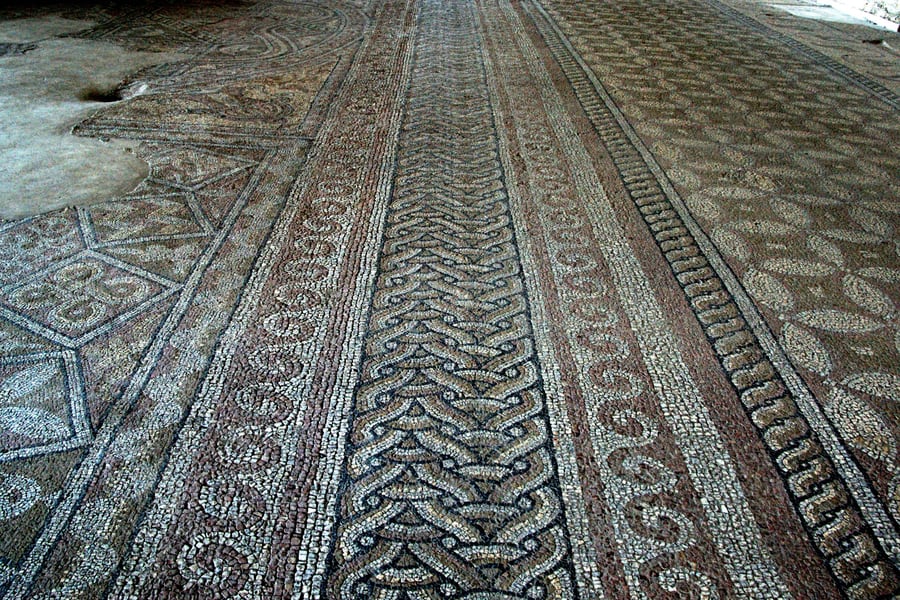 Alexandru Pănoiu / Wikimedia Commons · CC BY-SA 2.0 · cropped
The Roman mosaic
Found by chance in 1959, the building stood on three terraces above the quays of the port of Tomis: vaulted warehouses on two levels, and above them a hall floored with about 2,000 square metres of coloured mosaic, of the third or fourth century. The national history and archaeology museum runs it.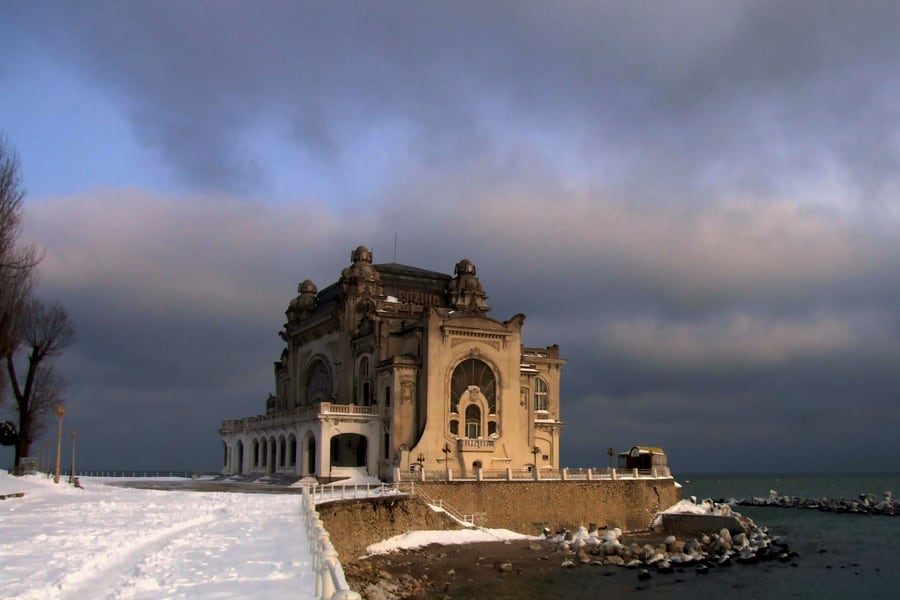 Catalin Schipor / Wikimedia Commons · CC BY-SA 3.0 ro · cropped
The Casino
Daniel Renard's Art Nouveau casino on the sea front opened in August 1910. After its last repairs in 1986–88 it stood empty for three decades, and after five years of restoration it opened to visitors again on 21 May 2025.Timetables
CFR Călători runs fifteen direct trains a day each way between București Nord and Constanța, the same on weekdays and Saturdays, and every one is sold with a compulsory seat reservation. The InterCity (IC) trains run non-stop in about two hours; the InterRegios (IR) take 2¼ to 2½ hours and stop at Ciulnița, Fetești, Cernavodă Pod and Medgidia, some at Lehliu too. One Regio (R) each way calls at every station. Both IC and IR carry first and second class.
București Nord to Constanța
| Train | București Nord | Ciulnița | Fetești | Cernavodă Pod | Medgidia | Constanța |
|---|---|---|---|---|---|---|
| IR 16079 | 05:30 | 06:26 | 06:47 | 07:03 | 07:19 | 07:42 |
| R 8001 | 06:17 | 08:28 | 09:02 | 09:23 | 09:47 | 10:40 |
| IR 1581 | 08:17 | 09:14 | 09:37 | 09:54 | 10:10 | 10:33 |
| IC 538 | 09:19 | — | — | — | — | 11:20 |
| IR 1585 | 12:30 | 13:35 | 13:58 | 14:15 | 14:31 | 14:54 |
| IC 581 | 17:20 | — | — | — | — | 19:21 |
| IR 1589 | 20:33 | 21:35 | 21:58 | 22:15 | 22:31 | 22:54 |
Constanța to București Nord
| Train | Constanța | Medgidia | Cernavodă Pod | Fetești | Ciulnița | București Nord |
|---|---|---|---|---|---|---|
| IR 1580 | 05:30 | 05:55 | 06:12 | 06:27 | 06:50 | 07:54 |
| IC 582 | 09:25 | — | — | — | — | 11:27 |
| IR 16080 | 11:15 | 11:40 | 11:56 | 12:11 | 12:33 | 13:28 |
| IR 1584 | 14:04 | 14:29 | 14:46 | 15:01 | 15:24 | 16:25 |
| R 8010 | 14:20 | 15:19 | 15:48 | 16:23 | 17:14 | 19:28 |
| IC 536 | 17:22 | — | — | — | — | 19:24 |
| IR 16086 | 18:35 | 19:01 | 19:17 | 19:33 | 19:55 | 20:51 |
| IR 16090 | 21:30 | 21:55 | 22:11 | 22:26 | 22:48 | 23:43 |
The other InterRegios leave București Nord at 06:30, 07:30, 10:35, 11:30, 14:25, 16:30, 18:30 and 19:31, and Constanța at 07:30, 08:20, 12:30, 14:30, 15:25, 16:30 and 20:30. IC 538 and IC 536 are the Tomis Expres, which starts and ends at Brașov; IR 1580 and IR 1584 also run on to Brașov, and IR 1589 comes from there.
Regio Călători, a private operator, runs one Regio Express each way: 11081 leaves București Nord at 08:03 and reaches Constanța at 10:25, and 11080 leaves Constanța at 12:41 for București Nord at 15:11, both with a compulsory reservation and sold on its own site. In summer Transferoviar Călători adds two InterRegios each way, running on to Mangalia; in 2026 they ran from 13 June to 6 September.
Times for Tuesday 10 November 2026, checked against Saturday 14 November, read on 20 October 2026 from CFR Călători's booking site (opens in a new tab) and Regio Călători's (opens in a new tab). The timetable year changes in mid-December.
Tickets
For a journey on 10 November 2026, CFR Călători's booking site quoted an adult 83.45 lei from București Nord to Constanța on an InterRegio in second class and 122.15 lei in first. The non-stop InterCity is 95.15 lei and 138.80 lei, and the Regio 44.10 lei, second class only. Every fare includes the seat reservation, and the site warns that its prices can include advance-purchase discounts.
Buy online at CFR Călători's booking site, in its app or at the station; Regio Călători sells its own train on its own site. Fares in Romanian lei, as of October 2026.
Book your tickets
InterRegio · București Nord–Constanța
83.45 lei second class · 122.15 lei first
The usual train to the sea, about 2¼ hours with four stops, seat reservation included.
Book Tickets (opens in a new tab, on CFR Călători)via CFR CălătoriInterCity · București Nord–Constanța
95.15 lei second class · 138.80 lei first
Non-stop in two hours and one minute, with a restaurant car on the Tomis Expres.
Book Tickets (opens in a new tab, on CFR Călători)via CFR CălătoriRegio · București Nord–Constanța
44.10 lei second class
The stopping train, calling at every station across the plain and Dobruja in about 4½ hours.
Book Tickets (opens in a new tab, on CFR Călători)via CFR CălătoriRail Passes
An Interrail Romania Pass or a Global Pass covers CFR Călători's trains on this line — the InterCity, the InterRegios and the Regio. Interrail's table of railway companies marks reservations as mandatory on the InterCity and the InterRegio, and the fee is not included in the pass. The private trains are not covered: Regio Călători's (listed under its former name, Regiotrans) and Transferoviar Călători's summer InterRegios.
For this journey, a pass is not worth buying. The cheapest Romania Pass, three travel days in a month, costs €105 in second class for an adult and €79 for a traveller aged 12 to 27; an InterRegio to the sea costs 83.45 lei. It pays only on a longer trip through Romania.
Checked October 2026 against interrail.com (opens in a new tab).
Places to Visit
Constanța is the end of the line; Cernavodă, Medgidia and Murfatlar are on its way across Dobruja, each a stop for the Regio and the first two for the InterRegios.
 Ștefan Jurcă / Wikimedia Commons · CC BY 2.0 · cropped
Constanța
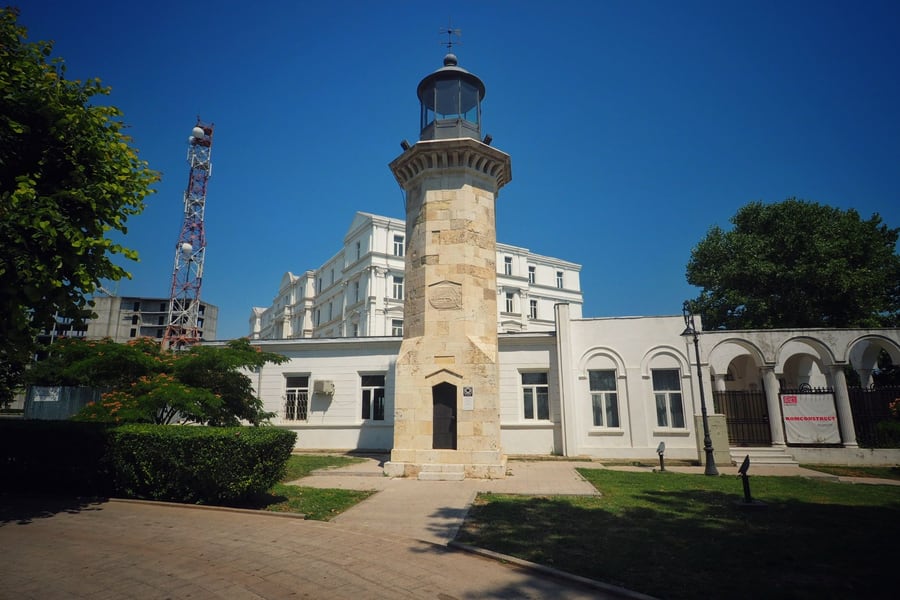
Romania's oldest continuously inhabited city, founded as Tomis about 600 BC, and 263,688 people in 2021. On the peninsula stands the Genoese lighthouse, built in 1858–60 by the engineer Artin Aslan for the Danube and Black Sea Railway company, on the base of a Genoese light of about 1300, and lit again in February 2020.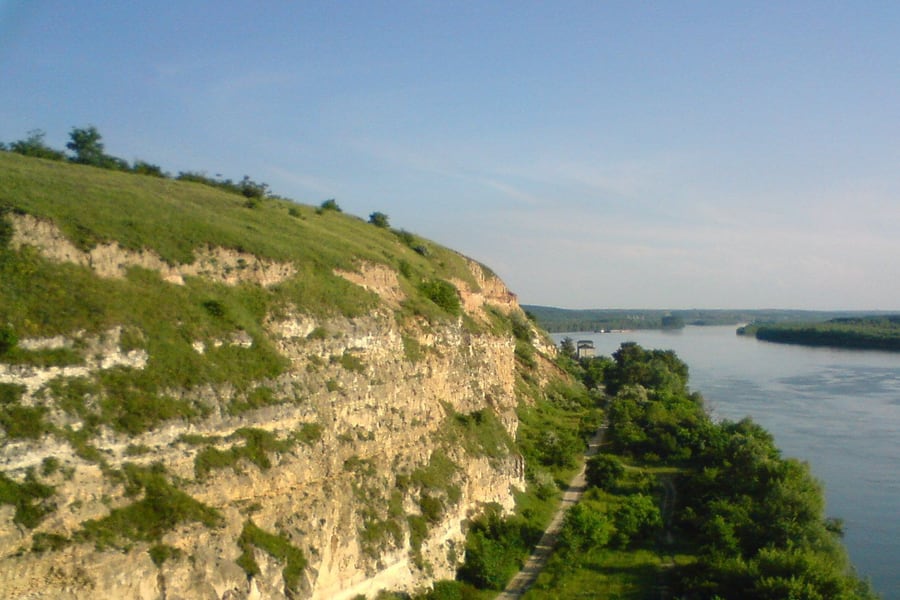 Costel Munteanu / Wikimedia Commons · CC BY-SA 3.0 · cropped
Cernavodă
The Danube town at the end of Saligny's bridge, under limestone cliffs on the river's right bank. The railway of 1860 began at its river port, and the Danube–Black Sea Canal leaves the river here. At the Cernavodă end of the old bridge stand Léon Pilet's two bronze dorobanți.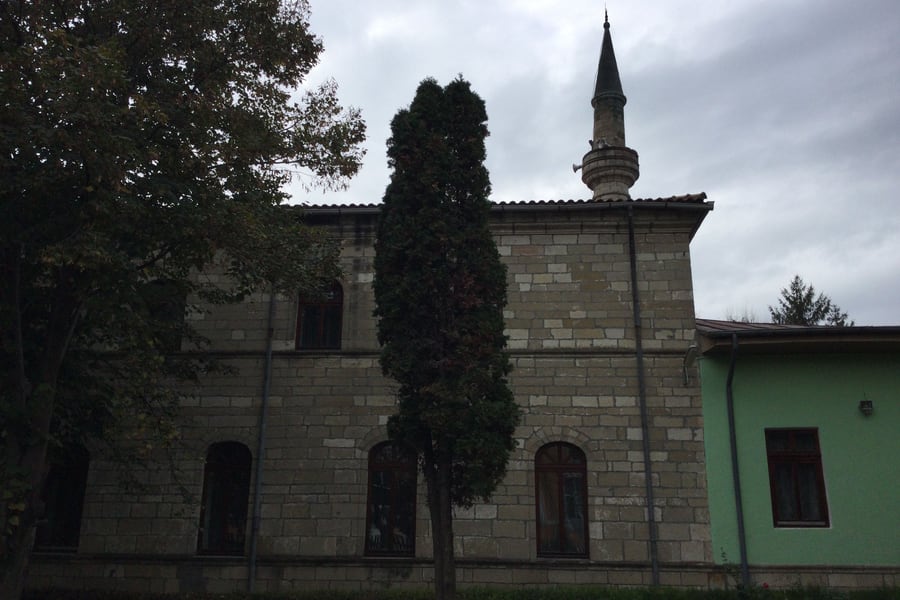 Biruitorul / Wikimedia Commons · CC0 · cropped
Medgidia
The Ottoman administration laid the town out from 1856, on the site of old Karasu, for refugees from the Crimean War, and named it after Sultan Abdülmecid I. Its Abdul Medjid mosque was built in 1860, the year the railway opened, and the canal now runs through the town.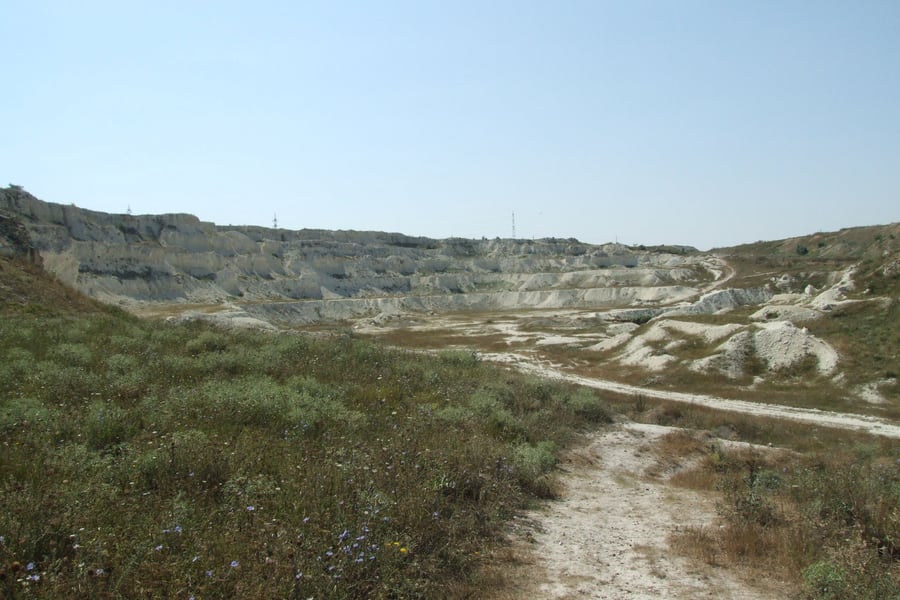 CristianChirita / Wikimedia Commons · CC BY-SA 3.0 · cropped
Murfatlar
A town of chalk hills and lime quarries. In a chalk hill nearby, a monastery of the ninth to eleventh centuries was discovered in 1957: cells, four small and two larger churches, crypts and tombs cut into the rock, with inscriptions in Greek, Glagolitic, Cyrillic and Turkic runes.Where to Sleep
Stay in Constanța's old centre on the peninsula, a walk from Ovid's square, the Roman mosaic, the Casino and the Genoese lighthouse. The first trains back to Bucharest leave at 05:30, 07:30 and 08:20.
Where to stay
Hotel Carol
In Constanța's old centre
A boutique hotel of 24 rooms on three floors, on Mihail Kogălniceanu street near the port of Tomis.
Check Availability (opens in a new tab, on carolhotel.ro)via carolhotel.roQuestions or corrections
Planning this trip and stuck on something, or spotted a time, fare or detail that has changed? Send us a message about Bucharest–Constanța. We read every one, and we update this page when something has changed.