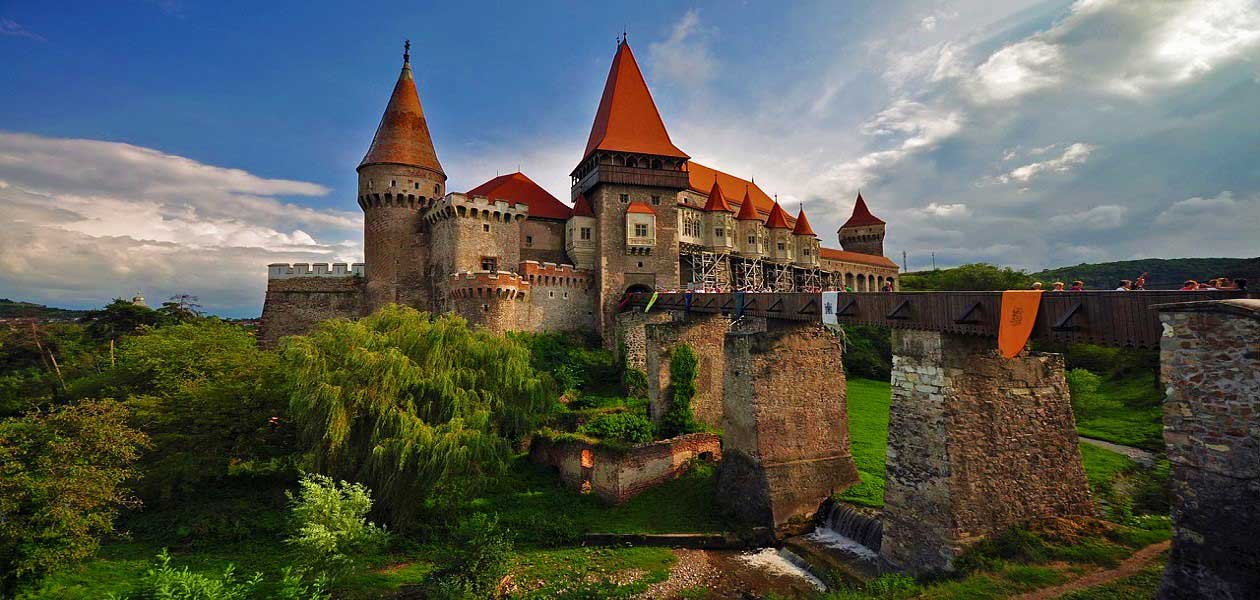
Romania

Romania lies on the lower Danube, north of the Balkan Peninsula and along the north-western shore of the Black Sea, with Ukraine, Hungary, Serbia, Bulgaria and Moldova around it. It is the twelfth-largest country in Europe at 238,397 square kilometres, and 19 million people live there. Bucharest is the capital, largest city and economic centre; Cluj-Napoca, Iași, Timișoara, Brașov and the Black Sea port of Constanța are the other main ones, and the Carpathians curve through the middle of everything, separating Transylvania from the rest.
The national operator, CFR, runs a wide and inexpensive network across those regions, and it is an unhurried one — the mountains alone mean long journeys where the map suggests short ones. The compensation is that Romania kept a good deal that other countries scrapped: narrow-gauge forestry lines still worked by wood-burning steam locomotives, and Habsburg-era mountain railways of tunnels and stone viaducts that ordinary service trains still climb.
Rail journeys in Romania
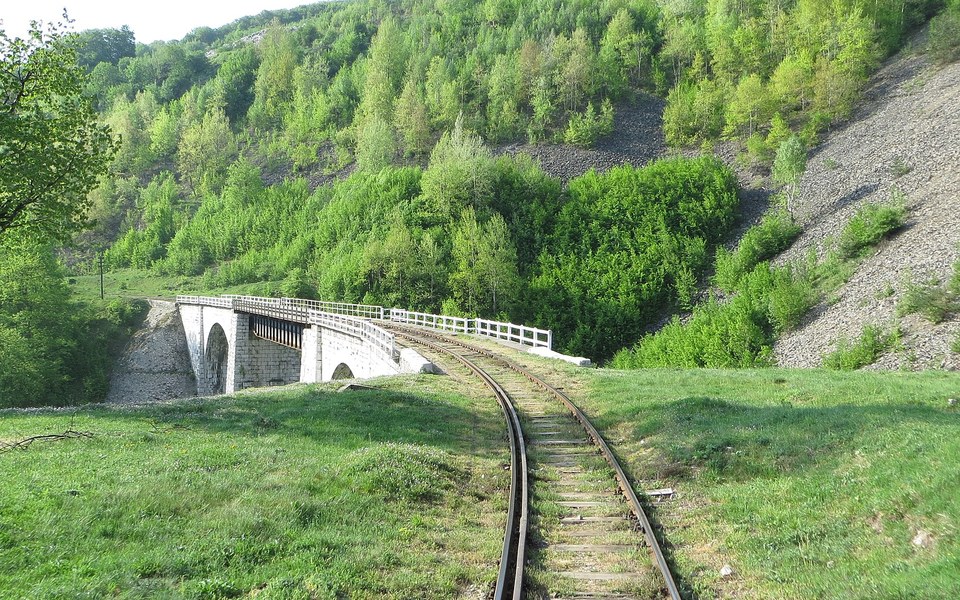
The Oravița–Anina Railway
The Banat Semmering — Romania's first mountain railway, an 1863 Habsburg masterpiece of viaducts and tunnels clinging to the wooded ridges.
View journey →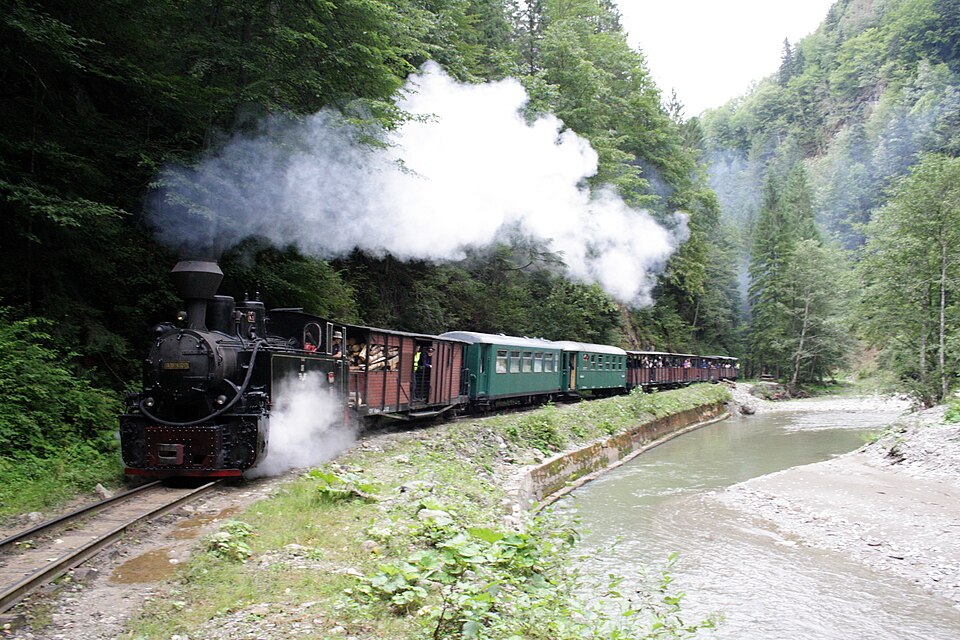
The Vaser Valley Mocănița
Romania's little steam train still hauls timber — and travellers — up the wild Vaser Valley, behind locomotives over a century old.
View journey →Good to know
What are the best train journeys in Romania?
Two mountain railways stand out. The Vaser Valley Mocănița in Maramureș is a working narrow-gauge steam railway that climbs a wild, roadless valley deep into the Carpathians behind hundred-year-old wood-burning locomotives. The Oravița–Anina railway in the Banat — the "Banat Semmering" — is a spectacular 1863 mountain line of tunnels and stone viaducts that you can still ride on the ordinary service train. Both are among the most atmospheric rail rides in Europe.
What is the Mocănița steam train?
"Mocănița" is the affectionate Romanian name for the country's narrow-gauge forestry railways, and the most famous of them runs up the Vaser Valley from Vișeu de Sus in Maramureș. Built in the 1930s on a 760 mm gauge, it is one of the last commercially-operating forestry steam railways in Europe — still hauling timber, and carrying travellers on a slow, all-day journey behind wood-burning steam locomotives into some of the wildest forest left on the continent.
What is the "Banat Semmering"?
The Oravița–Anina railway, in Romania's southwestern Banat region, is nicknamed the "Banat Semmering" after Austria's famous Alpine line because it was built in the same daring style only a few years later. Opened in 1863 to carry coal, it climbs 33 km through 14 tunnels and over 10 tall stone viaducts — Romania's first mountain railway, and still open to passengers today as an inexpensive CFR service train.
How do you get around Romania by train?
The national operator CFR Călători runs the main network, linking Bucharest with Brașov, Sibiu, Cluj-Napoca, Timișoara and the north. Trains are inexpensive and reach most regions, though they can be slow. The two great scenic lines are more specialised: the Oravița–Anina service is part of the CFR network in the Banat, while the Vaser Valley Mocănița is a separate tourist and forestry railway in Maramureș, reached via Vișeu de Sus.