The Jiu Gorge Line
TrainSimFan / Wikimedia Commons · CC BY-SA 4.0 · cropped
- DistanceBumbești-Jiu–Livezeni · 29 km (Târgu Jiu–Petroșani 50 km)
- DurationAbout 1¼ hours through the gorge; Târgu Jiu–Petroșani 1½–2 hours
- Best seasonAll year; the morning Regios have the gorge in daylight year-round
Introduction
Work on the railway through the Jiu Gorge began on 1 March 1924, under the kingdom. It was slow: the site was mothballed from 1931 to 1937, and by the autumn of 1941 about half the works were done and the first 8 km, Bumbești to Meri, were open to carry materials and workers. On 1 October 1946, 14 of the 31 km were in use. On 1 April 1948 the new People's Republic opened a "national labour site" named after the party leader Gheorghe Gheorghiu-Dej, and 27,988 young volunteers joined five construction companies and army soldiers on the line. The first locomotive whistled through on 22 October, and the line was opened with ceremony on 31 October 1948. The regime presented it as one of the great works of its first years, and in 1950 it became a film, Răsună valea ("The Valley Resounds").
The ride is short: 29 km from Bumbești-Jiu to Livezeni, through some three dozen tunnels and over the Jiu again and again, in about an hour and a quarter. It carries the line from Oltenia up into the coal basin of the Jiu Valley, and CFR Călători runs it every day, with Regio trains from Craiova to Petroșani and InterRegios between Bucharest and the west.
The Journey
Most travellers board at Târgu Jiu, the county town, 107 km up the line from Craiova. For half an hour the train runs north across open country under the mountains to Bumbești-Jiu, at km 123. The railway reached Bumbești in 1916, and for the next quarter of a century it went no further.
Into the gorge
Beyond Bumbești the Jiu cuts through the Carpathians between the Vâlcan and Parâng mountains, and the line goes with it. Valea Sadului, five minutes on, is the first station in the gorge. The 8 km to Meri were the first part of the new line to open, in November 1941. From here the railway is in and out of tunnels and back and forth over the river on bridges and viaducts; one of the tunnels, the Leurzeaua, is curved into an S.
Lainici and the narrows
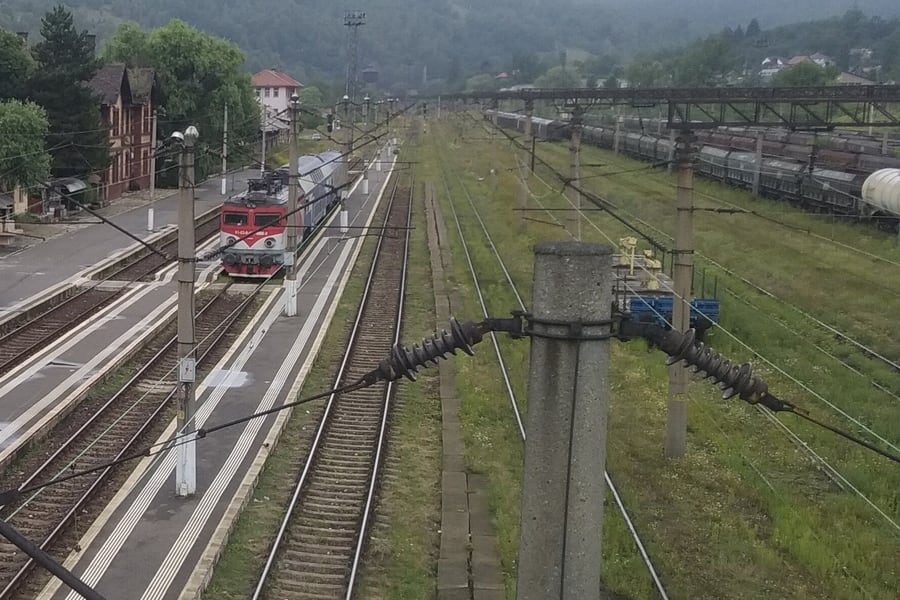
At km 138 the train stops at Lainici, below the monastery of the same name. The line through the gorge is single track, and the Regios often stand here or at Pietrele Albe for four or five minutes. CFR names the stretch from the Ilioaia bridge past Pietrele Albe to the Fabian viaduct as the hardest to build on the whole line. The six kilometres from Lainici to Pietrele Albe take about a quarter of an hour.
Livezeni and Petroșani
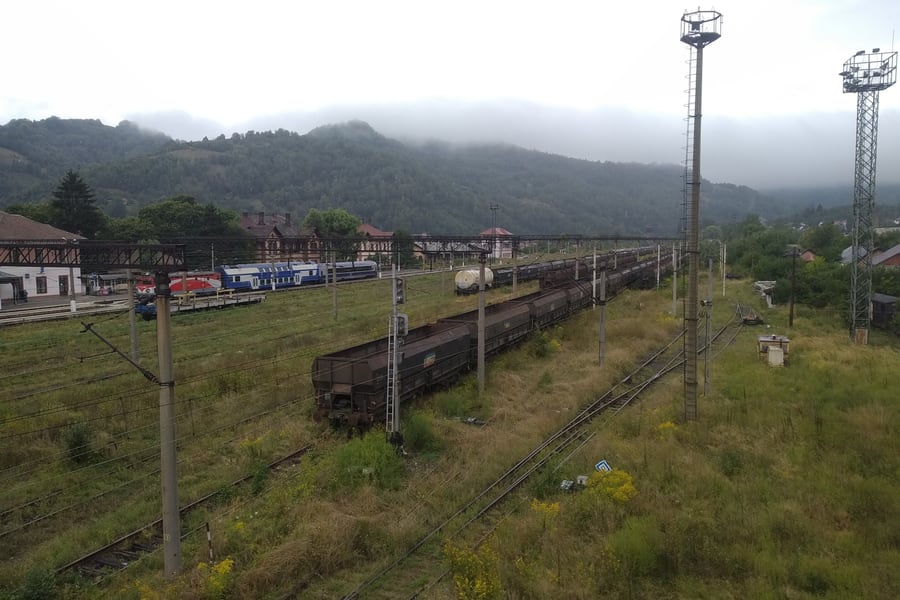
The gorge ends at Livezeni, km 152, where the valley opens into the Jiu Valley coal basin and the double track to Simeria begins. Petroșani, the basin's main town, is ten minutes further. The Regios end there; the InterRegios carry on over the Bănița pass, at 720 metres, to Simeria.
The trains
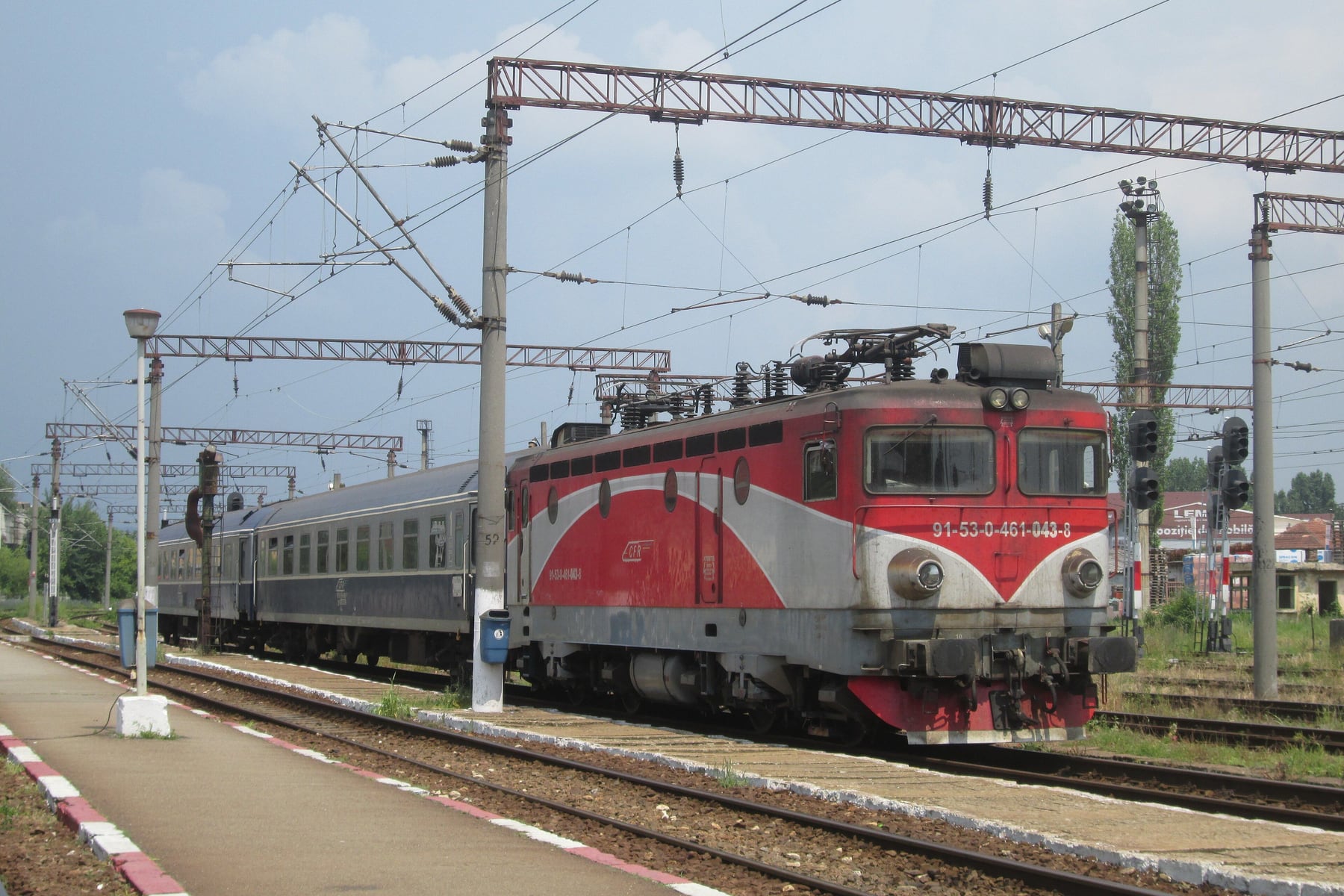
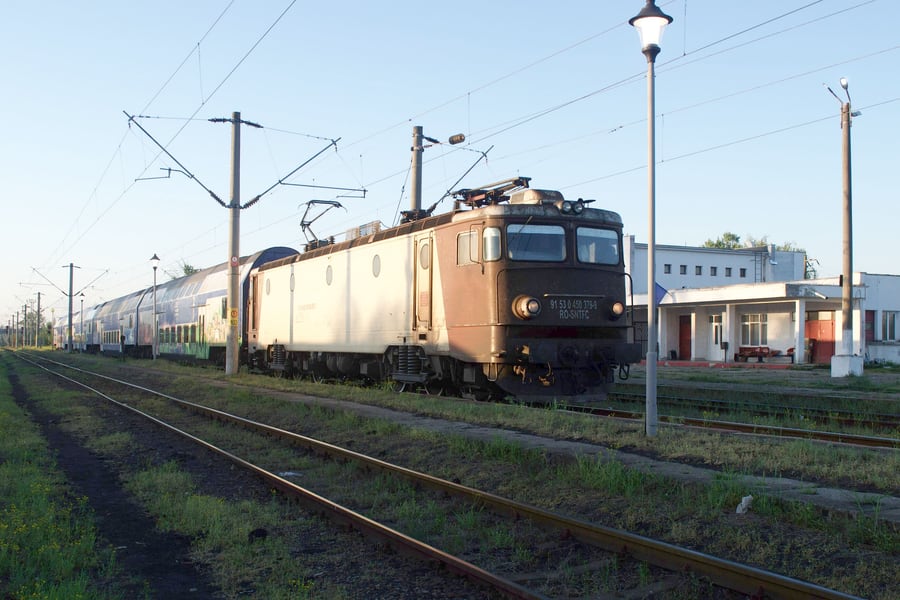
The line was electrified between 1972 and 1974, and CFR Călători works it with short locomotive-hauled trains: the standard formation of R 2083 is a locomotive and two coaches, with first and second class. The Regio in the gallery is headed by 450 379, a Class 45: one of the Electroputere electrics built at Craiova, rebuilt there by Softronic around the turn of the century.
It is a slow ride, 29 km in an hour and a quarter. In 2025 CFR's infrastructure company let contracts to rehabilitate eight of the gorge's tunnels, to lift speed and weight restrictions; by July 2026 neither design nor building had begun.
Along the route
 Emmanuel de Martonne / Wikimedia Commons · public domain · cropped
Bumbești-Jiu
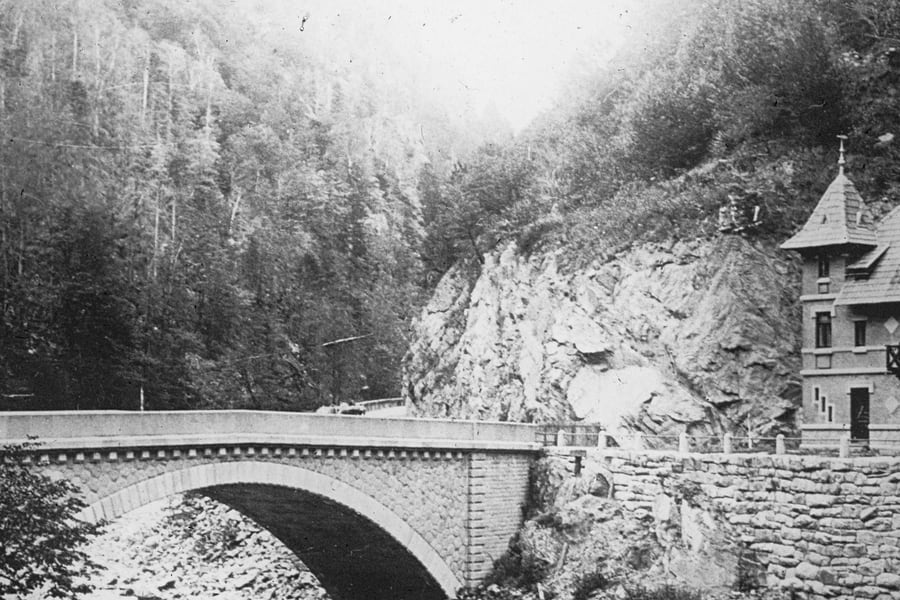
The track from Târgu Jiu reached Bumbești in 1916 and went no further for twenty-five years. Until then a road was the only way through the gorge; the geographer Emmanuel de Martonne photographed this bridge on it in 1906–09.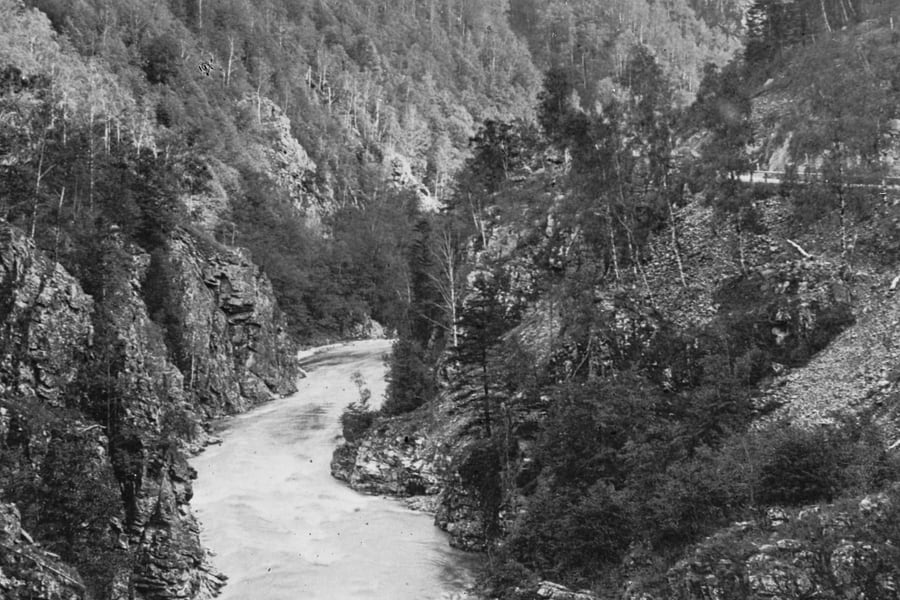 Emmanuel de Martonne / Wikimedia Commons · public domain · cropped
Valea Sadului and Meri
Valea Sadului is the first station in the gorge. The 8 km on to Meri were the first part of the line to open, in November 1941, for materials and workers. Martonne's view of the gorge dates from 1906–09.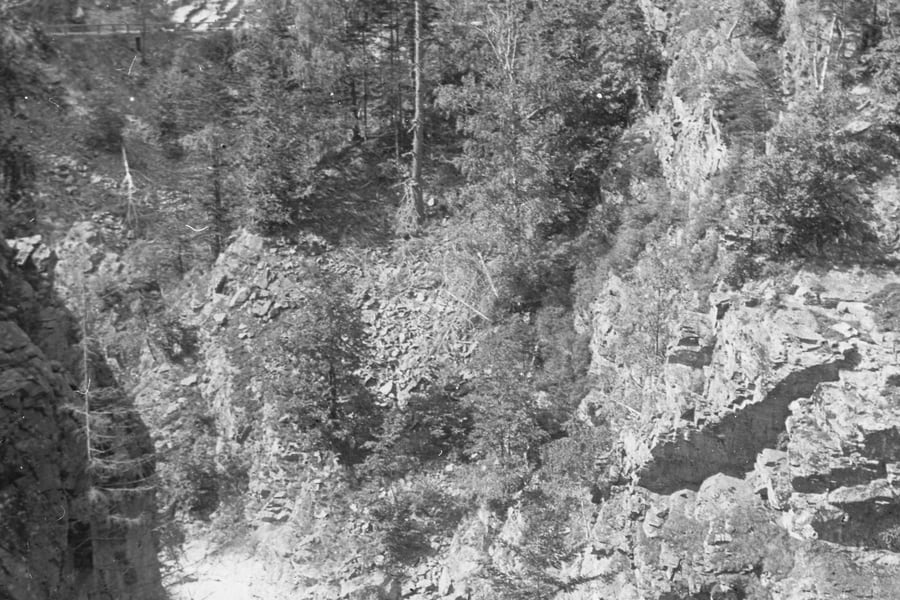 Emmanuel de Martonne / Wikimedia Commons · public domain · cropped
The narrows
CFR names the stretch from the Ilioaia bridge past Pietrele Albe to the Fabian viaduct as the hardest to build. The gorge is single track, and the Regios often stand four or five minutes at Lainici or Pietrele Albe.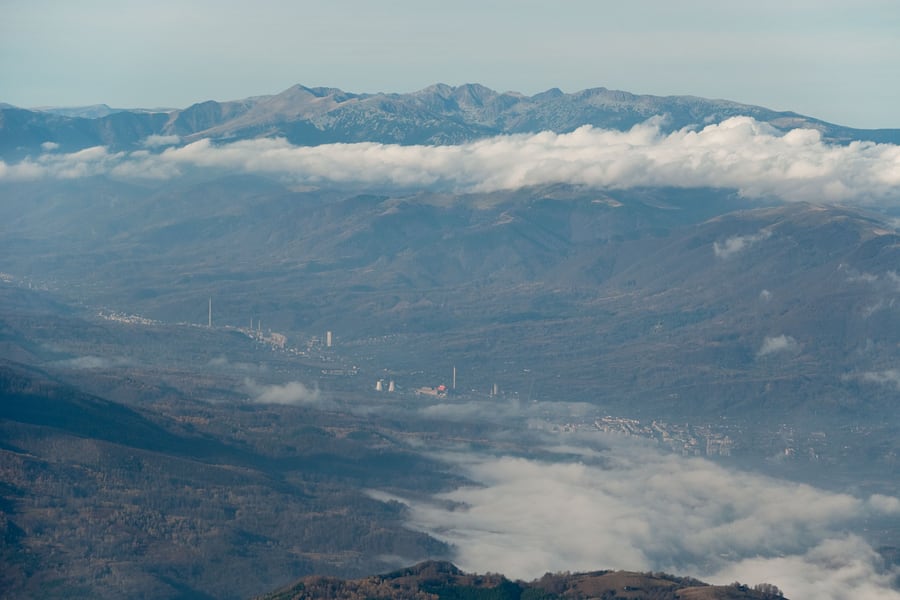 Nikizulu / Wikimedia Commons · CC0
Out at Livezeni
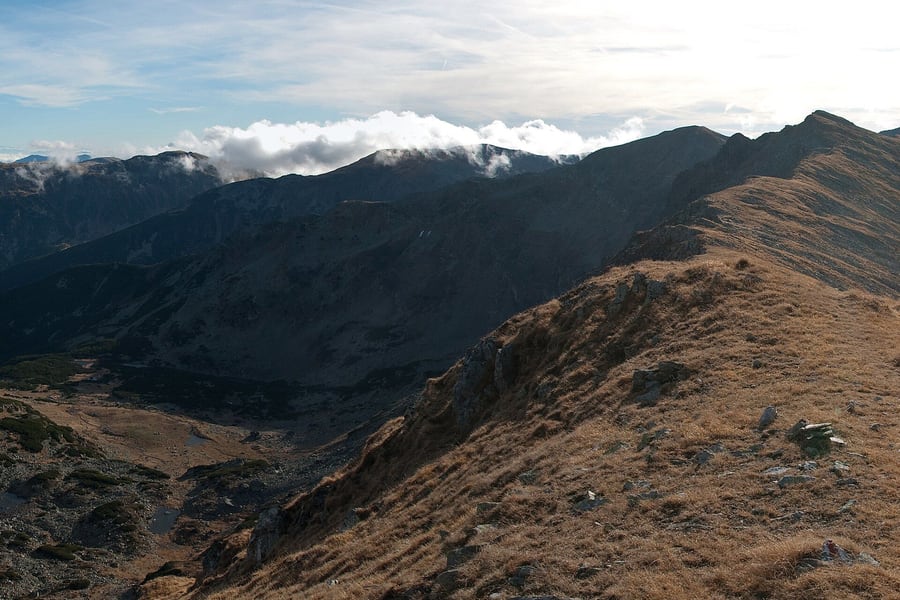
At Livezeni, km 152, the gorge opens into the Jiu Valley coal basin, here seen from the Parâng with the Retezat behind, and the double track to Simeria begins. Petroșani is ten minutes on.A bit of history
Culture & experiences along the way
 Razvan Socol / Wikimedia Commons · CC BY-SA 3.0 · cropped
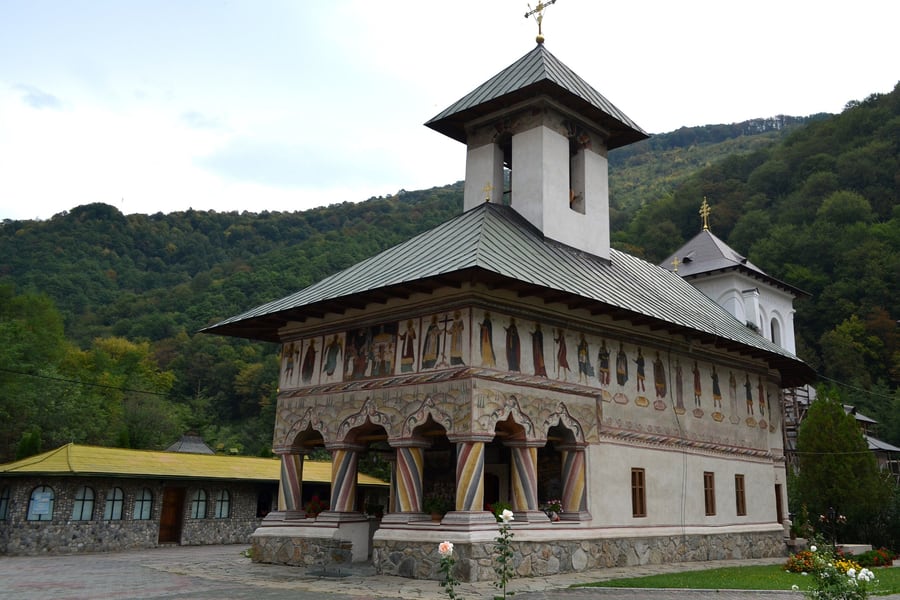
The old church at Lainici
The monastery stands on a hill over the Jiu by Lainici halt. Monks are recorded here from around 1700; the skete was rebuilt in stone from 1810, and its old church, consecrated in 1817 and finished by 1847, has a painted porch and façade and frescoes inside from about 1860. A large new church was begun beside it in 1990.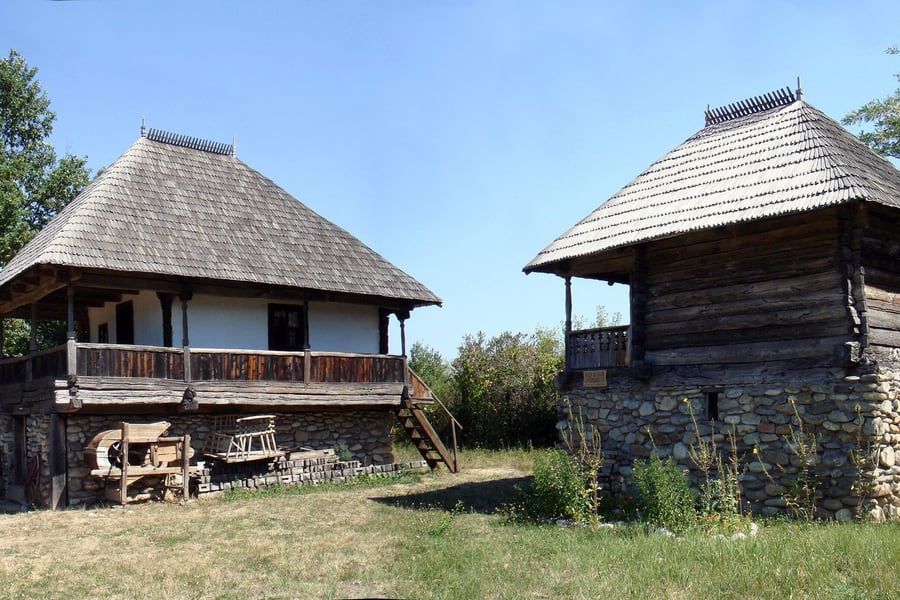 Miehs / Wikimedia Commons · public domain · cropped
Gorj's village architecture at Curtișoara
At Curtișoara, ten kilometres north of Târgu Jiu, the Gorj Museum of Popular Architecture opened in 1975 with wooden houses, cellars, granaries and a stone church of 1820 brought in from the county's villages. The oldest house is dated 1802; the Cârligei farmstead, a house and a store for clothes, was built around 1865–1870.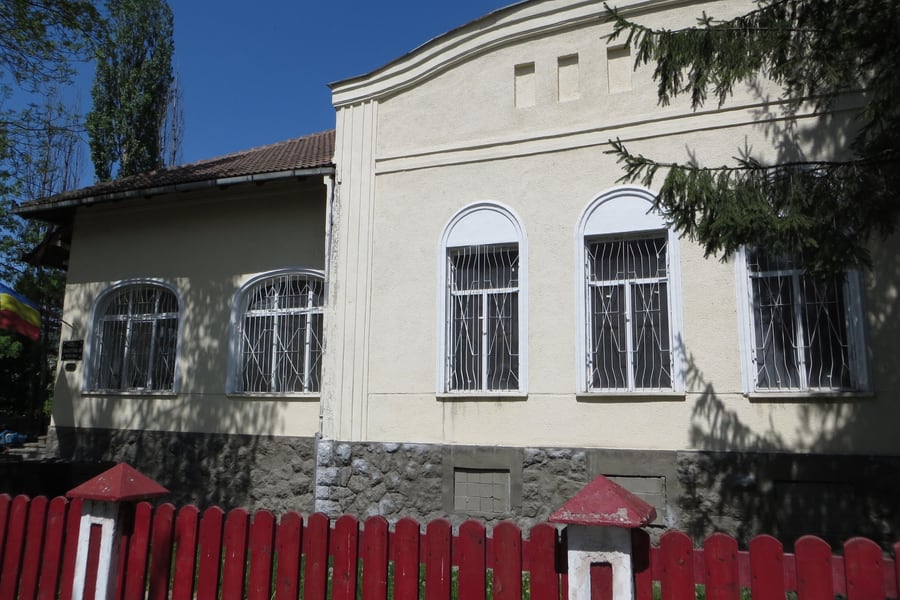 Strainu / Wikimedia Commons · CC BY-SA 3.0 RO · cropped
The Mining Museum
Since 1966 Petroșani's Mining Museum has occupied the first headquarters of the SAR Petroșani mining company, a building of 1920. The basement holds a replica mine gallery and the cage that took miners down; upstairs are some 1,600 objects, from tools and machinery to badges, minerals and fossils. It reopened in 2021 after renovation.Timetables
CFR Călători runs four Regio trains a day from Craiova through the gorge to Petroșani and three back, every day except Saturday, when two run each way. Two InterRegios a day also cross the gorge in daylight: Bucharest–Deva northbound, which runs through without stopping, and Cluj-Napoca–Bucharest southbound, which calls at Lainici and Valea Sadului. Regios R 2083 and R 2084 carry first class and a compulsory seat reservation; the other Regios are second class with no reservation. InterRegio tickets include a reservation.
Târgu Jiu to Petroșani
| Train | Runs | Târgu Jiu | Bumbești | Lainici | Livezeni | Petroșani |
|---|---|---|---|---|---|---|
| R 2081 | Daily | 06:00 | 06:29 | 07:12 | 07:46 | 07:55 |
| R 2083 | Not Sat | 07:50 | 08:19 | 09:05 | 09:42 | 09:51 |
| IR 16025 | Daily | 15:13 | — | — | — | 16:48 |
| R 2085 | Not Sat | 17:47 | 18:14 | 18:57 | 19:31 | 19:40 |
| R 2089 | Daily | 19:20 | 19:45 | 20:28 | 21:06 | 21:15 |
Petroșani to Târgu Jiu
| Train | Runs | Petroșani | Livezeni | Lainici | Bumbești | Târgu Jiu |
|---|---|---|---|---|---|---|
| R 2080 | Daily | 03:55 | 04:05 | 04:40 | 05:27 | 05:56 |
| IR 16026 | Daily | 08:32 | — | — | — | 10:00 |
| R 2082 | Daily | 08:58 | 09:08 | 09:43 | 10:27 | 10:58 |
| IR 1836 | Daily | 14:23 | — | 14:57 | — | 16:02 |
| R 2084 | Not Sat | 14:46 | 14:56 | 15:30 | 16:16 | 16:44 |
The Regios start or end at Craiova (R 2081 leaves at 02:55, R 2083 at 05:18). IR 16025 leaves București Nord at 09:00 and continues to Deva; IR 1836 starts at Cluj-Napoca at 08:55 and reaches București Nord at 22:04. A late Regio and night InterRegios also use the line in the dark.
Until 5 November 2026 CFR lists a replacement-bus transfer on these trains, and fewer, renumbered departures through the gorge, so check the date you travel.
Times for Tuesday 10 November 2026, checked against Saturday 7 and Sunday 8 November, read on 20 October 2026 from CFR Călători's booking site (opens in a new tab). The timetable year changes in mid-December.
Tickets
The fares are small. For a journey on 10 November 2026, CFR Călători's booking site quoted an adult 6.30 lei from Bumbești to Livezeni, the gorge alone, and 9.00 lei from Târgu Jiu to Petroșani on a second-class Regio. On R 2083, with its compulsory reservation, the same trip is 13.50 lei in second class and 21.15 lei in first; the InterRegio is 25.40 and 33.50 lei. The site warns that its prices can include advance-purchase discounts.
Buy online at CFR Călători's booking site, in its app or at the station. Fares in Romanian lei, as of October 2026.
Book your tickets
Regio · Bumbești–Livezeni
6.30 lei second class
The gorge alone, 29 km in about an hour and a quarter, with no reservation needed.
Book Tickets (opens in a new tab, on CFR Călători)via CFR CălătoriRegio · Târgu Jiu–Petroșani
9.00 lei second class · 13.50 / 21.15 lei on R 2083
The stopping train from the county town through the whole gorge in just under two hours.
Book Tickets (opens in a new tab, on CFR Călători)via CFR CălătoriInterRegio · Târgu Jiu–Petroșani
25.40 lei second class · 33.50 lei first
The Bucharest trains, through the gorge in about an hour and a half with a seat reservation included.
Book Tickets (opens in a new tab, on CFR Călători)via CFR CălătoriRail Passes
An Interrail Romania Pass or a Global Pass covers every train on this line, since all of them are CFR Călători's. Interrail's table of railway companies lists the Regio with no reservation needed and the InterRegio with a compulsory reservation, which the pass does not include.
For this journey, a pass is not worth buying. The cheapest Romania Pass, three travel days in a month, costs €105 in second class for an adult and €79 for a traveller aged 12 to 27; the whole gorge costs 6.30 lei on a Regio. It pays only on a longer trip through Romania.
Checked October 2026 against interrail.com (opens in a new tab).
Places to Visit
Târgu Jiu and Petroșani bracket the gorge, and the national park is the gorge itself. Retezat is reached from Subcetate, further along the same line towards Simeria.
 Simiprof / Wikimedia Commons · CC BY-SA 3.0 · cropped
Târgu Jiu
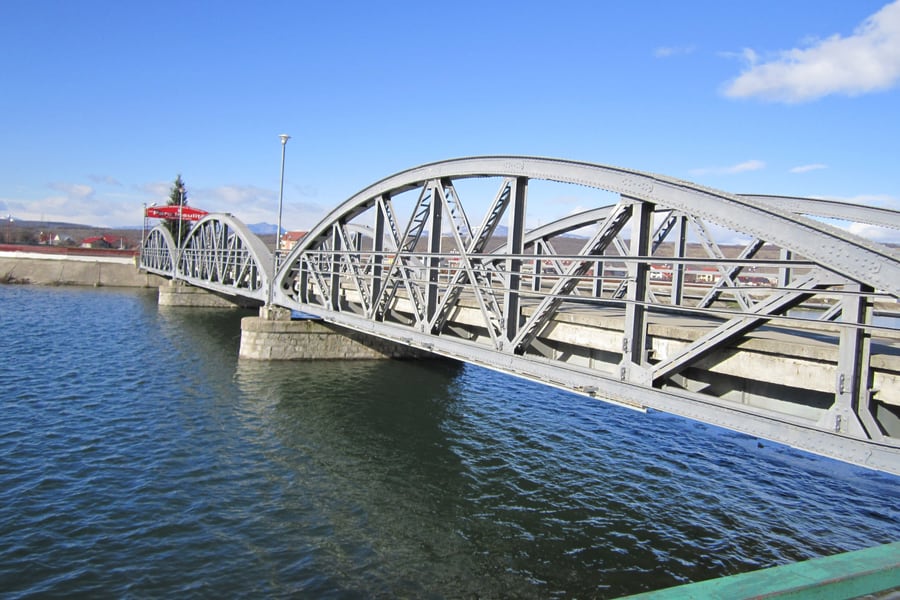
Gorj's county town, 73,545 people in 2021, on the Jiu where the line turns north for the gorge. Its Heroes' Way, a First World War memorial finished in 1938, carries Constantin Brâncuși's Table of Silence, Gate of the Kiss and Endless Column, inscribed by UNESCO in 2024. The steel bridge over the Jiu was built in 1896; three of its spans now lead to an island in the park.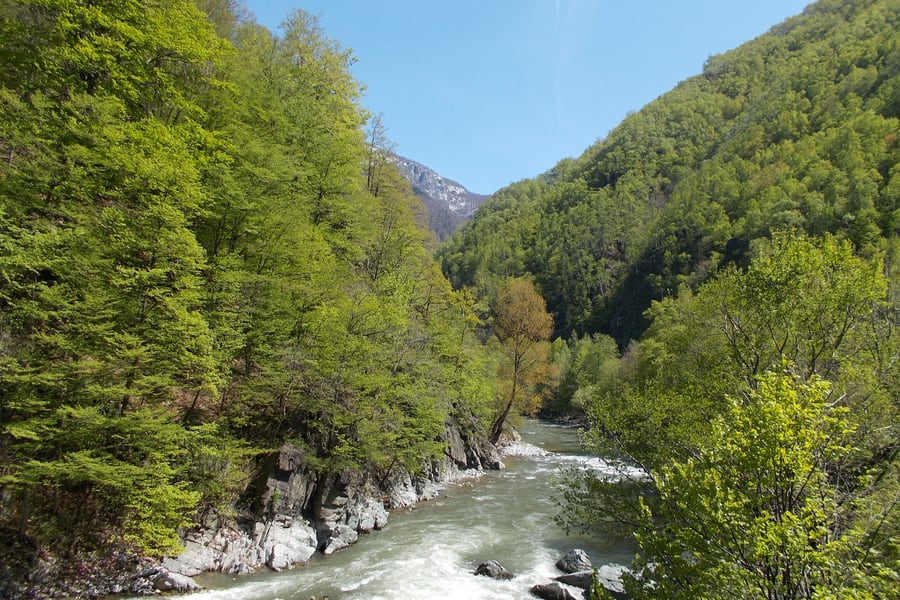 Nicu Farcaș / Wikimedia Commons · CC BY-SA 4.0 · cropped
Defileul Jiului National Park
Declared in 2005, the park covers 11,127 hectares of the gorge between the Vâlcan and Parâng mountains, almost all of it in Gorj. The river runs over boulders under beech forest, with the road and the railway squeezed in beside it; Lainici, with its monastery, is the halt in the middle.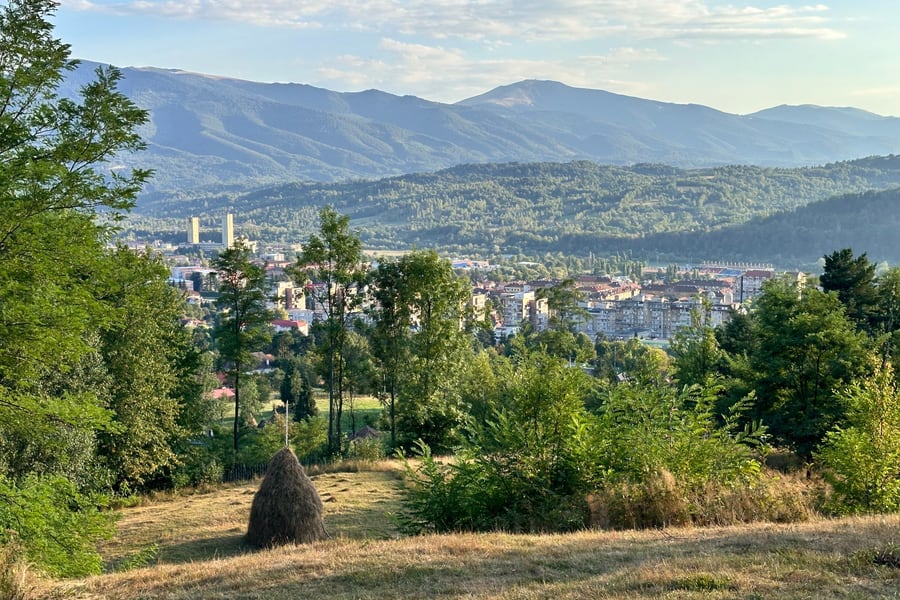 Mat.hrj / Wikimedia Commons · CC BY 4.0 · cropped
Petroșani
The capital of the Jiu Valley, where coal was dug from about 1840 and life turned on the mines for a century and a half. Many closed after the fall of communism, and the town has shrunk from 52,390 people in 1992 to 31,044 in 2021. Its university, founded for mining in 1948, and the Mining Museum keep the history, with the Parâng straight behind.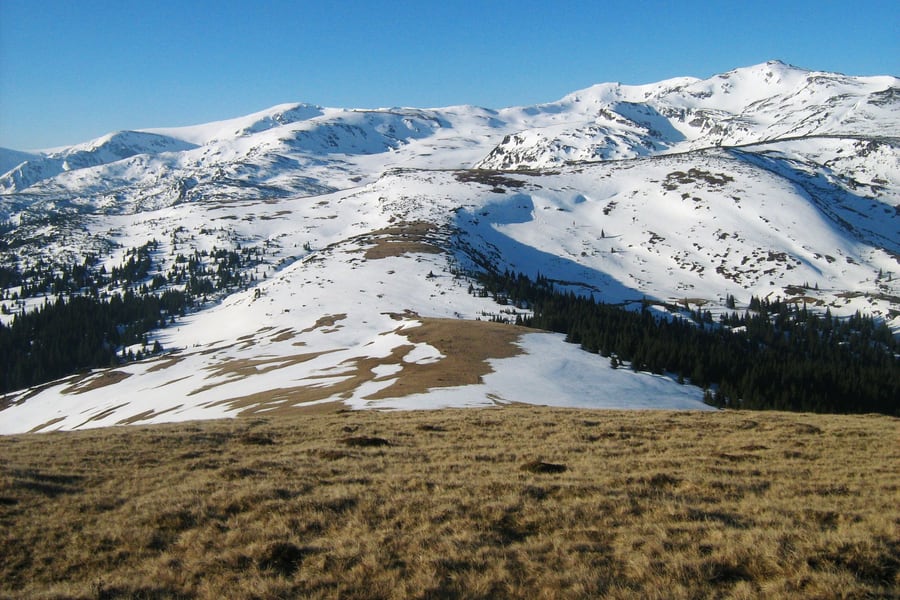 Cioboata Andrei / Wikimedia Commons · CC BY 3.0 · cropped
The Parâng Mountains
The range that forms the eastern edge of the Jiu Valley and the eastern wall of the gorge. Its highest summit, Parângu Mare, reaches 2,519 metres, and above the forest its long ridges carry glacier lakes such as Ghereșu. In spring the snow lies late on the tops.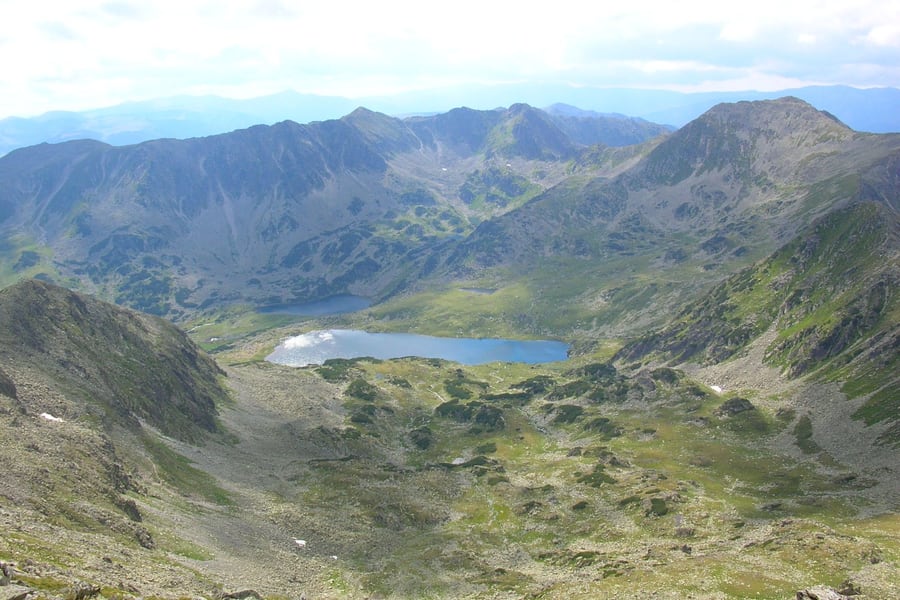 T. Lessiak / Wikimedia Commons · public domain · cropped
Retezat National Park
Romania's first national park, set aside in 1935: 38,047 hectares of high granite ridges with about eighty glacier lakes, 54 of them permanent, under Peleaga at 2,509 metres. CFR names Subcetate station, beyond Petroșani on the same line towards Simeria, as the way in.Where to Sleep
Stay in Târgu Jiu for the Brâncuși ensemble and the morning Regios north, or in Petroșani for the Parâng and the Jiu Valley. From Bucharest, IR 16025 reaches the gorge in mid-afternoon, and IR 16026 leaves Petroșani for Bucharest at 08:32 the next morning.
Questions or corrections
Planning this trip and stuck on something, or spotted a time, fare or detail that has changed? Send us a message about The Jiu Gorge Line. We read every one, and we update this page when something has changed.