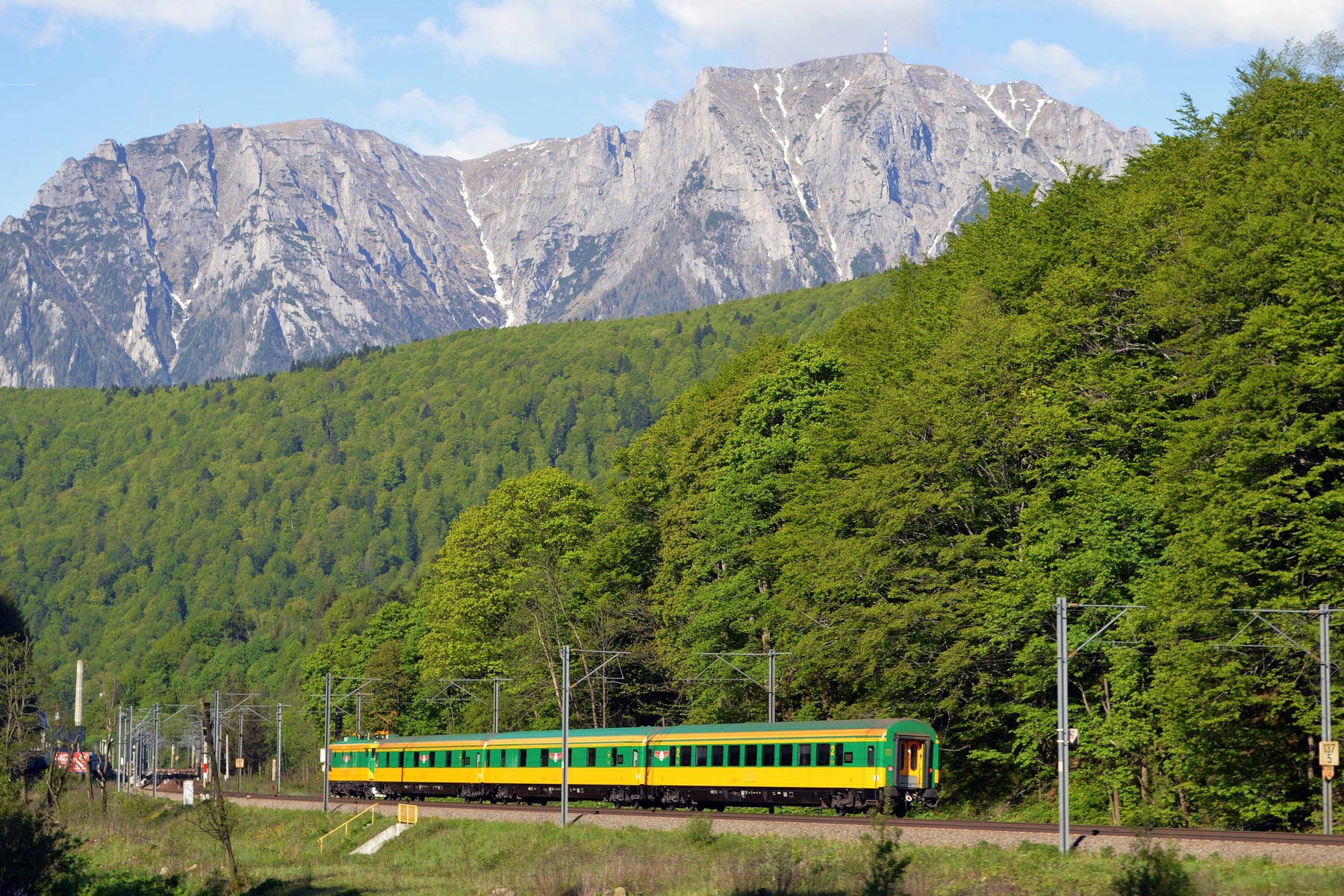
Bucharest–Brașov
DimiTalen / Wikimedia Commons · CC0
- DistanceBucurești Nord–Brașov · 166 km
- DurationAbout 2½ hours by InterRegio, 2¼ by InterCity
- Best seasonAll year; clear days show the Bucegi best
Introduction
Most stations are built because a town needs one. At Sinaia, two of the three were built for one family. King Carol I spent his summers at Peleș Castle in the woods above the town, and in 1886 the railway gave him a station of his own beside the public one, for the royal household and its guests. Carol II added a second, finished in 1940 to designs by the architect Duiliu Marcu, with a depot for the royal train and a square for welcoming heads of state. It is still kept for state occasions and is not open to the public. On the platform of the public station, a plate marks where the prime minister Ion G. Duca was shot dead by members of the fascist Iron Guard on 30 December 1933, on his way back from an audience with the king.
The line is CFR Main Line 300, 166 km from București Nord to Brașov: forty minutes across the plain to Ploiești, then up the Prahova Valley into the Carpathians, past Sinaia and Bușteni under the walls of the Bucegi, over the pass at Predeal and down into Transylvania. When it opened in 1879, Predeal was a frontier station, with Austria-Hungary on the other side.
CFR Călători runs about twenty trains a day each way. The InterCitys run non-stop from Ploiești to Brașov in about two and a quarter hours; for Sinaia, Bușteni and Predeal, take an InterRegio, which calls at all of them in about two and a half.
The Journey
The first hour is flat. From București Nord the line runs north across the Wallachian plain to Ploiești Vest, at km 59. The station was built after the First World War, when the line was already Romanian end to end, so that trains to Brașov no longer had to reverse in Ploiești. The InterCitys stop here and nowhere else before Brașov.
Up the Prahova
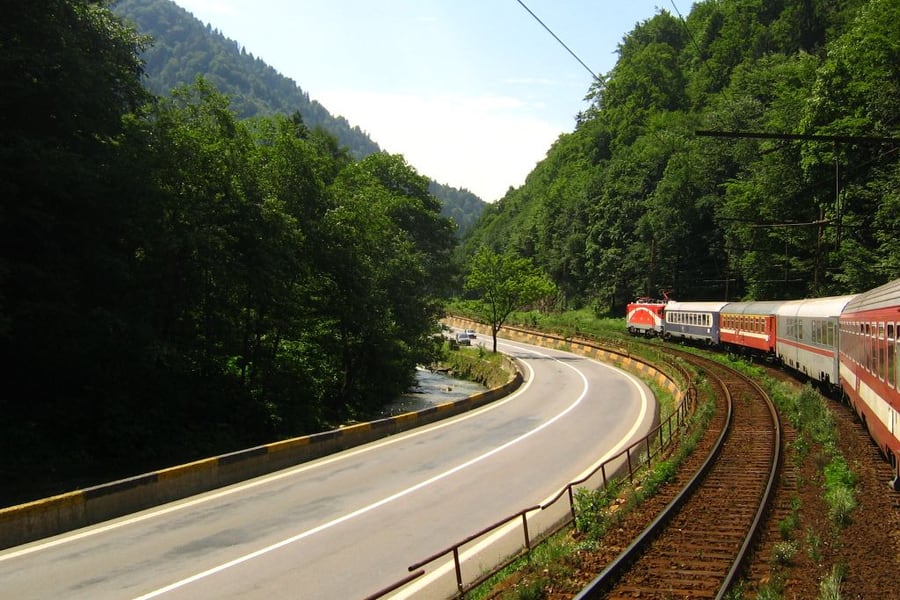
At Câmpina, km 92, the hills close in, and beyond Comarnic the line enters the gorge of the Prahova. The railway of 1879 went through two short tunnels near Posada; both were given up when the line was doubled in 1940, and the track now follows the river in the open, with the main road alongside. Sinaia comes at km 121, its station buildings set against the forest.
Under the Bucegi
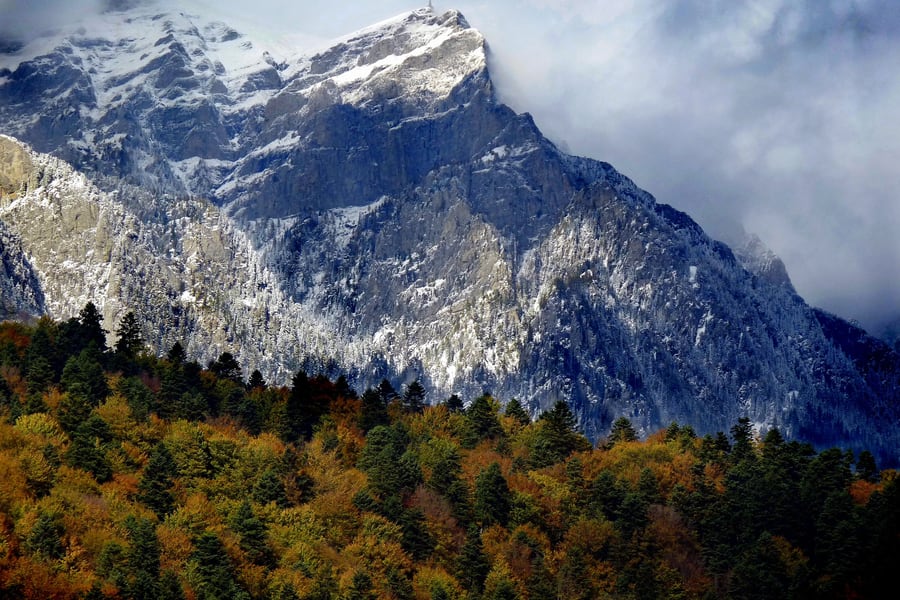
North of Sinaia the valley opens and the Bucegi appear on the left, a wall of rock rising to 2,505 metres, straight from the edge of Bușteni at km 129. Azuga follows, then Predeal at km 140, Romania's highest town. The line opened in sections in 1879: Ploiești to Câmpina and Sinaia to Brașov on 10 June, the gorge between them only on 1 December, with carriages carrying passengers across the gap. Predeal was the frontier station between Romania and Austria-Hungary until 1918.
Down to Brașov
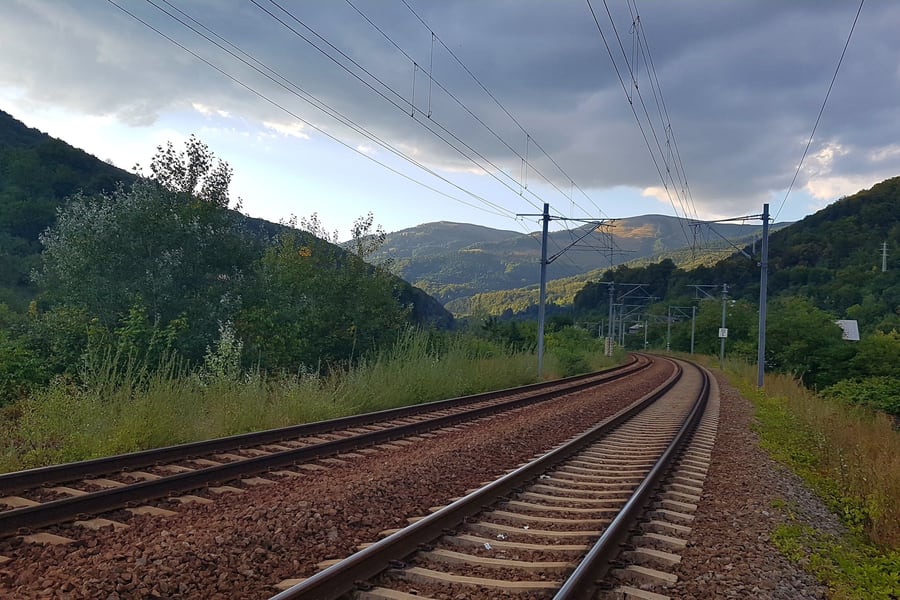
Over the watershed the line leaves the Prahova for the Timiș and falls through the forest to Brașov. The Hungarian railway had this side ready by 1878, including the two brick tunnels north of the pass, 937 and 104 metres long. The train runs into Brașov at km 166.
The trains
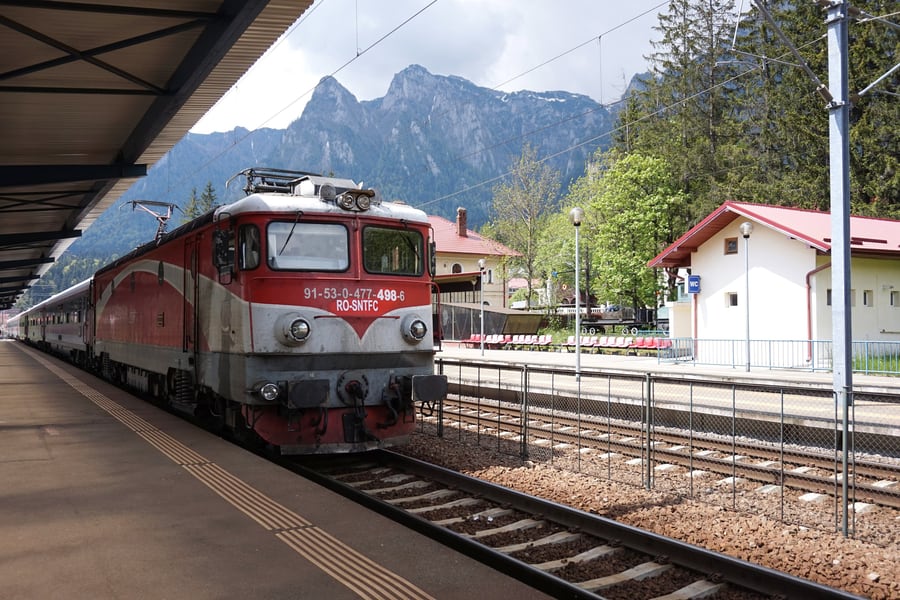
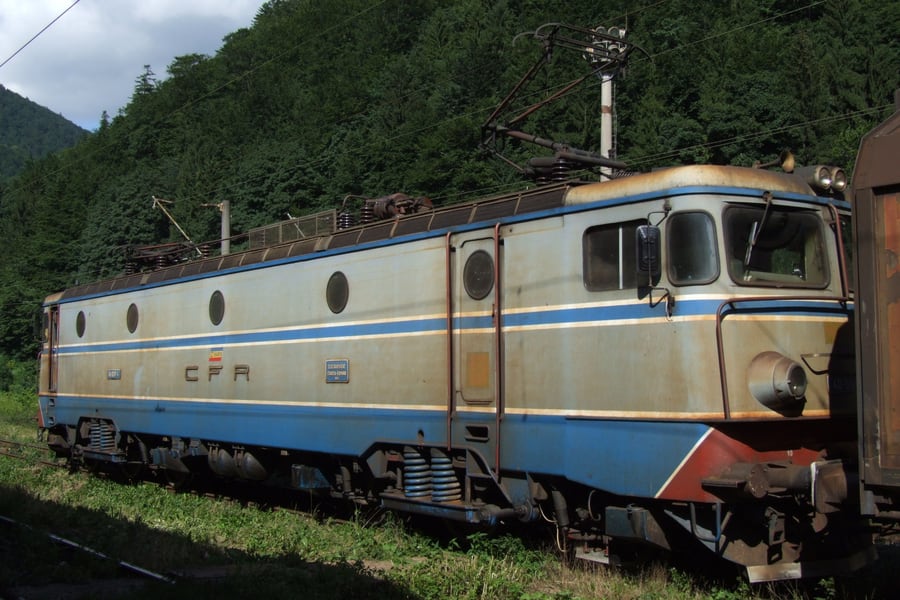
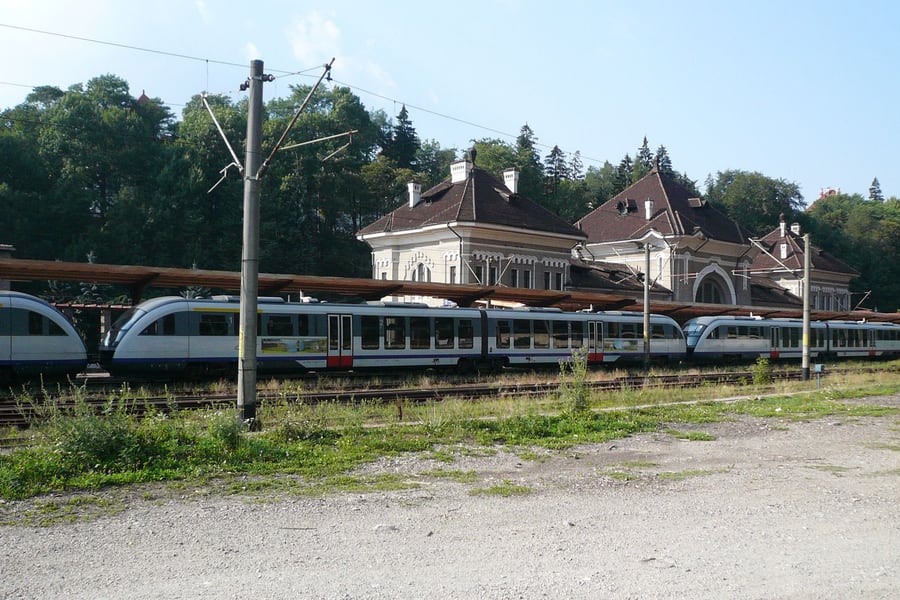
This was the first electrified main line in Romania. Between 1963 and 1965, French, East German, Czechoslovak and Swedish prototypes were tried against each other on the climb from Brașov to Predeal; the Swedish firm ASEA won, and from 1967 to 1991 the Electroputere works at Craiova built more than a thousand of its six-axle electrics under licence, as CFR's Class 40 (120 km/h) and Class 41 (160 km/h). Electric trains reached Predeal from Brașov in 1965 and Bucharest in 1969. Many of the class have since been rebuilt by Softronic as Class 47, and they still head CFR Călători's trains here. The track was rebuilt for 150 km/h, from Bucharest to Câmpina by 2004 and on to Predeal in 2011.
Since August 2026 a private operator, Astra Trans Carpatic, has also run four trains a day each way between Bucharest and Brașov, with an electric unit built in China by CRRC.
Along the route
 Ondin Dinescu / Wikimedia Commons · CC BY-SA 4.0 · cropped
Into the Prahova gorge
Past Câmpina the plain closes into a gorge. Near Posada, above Comarnic, the 1879 line ran through two short tunnels; both were given up when the track was doubled in 1940, and the railway now follows the river in the open.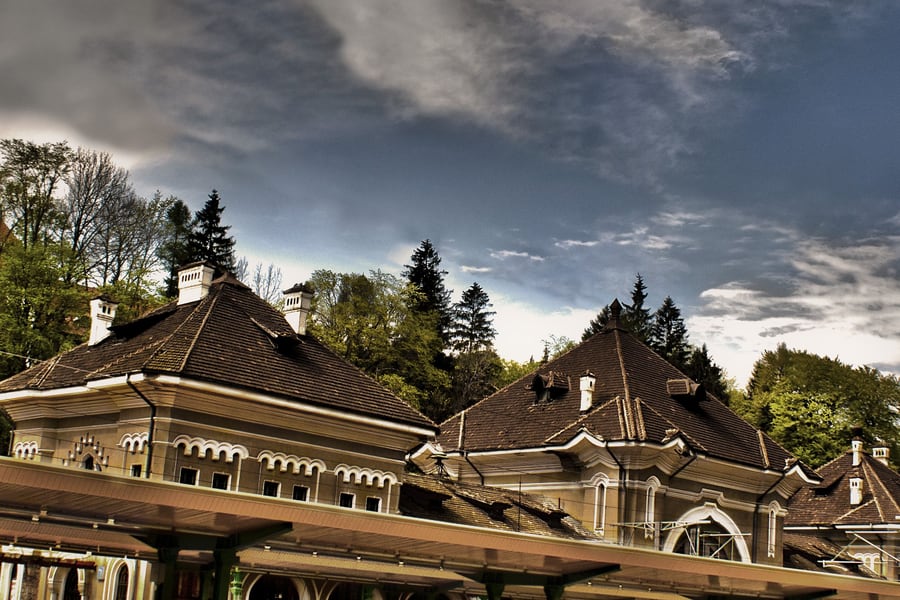 Dobre Cezar / Wikimedia Commons · CC BY-SA 3.0 RO · cropped
Sinaia
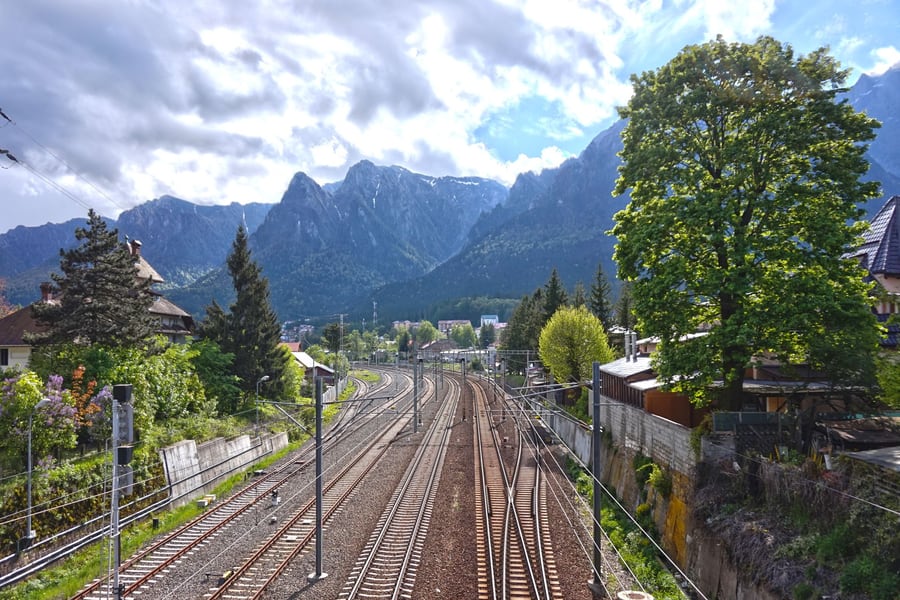
Most InterRegio trains stop here for a minute or two; the InterCity runs straight through. Beside the public station, which has a model railway exhibition, stand the royal stations of 1886 and 1940.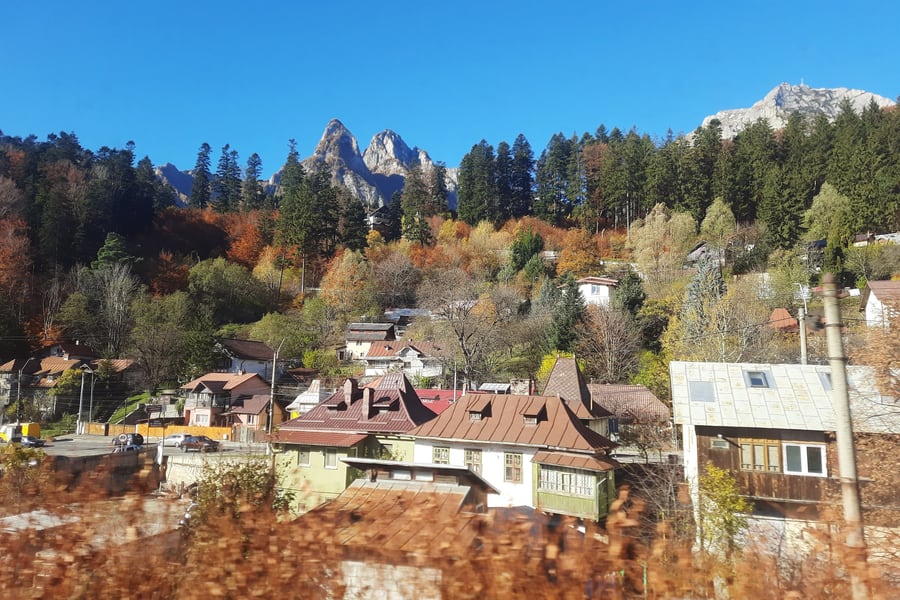 Gikü / Wikimedia Commons · CC0
Bușteni under the Bucegi
Bușteni lies at about 875 metres at the foot of the Bucegi, which rise to 2,505 metres. Going north the wall is on the left, close enough to fill the window, and a cable car climbs it from the town.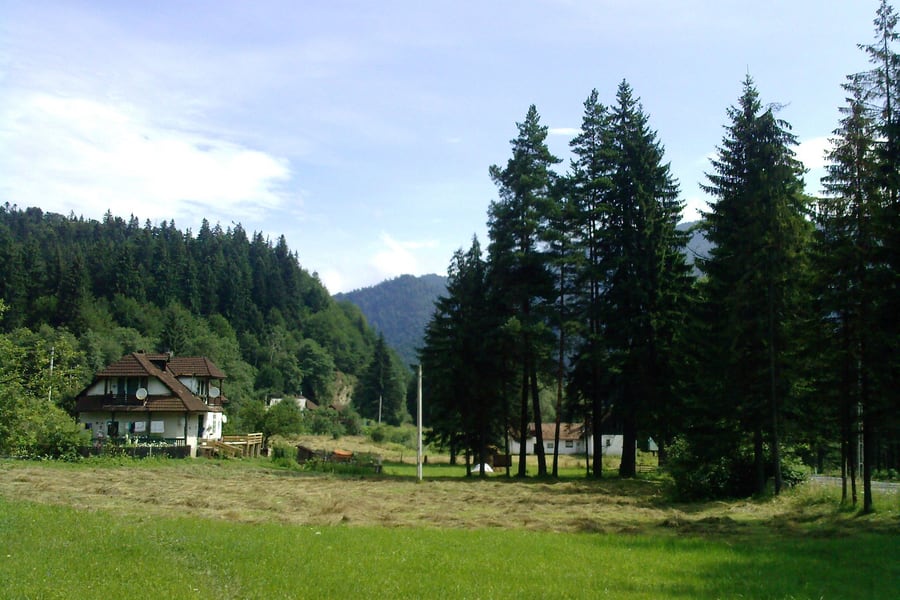 Nicu Farcaș / Wikimedia Commons · public domain
Over Predeal, down the Timiș
Predeal, Romania's highest town at over 1,000 metres, was the frontier station with Austria-Hungary until 1918. Beyond it the line drops into the Timiș valley and on to Brașov through tunnels finished in 1878, the longest 937 metres.A bit of history
Culture & experiences along the way
 Melange / Wikimedia Commons · CC BY-SA 4.0 · cropped
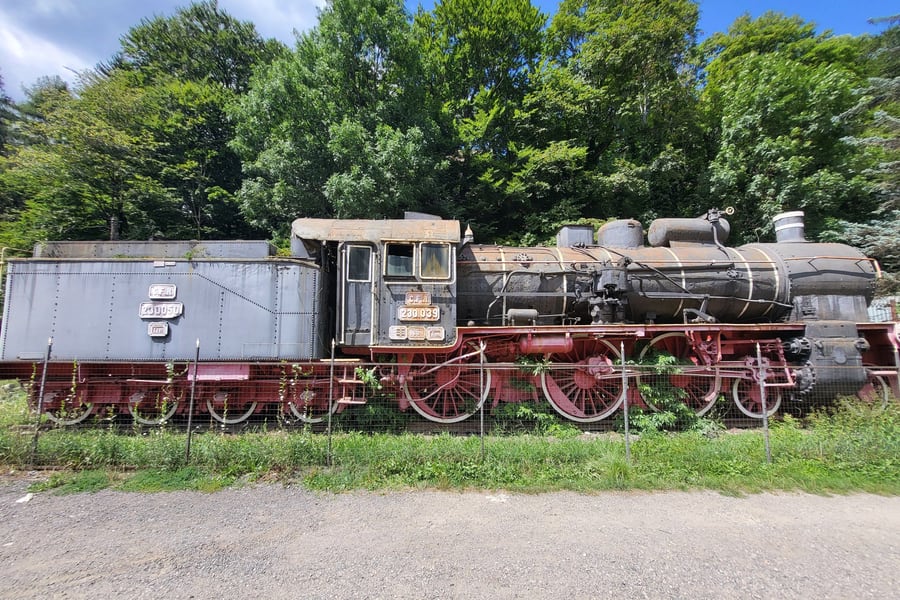
Steam on the platform at Sinaia
Sinaia station keeps a small railway collection. On show is 230.039, a steam engine built in Germany by Linke-Hofmann in 1907 that worked passenger and freight trains in Banat and Transylvania until 1978, beside the tender of its sister 230.050. Romania listed it as national cultural heritage in 2000.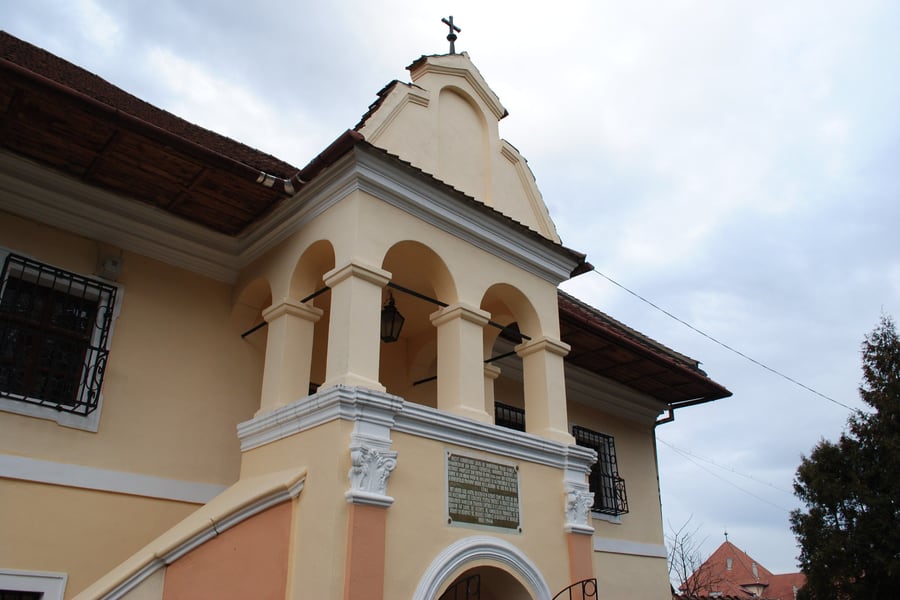 Andrei kokelburg / Wikimedia Commons · CC BY-SA 3.0 RO · cropped
The First Romanian School
In Brașov's Șchei quarter, beside St Nicholas church, this is where Romanian was first used for teaching, in 1583; the stone school was rebuilt in 1597. It is now a museum of early Slavonic and Romanian books, with a printing press and some 6,000 volumes from the school's own library.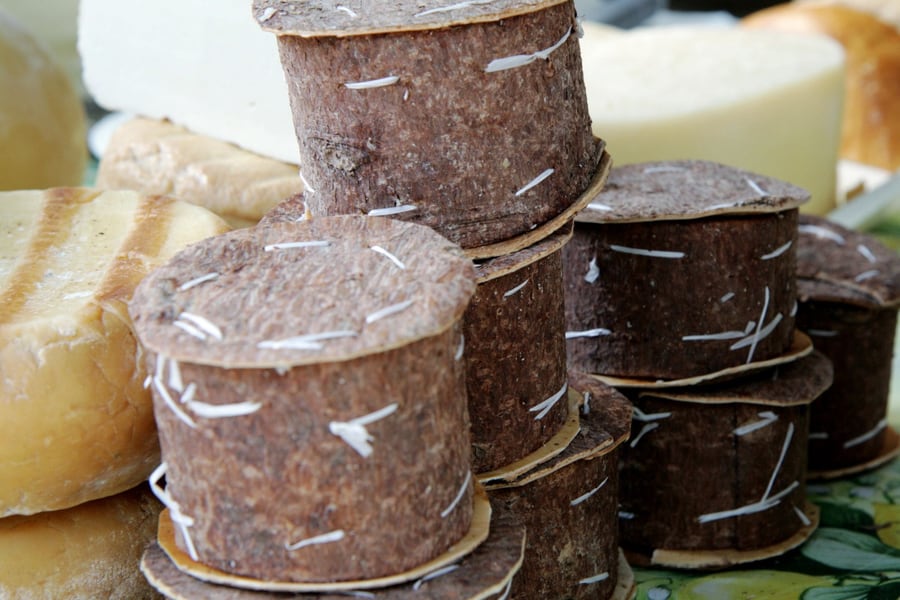 Oliver Speks / Wikimedia Commons · CC BY-SA 2.0
Brânză de burduf
The mountain cheese of the Rucăr–Bran pass beyond Brașov: salted sheep's cheese kneaded by hand, then packed into a sheep's skin or, as here, a tube of pine bark that gives it a resin flavour. The packing was the point: cheese kept this way lasts a long time.Timetables
CFR Călători runs about twenty trains a day in each direction, every day of the week, from about 05:40 to 21:20 out of București Nord. There are three kinds: the InterCity (IC), which stops only at Ploiești Vest; the InterRegio (IR), which calls at the resorts in the valley; and the Regio (R), which stops everywhere. Every ticket carries a seat reservation.
București Nord to Brașov
| Train | București Nord | Ploiești Vest | Câmpina | Sinaia | Bușteni | Predeal | Brașov |
|---|---|---|---|---|---|---|---|
| R 3021 | 05:40 | 06:56 | 07:26 | 08:12 | 08:22 | 08:39 | 09:21 |
| IR 1735 | 06:09 | 06:49 | 07:12 | 07:42 | 07:51 | 08:07 | 08:41 |
| IC 535 | 07:18 | 07:57 | — | — | — | — | 09:36 |
| IR 1621 | 09:45 | 10:27 | 10:51 | 11:20 | 11:29 | 11:46 | 12:20 |
| IC 531 | 12:21 | 13:00 | — | — | — | — | 14:36 |
| IR 1645 | 13:07 | 13:46 | 14:10 | 14:36 | 14:45 | 15:02 | 15:39 |
| IR 1633 | 13:43 | 14:22 | 14:45 | 15:14 | 15:23 | 15:40 | 16:15 |
| IC 536 | 19:47 | 20:29 | — | — | — | — | 22:05 |
Brașov to București Nord
| Train | Brașov | Predeal | Bușteni | Sinaia | Câmpina | Ploiești Vest | București Nord |
|---|---|---|---|---|---|---|---|
| IC 538 | 06:49 | — | — | — | — | 08:26 | 09:04 |
| IR 1630 | 07:40 | 08:17 | 08:34 | 08:43 | 09:15 | 09:38 | 10:15 |
| IR 1632 | 12:57 | 13:33 | 13:50 | 13:59 | 14:28 | 14:53 | 15:38 |
| IC 532 | 14:42 | — | — | — | — | 16:20 | 16:56 |
| IR 1636 | 17:30 | 18:06 | 18:23 | 18:32 | 19:02 | 19:26 | 20:04 |
| IR 1622 | 20:00 | 20:37 | 20:54 | 21:04 | 21:32 | 21:55 | 22:35 |
Many of these trains run on beyond the two ends, to Cluj-Napoca, Sibiu, Târgu Mureș or Constanța, so the board at București Nord will show the final destination rather than Brașov.
Astra Trans Carpatic
The private operator's four InterRegio trains each way (IR 11531–11538) call at Ploiești Vest, Câmpina, Sinaia, Bușteni, Azuga and Predeal. From București Nord they leave at 06:35, 07:44, 14:20 and 15:40, reaching Brașov in under two and a half hours; from Brașov at 10:44, 11:46, 17:10 and 18:30. Astra sells its own tickets.
Departures for Thursday 5 November 2026, read on 20 October 2026 from CFR Călători's booking site (opens in a new tab) and Astra Trans Carpatic's timetable (opens in a new tab). The timetable year changes in mid-December.
Tickets
Fares depend on the kind of train. For a journey on 5 November 2026, CFR Călători's booking site quoted an adult 37.80 lei on the Regio, 68.15 lei second class on an InterRegio and 77.15 lei on an InterCity, with first class at 97.85 and 111.80 lei. Every ticket comes with a seat reservation, issued with it at no extra charge, and the site warns that its prices can include advance-purchase discounts.
Buy online at CFR Călători's booking site, in the app or at the station. Astra Trans Carpatic sells its own tickets online and from machines in the halls at București Nord and Brașov. Fares in Romanian lei, as of October 2026.
Book your tickets
InterRegio · Bucharest–Brașov
68.15 lei second class · 97.85 lei first
The stopping express via Sinaia, Bușteni and Predeal, about two and a half hours with a seat reservation included.
Book Tickets (opens in a new tab, on CFR Călători)via CFR CălătoriInterCity · Bucharest–Brașov
77.15 lei second class · 111.80 lei first
The fastest trains, about two and a quarter hours, calling only at Ploiești Vest.
Book Tickets (opens in a new tab, on CFR Călători)via CFR CălătoriRegio · every stop
37.80 lei second class
The slow train that calls at every halt in the valley, three and a quarter to just over four hours end to end.
Book Tickets (opens in a new tab, on CFR Călători)via CFR CălătoriRail Passes
An Interrail Romania Pass or a Global Pass covers CFR Călători's trains on this line. Interrail's table of railway companies lists the Regio with no reservation needed, and the InterRegio and InterCity with a compulsory reservation, which the pass does not include. Astra Trans Carpatic is excluded, so its trains need their own ticket.
For this journey alone, a pass is not worth buying. The cheapest Romania Pass, three travel days in a month, costs €105 in second class for an adult and €79 for a traveller aged 12 to 27, against 68.15 lei for an InterRegio ticket. It pays only on a longer trip through Romania.
Checked October 2026 against interrail.com (opens in a new tab).
Places to Visit
With trains every hour or so, Sinaia, Bușteni and Brașov are easy places to break the journey, and Bran is 25 km beyond Brașov.
 TiberiuSahlean / Wikimedia Commons · CC BY-SA 3.0 RO · cropped
Peleș Castle
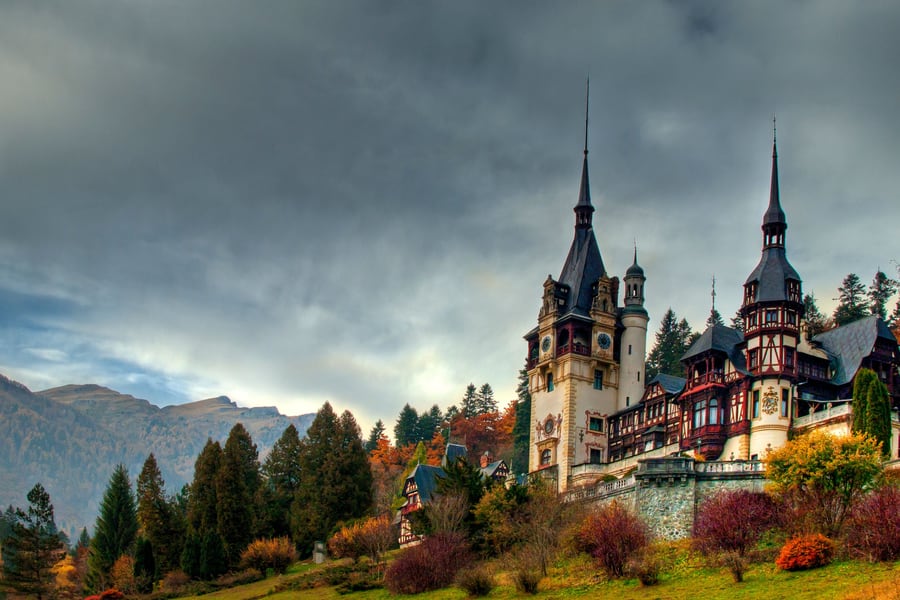
Carol I's summer palace in the woods above Sinaia, begun in 1873, opened in 1883 and not finished until 1914, its central tower 66 metres high. German and Czech architects gave it the look of an Alpine castle with Renaissance manners, and it was the first castle anywhere to run entirely on electricity made on the spot. It was for its guests that Sinaia's royal stations were built.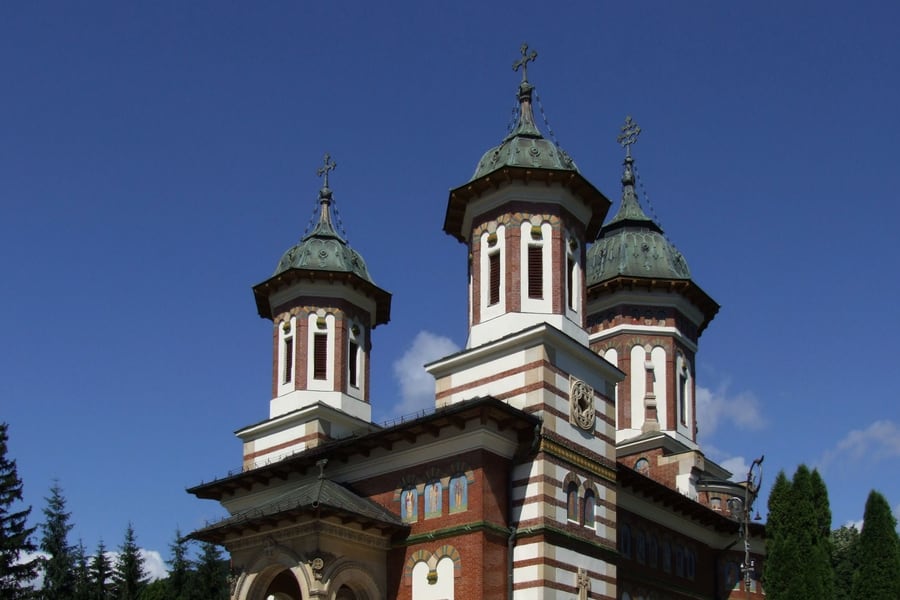 Pudelek (Marcin Szala) / Wikimedia Commons · CC BY-SA 3.0 · cropped
Sinaia Monastery
The monastery that named the town: founded in 1695 by Mihail Cantacuzino on his return from Saint Catherine's on Mount Sinai, and built as a stronghold on the road to Brașov as well as a house of prayer. The Old Church of 1695 and the Great Church of 1846 stand in two courtyards; the Great Church was the first in Romania lit by electricity, at Carol I's instigation.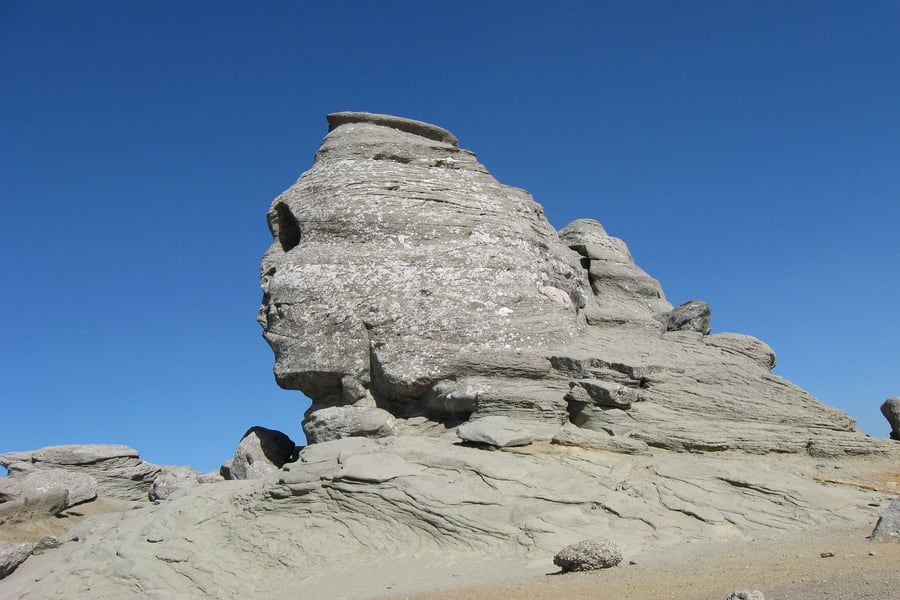 Radu Privantu / Wikimedia Commons · CC BY 2.0 · cropped
The Sphinx and Babele
On the plateau above Bușteni, wind, rain and frost have cut the sandstone into shapes: Babele, "the old women", are mushroom-shaped stacks, and the Sphinx, at 2,216 metres, is a rock some eight metres high that takes on a face from one angle. It got its name only in 1936. The cable car from Bușteni reaches the Babele chalet, or there is a path up the Jepi valley.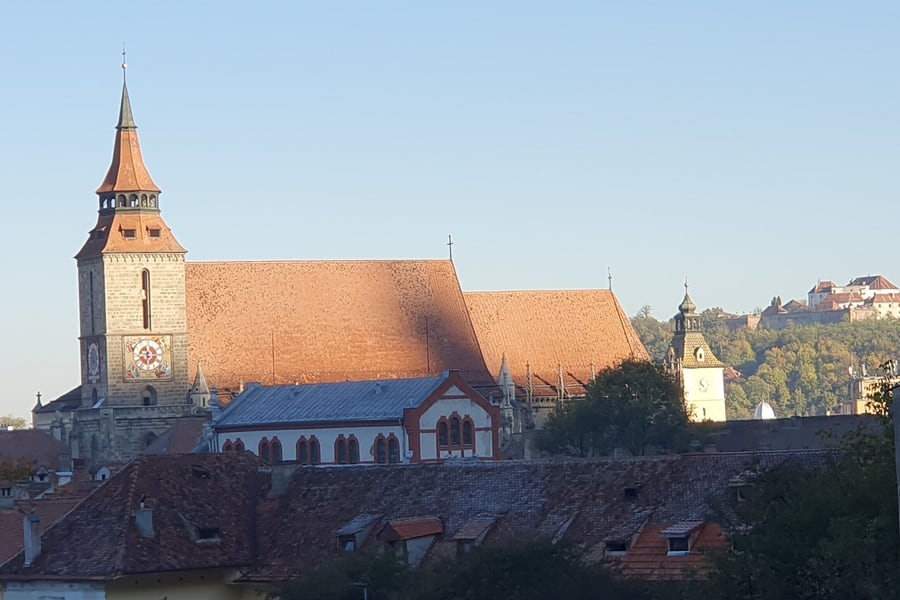 Yair-haklai / Wikimedia Commons · CC BY-SA 4.0 · cropped
The Black Church
The principal Gothic monument in Romania, begun by Brașov's Saxon townspeople in the late 14th century as a Catholic church and Lutheran today. It was long said to have been blackened by the fire of 1689; recent research puts the soot down to the industrial city of the 19th century, which is also when the name first appears. A museum inside is open to visitors.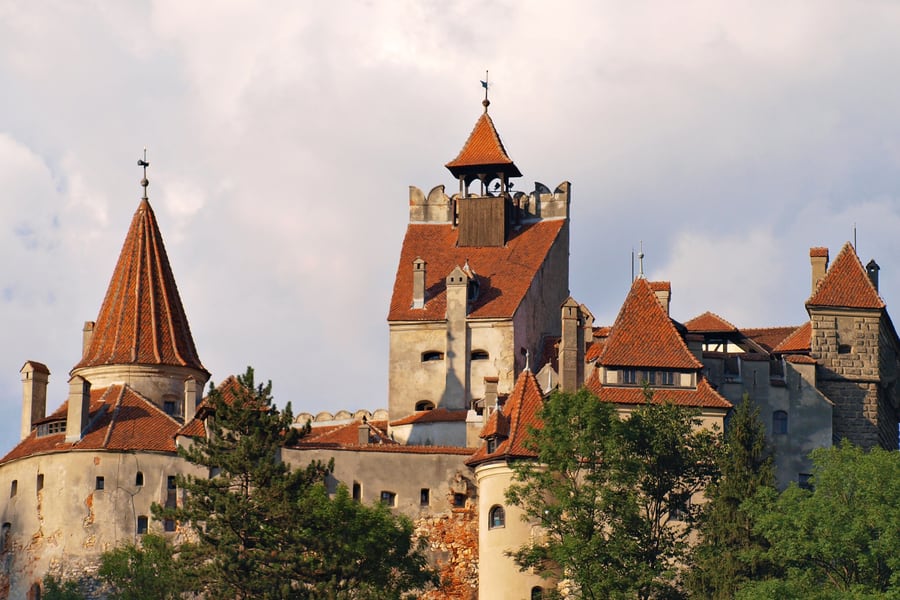 Todor Bozhinov / Wikimedia Commons · CC BY-SA 4.0 · cropped
Bran Castle
A fortress the Saxons of Brașov built in 1377 on the old frontier with Wallachia, guarding the pass the road still climbs. It is sold abroad as Dracula's castle, though there is no evidence Bram Stoker knew of it. Inside is the art and furniture of Queen Marie, and at the foot of the hill an open-air museum of the region's farmhouses, barns and water-powered machinery.Where to Sleep
Sinaia is the place to stop overnight on the way: Peleș and the monastery are both in the town, and the InterRegios carry on to Brașov in about an hour. București Nord is also where the seasonal through train to Sofia starts — see Sofia to Bucharest.
Where to stay
Hotel Palace Sinaia
In the centre of Sinaia, at the gate of the town park
Opened in 1911 and listed as a historic monument, with rooms over Dimitrie Ghica park or towards the Bucegi.
Check Availability (opens in a new tab, on hotelpalacesinaia.ro)via hotelpalacesinaia.roQuestions or corrections
Planning this trip and stuck on something, or spotted a time, fare or detail that has changed? Send us a message about Bucharest–Brașov. We read every one, and we update this page when something has changed.