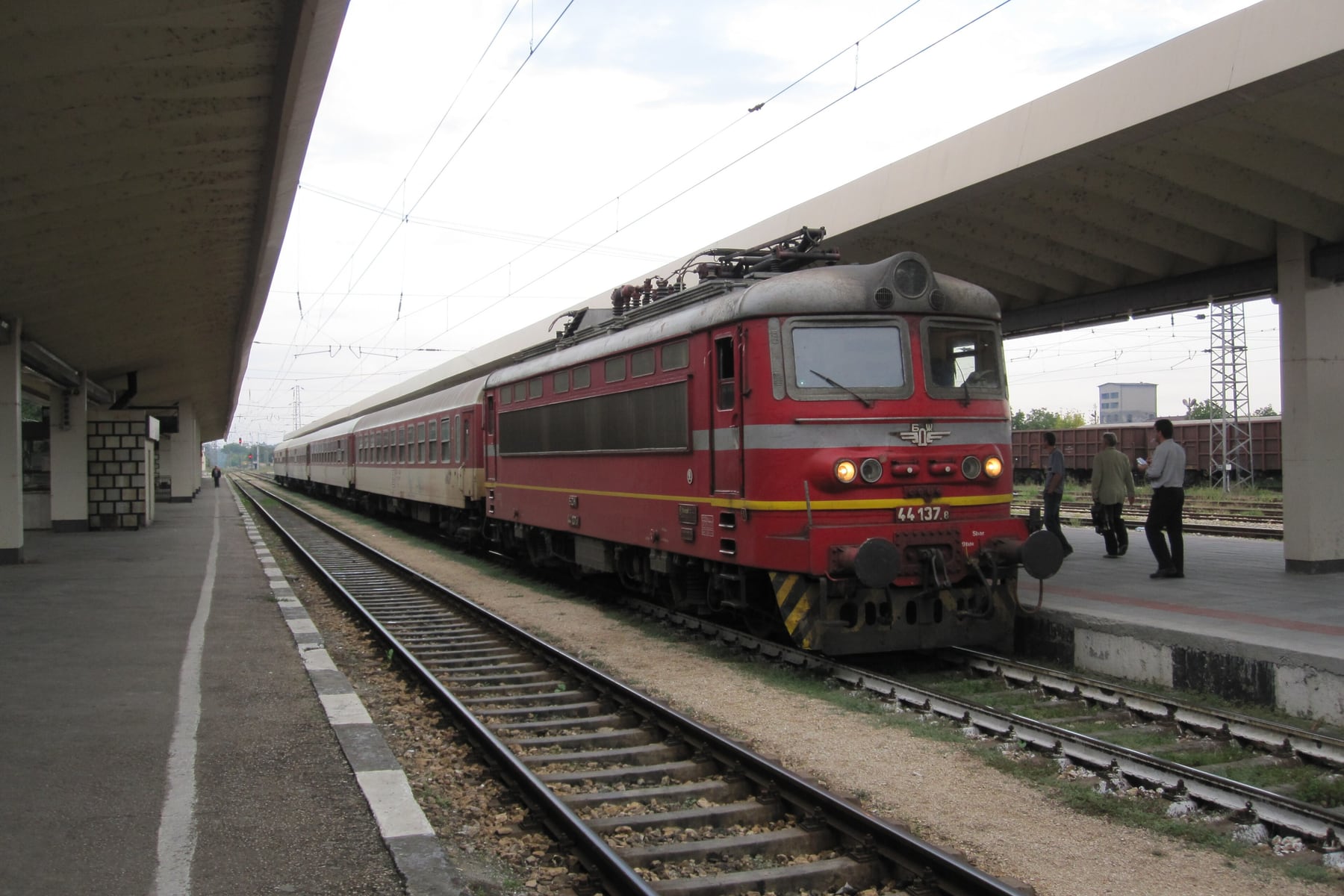
The România — Sofia to Bucharest Across the Danube
Phil Richards from London, UK / Wikimedia Commons · CC BY-SA 2.0
- DistanceSofia – Ruse 405 km, then over the Danube to Bucureşti Nord
- Duration9 h 56 north to Bucureşti · 9 h 55 south to Sofia
- Best seasonSummer only · 12 June to 12 October 2026
Introduction
There is a train between Sofia and Bucharest for four months of the year, and the two railways that run it do not describe it the same way.
CFR Călători, on the Romanian side, announces a named international train — the "România" — which leaves Bucureşti Nord at 10:46 and reaches Sofia at 20:41, and comes back the other way as train 460. It is presented as one thing with one name, the way a train usually is.
BDŽ, on the Bulgarian side, never uses the name. What it publishes instead is a table of carriages. On the northbound working, coach 472 runs from Sofia North to Bucureşti Nord; coaches A2, 11 and 12 go only as far as Ruse; coach 481 joins from Varna; and coach 479 is a berth car that has come up from Halkalı, on the western edge of Istanbul, since eight o'clock the previous evening. Alongside that, BDŽ's own fare panel splits the morning into three separate trains: SU 20231 across Sofia, ICF 2611 on to Gorna Oryahovitsa, and IC-INT 460 down to Ruse.
Both descriptions are correct. They are descriptions of the same seat.
The carriage is the thing that travels
What goes from Sofia to Bucharest is not a train but a carriage, and each railway names it after whatever happens to be pulling it at the time. A passenger who books coach 472 sits down at Sofia before seven in the morning and gets up in Bucharest just before five in the afternoon, having changed nothing. Around that carriage, the train changes identity three times: a suburban unit across the capital, the Varna express as far as Gorna Oryahovitsa, and then — after fifteen minutes of shunting in a junction yard — an international train that exists only for the rest of the day.
Going the other way it works in reverse. Train 461 does run the whole distance under one number, so southbound there genuinely is a Bucharest–Sofia train. But it arrives in pieces: the Varna carriage is detached at Ruse, the Istanbul berth car at Gorna Oryahovitsa, and what reaches Sofia at 20:41 is a good deal shorter than what left Bucharest. The journey is assembled in one direction and taken apart in the other.
Why it is done this way
The habit is older than the bridge the train crosses. Until 1954 there was no rail bridge between Bulgaria and Romania at all. From December 1940 the through carriages went over the Danube on a train ferry, and the ferry's capacity was three four-axle passenger carriages at a time. A carriage is a unit a boat can carry; a train is not. By the time the Danube Bridge opened at Ruse in June 1954, the practice of routing individual coaches rather than whole trains was already how international traffic here worked, and on this route it never stopped.
The result is a journey with a texture that has mostly disappeared from Europe. Somewhere near Gorna Oryahovitsa, a locomotive takes hold of your carriage and a stranger's carriage from Istanbul at the same time, and pulls both to a river that two railways reached from opposite banks, three years apart, in the eighteen-sixties — and then failed to bridge for another eighty-five years.
It runs daily from 12 June to 12 October 2026, and not at all outside those dates.
The Journey
The northbound journey begins with five minutes that are not really part of it. Sofia Central has been under reconstruction since May 2024, and most trains for the north now start from Sofia North instead. So the day opens at 07:00 with train 20231, a Siemens electric unit, running the short hop across the city to Sofia-Sever, where the real departure waits.
At 07:15 train 2611 leaves Sofia North for Varna, and for the next four hours the Bucharest carriage is simply part of it. The line is Bulgaria's main line 2, and it does the best scenery of the day early: within half an hour the train is inside the Iskar Gorge, where the river has cut straight through the Balkan Mountains and the railway follows it under white limestone walls, through tunnels, past Svoge and the cliffs at Lakatnik. It comes out at Mezdra at 08:47 and crosses the Danubian plain — Cherven Bryag, Pleven at 10:01, Levski — on open, unhurried country.
Gorna Oryahovitsa, where the train is made
The train arrives at Gorna Oryahovitsa at 11:10. It leaves at 11:25, for Varna, without you.
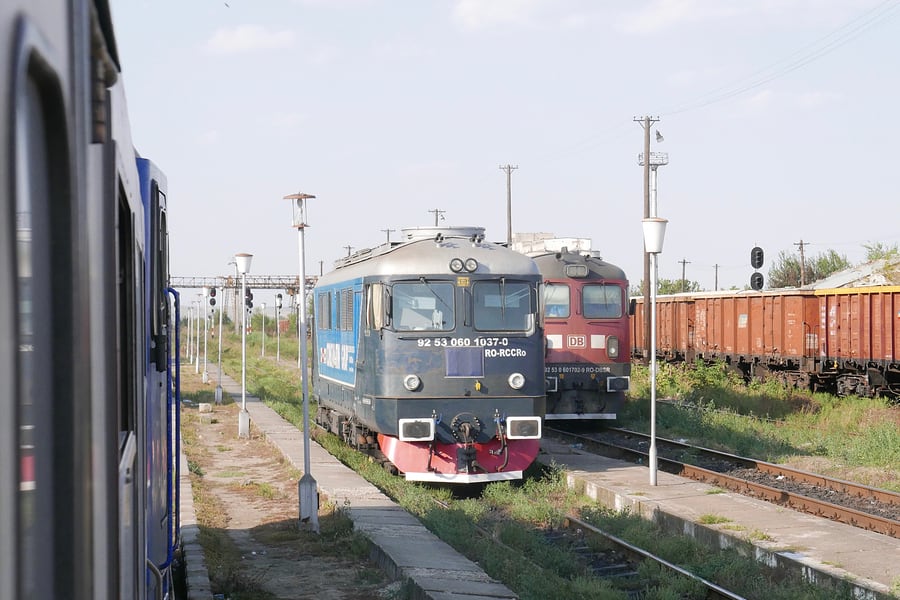
This junction is the point of the whole arrangement. The Bucharest carriages are drawn off the Varna express and pushed onto a different road, where they are joined by coach 479 — a berth car that left Halkalı at 20:00 the night before, crossed the Turkish frontier at Kapıkule around half past four in the morning, and has since ridden two more trains up through Stara Zagora and Tryavna to get here at 11:16. Fifteen minutes later, at 11:40, the two sets of carriages leave together as train 460, which did not exist before this moment and will cease to exist at the border.
From here the route is main line 4, the Trans-Balkan railway, running north-east down to the river. It opened between Ruse and Veliko Tarnovo on 8 October 1900, and the section this train uses is the oldest part of it. The stops are small — Polski Trambesh, Byala at 12:22 where the line crosses the Yantra, Borovo, Dve Mogili, Ivanovo — and then at 13:38 it is at Ruse.
Thirty-seven minutes at the frontier
The train stands at Ruse until 14:15. There is no longer anything for it to wait for: Bulgaria and Romania joined the Schengen area for land travel on 1 January 2025, and the passport check that used to happen on the bridge is gone. The stop remains in the timetable regardless.
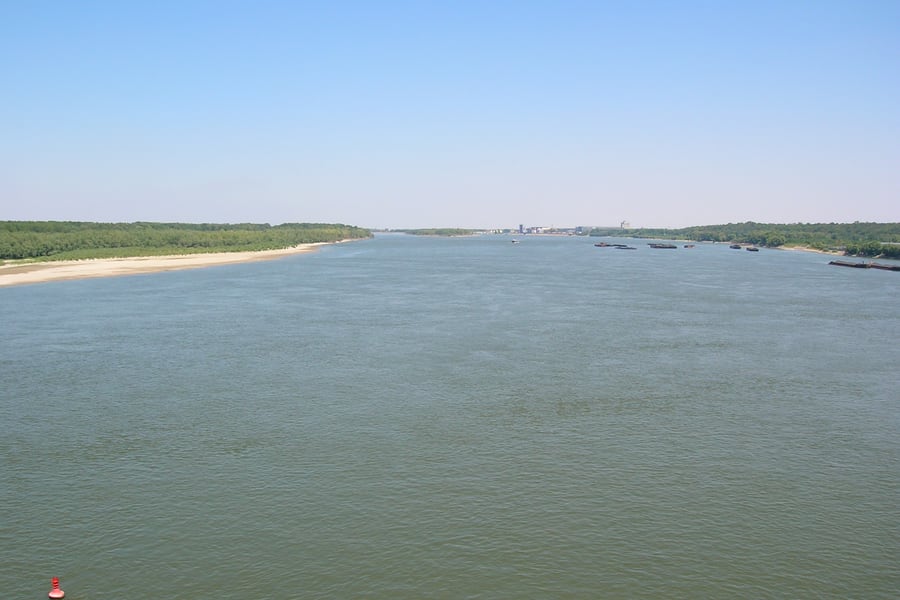
Then it moves out through Ruse-Razpredelitelna, the marshalling yard where the bridge line leaves, and onto the Danube Bridge. The crossing takes twenty-five minutes for a structure 2,223.52 metres long — a slow, deliberate pace over an iron deck with the road running above. This is one of only two bridges on roughly five hundred kilometres of river that the two countries share; the other is far upstream at Vidin. In the middle, an 85-metre section can be raised for shipping.
Giurgiu Nord comes at 14:40, and the train is in Romania.
The long way in
From Giurgiu, Bucharest is 70 kilometres away down the line that was Romania's first railway, opened in 1869. This train does not take it. It runs west instead to Videle, on the Bucharest– Craiova main line, and comes into the capital from that side — 2 hours 12 minutes for the last leg, which is the slowest part of the day by a wide margin.
The direct line has had a hard time of it. Its bridge over the Argeş at Grădiștea, the oldest railway bridge in the Old Kingdom, collapsed during the floods of 13 August 2005 after sand extraction had undermined a pier, and the route did not carry a train again until 1 June 2024, when it reopened to railcars.
So the arrival is at Bucureşti Nord at 16:56, by the long way round, nine hours and fifty-six minutes after leaving Sofia — with a carriage from Varna and a berth car from Istanbul still coupled up behind, having travelled the last two hours as part of the same train.
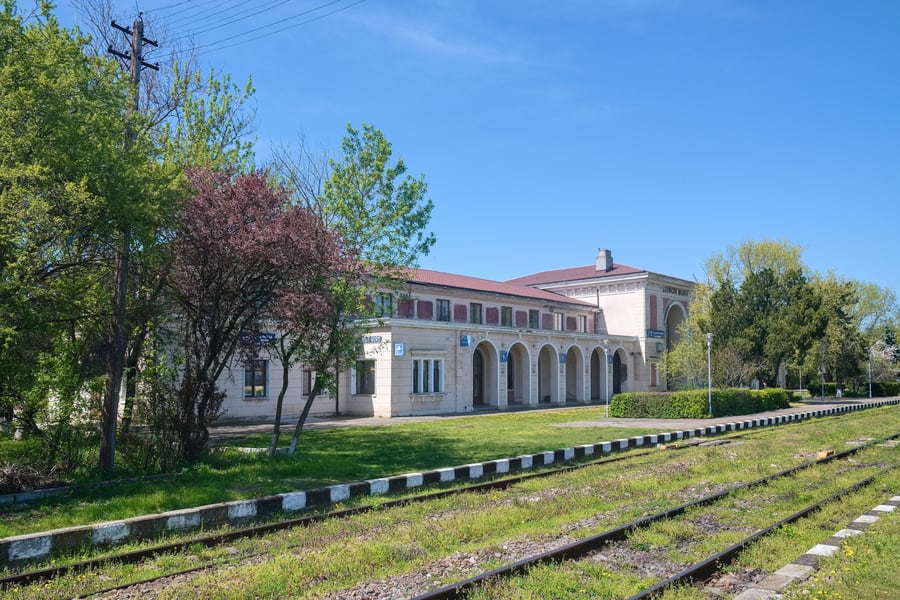
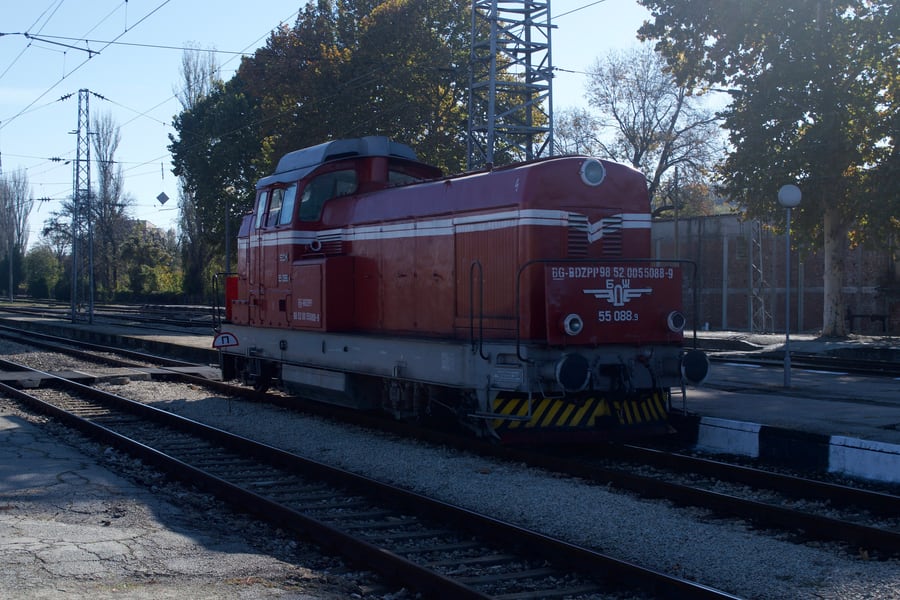
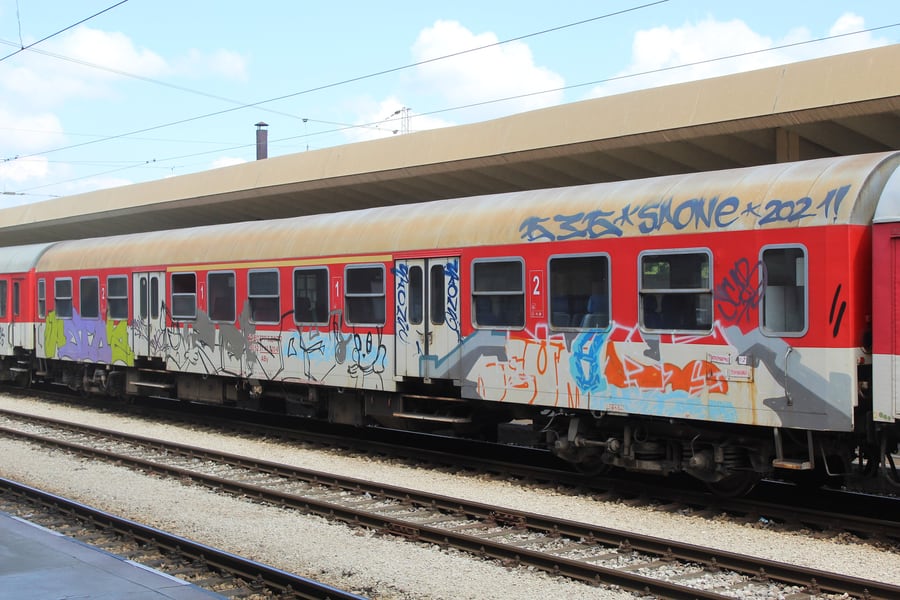
Along the route
TrainSimFan / Wikimedia Commons · CC BY 4.0Two railways, one seat, and no agreement on what to call it
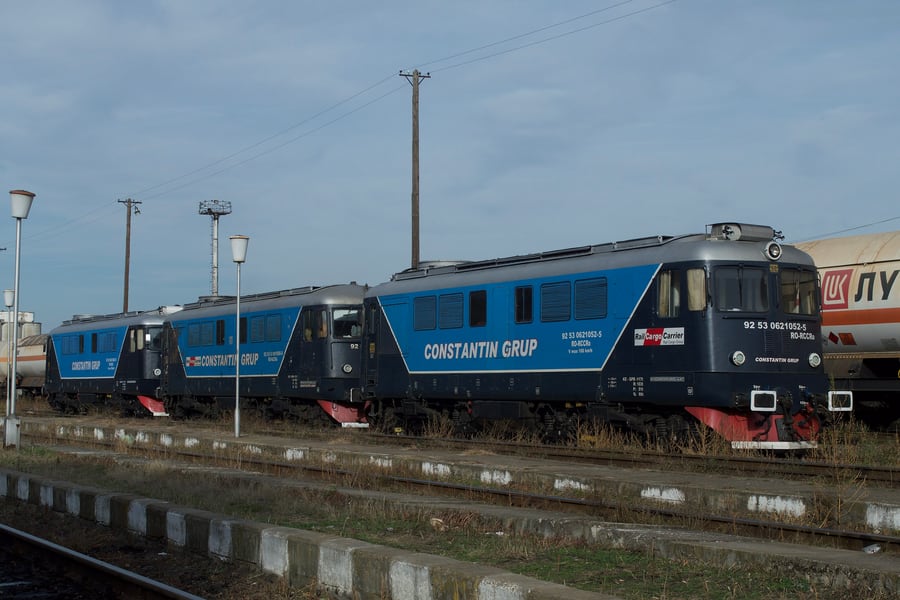
CFR Călători announces a named train, the "România". BDŽ publishes no name at all: it prints a coach table in which coach 472 runs Sofia North to Bucureşti Nord, and its own fare panel breaks the same morning into three separate train numbers.TwoWings / Wikimedia Commons · public domainThe carriage habit is older than the bridge
There was no bridge here until 1954. From 1940 the railways crossed the Danube on a train ferry that could carry three carriages at a time — a unit a boat can take, which a whole train is not. One of the two ships ordered for it was torpedoed on the delivery voyage.Petr Štefek / Wikimedia Commons · CC BY-SA 3.0 czBoth banks, by English contractors, three years apart
Three railways were built on the lower Danube by English companies after the Crimean War. The Bulgarian line was begun by the brothers Henry and Trevor Barkley in 1866; Romania signed with an English firm and reached the opposite bank three years later.A bit of history
Culture & experiences along the way
Phil Richards from London, UK / Wikimedia Commons · CC BY-SA 2.0What actually happens at Gorna Oryahovitsa
The train you boarded at Sofia North is ICF 2611, and it is going to Varna. At Gorna Oryahovitsa, four hours out, it arrives at 11:10 and leaves at 11:25 without your carriage. Yours is shunted across and becomes train 460, away at 11:40. Coupled up with it is coach 479, a berth car that left Halkalı at 20:00 the previous evening and has already been on three trains. Nobody in either carriage has changed seat.Phil Richards from London, UK / Wikimedia Commons · CC BY-SA 2.0Assembled going north, dismantled going south
Northbound there is no Sofia–Bucharest train: there is a carriage that three trains take turns with. Southbound there is one — 461 runs the whole way, Bucureşti Nord 10:46 to Sofia 20:41, ten hours under a single number. What happens instead is that it sheds carriages as it goes: the Varna coach leaves it at Ruse, the Istanbul berth car at Gorna Oryahovitsa. The same journey is built up in one direction and taken apart in the other.NAC / Wikimedia Commons · CC BY-SA 4.0A border with no border check
Bulgaria and Romania joined the Schengen area for land travel on 1 January 2025, more than seventeen years after they joined the European Union. The passport queue on the bridge is gone. The timetable has not caught up with it: the train still stands at Ruse for thirty-seven minutes going north and forty-five coming south, and covers the twenty-five minutes to Giurgiu Nord at a walking pace over the water.Phil Richards from London, UK / Wikimedia Commons · CC BY-SA 2.0The long way round to Bucharest
From Giurgiu the direct line to Bucharest is 70 kilometres and it was Romania's first railway. This train does not use it. It goes west to Videle instead and comes in from that side, taking 2 hours 12 minutes for the last leg. The direct line lost its bridge over the Argeş at Grădiștea in the floods of 13 August 2005, after sand extraction undermined a pier, and did not carry a train again until 1 June 2024.Timetables
The train runs daily from 12 June to 12 October 2026, and there is one working each way. Outside those dates there is no through service between the two capitals at all.
Times below are as published by BDŽ and CFR Călători and as read from BDŽ's live board on 14–20 August 2026.
Northbound — Sofia to Bucureşti Nord
| Sofia | 07:00 (train 20231 across the city) |
| Sofia North | 07:15 (train 2611, for Varna) |
| Mezdra | 08:47 |
| Cherven Bryag | 09:22 |
| Pleven | 10:01 |
| Levski | 10:30 |
| Gorna Oryahovitsa | arr 11:10 · dep 11:40 (now train 460) |
| Byala | 12:22 |
| Ruse | arr 13:38 · dep 14:15 |
| Giurgiu Nord | arr 14:40 · dep 14:44 |
| Videle | 16:04 |
| Bucureşti Nord | 16:56 |
Southbound — Bucureşti Nord to Sofia
Train 461 runs the whole way under one number.
| Bucureşti Nord | 10:46 |
| Videle | 11:51 |
| Giurgiu Nord | arr 13:08 · dep 13:15 |
| Ruse | arr 13:40 · dep 14:25 |
| Byala | 15:43 |
| Gorna Oryahovitsa | arr 16:30 · dep 16:45 |
| Pleven | 17:54 |
| Mezdra | 19:13 |
| Sofia North | 20:37 |
| Sofia | 20:41 |
One thing to check on the day
BDŽ's printed international timetable for this period and BDŽ's own live board do not give the same times. The printed sheet puts train 460 out of Gorna Oryahovitsa at 11:35; the live board gives 11:40 until 31 August and 11:35 from 1 September. The Varna feeder shows the same pattern, leaving Varna at 09:50 through August and 09:30 from September, against the printed 09:30 throughout.
Both operators say the same thing about this. BDŽ's international page notes that repair work on the network may change the timetable and asks passengers holding a ticket to check the current schedule for their train on the day of travel. CFR Călători's international booking site carries a standing notice to the same effect, and points travellers at BDŽ's board.
The live board is at razpisanie.bdz.bg (opens in a new tab). It answers about four weeks ahead — a search beyond that returns nothing, which reflects the planner's horizon rather than any change to the service.
The connections at each end
The same train carries through carriages to two other places, and they are worth knowing about because they share the route.
- Varna — coach 481 runs Varna to Bucureşti Nord attached to train 9620 as far as Ruse, and comes back on 461 and 9623. Varna departs 09:30 and Bucureşti Nord is reached at 16:56; southbound leaves Bucharest at 10:46 and reaches Varna at 19:56.
- Istanbul (Halkalı) — coach 479 is a berth car running Halkalı to Bucureşti Nord over four trains, leaving at 20:00 and arriving at 16:56 the next day, just under twenty-one hours. The southbound working leaves Bucharest at 10:46 and reaches Halkalı at 09:56 the following morning.
Tickets
Two railways sell this journey and they do not quote the same price for it. BDŽ publishes €30.60 second class from Sofia to Bucureşti Nord, children of 12 to 15 at €24.80 and 6 to 12 at €15.30, with a seat reservation in the direct carriage at €1.25. CFR Călători publishes €33.60 for the same seat. The gap is exactly three euros and neither operator explains it; buying from the railway on the side you are starting from is the simple approach.
The last hundred kilometres cost more than the four hundred before them: Sofia to Ruse alone was quoted at €11.71. ⚠️ BDŽ's board warns that prices vary by day and by booking conditions, so these are one reading from 14 August 2026 rather than a fixed tariff. CFR sells the train up to 90 days ahead; refunds carry a 10% fee inside the validity period.
Book your tickets
Sofia – Bucureşti Nord, the whole run
€30.60 from BDŽ · €33.60 from CFR · about ten hours
One through carriage in second class, with a €1.25 reservation.
Book Tickets (opens in a new tab, on Bulgarian State Railways (BDŽ))via Bulgarian State Railways (BDŽ)Ruse – Bucureşti Nord
€14.20 second class · children from €7.10
The short cross-border leg, for anyone already on the Danube.
Book Tickets (opens in a new tab, on Bulgarian State Railways (BDŽ))via Bulgarian State Railways (BDŽ)Petr Štefek / Wikimedia Commons · CC BY-SA 3.0 czBooking from the Romanian side
CFR Călători's international counter, 90 days ahead
Collected at the station, couriered inside Romania, or emailed as a PDF into Bulgaria.
Book Tickets (opens in a new tab, on CFR Călători)via CFR CălătoriRail Passes
This is one of the journeys where the obvious pass is the wrong one, and the reason is worth stating before anybody buys.
A One Country Pass does not cover this train
Interrail's own conditions are explicit: a One Country Pass cannot be used to travel into or out of the country it covers. The only exceptions Interrail lists are the Benelux Pass, the Nordic Pass, the German Rail Twin Pass and the six-day Greek Islands Pass, which includes the ferry from Italy.
So an Interrail Bulgaria Pass will carry you as far as Ruse and stop there, and an Interrail Romania Pass begins at Giurgiu Nord. Neither covers the crossing. Holding both does not solve it either, because the leg between them belongs to neither country's pass.
For anyone whose trip is essentially Bulgarian — the Rhodope narrow gauge, the Iskar Gorge, the coast — the Bulgaria pass remains excellent value and the sensible buy. It simply is not the ticket for this particular train.
What does cover it
The Interrail Global Pass, which starts at €283 for an adult and €212 for a traveller aged 12 to 27, is valid across both countries and over the border, and is the only Interrail product that covers the whole run in one document. It makes sense if the Sofia–Bucharest leg is part of a longer trip through the region; for a single crossing it is not close to worthwhile, given that the through ticket is a little over thirty euros.
The other route is simply to buy the international ticket. At €30.60 from BDŽ or €33.60 from CFR Călători, this journey is cheap enough that a pass has very little to save.
If you are travelling on a pass anyway
Both operators sell Interrail products at their international counters — CFR Călători states that the Interrail offer can be used for trips to Bulgaria in both the continuous and flexi versions, and sells the passes at stations and agencies open to international traffic.
A seat reservation in the direct carriage costs €1.25 and is separate from any pass. It is not compulsory on the international portion, but the through carriage is one vehicle and the summer weekend departures are the ones where that matters.
Pass conditions and prices checked against interrail.com in October 2026; fares against the two operators' own pages in August 2026.
Places to Visit
This train spends most of its day in Bulgaria and finishes in Romania, and the places worth stopping for are unevenly spread along it. The Bulgarian half of the route is well covered by the other journeys on this site — the Iskar Gorge, Pleven, Arbanasi above Gorna Oryahovitsa, the rock churches at Ivanovo that this train actually passes through — so what follows leans towards the ends of the line and towards the Romanian side, which the crossing opens up.
Two of the stops reward a break in the journey rather than a day trip. Byala, where the line crosses the Yantra, has one of the great pieces of nineteenth-century Bulgarian building a kilometre outside it. Gorna Oryahovitsa, the junction where the carriages change trains, is the railhead for Veliko Tarnovo and for the Roman city at Nikyup.
At the Romanian end, Bucharest is worth more than the afternoon that a same-day return would leave. The city's first station still stands, and it is a short walk from the old town to a church of 1724 and a concert hall that a public subscription paid for over twenty-eight years.
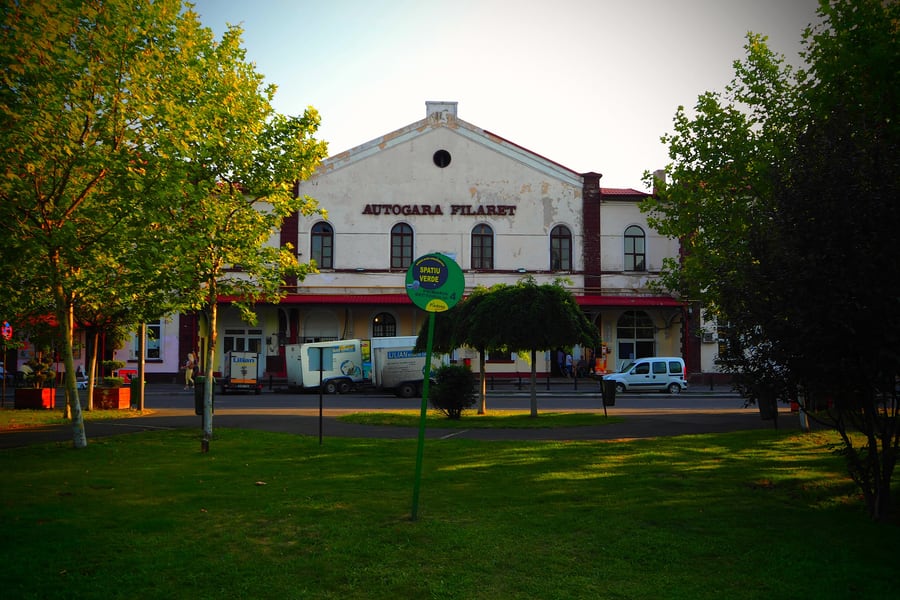 Ștefan Jurcă from Munich, Germany / Wikimedia Commons · CC BY 2.0
Gara Filaret, where Romania's railways started
Bucharest's first station, opened on 19/31 October 1869 for the first railway in the United Principalities — the line to Giurgiu. Two trains left that day: the Michaiu Bravu, driven by John Trevor Barkley himself, and the Dunărea, by Nicolae Tănase, the first Romanian engine driver. It lost its traffic once Gara de Nord joined the network in 1872, closed in 1960, and is the city's bus station today — a listed monument.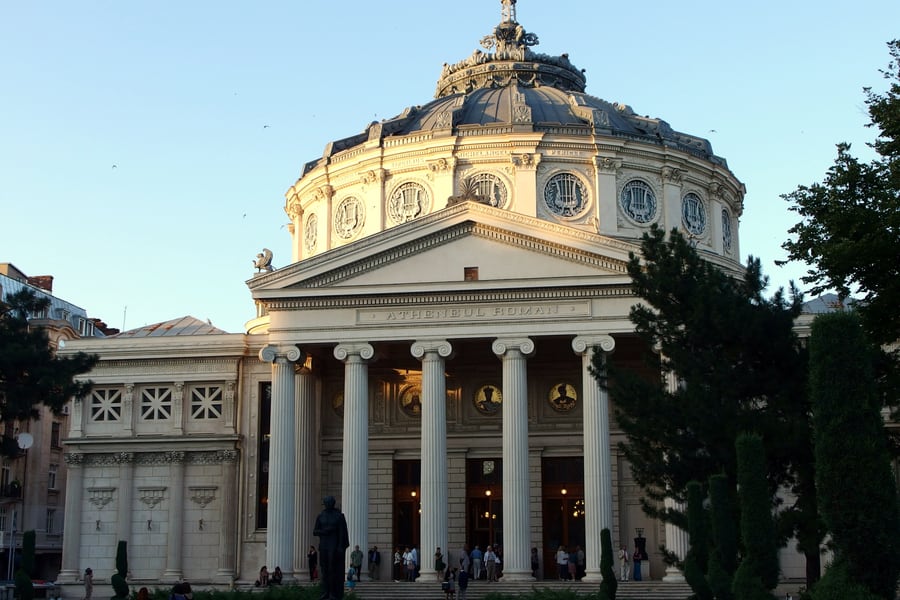 Mark Ahsmann / Wikimedia Commons · CC BY-SA 4.0
The Romanian Athenaeum
The city's concert hall, designed by the French architect Albert Galleron and inaugurated in 1888, though work went on until 1897. Part of the money came from a public subscription that ran twenty-eight years behind a slogan Romanians still quote — "Give one leu for the Ateneu". On 29 December 1919 a conference here ratified the union of Bessarabia, Transylvania and Bukovina with the Old Kingdom. It seats six hundred in the stalls and is home to the George Enescu Philharmonic.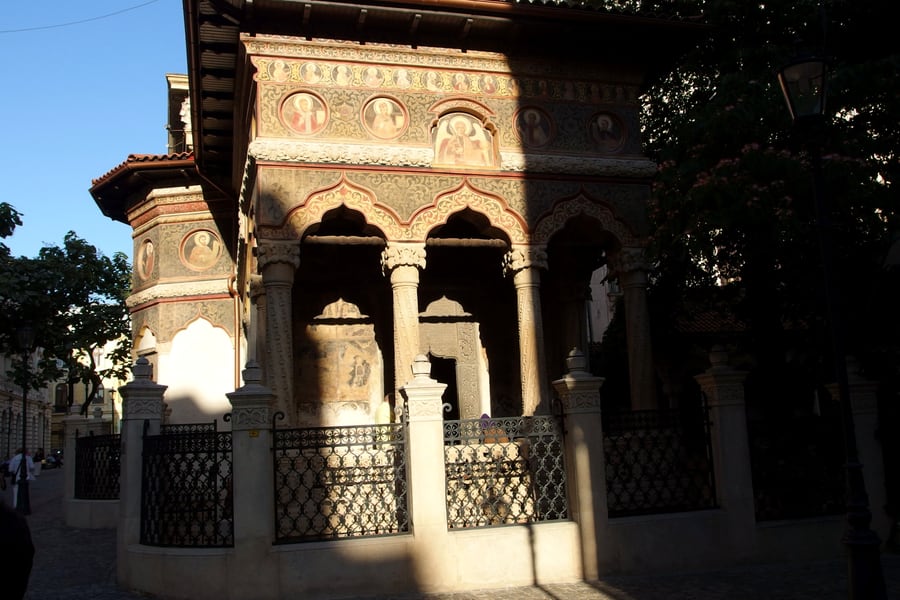 Mark Ahsmann / Wikimedia Commons · CC BY-SA 4.0
Stavropoleos, in the old town
A small church of 1724 in the Brâncovenesc style, built by Ioannikios Stratonikeas, a Greek monk, inside the precinct of the inn whose income kept it. The inn and the monastery buildings came down at the end of the nineteenth century; the church survives, with a wing by Ion Mincu holding icons and fragments of wall painting rescued from churches demolished under the communist regime. The community keeps the largest collection of Byzantine music books in Romania.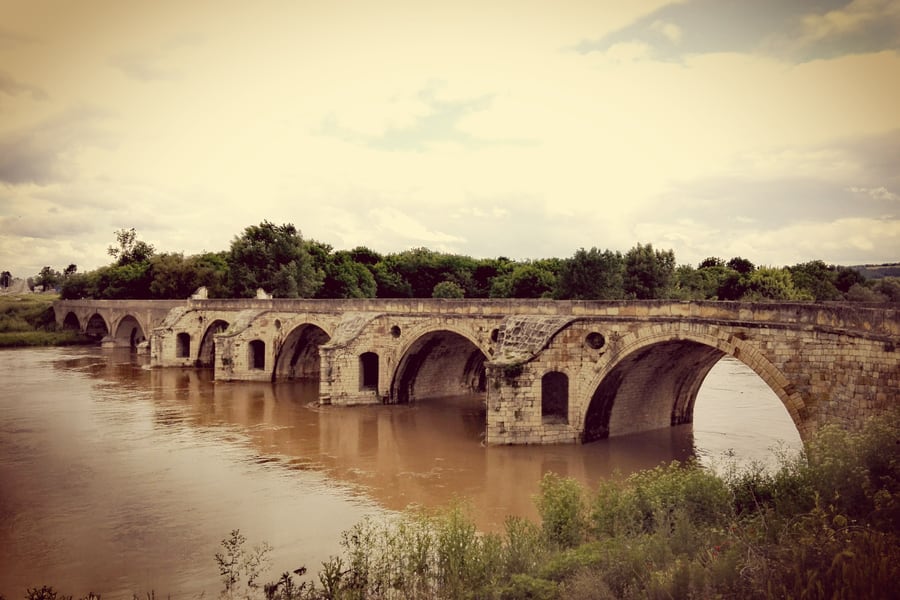 EvelinGreen / Wikimedia Commons · CC BY-SA 4.0
The bridge Kolyu Ficheto staked his head on
Midhat Pasha — the governor who opened the Ruse–Varna railway — asked his Polish engineer what a bridge over the Yantra would take: 3,000,000 groschen and four years. French engineers offered two million. The self-taught master Kolyu Ficheto offered 700,000 and, by the account handed down, staked his head on it. He finished in two years, 1865–67 — 276 metres, fourteen arches, with a lion, a griffin and a swan carved on the piers. It carries pedestrians only now.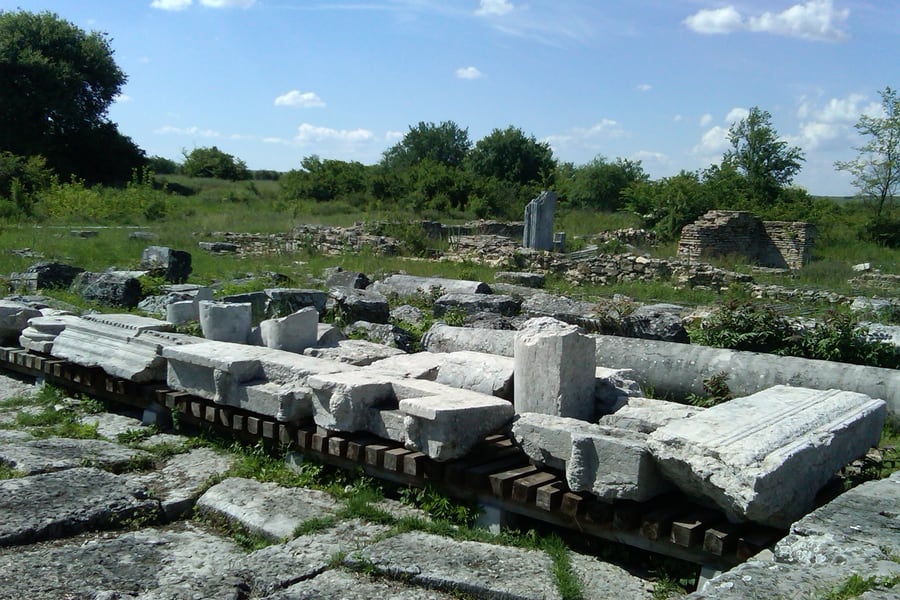 Glen Stobbs / Wikimedia Commons · CC BY-SA 3.0
Nicopolis ad Istrum, where the Gothic alphabet was made
A city founded by Trajan around 102–106 for his victory over the Roxolani, and built up under Hadrian and the Antonines. In 347–348 the Gothic bishop Ulfilas was permitted by Constantius II to settle his converts near here, and it was here that he devised the Gothic alphabet and oversaw the Bible's translation out of Greek — which makes this field the beginning of written Germanic literature. Attila's Huns destroyed the town in 447. The ruins cover 21.55 hectares.Where to Sleep
The train leaves Sofia at seven in the morning and arrives in Bucharest just before five in the afternoon, so in practice it needs a bed at each end and possibly one in the middle.
Sofia is the harder of the two, because the 07:00 departure from Sofia Central means being at the station before the city has properly started. Somewhere central, within a short taxi ride of the station, saves the day from beginning badly.
Ruse is the natural place to break the journey. It is the largest town on the Bulgarian half, the frontier station, and the only place on the route where the Danube is the point — the river the train crosses forty minutes after leaving. Ruse also has the National Transport Museum in the 1866 station building, which is covered on the Ruse–Varna line page.
Bucharest is where the journey ends, and the walkable centre is some way from Gara de Nord. Staying near Calea Victoriei or Cişmigiu Gardens puts the Athenaeum, Stavropoleos and the old town within reach on foot, with a short metro ride back to the station for the return working.
The cards below give each hotel's own website. No prices, ratings or star counts appear here, because none of them has been independently verified — what is described is what each hotel says about itself, and what can be checked from its position on the map.
Where to stay
Grand Hotel Sofia
Sofia, for the 07:00
A five-star hotel in the centre of Sofia which has been taking international business travellers and hosting high-profile events since 2004. It keeps its own gallery and a restaurant called Shades of Red, and its site offers extra benefits for booking direct.
Check Availability (opens in a new tab, on grandhotelsofia.bg)via grandhotelsofia.bgGrand Hotel Riga
Ruse, above the river the train crosses
Set directly on the Danube bank about four hundred metres from Ruse's main square, with four places to eat between them — a summer garden restaurant, a panorama restaurant at the top, a main restaurant and a tavern doing traditional dishes. Booking direct carries free parking and the choice of a room with or without meals.
Check Availability (opens in a new tab, on hotel-riga.com)via hotel-riga.comGrand Hotel Continental
Bucharest, on Calea Victoriei
A hotel in a listed building that its owners date to 1826, on Calea Victoriei in the middle of Bucharest, a short walk from the old town and from the Athenaeum. It reopened in 2009 after a restoration that took four years, and the work was done to keep the character of the building intact.
Check Availability (opens in a new tab, on continentalhotels.ro)via continentalhotels.roHotel Cişmigiu
Bucharest, beside the park
An Art Nouveau building with about a century of history on Bulevardul Regina Elisabeta, between the old town and Cişmigiu Gardens. Its rooms run large enough that the hotel describes them as apartments, and it has two restaurants of its own, the Bistro La Etaj and the DeSoi.
Check Availability (opens in a new tab, on hotelcismigiu.ro)via hotelcismigiu.roQuestions or corrections
Planning this trip and stuck on something, or spotted a time, fare or detail that has changed? Send us a message about The România — Sofia to Bucharest Across the Danube. We read every one, and we update this page when something has changed.