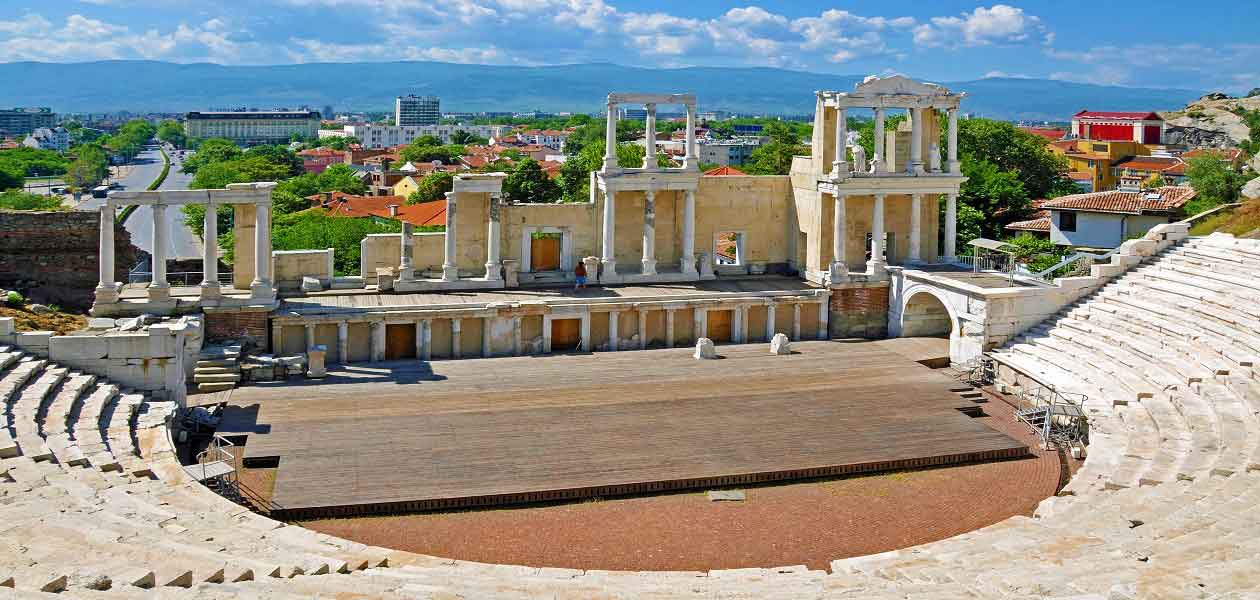
Bulgaria
Bulgaria occupies the eastern Balkans, between the Danube in the north and the Black Sea in the east, with Greece and Türkiye along its southern border and Romania across the river. About 6.4 million people live in its 111,000 square kilometres — most of them in Sofia, the capital, out in the west of the country, and in Plovdiv, Varna and Burgas. Mountains take up much of the rest: the Balkan range runs the full width of the country, and the Rila, Pirin and Rhodope massifs fill the south-west.
Rail travel here is slow, inexpensive and unusually scenic. Bulgarian State Railways (BDŽ) runs almost all of it — a standard-gauge network electrified on the main corridors, one surviving 760 mm narrow-gauge line, and fares that reach about fifteen euros even for the longest run in the country, which has been priced in euros since Bulgaria adopted the currency in January 2026. The lines follow the rivers through the gorges because that is where the gradients were kindest, which is why an ordinary ticket buys some of the best scenery in the Balkans. One thing to know before booking: Sofia Central has been under reconstruction since May 2024, so many trains now start from Sofia North, five minutes up the line.
Rail journeys in Bulgaria
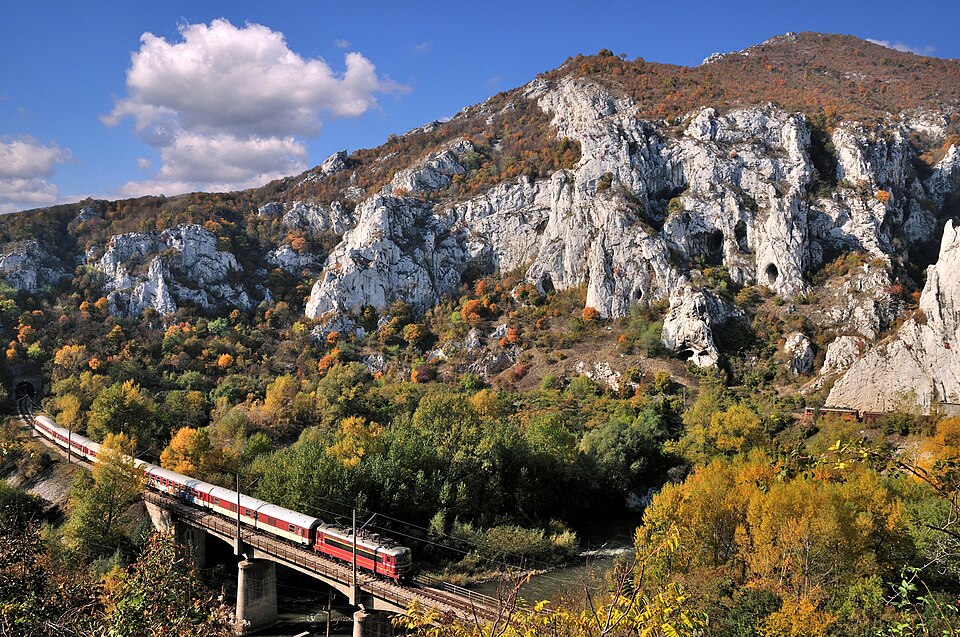
The Iskar Gorge Railway — Sofia to Mezdra through the Balkan Mountains
No special train and no expensive ticket: the everyday main line out of Sofia plunges straight into the Iskar Gorge, under towering white cliffs.
View journey →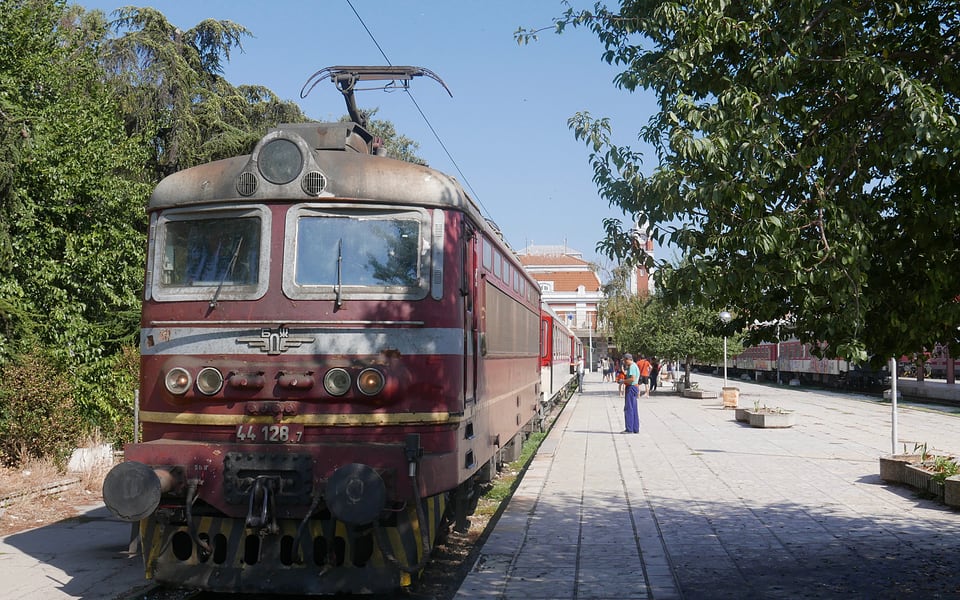
The Ruse–Varna Railway — Bulgaria's First Line
The first railway ever built on Bulgarian soil, drawn dead straight across the Ludogorie in 1866 — still the short way from the Danube to the Black Sea.
View journey →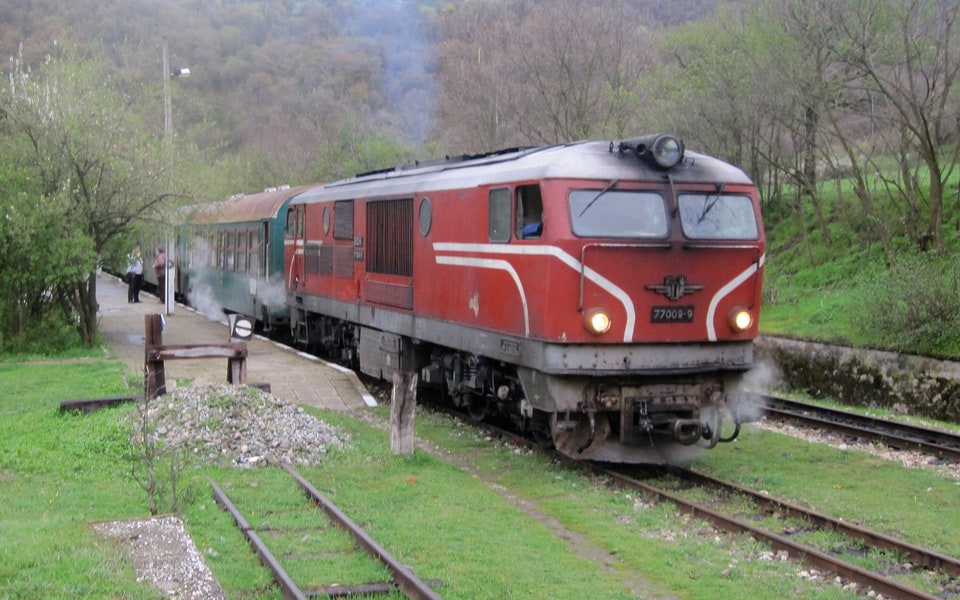
The Rhodope Narrow-Gauge Railway — Bulgaria's Septemvri to Dobrinishte
Bulgaria's last narrow gauge: a five-hour climb on 760 mm track from the Thracian plain over the highest railway station in the Balkans to the Pirin peaks.
View journey →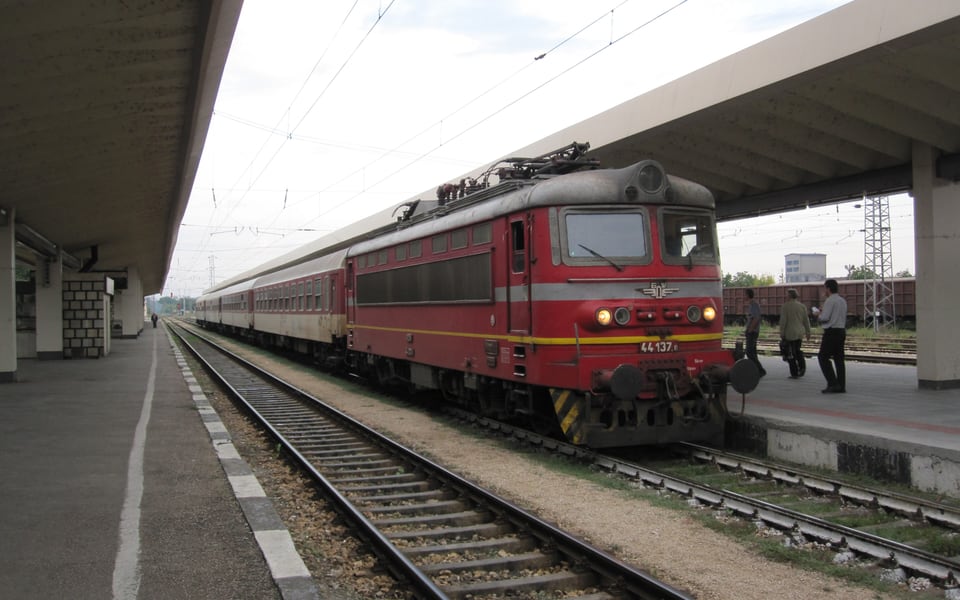
The România — Sofia to Bucharest Across the Danube
Romania sells a named train; Bulgaria sells a carriage, and the four trains that take turns pulling it. You sit still for ten hours between two capitals.
View journey →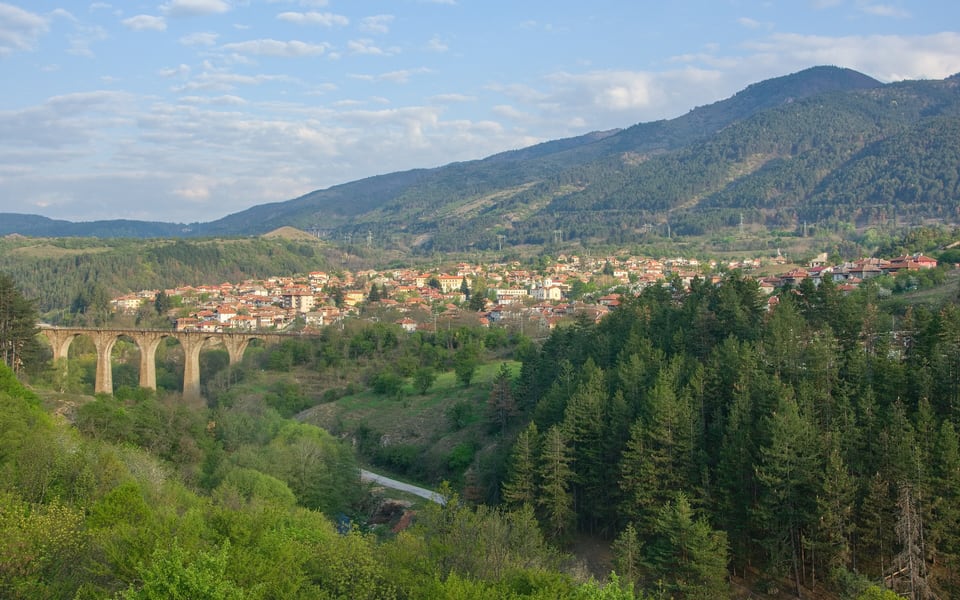
The Sub-Balkan Line — Sofia to Burgas through Bulgaria's Longest Tunnel
The slower of Sofia's two routes to the Black Sea until its 5,808-metre tunnel was rebuilt in 2021 — the mountain line is now the shorter and the faster.
View journey →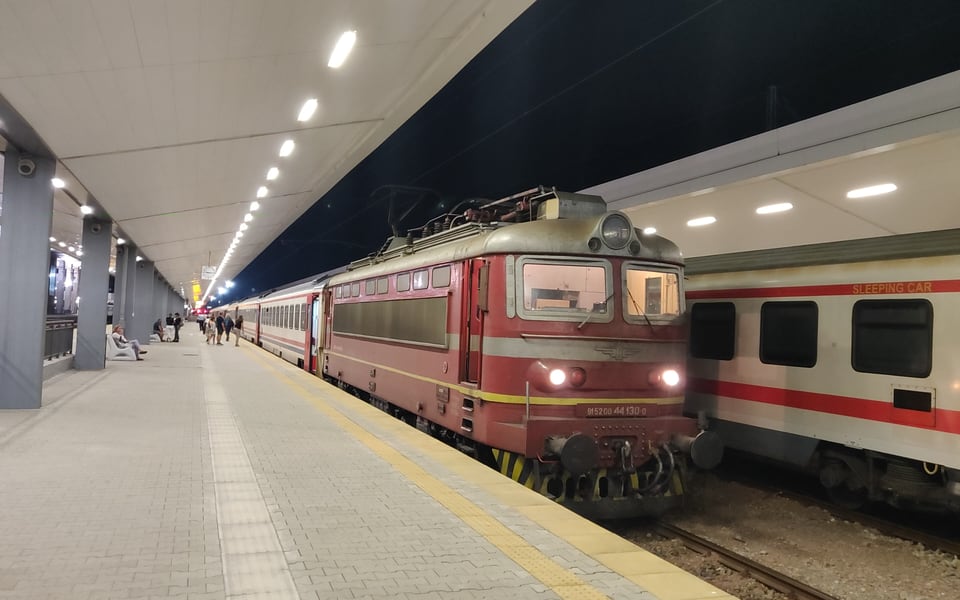
The Sofia–Istanbul Express — Bulgaria to Türkiye by Night Train
The one sleeper still running from Bulgaria to Türkiye: out of Sofia in the evening, into Istanbul after breakfast — 27 kilometres short of the city itself.
View journey →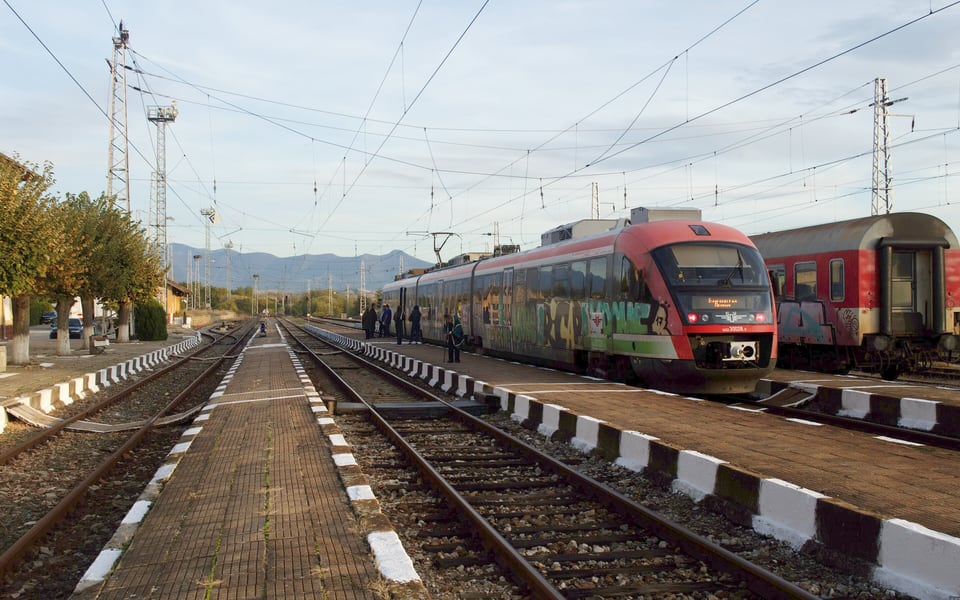
The Struma Valley Line — Sofia to the Greek Frontier through the Kresna Gorge
Eighteen kilometres of the Struma valley are too narrow for both. The railway got through in the First World War; the motorway has been trying since 1997.
View journey →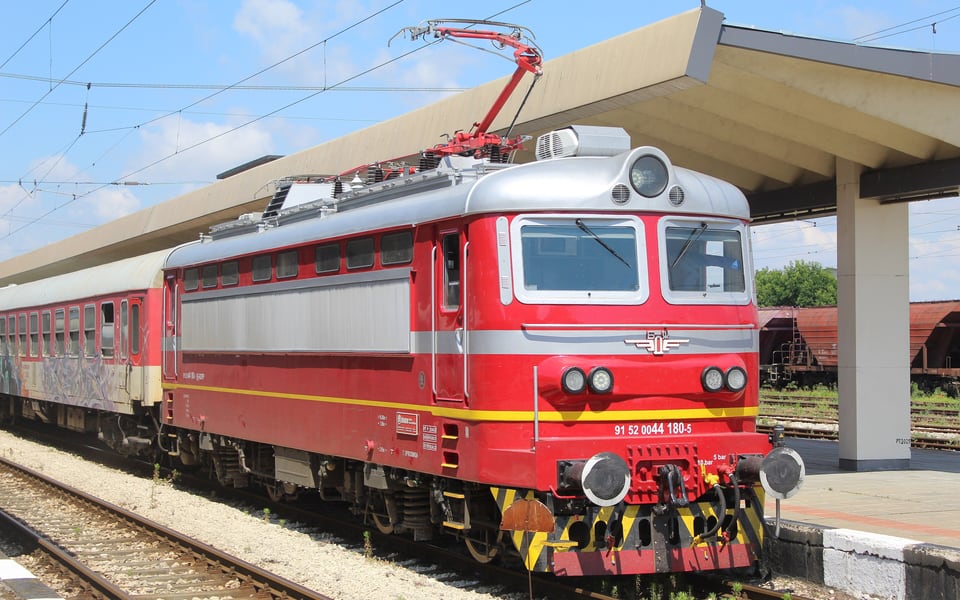
The Sofia–Varna Express — Bulgaria's Longest Railway
Five hundred and forty-three kilometres from the capital to the Black Sea, in carriages Deutsche Bahn had finished with, for under fifteen euros.
View journey →Good to know
What is the best train journey in Bulgaria?
The Rhodope narrow-gauge railway from Septemvri to Dobrinishte is the standout — a five-hour, 125 km climb on 760 mm track over the highest railway station in the Balkans and down to the Pirin ski valleys. For a shorter, easier trip close to the capital, the Iskar Gorge line out of Sofia is wonderfully dramatic and served by everyday trains.
Can you ride a narrow-gauge train in Bulgaria?
Yes. The Septemvri–Dobrinishte line is Bulgaria's last surviving 760 mm narrow-gauge railway, and it runs as an ordinary daily service — four trains each way — climbing through the Rhodope, Rila and Pirin mountains. A preserved steam locomotive, 609.76, also hauls occasional charter and special trains on the line.
How do you see the Iskar Gorge by train?
Simply take any northbound train from Sofia toward Mezdra (or on to Vidin, Veliko Tarnovo or Varna): the line runs straight through the gorge. Fast trains take about 90 minutes; to stop at the Lakatnik rocks or Cherepish Monastery, choose one of the slower regional trains that call at the small halts.
Is there a train from Sofia to Istanbul?
Yes — the Sofia–Istanbul Express runs every night, jointly operated by BDŽ and Turkish Railways, leaving Sofia at 18:50 and arriving next morning at 09:56. It carries Turkish sleeping cars and couchettes and no ordinary seats, so a reservation is compulsory. One important thing to know: it terminates at Halkalı, about 27 km west of central Istanbul, and the last stretch is made on the Marmaray commuter line, which sets you down at Sirkeci.
What is the best way to reach the Black Sea from Sofia by train?
It depends which coast. For Burgas, there are two railways and the mountain one is now the quicker: the Sub-Balkan line runs 418 km by way of Koprivshtitsa, the Koznitsa tunnel and the Rose Valley, and its fastest train covers Sofia to Burgas in 5 hours 49 minutes for somewhere around twelve to fourteen euros — BDŽ prices by the day rather than to a fixed tariff. The route via Plovdiv is 450 km and the quickest train that way takes 6 hours 42. For Varna, the main line north through the Iskar Gorge and Pleven is 543 km and takes about seven and a half hours, and there are overnight trains with sleeping cars by that route as well as by the Sub-Balkan and the Plovdiv one.
Can you visit Koprivshtitsa by train?
Yes, with one thing worth knowing first: Koprivshtitsa station is nine kilometres from Koprivshtitsa, over a ridge in a river gorge, and an electric shuttle covers the gap. The fast trains on the Sub-Balkan line take 1 hour 44 minutes from Sofia and cost about €5 — but only four of the six call there, so the departure matters more than usual.
Can you travel by train from Bulgaria to Greece?
Not at present. The railway down the Struma valley reaches Kulata on the frontier and the rails continue into Greece, but BDŽ's international pages list only three routes — Craiova, Halkalı and Bucharest — and none of them is Greek; the overhead wire stops at the border. The Struma valley line is still well worth riding for the Kresna Gorge itself, and its fast trains run through to Petrich, with a short connecting unit covering the last twelve kilometres to Kulata.
What is the Kresna Gorge, and can you see it by train?
It is an 18-kilometre trench cut by the Struma between the Pirin and Maleshevo mountains, a Natura 2000 site where 232 bird species have been recorded, and the railway runs through the middle of it. The 07:30 from Sofia reaches Kresna at 10:51 and the 11:40 back from Sandanski calls there at 12:01, which makes the gorge a day trip from the capital for a €10.58 return.
What is the longest train journey in Bulgaria?
Sofia to Varna on main line 2 — 543 kilometres, the longest railway line in the country, finished on 8 November 1899 and worked today by ex-German saloon carriages BDŽ bought second-hand in 2024. The fast daytime trains take about seven and a half hours and the through fare was €14.67 in second class when this page was written. One thing to know before booking: Sofia Central has been under reconstruction since May 2024, so most trains north start from Sofia North, five minutes up the line, with a shuttle built into the itinerary.
What was the first railway in Bulgaria?
The Ruse–Varna line, opened on 7 November 1866 — twelve years before the Bulgarian state existed, and twenty-two before a train reached Sofia. An English company formed by the brothers Henry and Trevor Barkley built it on a 99-year concession from the Ottoman government, cutting across the neck of land between the Danube and the Black Sea to shorten the water route. Bulgaria was made to buy it under article 10 of the Treaty of Berlin, and the settlement of 44.5 million gold leva in 1886 came to more than the state's whole revenue for that year. It is still running: two direct trains a day each way, 226 km in under four hours for about €7.57.
Is there a train between Ruse and Varna?
Yes, and there are two quite different ways to do it. Two trains a day each way take the direct 1866 line through Razgrad and Pliska — 226 km, between 3 h 38 and 4 h 06, no reservation needed and no first class offered. Every other itinerary on the board loops south-west through Gorna Oryahovitsa, covers 360 km, takes from 5 h 42 to 8 h 51 and needs at least one change. The direct trains are the cheaper as well as the quicker.
Is there a train from Sofia to Bucharest?
Yes, but only in summer. The international working runs daily from 12 June to 12 October 2026, leaving Sofia at 07:00 and reaching Bucureşti Nord at 16:56; southbound, train 461 leaves Bucharest at 10:46 and is in Sofia at 20:41. Outside those dates there is no through service between the two capitals. The second-class through fare is €30.60 from BDŽ and €33.60 from CFR Călători — the two railways price the same seat differently. Northbound it is worth knowing that there is no Sofia–Bucharest train as such: a through carriage rides the Varna express as far as Gorna Oryahovitsa and only becomes an international train from there.
Can you use an Interrail pass from Bulgaria to Romania?
Not on a One Country Pass. Interrail's conditions state that a One Country Pass "cannot be used to enter or leave that country", and the only exceptions listed are the Benelux, German Rail Twin and six-day Greek Islands passes. An Interrail Bulgaria Pass therefore stops at Ruse and a Romania Pass begins at Giurgiu Nord, so neither covers the Danube crossing. The Global Pass, from €212, does cover it — though for a single crossing the ordinary through ticket at a little over thirty euros is far cheaper.
Does Bulgaria use the euro?
Yes — Bulgaria adopted the euro on 1 January 2026, and it has been the country's sole legal currency since 1 February 2026, replacing the lev at a fixed rate. Train fares that were once quoted in leva are now shown in euros, and Bulgarian rail remains among the best value in Europe: even a long mountain journey costs only a few euros.