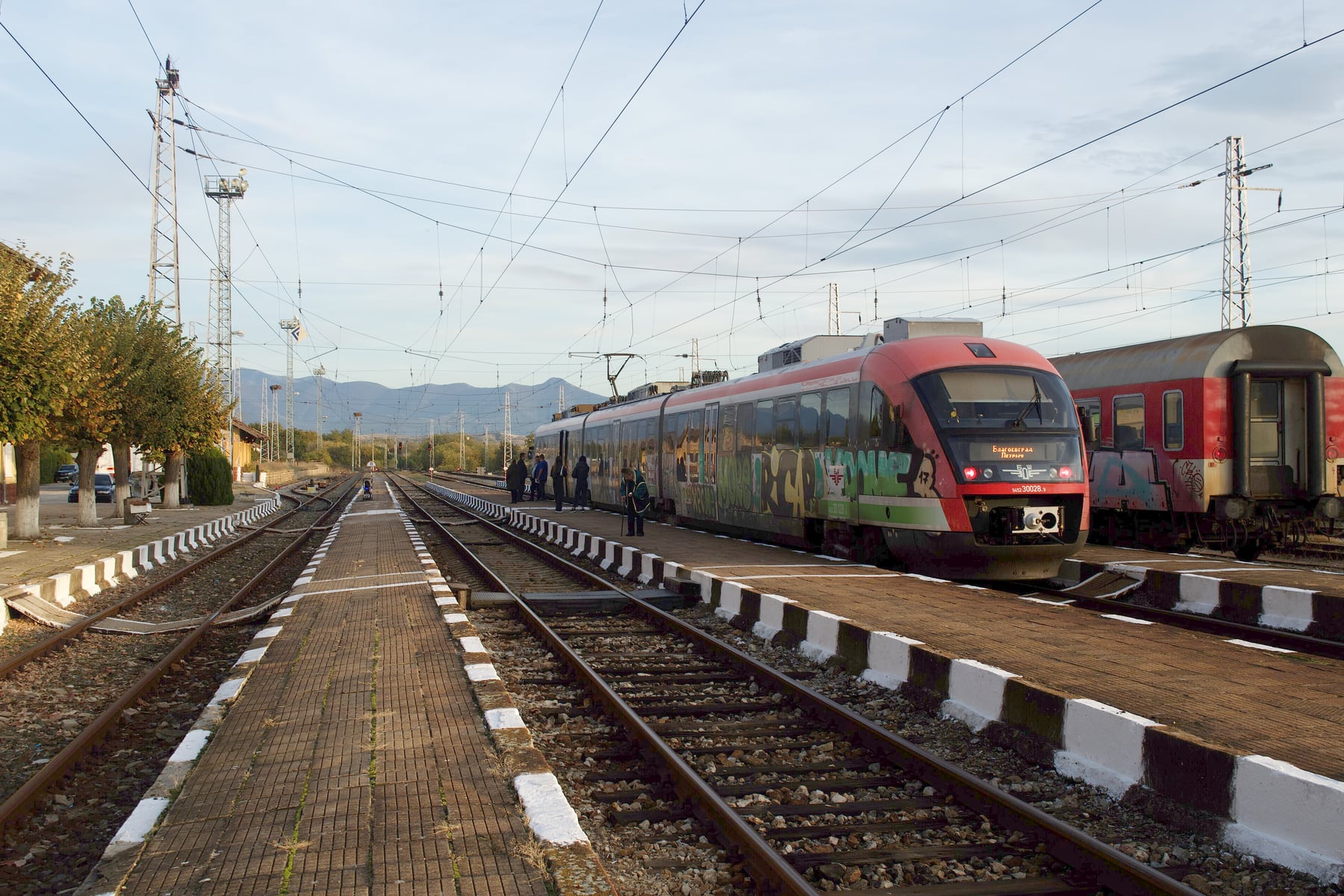
The Struma Valley Line — Sofia to the Greek Frontier through the Kresna Gorge
Phil Richards / Wikimedia Commons · CC BY-SA 4.0
- DistanceSofia–Kulata · 210 km
- DurationAbout 4 hours
- Best seasonYear-round · the far south is the warmest corner of Bulgaria
Introduction
Bulgaria's south-western corner is shaped by one river. The Struma rises on Vitosha, the mountain that stands over Sofia, and runs 415 kilometres to the Aegean — 290 of them inside Bulgaria — before crossing into Greece near Promachonas and emptying into the sea below Amphipolis. For most of that distance it has company: a road, a railway, and for the last thirty years an argument about a motorway.
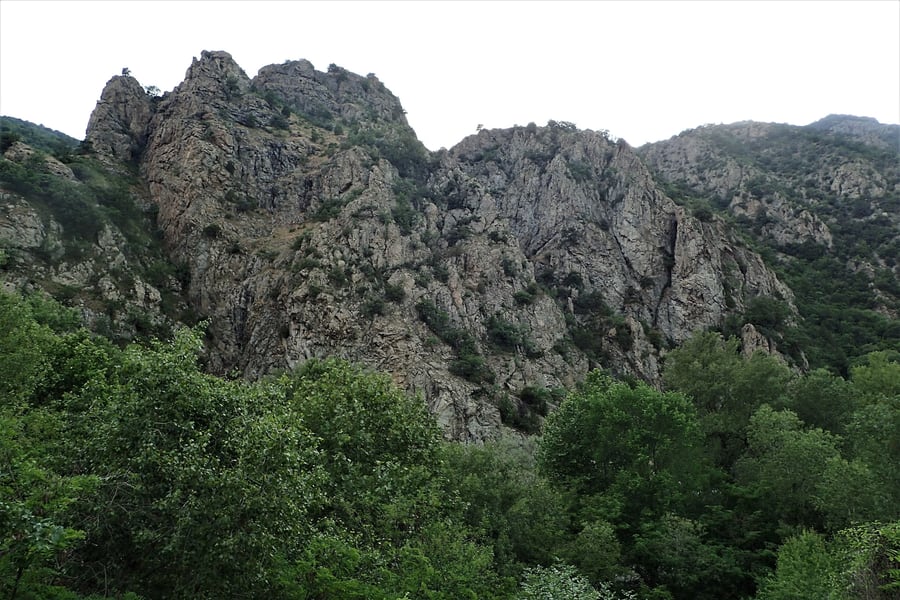
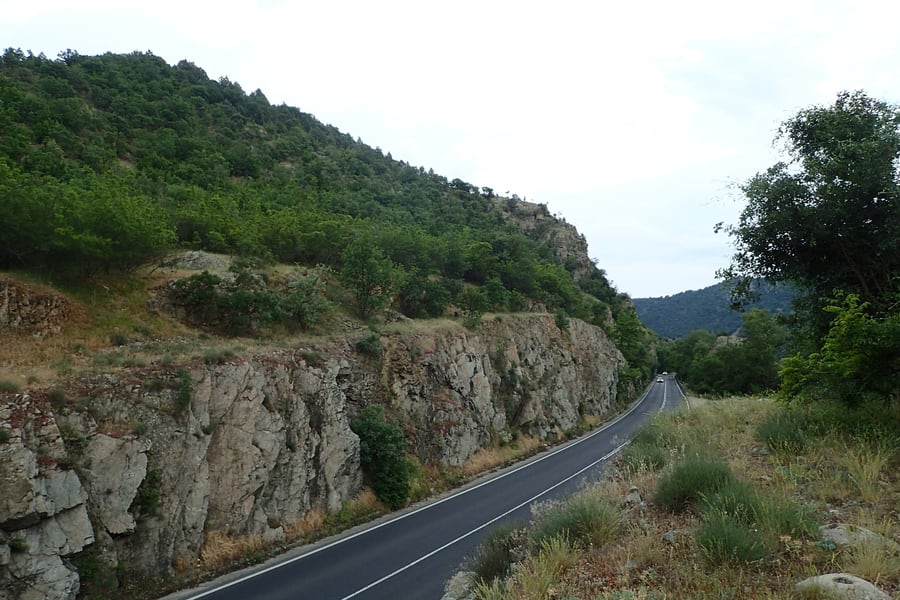
The argument is about eighteen kilometres. Between the Pirin mountains on one side and the Maleshevo on the other, the river narrows into the Kresna Gorge, a trench whose floor lies at 222 metres and whose sides are steep enough that everything wanting to pass has to negotiate rather than choose. It is one of the richest pieces of ground in the country — 232 recorded bird species, 75 mammals, 31 reptiles, a resting place for Egyptian vultures on migration, and a Natura 2000 conservation site twice over.
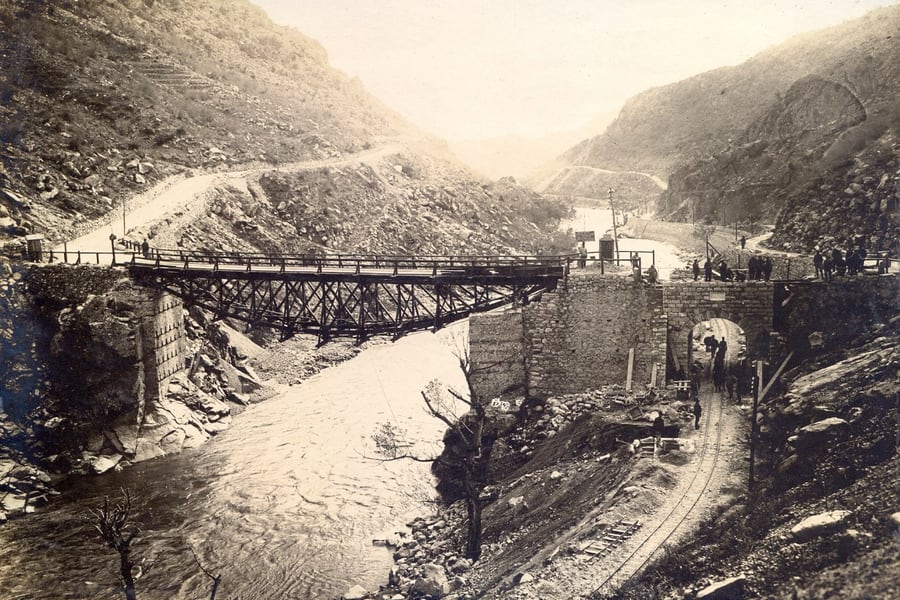
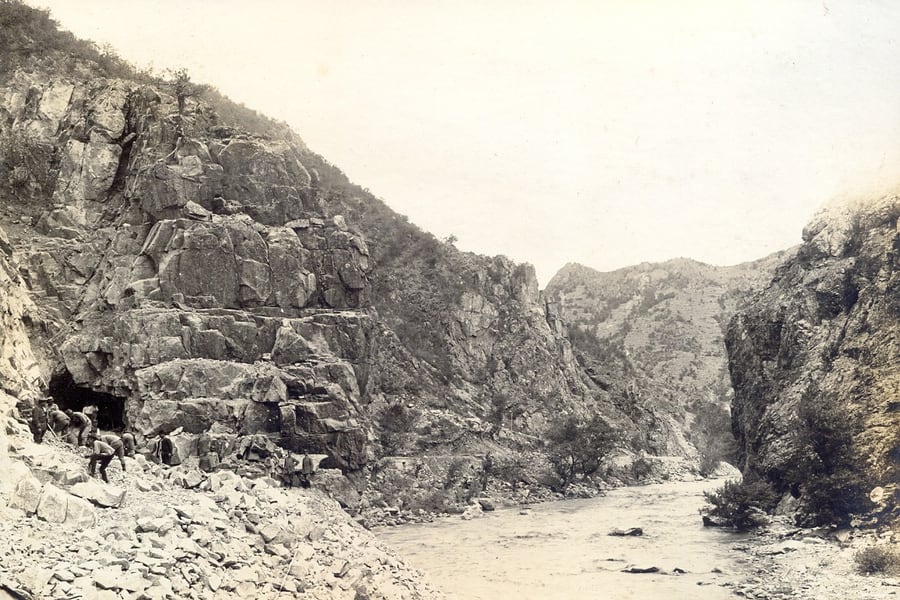
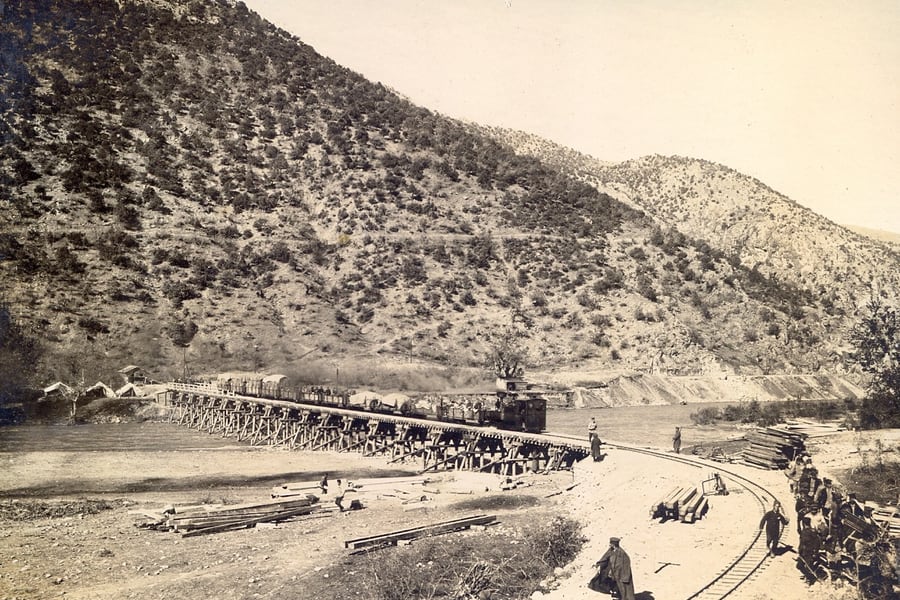
The railway went through it in the First World War, when soldiers laid a military line up the valley and photographers followed them with plate cameras. The motorway has been trying since 1997. It has produced a design for a twin-bore tunnel 15.4 kilometres long, abandoned it, and eventually agreed — on 16 June 2025, twenty-eight years after the dispute began — to look for a way round the outside.
So the train goes where the motorway could not.
What the journey is
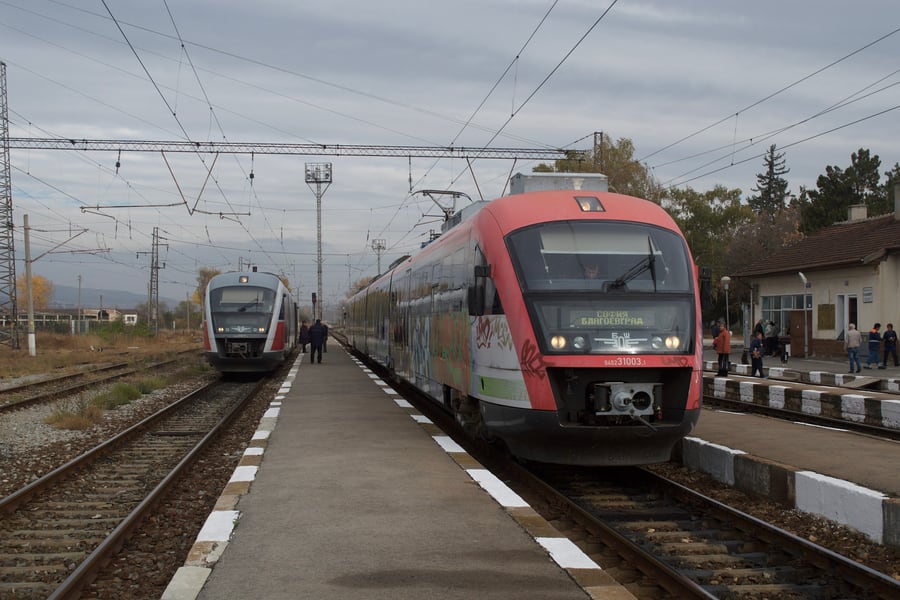
The line is Bulgarian main line 5, running 207.67 kilometres from Sofia to Kulata on the Greek frontier. It leaves the capital through the western suburbs, climbs over the saddle at Vladaya into the coal basin at Pernik, and turns south at Radomir to pick up the Struma. From there it is a river journey: Dupnitsa, Boboshevo, Kocherinovo, and Blagoevgrad under the wall of the Rila mountains, then Simitli, and then the gorge itself — Cherniche, Stara Kresna, Peyo Yavorov, Kresna — before the valley opens out into the warmest, driest, most Mediterranean corner of Bulgaria around Sandanski and Melnik.
It is a single track for nearly all of its length, electrified throughout since 2001, worked at between 30 and 100 kilometres an hour, with a maximum gradient of 25 in a thousand and curves down to a 200-metre radius. Nothing about it is fast. The quickest train covers Sofia to Sandanski in 3 hours 21 minutes for €6.49, which is a little under two euros an hour for one of the more dramatic stretches of railway in the Balkans.
What is at the end
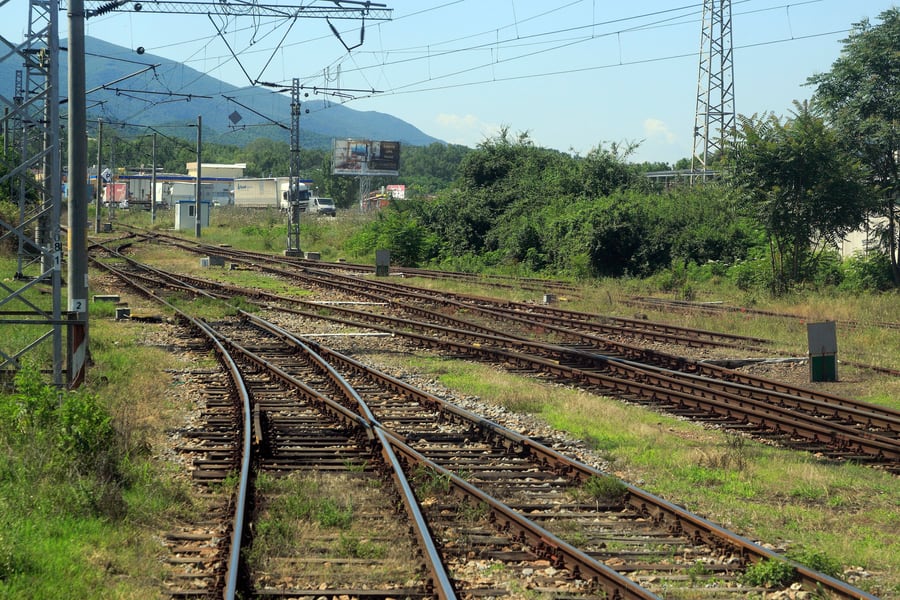
Not, at present, Greece. The rails continue past Kulata to the frontier and on to Strymonas, and they were reconnected on 30 May 1965, but BDŽ's international pages list three routes — Craiova, Halkalı and Bucharest — and none of them is Greek. A photographer standing at the south end of Kulata station in 2016 recorded the detail that makes it plain: the overhead wire stops at the border.
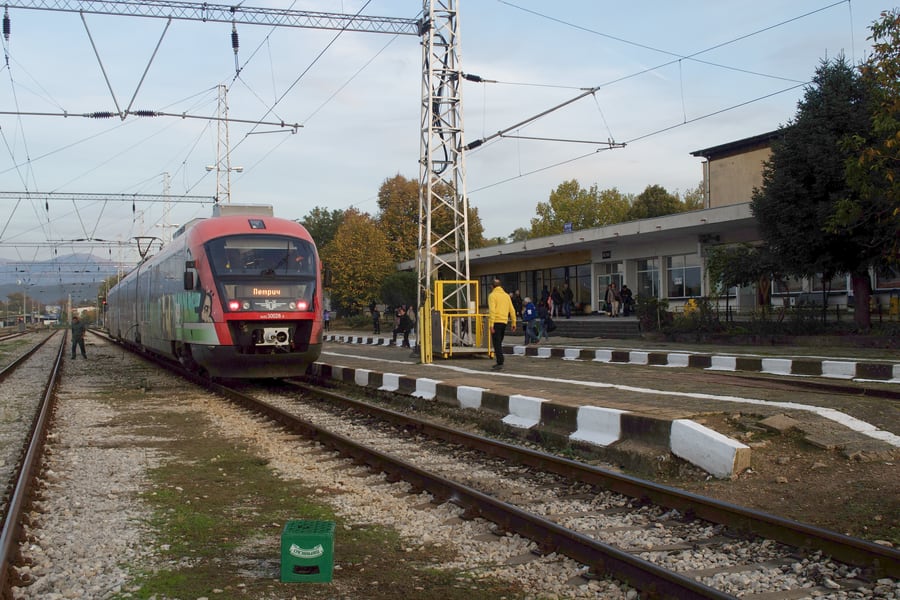
What is at the end instead is a stub. The three fast trains of the day run past Kulata's junction to Petrich, and a short electric unit covers the last twelve kilometres to the border station in ten minutes. Most people travelling this line are not going to the frontier at all. They are going to a monastery in the Rila mountains, a gorge full of birds, a wine town of 385 people, or the sunniest town in Bulgaria.
The Journey
The train leaves Sofia and spends its first hour doing something unglamorous: getting out. The line threads the western suburbs — Zaharna Fabrika, the metro interchange at Gorna Banya — then climbs to Vladaya and drops into Pernik, a coal town that supplied the capital's power for most of the twentieth century. This is the oldest part of the route by seventy years. Sofia to Pernik opened on 9 December 1893, and Pernik to Radomir on 6 February 1897, when the railway had no ambitions further south than the coalfield.
At Radomir, 47 kilometres out, the line turns south and finds the Struma, and from there it does not leave the river.
Built in pieces, over half a century
Everything south of Radomir was built in the twentieth century, in sections, as the frontier moved. Radomir to Dupnitsa opened on 21 December 1930; Dupnitsa to Blagoevgrad on 30 October 1937; Blagoevgrad to Krupnik through 1941 and 1942; and the last 67 kilometres, Krupnik to Kulata, in 1944. The connection across the border was restored on 30 May 1965.
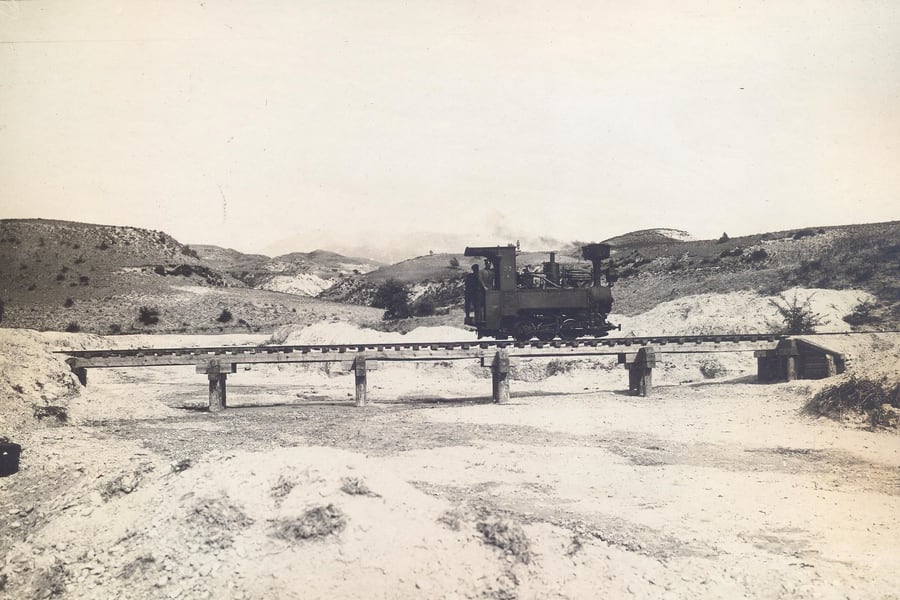
But the gorge had already seen a railway once before any of that. In 1916 and 1917 a line was driven up the valley from Radomir to Marino Pole as a wartime supply route, and a photographer went with it. Forty-eight of those plates survive in the Bulgarian state archive, and they are the most eloquent thing about this journey: timber trestles thrown across the Struma on stone piers, a tunnel mouth cut straight into the rock beside them, wagons standing nose to tail along a bank of shingle, a small locomotive on a bridge that looks like scaffolding. Whatever else the Kresna Gorge is, it has been a place where people build railways in a hurry for over a century.
There was a second line here too, and it is gone. A 600 mm narrow gauge railway ran 36.5 kilometres from Kocherinovo, on this main line, up into the mountains to the Rila Monastery. It opened on 27 May 1916 and closed on 1 April 1960. Its trackbed can still be walked through the forest along the Rila river; a locomotive and a coach from it are preserved at Sofia Central.
Into the gorge
South of Simitli the valley closes. The stations come quickly and their names tell the story of the line itself: Cherniche, then Stara Kresna — "Old Kresna" — then Peyo Yavorov, named for the poet, then Kresna Sp. and Kresna. The town of Kresna is a railway town in the most literal sense: it grew around a halt called Pirin Station, was known as Kriva Livada, and was given town status and its present name only in 1978, at which point the original village up the hill had to be renamed Stara Kresna to tell them apart. It has 3,987 people and sits at 232 metres.
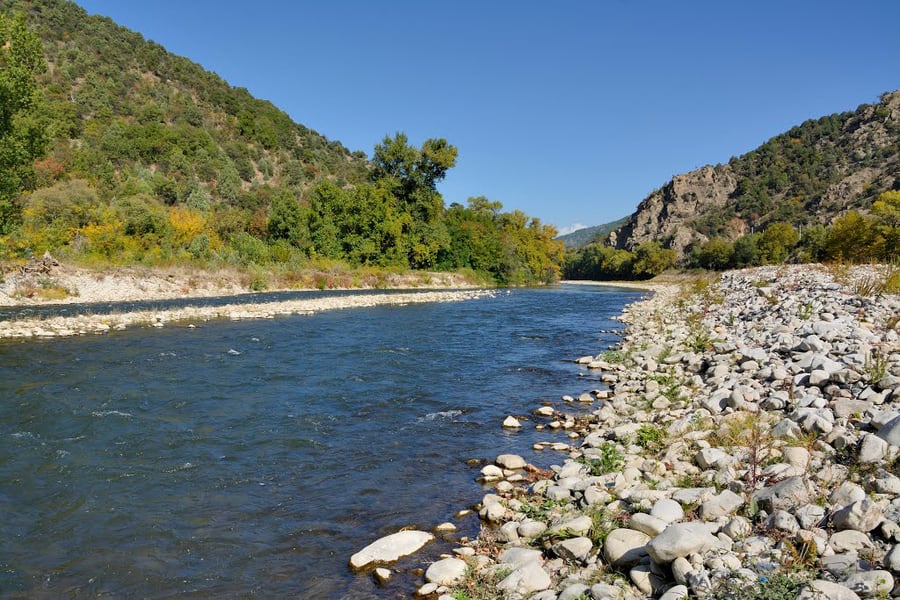
For eighteen kilometres the railway, the river and the E79 share a floor that is not really wide enough for three. The rock comes down to the track. The Struma runs fast and loud beside it, white over the shallows, and in summer there are rafts on it. Above, on both sides, the ground rises into juniper and oak scrub of a kind that belongs more to the Mediterranean than to the Balkans — the gorge sits precisely on the boundary between the two climates, which is why so much lives here.
Out into the warm south
Past Strumyani the walls fall back and the light changes. Sandanski, 186 kilometres out, has the highest average annual temperature in Bulgaria at +16 °C and around 2,700 hours of sunshine a year; it was called Sveti Vrach until it was renamed for the revolutionary Yane Sandanski, and it has been a spa since the Romans built baths at Parthicopolis nearby. It stands 20 kilometres from Greece and 100 from the Aegean, and it feels it.
After Sandanski the train runs on through Damyanitsa to General Todorov, where the line divides: the through service turns west for Petrich, and a short unit runs south to Kulata and the end of the wires.
Along the route
Krzysztof Ziarnek, Kenraiz / Wikimedia Commons · CC BY-SA 4.0Twenty-eight years, and the road went round
The Struma motorway has been trying to cross this gorge since 1997. A 15.4-kilometre twin-bore tunnel was designed from 2013 and abandoned by 2015. In June 2025 the campaigners, the road agency and the environment ministry agreed to route the western lane outside the gorge.Bulgarian Archives State Agency / Wikimedia Commons · Public domainA railway built here in wartime, twice over
A supply line was driven up the valley in 1916–17, and a photographer went with it: forty-eight plates survive in the national archive. The standard-gauge line arrived in pieces over the next thirty years, reaching Kulata only in 1944.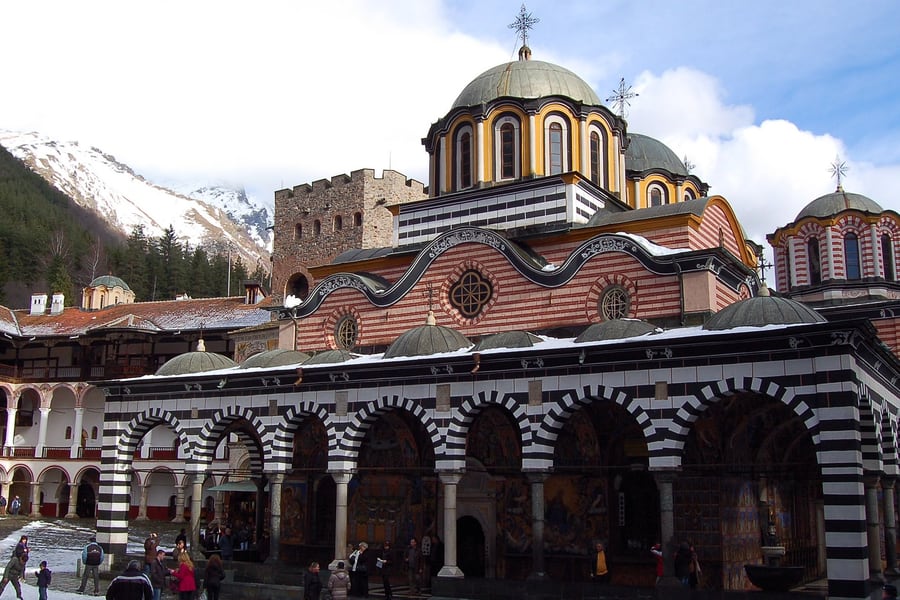 Michael Paraskevas / Wikimedia Commons · CC BY-SA 3.0
The line that went to the monastery
A 600 mm railway once climbed 36.5 kilometres from Kocherinovo into the mountains to the Rila Monastery. It opened in 1916 and closed in 1960. Its trackbed can still be walked, and a locomotive from it is preserved at Sofia Central.A bit of history
Culture & experiences along the way
Mikh Luna / Wikimedia Commons · CC BY-SA 4.0A day in the gorge from Sofia
The 07:30 from Sofia reaches Kresna at 10:51, and the 11:40 out of Sandanski calls there at 12:01 and is back in the capital by 14:53 — a little over an hour in the town, which is enough for the river. For a longer look, the same train down and the 14:17 from Sandanski back gives about three hours in the south. The return fare to Kresna is €10.58.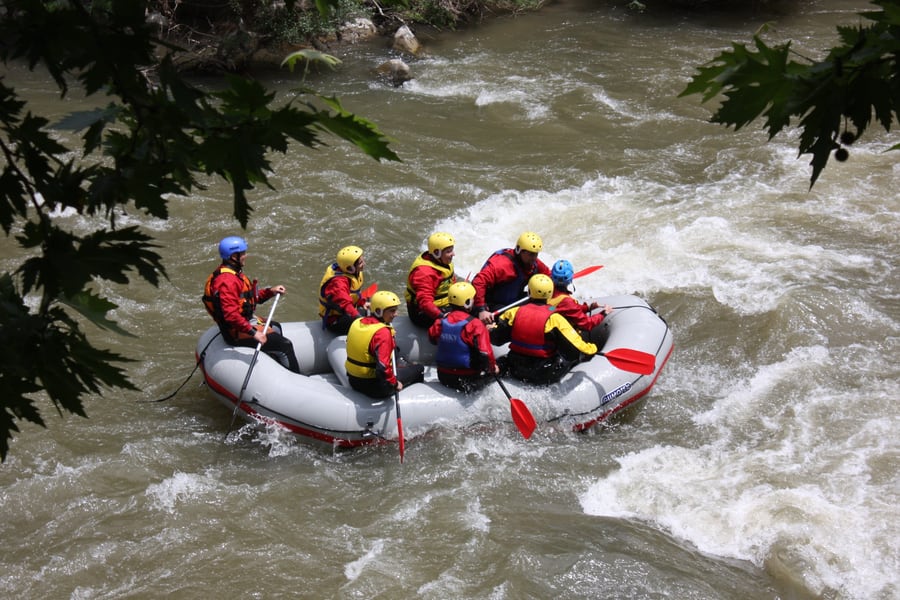 Klearchos Kapoutsis / Wikimedia Commons · CC BY 2.0
Rafting the Struma
The river through the gorge runs fast and shallow over rock, and in the warmer months there are rafts on it. The water is at its highest in spring, when the snow comes off the Pirin and the Rila; by late summer the Struma is lower and slower and the trips are gentler. The railway runs along the bank for the whole of it.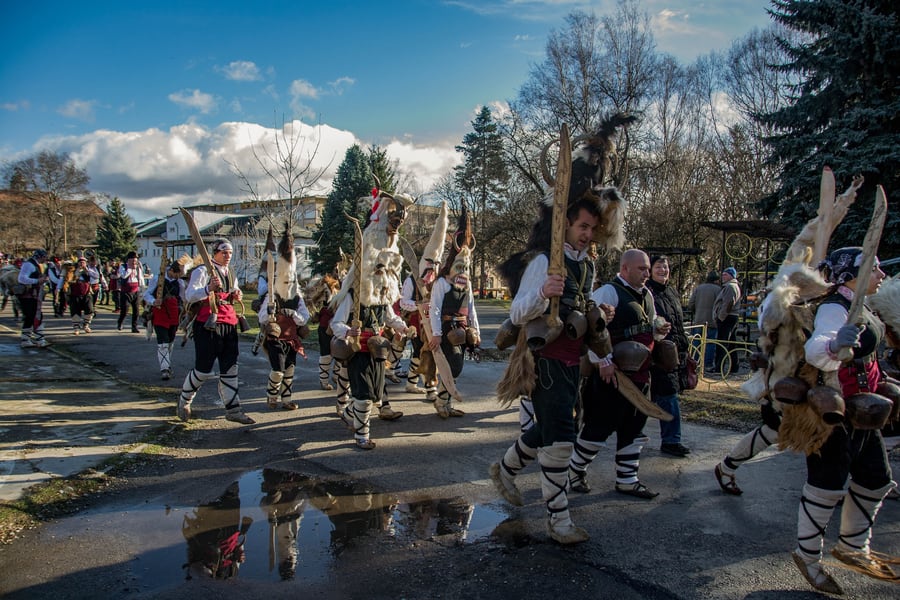 Dachegraphy / Wikimedia Commons · CC BY-SA 4.0 · cropped
The kukeri come out at Pernik
The first stop out of Sofia holds Surva, the largest masquerade festival in the Balkans: at the end of January several thousand kukeri in fur, horns and carved wooden faces come through Pernik hung with cowbells, stamping to drive the winter off. Bulgaria's masking traditions went onto the UNESCO register in 2015.Falk2 / Wikimedia Commons · CC BY-SA 4.0The end of the wires
There is no through train to Kulata. The fast services turn west at General Todorov for Petrich, and a short electric unit covers the last twelve kilometres to the frontier in ten minutes, twice a day in connection with them. BDŽ's international pages list three routes — Craiova, Halkalı and Bucharest — and none of them is Greek.Timetables
All times below were read directly from BDŽ's live timetable for Friday 14 August 2026, which is the board the operator was showing when this page was written. BDŽ's planner only returns results for the current day, so what follows is one day's service read in full rather than a year-round pattern — the shape of the service has been stable for some time, but the operator is the place to confirm the day you intend to travel.
Southbound, from Sofia
Seven trains left Sofia down the Struma valley on that board. Three of them are the fast ICF services that run the whole way to Petrich, and they are the ones worth planning around.
| Train | Sofia | Blagoevgrad | Kresna | Sandanski | General Todorov |
|---|---|---|---|---|---|
| ICF 5611 | 07:30 | 10:02 | 10:51 | 11:12 | 11:25 |
| ICF 5613 | 12:35 | 14:45 | 15:41 | 16:02 | 16:15 |
| ICF 5615 | 16:30 | 18:35 | 19:31 | 19:51 | — |
ICF 5615 is the quickest of the three, reaching Sandanski in 3 hours 21 minutes, and BDŽ's own board marks it as the fastest trip of the day.
Two slower all-stations trains also run down the valley — REG 50111 at 05:20, into Blagoevgrad at 08:26, and REG 50113 at 10:20, in at 13:10. Both call at every halt out of Sofia, and both take around three hours to do what ICF 5615 does in two. Two further evening departures, ICF 5617 at 18:07 and ICF 5621 at 19:25, also reach Blagoevgrad, arriving 20:39 and 21:45.
Northbound, back to Sofia
| Train | Sandanski | Kresna | Blagoevgrad | Sofia |
|---|---|---|---|---|
| ICF 5610 | 06:38 | — | — | 10:18 |
| ICF 5612 | 11:40 | 12:01 | 12:42 | 14:53 |
| ICF 5614 | 14:17 | — | — | 18:03 |
| ICF 5616 | 18:08 | — | — | 22:08 |
ICF 5612 is the fastest train on the line in either direction, doing Sandanski to Sofia in 3 hours 13 minutes. It is also a limited-stop service — out of Sandanski it calls only at Strumyani, Kresna, Simitli, Blagoevgrad, Boboshevo, Dupnitsa, Dolni Rakovets, Radomir, Batanovci and Pernik, and then runs into Sofia with two suburban stops. That is what makes it quick.
The last twelve kilometres to the border
No through train runs to Kulata. The three fast services carry on from General Todorov to Petrich, and Kulata is reached on a separate short electric unit:
- SU 50253, General Todorov 11:45 → Kulata 11:55, connecting out of ICF 5611
- SU 50255, General Todorov 16:35 → Kulata 16:45, connecting out of ICF 5613
Sofia to Kulata therefore takes 4 hours 10 minutes at best, on the 12:35, with a twenty-minute wait at General Todorov. Every Sofia–Kulata itinerary the planner offers involves at least one change, and the two early options involve two.
A day in the gorge
The gorge is comfortably a day trip from Sofia. The 07:30 reaches Kresna at 10:51; the 11:40 out of Sandanski calls at Kresna at 12:01 and is back in Sofia at 14:53. That gives a little over an hour in the town — enough for the river, not for much else. For a fuller day, the 07:30 down and the 14:17 from Sandanski back gives about three hours in the south.
Times as of August 2026. The operator's live board is at razpisanie.bdz.bg (opens in a new tab).
Tickets
Bulgarian rail is inexpensive, and this line is inexpensive even by that standard: fares are set by distance and the whole route is only 210 kilometres. Sofia to Kresna, into the gorge, came back at €5.88 in second class and €7.36 in first, with a return at €10.58; Sandanski is €6.49 and €8.13. Bulgaria adopted the euro on 1 January 2026 and it has been the sole legal currency since 1 February.
⚠️ These are one reading, not a fixed tariff. BDŽ carries a calendar fare alongside its standard one and warns on every panel that prices vary by day and by booking conditions. Most trains here need no reservation; three carry carriages that do, at €0.51. For a six-euro fare there is little point booking ahead, except for a first-class seat in high summer. Read from razpisanie.bdz.bg (opens in a new tab), August 2026.
Book your tickets
Sofia – Kresna, into the gorge
€5.88 second class · €7.36 first · €10.58 return
165 km, and the fast trains that call at Kresna need no compulsory reservation.
Book Tickets (opens in a new tab, on Bulgarian State Railways (BDŽ))via Bulgarian State Railways (BDŽ)Booking online with BDŽ
The operator's own ticketing site
Worth using for a first-class seat on a reservation-carrying train in high summer.
Book Tickets (opens in a new tab, on Bulgarian State Railways (BDŽ))via Bulgarian State Railways (BDŽ)Rail Passes
For this particular journey, a rail pass is almost certainly not worth buying — and that is the useful thing to know about it.
The arithmetic is straightforward. A second-class ticket from Sofia to Sandanski, 186 kilometres across the whole length of the Struma valley, costs €6.49. Sofia to Kresna and back, which is the classic day trip into the gorge, comes to €10.58 as a return.
The Interrail Bulgaria Pass, second class, is priced at €67 for three travel days within a month for an adult, rising to €150 for eight days; the youth version starts at €50. Three days of the most expensive travel this line offers — a Sandanski return, a Kresna return and a Blagoevgrad return — would come to something in the region of thirty euros. The pass costs more than double that, and it would still be unused on the other twenty-eight days of its month.
When a pass does make sense
A Bulgaria pass earns its keep in one situation: a longer trip that also takes in the Rhodope narrow gauge, the Iskar Gorge, the Sub-Balkan line to the Black Sea and perhaps a night train, all inside a week or two. In that case the Struma valley is one leg among several and rides free on a pass bought for the whole itinerary. Bought for the Struma valley alone, it does not.
The same goes for a Eurail or Interrail Global Pass carried into Bulgaria from elsewhere in Europe. If the pass is already in hand, this line is covered and there is nothing further to do; nobody should buy one on account of this journey.
Conditions on the ground
Bulgarian State Railways is the only passenger operator on the route, so a pass valid in Bulgaria is valid on every train described on this page. Reservations are not generally compulsory: most services here carry none at all. Three trains — ICF 5617 southbound, ICF 5612 and ICF 5614 north — have carriages that do require one, at €0.51, and that supplement is payable on top of a pass in the usual way.
The short unit covering the last twelve kilometres from General Todorov to Kulata is an ordinary BDŽ service and needs nothing special. It runs only twice, in connection with the fast trains, so a pass buys no additional flexibility at the frontier end.
Fares and pass prices as of August 2026, read from razpisanie.bdz.bg (opens in a new tab) and interrail.com (opens in a new tab).
Places to Visit
The Struma valley line is one of the few railways in Bulgaria where the reasons to get off outnumber the reasons to stay on. Within its 210 kilometres are the country's most visited monument, its smallest town, its warmest town, its best-preserved medieval monastery in the south, and a gorge that two governments have spent thirty years arguing about.
Distances matter here, because several of the best things on this list are not actually on the railway. The monasteries in particular are mountain places, reached by road from a valley station, and the last stretch is a bus or a taxi. That is worth knowing before setting out rather than after.
Michael Paraskevas / Wikimedia Commons · CC BY-SA 3.0The Rila Monastery
Bulgaria's most visited monument stands at 1,147 metres in the Rila mountains, founded in the 10th century by the hermit Ivan of Rila and UNESCO-listed since 1983. The Hrelja Tower of 1334–35 is the oldest thing standing; the striped arcades and domes everyone photographs are the main church of 1834–37, its frescoes finished in 1846. It is reached by road — the monastery's own information service notes that the direct bus from Sofia is not running.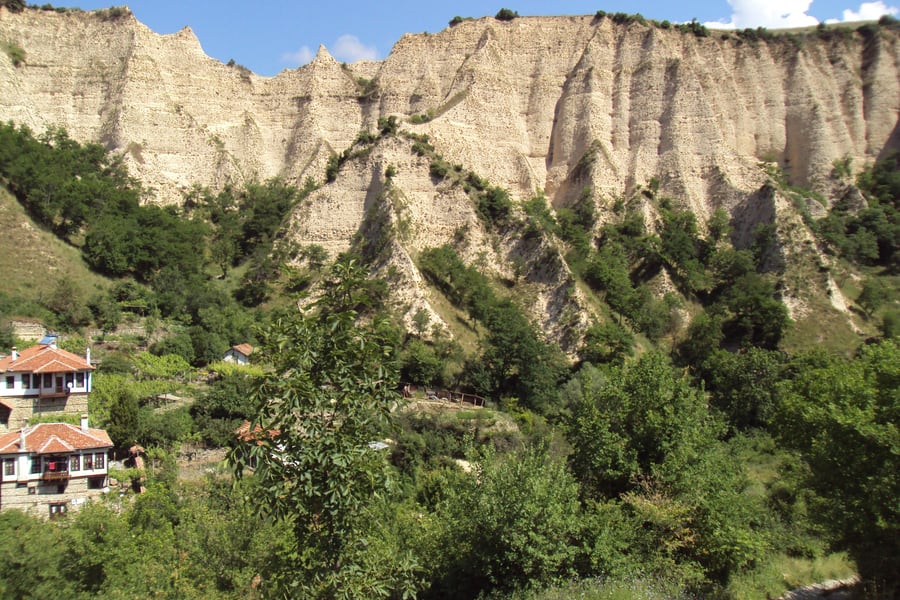 Vislupus / Wikimedia Commons · CC BY-SA 4.0
Melnik, and the earth pyramids above it
385 people live in Melnik, which makes it the smallest town in Bulgaria — it keeps the title for historical reasons rather than demographic ones. It sits beneath 17 square kilometres of eroded sandstone pinnacles reaching 100 metres, and it has been making strong red wine since at least 1346. The Kordopulov House of 1758 is the largest Revival house on the Balkan peninsula and still holds one of the town's biggest cellars.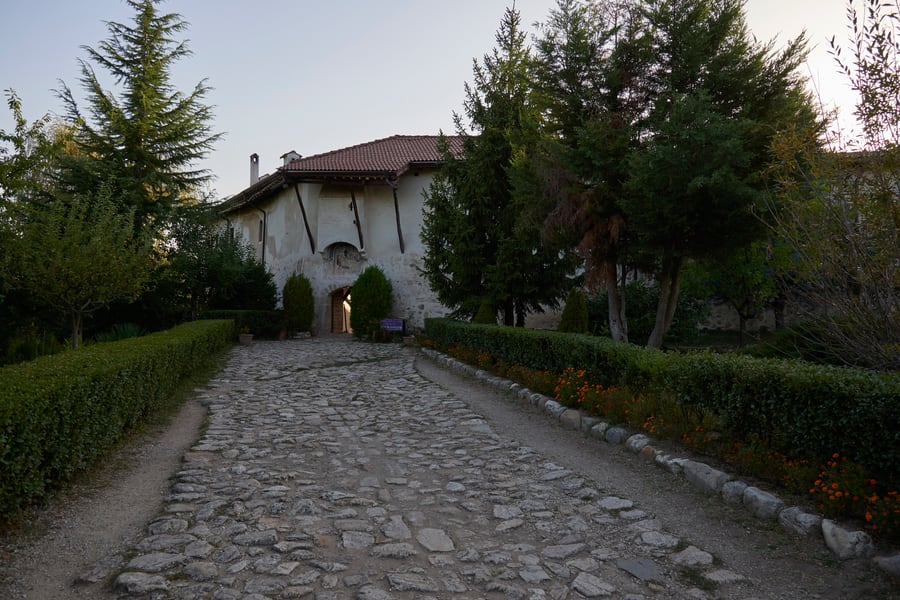 Wouter Hagens / Wikimedia Commons · CC BY-SA 4.0
Rozhen Monastery
The largest monastery in the Pirin, founded in the 13th century and first attested by a note in a chant book of 1551. Frescoes of 1597 survive inside and the painted south facade dates from 1611; a marble frieze over the central gate is 13th or 14th century. Fire destroyed the library between 1662 and 1674, and the rebuilding ran from 1715 to 1732. It is one of the few medieval Bulgarian monasteries to have come through largely intact.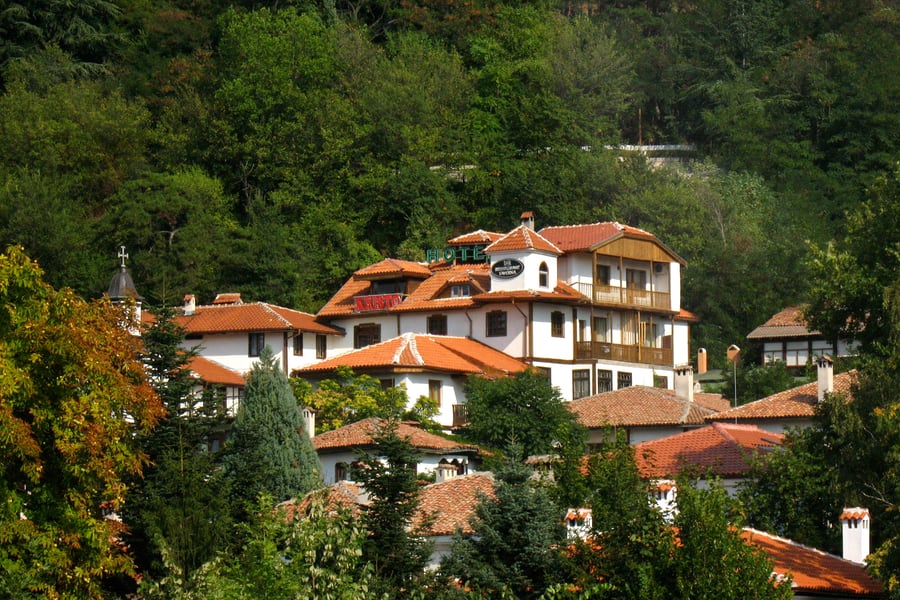 Михал Орела / Wikimedia Commons · CC BY 2.0
Varosha, the old quarter of Blagoevgrad
Blagoevgrad was Gorna Dzhumaya until 1950, and its Revival quarter, Varosha, survives on the slope above the river: nineteenth-century houses on narrow lanes around the Church of the Presentation of the Mother of God of 1844. The town of 67,810 is also a university town twice over, with the South-West University and the American University in Bulgaria, which gives it more life in term time than its size suggests.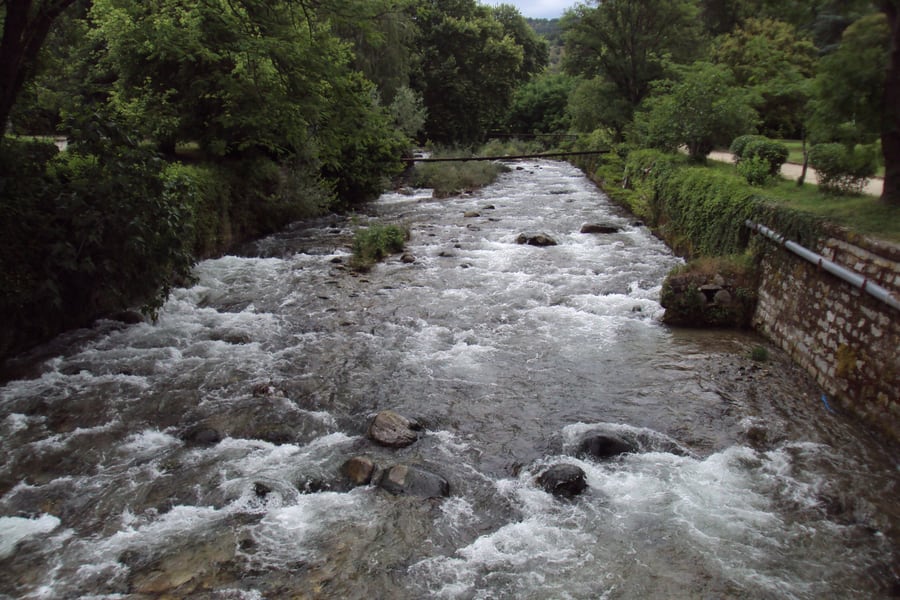 Vislupus / Wikimedia Commons · CC BY-SA 4.0
Sandanski, the warmest town in Bulgaria
Sandanski has the highest average annual temperature in the country at +16 °C and around 2,700 hours of sunshine a year, which is why it has been a place to take the waters since the Romans built baths at Parthicopolis next door. The Sandanska Bistritsa runs through the middle of the town park, straight down off the Pirin. The town was called Sveti Vrach before it was renamed for the revolutionary Yane Sandanski, and it stands 20 kilometres from the Greek border.Klearchos Kapoutsis / Wikimedia Commons · CC BY 2.0The gorge itself, and what lives in it
The Kresna Gorge is a Natura 2000 site twice over, and the reason is the climate: it sits on the seam between Central European and Mediterranean, so Greek juniper and Mediterranean oaks grow here alongside Balkan species. 232 bird species, 75 mammals and 31 reptiles have been recorded, and Egyptian vultures use the gorge as a resting place on migration. The floor lies at 222 metres; the walls go up on both sides for the best part of eighteen kilometres.Where to Sleep
The Struma valley is unusual among Bulgarian rail journeys in that the obvious place to stay is also a genuine destination. Sandanski is a spa town with a century of practice at accommodating people who have come for the water, and it sits three and a half hours from Sofia at the far end of the line. Most people who ride this railway end their day there.
Blagoevgrad, halfway down, is the alternative: a university town of 67,810 people with a nineteenth-century quarter, and the natural base for anyone heading on to the Rila Monastery the following morning.
The gorge itself has very little. Kresna is a town of under four thousand and its accommodation is guest houses and rooms let privately, none of which publishes a website of its own that could be checked, so none is listed here. That is a gap in this page rather than a judgement on the town — the rooms exist, they are simply not verifiable from a distance.
A note that applies to all four cards below: no price, no rating and no star count appears on any of them, because none of those has been verified. Each description says only what the hotel's own site says about itself, and every link was opened and read in August 2026.
Where to stay
Hotel Rila
Central Sofia, for the morning departure
In downtown Sofia between Vitosha Boulevard, the Presidency and the Ivan Vazov National Theatre. Convenient for the 07:30, which is the first of the fast trains down the Struma valley and the one that reaches the gorge in the middle of the morning.
Check Availability (opens in a new tab, on hotelrila.bg)via hotelrila.bgSpa Hotel Ezeretz
Blagoevgrad, halfway down the line
A spa hotel on Peyo Yavorov street in Blagoevgrad, with a wellness centre, restaurants including a panoramic one, a summer garden and private parking. The site is in Bulgarian only. Blagoevgrad is the practical base for anyone going on to the Rila Monastery the next morning.
Check Availability (opens in a new tab, on ezeretz.com)via ezeretz.comPark Hotel Pirin
Sandanski, by the Sandanska Bistritsa
On the western slopes of the Pirin near the mouth of the Sandanska Bistritsa, next to the park of the spa resort. The hotel lists mineral and thermal pools, a sauna and steam bath, massage and spa therapies and a medical spa programme, with rooms and suites looking onto the mountain and the river.
Check Availability (opens in a new tab, on parkhotelpirin.com)via parkhotelpirin.comInterhotel Sandanski
In the centre, by the city park
A large hotel in the middle of Sandanski, a few steps from the city park and the main shopping street. It has 285 rooms and suites, three restaurants, three mineral water pools of which one is thermal at 38 °C, five tennis courts and four conference rooms, and one of the larger medical rehabilitation centres in the region.
Check Availability (opens in a new tab, on interhotelsandanski.bg)via interhotelsandanski.bgQuestions or corrections
Planning this trip and stuck on something, or spotted a time, fare or detail that has changed? Send us a message about The Struma Valley Line — Sofia to the Greek Frontier through the Kresna Gorge. We read every one, and we update this page when something has changed.