The Rhodope Narrow-Gauge Railway — Bulgaria's Septemvri to Dobrinishte
Phil Richards / Wikimedia Commons · CC BY-SA 2.0
- DistanceSeptemvri–Dobrinishte · 125 km
- DurationAbout 5 hours end to end
- Best seasonYear-round — green valleys in summer, deep snow and skiing in winter
Introduction
There is nothing else quite like it in Bulgaria. While the rest of the country's railways run on standard-gauge track between cities, one line still climbs the mountains on a narrow 760 mm thread barely wider than an outstretched arm — and it does so with such ambition that it has become a pilgrimage for anyone who loves trains.
The Rhodope narrow-gauge railway, to give it its usual name, runs 125 kilometres from Septemvri, on the main line across the Thracian plain, up into the mountains and down the other side to Dobrinishte, deep in the ski country beneath the Pirin peaks. It was built the hard way, in stages between the wars and finished only in 1945, threading the difficult gap where three great massifs — the Rhodopes, the Rila and the Pirin — crowd together. To gain height it loops back on itself in four complete spirals and dives through some twenty-five tunnels on the main climb, topping out at Avramovo, which at 1,267 metres is the highest railway station in the whole Balkan peninsula.
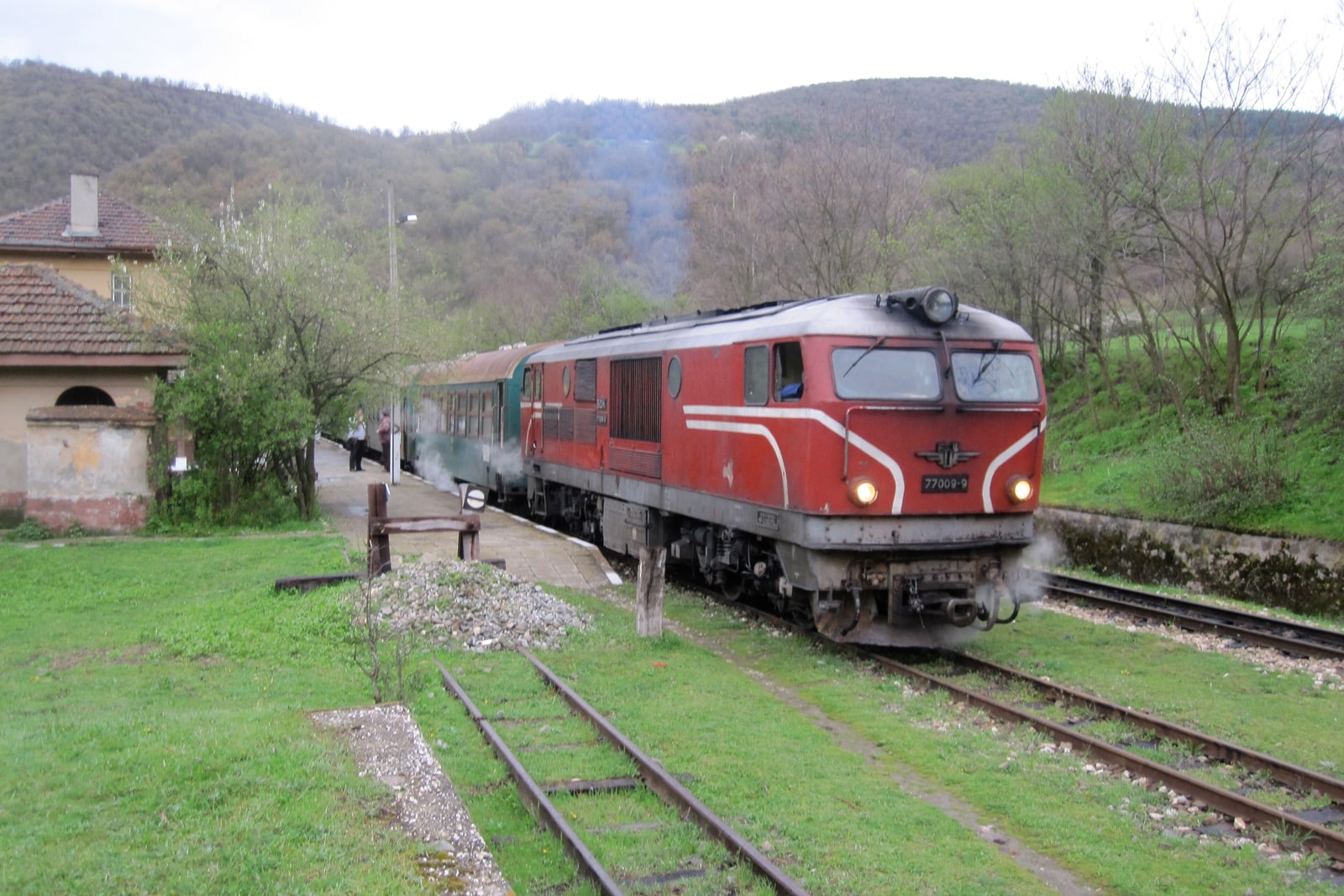
The best thing about it is that it is not a museum piece. This is a working public railway, four little trains a day in each direction, carrying villagers to market, students to school and skiers to the slopes, for a fare of a few euros. You can simply turn up at Septemvri, buy a ticket, and settle in for five unhurried hours as the diesel grinds up through pine forest and hay meadow, past the spa town of Velingrad, over the roof of the line and down into the Razlog valley.
Ride it end to end and you cross a whole cross-section of Bulgaria at walking pace — a slow, cheap, gloriously old-fashioned mountain journey that most travellers never discover.
The Journey
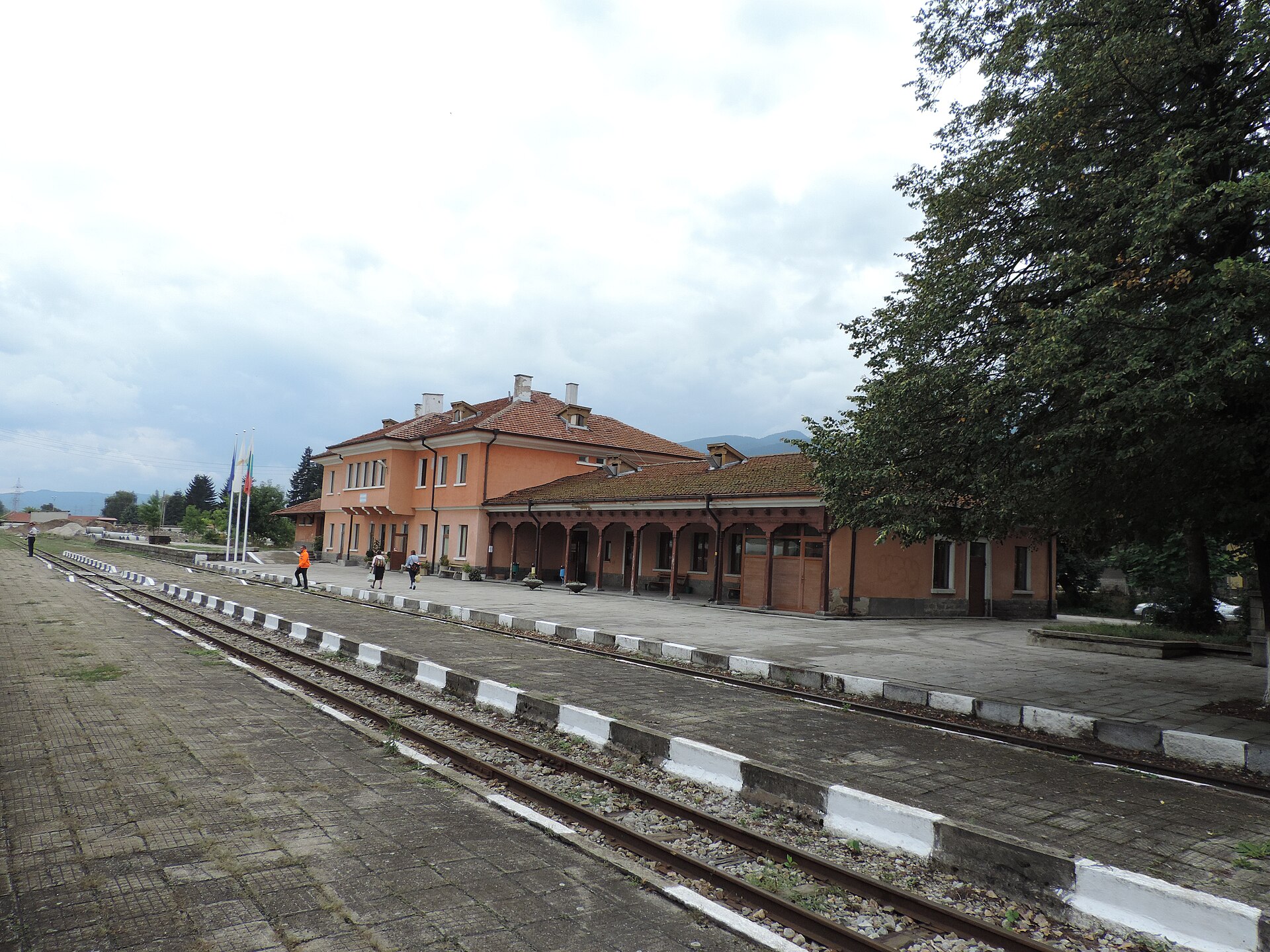
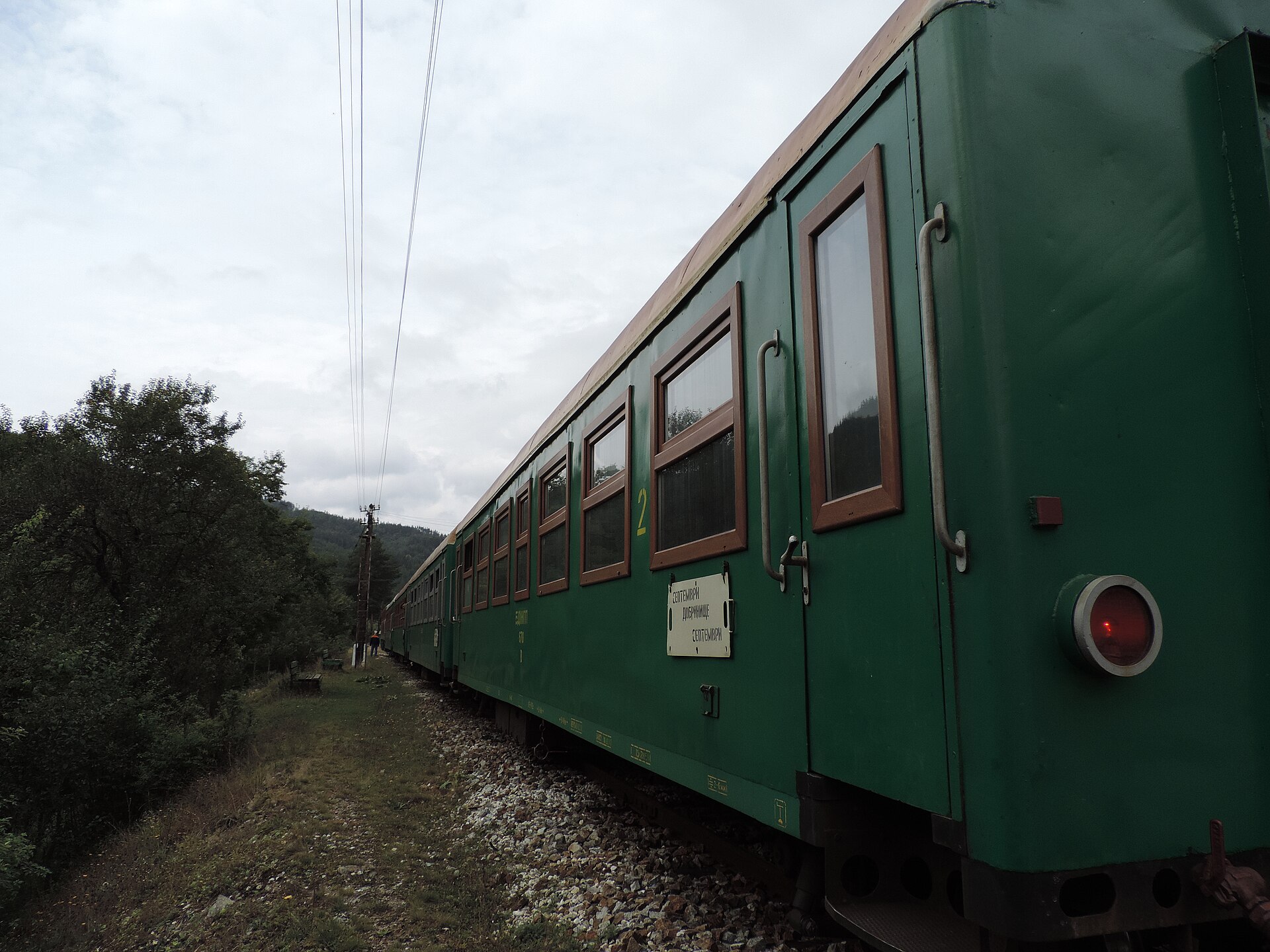
The journey begins prosaically enough at Septemvri, a junction on the Sofia–Plovdiv main line where the narrow-gauge platform sits modestly to one side. The train is short — a diesel and a handful of green coaches — and it looks almost like a toy beside the standard-gauge expresses. Do not be fooled: it is about to out-climb every one of them.
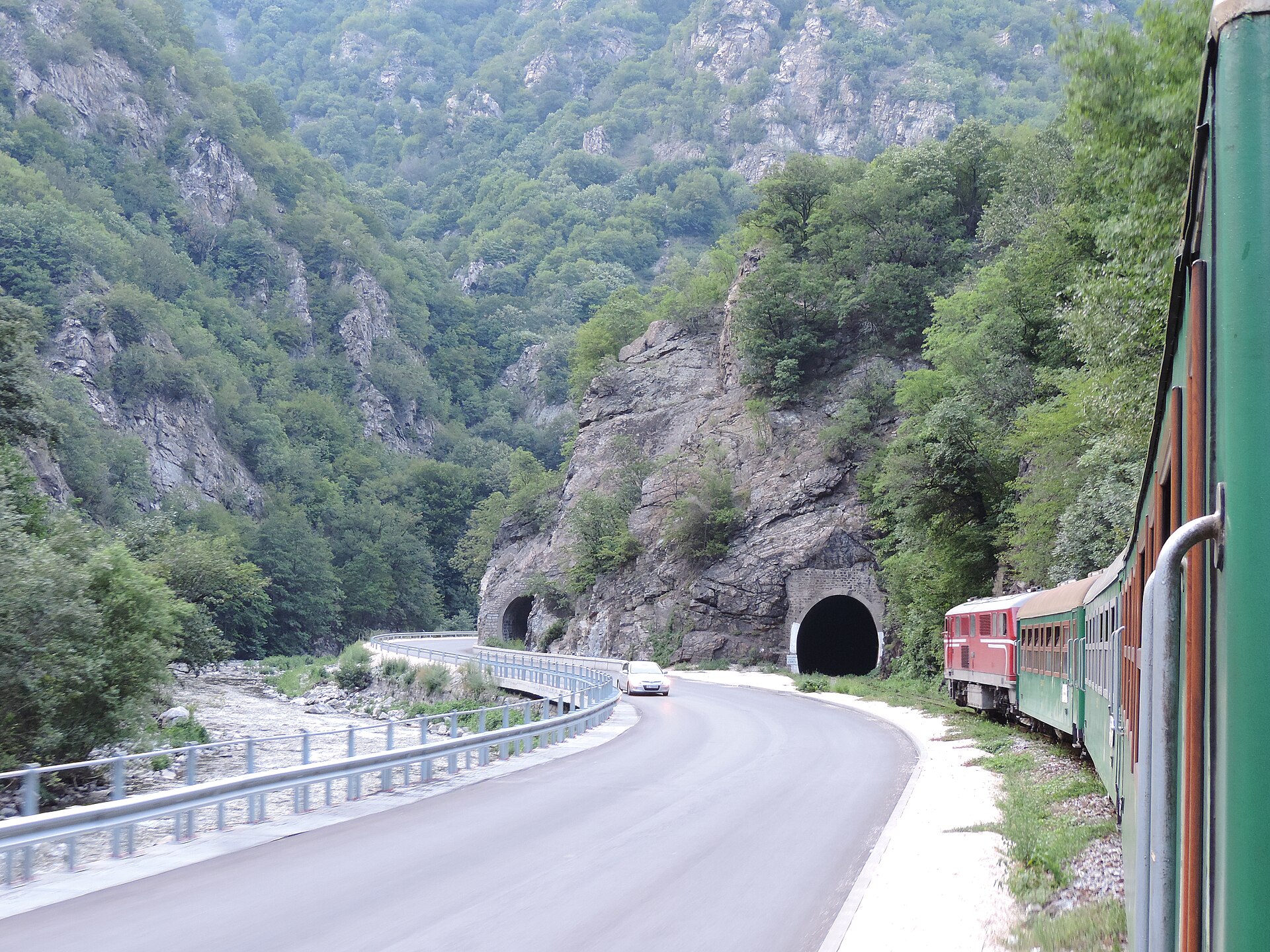
For the first stretch the line ambles across the plain and into the foothills, following the Chepinska river up a widening valley to Velingrad, the spa town at the heart of the western Rhodopes. Then the real work starts. Above Velingrad the railway faces the mountain wall, and the engineers' answer unfolds beneath your window: the track begins to loop back on itself, curling through tunnel after tunnel — twenty-five of them on this section alone — and climbing in tight spirals where you can look down and see the very rails you rode a few minutes ago. In barely twenty kilometres it hauls itself up more than half a kilometre in height.
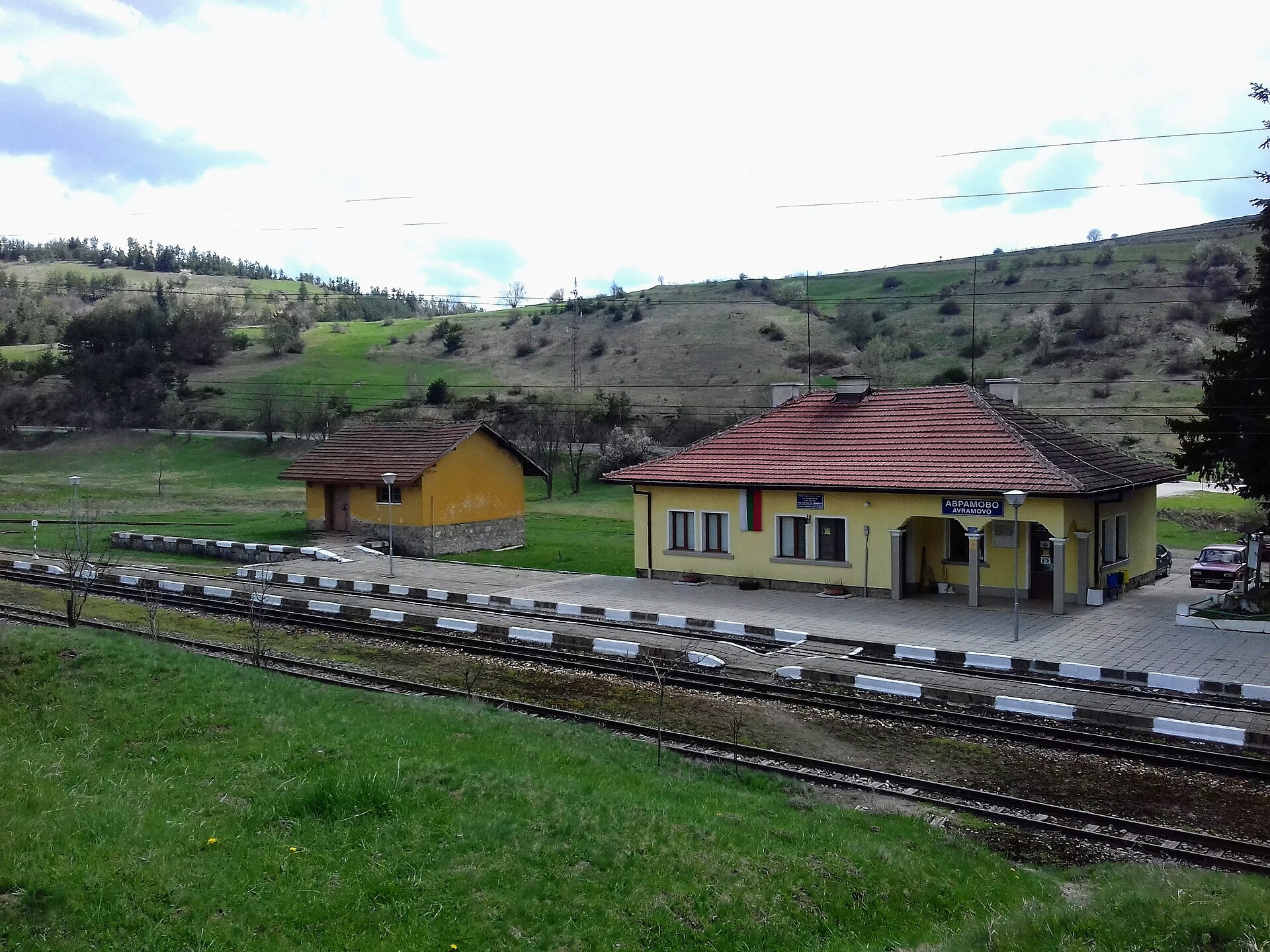
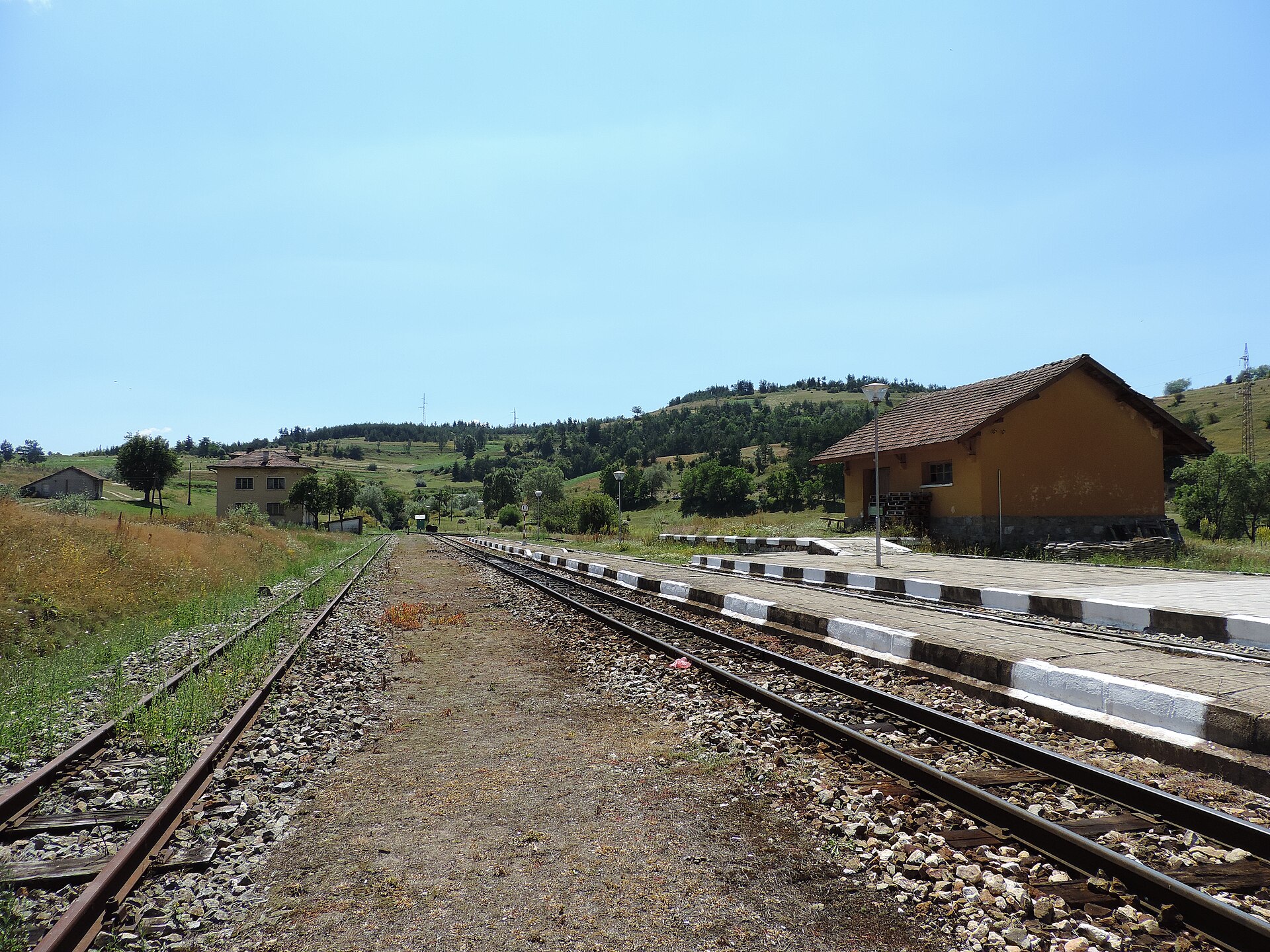
The summit is Avramovo, a lonely yellow station standing at 1,267 metres among high meadows — the highest railway station in the Balkans, and a fine place for the ritual photograph by the station sign. From here the line tips over the watershed and runs down through Yakoruda and Belitsa into the broad Razlog basin, and the scenery changes character completely: ahead now rise the bare granite teeth of the Pirin, and the valley floor opens into pasture and orchard.
The great destination is Bansko, Bulgaria's premier ski town, reached slowly and from above in a way no road can match — magical in winter, when the train noses in through deep snow. A few minutes further on, the line ends quietly at Dobrinishte and its hot springs. The whole crossing takes about five hours; it is one of those rare journeys where the getting there really is the point.
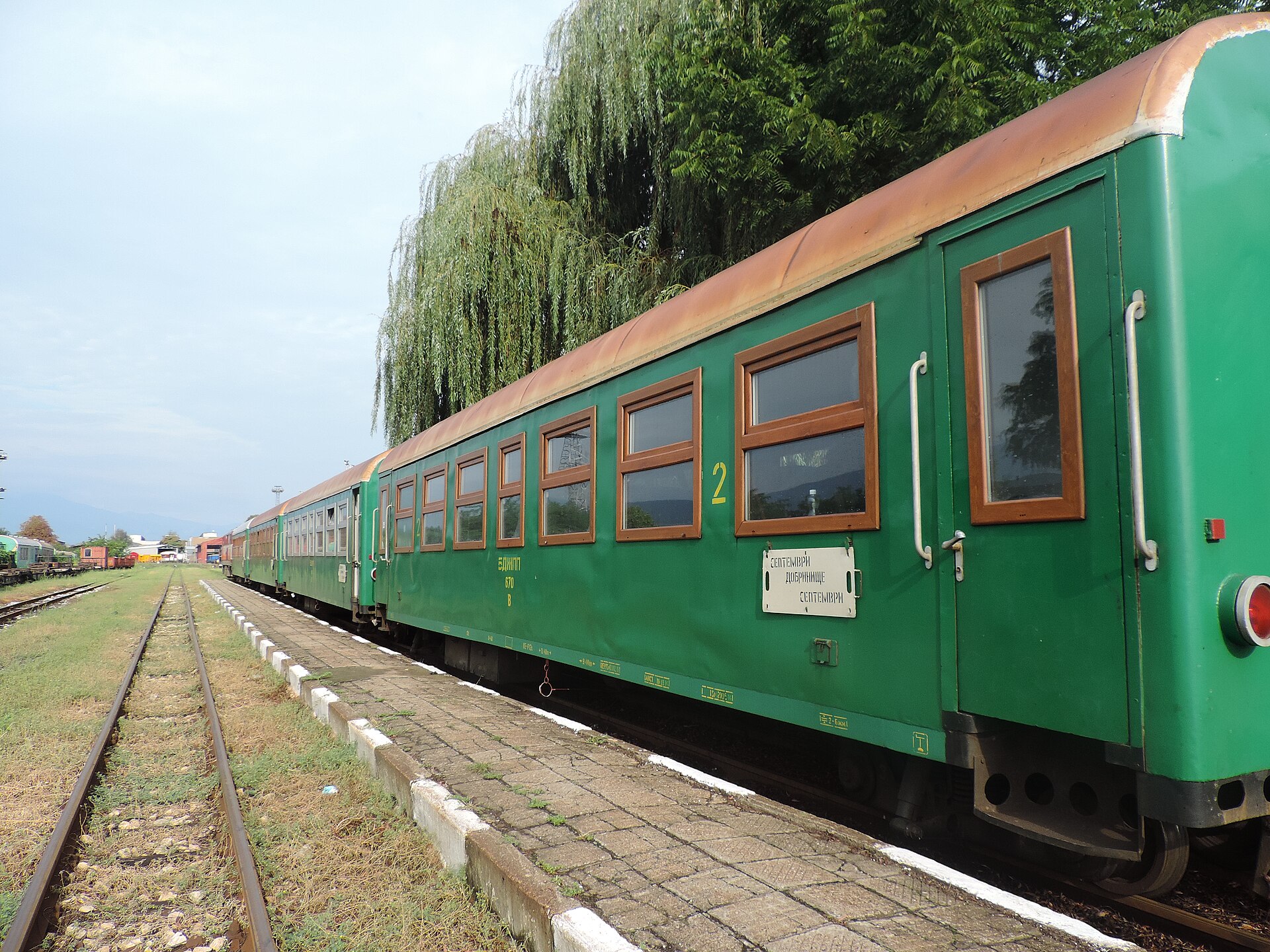
Along the route
Spasimir Pilev / Wikimedia Commons · CC BY-SA 4.0The roof of the Balkans
From the plain at Septemvri the line claws its way up to Avramovo, at 1,267 metres the highest railway station in the Balkan peninsula. To do it on a 760 mm thread of track the engineers bored twenty-five tunnels on the climb alone and laid four complete spirals.Спасимир / Wikimedia Commons · CC BY-SA 4.0Three mountain ranges in a day
In 125 kilometres the railway threads the gap between three of Bulgaria's great massifs — the Rhodopes, the Rila and the Pirin — climbing through pine forest and hay meadow, then running down into the Razlog valley beneath sharp granite peaks.Спасимир / Wikimedia Commons · CC BY-SA 4.0Bansko and the ski valley
The southern end delivers you to Bansko, Bulgaria's liveliest ski resort, a cobbled old town of stone houses under the Pirin peaks. Arriving on the narrow-gauge train, slowly and from above, beats any transfer bus.A bit of history
Culture & experiences along the way
Спасимир / Wikimedia Commons · CC BY-SA 4.0Riding the whole line
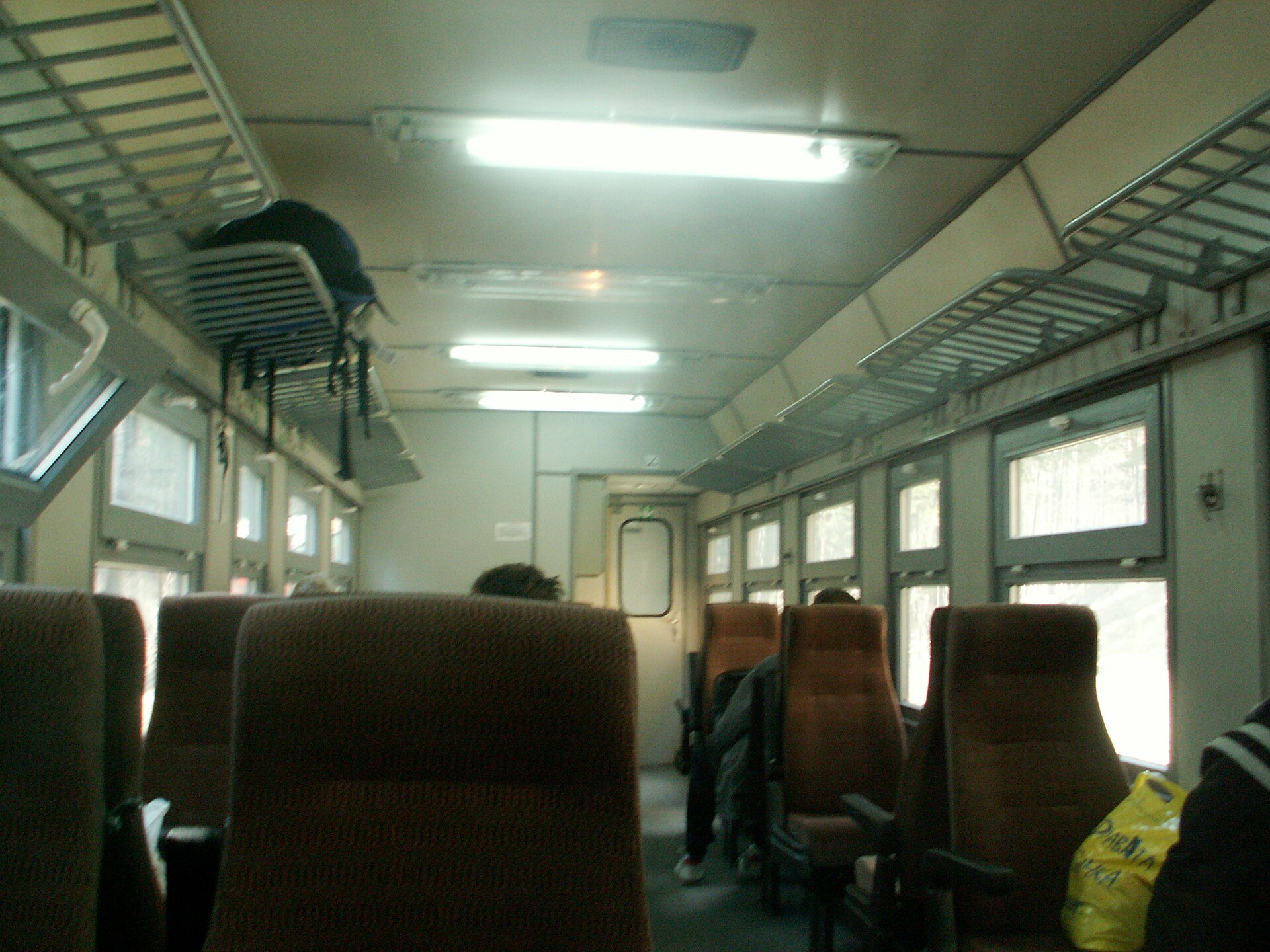
The classic trip is to ride it end to end — Septemvri to Dobrinishte or back — and give the railway the whole day it deserves. This is an ordinary public train, four a day each way, with a driver who knows every curve; you share it with villagers, schoolchildren and skiers. Bring food and water, take a window seat, and let five hours of mountains unspool at walking pace.Спасимир / Wikimedia Commons · CC BY-SA 4.0Break the journey at Velingrad
You do not have to do it all in one sitting. Velingrad, the "spa capital of the Balkans", makes a perfect halfway stop — a town of hot springs, mineral pools and pine air where you can soak, sleep and pick up a later train. Breaking the trip here turns a long ride into a relaxed two-day mountain escape.Witold Waschut / Wikimedia Commons · CC BY-SA 2.0Catch the steam engine
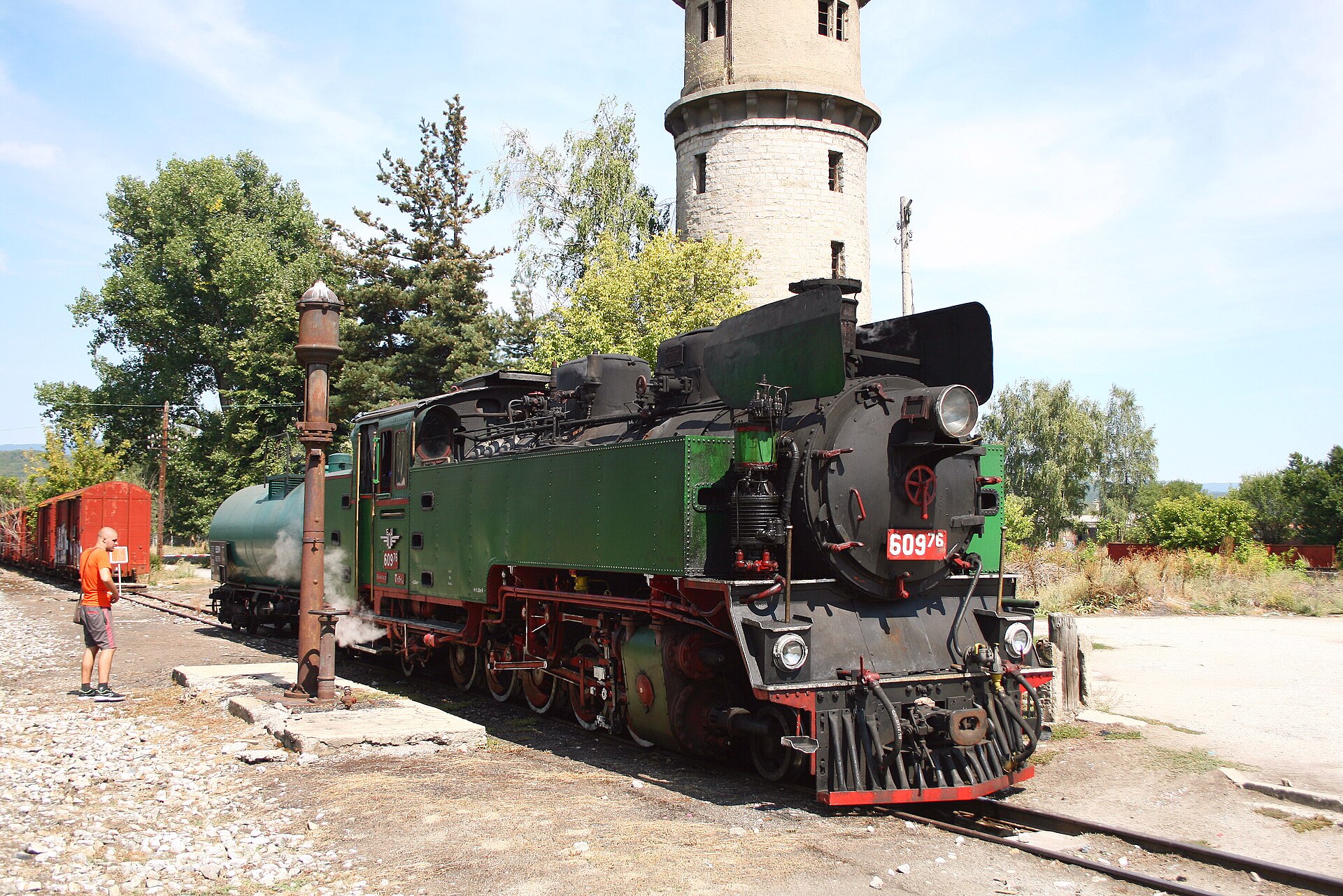
On special days the railway fires up its preserved narrow-gauge steam locomotive, 609.76, for charters and enthusiast trains — a chance to see the line as it was, smoke and whistle echoing off the rock. These runs are occasional and booked separately from the timetable, so check the railway's calendar if riding behind steam is your dream.Timetables
This is an everyday BDŽ (Bulgarian State Railways) service, not a seasonal tourist train, so it runs all year round — including through the ski season — with four trains a day in each direction. One pair each way (the faster ICF service) carries a buffet car and requires a seat reservation; the others are simple stopping trains.
Real departures, as of the 2026 timetable (checked July 2026):
| Septemvri → Dobrinishte | Arrive | Journey |
|---|---|---|
| 05:00 | 09:50 | 4 h 50 |
| 08:55 (ICF, buffet, reservation) | 13:17 | 4 h 22 |
| 12:45 | 17:30 | 4 h 45 |
| 15:45 | 20:37 | 4 h 52 |
| Dobrinishte → Septemvri | Arrive | Journey |
|---|---|---|
| 06:50 | 11:50 | 5 h 00 |
| 10:25 | 15:10 | 4 h 45 |
| 14:25 (ICF, buffet, reservation) | 18:50 | 4 h 25 |
| 17:45 | 22:33 | 4 h 48 |
Good to know:
- Connections at Septemvri. Septemvri sits on the electrified Sofia–Plovdiv main line, so it is easy to reach by fast train from either city; check that your main-line arrival gives you time to change onto the narrow-gauge departure.
- Take the whole thing, or half. The full ride is about five hours. Many people ride only the most spectacular part — Velingrad up to Avramovo and down to Bansko — and it is just as rewarding.
- Steam is separate. The line's preserved steam locomotive, 609.76, appears only on advertised charters and special trains, not on the scheduled timetable. If you want steam, book one of those runs directly (see Tickets).
- Track repairs. Sections of the line are periodically under repair, which can alter times or add bus substitutions; the operator flags this on its own timetable page.
Times as of the 2026 timetable and subject to change, especially during engineering works. Always confirm current departures with the operator before you travel (see the Tickets section below).
Tickets
Tickets could hardly be simpler or cheaper. This is an ordinary BDŽ train, and the full Septemvri–Dobrinishte run costs around €3–4 one way, with the usual reductions for children and seniors. Buy at the station window before departure; there is no need, and often no way, to book the ordinary stopping trains ahead. The one exception is the faster ICF service in each direction, which carries a buffet car and needs a seat reservation — worth having on a five-hour ride.
Bulgaria has used the euro since 1 January 2026, so fares once quoted in leva now appear in euros; either way this is one of the best-value long rides in Europe. Bring cash for the smaller windows, and your own food and water. ⚠️ Steam is a different ticket: locomotive 609.76 runs only on occasional charters.
Book your tickets
The Rhodope narrow-gauge train
Septemvri – Bansko – Dobrinishte
The everyday BDŽ service over the full 125 km narrow-gauge line, four trains a day each way. Buy at the station on the day; fares are only a few euros for the whole ride. One pair of trains (the faster ICF) carries a buffet car and needs a reservation.
Book Tickets (opens in a new tab, on Bulgarian State Railways (BDŽ))via Bulgarian State Railways (BDŽ)Timetable & reservations
Live departure times, both directions
Check current departure and arrival times for every train on the line, and reserve a seat on the buffet-car service, on the Bulgarian State Railways timetable site. Times can shift for track repairs, so confirm on the day before you travel.
Book Tickets (opens in a new tab, on Bulgarian State Railways (BDŽ))via Bulgarian State Railways (BDŽ)Rail Passes
Interrail passes are valid. Interrail's table of railway companies names BDŽ's Rhodope narrow-gauge line among the trains included in Bulgaria, so Septemvri to Dobrinishte is covered by an Interrail Bulgaria Pass or a Global Pass. The ordinary stopping trains need no reservation.
For this journey alone, a pass is not worth buying. The full run costs only a few euros. A pass pays when the narrow gauge is one day of a longer trip round Bulgaria.
Checked October 2026 against interrail.com (opens in a new tab) and Interrail's Bulgaria page (opens in a new tab).
Places to Visit
The railway strings together some of the loveliest country in southern Bulgaria, and the stations are invitations to break your journey.
Velingrad, roughly halfway, calls itself the "spa capital of the Balkans" and has the mineral springs, thermal pools and pine-scented calm to back it up — a natural place to stop over, soak, and pick up a later train. Between there and the summit the line threads the wooded Chepino valley, and higher still the tiny halt of Avramovo is a destination in itself for railway lovers: step onto the platform of the highest station in the Balkans and look back down over the loops you have just climbed.
At the southern end lies the line's star turn, Bansko — a resort town with a genuine National Revival heart of cobbled lanes, stone houses and mehana taverns, and Bulgaria's best-known ski slopes climbing into the Pirin National Park above. In summer the same mountains become superb walking country, with marked trails to glacial lakes and the granite ridges of Pirin, a UNESCO World Heritage site. Neighbouring Dobrinishte, the end of the line, adds hot open-air mineral baths.
All around spreads the wider Rhodope–Rila–Pirin landscape, and — a longer excursion by road — the great Rila Monastery, Bulgaria's most revered, tucked in the mountains to the northwest. Few railways deliver you into such a concentration of scenery, spa towns and mountain culture.
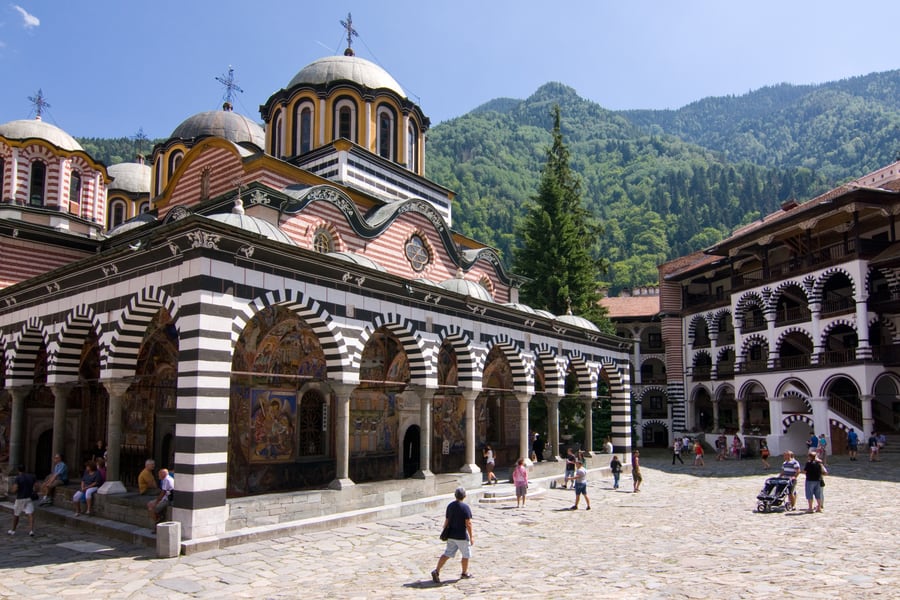 Raggatt2000 / Wikimedia Commons · CC BY-SA 3.0 · cropped
Rila Monastery
Bulgaria's most revered monastery, and worth the detour from anywhere. Hrelyo's Tower dates from 1334–35; the striped, arcaded main church is Pavel Ioanov's, built 1834–37, and its frescoes were finished in 1846 by masters from Bansko, Samokov and Razlog including the celebrated Zahari Zograf. Four storeys of black-and-white arcading wrap a courtyard under forested mountains. A UNESCO World Heritage Site.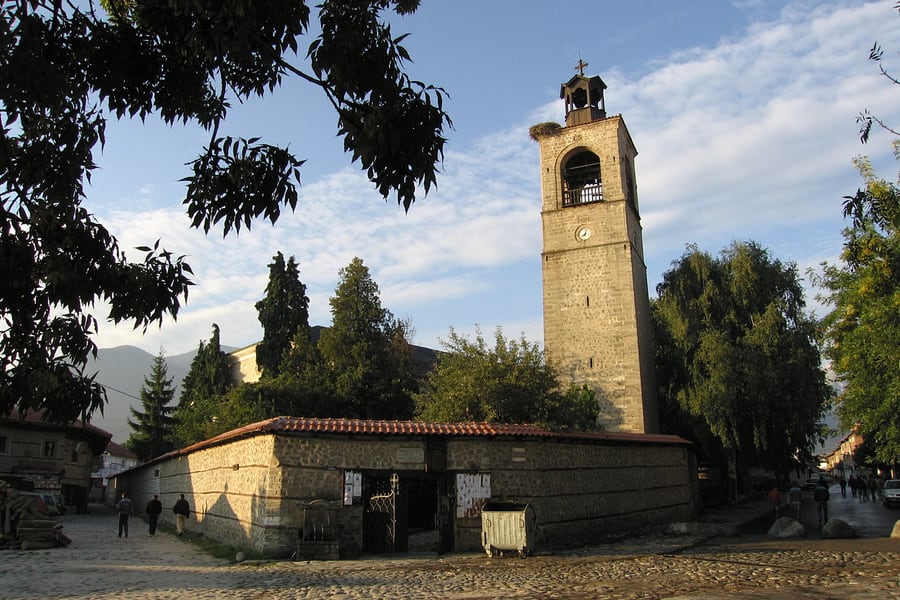 Christian Koehn / Wikimedia Commons · CC BY-SA 3.0 · cropped
Holy Trinity, Bansko
Permission to build was wrung out of the Ottoman authorities in 1833 and some 350 local craftsmen finished the church in 1835 under the master builder Dimitar Doyuv — at 35 by 22.5 metres, with walls over a metre thick, one of the largest of its date in the country. The stone bell and clock tower went up in 1850 and still sets the skyline of the old town.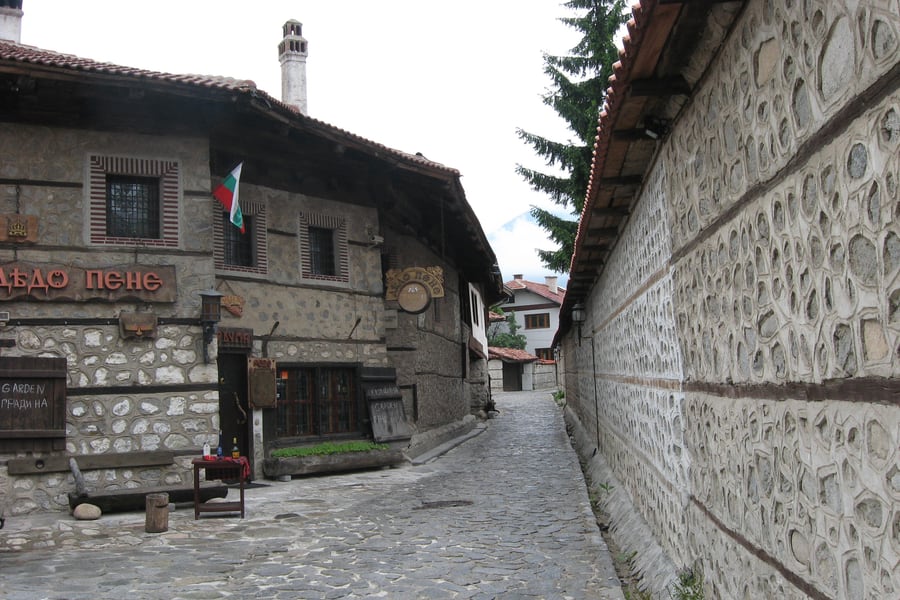 Explorer1940 / Wikimedia Commons · CC BY-SA 4.0 · cropped
Old Bansko
Bansko is Bulgaria's biggest ski resort and looks it on the edges, but its core is a genuine National Revival town: cobbled lanes running between high stone walls, heavy timber gates, and mehana taverns in the cellars where the food is Pirin mountain cooking and the wine is local. Ten minutes' walking gets you out of the resort and into the town the resort grew onto.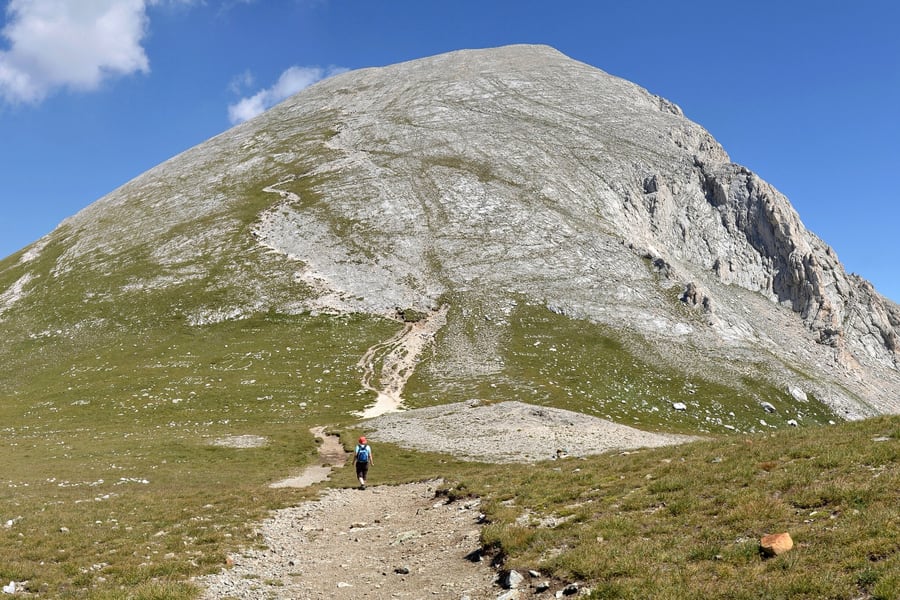 Pudelek (Marcin Szala) / Wikimedia Commons · CC BY-SA 3.0 · cropped
Vihren and the Pirin
Vihren rises to 2,914 m — the highest point of the Pirin, the second highest in Bulgaria and the third in the Balkans after Musala and Olympus. The marble is so porous that the summit itself holds no water, yet the glacial lakes ring it on every side, and Snezhnika, Europe's southernmost glacieret, survives in its shadow. Pirin National Park is UNESCO-listed and the trails start at the Vihren hut.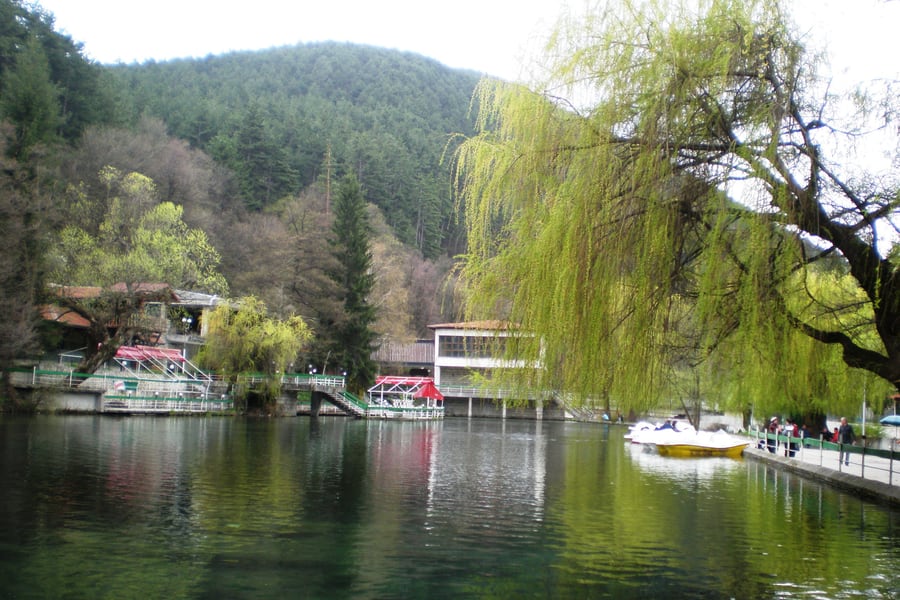 Marcian / Wikimedia Commons · CC BY-SA 3.0 · cropped
The Kleptuza springs
Velingrad calls itself the spa capital of the Balkans on the strength of springs like this one: a karst resurgence pouring into two lakes under the willows, protected since 1966 along with 412 hectares around it. The name is thought to come from the Greek kleptos, to hide — for the volume of water concealed under the rock. Rowing boats, cafés, and the narrow-gauge track running past the end of it.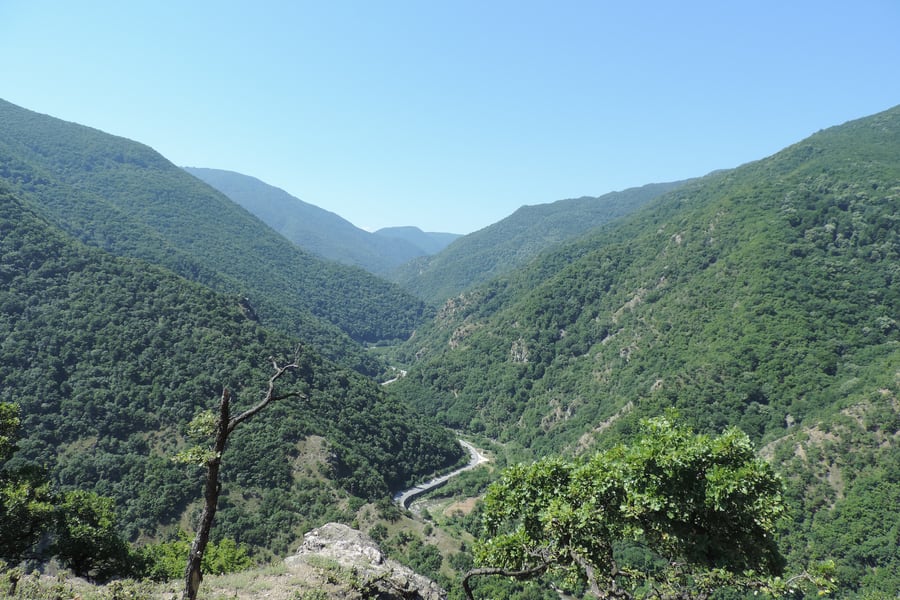 Спасимир / Wikimedia Commons · CC BY-SA 3.0 · cropped
The Chepino valley
Between Velingrad and the climb to Avramovo the line threads the Chepino gorge, a steep wooded defile in the western Rhodopes carrying the river, the road and the railway in the same narrow slot. It is the stretch where the train works hardest and the scenery changes fastest, and the villages along it keep some of the strongest folk traditions in southern Bulgaria.Where to Sleep
Because the ride is long and the stops are tempting, the sensible way to enjoy this line is to sleep somewhere along it rather than rush the round trip in a day.
The two obvious bases are at the ends of the mountain section. Velingrad, in the middle, is full of spa hotels and guesthouses built around its hot springs, from grand thermal resorts to simple family-run rooms — an easy, relaxing overnight that lets you split the journey in two. At the southern end, Bansko has by far the largest choice of beds in the region: ski-season apartments, boutique hotels in the old town and big resort complexes, busy and good value out of season, when a mountain room costs a fraction of Alpine prices.
For something quieter, the smaller towns along the way — Yakoruda, Belitsa, Razlog and spring-fed Dobrinishte — offer modest guesthouses and a more local pace, handy if you simply want to catch the next day's train onward.
This is inexpensive, hospitable country, and outside the peak ski weeks and high summer you can usually find a room at short notice. Book ahead mainly for Bansko in ski season and for holiday weekends, when the resort fills up and the little train arrives packed with skis.
Questions or corrections
Planning this trip and stuck on something, or spotted a time, fare or detail that has changed? Send us a message about The Rhodope Narrow-Gauge Railway — Bulgaria's Septemvri to Dobrinishte. We read every one, and we update this page when something has changed.