The Iskar Gorge Railway — Sofia to Mezdra through the Balkan Mountains
Toli Nikolaev / Wikimedia Commons · CC BY-SA 4.0
- DistanceSofia–Mezdra · about 85 km
- Duration1½ hours by fast train (longer if you stop)
- Best seasonSpring to autumn for green and gold; clear winter days are striking too
Introduction
Most great scenic railways ask you to seek them out — a heritage line in a far valley, a special tourist train that runs twice a week. The Iskar Gorge asks nothing of the sort. It is simply what the ordinary trains out of Sofia do on their way north, and it may be the most spectacular thing you can see from a two-euro railway ticket anywhere in Europe.
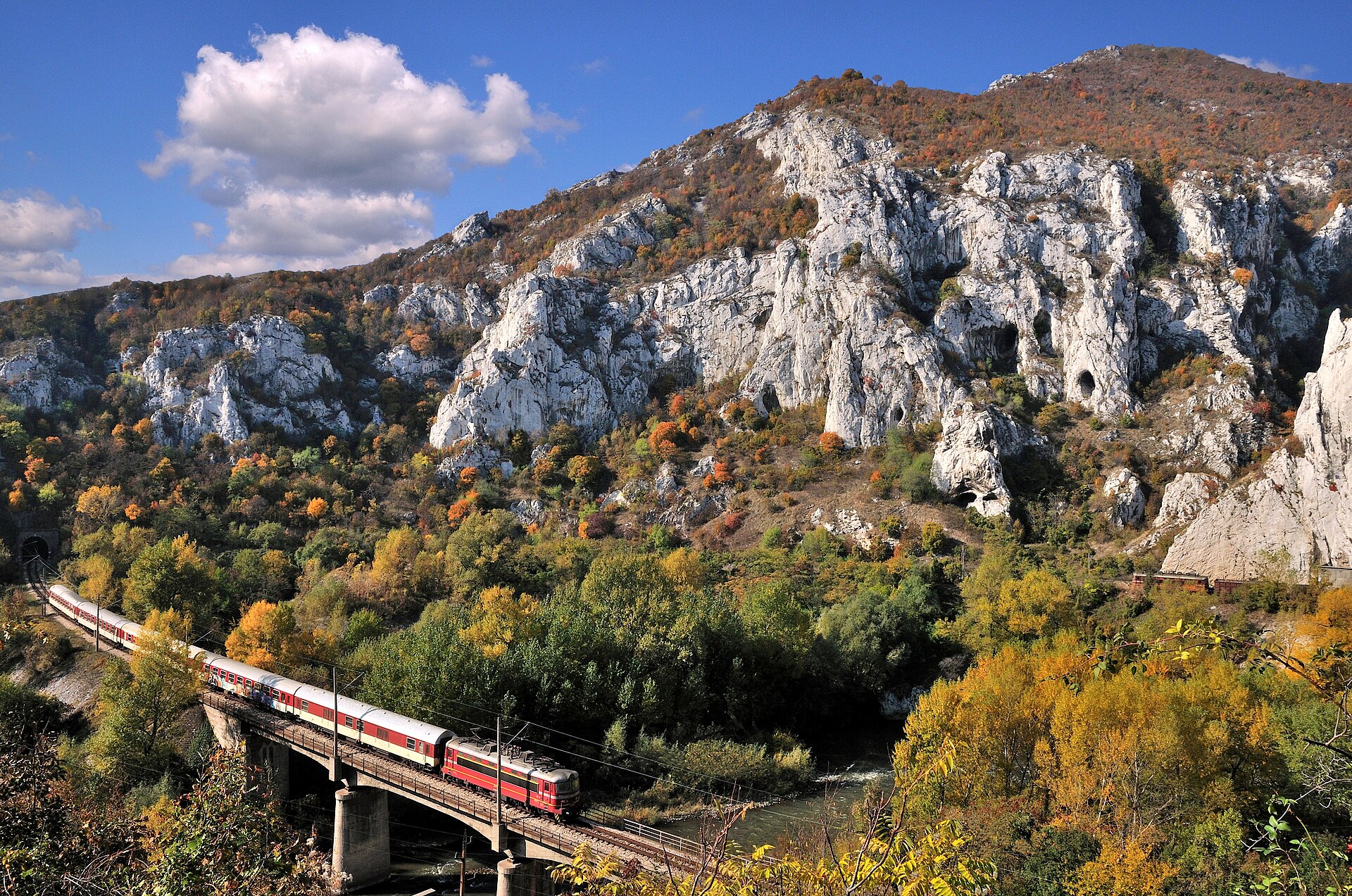
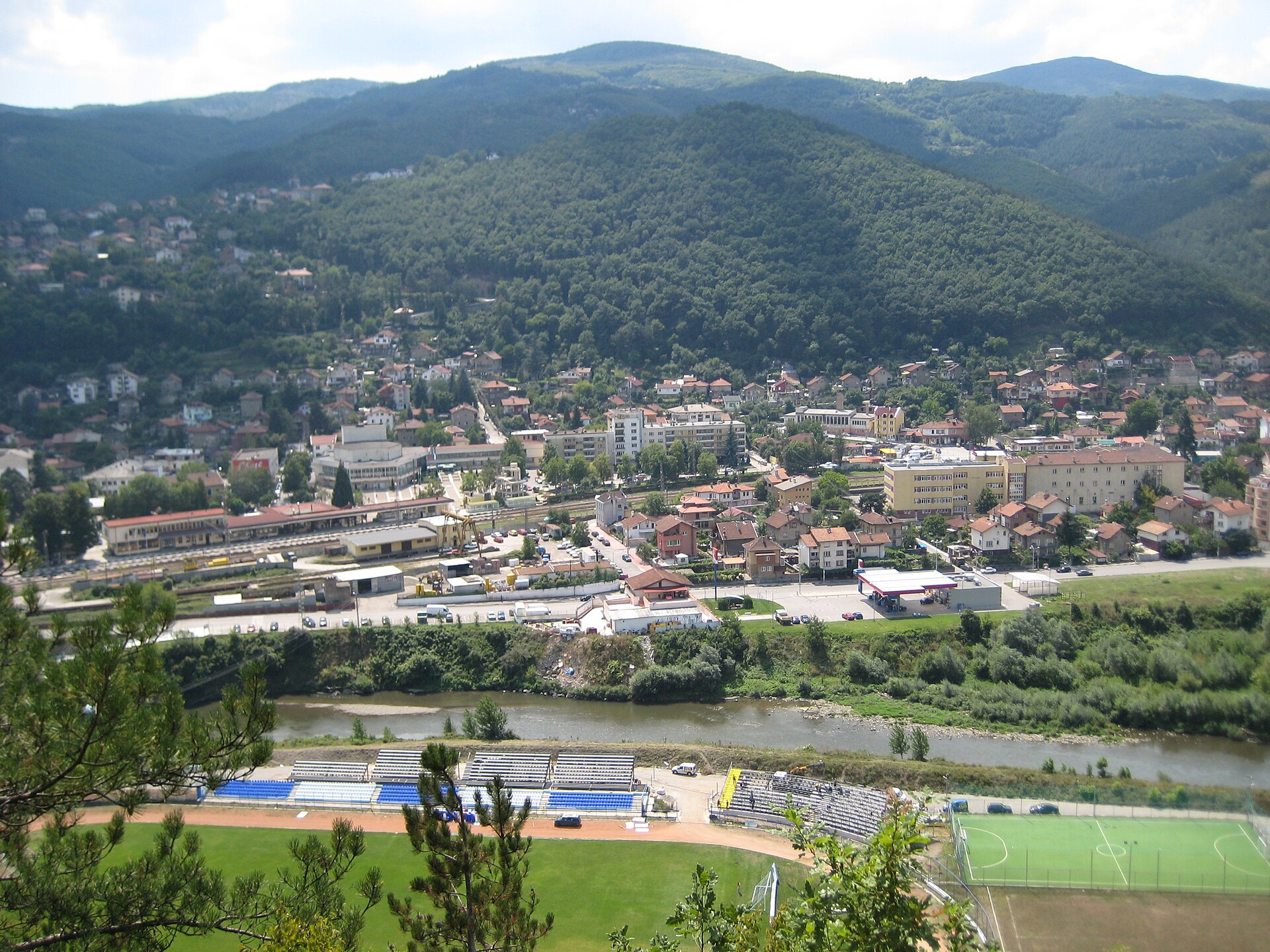
Barely have you left the capital's outskirts before the mountains close in. The line dives into the Iskar Gorge, a 70-kilometre defile where the river Iskar has done something no other river dares: it cuts clean through the Balkan Mountains, the great wall of the Stara Planina that otherwise divides Bulgaria in two. For the next hour the railway clings to the river through a succession of tunnels and bridges, beneath limestone cliffs that rise hundreds of metres overhead — nowhere more dramatically than at Lakatnik, where the white rocks tower straight up from the track.
The railway was blasted through here in the 1890s, a heroic feat of Victorian engineering that opened Bulgaria's most important main line — the route that still carries fast trains on toward the Danube at Vidin, the old capital of Veliko Tarnovo, and the Black Sea at Varna. Tucked among the crags along the way is the medieval Cherepish Monastery, one of the very few you can reach on foot from its own railway halt.
You do not need to plan much. Turn up at Sofia's central station, take any northbound train toward Mezdra, grab a window seat, and let the gorge unfold — a wild, cliff-hung hour that most travellers pass through without ever realising what they are riding.
The Journey
Leaving Sofia the train runs first across the flat edge of the city and out through Novi Iskar, where the plain suddenly runs out of room. The mountains rear up ahead, the river swings in beside the track, and almost without warning you are inside the gorge.
From here the character never lets up. The Iskar twists and the railway twists with it, crossing from bank to bank on iron bridges and boring through the spurs in a long series of tunnels — the line's Victorian builders simply followed every meander of the river, since there was no other way through. Between the tunnels the walls of the defile press close: wooded slopes at first, then bare grey and white rock, with the water tumbling green over its boulders below.
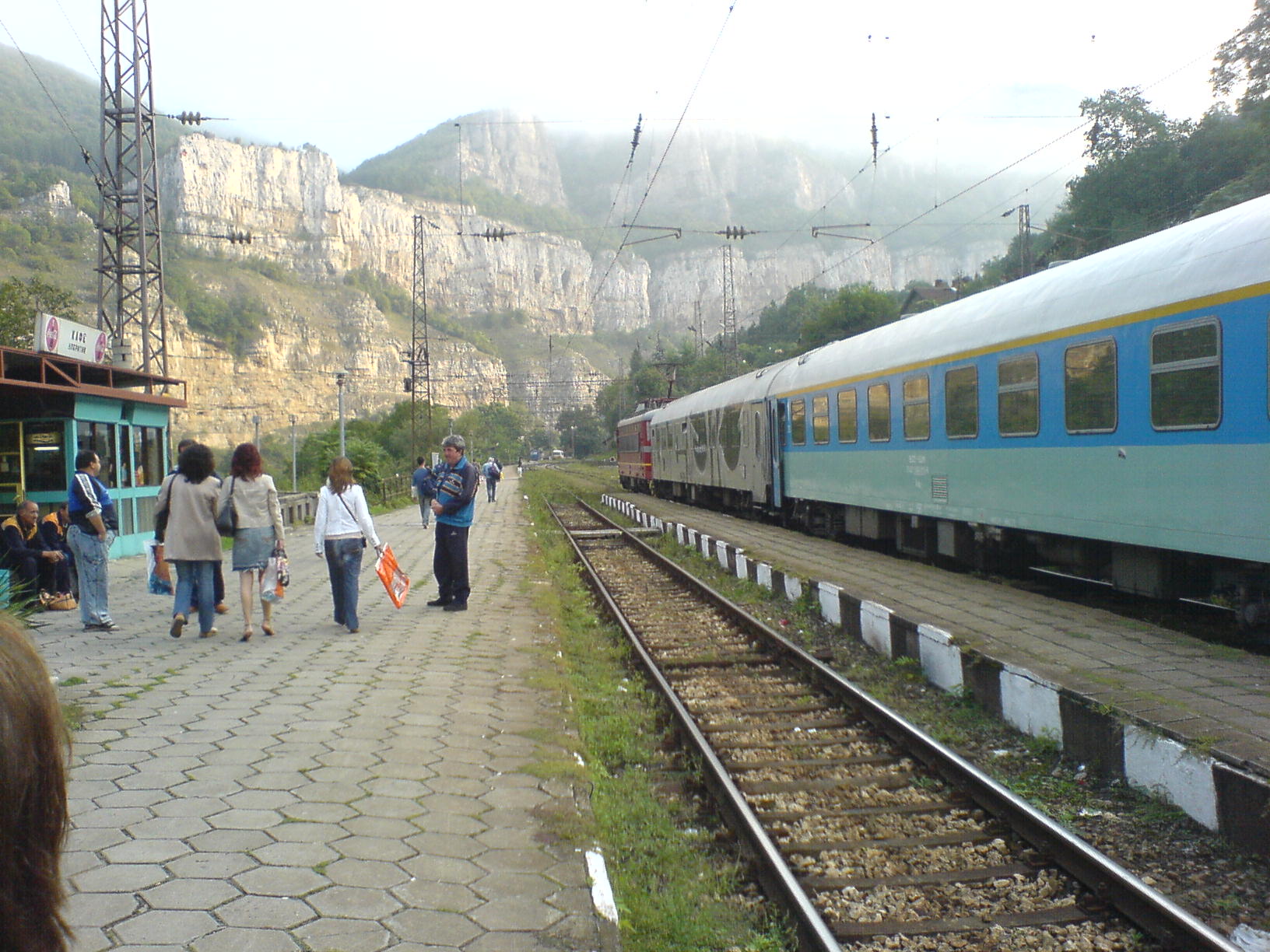
The town of Svoge, strung along the river, is the one real settlement, and beyond it comes the scenic climax at Lakatnik. Here the gorge narrows to a slot and the Lakatnik rocks soar sheer above the little station — pale limestone cliffs hundreds of metres high, dotted with caves and climbers. Slow trains pause beneath them; even the fast ones make you press your face to the glass. A little further on, hidden beneath its own crag near the halt of Cherepish, is the medieval monastery of the same name, a ten-minute walk from the platform.
Past Lyutibrod the cliffs at last draw back, the valley opens, and the train rolls out of the mountains into the junction town of Mezdra, where the line divides for the Danube and the north. The whole passage takes only about an hour and a half by fast train — but it is ninety minutes of pure drama, and the beauty of it is that it costs no more than any other stretch of Bulgarian rail.
Along the route
Iliana Teneva / Wikimedia Commons · CC BY-SA 4.0The Lakatnik rocks
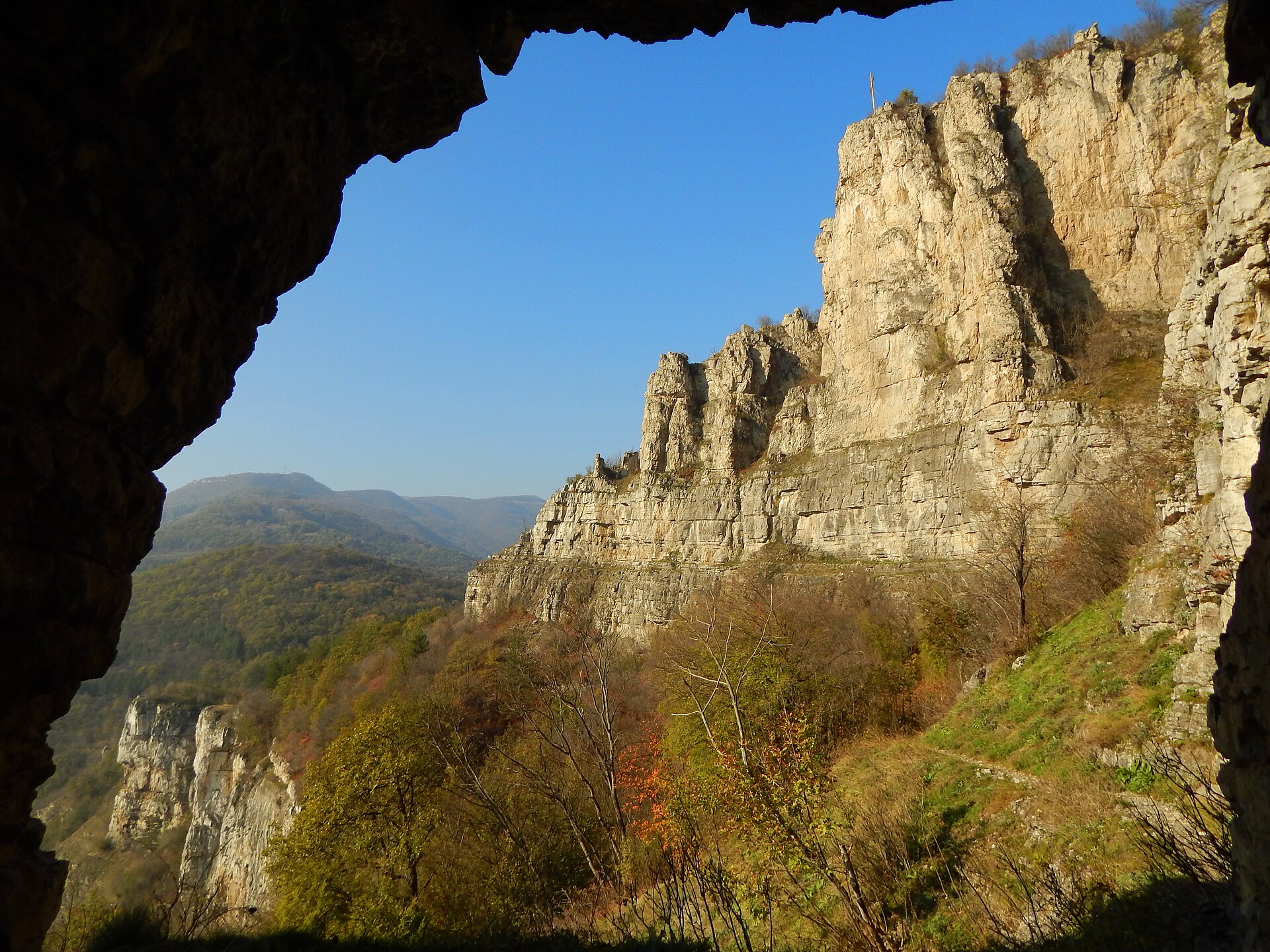
The centrepiece is Lakatnik, where the gorge narrows and sheer white limestone cliffs soar some 250 metres from the river. They are Bulgaria's most celebrated climbing walls, and the train pauses right beneath them — crane your neck and you will see figures on the rock.Biso / Wikimedia Commons · CC BY 3.0A monastery you reach by train
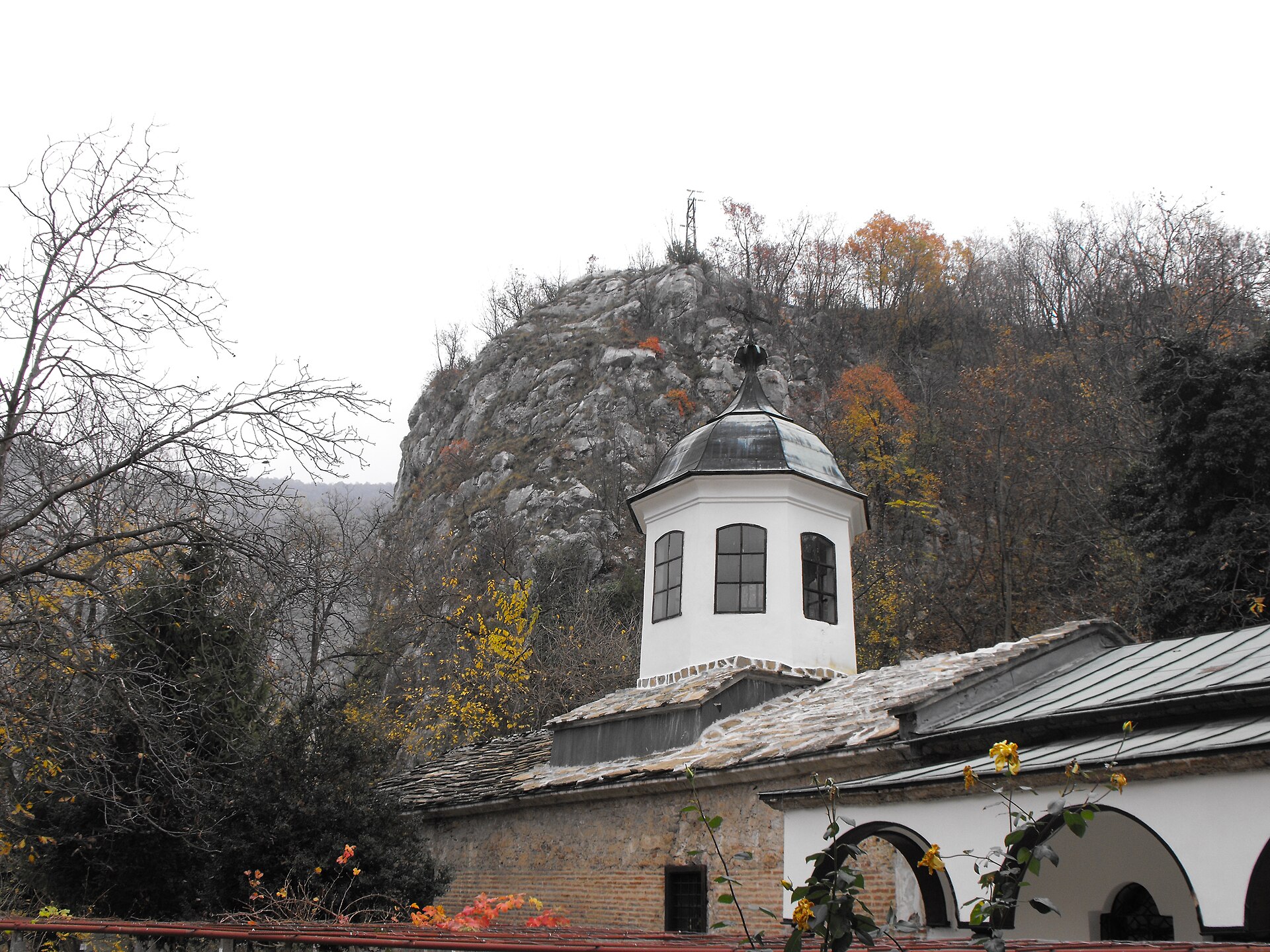
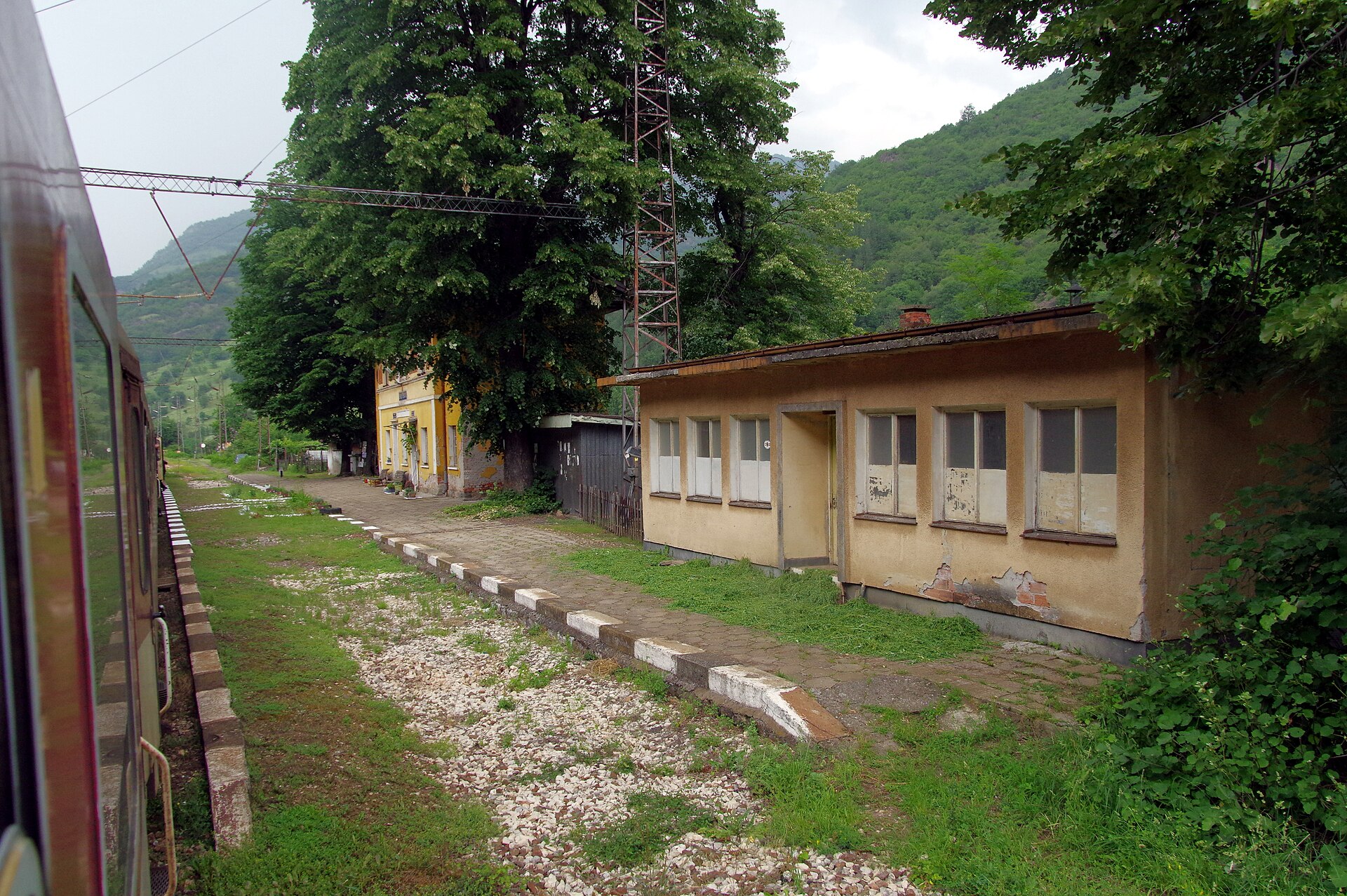
Halfway through the gorge, beneath a towering crag, stands Cherepish Monastery, founded in the fourteenth century. It is one of the few monasteries in Europe with its own railway halt: get off and it is a ten-minute walk to the cloister.Toli Nikolaev / Wikimedia Commons · CC BY-SA 4.0The great cut through the Balkans
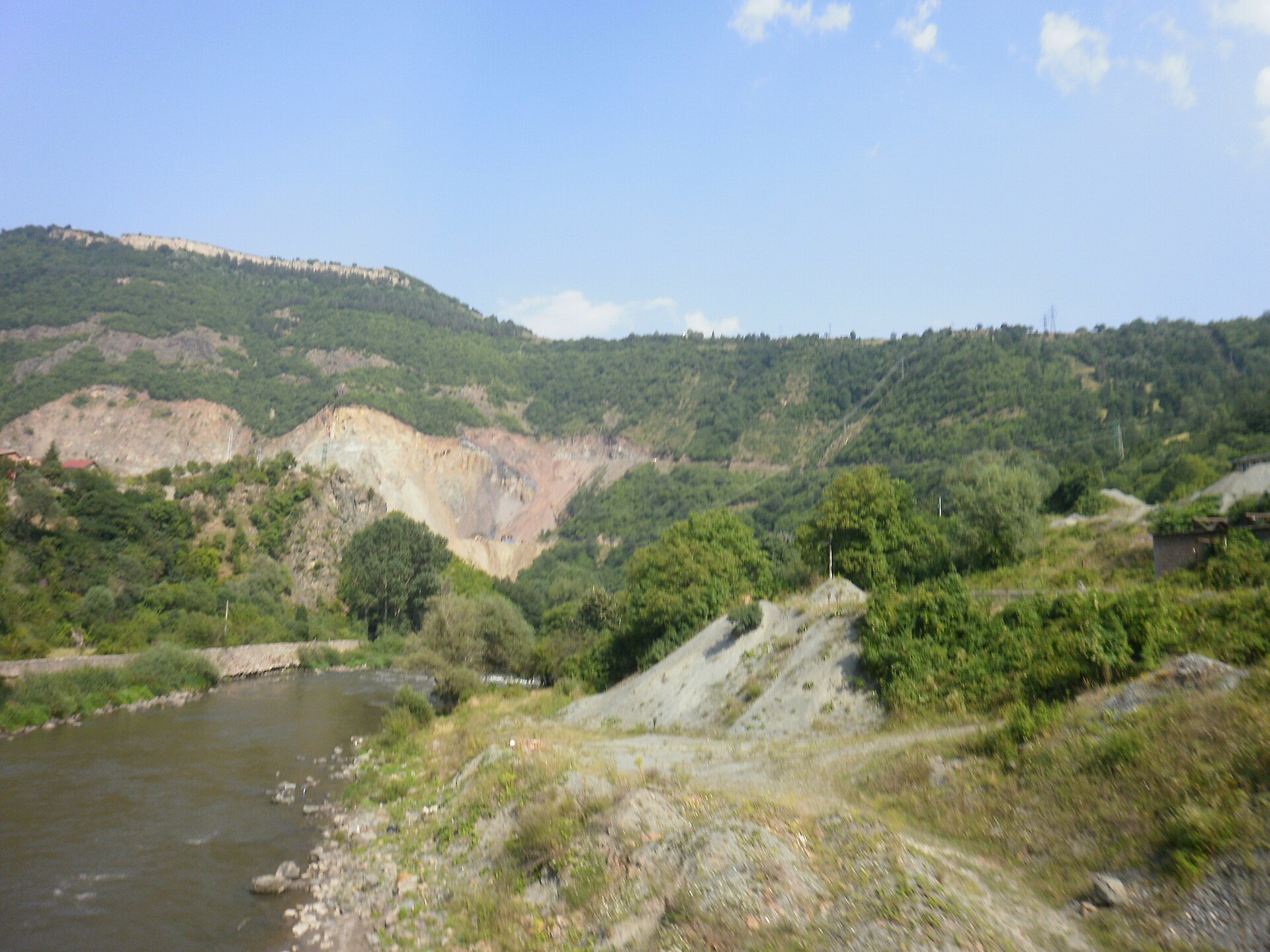
The Iskar is the only river that slices clean through the Balkan Mountains, and its seventy-kilometre gorge is the chief natural gateway across the range. Driving the railway through it in the 1890s turned a wild defile into Bulgaria's busiest main line.A bit of history
Culture & experiences along the way
Спасимир / Wikimedia Commons · CC BY 3.0Ride it as a day trip from Sofia
The gorge starts almost in Sofia's suburbs, which makes it the easiest of day trips. Take a northbound train toward Mezdra, Vidin or Varna, ride out through the cliffs to Lakatnik or Cherepish, and come back on a later service. Fast trains do Sofia–Mezdra in about 90 minutes; the ticket costs only a few euros.Goshe bg / Wikimedia Commons · Public domainGet off at Cherepish or Lakatnik
Both of the line's showpieces have their own stations, so you can turn the ride into a proper excursion. Alight at Cherepish for the monastery and a walk by the river, or at Lakatnik for the rocks, the eco-trails and the caves — then flag down a later train to continue or return. Check the timetable so you are not stranded between services.Arved / Wikimedia Commons · CC BY 3.0Carry on to the north
The gorge is only the beginning of the line. Beyond Mezdra the rails run on to the Danube at Vidin and its great new bridge to Romania, or east across the plain to Veliko Tarnovo and the Black Sea at Varna. The Iskar Gorge makes a spectacular opening act to a longer journey across Bulgaria.Timetables
There is no special "scenic train" to catch — the gorge is served by the everyday main line, so trains are frequent. Around twenty trains a day run Sofia–Mezdra, a mix of fast intercity services heading for Vidin, Veliko Tarnovo and Varna and slower regional stopping trains that call at the little halts in the gorge.
A representative selection of Sofia → Mezdra departures, as of the 2026 timetable (checked July 2026):
| Depart Sofia | Arrive Mezdra | Type / journey |
|---|---|---|
| 05:15 | 07:58 | Regional · 2 h 43 (all stops) |
| 07:00 | 08:44 | Fast · 1 h 44 |
| 15:30 | 17:01 | Fast · 1 h 31 |
| 17:20 | 18:52 | Intercity · 1 h 32 |
| 23:00 | 00:37 | Intercity · 1 h 37 |
Trains run all day in both directions at a similar spread, so you can head out and come back with ease.
Good to know:
- Choose your train for your plan. For the scenery alone, a fast train (about 90 minutes) is perfect. If you want to get off at Cherepish or Lakatnik, you need one of the regional stopping trains — the expresses race straight past the small halts.
- Don't get stranded. The little gorge stations have only a handful of stopping trains a day. Note the time of your return service before you alight, so you are not left waiting for hours.
- Which side to sit? The line criss-crosses the river constantly, so the best views swap from side to side — there is no single "good" side; just be ready to look both ways.
- Track repairs. The Sofia–Mezdra line is periodically upgraded, which can change times or add bus substitutions on parts of the route; the operator flags this on its timetable page.
Times as of the 2026 timetable and subject to change, especially during engineering works. Always confirm current departures with the operator before you travel (see the Tickets section below).
Tickets
This is the easiest ticket in the whole collection. The Iskar Gorge is served by ordinary BDŽ trains, so you buy a normal ticket from Sofia towards Mezdra — or all the way to Vidin or Varna if you are travelling on — and the gorge comes free with the ride. Fares are tiny: Sofia to Mezdra costs only a few euros, and the fast intercity trains add little. Bulgaria has used the euro since 1 January 2026, so prices once shown in leva now appear in euros.
The one thing worth a moment's thought is which train. Any northbound service gives you the scenery, but to stop at Cherepish or Lakatnik you need a regional stopping train, because the expresses do not call there. Keep some cash for the smaller station windows if you plan to break the journey.
Book your tickets
Sofia – Mezdra through the gorge
Everyday main-line trains, fast and stopping
No special ticket is needed: any northbound BDŽ train toward Mezdra, Vidin or Varna runs through the Iskar Gorge. Around twenty a day, fast trains in about 90 minutes, for a fare of only a few euros. Buy at the station; regional trains need no reservation.
Book Tickets (opens in a new tab, on Bulgarian State Railways (BDŽ))via Bulgarian State Railways (BDŽ)Timetable & stops
Plan your stop at Cherepish or Lakatnik
Check current departure times and which trains call at the smaller halts of Cherepish and Lakatnik on the Bulgarian State Railways timetable site, so you can break your journey and pick up a later train. Times can change for track repairs.
Book Tickets (opens in a new tab, on Bulgarian State Railways (BDŽ))via Bulgarian State Railways (BDŽ)Rail Passes
Interrail passes are valid. Interrail's table of railway companies lists BDŽ's regional and fast trains as included in Bulgaria and excludes none, so the gorge is covered by an Interrail Bulgaria Pass or a Global Pass. Reservations on fast trains cost about €0.30 and are compulsory in first class and on a few long routes, among them Sofia to Varna and Sofia to Gorna Oryahovitsa, which run through the gorge.
For this journey alone, a pass is not worth buying. Sofia to Mezdra costs a few euros. A pass pays on a longer trip round Bulgaria.
Checked October 2026 against interrail.com (opens in a new tab), Interrail's Bulgaria page (opens in a new tab) and its reservation fees (opens in a new tab).
Places to Visit
The gorge is not just a corridor to look at from the train — its stations open onto some of the best walking, climbing and heritage within easy reach of Sofia.
Lakatnik is the great draw. The Lakatnik rocks are Bulgaria's premier rock-climbing cliffs, and even non-climbers come for the eco-trails that switchback up beside them to viewpoints over the gorge, for the caves in the limestone, and for the giddy climbers' shelter known as the "Eagle's Nest" perched high on the wall. It is an exhilarating half-day straight off the train. A few minutes down the line, Cherepish Monastery rewards a quieter visit, a ten-minute walk from its own halt.
Svoge, the gorge's main town, makes a handy base with shops and cafés and is the starting point for road trips up its side valleys. And because the whole gorge lies so close to the capital, you can combine it with a day in Sofia itself — its Roman remains, the golden-domed Alexander Nevsky Cathedral, and the medieval frescoes of Boyana Church on the city's southern edge — treating the railway as the scenic escape from the city.
Onward, the same line carries you north through the Vrachanski Balkan to the Danube towns and the medieval splendour of Veliko Tarnovo.
 Спасимир / Wikimedia Commons · CC BY 3.0 · cropped
Temnata Dupka
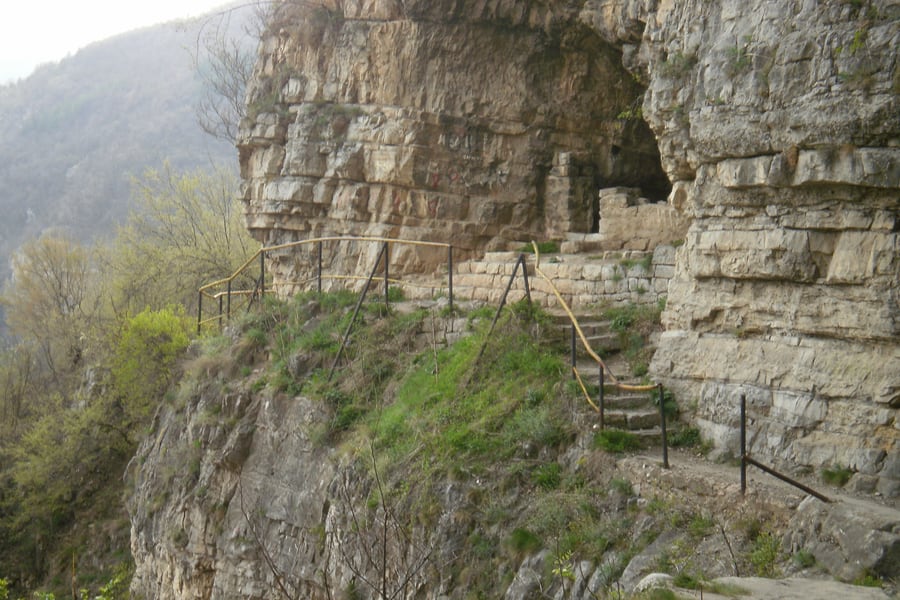
The "dark hole" opens in the cliff on the left bank of the Iskar, 27 m above the river and a short climb from the station — a system of some 7 km on four levels, a natural landmark since 1962, and the cave where Sofia's speleologists learn their trade. An underground river runs the lower gallery and bursts from the entrance after heavy melt. ⚠️ A caving trip, not a lit show cave: go with a club or a guide.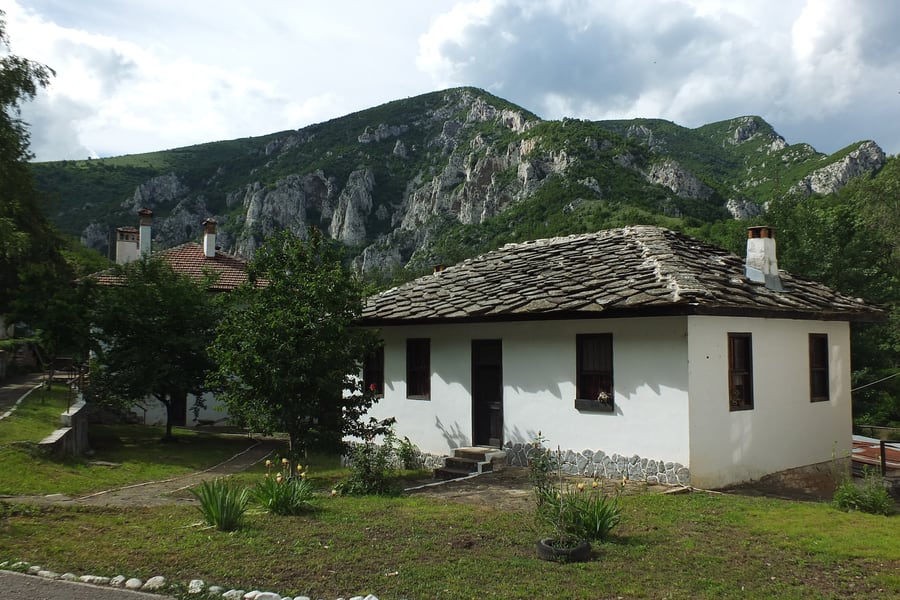 Delysia v / Wikimedia Commons · CC BY-SA 4.0 · cropped
Cherepish Monastery
The monastery of the Dormition of the Mother of God sits in a bend of the river under sheer rock, founded in the 14th century and rebuilt many times since. Beyond the church the courtyard is a working farmyard of whitewashed cells and stone-slabbed roofs with the crags of the gorge closing overhead. Writers and revolutionaries sheltered here; it is quiet, still inhabited, and reached on foot from its own railway halt.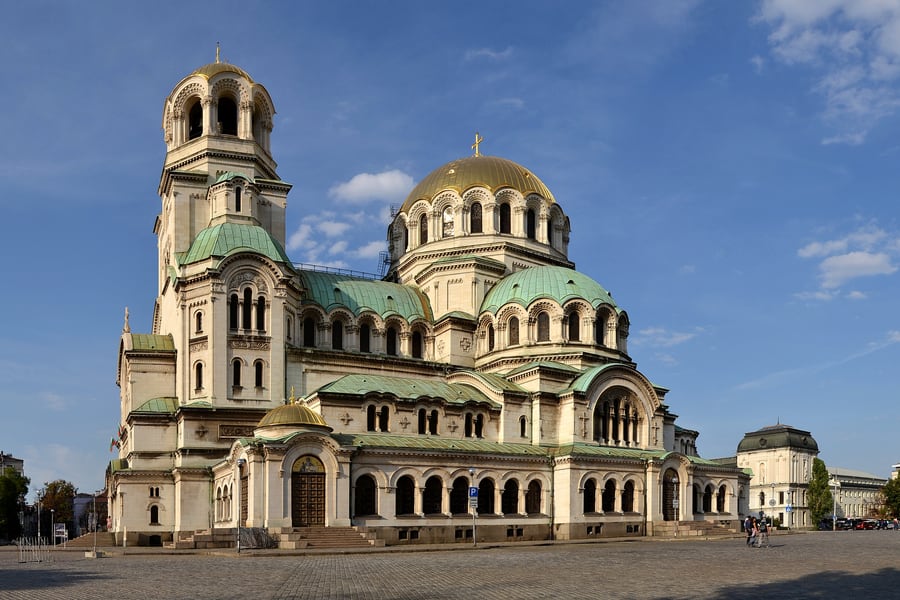 Pudelek (Marcin Szala) / Wikimedia Commons · CC BY-SA 3.0 · cropped
Alexander Nevsky Cathedral
The gold-domed neo-Byzantine cathedral that stands for Sofia on every postcard, begun in 1882, finished to Alexander Pomerantsev's design in 1912 and consecrated in 1924. It was raised in memory of the Russian soldiers who died in the war of 1877–78 that ended Ottoman rule. The crypt below holds an outstanding collection of Bulgarian icons. Twenty minutes from Sofia's central station, where this line begins.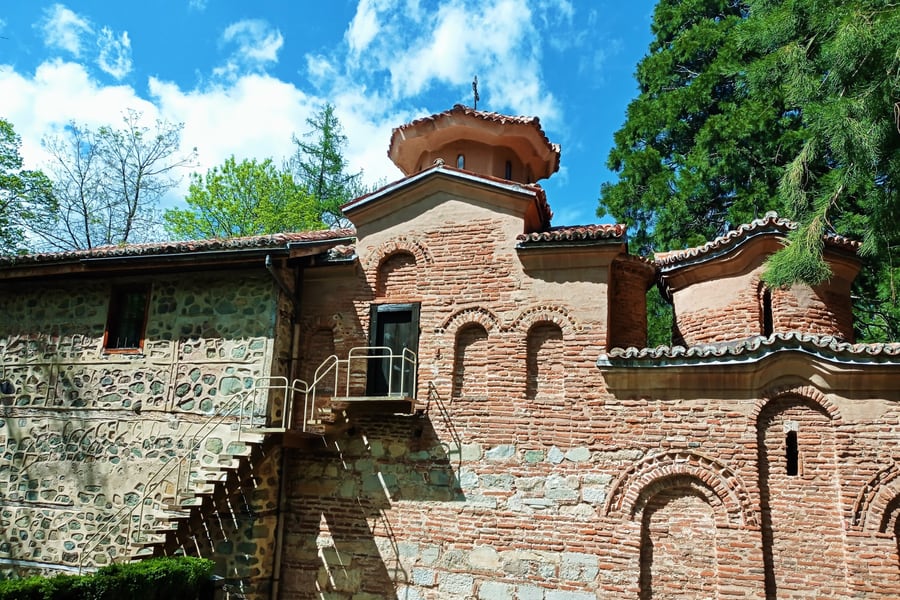 Ivano Giambattista / Wikimedia Commons · CC0 · cropped
Boyana Church
Small, dim and one of the great buildings of medieval Europe. The east wing was put up in the late 10th or early 11th century, the central wing added in the 13th under the Second Bulgarian Empire, the west end in the mid-19th. Inside are 89 scenes and 240 figures, the 1259 layer painted with an individuality that comes a lifetime before the Italian Renaissance. UNESCO-listed since 1979; entry is timed and brief.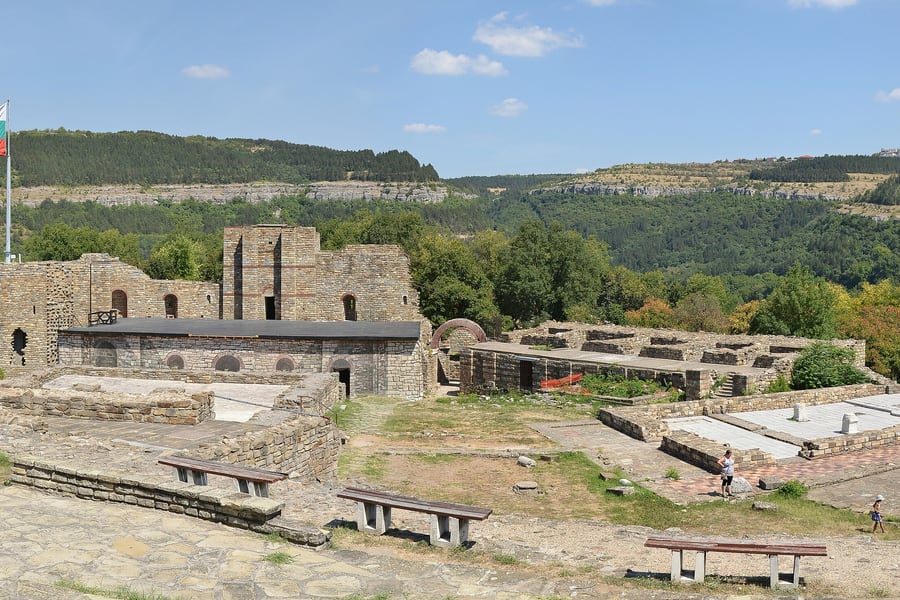 Pudelek (Marcin Szala) / Wikimedia Commons · CC BY-SA 3.0 · cropped
Tsarevets
The hill fortress that was the Second Bulgarian Empire's chief stronghold from 1185 to 1393, holding the royal and patriarchal palaces 206 m above the Yantra. What survives are the walls, the gates, the excavated palace and the church on the summit, wrapped by a river gorge on three sides. The medieval capital below it is the finest old town in northern Bulgaria, and the same line takes you there.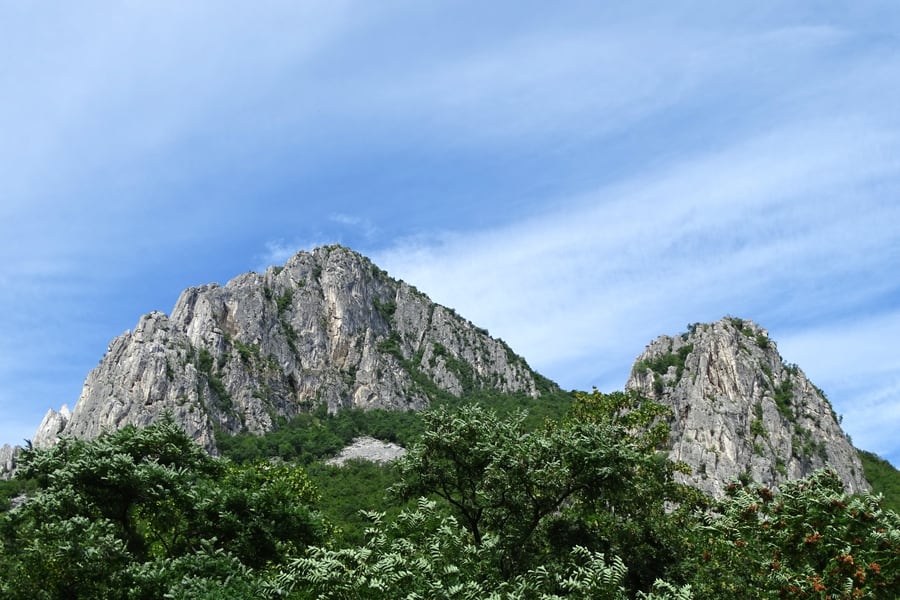 Adam Jones / Wikimedia Commons · CC BY-SA 2.0 · cropped
The Vrachanski Balkan
Where the gorge finally lets go, the limestone opens into a nature park of 30,130 hectares, declared in 1989 — cliffs, karst plateaux, gorges and caves on the northern flank of the Stara Planina. The Ledenika show cave and the Vratsata pass, the highest rock wall in the Balkans, are both within reach of Vratsa, itself an easy stop on the line north.Where to Sleep
Because the gorge sits on Sofia's doorstep, the simplest plan is to stay in the capital and ride out for the day. Sofia has the full range of city beds — grand old hotels, design boutiques and budget hostels near the central station — and trains into the gorge run from early morning to late at night, so you never need to rush.
To wake up among the cliffs instead, base yourself in the gorge itself. Svoge and the villages around Lakatnik have guesthouses, family hotels and mountain lodges aimed at climbers and walkers, simple and inexpensive, with home cooking and the river for company. Staying out here lets you catch the rocks in the soft light of early morning or evening, before and after the day-trippers.
For walkers and climbers there are also huts and eco-guesthouses on the trails above Lakatnik, handy for an early start on the rock. And if the gorge is only the first leg of a longer trip north, you will find plenty of rooms onward in Mezdra, Vratsa beneath its own dramatic cliffs, or the riverside towns toward the Danube.
This is affordable, unfussy country, and outside summer weekends you can usually find a bed at short notice — the gorge remains one of Bulgaria's best-kept secrets, even this close to the capital.
Questions or corrections
Planning this trip and stuck on something, or spotted a time, fare or detail that has changed? Send us a message about The Iskar Gorge Railway — Sofia to Mezdra through the Balkan Mountains. We read every one, and we update this page when something has changed.