The Oravița–Anina Railway
Strainu / Wikimedia Commons · CC BY-SA 3.0 RO
- DistanceOravița–Anina · 33.4 km
- DurationAbout 2 hours each way
- Best seasonLate spring to autumn (green forest; clear ridges)
Introduction
In the far southwest of Romania, in the wooded hills of the Banat, runs a railway that has no real business being as beautiful as it is. It was built to move coal — nothing more romantic than that — down from the pits at Anina toward the Danube. But to get the coal out, its Habsburg engineers had to climb a mountain range that had never carried a railway, and the line they built to do it, opened in 1863, is one of the great pieces of 19th-century engineering in southeastern Europe.
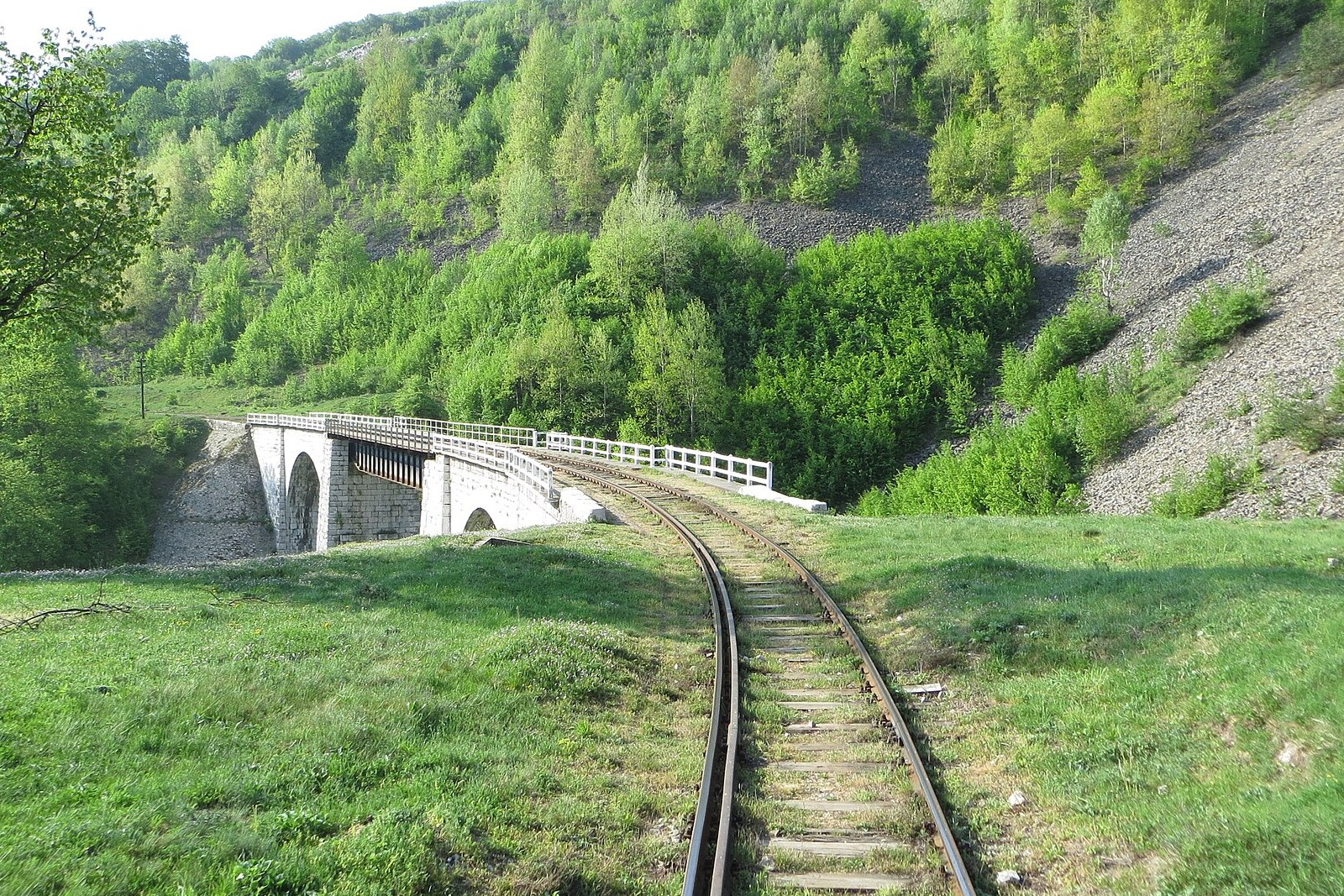
They called it the "Banat Semmering" — Semmeringul Bănățean — after Austria's famous Alpine railway, finished only a few years earlier. The comparison is earned. In just 33 kilometres the line carries 14 tunnels, 10 tall stone viaducts, dozens of bridges and retaining walls, and mile after mile of track cut straight into the rock, as it climbs from Oravița at 219 metres to Anina at 556. It was Romania's first mountain railway, and, remarkably, it is still open to passengers — worked today not by a tourist special but by the ordinary, inexpensive CFR service train.
That is the quiet miracle of the Oravița–Anina line: you can still ride this Victorian masterpiece the way locals do, ambling up the mountain at a walking pace, viaduct to tunnel to viaduct, for the price of a bus fare. Two slow hours at a carriage window, on one of the most spectacular — and least known — railways in Europe.
The Journey
The journey begins at Oravița, and the station alone is worth arriving early for: a long, low, ochre-coloured building from the earliest years of railways in this part of Europe, among the oldest station houses in Romania. A short train — a locomotive and a couple of coaches — waits at the platform, and it is easy to underestimate what is coming. The town sits in gentle country. The mountains are not yet in sight.
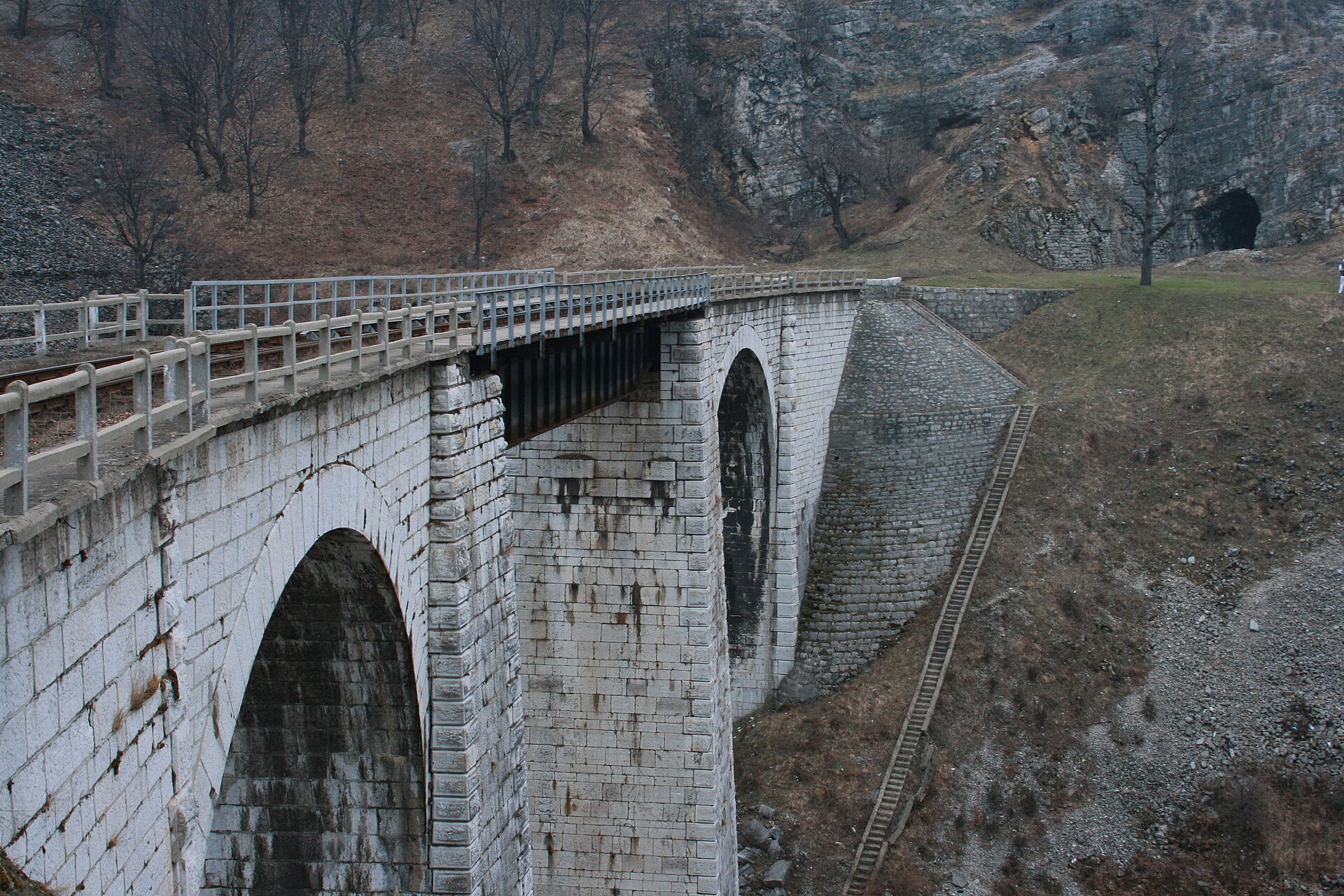
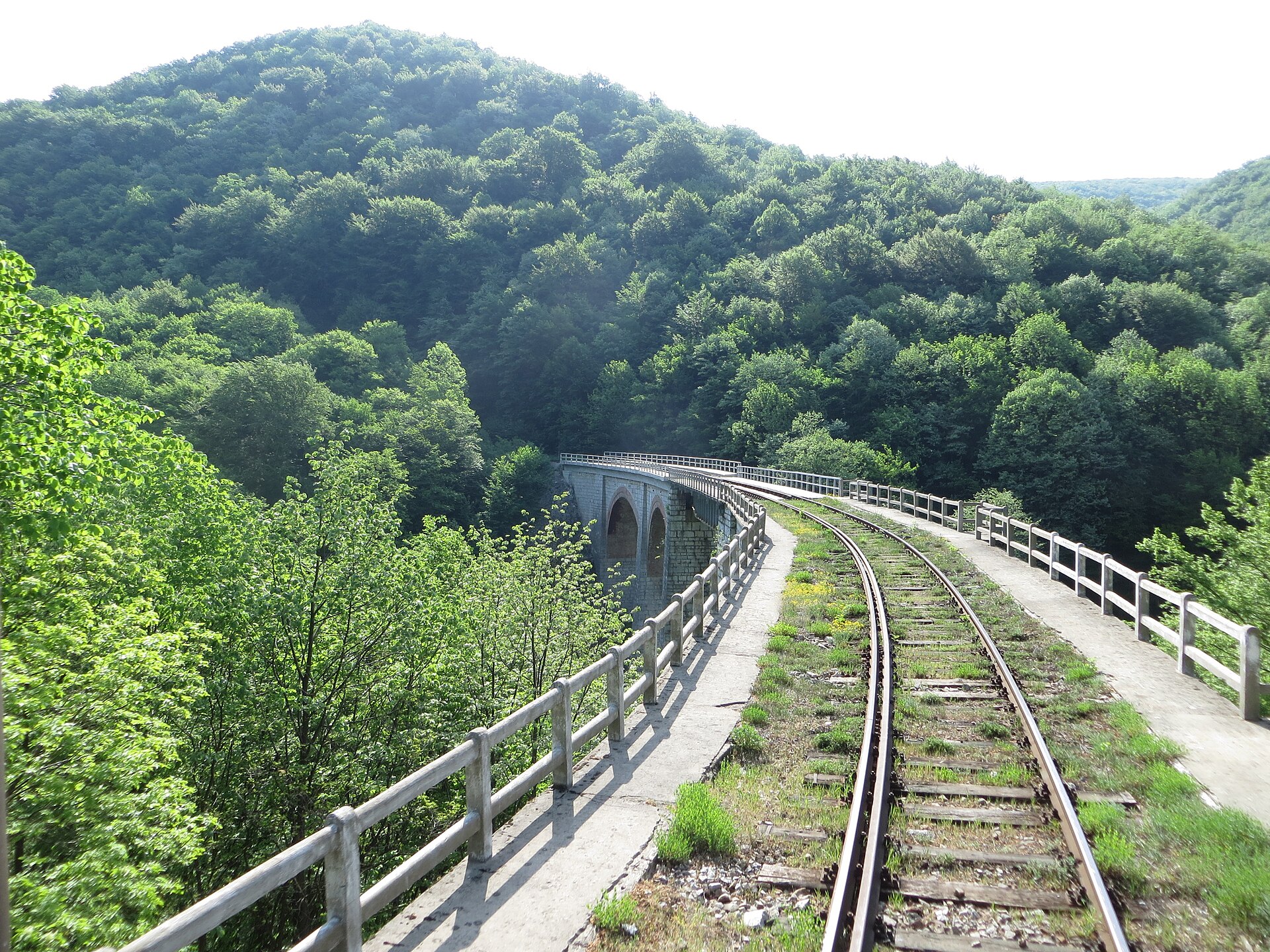
They arrive quickly. Almost as soon as the train pulls out, the line begins to climb and curve, and the character of the whole ride is set: it never runs straight or level for long. The railway was threaded through the Anina Mountains by carving ledges into the rock, so the coaches lean into one tight bend after another, the forest dropping away on one side and rising sheer on the other. Then comes the first tunnel — the daylight cuts out, the noise closes in — and, seconds later, you burst out onto a viaduct, a slender run of hand-cut stone arches carrying the track high across a wooded ravine before the mountain swallows it again.
That rhythm — tunnel, ledge, viaduct, tunnel — repeats the whole way up. A few things worth knowing about the run:
- The line is 33.4 km, standard gauge, climbing from Oravița (219 m) to Anina (556 m), in about two hours.
- Building it took 14 tunnels, 10 viaducts over 25 metres high, some 89 bridges, 49 retaining walls and around 21 km of rock cuttings.
- It opened for coal traffic in 1863 and to passengers in 1869, built under the Austrian Empire — reportedly by Italian craftsmen — at a cost of about five million guldens.
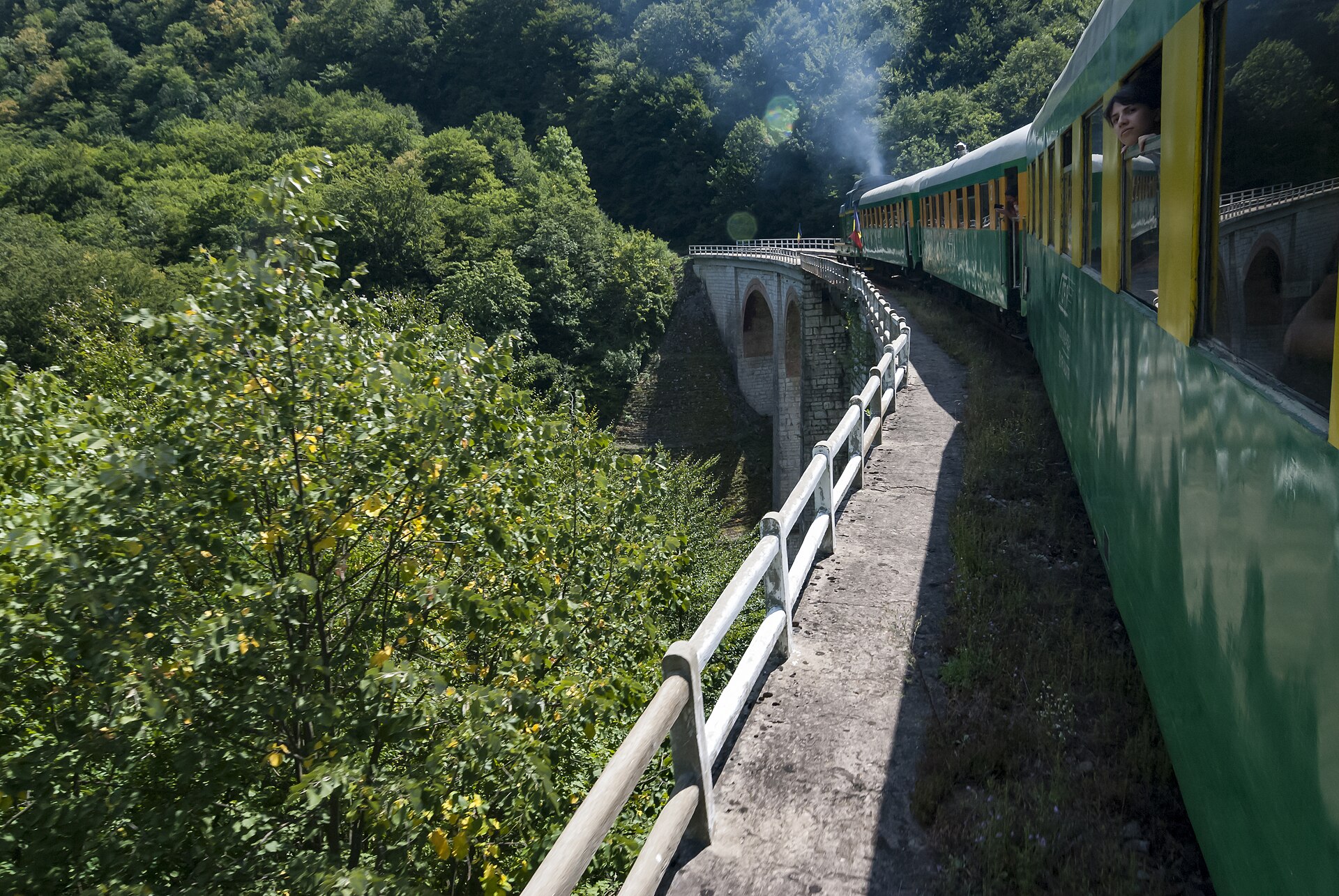
- It is worked today by the CFR Regio service, ambling up the grade at roughly 17 km/h — slow enough to take it all in.
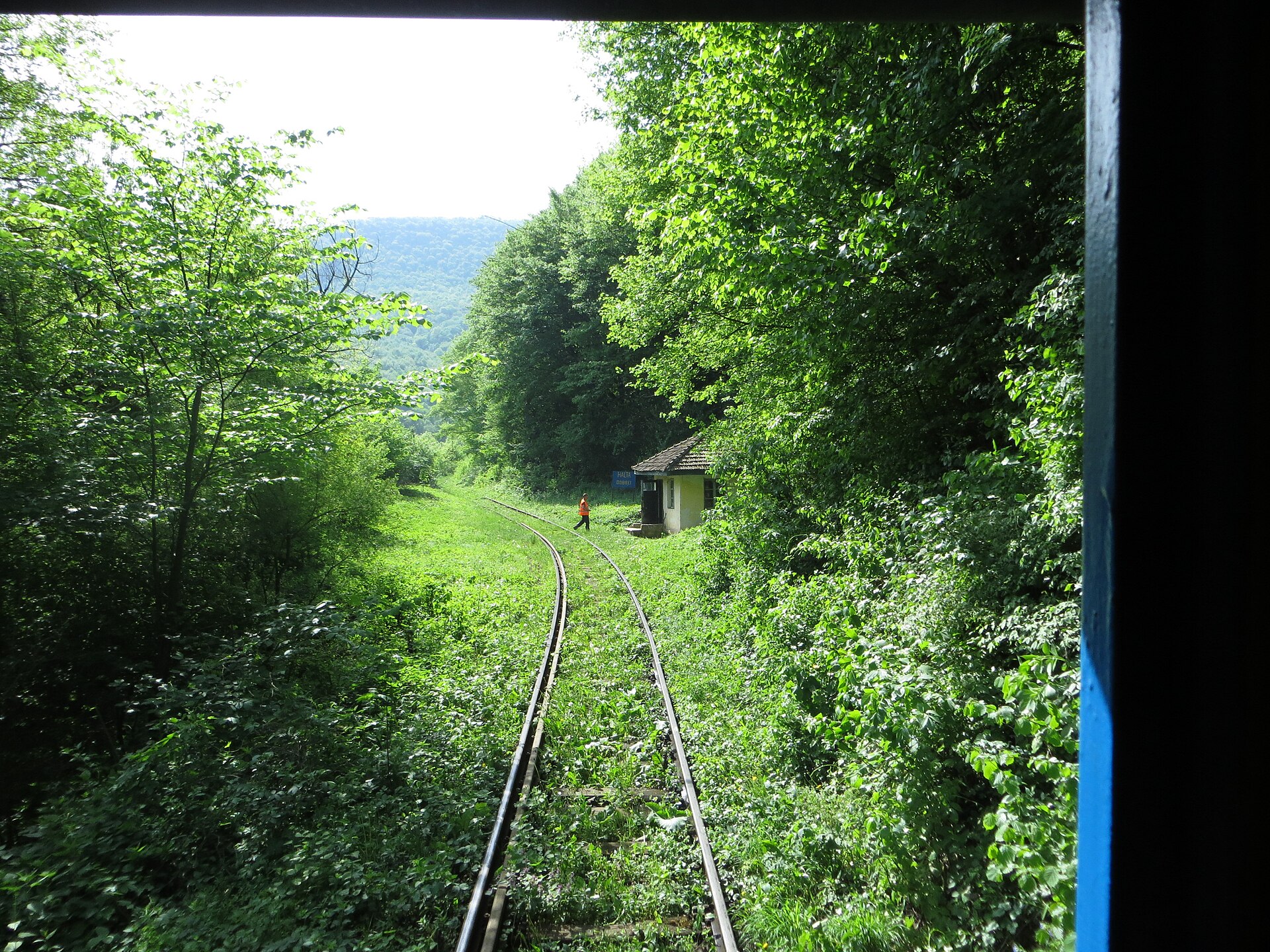
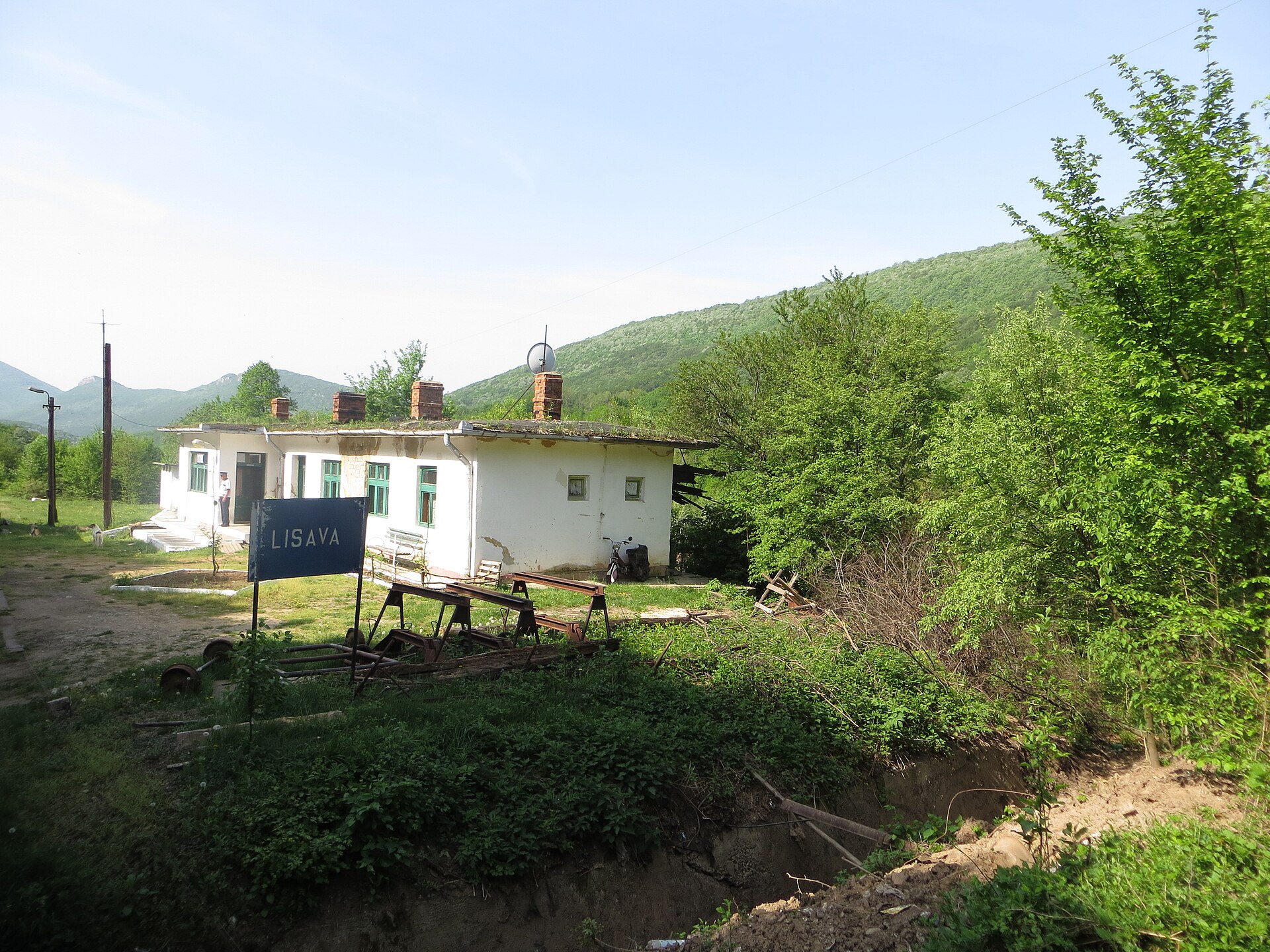
The train pauses at tiny wayside halts — Lișava, Gârliște, Dobrei — little more than a building and a name-board in a forest clearing, where a handful of people get on or off. Between them the ruling gradient bites, the engine works, and the viaducts keep coming. And then, without much ceremony, the forest thins and the train rolls into Anina, an old coal-and-mining town high in the hills, its industrial past written all over it.
You will have travelled barely thirty kilometres, and it will have taken two hours. That is the point. Few railways ask you to slow down as completely as this one — and few reward it so well.
Along the route
Eugen D. / Wikimedia Commons · CC BY-SA 3.0The Banat Semmering
To climb the Anina Mountains the Habsburg engineers built a line of extraordinary ambition: 14 tunnels, ten viaducts over 25 metres high, some 89 bridges and 21 kilometres of rock cuttings, packed into 33 kilometres of track — and it earned the same name here as Austria's own.Ioan Bodean / Wikimedia Commons · CC BY-SA 4.0Viaducts above the forest
The signature of the line is the moment the train runs out onto a high stone viaduct, the wooded valley dropping away on both sides, before plunging into the dark of a tunnel. The arches were cut and laid by hand in the 1860s and still carry the trains.Ioan Bodean / Wikimedia Commons · CC BY-SA 4.0Through rock and forest
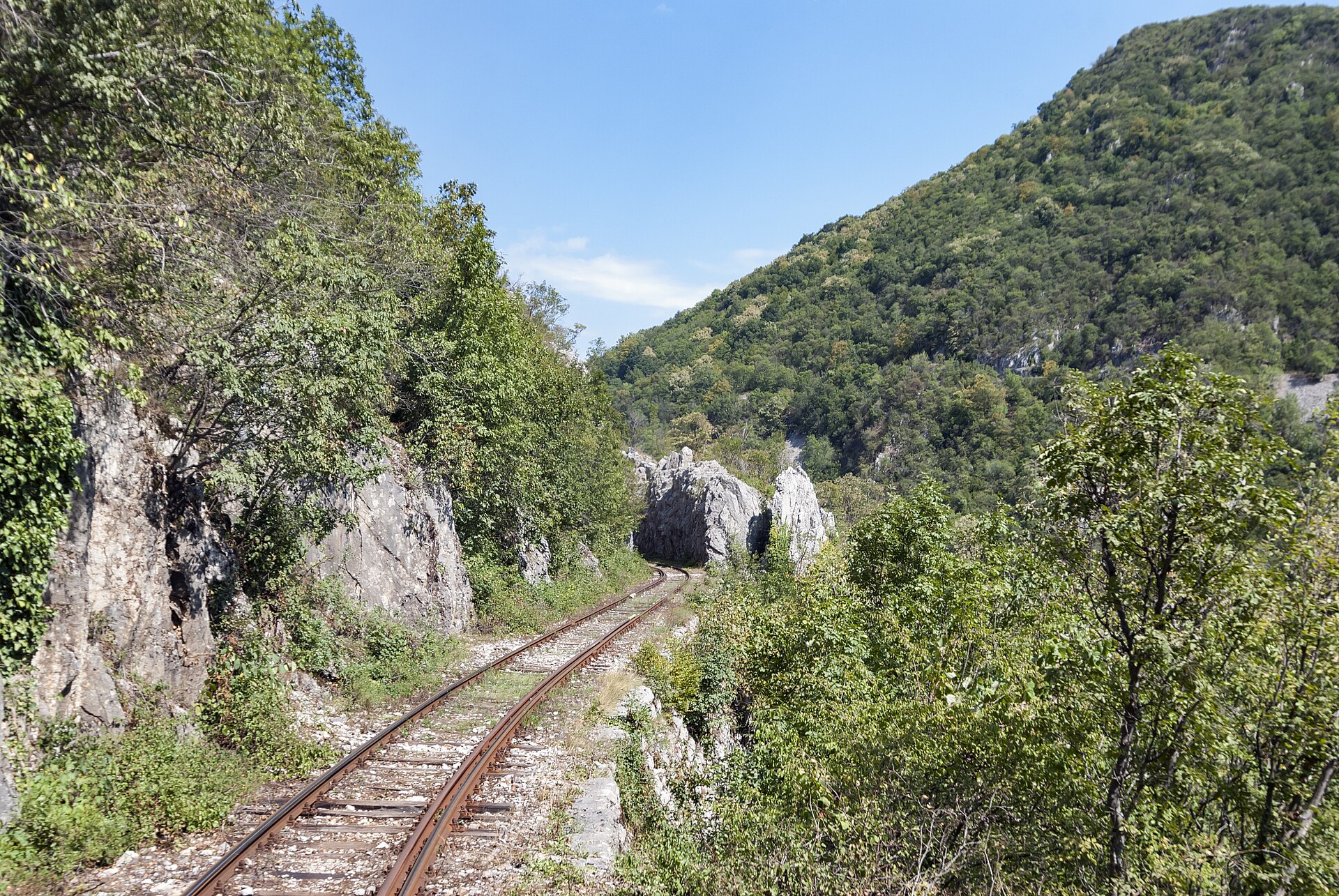
Between the great structures the railway carves its way through the mountains, curving along ledges and squeezing between pale limestone crags. There is no dramatic summit; the drama is the relentless ingenuity of the line itself, hour after hour.A bit of history
Culture & experiences along the way
 Ioan Bodean / Wikimedia Commons · CC BY-SA 4.0
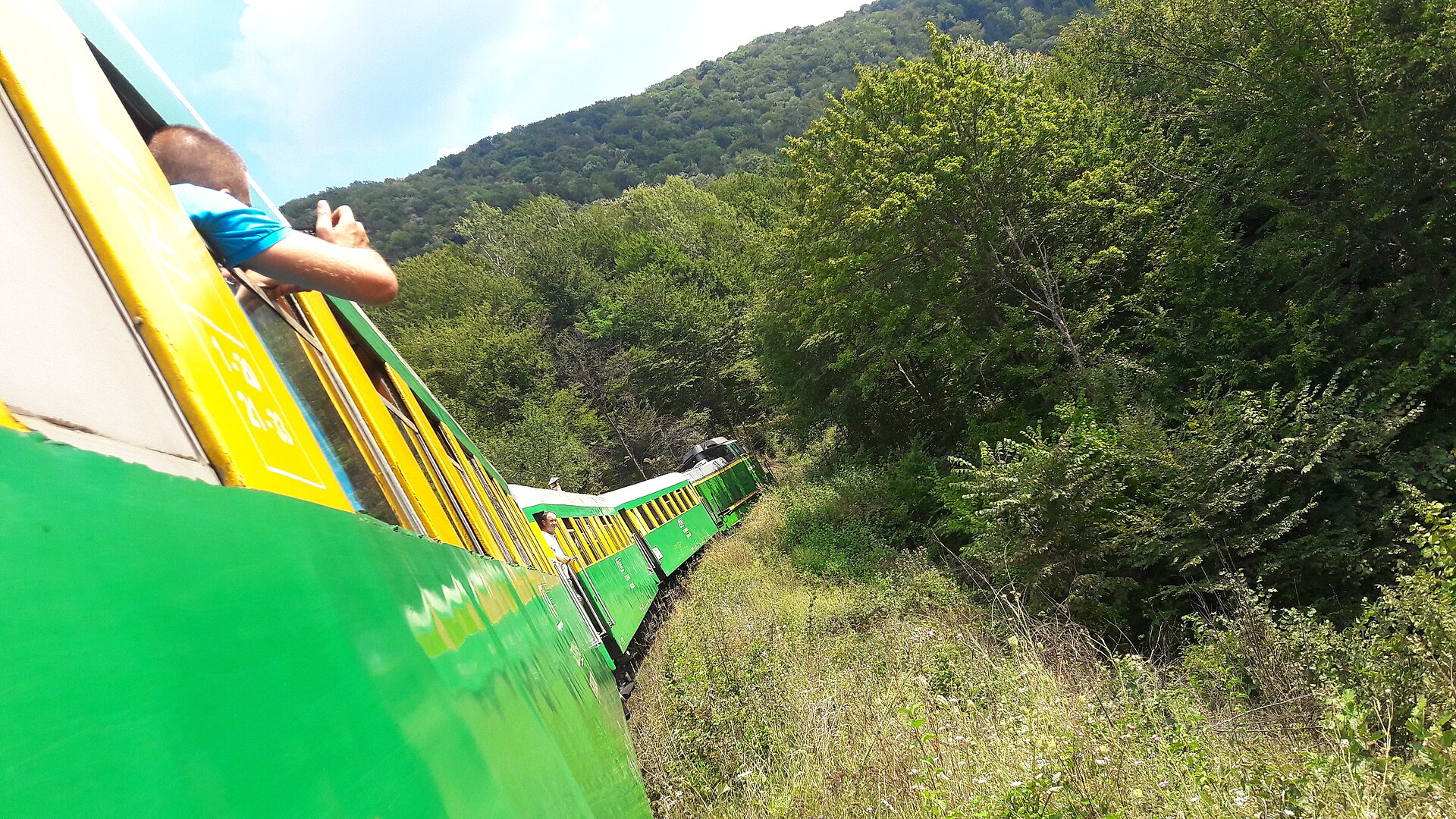
The slow train to Anina
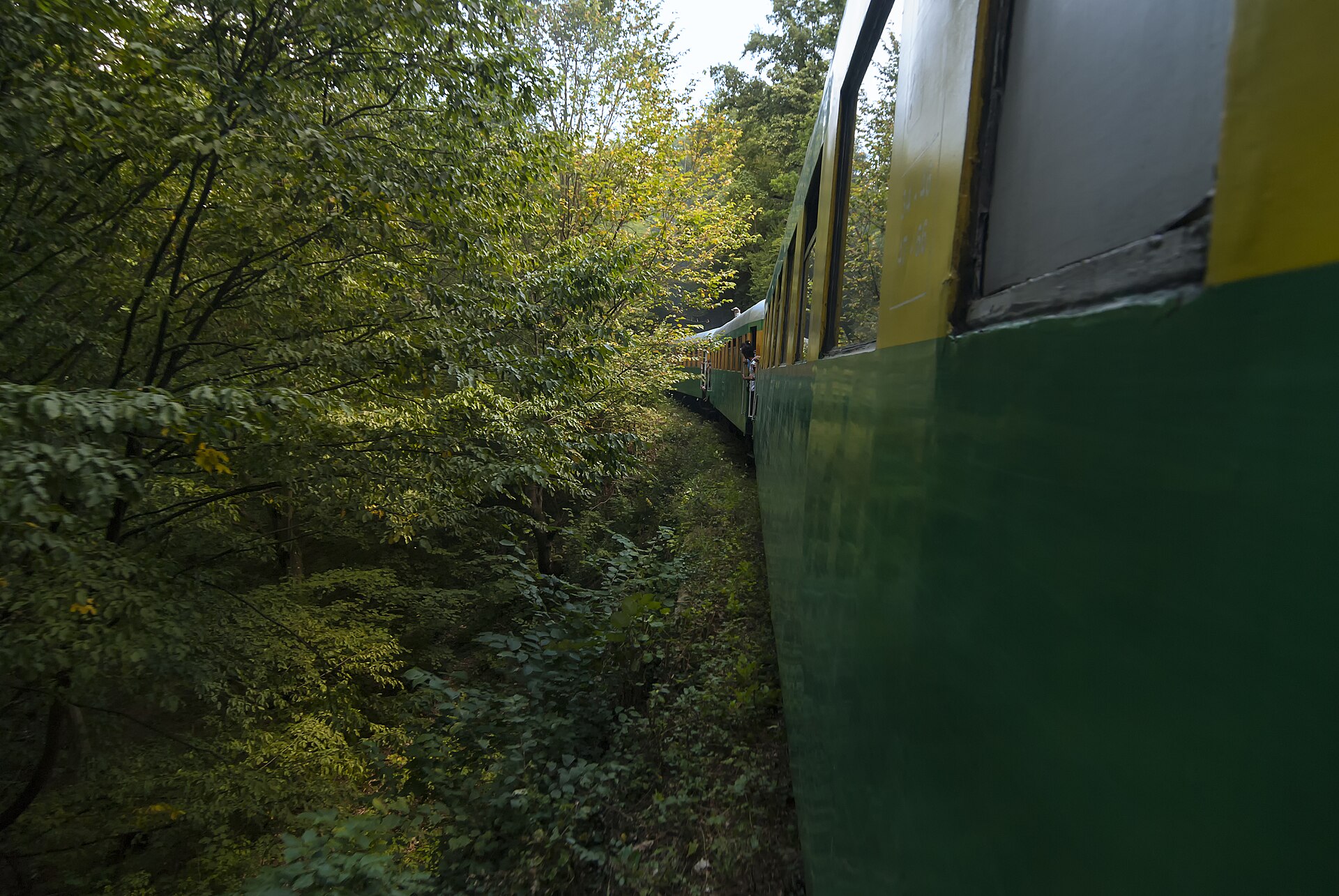
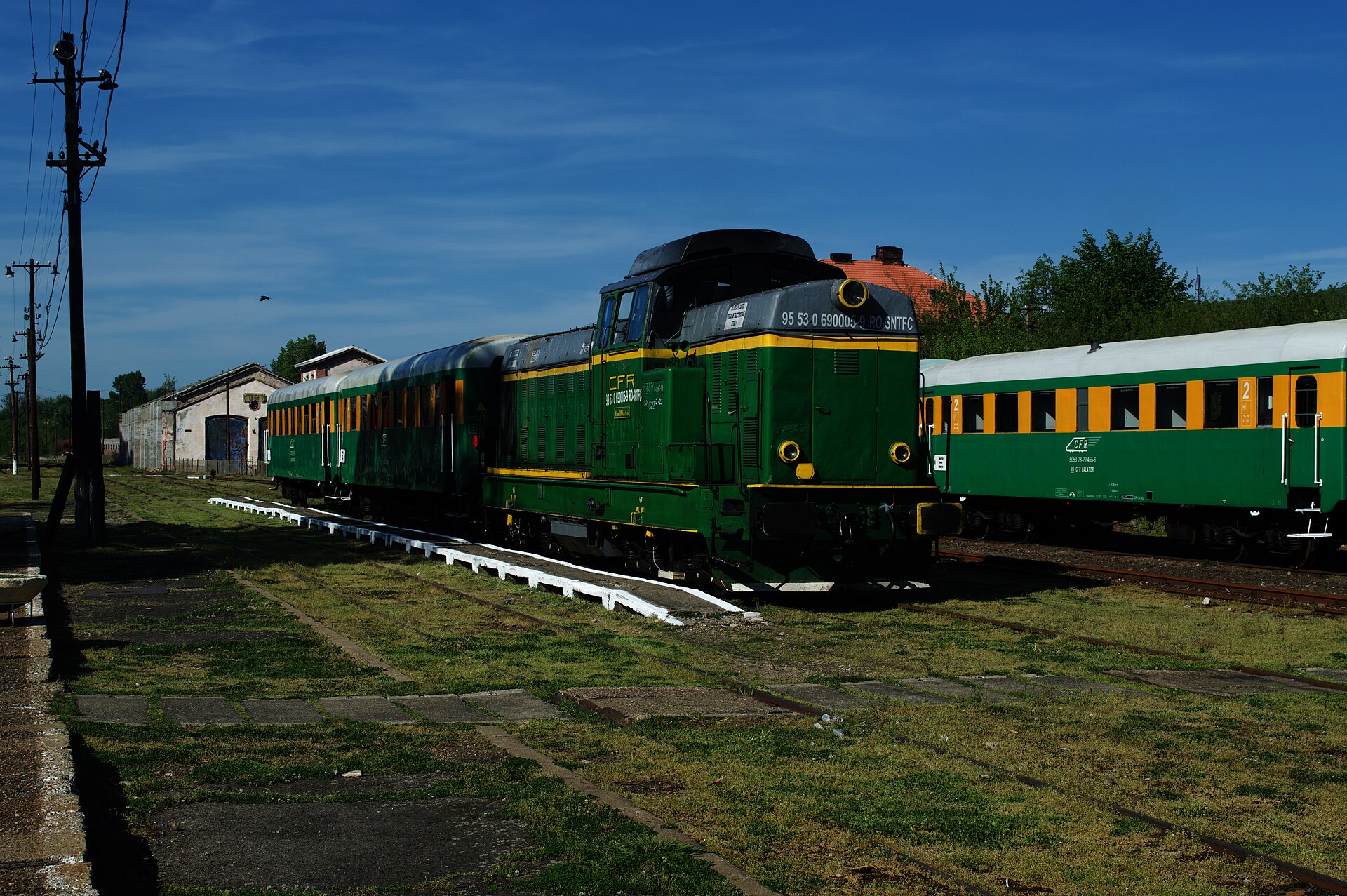
This is an ordinary CFR Regio train, not a tourist special — a short rake of coaches that locals use, ambling up the mountain at barely 17 km/h. That slowness is the joy of it: two unhurried hours at a window, for the price of a bus ticket, on one of the most spectacular stretches of line in the country.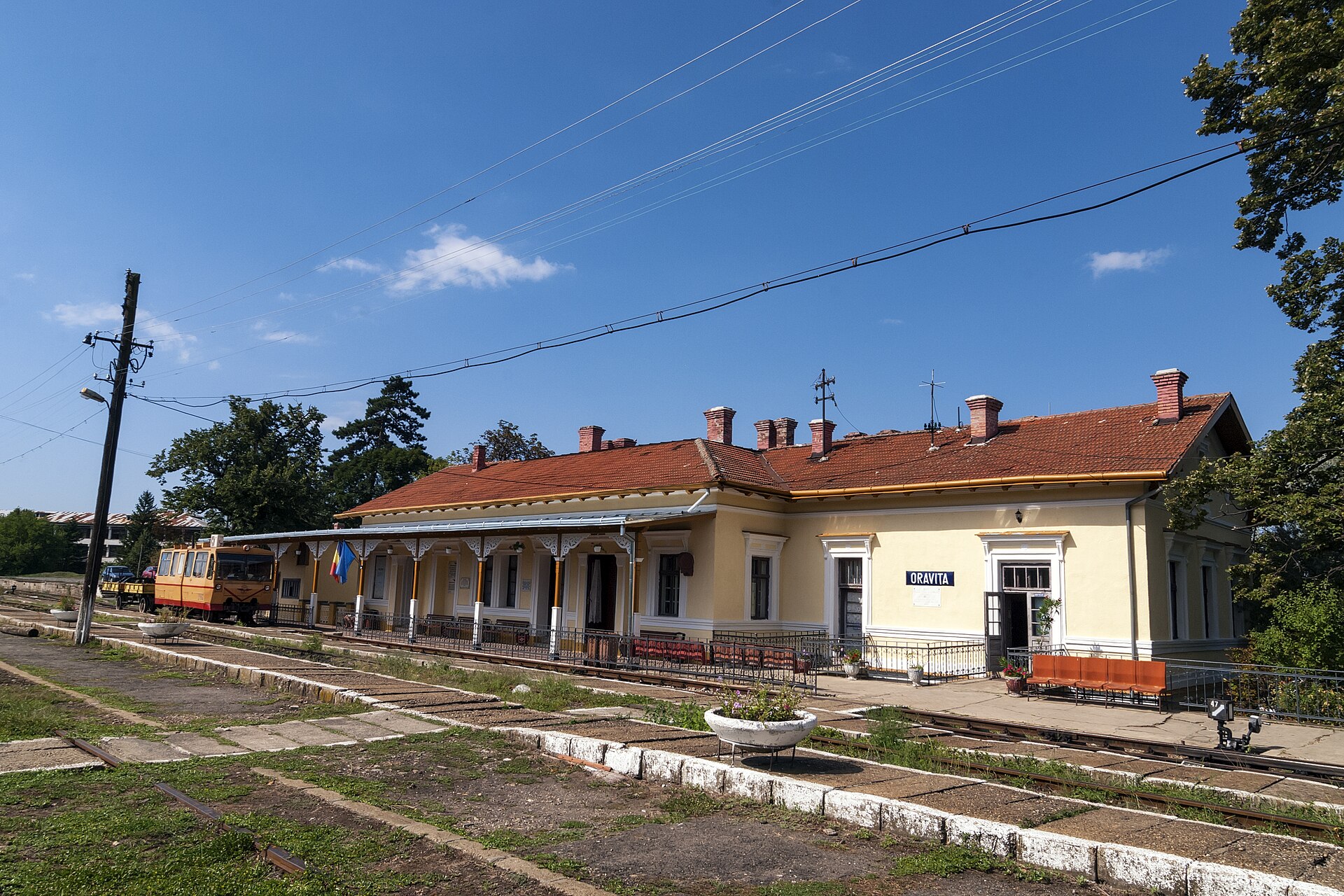 Ioan Bodean / Wikimedia Commons · CC BY-SA 4.0
Oravița's grand old station
The journey begins at Oravița, whose elegant, low, ochre station is among the oldest in Romania. The town behind it is a faded Habsburg-era mining centre with a remarkable secret — the oldest theatre in Romania, a jewel-box built in 1817 and modelled on Vienna's Burgtheater — well worth an hour before the train.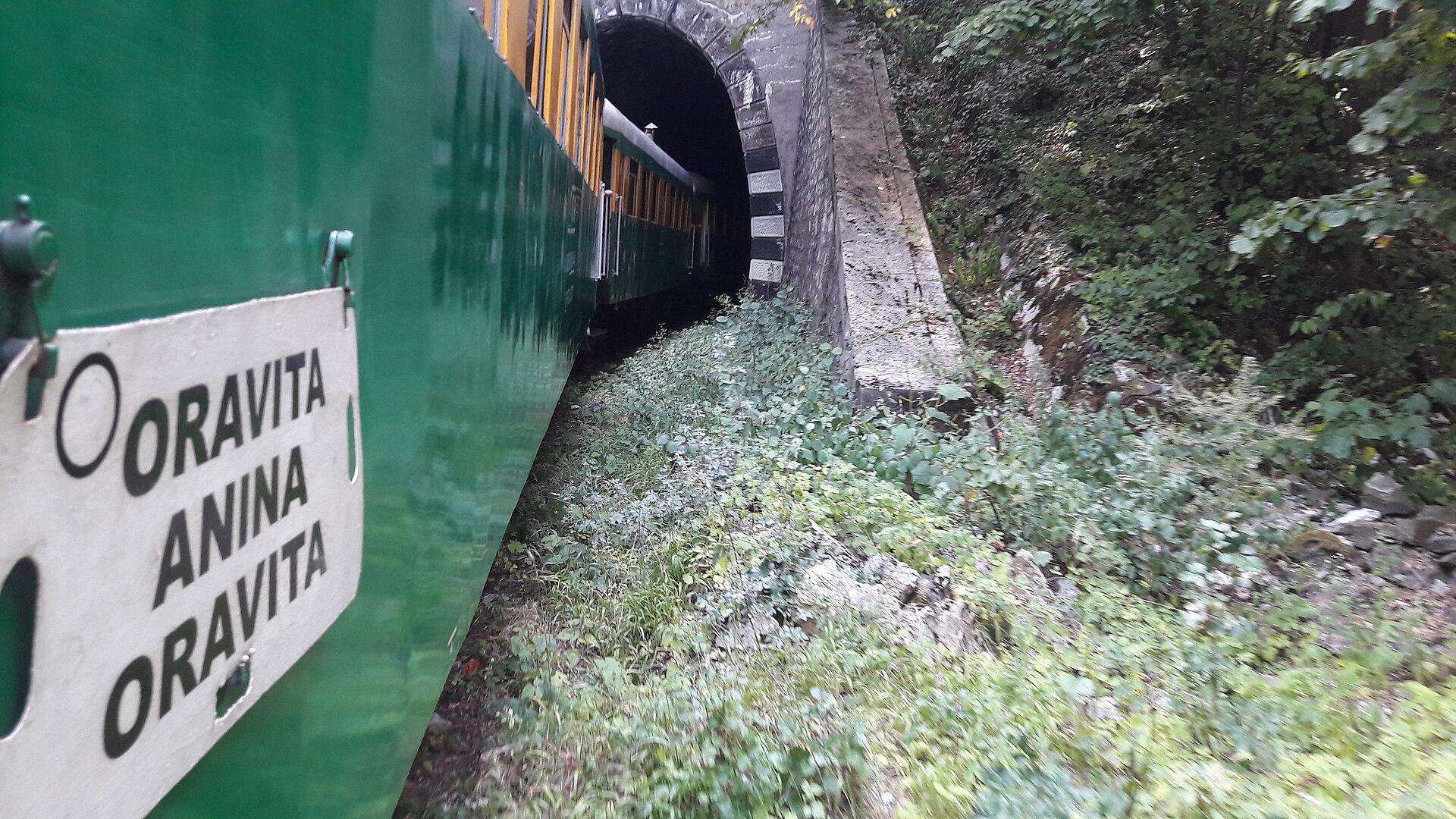 Ioan Bodean / Wikimedia Commons · CC BY-SA 4.0
Into the tunnels
Fourteen times the daylight snaps off as the train enters a tunnel bored through a spur of the mountain, then bursts back out onto a ledge or a viaduct with a fresh view. Keep the window down between the tunnels: the alternation of dark and light, rock and forest, is the rhythm of the whole climb.Timetables
The Oravița–Anina line is served by the national operator, CFR Călători, as an ordinary Regio stopping train. There are only a couple of departures a day in each direction, so the timetable — and the connection to Oravița — needs a little planning, but the ride itself could not be simpler: one train, all the way up, about two hours.
Typical daily service (as of the 2026 timetable — confirm before travelling):
| Oravița → Anina | Anina → Oravița |
|---|---|
| 11:15 → 13:15 (Regio 9695) | 14:40 → 16:40 (Regio 9694) |
Good to know:
- A there-and-back day trip works well. The late-morning train up and the mid-afternoon train down let you spend an hour or two in Anina — or simply ride up and straight back for the scenery, which is the same in reverse and just as good.
- It stops everywhere. As a Regio it calls at the little wayside halts — Lișava, Gârliște, Dobrei and others — which is part of its charm; don't expect express speeds.
- Getting to Oravița. Oravița is at the end of a branch in the Banat, connected to the wider network toward Timișoara and Reșița; check the connecting services, as they are not frequent.
- It is a real train, not a tourist special — which means low fares and no need to pre-book, but also that schedules can change with the national timetable. Confirm the current times before you travel.
Times as of the 2026 timetable and subject to change. Confirm the current schedule and connections with the operator — see the Tickets section below.
Tickets
One of the best things about the Banat Semmering is how ordinary it is to ride. This is a scheduled CFR Călători service train, so there is no tourist premium and no special to book: a single over the whole line costs a few lei, bought at Oravița or Anina on the day. Fares are set by the national operator and change with the timetable, so no figure is quoted here — but this is emphatically a budget journey, whose value is the engineering and the scenery rather than anything on board.
Plan the connection, not the train. The ride needs no planning; getting to Oravița does, because the branch has only a handful of connecting services and there are two trains a day. Bring cash and time, and treat it as a slow half-day out with a window seat and no schedule to keep.
Book your tickets
Oravița–Anina · the Banat Semmering
The daily Regio over the mountain
The daily CFR Călători Regio train from Oravița up to Anina and back — about two hours each way over the viaducts and through the tunnels of the historic line. An ordinary, inexpensive service train; buy at the station on the day, or check times before you travel.
Book Tickets (opens in a new tab, on CFR Călători)via CFR CălătoriTimetable & tickets · CFR Călători
Plan your connection
Departure times, fares and connections for the Oravița–Anina line and the wider Romanian network from the national operator. There are only a couple of trains a day, so check the current timetable and plan the connection to Oravița before you set off.
Book Tickets (opens in a new tab, on CFR Călători)via CFR CălătoriRail Passes
Interrail passes are valid. Interrail's table of railway companies lists CFR Călători's regional trains as included in Romania, so Oravița to Anina is covered by an Interrail Romania Pass or a Global Pass.
For this journey alone, a pass is not worth buying. The fare is a few lei.
Checked October 2026 against interrail.com (opens in a new tab).
Places to Visit
The line runs through the Banat Mountains, one of Romania's least-touristed and most rewarding corners — a landscape of limestone gorges, forest and old Habsburg mining towns. The railway pairs beautifully with a few days exploring by road.
At the foot of the climb, Oravița is a faded gem whose Old Theatre of 1817 is the oldest in the country and far grander than the town has any right to be; at the top, Anina is a workaday coal town that explains why the railway exists at all. South of both lies the scenic prize of the region, the Cheile Nerei–Beușnița National Park, a wild expanse of limestone gorges, tufa waterfalls and impossibly clear karst pools, threaded with hiking trails and bordered by the neighbouring Semenic–Cheile Carașului park.
Further afield, Reșița keeps its steam locomotives in the open air at the entrance to the town, and the Danube itself narrows into the dramatic Iron Gates gorge — the very river this railway's coal was built to reach.
 Aisano / Wikimedia Commons · CC BY-SA 3.0 · cropped
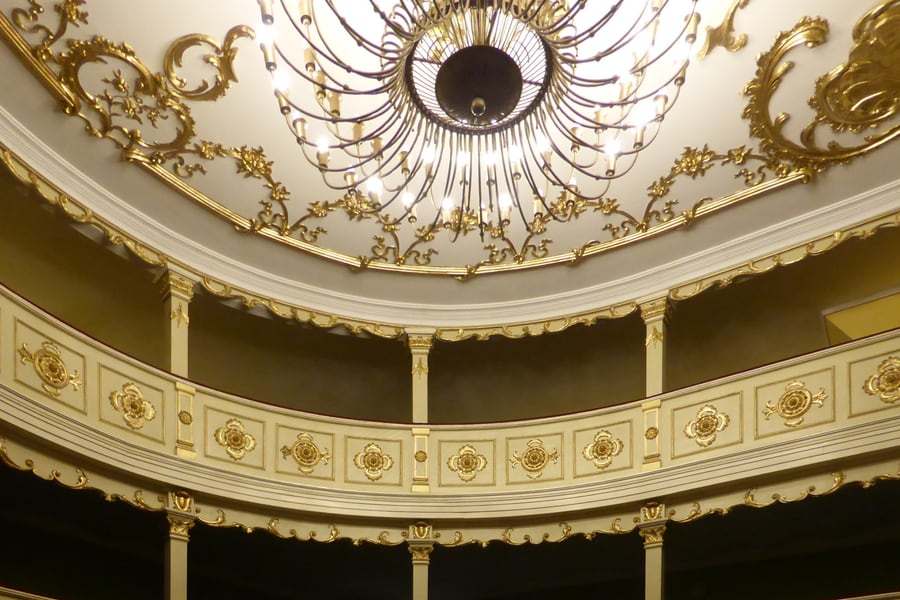
The Old Theatre at Oravița
An ornate little horseshoe auditorium modelled on Vienna's Burgtheater, which staged its first performance on 5 October 1817 — the earliest purpose-built theatre anywhere in present-day Romania, and wildly grand for a town this size. It took the name Mihai Eminescu after the poet worked here as a prompter in 1868. ⚠️ It has been through a major restoration due to finish in mid-2025, so check locally before travelling for it.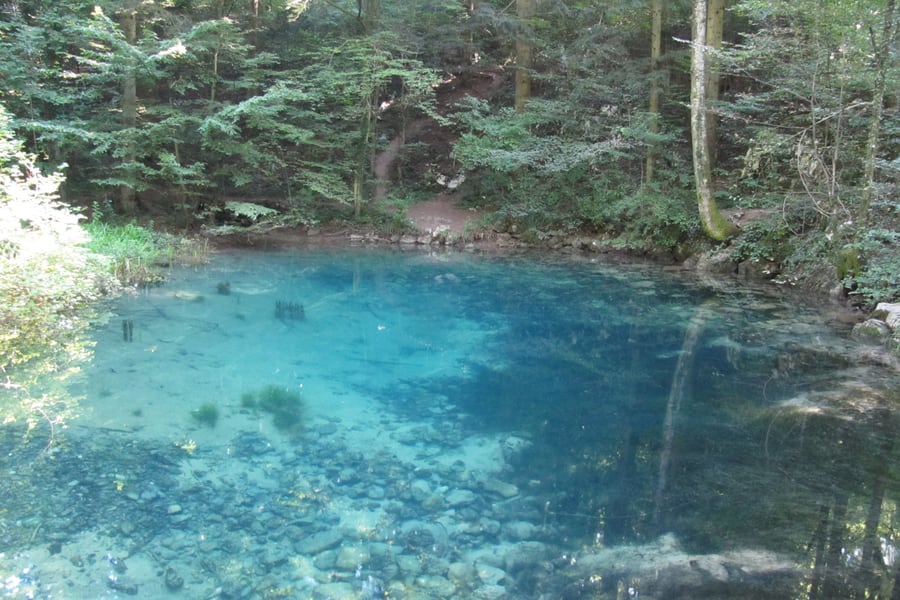 Palickap / Wikimedia Commons · CC BY-SA 4.0 · cropped
Ochiul Beiului
A karst pool the size of a tennis court — 284 m², and only 3.6 m deep — fed from below by a submerged spring, at 310 m in the wildest corner of the Cheile Nerei– Beușnița National Park. The water is so clear that you watch the trout hanging over the stones, and so consistently fed that it does not freeze. The walk in from Sasca Română is half the pleasure.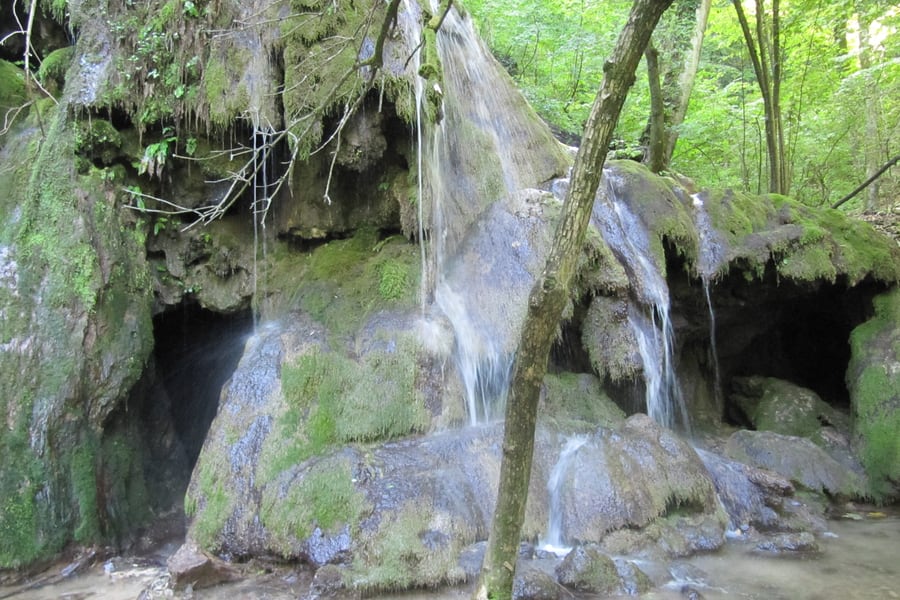 Palickap / Wikimedia Commons · CC BY-SA 4.0 · cropped
The Beușnița falls
Above the pool the Beu drops through a staircase of tufa cascades, water sliding over cushions of moss that the limestone slowly turns to rock. It is a quieter, greener spectacle than a single big fall — a whole hillside dripping — and it is at its best in late spring when the beech is coming into leaf and the flow is still high. The trail links it to Ochiul Beiului in one walk.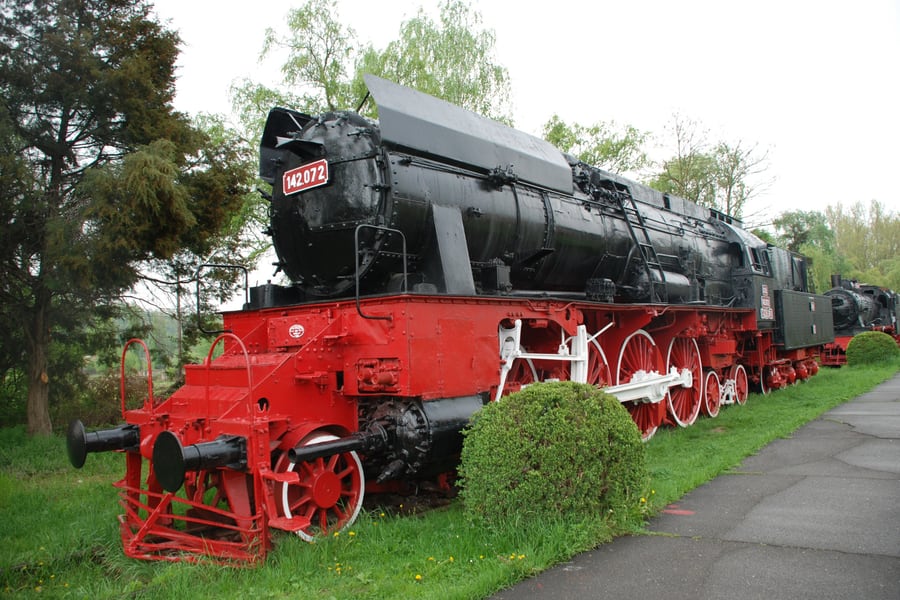 Coco13cos / Wikimedia Commons · CC BY-SA 3.0 · cropped
The Reșița steam museum
Sixteen engines lined up in the open at the entrance to Reșița, founded in 1972 and claimed as the largest open-air technical museum in Europe. The prize exhibit is RESICZA, built in the town's own works in 1872–73 and among the first steam locomotives made in south-eastern Europe. Reșița built the engines that still work Romania's narrow-gauge lines — including the Mocănița's. No ticket, no gate, no closing time.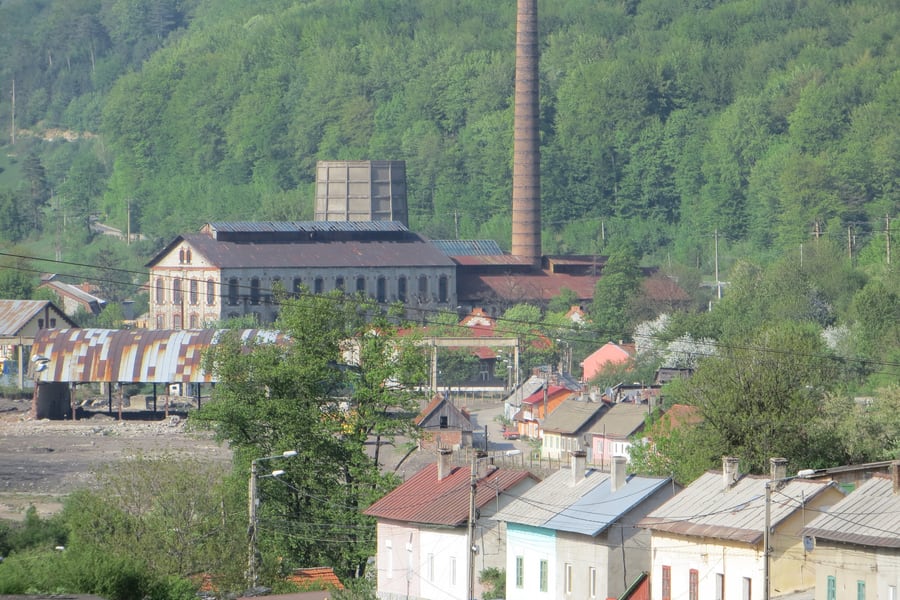 Strainu / Wikimedia Commons · CC BY-SA 3.0 ro · cropped
Anina and Steierdorf
The town the railway was built for: a coal settlement of about 9,000 in the heart of the Anina Mountains, grown around pits worked by Austrian miners from Styria — which is what the twin settlement Steierdorf is named for. The industry has largely gone and the town has contracted hard since 1989, but the pitheads, chimneys and terraces are all still there, and they explain the whole line.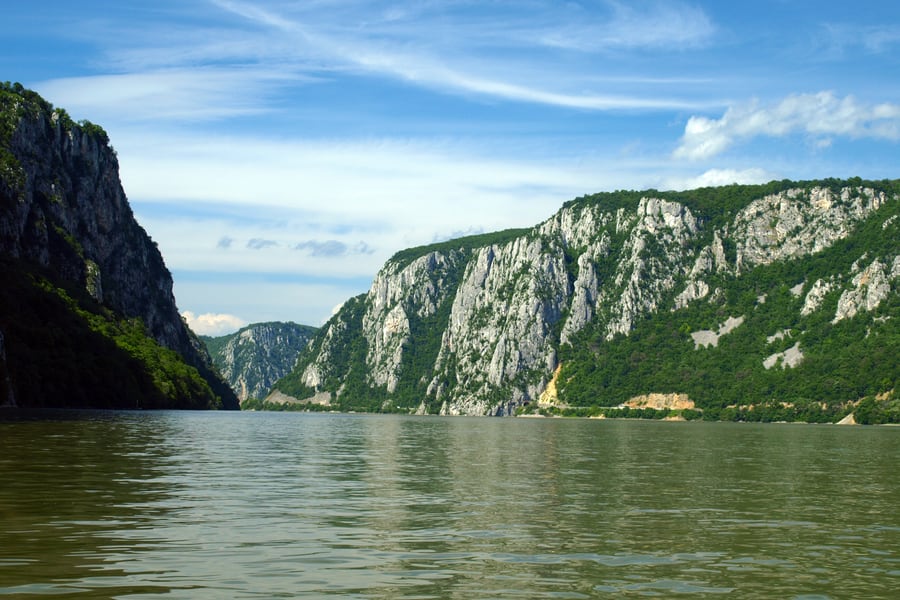 FlaC / Wikimedia Commons · CC BY-SA 4.0 · cropped
The Iron Gates
Ninety minutes south, the Danube squeezes through the Carpathians in the gorge the Romanians call the Cazane, "the cauldrons" — about 9 km of vertical limestone where the river narrows to 207 m, runs 75 m deep and moves at over five metres a second. Serbia is the cliff on the far bank. Boat trips run from Dubova, and the submediterranean flora on the walls is found almost nowhere else.Where to Sleep
This is a half-day railway in a region that rewards a longer stay, so where you sleep depends on whether the train is the whole trip or part of a wider Banat wander.
In Oravița, at the foot of the line, are the most convenient rooms: modest guesthouses and small hotels in and around the old town, within reach of the station for the late-morning train. Staying here lets you take in the town's remarkable old theatre and its faded Habsburg streets over an evening, then ride up in the morning.
In Anina and Steierdorf, at the top, accommodation is simpler and more industrial in flavour — small pensiuni in the mountain town — but it puts you high in the hills, close to the walking country, and is handy if you want to ride up one day and explore on foot the next.
Toward the national parks — around Cheile Nerei–Beușnița and the villages of the Banat — you will find rural guesthouses geared to hikers, a good base if the railway is one day in a walking holiday among the gorges and waterfalls.
As with all our journeys, we point to the shape of the stay rather than specific bookings: a night in Oravița for the theatre and the morning train, a mountain room in Anina, or a guesthouse near the gorges — with the slow climb over the Banat Semmering linking them together.
Questions or corrections
Planning this trip and stuck on something, or spotted a time, fare or detail that has changed? Send us a message about The Oravița–Anina Railway. We read every one, and we update this page when something has changed.