The Vaser Valley Mocănița
Maramu1976 / Wikimedia Commons · CC BY-SA 4.0
- DistanceVișeu de Sus–Paltin · ~22 km each way
- DurationAbout 2 hours each way (round trip ~5–6 h)
- Best seasonLate spring to autumn (green valley; autumn colour)
Introduction
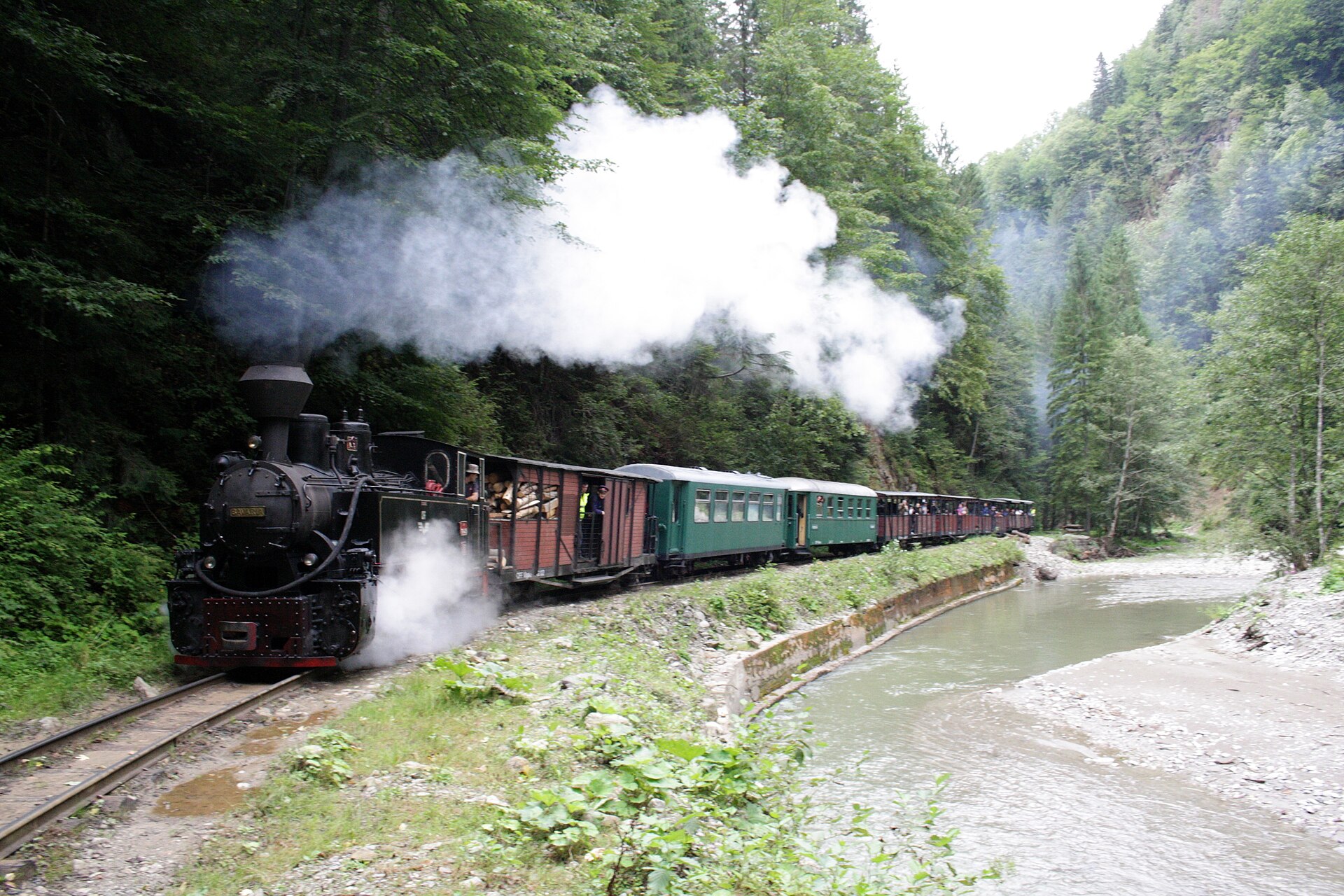
Most of the world's steam railways are kept alive for the love of it — polished, preserved, run at weekends for people who remember. The Mocănița of the Vaser Valley is something rarer: a steam railway that is still, genuinely, at work. Deep in the Maramureș Mountains of northern Romania, where the roads give out and the forest takes over, this narrow-gauge line has been hauling timber down the Vaser since the 1930s — and it still does, one of the last commercially-operating forestry steam railways left in Europe.
It runs on a slender 760 mm track from the logging town of Vișeu de Sus up into a valley that has almost nothing else in it: no road for most of its length, just the river, the old-growth Carpathian forest, the odd forester's hut, and the railway threading between them. The engines are older than most of the people who ride behind them — the oldest, "Măriuța", was built in Berlin in 1910 — and they burn wood, cut from the very forest the line was built to work.
For travellers, the Mocănița offers one of the most atmospheric rides in Europe: a slow morning-to-afternoon journey behind a genuine working steam engine, up a wild valley, at a walking pace, with a long stop in a forest clearing to let the locomotive drink. It is not a re-enactment of a lost world. It is the world itself, still turning.
The Journey
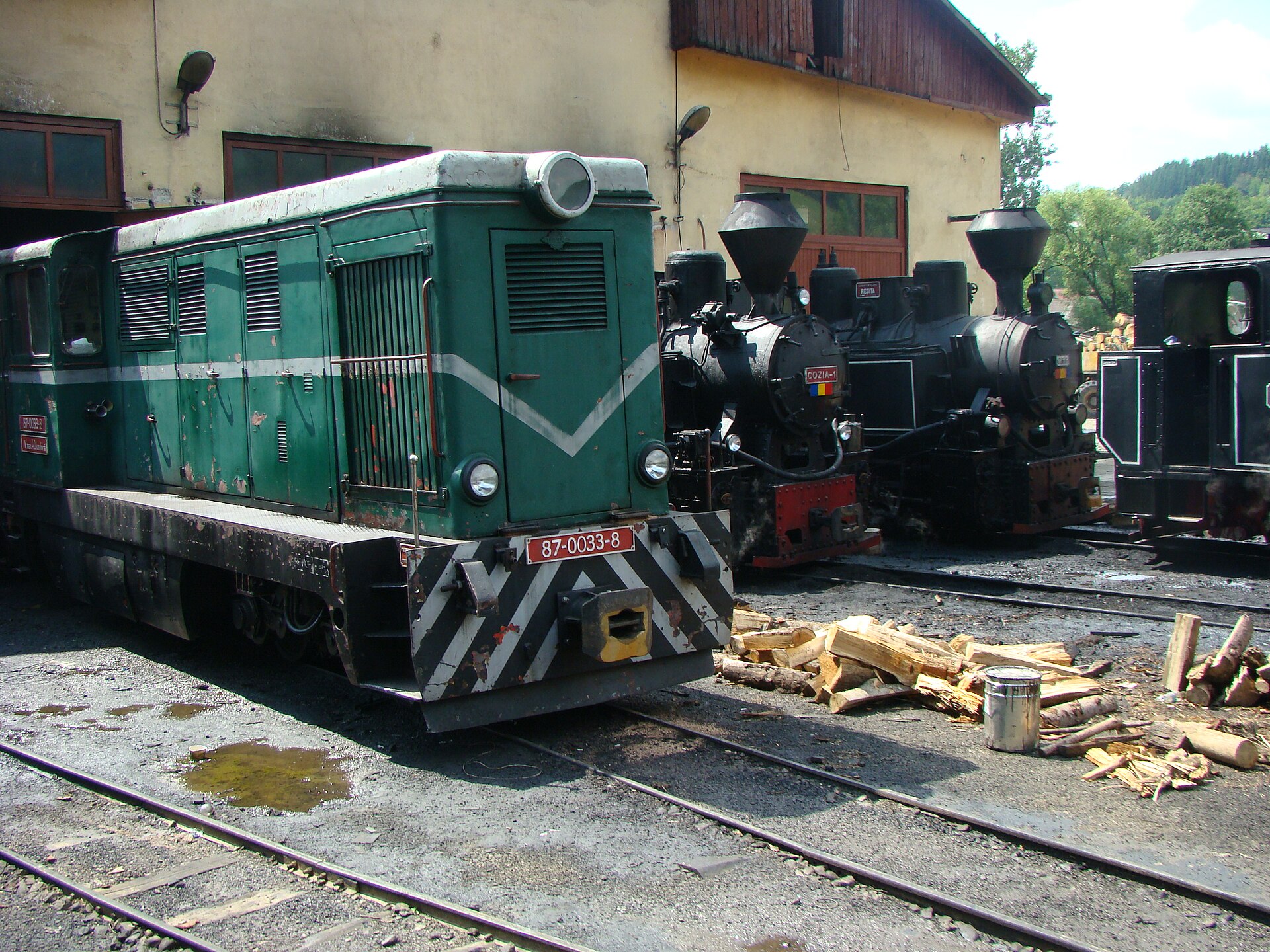
The day starts early, and it starts with smoke. At the depot in Vișeu de Sus the locomotives are fired long before departure, and by the time passengers gather the yard is full of steam, the smell of burning wood, and the clank of a hundred-year-old engine being coaxed into life. This is a working railway's home ground — a sawmill, a timber yard stacked with logs, sheds full of veteran engines — and the sense that you are about to ride a piece of it, not a replica, is there from the first minute.
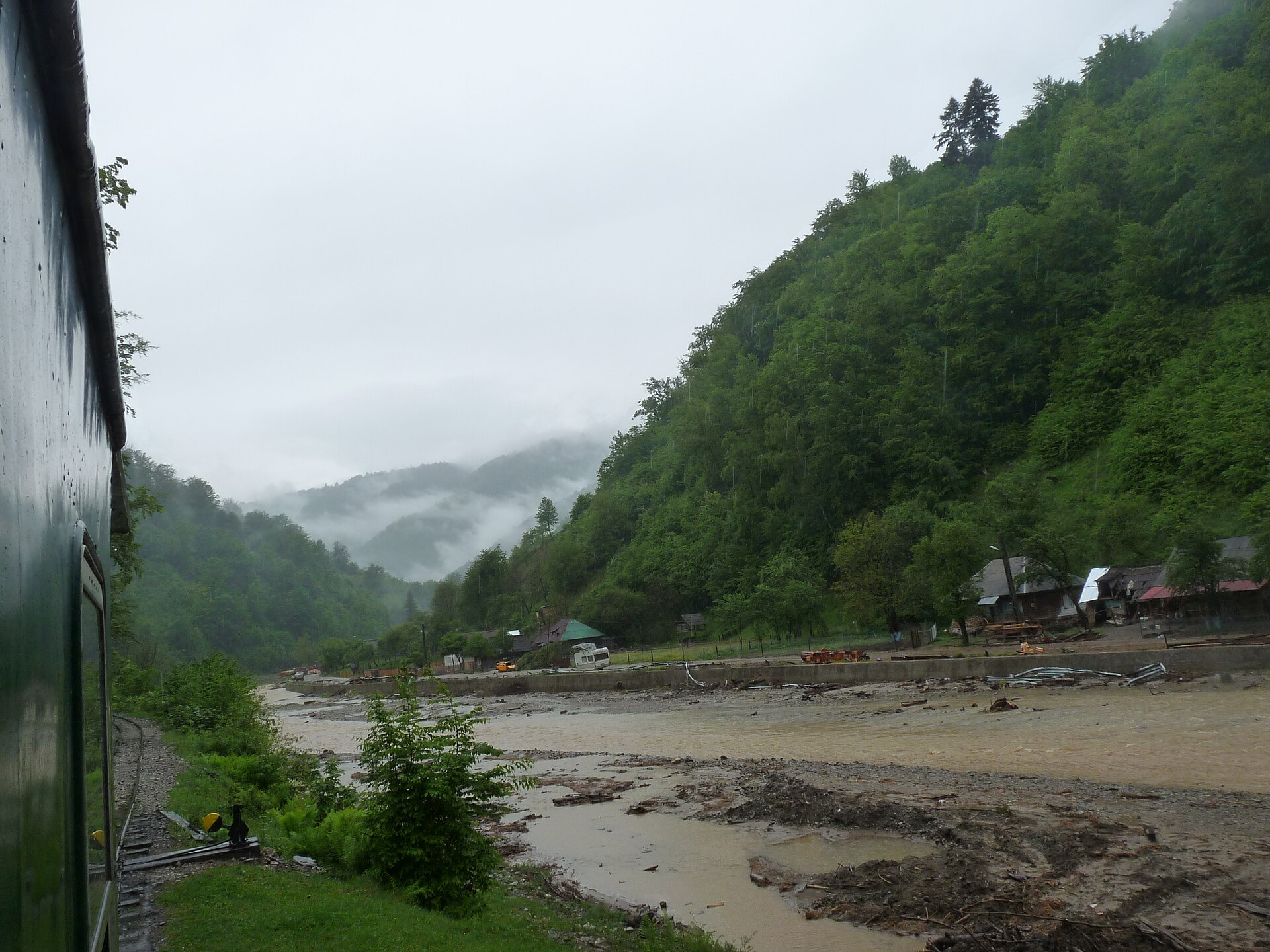
The train pulls out at a walking pace and never really goes faster. That is the gift of it. On a 760 mm track barely wider than a garden path, the coaches sway gently up the valley of the Vaser, the river always close — sometimes below the embankment, sometimes right beside the wheels. Within a few kilometres the last houses fall away and the forest closes in: beech and spruce, some of it never felled, part of one of the largest tracts of old-growth woodland left in Europe. There is no road out here. For long stretches the railway is the only mark of people in the whole valley.
A few things worth knowing about the run:
- It is a 760 mm narrow-gauge forestry railway, built between 1933 and 1935, damaged in the Second World War and rebuilt.
- The working line runs 43 km up the Vaser to Comanu, hauling timber; the tourist steam train turns at Paltin, about 22 km up.
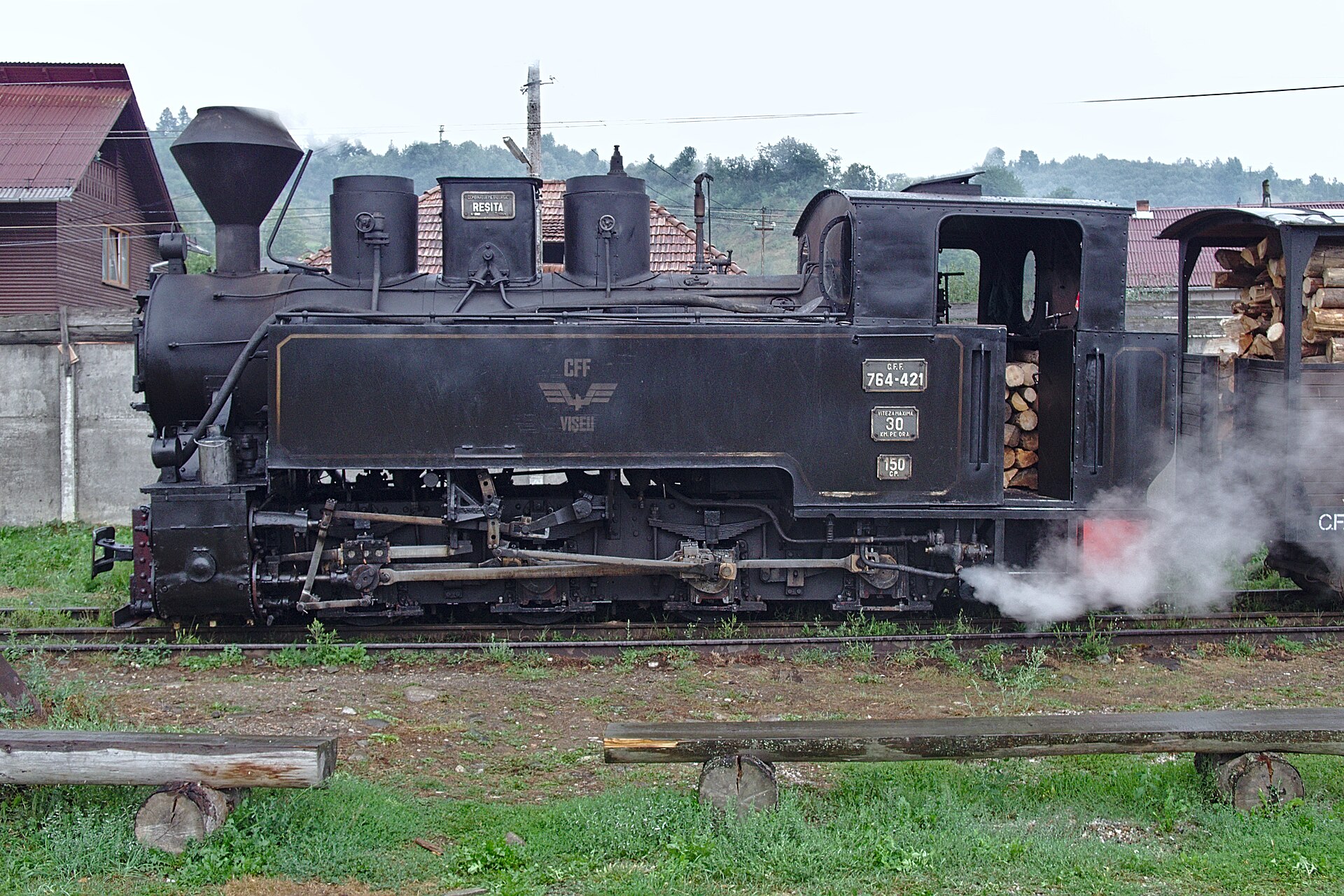
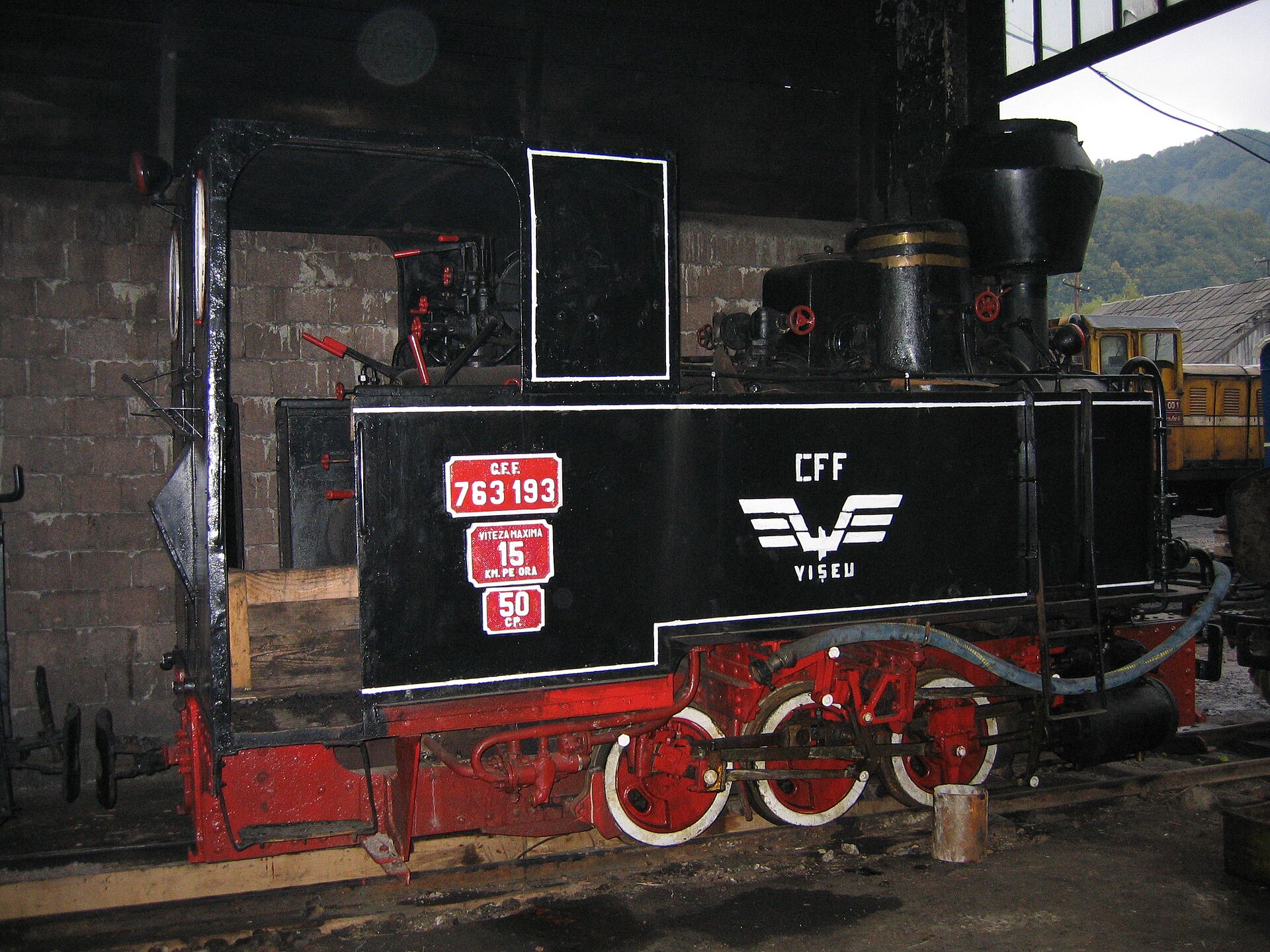
- It is worked by wood-burning steam locomotives — the oldest, "Măriuța", built by Orenstein & Koppel in 1910 — with diesels and even converted rail-vans for everyday work.
- The pace is about 10 km/h, so the round trip is a full day, roughly five to six hours with the stop.
Midway, in a clearing called Paltin, the train stops for a couple of hours. The locomotive takes on water, a fire is lit, food is grilled, and passengers spill out to sit by the river or wander the forest edge. It is less a station than a picnic in the woods with a steam engine hissing gently nearby. Then the engine runs round its train, and the whole thing drifts back down the valley in the afternoon light — the same river, the same forest, seen the other way.
You will have covered barely twenty-odd kilometres. But you will have spent a day in a valley most of the world has never heard of, behind an engine older than the railway itself, and it will feel like a journey much longer than its map.
Along the route
Eddy Renard / Wikimedia Commons · CC BY-SA 4.0Deep into the Carpathians
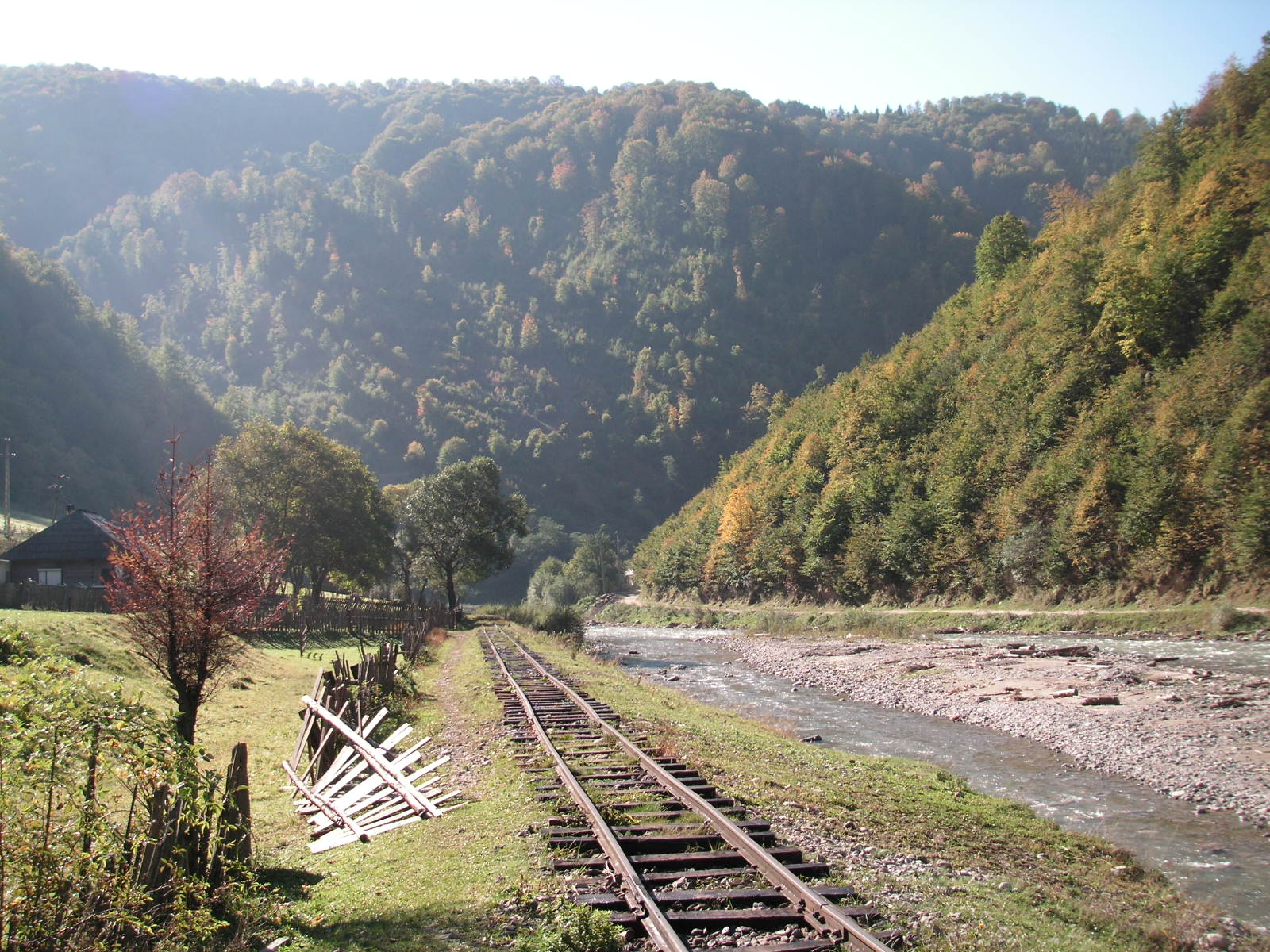
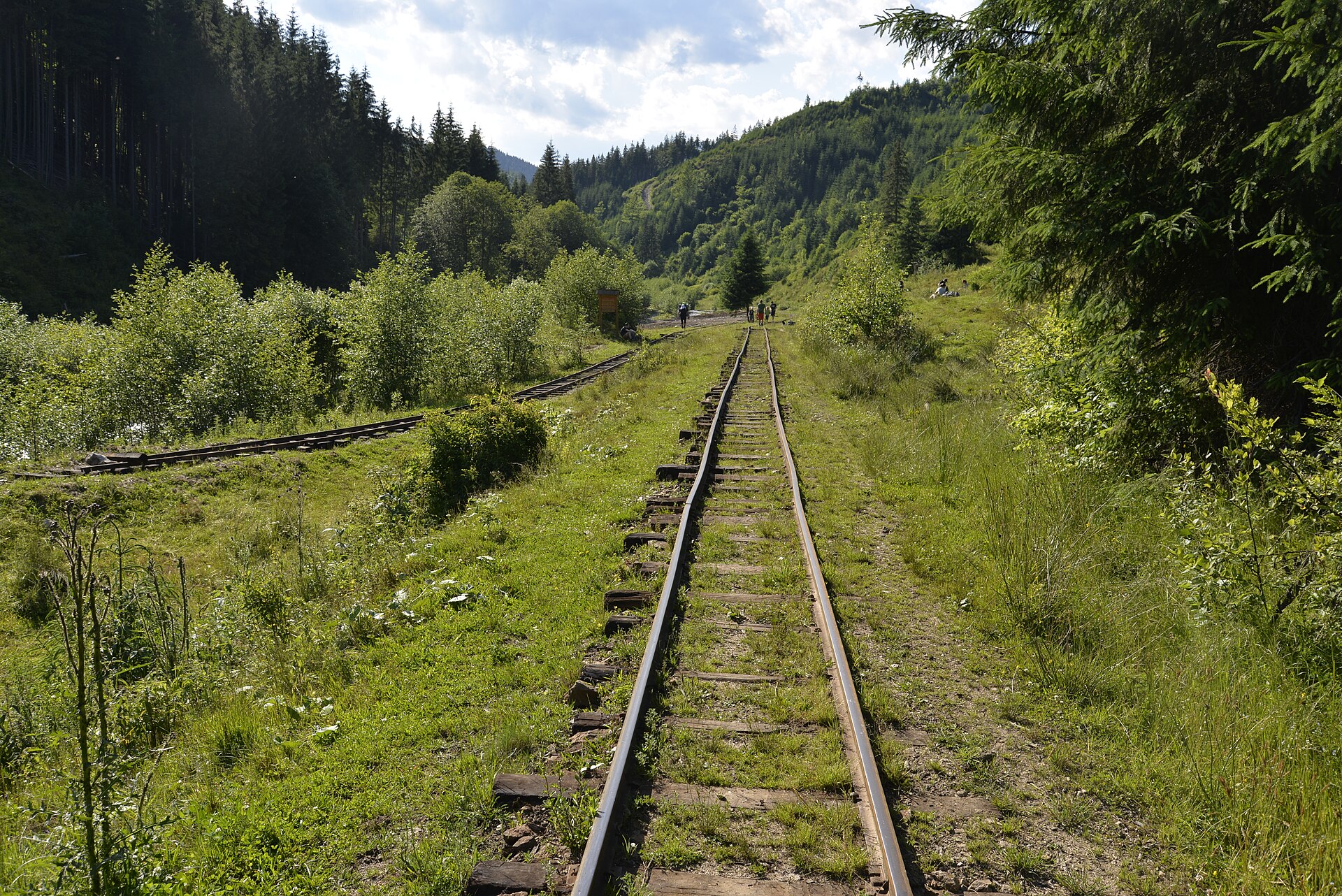
The Vaser Valley is genuinely wild — a long forested cleft running up towards the Ukrainian border, with no road for most of its length. The railway is the only way in, following the tumbling Vaser past some of the last primeval woodland in Europe.Herbert Ortner / Wikimedia Commons · CC BY 2.0A real working forest railway
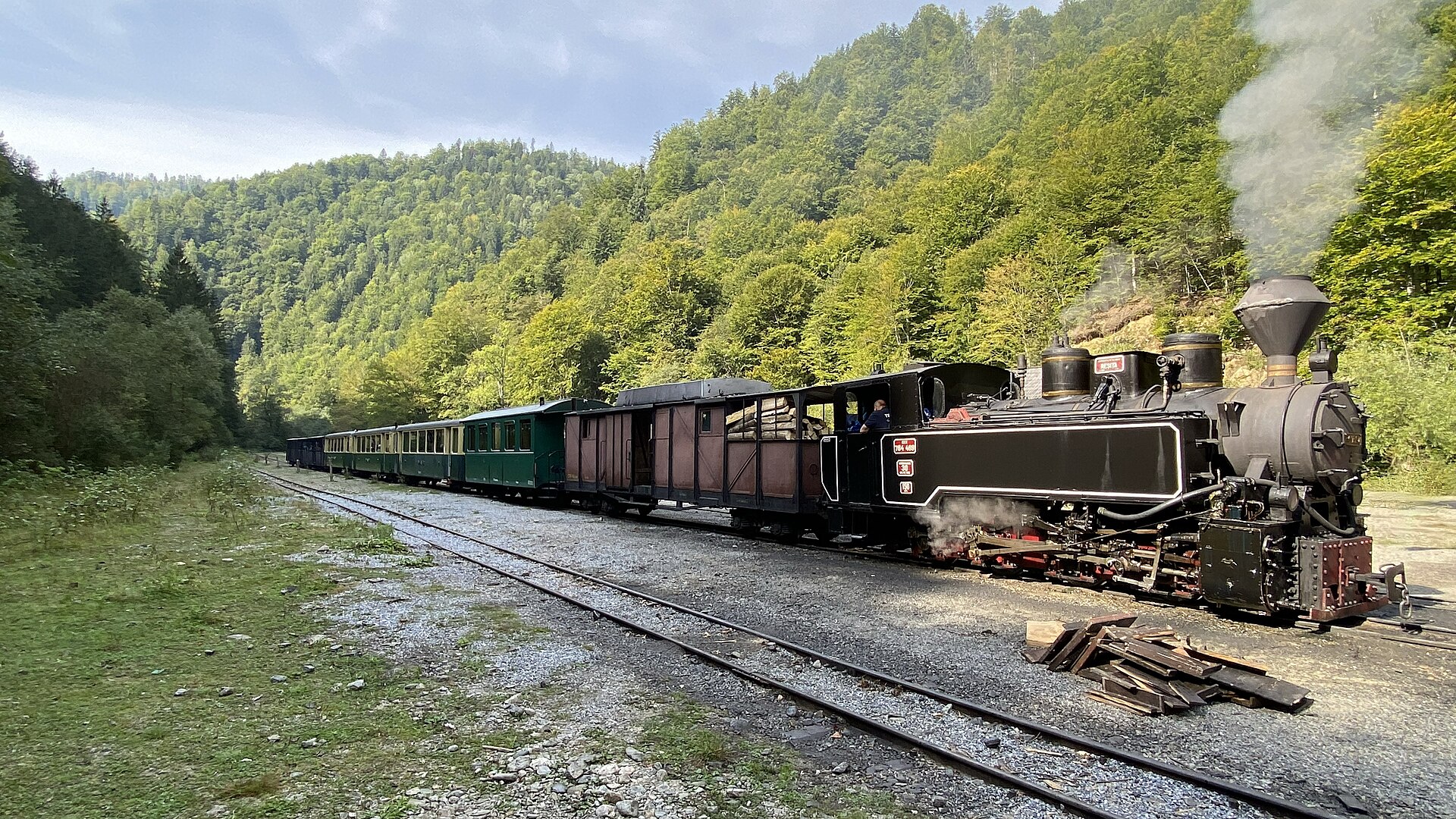
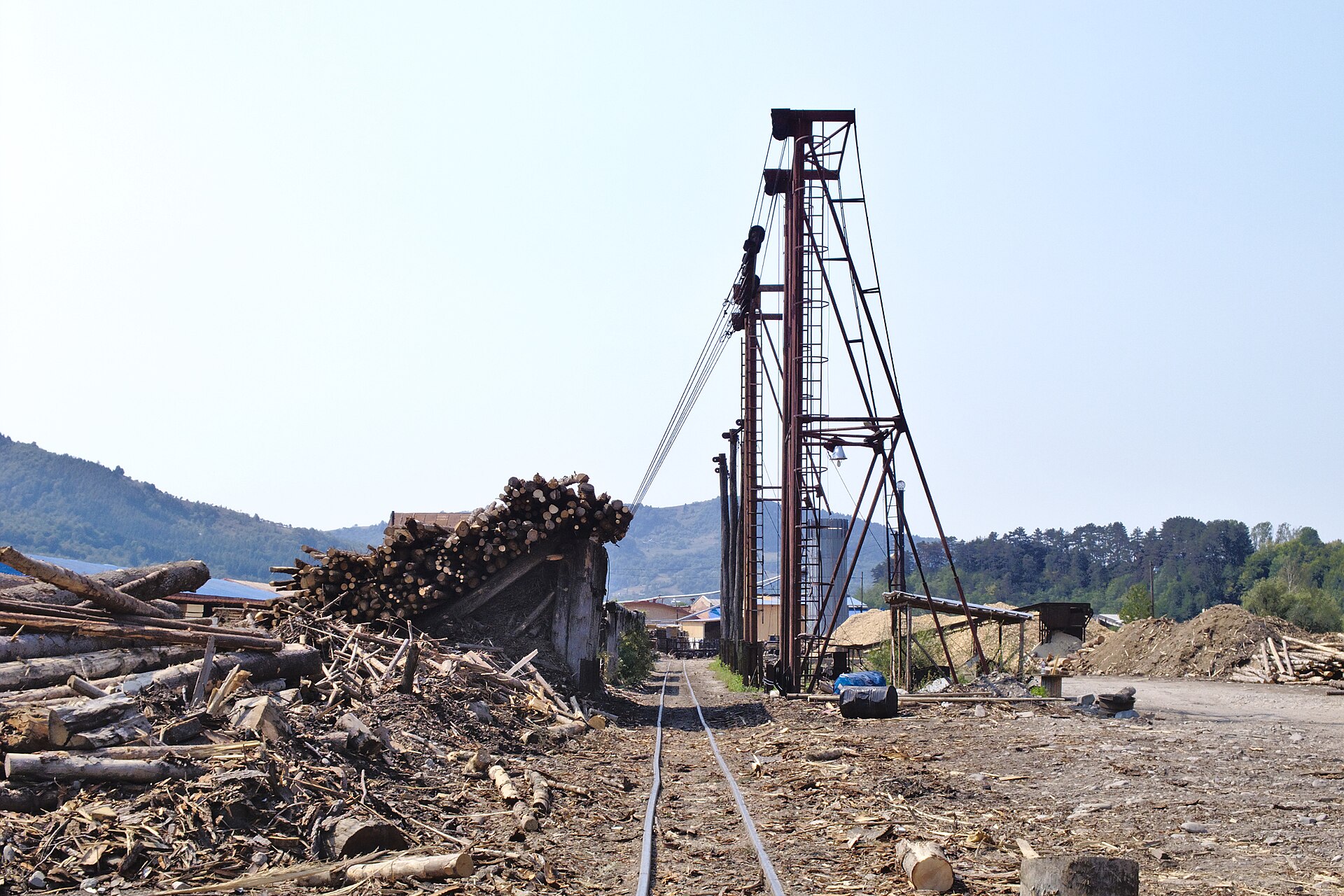
The Mocănița is not a museum piece pretending to be useful. It is a genuine forestry railway that has hauled timber down the Vaser since the 1930s, and behind the passenger coaches you will often see log wagons. The sawmill and the yard are a living industrial line, not a re-enactment.Herbert Ortner / Wikimedia Commons · CC BY 3.0Engines older than the line
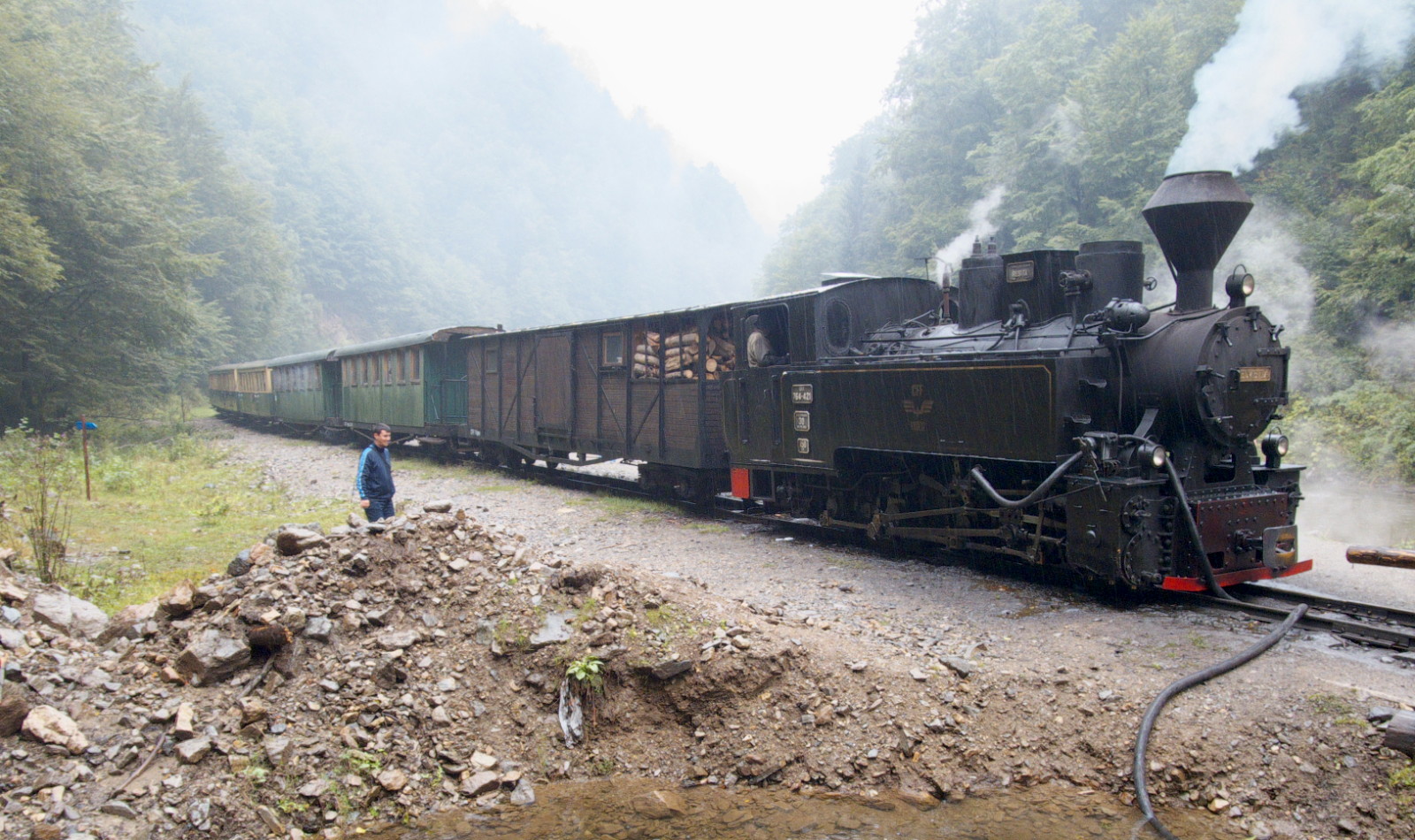
The stars are the locomotives. The oldest, Măriuța, was built by Orenstein & Koppel in Berlin in 1910; another dates from 1921. They burn wood, not coal, and on a good day a line-up of them raises steam in the yard before the climb.A bit of history
Culture & experiences along the way
 Smiley.toerist / Wikimedia Commons · CC BY-SA 4.0
Riding the open carriages
The train is slow — about 10 km/h — and that is the whole point. In the open and half-open carriages you sit close to the forest, the river and the smell of woodsmoke, with time to watch every bend of the valley go by. Wrap up even in summer: the Vaser is high, the mornings are cool, and the windows are made to be leaned out of.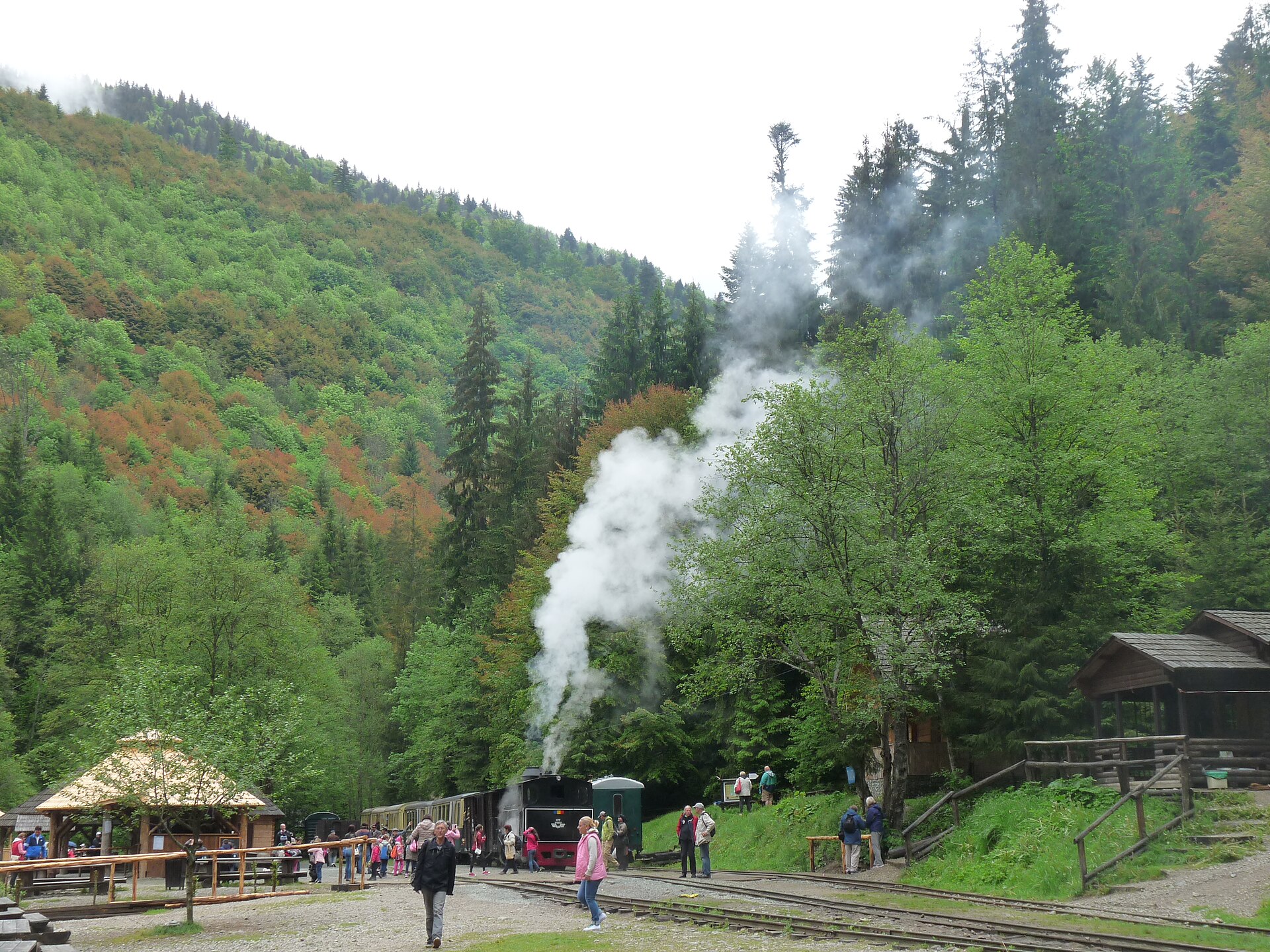 Smiley.toerist / Wikimedia Commons · CC BY-SA 4.0
The turnaround at Paltin
The tourist train climbs about 22 km to Paltin, a clearing deep in the valley, where it stops for a couple of hours. The locomotive takes on water, a fire is often lit for grilling, and there is time to walk by the river before the run back down. It is an unhurried, picnic-in-the-forest kind of halt — the middle of a long, gentle day out.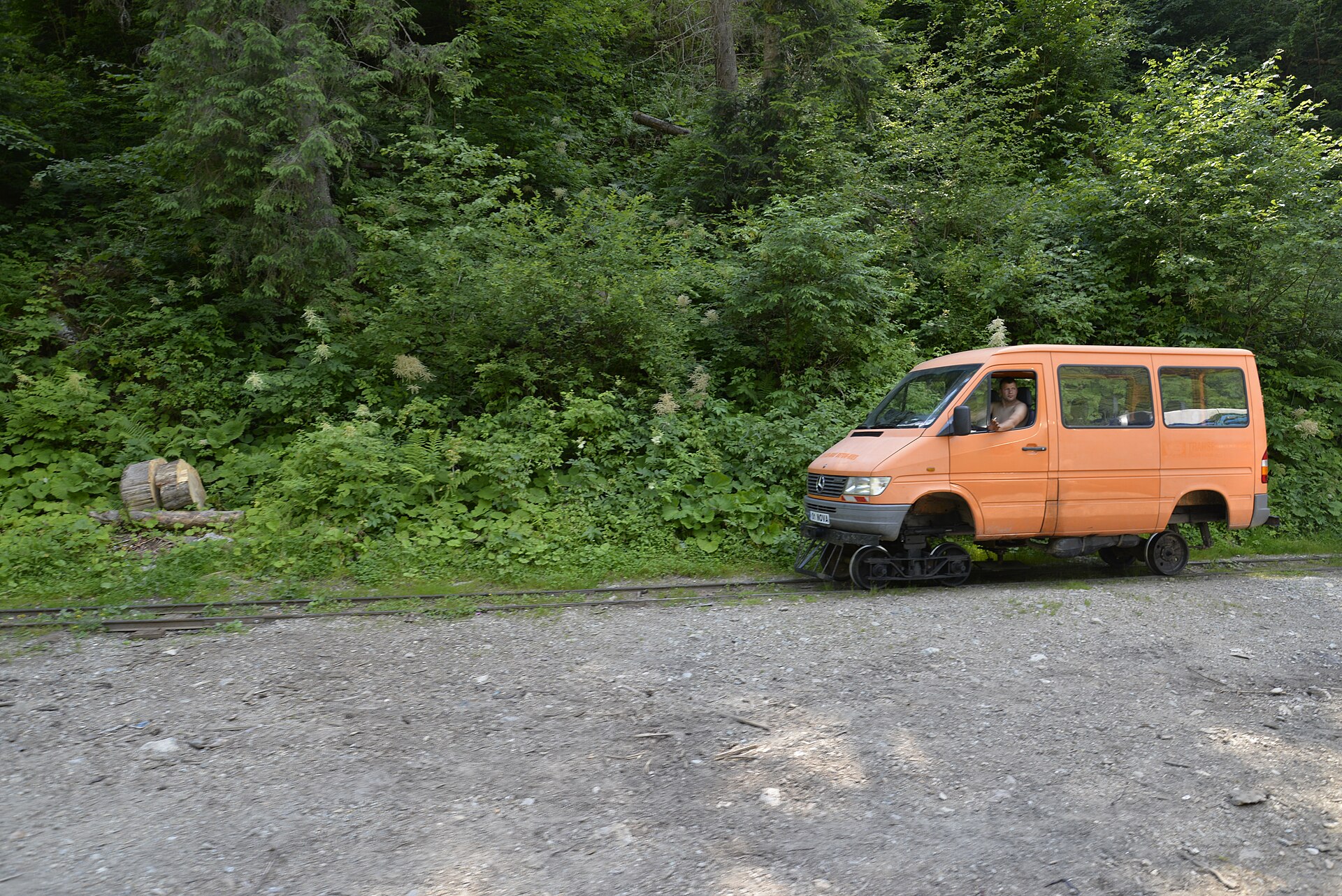 Jirka Dl / Wikimedia Commons · CC BY-SA 4.0
Vans that run on rails
Look out for the valley's stranger vehicles: road vans converted to run on the rails, used by rangers, foresters and border police to get up the line between trains. They are a reminder that the Vaser railway is a piece of working infrastructure — the everyday road of a valley that has no other — as much as a tourist attraction.Timetables
The Vaser Valley steam train is a once-a-day, all-day affair: it leaves Vișeu de Sus in the morning, climbs to Paltin, stops for a long break in the forest, and returns in the afternoon. There is essentially one tourist departure a day, so the question is not which train to catch but which days it runs.
Typical schedule (as of the 2026 season — confirm with the operator before travelling):
| Departs Vișeu de Sus | 09:00 |
| Turnaround at Paltin | around midday (≈2-hour stop) |
| Back at Vișeu de Sus | mid-afternoon (≈15:00–15:30) |
| Round trip | about 5–6 hours |
Which days it runs, by season (approximate — the operator sets the exact calendar each year):
- High summer (roughly July–August): daily.
- Spring and autumn shoulder: most days, typically Thursday to Sunday.
- Winter: reduced, typically Friday to Sunday, weather permitting.
Good to know:
- It leaves early and it is popular — get there in good time, and book ahead in summer and on holidays, when the day's train can sell out.
- Steam is the norm, not a guarantee. A wood-burning steam locomotive normally hauls the train, but a diesel may stand in for technical or fire-risk reasons; if a steam engine matters to you, ask when you book.
- It is a full day in the mountains. Bring layers even in summer — the valley is high and the mornings cool — plus water, and cash for food at the Paltin stop.
- Getting to Vișeu de Sus. The town is in Maramureș, in Romania's far north; most visitors arrive by car or transfer from Baia Mare or Sighetu Marmației, as onward public transport into the valley is limited.
Departure times and running days as of the 2026 season and subject to change. Confirm the current calendar, times and tickets with the operator — see the Tickets section below.
Tickets
The Mocănița is run by CFF Vișeu de Sus, and tickets are straightforward — the trick is planning around the calendar and the crowds rather than any complicated fare system. In high summer and on holidays the single daily train fills up, so reserve through the operator rather than turning up on spec. Check the running day as well as the departure, because the train runs daily only in peak summer and it leaves at around nine in the morning.
Ask about steam when booking if it matters: it is normal but not promised, and a diesel can stand in. Fares are modest by Western-European standards, with reductions for children, students and pensioners, and they change year to year, so the operator holds the current figure. Treat the ride as the centrepiece of a couple of days in Maramureș rather than a quick stop.
Book your tickets
Mocănița · Vișeu de Sus to Paltin
Steam up the Vaser Valley
The steam train up the Vaser Valley from Vișeu de Sus to Paltin and back, run by CFF Vișeu de Sus — a full morning-to-afternoon day out with a long stop in the forest. Steam-hauled in normal operation (a diesel may stand in for technical or weather reasons). Popular in summer, so book ahead.
Book Tickets (opens in a new tab, on CFF Vișeu de Sus)via CFF Vișeu de SusTimetable & booking · Mocănița
Departures and season
Departure days, times and tickets for the Vaser Valley steam train from the operator. The service runs daily in high summer and on fewer days in the shoulder and winter seasons, and departs early — check the current calendar and reserve before you travel.
Book Tickets (opens in a new tab, on Mocănița)via MocănițaRail Passes
No rail pass covers the Mocănița. It is run by CFF Vișeu de Sus, which is not among the companies in Interrail's table for Romania. Seats are bought from the operator.
A pass still covers CFR's trains to Maramureș. CFR Călători is included in Romania.
Checked October 2026 against interrail.com (opens in a new tab).
Places to Visit
The Mocănița is the star, but it sits in Maramureș — one of the most traditional corners of rural Europe, a region of wooden churches, carved gates and hay meadows that feels a century behind the rest of the continent. Give it a couple of days.
Vișeu de Sus, where the line begins, is a working timber town rather than a resort, but it is the natural base and has the depot, the sawmill and the whole living machinery of the railway on show. From there the country opens out: eight of the region's tall shingled wooden churches are a UNESCO World Heritage Site, the Rodna Mountains wall off the southern horizon, and every village street is lined with the carved oak gateways the county is famous for.
Two places are worth going out of your way for. Săpânța, to the northwest, has the Merry Cemetery (Cimitirul Vesel) — a graveyard of brightly painted blue crosses, each carved with a witty, sometimes ribald verse and a picture of how the person lived, or died. There is nothing else like it anywhere. And at Sighetu Marmației, on the Ukrainian border, the former political prison is now the Memorial to the Victims of Communism and to the Resistance, a sombre and necessary counterweight to the pastoral calm of the villages.
Take the two together and a few days in Maramureș linger in the memory far longer than the train ride alone would.
 Idobi / Wikimedia Commons · CC BY-SA 4.0 · cropped
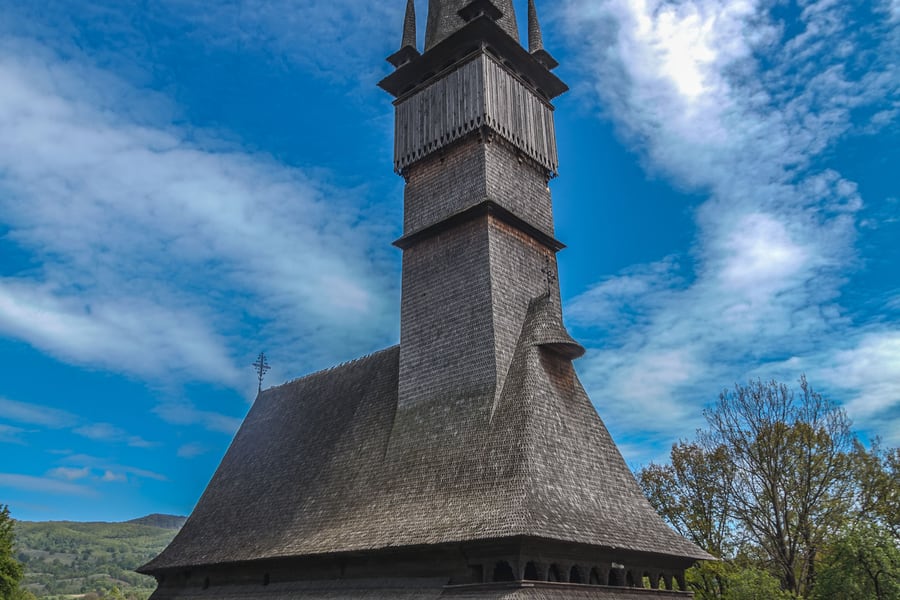
The wooden church at Șurdești
Built in 1721 and one of the eight wooden churches of Maramureș on the UNESCO World Heritage list, this Greek-Catholic church is the picture everyone carries away from the region: oak walls under a double roof, and a shingled spire that seems far too tall for the small village around it. The whole thing is joined without nails, and the carpentry that made it is the same tradition that produces the county's gates.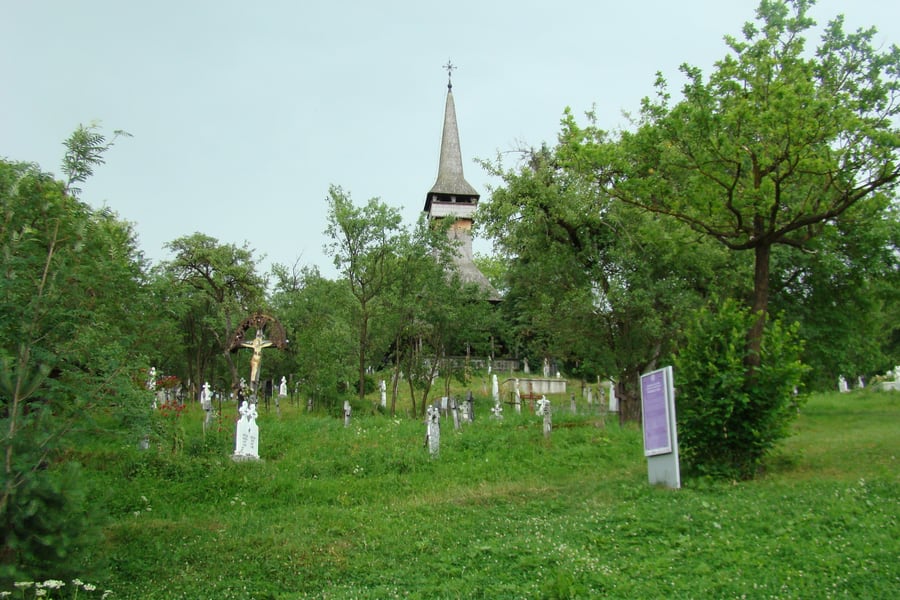 Țetcu Mircea Rareș / Wikimedia Commons · CC BY-SA 3.0 ro · cropped
The church at Poienile Izei
Another of the eight, inscribed by UNESCO in December 1999, and the one to visit if you want the churches as they are actually lived with rather than as monuments. It stands in its own graveyard among fruit trees, iron crosses leaning in the grass, with the village going about its business around it. The interior wall paintings are the reason specialists come; the setting is the reason everyone else does.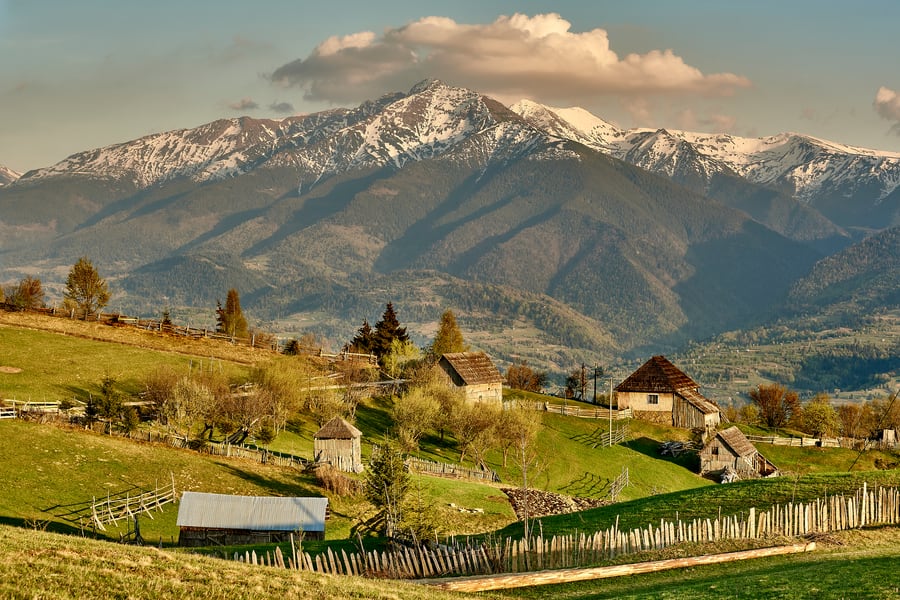 Mihai Lucîț / Wikimedia Commons · CC BY 2.0 · cropped
The Rodna Mountains
The range that closes Maramureș off to the south, and the highest ground in the whole of the Eastern Carpathians — Pietrosul Rodnei reaches 2,303 m. Much of it is a national park and a UNESCO biosphere reserve, with brown bear, chamois and marmot, and hay meadows and wooden barns running right up to the treeline. Serious walking country, and the skyline you see from almost everywhere around Vișeu.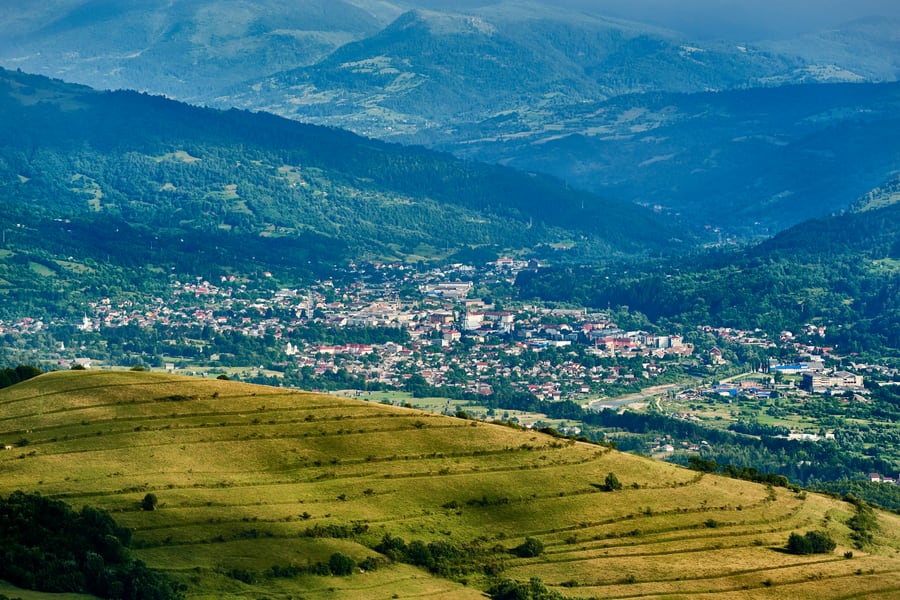 Mihai Lucîț / Wikimedia Commons · CC BY 2.0 · cropped
Vișeu de Sus
A working timber town of about 15,000 people at the confluence of the Vișeu and the Vaser, and the base for the whole trip. It is not a resort and does not pretend to be. Its oddity is the Țipțerai quarter, settled in the eighteenth century by German-speaking Zipser foresters brought in to work the woods — which is why a town deep in Maramureș answers to the name Oberwischau.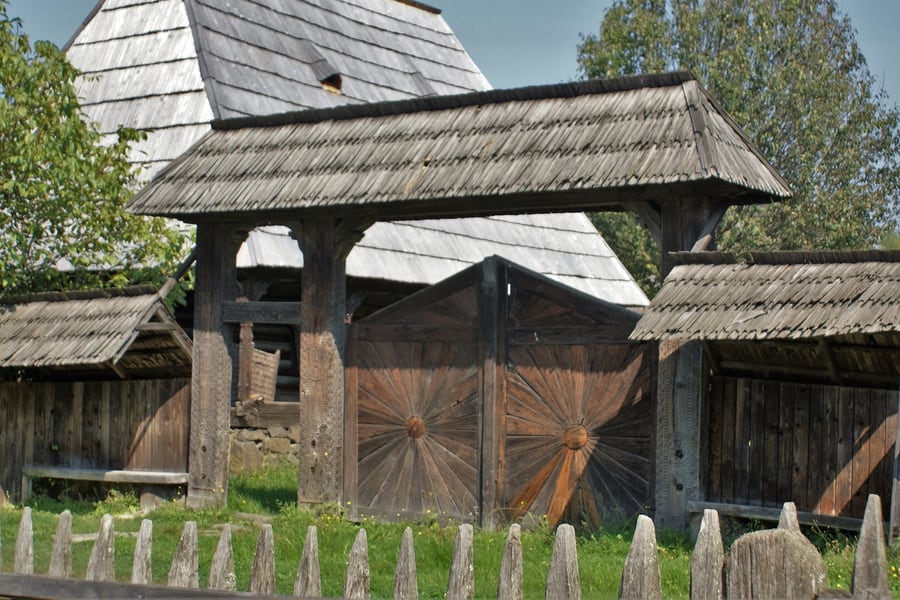 Krasqa / Wikimedia Commons · CC BY-SA 4.0 · cropped
The carved gates
Maramureș announces itself at the roadside. The tall oak gateways in front of the farmhouses are carved with rope twists, rosettes and solar discs, and they are a statement of standing rather than a fence — many enclose nothing much at all. The best are generations old and weathered silver. Sighet's open-air village museum has a fine run of them if you want to see several without driving all day.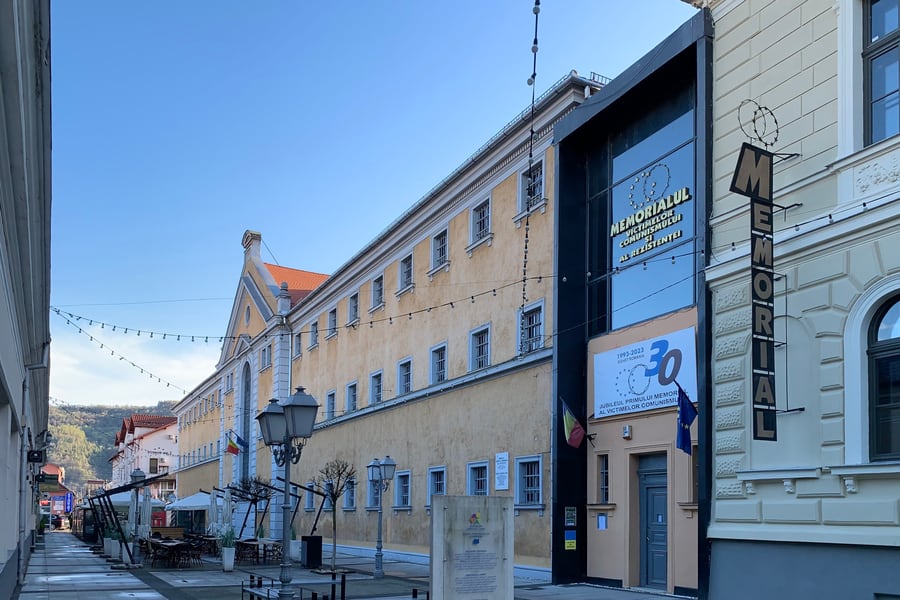 Chainwit. / Wikimedia Commons · CC BY-SA 4.0 · cropped
The Sighet Memorial
The prison the Hungarian authorities built in 1896–97 became, after 1950, where Romania's inter-war political and clerical elite were destroyed. It closed in 1977, fell derelict, and was reopened in 1997 as the Memorial to the Victims of Communism and to the Resistance, on a proposal by the poet Ana Blandiana. The cells are left much as they were. Sobering, and the necessary counterweight to the pastoral villages.Where to Sleep
Because the train leaves early and takes most of the day, it pays to sleep close by the night before — and Maramureș rewards you for staying longer than a single night.
In Vișeu de Sus, a short walk or drive from the depot, are the most convenient beds: simple guesthouses and small pensiuni geared to Mocănița passengers, where an early start and a hearty breakfast are the norm. This is the practical choice if you want to be on the 09:00 train without a long morning drive.
In the surrounding villages — around Ieud, Bârsana, Botiza and the Iza and Mara valleys — the accommodation is where Maramureș really comes into its own: family-run guesthouses in wooden houses, with home cooking, horincă (the local plum brandy) and hosts who farm the land around them. Staying out here turns the trip into an immersion in village life, with the railway as one day among several.
Toward Borșa and the Rodna Mountains, to the east, there are mountain guesthouses and small resorts for walkers and, in winter, skiers — a good base if you want to combine the railway with hiking in the high Carpathians.
As with all our journeys, we point to the shape of the stay rather than specific bookings: a guesthouse in Vișeu de Sus for the early train, or a wooden farmhouse in the villages to slow right down — and the little steam train at the heart of it all.
Questions or corrections
Planning this trip and stuck on something, or spotted a time, fare or detail that has changed? Send us a message about The Vaser Valley Mocănița. We read every one, and we update this page when something has changed.