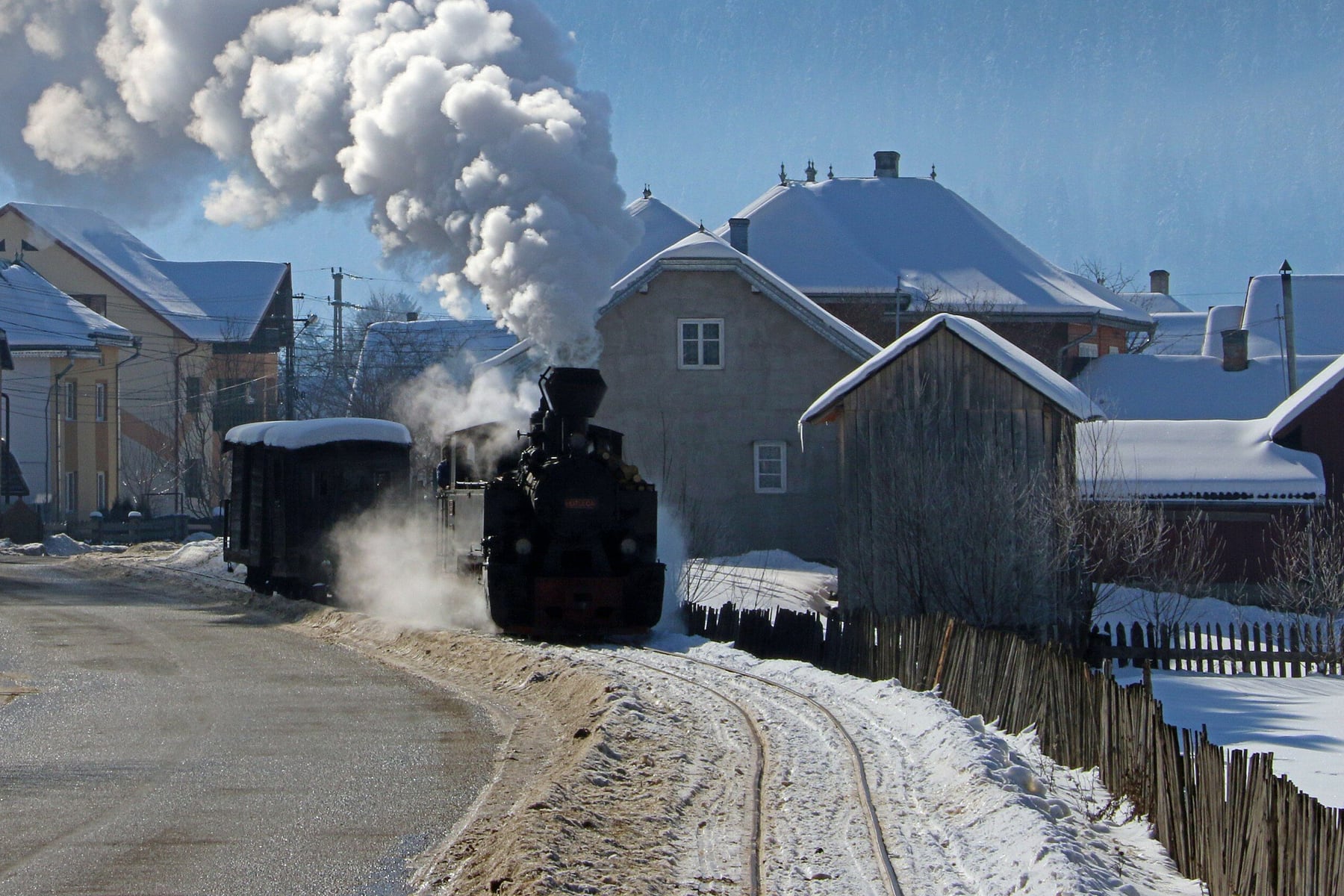
Moldovița Mocănița
Michael Heussler / Wikimedia Commons · CC BY-SA 4.0 · cropped
- DistanceMoldovița–Argel 12.5 km · Moldovița–Vatra Moldoviței 5 km
- DurationArgel 3 hours return · Vatra Moldoviței 1 hour 40 return
- Best seasonAutumn holidays and winter weekends; 2026 season to 20 December
Introduction
Narrow-gauge lines usually give way to standard gauge. At Moldovița it went the other way. The forest railway here had already reopened for visitors, and in 2023 its operator took over the old standard-gauge track of the state railway, CFR, and relaid it at 760 mm. Since 26 April 2024, little trains have run over it for five kilometres down the valley to Vatra Moldoviței, the stop for Moldovița Monastery, whose outside walls were painted in 1537 and are now a World Heritage Site.
The line itself is far older. A Munich sawmill owner, Louis Ortlieb, built it in 1888 to bring logs down to Moldovița, and at its largest, in 1987, it had 73 km of track in the forests of Bukovina. Timber stopped moving by rail after a flood in 2001. From 2005 a group led by Georg Hocevar rebuilt it a section at a time, reaching Argel, 12.5 km up the valley, in 2013.
There are two rides from the station at Moldovița, and both are return trips: a steam train up to Argel, three hours with a meal stop, and a diesel train down to the monastery, an hour and forty minutes with time to go in. Both must be booked ahead.
The Journey
Both rides start at the station of the Mocănița Huțulca in Moldovița. The name is local: mocăniță is the affectionate Romanian word for a little mountain narrow-gauge train, from mocan, a mountain shepherd, and the huțulca is a folk dance named after the Hutsuls, the highland people of Bukovina.
Up the valley to Argel
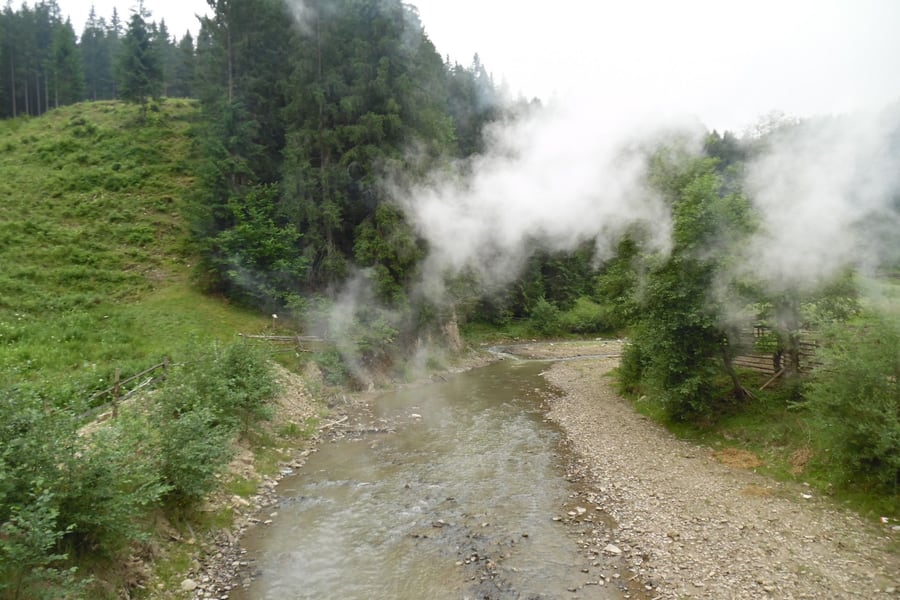
The steam train runs north-west up the Moldovița river, mostly between the road and the water, past farmhouses, hay meadows and spruce forest. It is a ride of about an hour each way, and the line ends at Argel, 12.5 km from the station, where there is an open-air restaurant for the stop before the run back down. The whole trip takes about three hours.
Down to the monastery
The newer line runs the other way, south-east down the valley to Vatra Moldoviței. It follows the course of CFR's old standard-gauge line, which the narrow-gauge operator took over and relaid at 760 mm during 2023; the first trains ran in April 2024. It is about 25 minutes each way behind a diesel locomotive, and the break at Vatra Moldoviței is long enough to visit the monastery.
The engines
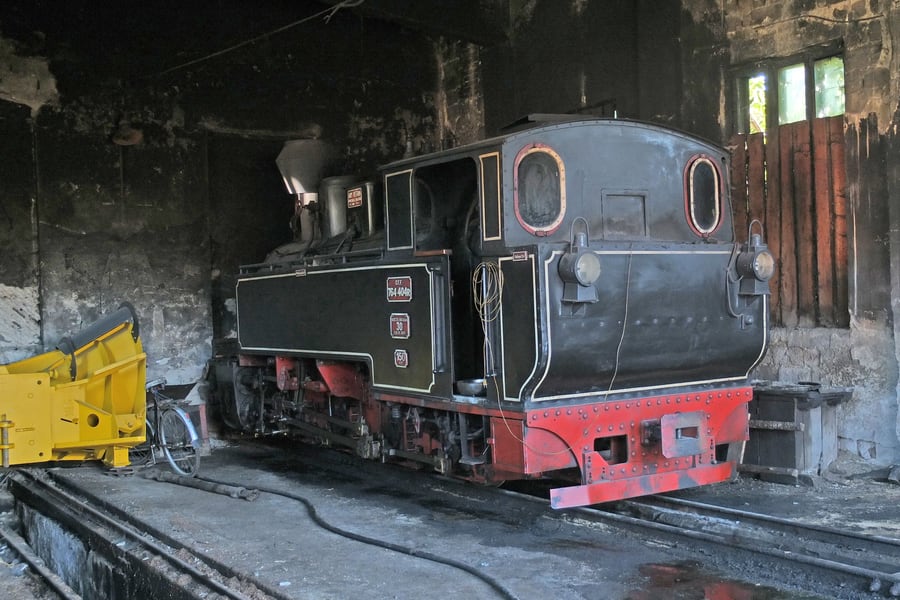
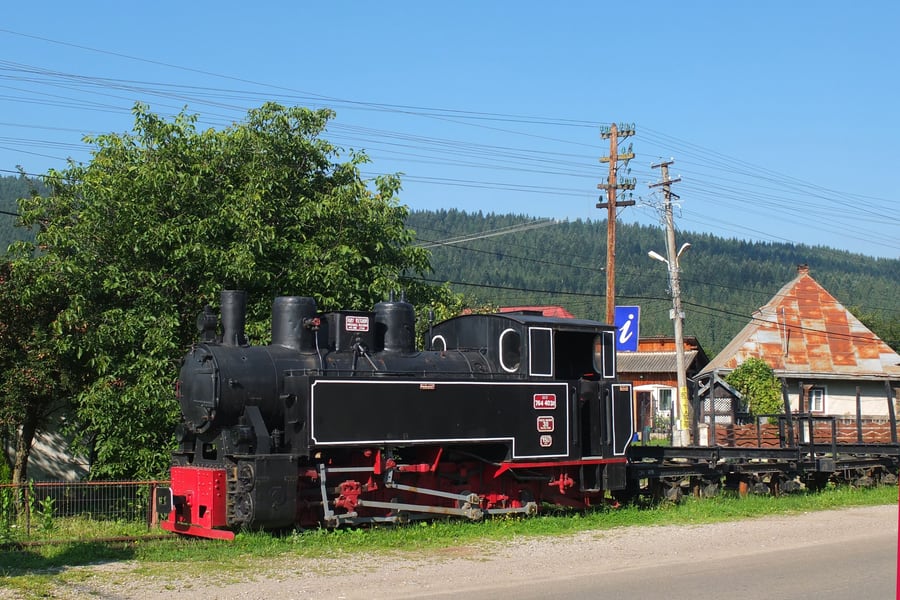
The steam engine usually in charge is 764-404R, named Huțulca, and it is younger than it looks: it was built in 1984. Romania's forest railways kept steam long after the rest of Europe, because diesel fuel was rationed and the sawmills had waste wood to burn for nothing, and from 1982 to 1987 the tractor works at Reghin built twelve new steam engines to a design first produced at Reșița in the 1950s. 764-404R worked in Romania until 1992 and spent some years at Stainz in Austria before coming to Moldovița. Its sister 764-403R, built the same year, stands as a monument at Vatra Moldoviței.
Along the route
 Herbert Ortner / Wikimedia Commons · CC BY 4.0
The depot at Moldovița
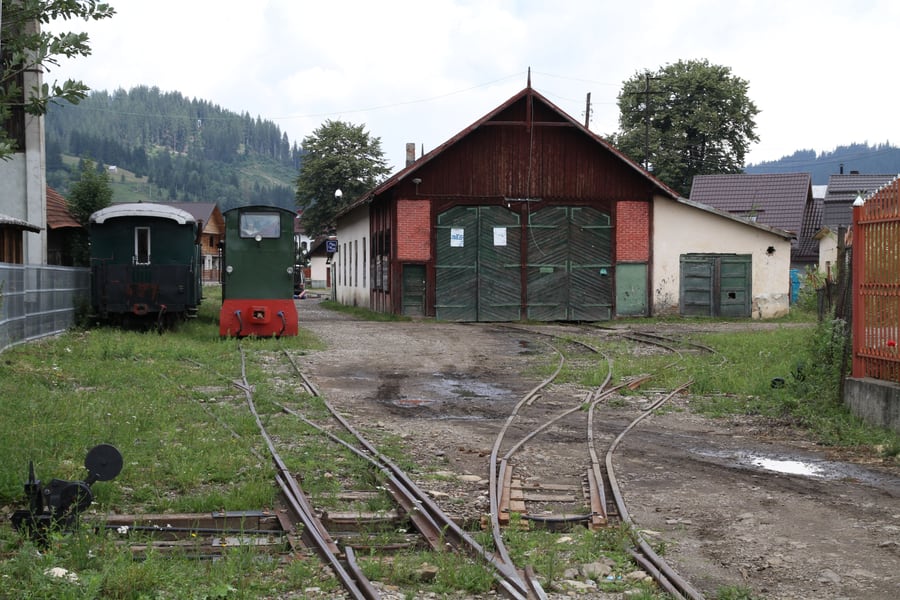
Moldovița is the line's base, where the forest railway began in 1888. The engine shed in the depot yard is where 764-404R is kept between trips. Book ahead, and collect the tickets at the station office at least fifteen minutes before the train.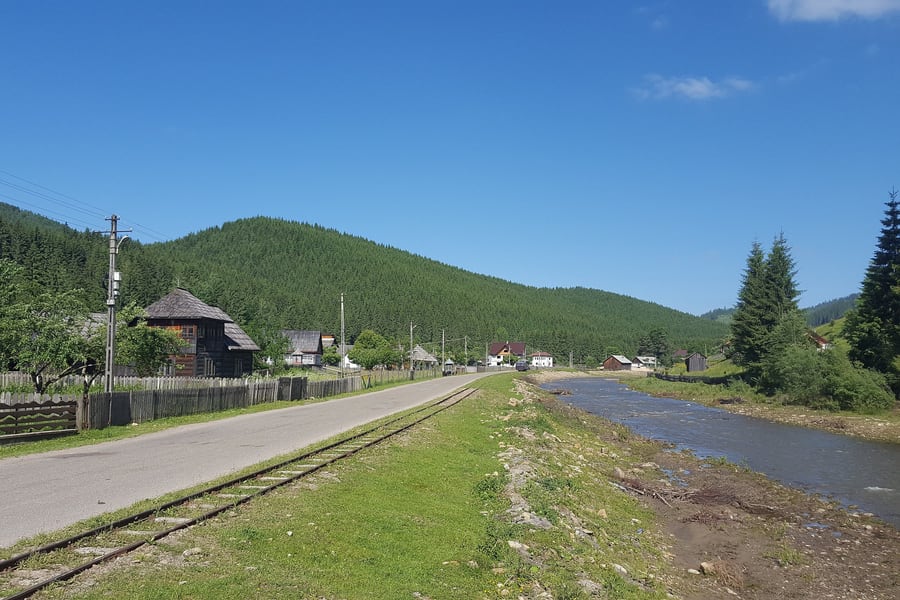 Jan Pešula / Wikimedia Commons · CC0 · cropped
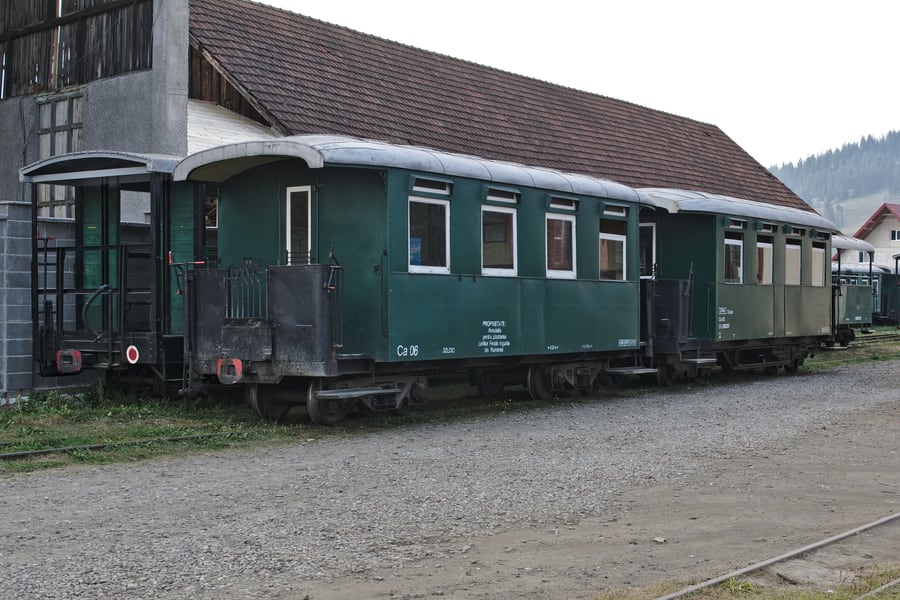
The road to Argel
For most of its 12.5 km the steam line keeps between the road and the Moldovița river, climbing slowly past wooden farmhouses and spruce. At Argel, the end of the line, an open-air restaurant fills the stop before the run back down.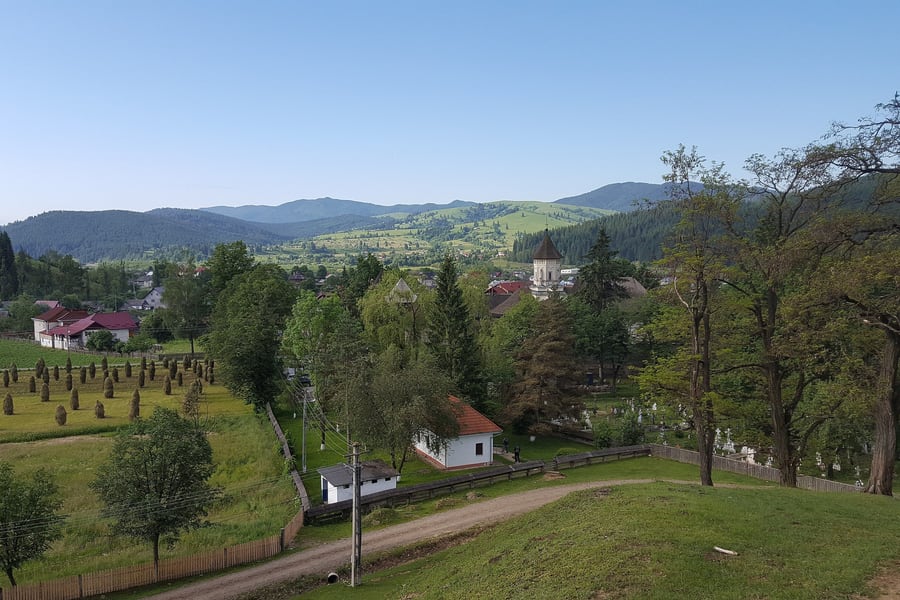 Jan Pešula / Wikimedia Commons · CC0 · cropped
Vatra Moldoviței
The diesel line, laid on CFR's old standard-gauge track and opened in April 2024, runs five kilometres down the valley to this village. Moldovița Monastery is here, and the stop is long enough to go in.A bit of history
Culture & experiences along the way
 DimiTalen / Wikimedia Commons · CC0 · cropped
The siege on the wall
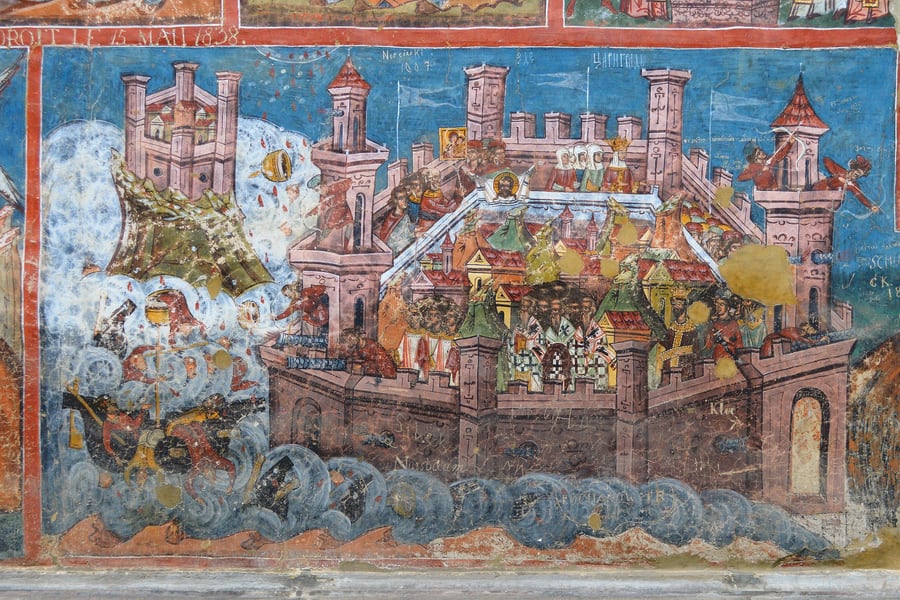
Toma of Suceava painted Moldovița's outside walls in 1537. One scene is the Siege of Constantinople: it honours the Virgin's rescue of the city from the Persians in 626, but the besiegers are painted as the Ottomans who took it in 1453, a message for a principality then fighting them. Stand back from the wall and read it scene by scene.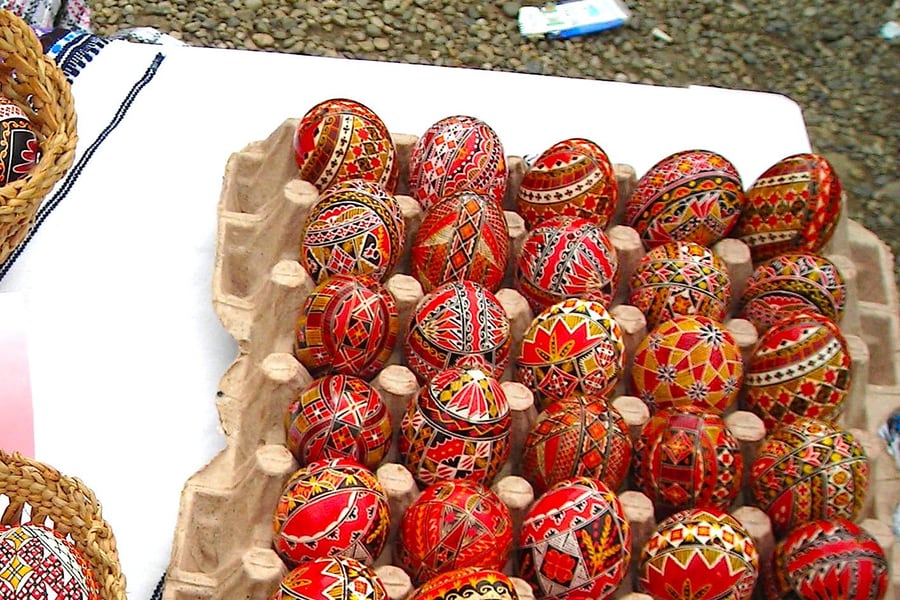 Răzvan Mihăilescu / Wikimedia Commons · CC BY 2.5 · cropped
Painted eggs
Decorating eggs for Easter is a Bukovina craft, drawn in beeswax and dyed. In Moldovița itself, the egg museum founded by the artist Lucia Condrea in 2007 shows more than 5,000 in 41 cases on two floors: her own work, very old eggs from the Hutsul villages, and eggs sent by makers from other countries. Romaniancook / Wikimedia Commons · CC BY-SA 4.0 · cropped
Ciorbă rădăuțeană
The soup named after Rădăuți, 18 km from Sucevița, is a recent classic. Cornelia Dumitrescu made it there as a chicken version of tripe soup, and the county tourist office registered her recipe on 14 February 1982. It is finished with cream, egg and vinegar, and eaten with pickled hot peppers.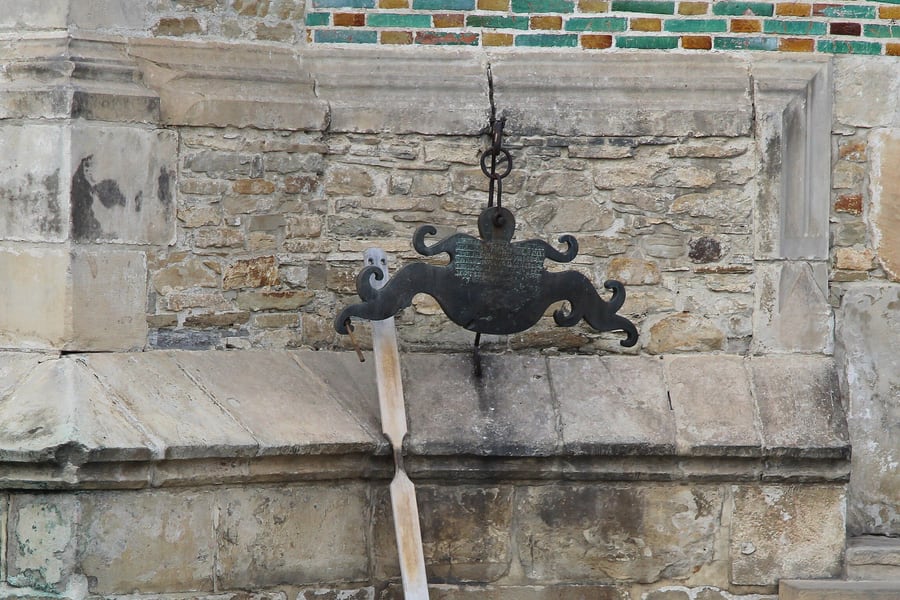 GerritR / Wikimedia Commons · CC BY-SA 4.0 · cropped
The toaca
Orthodox monasteries call to prayer with a semantron, in Romanian the toacă: a long wooden board struck with a mallet, and a smaller piece of iron or brass hung near the church door. Listen for it before a service. This pair hangs at Neamț Monastery.Timetables
Trains run on booked dates only, from the Mocănița Huțulca station in Moldovița, and every trip is a return. Dates with no free seats at all are left out of the booking calendar.
| Ride | Traction | Departures from Moldovița | Round trip |
|---|---|---|---|
| Moldovița–Argel | Steam | 10:00 · 14:00 | 25 km · about 3 hours |
| Moldovița–Vatra Moldoviței | Diesel | 11:00 · 13:00 · 15:00 · 17:00 | 10 km · 1 hour 40 minutes |
The 2026 season
On 20 October the calendar offered both rides every day from 24 October to 1 November, then weekends through November and December, plus Monday 30 November and Tuesday 1 December, with the last trains on Sunday 20 December. No 2027 dates were open yet. In cold weather the trains run with closed, heated carriages. In exceptional cases a diesel replaces the steam engine, and bad weather can delay or cancel a trip.
Departures and dates read on 20 October 2026 from the operator's booking calendar (opens in a new tab) for 24 and 28 October, 7 and 30 November and 5 and 20 December 2026.
Tickets
Seats must be reserved in advance on the operator's website, which shows the free seats left on each departure. Collect the tickets at the station ticket office at least 15 minutes before the train leaves, or the booking is cancelled. Payment at the office is in cash only.
The steam ride to Argel costs 60 lei for an adult and 35 lei for a child; the diesel ride to Vatra Moldoviței costs 30 lei and 20 lei. Children under three travel free if they sit on a parent's lap. Parking behind the station costs 9 lei. Fares in Romanian lei, as of October 2026.
Book your tickets
Steam to Argel
60 lei adult · 35 lei child
The steam train up the valley to Argel and back, about three hours with a meal stop at the far end.
Book Tickets (opens in a new tab, on Mocănița Huțulca Moldovița)via Mocănița Huțulca MoldovițaDiesel to the monastery
30 lei adult · 20 lei child
The diesel train down to Vatra Moldoviței and back, an hour and forty minutes with time to visit Moldovița Monastery.
Book Tickets (opens in a new tab, on Mocănița Huțulca Moldovița)via Mocănița Huțulca MoldovițaRail Passes
No rail pass covers the Mocănița Huțulca. Its operator is not among the companies in Interrail's table for Romania, so seats are bought from the operator.
A pass does cover CFR Călători's trains into Bukovina. On the line from Suceava, InterRegio trains reach Vama in a little over an hour, with a compulsory reservation the pass does not include; Moldovița is reached from there by road. For this trip alone a pass is not worth buying.
Checked October 2026 against interrail.com (opens in a new tab) and CFR Călători's booking site (opens in a new tab).
Places to Visit
Moldovița Monastery is at the end of the diesel line. Sucevița lies over the Ciumârna pass from the Moldovița valley, and Voroneț and Humor are at Gura Humorului.
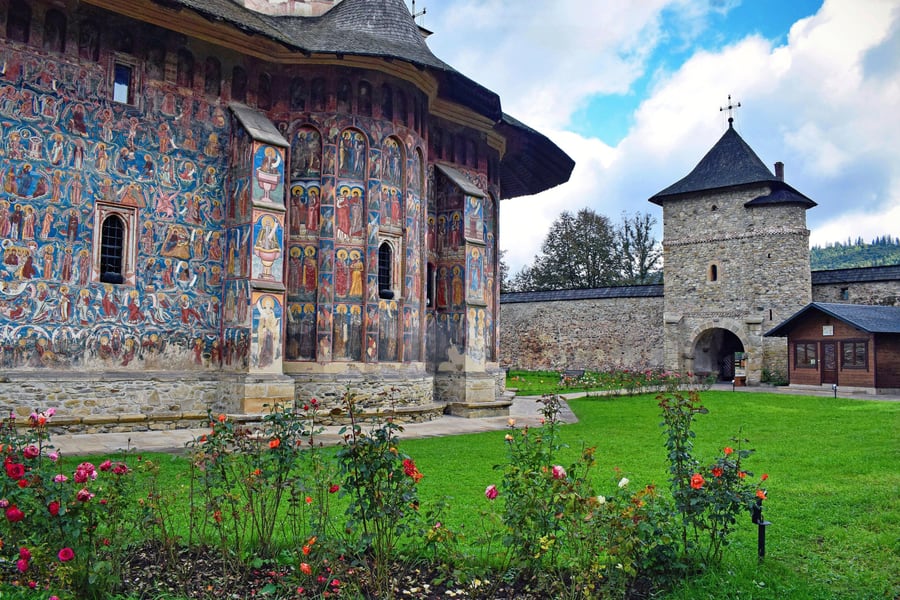 Jocelyn Erskine-Kellie / Wikimedia Commons · CC BY-SA 4.0 · cropped
Moldovița Monastery
Built in 1532 by Petru Rareș, the illegitimate son of Stephen the Great, inside walls meant to hold off the Ottomans. In 1537 Toma of Suceava covered the church outside and in with paintings in yellow and blue: a procession of saints towards the Virgin and Child, the Tree of Jesse and the Siege of Constantinople. It has been on UNESCO's World Heritage List since 1993.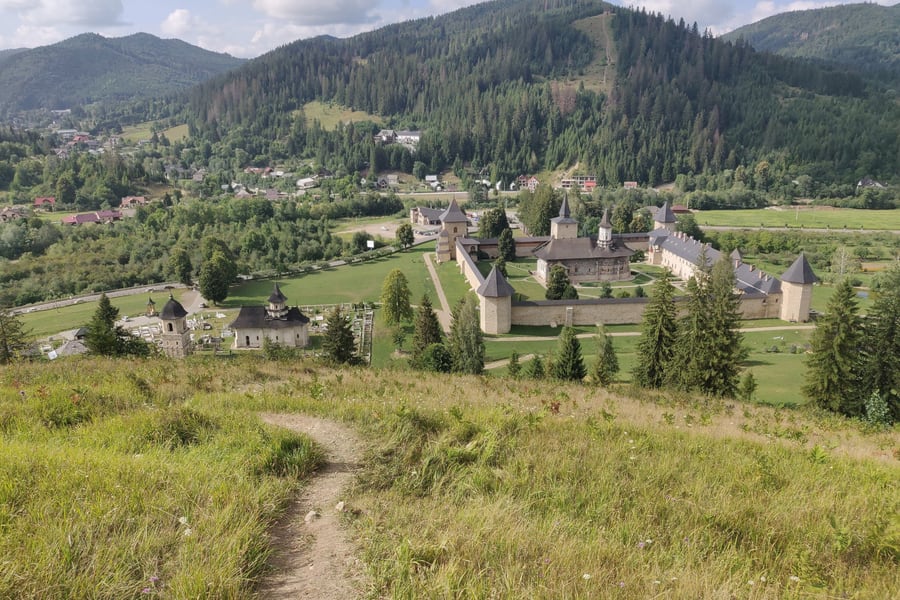 Strainu / Wikimedia Commons · CC BY-SA 4.0 · cropped
Sucevița Monastery
The Movilă brothers built it in 1585 as a fortified court as well as a convent: a nearly square enclosure 100 by 104 metres, with walls six metres high and three thick and a tower at each corner. Its paintings, from about 1601, are among the last in the Moldavian style. The museum in the walls holds the embroidered tomb covers of Ieremia and Simion Movilă.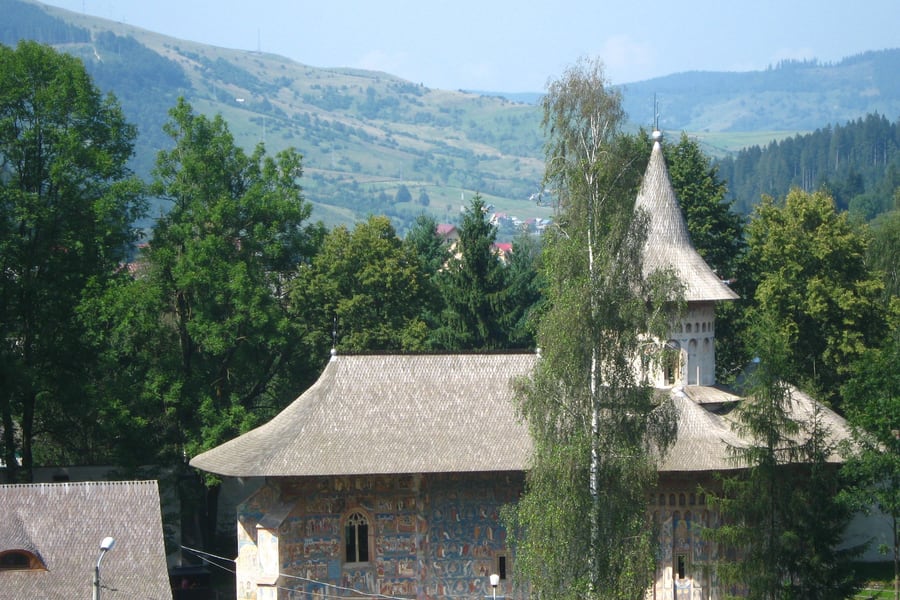 Emil71 / Wikimedia Commons · CC BY-SA 3.0 · cropped
Voroneț Monastery
Stephen the Great built the church in three months and three weeks in 1488, after his victory at Vaslui. The outside walls were painted after 1547, when Metropolitan Grigorie Roșca added the porch, and their deep blue has a name of its own in Romania: Voroneț blue. The church is often called the Sistine Chapel of the East.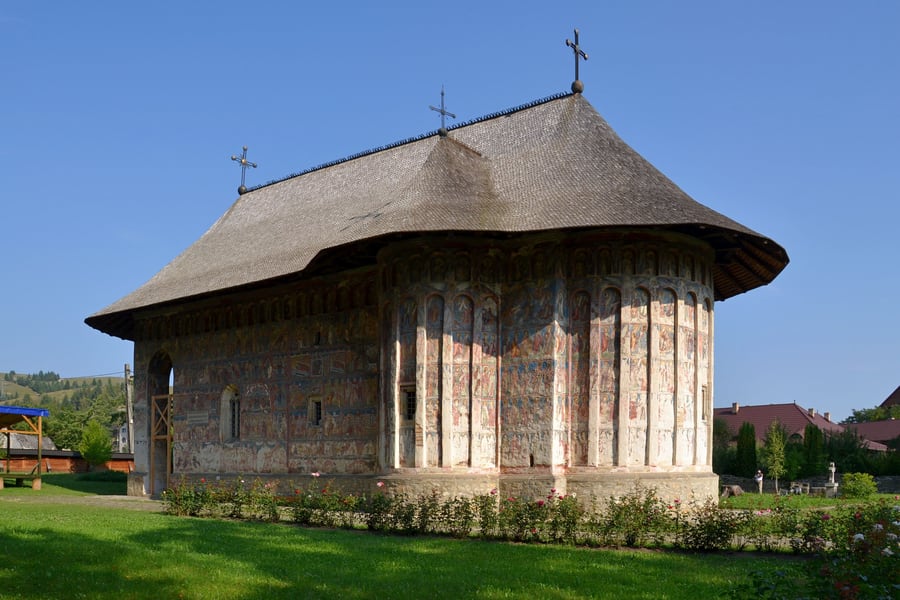 Pudelek / Wikimedia Commons · CC BY-SA 4.0 · cropped
Humor Monastery
Built in 1530 by Petru Rareș and his chancellor Teodor Bubuiog on the site of a monastery of about 1415, and painted in 1535 by Toma of Suceava, the same master as Moldovița. Its frescoes are mostly reddish brown and among the best kept. Closed in 1786, the monastery reopened in 1990 and is a convent today.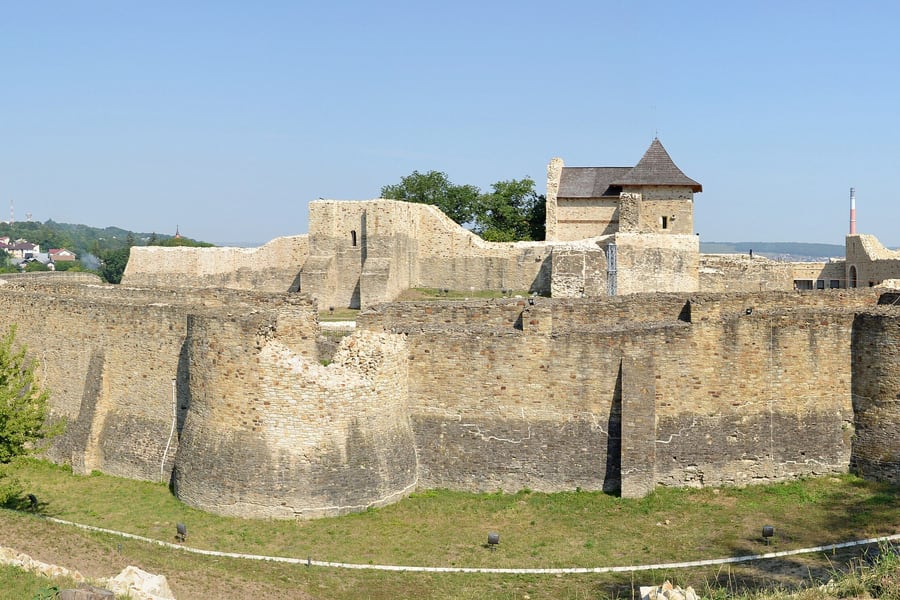 Pudelek / Wikimedia Commons · CC BY-SA 4.0 · cropped
The Seat Fortress of Suceava
The capital's fortress was built by Petru Mușat at the end of the 14th century on a spur 70 metres above the Suceava valley, and strengthened by Stephen the Great. In 1476 it held out against the army of Sultan Mehmed II. It was finally destroyed in 1675, and its consolidated walls are now open as a museum.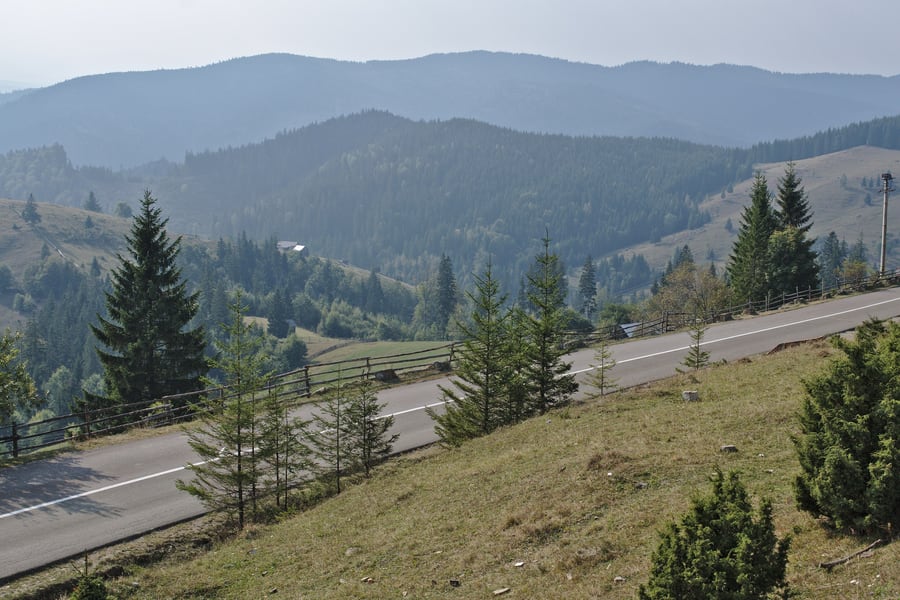 Alexander Klink / Wikimedia Commons · CC BY 4.0 · cropped
The Ciumârna pass
The road from the Moldovița valley to Sucevița climbs over the Obcina Mare ridge at 1,100 metres, through spruce forest and hill pasture. At the top a monument in the shape of a hand, the Palma, recalls the day in 1968 when the two road crews building the pass met there and shook hands.Where to Sleep
Sucevița and Gura Humorului both make a base for the painted monasteries and the train.
Where to stay
Hotel Sucevița
About 200 metres from Sucevița Monastery
On the road through Sucevița, with double, twin and triple rooms and apartments, some with balconies.
Check Availability (opens in a new tab, on hotelsucevita.ro)via hotelsucevita.roHotel Best Western Bucovina
On Piața Republicii, in the centre of Gura Humorului
A large hotel with 220 beds, in the town that holds Voroneț and 5 km from Humor.
Check Availability (opens in a new tab, on bestwesternbucovina.ro)via bestwesternbucovina.roQuestions or corrections
Planning this trip and stuck on something, or spotted a time, fare or detail that has changed? Send us a message about Moldovița Mocănița. We read every one, and we update this page when something has changed.