The Olt Valley Line
Phil Richards / Wikimedia Commons · CC BY-SA 2.0 · cropped
- DistanceSibiu–Râmnicu Vâlcea · 99 km
- Duration2½ hours on the Regio-Express, about 3 hours on the Regio
- Best seasonAll year; the morning trains have the pass in daylight year-round
Introduction
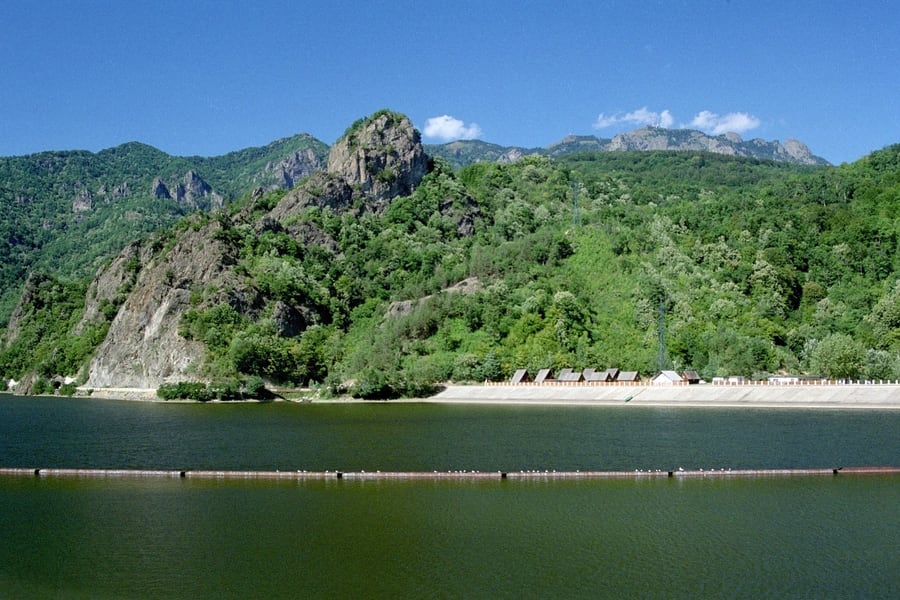
In 1899 the Paris works of Daydé & Pillé made a steel bridge for the new railway down the Olt: a riveted span of about 200 metres, laid on a curve across the river at Proieni, and sold with a guarantee of a hundred years. In 1999, with the century up, the bridge was out of warranty and stopping the trains on it was recommended. Work on a new bridge began alongside it three years later, and the traffic moved across. The old one is still there, a listed monument, its piers standing in the reservoir that the Gura Lotrului power station raised in 1984.
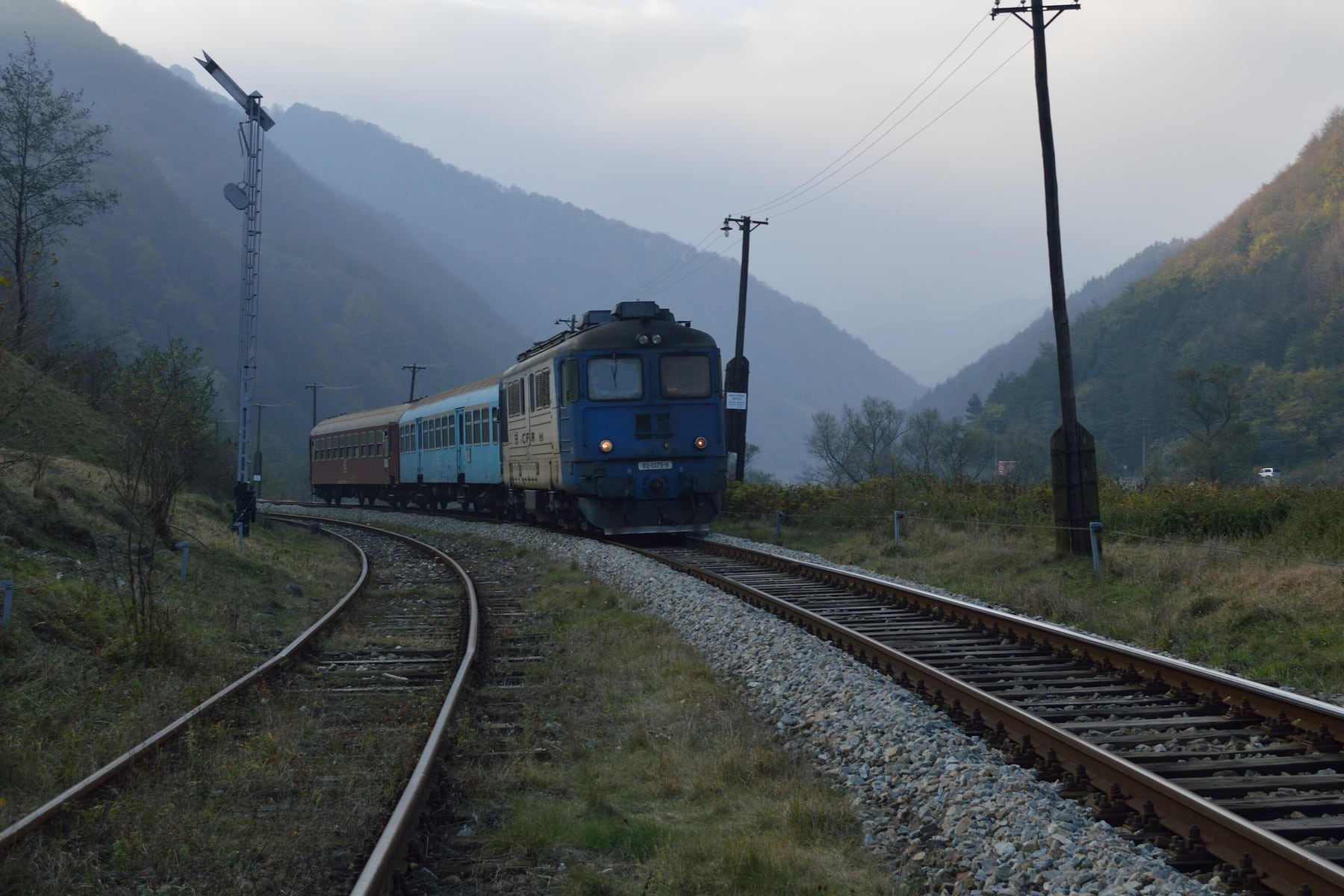
The line it served was built to join two countries. Under an 1891 convention, Romania brought its railway up the Olt from Râmnicu Vâlcea to meet the Austro-Hungarian line from Sibiu at Turnu Roșu, then a customs post on the frontier, and the section through the mountains opened on 1 August 1901. Today it is CFR Călători's 99 km from Sibiu to Râmnicu Vâlcea: six trains a day each way, through the Turnu Roșu pass and the Cozia mountains, in two and a half to three hours.
The Journey
The train leaves Sibiu to the south-east and runs for less than half an hour across the plain to Tălmaciu, km 18. Four kilometres on, at Podu Olt, the line from Sibiu to Brașov goes off along the Olt to the east, and the line to Râmnicu Vâlcea turns south with the river into the mountains.
The old frontier
Turnu Roșu, km 25, is named after the Red Tower, a castle in the pass. The station took the name first; the village of Porcești took it from the station in 1964. Until 1918 this was the frontier between Hungary and Romania. Its crossing point was a little further on at Lazaret, named for the quarantine station where, in times of epidemic, travellers from the south were held for weeks before they were let into the Habsburg lands.
Through the pass
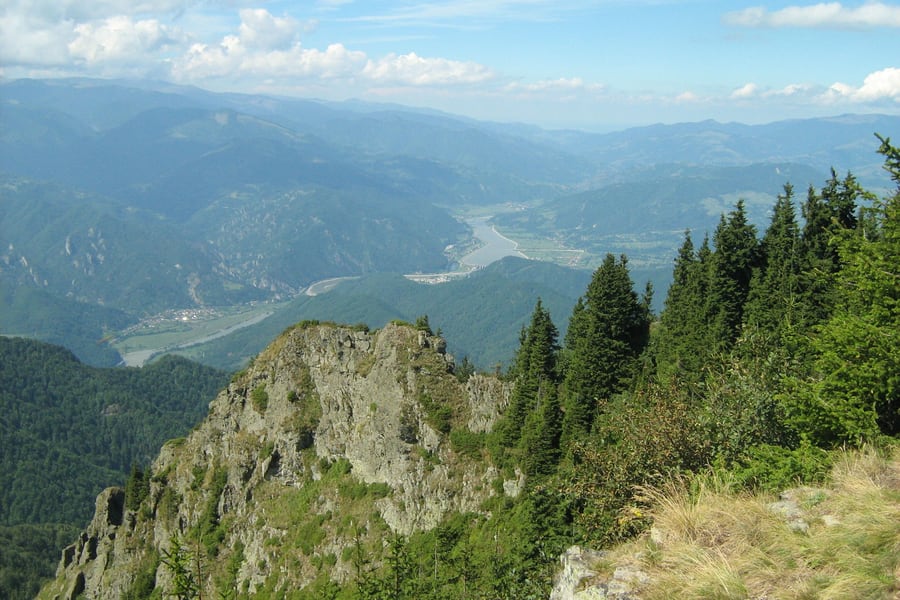
Beyond Turnu Roșu the valley closes in, and the Olt and the line run together between the Făgăraș mountains and the Lotru. The Regio stops at every halt, Valea Mărului, Râu Vadului, Câineni; the Regio-Express takes about forty minutes from Turnu Roșu to Câineni, km 46. At Cornet, km 58, the railway goes in a tunnel beneath the walls of a monastery of 1666.
Lotru, km 67, is the station for Brezoi and the Lotru valley. It was built between 1898 and 1901 to Mihail Râmniceanu's design, three matching houses joined into one, and Prince Ferdinand came to see the works in July 1898. A narrow-gauge line ran from here up the Lotru to Voineasa from 1909 until the 1990s. Just before Lotru, at Proieni, the train crosses the Olt beside the bridge of 1899.
Cozia and the way out
The line runs on under the Cozia mountains. From Cozia, km 71, to Râmnicu Vâlcea it is double track, opened in December 1981 and laid higher up the slope than the line of 1901, because the hydro plant at Mănăstirea Turnu was to flood the old one. Mânăstirea Turnu, km 75, is a halt named after the monastery beside it. At Călimănești, km 83, the valley opens, and the train reaches Râmnicu Vâlcea at km 99. That last stretch was the first part built: Râmnicu Vâlcea to Călimănești opened on 27 November 1898.
The trains
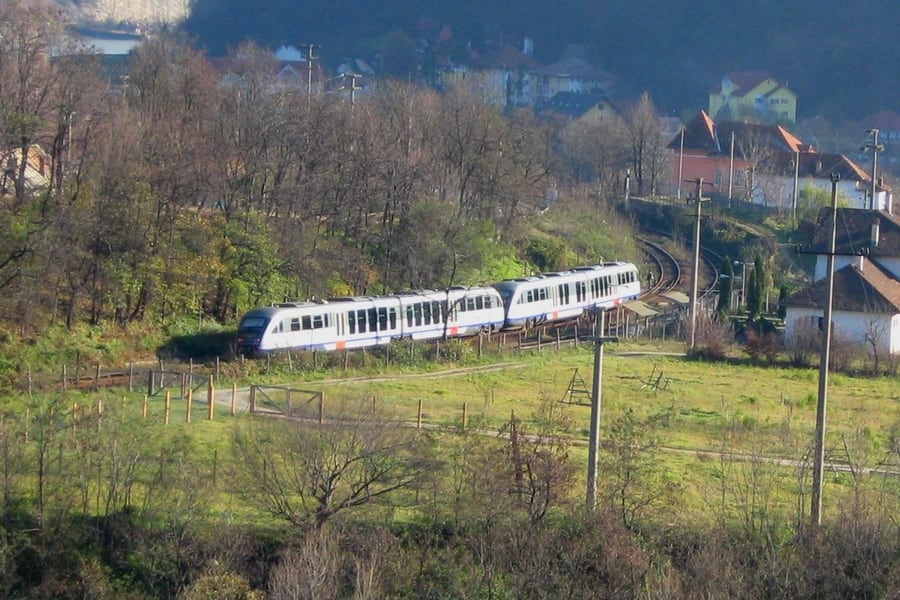
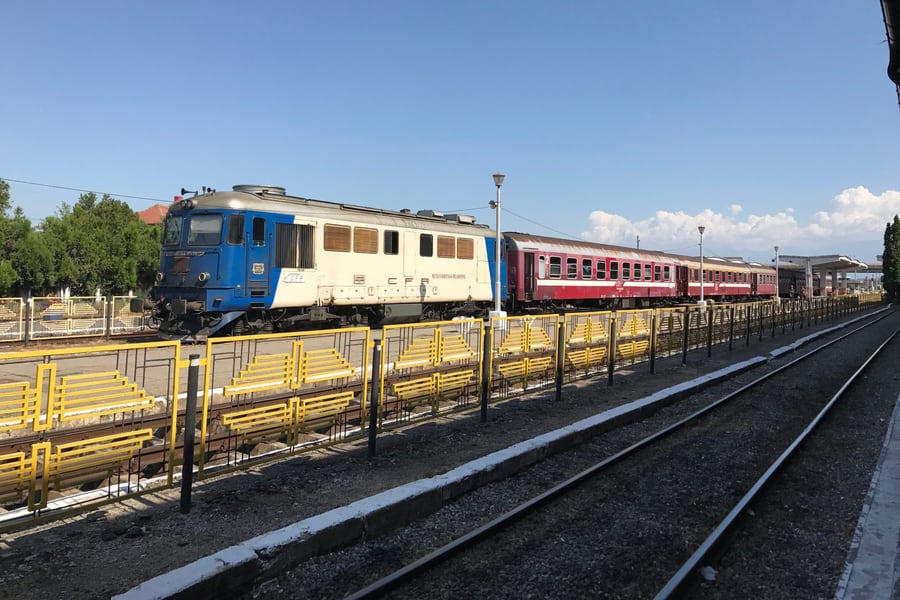
The line is not electrified. CFR Călători runs it with diesel trains: the Regio-Express as a single unit with first and second class, and the Regios in second class. CFR's Class 96, the Siemens Desiro diesel units in service since 2003, have worked here, and so have locomotive-hauled Regios behind the LDE 2100, the diesel-electric built at Electroputere in Craiova under Swiss licence from 1960.
When the road down the Olt valley was closed from 9 July to 9 August 2024, CFR Călători doubled the capacity of its commuter trains between Sibiu and Râmnicu Vâlcea and added four more.
Along the route
 Krzysztof Ziarnek, Kenraiz / Wikimedia Commons · CC BY-SA 4.0 · cropped
The Turnu Roșu pass
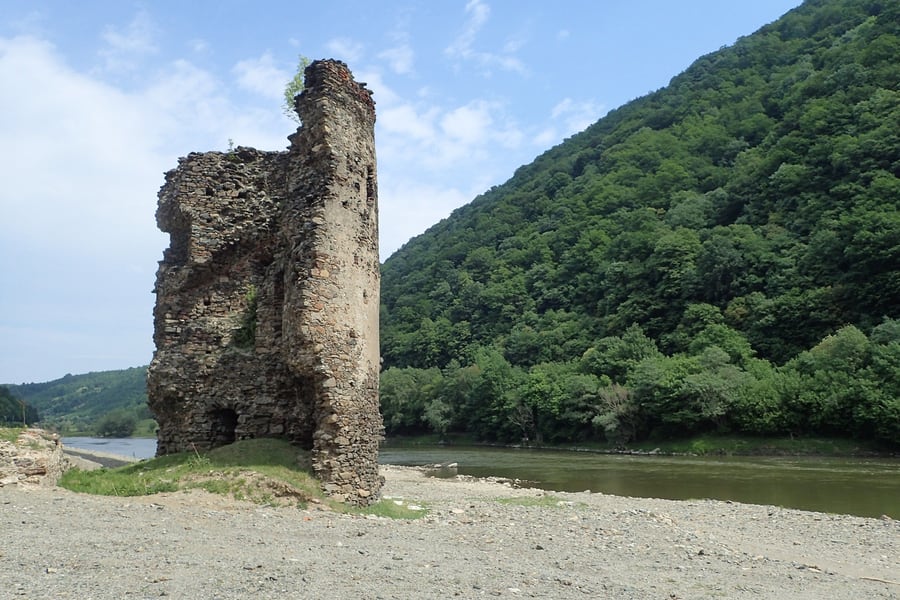
Below Boița the line enters the pass that was the frontier between Hungary and Romania until 1918. Beside the Olt stands the Broken Tower, one of the old defences of the pass, named for the ruin it has been since the late seventeenth century.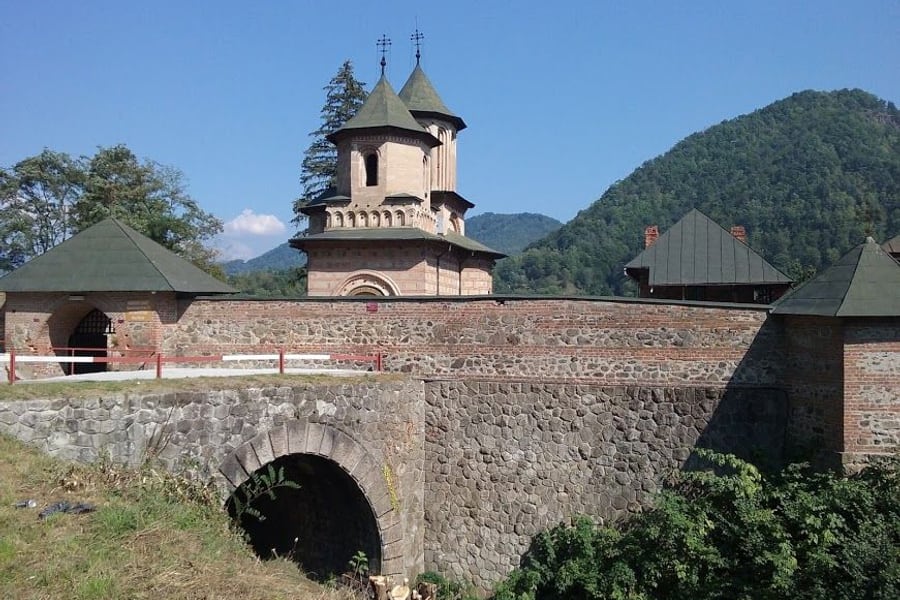 Munteanu Anca / Wikimedia Commons · CC BY-SA 4.0 · cropped
Under Cornet monastery
At km 58 the railway runs in a tunnel beneath the walls of Cornet monastery, founded in 1666. The tunnel and Cornet station are both listed historic monuments, built for the line that opened in 1901.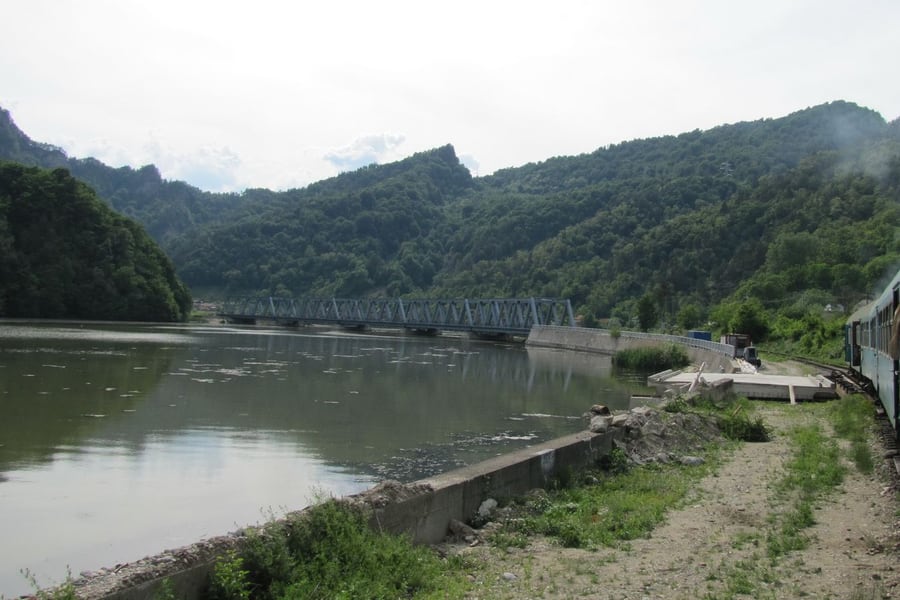 Mishu88 / Wikimedia Commons · CC BY-SA 4.0 · cropped
The Proieni bridge
Near Lotru the line crosses the Olt at Proieni. The curved bridge made in Paris in 1899 and guaranteed for a century stands retired beside the one that replaced it, its piers in the Gura Lotrului reservoir.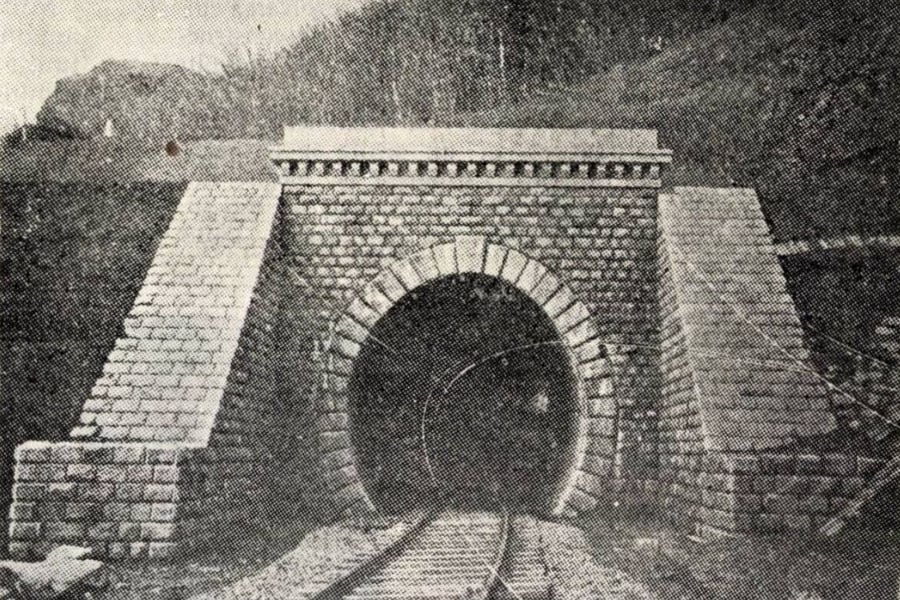 Unknown photographer / Wikimedia Commons · public domain · cropped
Cârligu Mic
In December 1981 the line between Cozia and Călimănești was moved uphill and doubled, for the hydro plant at Mănăstirea Turnu. Cârligu Mic, a 451-metre tunnel of the old line, shown here before 1958, was abandoned and flooded.A bit of history
Culture & experiences along the way
 Andrei Stroe / Wikimedia Commons · CC BY-SA 4.0 · cropped
Cozia Monastery
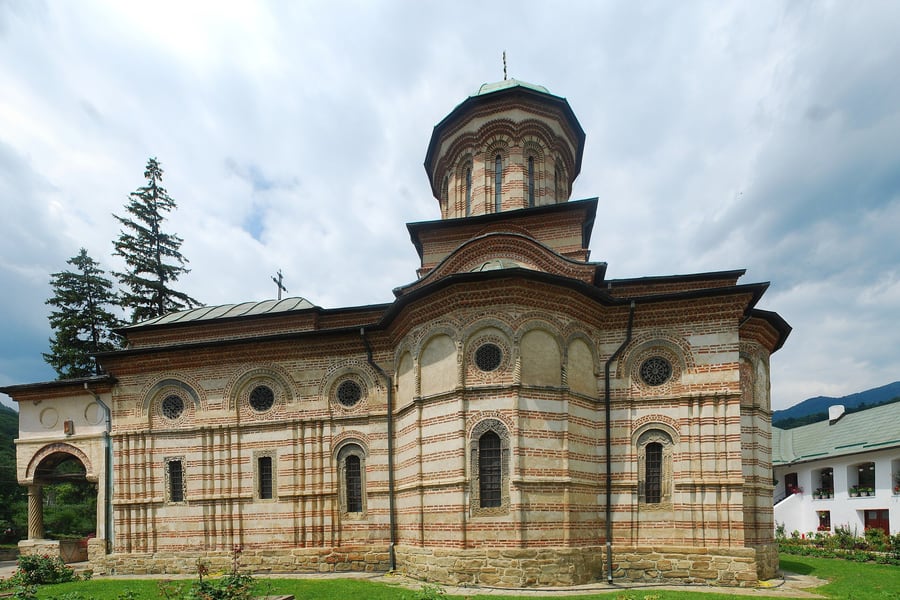
Mircea the Elder founded it on the right bank of the Olt, consecrated its church in 1388 and is buried inside. The Holy Trinity church is built in bands of stone and brick, with frescoes of 1390–91; the infirmary church dates from 1543, and Constantin Brâncoveanu added a veranda, fountain and chapel in 1707.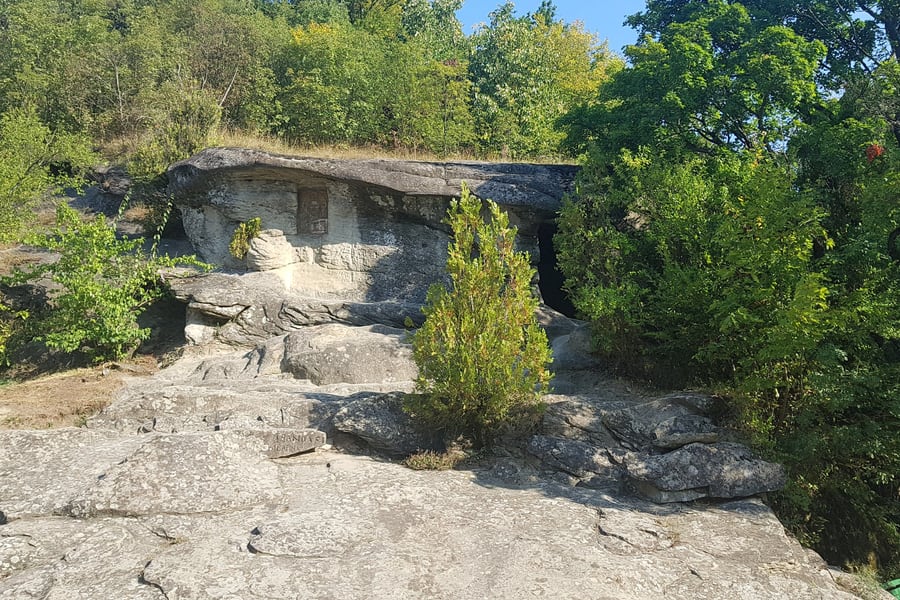 Leontin l / Wikimedia Commons · CC BY-SA 4.0 · cropped
The hermit cells at Turnu
Across the Olt from Cozia, monks withdrew from about the fifteenth century to live in huts and in cells cut into the rock, as the hermits Daniil and Misail did. A stone church followed after 1676, and the railway gave the monastery its own halt, Mânăstirea Turnu, at km 75.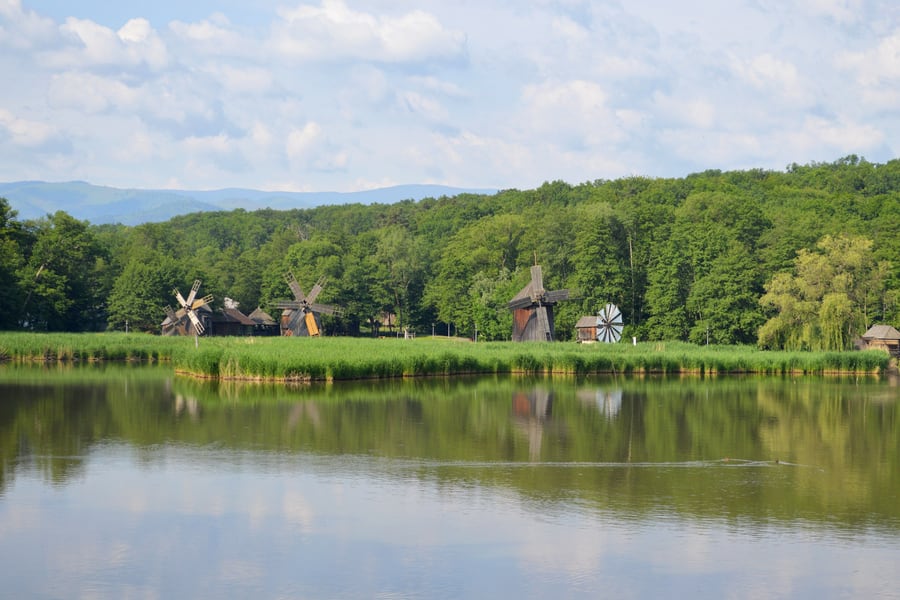 DimiTalen / Wikimedia Commons · CC0
The ASTRA open-air museum
In the Dumbrava forest outside Sibiu, a museum of folk technology founded in 1963 opened in 1967, and from 1971 began adding houses and community buildings to its workshops and mills. Its windmills stand around the lake. It carries on the museum the ASTRA association opened in Sibiu in 1905.Timetables
CFR Călători runs six direct trains a day each way between Sibiu and Râmnicu Vâlcea, two of them in the small hours. The Regio-Express (R-E) trains run on to Craiova or Caracal and carry first and second class with a compulsory seat reservation; the Regios (R) are second class, and R 2063 and R 2070 also sell only with a reservation. On Saturdays R-E 2012 and R-E 2018 do not run.
Sibiu to Râmnicu Vâlcea
| Train | Runs | Sibiu | Turnu Roșu | Câineni | Lotru | Călimănești | Râmnicu Vâlcea |
|---|---|---|---|---|---|---|---|
| R-E 2012 | Not Sat | 06:55 | 07:35 | 08:15 | 08:44 | 09:08 | 09:30 |
| R 2064 | Daily | 07:52 | 08:43 | 09:28 | 10:04 | 10:33 | 10:59 |
| R-E 2014 | Daily | 15:06 | 15:56 | 16:37 | 17:11 | 17:38 | 18:00 |
| R 2070 | Daily | 17:05 | 17:59 | 18:49 | 19:23 | 19:51 | 20:17 |
Râmnicu Vâlcea to Sibiu
| Train | Runs | Râmnicu Vâlcea | Călimănești | Lotru | Câineni | Turnu Roșu | Sibiu |
|---|---|---|---|---|---|---|---|
| R 2063 | Daily | 09:33 | 10:00 | 10:29 | 11:05 | 11:48 | 12:42 |
| R-E 2016 | Daily | 10:32 | 10:54 | — | 11:45 | 12:23 | 13:05 |
| R 2067 | Daily | 16:12 | 16:39 | 17:08 | 17:44 | 18:25 | 19:19 |
| R-E 2018 | Not Sat | 17:32 | 17:54 | 18:18 | 18:51 | 19:29 | 20:12 |
R-E 2012 and R-E 2014 continue to Craiova; R-E 2016 and R-E 2018 start there, at 07:48 and 14:53. R 2063 starts at Piatra Olt at 07:00, and R 2070 runs on to Piatra Olt. In the dark, R-E 2010 leaves Sibiu at 02:02 and R 2062 at 02:45; R 2061 leaves Râmnicu Vâlcea at 03:30 and R-E 2011 at 21:30, reaching Sibiu at 00:11.
Times for Tuesday 10 November 2026, checked against Saturday 14 and Sunday 15 November and Tuesday 27 October, read on 20 October 2026 from CFR Călători's booking site (opens in a new tab). The timetable year changes in mid-December.
Tickets
The fares are small. For a journey on 10 November 2026, CFR Călători's booking site quoted an adult 18.90 lei from Sibiu to Râmnicu Vâlcea on the Regio, second class with no reservation. The Regio-Express, with its reservation, is 23.40 lei in second class and 32.85 lei in first, and R 2070, a Regio sold with a reservation, is 23.40 lei. The site warns that its prices can include advance-purchase discounts.
Buy online at CFR Călători's booking site up to 30 days ahead, in its app or at the station. Fares in Romanian lei, as of October 2026.
Book your tickets
Regio · Sibiu–Râmnicu Vâlcea
18.90 lei second class
The stopping train down the Olt in about three hours, calling at every halt, with no reservation needed.
Book Tickets (opens in a new tab, on CFR Călători)via CFR CălătoriRegio-Express · Sibiu–Râmnicu Vâlcea
23.40 lei second class · 32.85 lei first
The faster train through the pass in about two and a half hours, with a seat reservation included.
Book Tickets (opens in a new tab, on CFR Călători)via CFR CălătoriRail Passes
An Interrail Romania Pass or a Global Pass covers every train on this line, since all of them are CFR Călători's. Interrail's table of railway companies lists CFR's Regio trains with no reservation needed, and says reservation fees are not included in the pass: on the Regio-Express, R 2063 and R 2070, which CFR sells only with a seat reservation, pay for one.
For this journey, a pass is not worth buying. The cheapest Romania Pass, three travel days in a month, costs €105 in second class for an adult and €79 for a traveller aged 12 to 27; the whole line costs 18.90 lei on a Regio. It pays only on a longer trip through Romania.
Checked October 2026 against interrail.com (opens in a new tab).
Places to Visit
Sibiu and Râmnicu Vâlcea are the two ends of the line; Cozia National Park and the spa at Călimănești lie along its southern half, between Lotru and the plain.
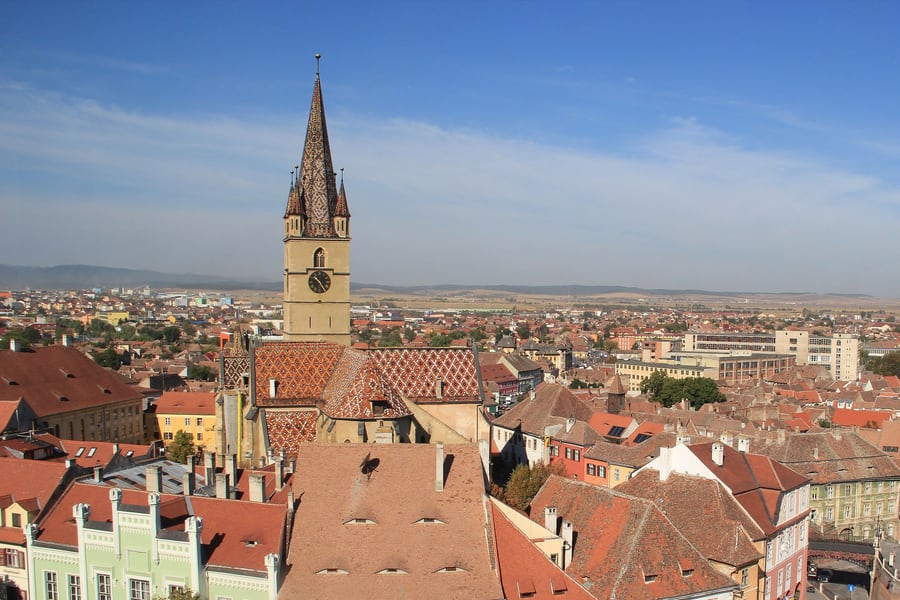 Antony Stanley / Wikimedia Commons · CC BY-SA 2.0 · cropped
Sibiu
The chief town of the Transylvanian Saxons, capital of the Principality of Transylvania in 1692–1791 and 1849–65, and 134,309 people in 2021. It is called the town with eyes for the eyebrow dormers in its old roofs. It was European Capital of Culture in 2007 and is known across Romania for its Christmas market.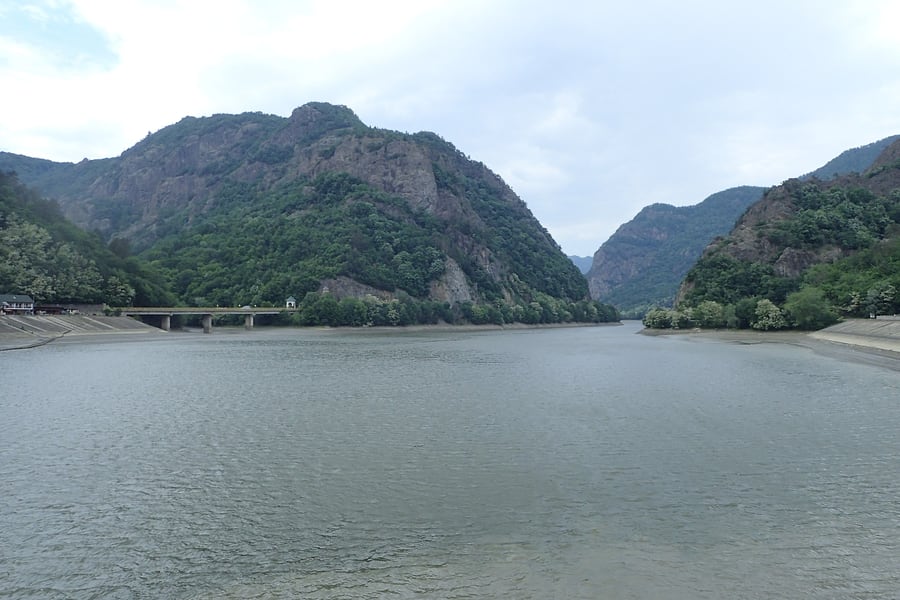 Krzysztof Ziarnek, Kenraiz / Wikimedia Commons · CC BY-SA 4.0
Cozia National Park
Declared in 2000, the park covers 171 square kilometres of the Lotru and Căpățânii mountains on either side of the Olt, a country of limestone ridges, needles, caves and gorges. Two of its old beech forests were added to the Primeval Beech Forests of Europe World Heritage site in 2017.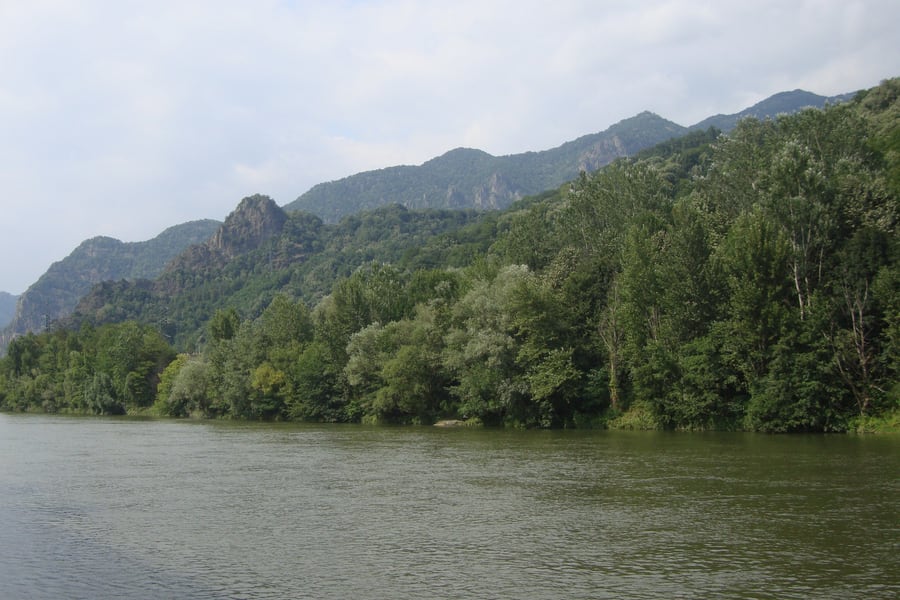 Akrep Scorpion / Wikimedia Commons · CC BY-SA 3.0 · cropped
Călimănești-Căciulata
A spa town where the Olt leaves the mountains, built on thermal springs, with its hotels and treatment halls gathered in Căciulata, close to Cozia Monastery. The Roman fort of Arutela is here too, and the town takes in Păușa, where the trains also stop.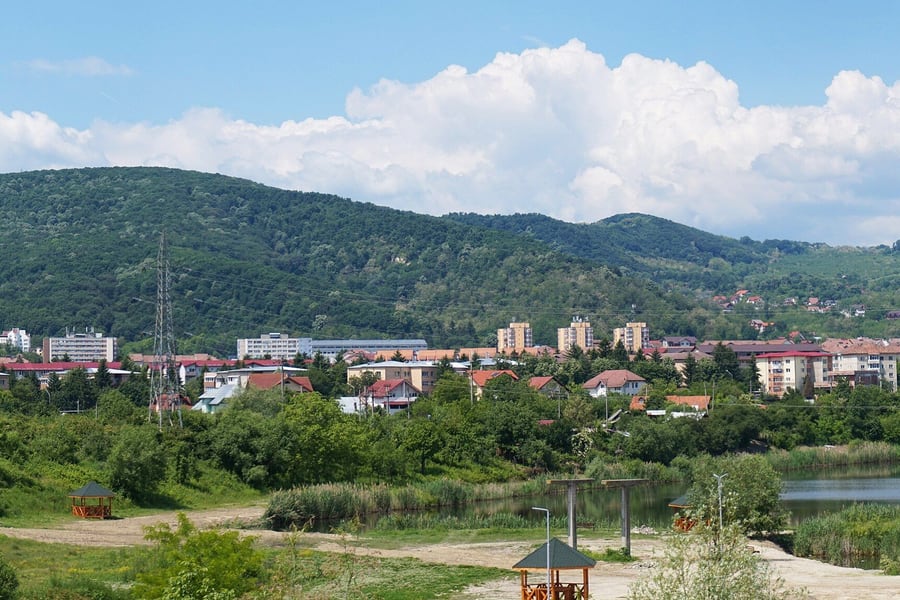 Tiia Monto / Wikimedia Commons · CC BY-SA 4.0 · cropped
Râmnicu Vâlcea
Vâlcea's county town, 93,151 people in 2021, first recorded as a princely town of Mircea the Elder on 4 September 1388. "Deșteaptă-te, române!", now Romania's national anthem, was first sung here on 29 July 1848. The town was rebuilt in the 1980s.Where to Sleep
Stay in Sibiu for the old town and the morning trains south: R-E 2012 leaves at 06:55 and R 2064 at 07:52, with the pass in daylight all year. Călimănești-Căciulata, near the southern end, is a spa town with hotels by Cozia Monastery.
Where to stay
Împăratul Romanilor
In Sibiu's old town
Rebuilt in 1895 and listed as an architectural monument, with 81 rooms on Nicolae Bălcescu boulevard.
Check Availability (opens in a new tab, on sibiu.imparatulromanilor.ro)via sibiu.imparatulromanilor.roQuestions or corrections
Planning this trip and stuck on something, or spotted a time, fare or detail that has changed? Send us a message about The Olt Valley Line. We read every one, and we update this page when something has changed.