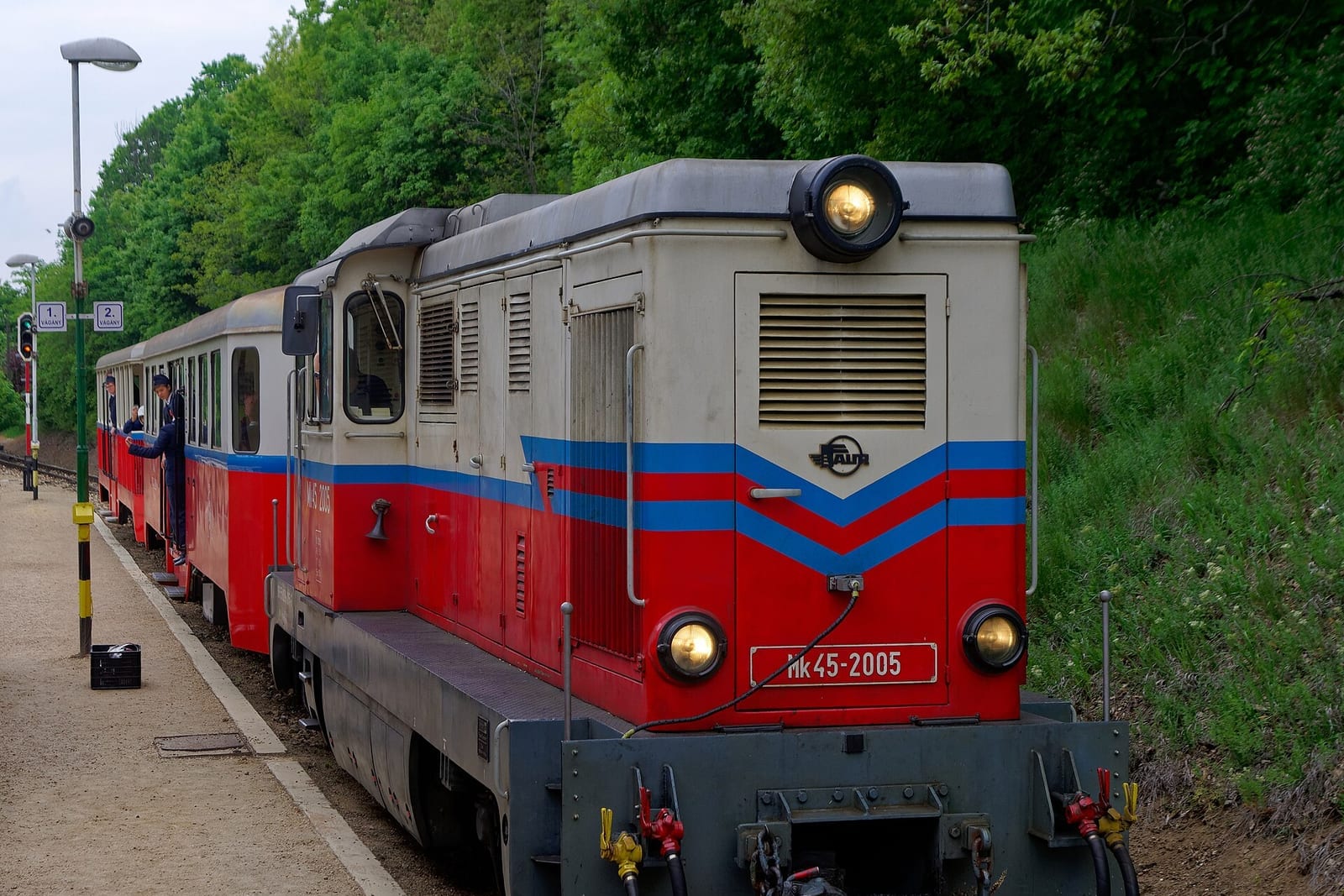
The Budapest Children's Railway
Jakub Hałun / Wikimedia Commons · CC BY-SA 4.0
- DistanceSzéchenyi-hegy–Hűvösvölgy · about 11 km
- Duration40–50 minutes
- Best seasonAny · autumn colour in the Buda Hills is the best of it
Introduction
The guard who blows the whistle is eleven. The clerk who sold you the ticket is twelve. The signaller who set the road, the announcer on the platform, the inspector who checks your ticket and the traffic manager who decides when the train may leave are all somewhere between ten and fourteen years old, in full railway uniform, taking it extremely seriously.
Only the driver is a grown-up.
The Gyermekvasút — the Children's Railway — runs about eleven kilometres through the wooded Buda Hills above Budapest, from Széchenyi-hegy down to Hűvösvölgy, and it has been doing it since 1950. In 2015 Guinness recognised it as the longest railway line in the world where traffic and commercial service are operated by children.
It is not a fairground ride. It is a real railway, owned and operated by MÁV, the Hungarian State Railways, with real signalling, real tokens, real safety rules — and a workforce still in primary school.
What the children actually do
Everything except drive.
Children hold every operating post on the line: pointsmen, signallers, guards, announcers, traffic managers, cashiers, ticket inspectors, station staff, and the person on the train's handbrake. They rotate through each job in turn, so that over a few years a child will have done all of them. Adults supervise throughout, and adults — qualified railwaymen — drive the locomotives.
Getting a place is competitive. Children volunteer, apply in the fourth grade, and must pass a medical aptitude test, complete a training course, and demonstrate good marks at school. Somewhere around six hundred pupils are in the pool at any time, and they can serve until they leave elementary school at fourteen or fifteen. A great many go on to work for the railway for real.
It was built by the Communist Party, and it is more complicated than that
MÁV decided to build a children's railway in 1947. Several sites were considered — the grounds of the Gödöllő Palace, Margaret Island, the Népliget — and in 1948 the Hungarian Communist Party settled on the Buda Hills. Construction began on 11 April 1948; the first section opened that 31 July, and the line reached Hűvösvölgy on 20 August 1950. It was called the Pioneer Railway, after the Communist youth organisation.
So yes: it was a product of the era, and it was widely assumed to be propaganda. The railway's own account of this is unusually level-headed. In practice, it says, the line was no more politicised than any other children's institution of the 1950s and 60s; the idea of employing children in this "free and playful" way was controversial before it opened; and once it did, it was so popular that places were immediately oversubscribed.
Seventy-five years later, with the Party long gone, the children are still queueing up.
The railway closed during the 1956 revolution but was not damaged, and reopened on 3 February 1957. There is a small museum at Hűvösvölgy with material from the Pioneer years.
The ride itself
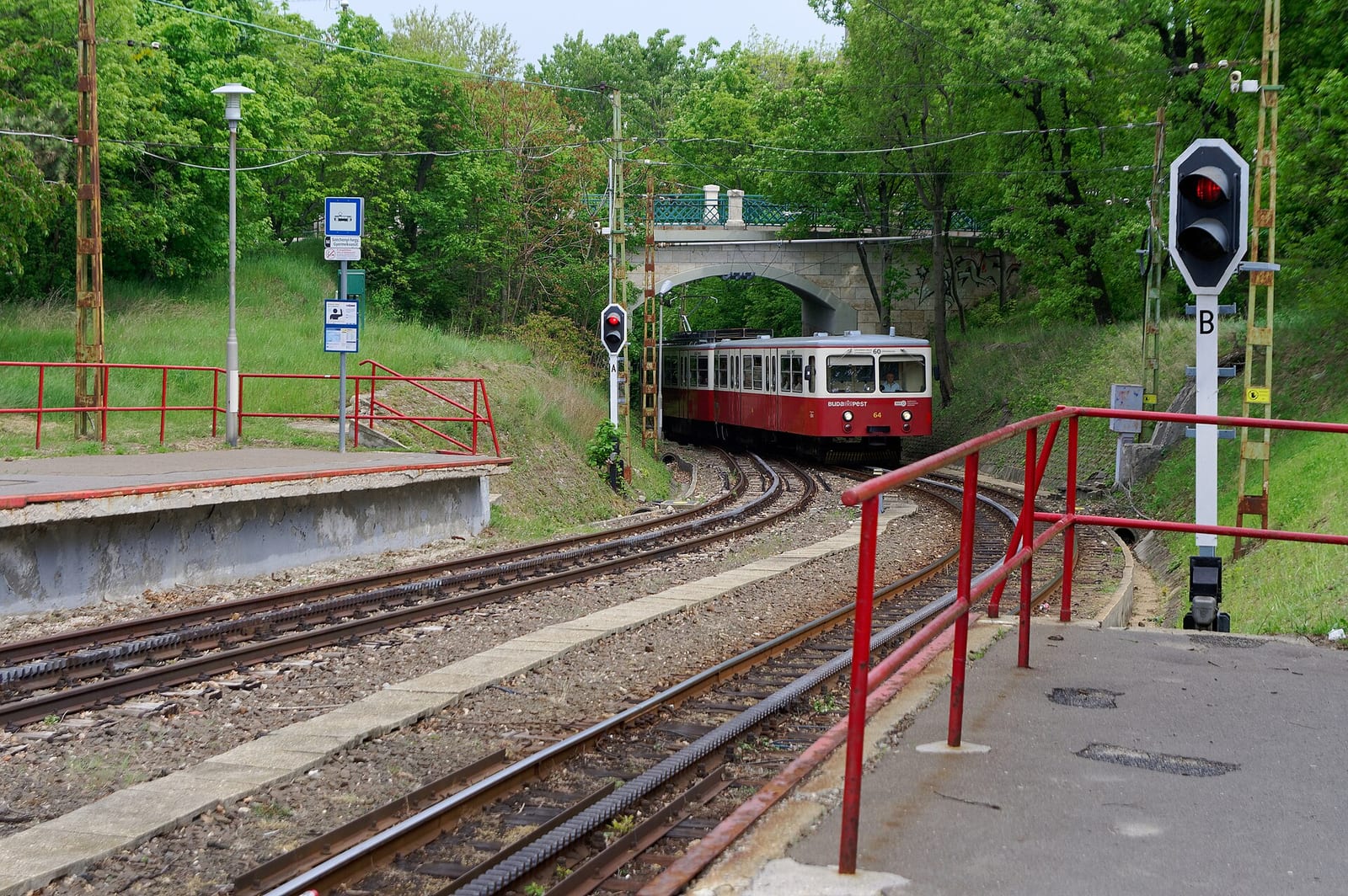
It is a modest, lovely, slow thing: narrow gauge, single track with passing loops, not electrified, limited to 20 km/h, taking forty to fifty minutes end to end. The two termini are 235 metres apart in height. It runs almost entirely through forest, and it serves Normafa and János-hegy, the highest point in Budapest.
And it is one leg of the best half-day in the city, because at the top end it connects — by a 250-metre walk — with the Cog-wheel Railway, and near the far end you can drop back down to Budapest on a chairlift.
One practical warning that catches people out: it runs every day of the year except Mondays from September to April, and it takes cash in forints only.
The Journey
Most people ride it downhill, from Széchenyi-hegy to Hűvösvölgy, because that is the way the classic Buda Hills circuit runs — up on the Cog-wheel Railway, along on the Children's Railway, down on the chairlift.
Széchenyi-hegy
The upper terminus, and a 250-metre walk from the top of the Cog-wheel Railway. It is the busiest station on the line and the best place to watch the operation.
Everything here is done by children, and done with enormous formality. They stand at attention on the platform in uniform and peaked caps. They salute the train in. They give the right-away with a proper signal. The announcements are made by a child at a microphone, in Hungarian, reading carefully. Behind a window in the traffic office another child is working the block instruments and writing in the register.
It would be easy to find this twee. It isn't, because none of the children think it is funny — they are concentrating.
Into the forest
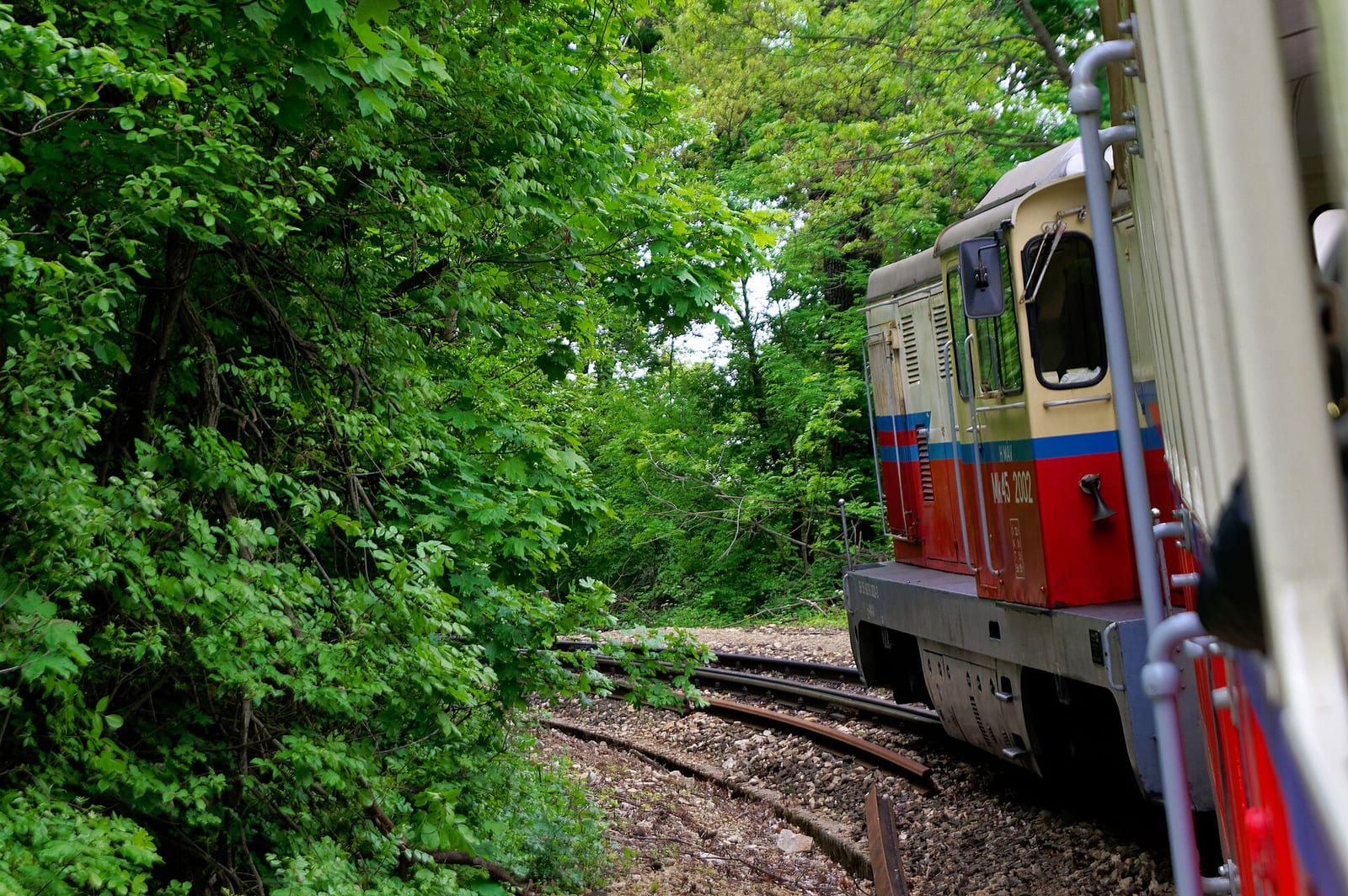
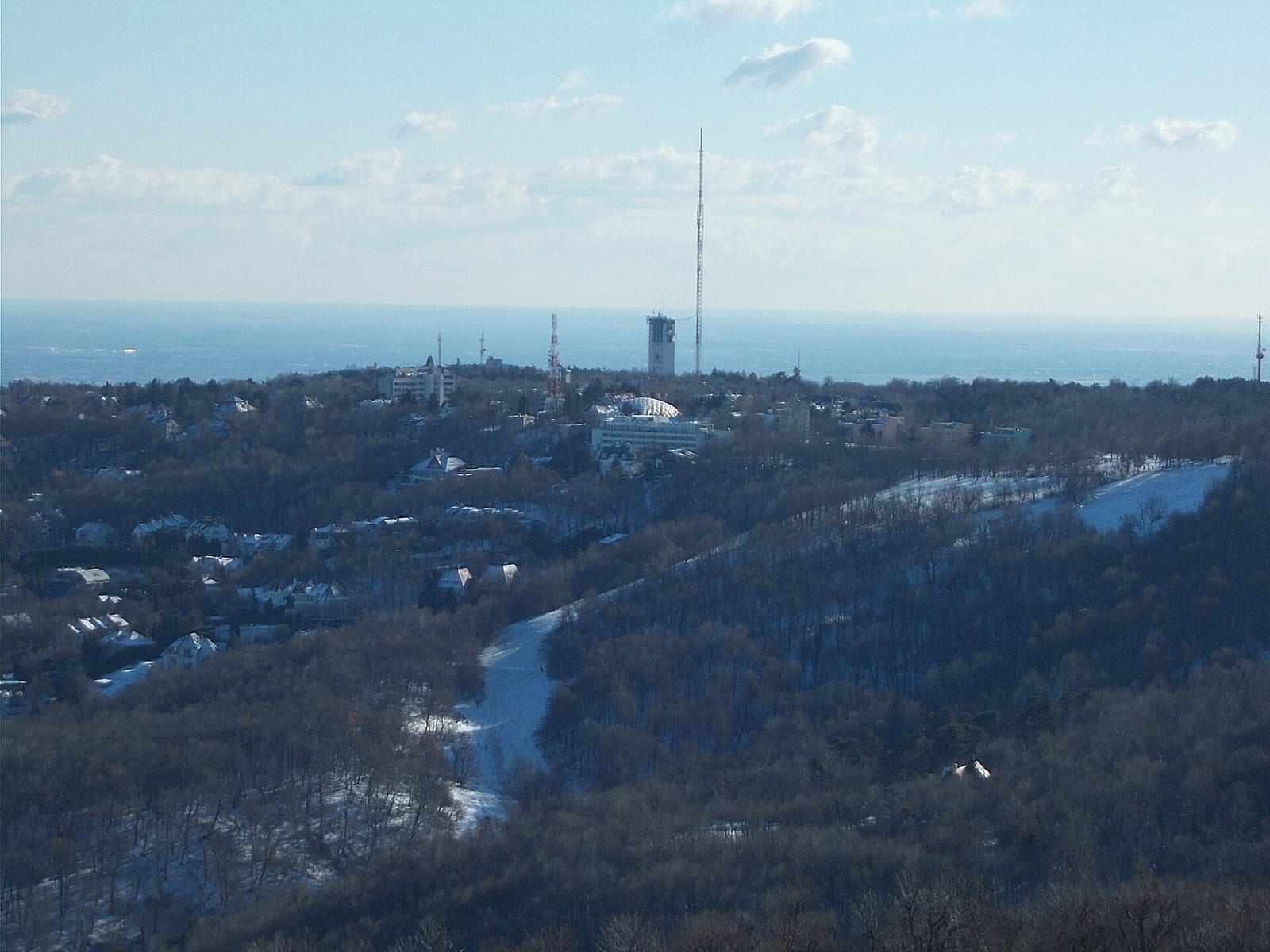
The train pulls away and is immediately in trees. The Buda Hills are wooded almost the whole way, and for most of the journey the line is a single track in a green tunnel with occasional gaps where the city appears far below.
Normafa is the first stop that matters — the Buda Hills' favourite walking and picnicking ground, named after a beech tree that a soprano is said to have sung Norma beneath, and the place where Budapest goes at weekends. Virágvölgy was originally called Előre ("Forward"), which tells you something about 1948.
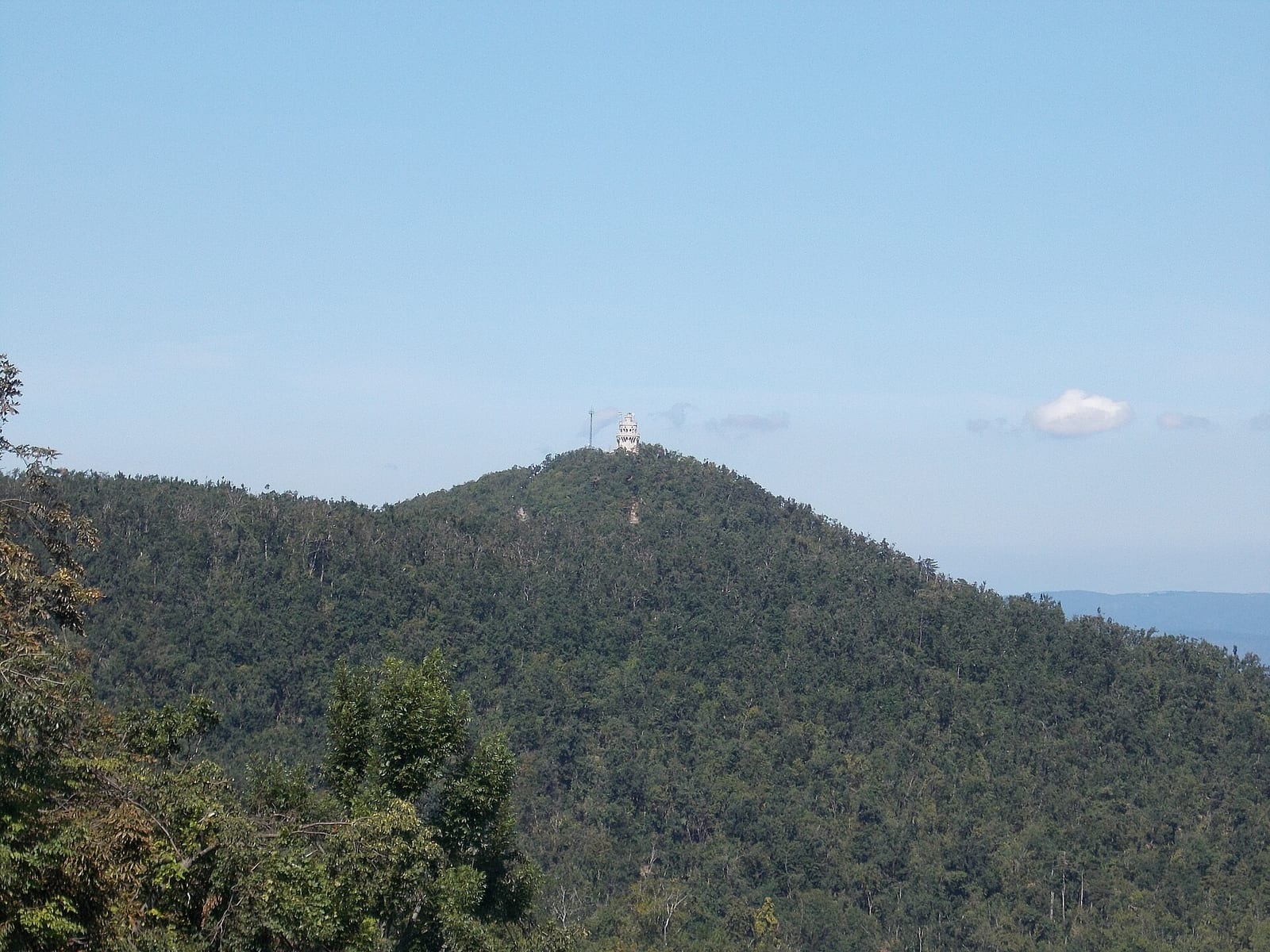
Then János-hegy, the stop for the highest point in Budapest and, twenty minutes' walk uphill, the Erzsébet lookout tower, from which you can see the whole city, the Danube, and on a clear day the Slovak border hills.
The line goes on through Szépjuhászné and Hárs-hegy, still in forest, and comes down to Hűvösvölgy.
Hűvösvölgy
The lower terminus, next door to the terminus of tram routes into the city, so you can simply step across and ride home.
There is a museum here with material from the railway's years as the Pioneer Railway — uniforms, badges, photographs, paperwork — which is worth twenty minutes and is a good deal more interesting than a preserved-carriage collection.
What you are riding on
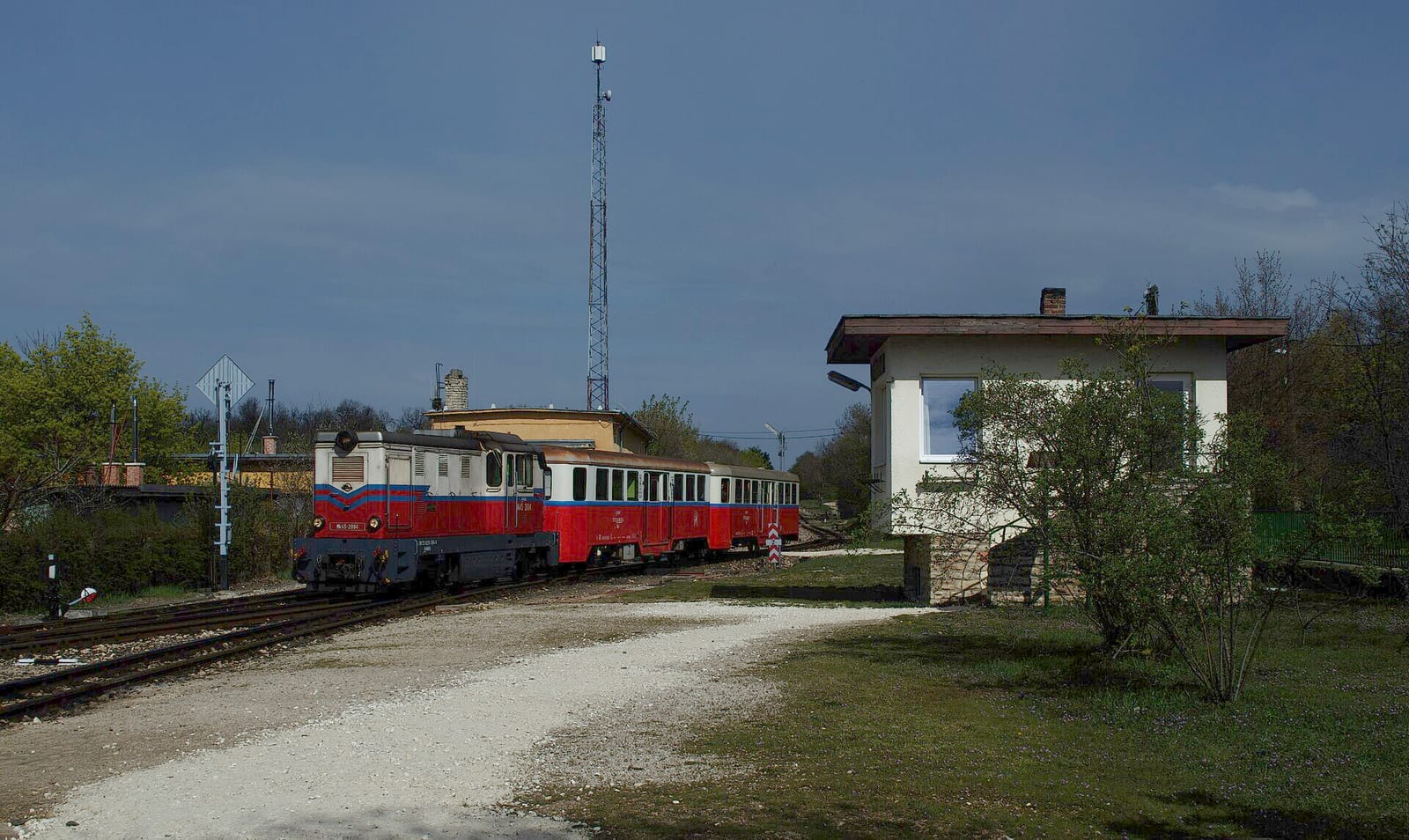
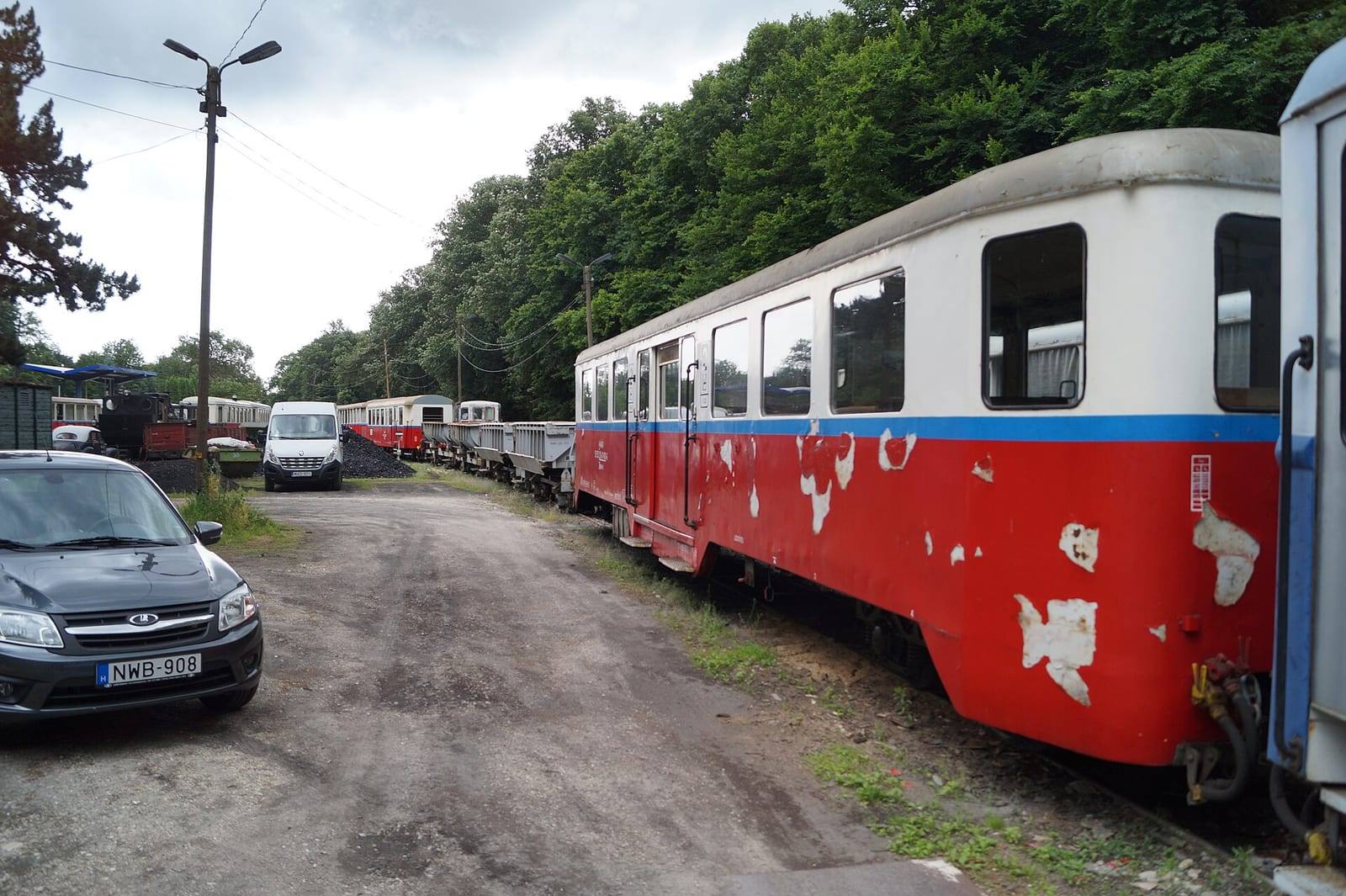
The trains are diesel-hauled: small Mk45 locomotives, built in Hungary, with rakes of narrow-gauge coaches. There is preserved steam on the property and it appears on special occasions, but the everyday service is not steam — do not go expecting it.
The line is single track with passing loops at the stations, which is precisely why there is so much for the children to do: every crossing has to be signalled, every token exchanged, every departure authorised.
Practical notes
- Go downhill. Széchenyi-hegy to Hűvösvölgy, connecting from the Cog-wheel Railway.
- Not on Mondays from September to April.
- Cash only, in forints. The Children's Railway is not part of the BKK city ticketing system and does not take cards.
- Allow more than the journey time. Getting off at János-hegy for the lookout and the chairlift is the point; the trains are frequent enough to make it easy.
- Autumn is the best of it — the Buda Hills turn completely, and the line runs through the middle of it.
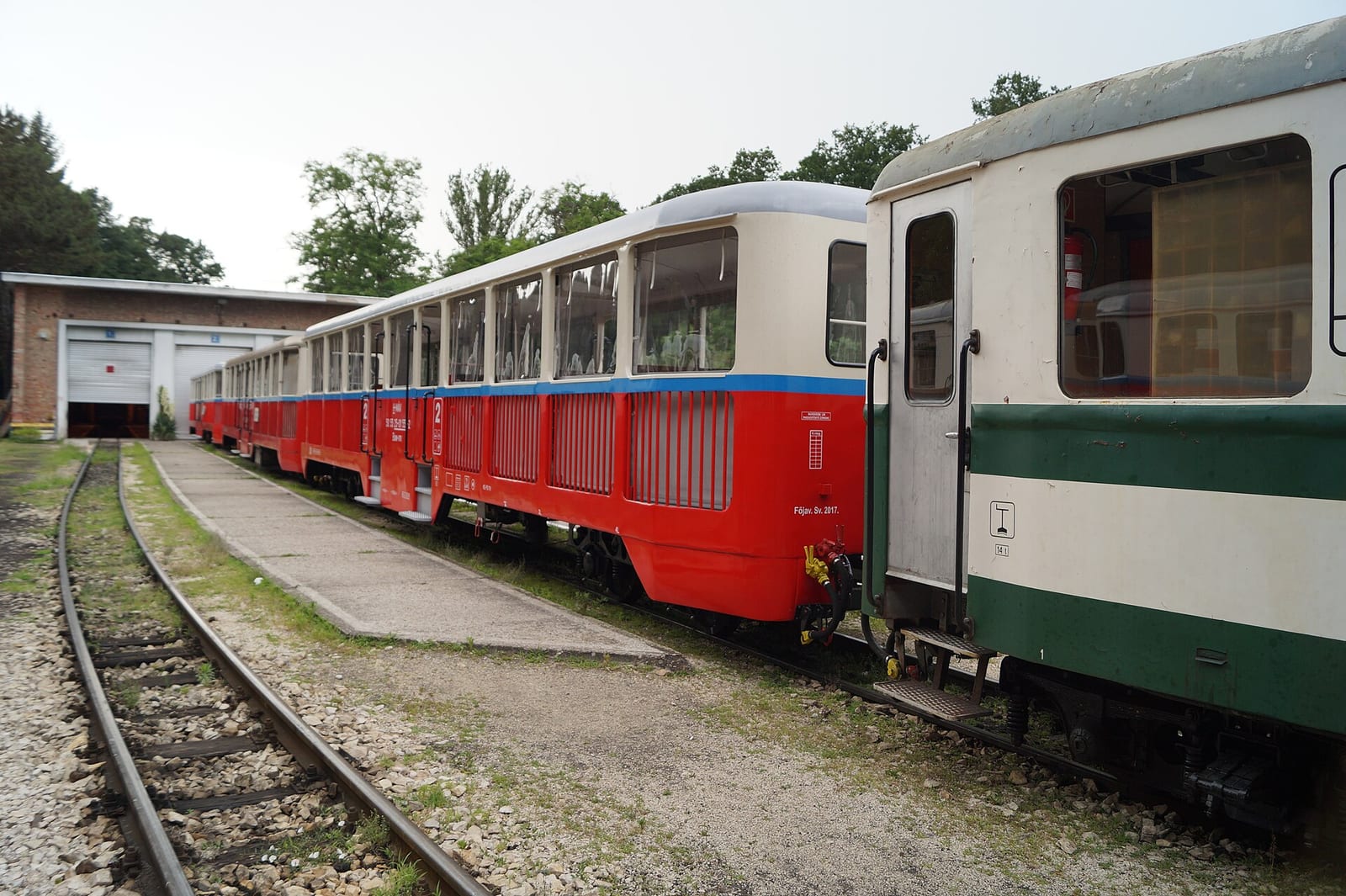
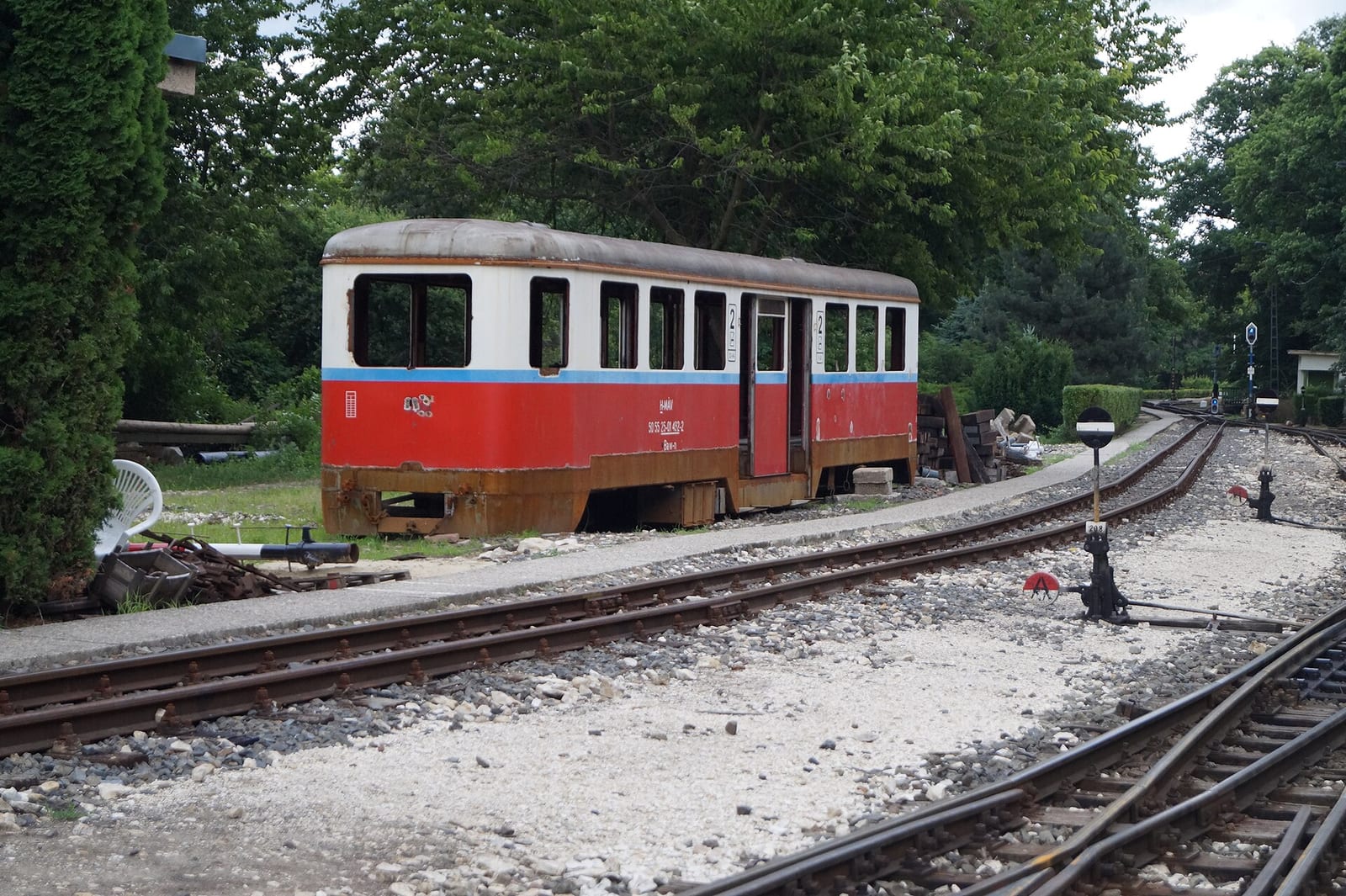
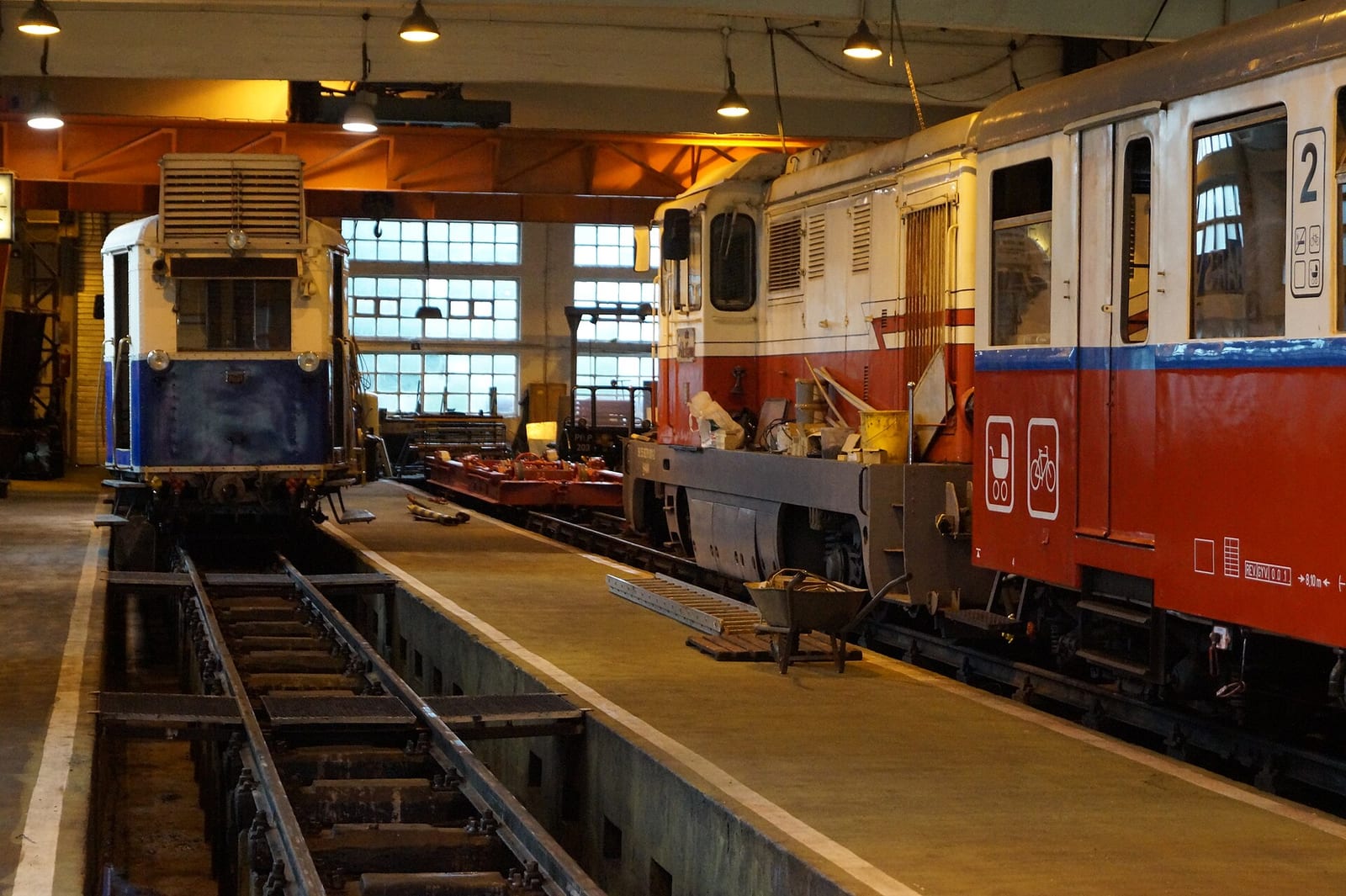
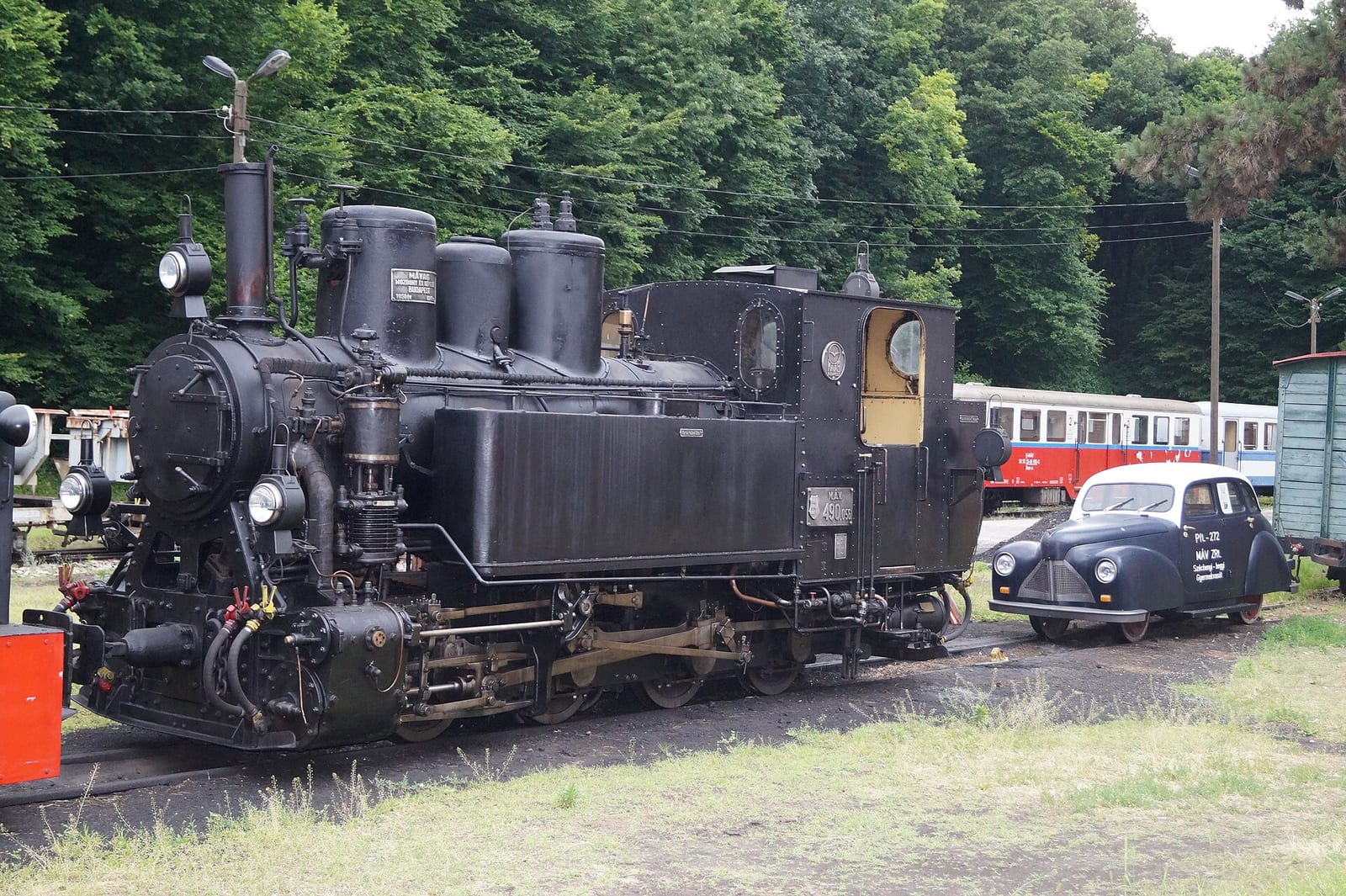
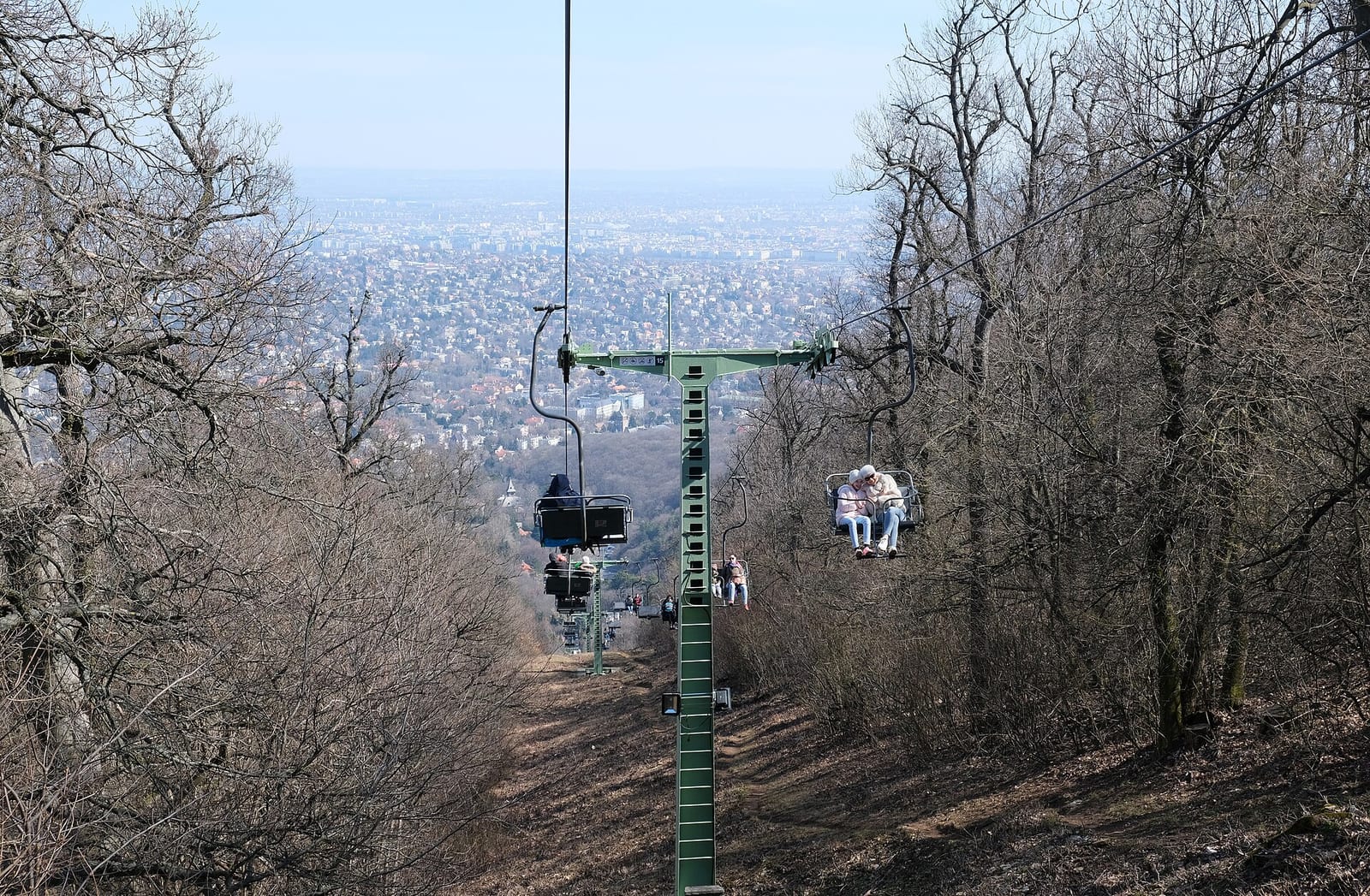
Along the route
Jakub Hałun / Wikimedia Commons · CC BY-SA 4.0The children run it — except the driving
Volunteers aged 10 to 14 hold every operating job: signallers, pointsmen, guards, announcers, cashiers and ticket inspectors, rotating through each in turn. The drivers are adults and everything is supervised. A place needs a medical test, a training course and good school marks.NearEMPTiness / Wikimedia Commons · CC BY-SA 4.0A world record, and a Communist origin
MÁV decided to build a children's railway in 1947 and the Party chose the Buda Hills the next year. In 2015 Guinness recognised it as the longest railway in the world where traffic and commercial service are operated by children.Jakub Hałun / Wikimedia Commons · CC BY-SA 4.0 · croppedEleven kilometres of forest
The line runs about eleven kilometres through the wooded Buda Hills, with 235 metres of height between its two ends. Single track with loops, unelectrified and limited to 20 km/h, so the journey takes forty to fifty minutes.A bit of history
Culture & experiences along the way
kallerna / Wikimedia Commons · CC BY-SA 4.0Do the whole Buda Hills circuit
This railway is one leg of the best half-day in Budapest. Take the Cog-wheel Railway up from Városmajor, walk 250 metres to Széchenyi-hegy, ride the Children's Railway through the forest, get off at János-hegy for the Erzsébet lookout, then drop back down to the city on the Libegő chairlift at Zugliget. Three completely different kinds of railway and a chairlift, in an afternoon.Phil Richards / Wikimedia Commons · CC BY-SA 2.0Watch the handover at a passing loop
The best thing to watch for is the ceremony of it. At the stations children in full uniform salute the train in and out, exchange tokens, work the points and give the right-of-way with complete seriousness — and this is a real railway, with real signalling, doing it. It is impossible to watch a twelve-year-old dispatch a train and stay cynical about it.NearEMPTiness / Wikimedia Commons · CC BY-SA 4.0Look in at the museum at Hűvösvölgy
At the lower terminus there is a small museum with material from the railway's years as the Pioneer Railway — the Communist-era youth organisation it was founded under. The line's own account is refreshingly unembarrassed: it was widely assumed to be propaganda, and in practice it turned out to be a genuinely useful institution that children queued to join.Timetables
The Children's Railway runs to a published timetable that varies by season, and there is one rule that catches people out more than any other.
Operating days
| May to August | Every day, including public holidays |
| September to April | Every day EXCEPT Mondays |
| Journey time | 40–50 minutes end to end |
| Route | Széchenyi-hegy ↔ Hűvösvölgy, about 11 km |
| Maximum speed | 20 km/h |
Trains run through the middle of the day rather than from dawn to dusk — this is a railway staffed by schoolchildren, and the timetable reflects it. There are typically several departures each way, more frequent and running later in summer than in winter.
Check the current timetable at gyermekvasut.hu (opens in a new tab) before you go. It changes with the season and with school holidays, and the railway publishes it in advance.
Fares
- Free for children under 6
- Reduced child fares for ages 6–18
- Group discounts for an adult leader travelling with 10 or more children
- Separate single and return fares, and a fare for part of the line
Cash in Hungarian forints only. The Children's Railway is not part of Budapest's integrated BKK ticketing — your city travelcard is not valid, and cards are not accepted. This is the single most common thing that goes wrong for visitors.
Contrast this with the Cog-wheel Railway, which is fully integrated as tram line 60 and takes ordinary city tickets.
Getting to each end
Széchenyi-hegy (upper terminus) — take the Cog-wheel Railway (tram 60) from Városmajor, near Széll Kálmán tér, to its upper terminus, then walk 250 metres. This is the standard approach and much the most enjoyable.
Hűvösvölgy (lower terminus) — adjoins the Hűvösvölgy tram terminus, with trams 56, 59 and 61 into the city. Easy, and the usual way to get home afterwards.
The circuit, and how long to allow
The classic half-day is:
- Cog-wheel Railway up from Városmajor
- Walk 250 m to Széchenyi-hegy
- Children's Railway to János-hegy
- Walk up to the Erzsébet lookout, about twenty minutes uphill
- Libegő chairlift down to Zugliget, then a bus into town
Allow four to five hours with stops, and note that the chairlift closes on alternate Mondays for maintenance and does not run in high wind — check before relying on it.
Operator: MÁV / Gyermekvasút — gyermekvasut.hu (opens in a new tab). Position as of July 2026.
Tickets
Turn up and buy at the station — but bring the right money. ⚠️ Cash, in Hungarian forints, only. The railway states it plainly: no cards. And your Budapest travelcard is not valid here, because this is a MÁV operation outside the city's BKK ticketing, unlike the Cog-wheel Railway. People arrive with a 72-hour pass and are surprised. Under-sixes travel free, 6 to 18 pay a reduced fare, and fares are modest by any standard.
Tickets are sold at the stations by the children, which is part of the experience, and checked on the train by children too. Take more cash than the fare — there is a buffet and a museum at Hűvösvölgy, and the chairlift at the far end of the circuit is easier with cash. The everyday service is diesel-hauled; steam appears only on special days, so check the calendar rather than assuming.
Book your tickets
Children's Railway · end to end
Széchenyi-hegy to Hűvösvölgy
A single over the full line, about 40 to 50 minutes. Children under 6 travel free, and there are reduced fares for 6–18s and group discounts for an adult leader with ten or more children. Note that the railway takes cash in forints only — no cards.
Book Tickets (opens in a new tab, on Gyermekvasút)via GyermekvasútThe Buda Hills circuit
Cog-wheel, Children's Railway, chairlift
The classic combination: up on the Cog-wheel Railway, along on the Children's Railway, down on the Libegő chairlift. Each is ticketed separately — the Cog-wheel is part of the BKK city network, while the Children's Railway and the chairlift are not — so buy as you go.
Book Tickets (opens in a new tab, on Gyermekvasút)via GyermekvasútRail Passes
Do not count on a rail pass here. Interrail's table of railway companies lists MÁV's regional, interregional, fast and InterCity trains as included in Hungary, and does not mention the Children's Railway. Budapest's BKK travelcards are not valid either.
Bring forints in cash. The railway takes no cards, and the fares are modest.
Checked October 2026 against interrail.com (opens in a new tab).
Places to Visit
The railway is the spine of the Buda Hills, which is where Budapest goes to walk, and everything below is a stop on it, a short walk from one, or a tram ride down in the city.
Beyond the six places carded here, Normafa is the Buda Hills' favourite open ground — meadows, beech woods, sledging in winter and a run of huts selling rétes, Hungarian strudel, that people come up specifically for. The Libegő chairlift drops from János-hegy to Zugliget in about twelve minutes and is much the best way to come off the hills; it closes on alternate Mondays for maintenance, and in high wind. The Cog-wheel Railway climbs from Városmajor as tram line 60 and is the proper way to arrive at the top of the Children's Railway.
At the lower terminus, Hűvösvölgy has a small museum of the railway's Pioneer years — uniforms, badges and photographs from the Communist era, presented without much editorialising. Szemlőhegy cave is the gentler alternative to Pálvölgy.
For a bath, go to the Széchenyi in the Városliget or the Ottoman Rudas on the Buda embankment. The Gellért has been closed since 1 October 2025 for a refurbishment running to 2028.
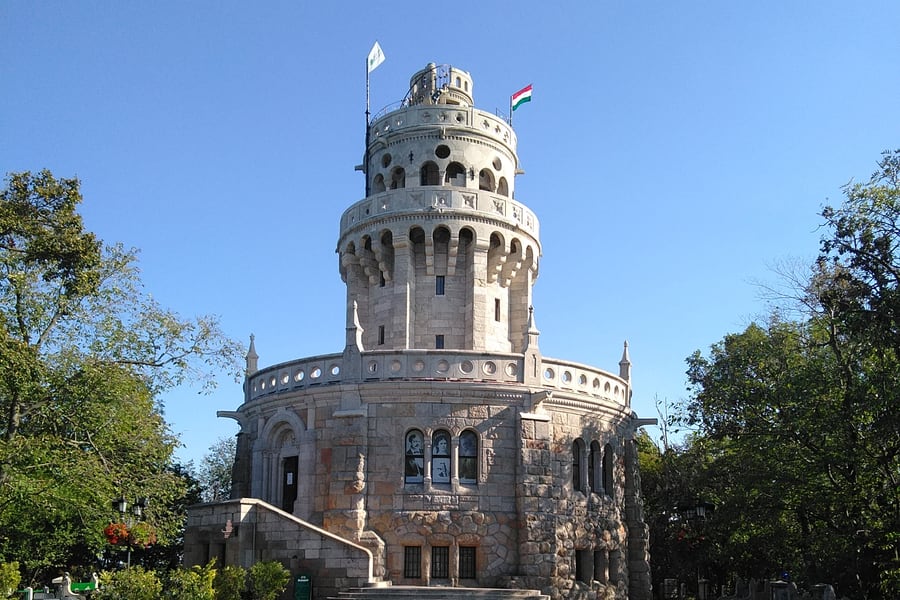 Gergely Dóra Viktória / Wikimedia Commons · CC BY-SA 4.0 · cropped
The Erzsébet lookout
The white neo-Romanesque tower on top of János-hegy, 527 metres up and the highest point in the city. Frigyes Schulek designed it in haraszti limestone and it was handed over to the public on 8 September 1910, one of the largest structures of its kind in Europe at the time. It is named for Empress Elisabeth, "Sisi", who walked up here in 1882. Free to climb, and the circle of view takes in the Slovak hills on a clear day.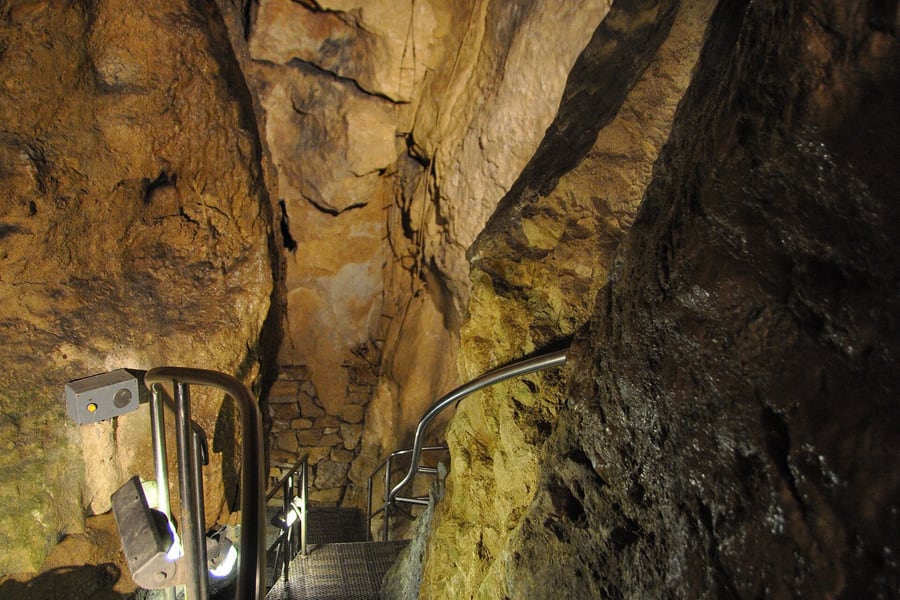 Christo / Wikimedia Commons · CC BY-SA 4.0 · cropped
The Pál-völgy cave
The hills are limestone and riddled with cave systems, and this is the one built for visitors — 500 metres of lit route through dripstone formations, ladders and narrow passages, inside the Duna–Ipoly National Park. It is more of an expedition than a stroll; the neighbouring Szemlőhegy cave is the gentler option if you would rather not climb. Guided tours only, and it is cold down there whatever the date.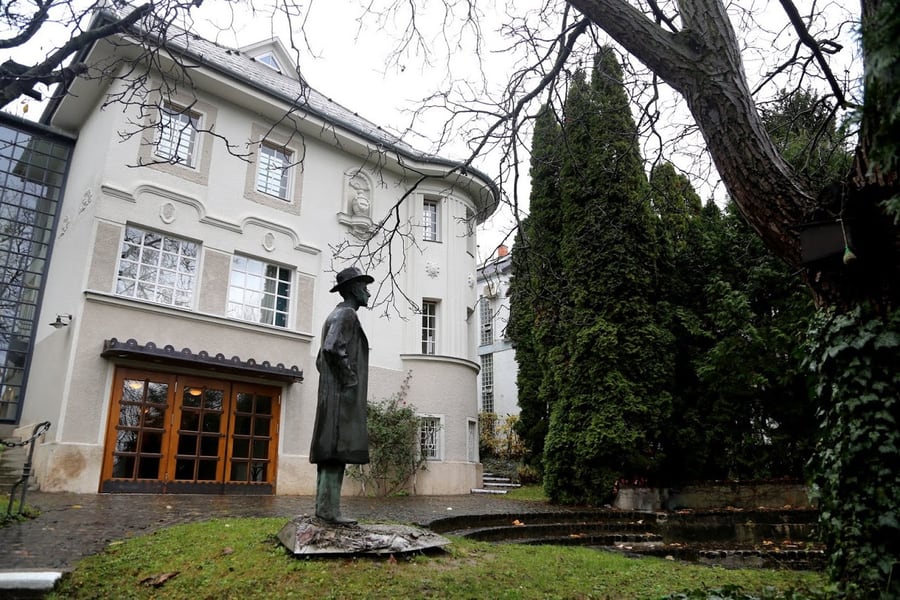 Thaler Tamás / Wikimedia Commons · CC BY-SA 4.0 · cropped
Béla Bartók's house
On the Buda side on the way back into town, the villa where Bartók (1881–1945) lived and worked until he left the country. He had refused to perform in Germany after 1933, and in a will recorded on 4 October 1940 he asked that no square or street be named after him while Hungarian squares still carried the names of Mussolini and Hitler. He sailed for New York later that month. The house keeps his instruments and his folk-song-collecting equipment.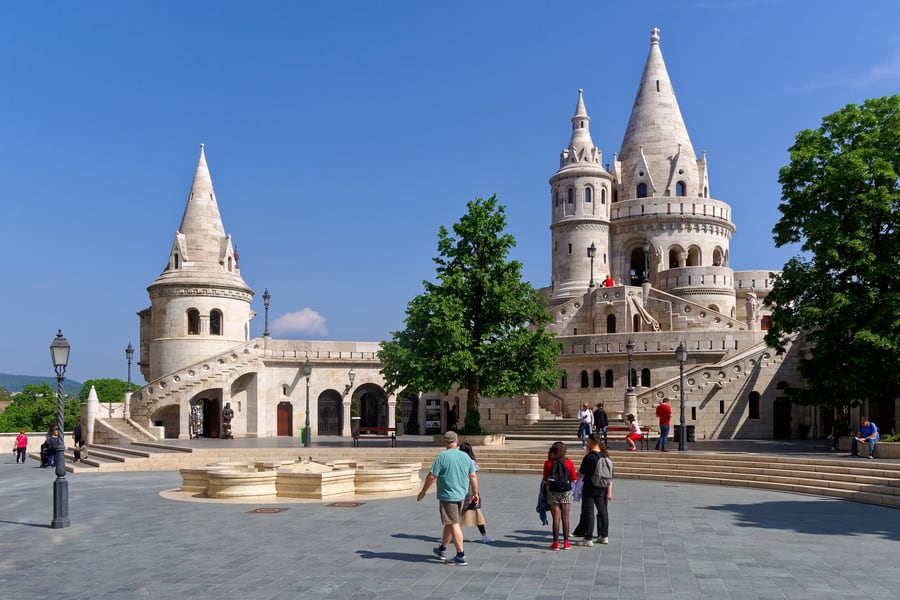 Jakub Hałun / Wikimedia Commons · CC BY-SA 4.0 · cropped
Fisherman's Bastion
Not a fortification at all but a neo-Romanesque viewing terrace, built 1895–1902 by Frigyes Schulek on top of the old Buda castle walls — the stretch that medieval tradition says was defended by the fishermen's guild. The main façade runs about 140 metres along the Danube, and its seven towers stand for the seven Magyar chieftains who founded Hungary in 895. UNESCO-listed since 1987.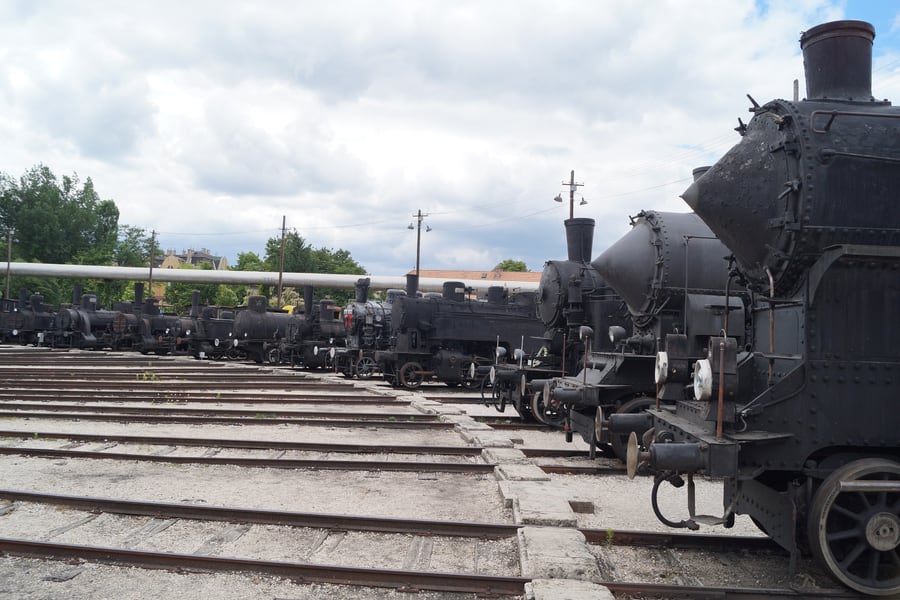 NearEMPTiness / Wikimedia Commons · CC BY-SA 4.0 · cropped
The Hungarian Railway Museum
If the Children's Railway has done its job, this is the follow-up: over 70,000 square metres of the former Budapest North Depot, with more than a hundred exhibits — locomotives, carriages, cranes, a turntable — arranged around the old roundhouse. A good deal of it you are allowed to climb on, which is not something most railway museums permit.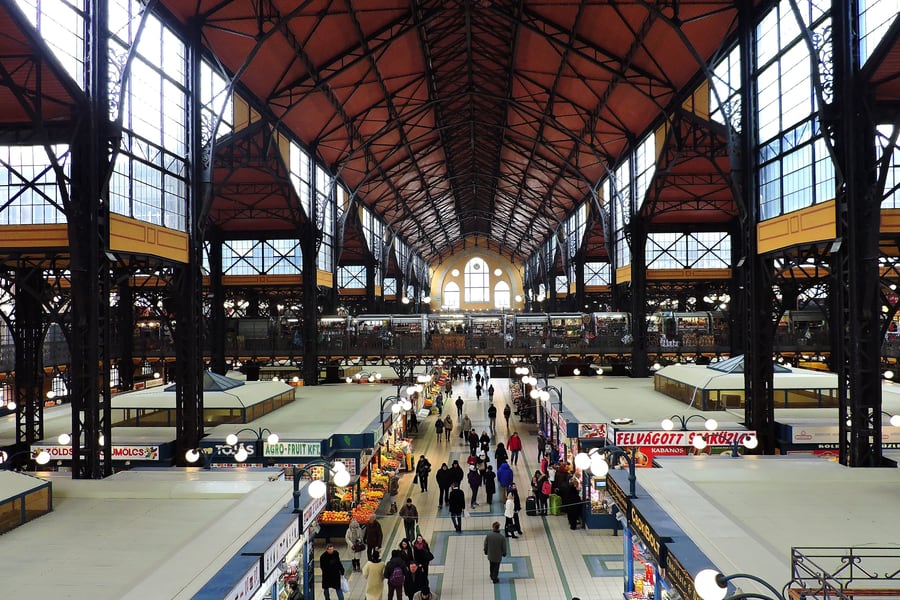 Dimitris Kamaras / Wikimedia Commons · CC BY 2.0 · cropped
The Great Market Hall
The largest and oldest indoor market in Budapest, at the Pest end of the Liberty Bridge on Fővám tér. It was the largest project of Károly Kamermayer, Budapest's first mayor, who had retired by the time he cut the ribbon on 15 February 1897. Come for the ironwork and the Zsolnay tiles as much as the paprika, salami and lángos — and go early, before the tour groups.Where to Sleep
This is a half-day trip from anywhere in Budapest, so stay in the city and come up into the hills for it.
Buda, near the Cog-wheel Railway
The most convenient base for the circuit. Around Széll Kálmán tér and Városmajor in the 2nd district there are mid-range hotels and apartments, and you are two tram stops from the bottom of the Cog-wheel Railway. Quieter and greener than Pest, with the Castle District a short ride away.
Castle Hill and the Watertown
Várnegyed and Víziváros — cobbled streets, the Fisherman's Bastion, the Matthias Church, and a number of small hotels in converted historic buildings. Beautiful, heavily visited and priced accordingly, but you are on the right side of the river for the hills.
Pest — districts V and VI
Where most visitors stay, and with reason: the Danube embankment, the Basilica, Andrássy út and the Opera, and the widest choice of hotels in the city at every price. District VII, the old Jewish quarter, is the nightlife district and full of hostels and ruin bars — cheap, lively and loud at night.
Getting to the Cog-wheel Railway from Pest is a metro ride and two tram stops.
The Buda Hills themselves
There are a few hotels and guesthouses actually up in the hills, around Normafa and Zugliget — quiet, wooded and cool in summer, and a genuine alternative if you want air rather than sightseeing. You will be commuting into the city on the cog railway or the bus, which is no hardship.
The thermal hotels
Budapest is a spa city and several hotels sit on their own springs. The Gellért, on the Buda side, is the famous one, with its Art Nouveau baths attached.
When to come
Autumn is the best time for this journey specifically — the Buda Hills turn gold and red through October and the railway runs through the middle of it. Spring is green and quiet. Summer is hot in the city but noticeably cooler up in the hills, which is exactly why the railway was built where it was. Winter brings sledging at Normafa and a Children's Railway that still runs every day but Monday, in the snow, with children in overcoats saluting the trains.
Questions or corrections
Planning this trip and stuck on something, or spotted a time, fare or detail that has changed? Send us a message about The Budapest Children's Railway. We read every one, and we update this page when something has changed.