The Budapest Cog-wheel Railway
Jakub Hałun / Wikimedia Commons · CC BY-SA 4.0 · cropped
- DistanceVárosmajor–Széchenyi-hegy · 3.7 km
- DurationAbout 20 minutes
- Best seasonAny · autumn for the colour, and it runs all year
Introduction
Budapest has a rack railway that has been climbing out of the city since 1874, and the remarkable thing about it is not its age. It is that nobody treats it as remarkable.
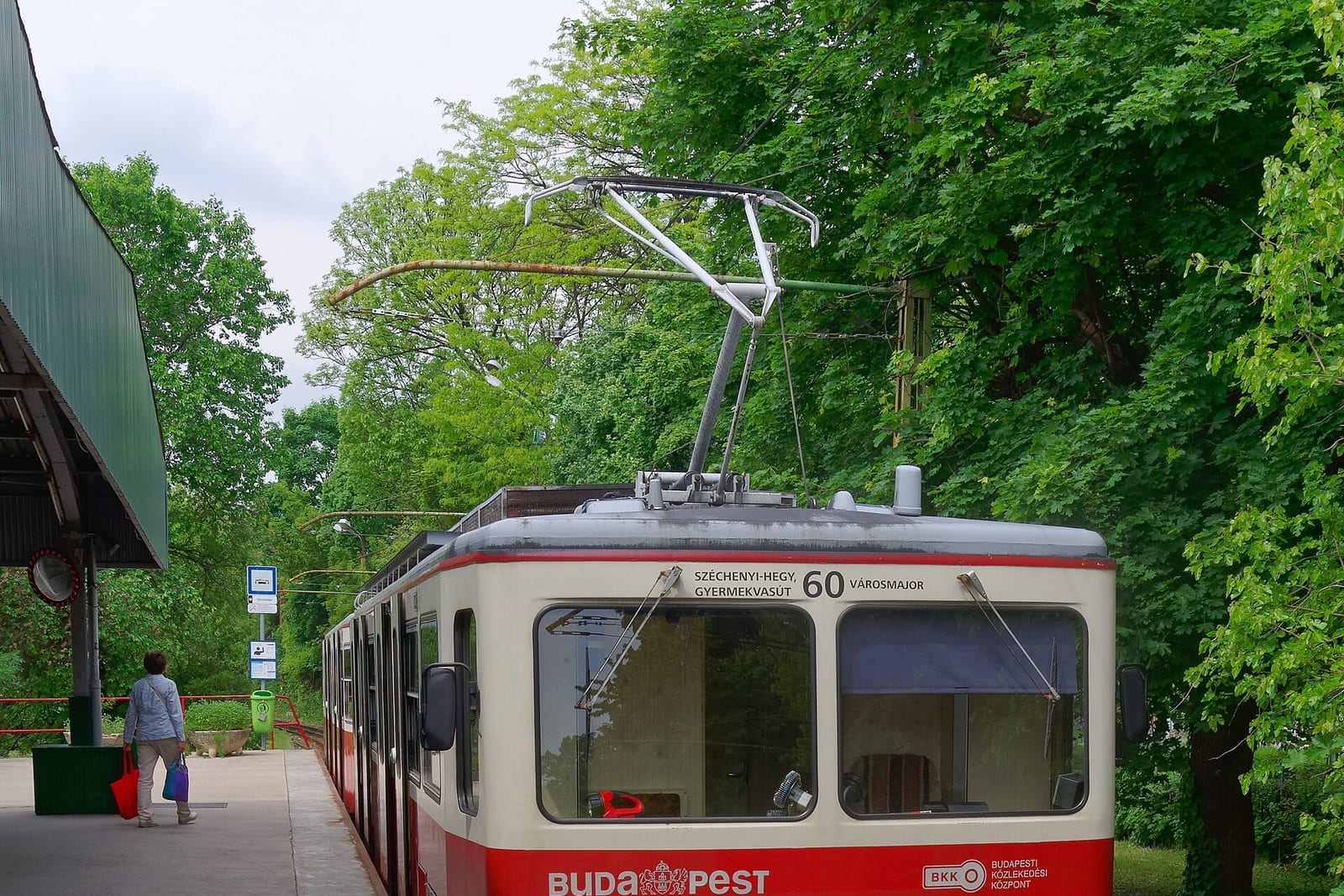
The Fogaskerekű is tram line 60. It is run by BKV alongside the metro and the trams, it goes from about five in the morning until eleven at night, every day of the year, and your ordinary Budapest travelcard is valid on it. People use it to get home with the shopping.
A hundred-and-fifty-year-old cog railway that a European capital simply files under "public transport" is a good deal rarer than a preserved one.
How it started
The building permit was issued on 3 July 1873 and work began at once. The first vehicle ran at four o'clock in the afternoon on 24 June 1874, with regular traffic from the next day.
It was standard gauge, laid to Riggenbach's rack system, and worked by steam locomotives which pushed the carriages up the hill and hauled them back down — the safe way round on a rack line, with the engine always on the downhill end. The climb was 264 metres. In 1890 the line was extended to the 3.7 kilometres it still runs today.
Electricity, and a near-miss
The municipal transport company took the railway over in 1926 and set about modernising it: new track, new passing loops, and electrification at 550 to 600 volts DC — deliberately the same as the city's trams. New cars came from SLM in Switzerland and Ganz in Budapest, and from 2 July 1929 an electric train left every fifteen minutes.
Then the war. The line came out of it so run down that closing it was seriously considered.
What saved it was an anniversary. 1973 was the centenary of the merger of Buda, Pest and Óbuda into a single city, and the cog railway was rebuilt from the ground up to mark it: the track relaid to the Strub rack system, the voltage raised to 1,500 volts, and new vehicles ordered from SGP and BBC. The old trains ran for the last time on 15 March 1973; the ones you ride today entered service on 20 August.
So it is not quite the railway of 1874 — the rack system itself has changed — but it has never stopped running on the same alignment for a hundred and fifty years.
What it is for
It climbs from Városmajor, two tram stops from the Széll Kálmán tér interchange, up to Széchenyi-hegy in the Buda Hills: about twenty minutes, steeply enough that the floor is visibly not level, through beech and oak the whole way.
At the top it does two things. It delivers people to Svábhegy and Széchenyi-hegy, which are ordinary leafy Budapest suburbs. And it lands you 250 metres from the terminus of the Children's Railway — eleven kilometres of narrow gauge through the forest, staffed almost entirely by children between ten and fourteen.
Together with the Libegő chairlift at the far end, the two make the best half-day in Budapest: three completely different kinds of railway and a cable car, in an afternoon, above a capital city.
One thing to know before you set off: only the cog railway is on the city ticket. The Children's Railway is cash in forints only.
The Journey
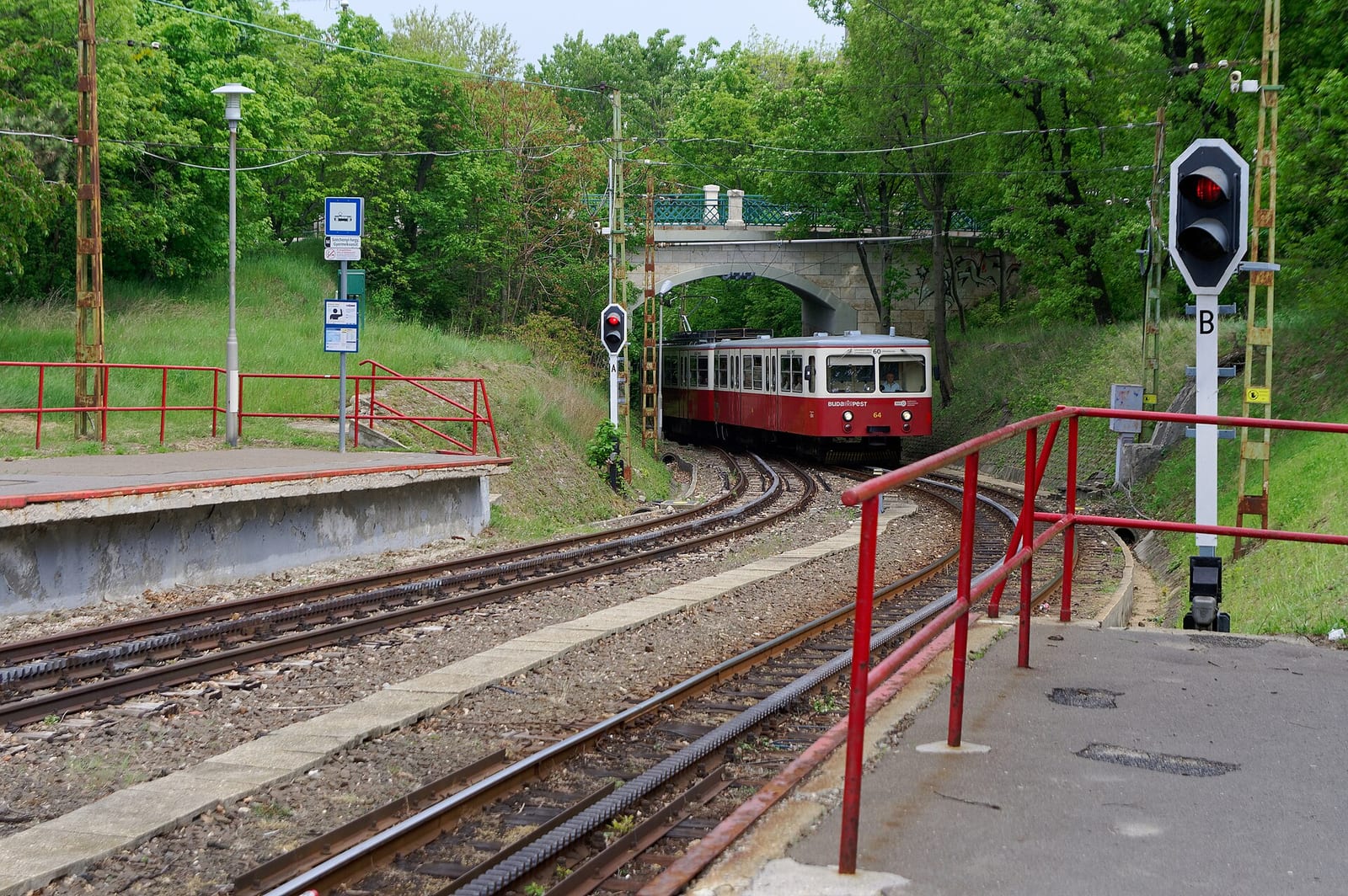
Start at Városmajor, which is not a grand terminus but a tram stop with a rack under the rails — two stops out from Széll Kálmán tér on trams 59, 59A, 61, or a short walk from the metro. There is no ticket office to queue at: validate a city ticket and get on.
The climb
The train sets off along the level for a moment, the pinion drops into the rack with a click, and then the whole thing tilts and begins to grind upward.
The gradient is the first thing you notice — the floor is noticeably not horizontal, and standing passengers lean. The second is the noise, a steady mechanical churn from underneath quite unlike a tram. The third is how quickly Budapest disappears: within a few minutes the apartment blocks give way to villas, then to gardens, then to woods.
Stops come at Szent János Kórház (the hospital), Kút-völgyi út, Orgonás and Svábhegy, all of them serving genuine residential streets. This is the point about this railway: it is not carrying you to a viewpoint, it is carrying people home.
The line is single track with passing loops, so at intervals you stop and wait while the downhill car comes through, and the two crews acknowledge each other. That arrangement is why a fifteen-minute interval service has been possible here since 1929.
The trees
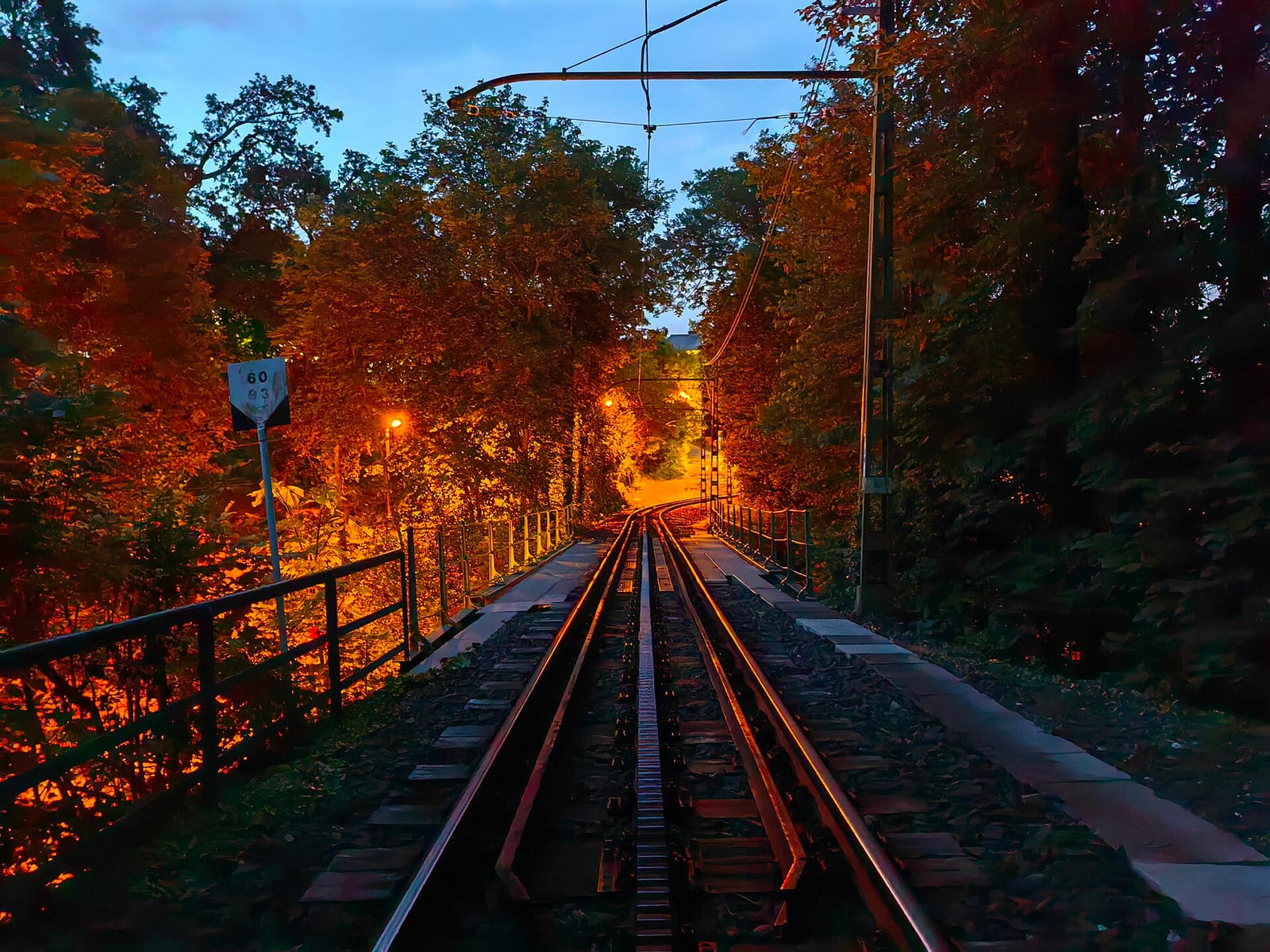
For most of the ascent you are in beech and oak, and in the last week of October and the first of November the whole of it turns. This stretch — around Karthauzi utca — is as good as urban railway scenery gets in central Europe, and because it is a working tram route you can have it almost to yourself at eight in the morning.
Széchenyi-hegy
The upper terminus, 264 metres above where you started. It is a modest place: a platform, a loop, a small building.
And then a 250-metre walk brings you to Széchenyi-hegy station on the Children's Railway, where children in uniform are dispatching narrow-gauge trains into the forest.
Doing the whole circuit
The standard route, and it is worth the afternoon:
- Cog-wheel Railway up from Városmajor — twenty minutes, city ticket.
- Walk 250 m to the Children's Railway.
- Children's Railway as far as János-hegy — cash in forints, no card.
- Walk up to the Erzsébet lookout, twenty minutes, for the whole of Budapest laid out below.
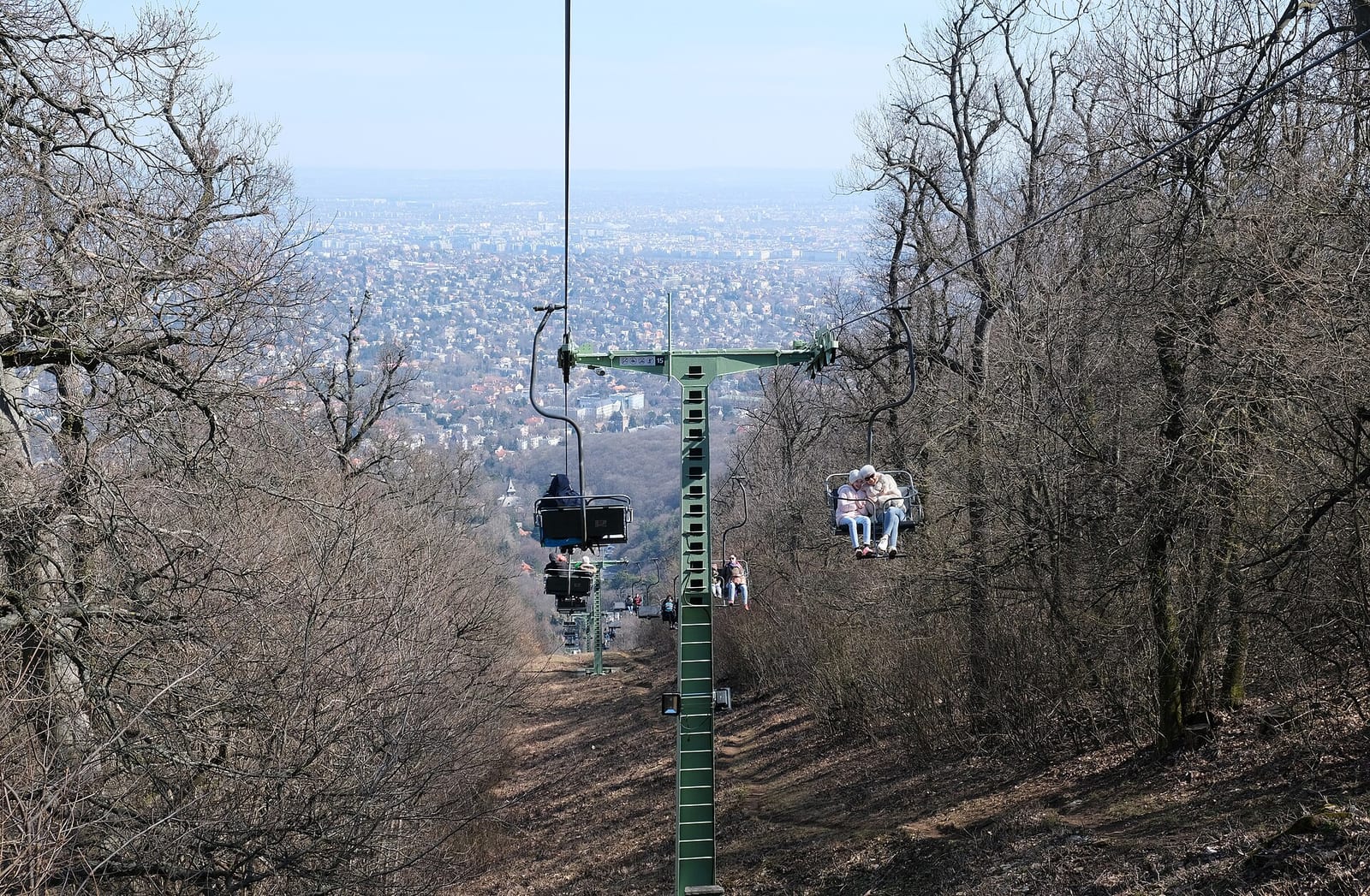
- Libegő chairlift down to Zugliget, twelve minutes over the treetops, then a bus back into the city.
Allow four to five hours. The chairlift closes on alternate Mondays and in high wind; the Children's Railway does not run on Mondays from September to April. Check both before committing.
The rolling stock
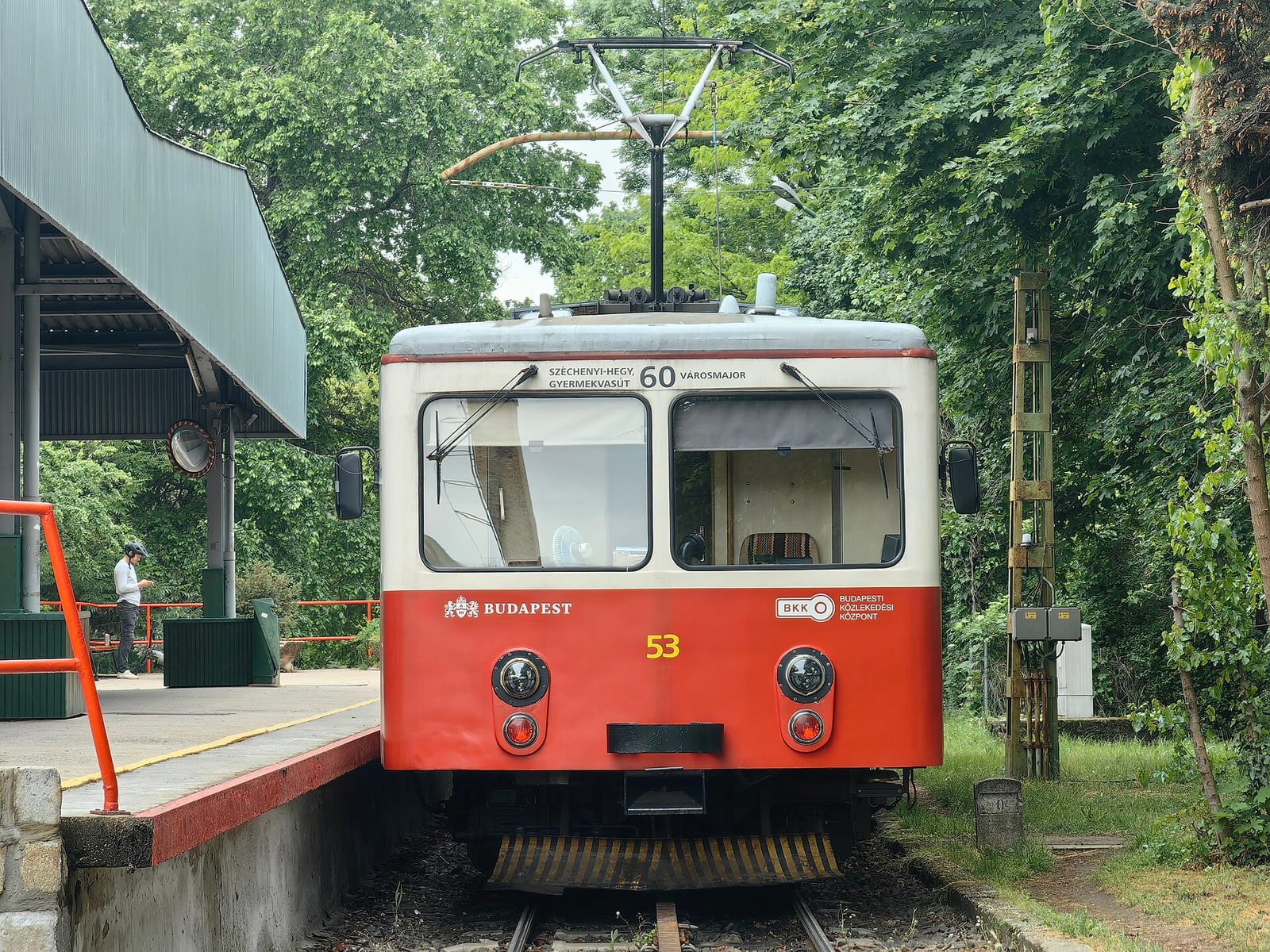
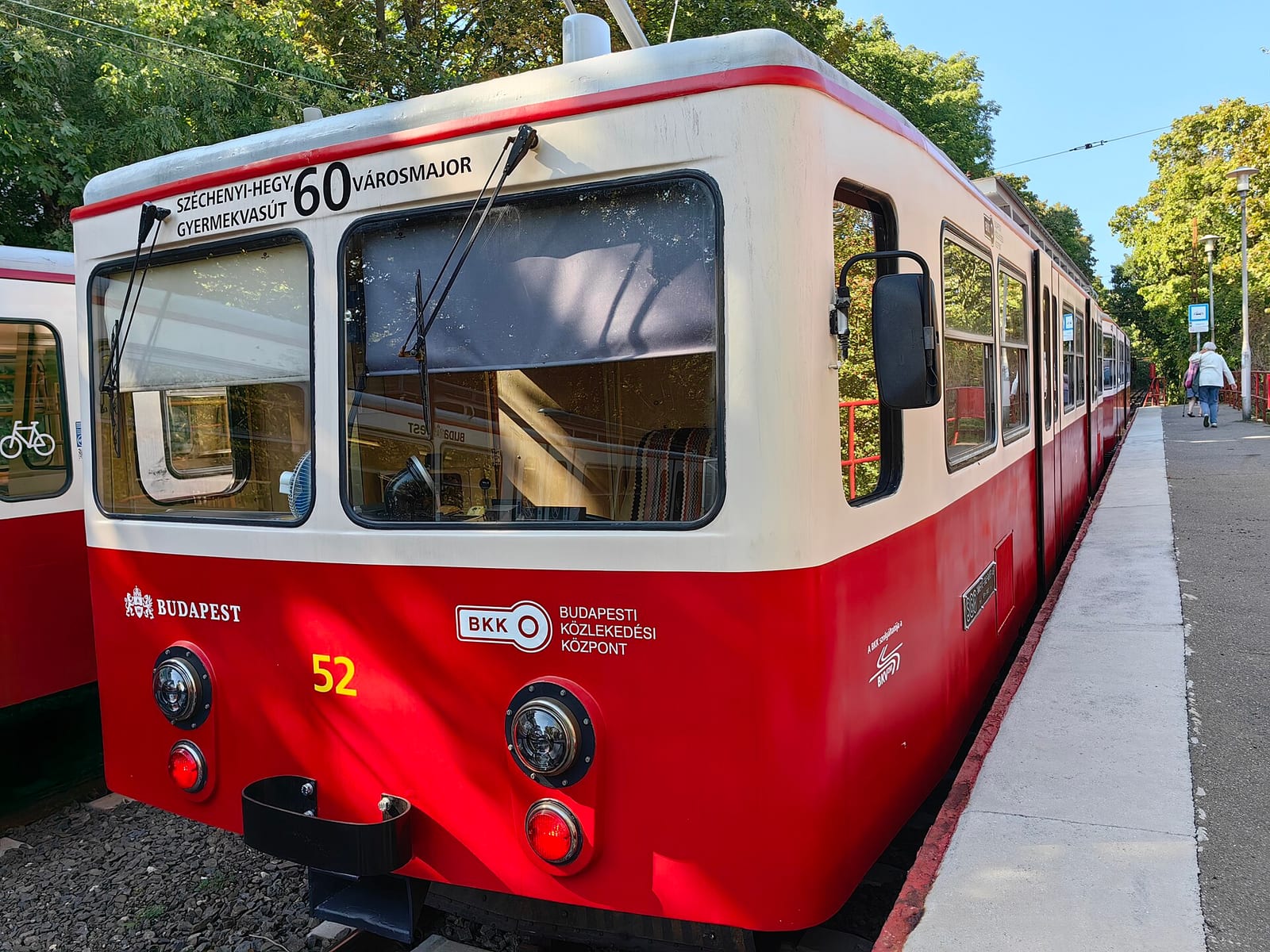
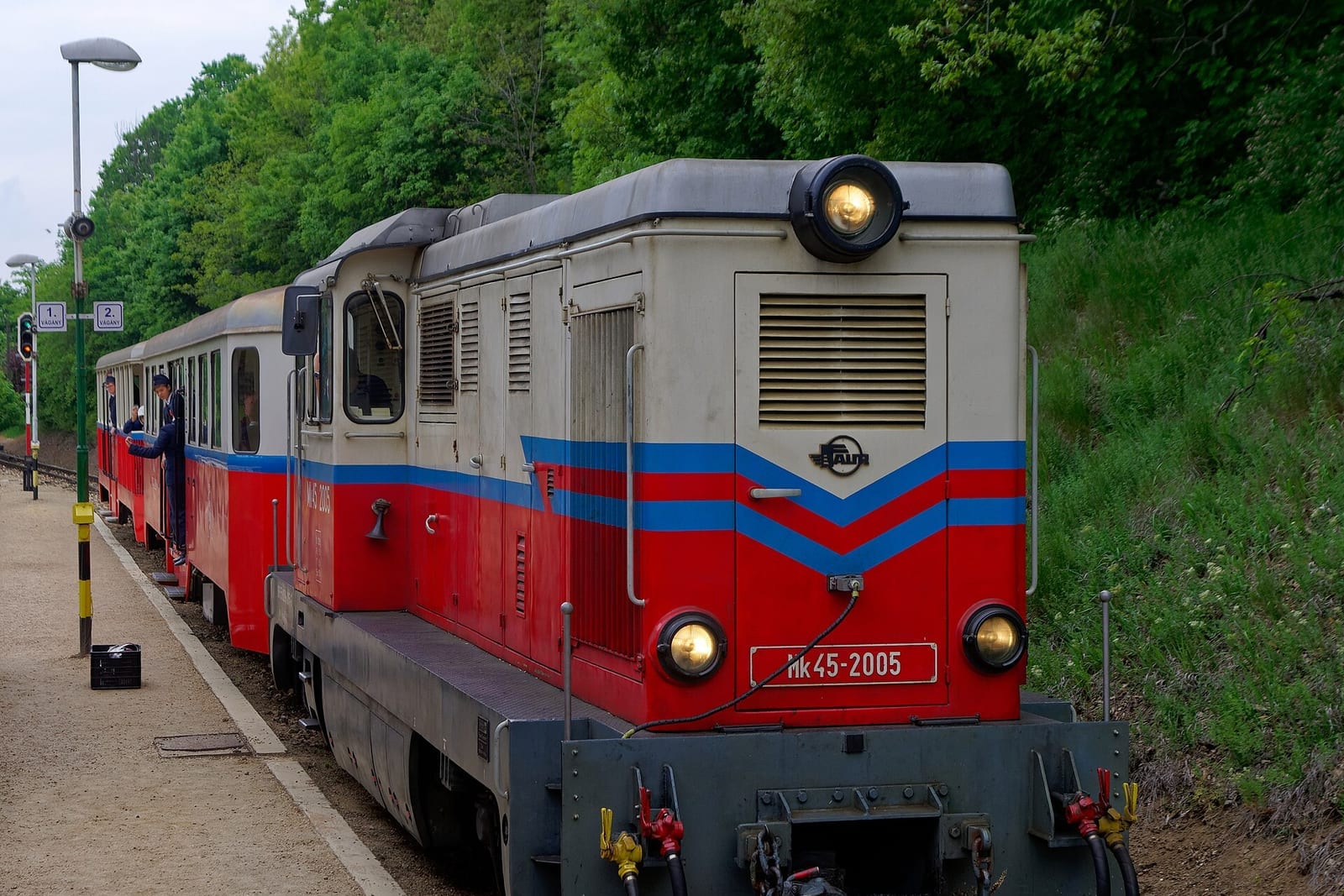
The cars are the SGP units introduced in 1973, red and cream, with a distinctly 1970s interior and a driving position at each end. They are not glamorous and they are not pretending to be. Look at the underside on the platform at Városmajor if you get the chance — the Strub rack and the pinion gear are plainly visible, and it is a much more physical piece of engineering than an ordinary tram.
Practical notes
- Any Budapest ticket or pass works. Validate on boarding.
- Every 15 minutes or so, roughly 05:00 to 23:00, all year.
- Sit on the right going up for the better glimpses down over the city.
- Take cash for the rest of the circuit, because the Children's Railway will not take anything else.
Along the route
Jakub Hałun / Wikimedia Commons · CC BY-SA 4.0 · croppedA rack railway that is also a tram
The Fogaskerekű is not a heritage operation — it is tram line 60, run alongside the city's trams and metros from five in the morning until eleven at night, all year, on an ordinary Budapest ticket. That is a great deal rarer than a preserved line.Wikimedia Commons · CC BY-SA 3.0Steam that pushed you up the hill
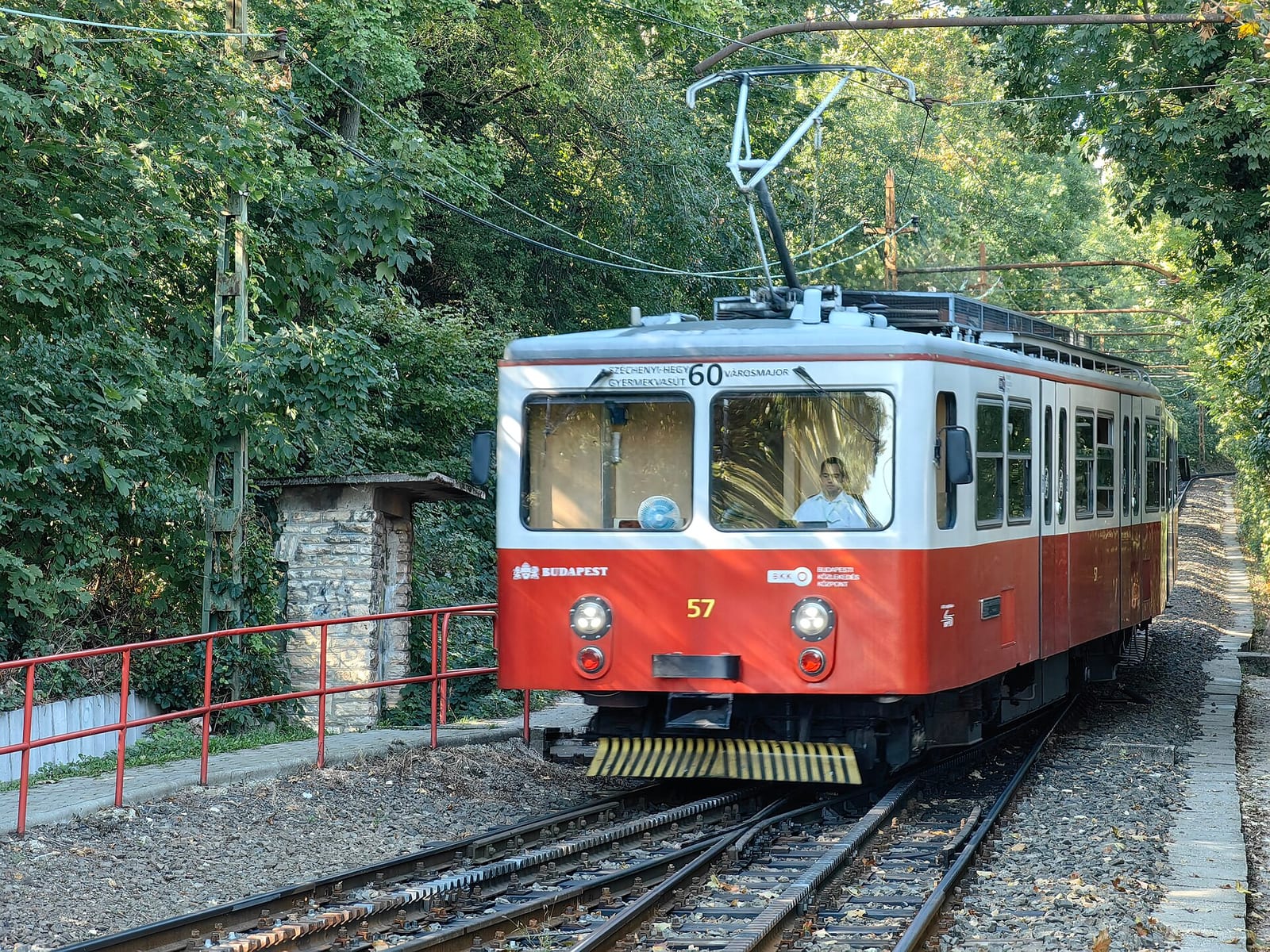
The first car ran at four in the afternoon on 24 June 1874: standard gauge, Riggenbach rack, and steam locomotives that pushed the coaches uphill and hauled them back down — 264 metres of climb.Random photos 1989 / Wikimedia Commons · CC BY-SA 4.0Nearly closed, then rebuilt for a birthday
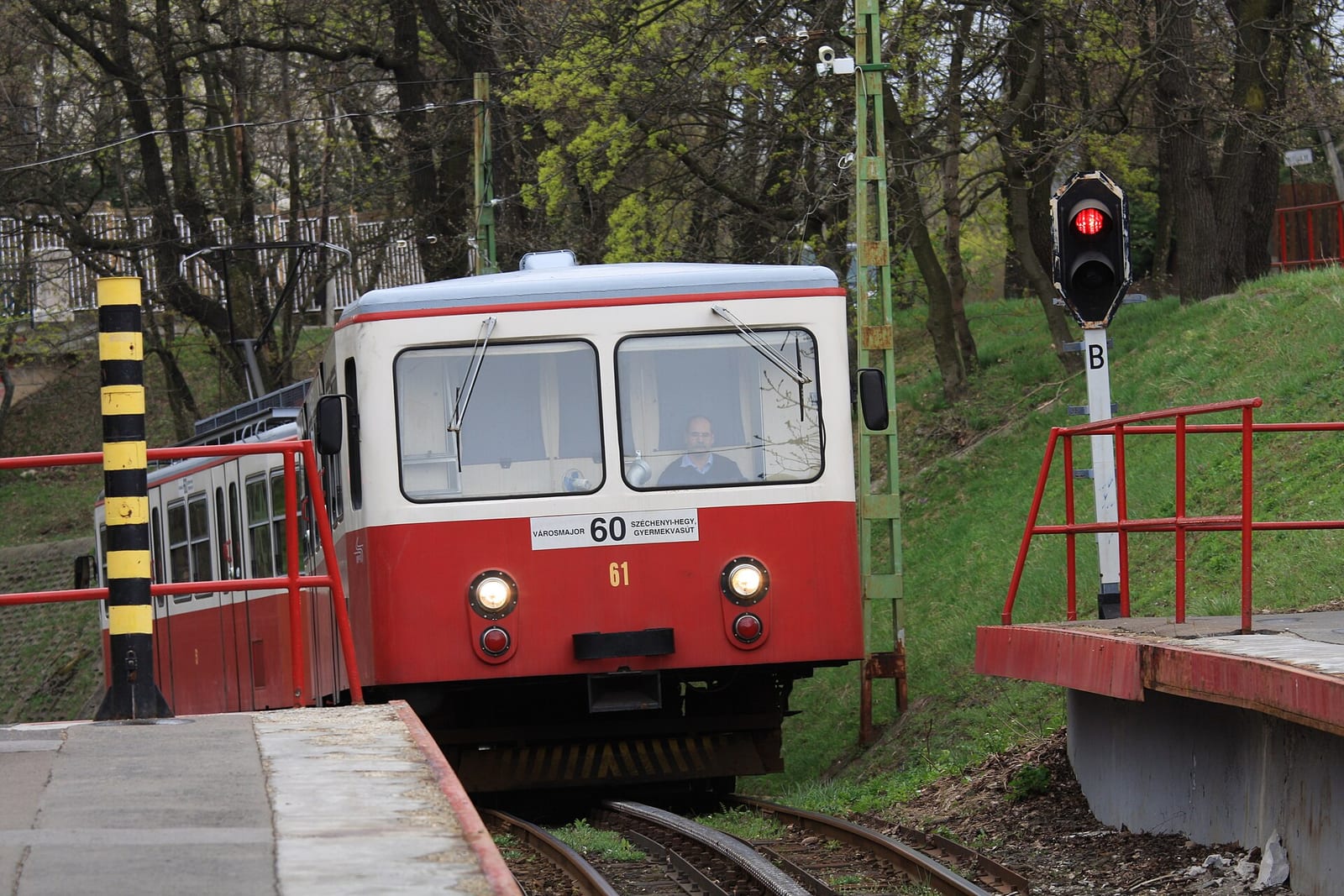
Electrification came in 1929, and then the war left the line so run down that closure was a real possibility. What saved it was an anniversary: in 1973 the whole railway was rebuilt for the centenary of the union of Buda, Pest and Óbuda.A bit of history
Culture & experiences along the way
Random photos 1989 / Wikimedia Commons · CC BY-SA 4.0Use it as the locals do
Get on at Városmajor with a city ticket, in the middle of a weekday, and you will find yourself among people going home with shopping. The Svábhegy and Széchenyi-hegy districts at the top are ordinary Budapest suburbs, expensive and leafy, and this is how they are reached. It takes about twenty minutes to climb, and the gradient is steep enough that the floor is noticeably not level.Jakub Hałun / Wikimedia Commons · CC BY-SA 4.0 · croppedChange at the top for the Children's Railway
The upper terminus is a 250-metre walk from Széchenyi-hegy, where the Children's Railway begins — eleven kilometres of narrow gauge through the forest, staffed entirely by ten-to-fourteen-year-olds. One warning: that railway is not on the city ticketing system and takes cash in forints only, so bring some.Random photos 1989 / Wikimedia Commons · CC BY-SA 4.0Ride it in late October
The line climbs through beech and oak the whole way, and for two or three weeks in autumn the Buda Hills turn completely. Because this is a working tram route rather than a tourist train, you can do it at eight in the morning with the light coming through the trees and almost nobody aboard — which is not something you can say about most 1874 rack railways.Timetables
There is no timetable to plan around. This is a city tram route with a rack under it.
The service
| Line | 60 — part of the Budapest network |
| Operator | BKV |
| Hours | About 05:00 to 23:00 |
| Days | Every day, all year |
| Frequency | Roughly every 15 minutes, more often at peak |
| Journey time | About 20 minutes end to end |
| Length | 3.7 km, climbing 264 m |
| Speed | 30 km/h uphill, 25 km/h downhill |
The fifteen-minute interval dates back to 2 July 1929, when the line was first worked electrically — it has been the basic pattern ever since.
Stops
| Városmajor | Lower terminus; two tram stops from Széll Kálmán tér |
| Szent János Kórház | For the hospital |
| Kút-völgyi út | |
| Orgonás | |
| Svábhegy | |
| Széchenyi-hegy | Upper terminus; 250 m from the Children's Railway |
Fares — and the important contrast
Ordinary Budapest tickets and passes are valid. A single BKK ticket, a book of ten, a 24- or 72-hour travelcard, the Budapest Card — all of them work on the cog railway exactly as they work on the trams and the metro. Validate as you board.
This is not true of the Children's Railway, which is operated by MÁV rather than BKV, sits outside the city fare system entirely, and takes cash in forints only. Visitors regularly assume one ticket covers the whole Buda Hills circuit. It does not.
Nor is the Libegő chairlift covered — that is ticketed separately too.
Planning the circuit
If you are doing the full Buda Hills round, the constraints that actually matter are not the cog railway's:
- The Children's Railway does not run on Mondays from September to April.
- The chairlift closes on alternate Mondays for maintenance, and in high wind.
The cog railway itself runs every day of the year, so build the day around the other two.
Getting to Városmajor
Trams 59, 59A and 61 from Széll Kálmán tér, which is on metro line 2 — two stops. If you are coming from Pest, take the M2 across the river and change.
What is proposed
The transit campaign group VEKE has argued for extending the line at both ends — down to Széll Kálmán tér, so that it connects directly with the metro, and up to Normafa. Neither has happened.
Operator: BKV, within the BKK network — bkk.hu (opens in a new tab). Position as of July 2026.
Tickets
There is nothing to arrange. The cog railway is tram line 60 and sits fully inside the BKK fare system, so a single ticket, a book of ten, a 24- or 72-hour travelcard, the Budapest Card or a monthly pass all cover it. Buy from a machine or the BudapestGO app and validate as you board — inspections are frequent. A rack railway of 1874 for the price of a tram ride is one of the better bargains in European transport.
Two things on the same afternoon are not covered, and this is where visitors come unstuck: the Children's Railway, which is cash in forints only, and the Libegő chairlift. Carry cash as well as the travelcard if you are doing the full Buda Hills circuit. Trains run every day of the year, about every fifteen minutes.
Book your tickets
An ordinary Budapest ticket
It really is just tram line 60
No special ticket, no booking, no tourist fare. A single BKK ticket, a book of ten, or any Budapest travelcard covers the cog railway exactly as it covers the trams and the metro. Validate as you board and ride. Trains run from about five in the morning until eleven at night, all year.
Book Tickets (opens in a new tab, on BKK)via BKKThe Buda Hills circuit
Cog-wheel, Children's Railway, chairlift
Up on tram 60, along on the Children's Railway, down on the Libegő chairlift. Only the first is covered by your city pass — the other two are ticketed separately and the Children's Railway takes cash only, so plan for that before you set off.
Book Tickets (opens in a new tab, on BKK)via BKKRail Passes
No rail pass covers the Cog-wheel Railway. It is Budapest's tram line 60, run inside the city's BKK fare system, which is not among the companies in Interrail's table for Hungary. A BKK single, a 24- or 72-hour travelcard or the Budapest Card covers it.
Checked October 2026 against interrail.com (opens in a new tab).
Places to Visit
The cog railway climbs out of one of the pleasantest parts of Buda and delivers you to the top of the hills, so there is something worth seeing at each end and along the way.
The single best reason to ride it is at the top: two hundred and fifty metres from the upper terminus, the Children's Railway runs eleven kilometres of narrow gauge through the forest, operated by ten- to fourteen-year-olds.
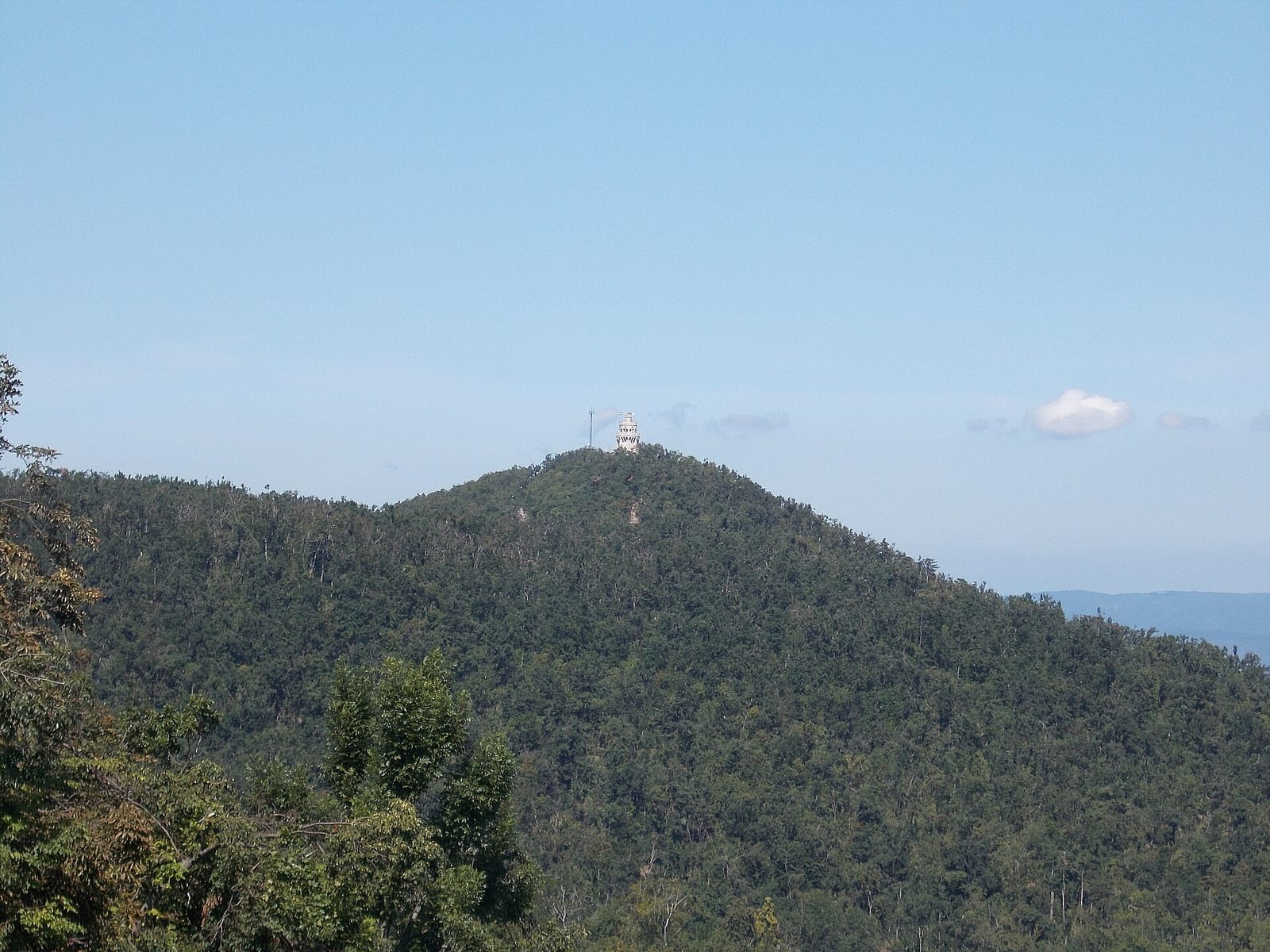
Beyond the six places carded here, Normafa is a short walk from Széchenyi-hegy or one stop on the Children's Railway — meadows, beech woods, the classic Budapest weekend walk, and huts selling rétes. This is where the transit campaigners would like the cog railway extended to. János-hegy is the highest point in Budapest, crowned by the white Erzsébet lookout of 1910, and the Libegő chairlift drops from it to Zugliget in twelve minutes over the treetops.
The hills are limestone and riddled with caves: Pálvölgy and Szemlőhegy are both open on guided tours, the Pálvölgy route involving ladders and narrow passages. Down in the city there is also the Great Market Hall, the ruin bars of District VII, and the Hungarian Railway Museum at Északi, which is a whole afternoon of locomotives you are allowed to climb on.
For the baths, note that the Gellért closed on 1 October 2025 for a full refurbishment and is not expected to reopen until 2028.
 Rimanóczy Jenő / Wikimedia Commons · CC BY-SA 3.0 · cropped
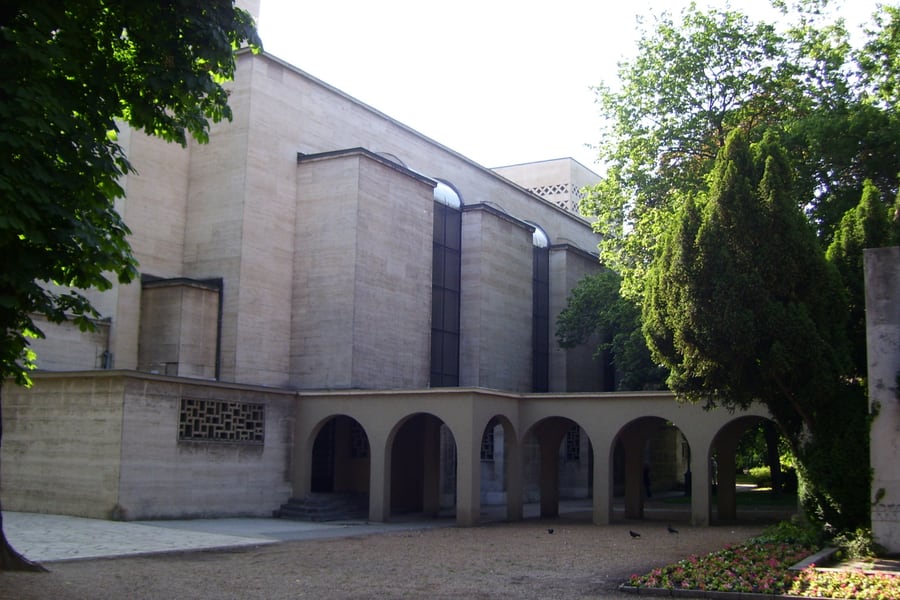
The Városmajor church
Városmajor is a long public park two stops from Széll Kálmán tér, and at its eastern edge stands one of the outstanding works of 20th-century Hungarian church architecture: a bell tower, a great church and a smaller church of 1923, now a community house, all strung together by reinforced-concrete arcades. Aladár Árkay designed it and his son Bertalan Árkay finished it after his death in 1932.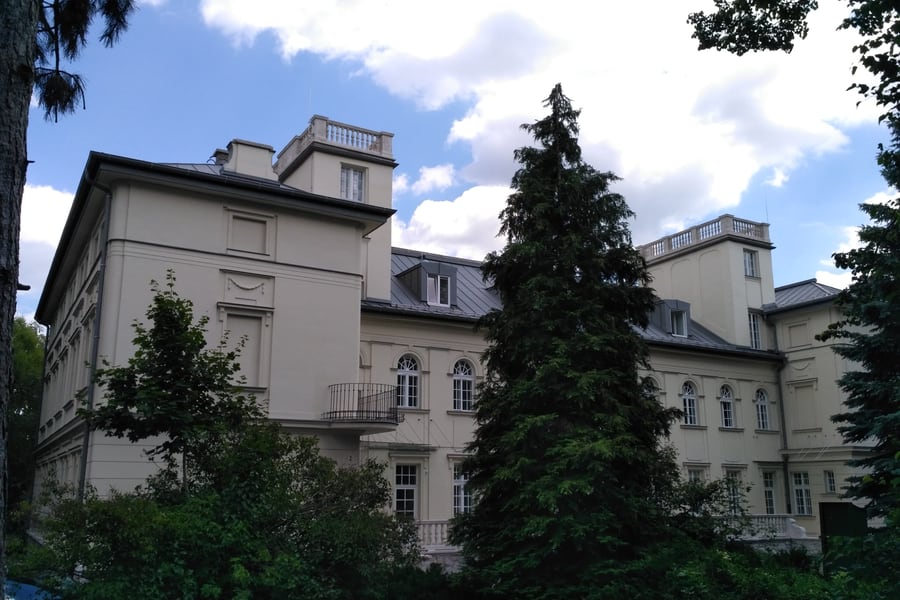 Lacalaca85 / Wikimedia Commons · CC BY-SA 4.0 · cropped
Svábhegy
Green, expensive and full of late nineteenth-century villas put up once the cog railway had made the hills reachable — the line effectively invented this neighbourhood. Up here too is the Konkoly Observatory, founded as a private observatory in 1871 by Miklós Konkoly-Thege (1842–1916) and handed to the state in 1899. It is still Hungary's largest astronomical institute and holds the country's largest telescopes. The walking starts straight off the platform.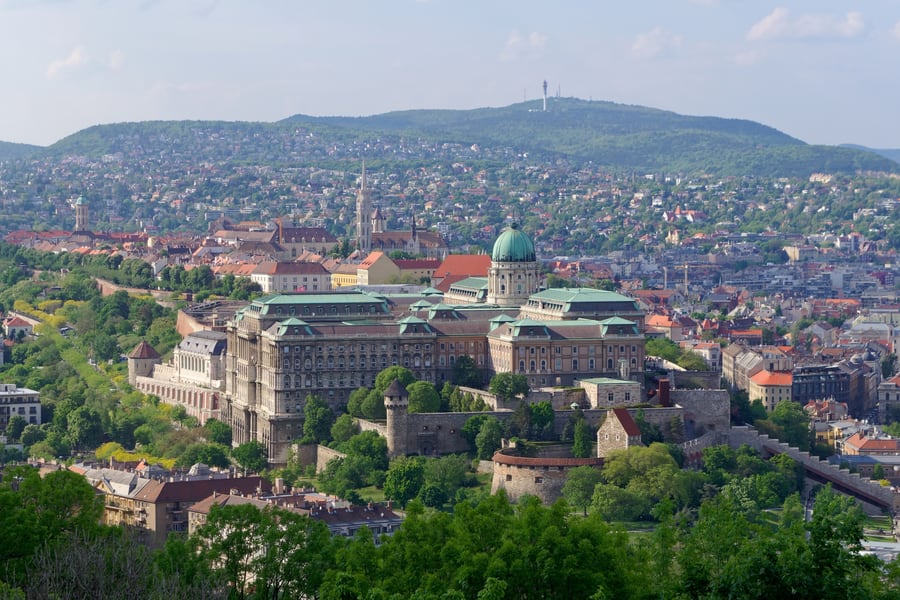 Jakub Hałun / Wikimedia Commons · CC BY-SA 4.0 · cropped
Castle Hill
From the bottom of the line you are a short walk from the Buda Castle complex, the Matthias Church and the Danube panorama that is on every postcard of the city. The view back the other way is the useful one for this journey: from Gellért Hill you can see the whole castle terrace with the Buda Hills rising behind it, and the transmitter mast on János-hegy marking where the cog railway and the Children's Railway are heading.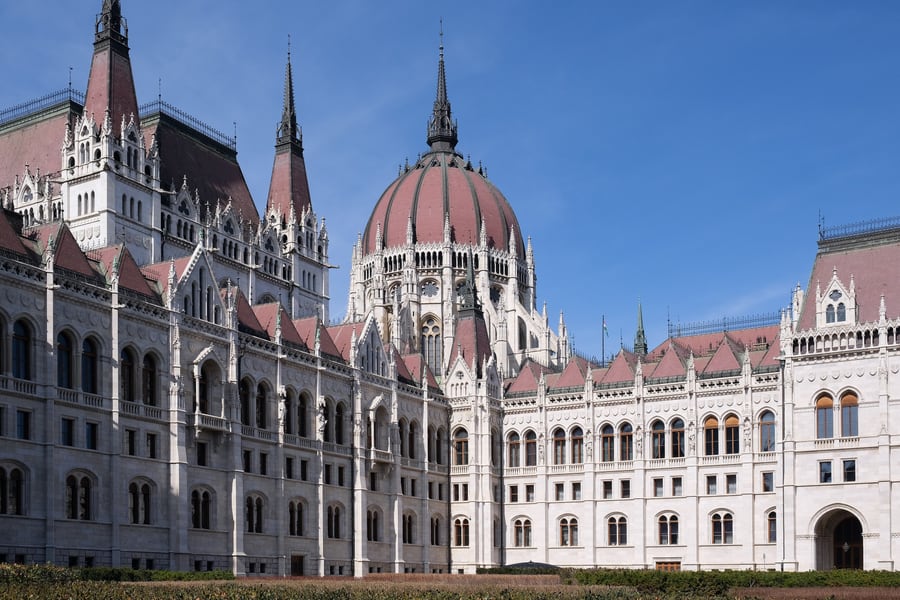 kallerna / Wikimedia Commons · CC BY-SA 4.0 · cropped
The Parliament
Imre Steindl designed it in neo-Gothic — with a Renaissance cupola borrowed from a Viennese church — and it opened in 1902, having been the largest building in Hungary from the day it was finished and remaining so ever since. It stands on Kossuth tér on the eastern bank, and the best view of it is from the Buda side of the river, which is where this railway's hills happen to be.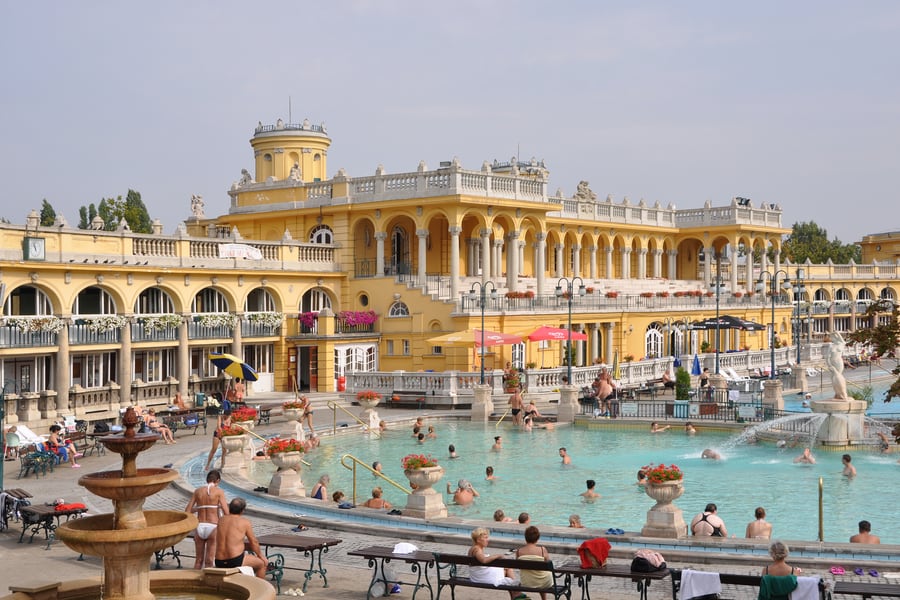 Marc Ryckaert (MJJR) / Wikimedia Commons · CC BY 3.0 · cropped
The Széchenyi baths
Budapest's largest bath complex, begun in 1909 to Győző Czigler's design and still running three outdoor pools and fifteen indoor ones. The thermal water comes up from the "Szent István" well, sunk in 1938. The outdoor pools stay open through the winter, which is when the photographs of steam and chess players come from. It is a straightforward metro ride from the bottom of the cog railway.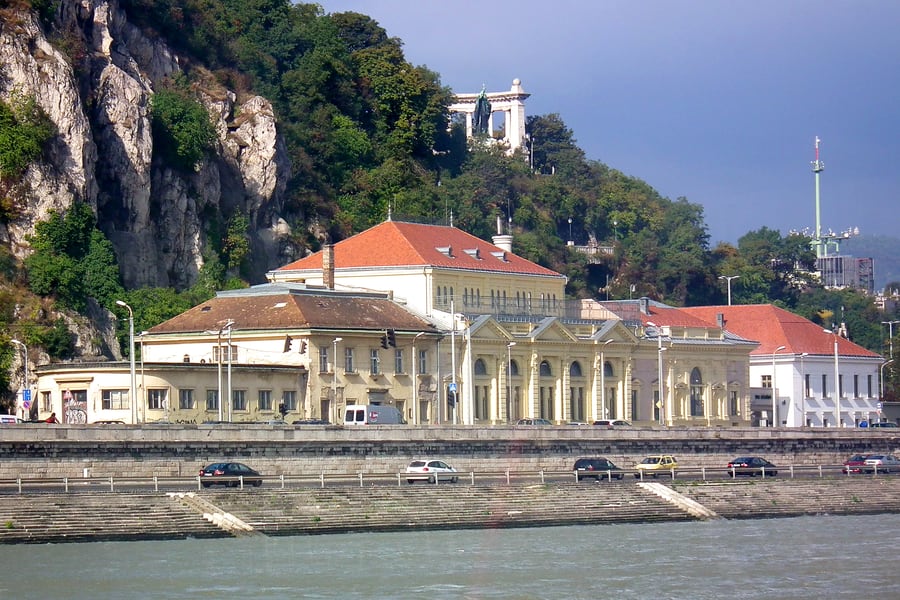 Varius / Wikimedia Commons · CC BY-SA 3.0 · cropped
The Rudas baths
⚠️ The Gellért is closed until 2028 for a full refurbishment — it shut on 1 October 2025 — so the Ottoman option is the one to take. The Rudas was founded in 1571–72 for Sokollu Mustafa Pasha, governor of Buda, and it still has its octagonal pool under an Ottoman dome. Six therapy pools and a swimming pool, from 10 to 42 °C, at the foot of Gellért Hill on the Buda embankment.Where to Sleep
Because this is a city tram line, the only question is where you want to be in Budapest — and the answer, for once, has a clear winner if the railway matters to you.
Around Széll Kálmán tér — the practical choice
The 2nd district, on the Buda side, puts you two tram stops from Városmajor and the bottom of the cog railway, and on metro line M2 for the rest of the city. Hotels here are mid-range, modern and unglamorous, and the neighbourhood is residential, green and quiet at night. If you intend to ride the line early — which you should — this is where to sleep.
Castle Hill and Víziváros
Ten minutes' walk from Széll Kálmán tér and much the most beautiful part of Buda: cobbled streets, the Fisherman's Bastion, small hotels in converted eighteenth-century houses. Expensive and busy with day visitors, but empty and remarkable in the evening once the coaches have gone.
Up in the hills
Svábhegy, Széchenyi-hegy, Normafa and Zugliget all have a scattering of hotels, pensions and apartments among the villas. Cool in summer, wooded, silent at night, and served by the very railway you came for — you commute into the city on tram 60, which is a genuinely pleasant way to start a day. Choose this if you want air rather than sightseeing.
Pest
Where most visitors stay: districts V and VI for the Danube embankment, the Basilica, Andrássy út and the widest choice of hotels; district VII, the old Jewish quarter, for hostels, ruin bars and noise. From anywhere in Pest the cog railway is a metro ride plus two tram stops — about twenty-five minutes door to platform.
The spa hotels
Budapest sits on hot springs and several hotels are built over their own. The Gellért, at the Buda end of the Liberty Bridge, is the grand one, with its Art Nouveau bath halls attached to the hotel.
Timing
The railway runs every day of the year, so nothing constrains you — but if you are doing the whole Buda Hills circuit, the other two legs do. The Children's Railway is closed Mondays from September to April, and the chairlift shuts on alternate Mondays and in high wind.
Late October into early November is the best fortnight: the beech woods the line climbs through turn completely, and you can have them at eight in the morning on an ordinary city ticket.
Questions or corrections
Planning this trip and stuck on something, or spotted a time, fare or detail that has changed? Send us a message about The Budapest Cog-wheel Railway. We read every one, and we update this page when something has changed.