The Cambrian Coast Line
Jeremy Segrott / Wikimedia Commons · CC BY 2.0
- DistanceAbout 58 miles, Machynlleth to Pwllheli
- DurationAbout 2 h 20 min
- Best seasonEvery day · fewer trains on Sundays
Introduction
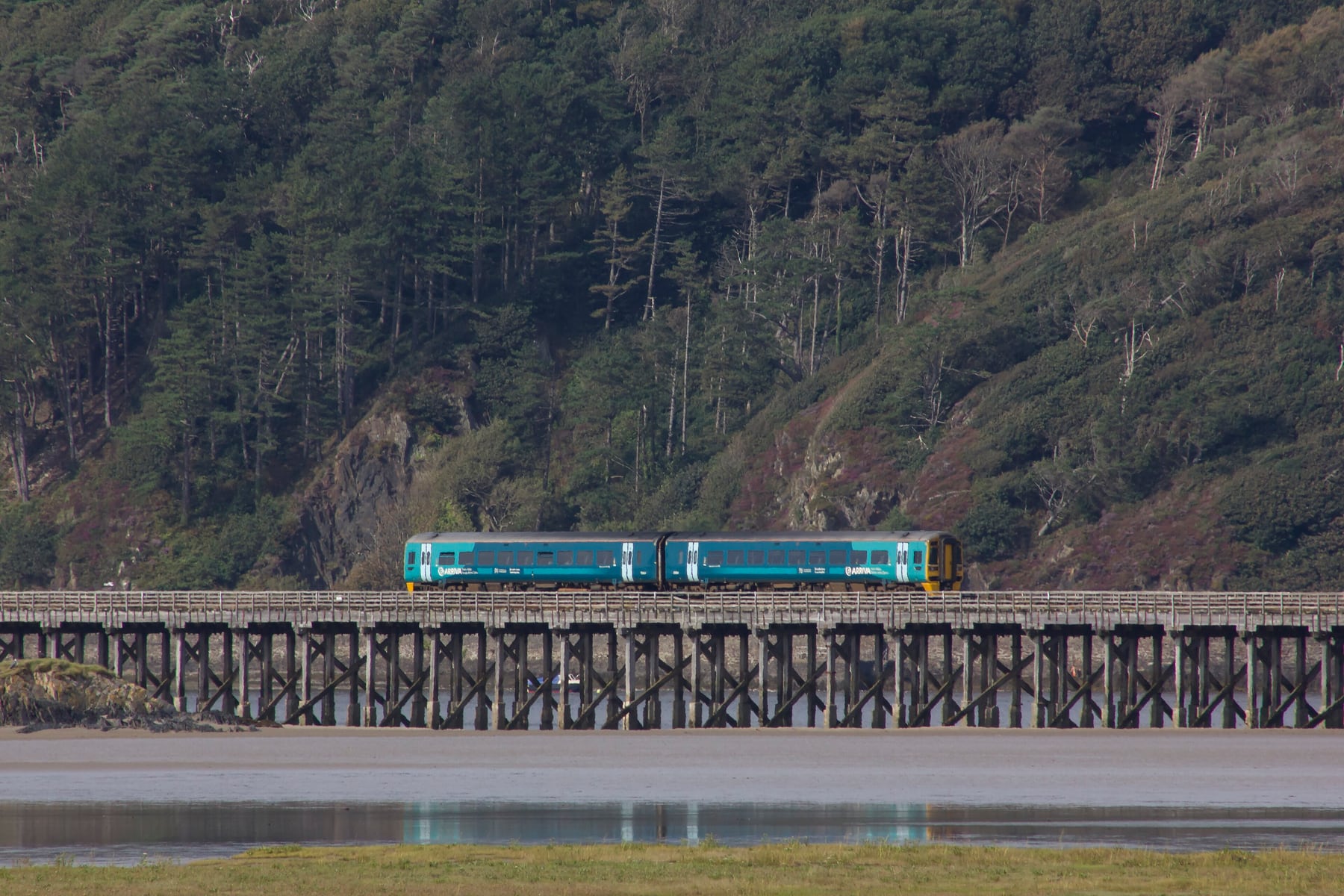
The Cambrian Coast Line runs about 58 miles along Cardigan Bay, from the market town of Machynlleth to Pwllheli on the Llŷn Peninsula. Halfway along it crosses the mouth of the Mawddach on Barmouth Bridge, a timber viaduct 900 yards long that opened in 1867. It is the longest timber viaduct in Wales, and the trains still cross it slowly, with the estuary on one side and the open sea on the other.
The line was built in the 1860s by promoters who hoped to open the coast to visitors, and its bridge has twice needed rescuing. In 1980 shipworm was found eating the timber piles and the viaduct was closed to trains until 1986; between 2020 and 2023 it was rebuilt again, and it reopened in December 2023. Either side of the bridge, a single-track railway threads round the Dyfi estuary, along the cliffs at Friog, beneath Harlech Castle and across the Dwyryd to Porthmadog and Criccieth.
Transport for Wales runs a train about every two hours, and the journey takes around two hours and twenty minutes. It is an ordinary local train, not an excursion: many of its stops are small halts where the train calls only on request, which makes it easy to get off for a beach, a castle or a walk and catch a later train.
The Journey
Many trains for the coast start in Shrewsbury or Birmingham International and cross mid Wales on the Cambrian main line. At Machynlleth, where the whole line is signalled from, trains for Pwllheli and Aberystwyth divide or join, and the coast train sets off down the Dyfi valley.
Machynlleth to Barmouth
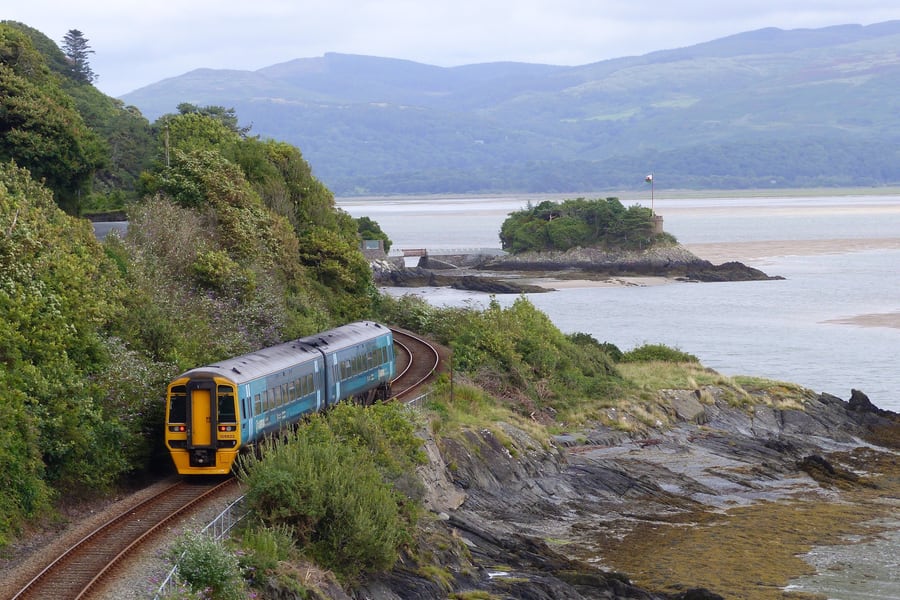
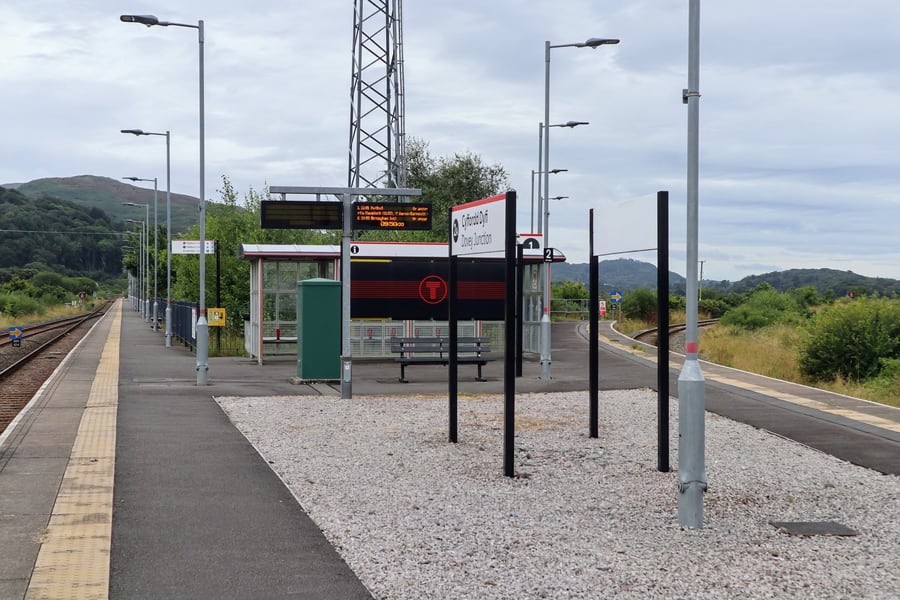
A few minutes on, the line forks at Dovey Junction, an island platform in the marshes of the Dyfi National Nature Reserve that no road reaches, only a footpath. The Aberystwyth line heads south; the coast line follows the north shore of the estuary, through a string of tunnels behind Aberdyfi. Its builders had meant to bridge the Dyfi from Ynyslas, and gave up in 1864, defeated by the soft estuary bed and the cost.
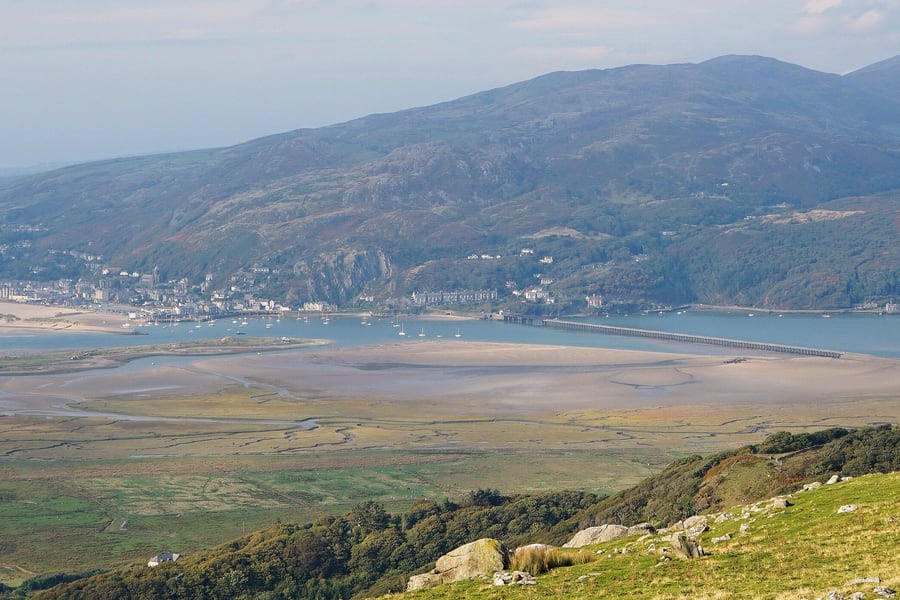
Beyond Tywyn, where the narrow-gauge Talyllyn Railway starts, the line climbs to a ledge high above the sea at Friog. Locomotives fell from this ledge after rockfalls in 1883 and 1933, and in 1940 the Great Western built a concrete avalanche shelter over the track. After Fairbourne, the train calls at Morfa Mawddach, once Barmouth Junction, where the closed line to Dolgellau is now the Mawddach Trail, and turns onto Barmouth Bridge. It crosses the 113 timber trestles at no more than 22 mph and finishes on the steel spans at the Barmouth end, built to swing open for tall ships.
Barmouth to Pwllheli
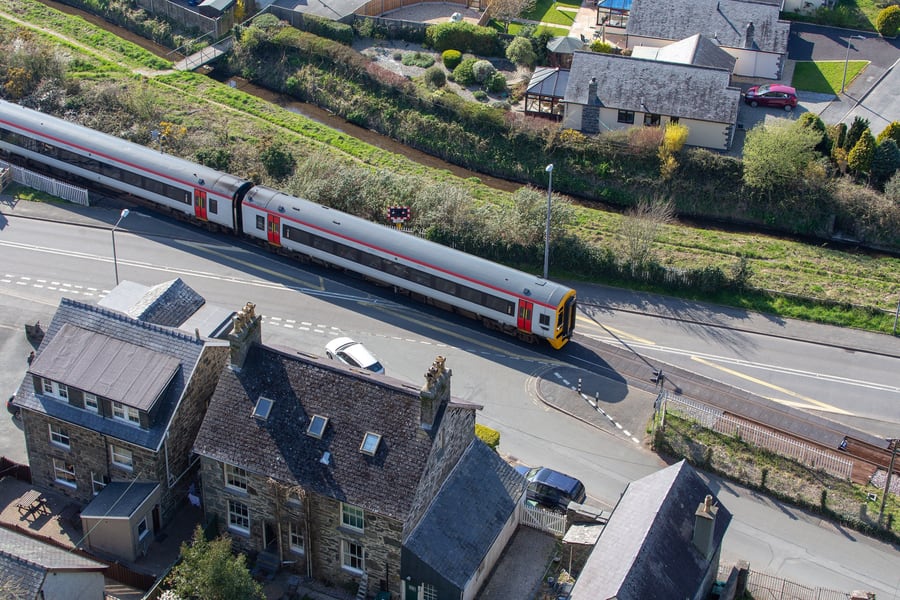
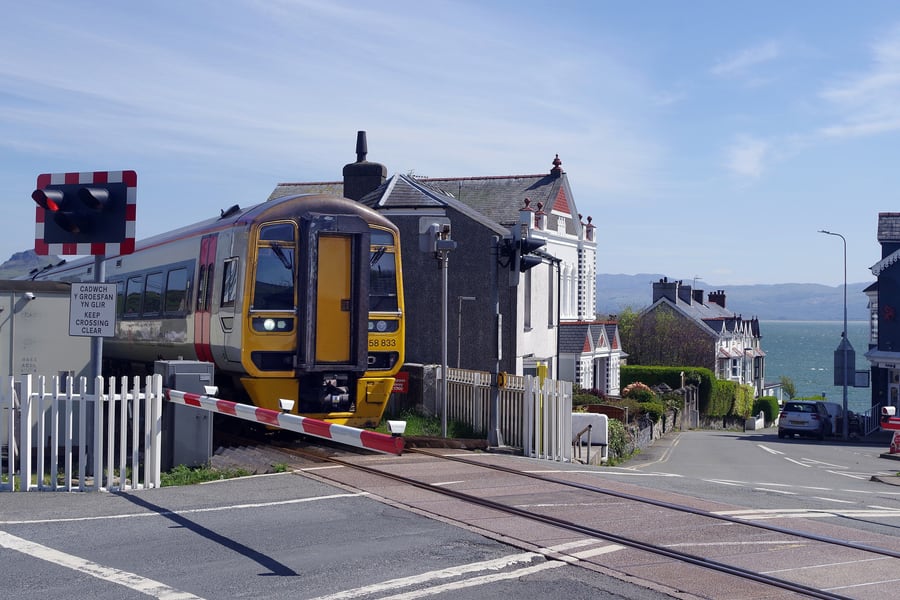
North of Barmouth the railway keeps to the shore, behind a sea wall that storms breached in January 2014. At Harlech it runs along the flat ground below the castle rock: the sea once reached the foot of the rock Edward I built on in the 1280s, and it is now half a mile away. The line crosses the Dwyryd estuary on Pont Briwet, a road and rail bridge that replaced the old timber viaduct in 2014–2015, then passes under the Ffestiniog Railway at Minffordd.
At Porthmadog the main line crosses the narrow-gauge Welsh Highland on the level, the only flat crossing of two gauges in the United Kingdom, and both narrow-gauge lines start from the harbour — see the Ffestiniog & Welsh Highland Railways. The last stretch runs past Criccieth and its castle on the headland, and along the shore of the Llŷn to Pwllheli, where the station has stood beside the harbour since 1909.
The trains
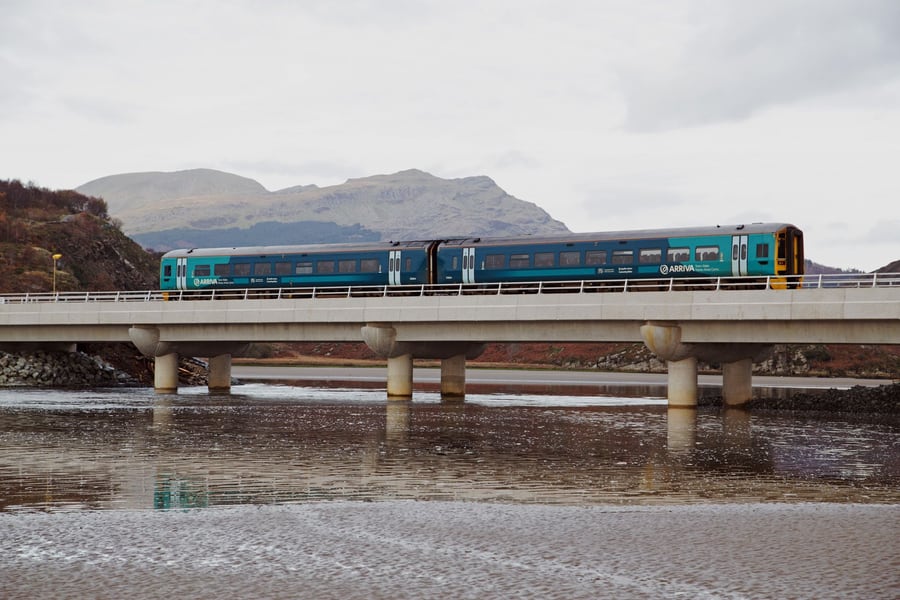
The coast is worked by Class 158 Express Sprinters, two-car diesel units built by British Rail at Derby between 1989 and 1992 and now painted in Transport for Wales red. Their successors, the Class 197s built by CAF, have been on test along the coast in 2026, and Transport for Wales says they will start running on the Cambrian lines from the autumn. The line has no lineside signals: since 2011 it has been controlled by the European Rail Traffic Management System, with the driver's instructions shown on a screen in the cab — it was the testing ground for the system in Britain.
Along the route
 Vanmanyo / Wikimedia Commons · CC BY 4.0
Dovey Junction
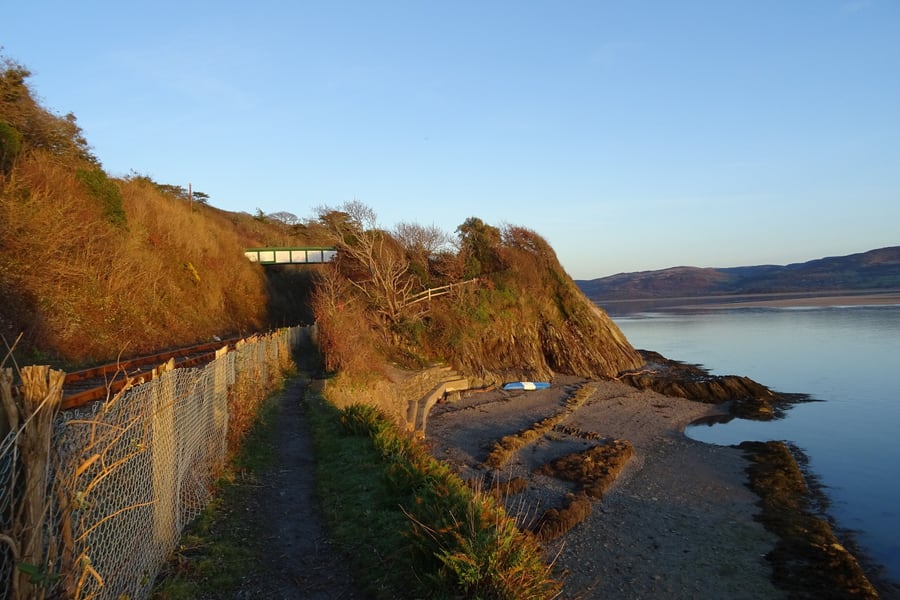
The line splits on an island platform in the marshes of the Dyfi National Nature Reserve. No road reaches the station, only a footpath; trains for Aberystwyth turn south here and the coast train heads west along the estuary.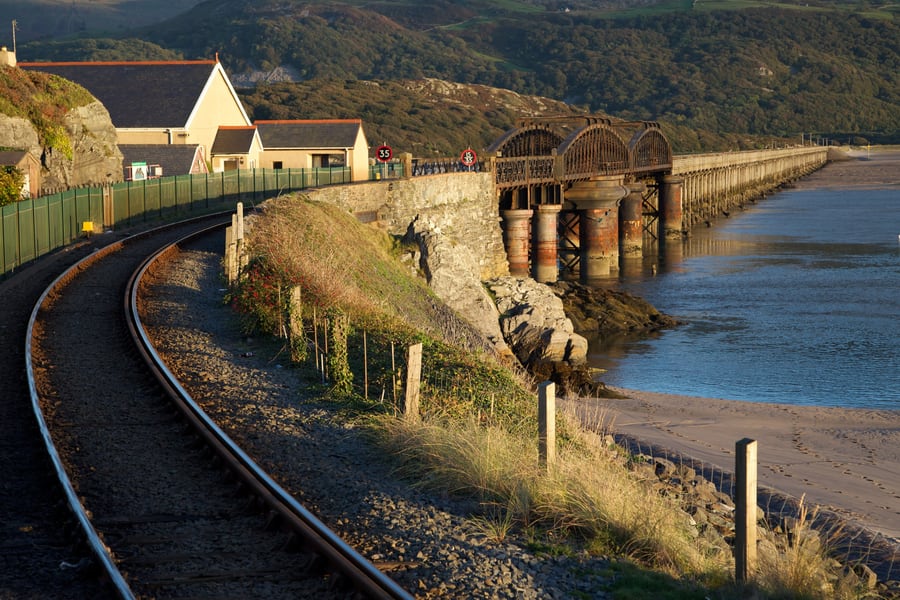 Tom Parnell / Wikimedia Commons · CC BY-SA 2.0
Onto Barmouth Bridge
At Morfa Mawddach the train curves onto the 113 timber trestles of the viaduct and crosses at no more than 22 mph. The steel spans at the far end were built to swing open for tall ships.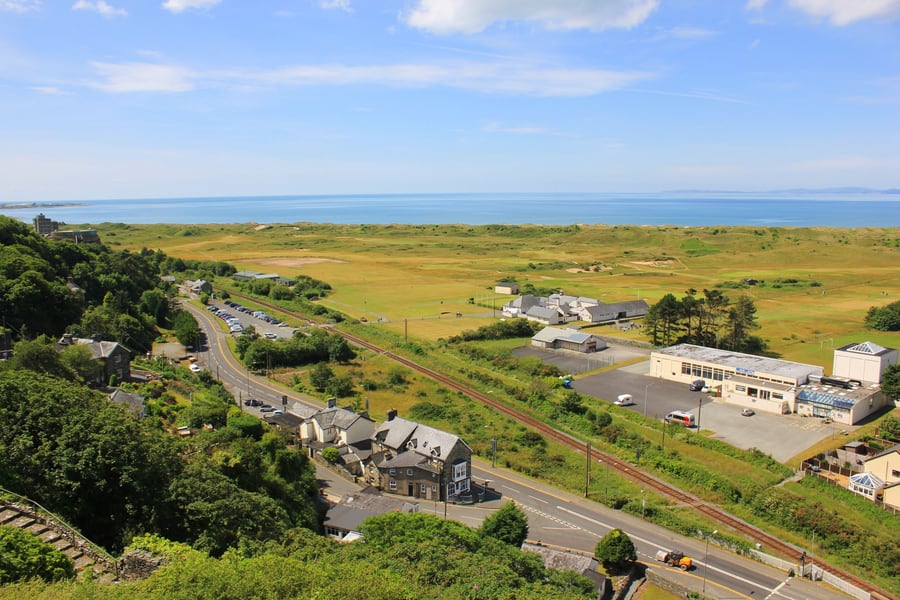 Jeff Buck / Wikimedia Commons · CC BY-SA 2.0
Below Harlech Castle
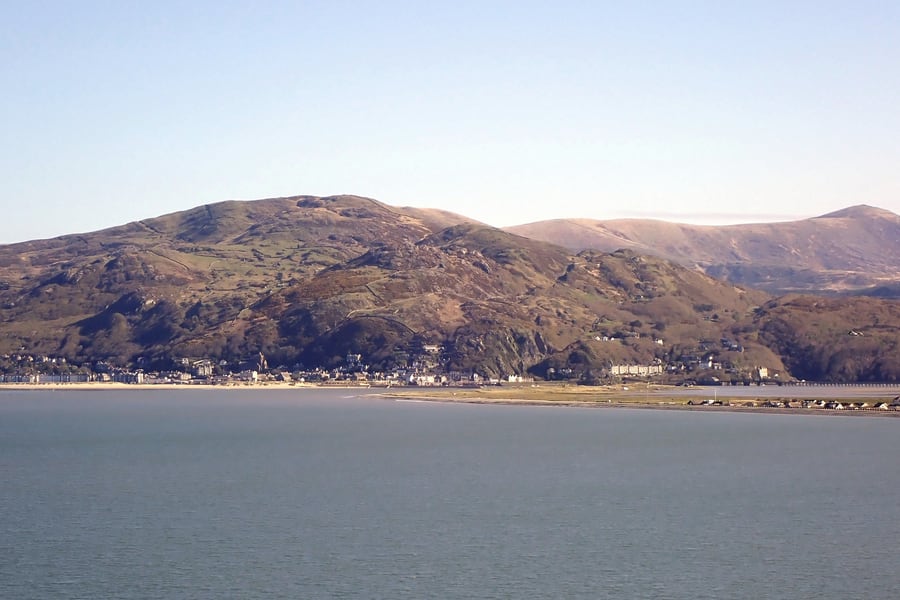
At Harlech the railway runs across the flat land of Morfa Harlech, below the castle rock. When the castle was built the sea reached the foot of the rock; the shore is now half a mile away, beyond the dunes.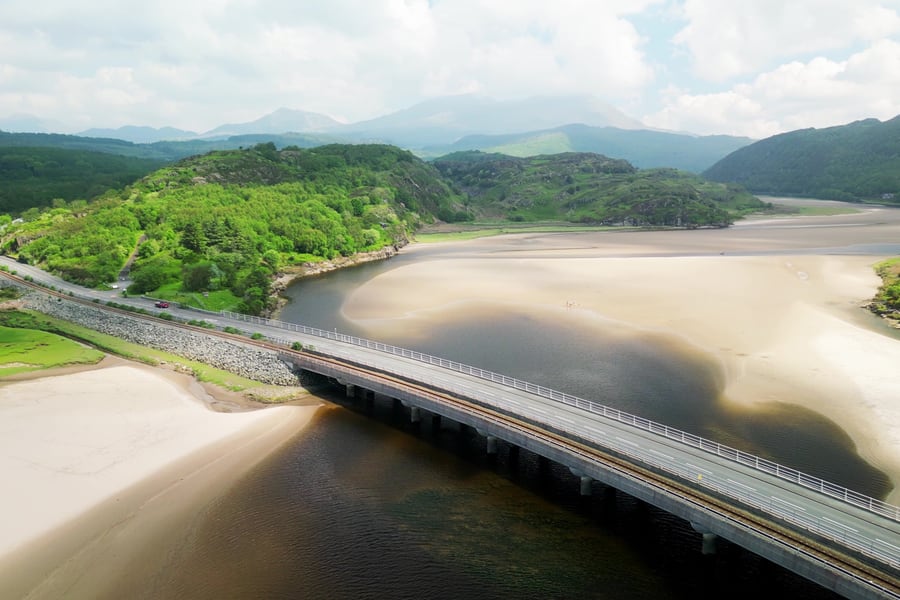 Llywelyn2000 / Wikimedia Commons · CC BY-SA 4.0 · cropped
Pont Briwet
The line crosses the Dwyryd estuary on Pont Briwet, a road and rail bridge that replaced a Victorian timber viaduct. Trains have used it since September 2014; the old bridge was found unsafe and pulled down.A bit of history
Culture & experiences along the way
 Stephen McKay / Wikimedia Commons · CC BY-SA 2.0
The Talyllyn Railway
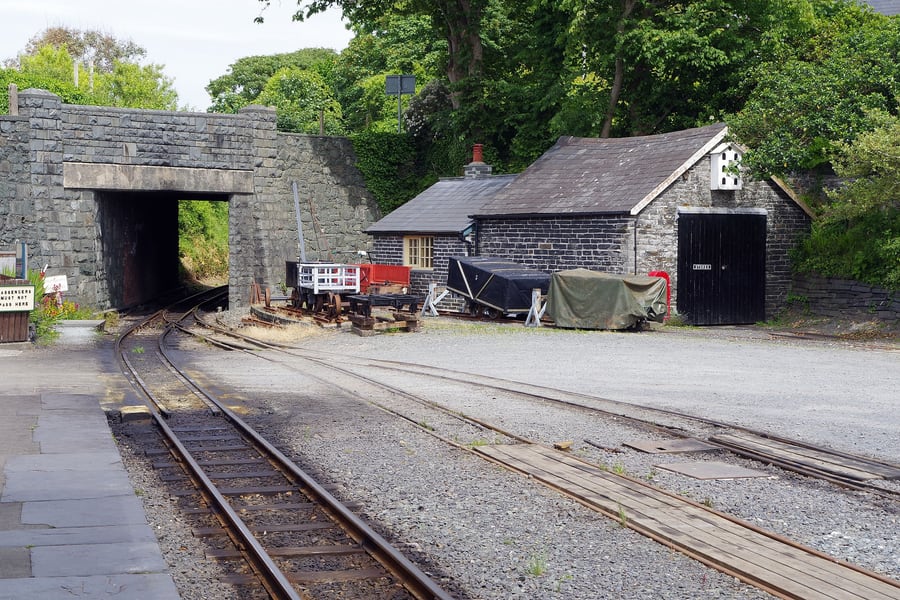
At Tywyn the narrow-gauge Talyllyn Railway climbs seven miles inland from Wharf station, where slate was once moved onto the main line. Volunteers took it over in 1951, making it the first railway in the world preserved that way, and 2026 is its 75th year in their hands.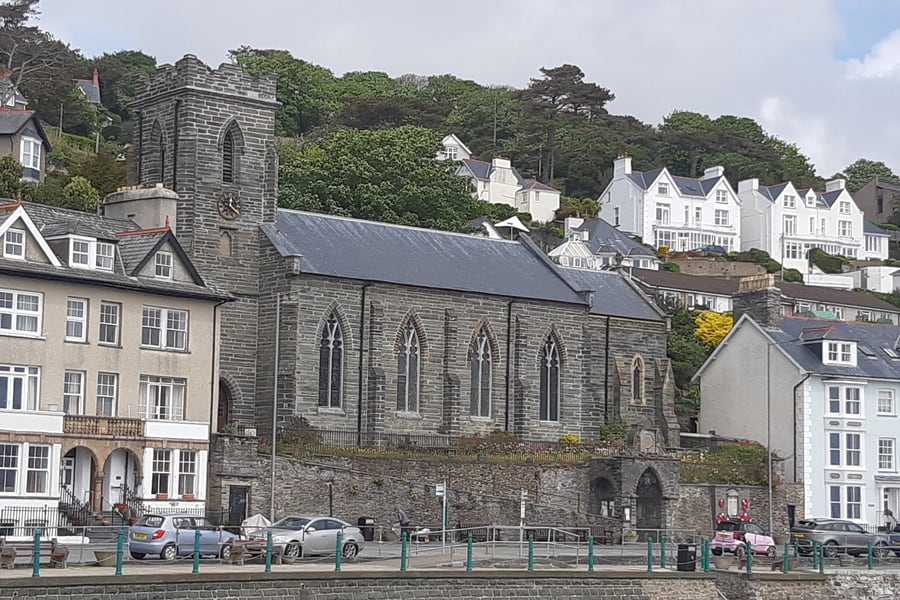 Peter Glyn / Wikimedia Commons · CC0
The Bells of Aberdyfi
Legend says the drowned kingdom of Cantre'r Gwaelod lies under Cardigan Bay, and that its bells can be heard beneath the waves. The song The Bells of Aberdovey tells the story, and since 1936 St Peter's Church on the seafront has had ten bells tuned so that they can play it.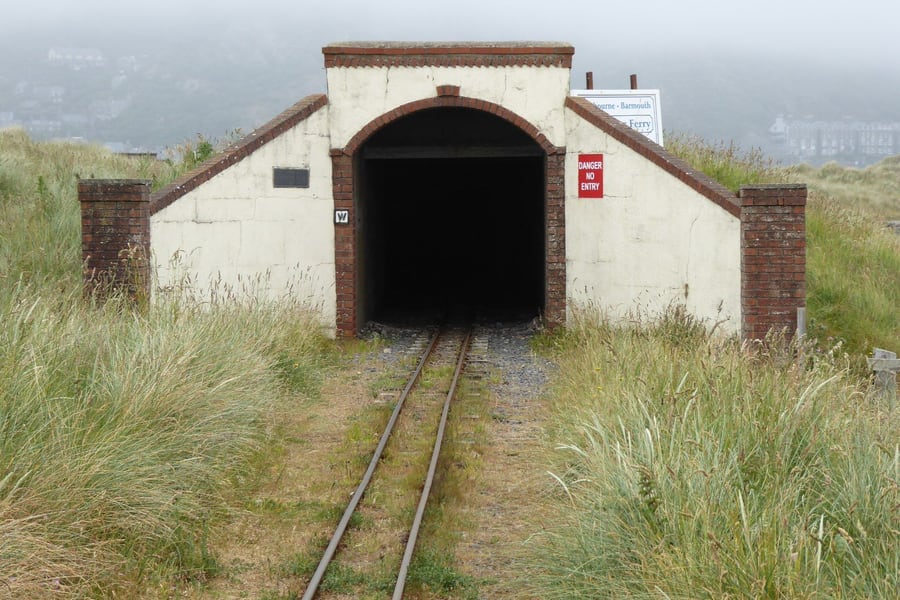 Philip Halling / Wikimedia Commons · CC BY-SA 2.0 · cropped
The Fairbourne Railway and the ferry
From Fairbourne a miniature railway runs two miles along the dunes to the tip of the spit, through a tunnel, to meet a small ferry across the harbour to Barmouth. The trains and the ferry run between Easter and the end of October; the crossing is £4.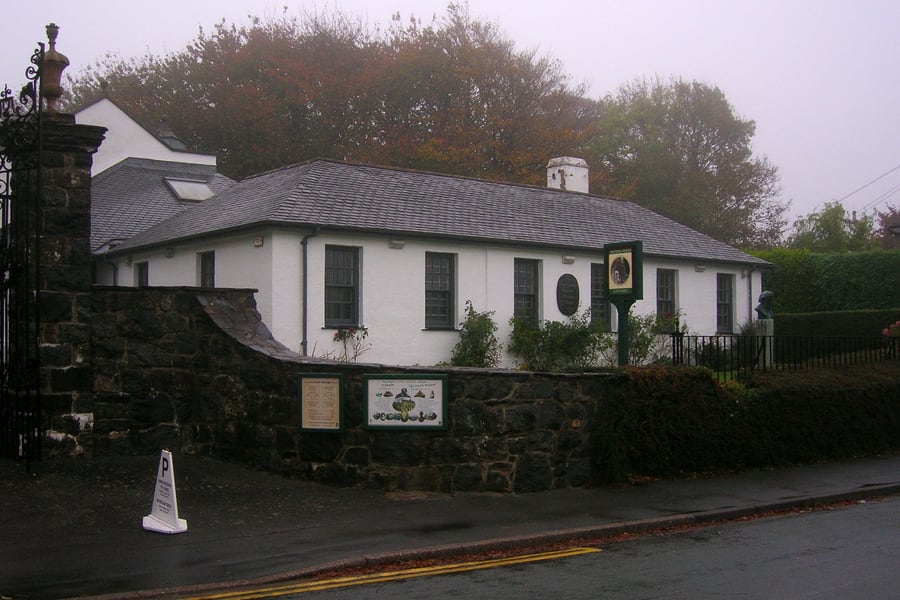 John H Darch / Wikimedia Commons · CC BY-SA 2.0 · cropped
Lloyd George's village
At Llanystumdwy, between Criccieth and Pwllheli, the Lloyd George Museum tells the life of the Prime Minister who grew up here, beside Highgate, his childhood home, and his uncle's shoemaking workshop. It is open from April to October.Timetables
Transport for Wales runs eight trains each way between Machynlleth and Pwllheli on weekdays and Saturdays, and five on Sundays, about every two hours. The whole journey takes about two hours and twenty minutes.
Northbound, Monday to Friday
| Machynlleth | Tywyn | Barmouth | Harlech | Porthmadog | Pwllheli |
|---|---|---|---|---|---|
| 06:43 | 07:12 | 07:45 | 08:13 | 08:50 | 09:12 |
| 08:52 | 09:23 | 10:01 | 10:26 | 10:51 | 11:13 |
| 10:55 | 11:24 | 12:01 | 12:26 | 12:52 | 13:14 |
| 12:51 | 13:22 | 13:57 | 14:22 | 14:56 | 15:18 |
| 14:56 | 15:25 | 15:58 | 16:23 | 16:52 | 17:15 |
| 16:55 | 17:25 | 18:00 | 18:25 | 18:56 | 19:19 |
| 19:04 | 19:33 | 20:04 | 20:30 | 20:55 | 21:18 |
| 21:47 | 22:24 | 22:55 | 23:21 | 23:46 | 00:06 |
Southbound, Monday to Friday
| Pwllheli | Porthmadog | Harlech | Barmouth | Tywyn | Machynlleth |
|---|---|---|---|---|---|
| 06:29 | 06:52 | 07:17 | 07:48 | 08:17 | 08:46 |
| 07:24 | 07:47 | 08:11 | 08:47 | 09:24 | 09:55 |
| 09:34 | 09:57 | 10:22 | 10:56 | 11:29 | 11:58 |
| 11:37 | 12:00 | 12:26 | 12:55 | 13:25 | 13:52 |
| 13:38 | 14:01 | 14:27 | 14:55 | 15:26 | 15:55 |
| 15:37 | 16:00 | 16:26 | 16:56 | 17:26 | 17:57 |
| 17:42 | 18:05 | 18:30 | 18:57 | 19:32 | 20:04 |
| 20:26 | 20:49 | 21:19 | 21:46 | 22:16 | 22:53 |
Good to know:
- Saturdays have the same departures from both ends, with some northbound arrivals a minute or two different.
- Sundays have five trains each way: north from Machynlleth at 10:04, 12:52, 14:53, 16:52 and 18:55, and south from Pwllheli at 09:34, 11:28, 13:40, 15:33 and 17:36.
- Through trains. The 09:27, 11:27, 13:27, 15:27 and 17:29 from Shrewsbury run through to Pwllheli on weekdays without a change.
- Request stops. Many of the small halts between the towns are request stops, where the train calls only when someone is waiting or has asked to get off.
Times as of October 2026, from the National Rail journey planner for Tuesday 13, Saturday 17 and Sunday 18 October. Check your date on tfw.wales (opens in a new tab).
Tickets
The Cambrian Coast Line is part of the National Rail network, so tickets are ordinary National Rail fares, sold by Transport for Wales at stations, on the train and online, in Standard class only. Sampling the National Rail journey planner for one adult from Machynlleth to Pwllheli on Tuesday 13 October 2026, the lowest single offered on most trains was £9.20, and the lowest return £18.40.
To get off and on along the way, Transport for Wales sells the Explore Cambrian Coast day ticket: unlimited travel for a day between Pwllheli, Aberystwyth and Machynlleth for £21, or £10.50 for a child, valid on the region's buses as well. Fares checked October 2026 on the National Rail journey planner (opens in a new tab) and tfw.wales (opens in a new tab); pounds sterling.
Book your tickets
Single, Machynlleth to Pwllheli
Standard class · direct train
The lowest single fare offered on most direct trains on the date sampled.
Book Tickets (opens in a new tab, on tfw.wales)via tfw.walesExplore Cambrian Coast
One day · unlimited travel on the coast
A day of hopping on and off between Pwllheli, Aberystwyth and Machynlleth, with the region's buses included.
Book Tickets (opens in a new tab, on tfw.wales)via tfw.walesRail Passes
Interrail passes are valid. Interrail's own table of railway companies for Great Britain lists Transport for Wales as included, so the line is covered by a one-country Interrail Great Britain Pass or a Global Pass.
Visitors who do not live in the UK can also buy a BritRail Great Britain Pass, which is valid on National Rail services across England, Scotland and Wales. Neither pass covers the narrow-gauge railways that meet the line at Tywyn, Fairbourne, Minffordd and Porthmadog: BritRail's conditions exclude privately owned, steam and heritage railways, and Interrail's table does not list them.
For this journey alone, a pass is not worth buying. A single from Machynlleth to Pwllheli sampled at £9.20, and the Explore Cambrian Coast day ticket costs £21. A pass pays only when the coast is one day of a longer trip around Britain.
Checked October 2026 against interrail.com (opens in a new tab) and britrail.com (opens in a new tab).
Places to Visit
With a train about every two hours, the coast is easy to take in stages: get off at one town, look round for a few hours, and catch the next train on. The places below run from south to north, from Machynlleth to Pwllheli.
 Dr Neil Clifton / Wikimedia Commons · CC BY-SA 2.0
Machynlleth
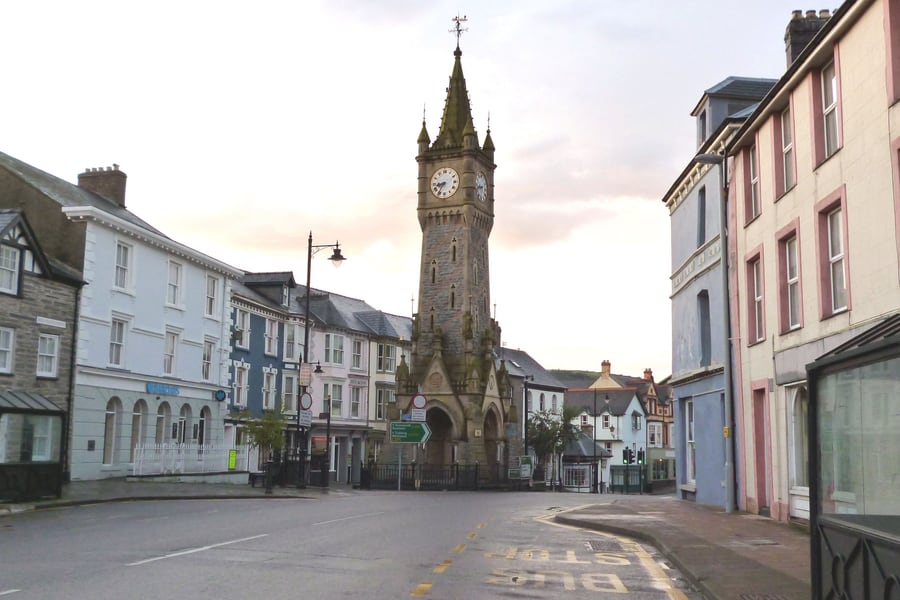
Owain Glyndŵr held a Welsh parliament here in 1404, during his rising against the English crown, and the town still calls itself the ancient capital of Wales. Its Wednesday market goes back to a charter of 1291 that granted one "every Wednesday for ever". The clock tower at the crossroads was paid for by the townspeople in the 1870s.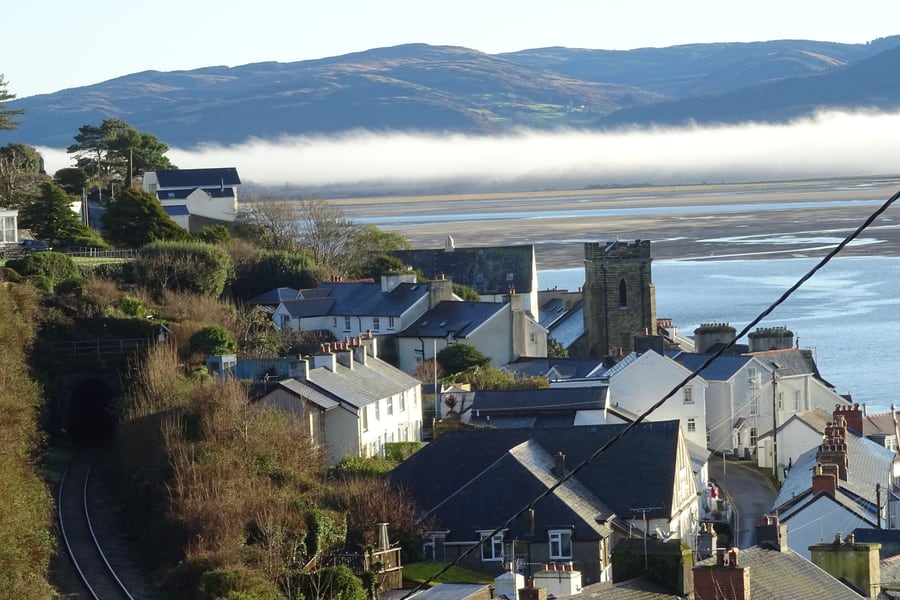 Tk420 / Wikimedia Commons · CC BY-SA 4.0 · cropped
Aberdyfi
The village grew up around its harbour and shipbuilding and is now a seaside resort, its houses climbing the steep hillside above the estuary. The railway arrived in 1863 and later had to be tunnelled through the hill behind the village. Aberdyfi has two stations, Penhelig at the east end and Aberdovey to the west, by the golf links.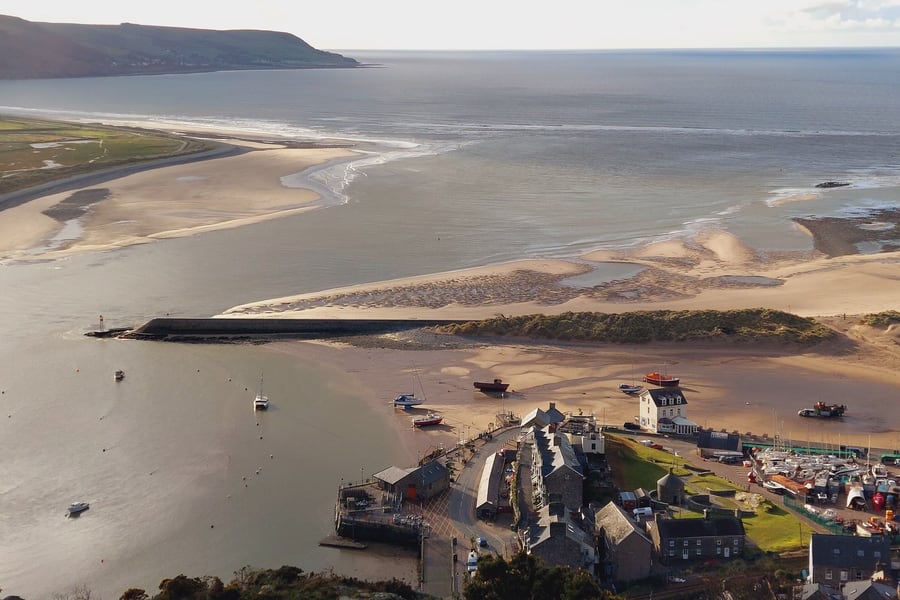 I Love Colour / Wikimedia Commons · CC BY-SA 2.0 · cropped
Barmouth
The town grew as a resort once the bridge brought the railway in 1867, squeezed between the mountains and the sea. Above it is Dinas Oleu, the first land ever given to the National Trust, and Wordsworth wrote of its sea view, its estuary and Cadair Idris within a day's walk. The bridge's footway leads back across the Mawddach.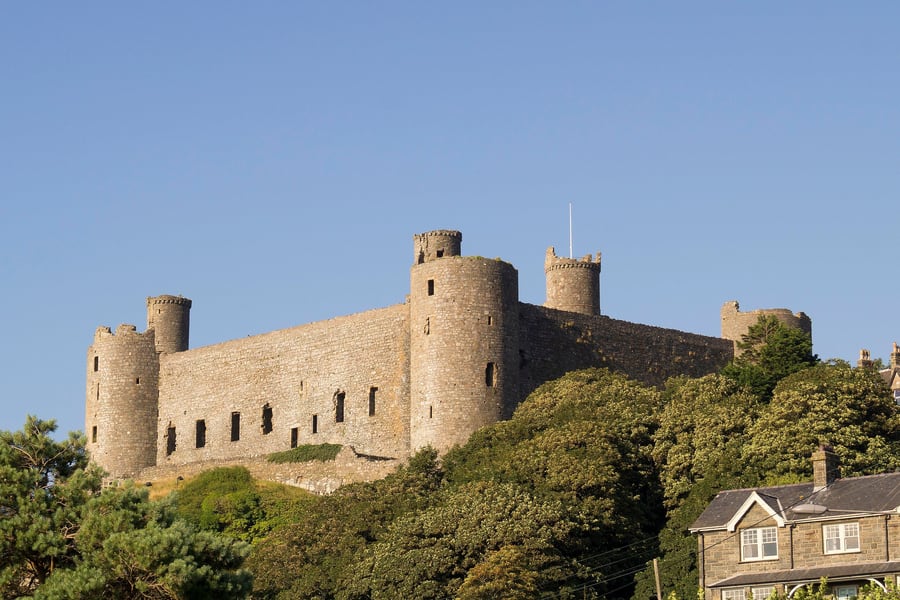 Cmao20 / Wikimedia Commons · CC BY-SA 4.0 · cropped
Harlech
Edward I built Harlech Castle between 1282 and 1289. Owain Glyndŵr took it in 1404 and made it his headquarters, and its long siege in the Wars of the Roses, which ended in 1468, is remembered in the song Men of Harlech. It is part of a UNESCO World Heritage Site with Edward's other castles in Gwynedd, and stands on the rock above the station.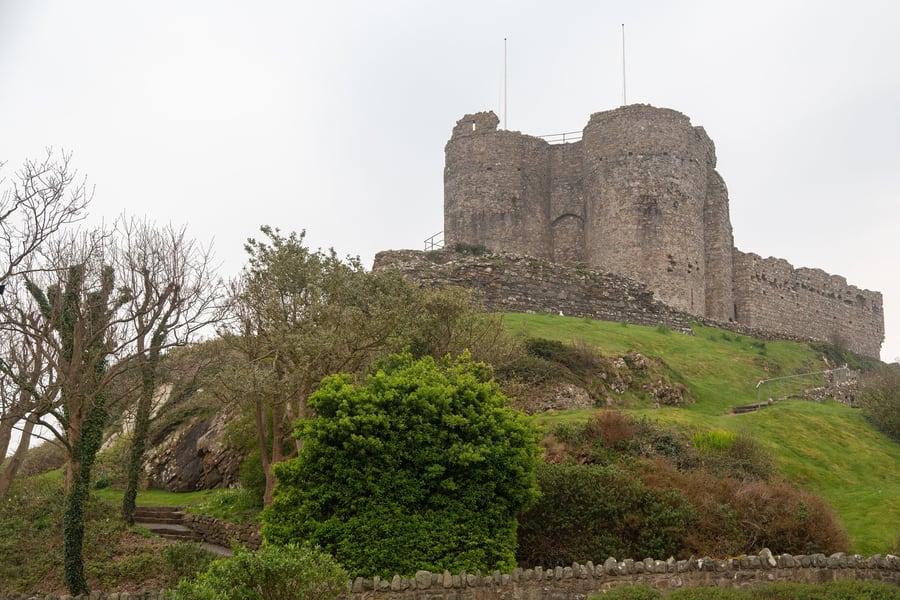 Tom Parnell / Wikimedia Commons · CC BY-SA 2.0
Criccieth
Criccieth Castle was begun in the 1230s by Llywelyn ap Iorwerth, the prince of Gwynedd, and taken by Edward I in 1283. Its twin-towered gatehouse still stands almost to its full height on the rocky headland above Tremadog Bay, and J. M. W. Turner sketched it as a romantic ruin in 1798. It is looked after by Cadw.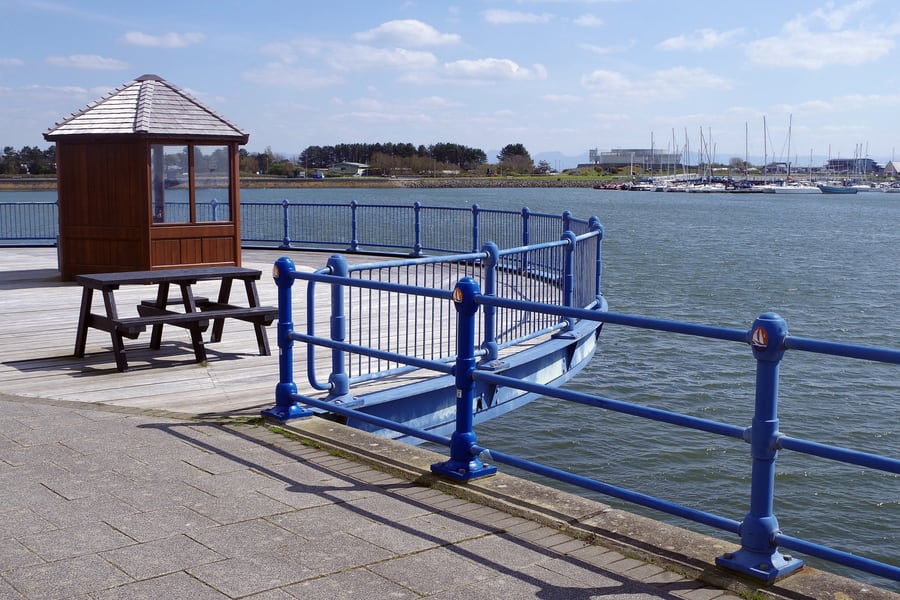 Stephen McKay / Wikimedia Commons · CC BY-SA 2.0
Pwllheli
The market town of the Llŷn Peninsula, where Plaid Cymru was founded, still holds its market every Wednesday on Y Maes, the town square. The station stands by the harbour, now the Hafan Pwllheli marina. The railway was meant to go on across the peninsula to Porthdinllaen, but the last stretch was never built.Where to Sleep
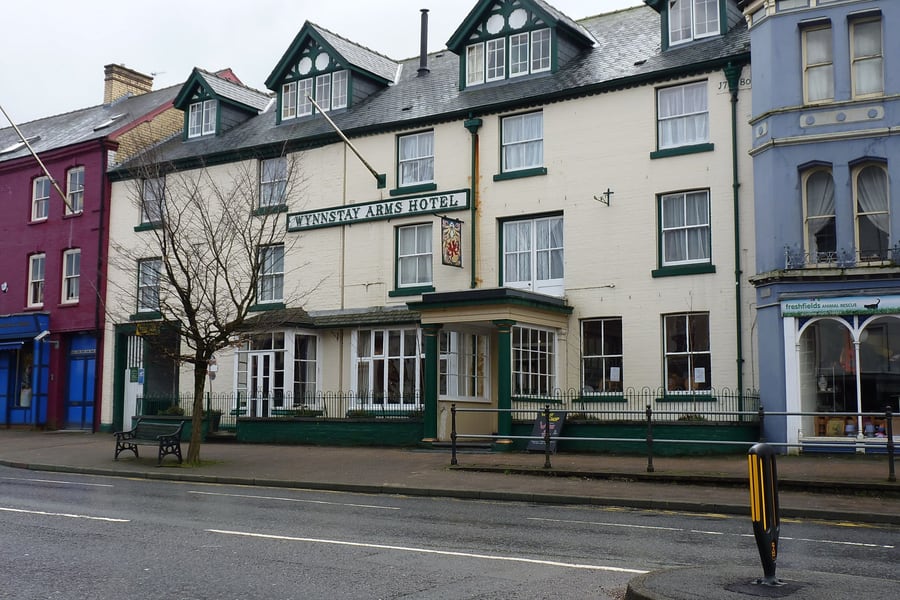
Two hotels make good bases. The Wynnstay is an old coaching inn on the main street of Machynlleth, where the coast trains start. Further along the line, the Royal Sportsman stands on Porthmadog's High Street, a short walk from the harbour where the Ffestiniog and Welsh Highland trains leave.
Where to stay
 Richard Law / Wikimedia Commons · CC BY-SA 2.0 · cropped
The Wynnstay
Machynlleth · on Heol Maengwyn
A traditional coaching inn on Machynlleth's main street, with a restaurant and regular folk music sessions.
Check Availability (opens in a new tab, on wynnstay.cymru)via wynnstay.cymru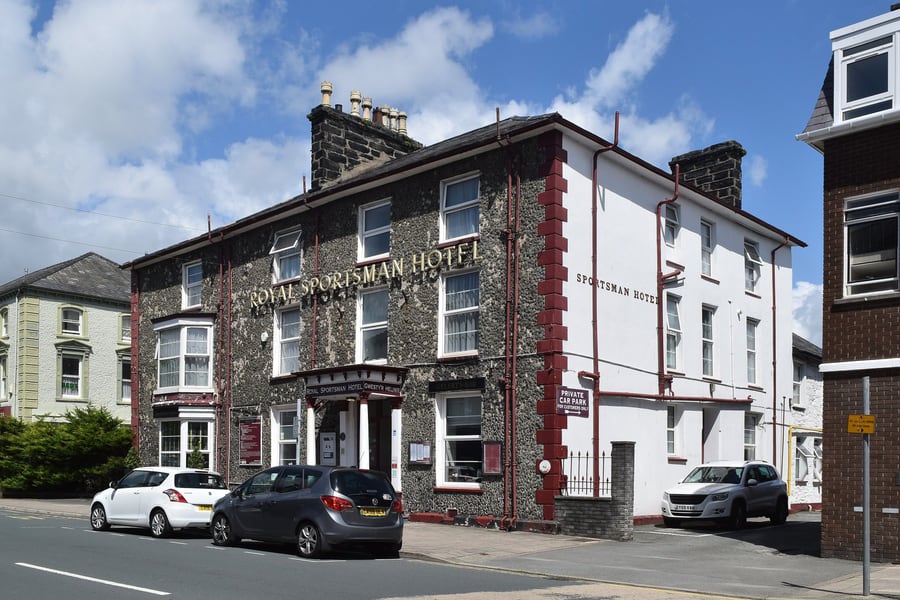 Bill Harrison / Wikimedia Commons · CC BY-SA 2.0 · cropped
The Royal Sportsman
Porthmadog · on the High Street
A hotel on Porthmadog's High Street, a short walk from the harbour where the Ffestiniog and Welsh Highland trains start.
Check Availability (opens in a new tab, on royalsportsman.co.uk)via royalsportsman.co.ukQuestions or corrections
Planning this trip and stuck on something, or spotted a time, fare or detail that has changed? Send us a message about The Cambrian Coast Line. We read every one, and we update this page when something has changed.