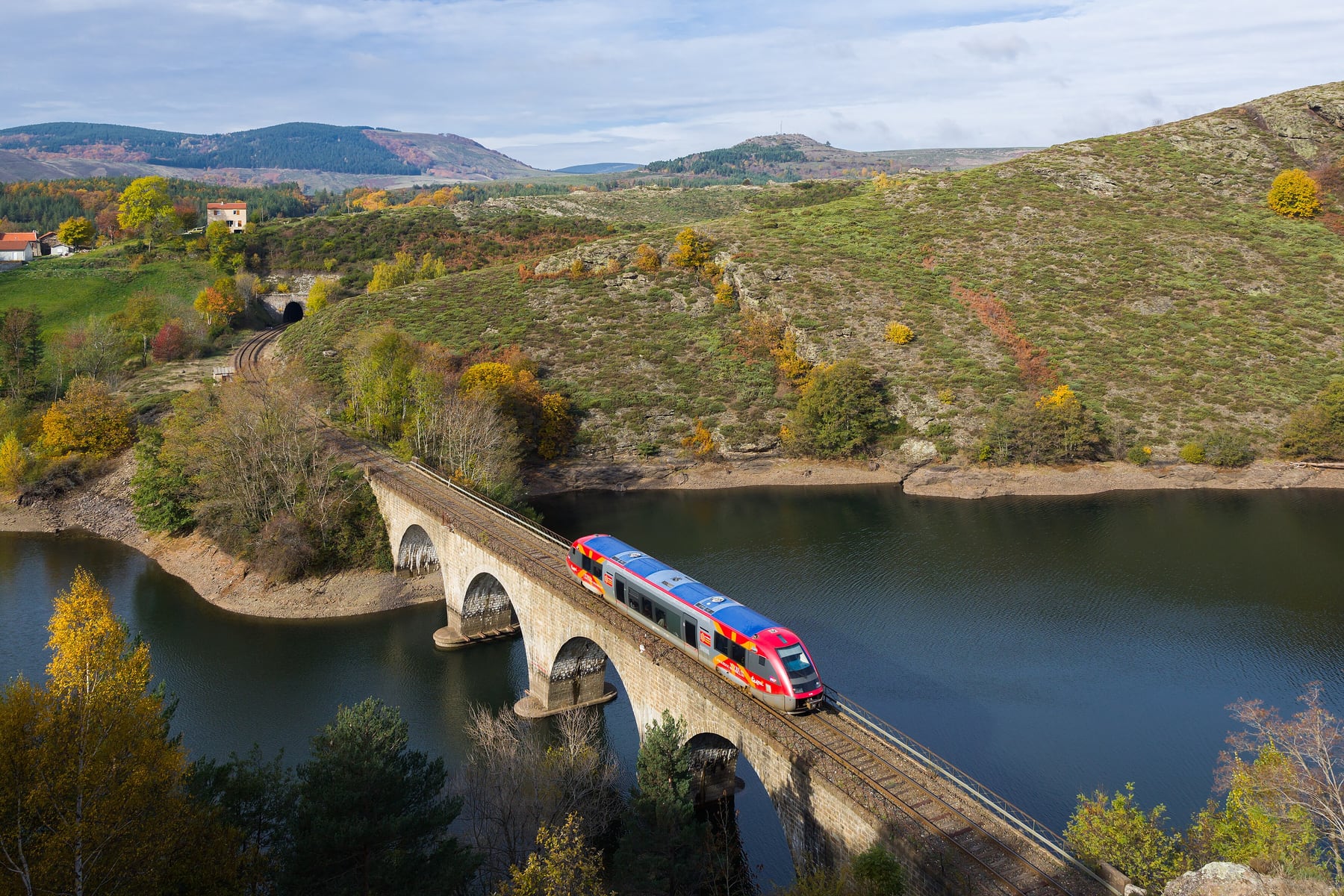
The Cévennes Line
Kabelleger / David Gubler / Wikimedia Commons · CC BY-SA 4.0
- DistanceClermont-Ferrand to Nîmes, about 303 km
- DurationAbout 5 to 5½ hours
- Best seasonAll year
Introduction
In the autumn of 1878 Robert Louis Stevenson walked up the valley of the Allier with a donkey and found a railway running beside the river: "the only bit of railway in Gevaudan", he wrote, with surveys afoot for more. "A year or two hence and this may be another world." The branch up to Mende was not opened until 1902. The railway he walked beside still carries trains from Clermont-Ferrand over the mountains to Nîmes.
It was built to carry coal. Paulin Talabot's company opened the first stretch, from the mines of Alès down to Nîmes, in 1840, and the line was pushed north through the mountains until it met the railway from Clermont-Ferrand in May 1870. The Cévenol, a name first given to the through train in 1955, takes about five hours over some 300 kilometres: up the Allier from Clermont, along a ledge above its gorges for 67 kilometres, over the watershed at La Bastide at about 1,020 metres, and down through the chestnut valleys of the Cévennes to Alès and Nîmes. On the way it crosses three of Charles Dombre's great curved stone viaducts.
Three trains a day run the whole way in each direction. They are regional trains, second class only, with no reservation needed.
The Journey
The train leaves Clermont-Ferrand south up the Allier, past Issoire and the Romanesque town of Brioude, and at Saint-Georges-d'Aurac leaves the line to Le Puy behind. From Langeac the valley closes in. For the next 67 kilometres, to Langogne, the track runs on a ledge cut into the side of the gorges of the Allier, through tunnels and over viaducts, with the river below and in places nothing but the railway in sight; Monistrol-d'Allier, Alleyras and Chapeauroux are small stations deep in the gorge.
Over the top
At Langogne the valley opens out, and the line follows the Allier up to La Bastide - Saint-Laurent-les-Bains, at about 1,020 metres the highest point of the journey, where the branch to Mende leaves. Here the train crosses the line between the waters that flow to the Atlantic and those that flow to the Mediterranean, and begins the long descent of the Cévennes: over the Altier viaduct, whose lower arches have stood in the Villefort lake since 1965, to Villefort and Génolhac, then round the horseshoe of the Chamborigaud viaduct and down through the old coal country of La Grand-Combe to Alès. The last 46 kilometres, to Nîmes, are double track across the plain of the Gardon.
The train
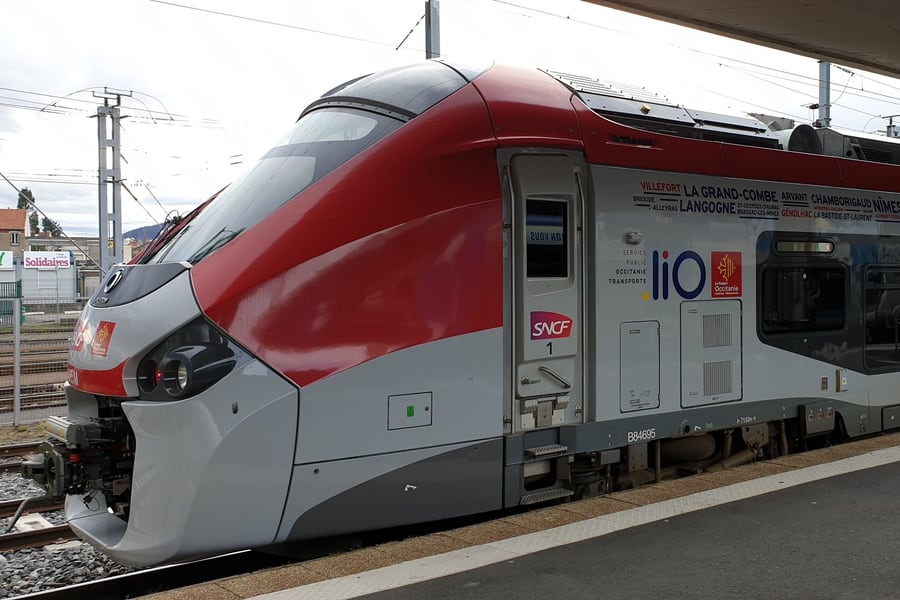
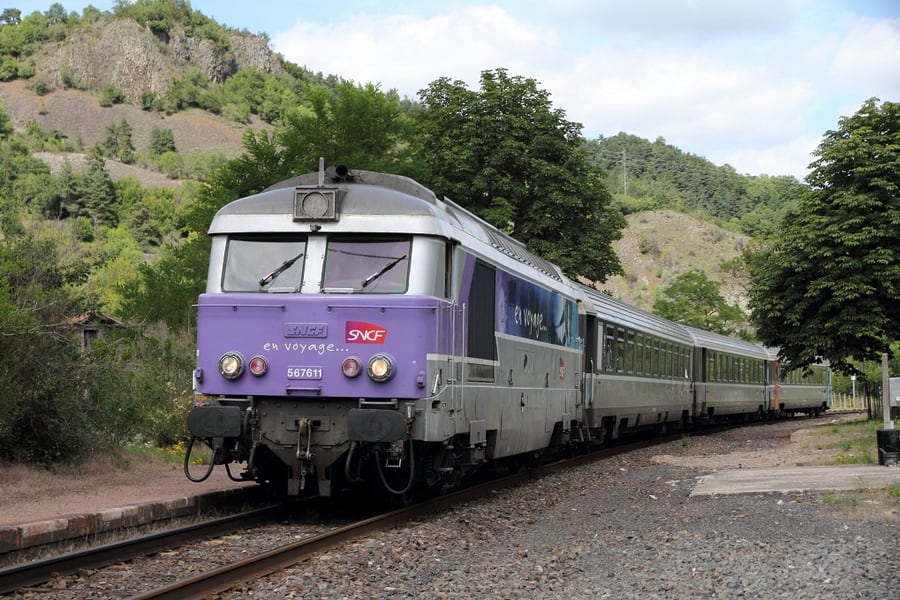
The Cévenol was a train of Corail coaches, through from Paris to Marseille, from 1979 to 2007; since 1 January 2018 it has been a regional train. The Région Occitanie's daily train each way is usually a Régiolis unit with the line's stations written along its sides, and TER Auvergne-Rhône-Alpes runs the other two. All three are second class only.
Along the route
 TouN / Wikimedia Commons · CC BY-SA 4.0
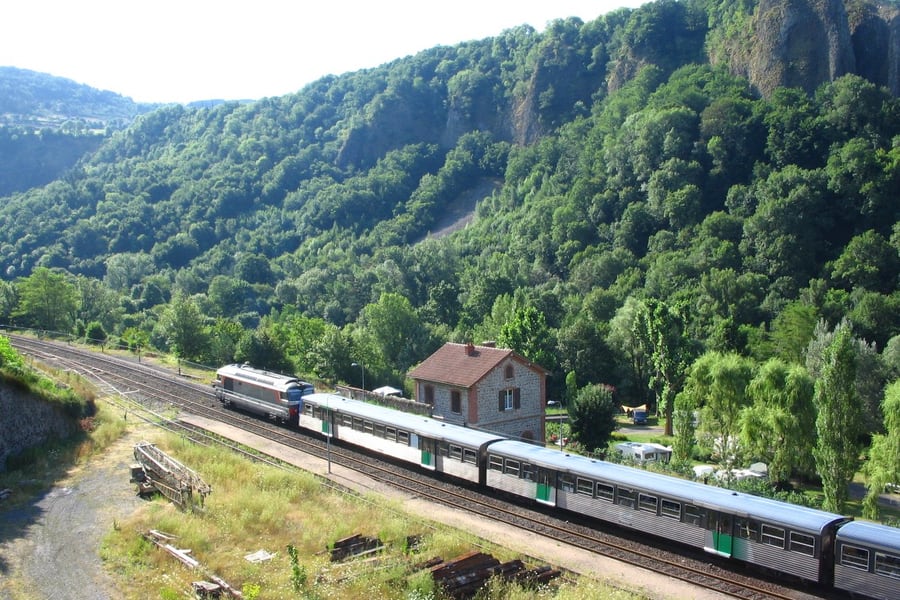
The gorges of the Allier
From Langeac to Langogne the line runs for 67 kilometres on a ledge above the Allier, through tunnels and over viaducts, with the river below and in places nothing but the railway in sight.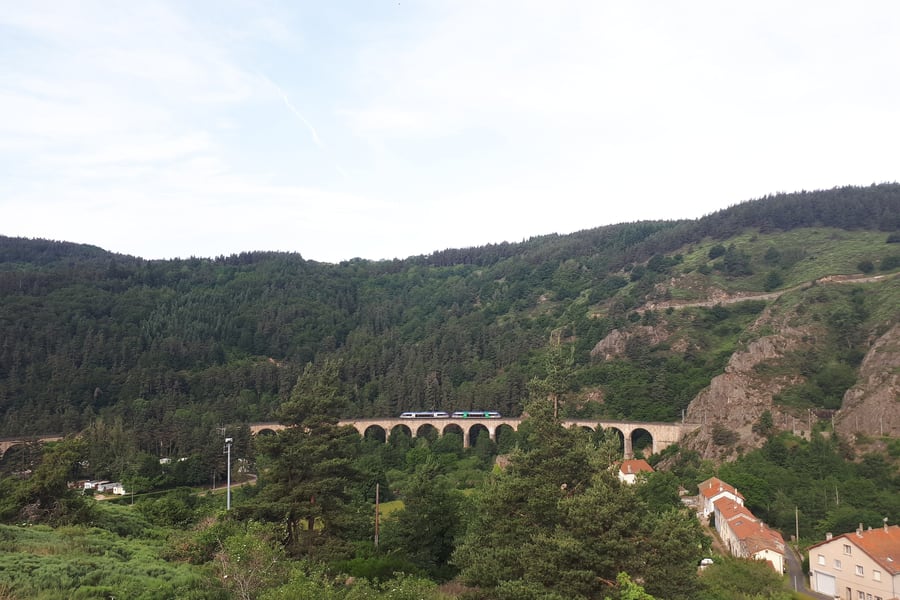 TouN / Wikimedia Commons · CC BY-SA 4.0
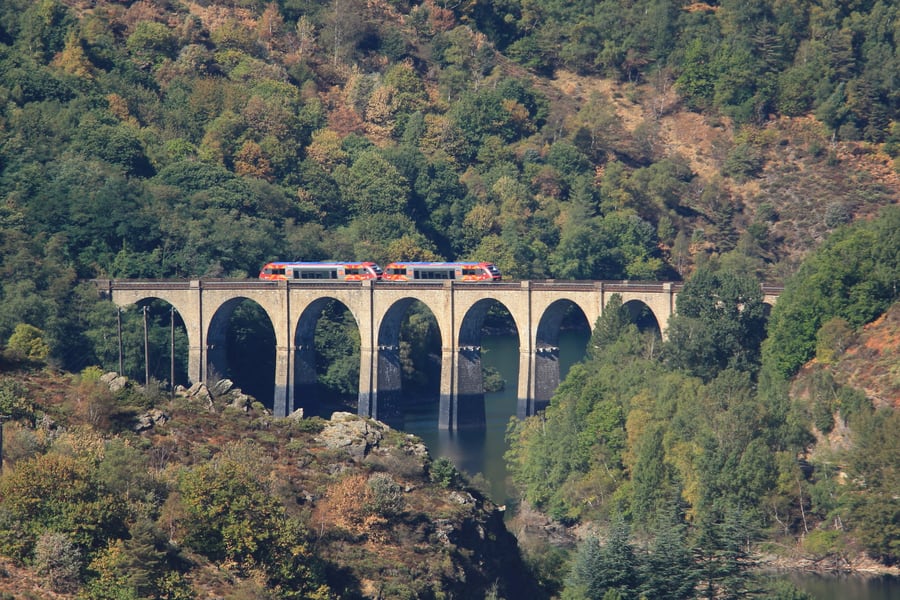
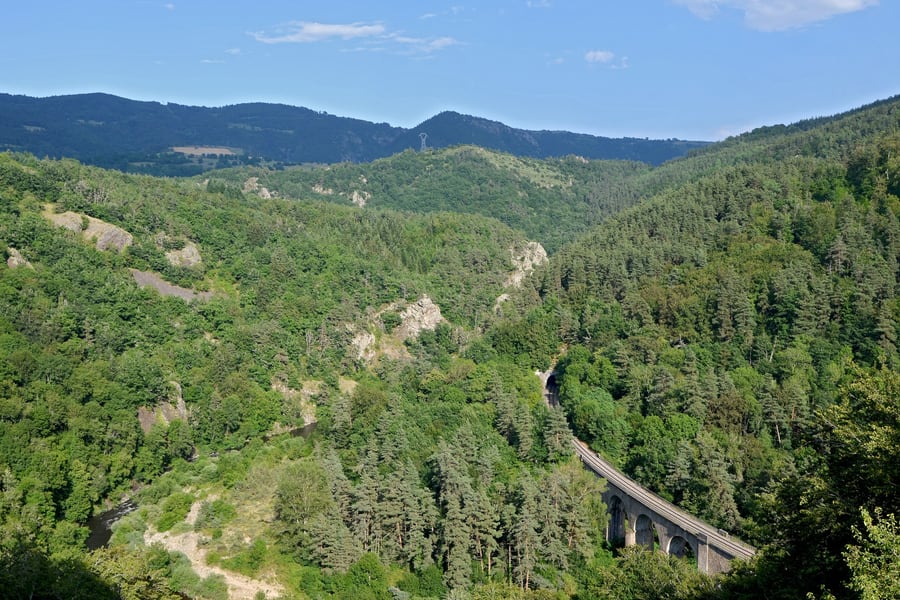
The Chapeauroux viaduct
Twenty-eight arches of 12 metres carry the line 433 metres round a curve where the Chapeauroux meets the Allier. Finished in 1870, it is also called the Nouveau-Monde viaduct, after the camp its builders lived in.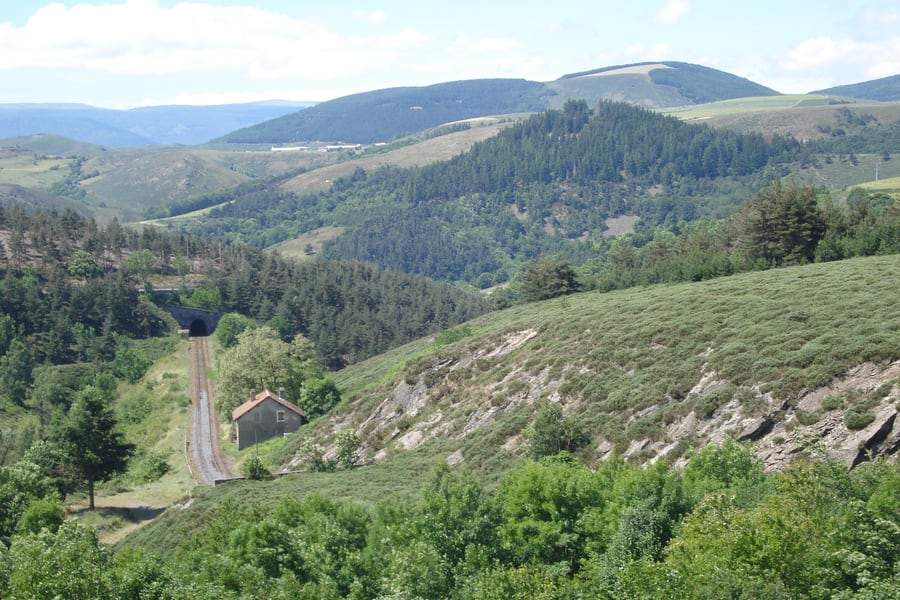 Havang(nl) / Wikimedia Commons · CC0
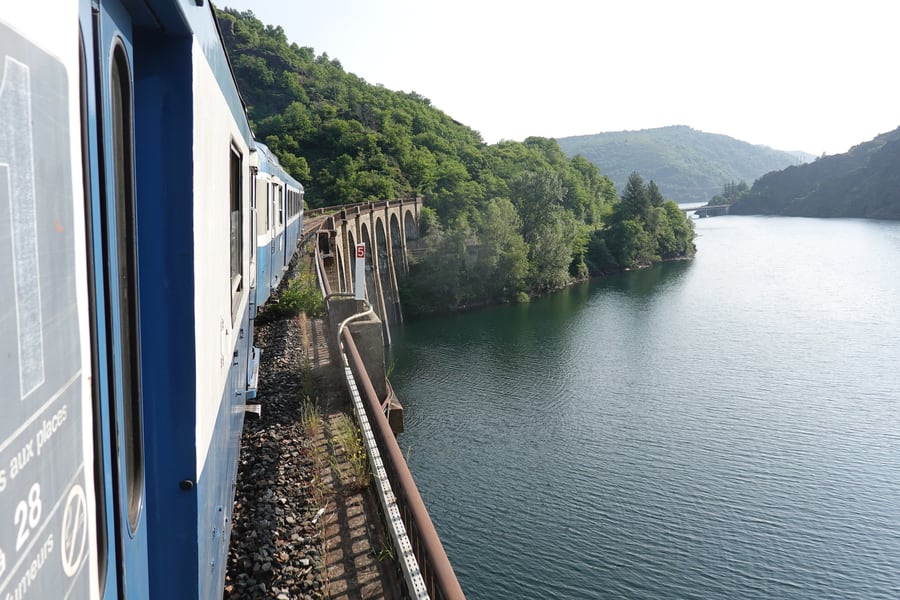
Over the watershed
At La Bastide, about 1,020 metres up, the line reaches its highest point and leaves the Allier, whose water goes to the Atlantic. From here it begins the long descent of the Cévennes towards the Mediterranean.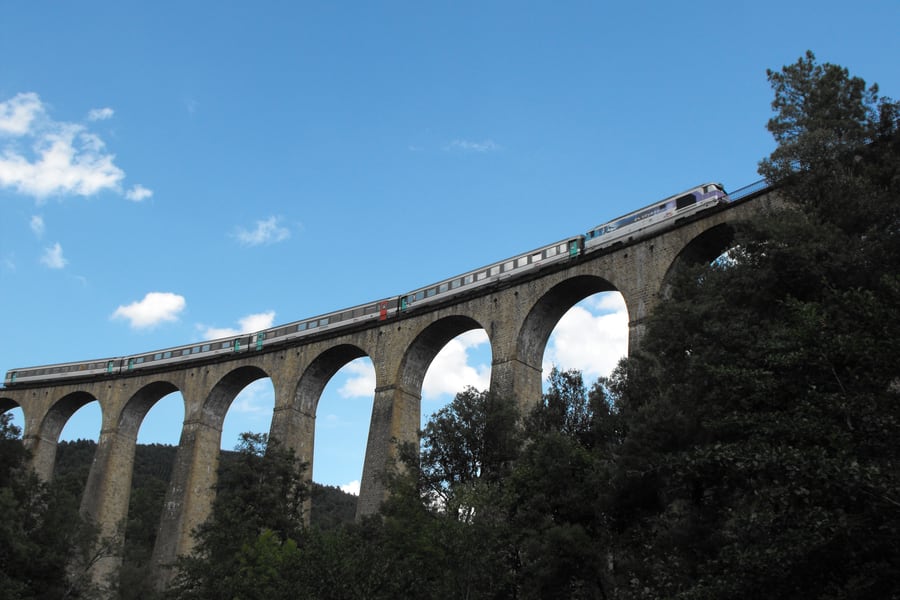 Budotradan / Wikimedia Commons · public domain
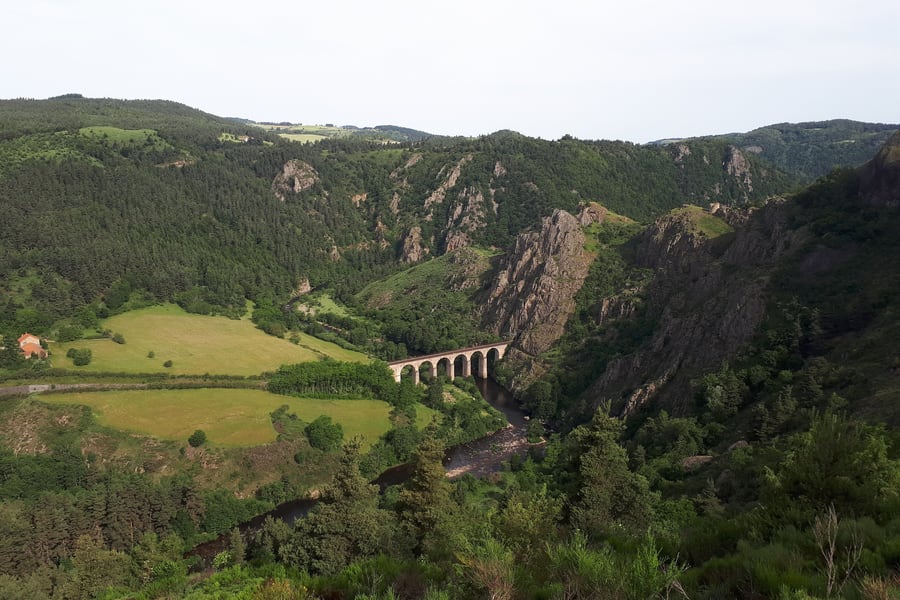
The Chamborigaud viaduct
Charles Dombre's viaduct of 1865–67 swings almost into a horseshoe across the valley of the Luech, 384 metres long and 46 metres high. Chosen to save money, its tight curve still holds trains to a slow pace.A bit of history
Culture & experiences along the way
 TouN / Wikimedia Commons · CC BY-SA 4.0
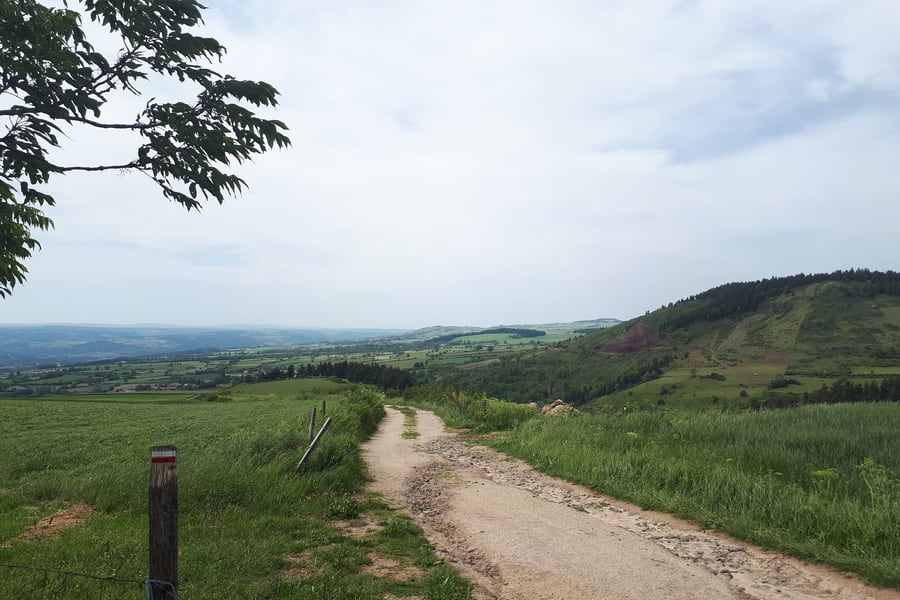
The Chemin de Stevenson
The GR 70 footpath follows roughly the twelve-day walk of 1878 that became Travels with a Donkey in the Cévennes. Stevenson came through Langogne, Luc and La Bastide, and from La Bastide climbed to Our Lady of the Snows, the Trappist monastery founded in 1850; since 2022 it has been home to Cistercian nuns.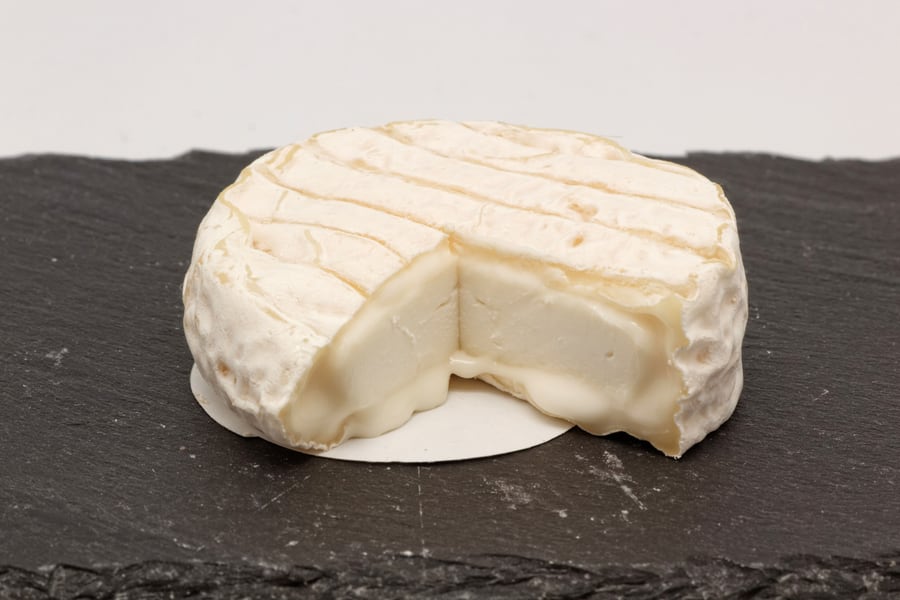 Coyau / Wikimedia Commons · CC BY-SA 3.0
Pélardon
A very small cheese of raw goat's milk, about 60 grams, made in the Cévennes and protected by an appellation since 2000. A dictionary of 1756 already described it, and its name is thought to come from the Occitan for pepper, for its sharp taste. It is best from May to September.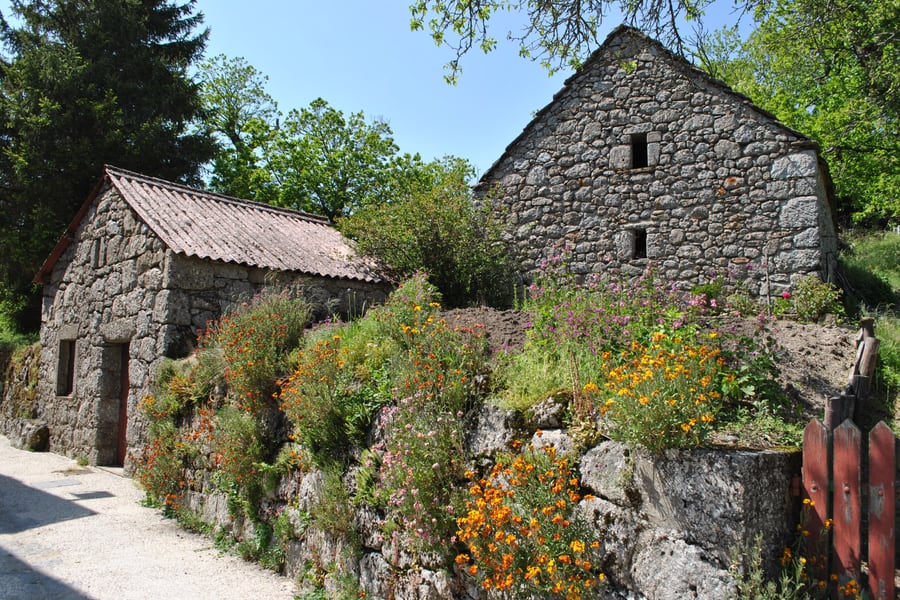 Pascal PIALOT / Wikimedia Commons · CC BY-SA 4.0
Chestnuts and the clède
The Cévennes farmhouse had its clède, a small drying house for the chestnut harvest. A smouldering fire of husks below dried half a metre of chestnuts on a slatted floor for three to six weeks; peeled, they kept dry or were ground into flour. Village clèdes still work each autumn at Saint-Martin-de-Boubaux and Ventalon-en-Cévennes.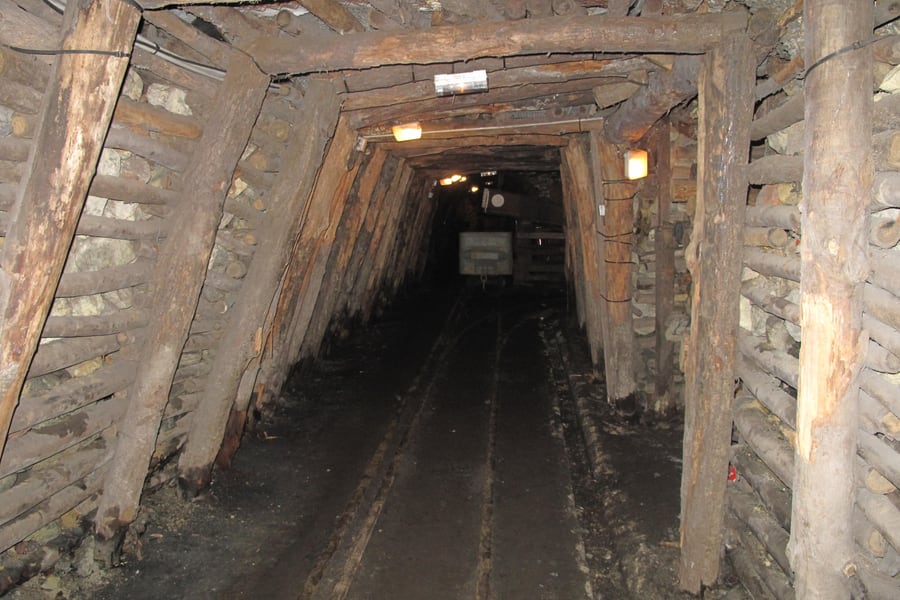 Tangopaso / Wikimedia Commons · public domain
The Mine Témoin at Alès
From 1945 to 1968 apprentice miners aged 14 to 18 learned their trade in these galleries, dug for training. Open to visitors since 1985, the mine is seen on a guided walk through 700 metres of timbered galleries, at 15 to 17 °C all year.Timetables
Until Thursday 5 November 2026 there is no through train: coaches replace it between Langeac and Génolhac, and the journey takes about six and a half hours. From 6 November three trains a day run the whole way in each direction. No reservation is needed, and all are second class.
Clermont-Ferrand to Nîmes
| Train | Clermont-Ferrand | Brioude | Langeac | Langogne | La Bastide | Villefort | Génolhac | Alès | Nîmes |
|---|---|---|---|---|---|---|---|---|---|
| Mon–Fri | 06:45 | 07:44 | 08:11 | 09:42 | 10:07 | 10:27 | 10:41 | 11:29 | 12:01 |
| Saturday | 07:34 | 08:31 | 08:58 | 10:27 | 10:48 | 11:08 | 11:22 | 12:11 | 12:45 |
| Daily | 12:55 | 13:53 | 14:18 | 15:46 | 16:08 | 16:28 | 16:42 | 17:30 | 18:04 |
| Daily | 16:40 | 17:36 | 18:13 | 19:46 | 20:19 | 20:38 | 20:52 | 21:36 | 22:09 |
Nîmes to Clermont-Ferrand
| Train | Nîmes | Alès | Génolhac | Villefort | La Bastide | Langogne | Langeac | Brioude | Clermont-Ferrand |
|---|---|---|---|---|---|---|---|---|---|
| Daily | 08:13 | 08:47 | 09:31 | 09:45 | 10:05 | 10:30 | 11:53 | 12:21 | 13:17 |
| Daily | 14:17 | 14:51 | 15:34 | 15:47 | 16:11 | 16:31 | 17:54 | 18:22 | 19:17 |
| Not Sat | 17:01 | 17:52 | 18:49 | 19:02 | 19:22 | 19:44 | 21:08 | 21:36 | 22:30 |
These are the times from 13 December 2026. Between 6 November and 12 December they differ by a few minutes. The weekday morning train does not run on public holidays. All trains also call at Clermont-La Pardieu, Issoire, Brassac-les-Mines, Arvant, Monistrol-d'Allier, Alleyras, Chapeauroux, La Grand-Combe and Saint-Geniès-de-Malgoirès; most also call at Saint-Georges-d'Aurac, Luc and Chamborigaud.
Times as of October 2026, from SNCF's timetable as carried by ÖBB's journey planner, checked day by day from 18 October 2026 to 15 January 2027. Check your date on SNCF Connect (opens in a new tab).
Tickets
Tickets are sold by SNCF, on SNCF Connect (opens in a new tab), from the machines at the stations and at staffed ticket offices, for the whole line or any part of it. These are regional TER trains: there is no reservation and no seat number, so board and sit where there is room. Every seat is second class.
TER tickets bought on SNCF Connect can be refunded up to the day before travel, and bicycles travel free within the space available. Checked October 2026.
Book your tickets
TER ticket
No reservation · second class · the whole line or any part of it
Book on SNCF Connect or buy at the station; TER tickets bought online can be refunded up to the day before.
Book Tickets (opens in a new tab, on SNCF Connect)via SNCF ConnectRail Passes
Interrail and Eurail passes are valid, with no reservation and no supplement. Interrail's table of railway companies lists SNCF's regional TER trains, liO in Occitanie among them, in both the Global Pass and the One Country Pass for France, with no reservation except on certain trains in Normandy and the Grand Est. With a pass, simply board.
A pass pays if this is one day of a longer trip through France. For the Cévenol alone, compare a travel day of the pass with the fare SNCF quotes for your date.
Checked October 2026 against Interrail's table of railway companies (opens in a new tab).
Places to Visit
With three trains a day each way, a stop on the way costs a few hours, not a day. Brioude, Langogne, Villefort and Alès all have stations on the line, and Monistrol-d'Allier is a halt in the gorges.
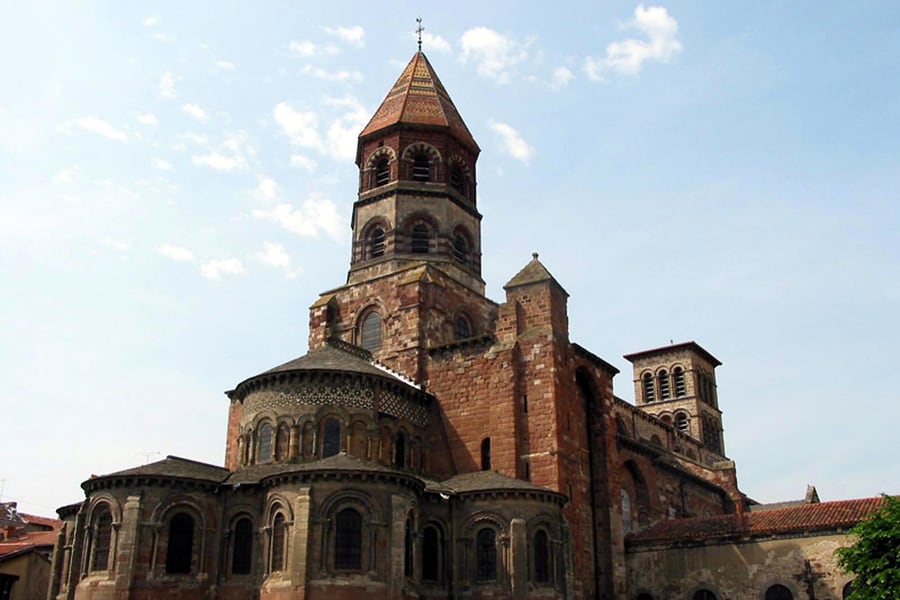 Jean-Pol GRANDMONT / Wikimedia Commons · CC BY 3.0
Brioude
The basilica of Saint-Julien, built from the early twelfth century over the tomb of the saint, made Brioude a stop for pilgrims bound for Compostela, Rome and Jerusalem. Prosper Mérimée saw it in 1837, called it one of the most remarkable buildings in Auvergne and had it put on the first list of historic monuments in 1840; it was made a basilica in 1957.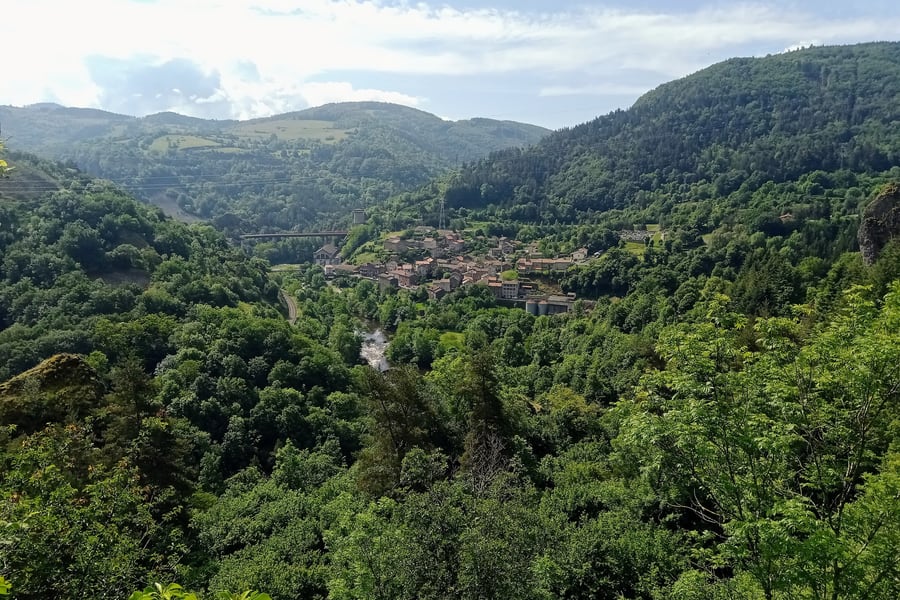 Rémih / Wikimedia Commons · CC BY-SA 4.0
Monistrol-d'Allier
The village stands at 610 metres in the valley of the Allier, at the meeting of two gorges walled with basalt. The 45th parallel runs through the commune, halfway between the North Pole and the equator, and the station is one of the stops inside the gorges.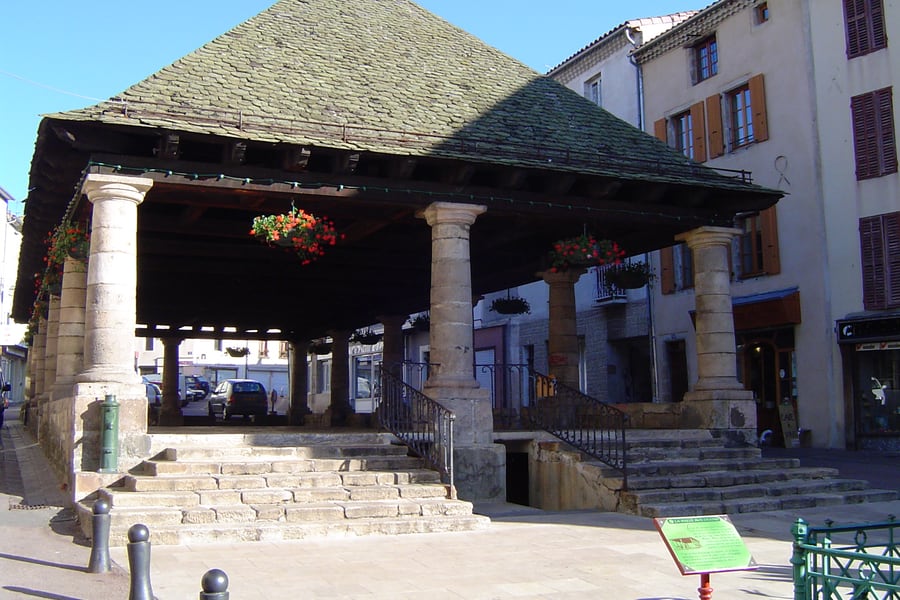 Havang(nl) / Wikimedia Commons · CC0
Langogne
The market hall, built in 1742 for the grain trade, still holds the weekly markets under its great roof, and the Romanesque church of Saint-Gervais-Saint-Protais was begun by Benedictine monks in the twelfth century. The town, at 920 metres, lies on the Chemin de Stevenson, beside the lake of Naussac.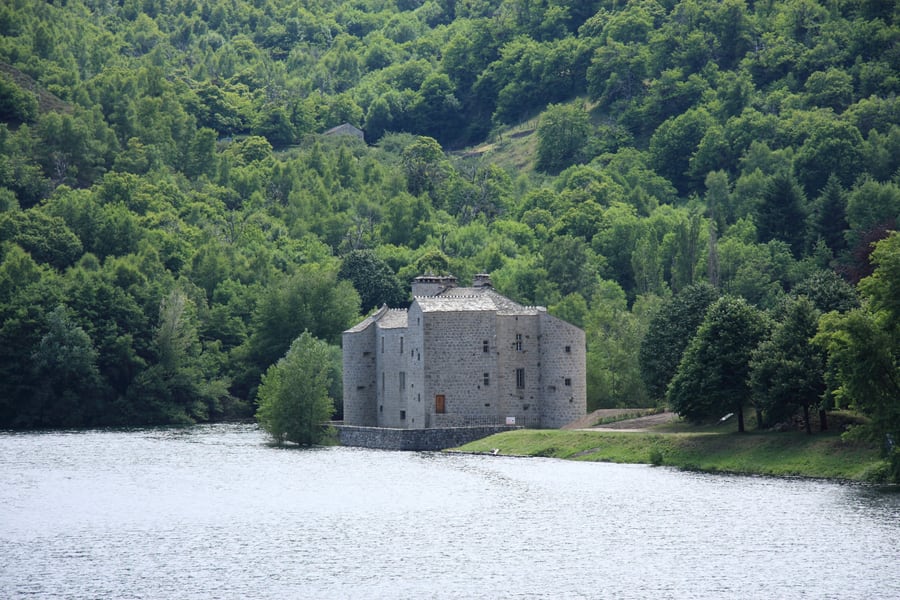 Ancalagon / Wikimedia Commons · CC BY-SA 3.0
Villefort
A summer resort at the mouth of the gorges of the Altier, on the Régordane, the old road from the Île-de-France to Lower Languedoc. The lake, made by an EDF dam finished in 1964, covers 136 hectares and drowned the hamlet of Bayard; a 7.3-kilometre path runs around it, and the Château de Castanet stands at its edge.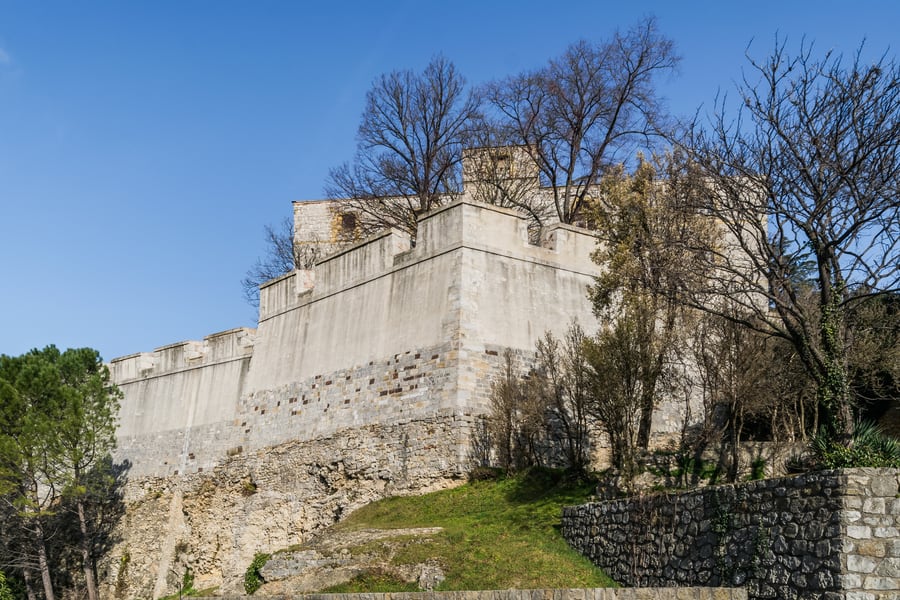 Krzysztof Golik / Wikimedia Commons · CC BY-SA 4.0
Alès
The capital of the Cévennes grew on coal and silk. Its citadel, the Fort Vauban, was built in 1688 on the hill above the town to watch over a Protestant population after the revocation of the Edict of Nantes. In 1865 Louis Pasteur came here to study the disease that was killing the silkworms, and after four years found how to pick out the sick moths.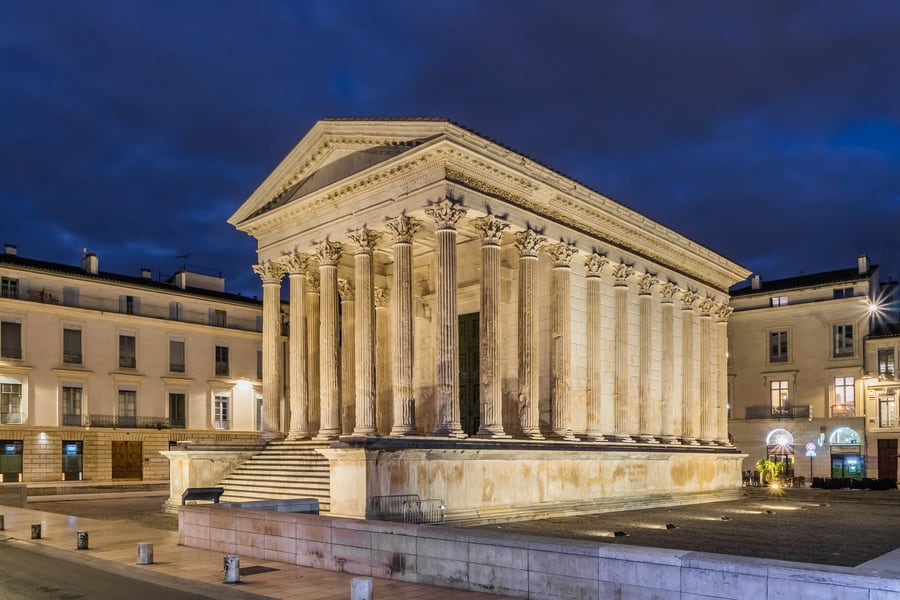 Krzysztof Golik / Wikimedia Commons · CC BY-SA 4.0
Nîmes
The Maison Carrée, built between 10 BC and AD 4, is the best-preserved temple of the Roman world, ringed by thirty columns nine metres tall, and a World Heritage Site since 2023. The city's amphitheatre of about AD 90, 133 metres long, keeps both its tiers of sixty arcades and still holds bullfights, concerts and the Roman Days.Where to Sleep
The journey fits in a morning or an afternoon. Langogne, at the top of the gorges and close to Stevenson's route, is the place to break it.
Where to stay
Domaine de Barres
Outside Langogne, above the lake of Naussac
An eighteenth-century manor in a 27-hectare park, with 20 rooms, eight cottages and a nine-hole golf course.
Check Availability (opens in a new tab, on domainedebarres.com)via domainedebarres.comQuestions or corrections
Planning this trip and stuck on something, or spotted a time, fare or detail that has changed? Send us a message about The Cévennes Line. We read every one, and we update this page when something has changed.