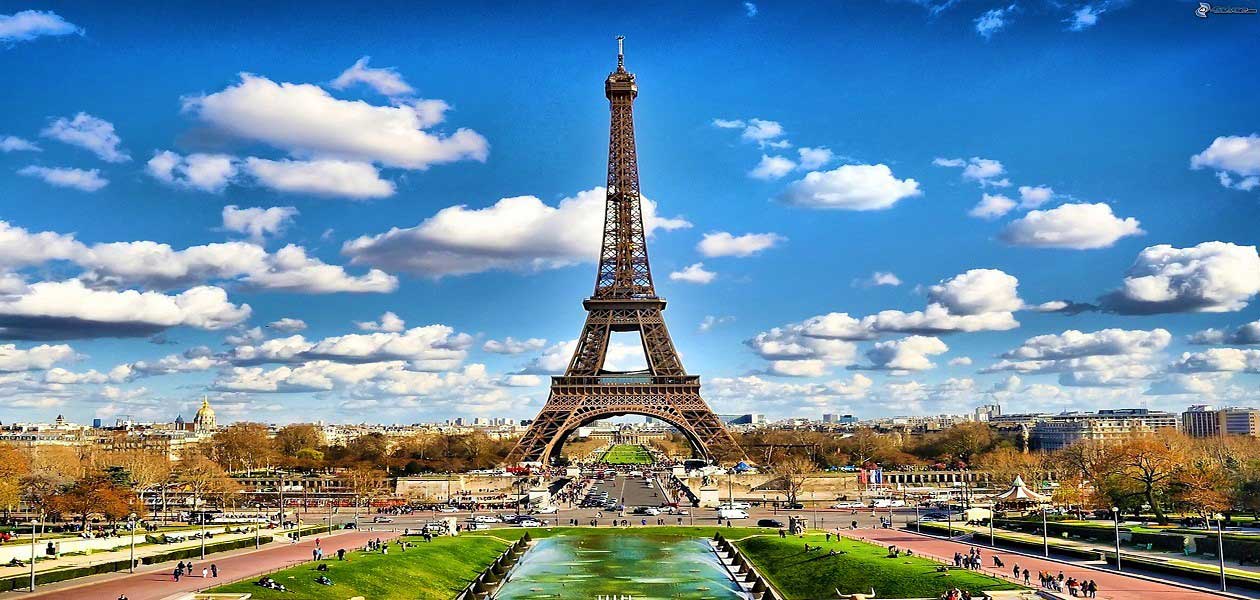
France
Guilhem Vellut / Wikimedia Commons · CC BY 2.0 · cropped

France is the largest country in western Europe — 632,702 square kilometres across eighteen regions, five of them overseas — and home to more than 69 million people. Metropolitan France borders Belgium, Luxembourg, Germany, Switzerland, Italy, Andorra and Spain, and runs from the Rhine to the Atlantic and from the Mediterranean to the Channel. Paris is the capital and by far the largest city, with more than 13 million people in its metropolitan area.
The railway is organised around that centre. SNCF's high-speed lines radiate from Paris, and the TGV — which changed travel across Europe when it opened in 1981 — reaches the Mediterranean from the capital in barely three hours. The fast lines are only half the story, though: away from the main routes, SNCF and the regions keep a handful of gloriously slow mountain railways in the Pyrenees, the Alps and Corsica, and those are ridden for the ride rather than for the arrival.
Rail journeys in France
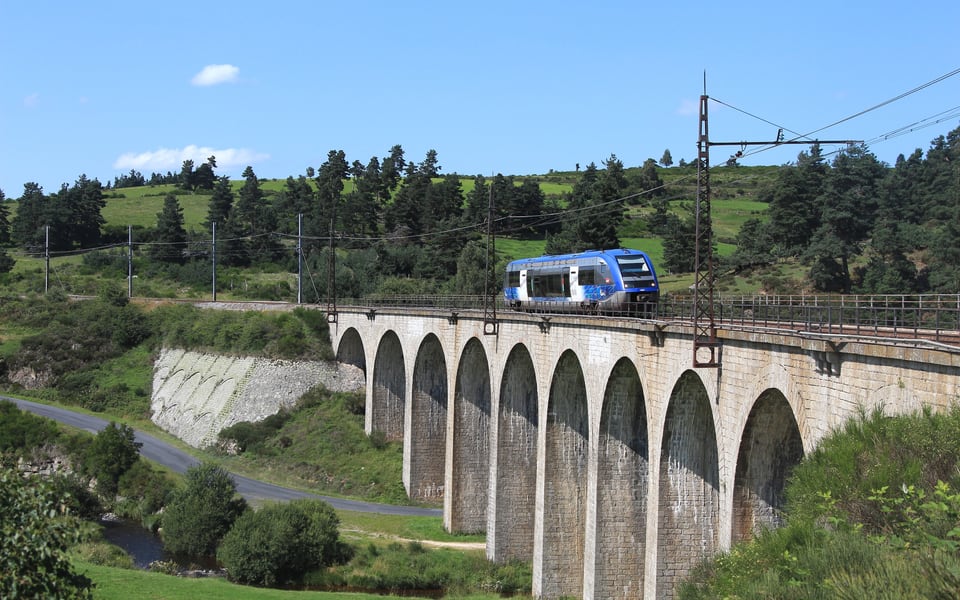
The Aubrac Line
One train a day each way crosses the Garabit viaduct and runs beneath the Millau viaduct, on a mountain line from Auvergne down to the Mediterranean.
View journey →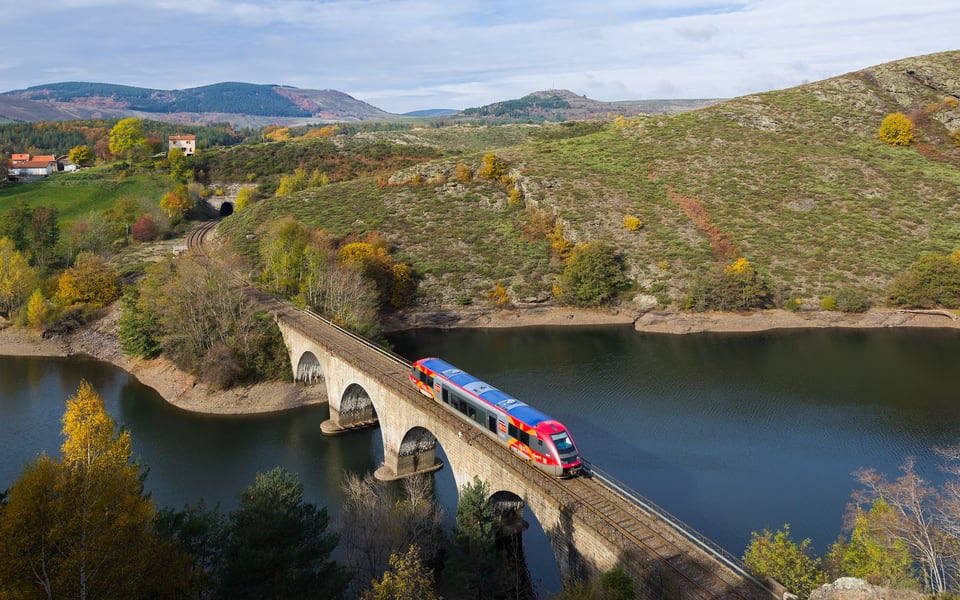
The Cévennes Line
Three trains a day climb the gorges of the Allier and cross the Cévennes, on the railway Robert Louis Stevenson walked beside with his donkey in 1878.
View journey →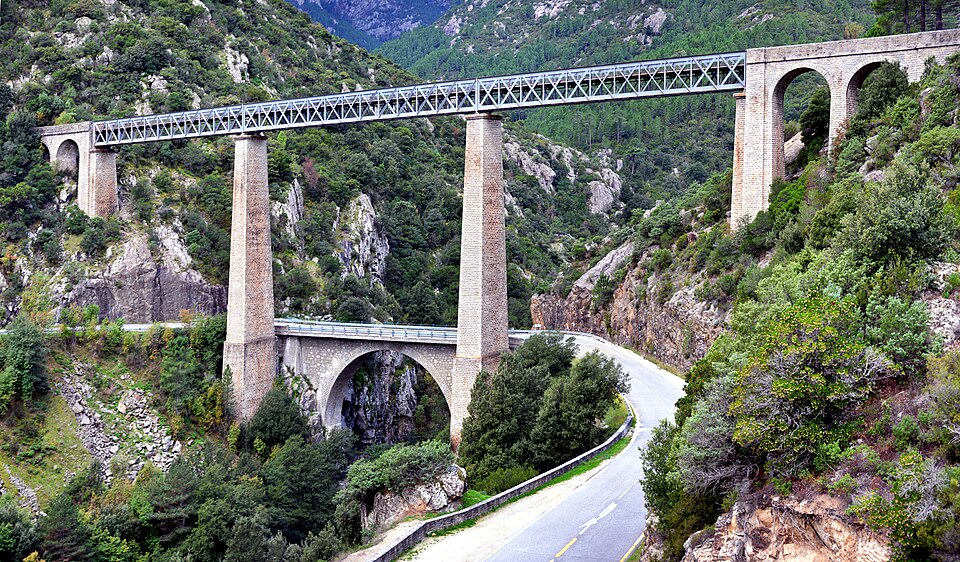
The Corsican Railway
U Trinichellu, the little train that trembles across Corsica — metre gauge from the sea through chestnut forests and granite gorges to the island's heart.
View journey →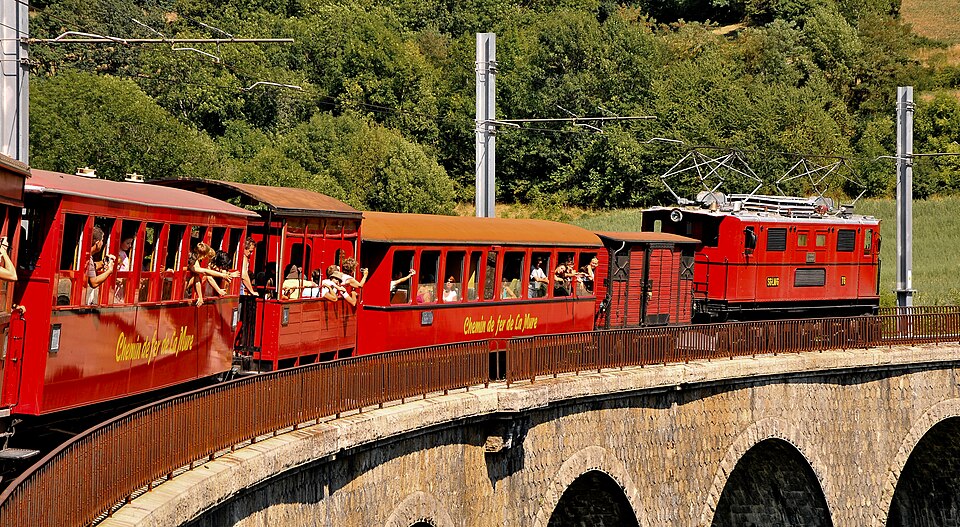
The La Mure Railway
A little red mountain train on a ledge above the void — the century-old miners' railway clinging to the cliffs of the Drac gorges near Grenoble.
View journey →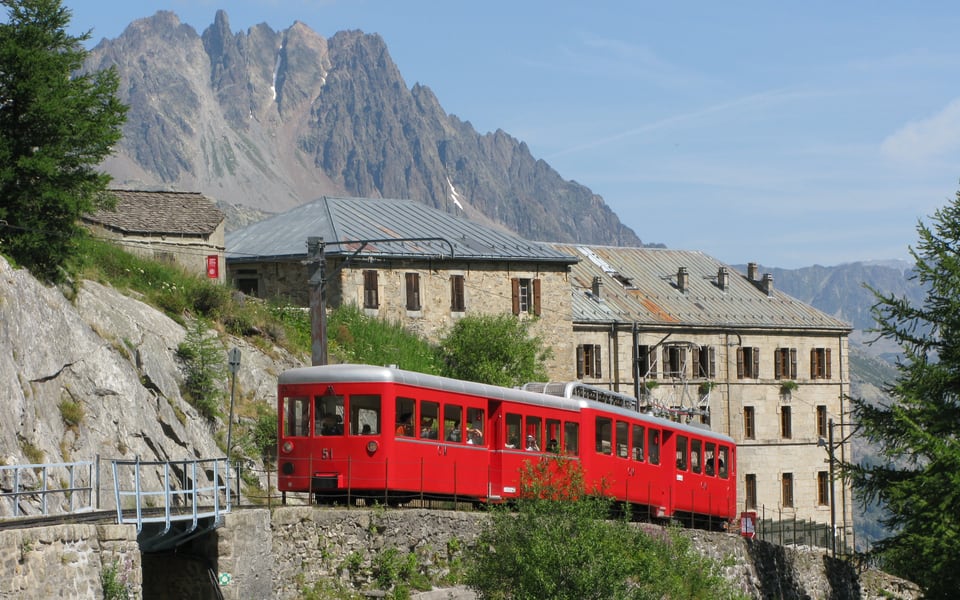
Montenvers Railway
A little red rack train climbs from Chamonix to the Mer de Glace, a glacier now so far below the station that it takes a gondola and 170 steps to reach.
View journey →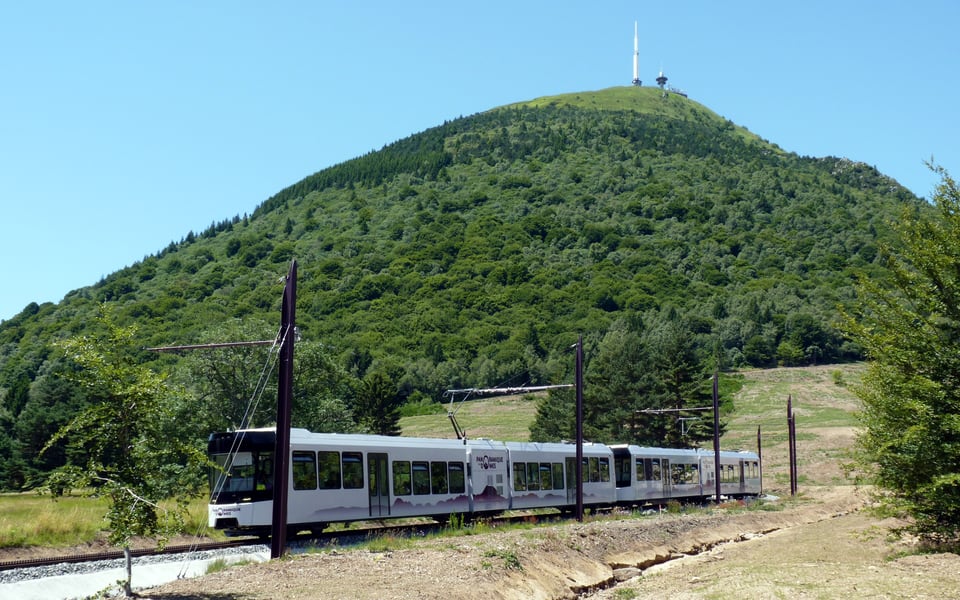
Panoramique des Dômes
A rack train climbs the Puy de Dôme volcano on its old toll road, the Tour de France climb where Anquetil and Poulidor fought side by side in 1964.
View journey →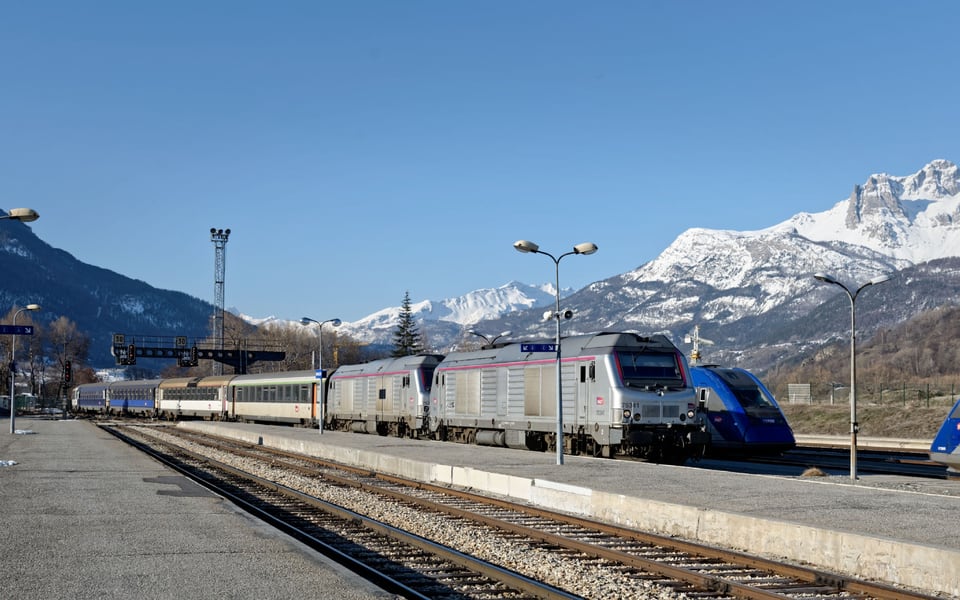
Paris–Briançon Night Train
Board at Paris-Austerlitz at nine and wake in the Alps, on a line that runs above a lake that drowned four of its own tunnels.
View journey →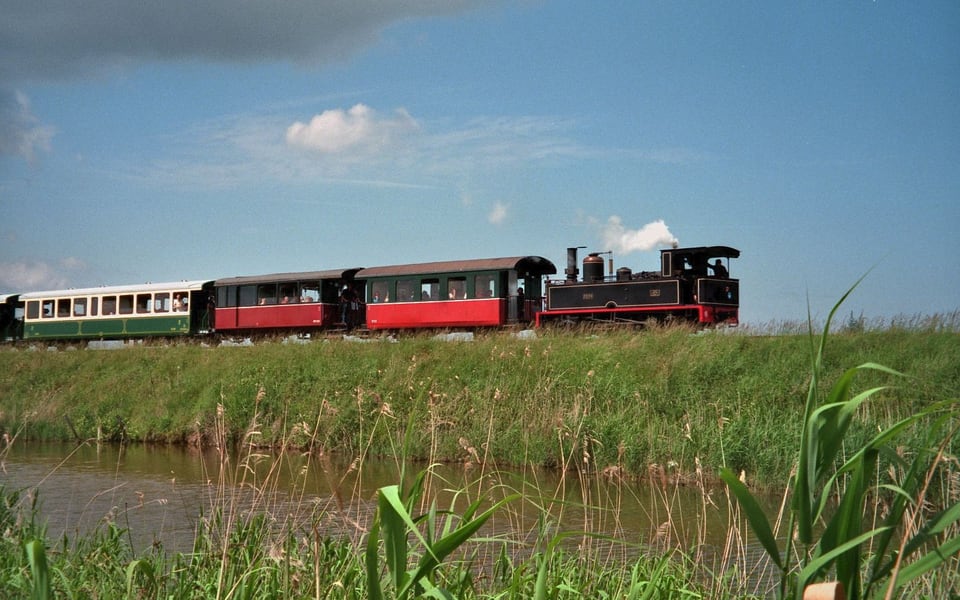
Somme Bay Railway
A steam railway round the Baie de Somme, whose metre-gauge train crosses the bay on four rails, inside the track of an 1858 main-line branch.
View journey →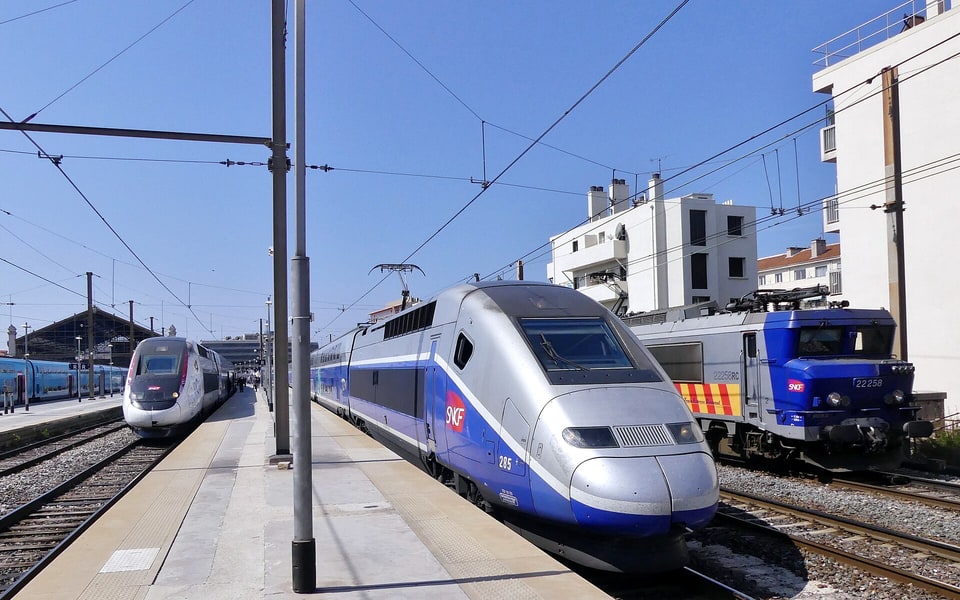
The TGV — Paris to Marseille
France's world-changing bullet train — Paris to the Mediterranean in barely three hours, double-deck at 320 km/h across the sunlit viaducts of Provence.
View journey →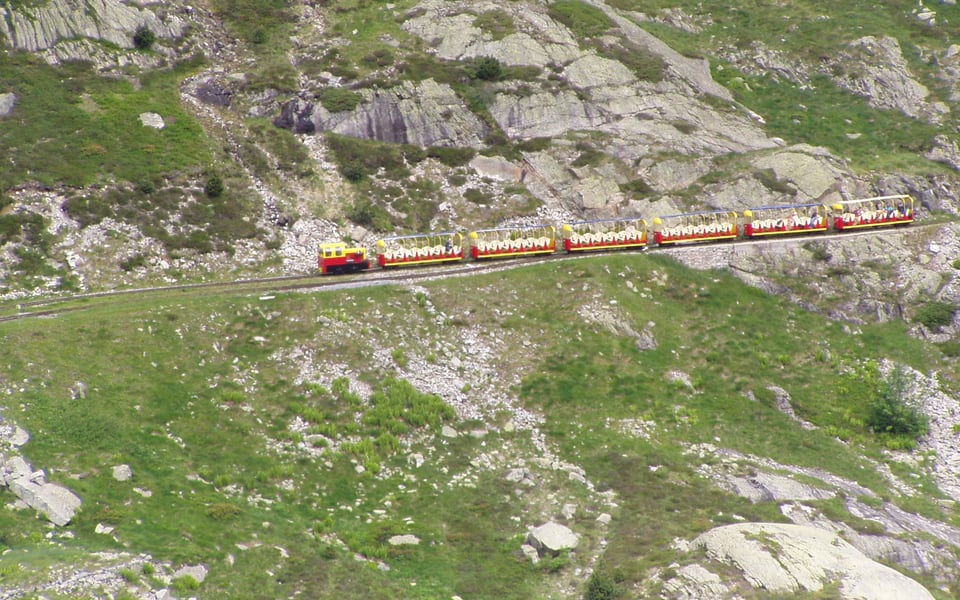
Train d'Artouste
A 500 mm train built to haul cement to a Pyrenean dam, still owned by the power company, runs open carriages along a cliff at 1,900 metres.
View journey →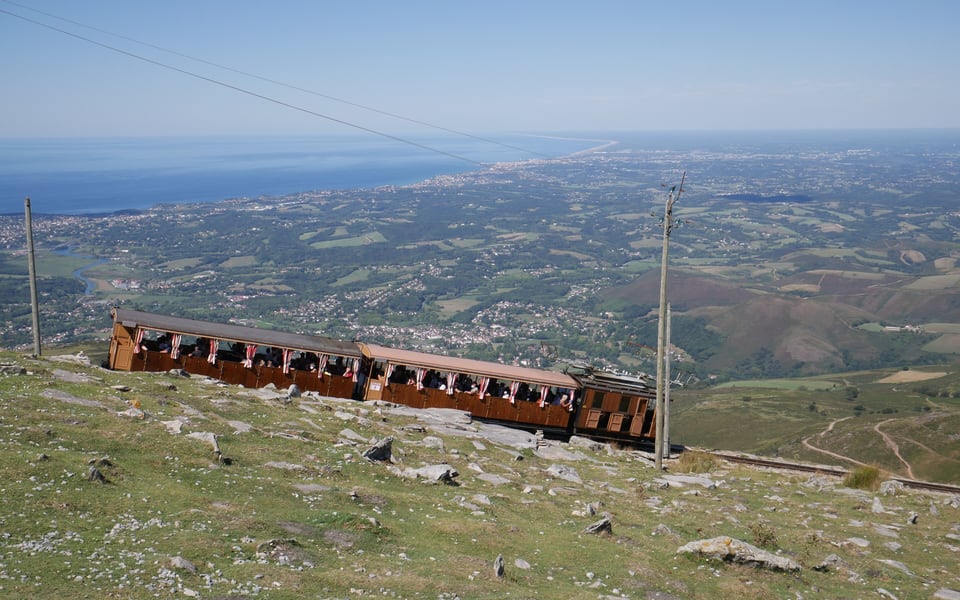
Train de la Rhune
A 1924 rack train climbs La Rhune in the Basque Country, the mountain whose village voted in 1978 against building a road to the top.
View journey →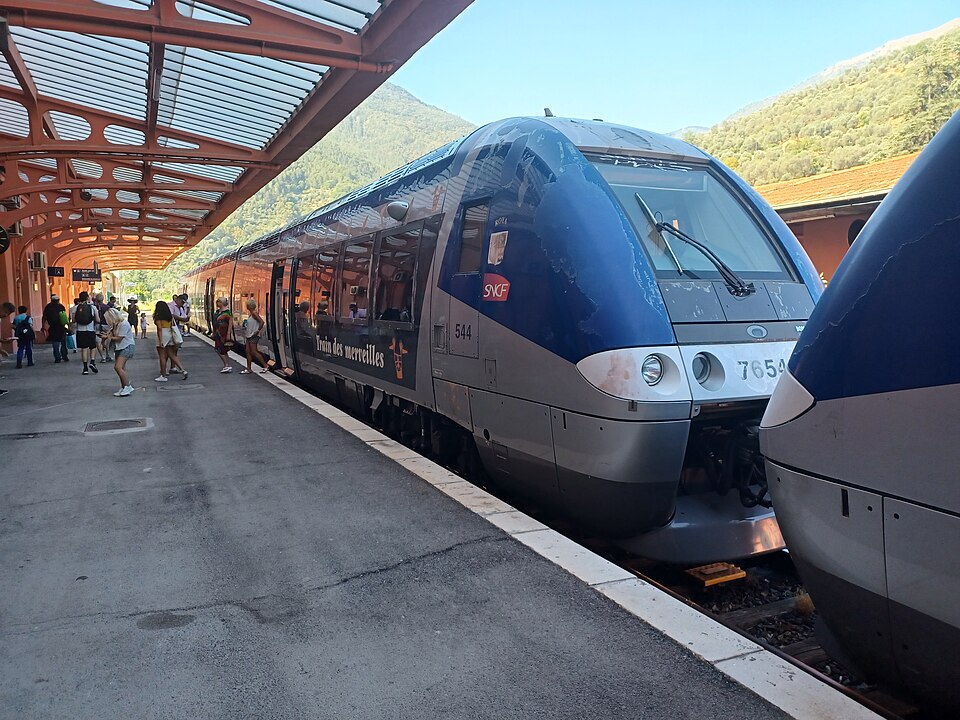
Train des Merveilles
The Train of Wonders — a little regional train that climbs from the palms of Nice up the wild Roya valley by corkscrew tunnels and perched stone villages.
View journey →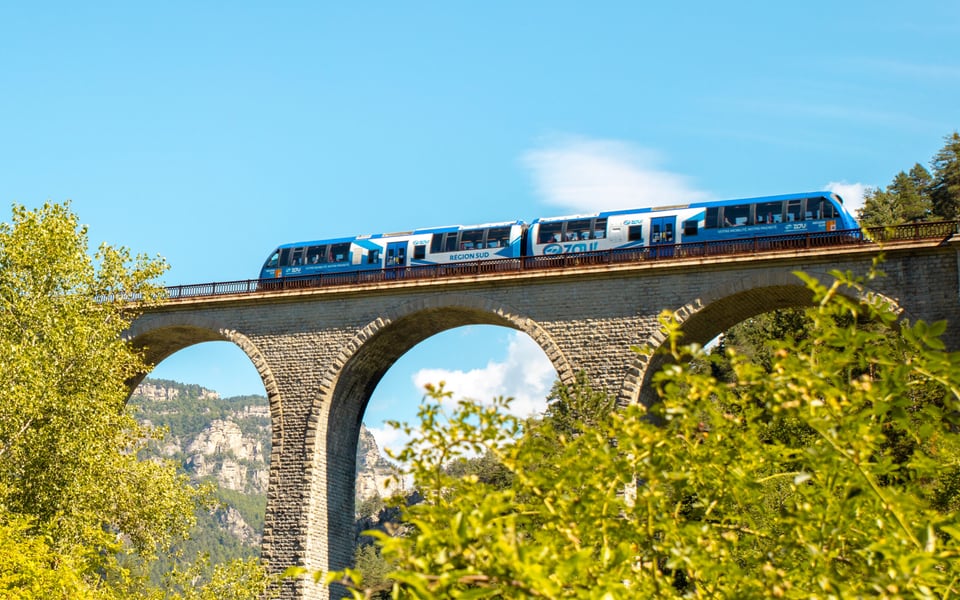
Train des Pignes
A narrow-gauge line from Nice into Haute-Provence, built to a main-line size because the army insisted, with a steam train on set days.
View journey →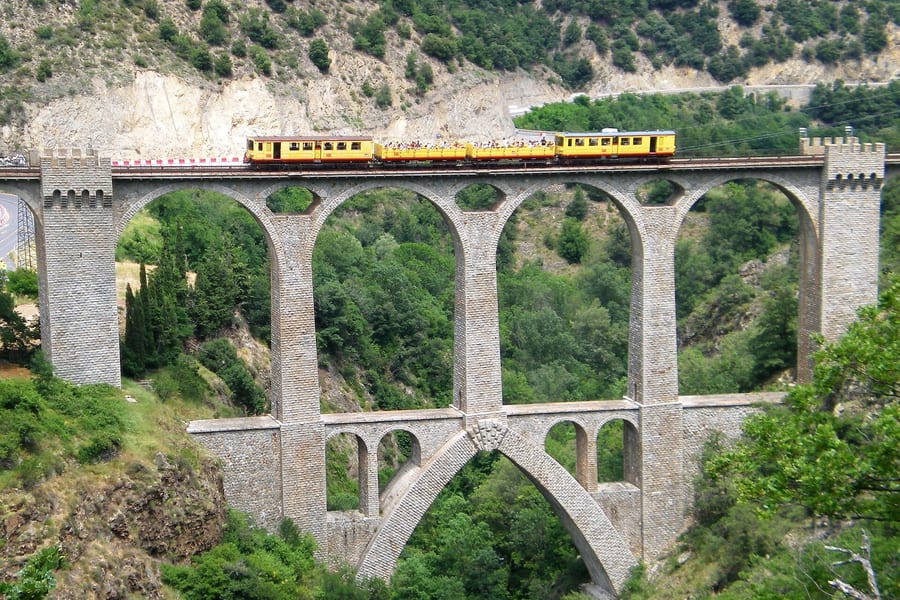
Le Train Jaune
The Yellow Train — a metre-gauge line that climbs the French Pyrenees on two famous bridges to the highest station in France, in open-air carriages.
View journey →Good to know
Is France easy to explore by train?
Very. SNCF runs one of Europe's best networks: TGV high-speed trains link Paris to the major regions in a few hours, Intercités cover the classic routes, and TER regional trains reach almost everywhere else. Paris is the natural hub, though direct TGVs increasingly connect the regions to one another too.
Do I need to book French trains in advance?
For TGV and Intercités, yes — they are reserved, and fares are cheapest booked early and rise towards departure. TER regional trains are fixed-fare and turn-up-and-go. Interrail and Eurail passes are valid, but you still reserve (and pay a small fee) for TGV seats. Note that Corsica's railway and heritage lines such as La Mure sit outside the pass system.
When is the best time to visit France by rail?
Spring and autumn are pleasant and less crowded; summer is the busiest, so book TGVs early. The high-speed network runs year-round, while the mountain and southern scenic lines — the Pyrenees, the Alps, Corsica — are at their best from late spring to autumn, and some heritage railways close entirely in winter.
What are France's best scenic railways?
Beyond the high-speed lines, France keeps some gems: the little metre-gauge Train Jaune high in the Pyrenees; the Train des Merveilles, which spirals from Nice into the Alps up the Roya valley; the cross-island Corsican railway, crossing a viaduct built by Gustave Eiffel; and the La Mure railway near Grenoble, cut into the cliffs above the Drac — charming counterpoints to the TGV.