Le Train Jaune
Thierry Llansades / Wikimedia Commons · CC BY-SA 2.0
- Distance63 km
- DurationAbout 3 hours
- Best seasonLate spring–autumn
Introduction
Everyone knows France for the TGV, the sleek high-speed trains that cross the country at 300 km/h. Le Train Jaune — the Yellow Train — is the opposite of all that, and all the more lovable for it.
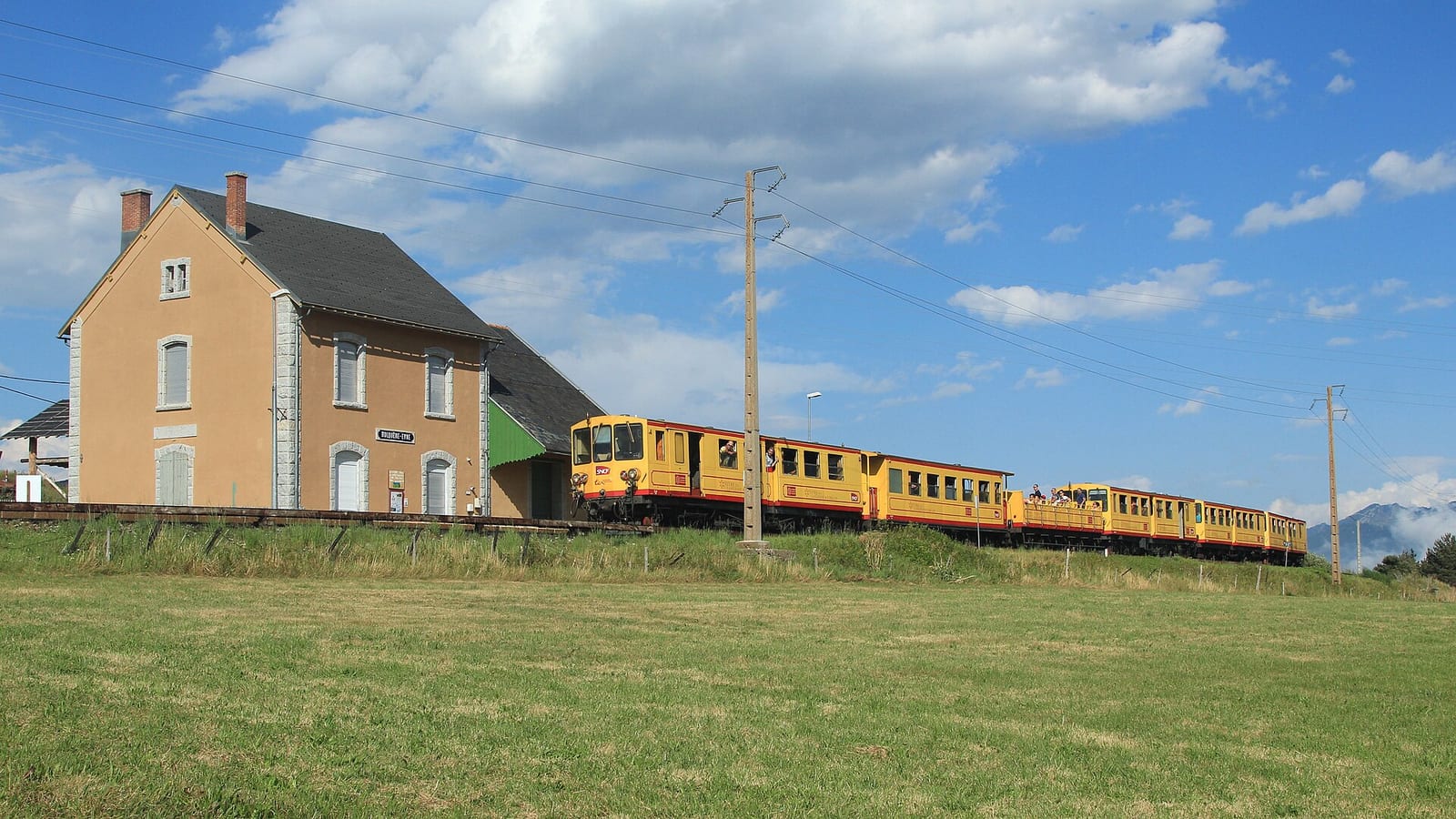
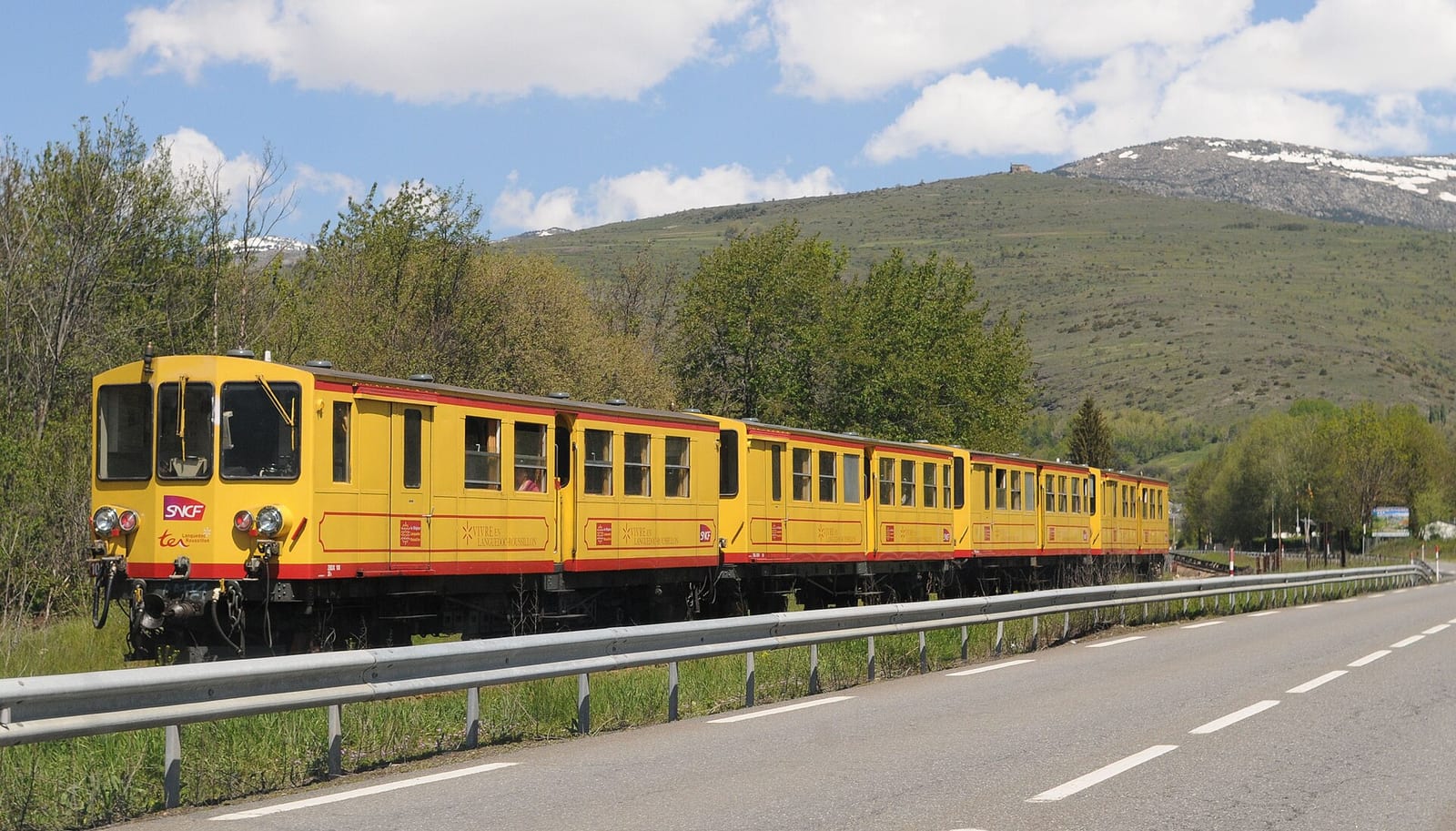
This is a tiny metre-gauge railway that climbs into the eastern Pyrenees, painted the yellow and red of the Catalan flag and pottering along at a stately 55 km/h. In 63 kilometres it hauls itself from Villefranche-de-Conflent, a walled medieval town at 427 m, up to the high Cerdagne plateau — passing through Bolquère-Eyne, at 1,593 m the highest railway station in France.
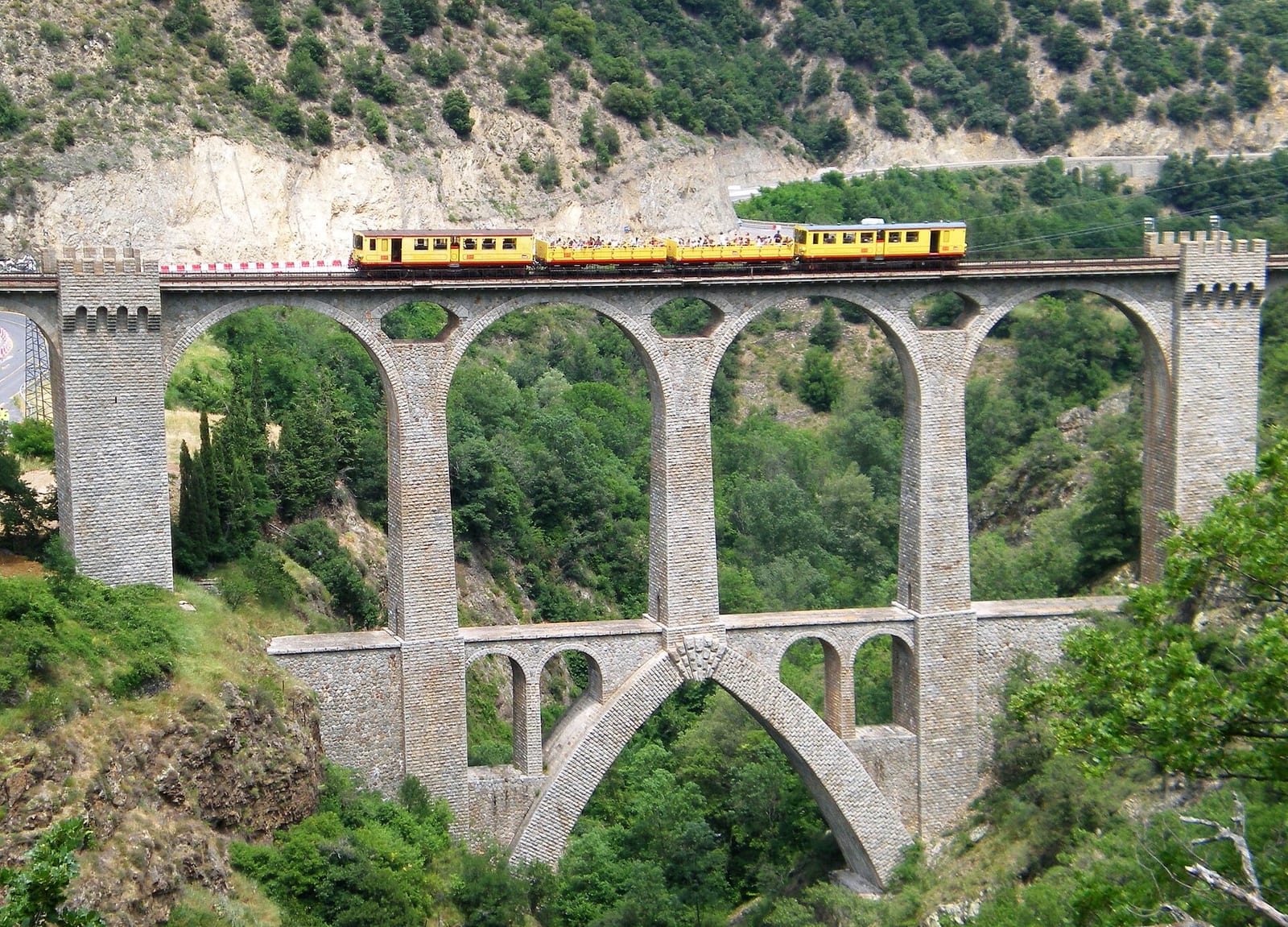
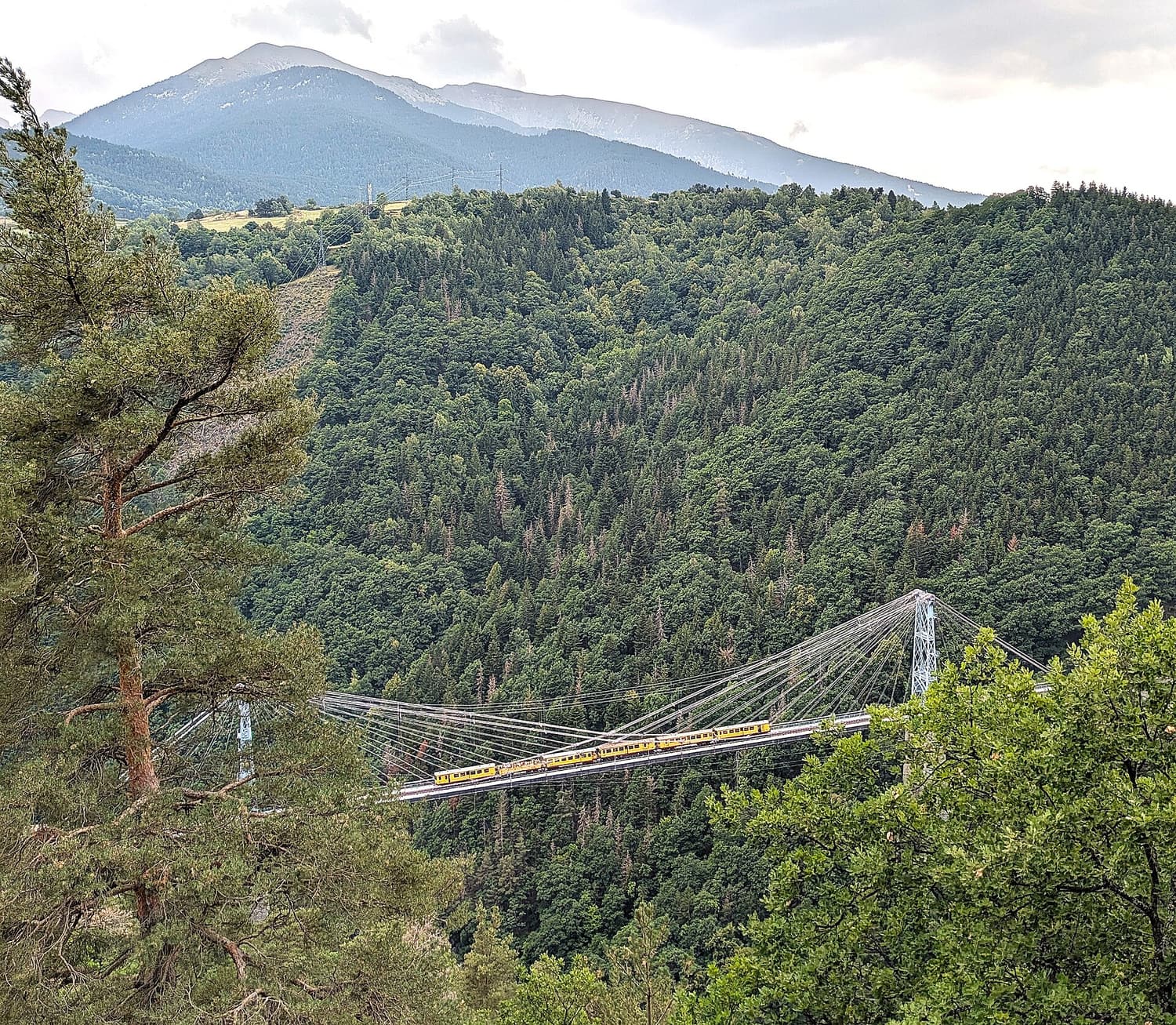
To get there it performs two showstoppers: the great stone Pont Séjourné viaduct and the slender Pont Gisclard, the only suspension bridge on a working railway in the country. Open the sides of the carriage in summer, and it becomes one of the most joyful little train rides in Europe — a slow, sunlit, open-air climb through the Pyrenees.
The Journey
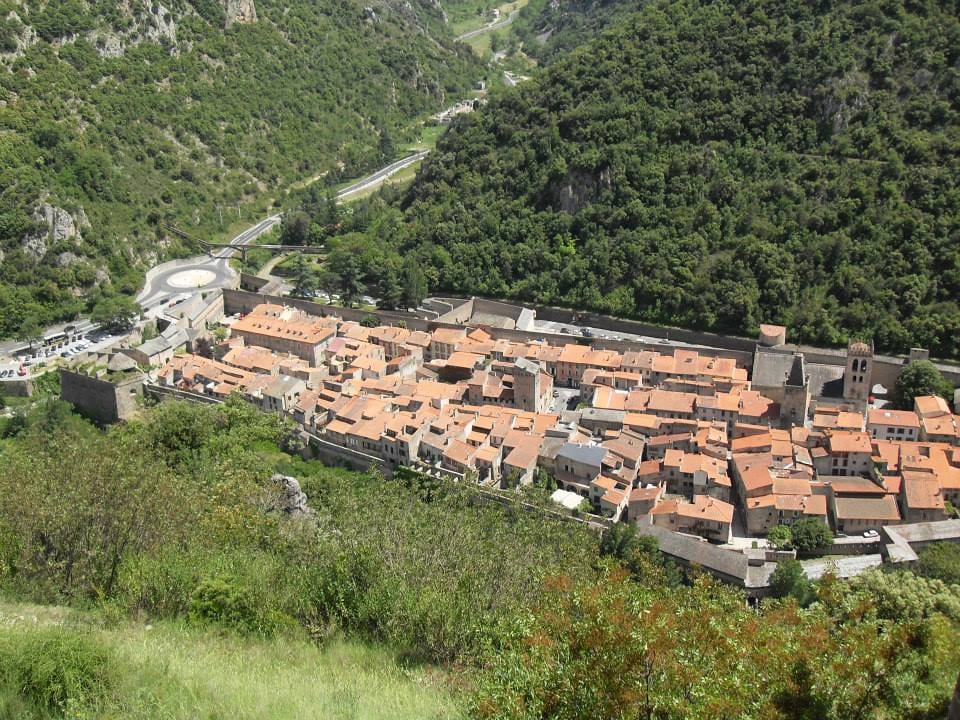
The journey starts at Villefranche-de-Conflent, a jewel of a town wrapped in ramparts designed by Louis XIV's great military engineer Vauban — a UNESCO-listed prelude worth an hour before you board. From here the little yellow train sets off up the valley of the Têt, and almost at once the mountains close in.
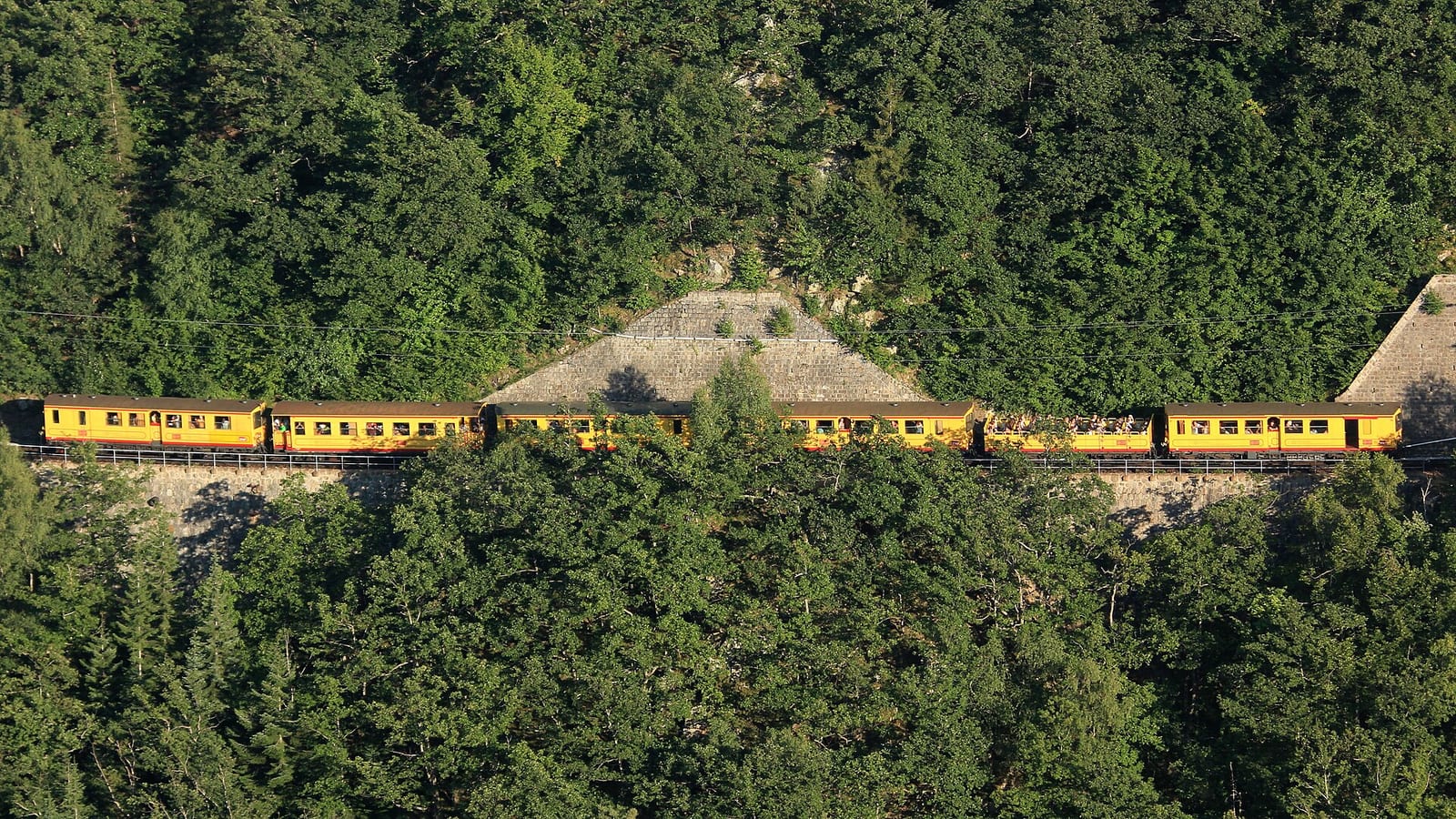
The first half is the spectacular half. The line climbs hard, curling through tunnels and along ledges, and crosses the river twice on its two famous bridges: the towering, double-tiered stone arches of the Pont Séjourné at Fontpédrouse, and — soon after — the airy Pont Gisclard, a suspension bridge slung high above the trees. In an open carriage, with the valley dropping away beneath you, this is as good as railway travel gets.
Near Mont-Louis, another Vauban fortress town, the climb eases, and the train reaches its high point at Bolquère-Eyne before running out onto the Cerdagne — a broad, high, sun-drenched Catalan plateau ringed by peaks. It calls at the resort of Font-Romeu and rolls gently across the uplands to the terminus at Latour-de-Carol, where it meets the mainline trains of France and, on the Spanish side, the way to Barcelona.
The whole run takes about three hours, but the trains stop often, so the classic way to do it is to break the trip — ride the bridges, wander a fortress town, and pick up a later train up onto the plateau.
Along the route
Thierry Llansades / Wikimedia Commons · CC BY-SA 2.0The Pont Séjourné
The line's grand set-piece — a soaring, double-tiered masonry viaduct over the gorge of the Têt at Fontpédrouse, its stone arches straight out of a fairy tale. A listed Historic Monument, and unforgettable from an open carriage.Alan Mattingly / Wikimedia Commons · CC0The Pont Gisclard
A short way on, the train crosses the Pont Gisclard — a slender suspension bridge and the only one in France still carrying a working railway, hanging its cables high above the wooded valley.Cramos / Wikimedia Commons · CC BY-SA 4.0The highest station in France
The climb tops out at Bolquère-Eyne, 1,593 m up — the highest railway station in the whole country — before the line runs out onto the wide, sunlit Cerdagne plateau.A bit of history
Culture & experiences along the way
Cramos / Wikimedia Commons · CC BY-SA 4.0Ride in the open air
In the warmer months the train runs open-sided "découverte" carriages — no glass, just a rail and the wind — so you can lean into the mountain air, hear the third rail hum, and watch the Pyrenees roll by unfiltered.Remparts de Villefranche-de-Conflent / Wikimedia Commons · CC BY-SA 4.0Walled Villefranche-de-Conflent
Start (or end) at Villefranche-de-Conflent, a tiny medieval town wrapped in ramparts by the military engineer Vauban and listed by UNESCO — a perfect, cobbled prelude to the climb.Mike McBey / Wikimedia Commons · CC BY 2.0Out onto the Cerdagne
Above the bridges the country changes: the wooded gorges give way to the high, sunny Cerdagne plateau, a broad Catalan upland of pasture and clear light where the little yellow train feels like a toy in a giant's landscape.Timetables
Le Train Jaune is a scheduled SNCF TER service — a real public train, not a tourist special — which is a big part of its charm (and its low fares).
The practical shape of it:
| Section | Highlights | Rough time |
|---|---|---|
| Villefranche → Mont-Louis | Both bridges; the steepest climbing | ~1½ hours |
| Mont-Louis → Bolquère-Eyne | The highest station in France | ~20 min |
| Bolquère → Latour-de-Carol | Out onto the Cerdagne plateau | ~1 hour |
| Villefranche → Latour-de-Carol (full line) | The lot | ~3 hours |
The line runs several services a day each way, year-round (more added in summer, when the open-air carriages run); the full Villefranche–Latour-de-Carol run takes about 3 hours. ⚠️ The line is closed for maintenance from 23 March to 10 April 2026 — check before planning around those dates.
Good to know:
- Fewer trains than you'd think. Only a handful of services run each way per day, and the timetable thins outside summer — check times carefully and don't miss the last one.
- Open-air carriages run in the warm months. The open "découverte" cars are attached in summer; off-season the train is all enclosed.
- Break the journey. With trains a few times a day you can stop at Villefranche, the bridges, Mont-Louis and Font-Romeu and continue later — much better than riding straight through.
- Connections. Villefranche links to Perpignan; Latour-de-Carol connects to Toulouse and to Barcelona over the border.
Frequency and the March–April 2026 closure as of the 2026 timetable. Confirm current times with the operator — see the Tickets section below.
Tickets
Because Le Train Jaune is an ordinary SNCF TER line, tickets are cheap, flexible and bought like any regional train — at the station, from a machine, or online through SNCF. No reservation, no fuss.
Two natural ways to ride:
- The full line — Villefranche-de-Conflent all the way to Latour-de-Carol, over both bridges, through the highest station in France and out onto the Cerdagne. Three unhurried hours for a very small fare.
- The bridges section — if you're short on time, ride just the lower, steepest half from Villefranche up to Mont-Louis, which takes in both the Pont Séjourné and the Pont Gisclard.
A few pointers:
- Fares are modest and change, so we point you to SNCF for the live price rather than quote a figure that will date.
- Aim for an open-air carriage in summer — sit on the valley side for the drop-away views.
- Combine it with the mainline. Reach Villefranche from Perpignan, or make it part of a cross-Pyrenees trip via Latour-de-Carol to Toulouse or Barcelona.
- Check the day's timetable first — services are sparse, and planning around them is the key to a good trip.
Book your tickets
The full line
Villefranche → Latour-de-Carol
The complete 63 km run over both bridges, through the highest station in France and out onto the Cerdagne — an ordinary SNCF TER ticket, no reservation needed, and a bargain for one of the loveliest mountain lines in Europe.
Book Tickets (opens in a new tab, on SNCF (TER Occitanie))via SNCF (TER Occitanie)The bridges section
Villefranche → Mont-Louis
Short on time? Ride just the dramatic lower half, from Villefranche up over the Pont Séjourné and Pont Gisclard to Mont-Louis — the two great bridges and the steepest, most scenic climbing, in a half-day.
Book Tickets (opens in a new tab, on SNCF (TER Occitanie))via SNCF (TER Occitanie)Rail Passes
Interrail passes are valid. Le Train Jaune is an ordinary SNCF regional line in Occitanie, and Interrail's table of railway companies lists SNCF's regional TER trains, including liO, as included in France. Its France page says reservations for regional trains are usually not required.
For this journey alone, a pass is not worth buying. The fare for the whole line is small. A pass pays when the Train Jaune is one day of a longer trip, such as on from Latour-de-Carol to Toulouse.
Checked October 2026 against interrail.com (opens in a new tab) and Interrail's France page (opens in a new tab).
Places to Visit
The line links a string of fortress towns and mountain resorts on its way up to the Cerdagne, and it rewards hopping off along the way. Two of the stops below — Villefranche-de-Conflent at the bottom and Mont-Louis near the top — are Vauban strongholds carrying the same UNESCO listing.
 Meria z Geoian / Wikimedia Commons · CC BY-SA 3.0 · cropped
Villefranche-de-Conflent
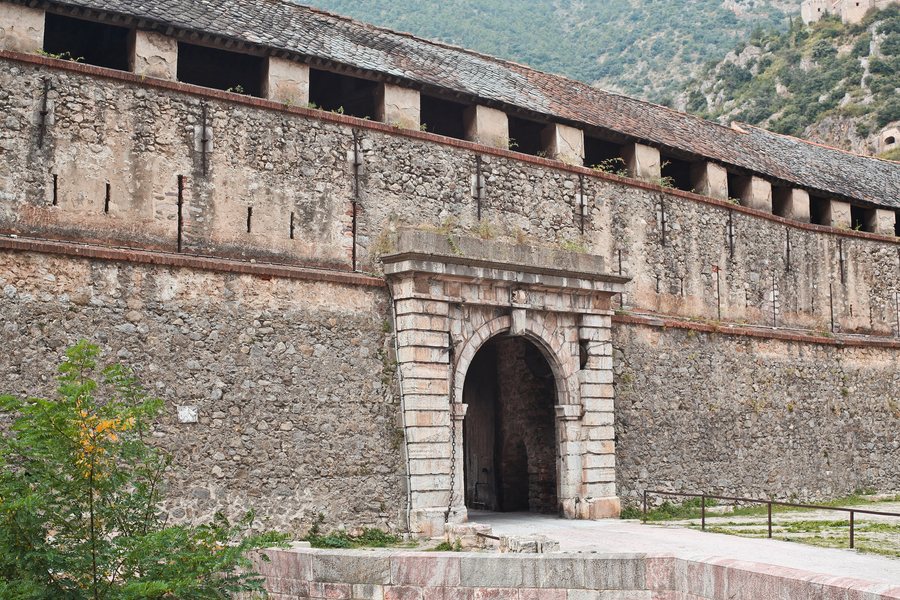
The walled town where the climb begins: a Vauban fortress of cobbled lanes and ramparts, UNESCO-listed as part of his fortifications, with an underground stairway called the Cova Bastera cut up to the fort above. The great abbeys and hot springs of the Conflent are close by.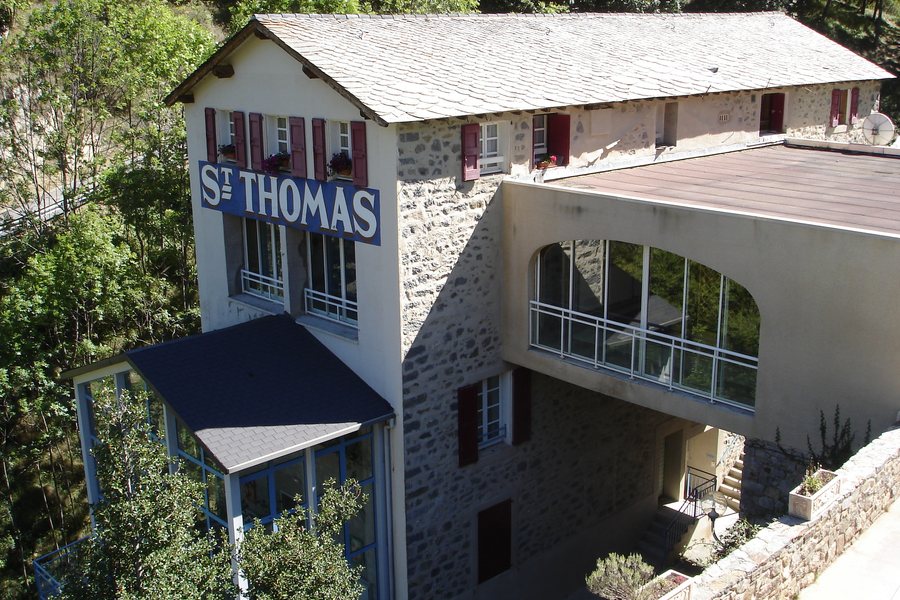 E v Schoonhoven / Wikimedia Commons · CC BY 3.0 · cropped
Fontpédrouse
The village beneath the Pont Séjourné, and a short way off it the rustic open-air pools of St-Thomas-les-Bains, fed by a sulphurous spring that comes out of the hillside hot enough to steam. A good deal more appealing after a morning in the mountain air than it sounds on paper.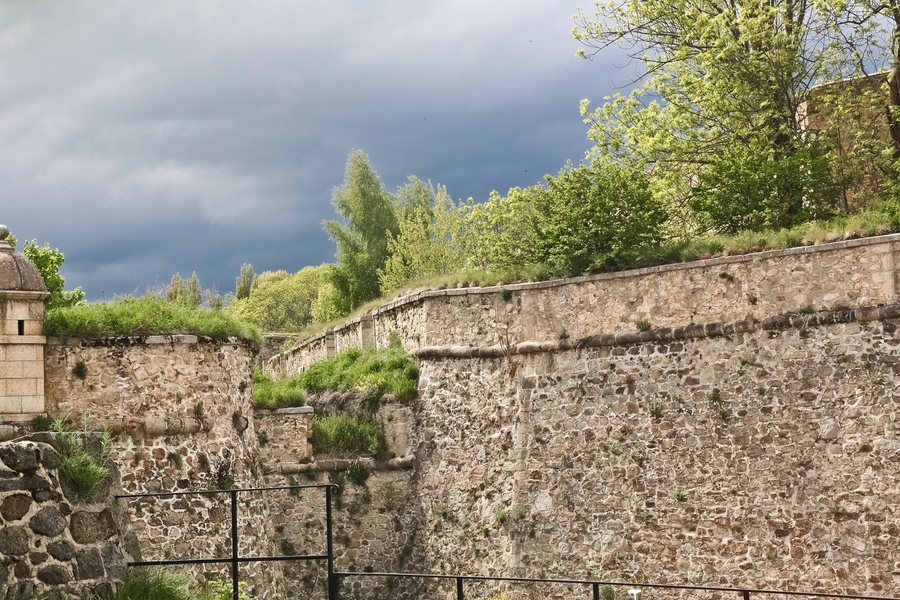 Meria Geoian / Wikimedia Commons · CC BY-SA 4.0 · cropped
Mont-Louis
Another Vauban citadel — begun in 1679 and, at 1,600 metres, the highest fortified town in France. It is still military: the national commando training centre has occupied the citadel since 1964. Just outside the walls stands a working solar furnace built in 1949, the first of its kind in the world, which makes for an odd pairing with the ramparts.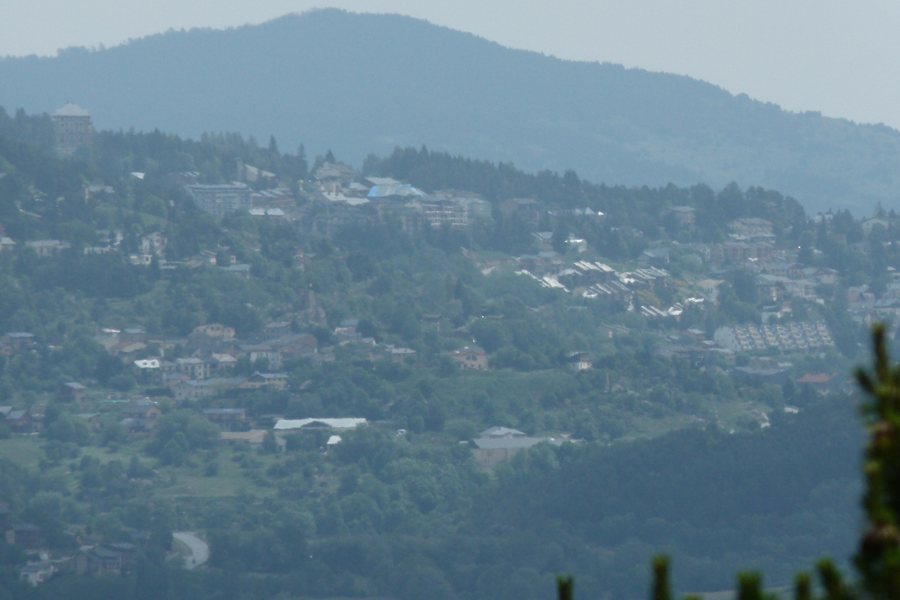 Pere López Brosa / Wikimedia Commons · CC BY-SA 4.0 · cropped
Font-Romeu
A sunny Pyrenean resort famous for its light and its thin air — national teams come here to train at altitude. Good walking and cycling in summer, skiing in winter, and more clear days a year than almost anywhere else in France.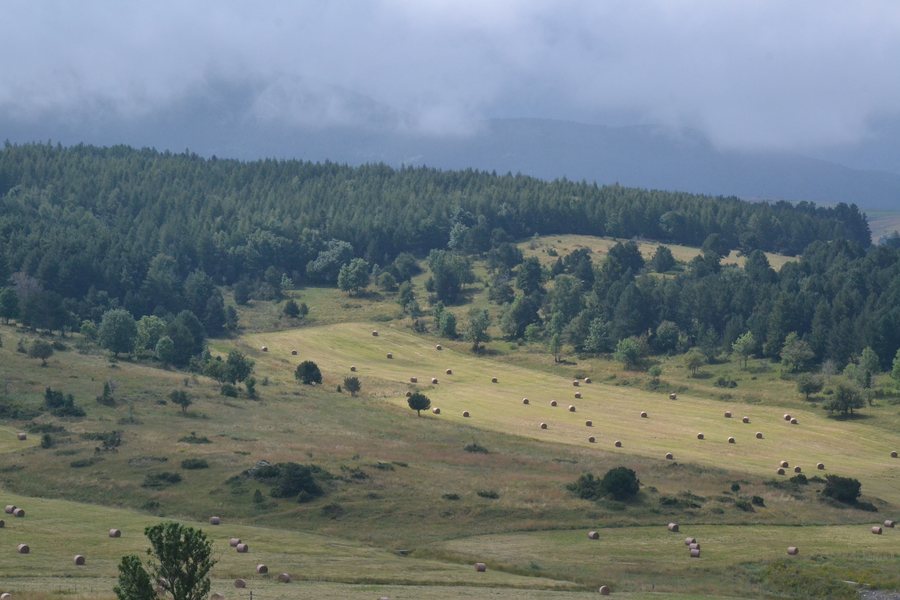 Lucas Destrem / Wikimedia Commons · CC BY-SA 4.0 · cropped
The Cerdagne
The plateau the line was built to reach, shared with Spanish Catalonia and dotted with Romanesque churches. It also contains Llívia — a piece of Spain entirely surrounded by France. The Treaty of the Pyrenees handed 33 Cerdanya villages to France in 1659, but Llívia had the rank of a town rather than a village, so Spain kept it and still has it.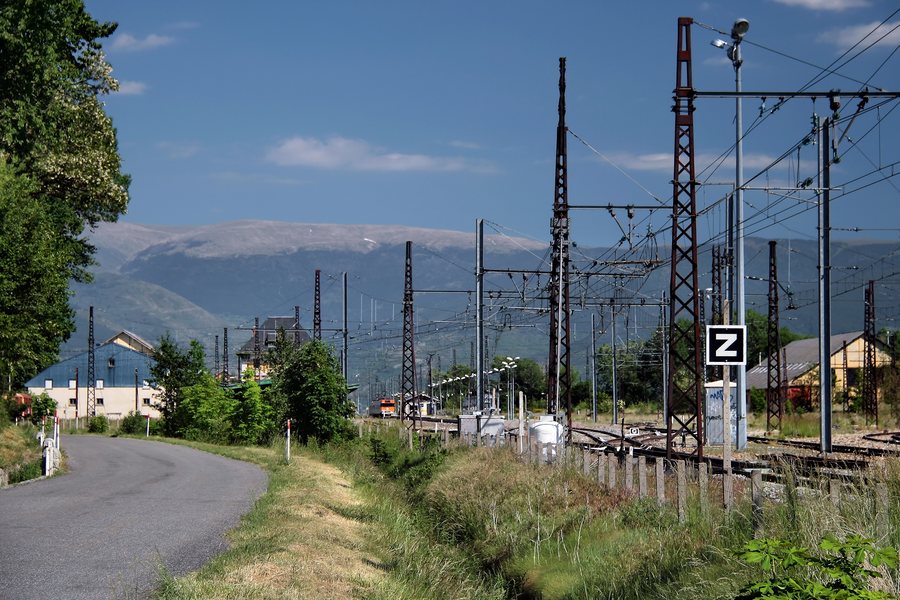 Jorge Franganillo / Wikimedia Commons · CC BY 3.0 · cropped
Latour-de-Carol
The end of the line, and a genuine railway curiosity: three track gauges meet here — the metre-gauge Train Jaune, standard gauge towards Toulouse, and Iberian broad gauge running down to Barcelona. Few stations anywhere let you change between three different railway worlds on one platform.Where to Sleep
The Train Jaune can be ridden in a day from Perpignan, but the Cerdagne is lovely enough — and the light clear enough — to be worth a night or two on the plateau.
- Villefranche-de-Conflent — small hotels and guesthouses within the ramparts, atmospheric for a night at the foot of the line.
- Mont-Louis — inns inside the fortress walls, a characterful and central base for the middle of the line.
- Font-Romeu — the widest choice of hotels, being a proper resort, and the best base for walking and skiing on the plateau.
- Cerdagne villages — chambres d'hôtes and small hotels in the sunny stone villages of the high plateau, for a quiet Pyrenean stay away from the crowds.
The busiest times are the summer walking season and the winter ski months around Font-Romeu; book ahead for July–August and the February holidays. Nights are cool up here even in summer, so pack a layer.
Questions or corrections
Planning this trip and stuck on something, or spotted a time, fare or detail that has changed? Send us a message about Le Train Jaune. We read every one, and we update this page when something has changed.