Train d'Artouste
Accrochoc / Wikimedia Commons · CC BY-SA 3.0 · cropped
- DistanceAbout 8.5 km of 500 mm gauge track
- Duration55 minutes each way; 3 hours 30 minutes with the gondola and the stop at the lake
- Best season8 May to early October; July and August for a train every half hour
Introduction
The Train d'Artouste was built to carry men and cement to a dam, and the company that runs the dam still owns the trains.
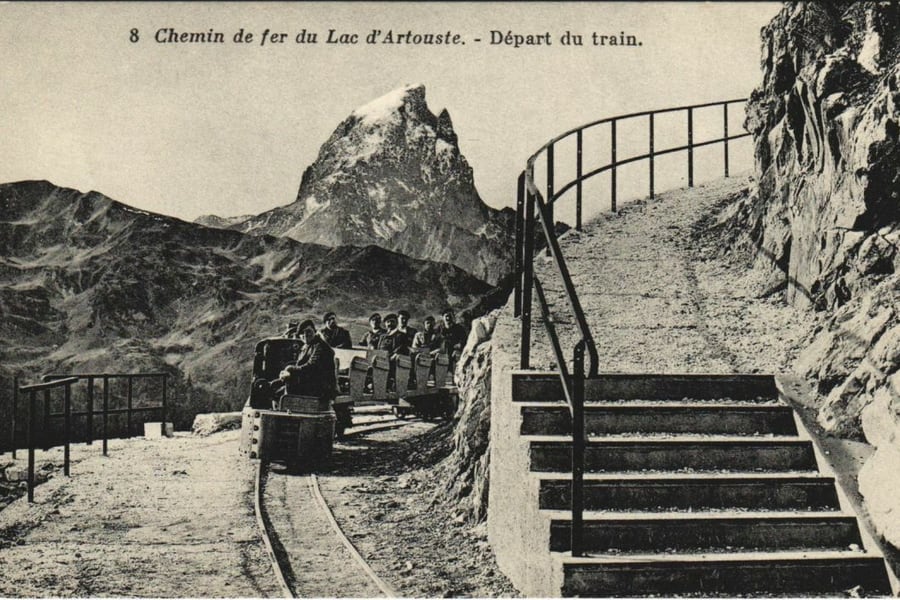
In the 1920s the Compagnie des Chemins de Fer du Midi set out to electrify its railways in the Pyrenees, and the first dam it built for the power was at Lac d'Artouste, high in the Ossau valley. No road reached the lake, so a 500 mm gauge railway was laid along the mountainside to bring up the workers and materials. The dam went into service in 1929, the line stayed to serve it, and in 1932 the public was let on board. The red and yellow trains still belong to the SHEM, the hydroelectric company that runs the dam, and the lake's water still flows in a gallery beside the track.
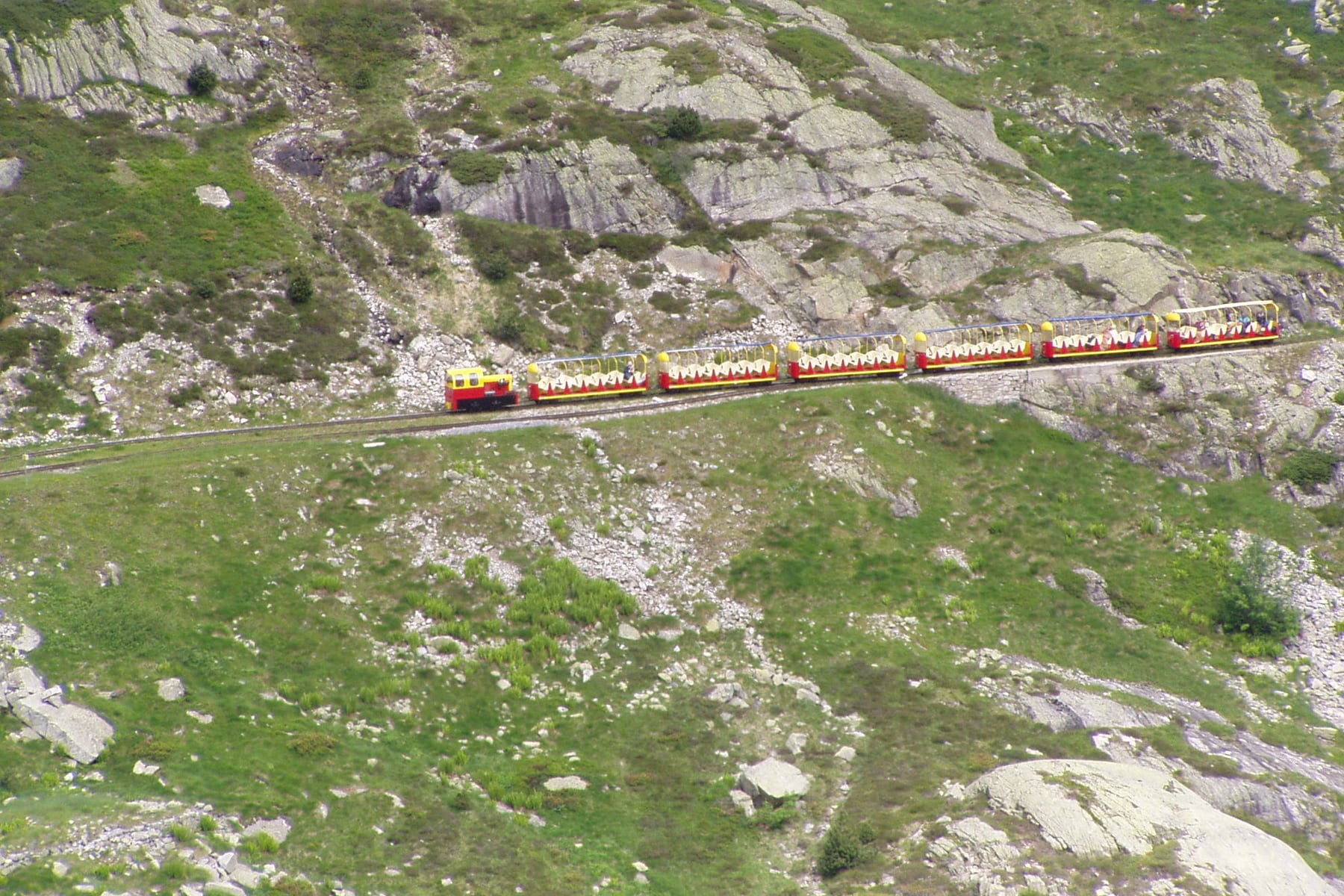
A gondola lifts passengers from Fabrèges to La Sagette, where open carriages set off on a 55-minute run to the foot of the lake, about eight and a half kilometres along a ledge at around 1,900 metres. The trains run from May to early October.
The Journey
The journey starts at Fabrèges, a ski and summer station at 1,240 metres beside the reservoir of the same name, on the road from Laruns to the Spanish border at the Col du Pourtalet. Every ticket includes the gondola, which climbs for fifteen minutes to La Sagette, the departure station of the train. Plan to be at the bottom 45 minutes before the time on your ticket.
The run to the lake
Out of La Sagette the train goes straight into the 315-metre Tunnel de l'Ours, the Bear Tunnel, and comes out high above the Soussouéou valley. From there the line hardly climbs at all: it keeps to a shelf cut into the slope and built up on stone walls, never higher than 1,940 metres, with rock on one side of the carriages and the open drop on the other. The valley below has never had a road. The water of Lac d'Artouste comes down the same way, in a gallery that follows the railway to the power station's pipes at La Sagette.
Walking on the track is forbidden. After 55 minutes the train stops at the Gare du Lac, at 1,914 metres, and a marked mountain path climbs for about twenty minutes to the lake and its dam. Trains wait 1 hour 20 minutes in high season and 1 hour 40 in low season before taking their passengers back.
The trains
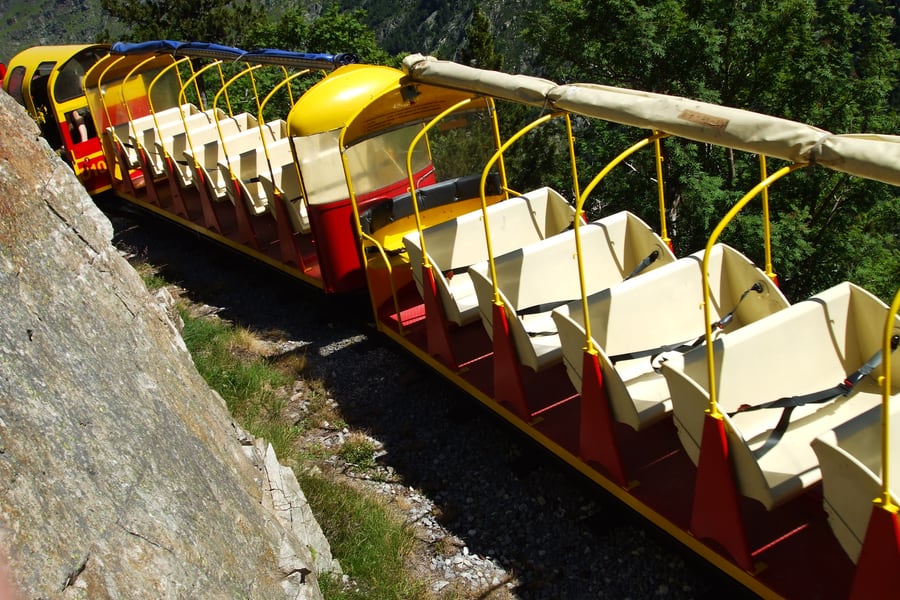
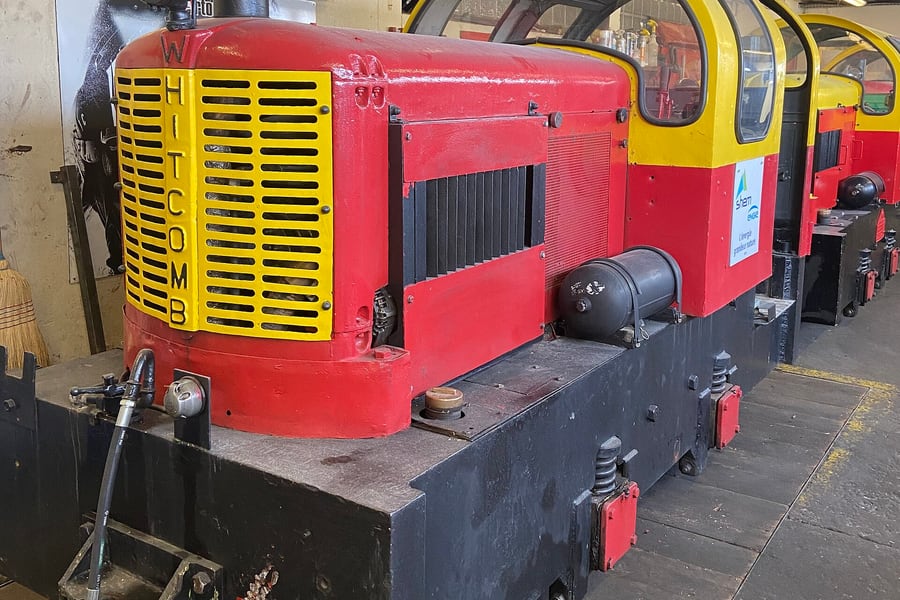
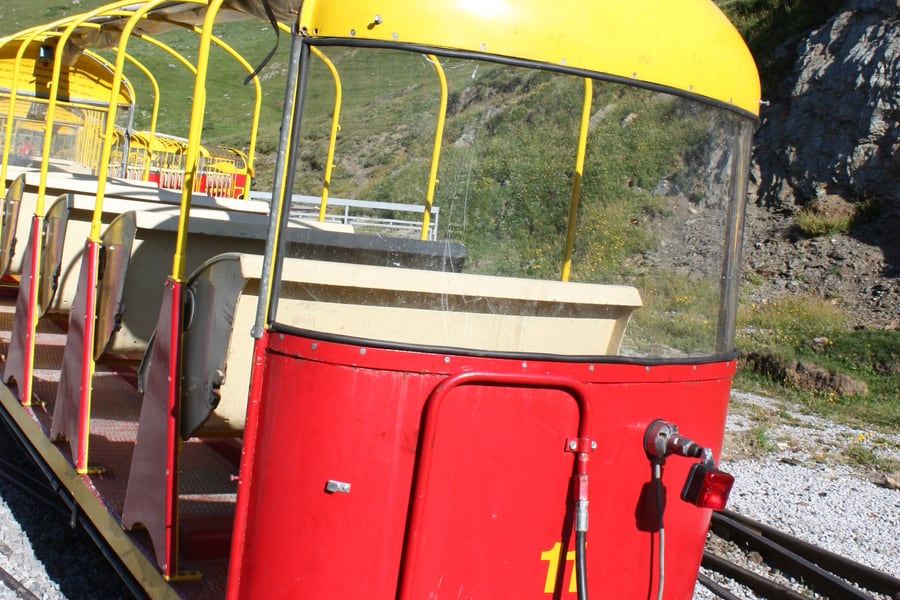
The carriages are open at the sides, with bench seats under a canopy, and each train is drawn by a small diesel. Since 1963 the line has been worked by Billard T60D and Whitcomb diesels, which replaced the three Renault tractors of the opening years, and they still carry the SHEM's logo on their cabs.
A railway for a dam
The line began in 1920 as a worksite railway for the dam, lifted when the work was finished and then laid again, because the dam still had to be maintained. When the public was first allowed on in 1932, at the prefecture's request, the trains ran on Sundays in summer and were worked by retired railwaymen. The SNCF took over in 1938. Today the SHEM still owns the trains, and since 2019 the Régie d'Artouste, a public body of the commune of Laruns, has run them for visitors.
Along the route
 Selmoval / Wikimedia Commons · CC BY-SA 4.0 · cropped
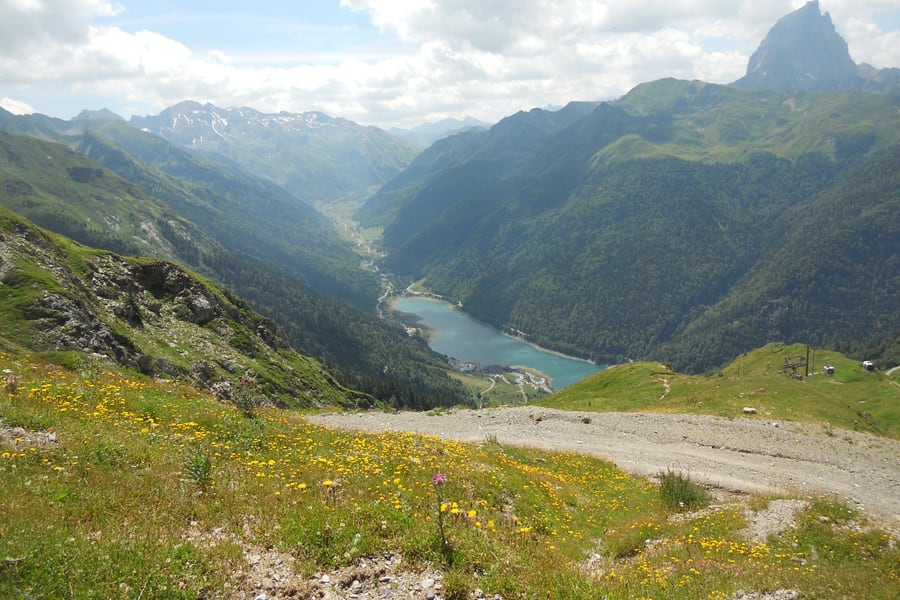
Up to La Sagette
A gondola climbs for fifteen minutes from Fabrèges, at 1,240 metres beside its reservoir, to La Sagette, where the train waits. Look back from the top: the tooth of the Pic du Midi d'Ossau stands over the valley.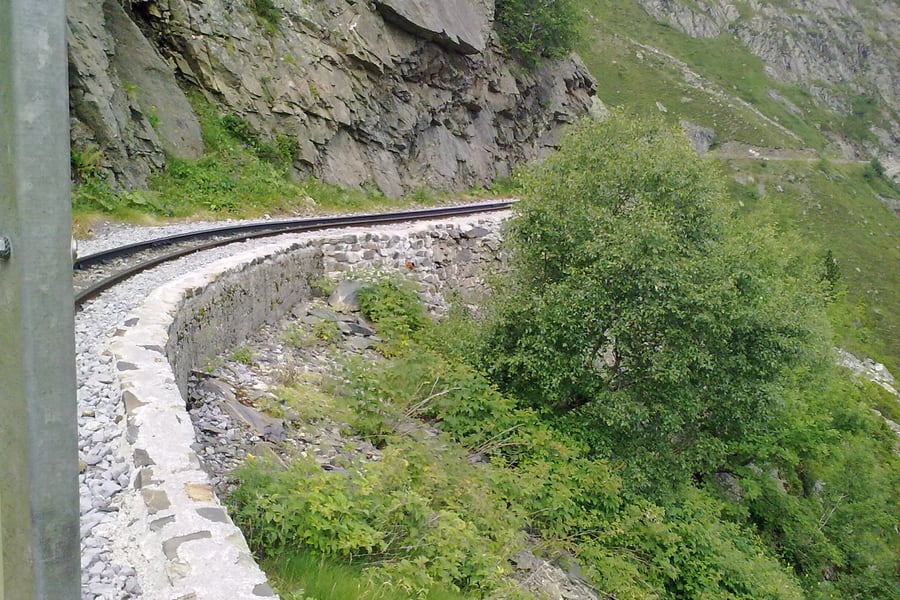 France64160 / Wikimedia Commons · Public domain · cropped
Tunnel de l'Ours
The train leaves La Sagette through the 315-metre Bear Tunnel, then runs out along a shelf carried on stone walls across the mountainside, with the drop to the valley on the open side of the coaches.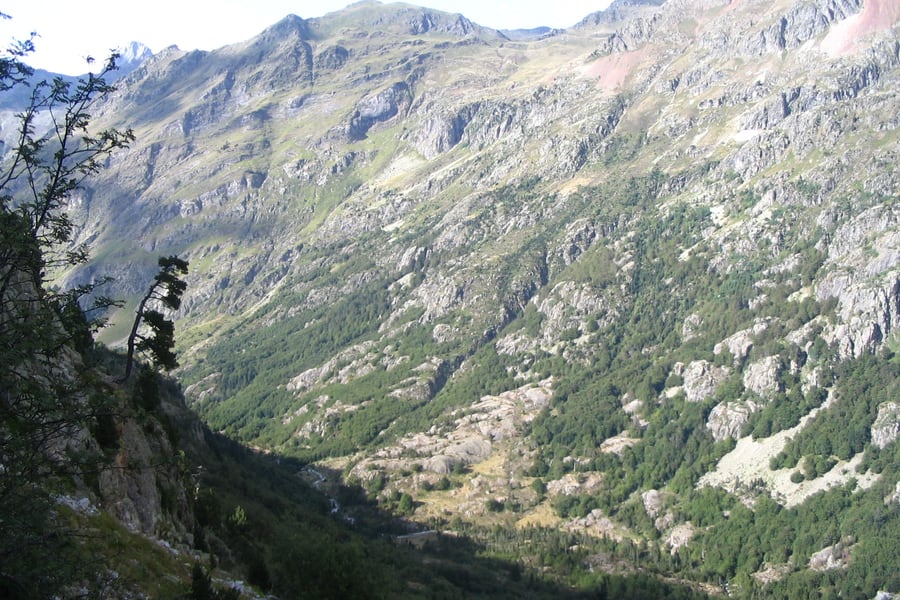 Patrice78500 / Wikimedia Commons · CC BY-SA 3.0 · cropped
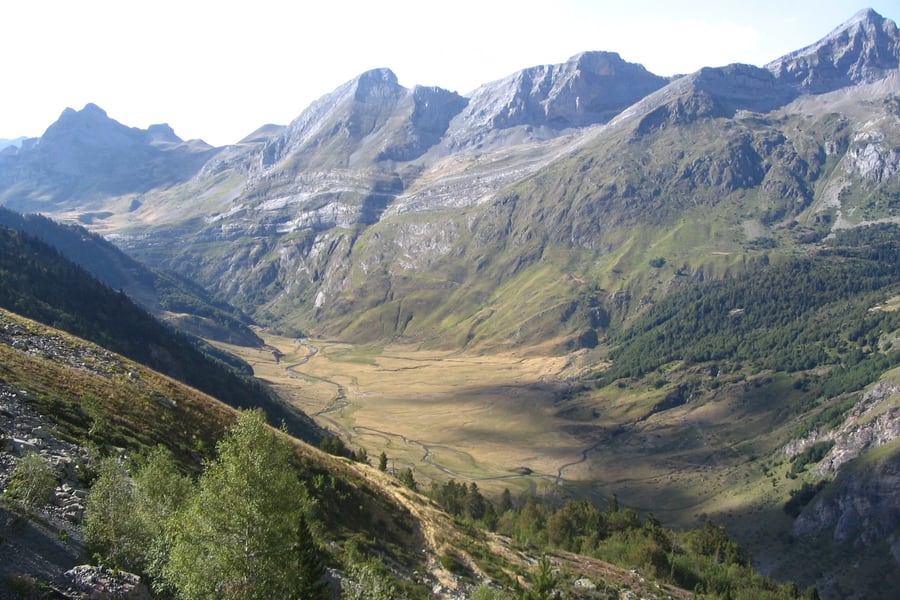
Above the Soussouéou
For most of the way the line holds its height above the Soussouéou, a valley no road has ever entered. The lake's water travels the same route, in a gallery beside the track down to the power station's pipes at La Sagette.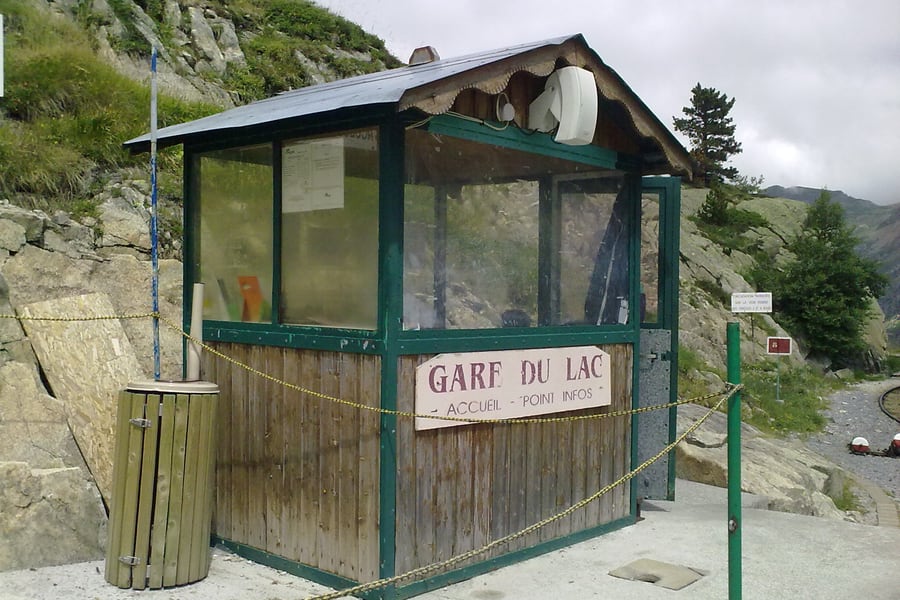 France64160 / Wikimedia Commons · Public domain · cropped
Gare du Lac
The line ends at the Gare du Lac, its rails 1,914 metres up. A marked mountain path climbs for about twenty minutes to the lake; trains wait 1 hour 20 minutes in high season and 1 hour 40 in low.A bit of history
Culture & experiences along the way
 ErnestoLaPomme / Wikimedia Commons · CC BY 4.0 · cropped
Lac d'Artouste
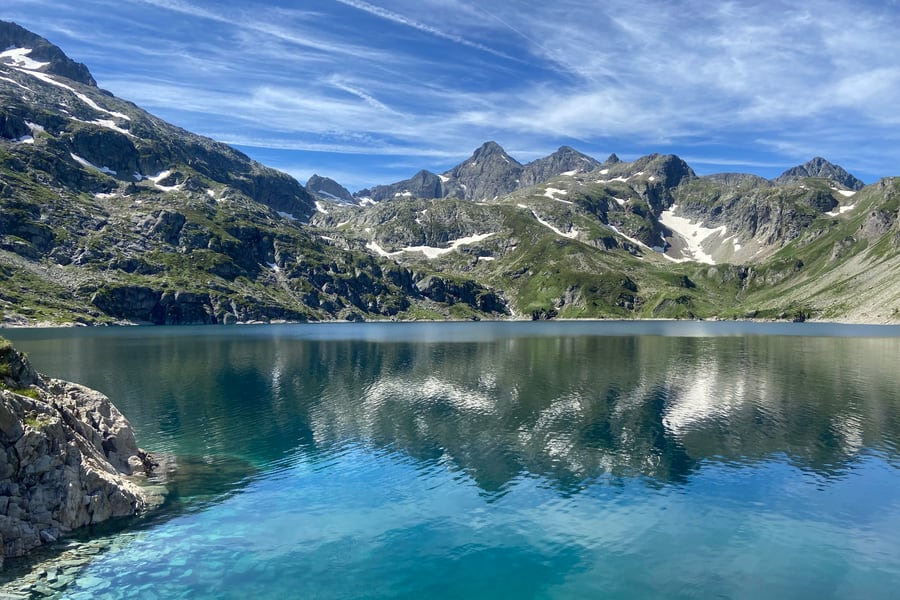
The lake is natural, left by a glacier at 1,997 metres, and the Pyrenees National Park runs along three of its four shores. The walk up from the train takes about twenty minutes. Dogs are welcome on the train and at the lake but are not allowed into the park itself.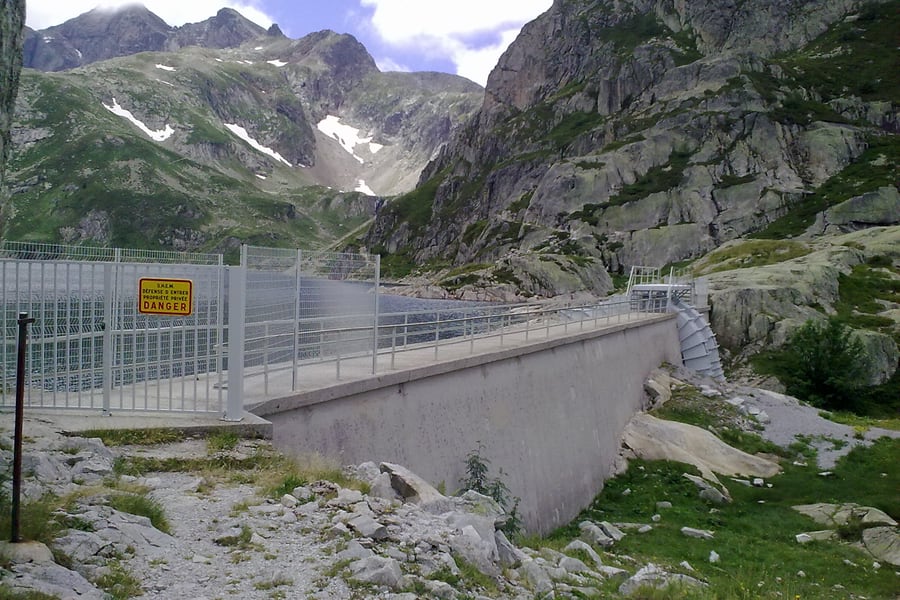 France64160 / Wikimedia Commons · Public domain · cropped
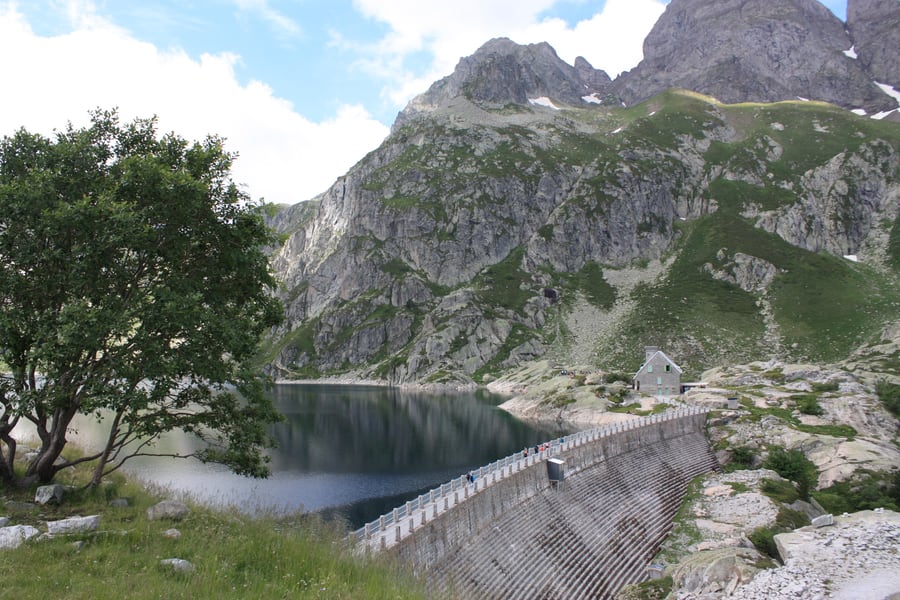
The dam behind the railway
The Compagnie du Midi dammed the lake to power the electrification of its Pyrenean lines. About 2,000 workers, most of them from abroad, spent seven years on it, and it went into service in 1929. Raised again in 1962, it still feeds the SHEM's power stations below.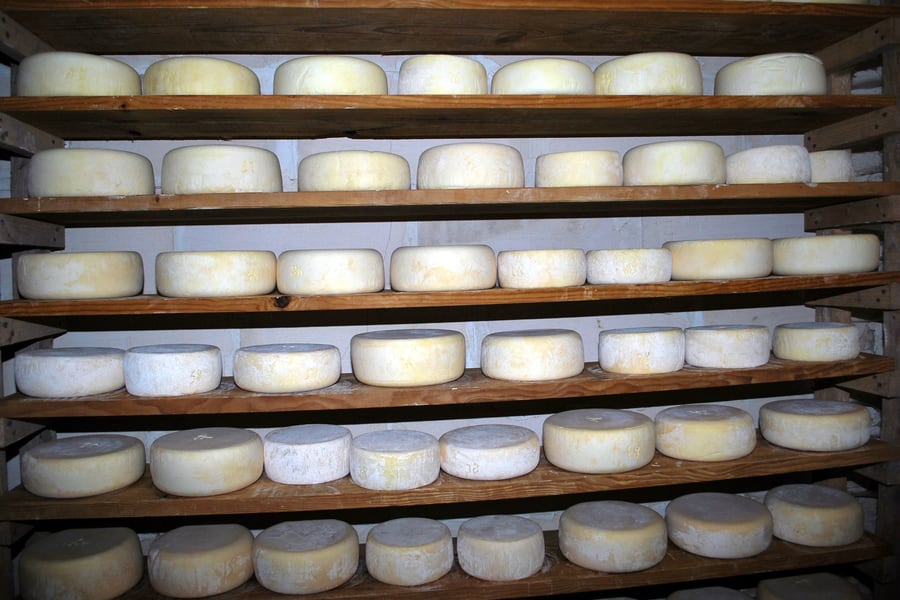 Jean Michel Etchecolonea / Wikimedia Commons · CC BY-SA 3.0 · cropped
Ossau-Iraty
The ewe's-milk cheese of the Béarn and the Basque Country takes its name from the Pic du Midi d'Ossau at one end of its area and the forest of Iraty at the other, and has been an appellation since 1980. Béarn cheeses once went to market under the name of Laruns.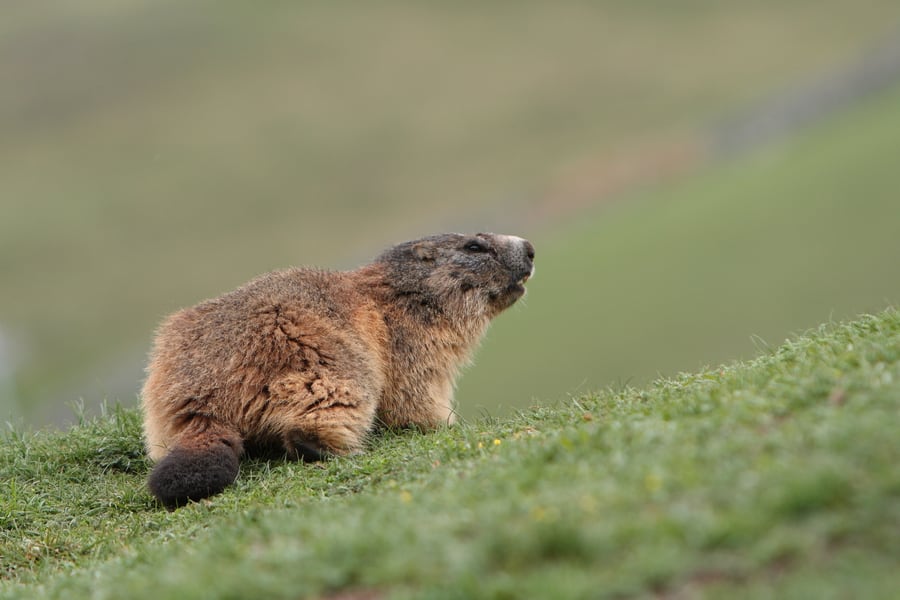 Benh LIEU SONG / Wikimedia Commons · CC BY-SA 3.0 · cropped
The marmots
Marmots died out in the Pyrenees at the end of the last ice age and were brought back in 1948. The reintroduction took, and they now live across the high pastures of the Pyrenees National Park, whose boundary comes down to the lake.Timetables
The 2026 season has ended. The train runs again from 8 May to 3 October 2027; the 2027 split between high and low season is not yet published, so the pattern below is the 2026 one. The Découverte excursion takes about 3 hours 30 minutes from the bottom of the gondola: 15 minutes up, 55 minutes in the train each way, and the stop at the lake.
| Season (2026) | Trains leave La Sagette | Time at the lake |
|---|---|---|
| Low season: 8 May – 4 July, 1 September – 4 October | Every hour, 10:00 – 14:00 on weekdays, to 15:00 at weekends | 1 hour 40 minutes |
| High season: 5 July – 31 August | Every 30 minutes, 09:00 – 17:00 | 1 hour 20 minutes |
With an Escapade ticket you choose your train up and come back on the last train of the day: 16:45 on weekdays and 17:45 at weekends in low season, 19:15 in high season. The gondola's first ride up is at 09:15 in low season and 08:30 in high season; its last ride down is at 19:00 and 20:00. Be at the gondola 45 minutes before the time on your ticket.
Getting to Fabrèges by bus
From 1 July to 31 August, regional bus 525 runs daily from Laruns (Collège stop, where it meets line 524 from Pau) to Artouste Fabrèges:
| Leaves Laruns | Arrives Fabrèges | Leaves Fabrèges | Back in Laruns |
|---|---|---|---|
| 09:10 | 09:55 | 10:40 | 11:25 |
| 13:50 | 14:35 | 16:40 | 17:25 |
Times as of October 2026, from the operator's train page (opens in a new tab) and the Région Nouvelle-Aquitaine line 525 timetable. The 2027 times will be on the operator's site before the season opens.
Tickets
Every ticket includes the gondola. The Découverte is the standard return trip with the stop at the lake; the Escapade brings you back on the last train, for walkers. A one-way One Way ticket (€24, €14 for children) is for experienced hikers returning on foot, at least six hours on poorly marked paths, and the Campeur (€35) brings campers back a day or more later. Children under four ride free on a lap.
Book online before you come: mobile signal at Fabrèges is weak, so print or download the tickets at home. Tickets cannot be cancelled and cost €8 each to change, and ID is checked at boarding. There is no cash machine at the station. Prices as of October 2026, for the 2026 season.
Book your tickets
Billet Découverte
€28 adult · €20 child 4–12 · families from €66
The gondola and the train both ways, with 1 hour 20 minutes at the lake (1 hour 40 in low season).
Book Tickets (opens in a new tab, on Train d'Artouste)via Train d'ArtousteBillet Escapade
€34 adult · €30 child 4–12
Any train up, and back on the last train of the day.
Book Tickets (opens in a new tab, on Train d'Artouste)via Train d'ArtousteRail Passes
Interrail and Eurail passes are not valid on the Train d'Artouste. It is run by the Régie d'Artouste, not by SNCF, and Interrail's table of railway companies does not list it, so pass holders buy an ordinary ticket.
A pass does cover the SNCF trains to Pau, the nearest station: the TER without a reservation, and the TGV INOUI with a compulsory one. From Pau the regional buses 524 and 525 to Laruns and Fabrèges are paid separately. For Artouste alone a pass is not worth buying; it pays only as part of a longer trip through France.
Checked October 2026 against Interrail's table of railway companies (opens in a new tab).
Places to Visit
The road to Fabrèges climbs the Ossau valley from Pau through Laruns, past lakes and villages that make a day of their own; the lakes above Artouste are for walkers with time after the train.
 ahisgett / Wikimedia Commons · CC BY 2.0 · cropped
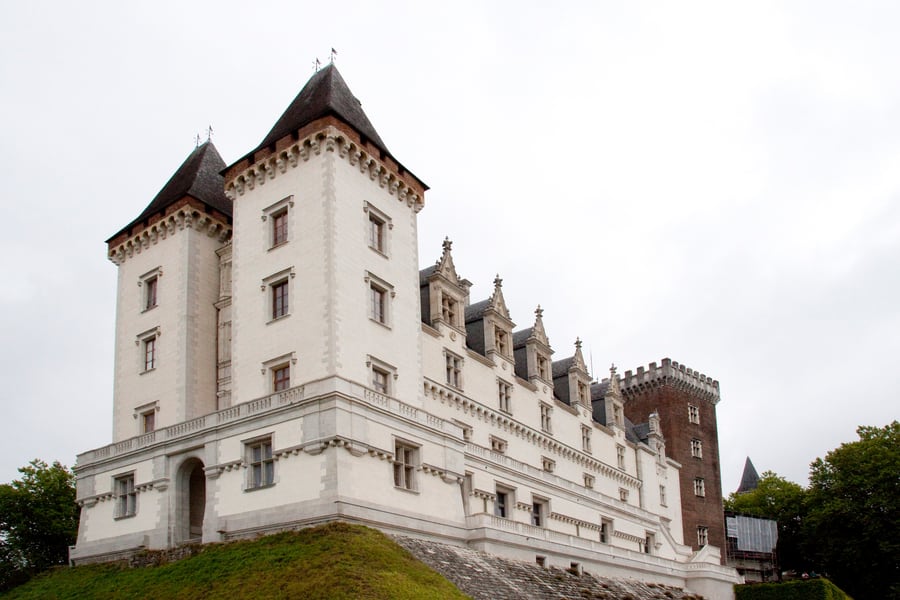
Pau
Pau's station, on the line from Toulouse to Bayonne, has TGV INOUI, Intercités and TER trains, and regional coaches stop on its forecourt. Up in the town, the castle built from the twelfth century to the nineteenth is where the future Henri IV was born in December 1553, and it has been a national museum devoted to him since 1927.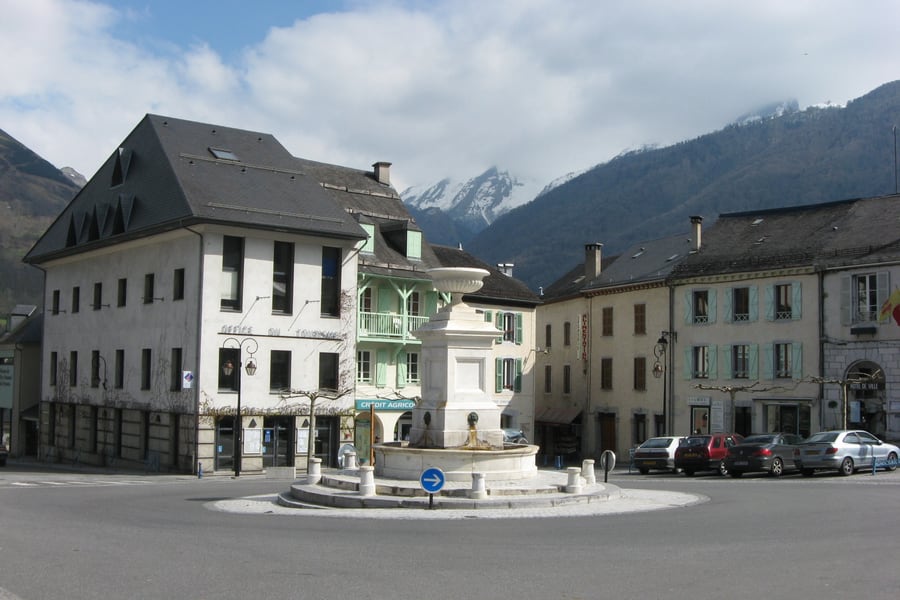 Jean Michel Etchecolonea / Wikimedia Commons · CC BY-SA 3.0 · cropped
Laruns
Laruns, 39 kilometres by road from Pau, is where bus 525 starts for Fabrèges in summer. In 1776 the French navy set up an arsenal here to send the valley's fir trees down to the coast as masts, and the names Place du Port and Rue du Port still recall it. Its fêtes of 15 August are a showcase of Béarnais culture.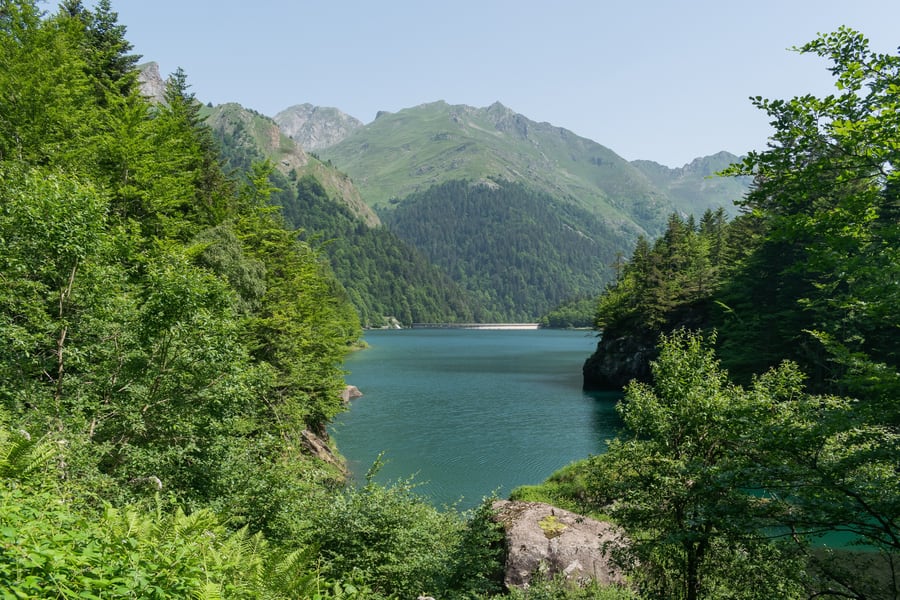 Tournasol7 / Wikimedia Commons · CC BY 4.0 · cropped
Lac de Bious-Artigues
Near Gabas, whose mountain chapel of the twelfth and thirteenth centuries stood on a pilgrim road to Compostela, a narrow road climbs to this reservoir at 1,416 metres, held back by a dam of 1957. The Pic du Midi d'Ossau, 2,884 metres, rises above it, and the eastern side of the plateau runs along the edge of the national park.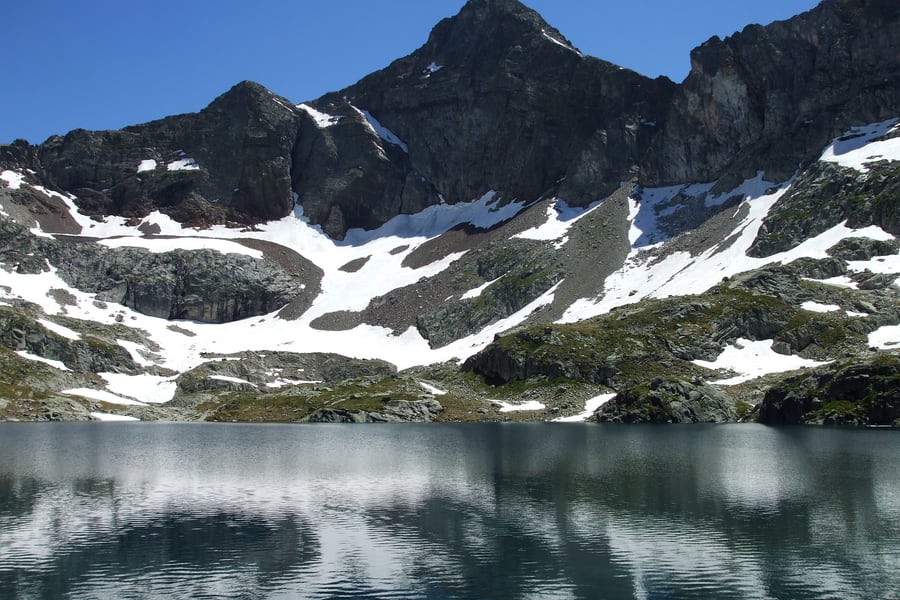 Kaprixo / Wikimedia Commons · CC BY-SA 3.0 · cropped
Lacs d'Arrémoulit
Above Lac d'Artouste, under the Pic Palas, two lakes and a scatter of smaller ones lie around the Arrémoulit refuge at 2,305 metres. The path follows the shore of Lac d'Artouste and then climbs, about 1 hour 15 minutes each way; the lakes are sometimes still frozen in early summer. The Escapade ticket, back on the last train, leaves time for it.Where to Sleep
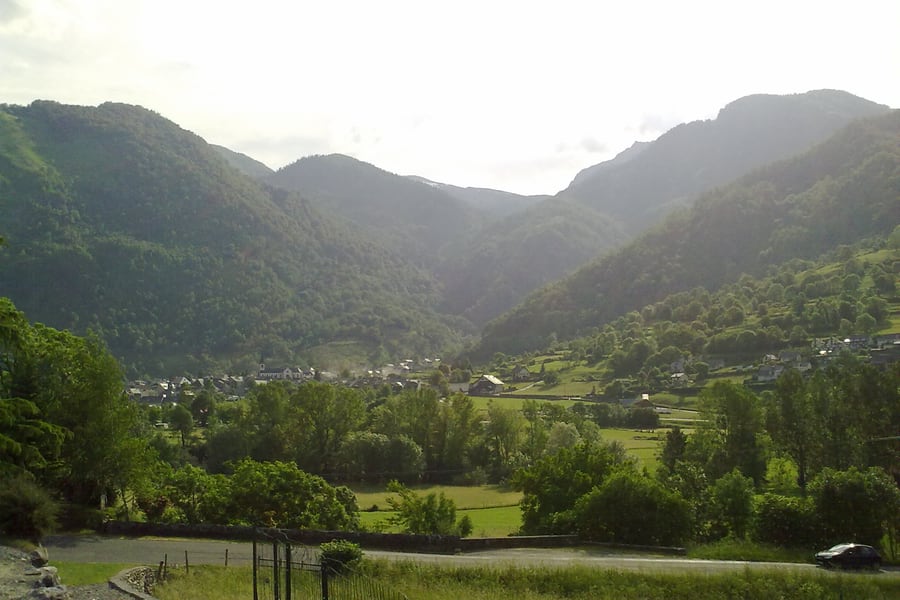
There is nowhere to stay on the line itself. The operator points visitors to hotels down the valley, in Laruns and at Les Eaux-Chaudes, twenty to thirty minutes' drive from Fabrèges; Pau has the widest choice.
Where to stay
 France64160 / Wikimedia Commons · CC BY-SA 3.0 · cropped
Hôtel d'Ossau
On the main square of Laruns
A family hotel on the town-hall square, built by the present owners' great-grandfather and recently renovated throughout.
Check Availability (opens in a new tab, on hotel-ossau.com)via hotel-ossau.com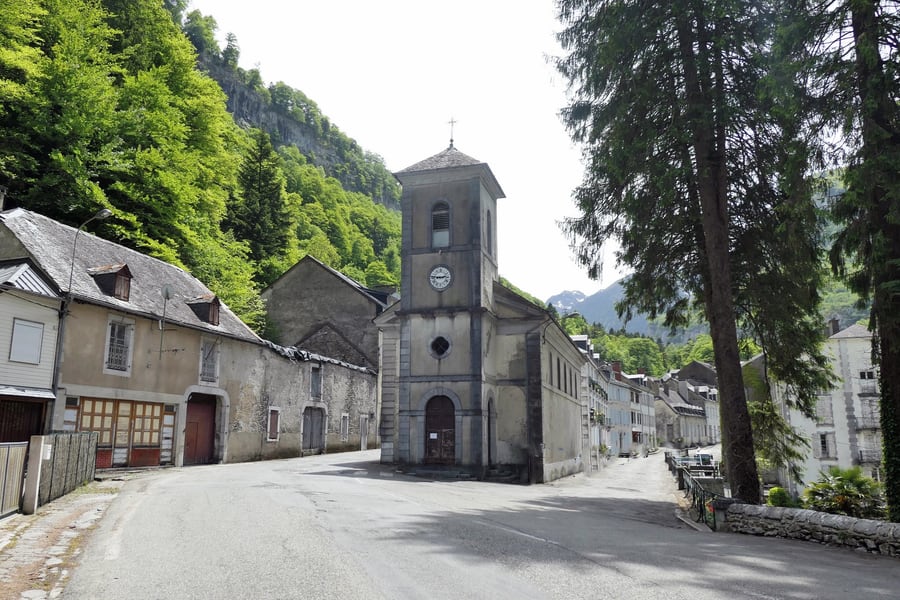 Mireille Grumberg / Wikimedia Commons · CC BY-SA 4.0 · cropped
La Caverne
At Les Eaux-Chaudes, on the road to Artouste
A hotel, gîte and restaurant at 674 metres, with a terrace over the river, twenty minutes' drive below Fabrèges.
Check Availability (opens in a new tab, on hotel-la-caverne.com)via hotel-la-caverne.comQuestions or corrections
Planning this trip and stuck on something, or spotted a time, fare or detail that has changed? Send us a message about Train d'Artouste. We read every one, and we update this page when something has changed.