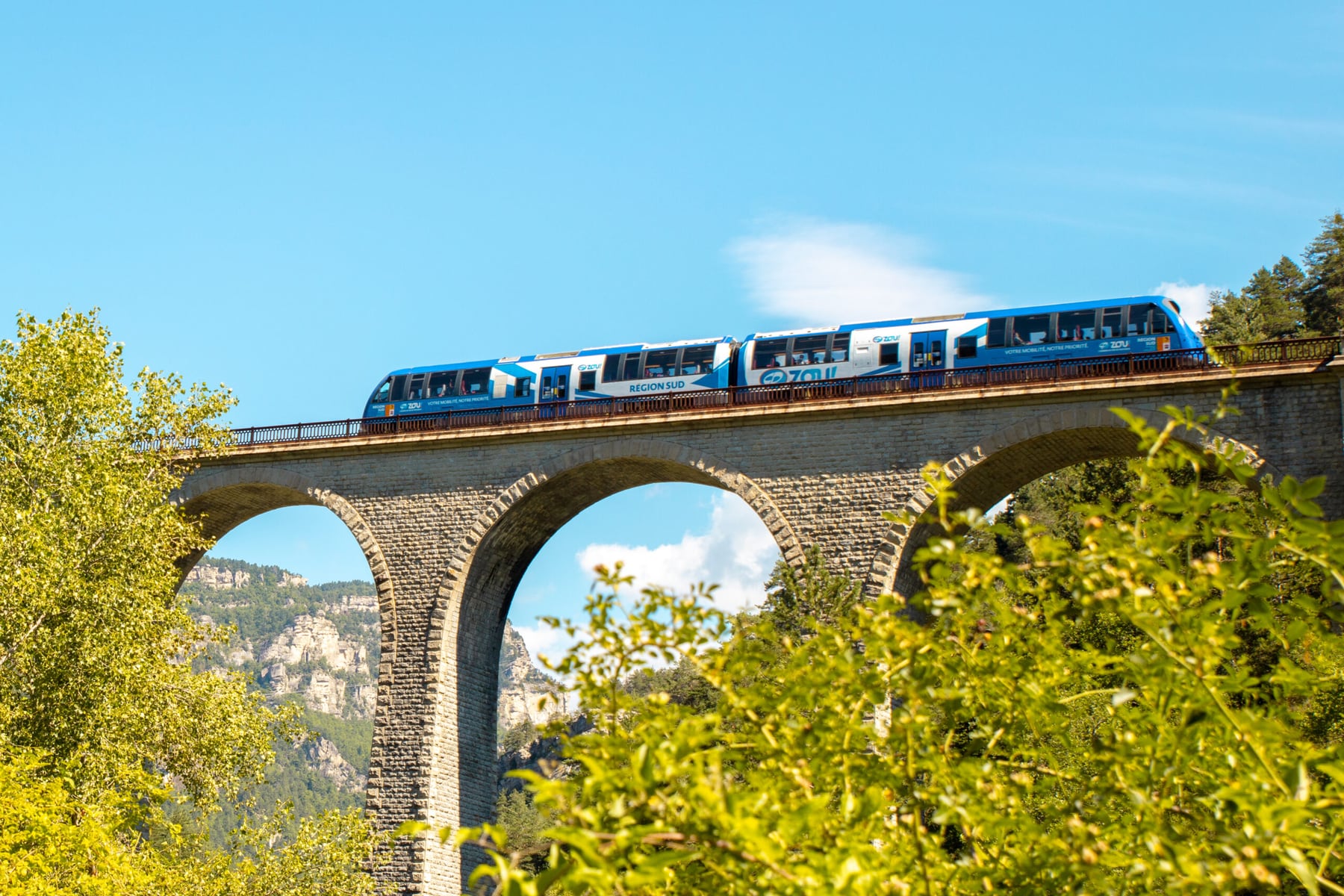
Train des Pignes
© Chemins de fer de Provence · cropped
- Distance151 km of metre-gauge line, Nice to Digne-les-Bains
- DurationAbout 3 hours 20 minutes end to end; Nice to Annot about 2 hours
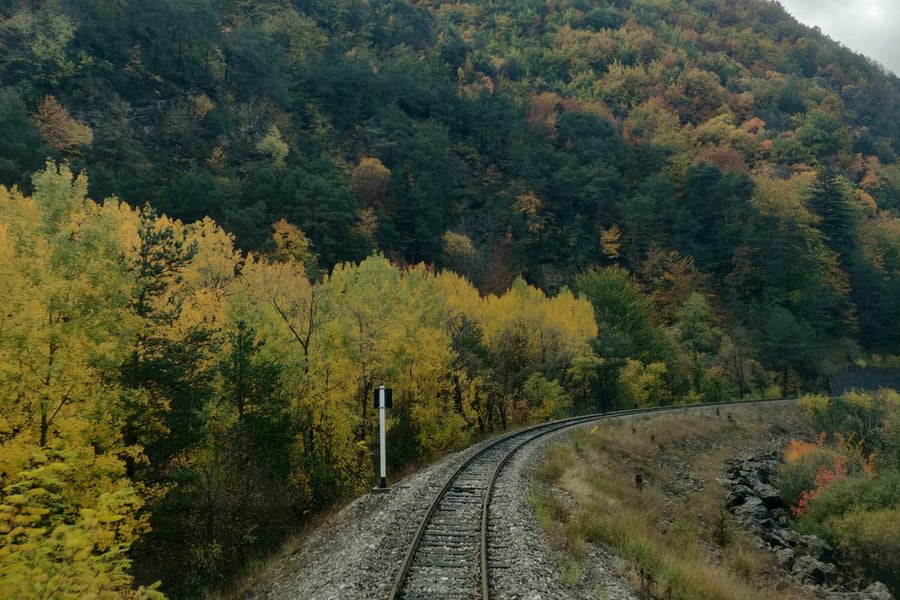
- Best seasonMay to early November, when the steam train runs; autumn colour in the Var valley
Introduction
This narrow-gauge railway was built a size too big for its own trains.
When the line from Nice up the valley of the Var was finally approved, France and Italy were on bad terms, and the army set conditions. In 1889 the loading gauge was widened to 4.50 metres so that military engines could pass, the stretch from Nice to Saint-Martin-du-Var was to carry an extra rail for standard-gauge trains, and the formation and the bridges were built wide enough for a main line. The company laid metre-gauge track on it, chosen for its tight curves, and that is what runs today: modern railcars on a narrow track, through tunnels and over viaducts made for something larger.
The Chemins de fer de Provence run 151 kilometres from Nice to Digne-les-Bains, finished in 1911 and known to everyone as the Train des Pignes. Three services a day run its length in about three hours and twenty minutes, climbing from the Var past perched villages and Vauban's fortress at Entrevaux, under the Colle-Saint-Michel to a summit of 1,023 metres, and down to Digne. On set days from May to early November a steam train runs between Puget-Théniers and Annot. Since a tunnel collapsed at Moriez in 2019, the last stretch from Saint-André-les-Alpes to Digne has been a coach; the operator expects trains to run through again in spring 2027.
The Journey
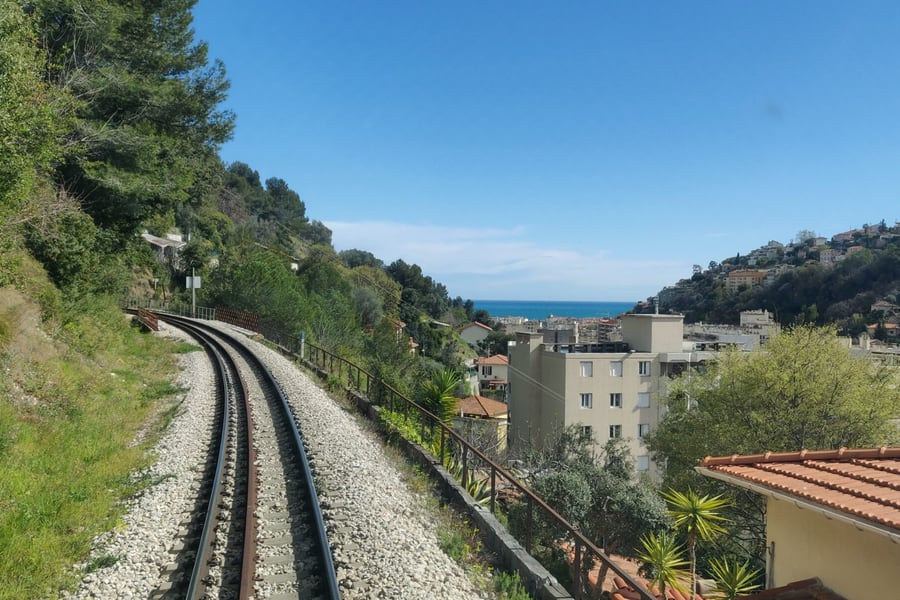
Trains leave from Nice CP, the line's own station a few hundred metres from Nice-Ville. It opened in 1991; the old Gare du Sud beside it, whose glass roof came from the Russian pavilion of the 1889 Paris exhibition, is now a library. For its first forty minutes the train is a suburban service, calling at a string of stops through the suburbs of Nice and out to Colomars and Plan-du-Var. At many of the halts along the line it stops only on request: wave at the driver from the platform. Nice's other line into the mountains, the SNCF's Train des Merveilles to Tende, leaves from Nice-Ville.
Up the Var
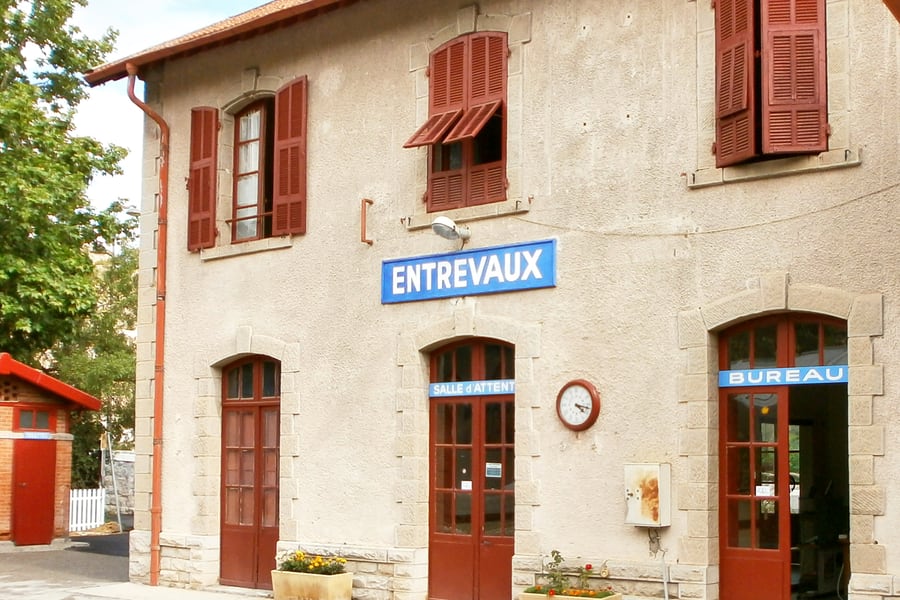
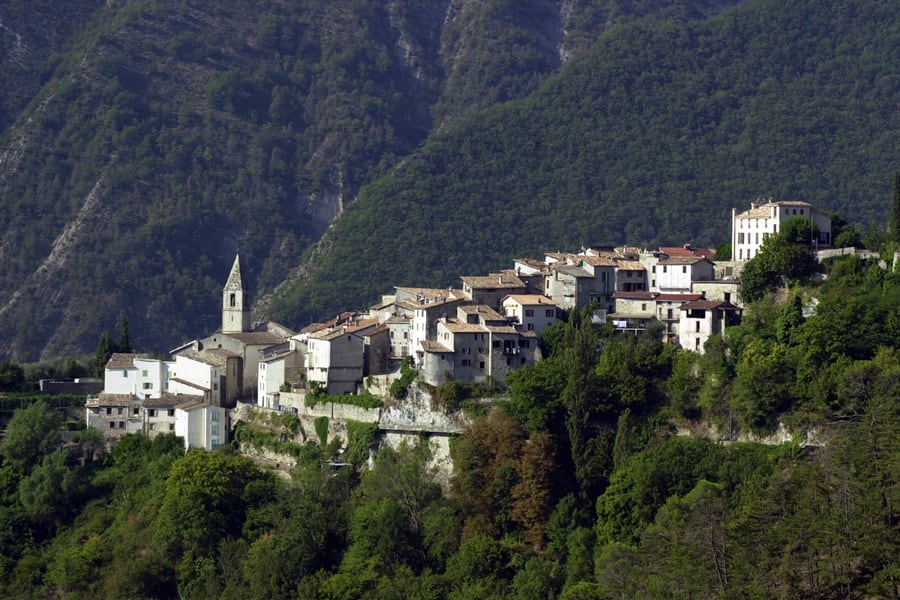
Beyond Plan-du-Var the valley narrows and the railway keeps close to the river, crossing it and its tributaries on iron bridges, among them the 40-metre span over the Cians. Villars-sur-Var and Touët-sur-Var hang above the track on their rocks, and at Puget-Théniers, where the steam train is kept, the valley opens out. Six kilometres on comes Entrevaux, its walls running up the rock to the citadel.
Into the mountains
After Annot the line climbs the valley of the Vaïre. It turns through a helical tunnel at Le Fugeret, passes Méailles on its rock and crosses the Guillaumasse viaduct, then enters the 3,457-metre tunnel under the Colle-Saint-Michel. A plaque at its mouth remembers the workers, many of them Italian, who dug it between 1900 and 1903. The train comes out at the summit of the line, 1,023 metres up, in the upper valley of the Verdon, and runs down by Thorame-Haute to Saint-André-les-Alpes at the head of the Lac de Castillon.
On to Digne
From Saint-André the railway descends by Moriez and Barrême along the Asse to Digne-les-Bains. For now that last stretch is a coach, which calls at Moriez, Barrême, Chaudon-Norante, Chabrières and Mézel on the way.
The trains and the name
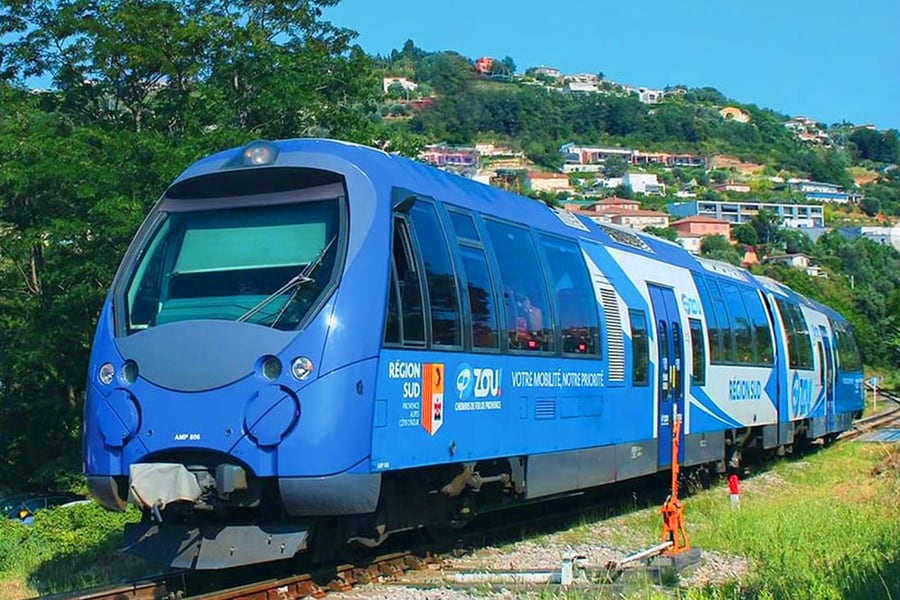
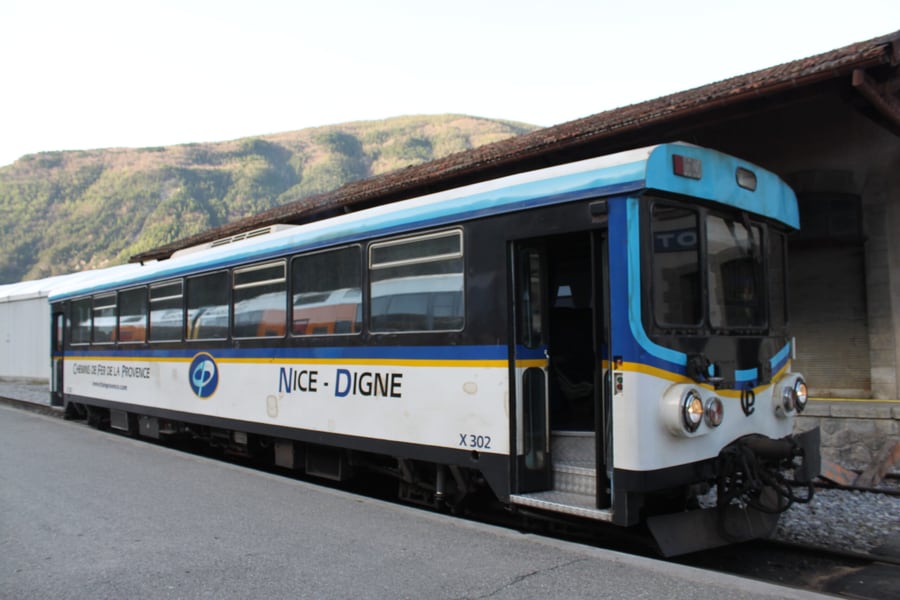
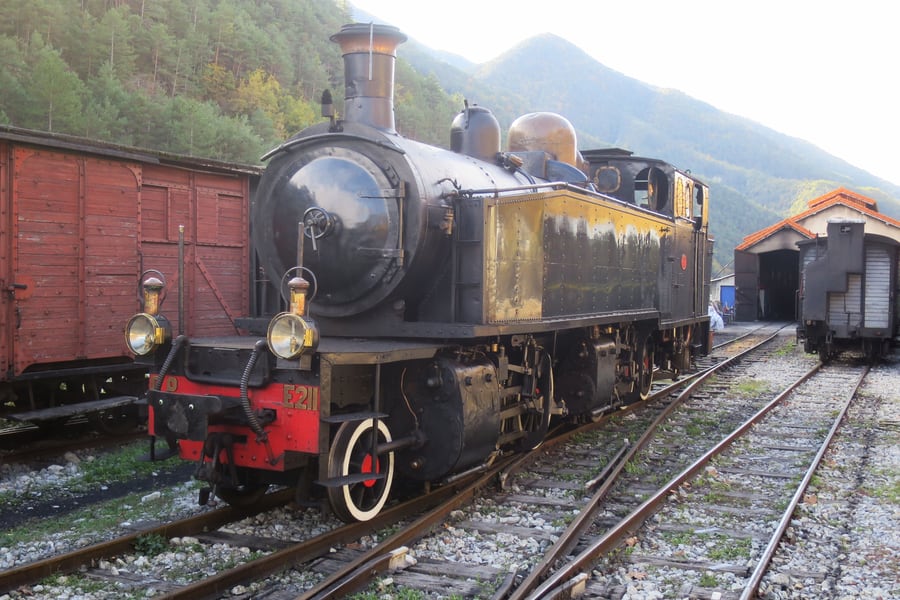
The everyday trains are AMP 800 railcars, the Autorails Métriques de Provence delivered from 2010, built on the same principles as the AMG 800s of the Corsican railway. A few of the older CFD railcars of the 1970s still work the line, and the trains run on biofuel. The steam train is worked by volunteers with E 211, a Portuguese Mallet tank of 1923.
Nobody agrees where the name Train des Pignes comes from. The best-known story, as the operator tells it, is that the steam trains were so slow that passengers could step down and gather pine cones, pignes, beside the track.
Along the route
 © Chemins de fer de Provence · cropped
A suburban line first
The first stretch out of Nice is a commuter railway: up to 31 return trains a day run as far as Colomars and Plan-du-Var, Nice's own bus tickets are valid to Le Chaudan, and on match days extra trains serve the stadium at Saint-Isidore.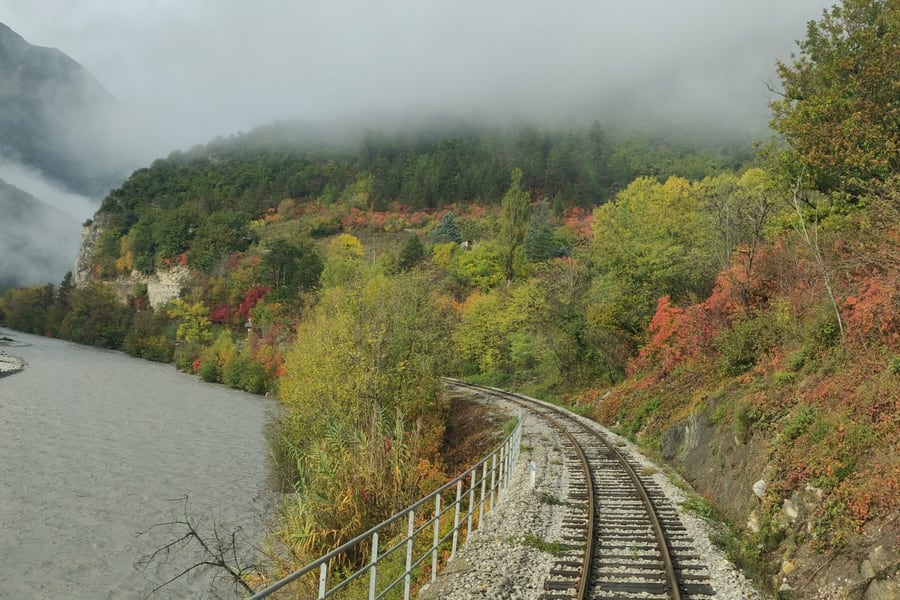 © Chemins de fer de Provence · cropped
The river that takes the track
The rivers beside the line have carried the track away more than once, in 1906, 1911 and 1914. On 5 November 1994 a flood of the Var cut it in several places, and trains did not run the whole line again until 25 April 1996.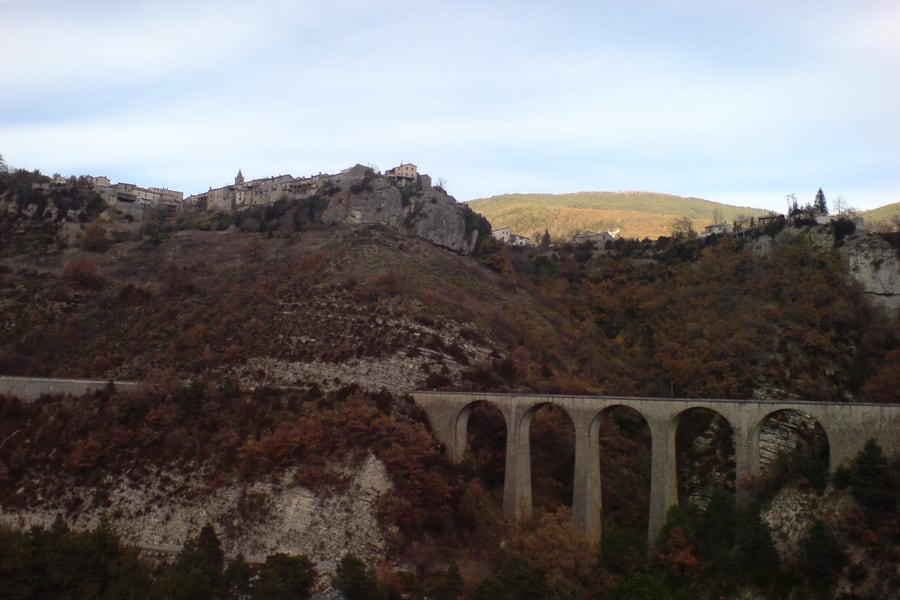 Épiméthée / Wikimedia Commons · CC BY-SA 2.0 FR · cropped
Over the top
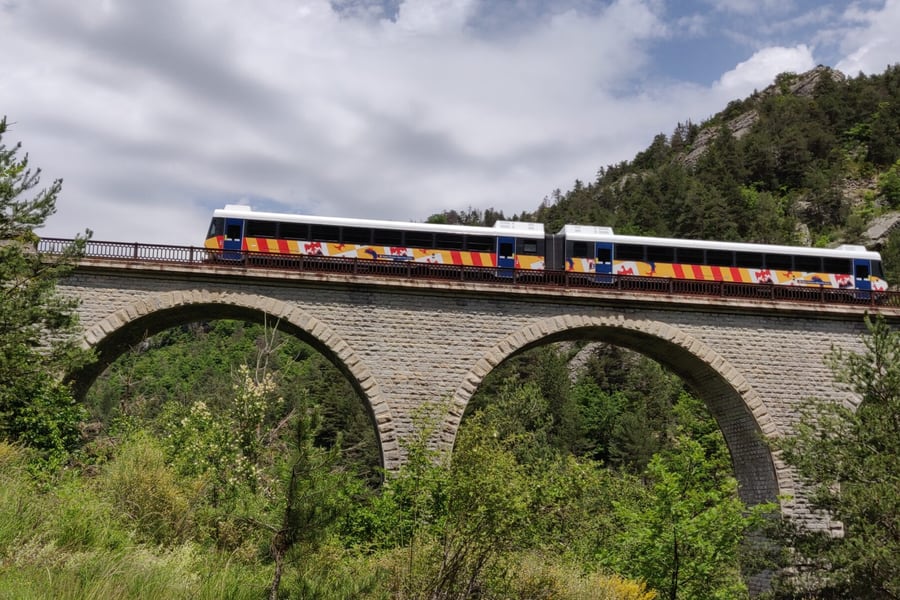
Past Méailles the train crosses the 121-metre Guillaumasse viaduct and enters the Colle-Saint-Michel tunnel, 3,457 metres long and dug by more than four hundred men. It comes out at the summit of the line, 1,023 metres up, in the valley of the Verdon.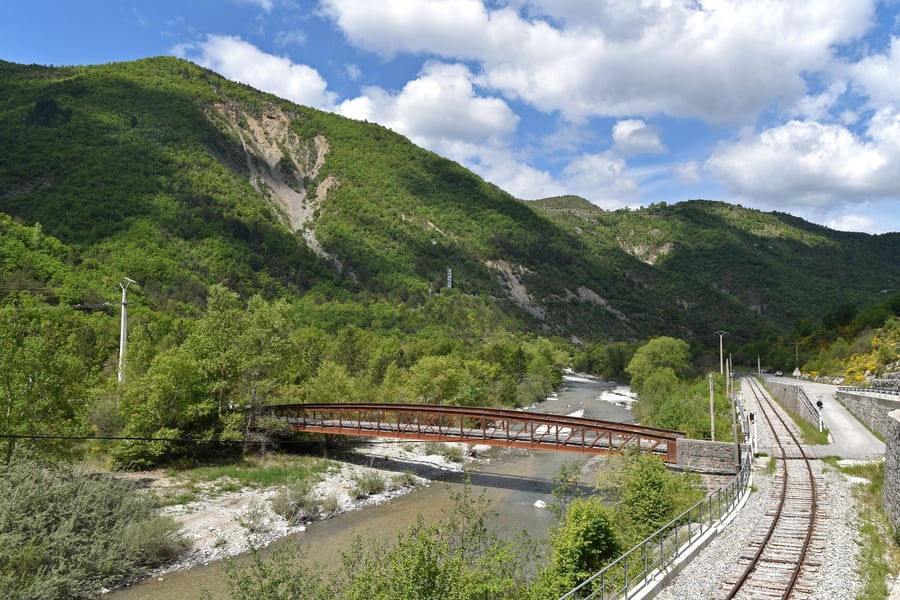 Pline / Wikimedia Commons · CC BY-SA 4.0 · cropped
Down the Asse
From Saint-André-les-Alpes the line runs by Moriez and Barrême down the valley of the Asse to Digne. Part of the Moriez tunnel collapsed in 2019, and this stretch is a coach until the works end; the operator expects trains again in spring 2027.A bit of history
Culture & experiences along the way
 Reinhard Dietrich / Wikimedia Commons · CC BY-SA 4.0 · cropped
The Portuguese engine
The steam train between Puget-Théniers and Annot is run by volunteers of the GECP, and its engine is E 211, an articulated Mallet tank built by Henschel in Kassel in 1923 and brought from Portugal's Vouga valley line. It is listed as a historic monument and known simply as "la Portugaise".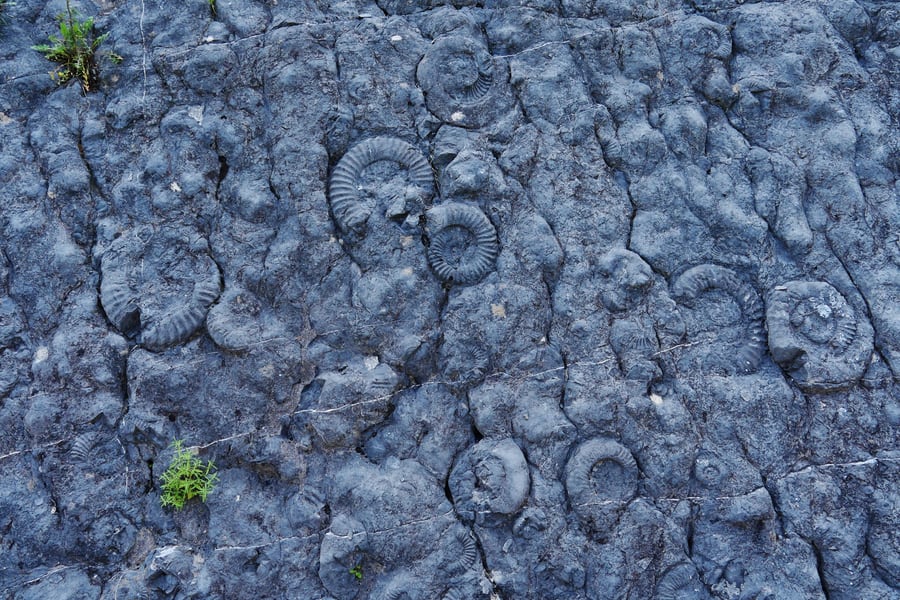 Zairon / Wikimedia Commons · CC BY 4.0 · cropped
The ammonite slab
Just outside Digne, a tilted slab of rock carries more than 1,500 fossil ammonites, some up to 70 centimetres across, laid down about 200 million years ago. It is a listed site at the heart of the Haute-Provence geological reserve, whose museum is in the town.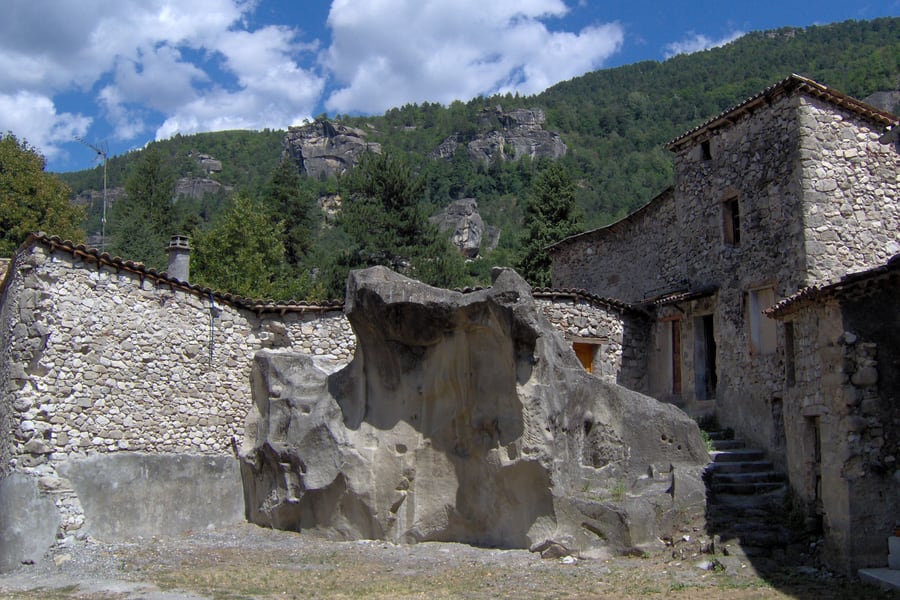 Desdanova / Wikimedia Commons · CC BY-SA 3.0 · cropped
The sandstone of Annot
Above Annot, sandstone cliffs have broken into blocks scattered over some 40 square kilometres of chestnut woods, with names like the Devil's Tooth and the King's Room. The site has been protected since 1920; walkers follow the paths between them, and climbers across France know it for bouldering.Timetables
Between Saint-André-les-Alpes and Digne-les-Bains the service is a coach while the Région rebuilds the Moriez tunnel and the line beyond it; the operator expects trains to run through to Digne again in spring 2027. The coach runs at the times below and does not stop at Saint-Jurson, Golf de Digne, Gaubert or Plan d'eau des Ferréols. Three services a day run the whole way, every day of the year; groups of ten or more must book ahead.
Nice to Digne-les-Bains
| Train | Nice CP | Puget-Théniers | Entrevaux | Annot | Thorame-Haute | Saint-André-les-Alpes | Digne-les-Bains |
|---|---|---|---|---|---|---|---|
| 1 | 08:00 | 09:23 | 09:31 | 09:54 | 10:14 | 10:34 | 11:22 |
| 3 | 12:20 | 13:43 | 13:51 | 14:14 | 14:34 | 14:54 | 15:42 |
| 5 | 17:20 | 18:43 | 18:51 | 19:14 | 19:34 | 19:54 | 20:42 |
On Sundays and public holidays from May to October, train 15 leaves Nice at 08:40 and runs to Saint-André-les-Alpes, at Puget-Théniers 10:14 and Annot 10:44.
Digne-les-Bains to Nice
| Train | Digne-les-Bains | Saint-André-les-Alpes | Thorame-Haute | Annot | Entrevaux | Puget-Théniers | Nice CP |
|---|---|---|---|---|---|---|---|
| 2 | 08:15 | 09:06 | 09:18 | 09:50 | 10:06 | 10:14 | 11:37 |
| 4 | 12:35 | 13:26 | 13:38 | 14:10 | 14:26 | 14:34 | 15:57 |
| 6 | 17:35 | 18:26 | 18:38 | 19:08 | 19:24 | 19:34 | 20:57 |
Between Nice and Colomars or Plan-du-Var there are up to 31 trains a day in each direction. Track work between Nice and Colomars from 19 to 26 October 2026 changes some of these times.
The steam train
On set days from 3 May to 7 November 2026 the steam train leaves Puget-Théniers at 11:00, calls at Entrevaux at 11:15 and reaches Annot at 12:05; it returns from Annot at 15:30, reaching Puget-Théniers at 16:15. From Nice, train 1 arrives at Puget-Théniers at 09:23 and, on Sundays, train 15 at 10:14; trains 14 and 6 leave Puget-Théniers for Nice at 16:52 and 19:34.
Times as of October 2026, from the Chemins de fer de Provence timetable valid from 1 September 2026 and the steam train's schedule (opens in a new tab). Check the day's service on the operator's traffic page (opens in a new tab) and timetables (opens in a new tab).
Tickets
The line is part of the Région Sud's ZOU! network, so tickets are ordinary ZOU! tickets: an e-ticket from the ZOU! online shop (opens in a new tab), or a ticket from the stations along the line. The fare depends on the distance between your two stops. Children under four travel free and those from four to eleven pay half; a mini-group ticket takes 30 to 50% off for three to nine people travelling together, and the Carte ZOU! Malin, at €20 a year, takes 30% off for you and one companion. Between Nice and Le Chaudan, Nice's Lignes d'Azur bus tickets are valid too.
The steam train is ticketed separately by the volunteers who run it, online or on board, with reduced fares for children up to eleven and for groups of fifteen or more. Prices as of October 2026.
Book your tickets
ZOU! ticket for the line
One journey, any two stops · e-ticket, station or app
Fares depend on the distance and are quoted when you choose your stops.
Book Tickets (opens in a new tab, on ZOU! (Région Sud))via ZOU! (Région Sud)Steam train
Puget-Théniers to Annot · set days, May to early November
Sold by the volunteers who run it, online or on board, with reduced fares for children up to 11.
Book Tickets (opens in a new tab, on Train des Pignes Historique)via Train des Pignes HistoriqueRail Passes
Interrail passes are not valid. Interrail's table of railway companies lists the Chemins de fer de Provence among the trains in France that the pass does not cover, so pass holders buy an ordinary ticket.
The regional pass that does work is the Pass Sud Azur Explore: unlimited travel for 3, 7 or 14 days on the buses, trams and trains of the Alpes-Maritimes and Monaco, from €35, including the Chemins de fer de Provence within the zones you choose. It is a pass for the Alpes-Maritimes, and Entrevaux and everything beyond it lie in the Alpes-de-Haute-Provence, so check the zone map before relying on it past Puget-Théniers. It pays if you are staying around Nice and riding the lower line more than once; for a single trip to Annot or Digne, a ZOU! ticket is the simpler buy.
Checked October 2026 against Interrail's table of railway companies (opens in a new tab) and the operator's Pass Sud Azur Explore page (opens in a new tab).
Places to Visit
The line threads a string of villages that were frontier posts, market towns and spa towns long before the railway came, and most of them are a short walk from their stations. Entrevaux and Annot are both on the steam train's run, so a day out of Nice can take in one of them on the way.
 © Chemins de fer de Provence · cropped
Touët-sur-Var
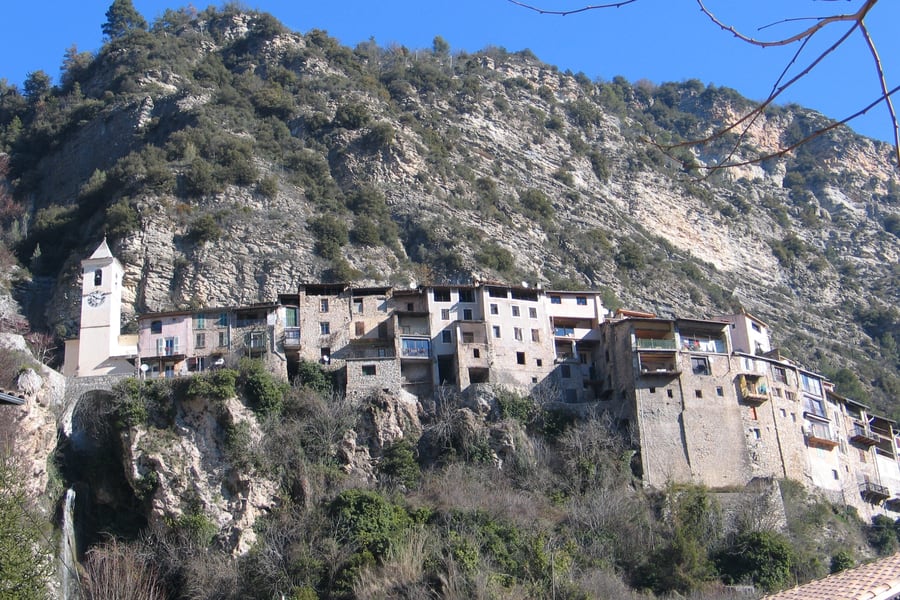
The village clings to a cliff above the Var, its houses stacked against the rock. Its parish church, in the upper village, was built straddling a ravine: halfway down the nave a trapdoor in the floor opens on the torrent rushing through underneath. The chapel of Notre-Dame-du-Cians dates from the twelfth century.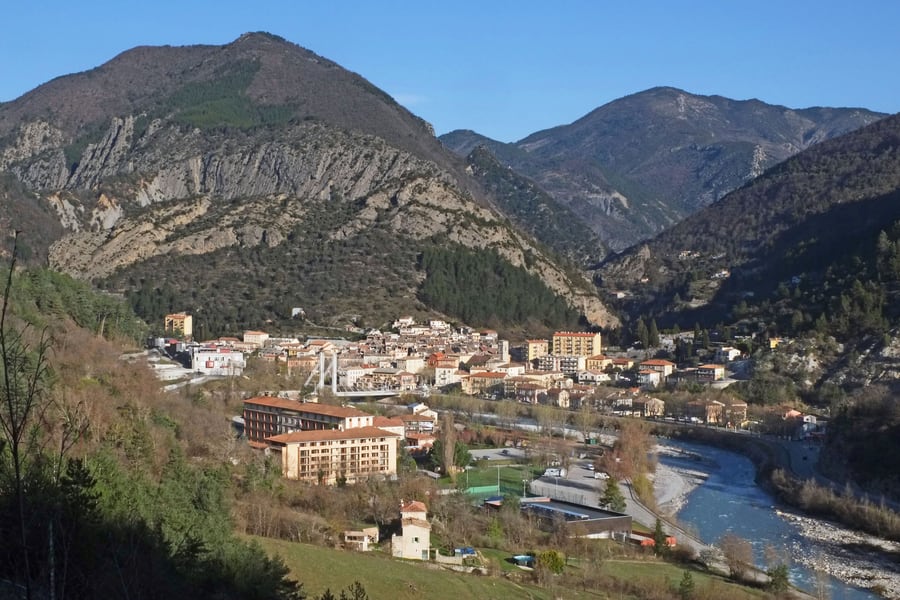 Jpchevreau / Wikimedia Commons · CC BY-SA 3.0 · cropped
Puget-Théniers
The steam train starts here, from the depot beside the station. The revolutionary Louis-Auguste Blanqui was born in the town in 1805, and Aristide Maillol's statue L'Action enchaînée, of 1908, stands here in his honour; the bronze in the Tuileries garden in Paris is a replica of it, not the other way round.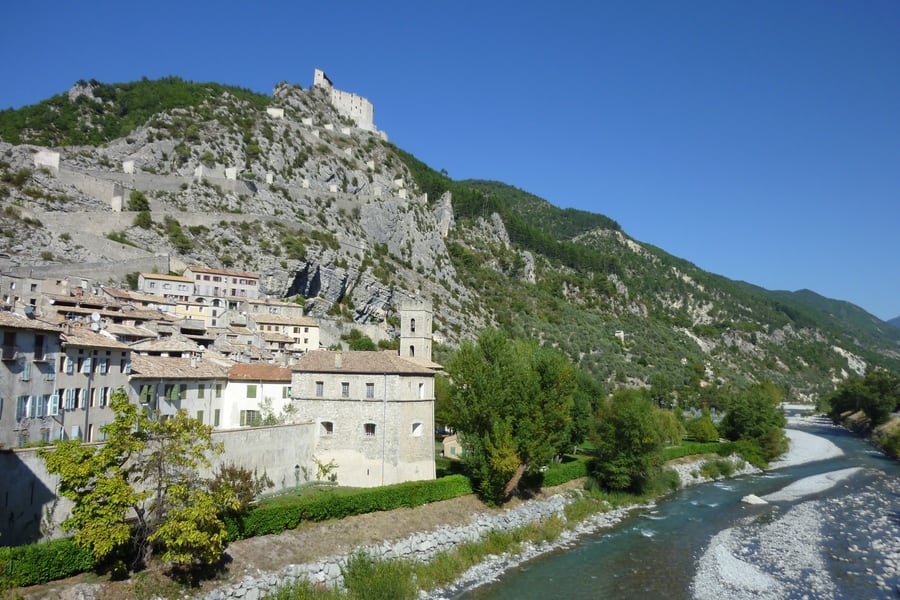 Miniwark / Wikimedia Commons · CC BY-SA 4.0 · cropped
Entrevaux
For five centuries a frontier town between Provence and Savoy, Entrevaux is entered over a fortified bridge and through the Porte Royale, both built in 1658. Vauban signed the plans for its defences in 1692, and from the town a walled path of nine ramps climbs 156 metres to the citadel on its rock. In June 1704 the town held out against a siege by the Duke of Savoy's troops.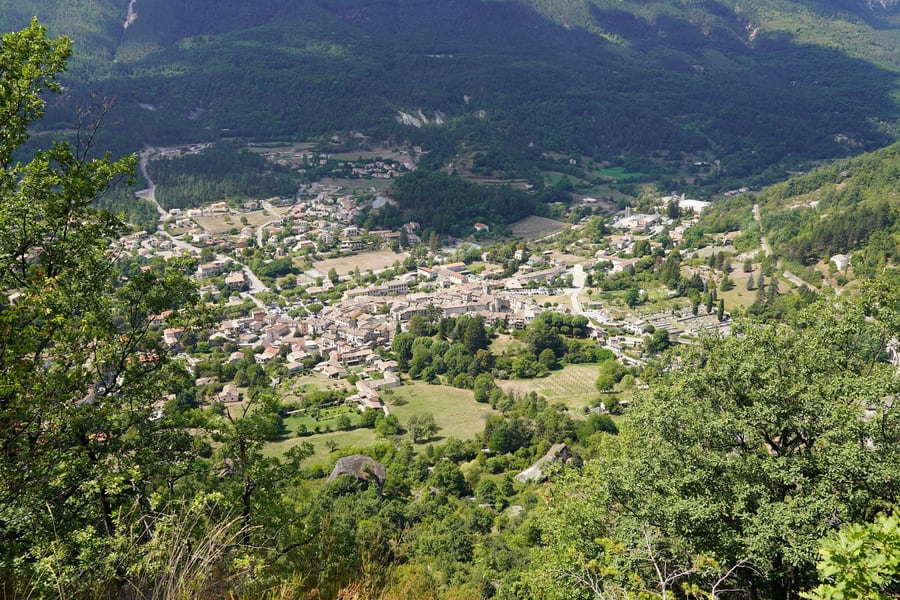 Remontees / Wikimedia Commons · CC BY-SA 4.0 · cropped
Annot
At 680 metres, Annot sits in a pocket of golden sandstone among limestone mountains. The old village climbs a rocky spur between two torrents around the church of Saint-Jean-Baptiste, and a path through the sandstone boulders leads to Notre-Dame de Vers-la-Ville, a chapel of the late twelfth century. The steam train ends its run here.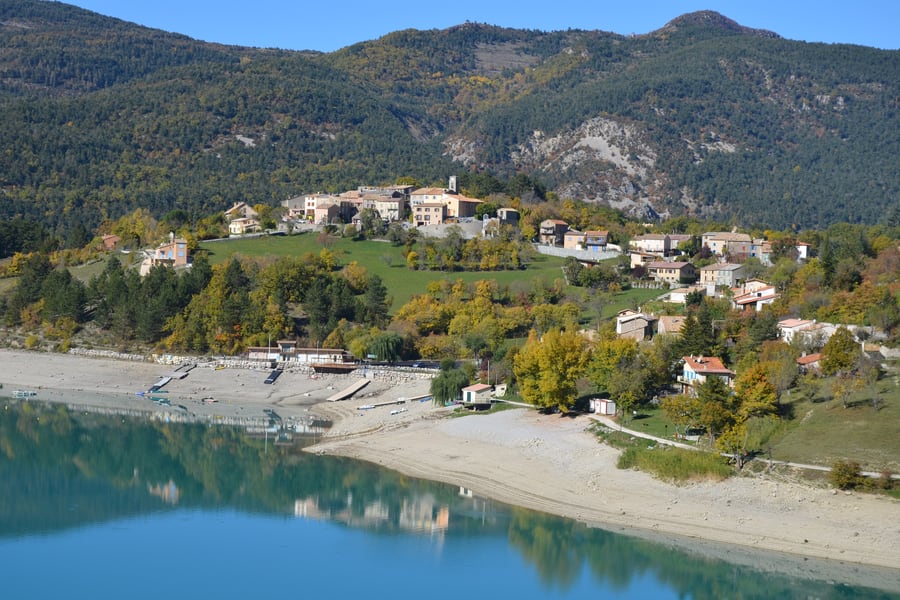 Patrick Gaudin / Wikimedia Commons · CC BY 2.0 · cropped
Saint-André-les-Alpes and the Lac de Castillon
Saint-André stands at 804 metres where the Issole meets the Verdon, at the head of the Lac de Castillon, a reservoir nearly ten kilometres long that drowned the village of Castillon when it filled in 1948. Since the 1980s paragliders have launched from the Chalvet above the village, a site known well beyond France.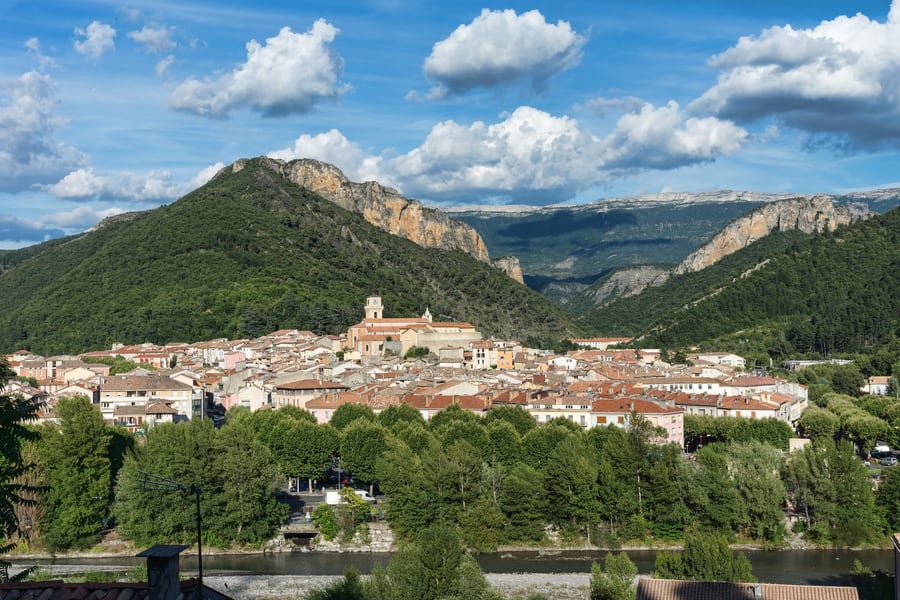 Jean-Christophe Benoist / Wikimedia Commons · CC BY 3.0 · cropped
Digne-les-Bains
Digne is a spa town, its baths fed by a spring at 50 °C, and the Musée Gassendi runs from art to the sciences. The explorer Alexandra David-Néel bought a house here in 1928 and died in the town in 1969; the house is now a museum. On the first weekend of August the town parades floats of lavender in its Corso.Where to Sleep
Nice is an easy day return, but the morning train and the steam train together make Annot a good place to stop: it is the steam train's terminus and a base for walks in the sandstone above it.
Where to stay
Les Callunes
In the old village, Annot
Sixteen rooms on a small square in the old village, with a restaurant and a café.
Check Availability (opens in a new tab, on les-callunes-annot.fr)via les-callunes-annot.frQuestions or corrections
Planning this trip and stuck on something, or spotted a time, fare or detail that has changed? Send us a message about Train des Pignes. We read every one, and we update this page when something has changed.