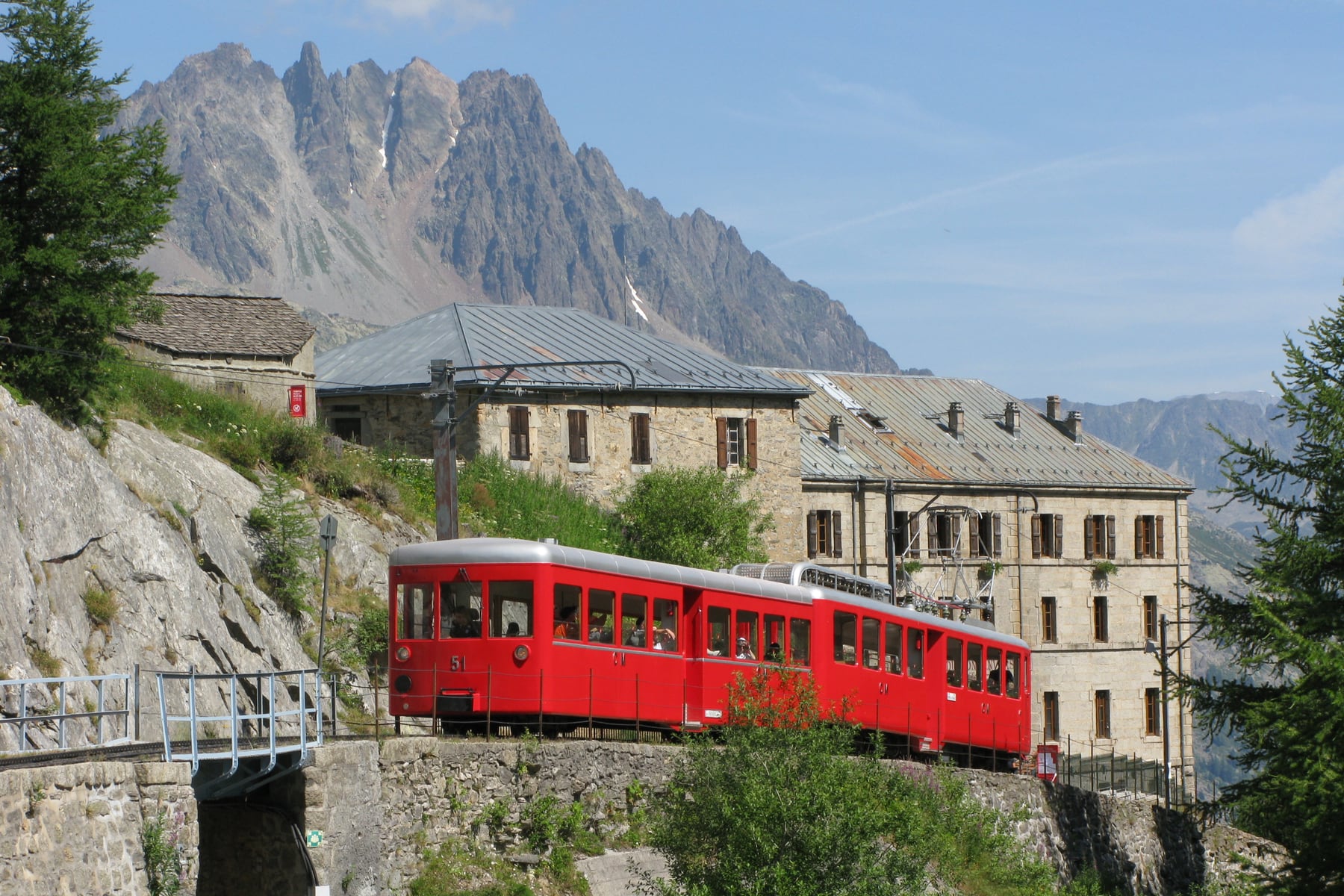
Montenvers Railway
Leo-setä / Wikimedia Commons · CC BY-SA 2.0 · cropped
- Distance5.1 km of metre-gauge rack railway
- Duration20 minutes each way
- Best seasonAll year except November; the ice cave is open in summer and winter
Introduction
The Montenvers railway has spent a century chasing the thing it was built to show.
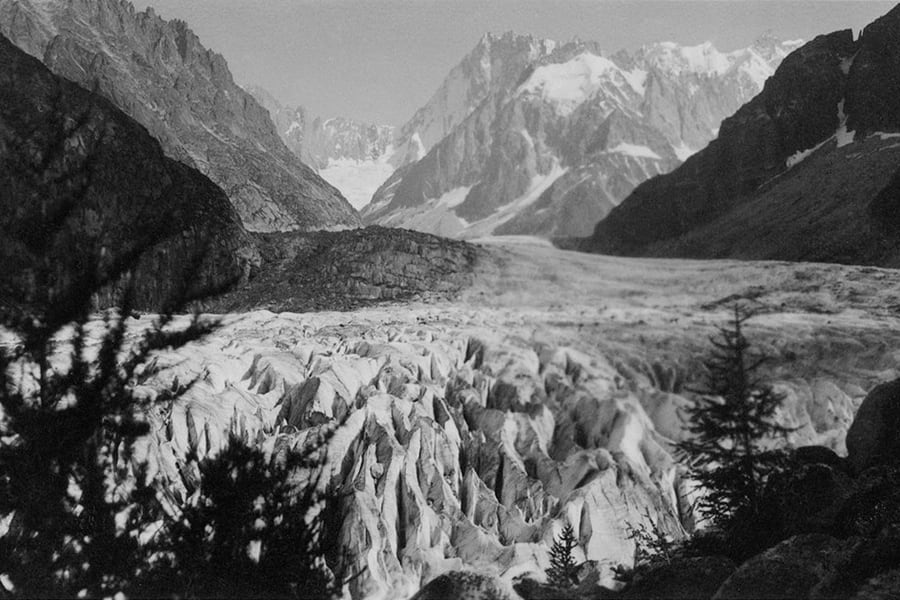
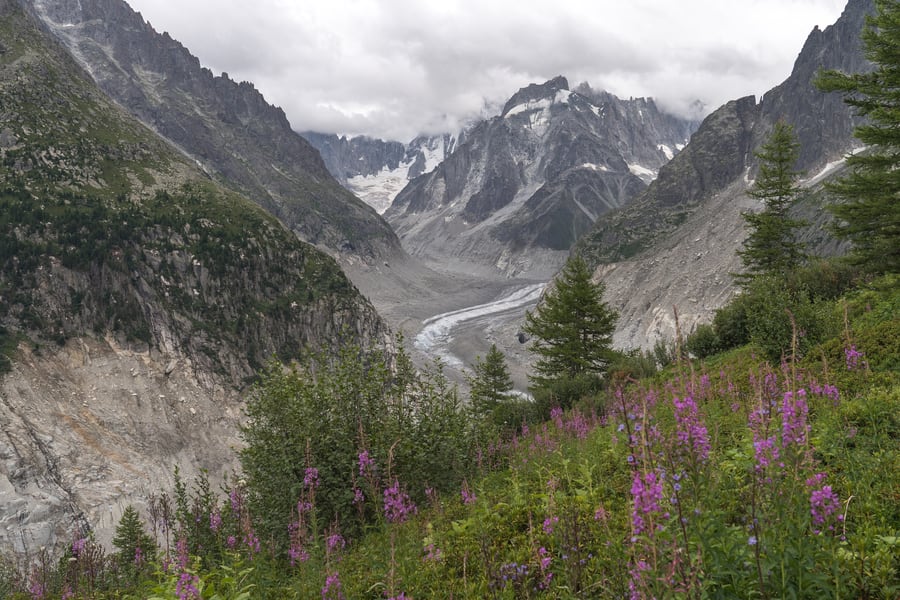
When the line opened, the ice could be reached some forty metres below the top station, and visitors walked out across the glacier. The station has stayed where it was and the glacier has not. By 1946 the ice had dropped so far that the commune of Chamonix dug a cave into it to give people something to reach; in 1961 a cable car was built to take them down to it, later replaced by a gondola, and in February 2024 by a new gondola further up the valley, because the stairs from the old one had grown to some six hundred steps. Today it is a gondola ride and about 170 steps from the platform to the ice.
The little red train itself has hardly changed. Since 1908 it has climbed 5.1 kilometres of metre-gauge rack from Chamonix to Montenvers, at 1,913 metres, and since 1954 it has done it electrically, in twenty minutes, with the Drus and the Grandes Jorasses ahead at the top. It runs nearly all year, closing for works in November, and the département of Haute-Savoie, which has owned it since 1897, has borrowed to replace the trains.
The Journey
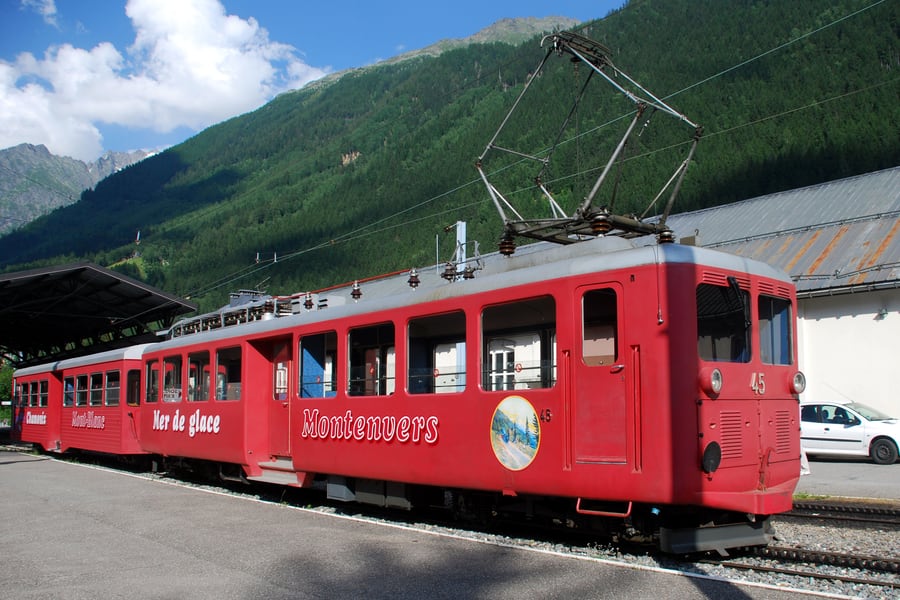
Trains leave from the Montenvers station in Chamonix, an alpine-style building beside the town's main-line station and joined to it by a footbridge, so the Mont-Blanc Express and the trains from Saint-Gervais arrive a few steps away. Outside it stands one of the line's old SLM steam engines on a plinth.
The climb
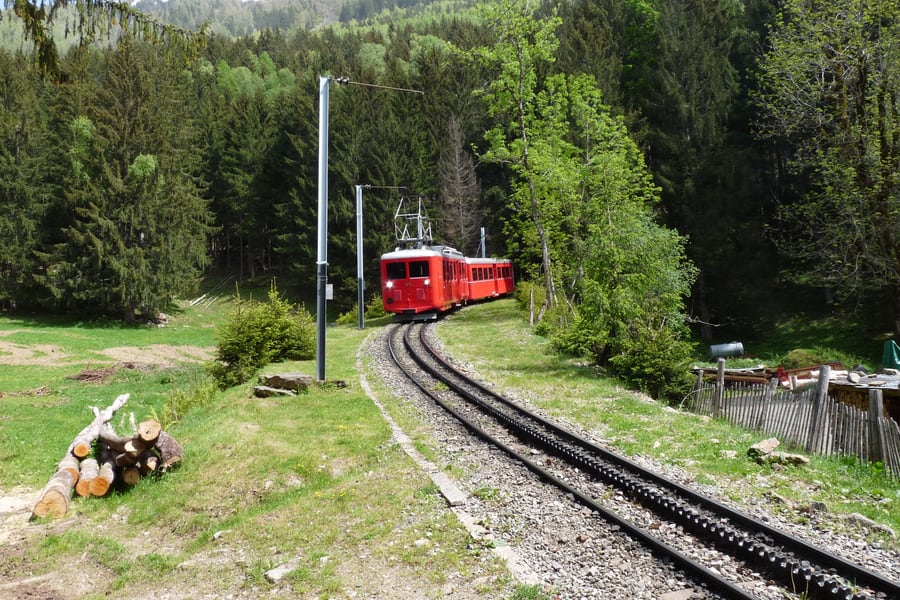
The train crosses the road on the level and starts to climb at once. It turns north-east up through Les Planards, swings back south through a hairpin and a tunnel to the first passing loop, then reverses direction again through the curving Grépon tunnel, about 300 metres long. Above Caillet, the second loop, stretches of the line run under avalanche galleries, and the train crosses the Bois and Montenvers viaducts before a last bend brings it out above the glacier. The whole way, except in the two stations, the track is on the gradient, and the rack never stops.
In 1909 the same trip took 50 to 55 minutes behind a steam engine; the electric railcars of 1954 cut it to twenty. A Strub rack, a single toothed rail down the middle of the metre-gauge track, carries the train up and holds it on the way down.
The trains
The line runs six trains, each a motor car and a trailer carrying 200 passengers, 160 of them seated. The motor cars are the Bhe 4/4 railcars 41 to 46, built from 1954 with bodies, bogies and brakes by SLM of Winterthur and electrics by Oerlikon, and painted what the French call rouge géranium. Following the rule on steep lines, the motor car always sits at the downhill end, pushing on the way up. Two diesel tractors work the maintenance trains. The département of Haute-Savoie has taken out €80 million of loans to replace the fleet.
At the top
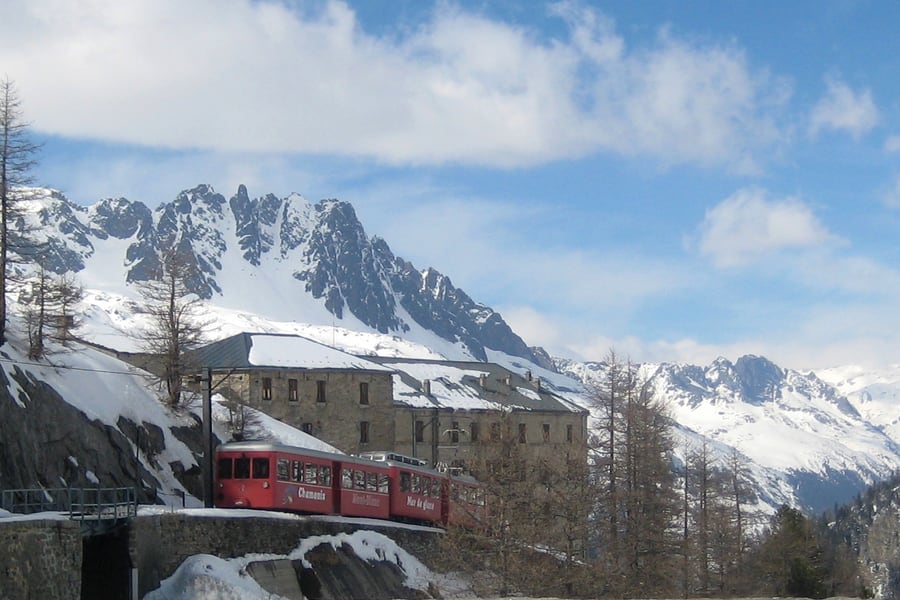
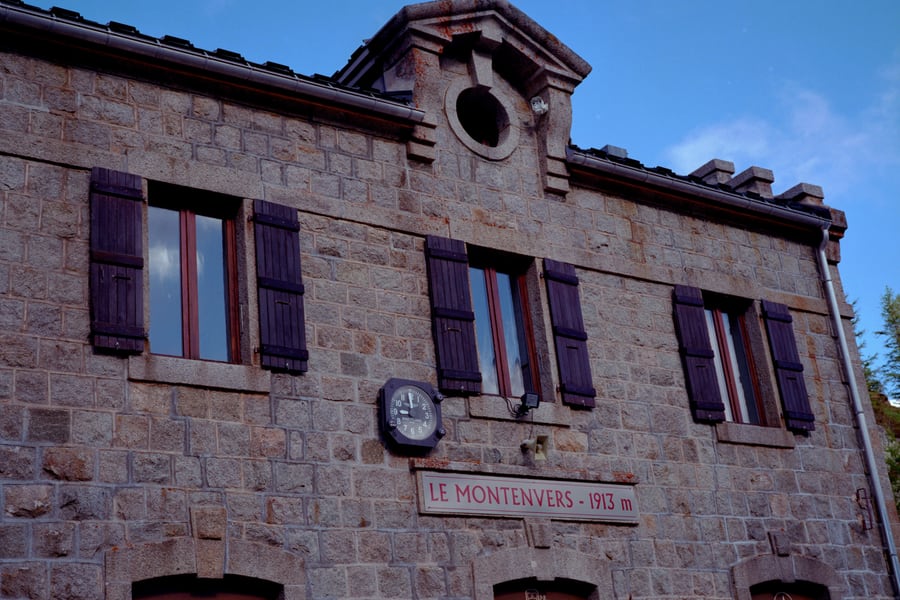
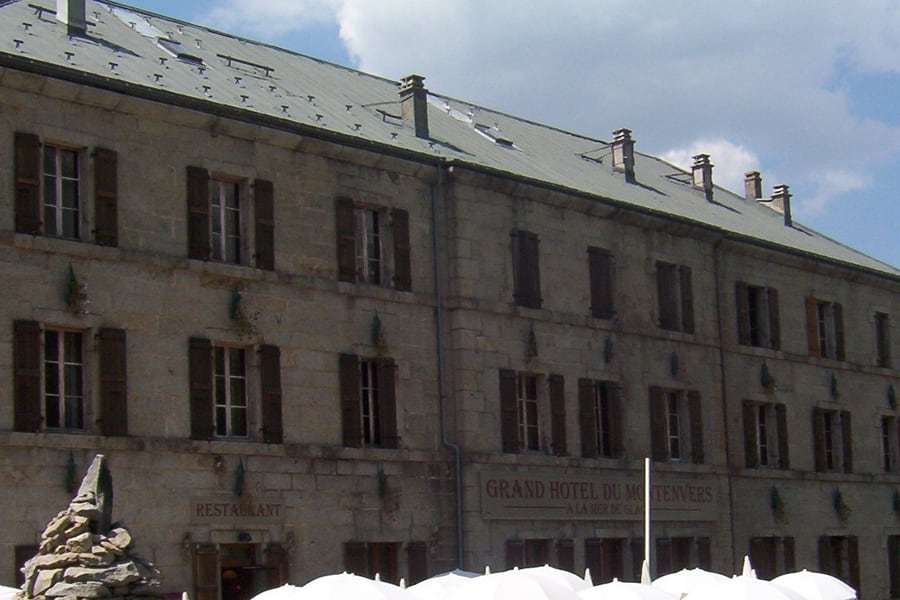
Montenvers has been a viewpoint since the eighteenth century, and the buildings show it: the Temple de la Nature of 1795, the Grand Hôtel of 1880, and the stone station itself. From the terraces the view takes in the Mer de Glace, the Drus and the Grandes Jorasses. The new gondola drops from beside the station towards the ice, and from its lower station the stairs lead down to the ice cave.
The line's worst day was 25 August 1927, when a descending steam train derailed just below Montenvers and its engine and first coach fell from the end of the Montenvers viaduct. Twenty-two people died, and a device was fitted to every engine to stop the reversing gear being thrown while the train was moving.
Along the route
 Rémih / Wikimedia Commons · CC BY-SA 3.0 · cropped
Out of the valley
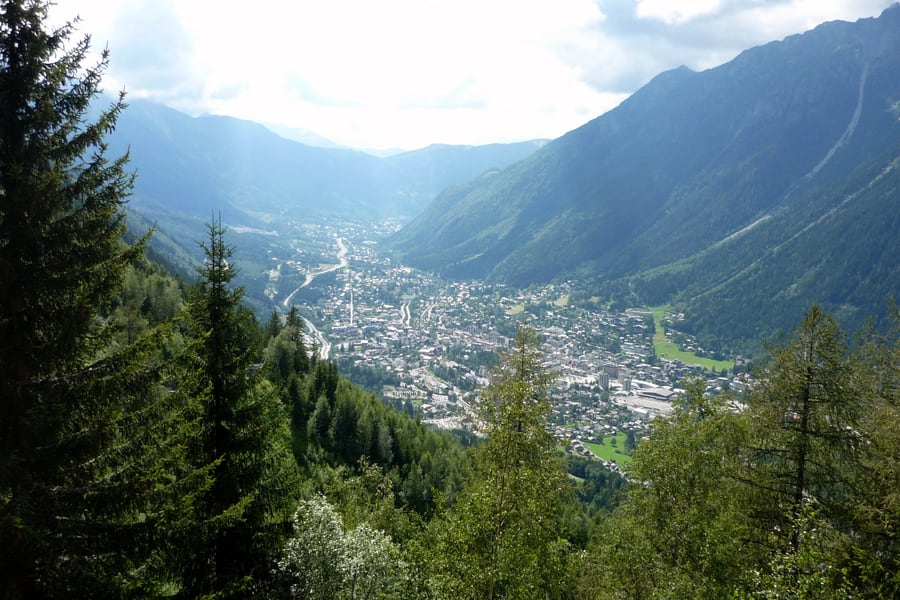
The line leaves from beside Chamonix's main-line station and crosses the road on the level. Climbing north-east through Les Planards, it turns back on itself in a hairpin and heads south into the Planards tunnel, with Chamonix dropping away below.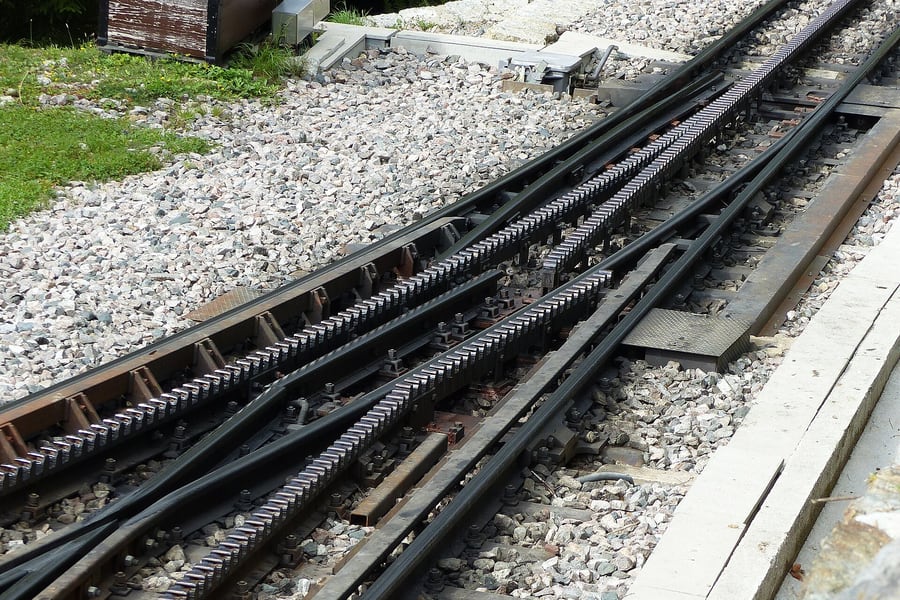 Whgler / Wikimedia Commons · CC BY-SA 4.0 · cropped
Crossing places
The line is single track, and trains pass at two loops, Les Planards at 1,278 metres and Caillet at 1,627. The toothed rack runs right through the points, and the trains set the switches themselves by radio as they approach.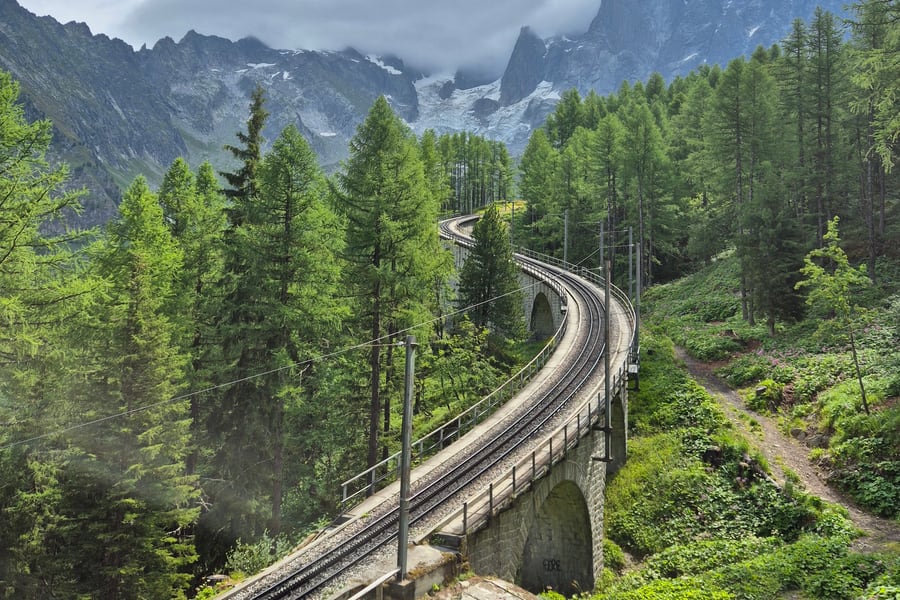 Maxou9 / Wikimedia Commons · CC BY-SA 4.0 · cropped
The Montenvers viaduct
Above Caillet, past avalanche galleries, the train crosses its two viaducts. The upper one, the Montenvers viaduct, is 152 metres of masonry on eleven arches, laid in an S-curve on the full gradient of the climb.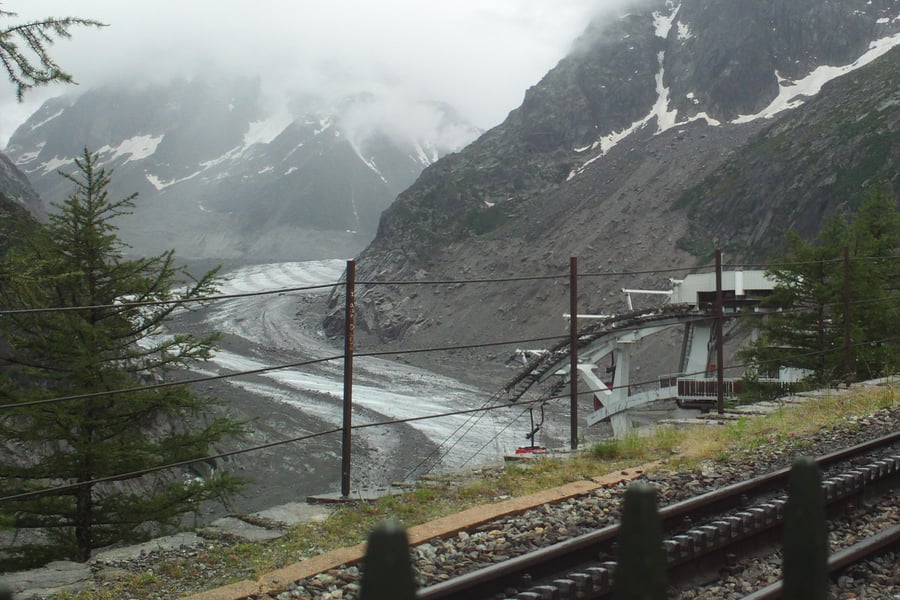 Ypsilon from Finland / Wikimedia Commons · CC0 · cropped
Above the ice
A last bend brings the line onto the side of the Mer de Glace. It passes the Grand Hôtel and the Temple de la Nature and stops at 1,913 metres, with the glacier and the gondola down to the ice cave below.A bit of history
Culture & experiences along the way
 France64160 / Wikimedia Commons · CC BY-SA 3.0 · cropped
The ice cave
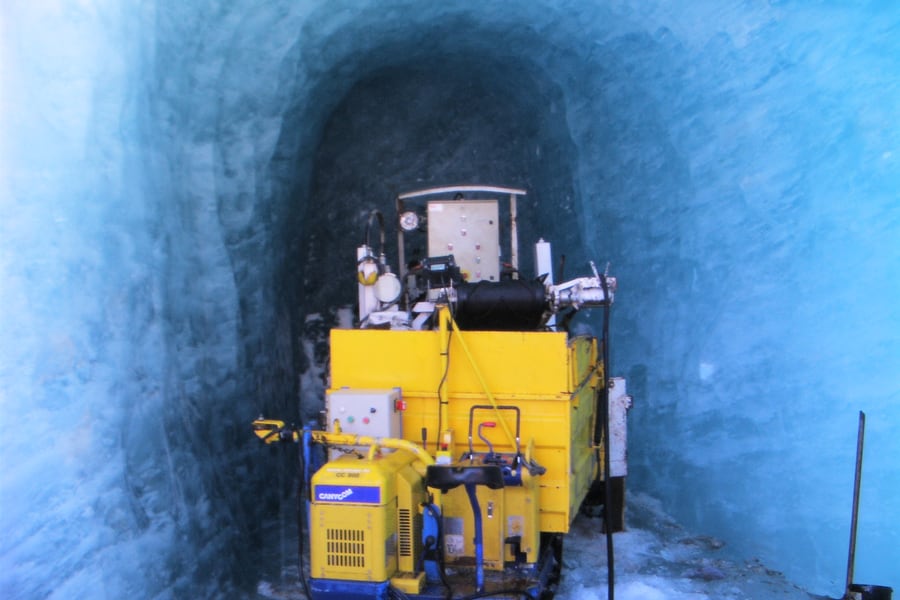
Since 1946 a cave has been dug into the Mer de Glace below Montenvers, and because the ice flows downhill it has to be cut again every year, by the same family. From the gondola it is about 170 steps down to the entrance; the cave is closed in spring and autumn.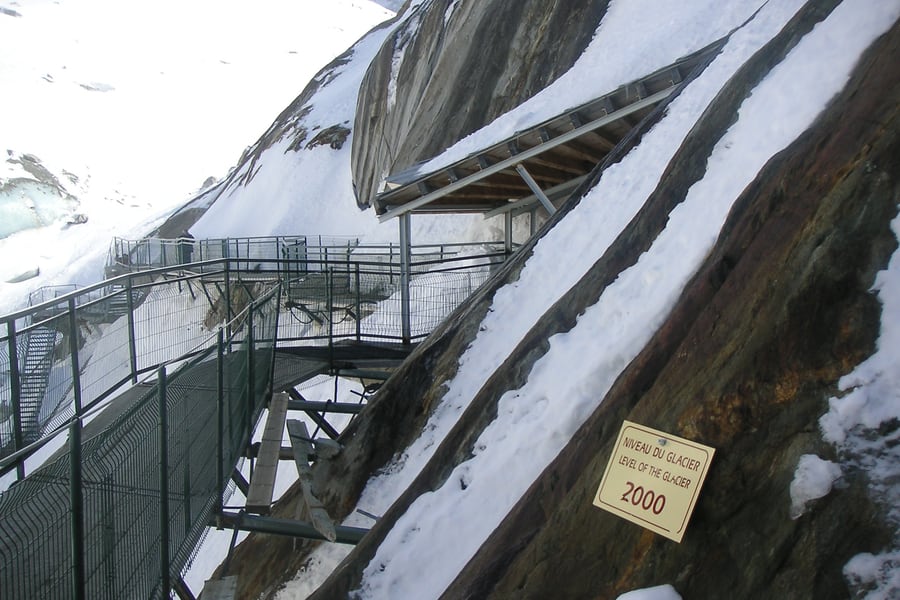 Gerdami / Wikimedia Commons · CC BY-SA 3.0 · cropped
Where the ice was
On the rock beside the stairs down to the glacier, signs mark where the surface of the ice stood in past years, one of them reading 2000. Walking down past them to today's ice is the clearest way to see how much of the glacier has gone in a lifetime.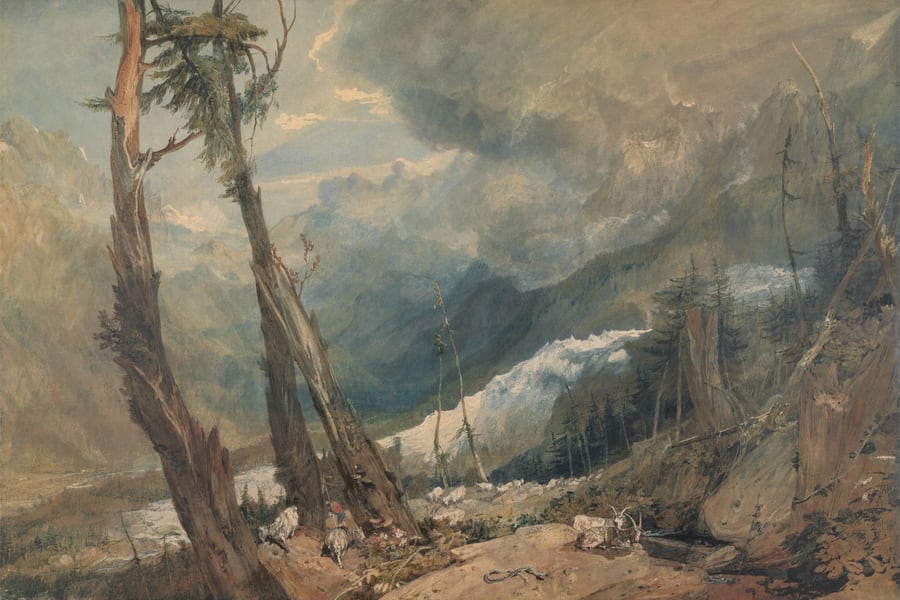 J. M. W. Turner, 1803 / Wikimedia Commons · Public domain · cropped
Turner's glacier
Before the railway, the Mer de Glace drew painters and writers up the mule path. Turner painted it in 1803; the Temple de la Nature, the stone refuge of 1795 next to the station, welcomed Victor Hugo and Chateaubriand, and now shows the story of the site on film.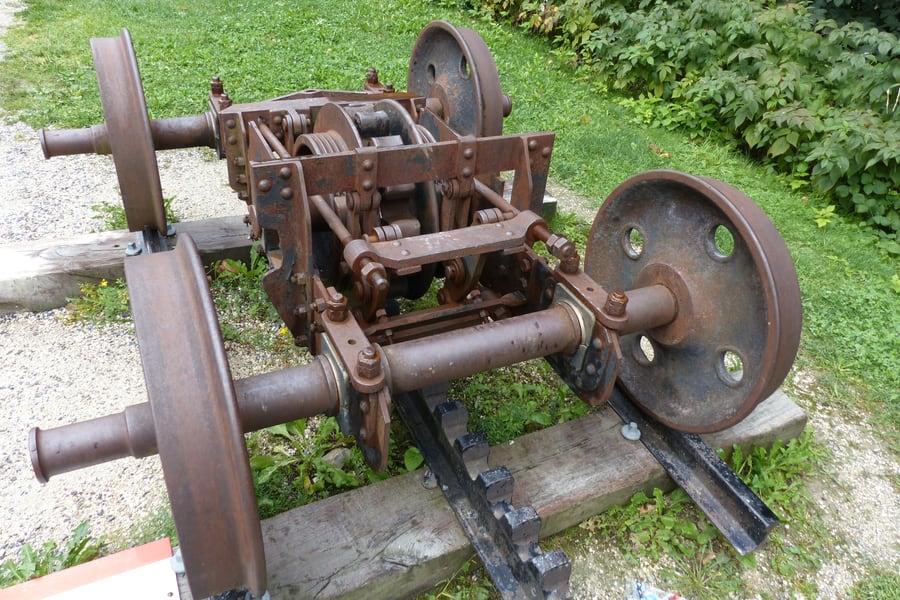 Whgler / Wikimedia Commons · CC BY-SA 4.0 · cropped
The rack, up close
At the Chamonix station, a set of old running gear stands on a length of rack track as an exhibit, so the workings can be seen up close: the pinions between the wheels, and the Strub rack, a single toothed rail laid down the middle of the track.Timetables
There is no fixed timetable: trains run on a frequency from the first departure until the last, every hour, half-hour or twenty minutes depending on the crowds, and the climb takes twenty minutes. To see the ice cave, catch a train no later than the "last for the ice cave" time below; after that the train still runs, but there is not enough time to go down to the cave and back.
Autumn 2026
| Dates | First train up | Last train up | Last train down | Notes |
|---|---|---|---|---|
| 17 Oct – 1 Nov 2026 | 08:30 | 16:00 | 16:30 | Gondola open, ice cave closed |
Winter 2026–27
| Dates | First train up | Last for the ice cave | Last train up | Last train down | Frequency |
|---|---|---|---|---|---|
| 2 Nov – 4 Dec 2026 | Closed for works | ||||
| 5 – 18 Dec 2026 | 10:00 | 14:30, from 18 Dec | 16:00 | 16:30 | Hourly; gondola and ice cave open 18 Dec |
| 19 Dec 2026 – 12 Mar 2027 | 10:00 | 14:30 | 16:00 | 16:30 | Hourly |
| 13 Mar – 30 Apr 2027 | 10:00 | 15:00 | 16:30 | 17:00 | Hourly to 14:00, then every 30 minutes |
Summer 2026, for reference
The 2027 summer timetable is not yet published. In 2026 the busiest weeks, 4 July to 30 August, had a first train at 08:00 when numbers called for it, the last for the ice cave at 15:30, the last train up at 17:00 and the last down at 17:30. In May, June and September the first train left at 08:00 or 08:30 (with an extra 09:00 on demand in early May and September), the last for the ice cave was 14:30 or 15:00, and the last train down was 16:30 or 17:00. The gondola and ice cave close for maintenance for a few weeks in May and from late September; the whole line closed for works from 18 to 22 May 2026.
Times as of October 2026, from the operator's opening times and prices (opens in a new tab), which it gives "for information purposes only", subject to weather and operating conditions. The live information page (opens in a new tab) shows what is running today.
Tickets
Most visitors buy the Mer de Glace tour, which covers the train both ways, the gondola, the ice cave and the Glaciorium; it is sold online and at the Chamonix station. A plain train return costs less, and a one-way ticket with the gondola and visits suits walkers coming down on foot or going on along the Grand Balcon Nord. Children from 5 to 14 and people over 65 pay the reduced fare; under-fives travel free with proof of age at the ticket office.
On a family ticket of two adults with children aged 5 to 14, the third, fourth and fifth tickets are free. A disabled visitor and a companion get half price at the ticket office. Prices as of October 2026, from the operator.
Book your tickets
Mer de Glace tour
€49.70 adult · €42.20 child 5–14 and over 65
The train up and down, the gondola, the ice cave and the Glaciorium.
Book Tickets (opens in a new tab, on Montenvers – Mer de Glace)via Montenvers – Mer de GlaceTrain return
€31.50 adult · €26.80 child 5–14 and over 65
The train up and down without the gondola or the visits.
Book Tickets (opens in a new tab, on Montenvers – Mer de Glace)via Montenvers – Mer de GlaceRail Passes
Interrail passes are not valid on the Montenvers train. Interrail's table of railway companies does not list it; the pass covers only the SNCF's regional trains that bring you to Chamonix, so pass holders buy an ordinary Montenvers ticket.
The pass that does cover it is the operator's own MONT BLANC MultiPass, from €95.60 for an adult, valid for one to nine days on the Montenvers train with its gondola and ice cave, the Aiguille du Midi, the Tramway du Mont-Blanc and the valley's other summer lifts, and on the Chamonix buses. It pays only if you plan more than the Montenvers on the same days; for the train and the ice cave alone, the Mer de Glace tour ticket is the simpler buy.
Checked October 2026 against Interrail's table of railway companies (opens in a new tab) and the operator's MultiPass page (opens in a new tab).
Places to Visit
The train has only two stations that matter, but each opens onto a lot: Chamonix at the bottom, and at the top the glacier, the old buildings of Montenvers and the high paths that start from them. A morning train leaves time for the ice cave and a walk back to the valley on foot.
 Alexkom000 / Wikimedia Commons · CC BY 4.0 · cropped
Chamonix-Mont-Blanc
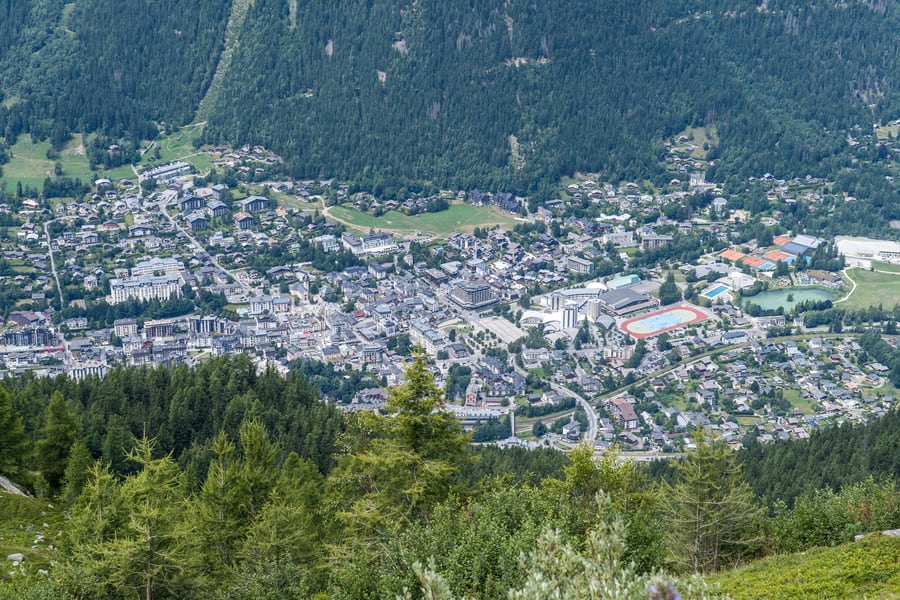
Chamonix fills the floor of the valley under Mont Blanc, and the Montenvers station stands beside the town's main-line station, joined to it by a footbridge. From the same town the cable car climbs to the Aiguille du Midi, and the Mont-Blanc Express runs down the valley to Saint-Gervais and over the border to Martigny.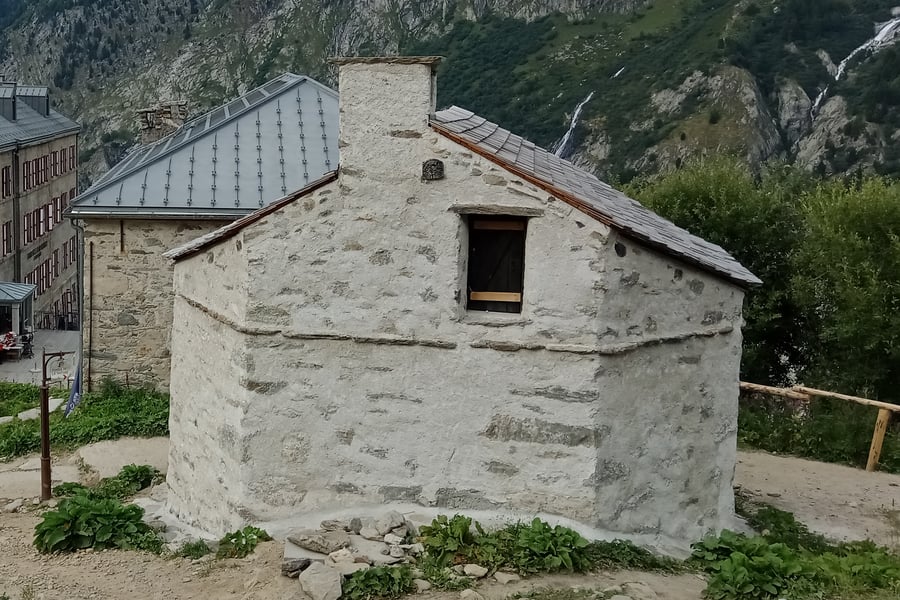 Rémih / Wikimedia Commons · CC BY-SA 4.0 · cropped
Montenvers
Visitors have come to this shoulder above the glacier since the eighteenth century. Blair's hut of 1779 was followed by the octagonal Temple de la Nature in 1795, then by a hotel in 1840 and the Grand Hôtel in 1880. Beside them stand the Glaciorium, on the glacier's past and future, and the station's viewing terraces.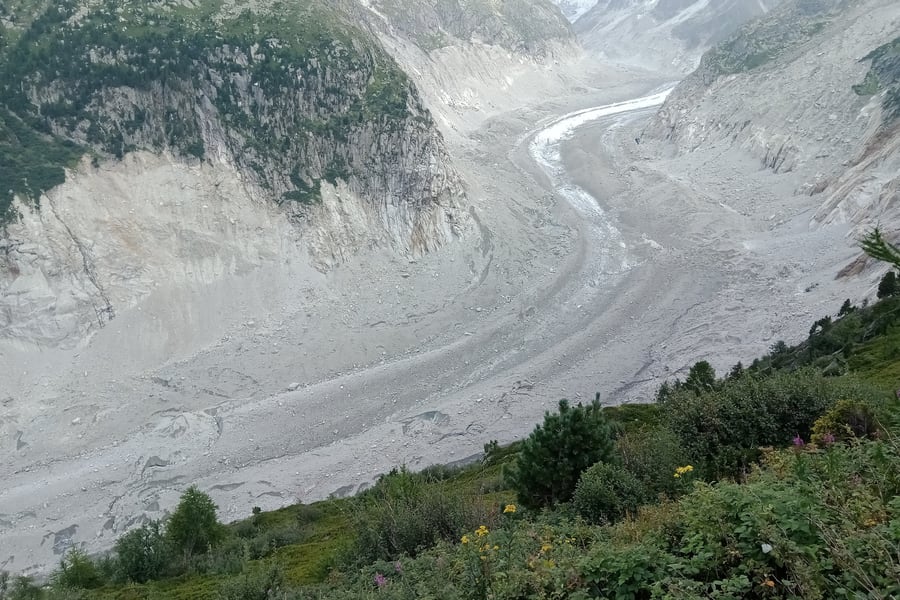 Rémih / Wikimedia Commons · CC BY-SA 4.0 · cropped
The Mer de Glace
The glacier runs about seven kilometres from the junction of the Tacul and Leschaux glaciers down towards Chamonix. It has been retreating since the 1860s and has lost some 120 metres of thickness in a century near its snout, leaving the bare, grey-streaked rock walls that the stairs to the cave now cross.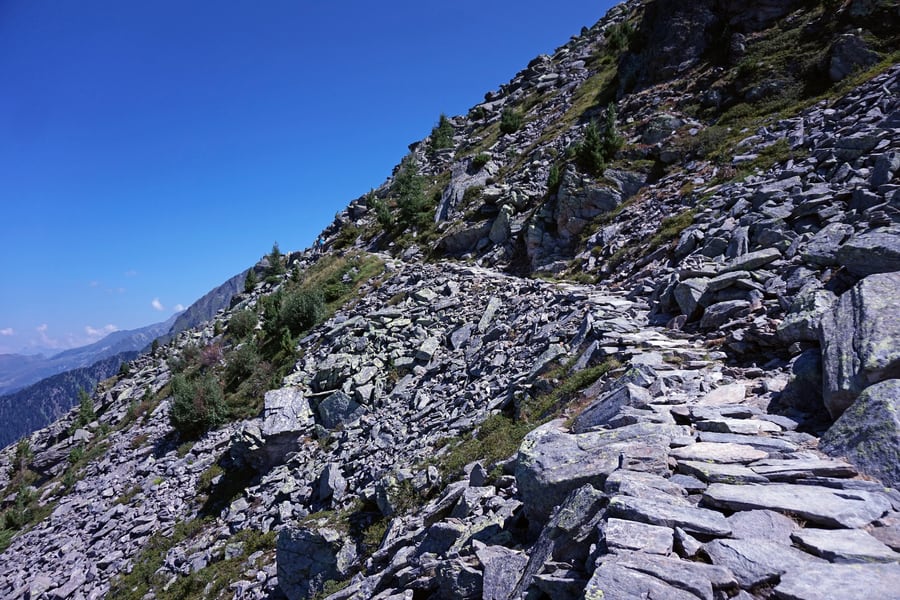 Tiia Monto / Wikimedia Commons · CC BY-SA 3.0 · cropped
The Grand Balcon Nord
From Montenvers a high path runs south-west across the slopes below the Aiguilles de Chamonix to the Plan de l'Aiguille, the halfway station of the Aiguille du Midi cable car, with the whole valley below. It joins two of the valley's lifts, so the walk can end with a ride down instead of a descent on foot.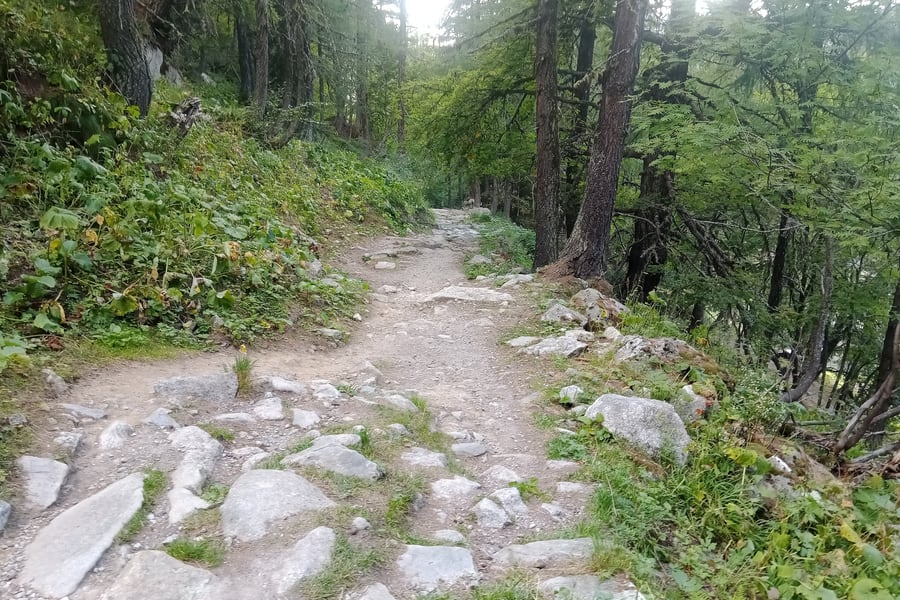 Rémih / Wikimedia Commons · CC BY-SA 4.0 · cropped
The Chemin du Montenvers
Before 1908 visitors came up this path on foot, on a mule or carried in a chair, and in the 1880s it kept 380 guides and muleteers in work. It is still the way down on foot: about five kilometres and 900 metres of descent through the woods to Chamonix, closed in winter for avalanches.Where to Sleep
Chamonix has hotels of every kind within walking distance of the station. The unusual choice is to stay at the top: the Grand Hôtel at Montenvers, beside the top station, takes overnight guests, with a restaurant and a bar facing the Mer de Glace.
Where to stay
 Mabit1 / Wikimedia Commons · CC BY-SA 4.0 · cropped
Refuge du Montenvers
In the Grand Hôtel at the top station, 1,913 m
Twenty rooms from singles to dormitories in the hotel of 1880 beside the station, reached by the train or on foot.
Check Availability (opens in a new tab, on refugedumontenvers.com)via refugedumontenvers.com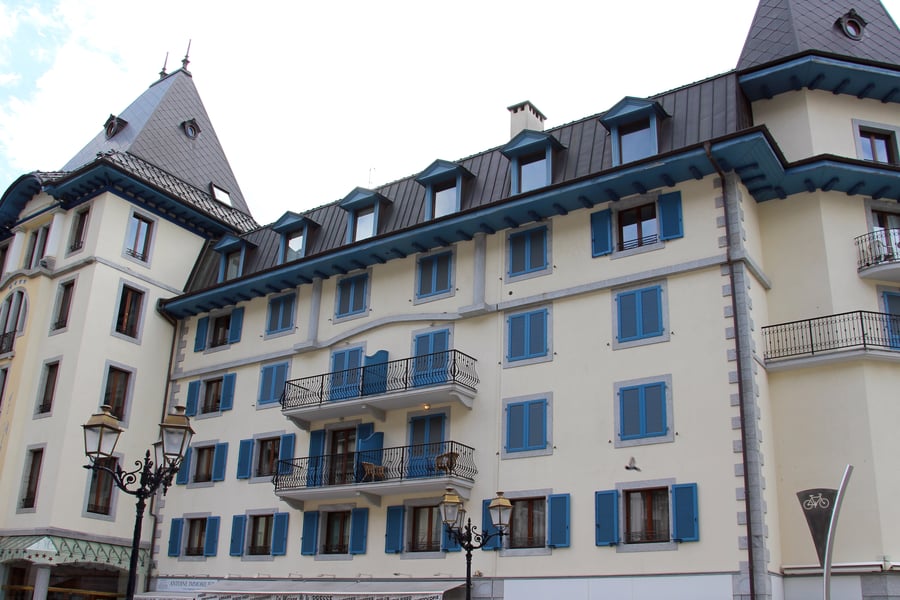 Fred Romero / Wikimedia Commons · CC BY 2.0 · cropped
Grand Hôtel des Alpes
In the centre of Chamonix
A hotel since 1840 with 32 rooms and suites, a wellness area and a sitting room looking towards Mont Blanc.
Check Availability (opens in a new tab, on grandhoteldesalpes.com)via grandhoteldesalpes.comQuestions or corrections
Planning this trip and stuck on something, or spotted a time, fare or detail that has changed? Send us a message about Montenvers Railway. We read every one, and we update this page when something has changed.