Train de la Rhune
Zewan / Wikimedia Commons · CC BY-SA 4.0 · cropped
- Distance4.2 km of metre-gauge rack railway
- Duration35 minutes each way; 2 hours 30 minutes with the stop at the top
- Best seasonLate March to 1 November; a clear day for the view
Introduction
In 1978 the people of Sare were asked whether a road should be built to the top of La Rhune, the mountain above their village, and they voted no.
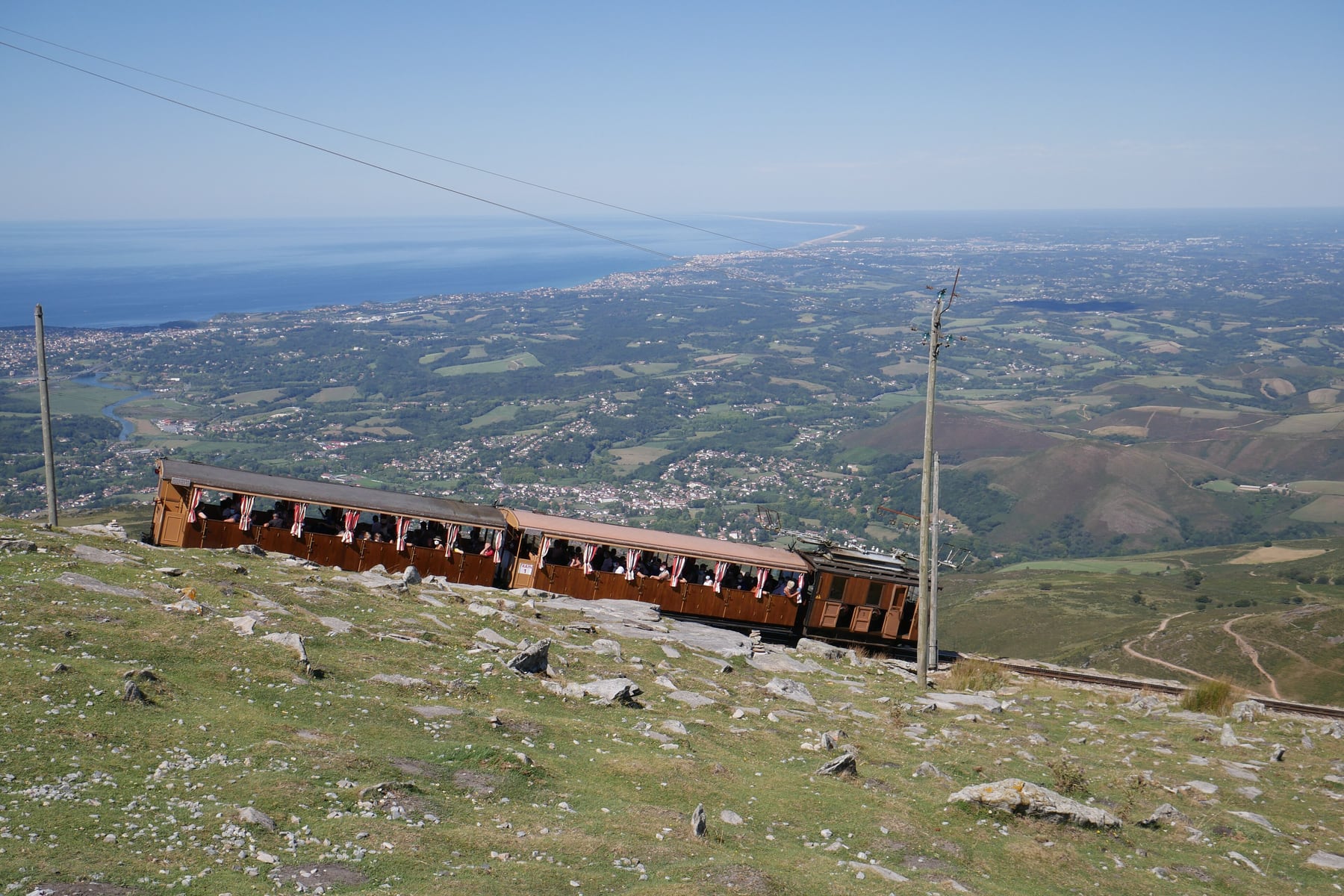
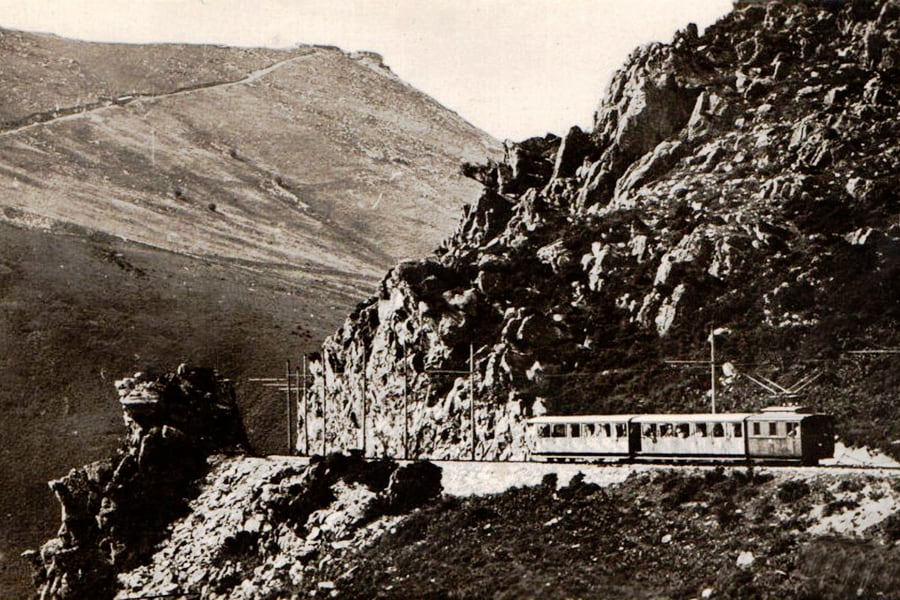
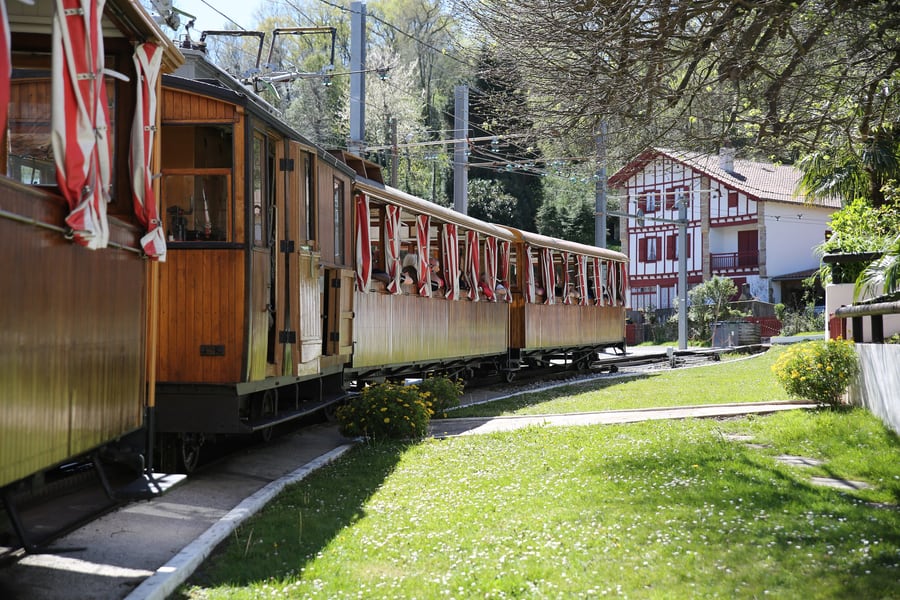
The road was never built, and the little rack train it would have competed with still makes the climb every day from spring to autumn, with rolling stock designed for its opening in 1924: electric locomotives on a Swiss three-phase design, pushing varnished wooden coaches with striped curtains at the open windows. The line runs 4.2 kilometres from the Col de Saint-Ignace, at 169 metres, to a station at 905 metres just below a summit that sits on the border between France and Spain.
The climb takes 35 minutes at 9 km/h, and each train waits at the top for 1 hour 20 minutes while its passengers look out over the Basque coast and the Pyrenees, meet the half-wild pottok ponies and eat at the ventas, the old smugglers' inns along the border. The line belongs to the département of Pyrénées-Atlantiques and runs daily from late March to 1 November.
The Journey
Trains leave from the Col de Saint-Ignace, a pass on the road between Ascain and Sare, where the station still carries the line's name and the year 1924. The Txik Txak buses from Saint-Jean-de-Luz and Bayonne stop outside, and there is free parking around the station, which fills early on sunny days in the school holidays.
The climb
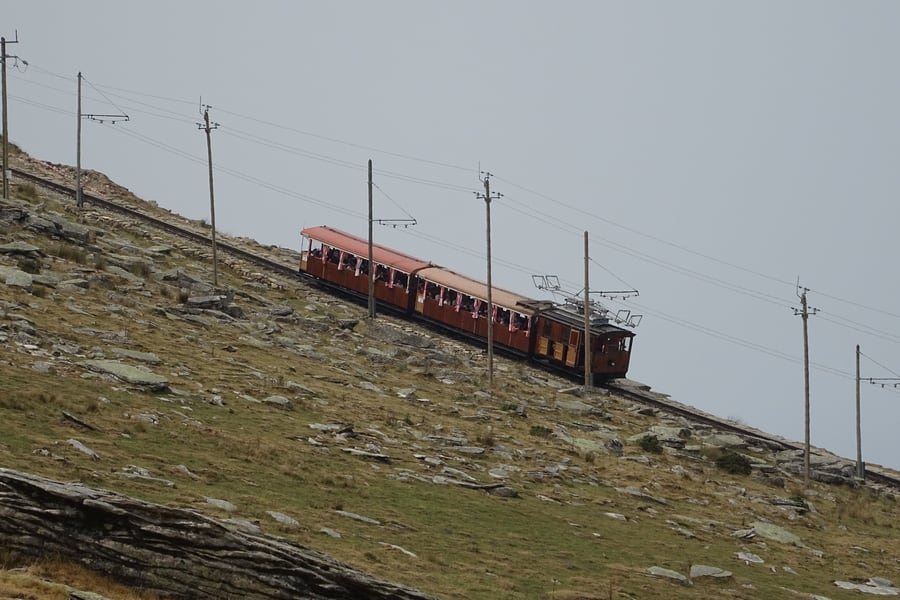
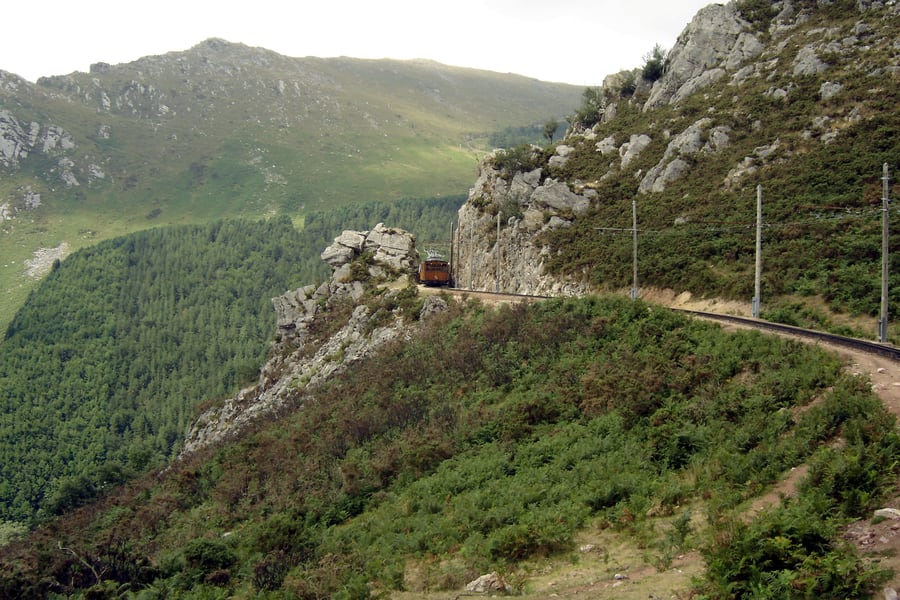
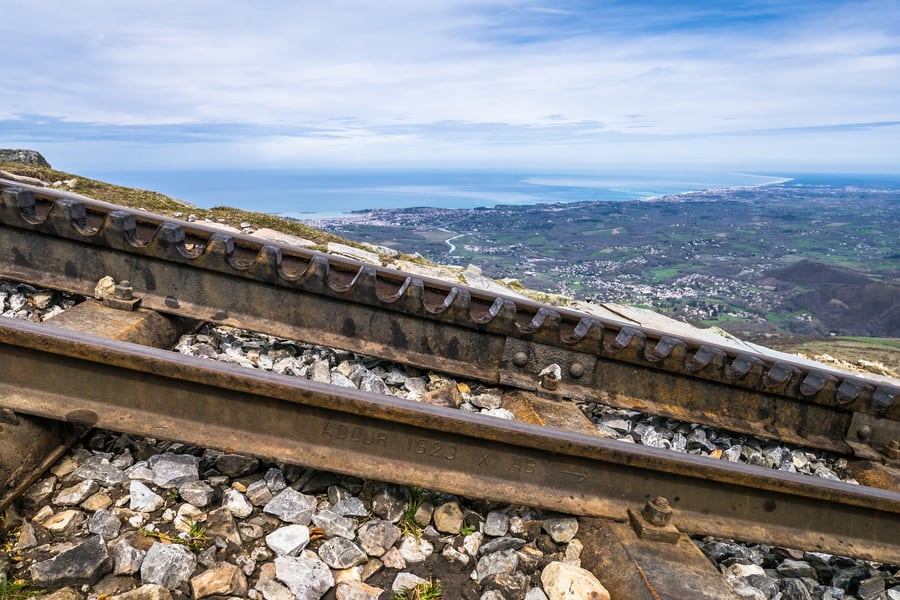
The train starts uphill at once, through woods, past the points to the depot. The first section of the line, to Trois Fontaines, opened on 25 April 1924, two months before trains reached the summit on 30 June. Above the trees the line comes out onto open, rock-strewn grazing, climbing gradients of up to one in four on a Strub rack, a single toothed rail down the middle of the metre-gauge track. The train never goes faster than 9 km/h: above that, an automatic brake stops it within a few metres. Passengers keep the same seats both ways, so whoever faces forward on the way up rides backwards on the way down.
The trains
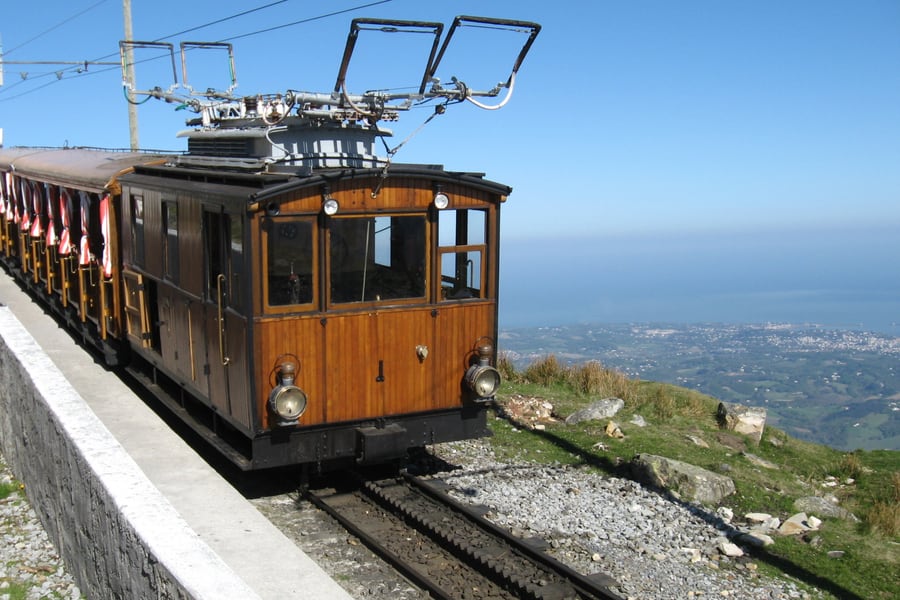
Each train is an electric locomotive and two wooden coaches. The locomotives were built by SLM of Winterthur on a three-phase design that Brown Boveri drew up in 1895, and the line has used three-phase current since it opened, chosen for safety. Two phases come from a pair of overhead wires, taken by the two double bow collectors on the roof, and the third through the rails. Two 160-horsepower motors turn two toothed wheels that both drive the train and brake it. The locomotive always sits at the downhill end, pushing on the way up and holding the coaches back on the way down, and a brakeman rides in a cabin at the top end of the train.
The coaches were built by Soulé of Bagnères-de-Bigorre in varnished chestnut from the Ardèche, with roofs of Pyrenean fir. Each has six compartments of ten seats, so a train carries 120 people. Some of the stock came in 1972 from the Luchon–Superbagnères rack railway in the central Pyrenees, which had closed in 1966 and was built with the same equipment. The track and rack were renewed in two winters of works that ended in 2023.
At the top
The line ends at 905 metres, still in France; a corridor built in 1967 leads up to the summit a few metres over the border in Spain. La Rhune is Larrun in Basque, "place of pastures", and it divides Labourd from Navarre. The Empress Eugénie, staying at Biarritz, made excursions up the mountain fashionable in the nineteenth century, long before the railway.
Trains wait 1 hour 20 minutes at the top; in spring and autumn the 11:30 and 12:10 departures allow 2 hours 30 minutes. Walkers can climb the 736 metres on foot, two to two and a half hours each way, and buy a descent-only ticket at the summit, though a seat is not guaranteed.
Along the route
 PA / Wikimedia Commons · CC BY-SA 4.0 · cropped
Col de Saint-Ignace
Trains leave from a pass at 169 metres on the road between Ascain and Sare, where the station still carries its name and the date 1924. Buses from Saint-Jean-de-Luz and Bayonne stop right outside.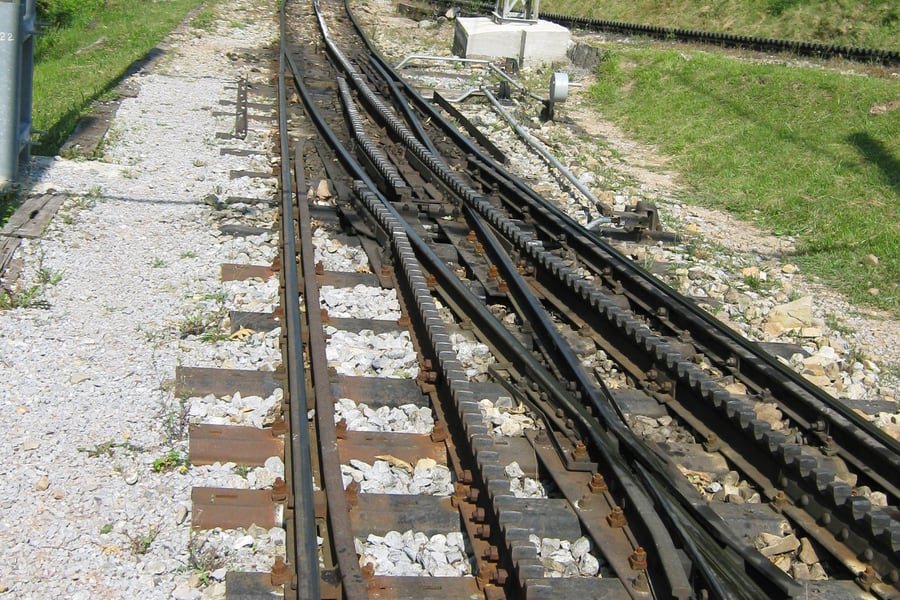 O. Morand / Wikimedia Commons · CC BY-SA 3.0 · cropped
Points to the depot
Just above the station, rack points take a line off to the depot, about 400 metres up the mountain. Its three roads hold the locomotives and coaches, and the wooden coaches are overhauled there every year in the low season.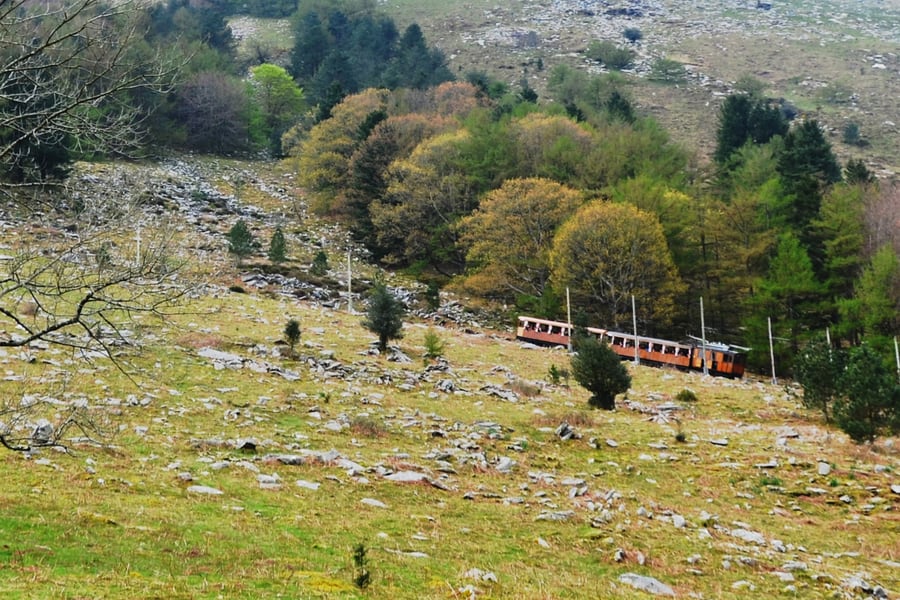 Marianne Casamance / Wikimedia Commons · CC BY-SA 4.0 · cropped
The open mountain
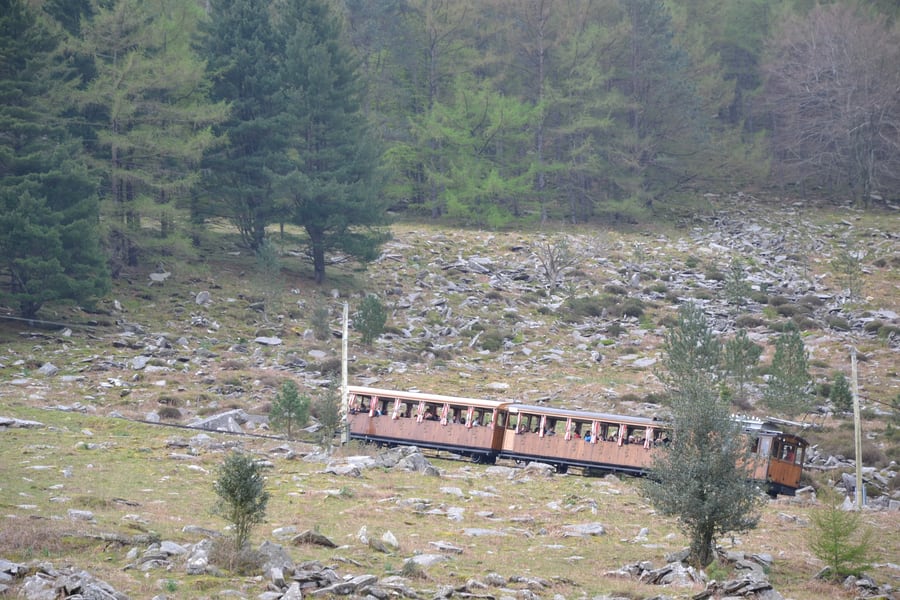
Out of the woods, the line climbs grazing land strewn with sandstone, part of a Natura 2000 site. Pottok ponies and manech sheep roam free across it, and vultures are often seen circling overhead.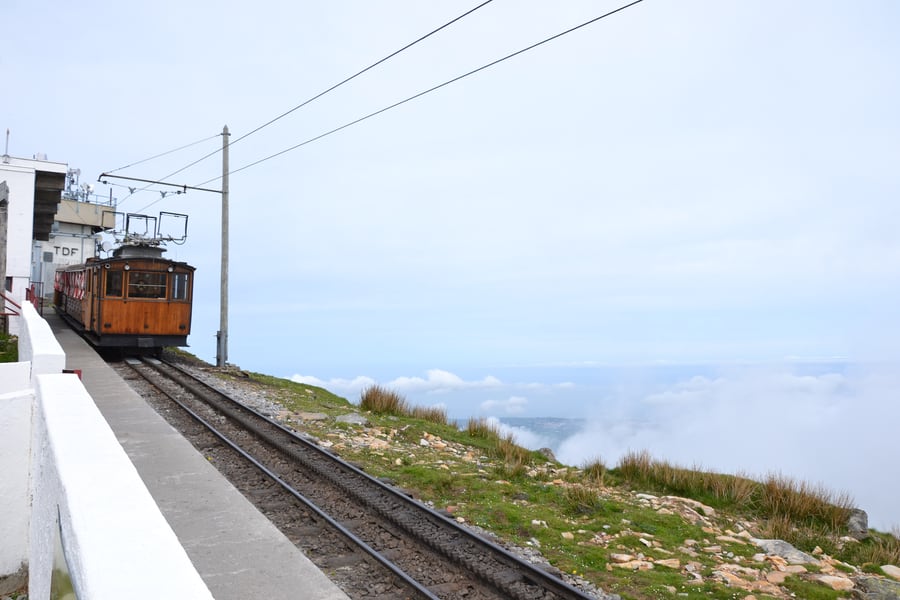 Marianne Casamance / Wikimedia Commons · CC BY-SA 4.0 · cropped
The summit station
The line ends at 905 metres, still in France. A corridor built in 1967 leads up to the summit a few metres over the border in Spain, beside the television mast and the ventas.A bit of history
Culture & experiences along the way
 Marianne Casamance / Wikimedia Commons · CC BY-SA 4.0 · cropped
The pottoks
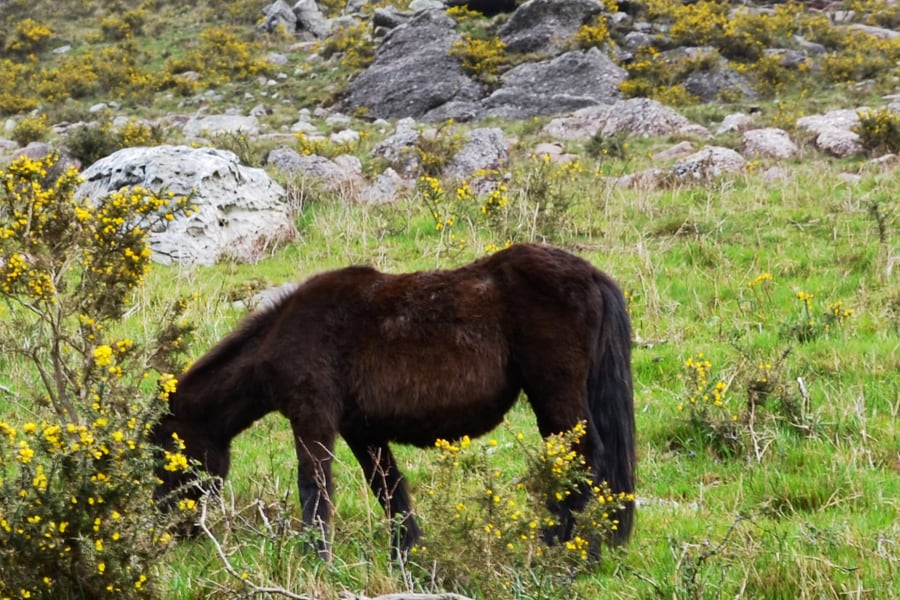
The small horses of the Basque Country graze the whole massif, and the train passes them on the way up. Pottok means "small horse". They live freely on the mountain with its flocks of manech sheep, so the operator asks visitors not to feed them and to keep dogs on a lead.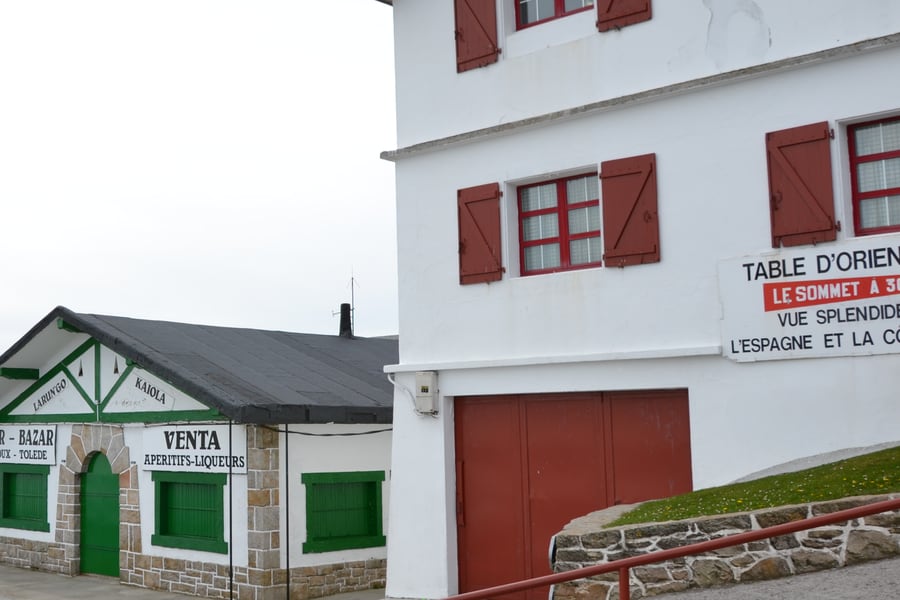 Marianne Casamance / Wikimedia Commons · CC BY-SA 4.0 · cropped
The ventas
Along the border on La Rhune stand ventas, farms that became inns and then relays for smugglers carrying tobacco, alcohol and tinned sardines past the customs men. Three at the summit now serve tortillas, tapas and sandwiches and sell souvenirs; the guided journey tells their smuggling stories.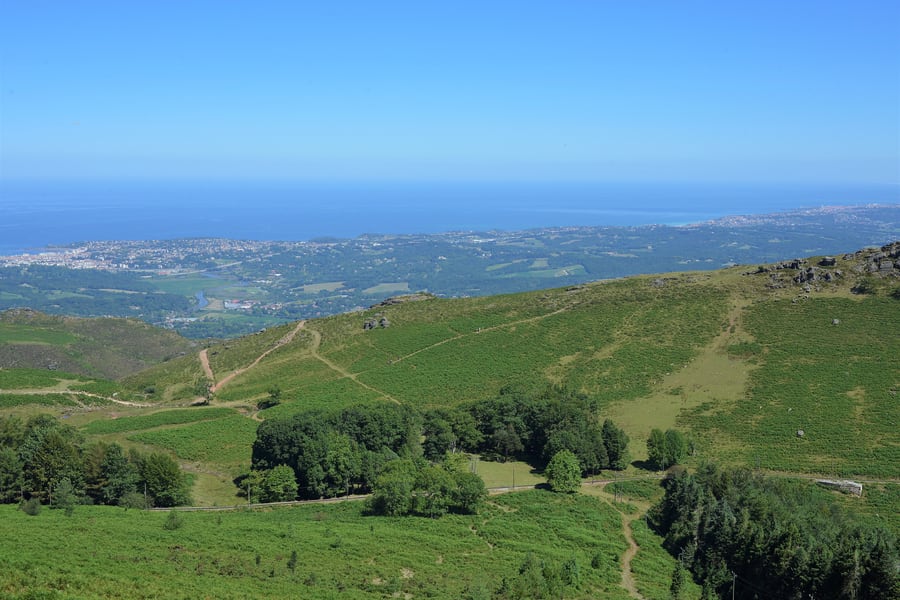 Alberto-g-rovi / Wikimedia Commons · CC BY 3.0 · cropped
The view
La Rhune is the last summit of the Pyrenees, six kilometres from the Atlantic, and on a clear day the view runs along the coast from San Sebastián to the mouth of the Adour and the Landes, and inland over Labourd and Navarre. An orientation table, up about sixty steps, names what you are looking at.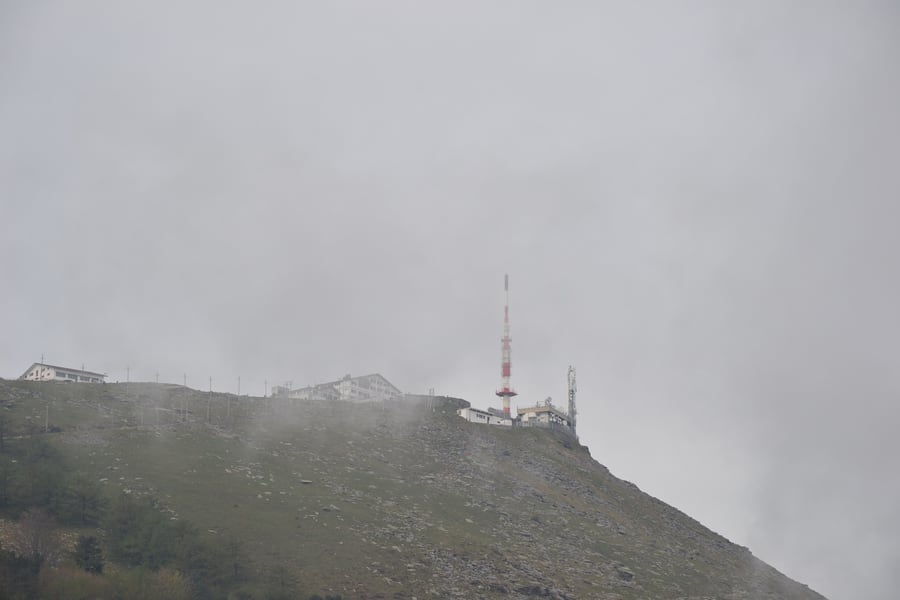 Marianne Casamance / Wikimedia Commons · CC BY-SA 4.0 · cropped
The Basque weather saying
A Basque proverb says that if you can see La Rhune it is going to rain, and if you cannot see it, it is already raining. The trains run in rain and cloud; only thunderstorms, strong wind or hail, on the prefecture's orders, call them off.Timetables
The train runs every day from 28 March to 1 November (2026 season), as a return excursion: 35 minutes up, 1 hour 20 minutes at the summit, 35 minutes down, so 2 hours 30 minutes in all. Times marked * run only when demand calls for them. The 2027 season's dates are not yet published.
October and November
| Leaves the Col de Saint-Ignace | Leaves the summit | Back at the col |
|---|---|---|
| 09:30 | 11:30 | 12:10 |
| 10:50 | 12:50 | 13:30 |
| 12:10* | 15:30 | 16:10 |
| 14:10 | 16:10 | 16:50 |
| 15:30 | 17:30 | 18:10 |
The 12:10 allows 2 hours 30 minutes at the top.
April to June, and September
| Leaves the Col de Saint-Ignace | Leaves the summit | Back at the col |
|---|---|---|
| 09:30 | 11:30 | 12:10 |
| 10:10* | 12:10 | 12:50 |
| 10:50 | 12:50 | 13:30 |
| 11:30* | 14:50 | 15:30 |
| 12:10 | 15:30 | 16:10 |
| 14:10 | 16:10 | 16:50 |
| 14:50* | 16:50 | 17:30 |
| 15:30 | 17:30 | 18:10 |
| 16:10* | 18:10 | 18:50 |
The 11:30 and 12:10 allow 2 hours 30 minutes at the top.
July and August
From 6 July to 30 August trains leave the col every 40 minutes from 08:50 to 17:30, the last one back at 20:10, with an extra 08:20 from 27 July. Book two or three days ahead in high season.
Times as of October 2026, from the operator's opening hours and prices (opens in a new tab). The operator shows the seats left on each departure on its today's availability (opens in a new tab) page.
Tickets
Every ticket is a return: there is no one-way ticket up. The classic journey covers the train both ways and the stop at the summit; the guided journey adds a guide on board and a themed tour at the top. A descent-only ticket is sold at the summit, subject to seats. Children aged 4 to 12 pay the reduced fare and under-fours travel free on a lap, with a €0 ticket; dogs pay €6.50.
Tickets are sold online up to an hour before departure, or at the station. There are no bookings by phone or email, and tickets are refunded only when trains are cancelled for extreme weather, or with documents such as a medical certificate. Arrive 30 minutes early to park. Prices as of October 2026, from the operator.
Book your tickets
Classic journey
€26 adult · €18 child 4–12 · €82 family
The train up and down with 1 hour 20 minutes at the summit.
Book Tickets (opens in a new tab, on Train de la Rhune)via Train de la RhuneGuided journey
€31 adult · €22 child 4–12
The same return trip with a guide on board and a themed tour at the summit.
Book Tickets (opens in a new tab, on Train de la Rhune)via Train de la RhuneRail Passes
Interrail and Eurail passes are not valid on the Train de la Rhune. It is a departmental line, not part of SNCF, and Interrail's table of railway companies does not list it, so pass holders buy an ordinary ticket.
A pass does cover the SNCF trains to Saint-Jean-de-Luz–Ciboure, the nearest station: the TER without a reservation, and the TGV INOUI from Paris and Bordeaux with a compulsory one. From there it is 11 kilometres to the col on the Txik Txak bus 45. For La Rhune alone a pass is not worth buying; it pays only as part of a longer trip through France.
Checked October 2026 against Interrail's table of railway companies (opens in a new tab).
Places to Visit
The Col de Saint-Ignace sits between two of Labourd's villages, Ascain and Sare, with the coast at Saint-Jean-de-Luz a short bus ride away. A morning train leaves the afternoon for one of them.
 Harrieta171 / Wikimedia Commons · CC BY 2.5 · cropped
Saint-Jean-de-Luz
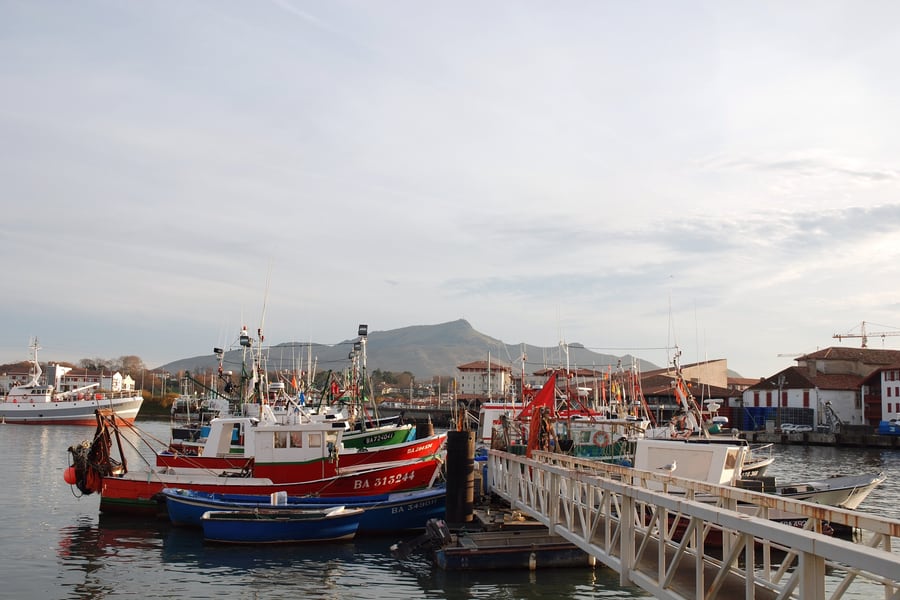
The fishing port on the only sheltered bay between Arcachon and Spain is where most visitors arrive, by TGV, Intercités or TER on the Bordeaux–Irun line. Louis XIV married the Spanish infanta Maria Theresa here on 9 June 1660. Bus 45 runs from the town to the Col de Saint-Ignace, 11 kilometres away.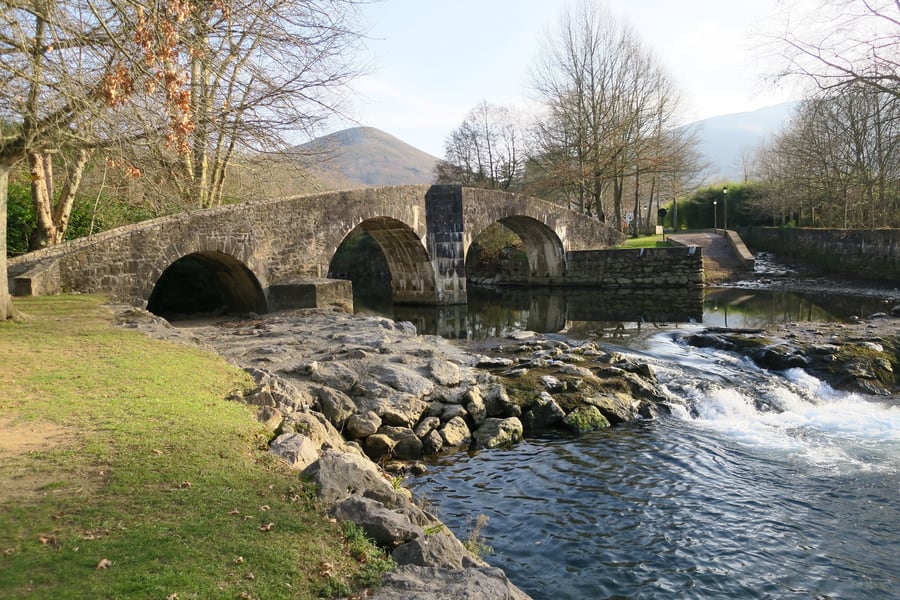 Juliofsanguino / Wikimedia Commons · CC BY-SA 4.0 · cropped
Ascain
Ascain sits on the Nivelle at the foot of La Rhune, and its old stone bridge, known as the Roman bridge, marks the point where the river stops being tidal. Pierre Loti wrote his Basque novel Ramuntcho in the village, and pelota is still played against the fronton, the court's tall wall, in its centre.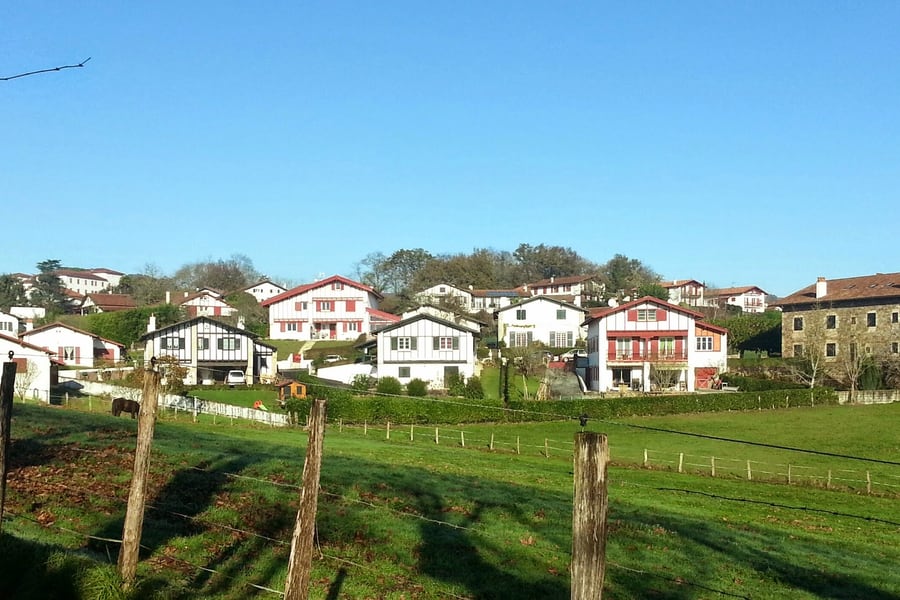 Gilles Guillamot / Wikimedia Commons · CC BY-SA 3.0 · cropped
Sare
Sare is listed among the Plus Beaux Villages de France, and its white, timbered farmhouses became the model for the Basque house. The church of Saint-Martin dates in part from the twelfth century. Loti used the village for Ramuntcho, and it was here, in 1978, that the vote against a summit road was held.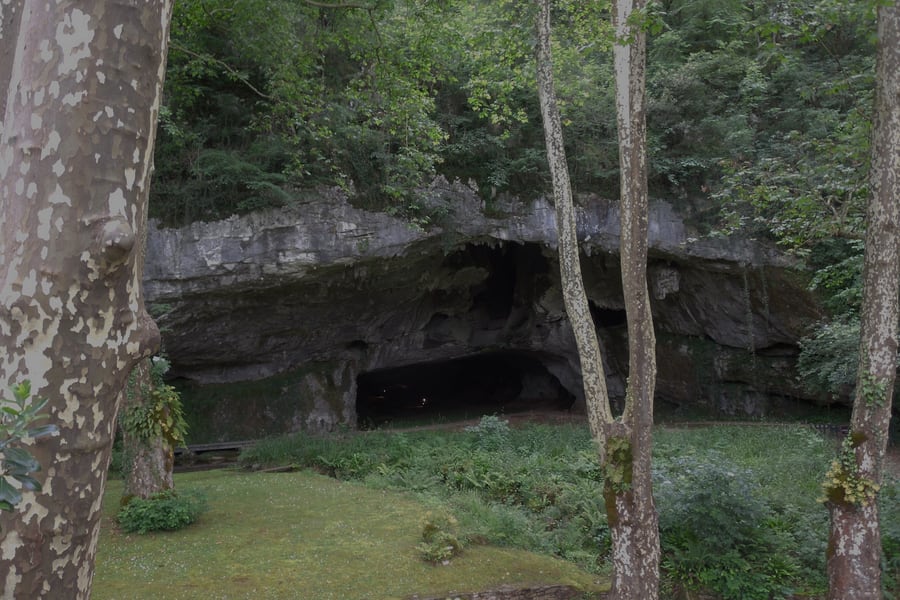 Cosal / Wikimedia Commons · CC BY-SA 4.0 · cropped
The Grottes de Sare
About ten kilometres from La Rhune, the Lezea cave was lived in during prehistory, served as a hospital in the Carlist wars of the nineteenth century and is now home to protected bats. Guided visits of about an hour, in French, Basque, Spanish or English, go with a museum and a megalithic park; photographs are not allowed inside, and visits are booked online.Where to Sleep
There is nowhere to stay at the summit. Ascain and Sare, each a few minutes' drive from the col and on the bus line to it, have old hotels on their village squares; Saint-Jean-de-Luz, on the coast, has the widest choice.
Where to stay
 Tim Tregenza / Wikimedia Commons · CC BY-SA 3.0 · cropped
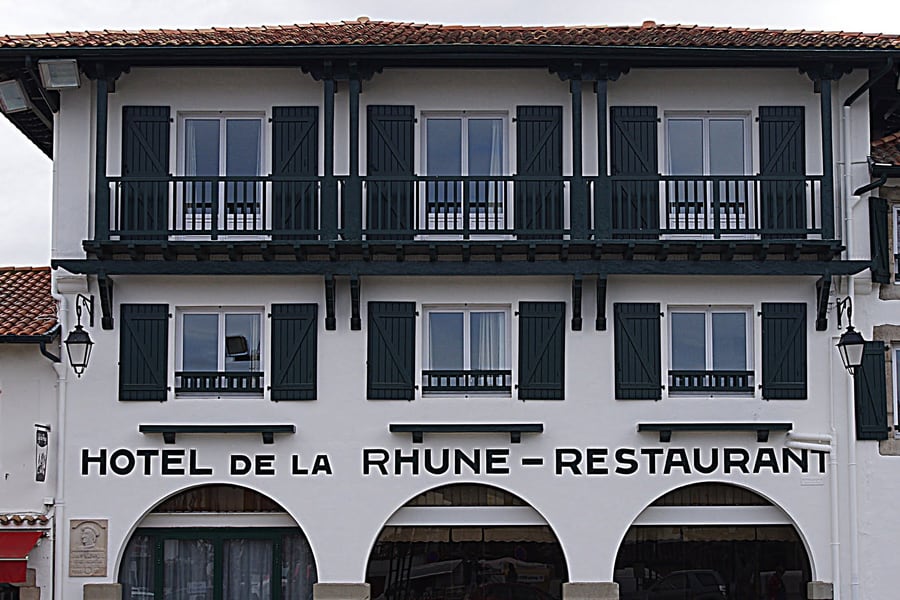
Hôtel de la Rhune
On the main square of Ascain
A family house of 31 rooms, two of them apartments, with a terrace under plane trees facing the village's pelota court.
Check Availability (opens in a new tab, on hoteldelarhune.com)via hoteldelarhune.com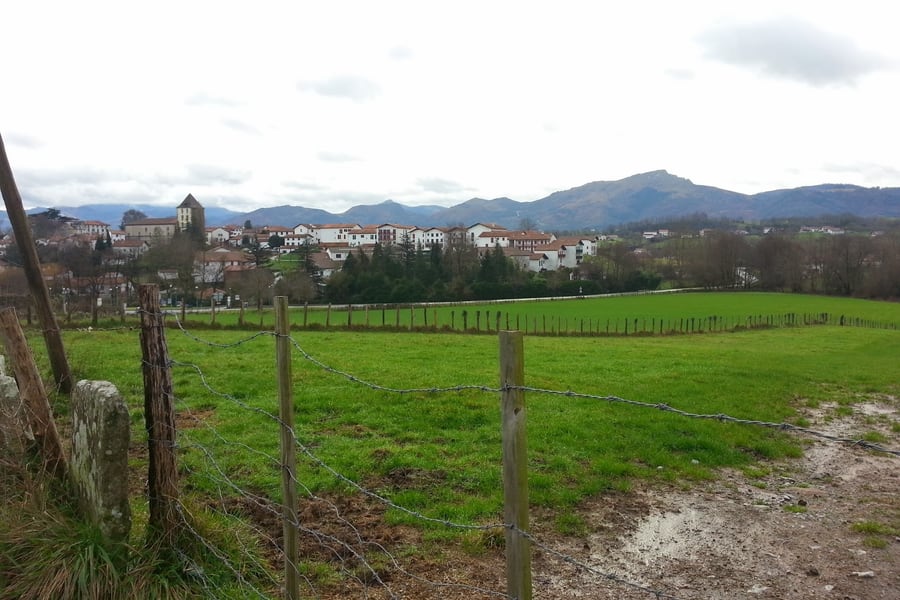 Gilles Guillamot / Wikimedia Commons · CC BY-SA 3.0 · cropped
Arraya
In the centre of Sare
Fifteen rooms in a sixteenth-century house on the village square, a staging post on the way to Compostela and a hotel since 1951.
Check Availability (opens in a new tab, on arraya.com)via arraya.comQuestions or corrections
Planning this trip and stuck on something, or spotted a time, fare or detail that has changed? Send us a message about Train de la Rhune. We read every one, and we update this page when something has changed.