The Corsican Railway
Pierre Bona / Wikimedia Commons · CC BY-SA 3.0
- Distance158 km (Ajaccio–Bastia)
- DurationAbout 3 hours
- Best seasonLate spring–autumn
Introduction
Corsica is a mountain range rising out of the sea, and the little railway that crosses it is one of the most improbable and lovable in France. Corsicans call it U Trinichellu — "the little trembler" — and for well over a century it has wound its single metre-gauge track from coast to coast, climbing through granite gorges and chestnut forests to burrow under the island's spine.
The main line runs 158 kilometres from Ajaccio on the west coast to Bastia in the northeast, by way of the mountain town of Corte, in about three hours. Opened from 1888, it is a masterpiece of Victorian engineering — 32 tunnels, more than 50 bridges and viaducts, including one flung across a gorge by Gustave Eiffel — and it climbs to a summit of 906 metres in the long tunnel at Vizzavona.
A second line branches off to the northwest, where in summer the Tramway de la Balagne trundles along the beaches between Île-Rousse and Calvi. Slow, homely and gloriously scenic, the Corsican railway is not a way of getting somewhere quickly — it is the journey itself.
The Journey
The great crossing begins at Ajaccio, Napoleon's birthplace, on its blue gulf. The train pulls away along the coast, then turns inland and starts to climb almost at once, following the Gravona valley up towards the mountains that fill the middle of the island. The maquis gives way to chestnut and pine, and the granite closes in.
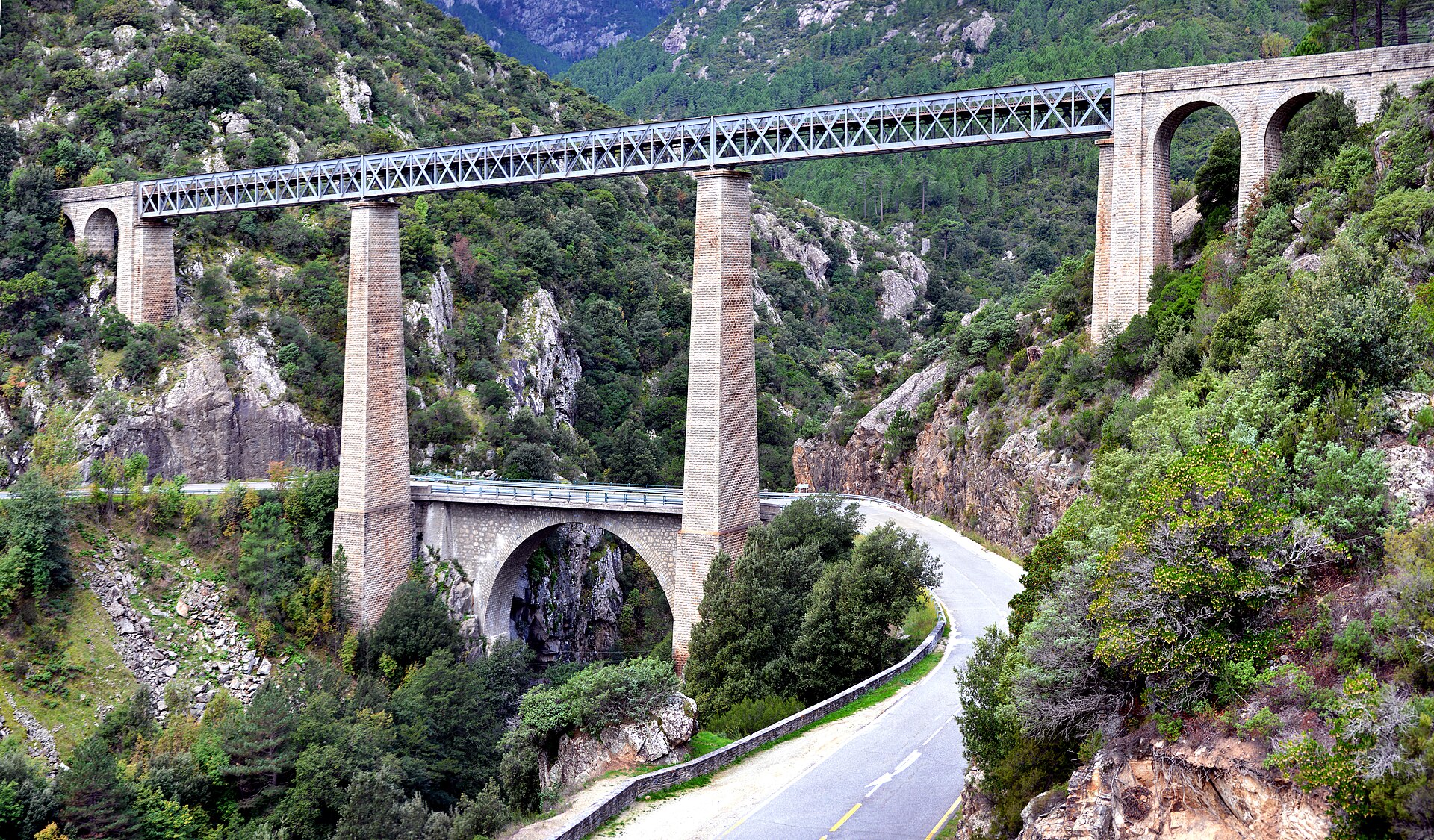
The climax of the climb is Vizzavona: the line tunnels for 3.9 km under the high pass at 906 metres, the summit of the railway, and comes out into cool, deep forest — a famous stage on the GR20 long-distance path and a walkers' halt in its own right. Beyond, the train drops through the gorges of the Vecchio, crossing the river on the slender iron Eiffel viaduct, 94 metres above the water.
It threads down to Corte, the old capital of independent Corsica, its citadel standing on a crag with the high peaks behind. From here the country opens out; the line runs on to the junction at Ponte-Leccia, where the Calvi branch peels away to the northwest, and continues down the Golo valley to finish at the Genoese port of Bastia.
What makes the ride special is the sheer variety packed into a few hours:
- A complete coast-to-coast crossing of the island, from Ajaccio to Bastia, in about three hours.
- A climb over the mountains through the Vizzavona tunnel at 906 m, into forest that is pure GR20 country.
- The Vecchio viaduct, one of Gustave Eiffel's works, and dozens more tunnels and bridges from the 1880s.
- The seaside Balagne branch, a summer beach tram between Île-Rousse and Calvi.
Slow, rattly and utterly charming, U Trinichellu shows you an island most visitors only see from the road.
Along the route
Pierre Bona / Wikimedia Commons · CC BY-SA 3.0The Eiffel viaduct
Halfway across the island the line strides over a granite gorge on the Vecchio viaduct — a slender iron truss on tall stone piers, 94 metres up, designed by none other than Gustave Eiffel and opened with the railway itself.Didier Duforest / Wikimedia Commons · CC BY-SA 4.0Over the mountain at Vizzavona
To join the two coasts the railway burrows under the island's granite spine in the 3.9 km Vizzavona tunnel, at 906 m the summit of the line — emerging into deep chestnut and beech forest that is walking country in its own right, on the GR20.Chabe01 / Wikimedia Commons · CC BY-SA 4.0Down to the Balagne beaches
At Ponte-Leccia a branch swings off to the northwest coast, where in summer the little "Tramway de la Balagne" shuttles all day between Île-Rousse and Calvi, hugging the sand so closely you can step off almost onto the beach.A bit of history
Culture & experiences along the way
Chabe01 / Wikimedia Commons · CC BY-SA 4.0Cross the whole island
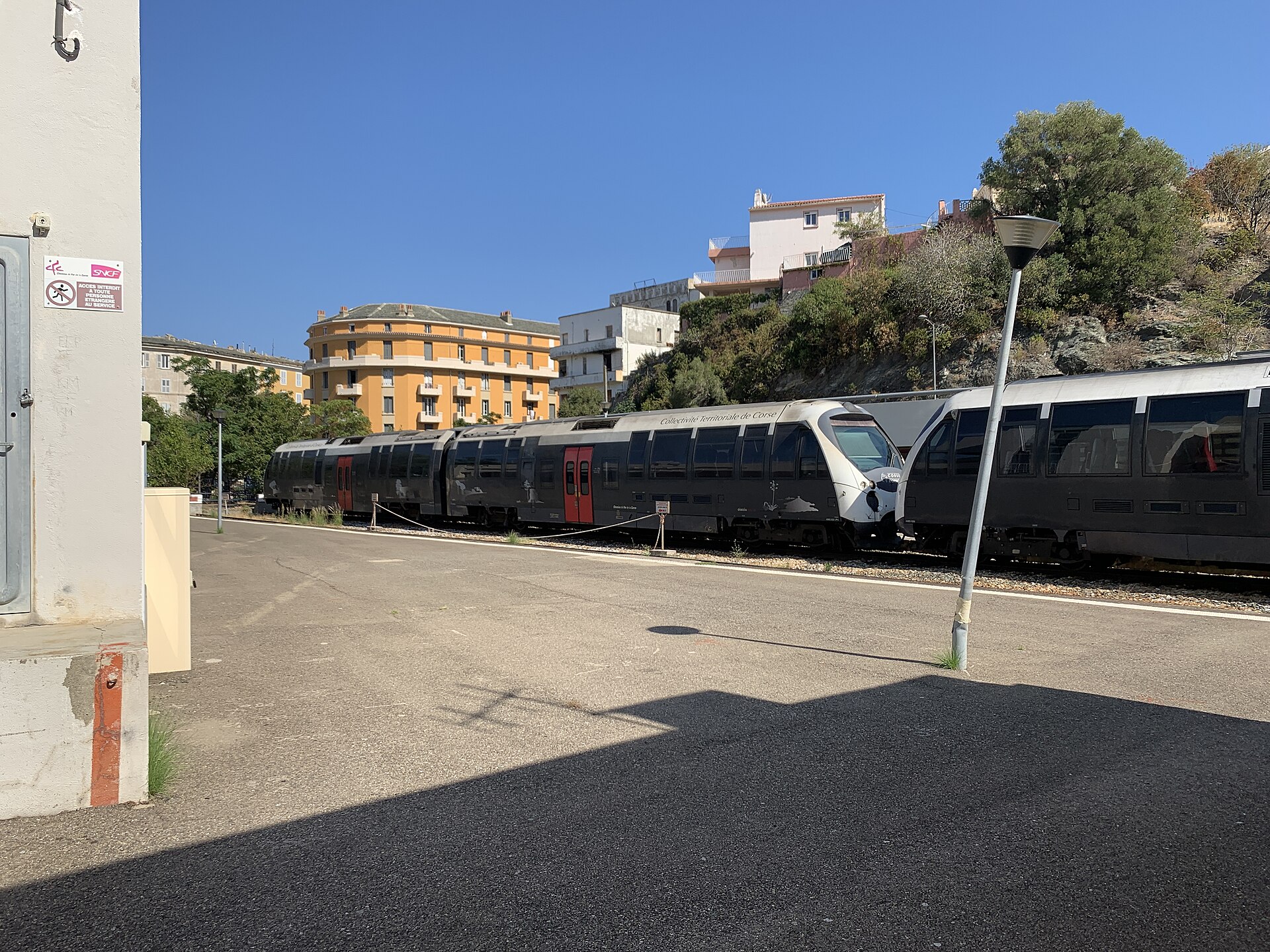
The classic ride is the full Ajaccio–Bastia crossing: about three hours from the Gulf of Ajaccio, up through the gorges and forests and over the Vizzavona pass, down to the Genoese port of Bastia — a complete section across Corsica by narrow-gauge train.Pierre Bona / Wikimedia Commons · CC BY-SA 3.0Break the journey at Corte
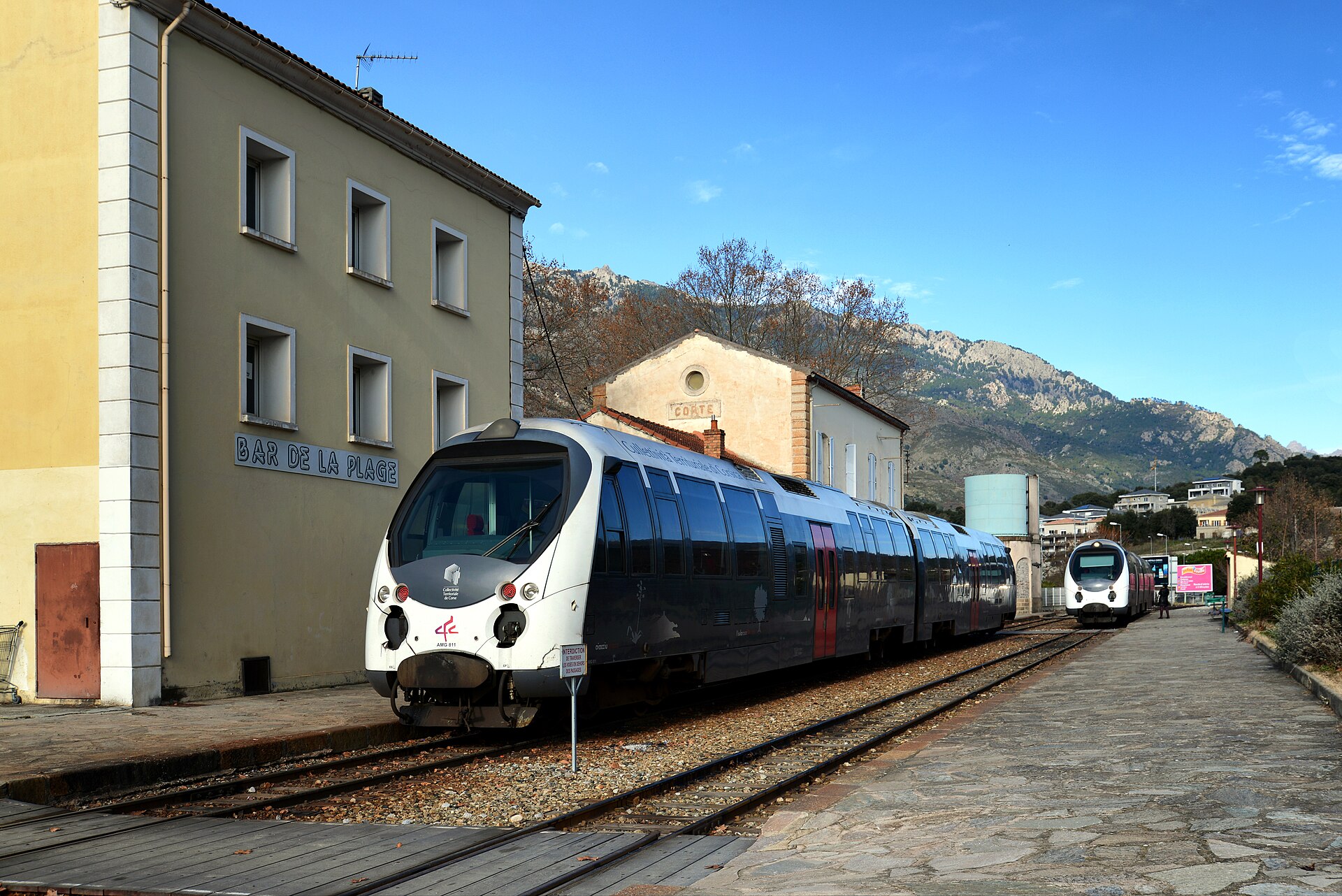
Corte, the old capital of independent Corsica, sits squarely in the middle of the line — its citadel on a crag, its gorges (the Restonica and Tavignano) leading up into the high mountains. It is the perfect place to break the crossing for a day.Chabe01 / Wikimedia Commons · CC BY-SA 4.0Ride the little trembler
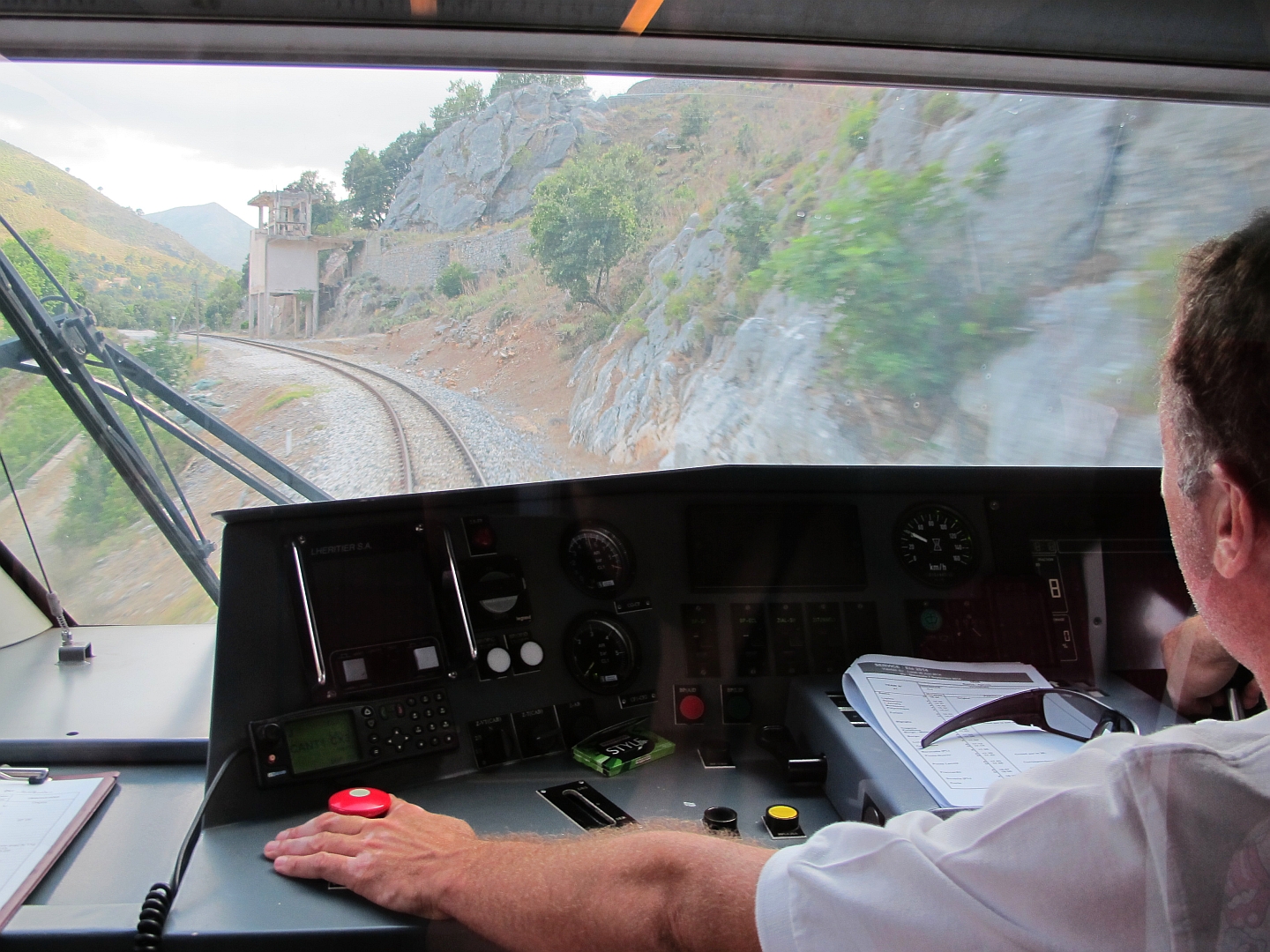
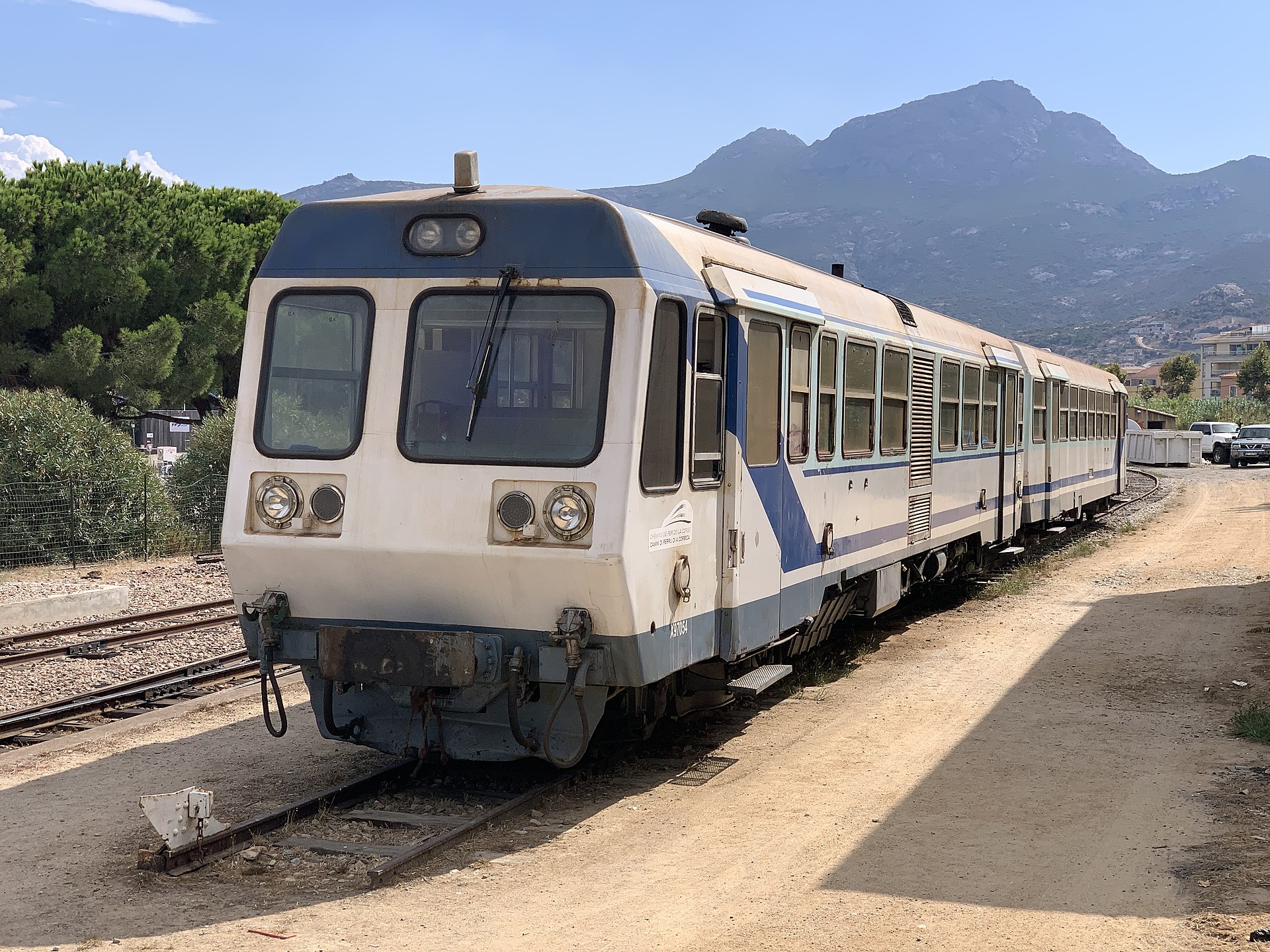
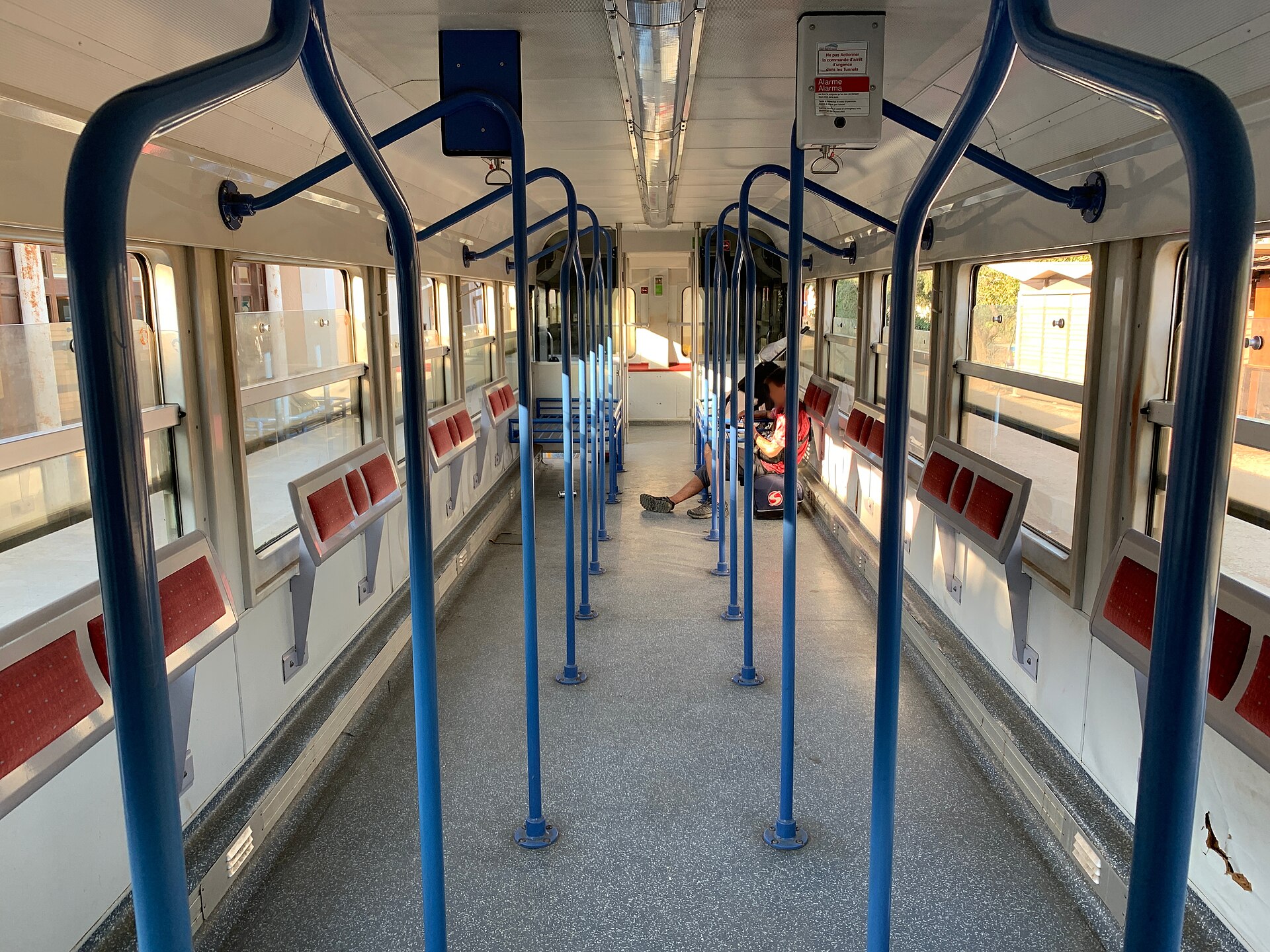
Corsicans call it "U Trinichellu" — the little trembler — and part of the charm is how unhurried and homely it is: a one- or two-car railcar, big windows, local life getting on and off, and the mountains sliding by close enough to touch.Timetables
There are broadly two railways to think about. The main line across the island (Ajaccio–Corte–Bastia) runs a handful of trains a day end to end, plus more frequent local services on the busy sections around Ajaccio and Bastia. The Balagne tramway on the Calvi branch is seasonal, running many short coastal trips a day in summer and little in winter.
The main services (2026 — confirm before travelling):
| Route | Frequency | Time |
|---|---|---|
| Ajaccio ⇄ Bastia | 5 a day each way (6 in Jul–Aug) | ~4 h (158 km) |
| Bastia ⇄ Corte | + 1 extra a day | ~1 h 40 |
| Ponte-Leccia → Calvi | a few a day | ~1 h 15 |
| Île-Rousse ↔ Calvi (Balagne tram) | frequent, summer only | ~45 min |
The full Ajaccio–Bastia run averages just 40 km/h — that slowness, winding through the mountains via Vizzavona, is the point.
Because through trains are relatively few, plan around a specific departure, especially if you want to break the journey at Corte or Vizzavona. These are ordinary regional trains — no reservation, buy at the station and go.
Times as of the summer 2026 timetable (valid ~29 June–30 August). Confirm current schedules with the operator — see the Tickets section below.
Tickets
The Corsican railway is refreshingly simple and cheap. It is a regional line, so there are no reservations and no classes: you buy an ordinary CFC ticket at the station (or from the conductor at the little unstaffed halts) and climb aboard. A crossing of the whole island costs a fraction of what its scenery is worth. Note that mainland and European rail passes such as Interrail and Eurail are not valid on the Corsican network, which is run separately by the island.
There is a single class on the modern AMG 800 railcars — comfortable, air-conditioned and full of window — so the only real choices are where to sit (either side rewards you at different points of the climb) and whether to break the journey. In summer the Balagne beach tram is best bought as you go, hopping on and off along the coast.
The options below link to Chemins de fer de la Corse, which runs the line. Fares checked July 2026 against the operator's site (opens in a new tab).
Book your tickets
Ajaccio to Bastia
Right across the island
The full cross-island crossing over the Vizzavona pass and the Eiffel viaduct, from the Gulf of Ajaccio to the port of Bastia. An ordinary CFC ticket, no reservation, bought at the station — one of the great narrow-gauge journeys of the Mediterranean.
Book Tickets (opens in a new tab, on Chemins de fer de la Corse)via Chemins de fer de la CorseThe Balagne tramway
Île-Rousse ↔ Calvi
A different pleasure entirely — the summer beach tram along the Balagne coast, calling at little halts by the sand between Île-Rousse and Calvi. Turn up, hop on, and hop off wherever the water looks best.
Book Tickets (opens in a new tab, on Chemins de fer de la Corse)via Chemins de fer de la CorseRail Passes
No rail pass covers the Corsican Railway. Interrail's table of railway companies names the Chemins de fer de Corse among the trains excluded in France. Every fare is bought from CFC, at the station or from the conductor at unstaffed halts.
For this journey a pass is beside the point. Corsica's railway is not connected to the mainland network, and its fares are modest.
Checked October 2026 against interrail.com (opens in a new tab).
Places to Visit
The railway strings together many of the best of Corsica, and its stations put you within reach of mountains, gorges and beaches alike. Any of the places below is worth a night, and the line makes it easy to combine the interior and the coast in a single trip.
 Aleph500Adam / Wikimedia Commons · CC BY-SA 4.0 · cropped
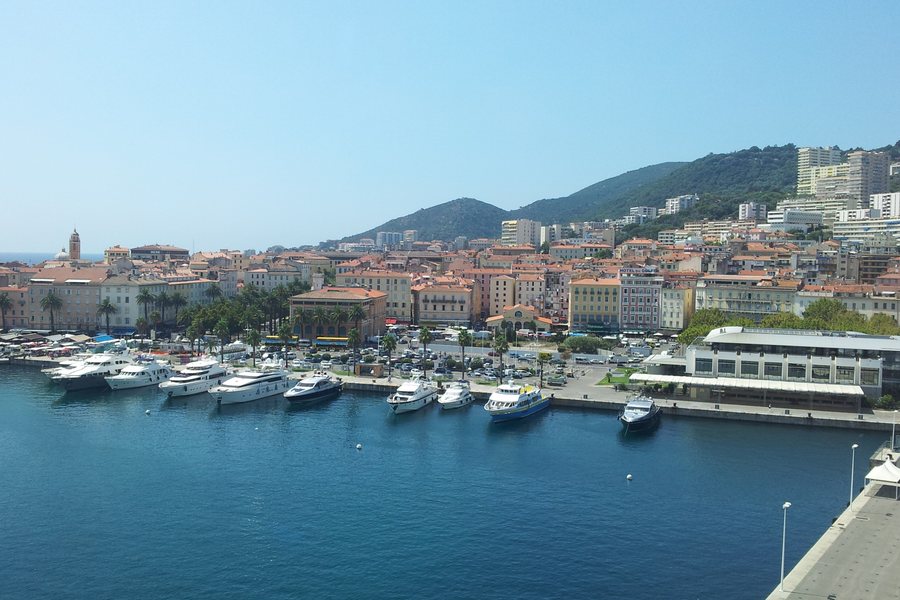
Ajaccio
The island capital, spread around its gulf, and Napoleon's birthplace — the house is a museum and he is unavoidable in the street names. A lively old town, a good morning market and boats out to the Îles Sanguinaires make it an easy place to start or finish.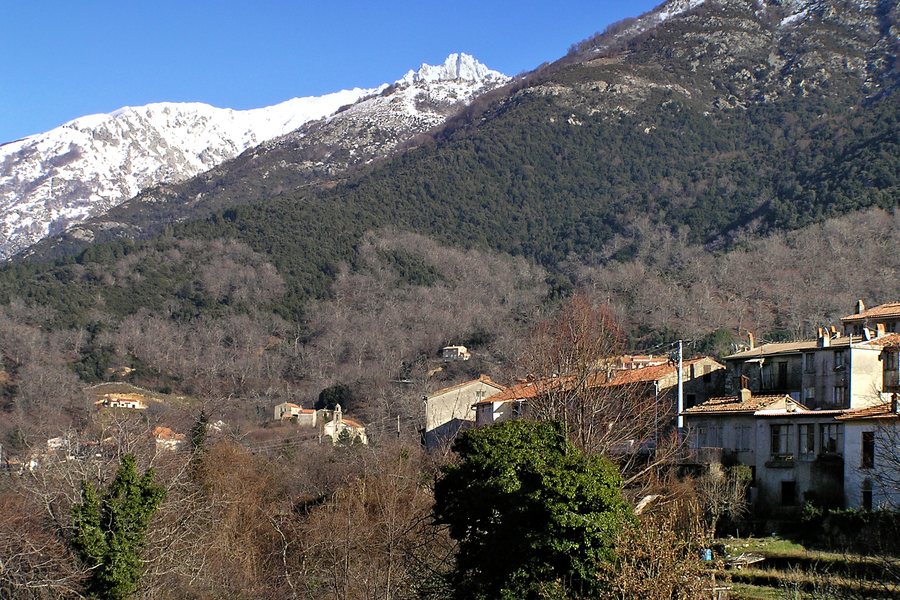 Pierre Bona / Wikimedia Commons · CC BY-SA 3.0 · cropped
Bocognano & the Gravona
On the climb out of Ajaccio, in the chestnut country of the Gravona valley and under the first serious peaks. It is the gateway to waterfalls and high walking, and the first point on the line where the island stops feeling coastal and starts feeling mountainous.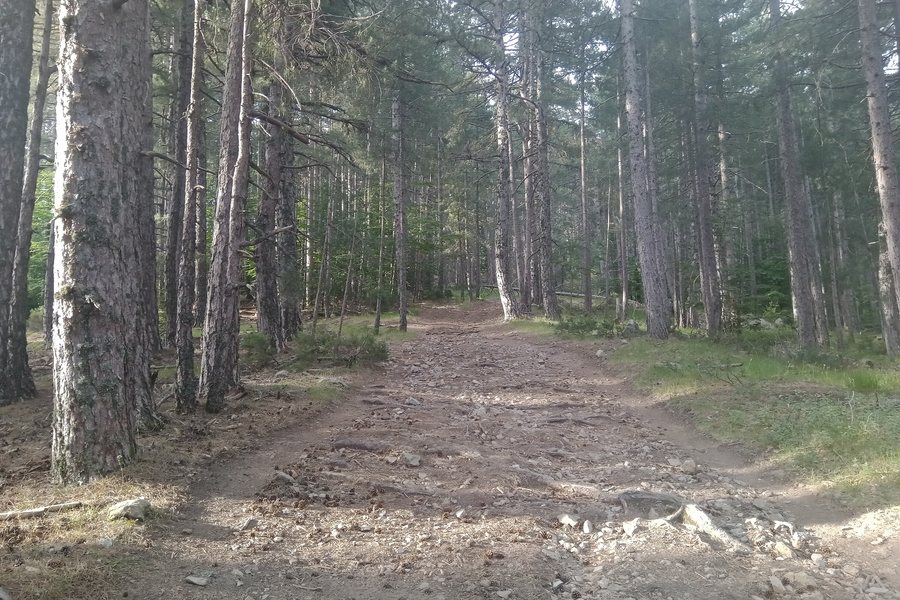 Rémih / Wikimedia Commons · CC BY-SA 4.0 · cropped
Vizzavona
A cool forest halt at the summit tunnel, ringed by beech and laricio pine and several degrees below whatever the coast is doing. It is a classic staging post on the GR20, and the walk to the Cascades des Anglais is short enough to fit between trains.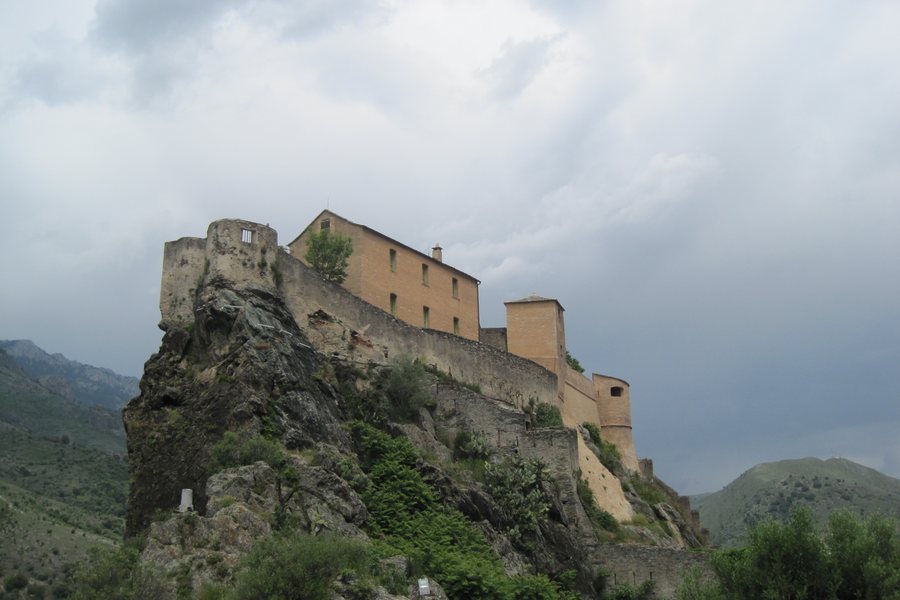 Bj.schoenmakers / Wikimedia Commons · CC0 · cropped
Corte
The proud old capital of independent Corsica, high in the interior with its citadel on a crag above the town. Behind it the Restonica and Tavignano gorges climb into the mountains, which makes this the one stop that gives you the island's history and its wildest country in the same day.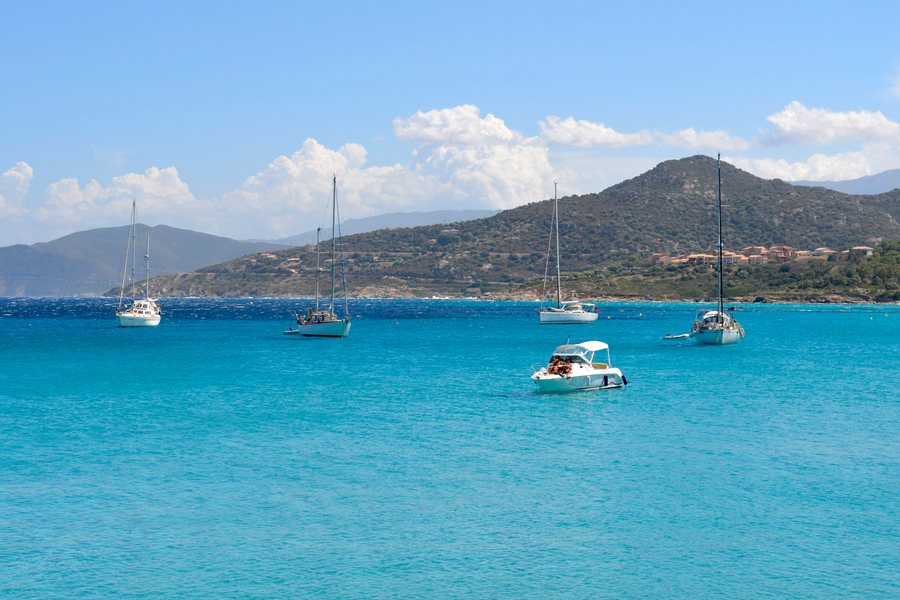 ByB (Bruno Barral) / Wikimedia Commons · CC BY-SA 3.0 · cropped
Île-Rousse
A relaxed Balagne resort with a golden beach more or less at the station door — one of the few places anywhere where you can step off a train straight onto the sand. It is also the eastern end of the summer coastal tram that shuttles along the shore to Calvi.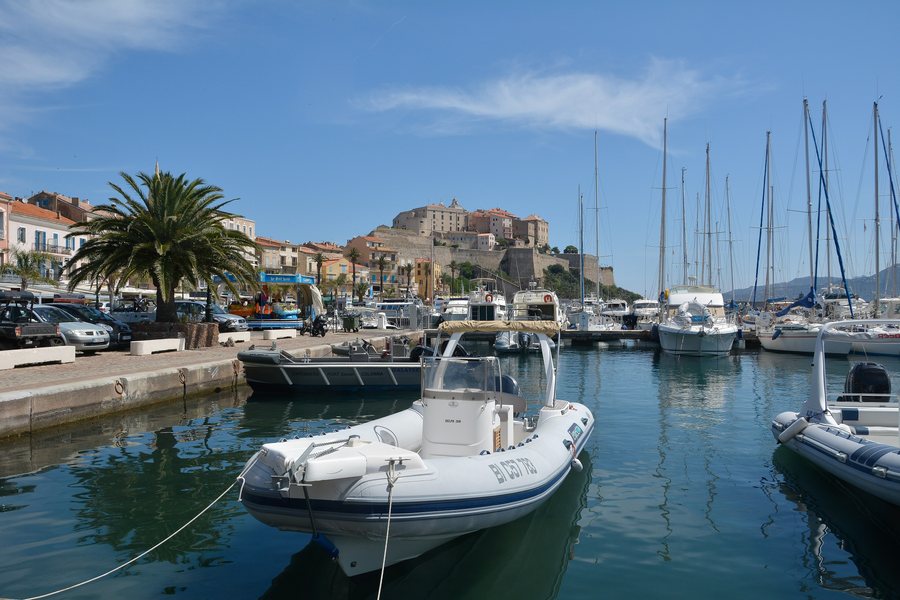 Isiwal / Wikimedia Commons · CC BY-SA 3.0 · cropped
Calvi
The end of the line, with a Genoese citadel standing over a curving bay and a long sweep of sand backed by mountains that still hold snow in early summer. It is the most obvious place on the network to stop for several days rather than one.Where to Sleep
Where you sleep depends on whether you have come for the mountains or the sea — and the beauty of the line is that it reaches both. Ajaccio and Bastia make the obvious start and end points, each a proper town with hotels of every kind and an airport nearby. In the middle, Corte is the natural base for the interior: student-town guesthouses and small hotels, with the Restonica gorge on its doorstep, and it breaks the long crossing neatly in two. For a night in the forest, the little inns at Vizzavona put you right on the GR20 at the summit of the line. On the northwest coast, Île-Rousse and Calvi offer everything from simple beach hotels to smart addresses under the citadel, perfect for pairing the Balagne tram with a few lazy days by the sea. Book well ahead for July and August, when Corsica is at its busiest and rooms near the beaches fill fast; spring and autumn are quieter, cooler for walking, and arguably the loveliest time to ride the little train.
Questions or corrections
Planning this trip and stuck on something, or spotted a time, fare or detail that has changed? Send us a message about The Corsican Railway. We read every one, and we update this page when something has changed.