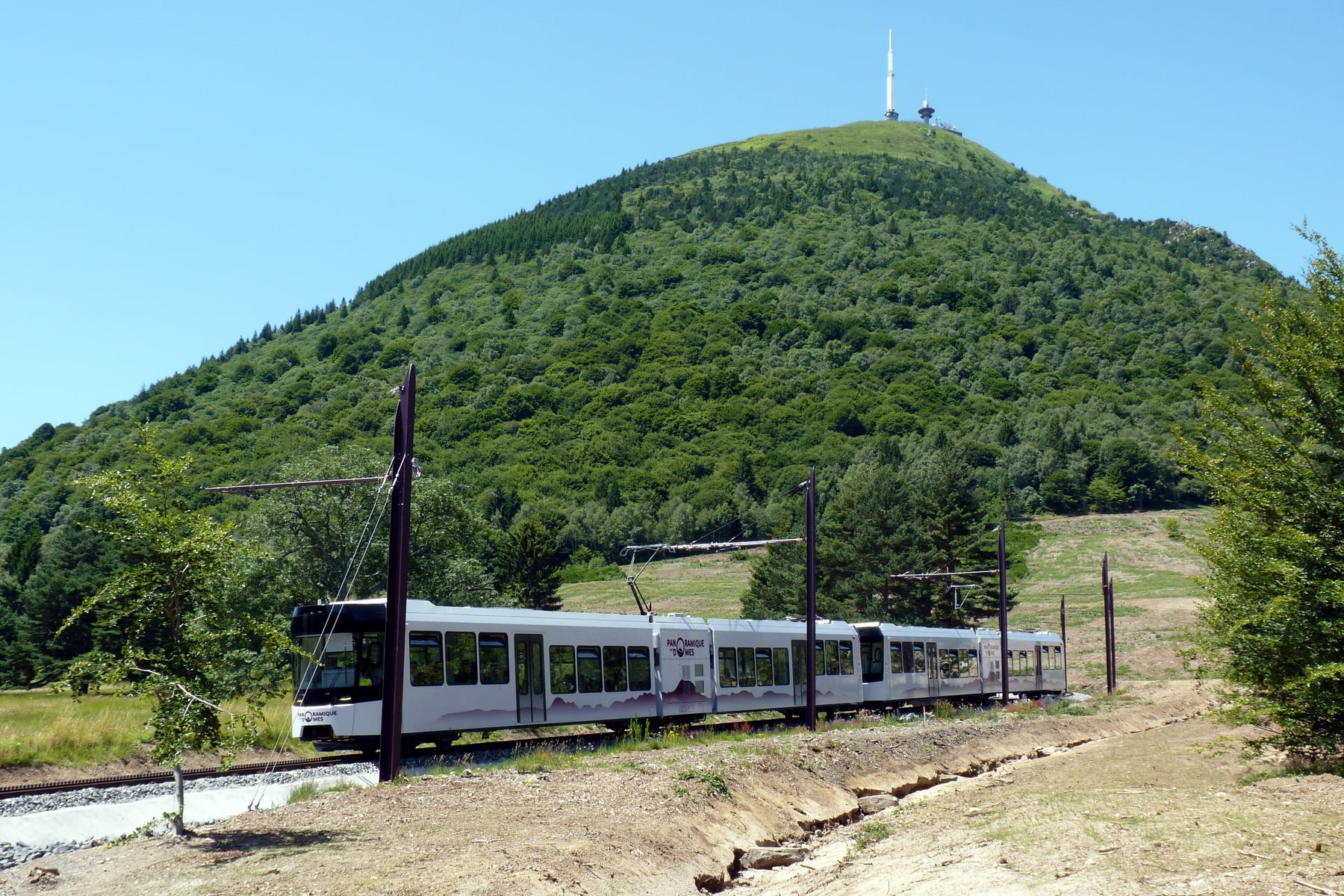
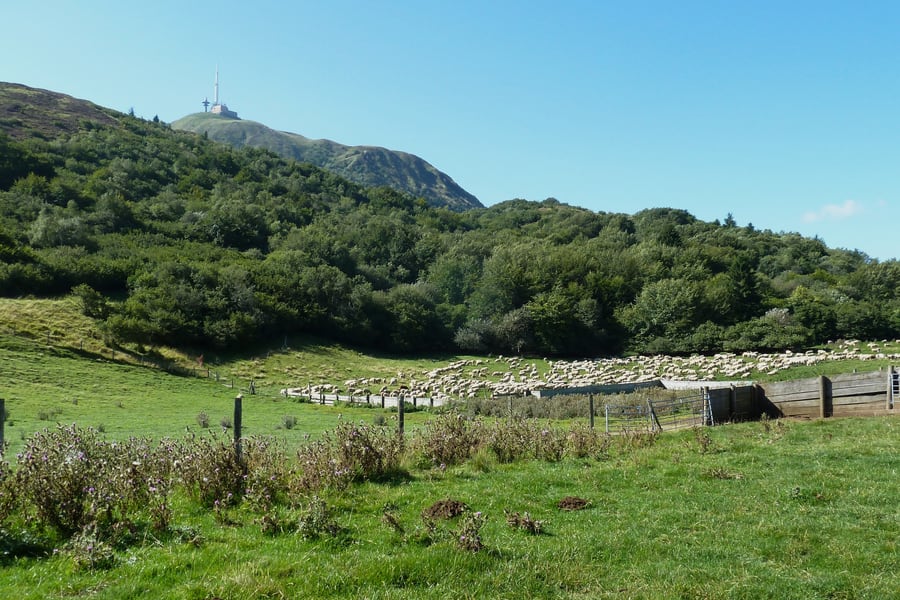
Panoramique des Dômes
Gegeours / Wikimedia Commons · CC BY-SA 3.0 · cropped
- DistanceJust over 5 km of metre-gauge rack railway
- Duration15 minutes each way; about 2 hours with the summit
- Best seasonAll year; July and August for the most trains, a clear day for the view
Introduction
The Tour de France finished on the Puy de Dôme thirteen times between 1952 and 1988. In 1964 Jacques Anquetil and Raymond Poulidor climbed it side by side, in one of the race's most famous duels. Then the Tour stayed away for 35 years. The narrow toll road to the summit closed to traffic in 2010, and the rack railway that opened in 2012 was laid on it, leaving a single lane beside the track for emergencies. Many thought the Tour could never come back. It did in July 2023, with no spectators allowed on the climb.
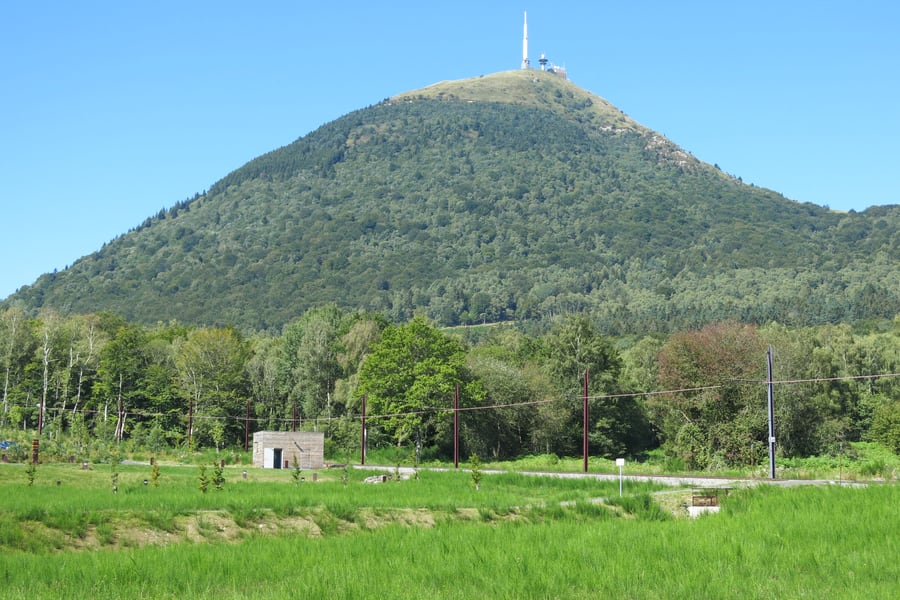
Everyone else goes up by train. The Panoramique des Dômes runs from the foot of the volcano at Orcines to the summit, 1,465 metres up, in 15 minutes. For the last stretch it follows a route that has changed hands twice: a railway reached the top in 1907, and the toll road built on its bed in 1926 replaced it.
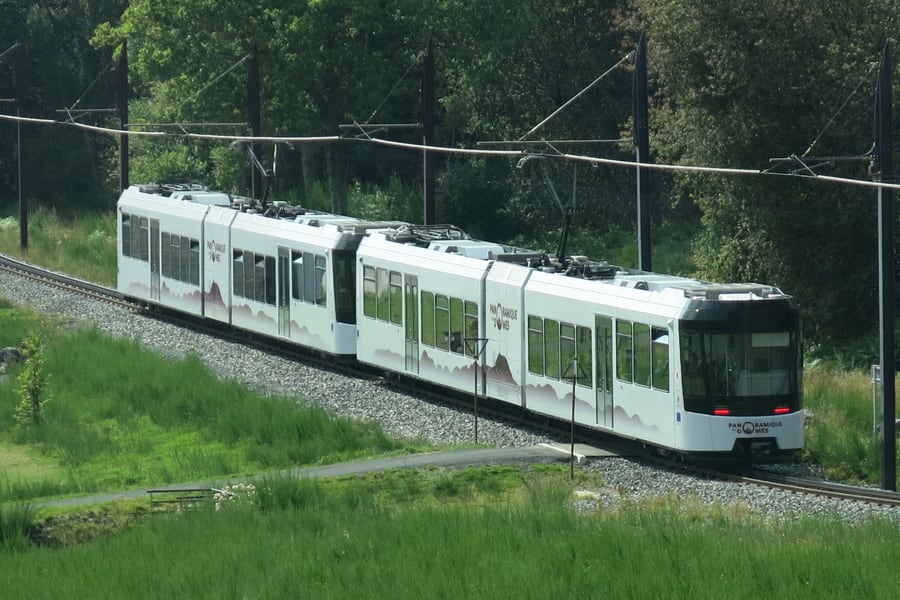
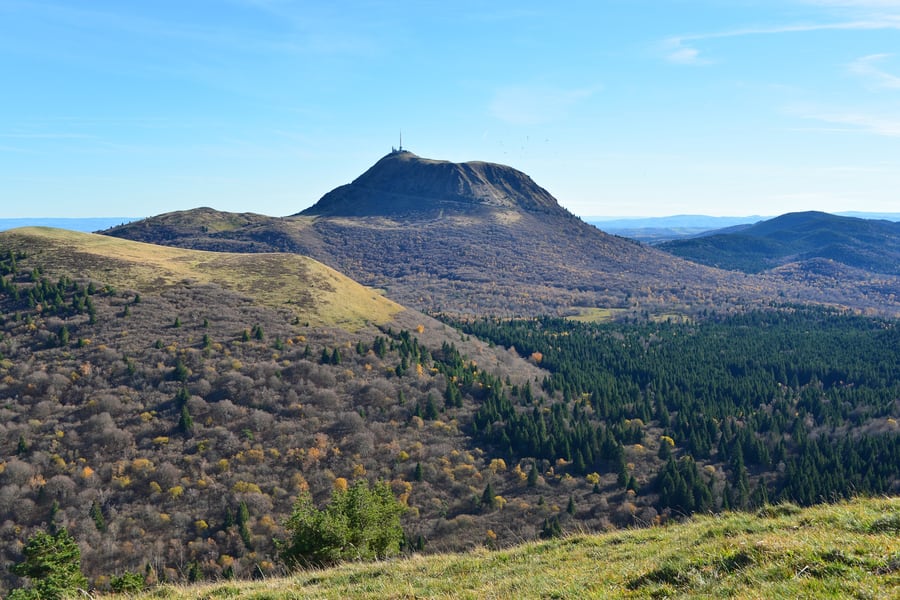
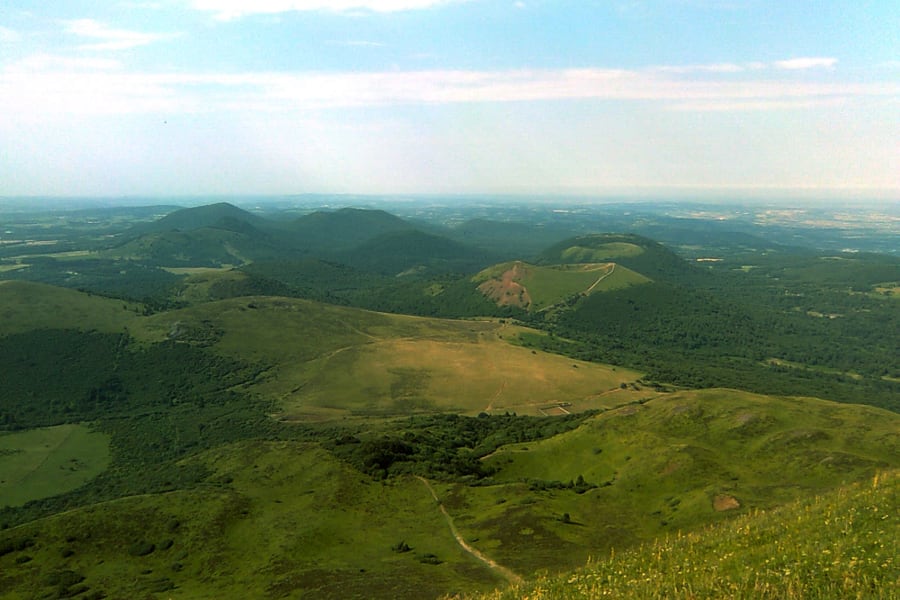
The trains are modern Swiss railcars with big windows, and they run all year round, every 20 minutes in summer. From the summit the view takes in about eighty volcanoes of the Chaîne des Puys, listed by UNESCO in 2018, with Clermont-Ferrand on the plain below and the ruins of a Roman temple to Mercury on the summit itself.
The Journey
Trains leave from the Maison de Site at Orcines, at the foot of the volcano and about 900 metres up. The station is faced in Volvic stone, the dark local lava, and holds the ticket office, a café, a shop and a free exhibition on the Chaîne des Puys and the railways of the mountain. There are about 1,000 free parking places, and the T2C bus P36 stops a few minutes' walk from the platform.
The climb
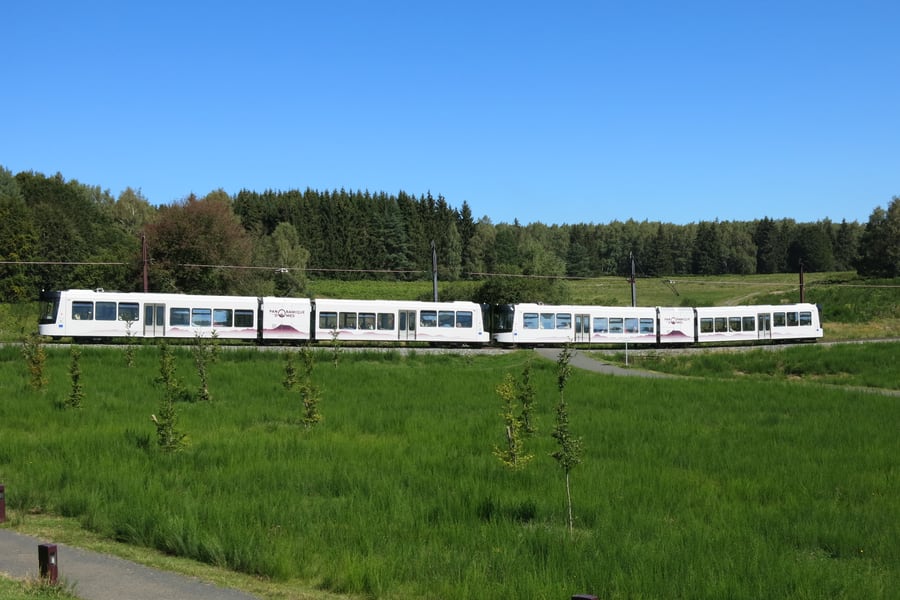
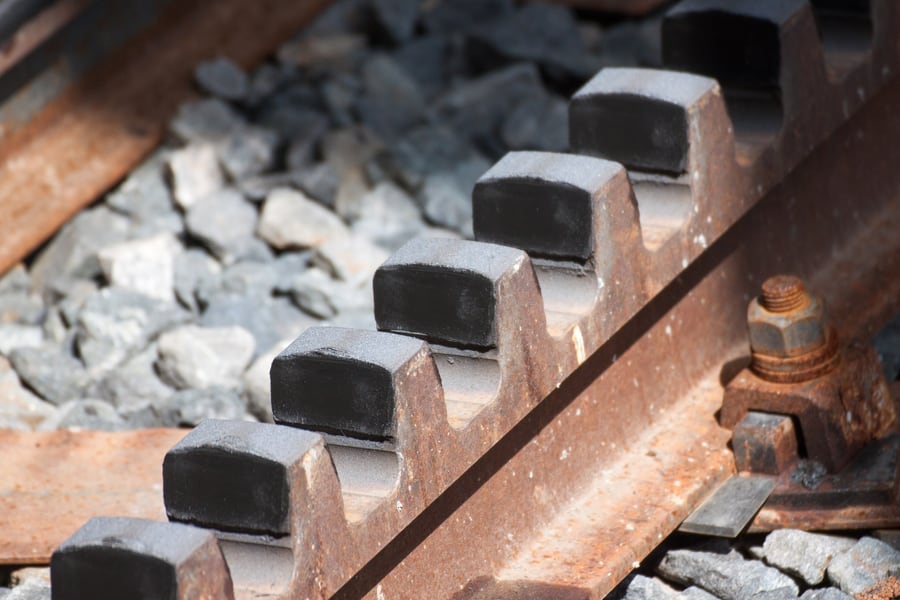
The line is single track, metre gauge and just over five kilometres long, with a Strub rack, a toothed rail down the middle of the track, on gradients of up to 15.5 per cent. The train averages 25 km/h and slows to 10 km/h through the stations and the passing loop halfway up, where the line crosses the Chemin des Muletiers, the old mule track to the summit. Two trains pass there.
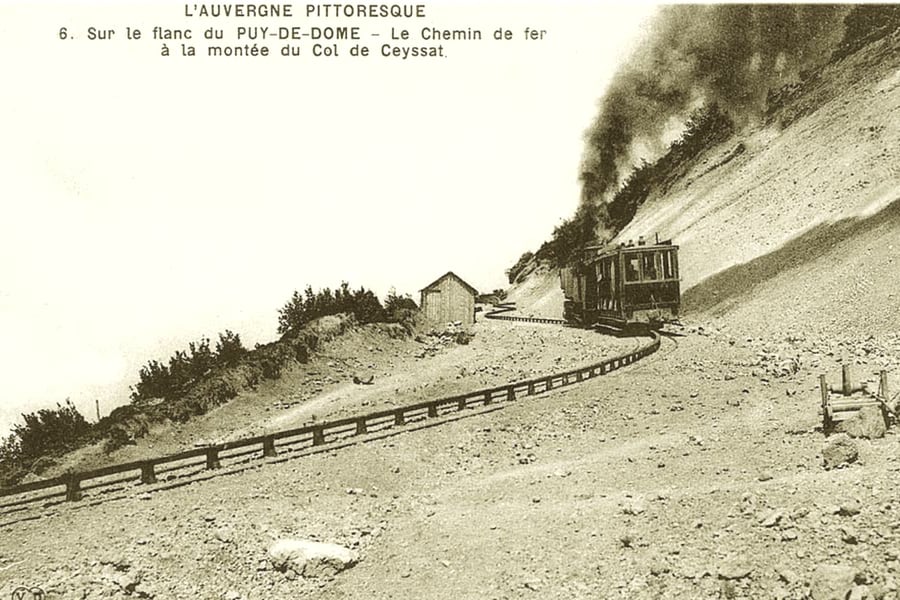
From the meadows at the foot, the line climbs through the woods to the cone and then winds round it on a ledge in the rock, with the old road beside it. That ledge is older than the road: it was cut for the railway of 1907, which climbed from Place Lamartine in Clermont-Ferrand behind steam locomotives, with help from a central rail, and took 1 hour 45 minutes for 14.8 kilometres. Motor traffic ended it in 1925, and in 1926 its bed became a toll road, which stayed open until 2010.
The views open out on the way up, over the Chaîne des Puys, the Limagne plain, Clermont-Ferrand and the Massif du Sancy. The top station is underground, so that nothing of it shows on the summit but its two entrances.
The trains
The fleet is four Stadler GTW articulated units, each with 200 places, seated and standing, and they can run in pairs to carry 400 people a trip. The same Swiss type works the Montserrat and Núria rack railways in Catalonia. Power comes from an overhead line at 1,500 volts DC, and the energy of a train braking on the way down covers about 35 per cent of the needs of one climbing.
The line opened on 26 May 2012, and the operator describes it as the last rack railway built in France to date. The opening day ended with a thunderstorm washing mud onto the track, and regular service began on 16 June.
At the top
The summit has 3 kilometres of paths, the remains of the temple of Mercury, a visitor centre, restaurants and a picnic room near the 73-metre television mast. Allow about two hours on the mountain in all. Walkers can climb the 6 kilometres from the Maison de Site in 1 hour 30 to 2 hours by the Chemin des Muletiers or the Chemin des Chèvres, and take the train for one way only.
Along the route
 Tangopaso / Wikimedia Commons · Public domain · cropped
The Maison de Site
Trains start at about 900 metres, from a station faced in dark Volvic stone at the foot of the volcano. It has the ticket office, a café, a free exhibition on the Chaîne des Puys and 1,000 free parking places.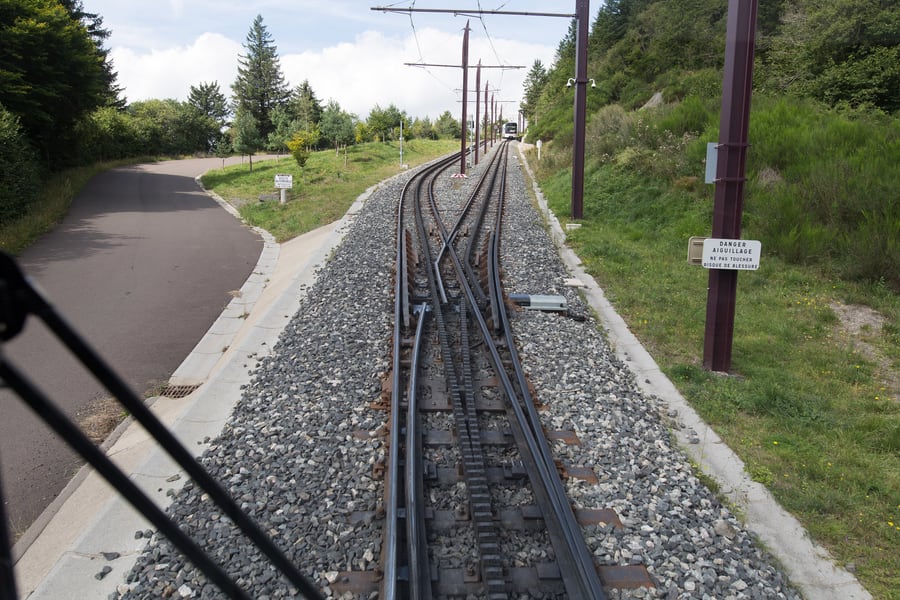 A1AA1A / Wikimedia Commons · CC BY-SA 4.0 · cropped
The Muletiers loop
Halfway up, the single track splits so that trains can pass, where the line crosses the Chemin des Muletiers, the old mule track. Walkers on it reach the summit in about an hour from the Col de Ceyssat.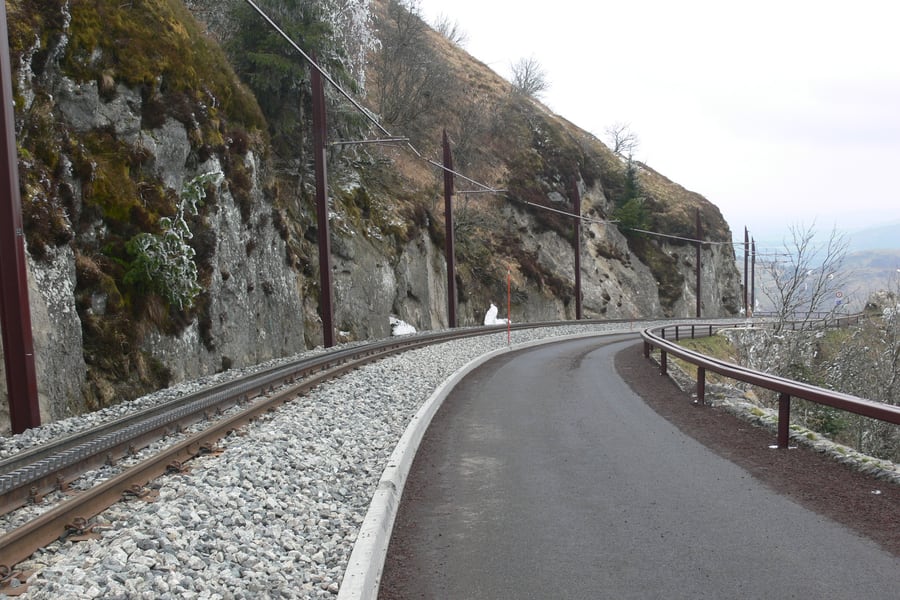 Remi Mathis / Wikimedia Commons · CC BY-SA 3.0 · cropped
The ledge round the cone
The last stretch winds round the volcano on a ledge cut for the railway of 1907. It was a toll road from 1926 to 2010; what is left of the road beside the track is now an emergency lane.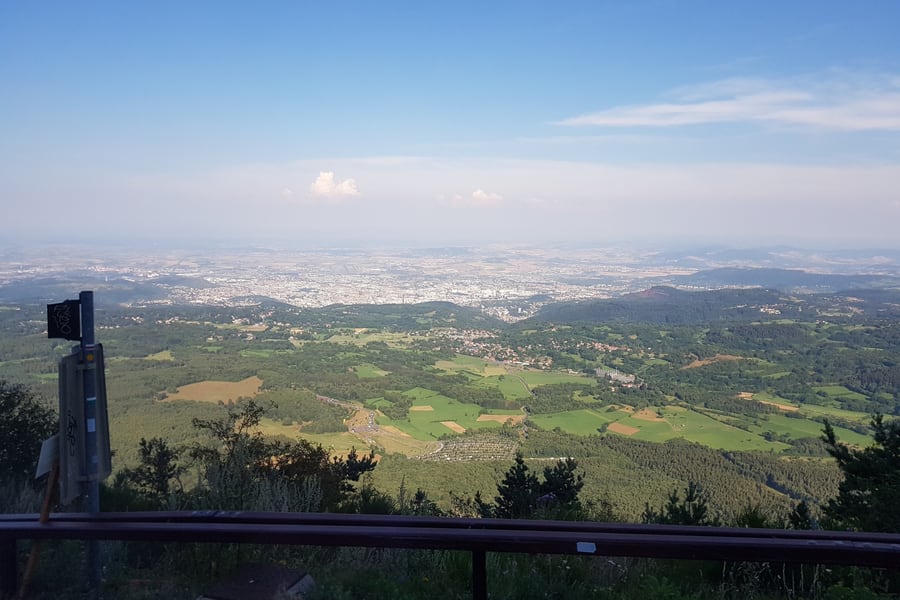 Moktarama / Wikimedia Commons · CC BY 3.0 · cropped
The summit
The top station is buried in the mountain, with only two entrances above ground. From the paths around it, Clermont-Ferrand and the Limagne plain lie spread out more than a thousand metres below.A bit of history
Culture & experiences along the way
 Fabien1309 / Wikimedia Commons · CC BY-SA 2.0 FR · cropped
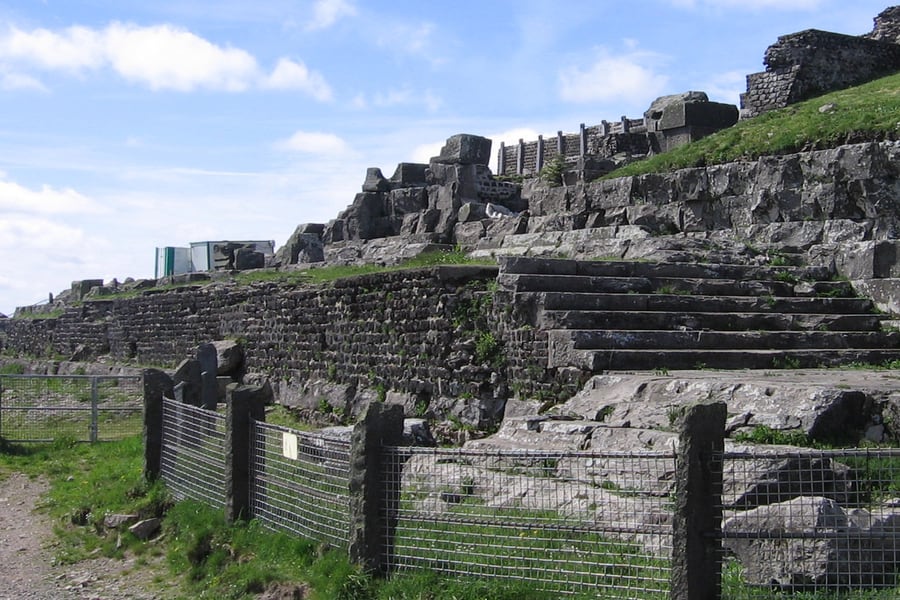
The temple of Mercury
In the second century AD the summit carried the largest mountain sanctuary in Roman Gaul, a terraced temple to Mercury reached by pilgrims from the Col de Ceyssat on the Via Agrippa. Its remains were found in 1872, when the observatory was built, and a free museum on the summit tells the pilgrims' story.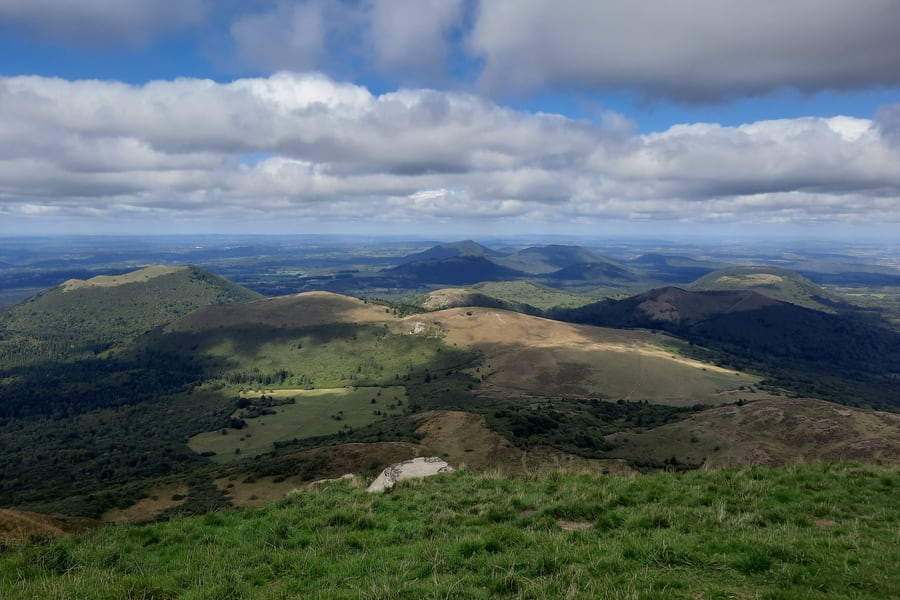 Thalia Gylonno / Wikimedia Commons · CC BY-SA 2.0 · cropped
The Chaîne des Puys
About eighty volcanoes stand in a line along the plateau, domes, cones and craters formed between 95,000 and 8,400 years ago beside the great Limagne fault. UNESCO listed them in 2018. The Puy de Dôme, the highest, is a dome of thick lava that erupted about 11,000 years ago.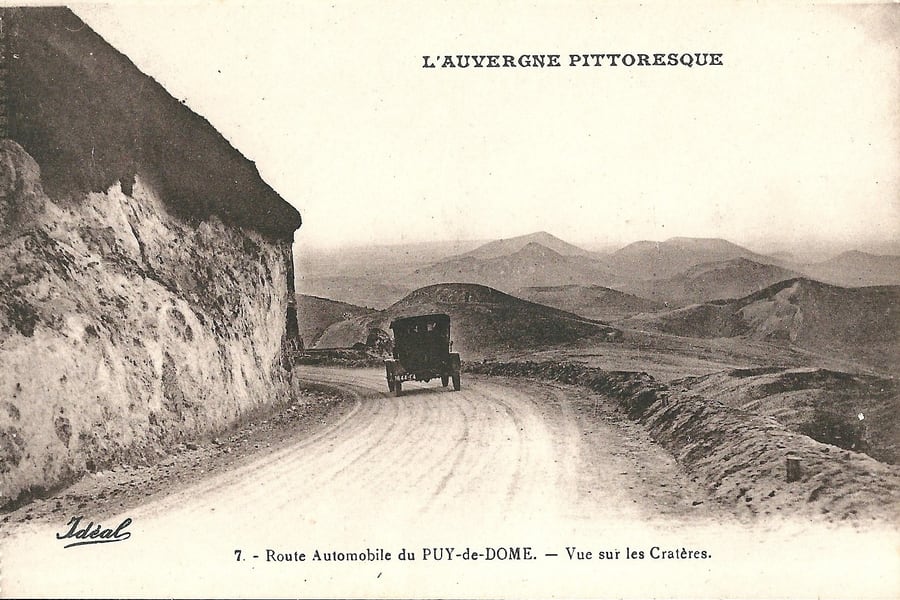 Unknown photographer / Wikimedia Commons · Public domain · cropped
The Tour de France climb
Fausto Coppi won the first Tour finish here in 1952. In 1964 Anquetil and Poulidor rode the climb side by side, and in 1975 a spectator punched Eddy Merckx on it. After 35 years away the race returned on 9 July 2023, and Michael Woods won the stage.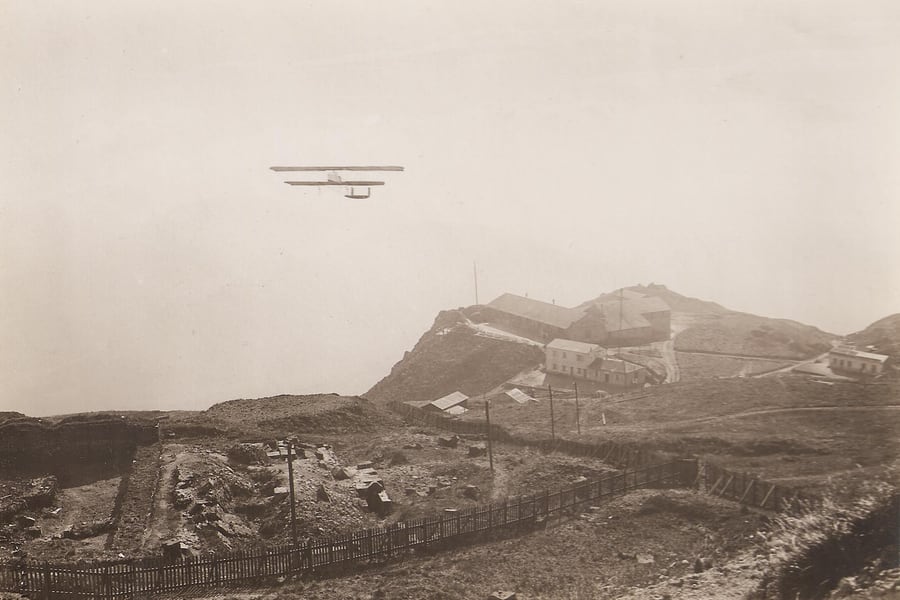 Agence Meurisse / Wikimedia Commons · Public domain · cropped
The biplane on the summit
In 1908 the Michelin brothers offered a prize for flying from Paris to the summit of the Puy de Dôme in under six hours. On 7 March 1911 Eugène Renaux and Albert Senouque landed their Farman biplane on the snow-covered top after 5 hours 10 minutes; the Maison de Site's exhibition tells the story.Timetables
The train runs all year round, on a clock-face timetable that changes with the season, and closes on some winter days. The climb takes 15 minutes. There is no need to book: a ticket is valid on any train, and a trip up and down with a visit to the summit takes about two hours.
Spring and autumn: every 40 minutes
From 28 March to 30 June and from 1 September to 1 November (2026).
| Up from the Maison de Site | Down from the summit |
|---|---|
| 09:00 | 09:20 |
| 09:40 | 10:00 |
| 10:20 | 10:40 |
| …every 40 minutes… | …every 40 minutes… |
| 18:20 | 18:40 |
| 19:00 | 19:20 |
July and August: every 20 minutes
From 1 July to 31 August, the first train up is at 09:00 and the last at 20:00, with trains down from 09:20 to 20:20. On Thursday evenings from 23 July to 20 August (2026), the Nocturnes, trains keep running until 23:40, and the evening trains must be booked.
Winter: every hour, Wednesday to Sunday
From 4 November to 18 December (2026), trains run hourly and the line is closed on Mondays and Tuesdays. It closes completely for maintenance from 16 to 20 November 2026.
| Up from the Maison de Site | Down from the summit |
|---|---|
| 10:00 | 10:30 |
| 11:00 | 11:30 |
| …every hour… | …every hour… |
| 16:00 | 16:30 |
| 17:00 | 17:30 |
Over the Christmas holidays, from 19 December 2026 to 3 January 2027, trains run every day every 30 minutes, up from 10:00 to 17:00 and down from 10:30 to 17:30. On 24 December the last train down is at 15:30, and on 25 December the line is closed. The times from 4 January 2027 are not yet published.
Times as of October 2026, from the operator's timetable and fares (opens in a new tab) page, which shows each day's pattern on a calendar.
Tickets
Tickets are sold single or return, so you can walk up and ride down, or the other way round. They are not tied to a date or a train and stay valid for a year from purchase; buy them online and go straight to the platform, or at the ticket office or the machines in both stations. Fares are a little higher from April to September. Under-fours travel free but still need a ticket, and so do dogs.
There is a reduced fare for over-62s, students, jobseekers and people with reduced mobility, and a family ticket for two adults and two young people. Card, cash and chèques vacances are accepted. Tickets are not refunded for bad weather, so check the operator's webcam first. Prices as of October 2026, from the operator.
Book your tickets
Return
€17.20–€18.60 adult · €10.10–€11.70 young · under 4 free
Up and down on any train, valid for a year from purchase.
Book Tickets (opens in a new tab, on Panoramique des Dômes)via Panoramique des DômesSingle
€14.40–€15.50 adult · €8.60–€9.90 young
One way, for walkers who climb or come down by the mule track.
Book Tickets (opens in a new tab, on Panoramique des Dômes)via Panoramique des DômesFamily return
€49.90 for two adults and two young people
The return trip for a family of four, at the same price all year.
Book Tickets (opens in a new tab, on Panoramique des Dômes)via Panoramique des DômesRail Passes
Interrail and Eurail passes are not valid on the Panoramique des Dômes. It is run by a private company under a concession from the Département du Puy-de-Dôme, and Interrail's table of railway companies does not list it, so pass holders buy an ordinary ticket.
A pass does cover the SNCF trains to Clermont-Ferrand: the TER without a reservation, and the Intercités with a reservation on some trains. From the station, the T2C bus S11 and then the P36 run to the foot of the volcano. For the Puy de Dôme alone a pass is not worth buying; the return fare is under €20, and a pass pays only as part of a longer trip through France.
Checked October 2026 against Interrail's table of railway companies (opens in a new tab).
Places to Visit
The Puy de Dôme is fifteen minutes by road from Clermont-Ferrand, and the city, its spa suburb of Royat and the volcanoes and villages of the Chaîne des Puys all fit around a morning on the summit.
 Fabien1309, MathKnight / Wikimedia Commons · CC BY-SA 4.0 · cropped
Clermont-Ferrand
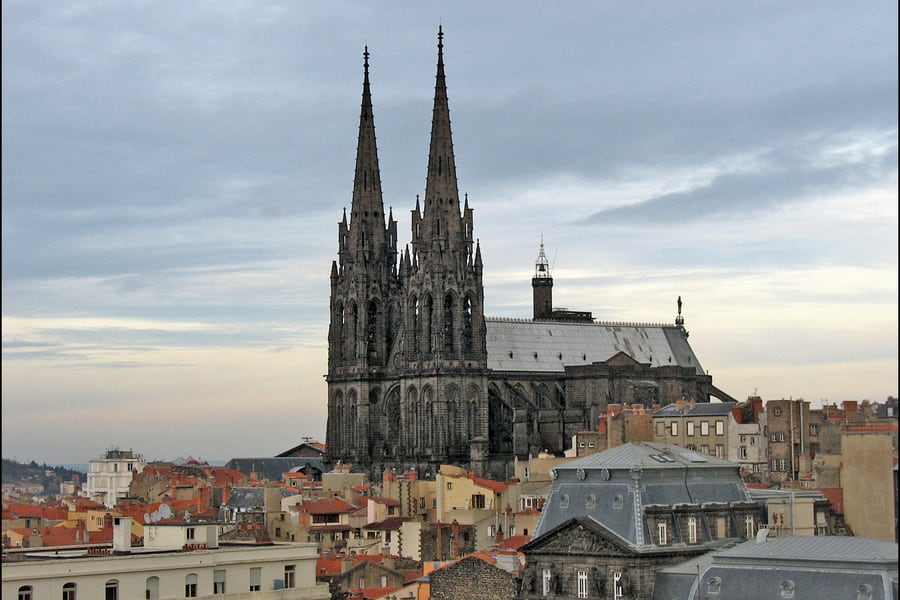
The capital of Auvergne is built round a hill crowned by its Gothic cathedral, begun in 1248 and the first building to use the dark lava stone of Volvic; Viollet-le-Duc rebuilt the west front in the nineteenth century. On the square below, a statue recalls Pope Urban II, who called the First Crusade here in 1095. Buses S11 and P36 run to the train.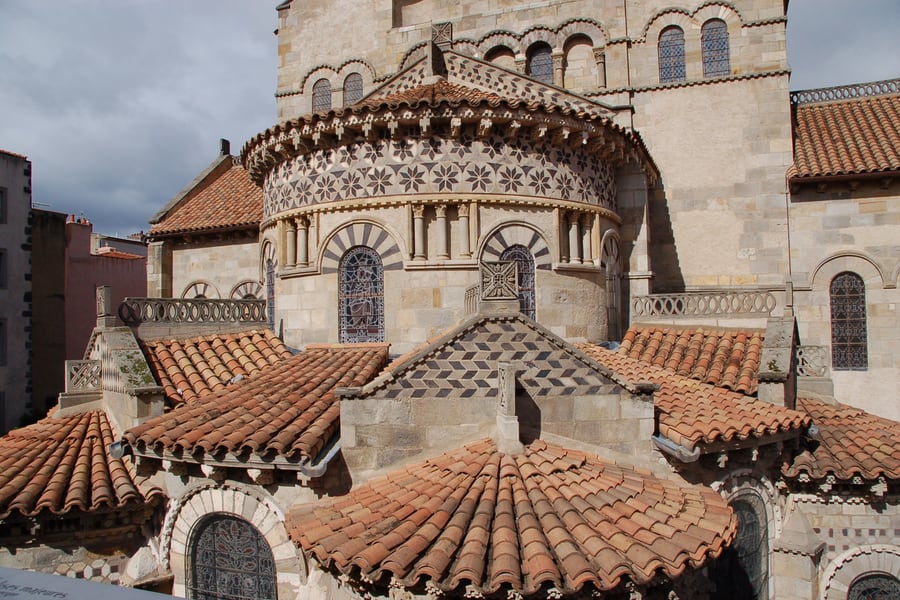 GautierPoupeau / Wikimedia Commons · CC BY-SA 3.0 · cropped
Notre-Dame-du-Port
A short walk from the cathedral, this church is built in the Romanesque style of Auvergne. Canons served it from the tenth century until the Revolution. It was on France's first list of historic monuments in 1840 and is a World Heritage Site as part of the routes to Santiago de Compostela.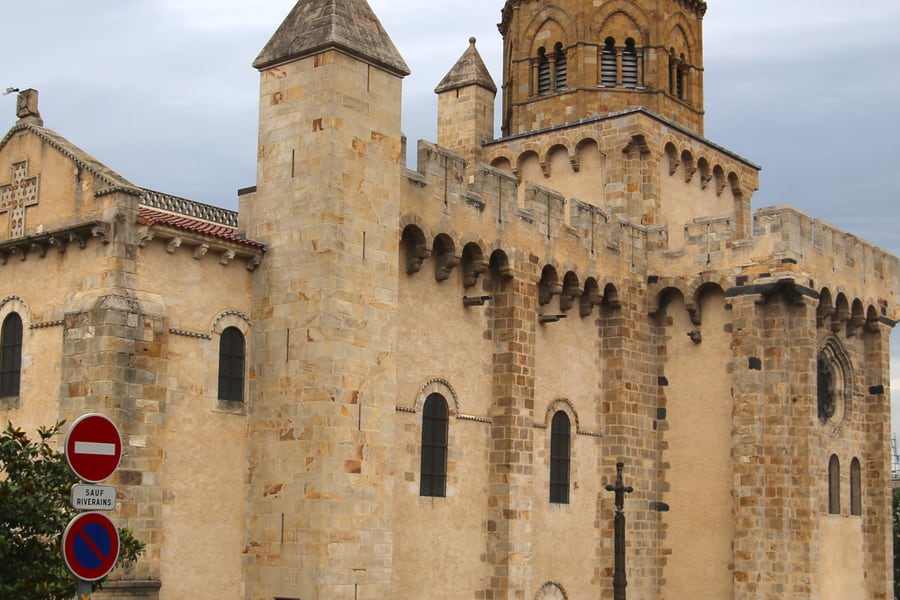 Pymouss / Wikimedia Commons · CC BY-SA 4.0 · cropped
Royat
The Romans built baths on Royat's warm springs, and the spa took off after Napoleon III and the Empress Eugénie visited in 1862. The old village keeps the church of Saint-Léger, built in the twelfth century and fortified in the fifteenth with battlements and machicolations, as if it were a castle.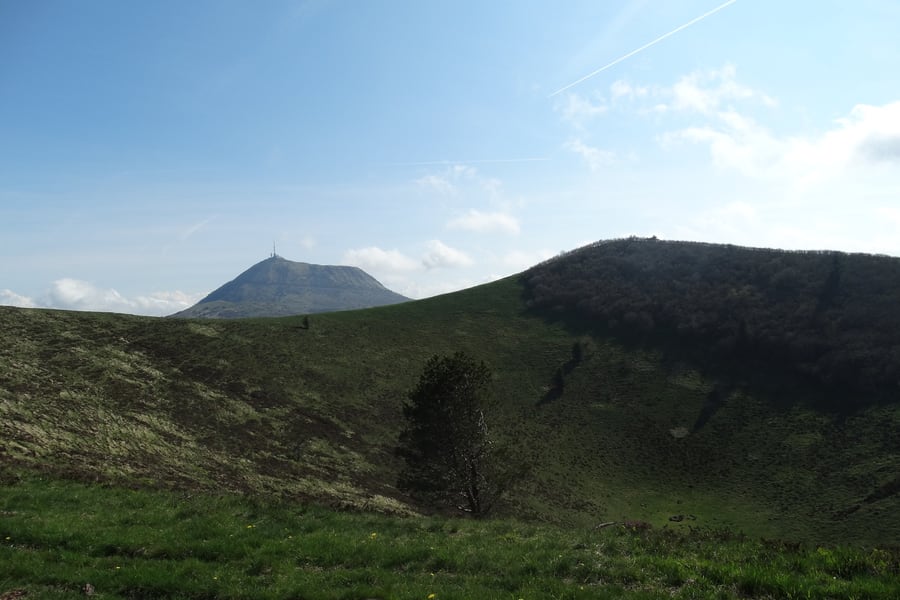 07dano29 / Wikimedia Commons · CC BY-SA 4.0 · cropped
The Puy de Pariou
Two kilometres north of the Puy de Dôme, the Pariou rises to 1,209 metres, and its newer crater is an almost perfect circle 90 metres deep and 200 metres across. A path from the car park on the D941 climbs to the rim, the last part by a stair of 555 oak steps; the volcano belongs to 95 private owners.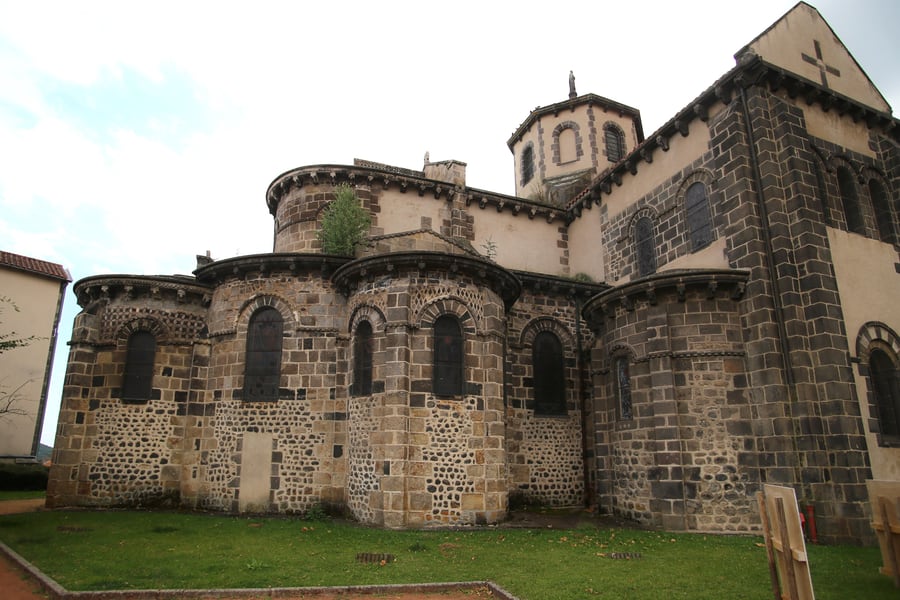 Pymouss / Wikimedia Commons · CC BY-SA 4.0 · cropped
Volvic
The gateway to the Chaîne des Puys, Volvic is known for its bottled water and for the grey to black lava stone quarried nearby. Its church of Saint-Priest stands where a monastery was founded in the seventh century; part of the Romanesque ambulatory and three radiating chapels survive from its Romanesque church.Where to Sleep
There is nowhere to stay on the summit. Orcines, around the foot of the volcano, has small hotels in the countryside; Clermont-Ferrand, with the railway station and the buses to the train, has the widest choice.
Where to stay
 Pierre André Leclercq / Wikimedia Commons · CC BY-SA 3.0 · cropped
Les Hirondelles
At Orcines, near the foot of the volcano
Thirty rooms in a former family farm, with a vaulted dining room and a veranda.
Check Availability (opens in a new tab, on hotel-leshirondelles.com)via hotel-leshirondelles.com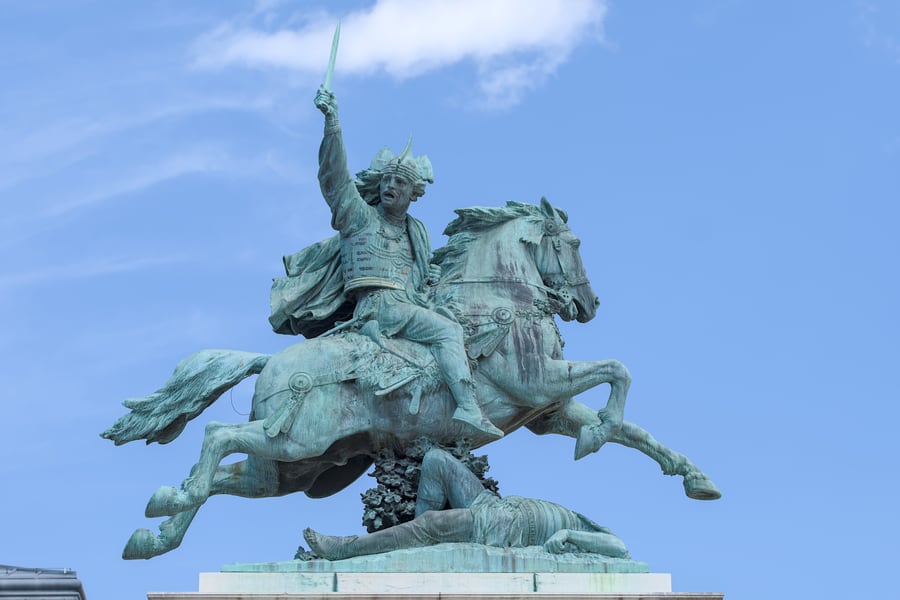 Romainbehar / Wikimedia Commons · CC0 · cropped
Le Lion
On the Place de Jaude, Clermont-Ferrand
Twenty-nine rooms with a bar and brasserie on the city's main square, facing the theatre.
Check Availability (opens in a new tab, on hotel-le-lion-clermont.fr)via hotel-le-lion-clermont.frQuestions or corrections
Planning this trip and stuck on something, or spotted a time, fare or detail that has changed? Send us a message about Panoramique des Dômes. We read every one, and we update this page when something has changed.