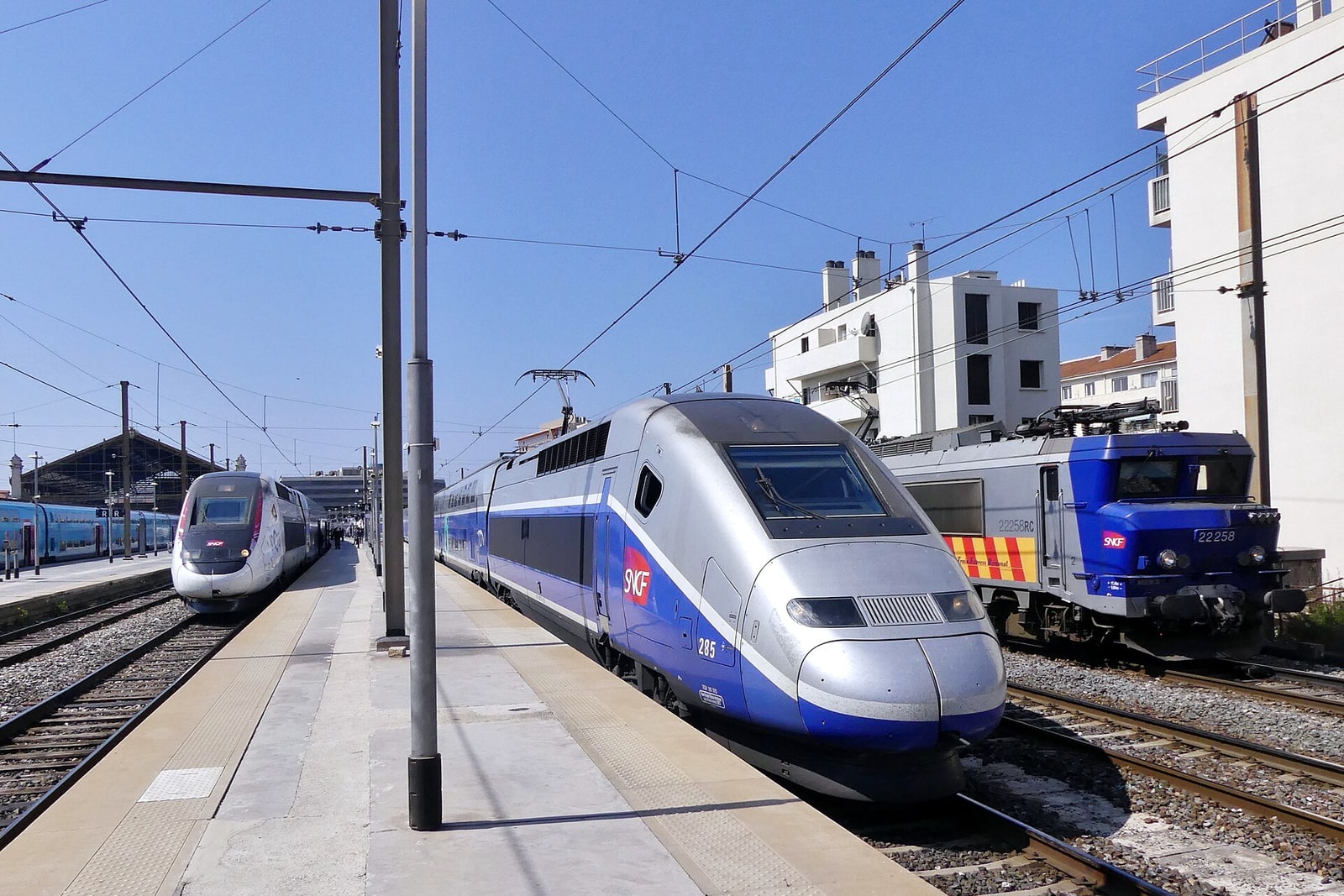
The TGV — Paris to Marseille
Florian Pépellin / Wikimedia Commons · CC BY-SA 4.0
- DistanceAbout 750 km (Paris–Marseille)
- DurationAbout 3 hours (3 h 07 at best)
- Best seasonYear-round
Introduction
When the first TGV slipped out of Paris for Lyon on 27 September 1981, it rewrote the rules of travel in France. Running on a purpose-built line at speeds no train had ever kept in regular service, it made the car and the short-haul plane look suddenly slow — and within ten months it had carried its first ten million passengers. Four decades on, the TGV network reaches almost every corner of the country, and its flagship run still points south, from the capital to the sea.
This is the Paris to Marseille journey: some 750 kilometres covered, at best, in just over three hours. The train leaves Paris-Gare-de-Lyon, races down the Rhône valley past Lyon and Avignon, then bursts out across the sunlit viaducts of Provence to finish under the great iron roof of Marseille-Saint-Charles, high above the old port.
It is not a slow, scenic mountain line — it is the opposite, and that is the point. To board a double-deck TGV in grey Paris and step out three hours later into the light and heat of the Mediterranean is one of the small miracles of modern European travel.
The Journey
The journey begins at Paris-Gare-de-Lyon, the grand old gateway to the south, where the double-deck TGVs line the platforms beneath the departure boards. Pull away and the city unspools quickly; within minutes you are on the LGV Sud-Est, France's original high-speed line of 1981, holding 300 km/h across the rolling farmland of Burgundy.
The line skirts Lyon and drops into the Rhône valley, the great corridor south, with the river on one side and the first hints of the Midi — cypress, red tile, bare limestone hills — gathering outside the window. At Valence the train joins the newest stretch, the LGV Méditerranée of 2001, and winds up to its full 320 km/h.
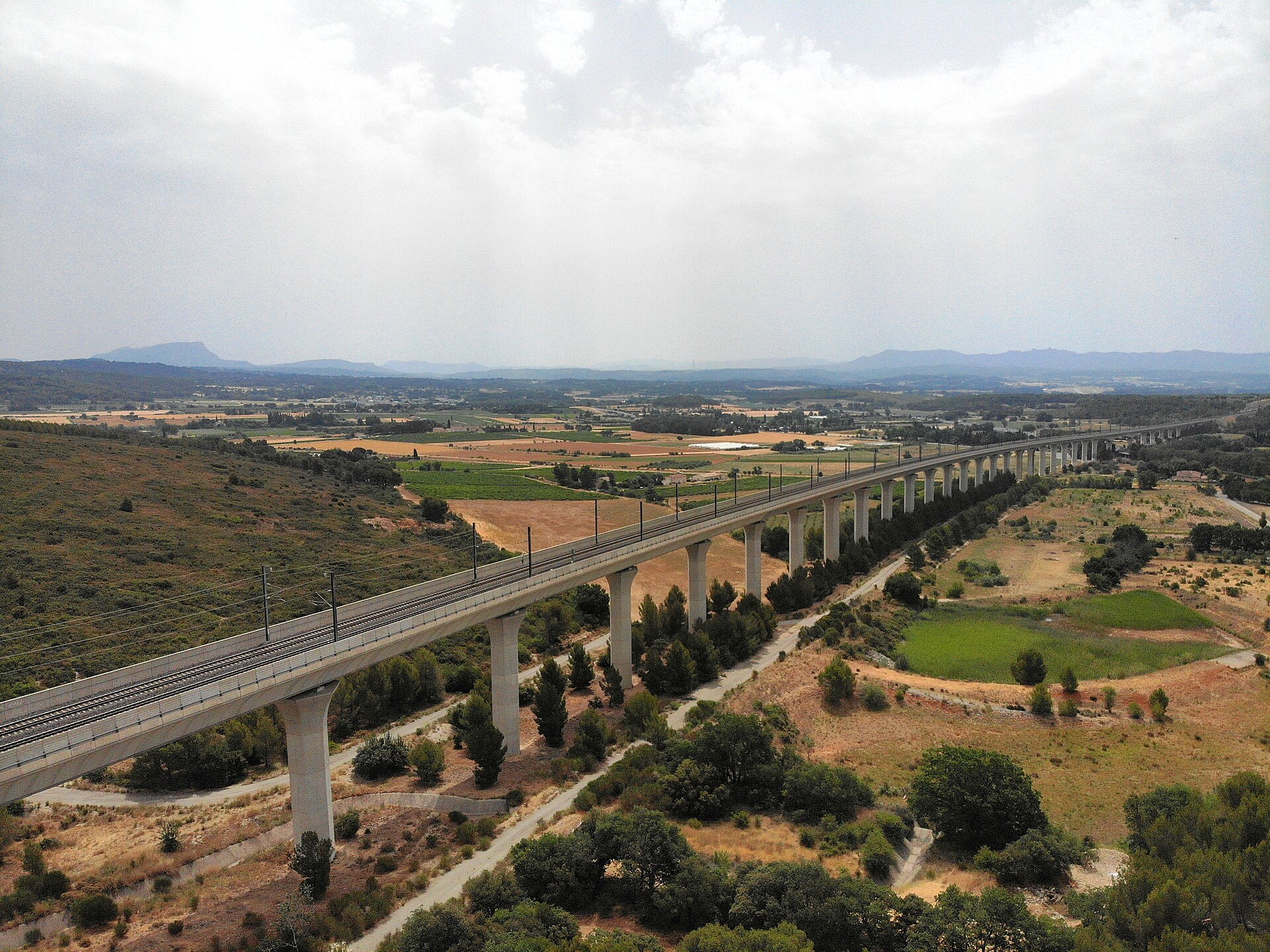
Then Provence arrives all at once. South of Valence the line launches across the landscape on a run of soaring white viaducts — the longest at Ventabren, striding over motorway, road and canal — with the limestone ridges of the Alpilles and the hills around Aix on the skyline. It calls at Avignon TGV and Aix-en-Provence TGV, then plunges into the Tunnel de Marseille — at 7.8 km, the longest railway tunnel wholly in France — to surface in the city itself.
What makes the run remarkable is the sheer compression of it all:
- ~750 km from Paris to Marseille, the fastest trains doing it in about 3 hours 7 minutes.
- Two generations of high-speed line back to back — the LGV Sud-Est (1981) and the LGV Méditerranée (2001) — at up to 320 km/h.
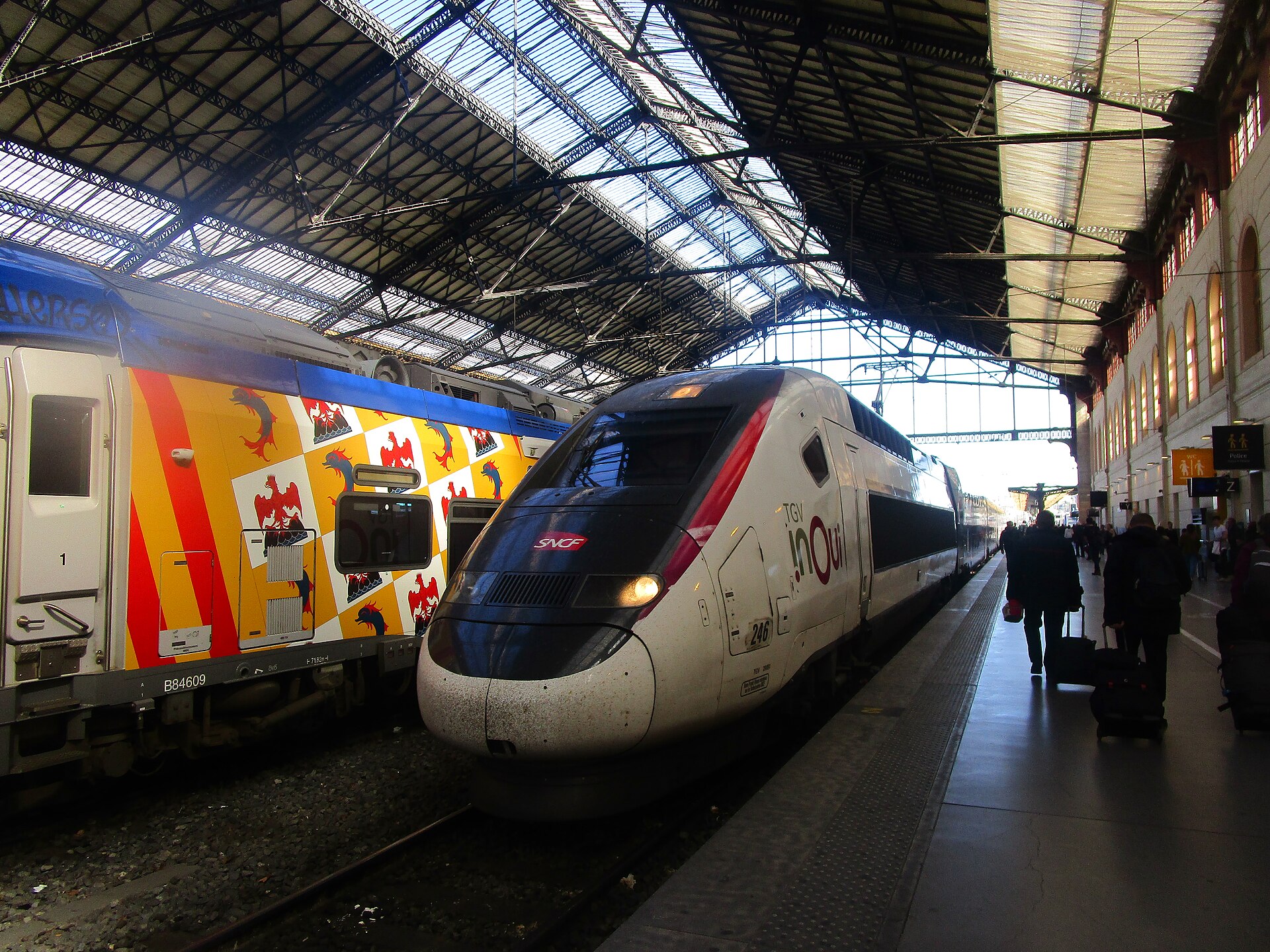
- Double-deck TGV Duplex trains, the mainstay of the route, now in TGV inOui colours, with the new TGV M arriving from 2026.
- A finish under the great iron trainshed of Marseille-Saint-Charles, on its terrace above the Vieux-Port.
You barely feel the speed — and that, more than anything, is the wonder of it.
Along the route
Chabe01 / Wikimedia Commons · CC BY-SA 4.0The world's fastest wheels
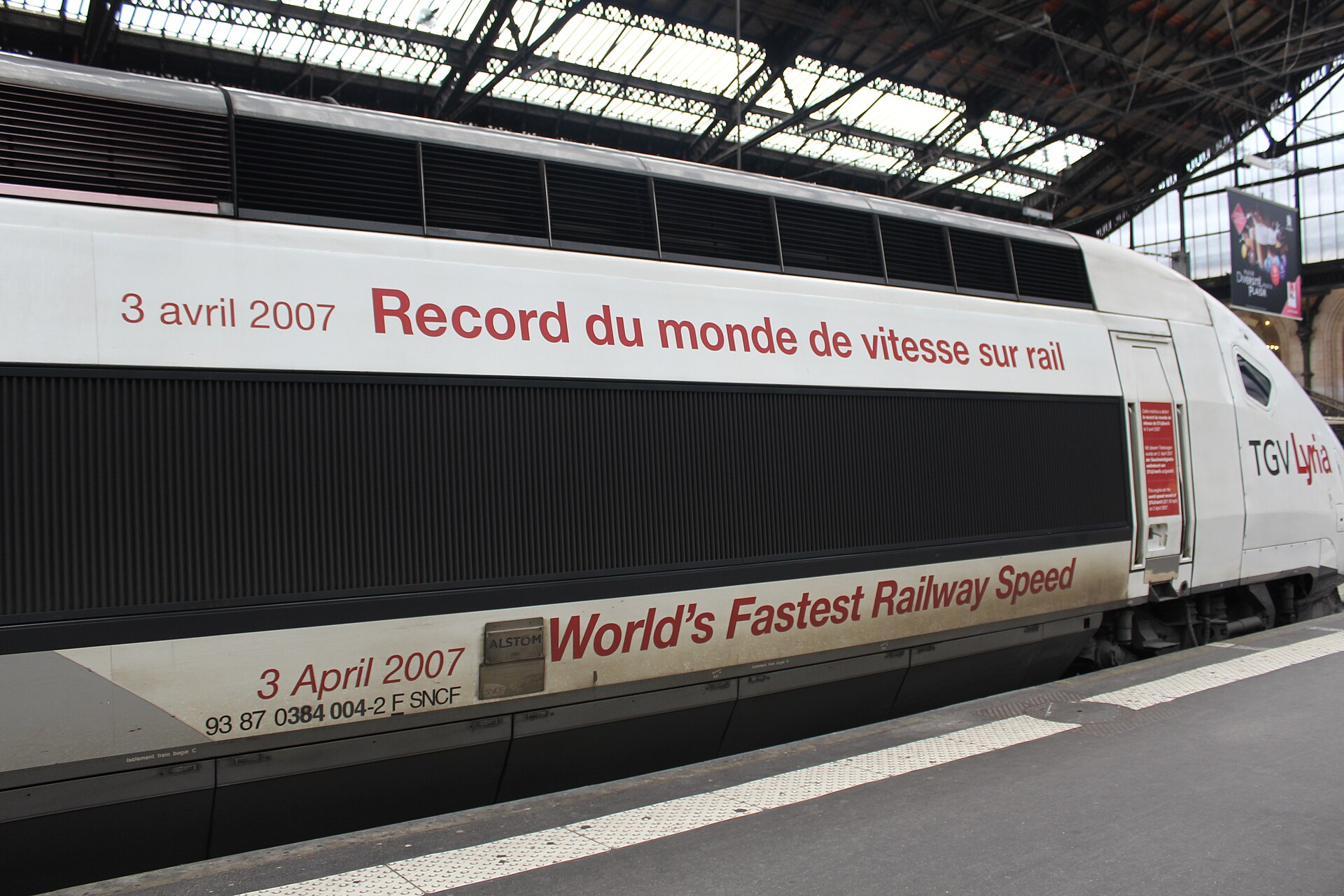
France holds the world rail speed record for a conventional train: on 3 April 2007 a specially prepared TGV, the V150, touched 574.8 km/h on the brand-new LGV Est. Everyday services are tamer — a mere 320 km/h — but the pedigree is in every train you board.Olivier Cleynen / Wikimedia Commons · CC BY 4.0Across Provence on stilts
South of Valence the LGV Méditerranée throws itself across the sunlit country of Provence on a series of soaring white viaducts — the longest at Ventabren striding over motorway, road and canal — before diving into France's longest railway tunnel to reach the sea.Florian Pépellin / Wikimedia Commons · CC BY-SA 4.0Marseille-Saint-Charles
The line ends under the grand iron roof of Marseille-Saint-Charles, high on its terrace above the old port — walk down the monumental staircase and the Mediterranean, the Vieux-Port and the calanques are all at your feet.A bit of history
Culture & experiences along the way
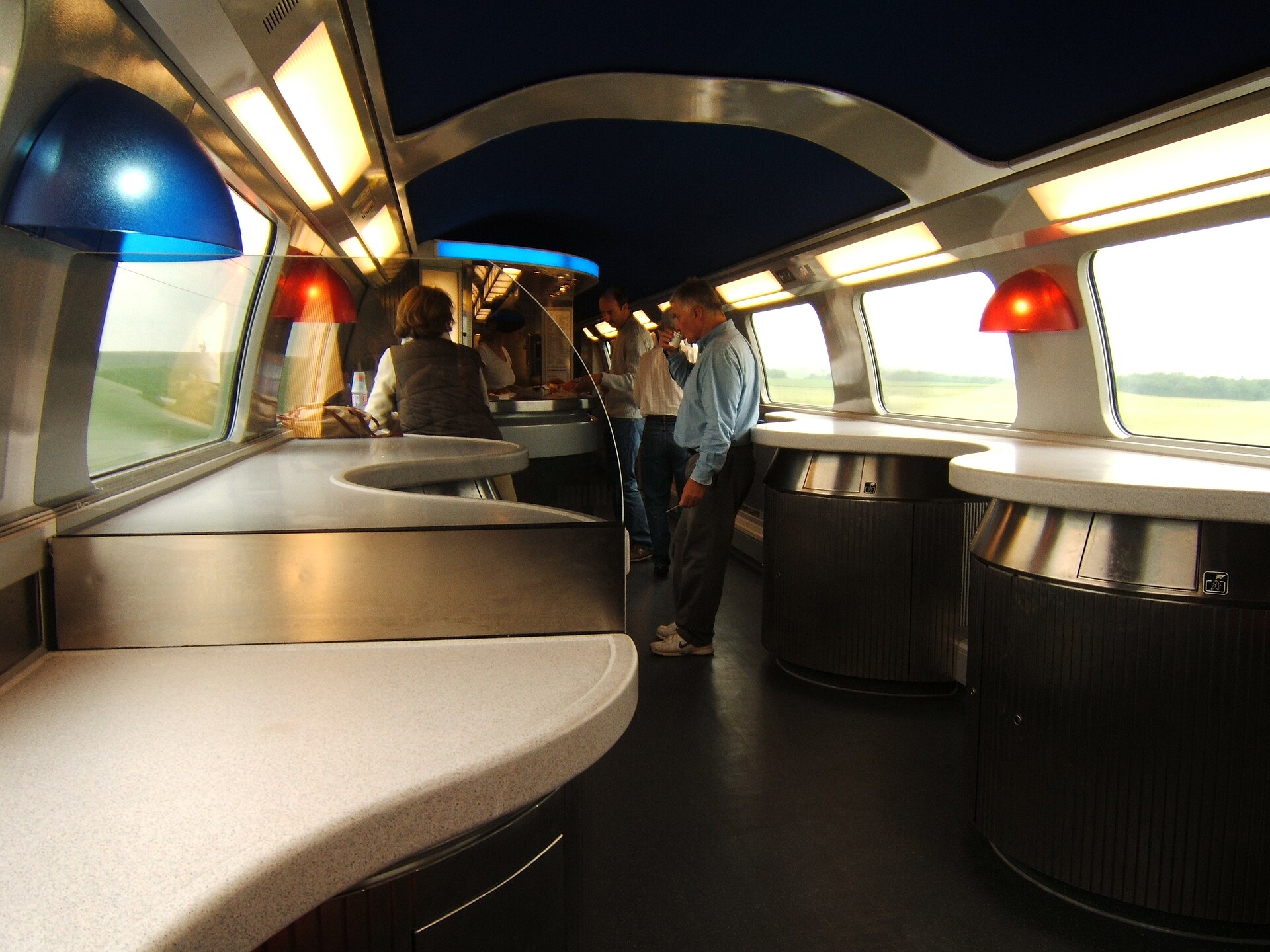
Smiley.toerist / Wikimedia Commons · CC BY-SA 3.0Up top on the Duplex
The Paris–Marseille trains are double-deckers — the TGV Duplex. Book a seat on the upper deck for the long views out over the vineyards, and wander down to the curved buffet-bar car for a coffee while the country streams past at five kilometres a minute.Alaric Favier / Wikimedia Commons · CC BY-SA 3.0Lunch in Paris, dinner by the sea
The magic of the TGV is what it does to distance. Leave Paris-Gare-de-Lyon after lunch and you are among the olive groves and red roofs of Provence by tea — a whole change of climate, light and food folded into a single afternoon.Florianol45 / Wikimedia Commons · CC BY-SA 4.0320 km/h in silence
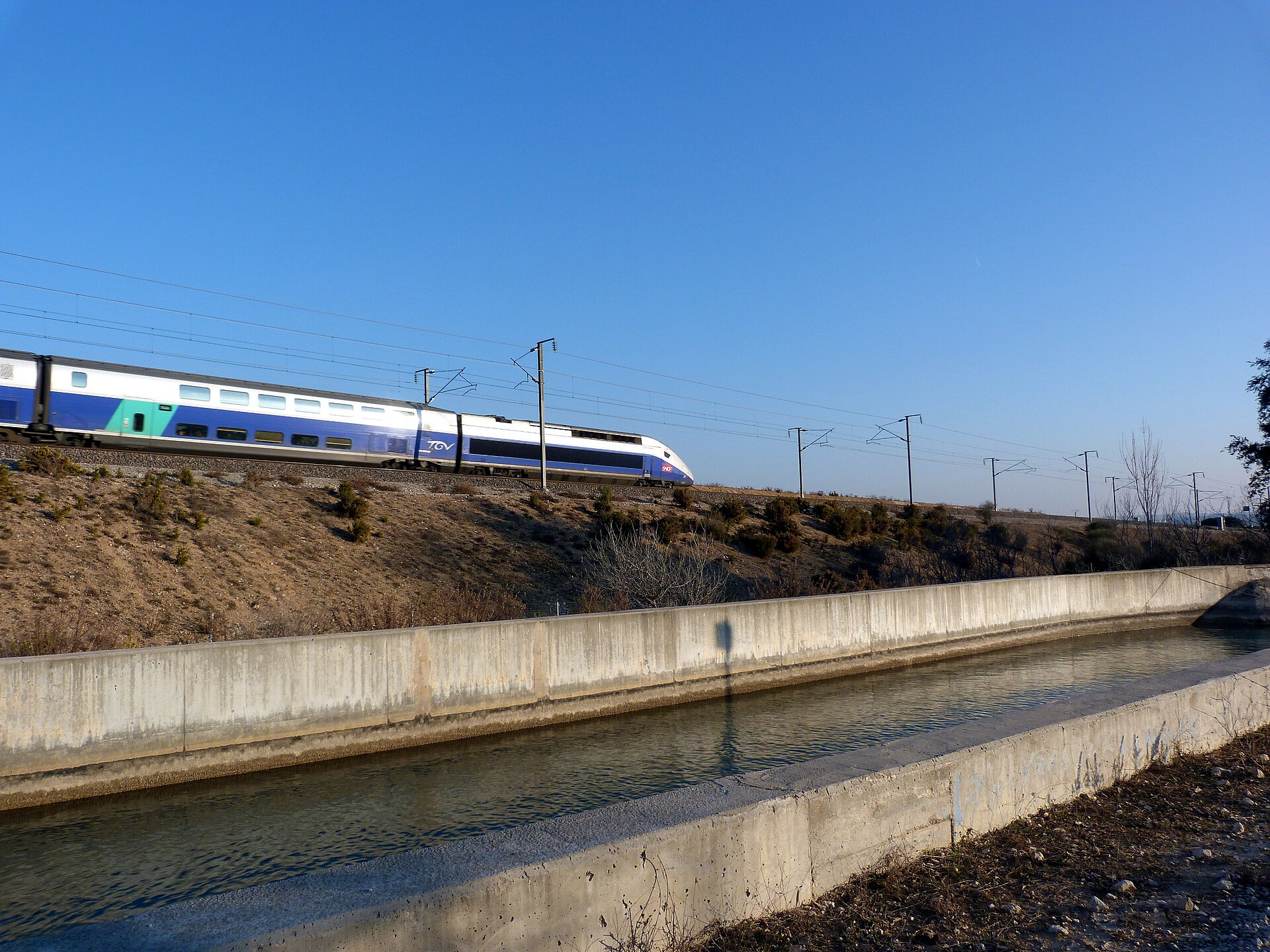
Today's trains wear the grey-and-pink of TGV inOui, and the newest — the TGV M — are arriving in 2026. What has not changed is the feeling: a big, smooth machine holding 320 km/h so quietly that the speed only shows in how fast the pylons flick by.Timetables
TGVs run between Paris and Marseille roughly every hour through the day — about 26 trains a day — so you rarely need to build a trip around a single departure. The first leaves Paris Gare de Lyon around 06:03 and the last around 21:25. Most are direct; a few continue along the coast to Toulon and Nice, and some start from other Paris stations, so check that yours leaves from Gare de Lyon.
Journey times depend on how many stops a train makes:
| Service | Calls | Paris → Marseille |
|---|---|---|
| Fastest | Non-stop or one stop | ~3 h 04 |
| Standard | Lyon, Avignon, Aix | ~3 h 30 |
Every TGV is fully reserved — there are no turn-up-and-go seats — so you travel on a specific train at a specific time. That also means fares are cheapest booked well in advance and climb as departure nears and the cheap seats sell out. The route is served by TGV inOui and low-cost Ouigo.
First/last and frequency as of the 2026 timetable; SNCF changes its schedule twice a year. Confirm current times and book — see the Tickets section below.
Tickets
TGV fares are fully reserved and dynamically priced: there is one price when booking opens (usually a few months out) and it rises as seats sell, so the golden rule is simple — book early. A Paris–Marseille ticket bought weeks ahead can cost a fraction of the walk-up fare.
There are two classes aboard. Second class is comfortable and perfectly pleasant for three hours; First class (Première) buys wider two-and-one seating, more quiet and more space, often for surprisingly little when booked early. On the double-deck Duplex trains it is worth asking for an upper-deck seat either way, for the view. Rail-pass holders (Interrail and Eurail) travel on the TGV too, but still need a paid seat reservation.
The options below link to SNCF Connect, the national booking site. Fares checked July 2026 against the operator's English site (opens in a new tab).
Book your tickets
Paris to Marseille
The full high-speed run
The complete dash from Paris-Gare-de-Lyon to Marseille-Saint-Charles in a little over three hours. A reserved TGV inOui fare — cheapest booked well ahead, and a bargain for the fastest way to the Mediterranean.
Book Tickets (opens in a new tab, on SNCF (TGV inOui))via SNCF (TGV inOui)Paris to Provence
Avignon & Aix-en-Provence
Bound for the heart of Provence rather than the coast? The same trains reach Avignon in about two and a half hours and Aix-en-Provence TGV soon after — the perfect springboard for the Luberon, the Camargue and the Rhône vineyards.
Book Tickets (opens in a new tab, on SNCF (TGV inOui))via SNCF (TGV inOui)Rail Passes
Interrail passes are valid, with a paid reservation. Interrail's table of railway companies lists SNCF's TGV INOUI and OUIGO high-speed trains as included in France. Reservations are compulsory on both and cost pass holders €10–20, in either class on TGV INOUI. OUIGO has one class and includes a large suitcase; its reservation reaches you by email four days before departure.
Whether a pass pays depends on when you book. Weigh a pass travel day plus the €10–20 reservation against the fare SNCF quotes for your date: well ahead, the ticket often wins; close to departure, when fares are high, the pass usually does. A pass also pays when Marseille is one stop on a longer trip.
Checked October 2026 against interrail.com (opens in a new tab), Interrail's France page (opens in a new tab) and its reservation fees (opens in a new tab).
Places to Visit
The joy of this line is that both ends — and the stops between — are among the great destinations of France, so it is easy to turn a fast journey into a slow holiday. From Marseille at the southern end the whole coast opens up: Cassis, Toulon and the Côte d'Azur are all an easy onward hop by train.
 simon tunstall / Wikimedia Commons · CC BY 3.0 · cropped
Paris
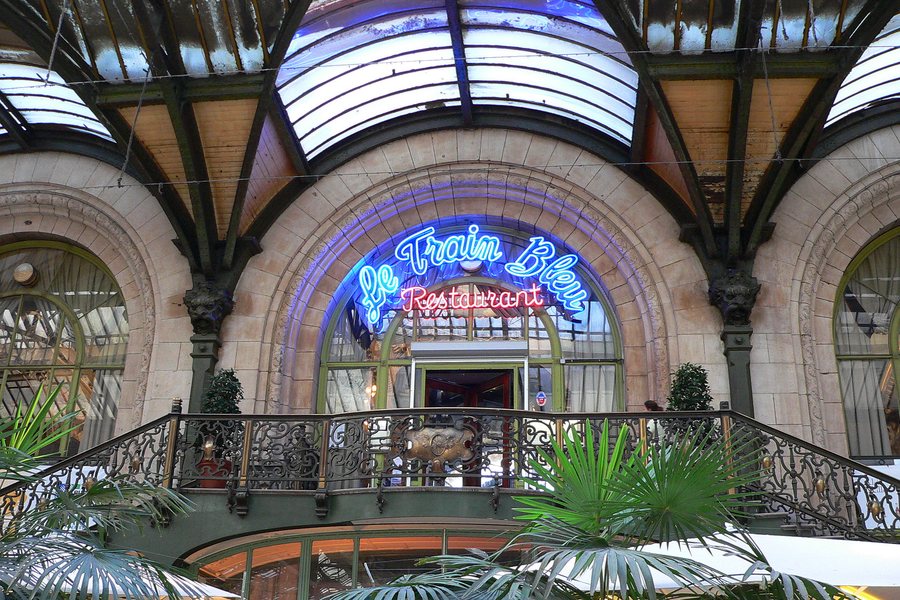
Needs no introduction, and deserves days rather than hours. What it does deserve on this particular journey is arriving early at Gare de Lyon: Le Train Bleu, the Belle-Époque station buffet of 1900, is up the stairs off the concourse and is worth a plate and a glass before you board.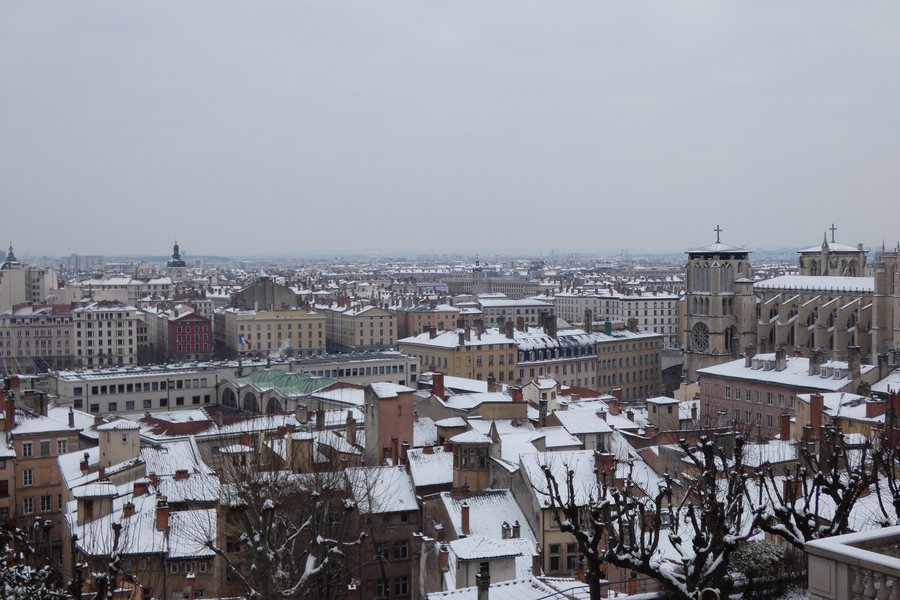 Romainbehar / Wikimedia Commons · CC0 · cropped
Lyon
France's gastronomic capital, and the most tempting reason to break the run south. A Renaissance old town below Fourvière, the covered passageways called traboules threaded through it, and the bouchons — small, loud, meat-heavy restaurants that are the city's own institution.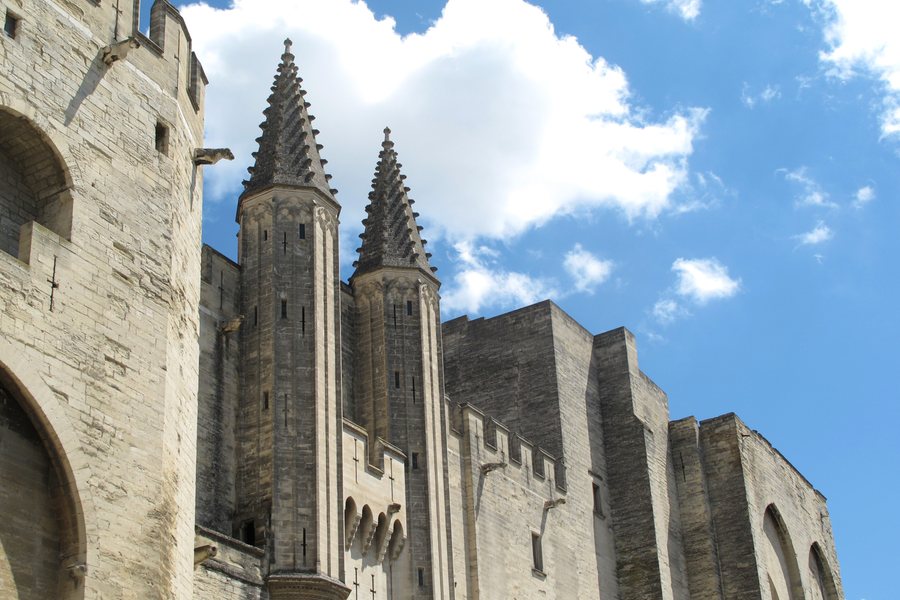 Acediscovery / Wikimedia Commons · CC BY 4.0 · cropped
Avignon
The walled city of the Popes, whose enormous fourteenth-century palace still dominates everything around it, along with the broken bridge of the song. It is the natural jumping -off point for the Rhône vineyards and the Luberon.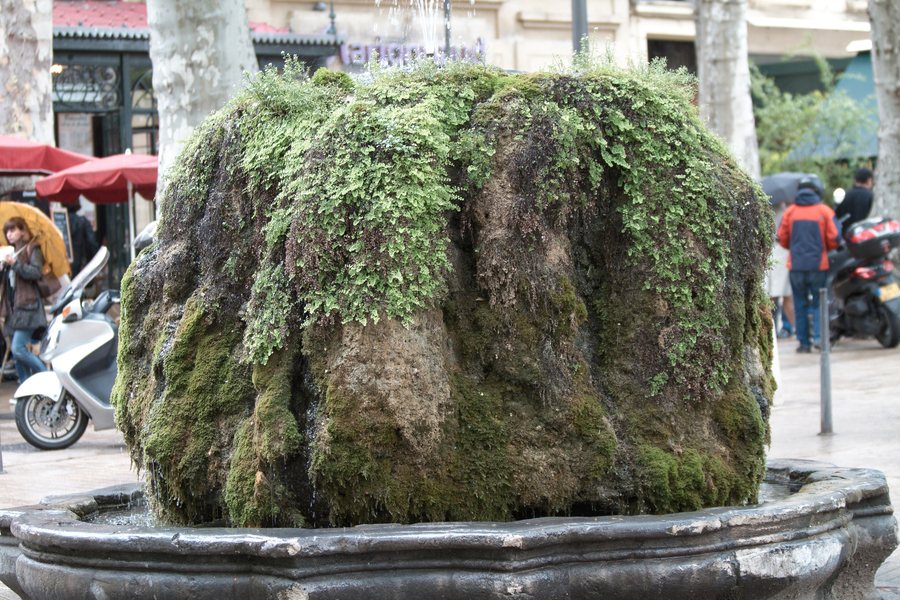 Georges Seguin (Okki) / Wikimedia Commons · CC BY-SA 3.0 · cropped
Aix-en-Provence
Honey-coloured, shaded by plane trees and full of fountains — including the mossy hot spring on the Cours Mirabeau that has been quietly steaming since the eighteenth century. Mont Sainte-Victoire, which Cézanne painted over and over, stands just beyond the town.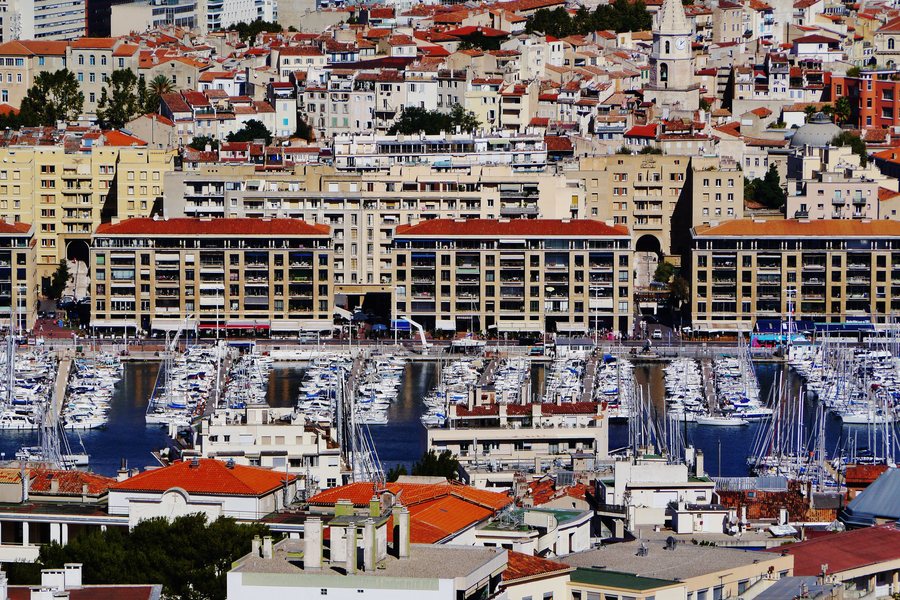 Zairon / Wikimedia Commons · CC BY-SA 4.0 · cropped
Marseille
France's oldest city and its most vivid: the Vieux-Port with the fish market on the quay, Notre-Dame-de-la-Garde looking down on the lot of it, the MuCEM out on the breakwater, and boats to the calanques and the Château d'If. From here the whole coast opens up — Cassis, Toulon, the Côte d'Azur — all an easy onward hop by train.Where to Sleep
Because the line links two of France's greatest cities, where you sleep is mostly a question of which end you want to wake up in. Paris offers everything from tiny Left-Bank hotels to grand palaces, with Gare-de-Lyon itself well placed for an early southbound train. At the far end, Marseille ranges from stylish boutique hotels around the Vieux-Port to rooms up in Le Panier, the old quarter, and smart addresses out towards the calanques. In between, Lyon, Avignon and Aix-en-Provence all make lovely overnight stops — Lyon for its restaurants, Avignon for its ramparts, Aix for its fountains and café life. Wherever you land, the TGV makes it painless to string several together: a night in each, and the whole south of France laid out along a single fast line. Book ahead for summer and for the big festivals — Avignon in July, above all — when rooms along the route fill fast.
Questions or corrections
Planning this trip and stuck on something, or spotted a time, fare or detail that has changed? Send us a message about The TGV — Paris to Marseille. We read every one, and we update this page when something has changed.