The La Mure Railway
Archangel12 / Wikimedia Commons · CC BY 2.0
- Distance30 km line · upper half in service
- Duration50 min each way
- Best seasonLate spring–autumn
Introduction
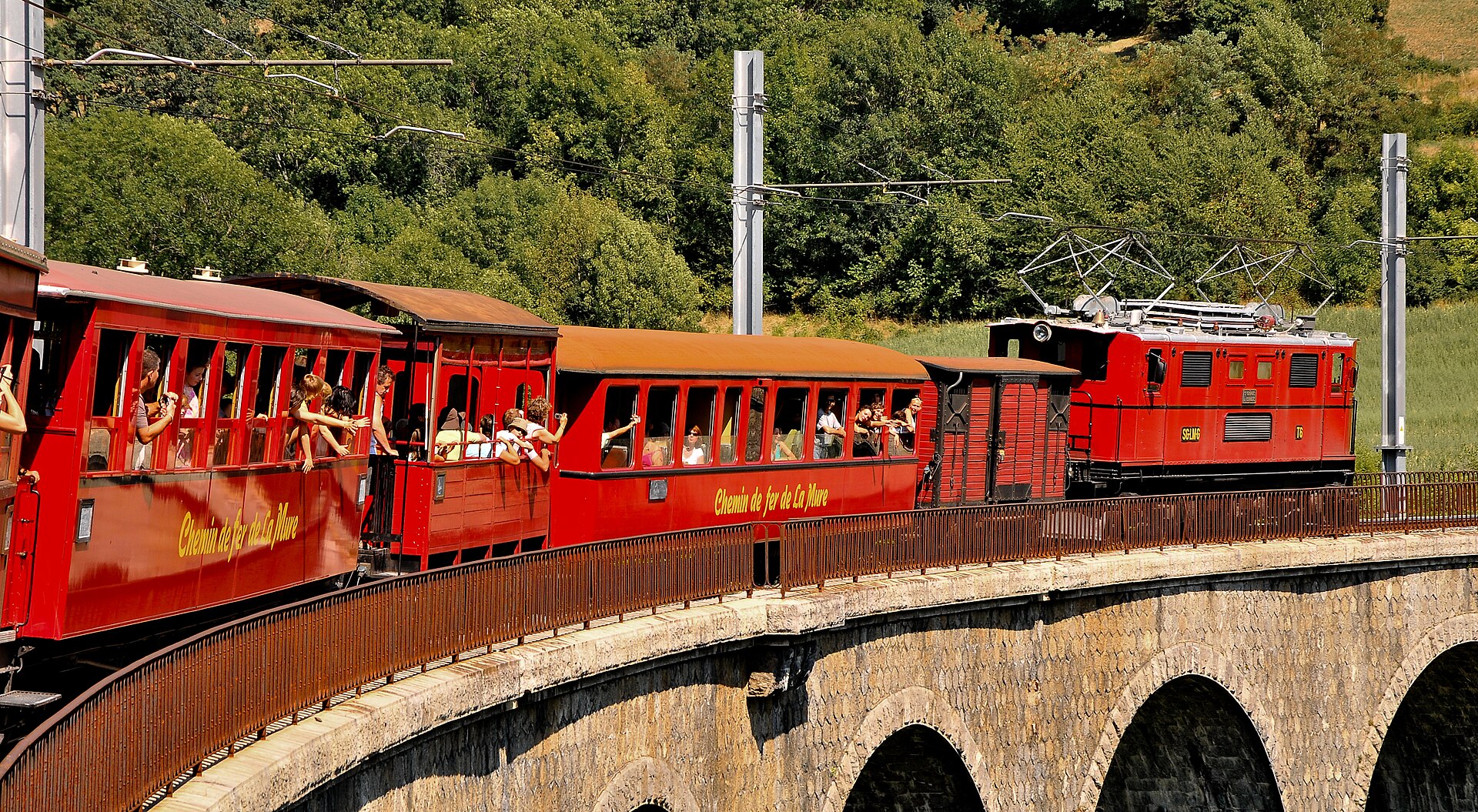
An hour south of Grenoble, a little red train climbs out onto a ledge cut in a cliff face, and the floor of the world drops away. Hundreds of metres below, the Drac lies in a turquoise thread between wooded mountains; ahead, the track runs on a shelf of stone arches and galleries hacked into the rock. This is the Chemin de fer de La Mure — a metre-gauge coal railway turned one of the most spectacular little journeys in the Alps.
It was built in the 1880s and opened in 1888, not for tourists but to bring anthracite down from the mines of La Mure. It was also a serious piece of engineering: in 1903 it was electrified at ±1,200 volts DC through two overhead wires — a bold early experiment in high-voltage direct current, at a time when almost nothing else ran that way.
The coal traffic ended in 1988, but the tourist trains — running since 1968 — kept the line alive. A landslide closed everything in 2010; after a decade of rebuilding, the upper half reopened in 2021, and the red carriages once again run the cliffs out to the Grand Balcon, fifty minutes and five tunnels from La Mure.
The Journey
Today's ride starts at La Mure, the old coal town on the Matheysine plateau, where a venerable electric locomotive waits at the head of a rake of deep-red carriages. It is a gentle beginning: the train rolls out across high green pasture and past old mining villages such as La Motte-d'Aveillans, with mountains standing all around.
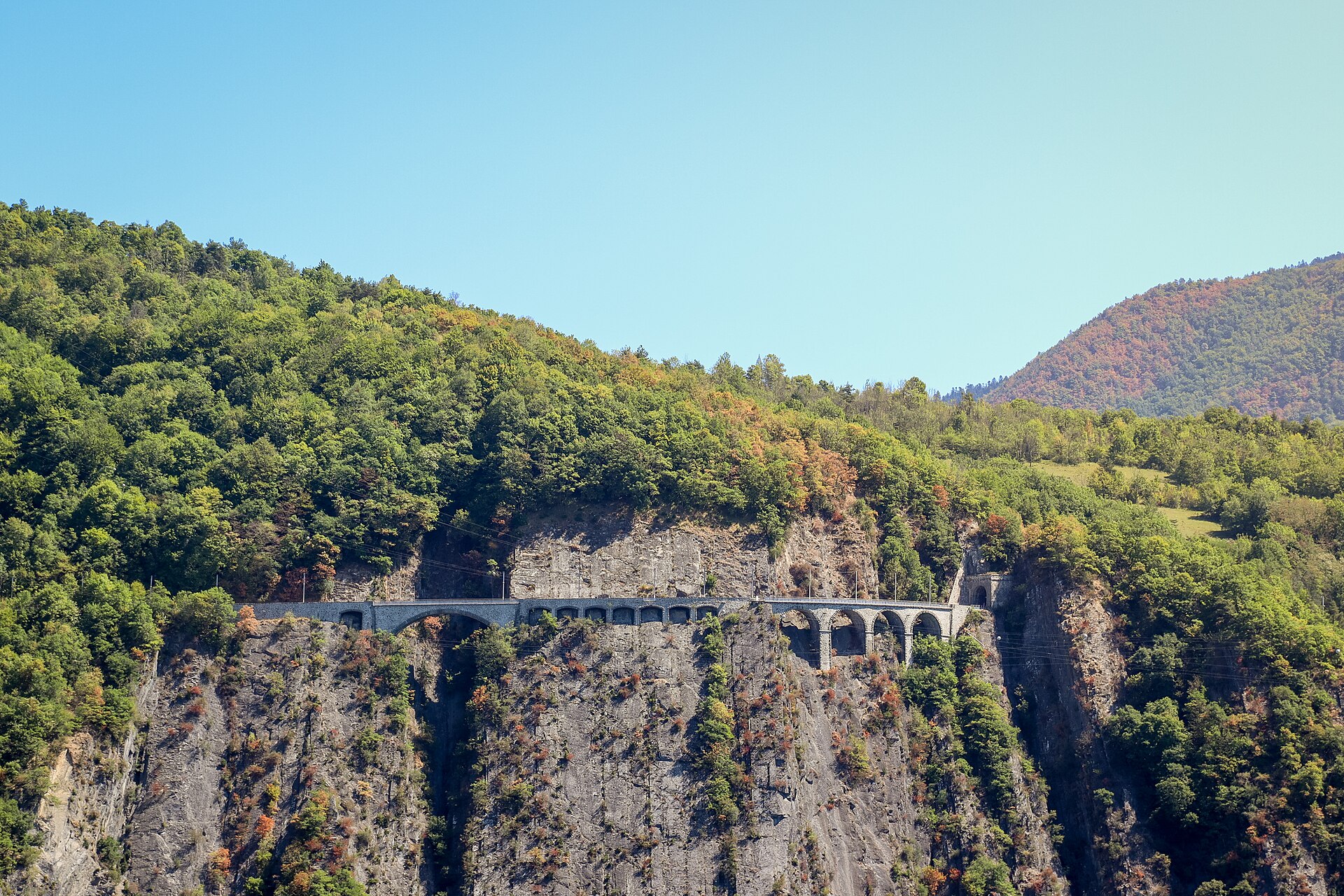
Then the plateau simply ends. The line swings out onto the rim of the Drac gorges and everything changes. To get along the cliffs the builders cut a shelf into near-vertical rock, carrying the track on stone arches, galleries and viaducts with a sheer drop beneath the windows. Far below, the dammed river shines an improbable turquoise — the Lac de Monteynard — and the ranges of the Vercors and the Oisans stack up on the skyline.
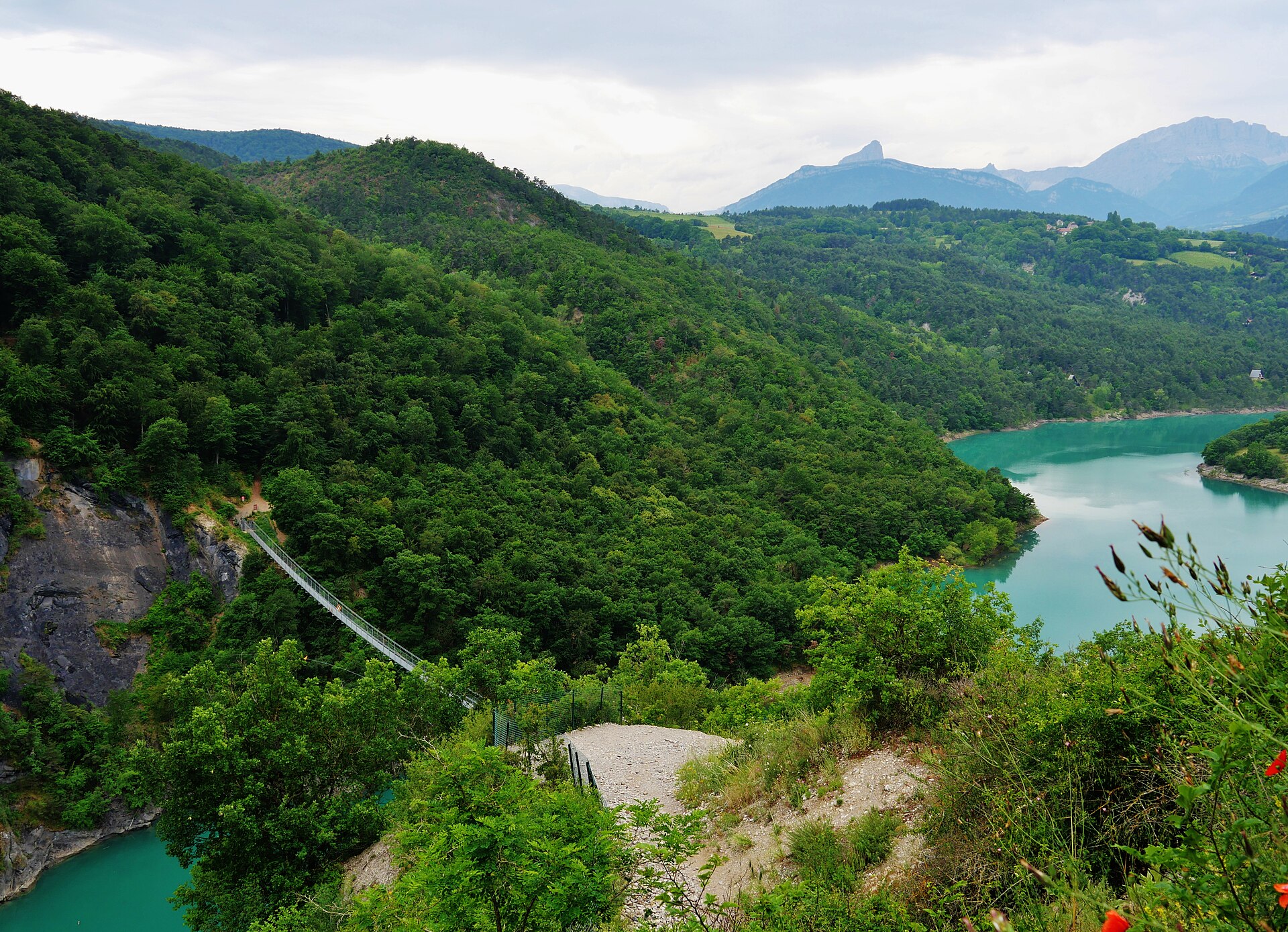
Fifty minutes out, the train reaches its terminus at Monteynard. The viewpoint itself is a 400-metre walk from the platform — the Belvédère du Grand Balcon, a balcony hung in the air above EDF's dam, where everyone stands and looks before the journey back.
What makes it remarkable is how much drama is packed into so small a railway:
- A metre-gauge line of 30 km, opened in 1888 to carry coal, climbing to a high point of 925 m.
- Today's run: 50 minutes through five communes, five tunnels and over three viaducts, on a ledge cut into the cliffs above the Drac.
- Electrified in 1903 at ±1,200 V DC on two overhead wires, a genuine pioneer of high-voltage DC.
- Vintage red carriages with drop windows, and the Lac de Monteynard shining far below.
Note that only the upper half of the line — La Mure out to Monteynard — has run since the 2021 reopening; the lower section down to Saint-Georges-de-Commiers remains closed.
Along the route
Johannes Reimer / Wikimedia Commons · CC BY 4.0A balcony above the void
This is the reason to come. To claw its way along the gorges of the Drac the line was cut into sheer cliff — a ledge of arches, galleries and tunnels with a drop of hundreds of metres beneath the windows, and the mountains of the Vercors and Oisans opening beyond.Zairon / Wikimedia Commons · CC BY 4.0The Belvédère du Grand Balcon
The train runs out to its terminus at Monteynard, and from the platform a 400-metre walk brings you to the Belvédère du Grand Balcon — a viewpoint hung above EDF's great dam and the turquoise lake, with one of the finest panoramas in the Matheysine laid out below.Remontees / Wikimedia Commons · CC BY-SA 4.0An electrical pioneer
For all its toy-like looks, this was a serious railway. Built in the 1880s to bring anthracite down from the La Mure mines, it was electrified as early as 1903 — at ±1,200 V DC through two overhead wires, a bold experiment in high-voltage direct current.A bit of history
Culture & experiences along the way
Florian Pépellin / Wikimedia Commons · CC BY-SA 4.0Ride in a restored carriage
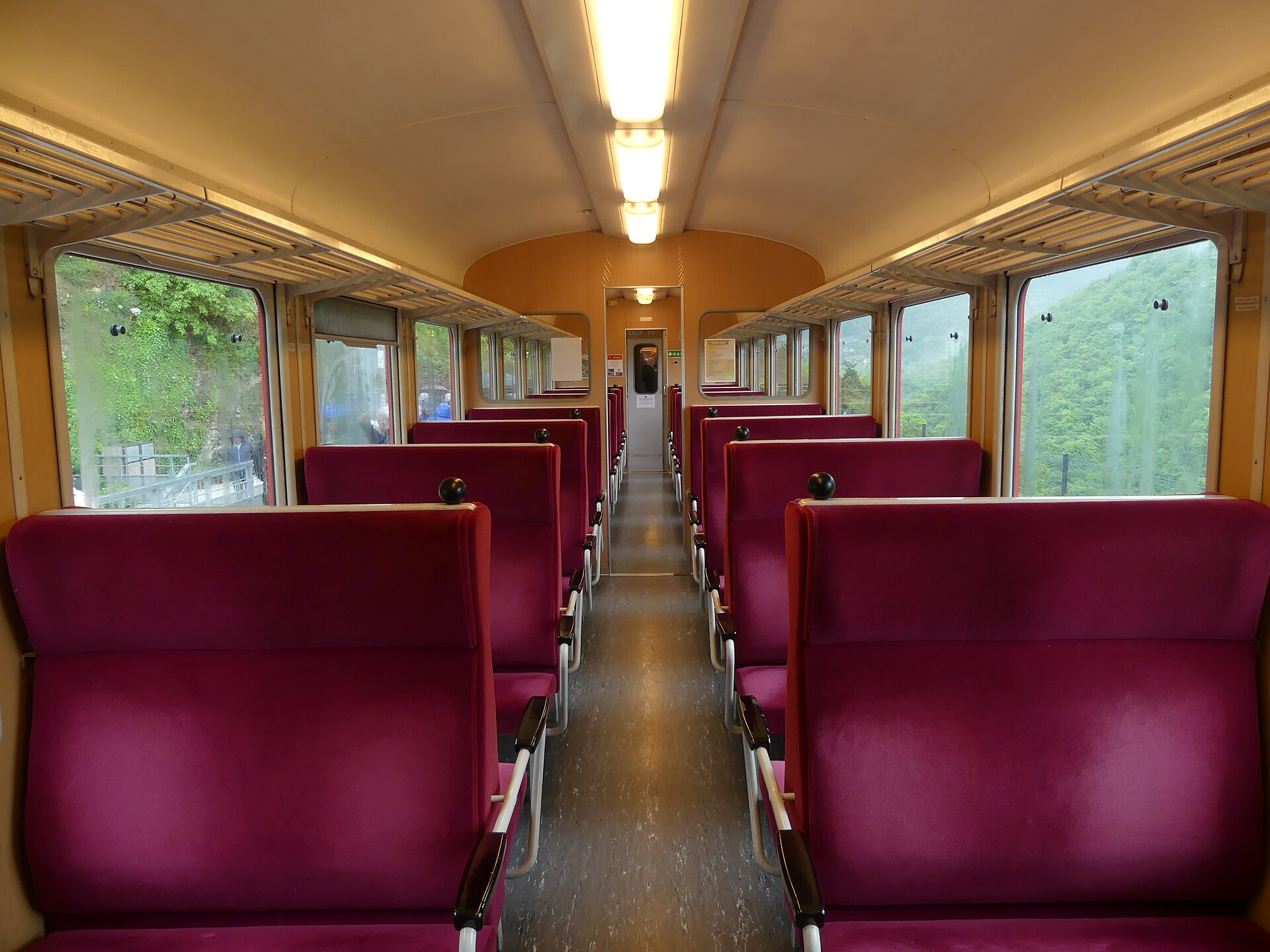
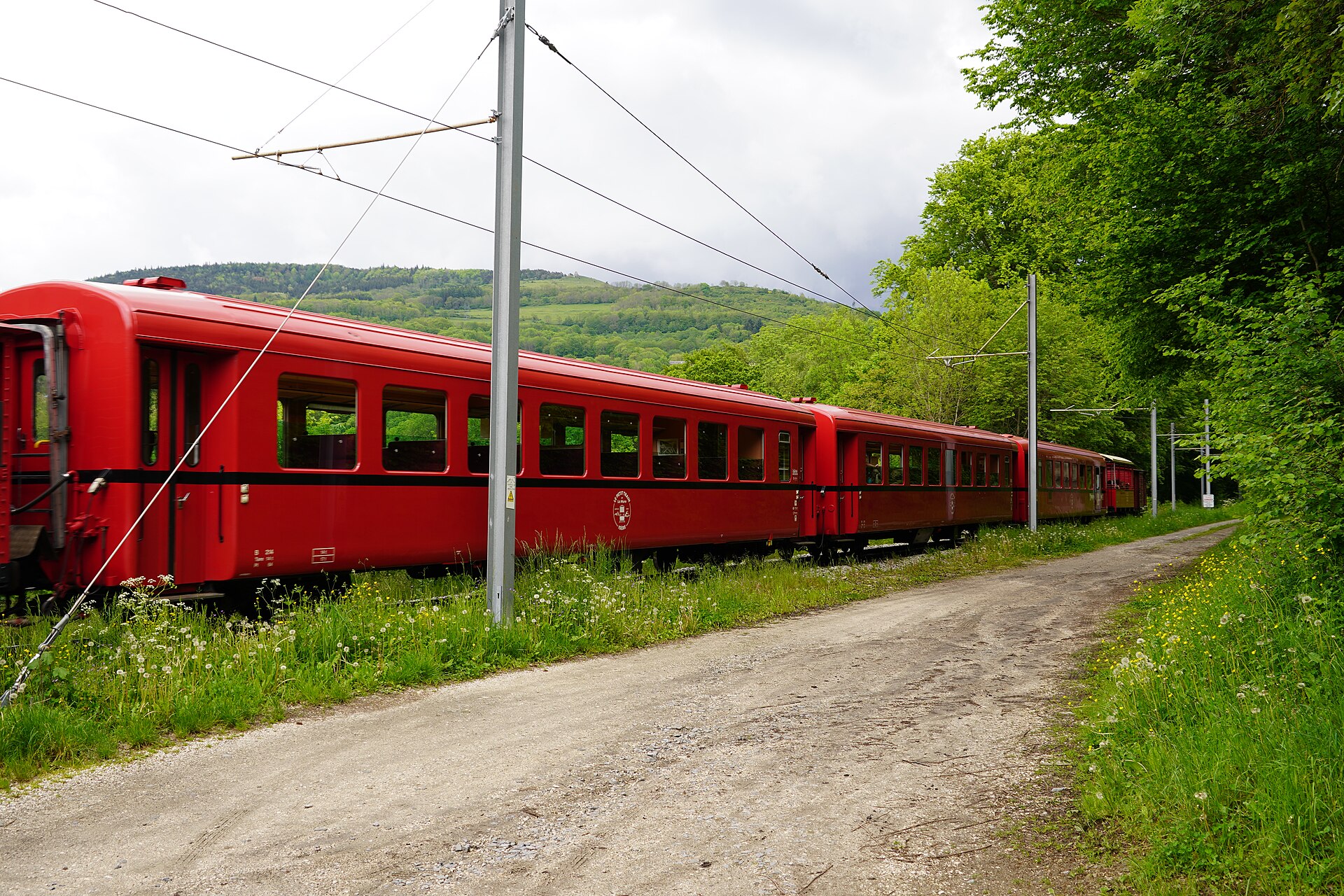
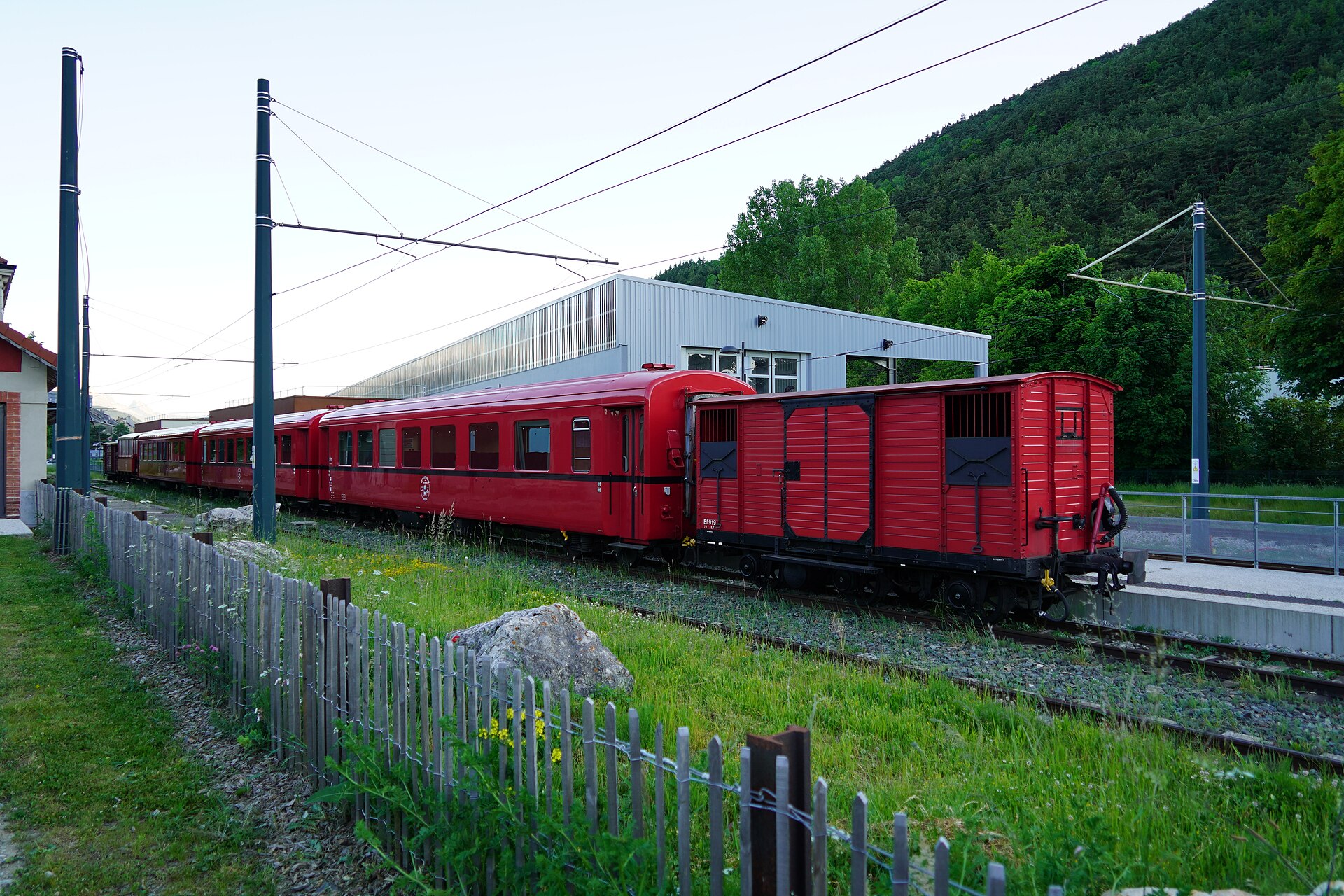
The train is worth the ticket on its own: vintage carriages in deep red, with plum velour benches, wooden luggage racks and big drop windows you can lean out of — pulled by a venerable electric locomotive under the wires.Remontees / Wikimedia Commons · CC BY-SA 4.0The Matheysine plateau
Above the gorges the line comes out onto the Matheysine — a high green plateau of pasture, lakes and old mining villages, ringed by mountains. It is a gentler, quieter counterpoint to the drama of the cliffs.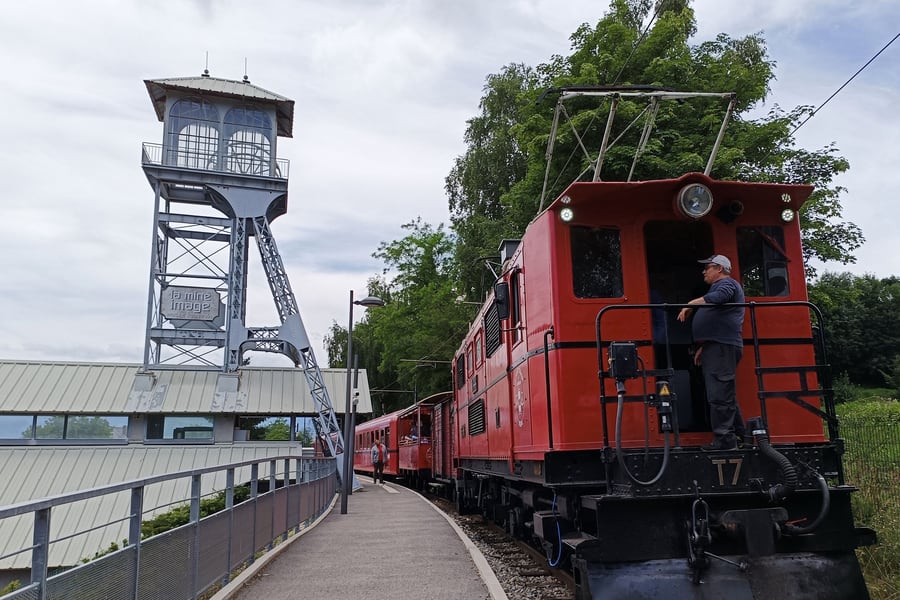 Pemberlaid / Wikimedia Commons · CC BY-SA 4.0 · cropped
A coal line reborn
Coal trains ran here until 1988 and tourists since 1968 — then a landslide swept away a viaduct in 2010 and closed everything. After a decade of work the upper half reopened in 2021, and the little red train is running out to the Grand Balcon again.Timetables
This is a seasonal tourist railway, not a public transport service — so it runs to a published programme rather than a daily timetable, with the most departures in July and August. In winter it does not run.
Real departures (2026 — confirm before travelling): in high summer (4 July–30 August, Mon/Tue/Fri + weekends) trains leave La Mure at about 09:20, 10:30, 11:40, 13:40 and 15:00, with an extra late run around 17:40 on Wednesdays and Thursdays. In the shoulder season (31 August–1 November) there are two a day, roughly 10:30 and 15:00. The run to the Belvédère de Monteynard takes about 45 minutes each way.
Two things are worth knowing before you plan:
| Section running | La Mure → Monteynard (upper half only), 50 min each way |
| Closed | La Mure → Saint-Georges-de-Commiers, since the 2010 landslide |
Trips are return excursions from La Mure. Allow the best part of a half day: fifty minutes out, time at the terminus for the 400-metre walk to the Belvédère du Grand Balcon (and lunch at Le Panoramique, if you like), then fifty minutes back. Add a couple of hours if you take the DUO ticket and stop at the Mine Image museum on the return.
The operator is blunt about booking: "We strongly recommend booking in advance on our website, as trains fill up quickly." Take that seriously in high summer — if a train is sold out online, it is sold out on the day too.
Programme last checked: July 2026; the operator publishes its calendar and times as images that change each season, so confirm before travelling at lepetittraindelamure.com (opens in a new tab).
Tickets
Unlike the regional trains elsewhere in France, this is a heritage excursion with its own tickets: you buy a return trip from La Mure, not a point-to-point fare, and Interrail and Eurail do not apply. Book online with the operator, because the trains genuinely sell out in July and August and a sold-out train is sold out at the window too. Children's fares cover ages 4 to 15; under-fours travel free.
Beyond the plain return, the DUO ticket adds the Mine Image museum at La Motte-d'Aveillans, taken as a scheduled stop on the way back — a two-hour guided tour inside the real anthracite galleries the line was built to serve. There is a single class aboard the restored carriages: plum velour benches, wooden luggage racks and big drop windows. Take a layer even in summer, because you are at around 900 metres and the windows are open.
Book your tickets
La Mure to the Grand Balcon
The cliff-ledge run
The section that reopened in 2021 and the one everyone comes for — fifty minutes from the old coal town of La Mure, through five tunnels and over three viaducts on the ledge above the Drac, to the terminus and the walk out to the Belvédère.
Book Tickets (opens in a new tab, on Le Petit Train de La Mure (Edeis))via Le Petit Train de La Mure (Edeis)The DUO ticket
Train + the Mine Image museum
The railway was built for coal, so pair it with the mine. The DUO combines the round trip with the Mine Image museum at La Motte-d'Aveillans — a two-hour guided tour of the real underground galleries — taken as a stop on the way back.
Book Tickets (opens in a new tab, on Le Petit Train de La Mure (Edeis))via Le Petit Train de La Mure (Edeis)Rail Passes
No rail pass covers the La Mure Railway. It is a heritage excursion run by its own operator, which is not among the companies Interrail lists for France. Tickets are a return trip from La Mure, bought from the operator.
A pass still covers the trains to Grenoble. SNCF's TER and TGV trains are included in France, so a pass can carry you to the nearest main station.
Checked October 2026 against interrail.com (opens in a new tab).
Places to Visit
The railway sits in the Matheysine, a high plateau of lakes, pasture and old mining country between Grenoble and the southern Alps — a corner of France most visitors drive straight past. Pair the train with the lake below it and the mines beside it, and the Matheysine easily fills a couple of days.
 Sami Mlouhi / Wikimedia Commons · CC BY-SA 4.0 · cropped
Grenoble
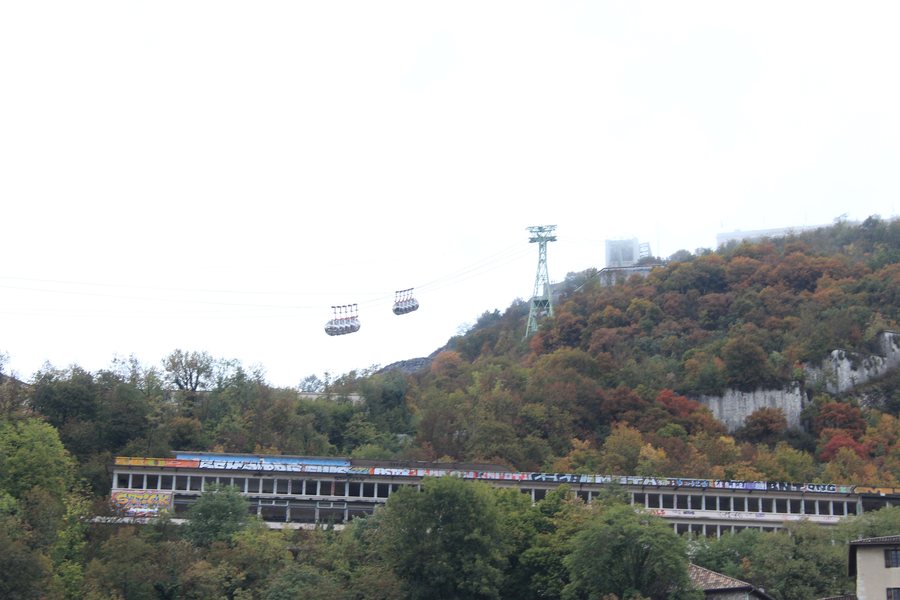
An hour north, and the natural way in: a lively university city ringed by three mountain ranges, with the bubble cable car lifting you over the Isère to the Bastille fort and superb Alpine museums below. Most people arrive here by train and pick up the Matheysine from it.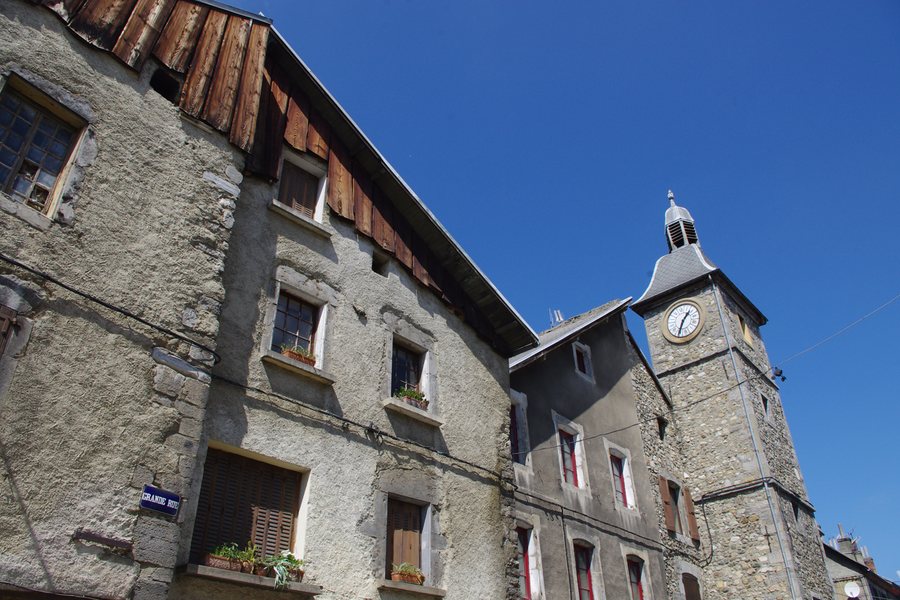 Danielclauzier / Wikimedia Commons · CC BY-SA 3.0 · cropped
La Mure
The old anthracite town at the top of the railway, and where the train starts. It is a working plateau town rather than a resort — a belfry, a long main street and the Route Napoléon running through it — and it is the reason the line exists at all.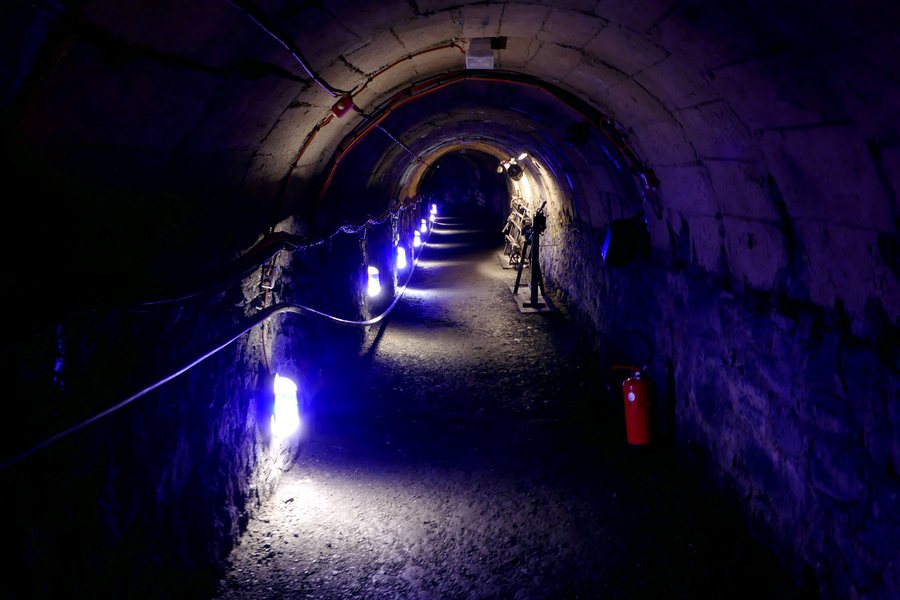 Florian Pépellin / Wikimedia Commons · CC BY-SA 4.0 · cropped
La Mine Image
The mining museum at La Motte-d'Aveillans, directly on the railway and reachable by the train itself on the DUO ticket. A two-hour guided tour takes you into the real underground galleries — the coal that came out of them is precisely why anyone cut a railway into these cliffs.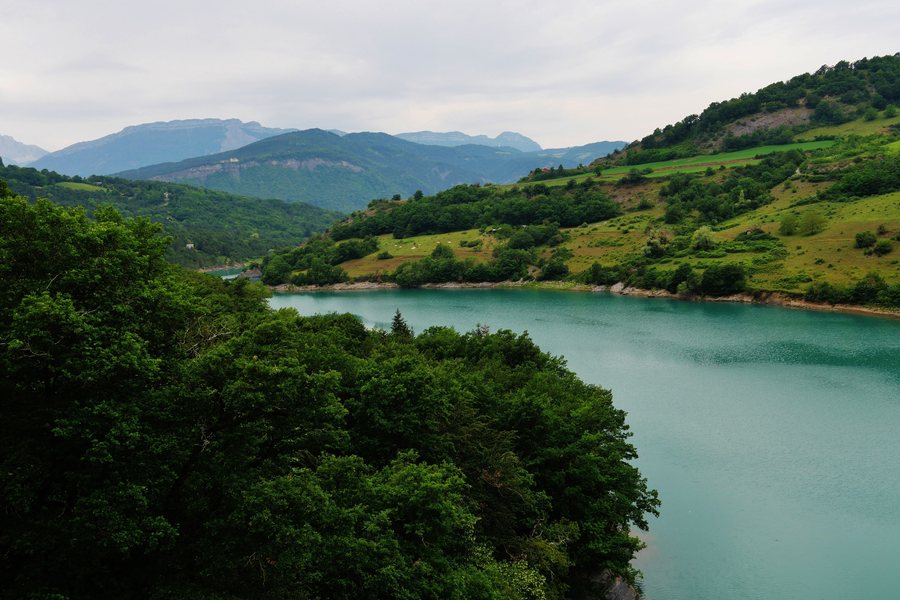 Zairon / Wikimedia Commons · CC BY 4.0 · cropped
Lac de Monteynard-Avignonet
The turquoise reservoir far below the train, known for wind reliable enough to have made it a sailing and windsurfing centre, and for two long Himalayan footbridges swaying above its inlets. The operator also sells combined train-and-cruise tickets.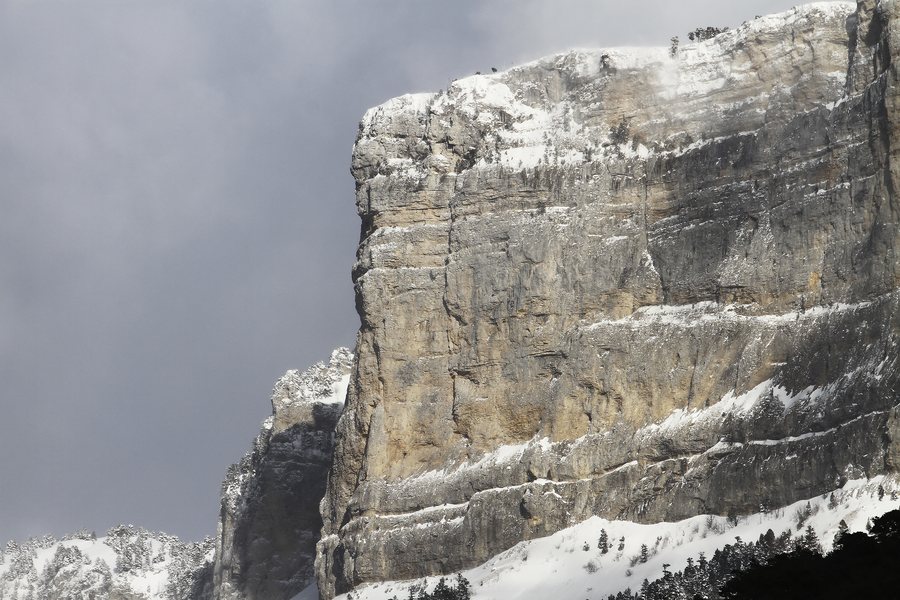 Olivier TEILHARD / Wikimedia Commons · CC BY-SA 3.0 · cropped
The Vercors
The great limestone massif on the far side — all cliffs, caves and gorges, and a natural fortress that became a heartland of the French Resistance. It fills the western horizon for much of the ride.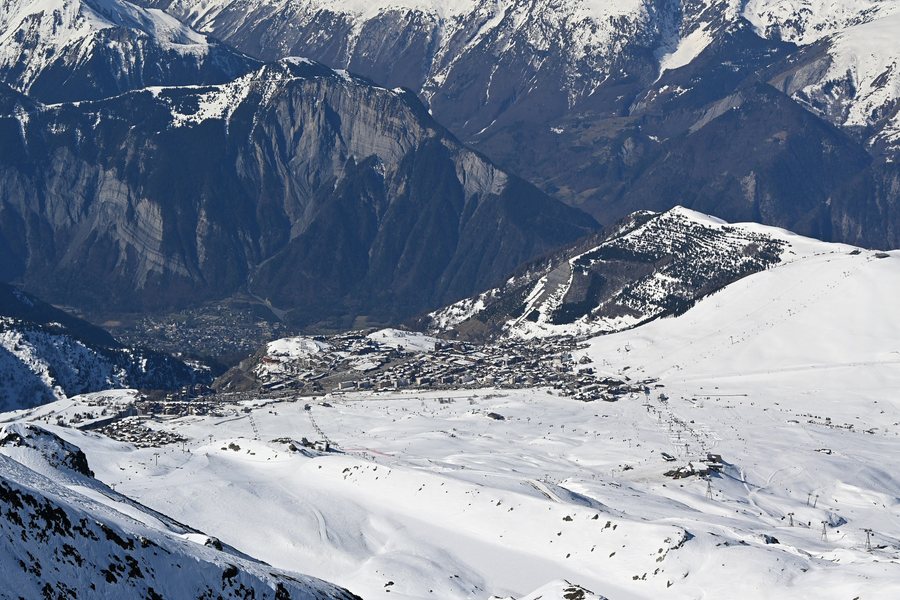 DimiTalen / Wikimedia Commons · CC0 · cropped
The Oisans & Alpe d'Huez
The serious mountains rising to the east, and an easy detour for anyone carrying on south or up. Alpe d'Huez is the best-known name among them, as much for the twenty-one hairpins of its climb as for the skiing.Where to Sleep
Most people ride the La Mure train as a day trip from Grenoble, and that works well: the city is about an hour away, has hotels at every price, and gives you somewhere lively to eat afterwards. But the plateau is a lovely place to linger. La Mure itself has a handful of simple hotels and guesthouses, handy for an early departure. Around the Lac de Monteynard, campsites, gîtes and small family hotels put you beside the water — the best choice if you want to combine the train with sailing, swimming or the Himalayan footbridges. For something more Alpine, the villages of the Matheysine and the edge of the Vercors offer walkers' inns and chambres d'hôtes with big mountain views. Remember that the railway is seasonal and the plateau sits high — nights are cool even in midsummer, and out of season much of the tourist infrastructure, the train included, simply shuts. Check that the trains are running before you book a bed for them.
Questions or corrections
Planning this trip and stuck on something, or spotted a time, fare or detail that has changed? Send us a message about The La Mure Railway. We read every one, and we update this page when something has changed.