Chemin de Fer à Vapeur des Trois Vallées
Nenea hartia / Wikimedia Commons · CC BY-SA 4.0
- Distance14 km · Mariembourg–Treignes
- Duration≈35 min each way
- Best seasonSpring–autumn heritage season
Introduction
Steam left the everyday railways of Belgium in the mid-1960s, and for most countries that was the end of it. In the southern corner of Wallonia, it wasn't.
In 1973, a handful of enthusiasts led by an SNCB engine driver, Michel Pâques, set out to save a working steam railway rather than let it go for scrap. The line they chose runs through the wooded, water-cut country near the French border, and what they built there is now the Chemin de Fer à Vapeur des Trois Vallées — the Three Valleys Steam Railway — one of the largest and best-loved heritage railways in the country.
The name is exact. Over just 14 kilometres, between Mariembourg and Treignes, the railway follows the valleys of three rivers in turn: the Eau Blanche, the Eau Noire and the Viroin. Between them lie the stone villages of Nismes, Olloy-sur-Viroin and Vierves-sur-Viroin, and the kind of quiet Ardennes landscape that a slow train through the trees was made for.
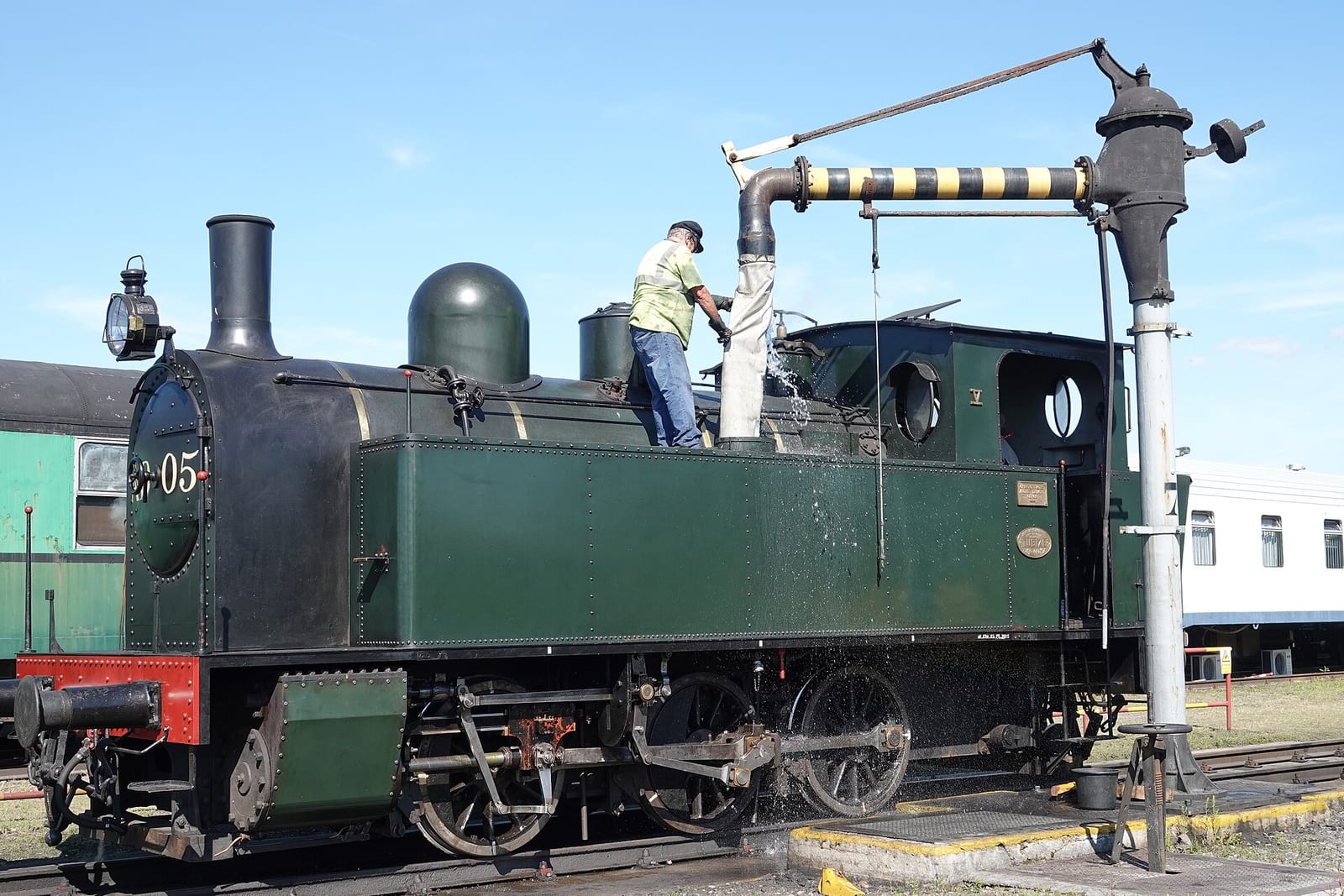
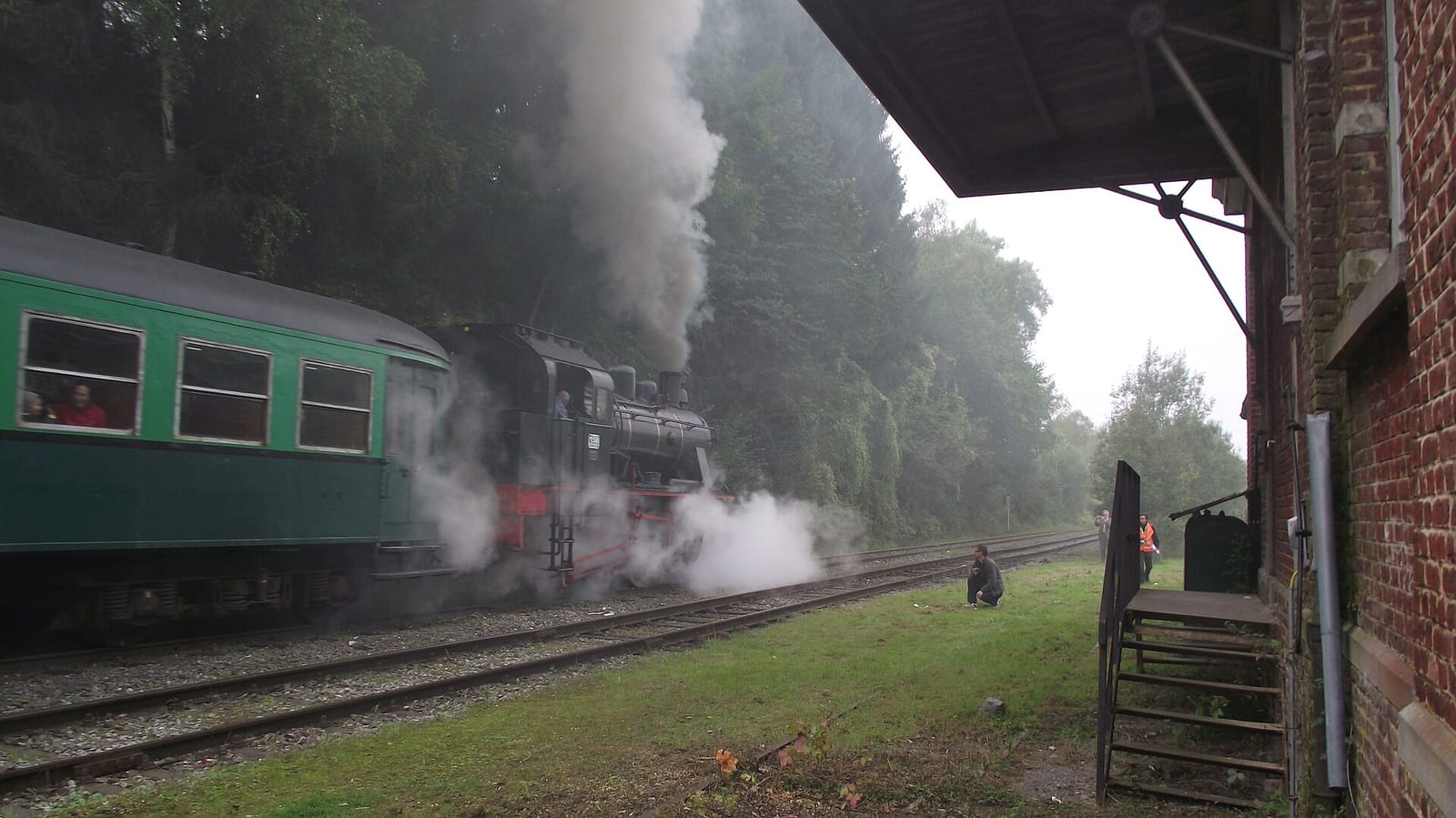
What you ride behind is the real thing — full-size, coal-fired steam locomotives, some more than a hundred years old, fired and maintained by volunteers. You feel the heat of the firebox, smell the smoke, and hear the beat of a locomotive working up the valley. There is nothing miniature or pretend about it.
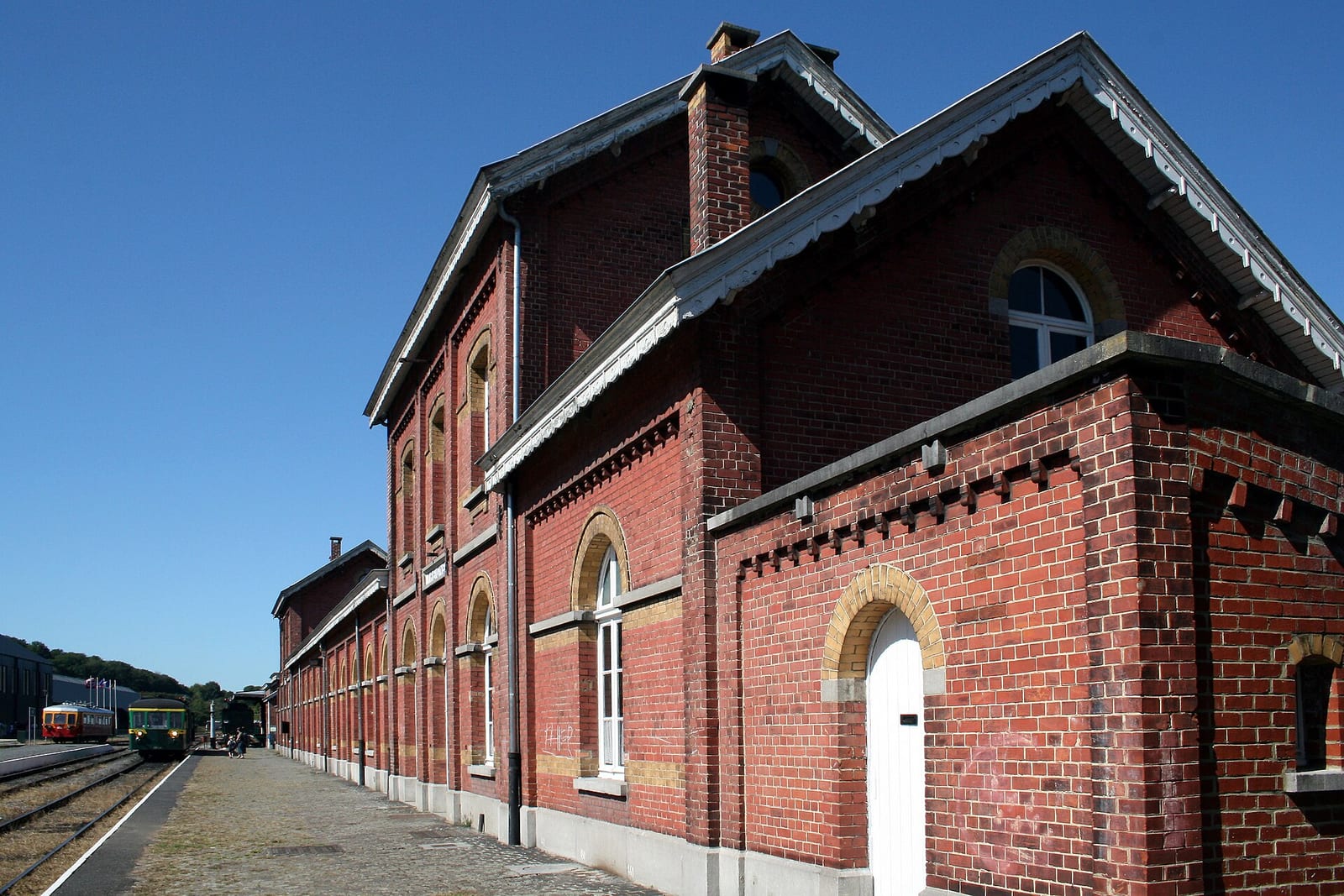
And at the far end, at Treignes — a former Franco-Belgian border station — sits a large railway museum, opened in 1994, sheltering a remarkable collection of locomotives, carriages and wagons. The ride and the museum are a single day out: half of it moving behind steam through three valleys, half of it walking among the machines that once did it for a living.
The Journey
The railway begins at Mariembourg, near Couvin, where the running sheds and the smell of coal smoke give the game away before you even see a locomotive. This is the working heart of the line — engines are coaled and watered here, and on a running day the platform fills with the particular anticipation that only a live steam engine produces.
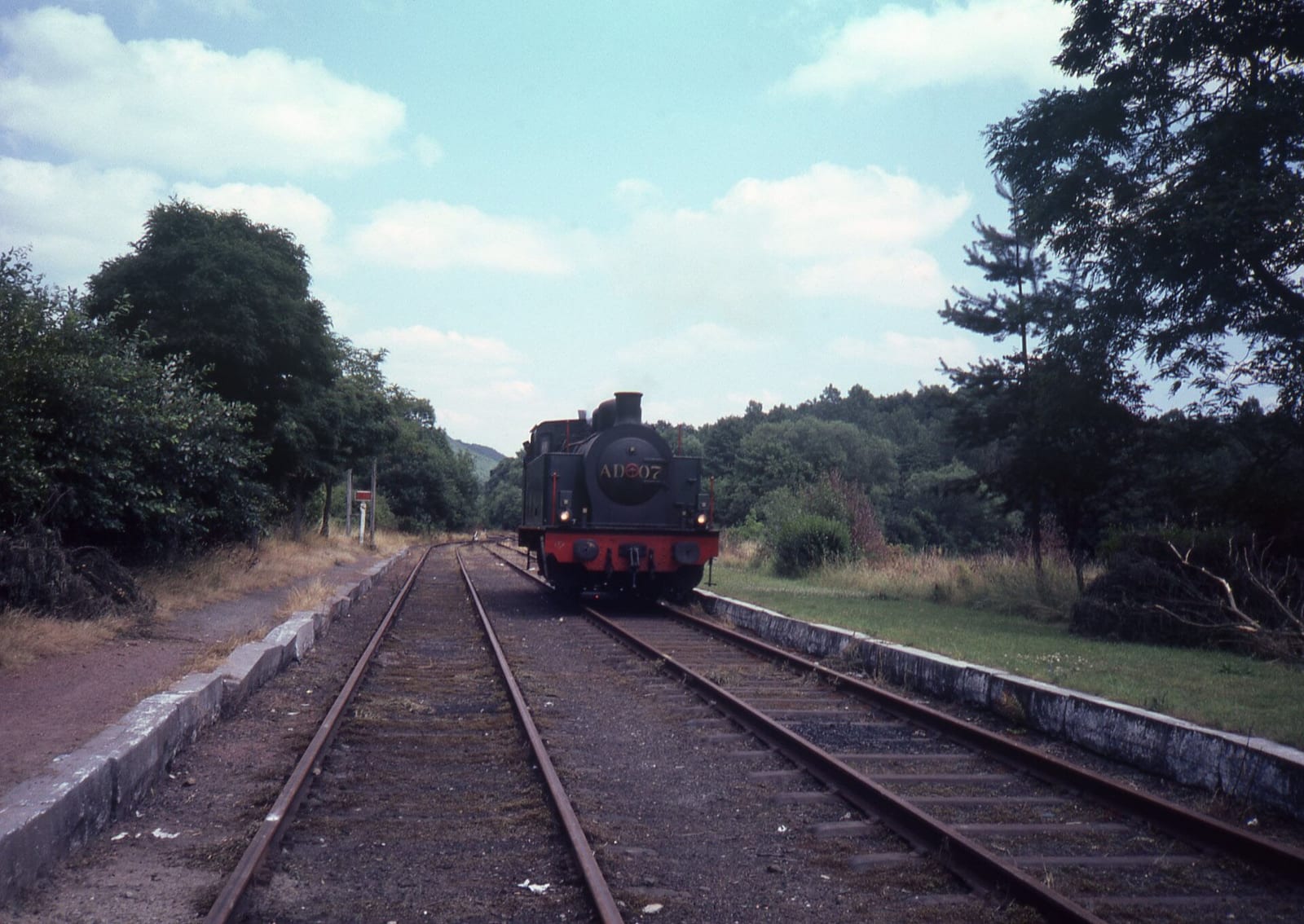
From Mariembourg the line runs south and east toward the French border, tracing the Eau Blanche, then the Eau Noire, then the Viroin — the three valleys that give the railway its name. It is not fast and is not meant to be. The train ambles through woodland and along the rivers, calling at Nismes, Olloy-sur-Viroin and Vierves-sur-Viroin, small villages of grey Ardennes stone, before drawing into Treignes at the end of the line. Reckon on about 35 minutes each way, longer if you let the scenery slow you down.
Underneath the ride is a genuine piece of railway history. The route is part of the old Line 132, laid by the Chemin de fer de l'Entre-Sambre-et-Meuse; the Mariembourg–Vireux stretch opened on 15 June 1854. Regular passenger trains ran until 1963 and goods trains until 1977, and it was into that closing that the preservationists stepped, taking on a concession from the SNCB in 1975 to run trains for tourism — first Nismes to Treignes, then, from 1978, all the way from Mariembourg.
There is one stretch you cannot ride, and the reason is wonderful. Beyond Treignes the original line pushed on toward Vireux, crossing briefly into France — but that final three kilometres is lost, because its tunnel was sold and turned into a mushroom-growing plant. The train stops at Treignes, and the museum is the reason you are glad it does.
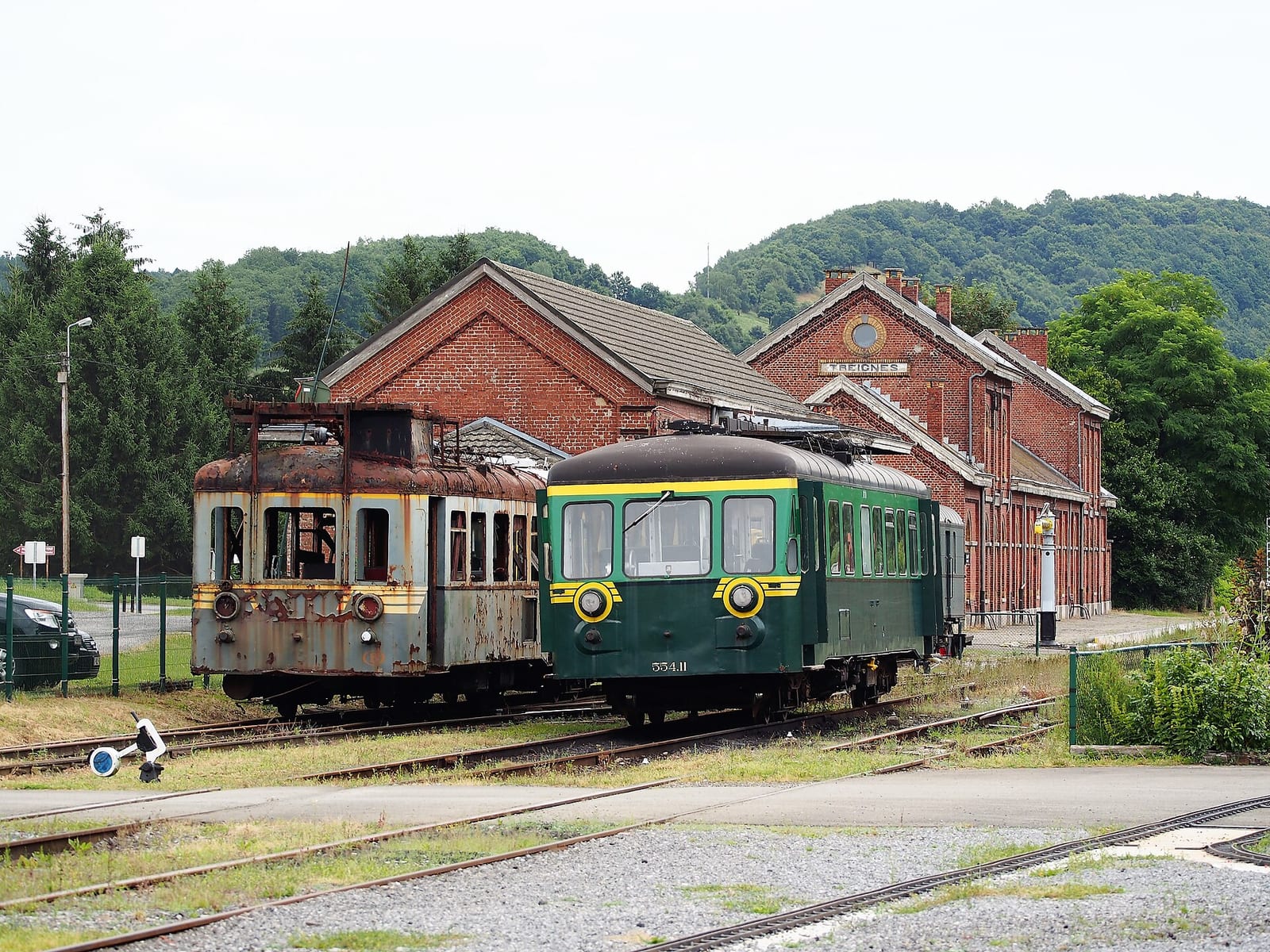
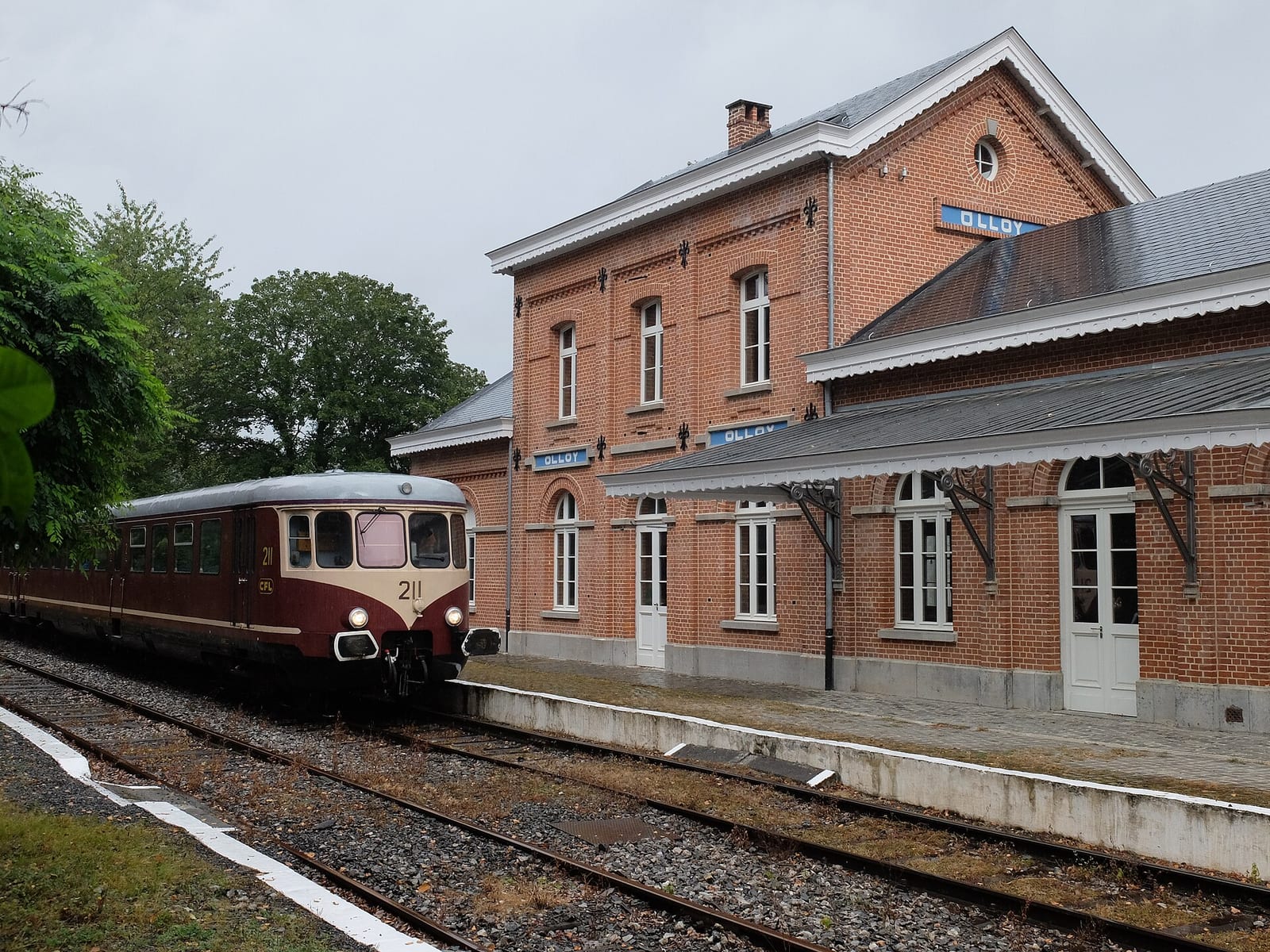
Along the route
Nenea hartia / Wikimedia Commons · CC BY-SA 4.0Real, working steam
These are full-size coal-fired locomotives, some over a century old, hand-fired and maintained by volunteers who have kept them running since 1973. You feel the heat off the firebox and smell the smoke. There is very little like it left in Belgium.Smiley.toerist / Wikimedia Commons · CC BY-SA 3.0Three valleys, one line
The name is literal. Over just fourteen kilometres the railway follows three rivers in turn — the Eau Blanche, the Eau Noire and the Viroin — through the wooded, water-cut country of the southern Ardennes.Jean-Pol GRANDMONT / Wikimedia Commons · CC BY 3.0A first-rate railway museum
The line ends at Treignes, an old border station, where a museum opened in 1994 shelters locomotives and carriages on four long covered tracks. It is one of the finest collections in the country, and it comes with the ride rather than instead of it.A bit of history
Culture & experiences along the way
Smiley.toerist / Wikimedia Commons · CC BY-SA 4.0Ride behind steam up the Viroin
Settle into a vintage carriage at Mariembourg and let a steam locomotive haul you up the valley to Treignes — windows down, smoke drifting past, the rhythm of a railway that has slowed to the pace it was built for. About 35 unhurried minutes each way.Alf van Beem / Wikimedia Commons · Public domainWatch the volunteers at work
Around the sheds at Mariembourg and Treignes you can see the other half of the railway — locomotives being coaled, watered, oiled and, in the workshops, painstakingly rebuilt. The whole operation is run by enthusiasts, and they are happy to talk.Manfred Kopka / Wikimedia Commons · CC BY-SA 4.0The Treignes museum
Give yourself an hour at the end of the line for the museum — rows of preserved locomotives and carriages under cover, plus the workshop where the next restoration is under way. Steam history you can walk right up to.Timetables
The Three Valleys Steam Railway is a volunteer operation, so it runs on set days rather than daily — and the calendar is the one thing to check before you go.
The pattern (2026): the railway runs 5 April–2 November on weekends and public holidays (plus the weekend of 13–14 December), with extra Tuesday and Thursday running in July and August and on some school-holiday Thursdays. On a running day, trains leave Mariembourg at 11:30, 14:20 and 17:30 for Treignes.
| When | What runs |
|---|---|
| 5 Apr – 2 Nov | Steam (and sometimes diesel-railcar) trains, weekends & holidays; Tue/Thu in Jul–Aug |
| Special dates | Easter, the Festival Vapeur steam gala (26–27 Sep 2026), Halloween (24–25 Oct), Santa (12–13 Dec) |
Good to know:
- Check the operator's calendar first. Running days are published on cfv3v.eu; there is no everyday service, so turning up unannounced can mean a closed line.
- Times are fixed to a few departures a day. On a running day the train makes several return trips between Mariembourg and Treignes — enough to combine the ride with the museum comfortably.
- Allow half a day. The ride is about 35 minutes each way, but Treignes and its museum deserve an unhurried hour or two, so build the day around the round trip.
- The gala weekends are the spectacle. If your dates are flexible, a "Vapeur en Fête" event brings out far more of the collection and is worth planning around — and busier, so book ahead.
- Dress for the weather and for steam. Open-window carriages, coal smoke and the odd smut are all part of it; wear something you don't mind getting a little sooty.
Tickets
Tickets are sold by the railway itself, and the sensible way to think about a visit is as a combined day: the steam ride out and back from Mariembourg to Treignes, plus the museum the train sets you down beside. Buy on the day at Mariembourg, or book ahead for gala weekends like Vapeur en Fête, which are the busiest days of the year. The museum can also be visited on its own, at around €7 for an adult.
Fares change, so the operator publishes the current figures and any combined ride-and-museum deals. Mariembourg is on the SNCB network, so the heritage railway can be reached by ordinary train — a neat way to arrive. This is a non-profit run by volunteers, and the ticket money goes back into keeping the locomotives in steam.
Book your tickets
Steam train + museum
Mariembourg–Treignes return
A return ride behind steam from Mariembourg to Treignes, with the railway museum at the Treignes end. The railway runs on selected days from spring to autumn plus special events — check the operator's calendar and book ahead for gala weekends.
Book Tickets (opens in a new tab, on Chemin de Fer à Vapeur des 3 Vallées)via Chemin de Fer à Vapeur des 3 ValléesTreignes Railway Museum
At the end of the line
The museum at Treignes can also be visited in its own right — locomotives, carriages and wagons under cover, with a free look into the workshop. Admission is around €7 for adults; check current times before you travel.
Book Tickets (opens in a new tab, on Chemin de Fer à Vapeur des 3 Vallées)via Chemin de Fer à Vapeur des 3 ValléesRail Passes
No rail pass is valid on this railway. The Chemin de Fer à Vapeur des Trois Vallées is run by a volunteer association on its own preserved line, not by SNCB/NMBS, so Interrail, Eurail and SNCB's own products buy you nothing aboard. The society sells its own tickets, and the museum at Treignes is priced separately again.
Using a pass to reach the line
Interrail and Eurail Global Passes are valid on SNCB/NMBS services, with no reservation and no supplement on Belgian domestic trains — so a pass is a perfectly good way to get to the area.
⚠️ But this line is genuinely awkward without a car. Mariembourg and Treignes are not on the national network, and the nearest useful national-network station is Couvin, at the end of a branch from Charleroi. Plan the connection before you rely on it, and check the heritage railway's operating calendar first — it runs on selected dates, not daily, and the trip is a long way to come on a day when nothing moves.
If you are not on a pass
SNCB's ordinary fares apply for the journey to the area — Youth (under 26), Senior (65+) and Child (under 12) bands, the Train+ subscription for frequent travel, and mini-group fares from four people. None of them reduce the heritage railway's own fare.
SNCB products: belgiantrain.be (opens in a new tab). Correct as of August 2026.
Places to Visit
The railway runs through the Viroinval and Couvin country of southern Namur — one of the greenest, quietest corners of Wallonia, on the edge of the French Ardennes. Since 1 January 2023 every kilometre of the line has lain inside the new Parc national de l'Entre-Sambre-et-Meuse, 22,129 hectares of Fagne, Ardenne and limestone Calestienne recognised by the Walloon government in December 2022.
It rewards a day or two beyond the train. The RAVeL greenway network and marked footpaths thread all three valleys, so a run behind steam is easily one leg of a longer wander through the woods and along the rivers.
 Jean-Pol GRANDMONT / Wikimedia Commons · CC BY 3.0 · cropped
Nismes
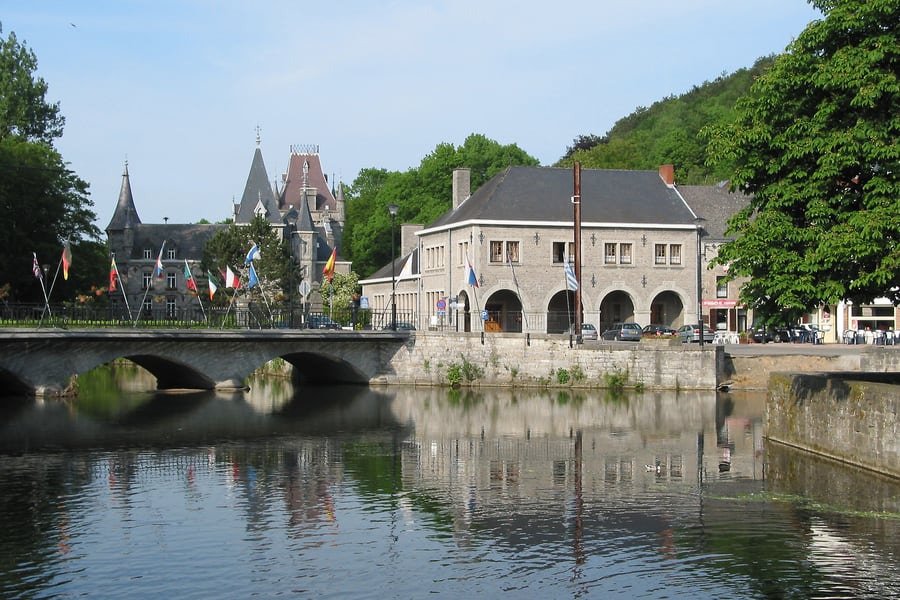
The train's first call out of Mariembourg sits where the Eau Noire runs through the middle of the village between stone quays, under a bridge hung with flags. It is the gateway to the Fondry des Chiens, and a curiosity in its own right: upstream the river vanishes underground into the limestone and surfaces again here, at the Pont d'Avignon grotto, a few steps from the bridge.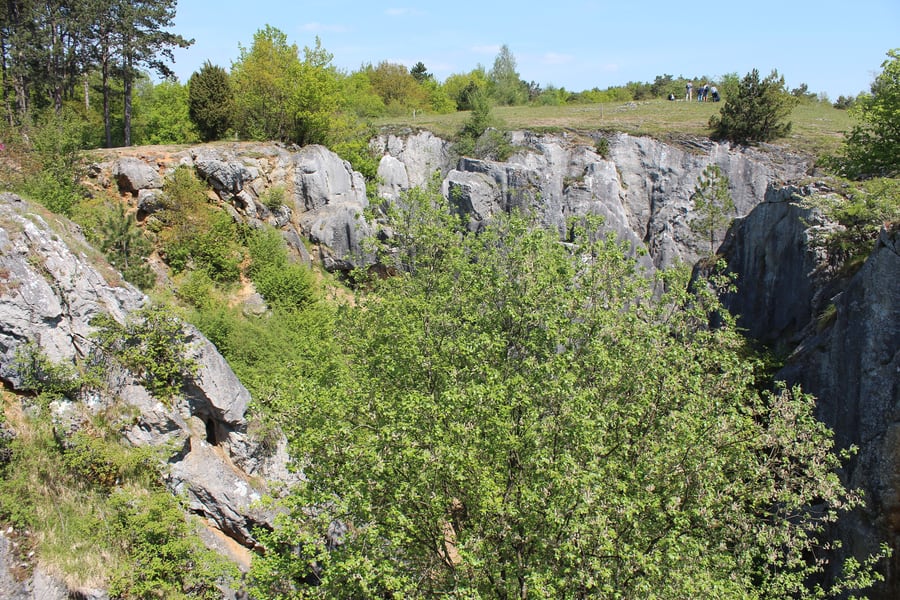 AardrijkskundeUitgelegd.nl / Wikimedia Commons · CC BY-SA 4.0 · cropped
The Fondry des Chiens
A jagged limestone gorge opening straight out of the plateau above Nismes — about twenty metres deep, eaten out of the rock by rainwater over thousands of years and once dug for iron ore. The stone itself is a fossil coral reef, a lens some 64 metres thick of ancient corals and stromatoporoids. The thin warm soil on top grows orchids and other plants of southern origin, which is why it is protected.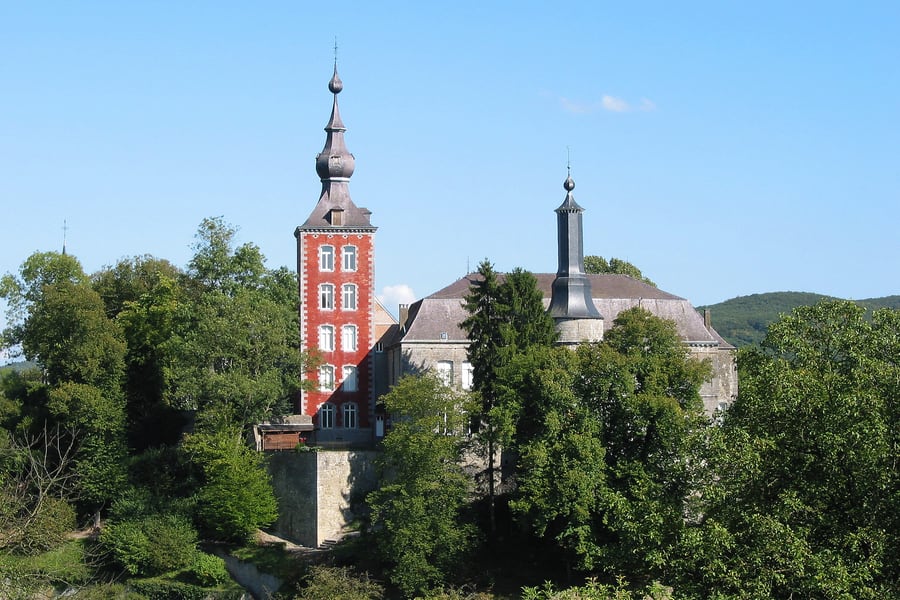 Jean-Pol GRANDMONT / Wikimedia Commons · CC BY-SA 3.0 · cropped
Vierves-sur-Viroin
One of the official Plus Beaux Villages de Wallonie, stacked in grey stone and slate on a bend of the Viroin below its castle. The Hamal family held the place from 1567 to 1852 and built what you see today. The castle is not open to visitors — but the village lanes and the footpaths on either bank give it to you from every angle, which is most of the pleasure anyway.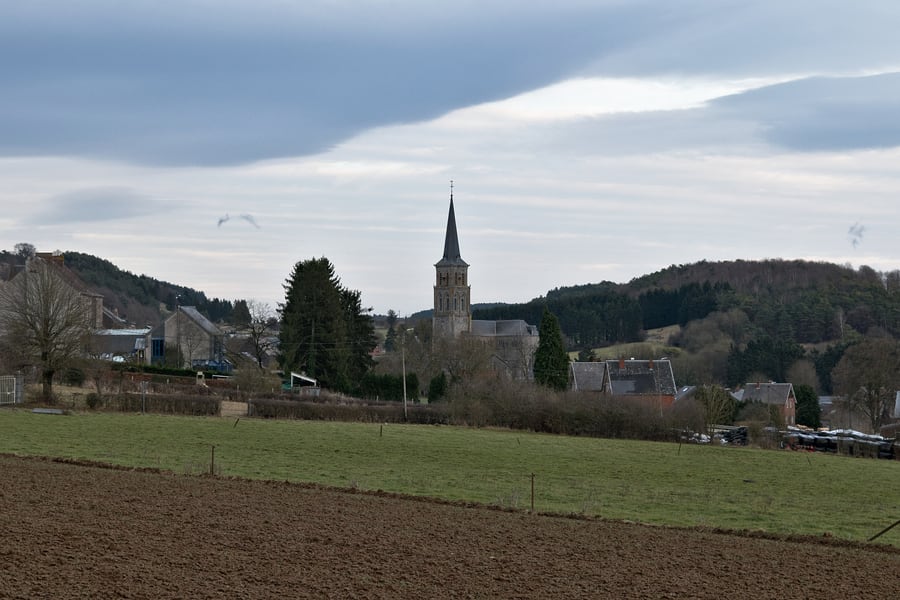 Trougnouf (Benoit Brummer) / Wikimedia Commons · CC BY 4.0 · cropped
Treignes
The end of the line, and a great deal more than the railway collection: Treignes calls itself the village des musées and has five of them, among them the Musée du Malgré-Tout (regional archaeology and prehistory, in the old power station since 1984), an ecomuseum of the Viroin valley and the Espace Arthur Masson. All of it sits in the Viroin-Hermeton nature park, in limestone grassland and woods.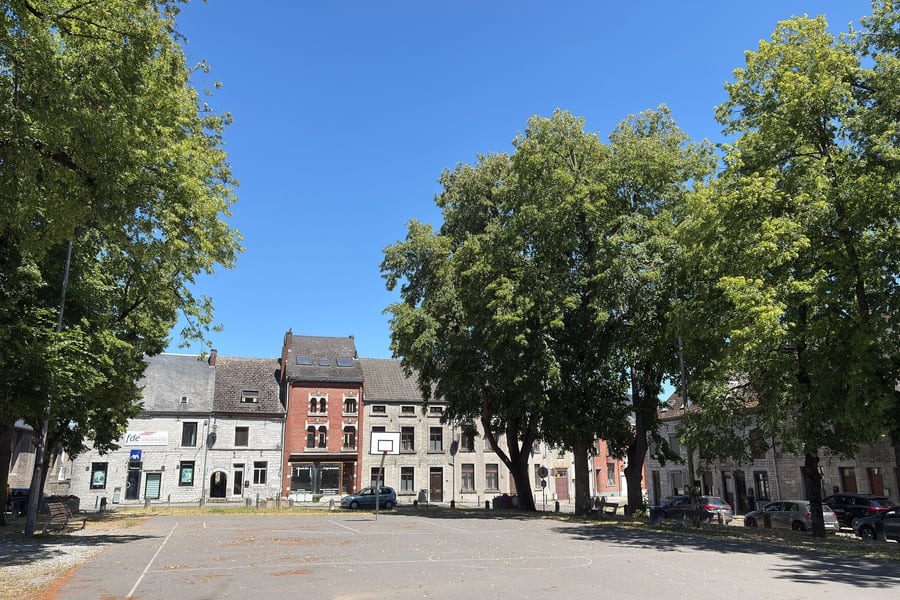 Vincent van Zeijst / Wikimedia Commons · CC BY-SA 4.0 · cropped
Mariembourg
The railway's home station is a planned fortress town of 1546, laid out for Mary of Hungary — Charles V's sister and governor of the Netherlands — and named after her. The streets still radiate from the central square in the star pattern of the original four-bastioned plan, roughly 300 by 170 metres inside its moat. The ramparts came down in 1853; the geometry did not.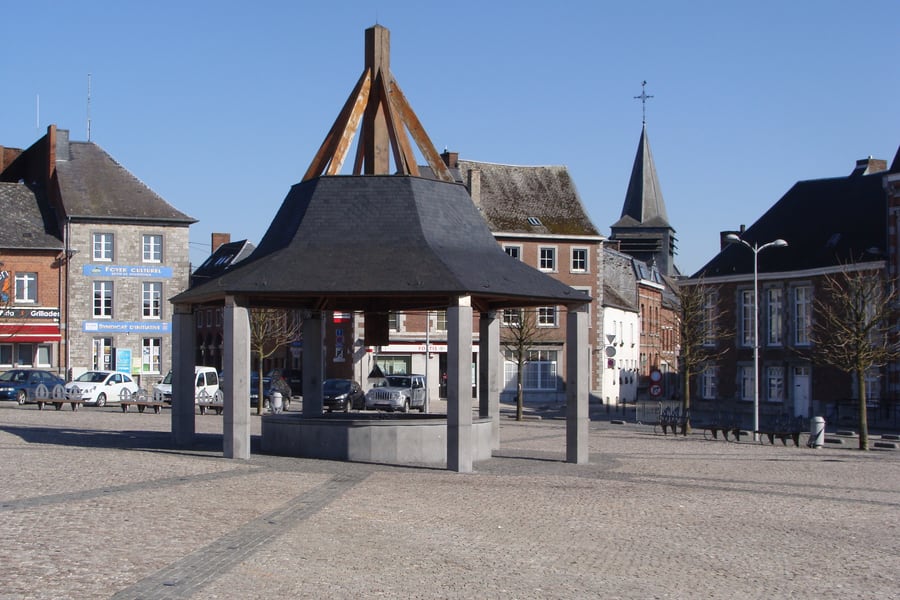 Paul matagne / Wikimedia Commons · CC BY-SA 3.0 · cropped
Philippeville
Mariembourg fell to the French in 1554, so Charles V threw up a replacement fifteen kilometres north: Philippeville, founded 1 October 1555 and walled in three months, a five-sided fortress named for his son, the future Philip II. Above ground almost nothing is left — the works were demolished between 1853 and 1856 — but the tunnels are, and a guided walk takes you through 500 metres of them.Where to Sleep
This is rural Wallonia, so accommodation runs to the small and the characterful rather than the corporate — which suits a steam-railway weekend perfectly.
- In the villages along the line. Nismes, Olloy, Vierves and Treignes and their surroundings have gîtes, B&Bs and small guesthouses, many in old stone farmhouses, ideal if you want to wake up in the valleys the train runs through.
- Mariembourg and Couvin. For a base near the railway's home end with a few more options — hotels, inns and holiday rentals — the twin towns of Mariembourg and Couvin are the practical choice, and both are on the SNCB line.
- Nature-park stays. Being inside the Viroin-Hermeton country, the area has campsites, holiday parks and rural lodges aimed at walkers and cyclists — good value and well placed for the outdoors.
- Book ahead for gala weekends. When the railway holds a "Vapeur en Fête" event, beds in the immediate area fill up; reserve early or widen your search toward Philippeville or Chimay.
As with the ride itself, the pleasure here is the slower pace: a stone village, a quiet river, and the sound of a steam whistle drifting up the valley in the morning.
Questions or corrections
Planning this trip and stuck on something, or spotted a time, fare or detail that has changed? Send us a message about Chemin de Fer à Vapeur des Trois Vallées. We read every one, and we update this page when something has changed.