Cinque Terre Express
Anyul Rivas / Wikimedia Commons · CC BY 2.0 · cropped
- DistanceUnder 19 km (La Spezia–Levanto)
- DurationAbout 25 minutes end to end
- Best seasonApril–June & September–October
Introduction
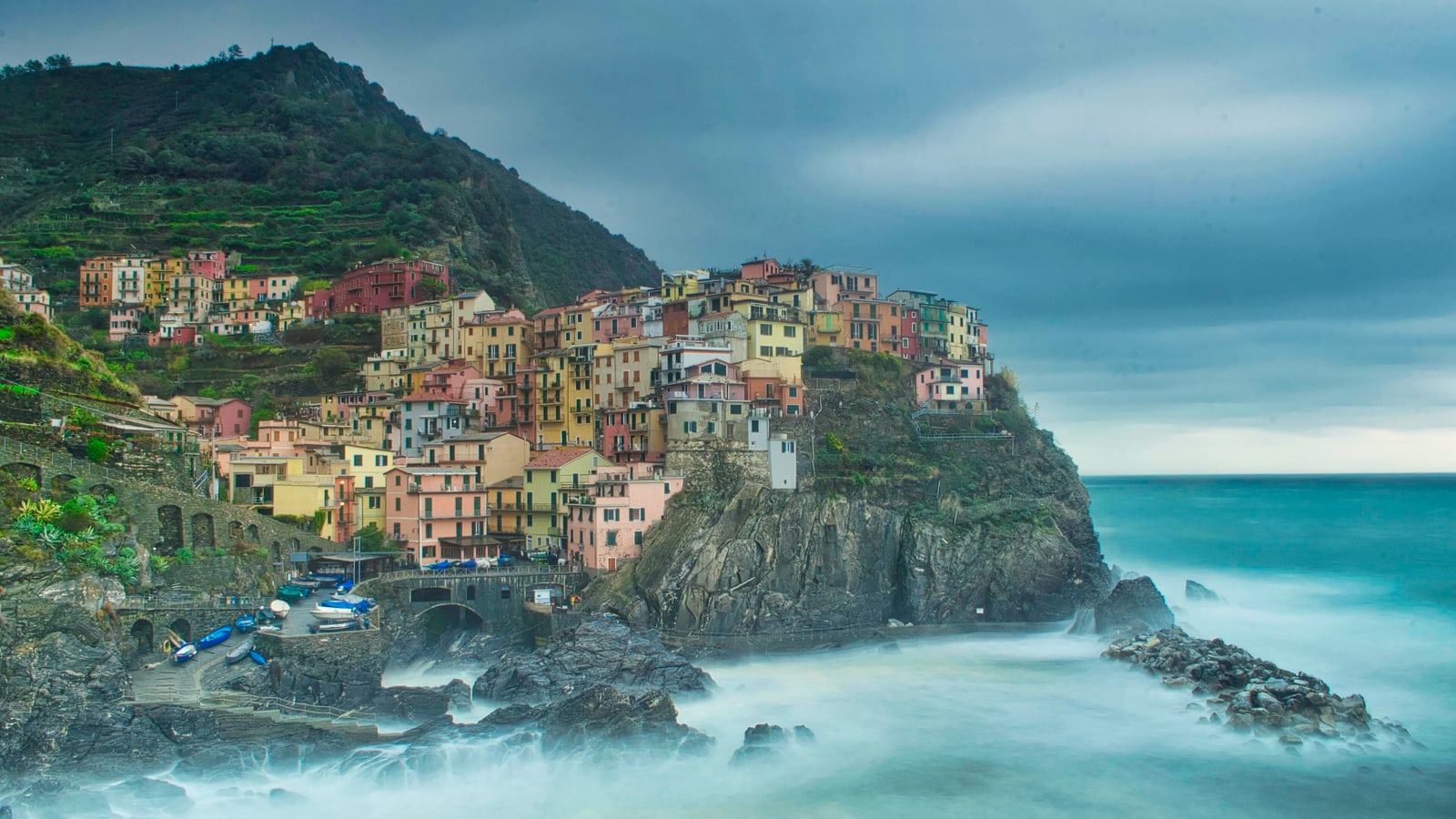
On a wild, near-vertical stretch of the Italian Riviera, five ancient fishing villages cling to the cliffs above the Ligurian Sea. They are the Cinque Terre — the "Five Lands" — and for most of their history the sea was the only easy way to reach them. Then came the railway, threaded through the headlands in a chain of tunnels, and with it the little train that has stitched the villages together ever since.
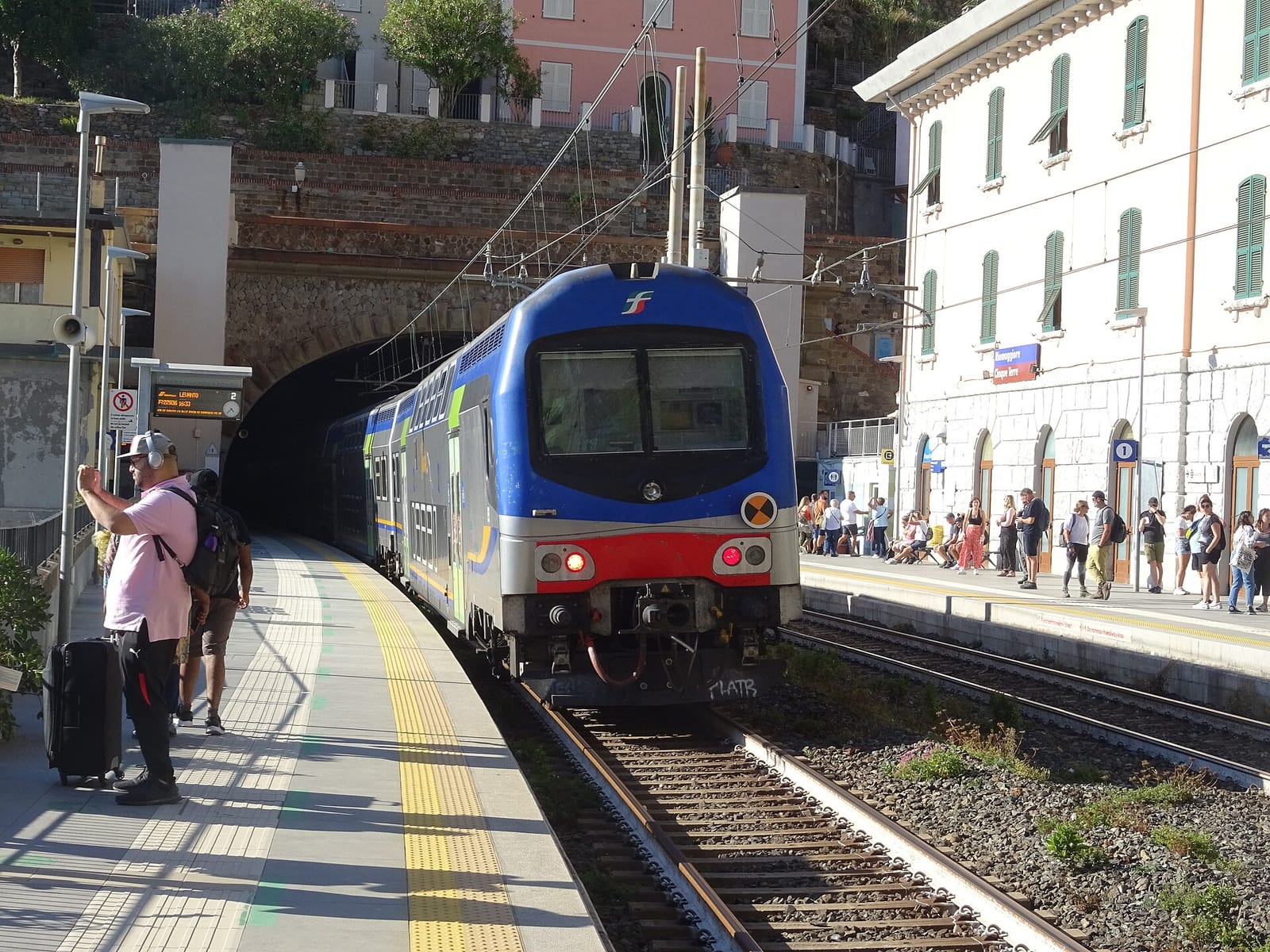
Today that train is the Cinque Terre Express, an ordinary Trenitalia regional service that happens to run one of the most delightful short journeys in Europe. It shuttles all day between La Spezia and Levanto, calling at Riomaggiore, Manarola, Corniglia, Vernazza and Monterosso al Mare — five stops, barely five minutes apart, each one a burst of pastel houses, boats and blue water between long dark tunnels.
There is nothing grand about the rolling stock, and the whole line is under 19 kilometres long. Yet with a single card in your pocket you can hop on and off as the mood takes you, walk the cliff paths between villages, and treat this entire UNESCO-listed coast as one glorious open-air museum reached entirely by rail.
The Journey
The line the Cinque Terre Express runs on is part of the coastal railway between Genoa and La Spezia, and it is a feat of stubborn Victorian engineering. When the last, hardest section opened on 24 July 1874, it finally ended the isolation of these villages: to lay track along 44 kilometres of near-sheer coast, the builders had to bore 51 tunnels — over 28 kilometres of them — and throw more than twenty bridges across the ravines. So much of the route is underground that the journey becomes a kind of flickering slideshow: darkness, then a sudden dazzling frame of sea and painted houses, then darkness again.
Ride it from La Spezia Centrale, the workaday city at the southern end, and the first stop is Riomaggiore, its tall houses stacked up a narrow ravine to the water. A minute or two of tunnel and you reach Manarola, perhaps the prettiest of all, tumbling down to a tiny rock harbour where swimmers leap from the quay. Next comes Corniglia, the odd one out — the only village with no harbour, perched high on a headland, its station connected to the town by a long stairway or a shuttle bus.
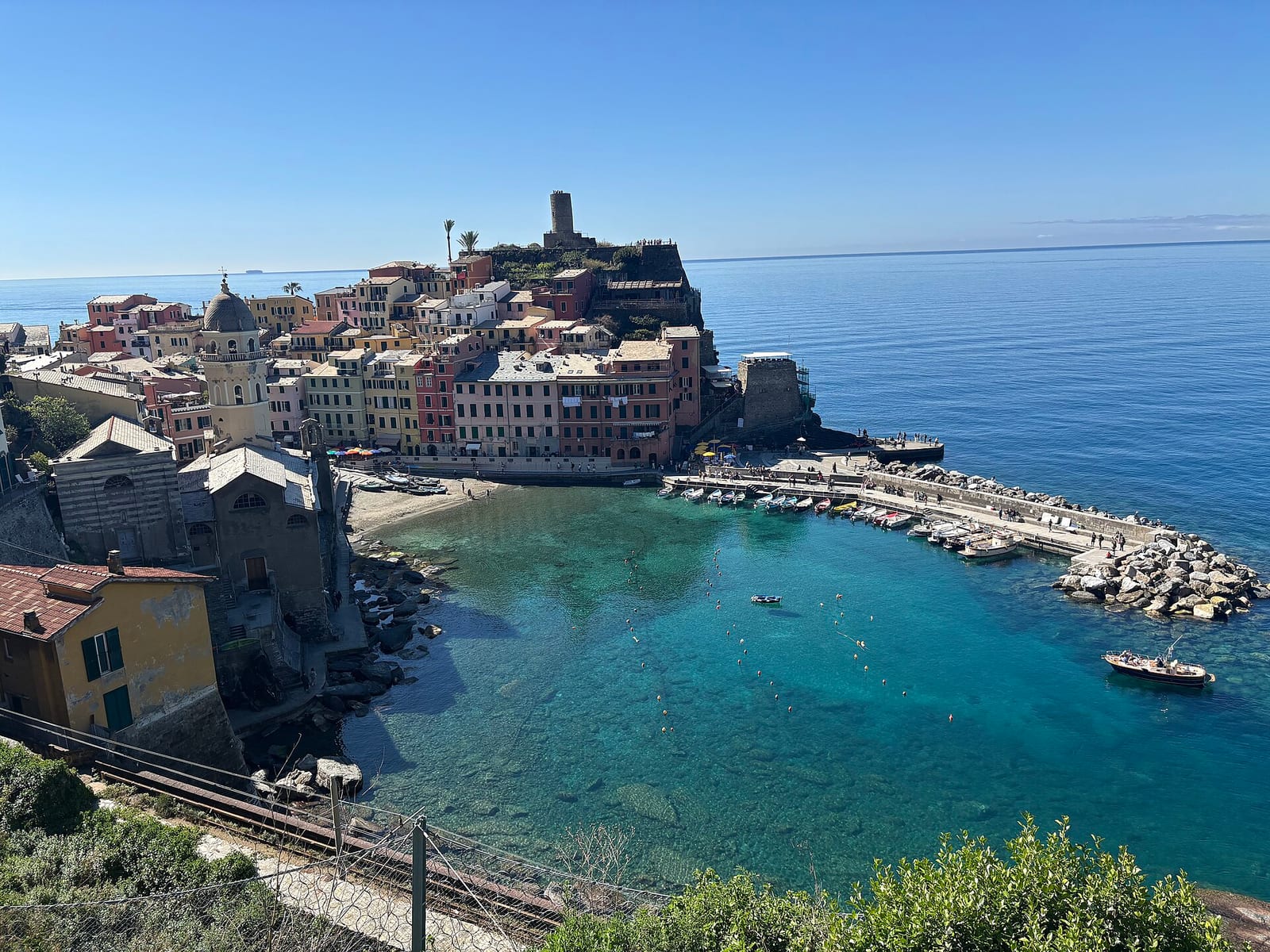
On again to Vernazza, with its natural harbour, medieval watchtower and ring of coloured houses — the postcard village — and finally Monterosso al Mare, the largest, and the only one with a proper sandy beach and a row of stripy umbrellas. Beyond it the train slips through one last headland to Levanto, a relaxed little resort that makes a fine, quieter base.
The beauty of it is that you need no itinerary at all. Trains come every quarter of an hour in season; you simply ride to the far end and work your way back, village by village, swimming, wandering the stepped lanes and eating as you go, while the little Express does all the climbing through the cliffs for you.
Along the route
Anyul Rivas / Wikimedia Commons · CC BY 2.0 · croppedFive villages, one line
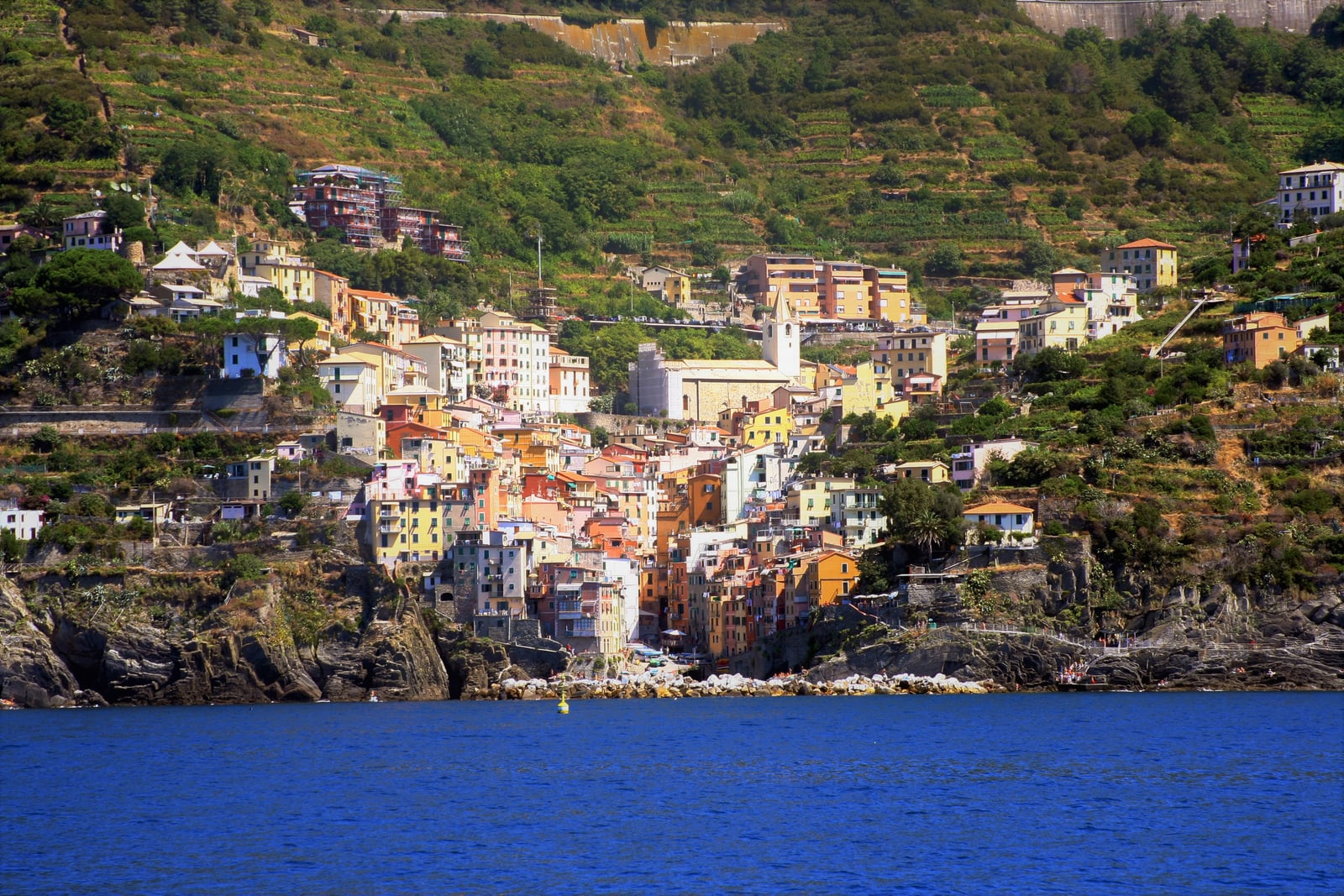
Riomaggiore, Manarola, Corniglia, Vernazza and Monterosso al Mare — five ancient fishing villages strung along a wild stretch of the Ligurian coast, each impossible to reach by car but barely five minutes apart by train.Remontées / Wikimedia Commons · CC BY-SA 4.0A railway carved into cliffs
There is almost no flat land here, so the line spends most of its life in tunnel — 51 of them along this coast — bursting out at each village for a dazzling few seconds of sea and pastel houses before diving back into the rock.Mathieu Chollet / Wikimedia Commons · CC BY-SA 4.0One ticket, hop on hop off
With a Cinque Terre Card you ride the Express all day and walk the famous coastal footpaths between the villages — train one way, trail the other — treating the whole UNESCO coast as a single open-air museum.A bit of history
Culture & experiences along the way
Palickap / Wikimedia Commons · CC BY-SA 4.0The five-minute coast hop
Trains run every 15 minutes or so in season, so you barely need a plan: ride out to Monterosso, work back village by village, and let the little Express do the climbing while you swim, wander and eat your way along the coast.chensiyuan / Wikimedia Commons · CC BY-SA 4.0 · croppedTrail one way, train the other
The Sentiero Azzurro ("Blue Trail") links the villages on foot, high above the sea. Walk a stretch for the views and the vineyards, then let the train whisk you home when your legs have had enough — the perfect lazy-active combination.Claudio Mazzocchi / Wikimedia Commons · CC BY-SA 4.0 · croppedSeafood, pesto and wine
This is the home of pesto alla genovese, of fried anchovies in a paper cone, and of the golden Sciacchetrà wine pressed from grapes grown on the terraced cliffs. Every village has a harbour-side table with your name on it.Timetables
The Cinque Terre Express is a high-frequency regional service run by Trenitalia for the Cinque Terre National Park — a turn-up-and-go shuttle rather than a train you plan a day around.
How it runs (2026):
| Detail | What to expect |
|---|---|
| Route | La Spezia Centrale ⇄ Levanto, calling at all five villages |
| Frequency | Every 15–20 minutes in high season (about 3 an hour); roughly hourly in winter |
| Volume | Close to 100 trains a day, 7 days a week at peak |
| End to end | Under 30 minutes for the whole line; ~5 minutes between villages |
| Peak season | Extra runs from 28 March to 1 November 2026 |
Good to know:
- You don't need a timetable, but check the board. In summer trains are so frequent you just show up; in the quieter months, glance at the departure screen so you're not left waiting an hour.
- It gets very busy. From late spring to early autumn — above all in July and August — the villages and the trains are packed. Early morning and early evening are calmer and cooler.
- The trains are short. Platforms and carriages are small; have your ticket ready and be prepared to stand on the busiest hops. It's only five minutes.
- Onward connections. At La Spezia and Levanto the line meets the main Genoa–Pisa railway, so the Cinque Terre slots easily into a bigger Italian rail trip.
Frequency as of the 2026 timetable; exact times change through the year. Confirm current schedules with the operator — see the Tickets section below.
Tickets
There are two sensible ways to pay, depending on how much hopping you plan to do. The Cinque Terre Treno Card is what most visitors want: unlimited travel on the Cinque Terre Express between Levanto and La Spezia for one, two or three days, and access to the National Park's paid coastal footpaths. It is sold by the park at any village station or online, and it pays for itself quickly if you make more than a couple of hops or want to walk the ticketed trail sections.
If you are only making one or two hops, or carrying on along the Riviera, an ordinary Trenitalia regional single is simpler and cheaper — but it must be stamped in the platform machine before boarding. Buy ahead in peak season, because station queues run long on summer mornings.
Book your tickets
Cinque Terre Treno Card
Unlimited train + trails
The card most visitors want: unlimited rides on the Cinque Terre Express between Levanto and La Spezia for one, two or three days, plus access to the National Park coastal footpaths. Sold by the Cinque Terre National Park at every village station.
Book Tickets (opens in a new tab, on Cinque Terre National Park)via Cinque Terre National ParkTrenitalia regional ticket
Single hops & onward travel
If you're only making a couple of hops, or travelling on beyond the Cinque Terre, buy a standard Trenitalia regional ticket. The same trains continue along the Riviera and connect at La Spezia and Levanto with the main line to Genoa, Pisa and beyond.
Book Tickets (opens in a new tab, on Trenitalia)via TrenitaliaRail Passes
Whether a pass is accepted here in season could not be confirmed. Interrail's table of railway companies lists Trenitalia's regional trains as included in Italy, and the Cinque Terre trains are Trenitalia regionals. But from 14 March to 1 November 2026 Trenitalia charges travellers who do not live in Liguria its own Cinque Terre fare for any trip inside the park, between Levanto and La Spezia, and its conditions for that fare do not mention rail passes. Ask at the ticket office in La Spezia or Levanto before relying on a pass.
For hopping between the villages, a pass is not the ticket to buy anyway. A single inside the park costs €5, €8 or €10 depending on the day, and the Cinque Terre Treno Card gives unlimited trains between Levanto and La Spezia for one to three days. A pass earns its keep on the trains that bring you to the coast.
Checked October 2026 against interrail.com (opens in a new tab), Trenitalia's Cinque Terre fares (opens in a new tab) and its fare 39/9 conditions (opens in a new tab).
Places to Visit
The joy of the Cinque Terre is that the five villages themselves are the sights — but each has its own character, and the train puts them all within a few minutes of each other. Two of the places below are not villages at all: the coastal footpath that links them, and Portovenere at the far end of the same UNESCO listing.
 Alf.picerno / Wikimedia Commons · CC BY-SA 4.0 · cropped
Riomaggiore
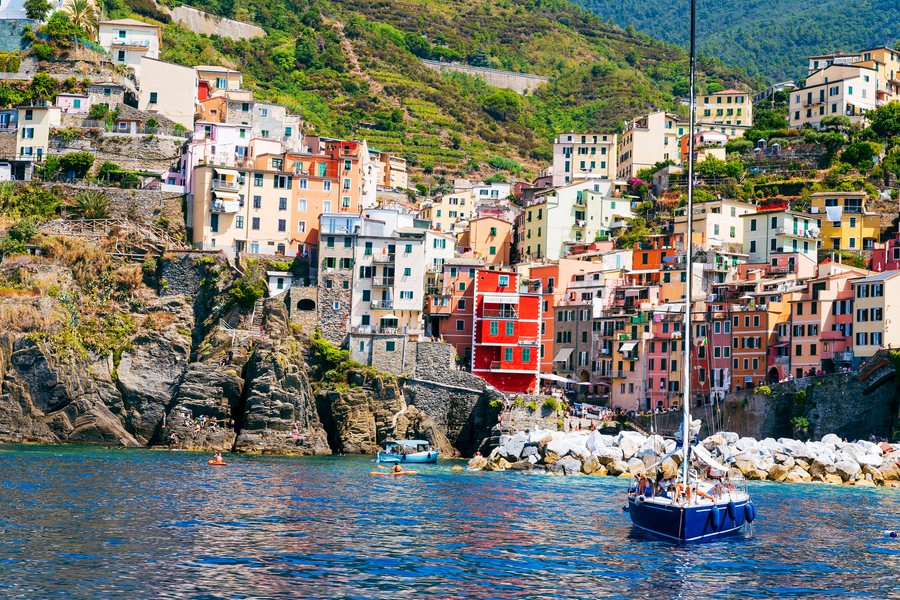
The first of the five coming from La Spezia, its tall painted houses packed into a steep ravine that runs down to a tiny harbour where the boats are hauled out onto the slipway. The rocks by the water are the place to sit with an aperitivo as the light goes gold.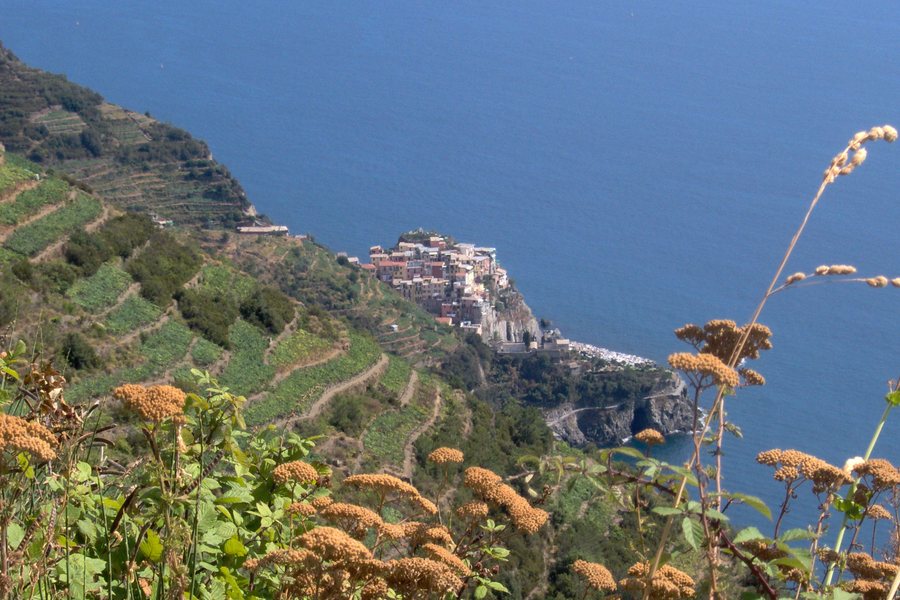 William Domenichini / Wikimedia Commons · CC BY-SA 3.0 · cropped
Manarola
Arguably the loveliest of the five, spilling down to a rock inlet where the brave leap into the sea. Walk up into the dry-stone terraces above the village — the ones that make the Sciacchetrà wine — for the view that ends up on every Cinque Terre postcard.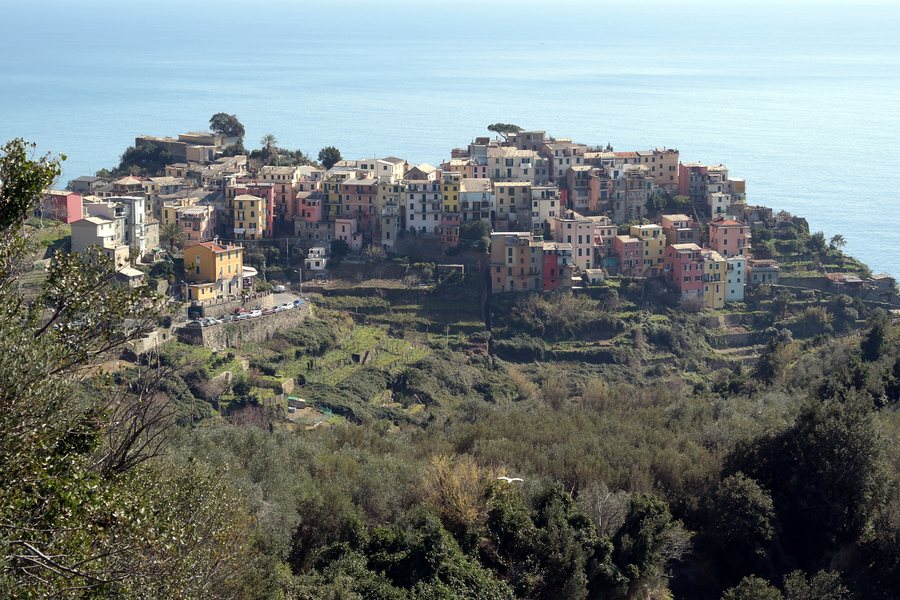 Luca Aless / Wikimedia Commons · CC BY-SA 4.0 · cropped
Corniglia
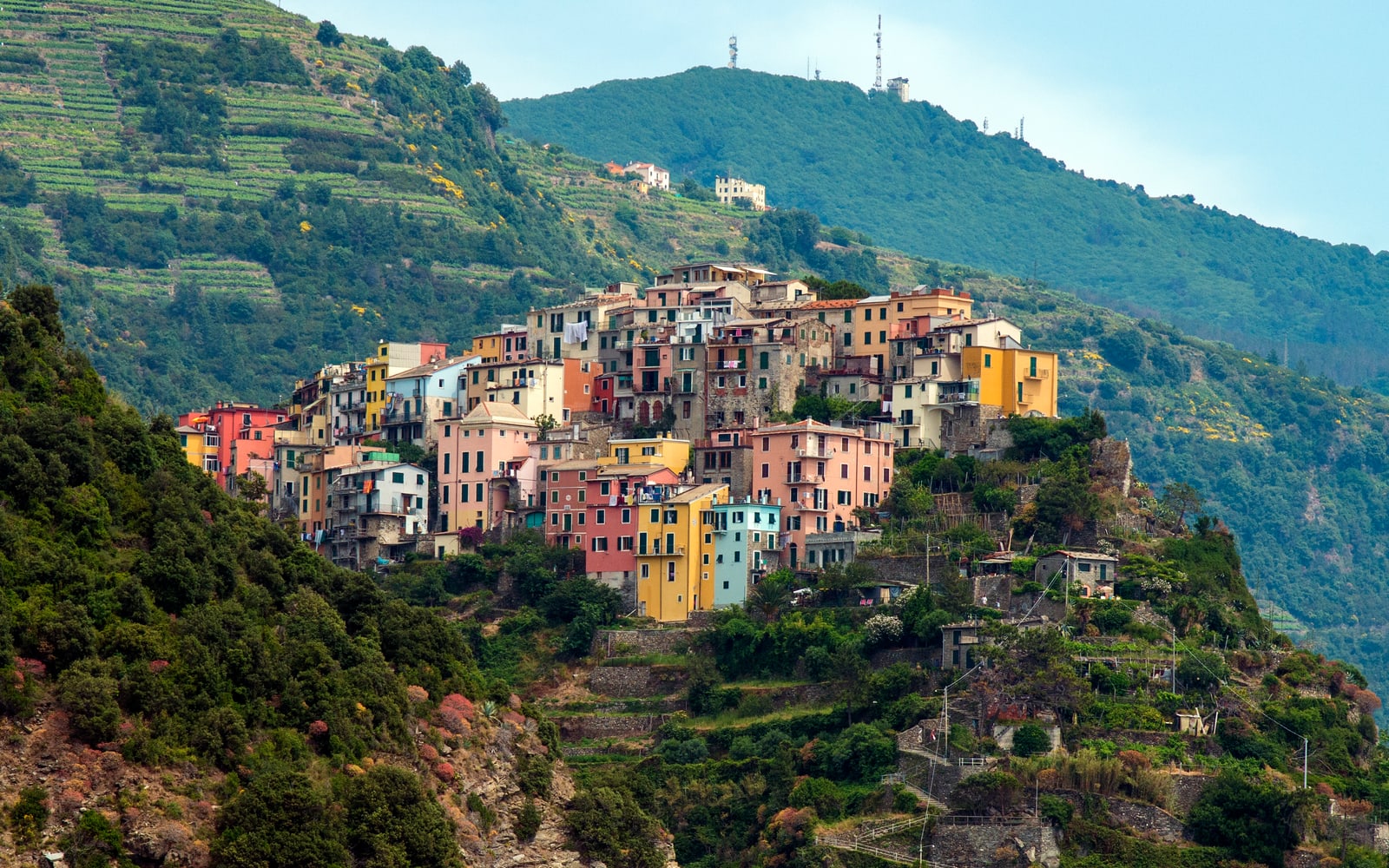
The only one of the five with no harbour, stranded high on a headland above the sea. You reach it from the station either by the Lardarina, a zigzag stairway of 33 flights, or by the shuttle bus that saves you the climb. Fewer crowds, wider views, famously good gelato.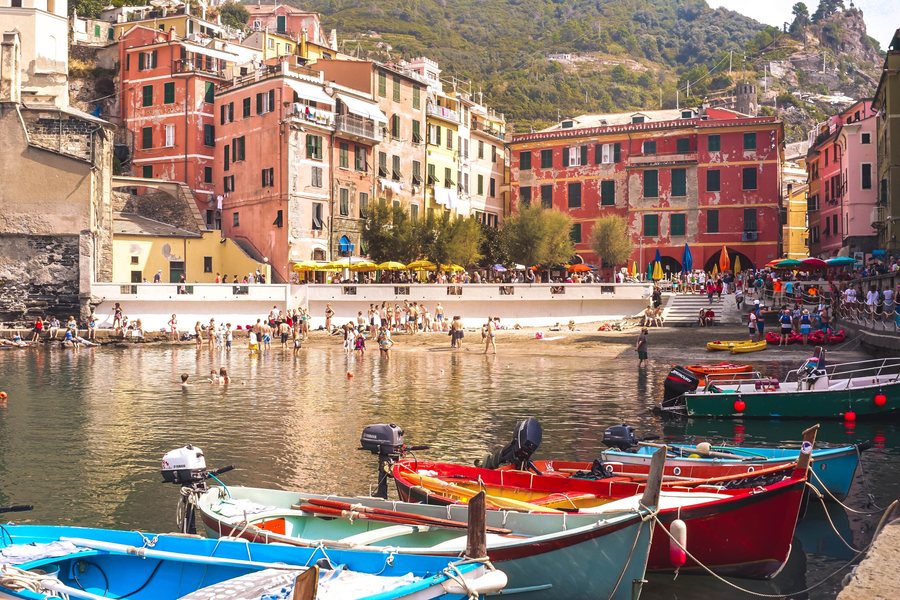 Federica Cidale / Wikimedia Commons · CC BY-SA 4.0 · cropped
Vernazza
Many people's favourite, and the one that looks most like the idea of the Cinque Terre: a natural harbour ringed by coloured houses, a church standing almost in the water, and a medieval castle tower above it that you can climb for the view back down.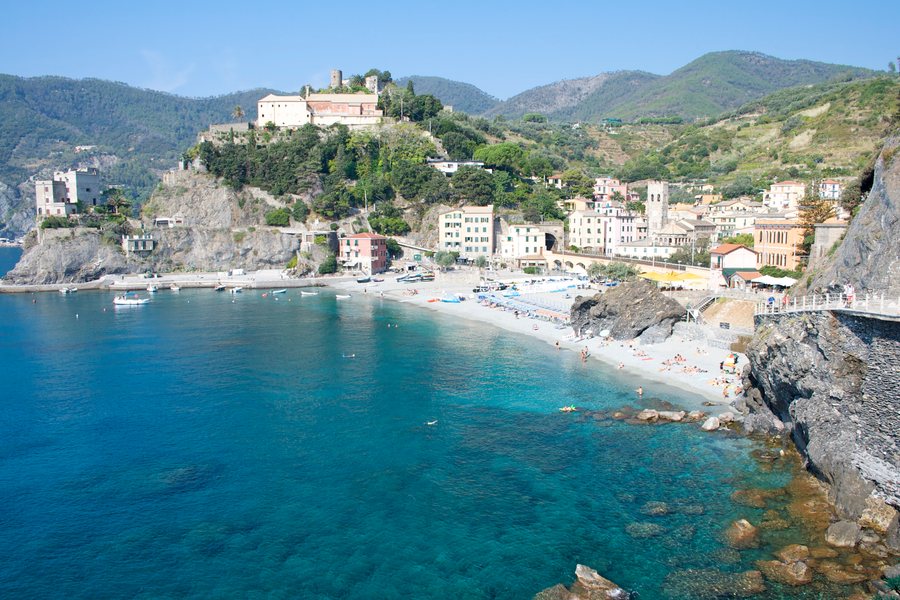 Lee & Chantelle McArthur / Wikimedia Commons · CC BY 2.0 · cropped
Monterosso al Mare
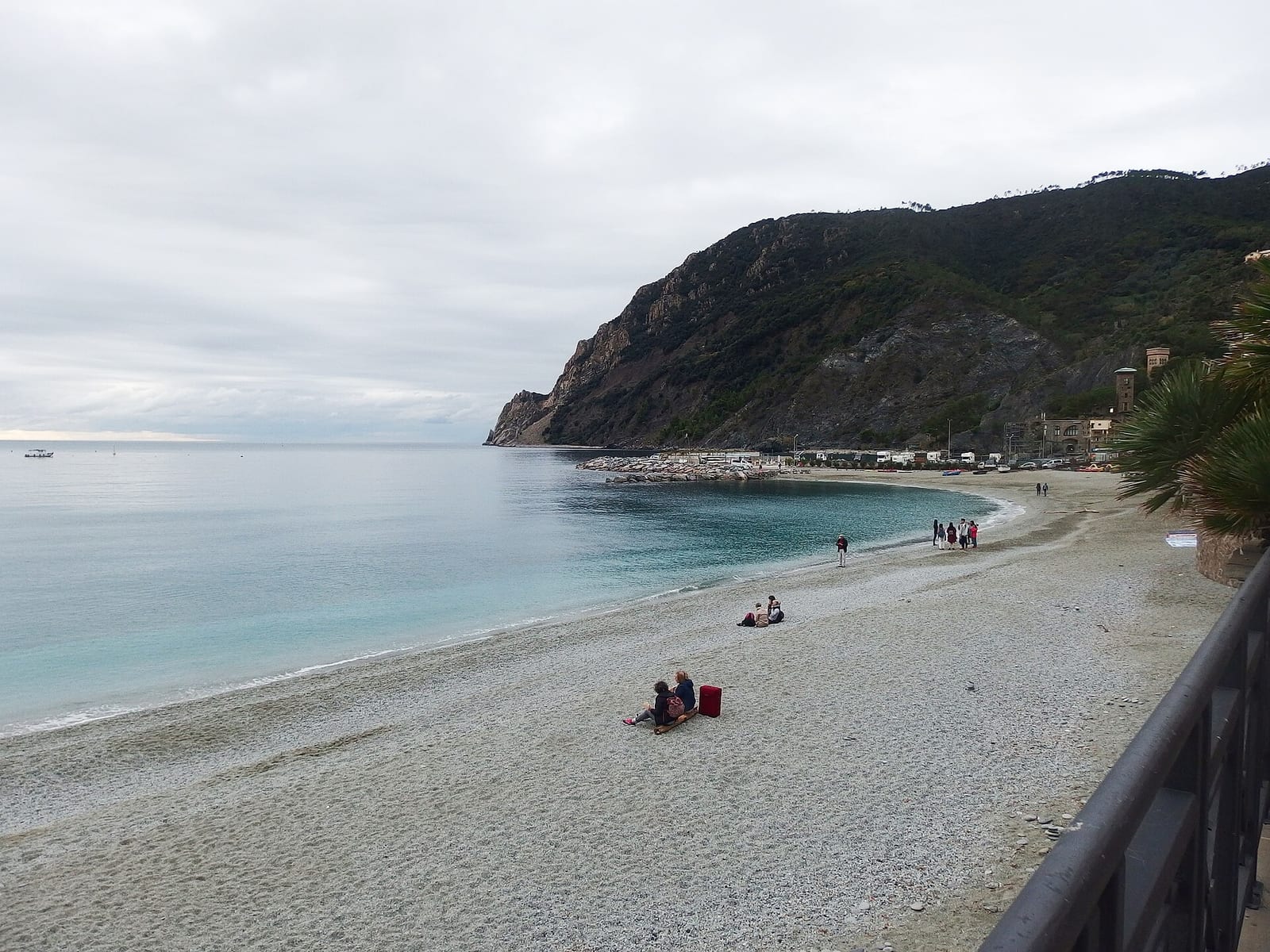
The largest and the most resort-like, split into a medieval old town and the newer beach quarter of Fegina, with the Capuchin convent on the headland between them. It is the only one of the five with a proper sandy beach, which is either the point or the problem depending on what you came for.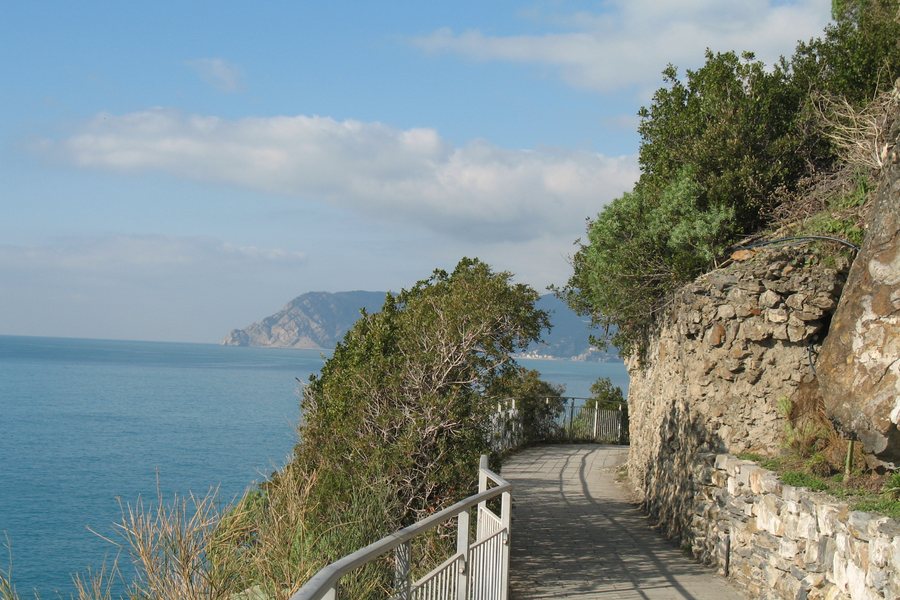 Twice25 & Rinina25 / Wikimedia Commons · CC BY 2.5 · cropped
The Sentiero Azzurro
The Blue Trail links the villages along the cliffs, and its first stretch is the famous Via dell'Amore between Riomaggiore and Manarola — shut for over a decade after a 2012 rockfall and reopened in 2024. It now runs one way only, Riomaggiore to Manarola, takes about 30 minutes, and needs a booked slot. Other sections close after heavy rain, so check before you count on a particular stretch. Walk one and take the train back.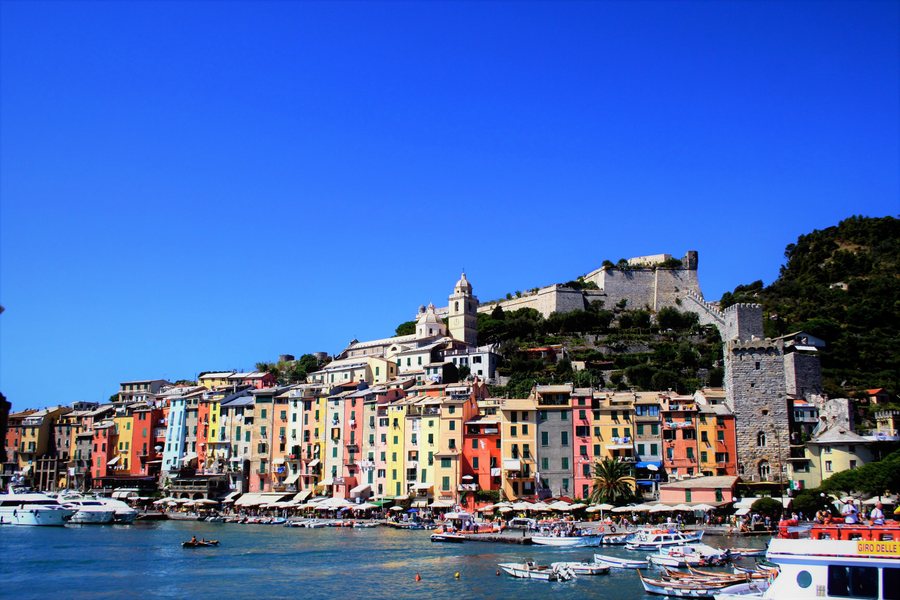 Claudio Mazzocchi / Wikimedia Commons · CC BY-SA 4.0 · cropped
Portovenere
Not one of the villages and not on the railway, but part of the same UNESCO listing and an easy add-on by boat or bus from La Spezia. A tall painted seafront runs out to a church on the rocks and the sea cave known as Byron's grotto, with the islands of Palmaria, Tino and Tinetto offshore.Where to Sleep
Because the villages are so tiny and so popular, where you stay shapes your whole visit — and the train means you don't have to sleep in the busiest spot to enjoy it.
- In the five villages — staying inside the Cinque Terre, in Vernazza, Monterosso, Manarola, Riomaggiore or Corniglia, is magical once the day-trippers leave and the villages are quiet and lamp-lit. Rooms are small, characterful and book up months ahead; Monterosso has the most (and the beach), Corniglia the fewest and the calm.
- Levanto — just one stop beyond Monterosso, this easy-going resort has a proper beach, more choice, better value and its own charm. A favourite base for families and anyone wanting a little breathing space.
- La Spezia — the workaday city at the southern end has plenty of hotels and the cheapest rooms, plus fast trains into the villages every few minutes. Less pretty, very practical.
- Portovenere — a beautiful alternative just outside the park, reached by bus or boat from La Spezia, for those who want the Ligurian charm without the Cinque Terre crush.
Whenever you can, come in spring or autumn rather than high summer, and book well ahead — the Cinque Terre is one of Italy's most sought-after corners, and its handful of rooms fill fast.
Questions or corrections
Planning this trip and stuck on something, or spotted a time, fare or detail that has changed? Send us a message about Cinque Terre Express. We read every one, and we update this page when something has changed.