Italy
Italy is one of the most rewarding countries in the world to explore by train — and it has a better claim than France to having started the whole high-speed story. The Florence–Rome direttissima opened in 1977, four years before the first TGV, and today Trenitalia's Frecce and the private Italo race between Rome, Florence, Bologna and Milan at up to 300 km/h, putting the great art cities a couple of hours apart.
But the real romance is on the slow lines. The little Cinque Terre Express darts between five cliff-clinging villages on the Ligurian Riviera; the Ferrovia Circumetnea has circled the foot of Mount Etna on narrow gauge since 1898; the Transiberiana d'Italia hauls vintage carriages over the snowbound Apennines to the second-highest station in the country; and Sardinia's Trenino Verde crawls through an interior no road really reaches. Add the lakes, the Dolomites and the Bay of Naples, and Italy is a country you can happily cross end to end on rails.
Rail journeys in Italy
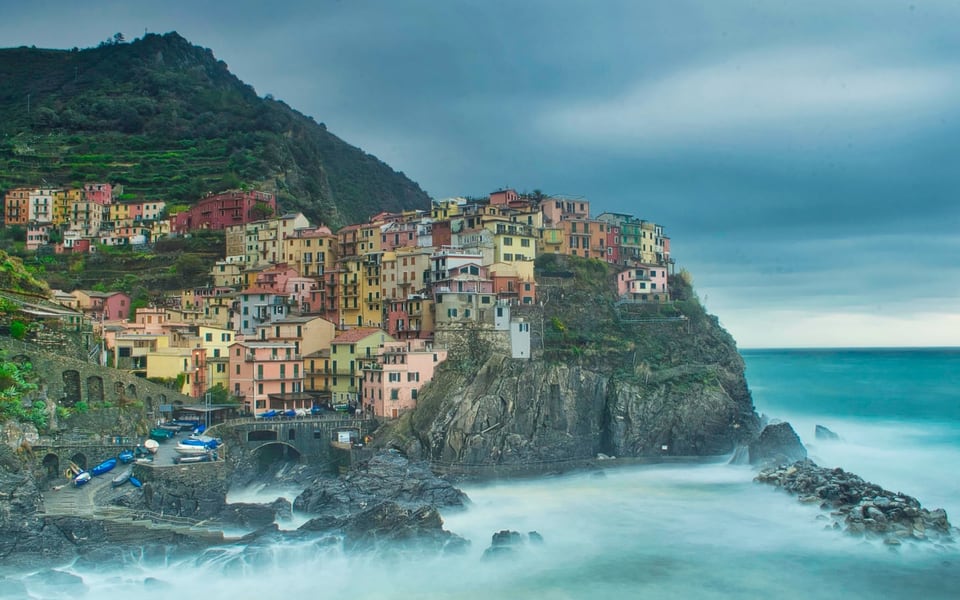
Cinque Terre Express
A five-minute hop between five impossibly pretty fishing villages — the little train that stitches the Cinque Terre together above the Ligurian sea.
View journey →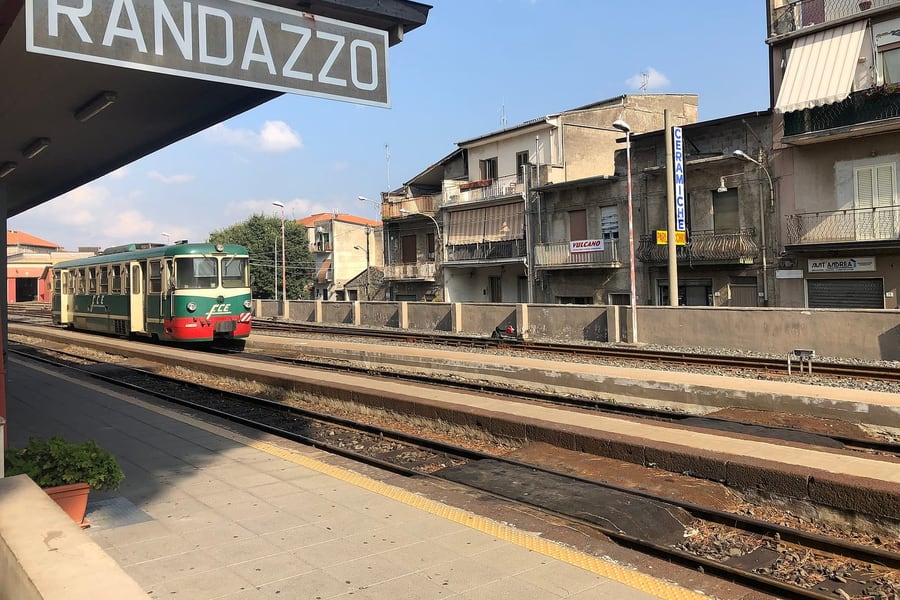
Ferrovia Circumetnea
A 950 mm line that has circled the foot of Europe's most active volcano since 1898, through lava fields and pistachio groves in a single rattling railcar.
View journey →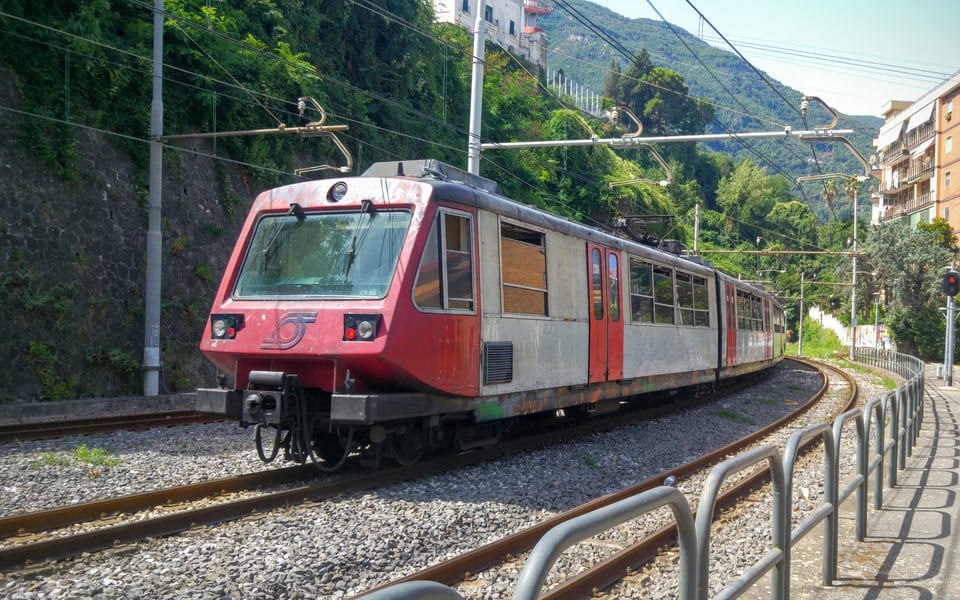
Circumvesuviana
Three of its stations are named for excavations. Naples' narrow-gauge commuter line skirts Vesuvius past Herculaneum and Pompeii to Sorrento.
View journey →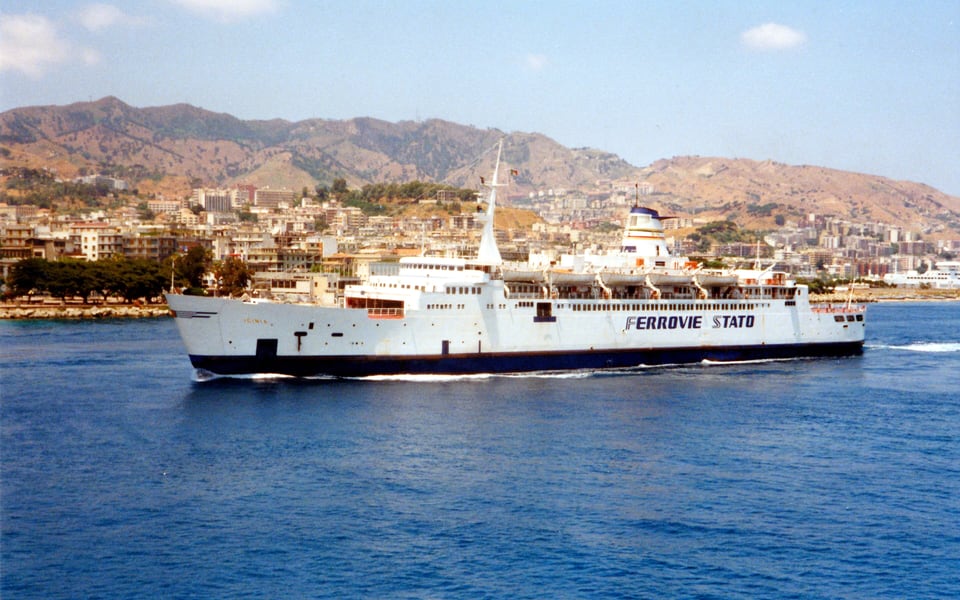
La Dolce Vita Orient Express
Italy's own luxury train, rebuilt from 1980s Intercity coaches, is split into sections and shipped across the Strait of Messina on its way to Sicily.
View journey →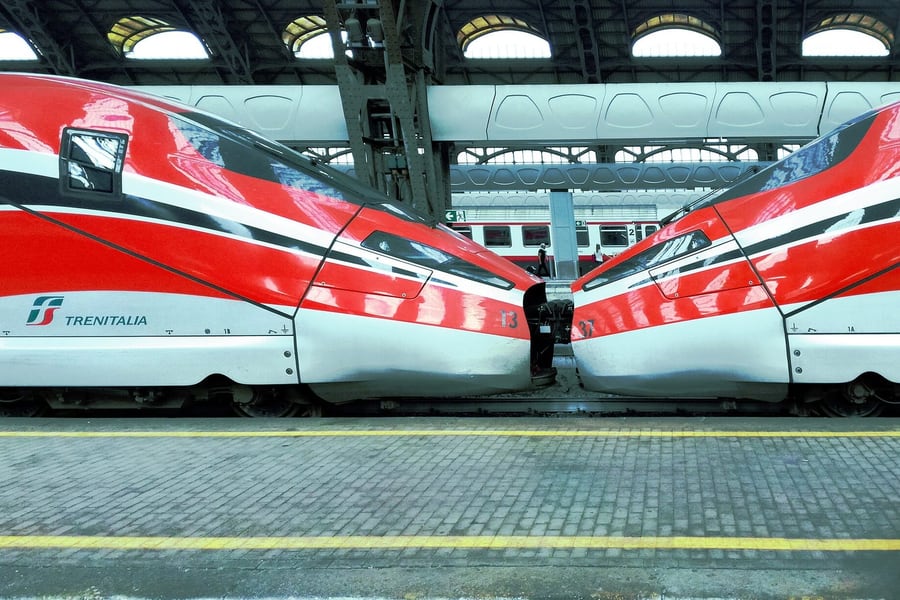
Frecciarossa Rome–Milan
Two of Europe's great cities, 548 km apart, in 2 hours 40 — over the line that started European high-speed rail, fifteen years before the TGV.
View journey →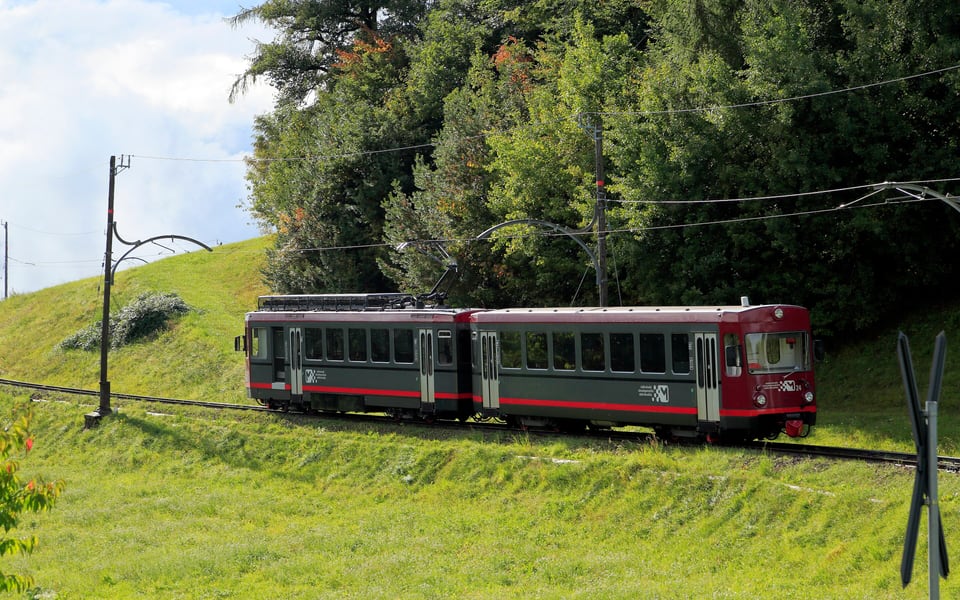
Rittner Bahn
Joined to no other railway since 1967, this line across the Ritten plateau is reached by cable car and runs trains retired from Swiss and German lines.
View journey →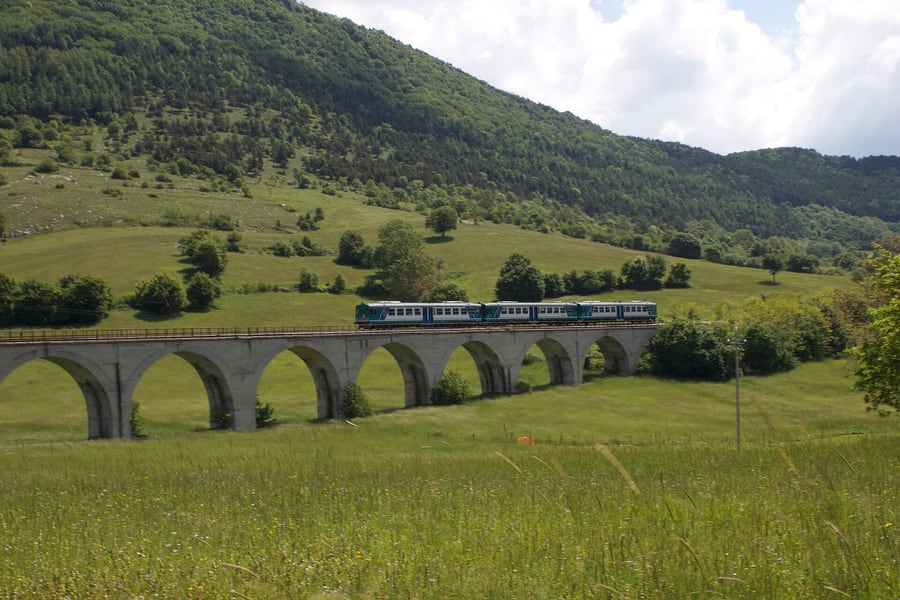
Transiberiana d'Italia
A journalist called it the little Trans-Siberian in 1980, for the snow. Ordinary trains gave up on the line in 2011; vintage carriages work it now.
View journey →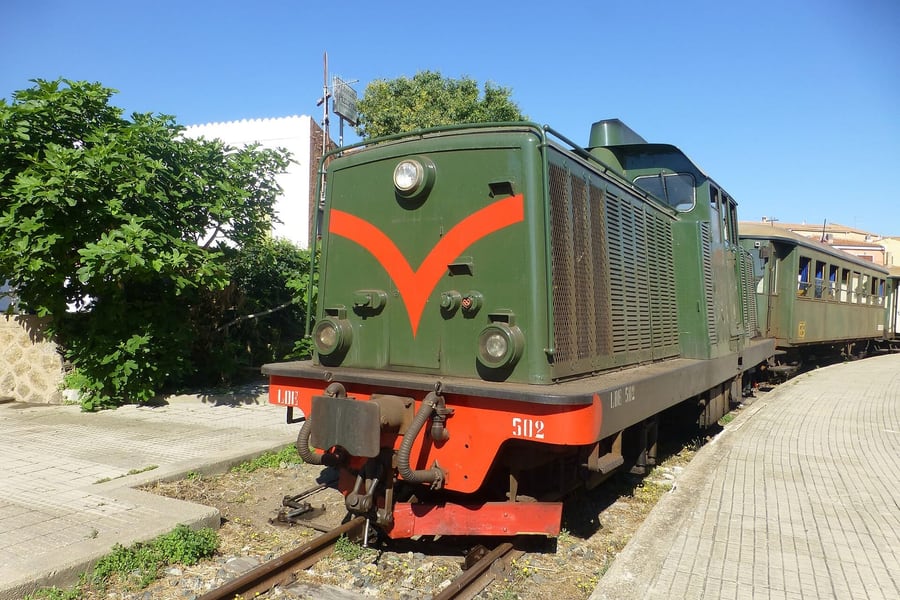
Trenino Verde della Sardegna
Sardinia's little green train — 404 km of narrow gauge kept alive for the view, crawling through cork oaks and granite hills no road really reaches.
View journey →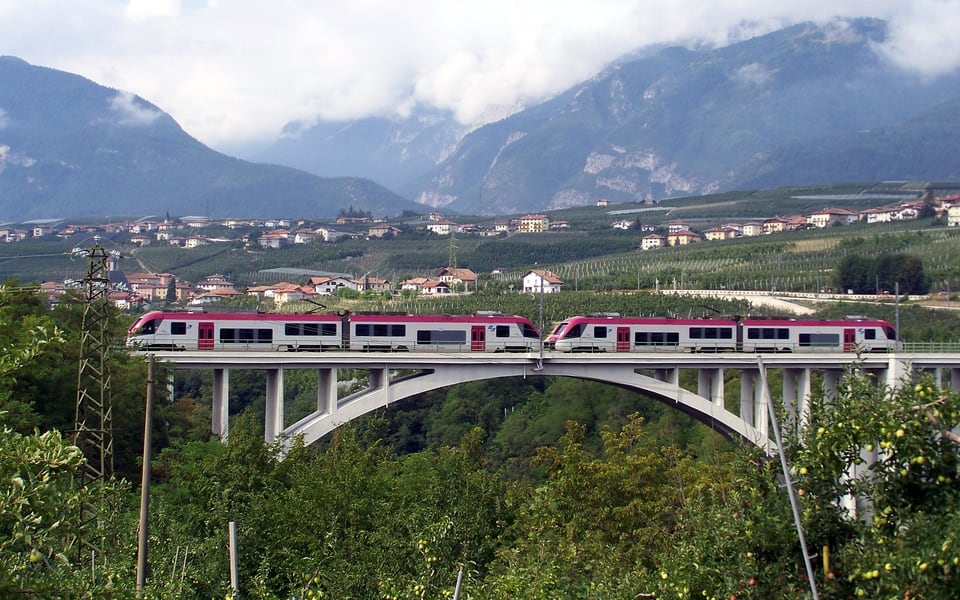
Trento–Malè–Mezzana Railway
Built as a Habsburg tram in 1909 and rebuilt as a mountain railway, it crosses a gorge 140 metres up on its way to the ski lifts of the Val di Sole.
View journey →Good to know
Is Italy easy to explore by train?
Very. The high-speed Frecciarossa and Italo trains connect the major cities in a few hours — Rome to Florence in about 1½ hours, Milan to Rome in 2 h 40 — while regional trains reach the coasts, lakes and hill towns. It's one of Europe's best-value, best-connected networks, and because two companies compete on the main line, it pays to price both.
Do I need to book Italian trains in advance?
For the high-speed Frecce and Italo trains, yes — they carry compulsory seat reservations and fares climb steeply towards departure, so the same seat can cost several times more on the day. Regional trains (including the Cinque Terre Express) are fixed-fare and turn-up-and-go; just remember to validate paper tickets before boarding. The heritage lines are different again — the Transiberiana d'Italia sells dated seats that sell out months ahead in winter.
When is the best time to visit Italy by rail?
Spring (April–June) and autumn (September–October) are ideal — warm, but before and after the summer crush. July and August are hot and busy, especially on the Cinque Terre coast, so book ahead. The network runs year-round, and winter has its own argument: it's the season the Transiberiana d'Italia is named for, when the Apennine snow is deep enough to justify the nickname.
What are Italy's best scenic railways?
Top of the list is the Cinque Terre Express along the Ligurian Riviera, threading five UNESCO-listed villages. Beyond it: the Ferrovia Circumetnea around the base of Mount Etna in Sicily, the Transiberiana d'Italia through the mountains of Abruzzo and Molise, Sardinia's Trenino Verde, and — just over the border, but ending at Tirano in Italy — the Bernina Express over the Alps.