Trento–Malè–Mezzana Railway
Moliva / Wikimedia Commons · CC BY-SA 3.0 · cropped
- Distance66 km
- DurationAbout 2 hours; 1 hour 40 minutes on the fastest train
- Best seasonAll year; about hourly on weekdays and Saturdays, every two hours on Sundays
Introduction
For its first fifty years the line from Trento to the Val di Sole was a tram. In the valleys it is still called one.
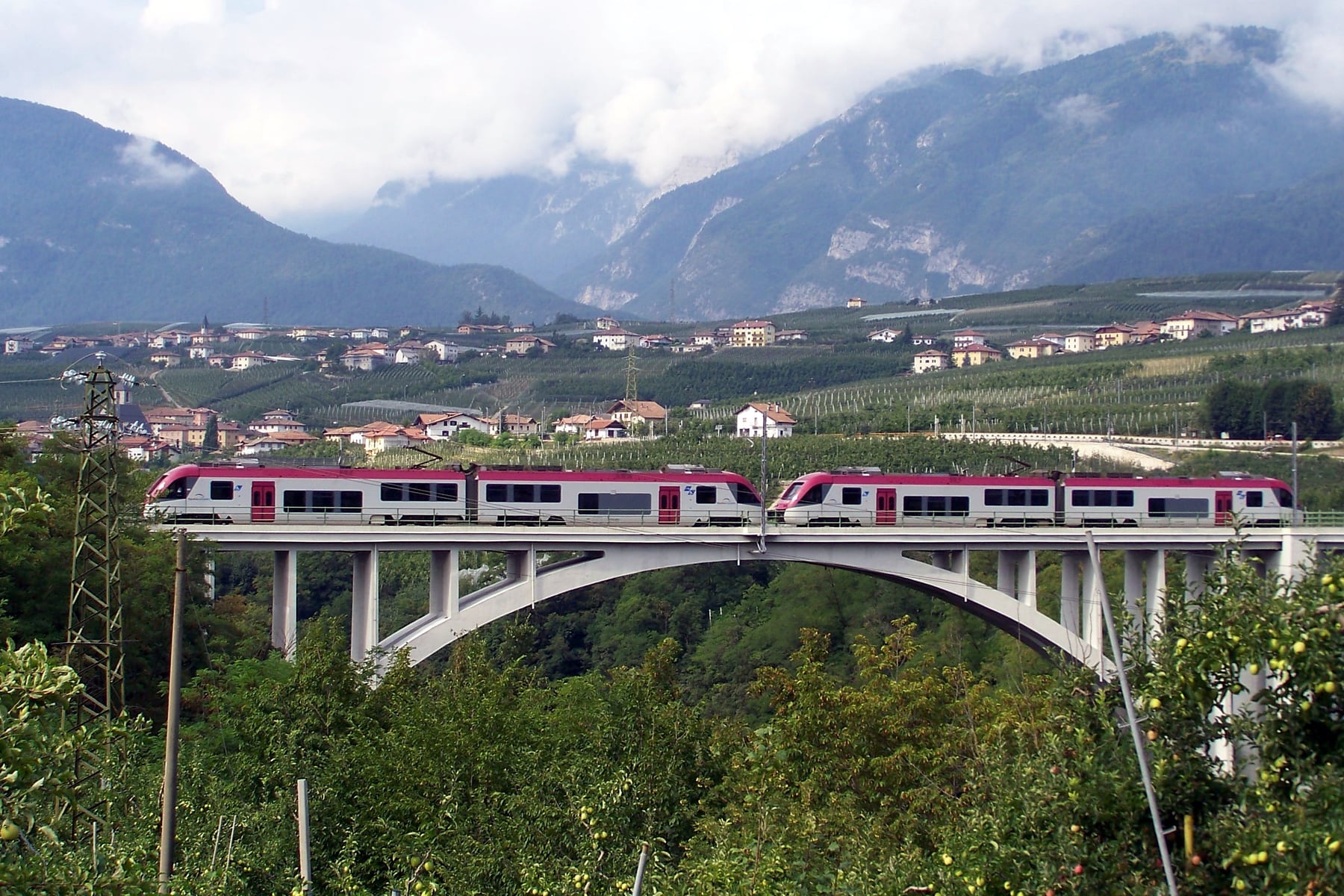
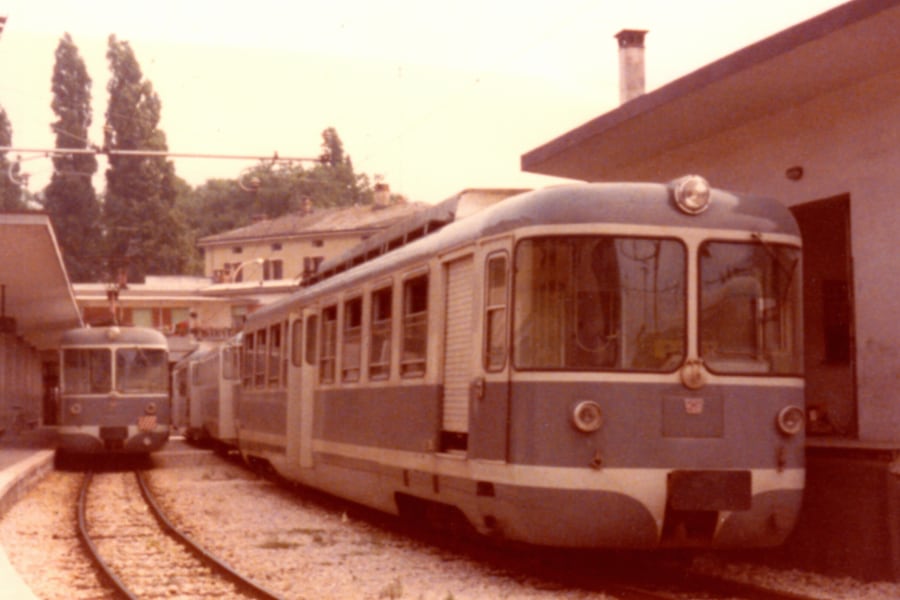
It opened in 1909, when Trentino was still Austrian, as a metre-gauge electric tramway: 60 kilometres long, and for 43 of them it ran in the road. By the end of the Second World War the track and the cars were so worn out that closing it was considered. Instead it was rebuilt from end to end as a proper mountain railway, four kilometres shorter, on its own track, with tunnels, a 2,670-metre bore under the Faè and a concrete arch over the gorge of the Noce more than 140 metres high, which the operator says was for a time the highest railway bridge in the world. The new line opened between 1960 and 1961, at first with the old tramcars; new electric trains followed in 1964. People in the Val di Non still call it the tram, or the Vaca Nonesa, the Non valley cow.
Today it is an ordinary regional railway, running all year. Its trains leave from beside Trento's main station, cross the vineyards of the Adige plain, climb into the apple orchards of the Val di Non and follow the Noce into the Val di Sole, where the line was extended past its old terminus at Malè in 2003 and 2016. At Daolasa and Marilleva the trains stop beside the ski lifts.
The Journey
The line has its own station at Trento, a few metres from the main station on the Brenner line. As far as Gardolo, on the city's northern edge, the track has a third rail, laid so that standard-gauge freight could reach a factory there; from then on it is metre gauge, electrified at 3,000 volts. The trains run north up the Adige valley to Lavis and across the Piana Rotaliana, a flat plain of gravel planted with vines, to Mezzolombardo.
Into the Val di Non
At Mezzolombardo the railway turns away from the Adige and starts to climb, on grades of up to 50 per thousand and curves as tight as 80 metres. The Val di Non opens out above: a broad, high valley of woods and apple orchards, scattered with castles. Past Dermulo, just before Cles, the line meets the gorge of the Noce at the Santa Giustina dam and crosses it on a great concrete arch, built between 1957 and 1959, 78 metres across and more than 140 metres above the riverbed. Beyond it lies Cles, the valley's main town, above the lake the dam created.
Into the Val di Sole
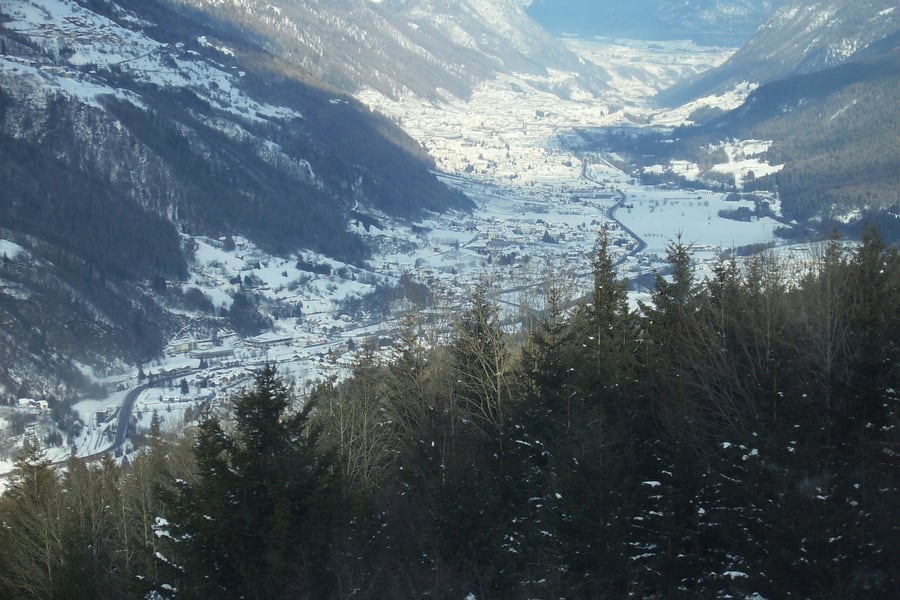
Past Cles the line passes under the Faè in its longest tunnel, 2,670 metres, and comes out onto the Mostizzolo bridge, high over the Noce: the gateway to the Val di Sole. Castel Caldes stands opposite Caldes station, and the train reaches Malè, the old terminus. The last stretch, about 11 kilometres, was added in two steps, to Marilleva in 2003 and to Mezzana in 2016. At Daolasa and Marilleva 900 the stations connect with the lifts of the Folgarida–Marilleva ski area, a rail-and-cable system the operator describes as the only one of its kind in Italy. The line ends at Mezzana, at the edge of the Adamello Brenta nature park; a further extension towards Fucine and the Tonale pass is being studied.
The trains
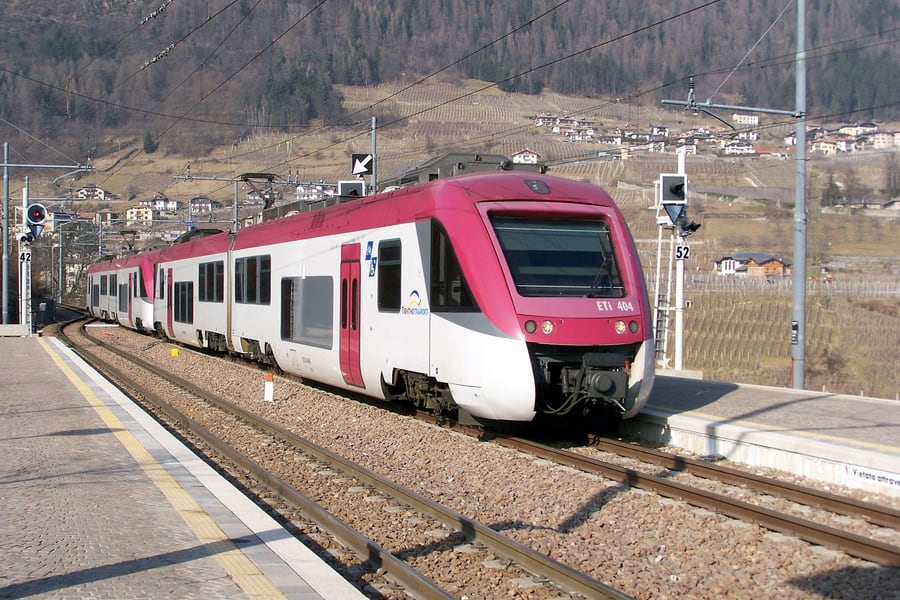
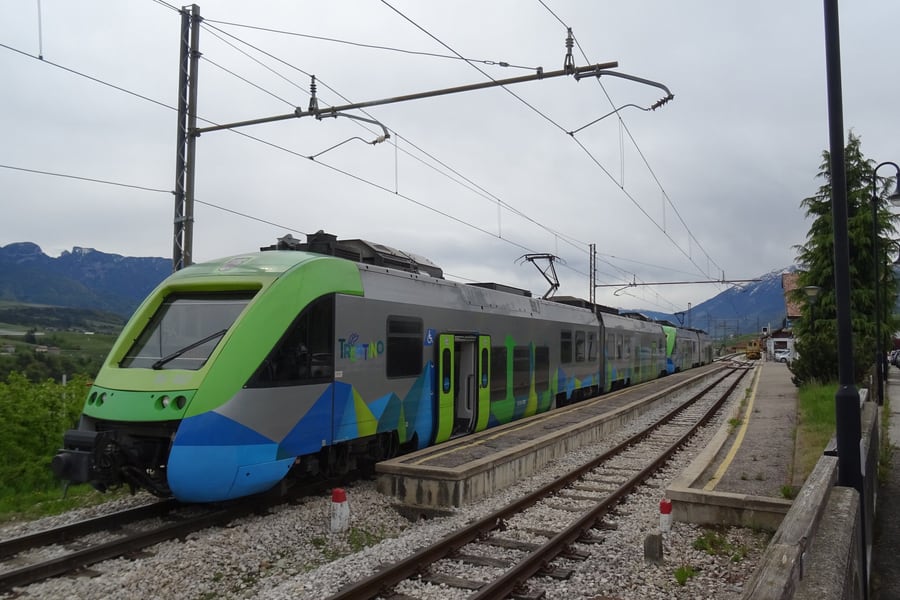
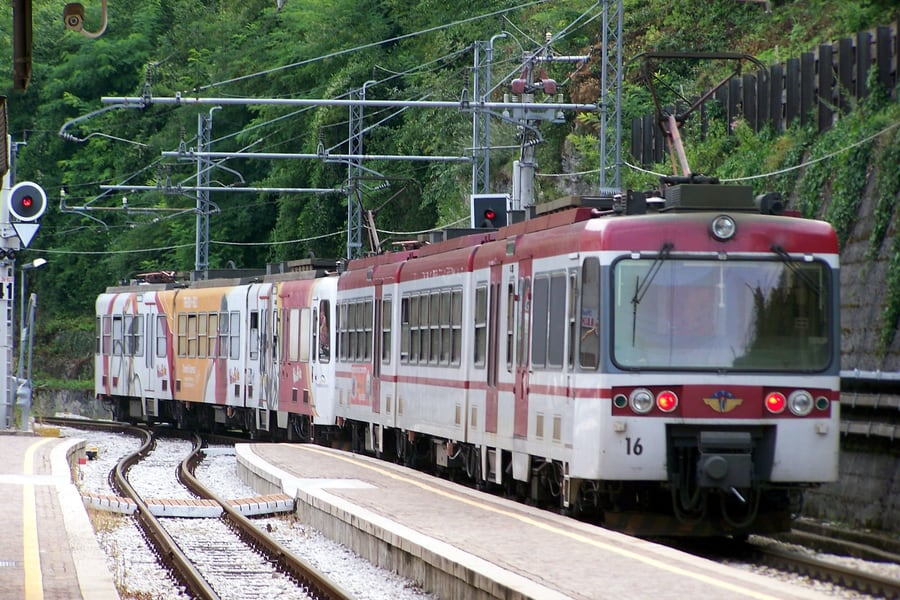
The main fleet is the ETi 400: fourteen electric units built by Alstom from 2005, first in red and white and some now in the green and blue of the Trentino livery. Four FiReMa units of 1994 also run, partly stripped of seats in summer to carry bicycles as the "Treno + Bici". The Stanga railcars that opened the rebuilt line in the 1960s are stored, and the operator keeps a historic train, a 1909 coach behind a 1929 motor car, for special runs.
Along the route
 Syrio / Wikimedia Commons · CC BY-SA 4.0 · cropped
Into apple country
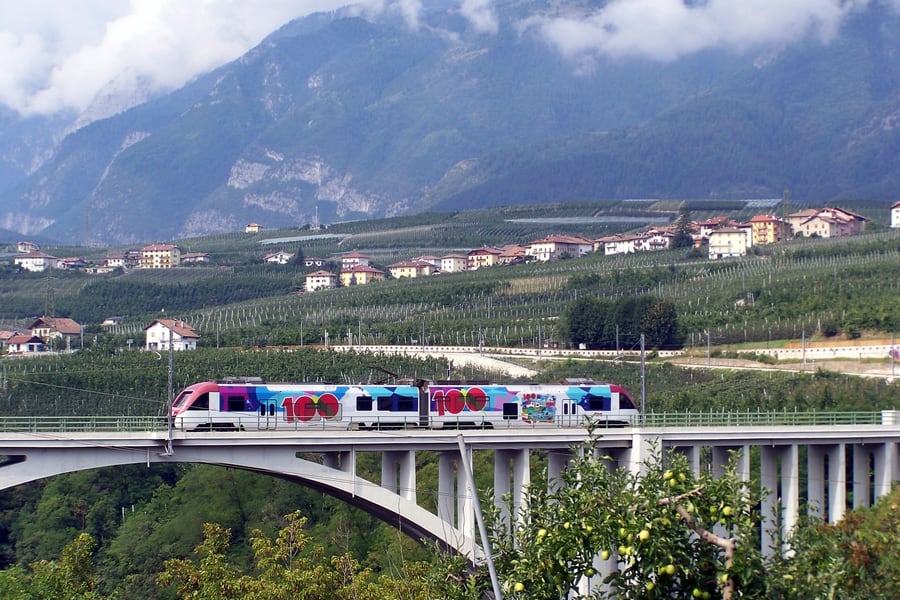
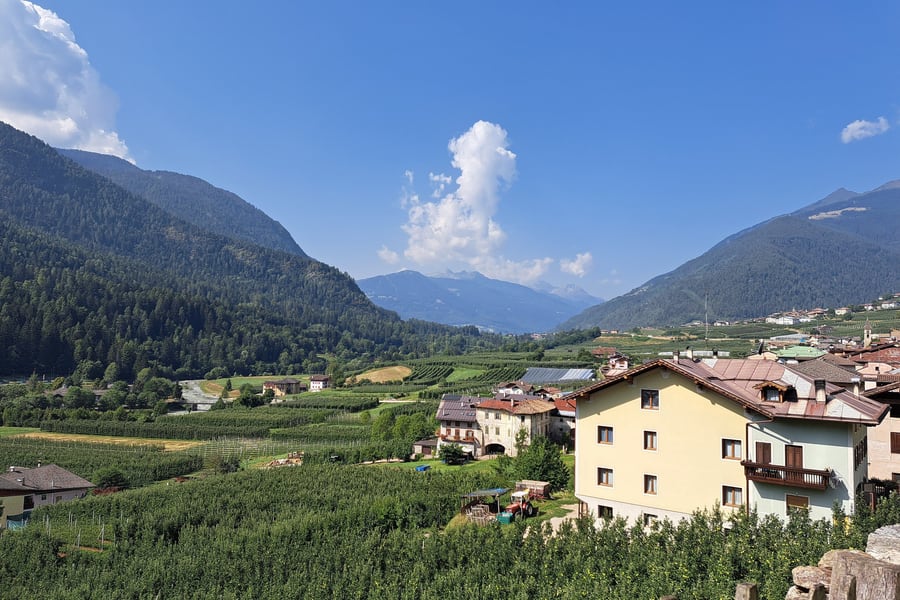
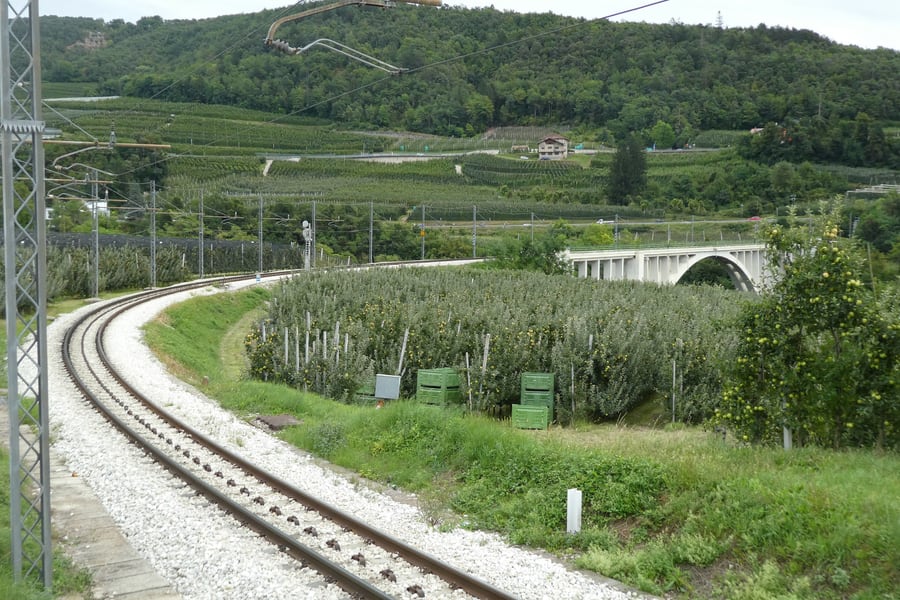
From Mezzolombardo the line leaves the Adige plain and climbs into the Val di Non, on grades of up to 50 per thousand and curves as tight as 80 metres. Above the gorge the orchards run right up to the ballast.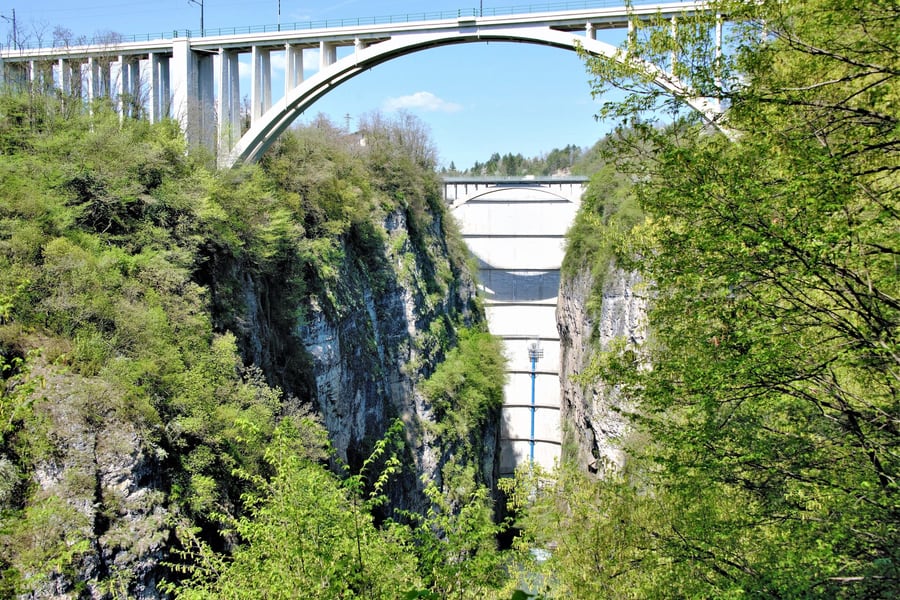 Strion / Wikimedia Commons · CC BY-SA 4.0 · cropped
The Santa Giustina bridge
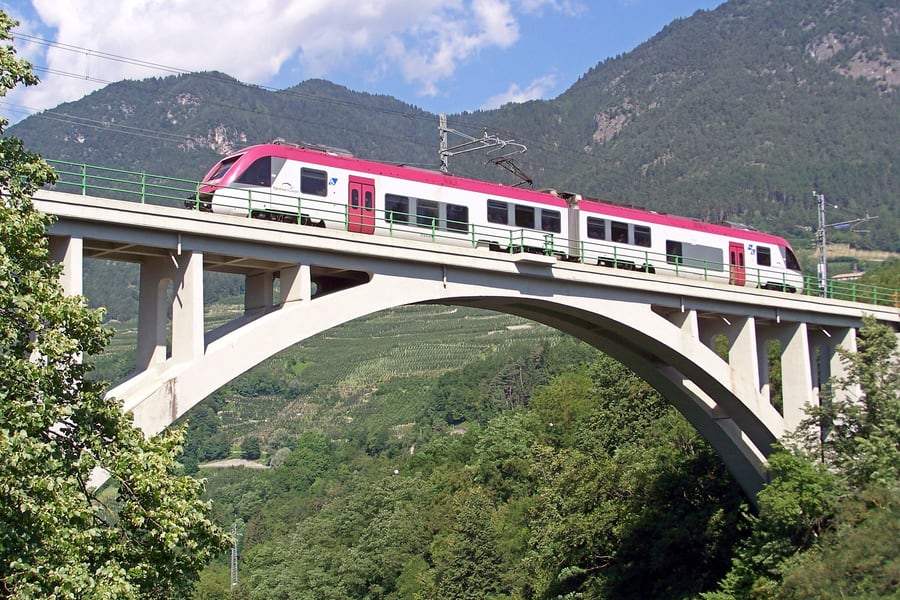
Just below the dam that holds back the lake, the train crosses the gorge of the Noce on a concrete arch of 1957–59, 78 metres across and more than 140 metres high, which the operator says once held the record as the world's highest railway bridge.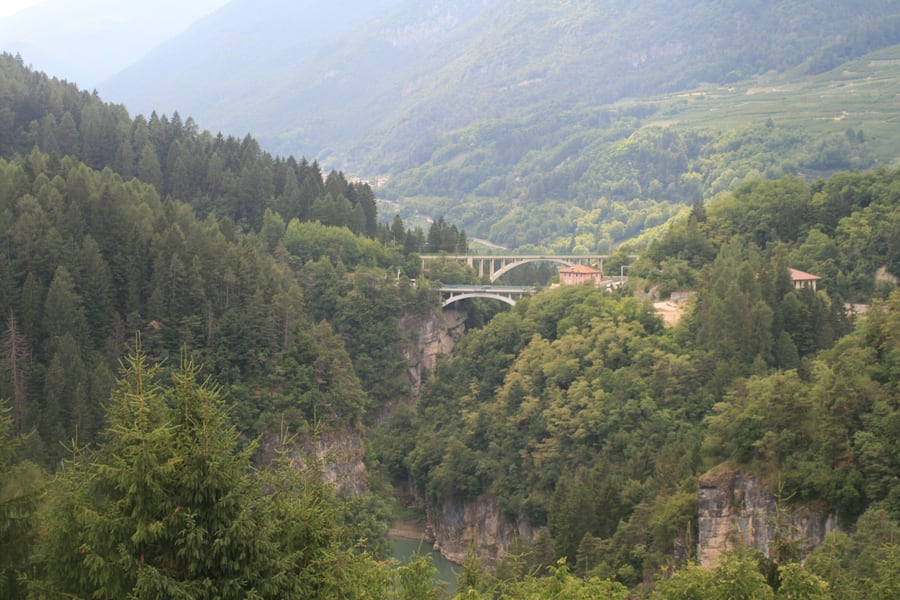 Opera propria / Wikimedia Commons · CC BY 3.0 · cropped
Under the Faè, over Mostizzolo
Past Cles the line burrows through its longest tunnel, 2,670 metres under the Faè, and comes out onto the Mostizzolo bridge, high over the Noce, the gateway to the Val di Sole.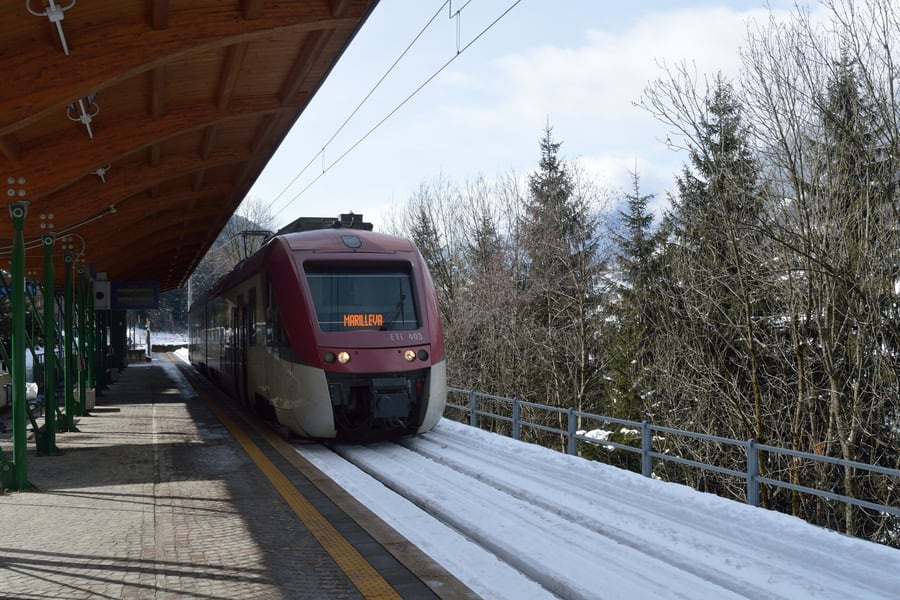 Phil Richards / Wikimedia Commons · CC BY-SA 2.0 · cropped
The train to the ski lift
At Daolasa and Marilleva 900 the stations meet the lifts of the Folgarida–Marilleva ski area, a link between rail and cableway the operator calls unique in Italy. In winter the trains are timed for the slopes.A bit of history
Culture & experiences along the way
 Syrio / Wikimedia Commons · CC BY-SA 4.0 · cropped
Teroldego from the Rotaliana plain
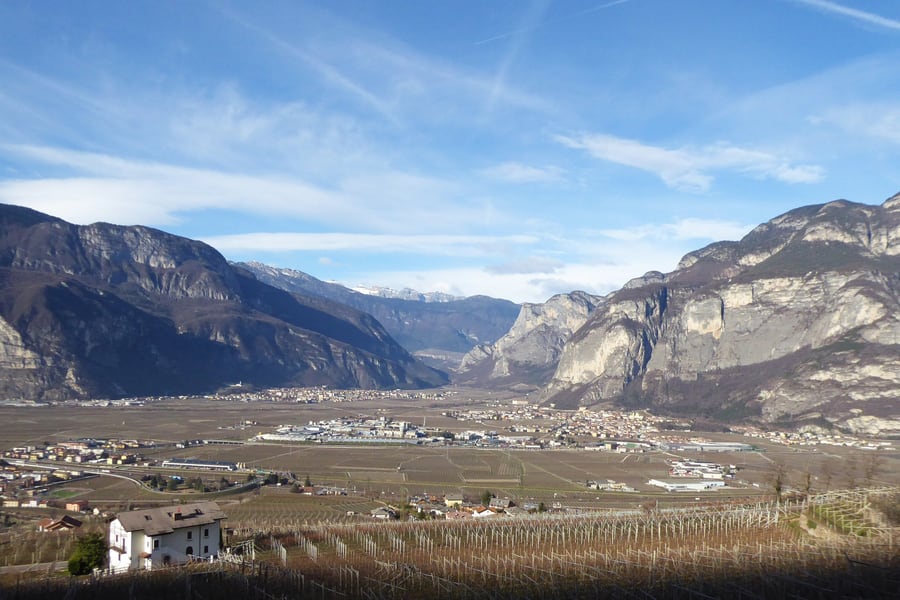
The flat floor of gravel between Mezzolombardo and Mezzocorona, which the train crosses before it climbs, grows Teroldego: a deep ruby, slightly bitter red, protected as Teroldego Rotaliano since 1971. Its name is often said to come from "Tiroler Gold". It goes with roasts, grilled meat and aged cheese.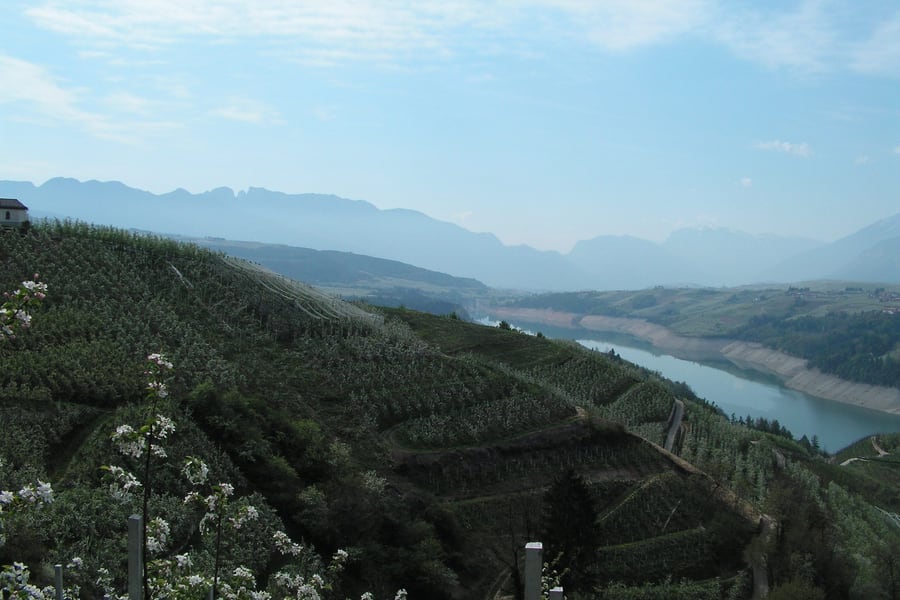 Vincenzo / Wikimedia Commons · CC BY-SA 2.0 · cropped
Apples kept inside the mountain
The Val di Non's apples are stored underground. In the Rio Maggiore dolomite mine, 275 metres below the orchards, Melinda keeps them in 34 cells cut into the rock. Guided visits of the cells and of its packing halls start from MondoMelinda at Segno di Predaia, which has its own station, and need booking.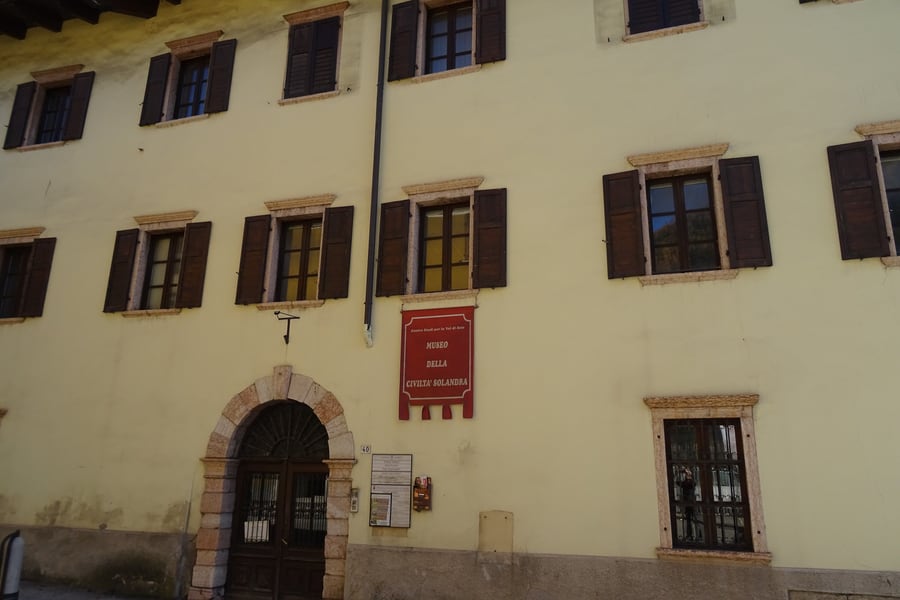 Syrio / Wikimedia Commons · CC BY-SA 4.0 · cropped
The museum of Val di Sole life
Since 1979 the Museo della Civiltà Solandra in Malè has gathered the everyday objects of the valley: the tools of farming, dairying and woodwork, the trades of carpenters, blacksmiths, coppersmiths and shoemakers, spinning and weaving, a rebuilt kitchen and stua, the panelled living room. One room honours Giacomo Bresadola, the mushroom priest.Timetables
The line runs every day, all year. On weekdays and Saturdays there is a train about every hour, some running only as far as Malè and a few short workings only to Mezzolombardo; on Sundays and public holidays there is a through train every two hours. The full run takes just under two hours; the 17:18 from Trento, which skips the smaller stops, takes 1 hour 39 minutes. Most of the smaller halts are request stops.
Trento to Mezzana — Monday to Saturday
| Trento | Mezzolombardo | Cles | Malè | Mezzana |
|---|---|---|---|---|
| 06:12 | 06:45 | 07:27 | 07:55 | — |
| 07:10 | 07:46 | 08:29 | 08:55 | 09:13 |
| 08:10 | 08:45 | 09:23 | 09:48 | 10:07 |
| 09:32 | 10:04 | 10:41 | 11:07 | 11:25 |
| …then about hourly… | ||||
| 15:55 | 16:28 | 17:06 | 17:33 | 17:53 |
| 17:18 | 17:44 | 18:17 | 18:38 | 18:57 |
| 18:42 | 19:14 | 19:51 | 20:16 | — |
| 19:35 (last to Malè) | 20:07 | 20:43 | 21:04 | — |
Mezzana to Trento — Monday to Saturday
| Mezzana | Malè | Cles | Mezzolombardo | Trento |
|---|---|---|---|---|
| 06:00 | 06:17 | 06:35 | 07:10 | 07:37 |
| 06:57 | 07:14 | 07:43 | 08:30 | 09:06 |
| 09:33 | 09:50 | 10:17 | 10:54 | 11:29 |
| …then about hourly… | ||||
| 17:15 | 17:32 | 17:59 | 18:39 | 19:15 |
| 18:06 | 18:23 | 18:51 | 19:29 | 20:04 |
| 19:21 (last) | 19:38 | 20:07 | 20:43 | 21:17 |
Sundays and public holidays
| Trento | Malè | Mezzana |
|---|---|---|
| 06:10 | 07:44 | 08:03 |
| …then every two hours at :10… | ||
| 16:10 | 17:44 | 18:03 |
| 18:10 and 20:10 | 19:44 and 21:44 | — |
| Mezzana | Malè | Trento |
|---|---|---|
| — | 06:00 | 07:34 |
| 08:42 | 08:58 | 10:34 |
| …then every two hours at :42… | ||
| 18:42 | 18:58 | 20:34 |
| — | 20:00 (last) | 21:34 |
Getting to Trento
The line's Trento station stands a few metres from the main station, on the Brenner line and the Valsugana line from Venice.
Times as of October 2026, from Trentino Trasporti's timetable for the line (opens in a new tab), valid from 10 September 2026 to 8 June 2027, checked train by train against the operator's own timetable data.
Tickets
The line is part of Trentino's regional network, and a ticket is priced by distance, the same on the train and on the province's buses: from €1.10 for up to 4 kilometres, and under €6 even for the full 66 kilometres to Mezzana. A return costs twice the single. Tickets are sold at the staffed stations in Trento, Mezzolombardo, Cles and Malè, at ticket machines, and in the transport apps, which take 10% off; bought on board, a single costs 50 cents more. Children under six travel free with a paying adult.
Visitors staying in Trentino's hotels and other accommodation can travel for nothing: the Trentino Guest Card, included with the stay, covers public transport in the province, this train among it. Fares as of October 2026.
Book your tickets
Single ticket, priced by distance
€1.10 to €5.80 · return is double · 10% off in the apps
Valid on Trentino's trains and buses for the day it is issued, and sold on board for 50 cents more.
Book Tickets (opens in a new tab, on Trentino Trasporti)via Trentino TrasportiTrentino Guest Card
Included with a stay · up to 20 days
Free travel on Trentino's public transport, this train included, for guests of participating accommodation.
Book Tickets (opens in a new tab, on Visit Trentino)via Visit TrentinoRail Passes
Interrail and Eurail do not cover this line. The Ferrovia Trento-Malé-Mezzana and its operator, Trentino Trasporti, are both listed by name among the Italian trains the pass is not valid on. The pass does cover Trenitalia's regional and long-distance trains to Trento.
The Trentino Guest Card does. Given free to guests of participating accommodation for up to 20 days, it covers public transport in Trentino, trains included, for journeys that start and end in the province. There is also the Libera Circolazione: a week of unlimited travel on the province's trains and buses for €35.90, loaded on a named Smart Card.
For this line alone no pass is worth buying: the whole trip costs less than €6.
Checked October 2026 against Interrail's table of railway companies (opens in a new tab), Visit Trentino (opens in a new tab) and Trentino Trasporti's fares (opens in a new tab).
Places to Visit
The line passes through three different landscapes, and something worth stopping for lies in each: a city of prince-bishops, a valley of castles and orchards, and a mountain valley with a national park on its doorstep. Four are on the line itself; San Romedio and the Val di Rabbi need a local bus.
 Andrzej Otrębski / Wikimedia Commons · CC BY-SA 4.0 · cropped
Trento and the Buonconsiglio
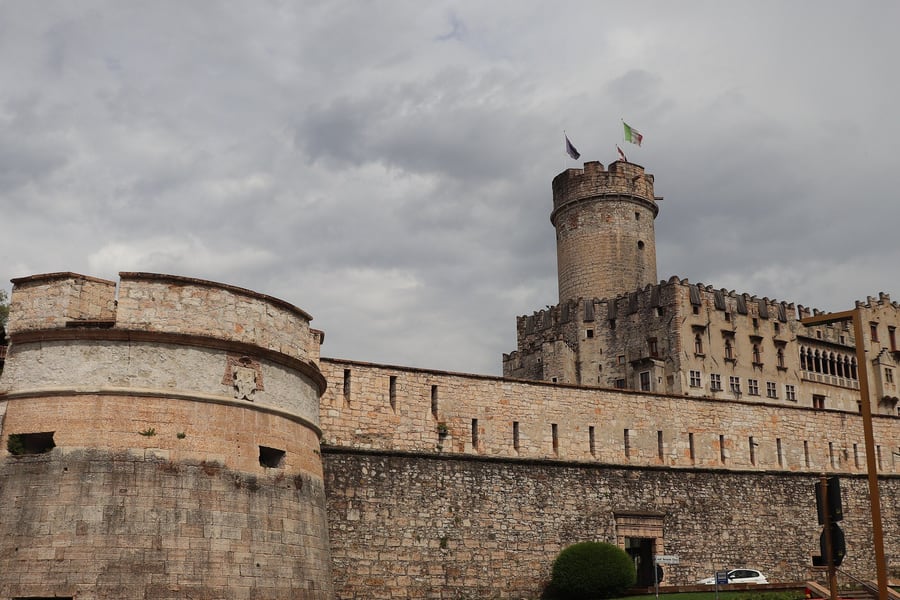
The prince-bishops of Trento lived in the Castello del Buonconsiglio from the thirteenth century to the Napoleonic era, and it is the largest monument in the region. Inside, Torre Aquila keeps the Cycle of the Months, painted around 1400, with eleven months of peasants' work and nobles' pleasures. It opens Tuesday to Sunday, in the old town.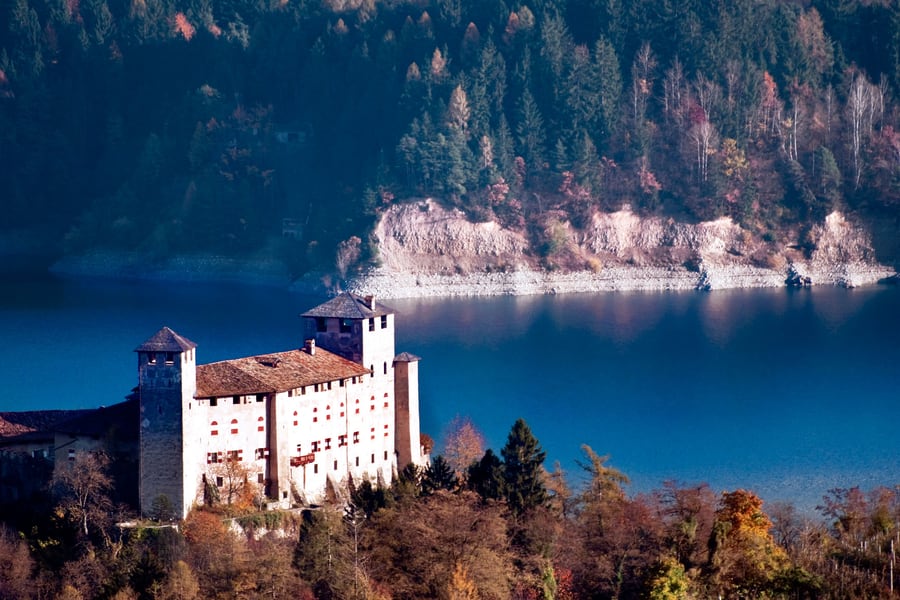 Franco Visintainer / Wikimedia Commons · CC BY-SA 3.0 · cropped
Castel Cles and the lake
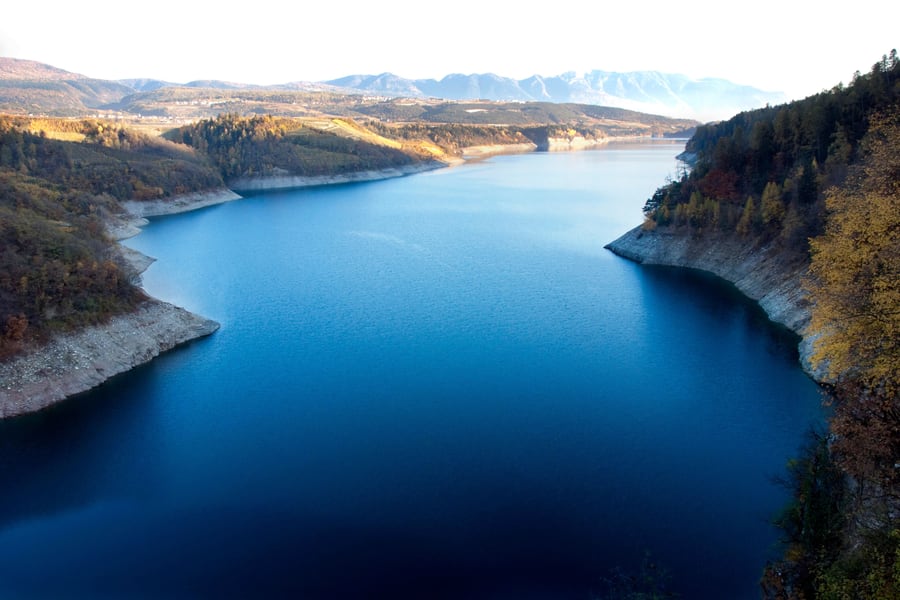
Below Cles, the main town of the Val di Non, the dam of 1951 holds back the Lake of Santa Giustina, the largest reservoir in Trentino. Castel Cles looks into it from a knoll on the shore: the seat of the family of Bernardo Clesio, the Renaissance prince-bishop of Trento, who had it rebuilt by 1535.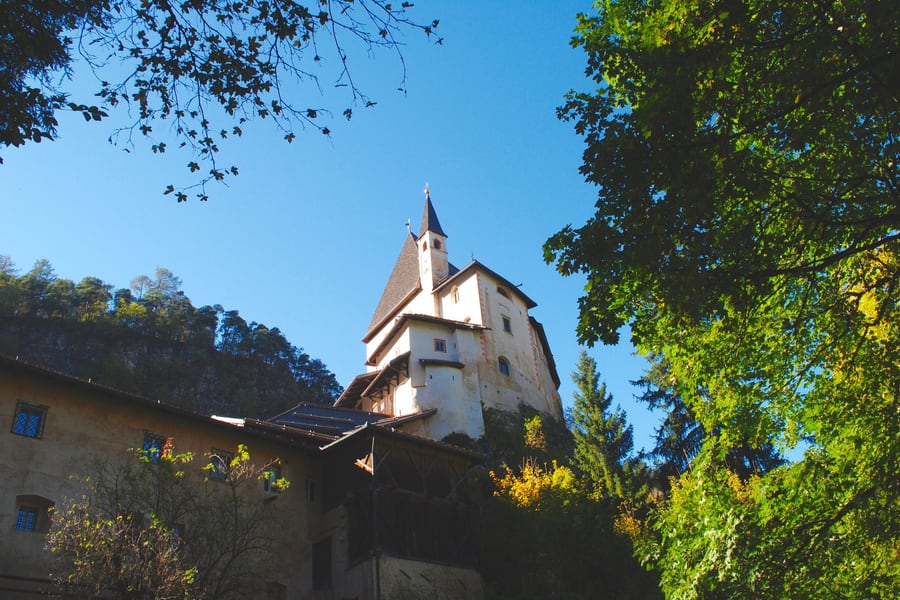 Irin Acassi / Wikimedia Commons · CC BY-SA 4.0 · cropped
The sanctuary of San Romedio
Five churches stacked on a limestone spur about 70 metres high, built over nine centuries and joined by a covered stair of 131 steps. Romedius, the hermit, is said to have ridden a bear to Trento, and a bear lives in an enclosure at the foot of the rock. A flat path cut into the gorge leads there from the Museo Retico at Sanzeno.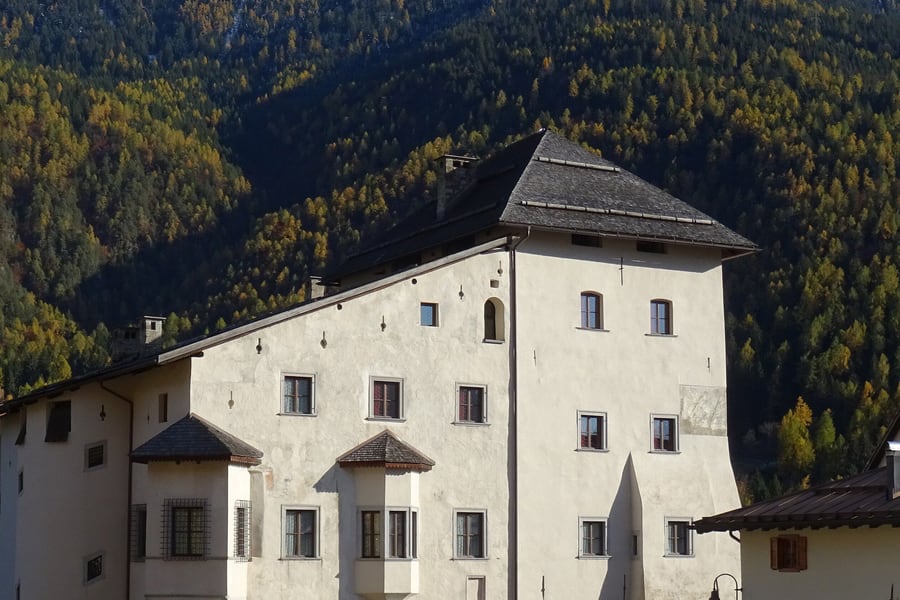 Syrio / Wikimedia Commons · CC BY-SA 4.0 · cropped
Castel Caldes
The castle stands exactly opposite Caldes station, at the mouth of the Val di Sole. It began as a tower house in the thirteenth century and passed to the Thun family in 1464; its painted tower room is the Stanza di Olinda, after a countess said to have been shut in it for love. It opens from late March to the start of November.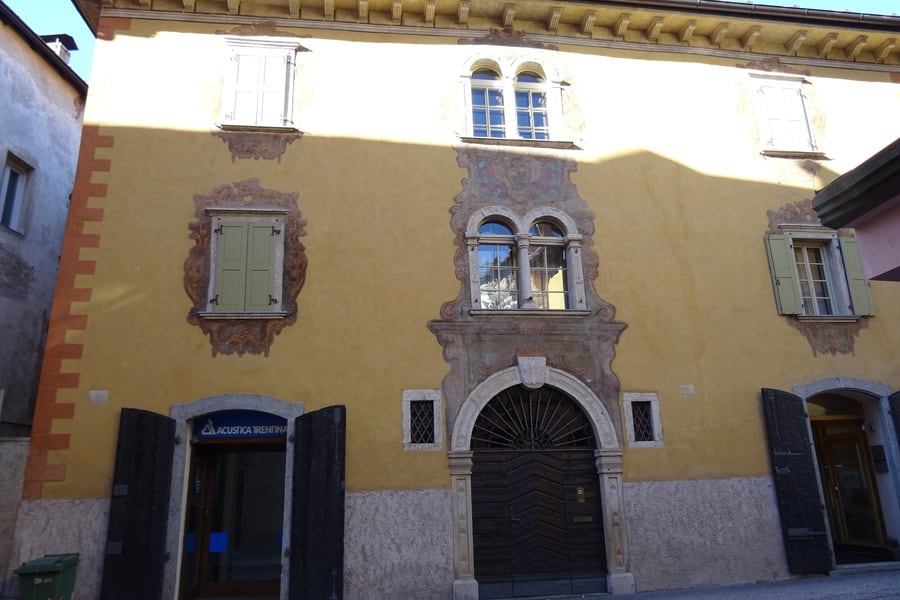 Syrio / Wikimedia Commons · CC BY-SA 4.0 · cropped
Malè
The main town of the Val di Sole was the end of the line until 2003. Its old centre keeps palazzi with painted window frames and doorways. Buses leave from here for the side valleys, and the town sits between the Brenta Dolomites, a World Heritage Site, and the Stelvio National Park.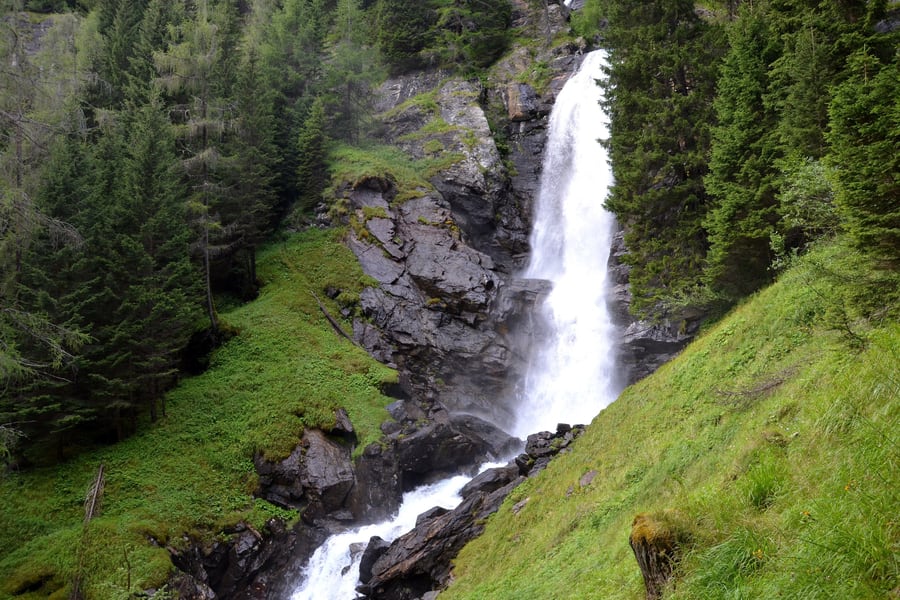 GianoM / Wikimedia Commons · CC BY-SA 4.0 · cropped
The Val di Rabbi
A side valley inside the Stelvio National Park, about 12 kilometres long, with few villages. At Rabbi Fonti an iron-rich spring fed a spa once visited by the Austrian court, and the park has a visitor centre. Higher up, a walk leads to the Saènt waterfalls, which the valley calls the finest in the park.Where to Sleep
Trento has the widest choice and makes the easiest base for a day trip up the line and back. Malè, in the middle of the Val di Sole, is the place to stay for the side valleys.
Where to stay
Grand Hotel Trento
Piazza Dante, Trento
A rationalist building of 1939–42 by the engineer Giovanni Lorenzi, on Piazza Dante, with a restaurant and a fitness centre.
Check Availability (opens in a new tab, on grandhoteltrento.com)via grandhoteltrento.comHotel Henriette
In Malè
A family-run hotel on the main road through Malè, with a small spa and an indoor pool.
Check Availability (opens in a new tab, on hotelhenriette.it)via hotelhenriette.itQuestions or corrections
Planning this trip and stuck on something, or spotted a time, fare or detail that has changed? Send us a message about Trento–Malè–Mezzana Railway. We read every one, and we update this page when something has changed.