Trenino Verde della Sardegna
MAXDERKAX / Wikimedia Commons · CC BY-SA 4.0
- Distance404 km of narrow gauge, over four lines
- DurationFrom 1½ hours to a whole day, depending on the route
- Best seasonApril–June & September–October
Introduction
Sardinia's interior is the part nobody photographs. The coast gets the turquoise water and the resorts; inland there is granite, cork oak, wind, sheep, and villages that have been losing people for a century. Running through it — slowly, and without much reason — is the Trenino Verde, the little green train.
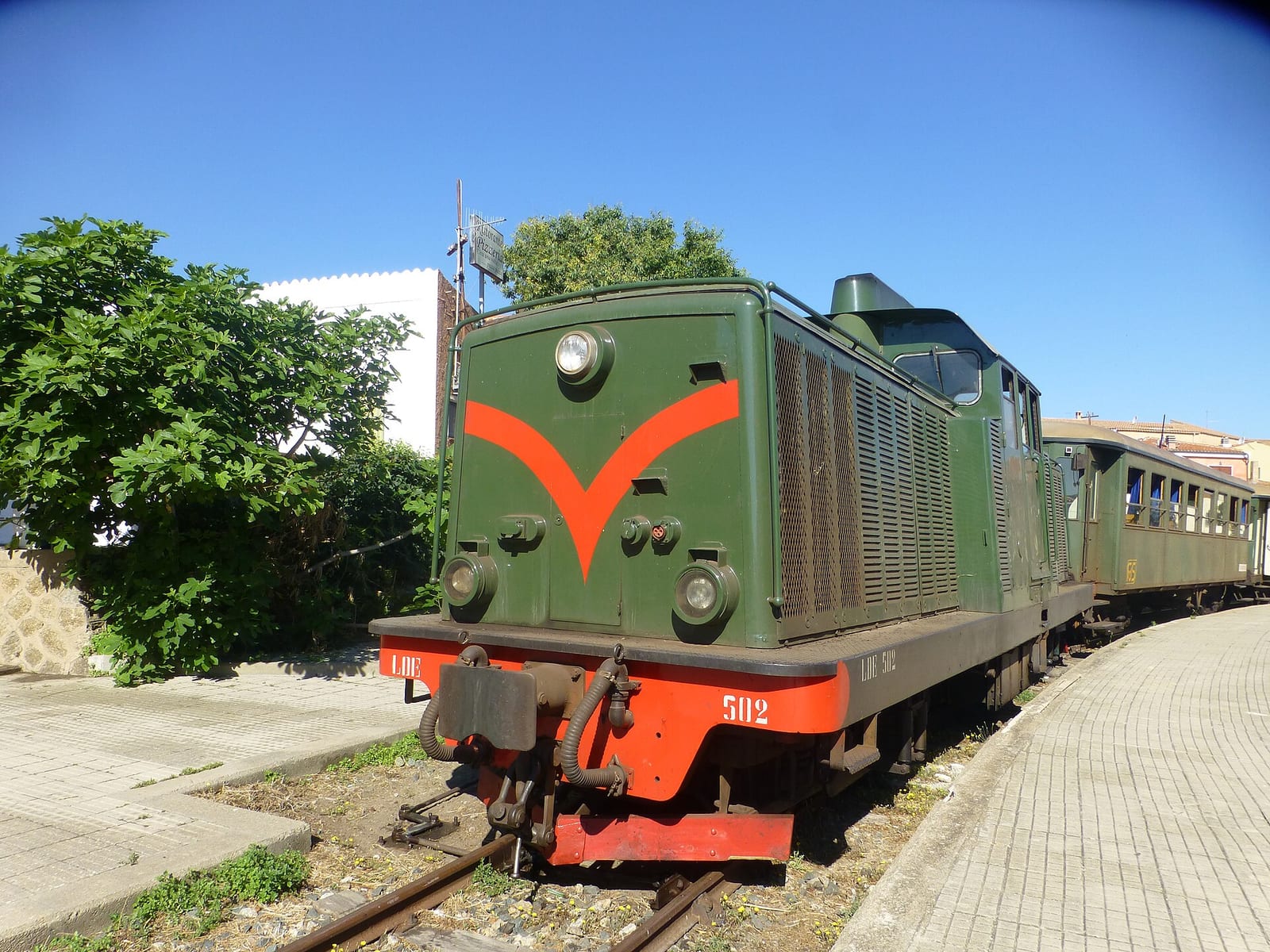
On paper it is a substantial thing: 404 kilometres of narrow gauge over four separate lines, from Mandas deep into the mountains and down to the sea at Arbatax, from Macomer to Bosa Marina, from Isili to Sorgono, and across Gallura from Nulvi through Tempio to Palau. In practice it is usually a small diesel and two green carriages, doing walking pace through country where the road, if there is one, is worse.
These were real railways once, built to reach an interior that has since emptied out. They lost that argument slowly and then all at once: on 16 June 1997 four of the lines stopped pretending to be public transport and were converted to tourist-only operation. The name had arrived first — "Trenino Verde" was coined in 1984 — and since 2010 the whole thing has been run by ARST, the island's transport company.
What survives is a railway with no job except the view, which turns out to be a very good job indeed. The operator quotes Fulco Pratesi, the honorary president of WWF Italia, on its front page calling it "la ferrovia più bella del mondo" — the most beautiful railway in the world. That is a large claim for two carriages and a small locomotive. Spend three hours crawling through the Sarcidano, stopping at a Bronze-Age tower because it happens to be next to the track, and you will at least see what he meant.
One warning before you plan, because the 404 km figure misleads: you cannot ride most of it. Today ARST sells five short segments, not the great cross-island runs. More on that below — but go in expecting an afternoon, not an expedition.
The Journey
Start at Mandas, because Lawrence did. D.H. Lawrence came through here in 1921 and wrote Sea and Sardinia about it, a book largely composed of complaints — about the food, the cold, the people, the train — and yet the reason anyone still remembers that this railway is interesting. He caught it out of Cagliari; the tourist trains now begin at Mandas itself, a junction town in the middle of nowhere with a station far grander than its population justifies.
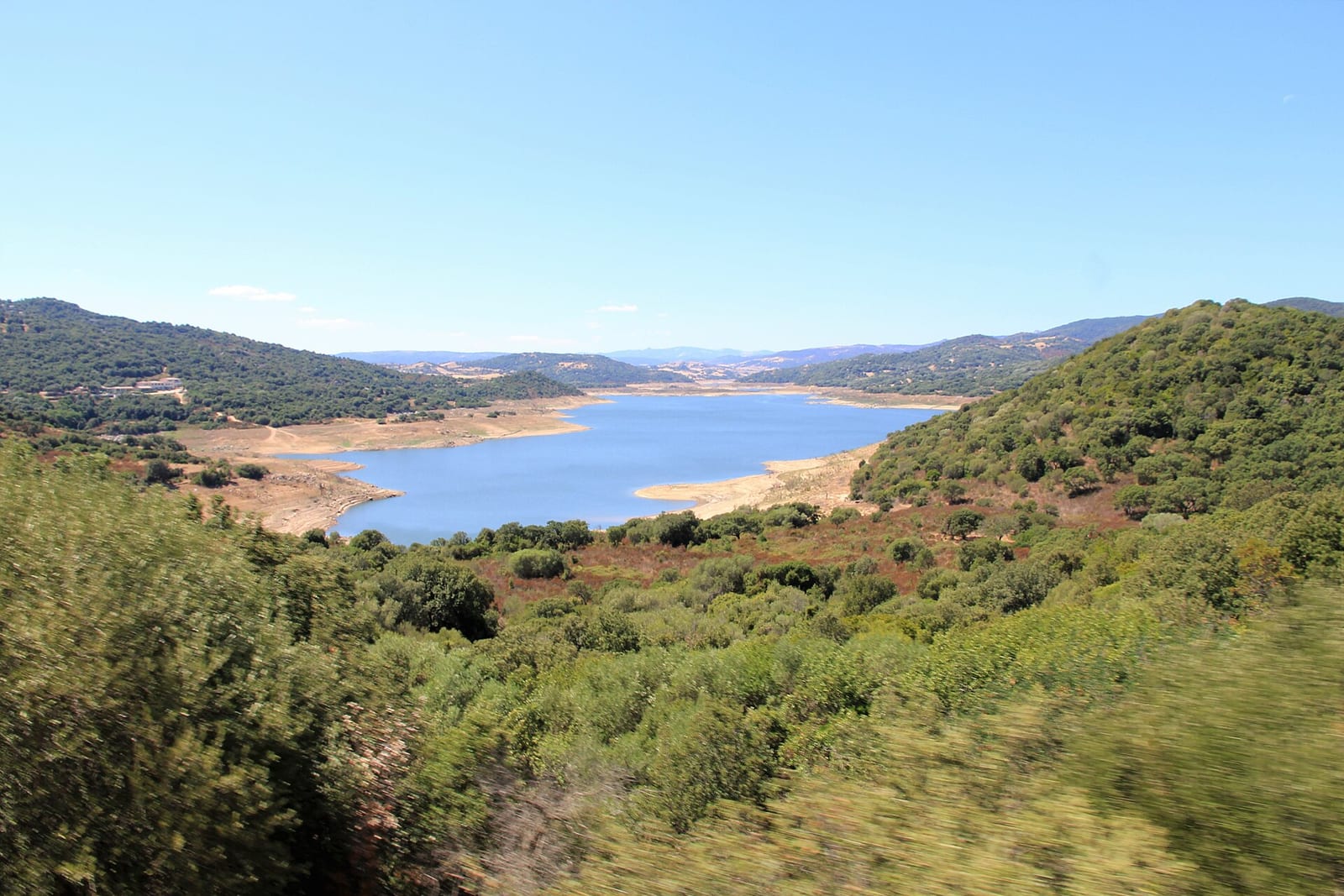
The Mandas–Laconi run is the one to take: 37 kilometres, about three hours, which tells you everything about the pace. The train leaves through Serri and climbs gently into the Sarcidano, a plateau of cork oaks, dry-stone walls and grazing land where the horizon is a long way off and nothing much moves. There is no commentary and no catering. There is a window that drops all the way down, and the smell of hot scrub coming through it.
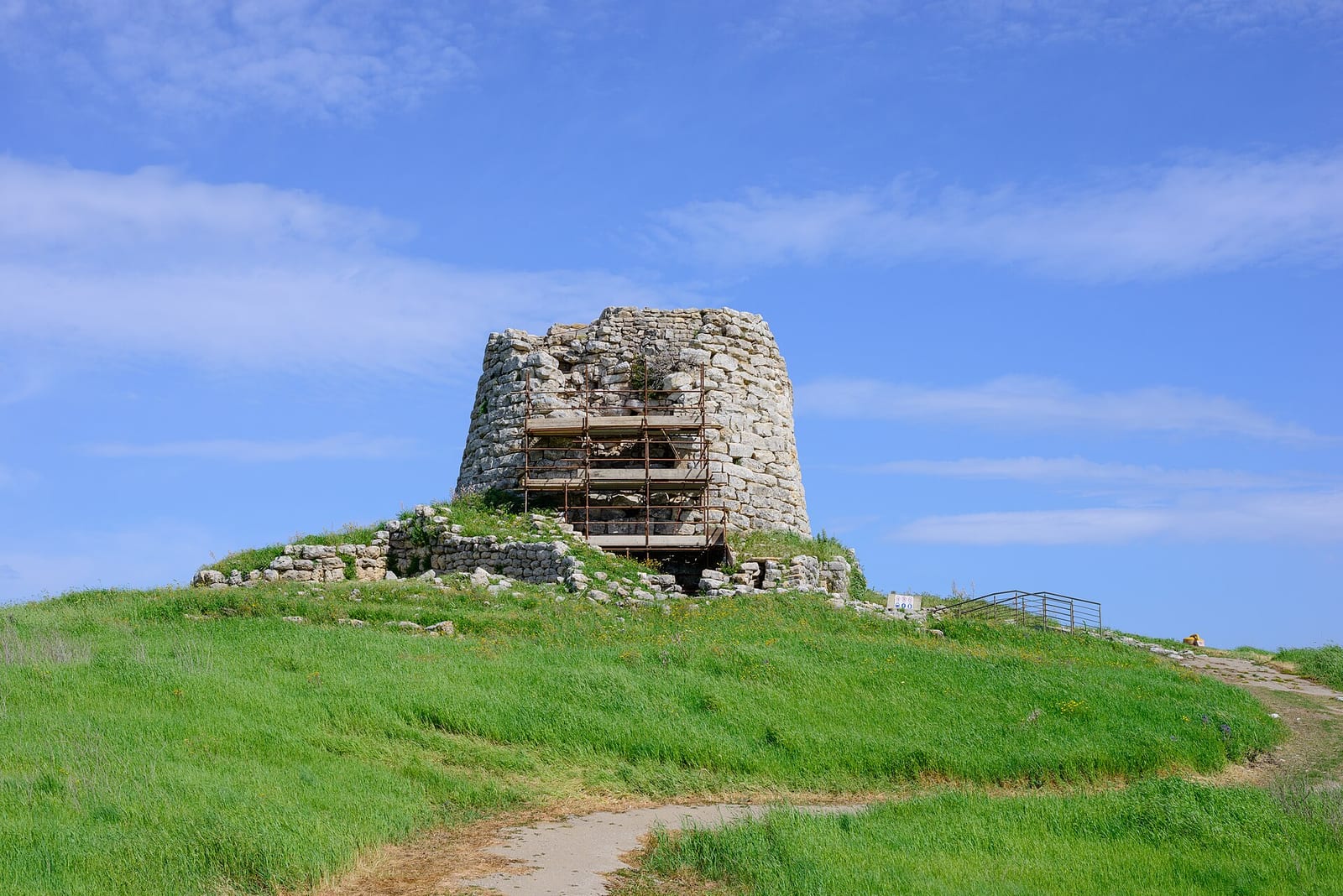
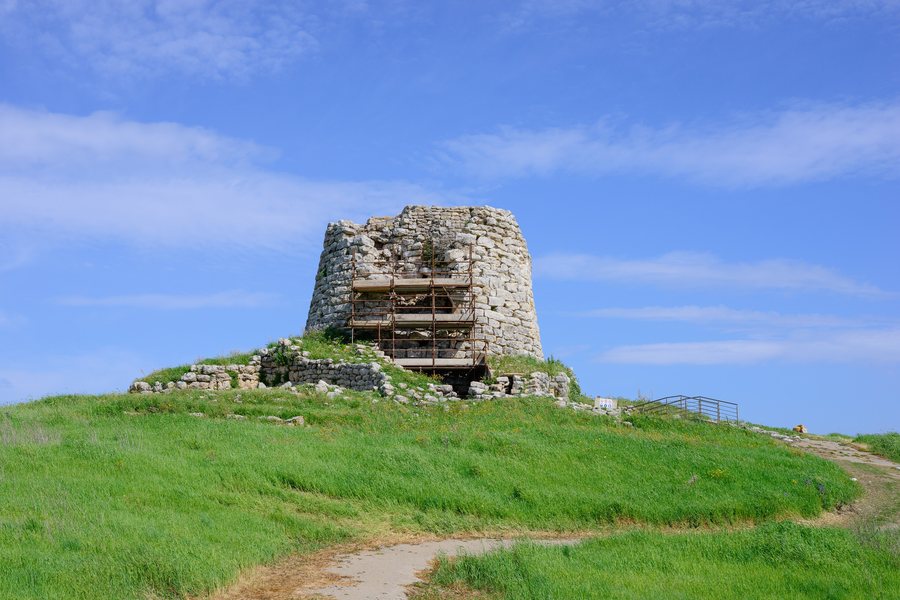
At Isili the train does something no other railway does: it stops, for forty minutes, at a nuraghe. The Nuraghe Is Paras is a drystone tower built around 1500 BC — one of thousands on this island, a civilisation that left no writing and several thousand stone towers — and it stands close enough to the line to have its own halt. The train simply waits while you walk over and climb inside a monument older than Rome. Then everybody gets back on.
The run finishes at Laconi, which has the largest town park on the island, a ruined castle in it, and a museum of the strange carved menhirs that the same prehistoric Sardinia left behind.
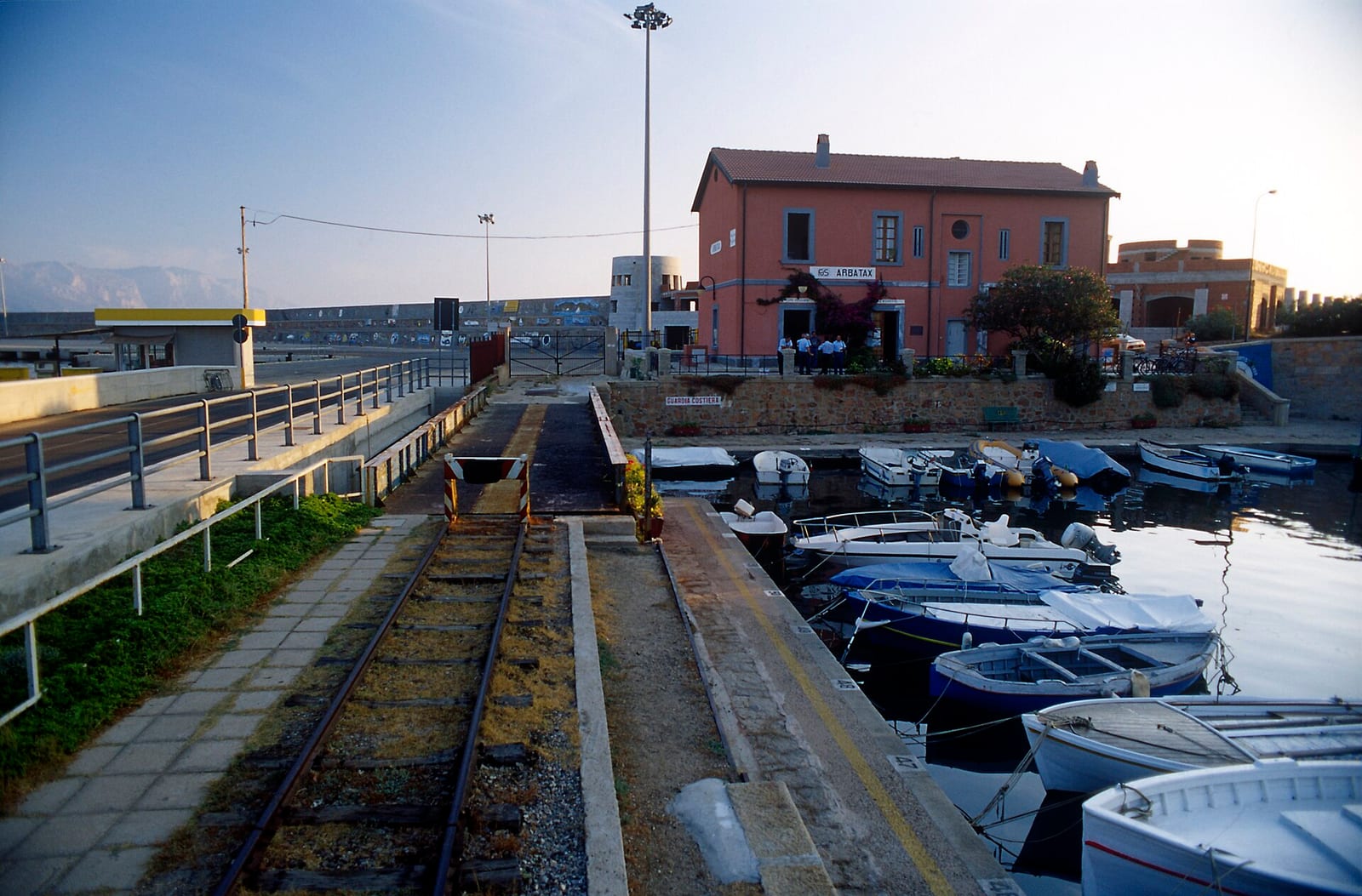
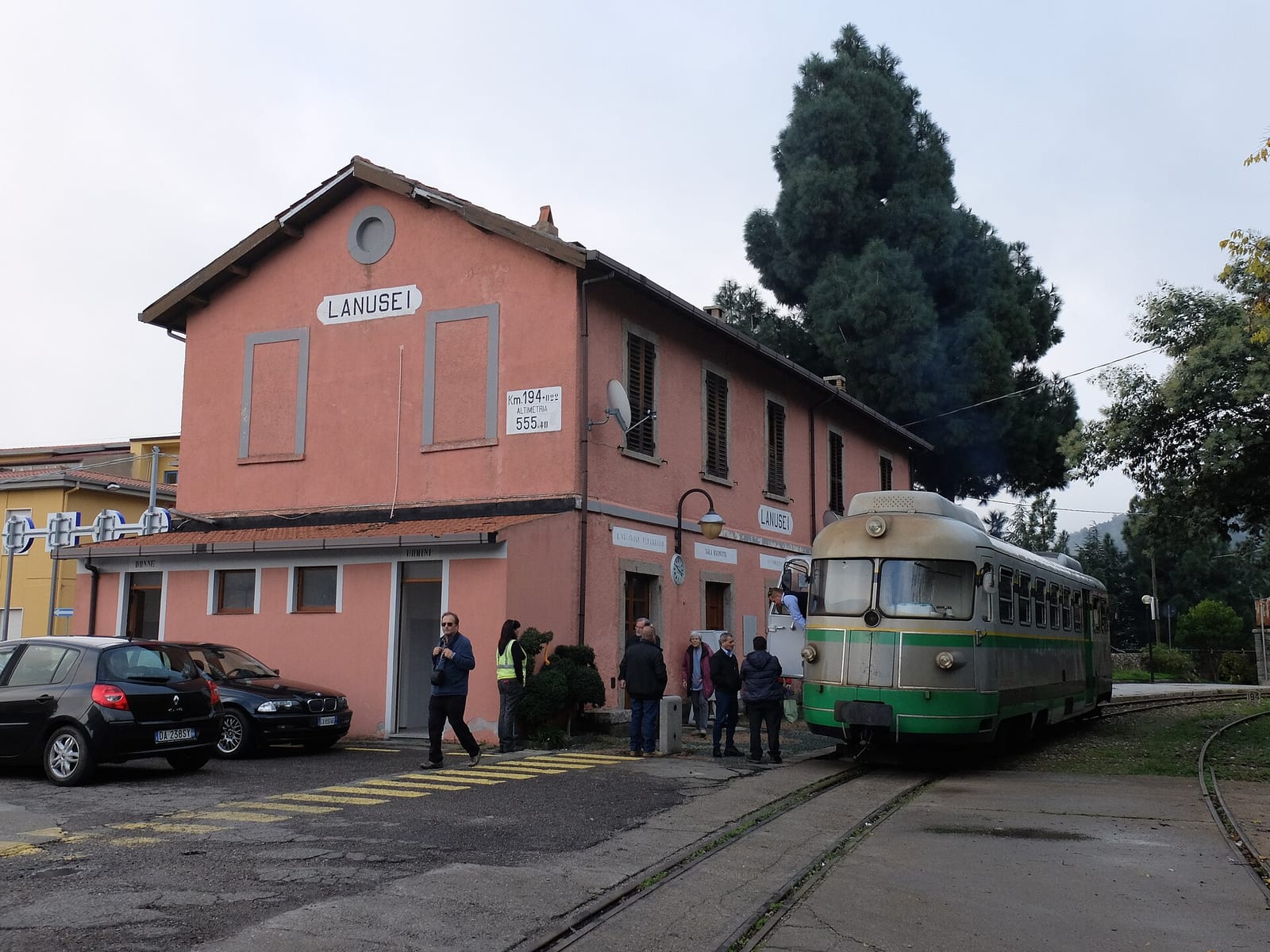
The other routes trade the archaeology for landscape. Arbatax–Lanusei climbs from the coast up into the Ogliastra hills; at the bottom the rails run right along the harbour at Arbatax, past the fishing boats, on a quayside where the track once continued out onto the piers. Macomer–Bosa Marina drops through hills to a beach. Tempio–Luras crosses Gallura, the granite country of the north. Mandas–Sadali heads into the interior towards the caves and waterfalls.
None of these is long, and none of them goes anywhere you need to be. That is the whole proposition. The Trenino Verde is the slowest way to see the part of Sardinia that the island does not otherwise show you, and it is worth an afternoon of anyone's holiday.
Along the route
Gianni Careddu / Wikimedia Commons · CC BY-SA 4.0A railway to nowhere in particular
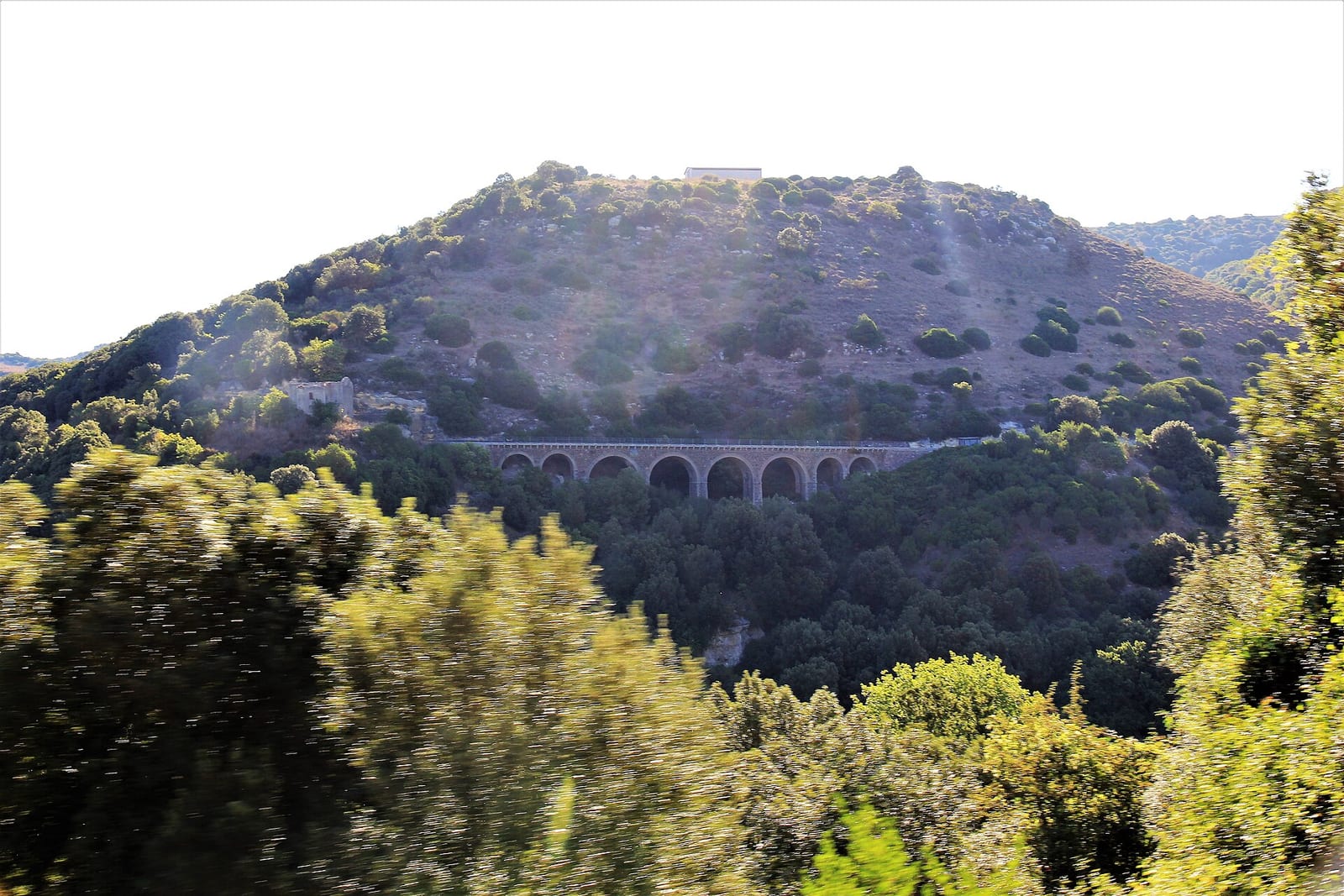
Four lines, 404 kilometres, and almost no purpose left. Sardinia's narrow gauge was built to reach an interior that has since emptied out, and in 1997 the last of it gave up carrying commuters and started carrying visitors instead. What it goes through has barely changed.Norbert Nagel / Wikimedia Commons · CC BY-SA 3.0Bronze Age on the platform
The Mandas–Laconi run stops for forty minutes at the nuraghe of Is Paras — a drystone tower from around 1500 BC, one of thousands scattered across the island, and close enough to the track that the train simply waits while you climb it.Gianni Careddu / Wikimedia Commons · CC BY-SA 4.0"The most beautiful railway in the world"
That is Fulco Pratesi, honorary president of WWF Italia, quoted on the operator's own front page. It is a big claim for two green carriages behind a small diesel — but this is a train that goes where the roads gave up, and it is not obviously wrong.A bit of history
Culture & experiences along the way
 MAXDERKAX / Wikimedia Commons · CC BY-SA 4.0 · cropped
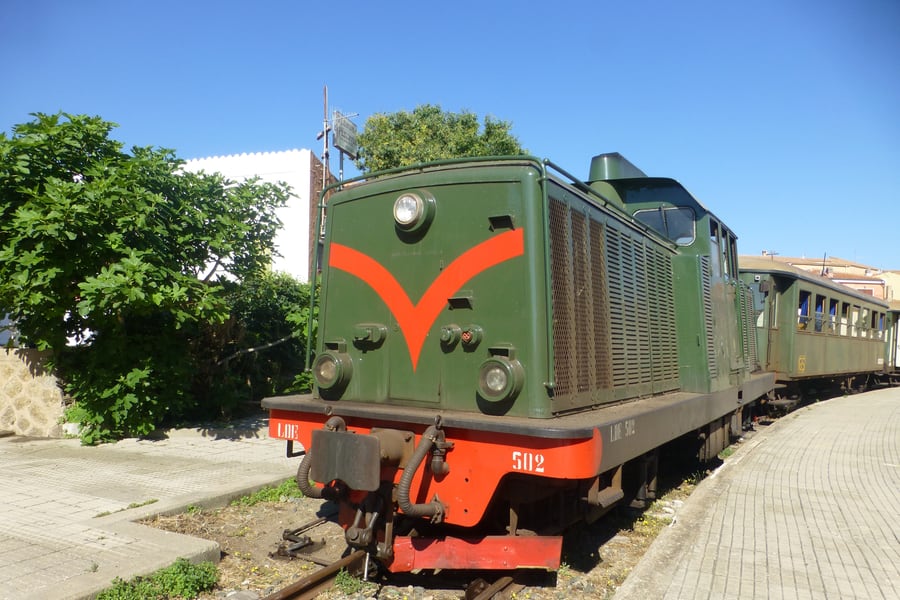
Two carriages, no hurry
A small diesel and a pair of green coaches, drop windows down, doing walking pace up a granite valley. There is no first class, no catering and no announcement — the train is the slowest way to cross Sardinia and that is precisely what it is for.Falk2 / Wikimedia Commons · CC BY-SA 4.0Down to the sea at Arbatax
On the eastern line the railway ends at the harbour: rails along the quayside at Arbatax, among the fishing boats and the red porphyry rocks, having come down from the Ogliastra hills through Lanusei.Manfred Kopka / Wikimedia Commons · CC BY-SA 4.0In D.H. Lawrence's footsteps
Lawrence rode the narrow gauge out of Cagliari in 1921 and turned it into Sea and Sardinia, one of the great crotchety travel books. The line he took still runs from Mandas, and the interior he complained about is still there.Timetables
Here is the thing the guidebooks tend to skip. The Trenino Verde network measures 404 kilometres — but you cannot buy a ticket over most of it.
What ARST actually sells today is five short segments:
| Route | Where |
|---|---|
| Mandas – Laconi | Into the Sarcidano, via the nuraghe of Is Paras |
| Mandas – Sadali | Into the interior |
| Arbatax – Lanusei | Up from the coast into Ogliastra |
| Macomer – Bosa Marina | Down to the sea |
| Tempio – Luras | Across Gallura |
The classic full-length runs that made the line's reputation — above all the 159 km Mandas–Arbatax, right across the island — are not on sale as scheduled journeys. The rails are still there and charter trains still use them, but you cannot simply turn up and ride Mandas to Arbatax the way the older travel writing describes. Expect an out-and-back of a few hours from one of the five bases above.
The operator sorts its trips into three lengths: short (under 1½ hours there and back), medium (1½–2 hours each way) and long (3–3½ hours each way). Mandas–Laconi is a long one — 37 km in about three hours, including the forty-minute stop at the nuraghe.
Seasonally, the lines are used year-round for chartered trains, with a regular scheduled service in summer on set days. In 2026 the published running days are roughly: Cagliari–Mandas every Saturday (4 May–26 Oct); Arbatax–Lanusei–Gairo every Wednesday and Sunday (16 Jun–13 Oct); Macomer–Bosa Marina on selected Sundays; and Tempio–Luras on Sundays (12 May–8 Dec). Outside these, look at the calendar rather than assuming a service exists.
Checked 17 July 2026 against the operator, treninoverde.com (opens in a new tab) (ARST). One trap worth knowing if you go digging: some of ARST's own page addresses still read mandas-seui and arbatax-gairo while the routes they sell are labelled Mandas–Sadali and Arbatax–Lanusei. Trust the route names and the booking calendar, not the URLs.
Tickets
Ticketing is pleasantly simple: pick a route, pick a date, buy a seat — online through the operator or on board if you would rather take your chances. A return costs less than two singles, so buy the return unless you have a plan for getting home another way, which out here you probably do not. To give a sense of scale, Mandas to Laconi was €15 single and €22 return for an adult, with under-16s at €8 and €12 and bicycles carried for €5.
Two things before you board. These are historic vehicles — the operator says so plainly — which means no step-free access and none of the fittings of a modern regional train. And there is no catering, so bring water: a slow train through the Sardinian interior in summer gets exactly as hot as you would expect.
Book your tickets
Mandas – Laconi
37 km · about 3 hours · the nuraghe stop
The most rewarding of the routes on sale: out of Mandas through Serri and Isili into the Sarcidano, with a forty-minute stop at the Bronze-Age nuraghe of Is Paras, and Sardinia's largest town park waiting at Laconi. Bicycles carried.
Book Tickets (opens in a new tab, on ARST · Trenino Verde)via ARST · Trenino VerdeThe other four routes
Arbatax, Bosa Marina, Sadali, Tempio
The rest of what is actually sold: Arbatax–Lanusei up from the sea, Macomer–Bosa Marina, Mandas–Sadali into the interior, and Tempio–Luras in Gallura. Each is its own short out-and-back with its own season — pick the route, then the date.
Book Tickets (opens in a new tab, on ARST · Trenino Verde)via ARST · Trenino VerdeRail Passes
No rail pass covers the Trenino Verde. ARST, which runs it, is not among the companies Interrail lists for Italy, and each line is sold as a seat on a dated tourist departure. Every ticket is bought from the operator or on board.
A pass still covers Sardinia's ordinary trains. Trenitalia's regional trains on the island are included, so a pass can carry you to Cagliari or the other junctions, with the Trenino Verde as a fare on top.
Checked October 2026 against interrail.com (opens in a new tab).
Places to Visit
The Trenino Verde is really four separate lines across the Sardinian interior, and what it reaches is the point of it: Bronze Age towers, granite hill towns and a coast of red rock. On the Isili run the train stops at the nuraghe for forty minutes — you climb inside it, come out, and get back on. Almost nowhere else works like this.
 Norbert Nagel / Wikimedia Commons · CC BY-SA 3.0 · cropped
Nuraghe Is Paras
The single best reason to ride this railway, and the train stops at it for forty minutes. Sardinia's nuraghi are drystone towers raised in the Bronze Age — from around 1500 BC here — by a civilisation that left thousands of them and not one written word. Is Paras is among the best preserved, with a tall internal tholos chamber corbelled up out of unmortared stone, and it is startlingly white against the grass.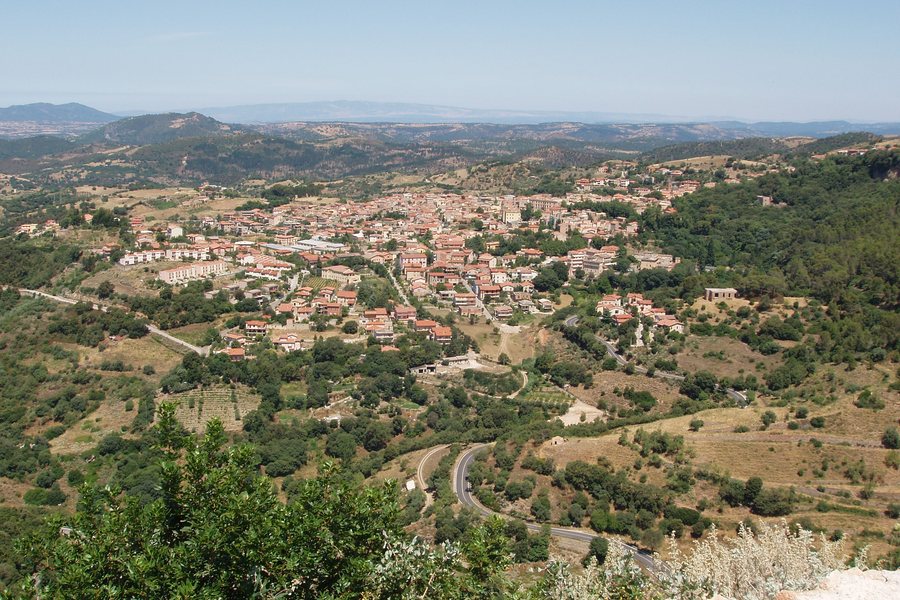 Mraxani52 / Wikimedia Commons · Public domain · cropped
Laconi
At the end of that run, and the site of the Aymerich Park — the largest town park on the island, with a ruined castle and waterfalls inside it — plus a museum devoted to Sardinia's carved menhirs, the standing stones that came before even the nuraghi.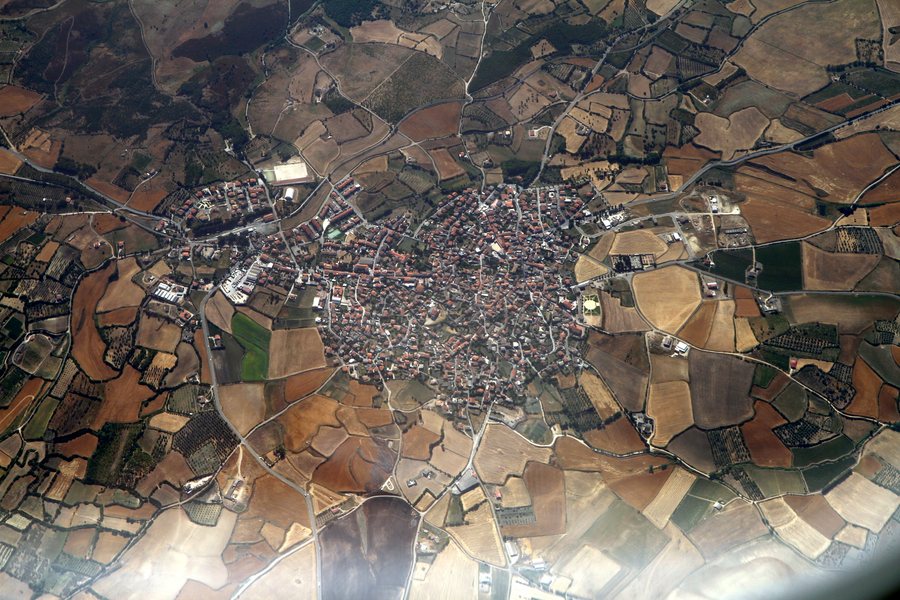 Carloferrari / Wikimedia Commons · CC BY-SA 3.0 · cropped
Mandas
Worth ten minutes for its own sake, mostly because of D. H. Lawrence, who stayed the night here in 1921 and was rude about it in Sea and Sardinia. The town has forgiven him and made rather a lot of the association. It is the junction where the lines part, and it looks exactly like what it is: a working agricultural town in the middle of the island.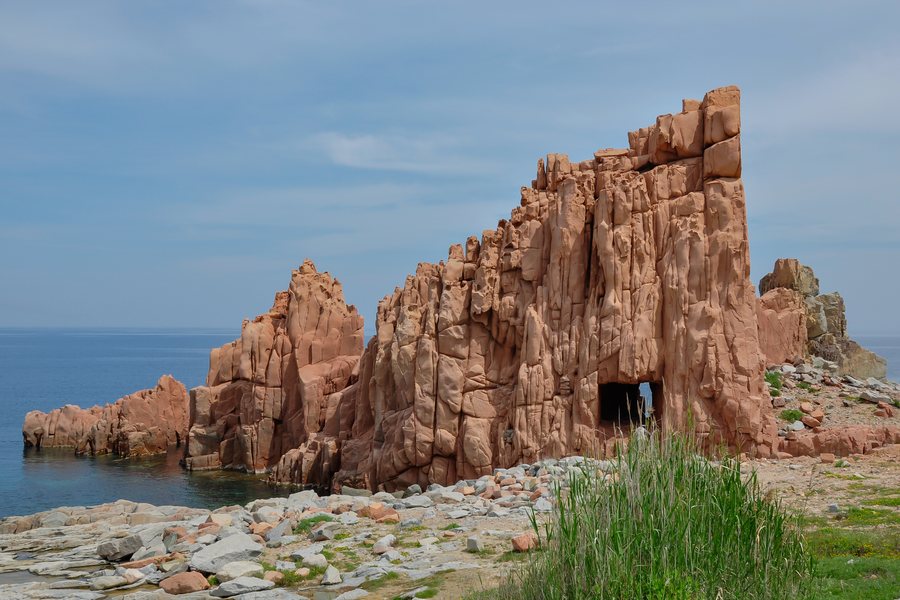 Isiwal / Wikimedia Commons · CC BY-SA 4.0 · cropped
Arbatax
A working port at the eastern end, under cliffs of red porphyry that the railway runs right past on its way along the harbour. Above it, Lanusei is the hill town of the Ogliastra — a region that spent so long being unreachable it developed a reputation for extreme longevity, and is counted among the world's so-called Blue Zones.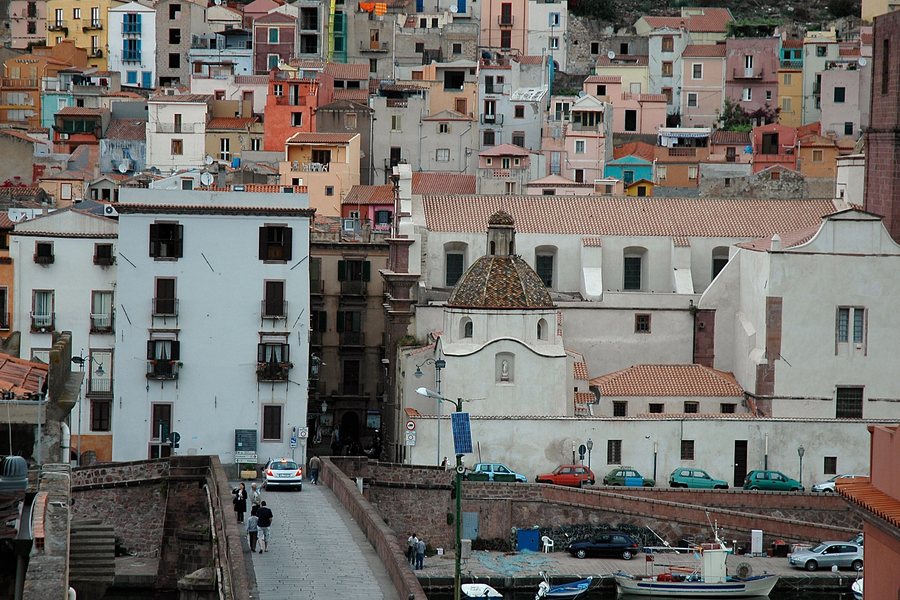 seisdeagosto / Wikimedia Commons · CC BY-SA 2.0 · cropped
Bosa
In the north-west, and the loveliest town any of these lines reaches: a river, a castle on the hill above, and a row of pastel houses along the water. ⚠️ The train does not reach the town itself — it arrives at Bosa Marina on the coast, a couple of kilometres away.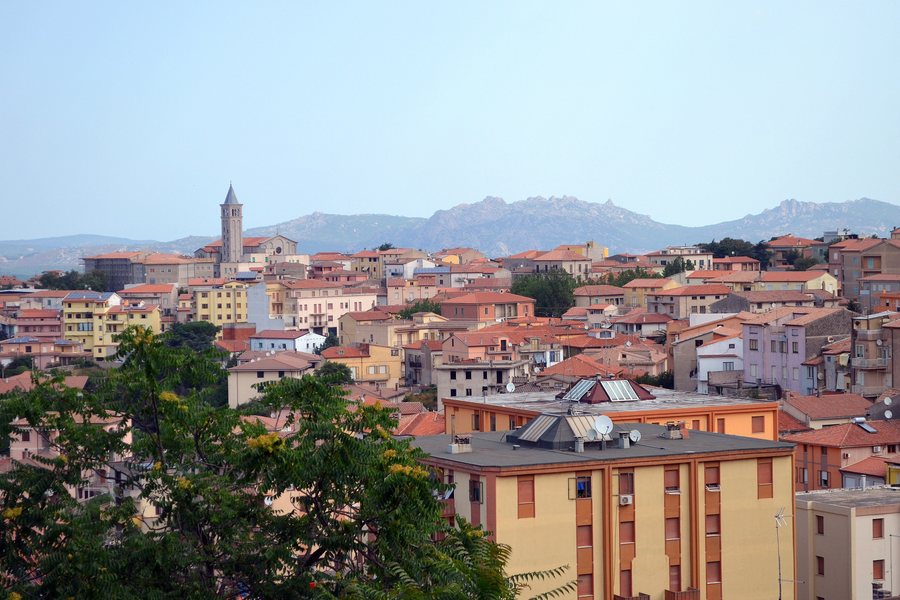 Benoît Prieur / Wikimedia Commons · CC0 · cropped
Tempio Pausania
In Gallura, at the northern end: a town built entirely of grey granite, in the middle of the cork forests that still supply a good share of the world's wine corks. The stone gives the whole place a colour you find nowhere else on the island.Where to Sleep
Because the Trenino Verde is really five separate short railways scattered across a large island, there is no single base for it. Choose the route first, then the bed.
For the Mandas–Laconi run, most people come out from Cagliari, which is an hour or so away by road or on the ordinary ARST network, and which has the island's widest choice of hotels. Staying in Cagliari and treating the train as a day trip is the standard approach and a sound one. If you want to be closer, Mandas and Isili have modest B&Bs and agriturismi, and the countryside around Laconi has some lovely farm stays — this is the empty middle of Sardinia, so expect stone houses, home cooking and very dark skies.
For Arbatax–Lanusei, base yourself on the Ogliastra coast. Arbatax and neighbouring Tortolì have hotels and resorts within reach of the beaches, and the railway climbs away from your doorstep. Lanusei, up in the hills, is quieter and cooler in high summer.
For Macomer–Bosa Marina, stay in Bosa — it is the most beautiful town on the whole network, with the castle above the river and the coloured houses along it — and take the short hop out to Bosa Marina for the train.
For Tempio–Luras, Tempio Pausania is the natural stop, and it doubles as a cool, granite-built escape from the crowds of the Costa Smeralda an hour to the east.
The general rule inland: rooms are simple, plentiful outside August, and cheap by Sardinian coastal standards. Book ahead in July and August, when the whole island fills up and the trains run their summer service.
Questions or corrections
Planning this trip and stuck on something, or spotted a time, fare or detail that has changed? Send us a message about Trenino Verde della Sardegna. We read every one, and we update this page when something has changed.