Transiberiana d'Italia
Nadioska79 / Wikimedia Commons · CC BY-SA 3.0
- Distance128.7 km (Sulmona–Isernia)
- DurationA full day, Saturdays & Sundays
- Best seasonWinter for the snow; autumn for the colour
Introduction
In November 1980, a journalist called Luciano Zeppegno wrote about a small railway in the Apennines for the magazine Gente Viaggi. It climbed through Abruzzo into Molise, it spent its winters buried in snow, and he called it "la piccola Transiberiana" — the little Trans-Siberian. The nickname was a flourish. It is now the only reason most people have ever heard of the line.
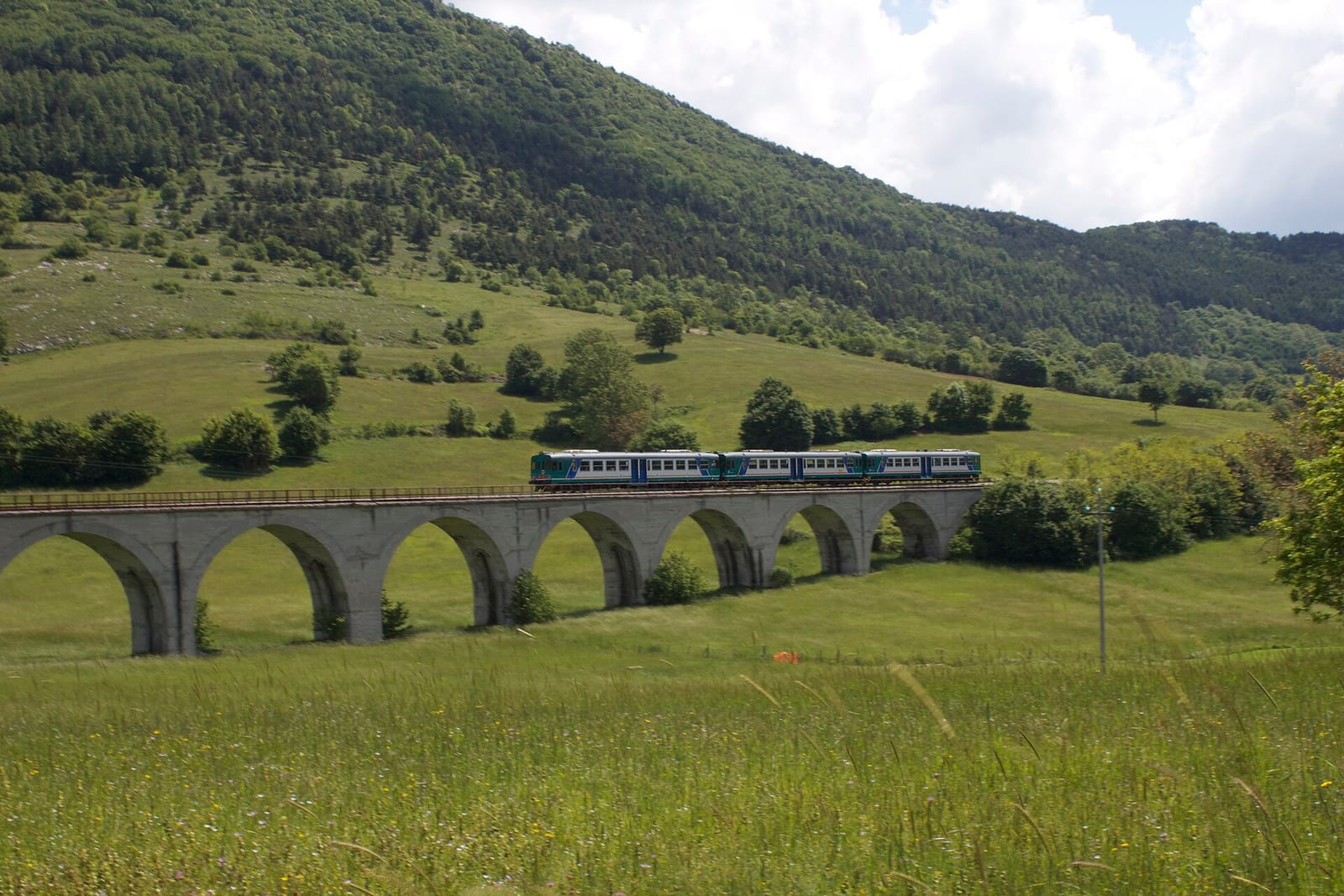
The Sulmona–Isernia railway is 128.7 kilometres of ordinary standard gauge, opened in two stages: as far as Cansano in 1892, and through to Isernia in 1897. It was built to stitch together mountain towns that had nothing else, and to do it the engineers took the track up to Rivisondoli-Pescocostanzo, which sits at 1,268.82 metres — on the entire Italian standard-gauge network, only the Brenner is higher. There is no rack, no funicular trickery. It simply climbs, on viaducts and through tunnels, into country where the snow lies for months.
That was always its problem. A railway serving villages of a few hundred people, over a mountain, in the snow, was never going to pay. On 11 December 2011 the regular passenger trains stopped, and the line should have gone the way of a hundred others — rails lifted, trackbed to brambles.
Instead something unusual happened. Local campaigners refused to let it close, and Fondazione FS Italiane adopted it into a project called "Binari senza tempo" — timeless tracks. Today the line runs again under the name Ferrovia dei Parchi, but only at weekends, and only with heritage carriages: wooden-framed coaches, drop windows, a diesel growling at the front. It carries more people now than it did when it was a real railway. Nobody rides it to get anywhere. They ride it because of the snow, and the name a journalist gave it in 1980.
The Journey
The day starts at Sulmona, a handsome town in a bowl of mountains that most travellers know, if at all, for sugared almonds. In the yard beside the modern platforms sit the carriages: heritage stock kept for this line, wooden-framed and painted in old Italian State Railways colours, with a D 445 diesel at the head. The line beyond Sulmona was never electrified — that is part of why it survived as a heritage route and part of why it sounds so good.
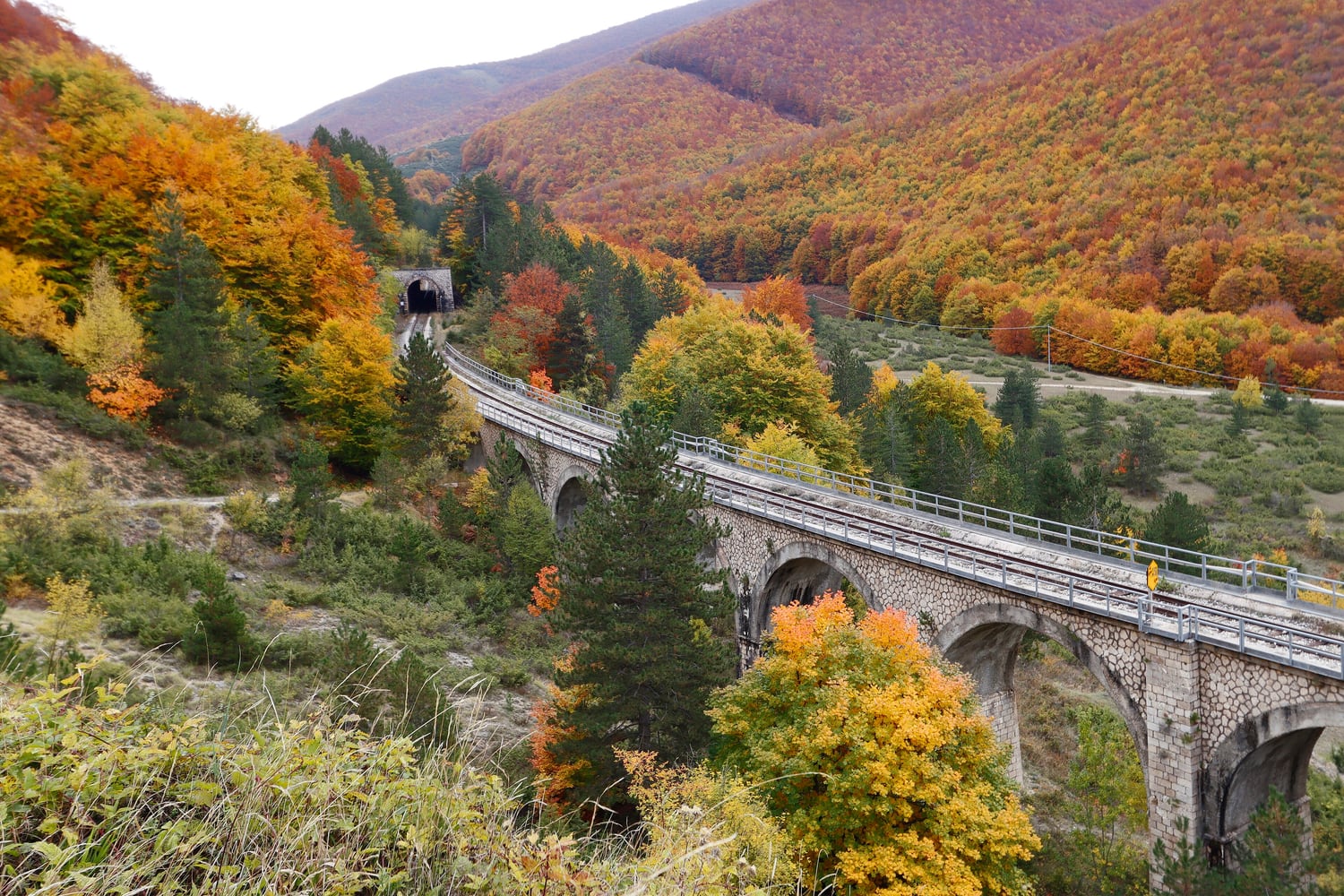
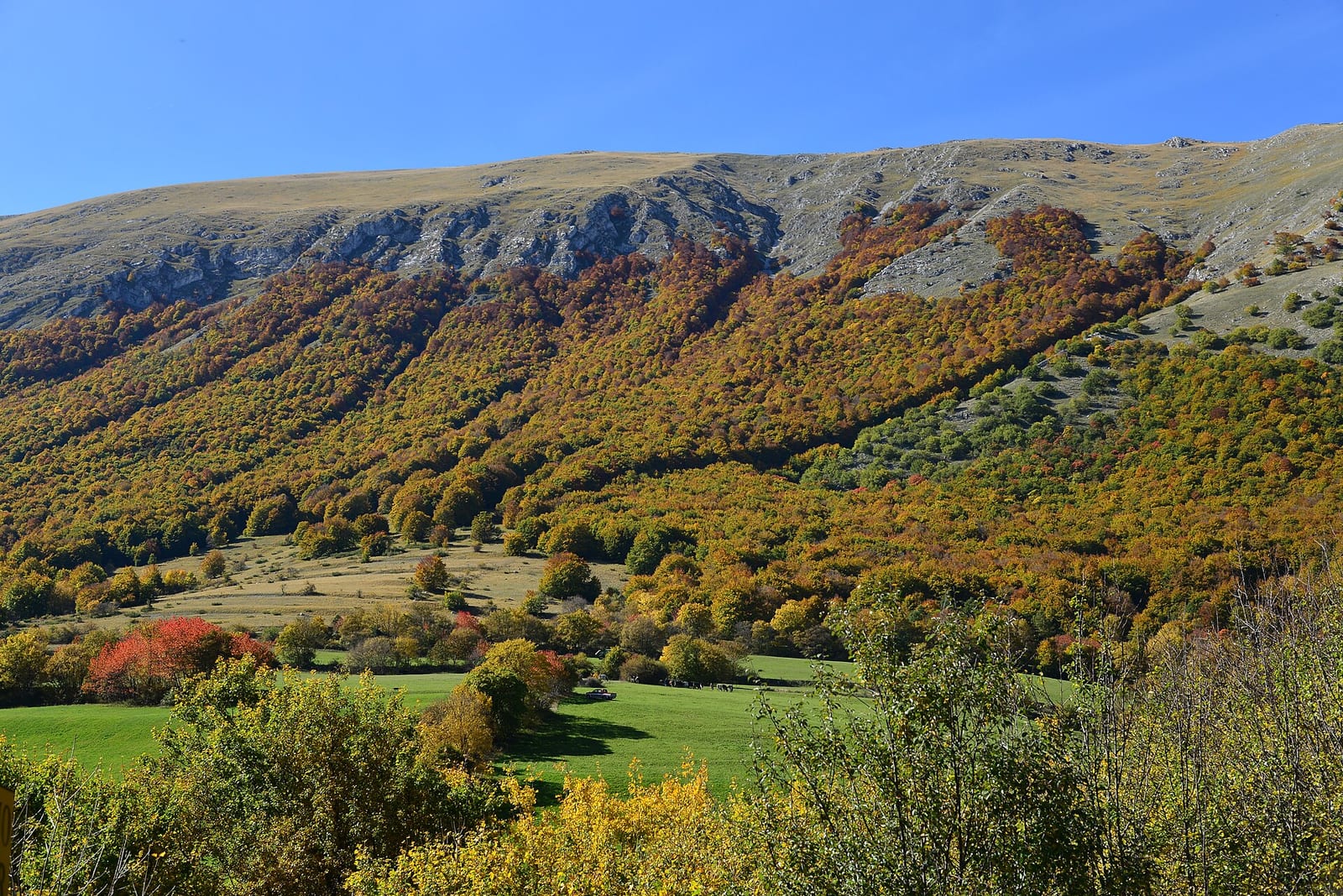
The climb begins almost immediately and never really relents. The train works up out of the Valle Peligna onto ledges and stone viaducts, the kind with tall arches marching across a gorge, and Sulmona shrinks into its bowl behind you. Cansano is the first stop of substance — the village the railway reached in 1892, five years before it managed the rest — and then Campo di Giove, sitting directly under the great limestone wall of the Maiella. The line crosses the south-western corner of the Maiella national park, and the mountain does most of the talking.
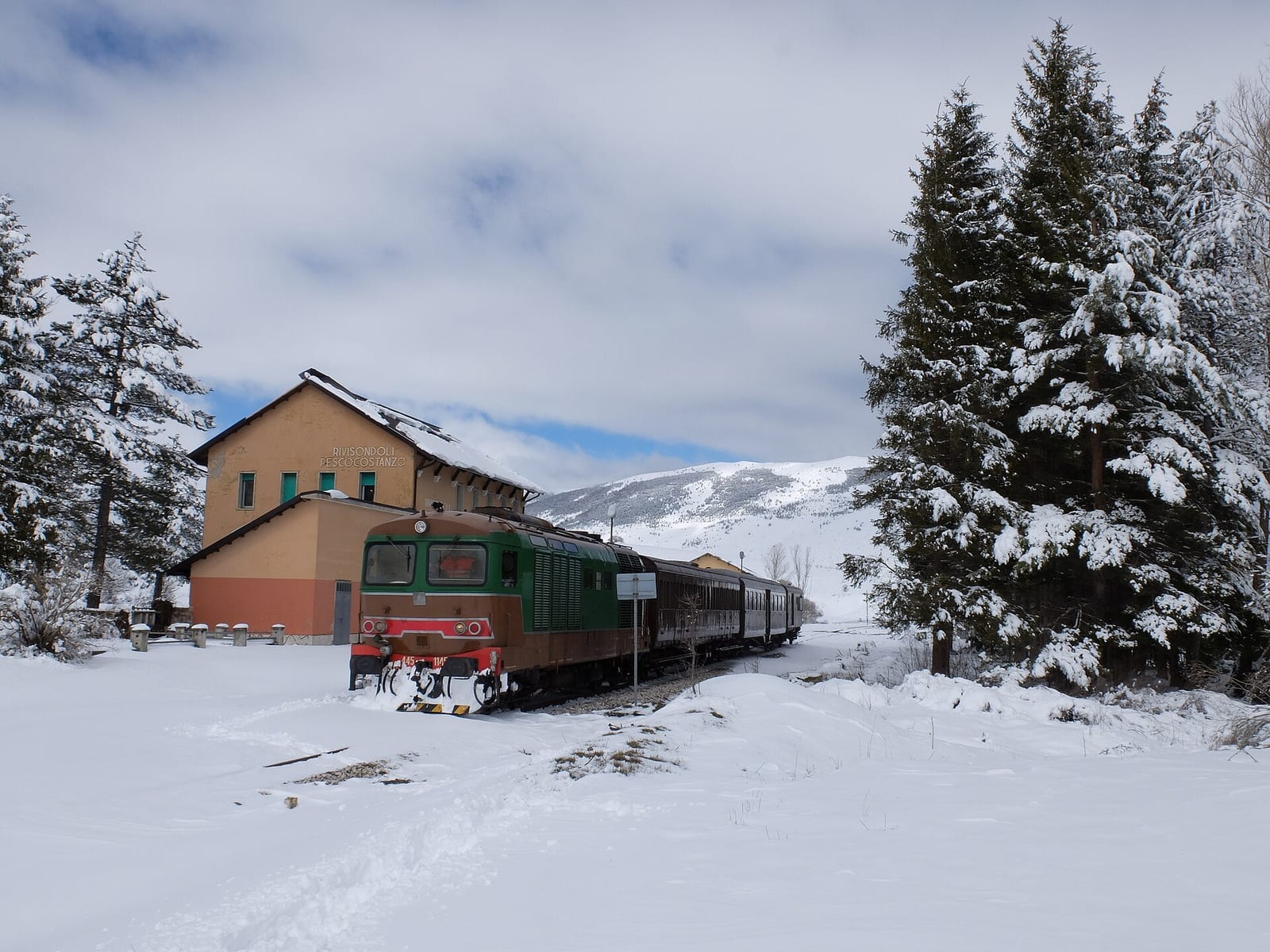
Then comes the reason for the nickname. Between Campo di Giove and Roccaraso the railway hauls itself onto the Altopiano delle Cinquemiglia, a high, treeless plateau, and pulls into Rivisondoli-Pescocostanzo at 1,268.82 metres. In summer it is a bare, wind-scoured place with cattle in the distance. In winter it is white to the horizon and the snow is banked above the carriage windows — and the sight of a green-and-red diesel and a rake of vintage coaches standing in all of it explains, in one image, why a journalist reached for Siberia.
Beyond the summit the line runs down through Roccaraso, Abruzzo's ski town, and Castel di Sangro, before crossing quietly out of Abruzzo and into Molise — the region Italians joke does not exist — for the last stretch to Carpinone and Isernia. Most trips turn short of that. On the full-length days the reward at the end is Isernia's railway museum and a very long, very slow ride home.
What makes the day, though, is not the scenery so much as the stops. This is a train that is in no hurry, and the villages know it is coming. It halts long enough for you to get out and be fed — mountain ham, sheep's cheese, wine, a market set up on the platform, a brass band if the date is right. The Transiberiana is less a journey than a moving excuse for eight villages to have a good day out, and you are invited.
Along the route
Pattiolivieri / Wikimedia Commons · CC BY-SA 4.0The second-highest station in Italy
Rivisondoli-Pescocostanzo stands at 1,268.82 m — on the whole Italian standard-gauge network, only the Brenner, at 1,371 m, is higher. In winter the train pulls in through snowbanks, and the nickname stops being a joke.Nadioska79 / Wikimedia Commons · CC BY-SA 3.0Named by a journalist, in 1980
Luciano Zeppegno wrote about the line in the magazine Gente Viaggi in November 1980 and called it "la piccola Transiberiana" — the little Trans-Siberian — because of the snow. Forty years on, the nickname is the only reason most people have heard of it.Laura Bertonazzi 12 / Wikimedia Commons · CC BY-SA 4.0A line that outlived its own closure
Regular passengers stopped on 11 December 2011 and that should have been the end. Instead the railway came back as something else entirely — vintage carriages, weekend departures, and more visitors than the timetabled trains ever carried.A bit of history
Culture & experiences along the way
Manfred Kopka / Wikimedia Commons · CC BY-SA 4.0The snow train
Winter is what the line is named for. The carriages are heated, the windows drop, and the train climbs into a white Apennine plateau between Roccaraso and Rivisondoli that looks like nowhere else in Italy.Manny Mannheimer / Wikimedia Commons · CC BY 4.0Carriages with a past
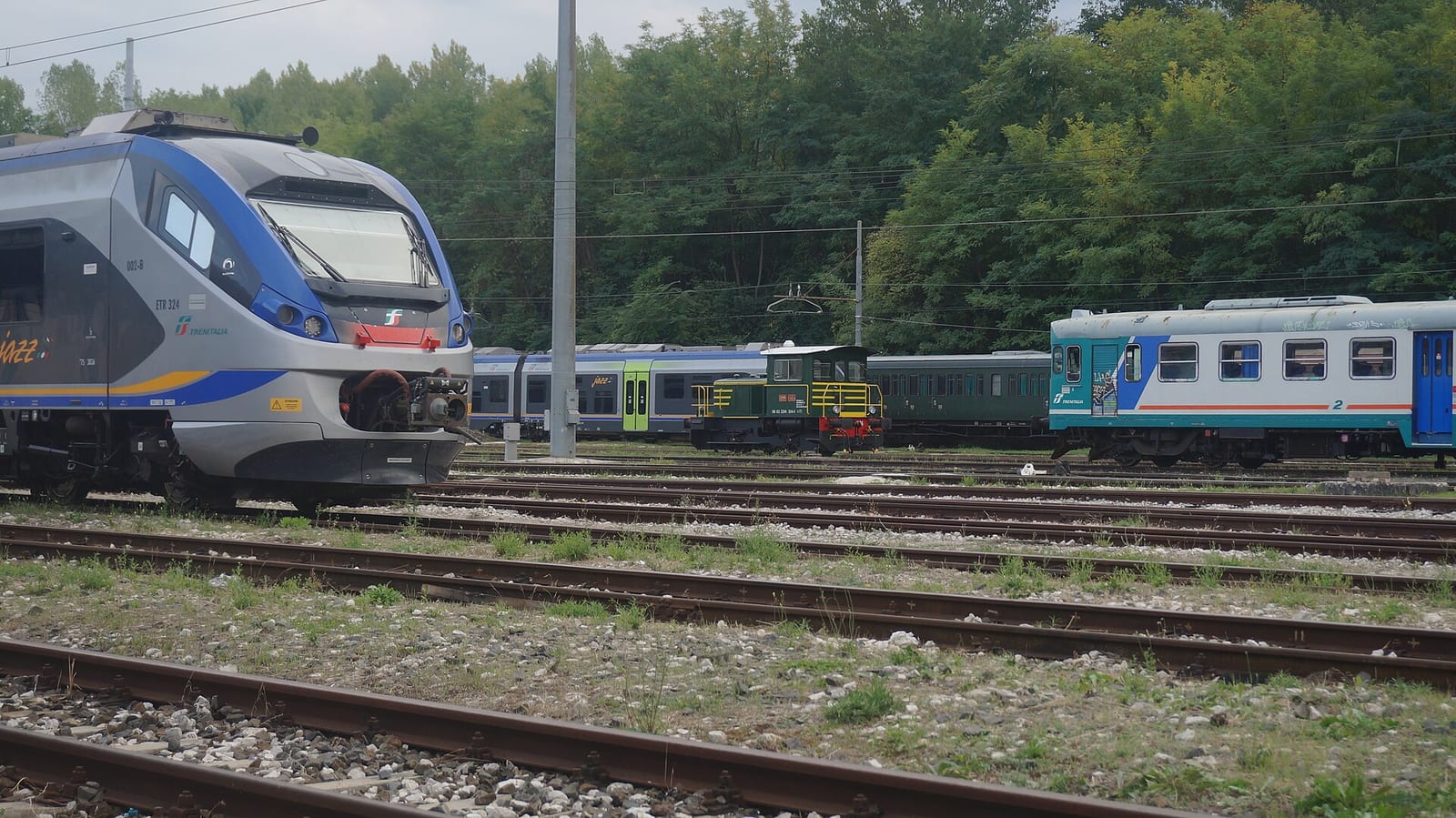
Fondazione FS keeps this line running with heritage stock under its "Binari senza tempo" project — wooden-framed centoporte and Corbellini coaches behind a growling diesel, drop windows open, no air conditioning and no apologies.Fiorenza67 / Wikimedia Commons · CC BY-SA 4.0Villages that come to meet you
The stops are the point. Campo di Giove, Palena, Pescocostanzo, Castel di Sangro — the train pauses long enough to be fed, and the villages turn out with cheese, mountain ham, wine and a market on the platform.Timetables
There is no timetable on this line in the ordinary sense. The scheduled passenger service ended on 11 December 2011 and has not come back — if you turn up at Sulmona on a random Tuesday hoping to ride to Isernia, there will be nothing to ride.
What exists instead is a calendar of departures. The historic trains run on Saturdays and Sundays through the operating season, leaving Sulmona around 08:45 and returning about 17:30, in themed blocks: winter (roughly mid-January to early March) for the snow; spring (about 29 March to 2 June 2026, plus Easter and the late-April/May holidays) for the wildflowers; summer (21 June–20 September 2026); autumn for the colour and food festivals; and Christmas-market departures from late November to early January. Each date has its own advertised itinerary — the destination, the stops, and how long you get at each — so two departures a fortnight apart can be quite different days out.
Most trips work a portion of the line rather than all of it, typically from Sulmona up over the plateau and back. The full 128 km run through to Isernia is offered only on selected dates, and it makes for a very long day.
The practical consequence: choose your date first, and read that date's itinerary, rather than assuming a standard journey. And book early. This is a fixed number of heritage carriages, the winter departures in particular sell out well ahead, and there is no second train behind it.
Checked 17 July 2026 against the operator, ferroviadeiparchi.it (opens in a new tab). Note that the frequently-cited address latransiberiana.it no longer resolves — the live site is ferroviadeiparchi.it. Confirm dates and itineraries there, or by phone on +39 0864 950555.
Tickets
This is a heritage excursion, not a rail journey, and it is sold like one: a seat on a specific dated departure rather than a fare between two stations. Interrail and Eurail do not apply. Book on the operator's site, where each date in the calendar is its own product with its own itinerary and price. The winter departures sell out first, and completely — there is one train with a fixed number of heritage carriages and no capacity to add another, so book months rather than weeks ahead.
The operator also packages the train with hotels and guided visits in the villages, which is worth a look if you are travelling any distance. And know what you are boarding: the carriages are historic, which is the appeal and also the warning — wooden frames, drop windows, no air conditioning and no step-free access. Dress for the mountain rather than the train.
Book your tickets
Ferrovia dei Parchi day trip
Sulmona and the Apennine villages
The standard outing: a vintage train from Sulmona into the Abruzzo highlands, with stops long enough to eat and wander. Departures on Saturdays and Sundays through the season, with themed dates in winter, spring and autumn. Book through the operator — trains sell out.
Book Tickets (opens in a new tab, on Ferrovia dei Parchi)via Ferrovia dei ParchiTrain + hotel packages
Make a weekend of it
The operator also sells the historic train bundled with a hotel and guided visits in the villages along the line — a better fit than a day trip if you are coming any distance for the winter departures.
Book Tickets (opens in a new tab, on Ferrovia dei Parchi)via Ferrovia dei ParchiRail Passes
No rail pass covers the Transiberiana d'Italia. Its operator, Fondazione FS, is not among the companies Interrail lists for Italy, and each departure is a dated heritage excursion sold only by the operator, not a fare between two stations.
A pass can still bring you to Sulmona. Trenitalia's regional trains are included in Italy, so a pass covers the journey to the start, and the excursion is bought on top.
Checked October 2026 against interrail.com (opens in a new tab).
Places to Visit
This is a heritage excursion train through some of the emptiest country in Italy, and the towns it calls at are a good deal older and stranger than the railway itself. Most run days give you a long stop at one of them; the full-length services reach across the regional border into Molise.
 Luca Aless / Wikimedia Commons · CC BY-SA 4.0 · cropped
Sulmona
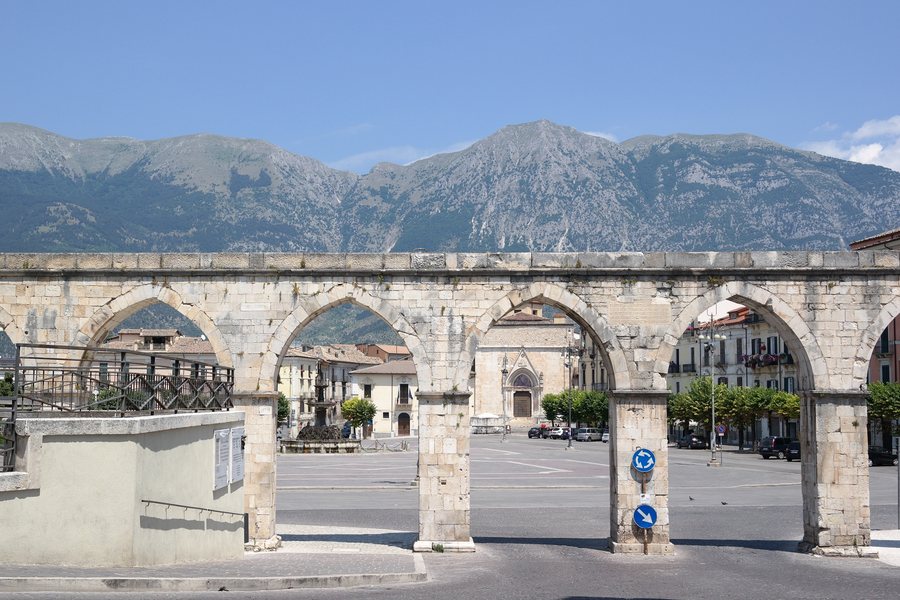
Deserves more than the hour before your train. A small, elegant town under the Maiella, built around a magnificent medieval aqueduct that strides across Piazza Garibaldi, and a maker of confetti — sugared almonds spun into flowers and bouquets — for centuries. By long tradition it is also the birthplace of Ovid, who is everywhere in the street names and nowhere in particular. The old centre is walkable in an afternoon.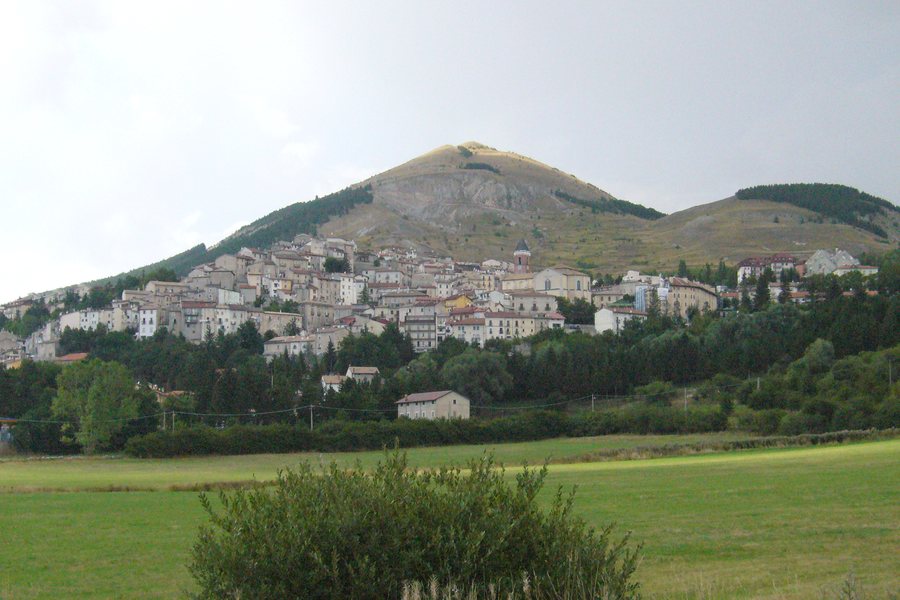 maury3001 / Wikimedia Commons · CC BY 3.0 · cropped
Pescocostanzo
The architectural surprise of the route: a mountain village that got rich on wool and spent the money on stonework, woodcarving and lacemaking. It is listed among I Borghi più belli d'Italia and it looks it — a Renaissance-ish hill town at 1,400 metres, which is not a combination Italy offers often. Rivisondoli next door is smaller and plainer; the two share a station.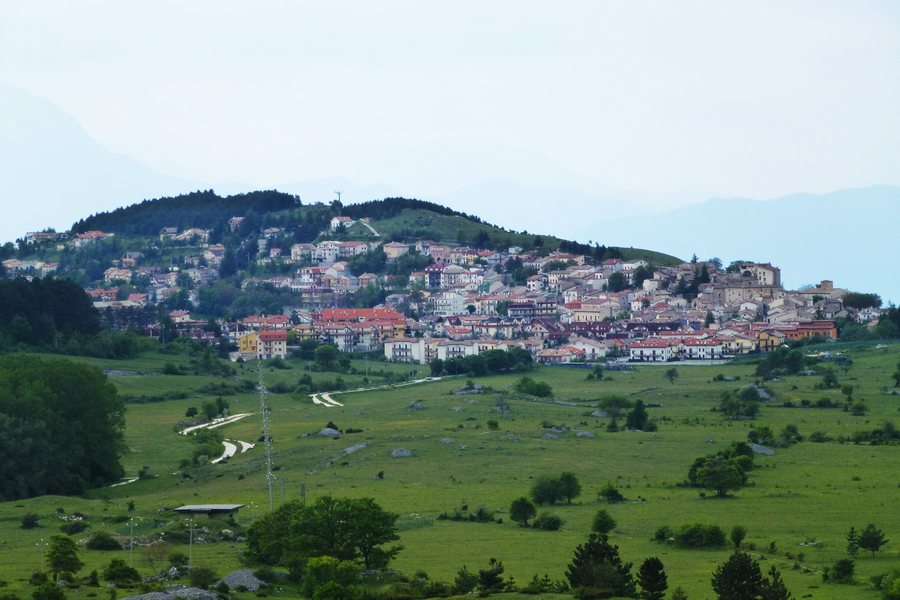 maury3001 / Wikimedia Commons · CC BY 3.0 · cropped
Campo di Giove
Sits directly under the Maiella, and is the obvious stop for anyone who wants the mountain rather than the village. This is the south-western edge of the Parco nazionale della Maiella, with walking in summer and skiing in winter starting straight off the plateau.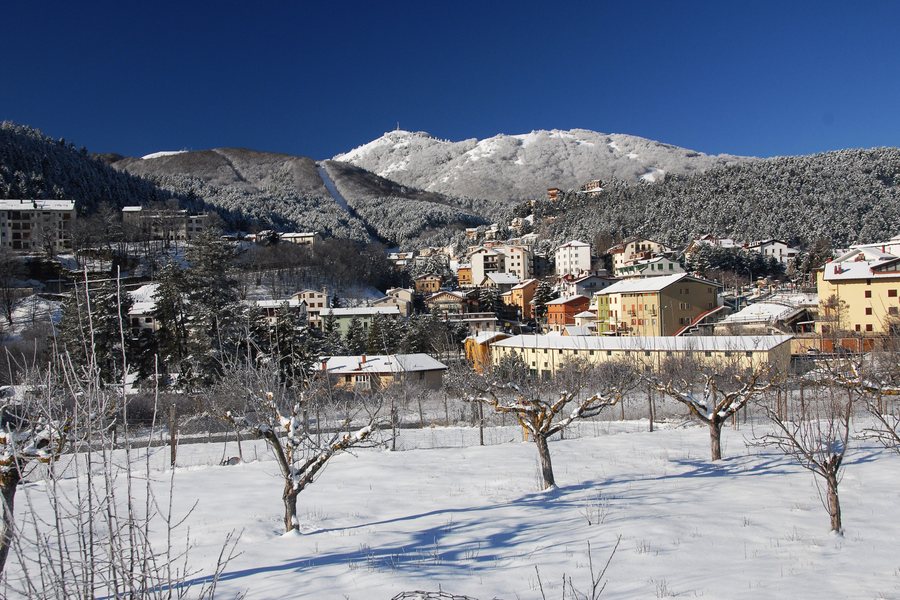 Pattiolivieri / Wikimedia Commons · CC BY-SA 4.0 · cropped
Roccaraso
The busiest place on the line and the least old — flattened in the Second World War and rebuilt as Abruzzo's main ski resort. It is where the train briefly feels like public transport again, because in season people genuinely use it to get to the snow.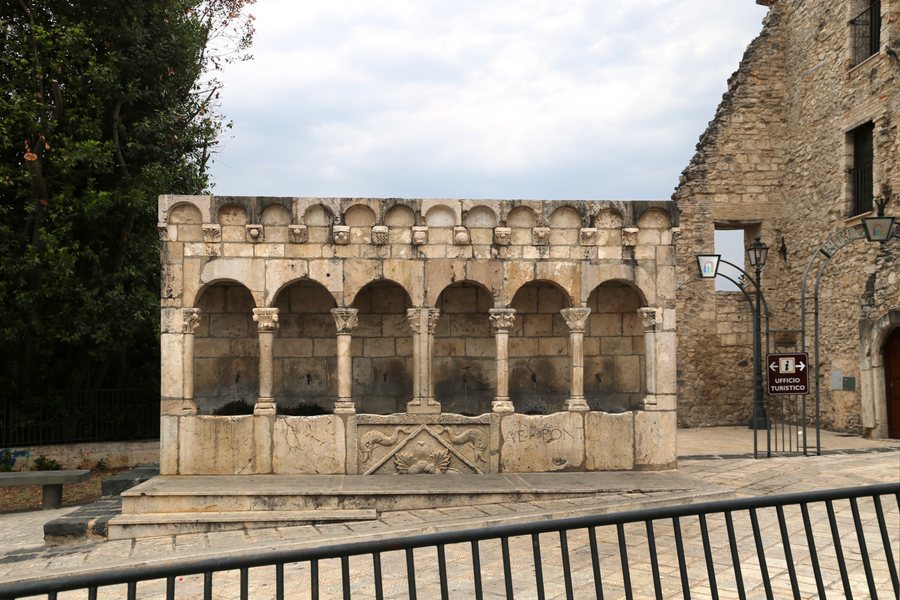 Sailko / Wikimedia Commons · CC BY 3.0 · cropped
Isernia
Past Castel di Sangro and over the regional border into Molise, Isernia is the prize on the full-length days. Its Fontana Fraterna, reassembled in 1853 out of medieval fragments, stands in the old centre; the Museo Ferroviario is the natural terminus for a trip like this; and the Palaeolithic site at La Pineta on the edge of town is among the oldest human settlements known in Europe.Where to Sleep
Sulmona is the obvious base, and for most people the only sensible one. The trains leave from there, it has the widest choice of rooms on the route — small hotels and B&Bs in and around the old centre — and it is on the ordinary Trenitalia network, so you can actually reach it. Because the historic trains run at weekends and often start early, staying in Sulmona the night before turns a stressful morning into a stroll to the station.
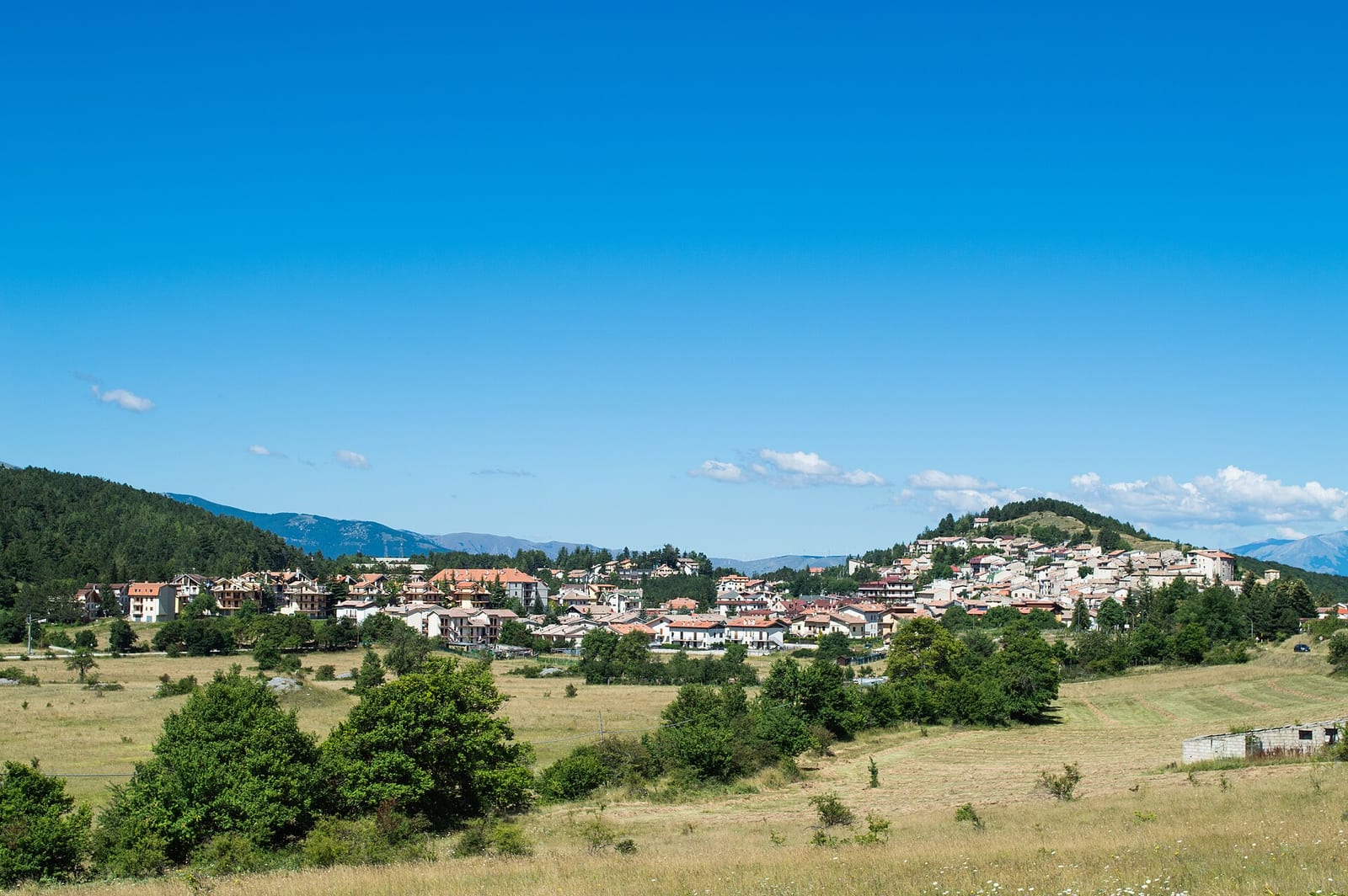
Up on the mountain, Pescocostanzo is the loveliest place to stay on the whole line: a stone-built hill town at around 1,400 metres with proper hotels, because it has been receiving visitors for generations. Roccaraso has far more beds than anywhere else up here — it is a working ski resort — but they are resort beds, busy and expensive in season and quiet out of it. Both put you beside the summit station rather than at the bottom of the climb, which is a good trick if you want the snow without the day trip.
Campo di Giove and the smaller villages offer B&Bs and agriturismi, several on working farms, and they are the right choice if the Maiella is what you came for.
At the Molise end, Castel di Sangro and Isernia are practical rather than romantic — worth a night only if you are riding one of the full-length departures and would rather not do 128 km back the same day.
Two things to plan around: the trains run weekends only, so a midweek stay buys you the mountains but no railway; and the winter dates that make this line famous are also when the ski towns fill up, so book the room at the same time as the seat.
Questions or corrections
Planning this trip and stuck on something, or spotted a time, fare or detail that has changed? Send us a message about Transiberiana d'Italia. We read every one, and we update this page when something has changed.