Frecciarossa Rome–Milan
Sabas88 / Wikimedia Commons · CC BY-SA 4.0
- DistanceAbout 548 km
- DurationFrom 2 h 40
- Best seasonYear-round
Introduction
Ask which country opened Europe's first high-speed railway and most people will say France. It is a reasonable guess, and it is wrong by four years.
On 24 February 1977, more than half of the ferrovia direttissima Firenze–Roma — the "most direct Florence–Rome railway" — opened for traffic. No level crossings. No junctions with anything. A ruling gradient of 0.8% and curves of no less than 3,000 metres radius, because the whole thing was laid out for 250 km/h at a time when most of Europe considered 160 a good day out. The TGV would not carry a passenger until 1981.
The Direttissima took a long time to finish — the last section was not completed until 26 May 1992 — but when it was done it had cut the fastest Florence–Rome time to 1 hour 20 minutes, and it had established the thing Italy is now quietly excellent at.
Today that 1977 railway is the southern third of the best journey in the country. Milan to Rome is about 548 kilometres and takes 2 hours 40 minutes, at up to 300 km/h, and it is not one railway at all but three, coupled end to end: Milan–Bologna (215 km, opened December 2008), Bologna–Florence (79 km, opened December 2009), and the old Direttissima (254 km, opened 1977). Only in December 2009, when the middle piece opened, did the whole thing finally add up.
It is not a scenic railway and it does not pretend to be. It is something rarer: a train so good at its job that it has changed how a country works. Milan and Rome are 550 kilometres apart and a morning meeting in one is a lunch in the other. You can have both — and you will spend most of the ride not looking out of the window at all, which is the highest compliment a railway of this kind can be paid.
The Journey
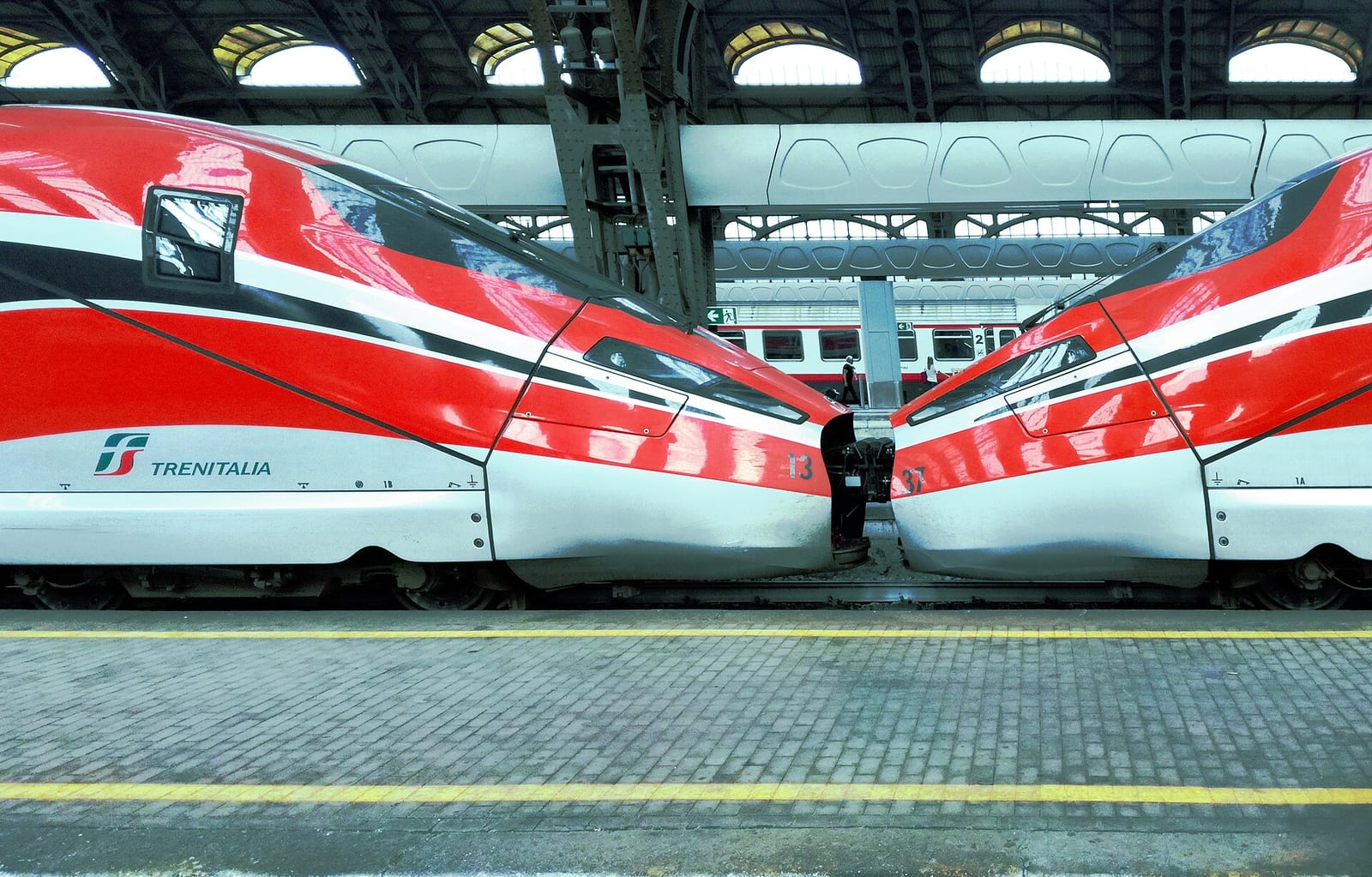
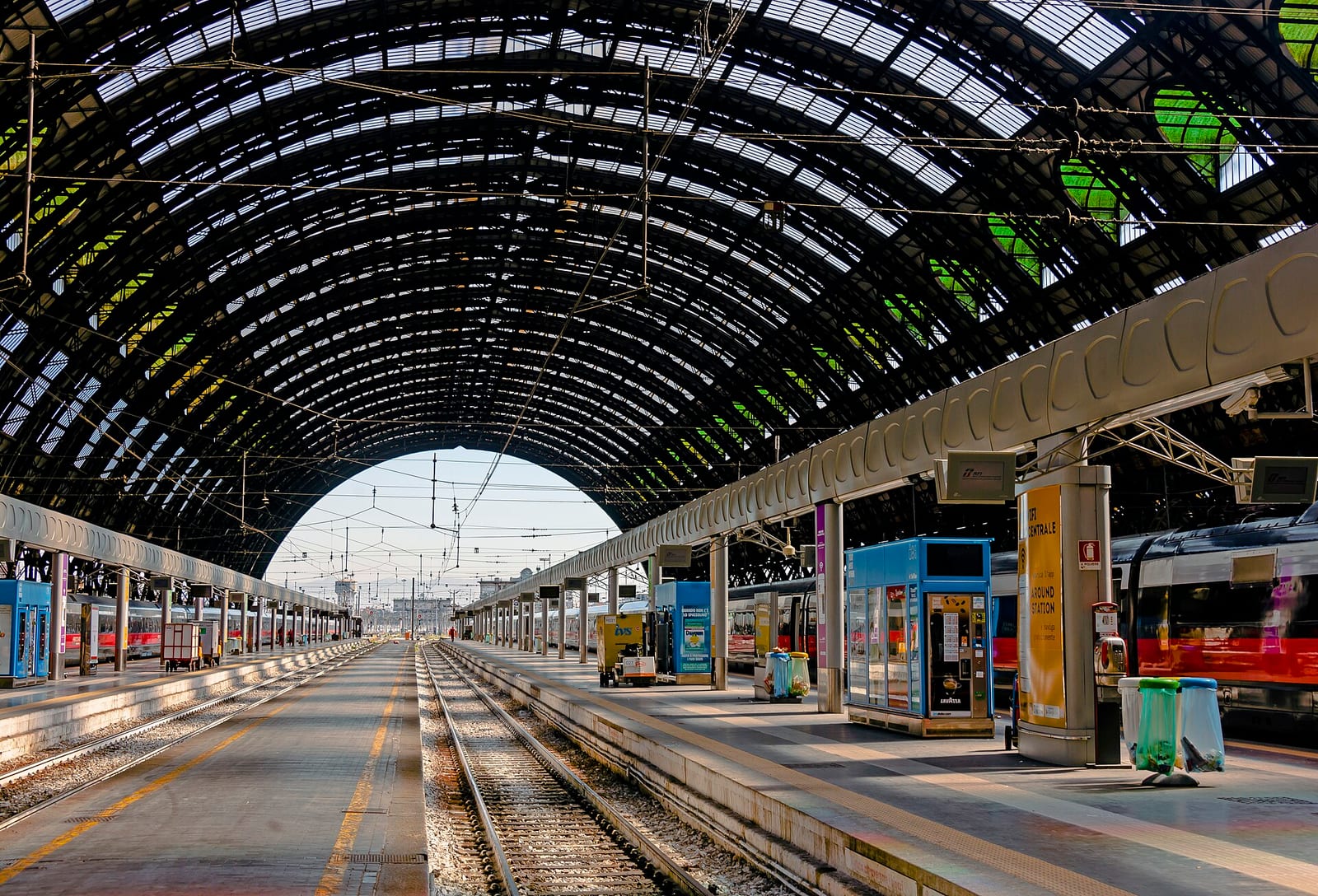
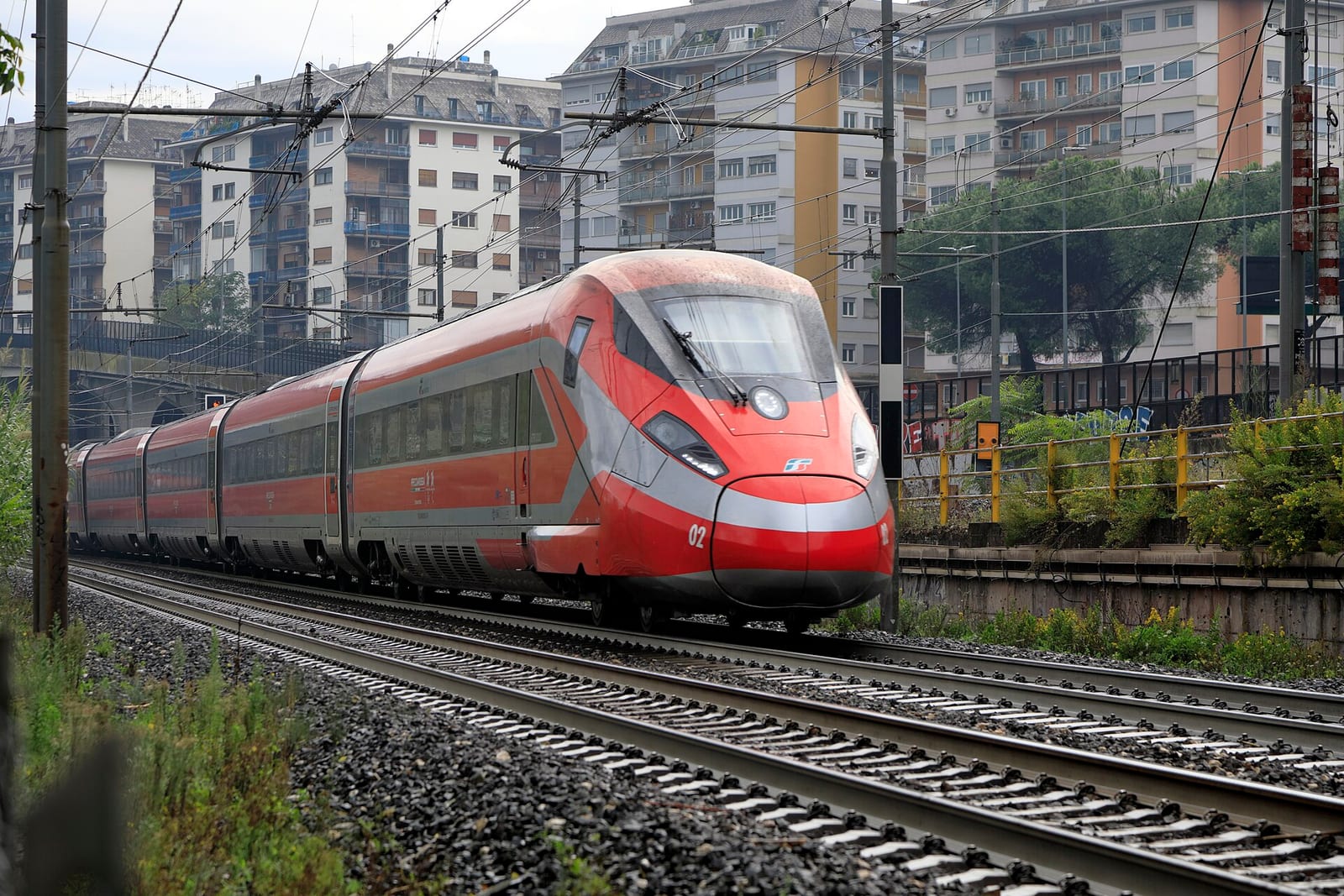
Milano Centrale is the wrong building for the twenty-first century and all the better for it. It is enormous, grandiose and roofed by a series of vast iron-and-glass arches that make every departure feel like an occasion it does not deserve. Underneath them, the Frecciarossa fleet waits — red noses in a row, the 1000s looking like something drawn rather than built. Arrive early. You will not get a station like this at the other end.
Out of Milan the train picks its way through the suburbs, and then, somewhere past Rogoredo, it stops behaving like a normal train. The Milan–Bologna high-speed line opened in December 2008, runs 215 kilometres across the Po plain, and is straight in a way that Italy usually is not. Fields, poplars, farmhouses and irrigation ditches slide past at 300 km/h while a man across the aisle takes a call. Bologna arrives about an hour after Milan, on a set of platforms buried deep under the old station.
Then comes the good bit, engineering-wise, and you will see almost none of it. The Bologna–Florence line is only 79 kilometres long and spends most of its life inside the Apennines — a near-continuous sequence of tunnels under mountains that used to force trains into a long, spectacular, slow detour. It opened in December 2009 and it is the piece that completed the whole corridor. What it gives you is Florence, thirty-seven minutes after Bologna, and no view whatsoever.
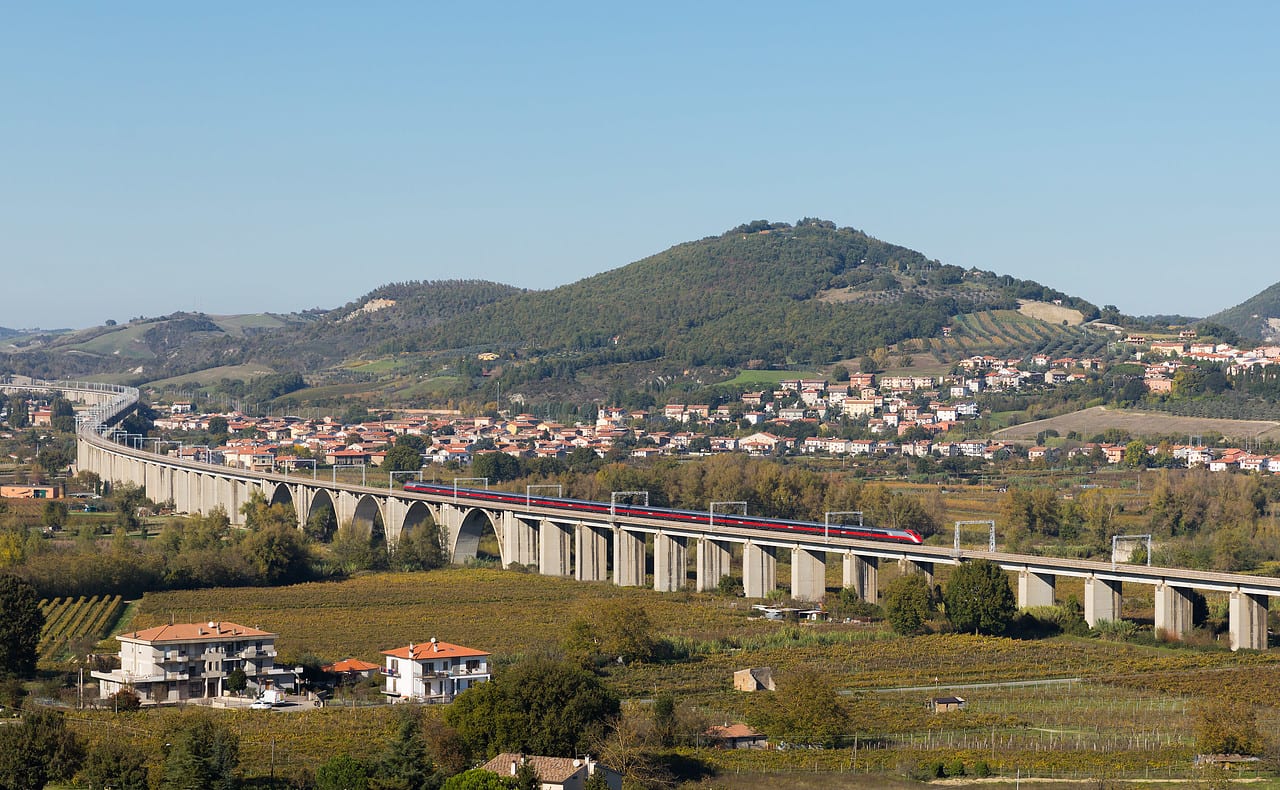
South of Firenze Santa Maria Novella the train joins the Direttissima, and it is worth knowing you are on it. This is the 1977 line, the first in Europe, and it still shows its age in a good way: it is electrified at 3 kV DC rather than the 25 kV of the newer lines, and it is signed for 250 km/h rather than 300. It runs down through Tuscany and Umbria past Arezzo and Orvieto, and about two-thirds of the way to Rome it crosses the Paglia valley near Allerona on 5,375 metres of viaduct — 205 spans of 25 metres and five arched spans of 50 — the longest viaduct in Europe. You are across it in something like eighty seconds. That is the entire philosophy of this railway in one sentence.
Roma Termini is a shock after Milano Centrale: low, modernist, wide open and full of people going somewhere else. You will have covered 548 kilometres in 2 hours 40, read a newspaper, drunk a coffee and possibly done a morning's work. There is nothing romantic about it at all, and it is one of the finest train journeys in Europe.
Along the route
Kabelleger / David Gubler / Wikimedia Commons · CC BY-SA 4.0Europe's first high-speed line
Not France, and not 1981. More than half of the direttissima Florence–Rome opened on 24 February 1977 — the first high-speed line in Europe — with no level crossings, curves of no less than 3,000 m radius and a ruling grade of 0.8%. The last section was finished in 1992.Kabelleger / David Gubler / Wikimedia Commons · CC BY-SA 4.0The longest viaduct in Europe
Near Allerona the Direttissima crosses the Paglia valley on 5,375 metres of concrete — 205 spans of 25 m and five arched spans of 50 m. At 250 km/h you are over it in about eighty seconds, which is rather the point.Falk2 / Wikimedia Commons · CC BY-SA 4.0Three lines pretending to be one
There is no such thing as "the Milan–Rome high-speed railway". The run is three railways coupled end to end — Milan–Bologna (215 km, 2008), Bologna–Florence (79 km, 2009) and the 1977 Direttissima (254 km) — and only in December 2009 did they finally add up.A bit of history
Culture & experiences along the way
Daniel Case / Wikimedia Commons · CC BY-SA 3.0Milano Centrale
You start under one of the most overwhelming roofs in European railways — a vast arched trainshed of iron and glass, with the red noses of the Frecciarossa fleet lined up beneath it. It is worth arriving early simply to stand in it.Hide1228 / Wikimedia Commons · CC BY-SA 4.0The 300 km/h you cannot feel
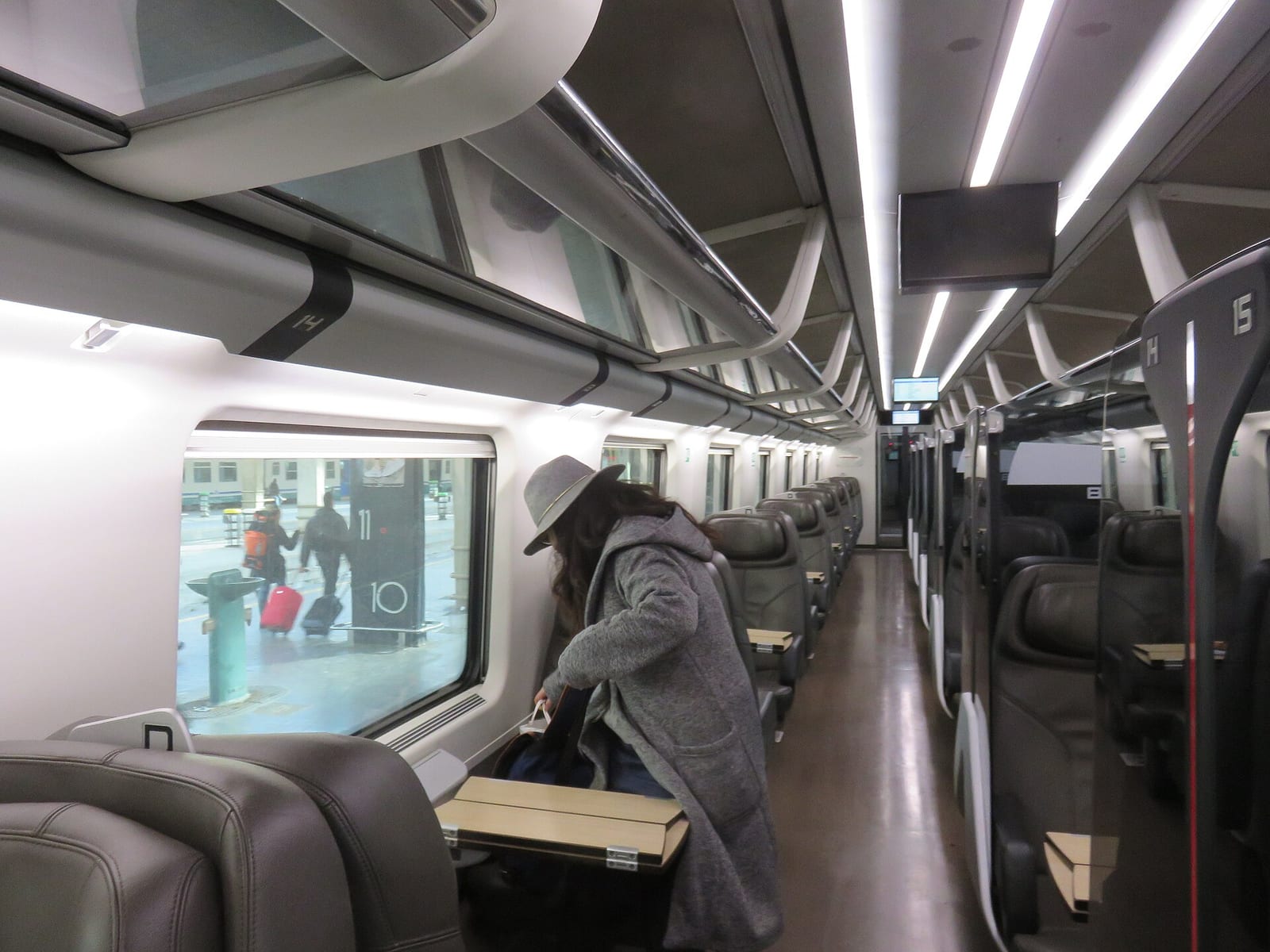
The Frecciarossa 1000 is built for 400 km/h and runs at 300. From a reclining seat with a coffee, the only clue is the Apennines going past faster than seems reasonable, and Bologna arriving an hour after Milan.Mint0ri / Wikimedia Commons · CC0A race for your fare
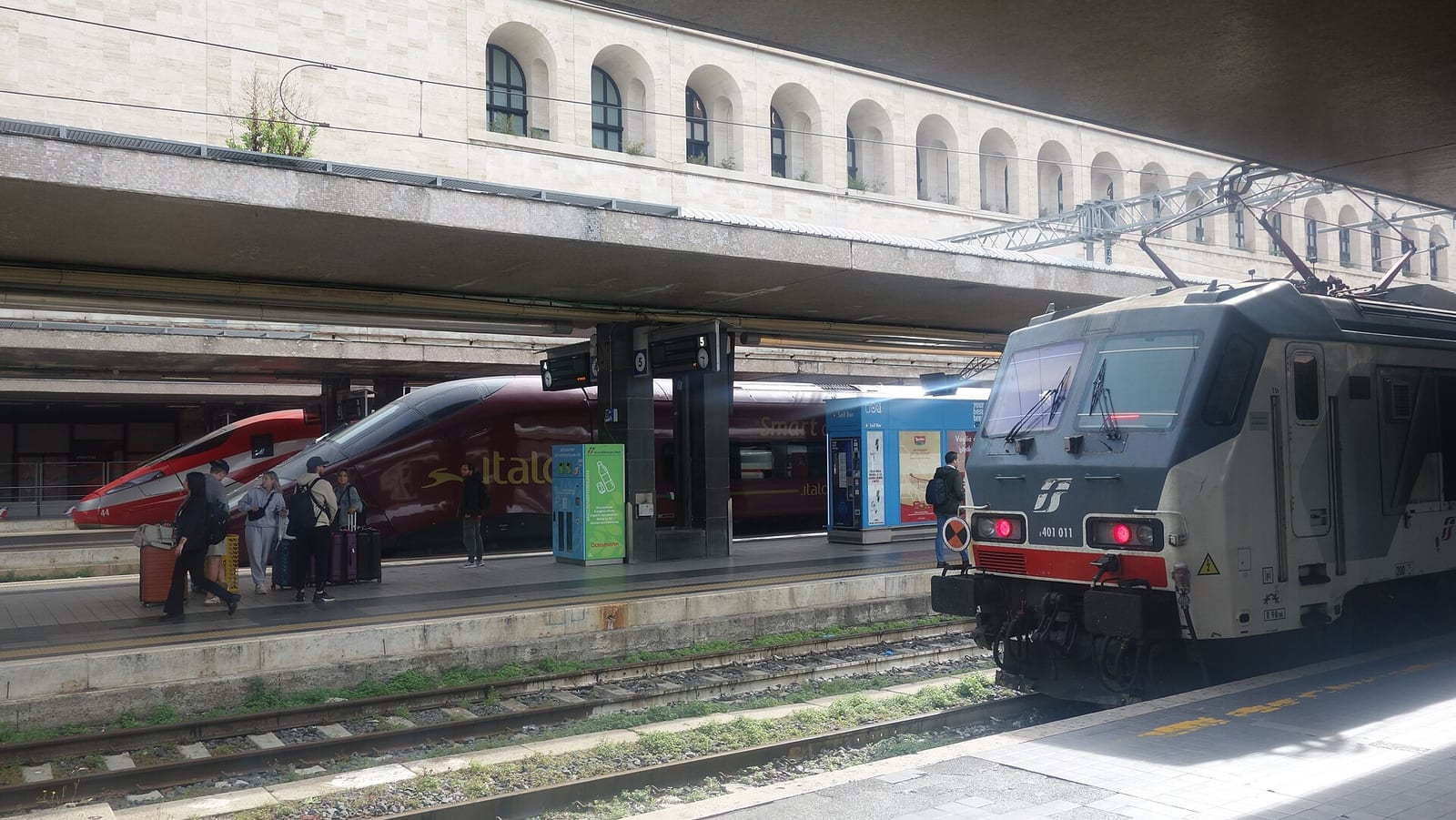
Since April 2012 Italo has run its own high-speed trains on the same tracks — the world's first private open-access operator to take on a state railway. Two companies want this journey, and Italian fares have never recovered. Good.Timetables
This is the busiest long-distance corridor in Italy, and the timetable shows it: departures run from about 05:30 to 21:30, every day of the year, at several an hour at peak — some 28 non-stop Frecciarossa a day plus many more calling trains, and that's before you add the rival operator Italo. In the busiest windows (roughly 08:00–10:00 and 16:00–20:00) there are a dozen or so departures an hour each way across all services.
The fastest non-stop Frecciarossa cover Milano Centrale ⇄ Roma Termini in about 2 hours 55 minutes. Most trains are not those: a typical service calls at Bologna and Firenze Santa Maria Novella (and often Reggio Emilia AV or Roma Tiburtina), which pushes the journey towards three-and-a-quarter hours. The difference is on the departure board, not in the fare, so check the arrival time and not just the price.
A note on stations: Milano Centrale and Roma Termini are the main termini, but Italo leans on Milano Rogoredo and Roma Tiburtina, and some Trenitalia trains call at Rogoredo too — Tiburtina is well-connected but not central Rome, so check which station your ticket actually names.
Frequency and the ~2 h 55 fastest time as of the 2026 timetable; both operators re-time twice a year. Search your actual date and book — see the Tickets section below.
Tickets
The single most useful fact about this route is that two companies want your money. Trenitalia runs the Frecciarossa; Italo has run its own high-speed trains on the same tracks since April 2012 — the world's first private open-access operator to take on a state railway on its own network. They rarely charge the same for the same hour. Price both, every time: it takes two minutes and routinely halves the fare.
Everything here is reserved, so you are buying a specific seat on a specific train, and fares climb steeply towards departure — the same journey can be €30 booked well ahead or four times that on the day. ⚠️ Interrail and Eurail are valid but do not cover the compulsory reservation, and the pass-holder quota is limited and sells out. A valid pass and no reservation gets you nothing on a Frecciarossa.
Book your tickets
Trenitalia Frecciarossa
Milano Centrale – Roma Termini
The state operator's flagship, up to 300 km/h, several departures an hour at peak. Four classes from Standard to Executive, with a Silent Car in Business. Fares are cheapest booked early and rise sharply towards departure.
Book Tickets (opens in a new tab, on Trenitalia)via TrenitaliaItalo
The same route, a different company
The private operator has run the Milan–Rome corridor since 2012, on the same high-speed lines. Worth pricing against Trenitalia every time — the two rarely charge the same for the same hour, and Italo uses Milano Rogoredo and Roma Tiburtina as well as the central stations.
Book Tickets (opens in a new tab, on Italo)via ItaloRail Passes
Interrail passes are valid on the Frecciarossa, with a paid reservation. Interrail's table of railway companies lists Trenitalia's Frecciarossa as included in Italy, and names Italo among the trains excluded, so a pass covers only the red Trenitalia trains on this route. Reservations are compulsory on every Frecciarossa and cost pass holders €13 in either class; reservations made locally carry a €2 booking fee.
For this journey alone, a pass is rarely worth buying. Booked well ahead, a ticket is cheap enough that, after the €13 reservation, a pass saves little. A pass pays on a longer trip around Italy, or at short notice, when fares are highest.
Checked October 2026 against interrail.com (opens in a new tab), Interrail's Italy page (opens in a new tab) and its reservation fees (opens in a new tab).
Places to Visit
The point of this railway is that it makes the whole of northern and central Italy a day trip, so the honest advice is: get off it. Four of the places below are on the line. The fifth, Orvieto, is the one it deliberately misses — and the reason it is as fast as it is.
 FrancescoLama / Wikimedia Commons · CC BY-SA 4.0 · cropped
Bologna
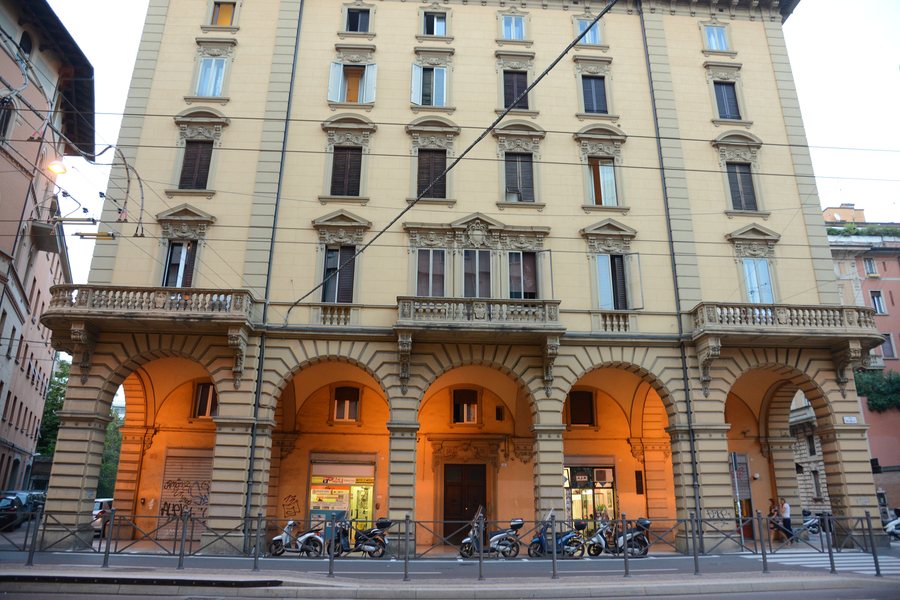
An hour from Milan, half an hour from Florence, and the stop that rewards you most. Some 42 kilometres of porticoes run through the historic centre alone — 62 in the city as a whole, UNESCO-listed since 2021 — along with the oldest university in the world, two leaning towers, and, by common consent, the best food in Italy: tagliatelle al ragù, tortellini in brodo, mortadella. If you have a spare afternoon on this line, spend it here.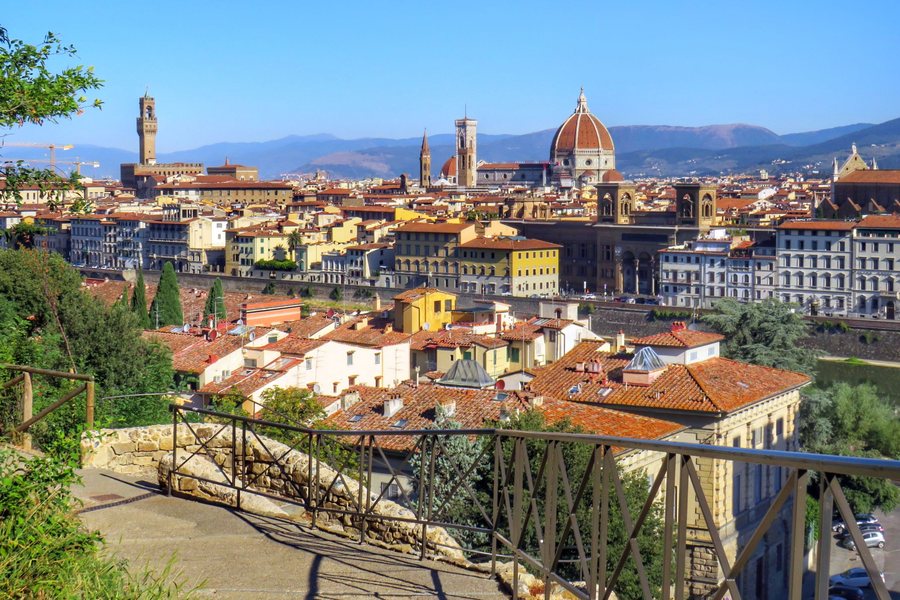 PROPOLI87 / Wikimedia Commons · CC BY-SA 4.0 · cropped
Florence
Needs no argument. What matters practically is that the high-speed trains use Santa Maria Novella, right in the centre — a ten-minute walk from the Duomo, and one of the great conveniences in European travel. Most of the Renaissance is within a square kilometre of the platforms.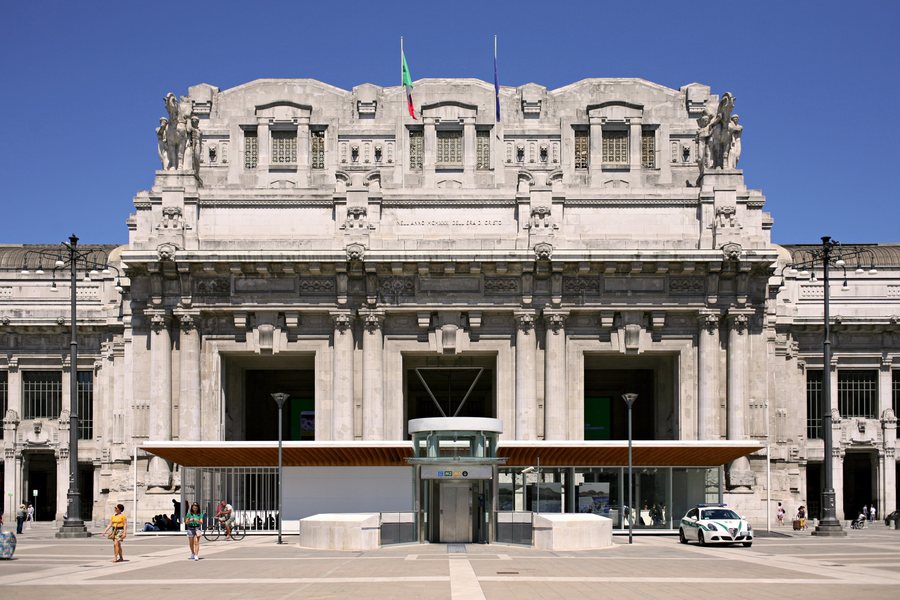 Paolobon140 / Wikimedia Commons · CC BY-SA 4.0 · cropped
Milan
Milano Centrale is a colossal station of the 1930s, and one of the few in Europe that genuinely stops people in the concourse to look up. The Duomo, the Galleria and the Last Supper are a short metro ride away — book the last of those weeks ahead, because walk-up tickets essentially do not exist.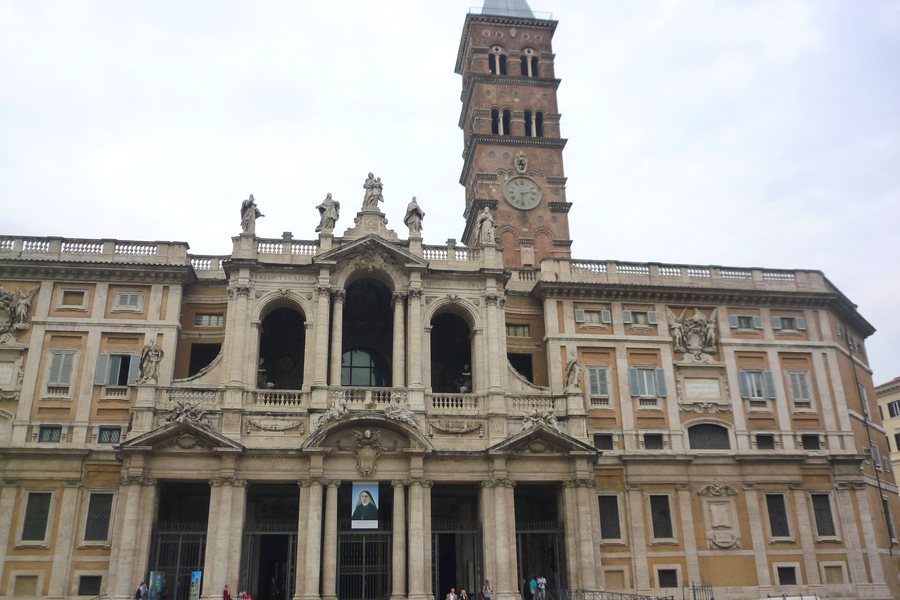 Fczarnowski / Wikimedia Commons · CC BY-SA 3.0 · cropped
Rome
Termini is not a beautiful station but it is a superbly connected one, and it puts you within walking distance of Santa Maria Maggiore and a metro ride from everything else. Some services also call at Roma Tiburtina, which is quicker to reach from the north but further from the sights.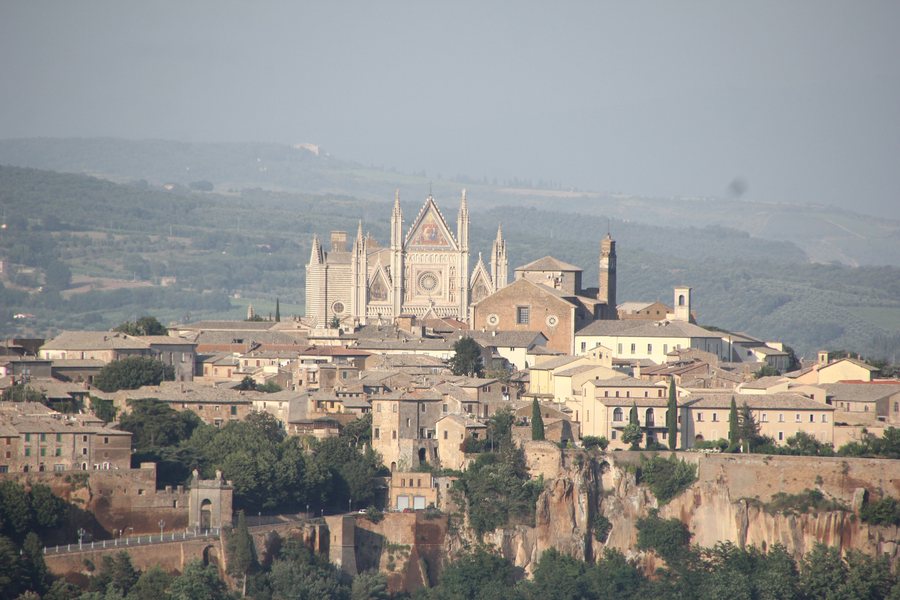 Gianni Careddu / Wikimedia Commons · CC BY-SA 4.0 · cropped
Orvieto
A cathedral town on a tufa cliff, close to the Direttissima and served only by the old, slower line down in the valley. ⚠️ That is the honest trade this railway makes: it was built to avoid the towns, which is what makes it fast and what makes it, as scenery, largely a rumour. For Tuscany and Umbria you want the regional trains. For Rome by lunchtime, you want this one.Where to Sleep
This is a train you sleep at the ends of, not along.
In Milan, the area immediately around Centrale is convenient and mostly charmless — business hotels, chain hotels, and a slightly bleak few blocks after dark. It is genuinely handy if you have an early departure. For everything else, stay nearer the Duomo or in Brera, and use the metro; Centrale is three stops away and the trade is entirely worth it.
In Rome, the same logic applies more strongly. Termini has the widest choice of beds in the city at every price, and the streets behind it are the budget quarter. But Rome is a city to walk, so if the fare allows, stay in Monti — a short walk from Termini, and one of the loveliest neighbourhoods in the city — or across the river in Trastevere and take the tram.
The more interesting option is to sleep in the middle. Because the railway makes Bologna an hour from Milan and half an hour from Florence, it is an excellent and much cheaper base for both: a proper Italian city, superb food, and high-speed trains in either direction every few minutes. Florence works the same way, and puts the Renaissance outside the door.
One planning note. Fares on this corridor are dynamic, and the cheap ones go first. If your dates are fixed, book the train the moment you book the room — waiting until you arrive is the single most expensive habit on Italian railways.
Questions or corrections
Planning this trip and stuck on something, or spotted a time, fare or detail that has changed? Send us a message about Frecciarossa Rome–Milan. We read every one, and we update this page when something has changed.