Circumvesuviana
Boweruk / Wikimedia Commons · CC BY-SA 4.0 · cropped
- DistanceAbout 47 km from Naples to Sorrento
- Duration1 hour 15 minutes
- Best seasonAll year; a train every half hour from each end
Introduction
Three stations on the line from Naples to Sorrento are called Scavi: excavations. The trains stop at Ercolano Scavi for Herculaneum, at Torre Annunziata for the great villa at Oplontis, at Villa Regina for the farmhouse at Boscoreale, at Pompei Scavi for Pompeii and at Stabia Scavi for the villas of Stabiae, all of them buried by Vesuvius in AD 79. The three parts of the World Heritage Site, Pompeii, Herculaneum and Torre Annunziata, are stops on a single suburban railway.
The Circumvesuviana was not built for them. It opened in 1890 to carry the people of the towns round the volcano into Naples, and it still does: it is a narrow-gauge network of six lines and 142 kilometres. The line along the coast reached the excavations at Pompeii in 1934 and was tunnelled through the mountains to Sorrento in 1948. The town above Herculaneum has taken the ruins' name as well: until 1969 it was called Resina.
Riding it, it is a city train that keeps going: the suburbs of Naples, Vesuvius on the inland side, then long tunnels, a viaduct at Seiano and the towns of the Sorrento peninsula. A train leaves each end every half hour, and the whole run takes an hour and a quarter.
The Journey
The trains for Sorrento start at Napoli Porta Nolana, the Circumvesuviana's terminus in Naples, and call three minutes later at Napoli Garibaldi. Every train on the line is a direttissimo, a limited-stop service, so the run through the suburbs is quick: San Giorgio a Cremano, Portici and Ercolano Scavi, for Herculaneum, eighteen minutes out. Torre del Greco follows, then Torre Annunziata, where the line to Poggiomarino parts company, and the Sorrento trains go on past Oplontis and Villa Regina to Pompei Scavi–Villa dei Misteri, 39 minutes from Naples and the stop for the Porta Marina entrance to the excavations.
Beyond Castellammare di Stabia, the mountains of the Sorrento peninsula come down to the sea, and the line's builders, working from 1944 to 1948, had to tunnel. A tunnel of nearly four kilometres takes the trains to Vico Equense; at Seiano they cross a viaduct with the station built on it, then enter a straight tunnel of about 1,800 metres to Meta. Piano and Sant'Agnello follow, and the line ends at Sorrento, an hour and a quarter from Naples.
The trains
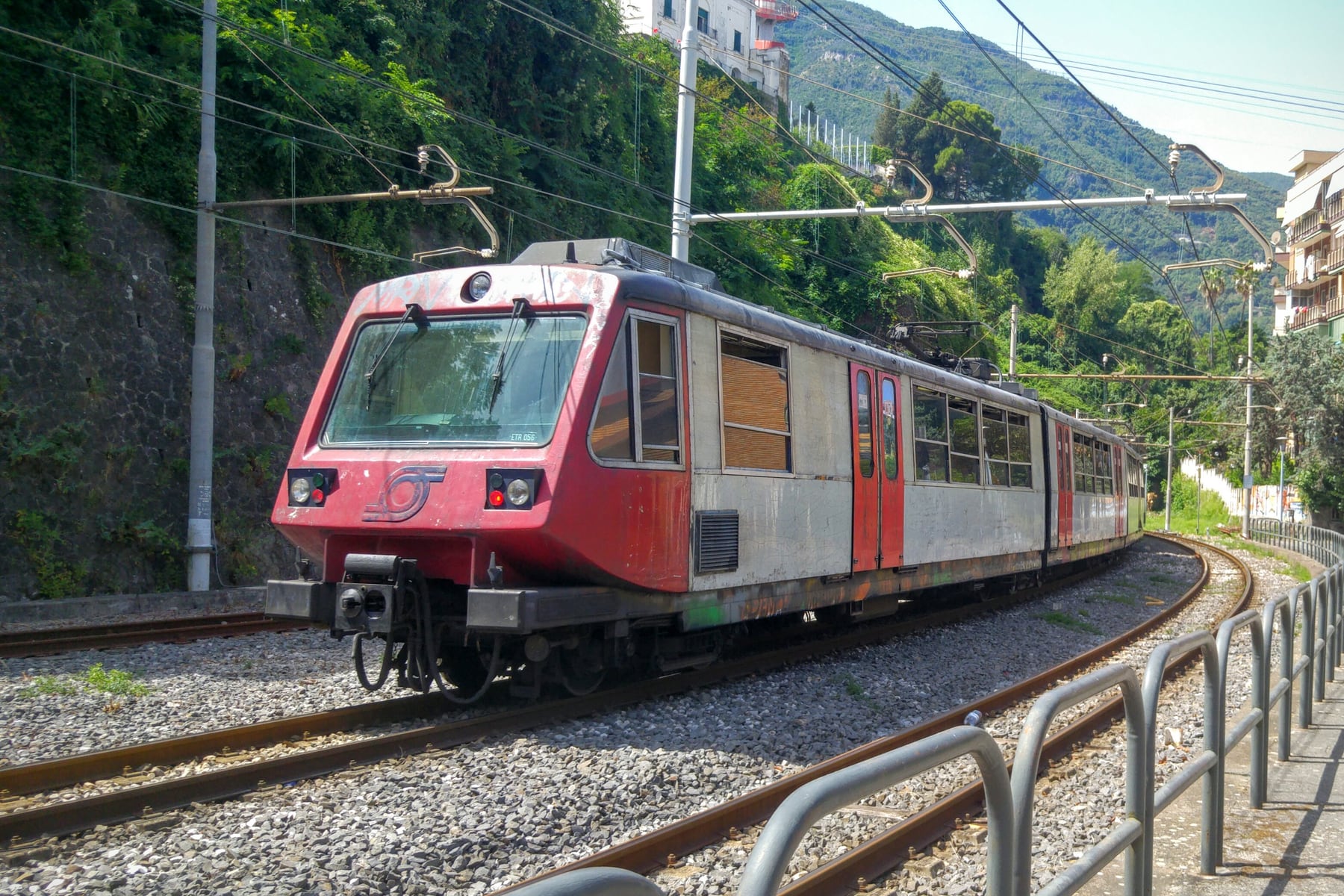
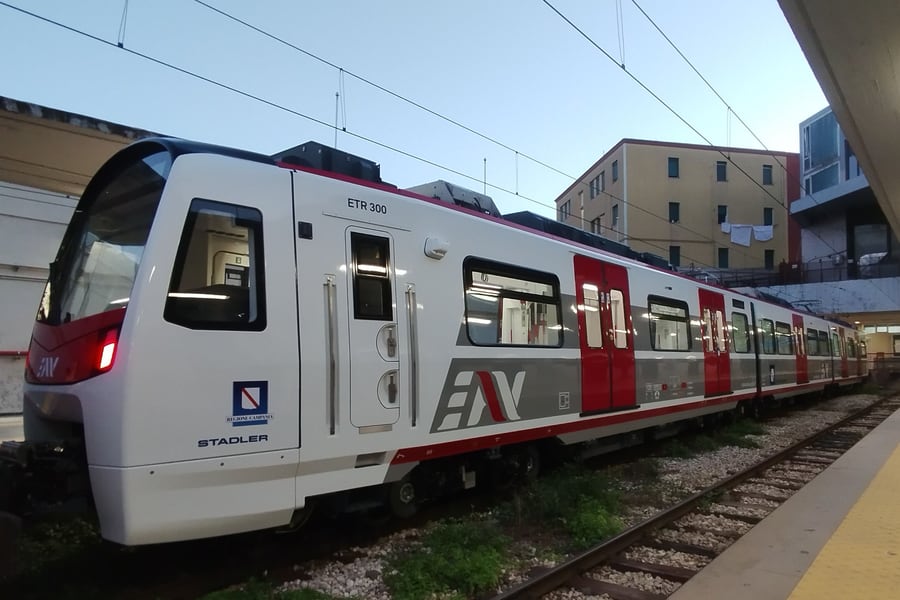
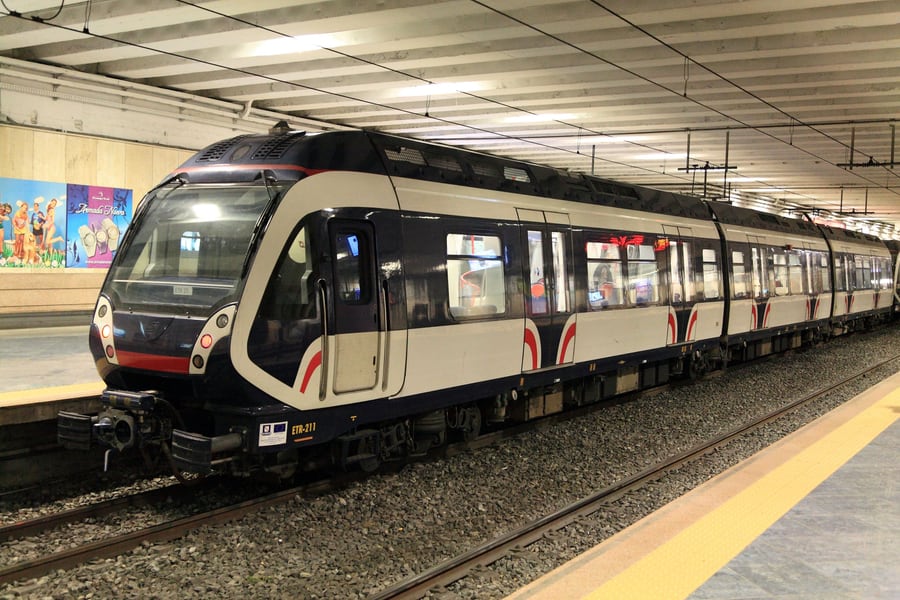
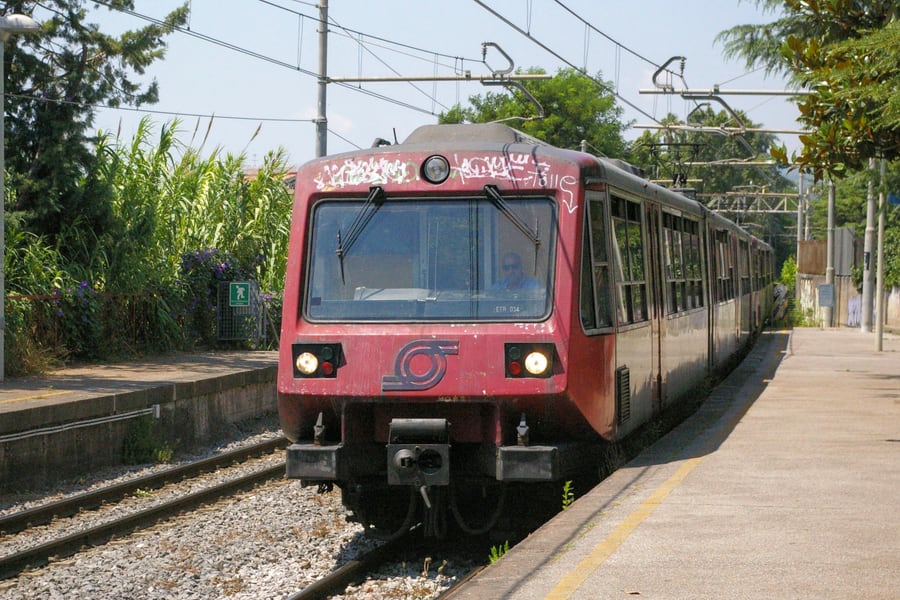
The line runs on 950 mm narrow gauge at 1,500 volts. Three generations of train share it. The oldest are the red-and-grey articulated units of the ETR 001–118 series, built at Pozzuoli and Genoa between 1971 and 1988, three bodies on four bogies, many of them since refurbished. The Metrostar units of 2008–2015 were designed for city traffic, with six doors a side and fewer seats. The newest are the Stadler ETR 300, built in Spain for this network: 56 are on order, the first entered service in July 2026, and ten of them work the timetable from October 2026.
Along the route
 Philip Mallis / Wikimedia Commons · CC BY-SA 2.0 · cropped
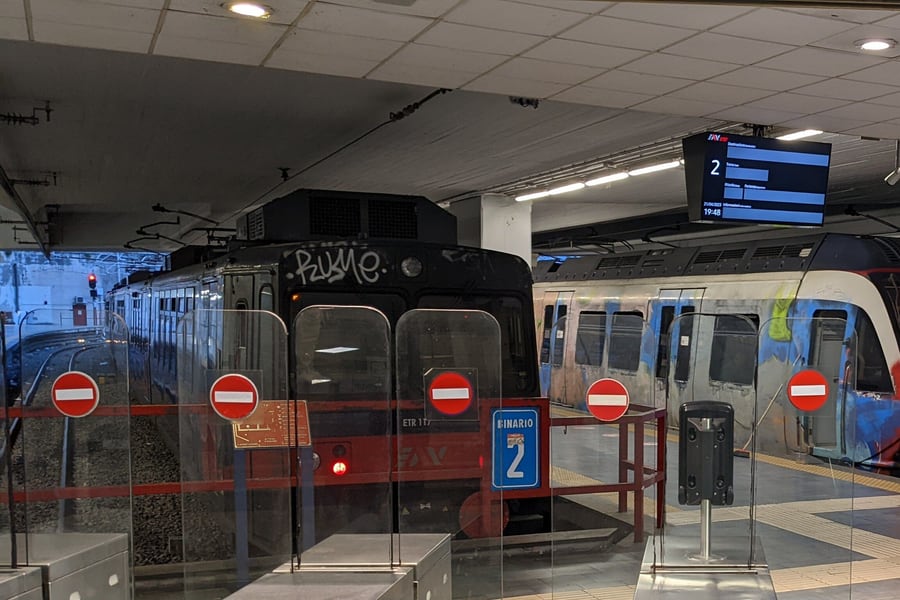
Napoli Porta Nolana
The Circumvesuviana's terminus in Naples, where trains for Sorrento leave every half hour from 05:30 to 22:00. Every one calls three minutes later at Napoli Garibaldi, and all of them are limited-stop direttissimi.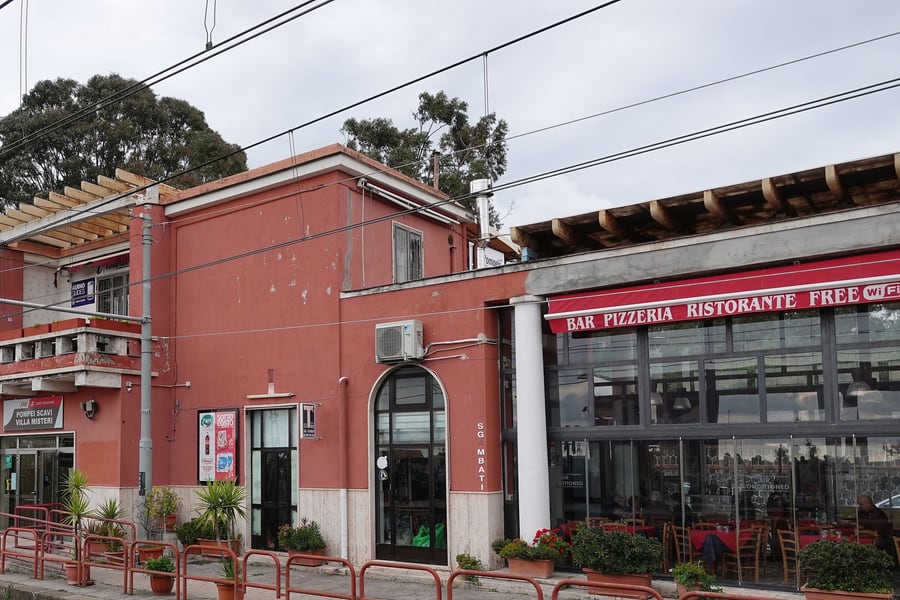 Nenea hartia / Wikimedia Commons · CC BY-SA 4.0 · cropped
Pompei Scavi–Villa dei Misteri
Thirty-nine minutes from Naples, the small station named after the excavations and the Villa of the Mysteries. It is the stop for Pompeii's Porta Marina and Piazza Esedra entrances.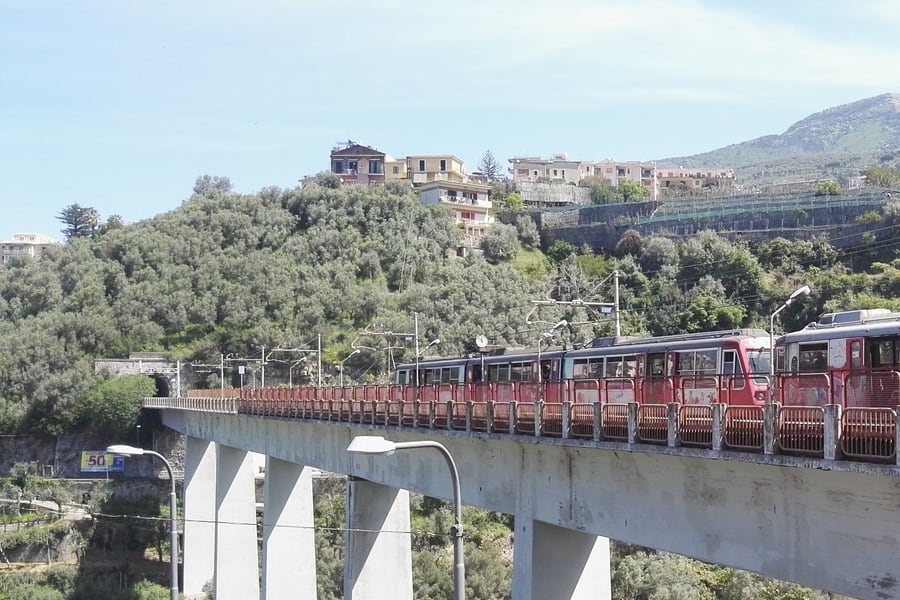 Retaggio / Wikimedia Commons · CC BY-SA 4.0 · cropped
Tunnels and the Seiano viaduct
Beyond Castellammare, the line built in 1944–48 runs through a tunnel of nearly four kilometres to Vico Equense, crosses a viaduct at Seiano with the station on it, then enters a straight tunnel of about 1,800 metres to Meta.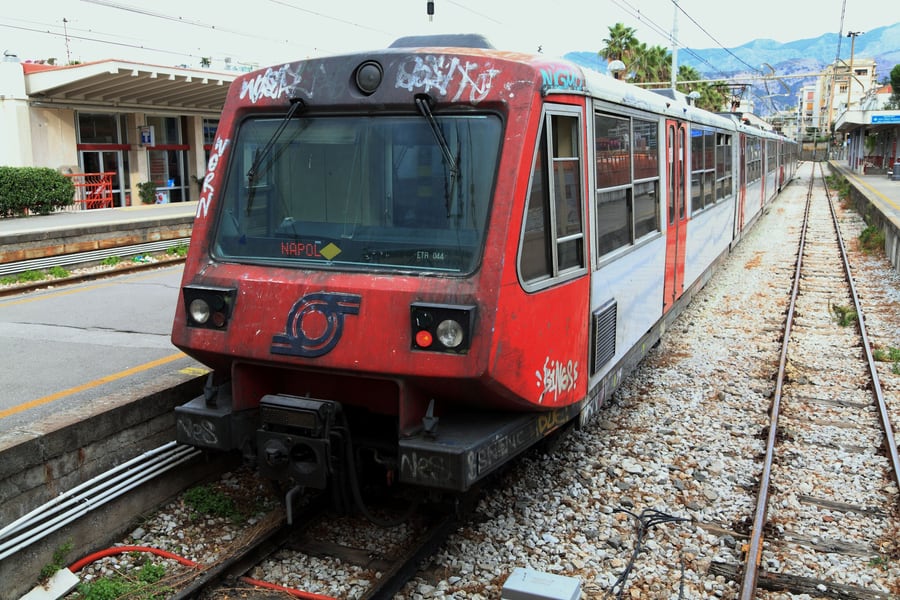 Falk2 / Wikimedia Commons · CC BY-SA 3.0 · cropped
Sorrento, the end of the line
An hour and a quarter from Naples, the trains end at Sorrento, on the peninsula between the Gulf of Naples and the Amalfi coast. From the town, ferries cross to Naples, Capri, Ischia, Positano and Amalfi.A bit of history
Culture & experiences along the way
 Mario56 / Wikimedia Commons · CC BY-SA 3.0 · cropped
The art of the Neapolitan pizzaiuolo
UNESCO added the craft of the Neapolitan pizza-maker to its list of intangible heritage in 2017: four stages of making the dough and baking it in a wood-fired oven, with a turning movement of the hands. About 3,000 pizzaiuoli work in Naples, and the skill is still learned in the workshop, watching a master.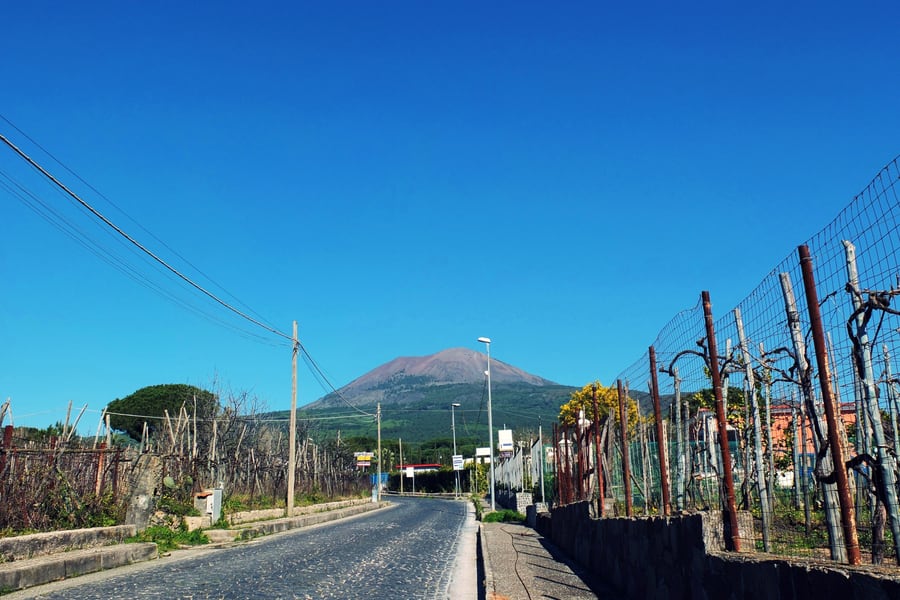 Carlo Mirante / Wikimedia Commons · CC BY 2.0 · cropped
Wine from the volcano's slopes
Vineyards climb the lower slopes of Vesuvius around Boscoreale, Torre del Greco and Ercolano, and their wine has been a protected DOC since 1983. The best known is Lacryma Christi, "the tears of Christ", from the local grapes Coda di Volpe and Piedirosso among others, named after a legend of tears that fell on the gulf.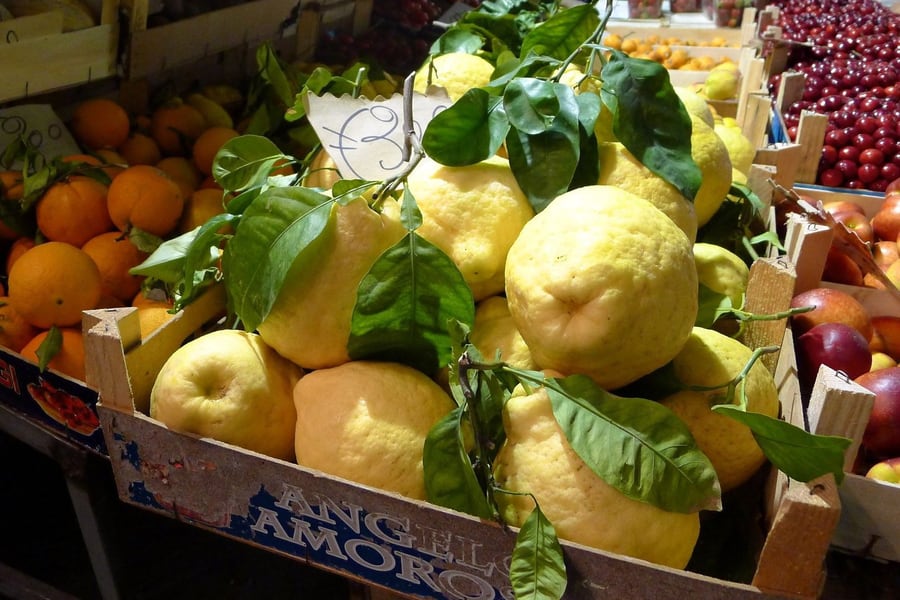 Brad Coy / Wikimedia Commons · CC BY 2.0 · cropped
The lemons of Sorrento
The Sorrento lemon is a protected IGP variety, oval and highly scented, grown across the peninsula from Vico Equense to Massa Lubrense under straw mats on wooden poles, the pagliarelle, that shield the trees from cold and wind. Its peel is what flavours limoncello.Timetables
A train leaves every half hour, daily, from each end of the line: from Napoli Porta Nolana on the hour and half hour from 05:30 to 22:00, and from Sorrento at the same times. That is 34 trains each way, all limited-stop direttissimi. The run takes 1 hour 15 minutes; Ercolano Scavi is 18 minutes from Porta Nolana and Pompei Scavi 39.
Naples to Sorrento
| Napoli Porta Nolana | Ercolano Scavi | Pompei Scavi | Castellammare | Vico Equense | Sorrento |
|---|---|---|---|---|---|
| 05:30 | 05:48 | 06:09 | 06:22 | 06:32 | 06:45 |
| 06:00 | 06:18 | 06:39 | 06:52 | 07:02 | 07:15 |
| 06:30 | 06:48 | 07:09 | 07:22 | 07:32 | 07:45 |
| then every 30 minutes | :18 and :48 | :09 and :39 | :22 and :52 | :02 and :32 | :15 and :45 |
| 21:30 | 21:48 | 22:09 | 22:22 | 22:32 | 22:45 |
| 22:00 | 22:18 | 22:39 | 22:52 | 23:02 | 23:15 |
Sorrento to Naples
| Sorrento | Vico Equense | Castellammare | Pompei Scavi | Ercolano Scavi | Napoli Porta Nolana |
|---|---|---|---|---|---|
| 05:30 | 05:44 | 05:53 | 06:05 | 06:26 | 06:45 |
| 06:00 | 06:14 | 06:23 | 06:35 | 06:56 | 07:15 |
| 06:30 | 06:44 | 06:53 | 07:05 | 07:26 | 07:45 |
| then every 30 minutes | :14 and :44 | :23 and :53 | :05 and :35 | :26 and :56 | :15 and :45 |
| 21:30 | 21:44 | 21:53 | 22:05 | 22:26 | 22:45 |
| 22:00 | 22:14 | 22:23 | 22:35 | 22:56 | 23:15 |
Every train also calls at Napoli Garibaldi, three minutes from Porta Nolana, and at San Giorgio a Cremano, Portici Bellavista, Torre del Greco, Torre Annunziata, Villa Regina, Pioppaino, Stabia Scavi, Seiano, Meta, Piano and Sant'Agnello.
Times valid from 17 October 2026, from EAV's timetable for line L1 Napoli–Sorrento (opens in a new tab).
Tickets
The Circumvesuviana sells ordinary EAV tickets, priced by distance: a single from Naples to Sorrento costs €4.60. Buy at the station ticket offices, in EAV's GoEav app, or skip the ticket altogether: the gates on the Naples–Sorrento line take contactless bank cards (Tap&Go). Tap in at the gates and tap out at the end with the same card, and the system charges the cheapest fare for the day's journeys; forget to tap out and you pay the maximum fare.
For journeys that also use buses or the Naples metro, the regional UnicoCampania tickets cover several companies at once. Fares as of October 2026.
Book your tickets
Single, Naples to Sorrento
€4.60 one way
EAV's own ticket, priced by distance, or tap a contactless card at the gates instead.
Book Tickets (opens in a new tab, on EAV)via EAVRail Passes
Interrail and Eurail do not cover the Circumvesuviana. Their table of Italian railways lists it by name among the trains not covered by the pass. The pass does cover Trenitalia's regional trains, including the main line from Naples towards Salerno, which stops at Pompei station; from there the Pompei Link train-and-bus service reaches the excavations in about fifteen minutes.
For this line, a pass is not worth buying: the whole run to Sorrento costs €4.60, and a contactless card at the gates works out the cheapest fare for the day on its own.
Checked October 2026 against Interrail's table of railway companies (opens in a new tab) and the Archaeological Park of Pompeii (opens in a new tab).
Places to Visit
Most of what draws visitors to this line is a short walk or a bus ride from one of its stations: the buried towns and villas between Naples and Castellammare, the volcano that buried them, and Sorrento at the end of the line.
 Sumit Surai / Wikimedia Commons · CC BY-SA 4.0 · cropped
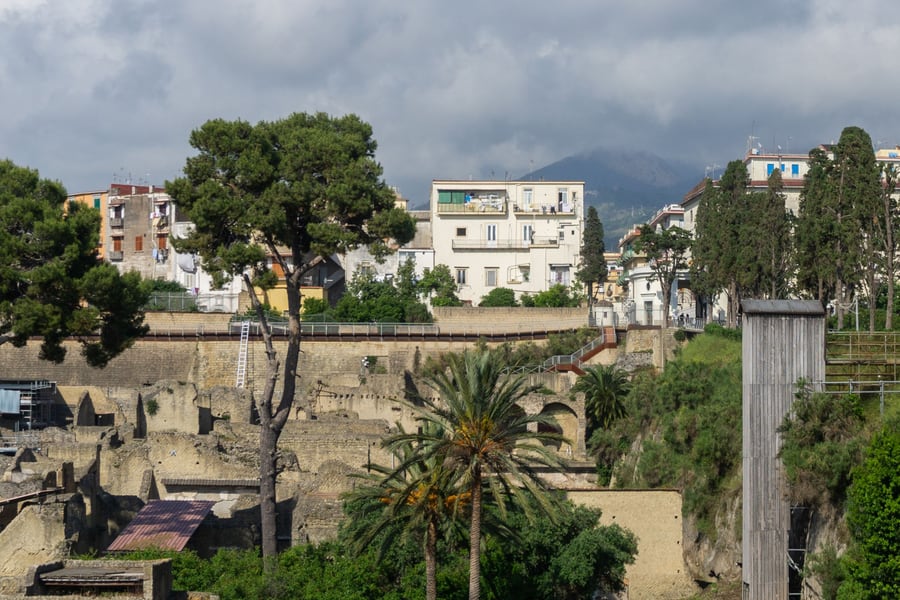
Herculaneum
A wealthy seaside town buried in AD 79 under some twenty metres of volcanic material, which preserved wooden roofs, beds and doors that rotted away elsewhere. Smaller than Pompeii and better preserved, it lies in a pit below the modern town of Ercolano, and most of it is still underground. In winter, from 15 October, the gates open 8.30 to 17.00.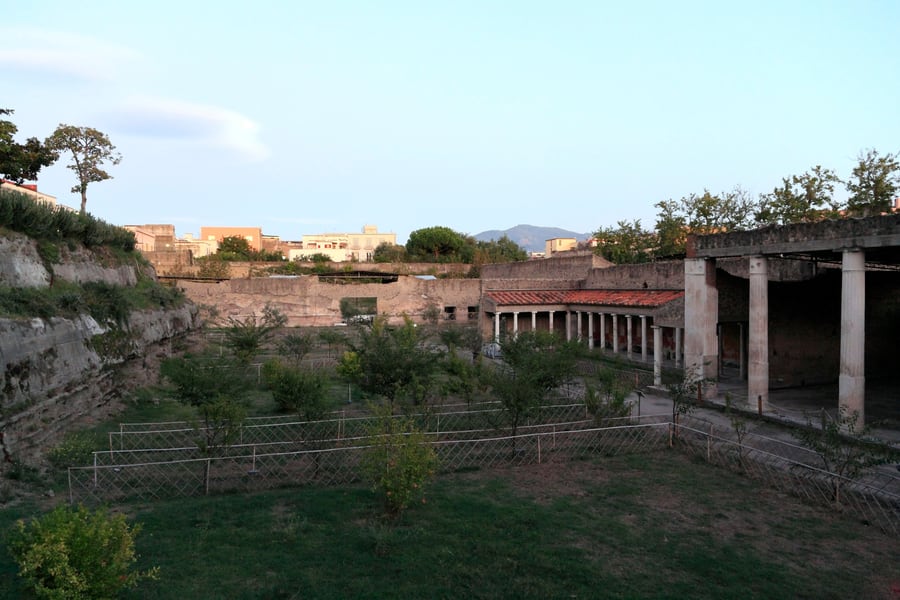 Falk2 / Wikimedia Commons · CC BY-SA 4.0 · cropped
Oplontis, the Villa of Poppaea
A vast villa of the mid-1st century BC that once looked out over the sea, buried in the same eruption under what is now Torre Annunziata. A painted inscription on an amphora suggests it may have belonged to Poppaea Sabina, the second wife of the emperor Nero. UNESCO singles out its wall paintings, a vivid picture of how the richest Romans lived.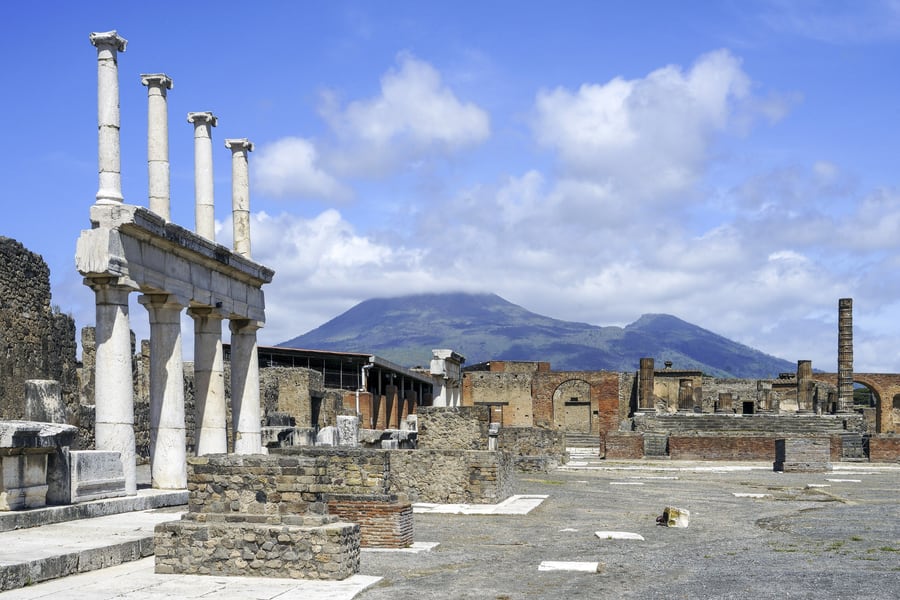 Commonists / Wikimedia Commons · CC BY-SA 4.0 · cropped
Pompeii
A Roman town of 10,000 to 20,000 people, buried under four to six metres of ash and pumice in AD 79 and dug out since the 18th century: streets, houses, shops, baths and the forum, with Vesuvius behind it. Where bodies decayed in the ash, archaeologists filled the hollows to make casts of people in their last moments. The station is the stop for the Porta Marina and Piazza Esedra entrances.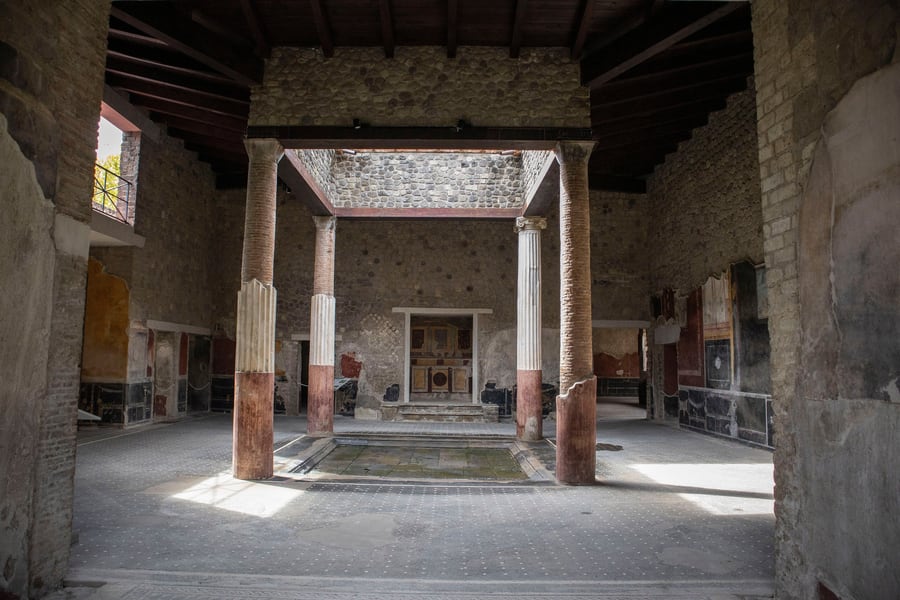 Cristina Morettini 95 / Wikimedia Commons · CC BY-SA 4.0 · cropped
The villas of Stabiae
On the Varano hill above Castellammare, Roman residential villas built for their views over the bay. Villa San Marco, at 11,000 square metres, is one of the largest Roman residential villas known; Villa Arianna is named after the mythological painting on the far wall of its dining room. Both were first dug in the Bourbon era of the 18th century, and neither is yet fully excavated.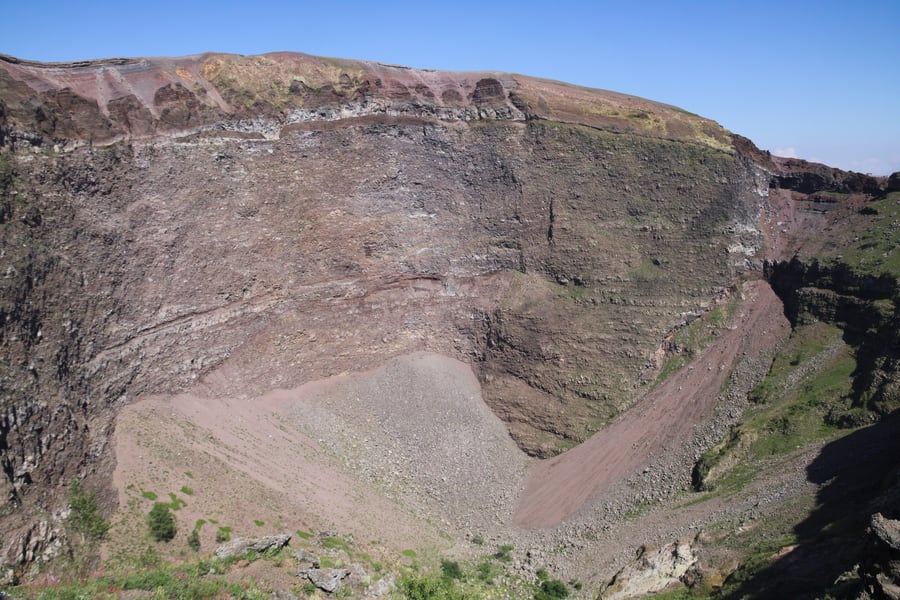 Ingo Mehling / Wikimedia Commons · CC BY-SA 4.0 · cropped
The crater of Vesuvius
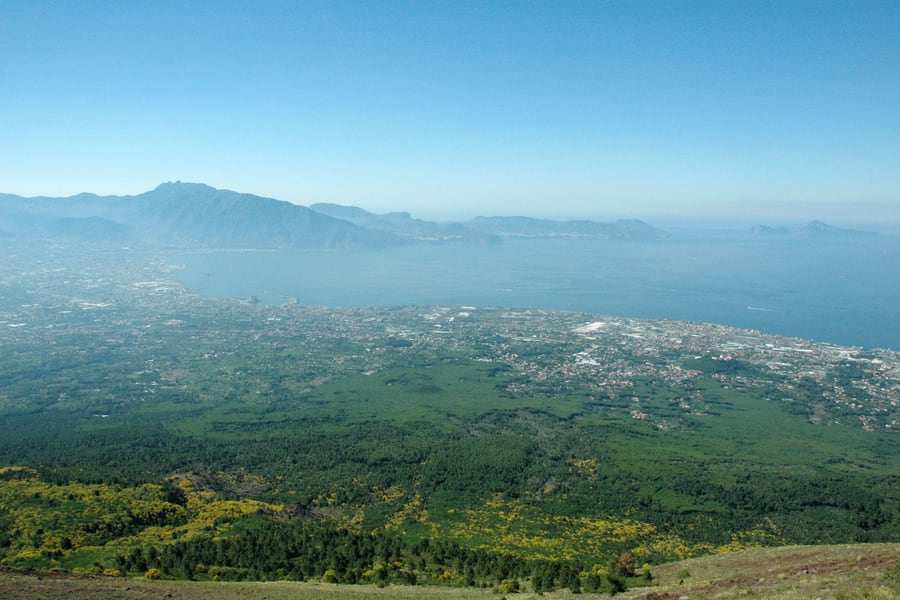
A road climbs from Ercolano to a square at 1,000 metres, where the national park's path number 5, the Gran Cono, begins its climb to the rim of the crater. Tickets are sold online only, in timed slots, and the path closes earlier in winter than in summer. From the rim, the coast the line follows lies below.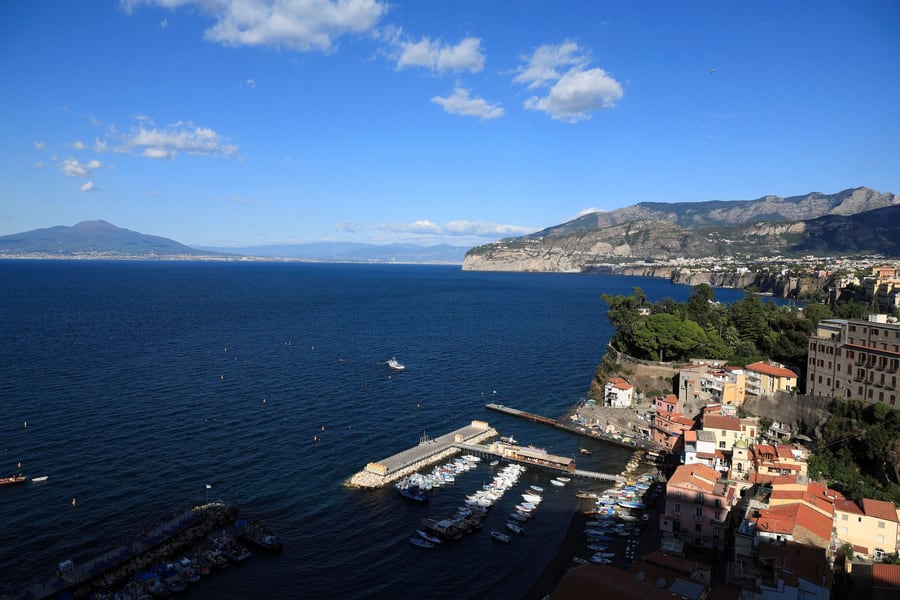 Falk2 / Wikimedia Commons · CC BY-SA 4.0 · cropped
Sorrento
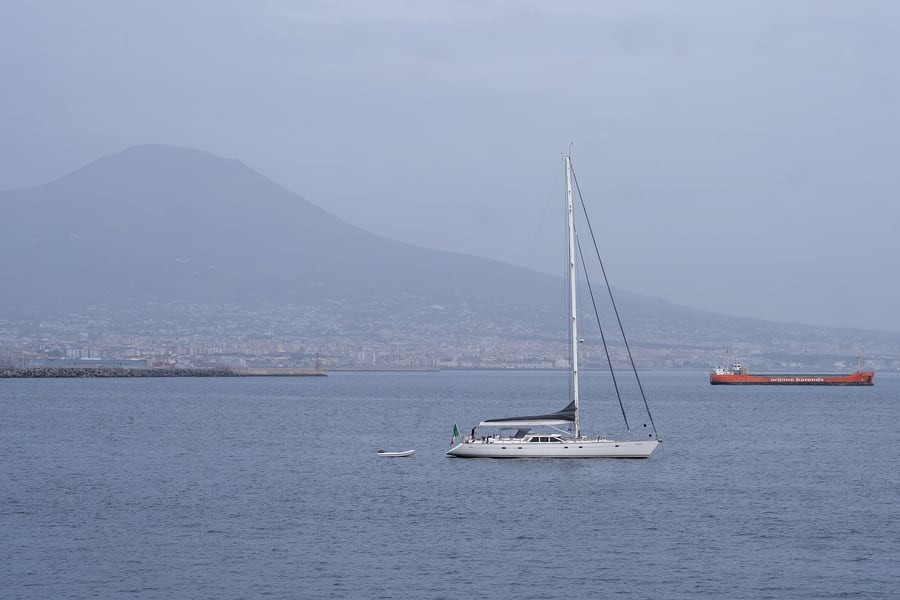
A town on cliffs above the Gulf of Naples, with Vesuvius across the water and harbours at the foot of the rock at Marina Grande and Marina Piccola. Its streets keep the plan of the Roman town, and it is known for inlaid woodwork, lace, ceramics and limoncello. Ferries leave for Capri, Ischia and the Amalfi coast.Where to Sleep
Naples has the widest choice of places to stay. Sorrento, at the end of the line, makes a quieter base for the excavations, with a train to Pompeii every half hour.
Where to stay
 Gizm07 / Wikimedia Commons · CC BY-SA 3.0 · cropped
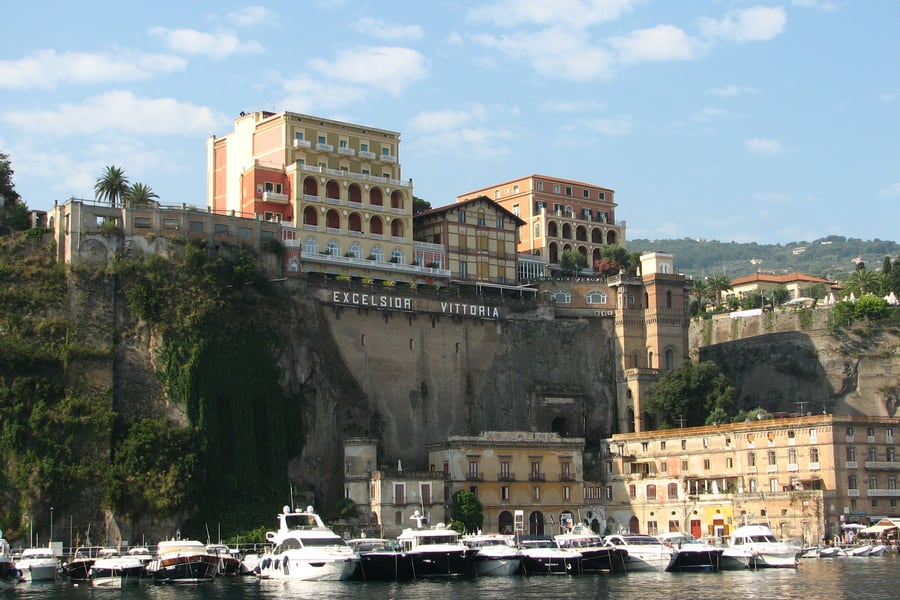
Grand Hotel Excelsior Vittoria
On the cliff above the harbour, Sorrento
Run by the Fiorentino family since 1834, with its entrance on Piazza Tasso and its gardens above the Bay of Naples.
Check Availability (opens in a new tab, on excelsiorvittoria.com)via excelsiorvittoria.comBellevue Syrene
Over the sea, Sorrento
Built on the foundations of a Roman villa of the 2nd century BC, whose cisterns are still part of the house, and a hotel since 1820.
Check Availability (opens in a new tab, on bellevue.it)via bellevue.itQuestions or corrections
Planning this trip and stuck on something, or spotted a time, fare or detail that has changed? Send us a message about Circumvesuviana. We read every one, and we update this page when something has changed.