La Dolce Vita Orient Express
Morten Jensen / Wikimedia Commons · CC BY 2.0 · cropped
- DistanceRome to Palermo, with the Strait of Messina crossed by ship
- Duration3 days / 2 nights
- Best seasonSicily departures April to October; other itineraries all year
Introduction
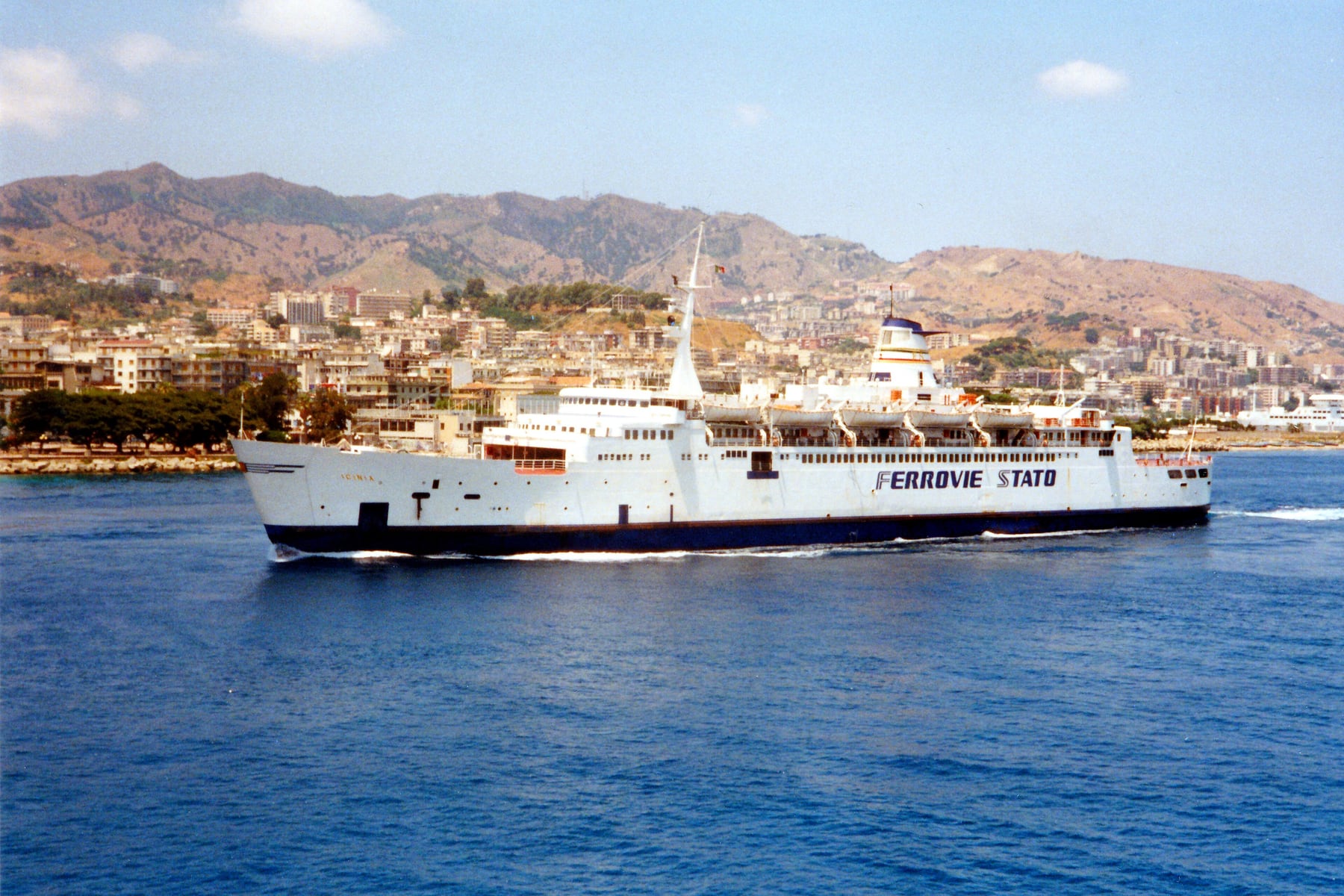
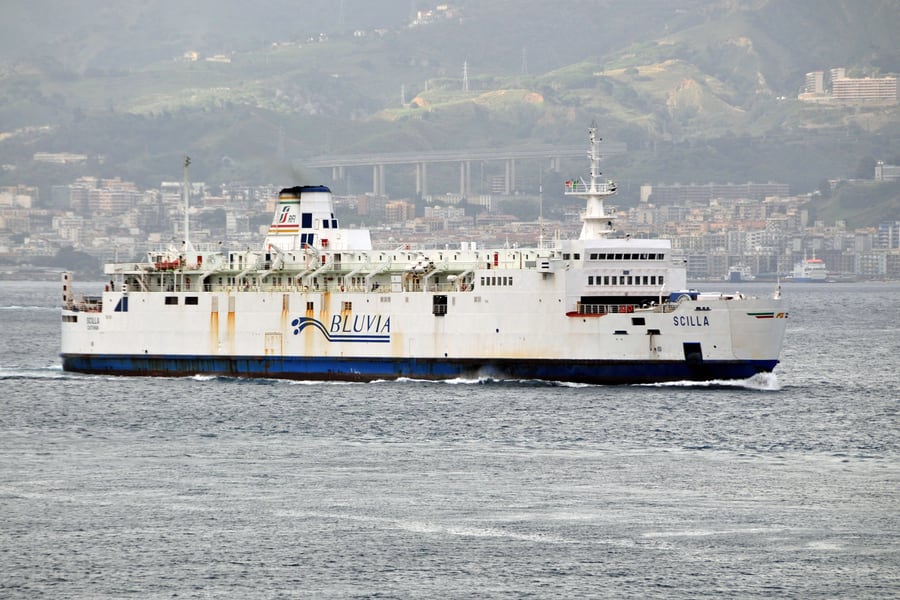
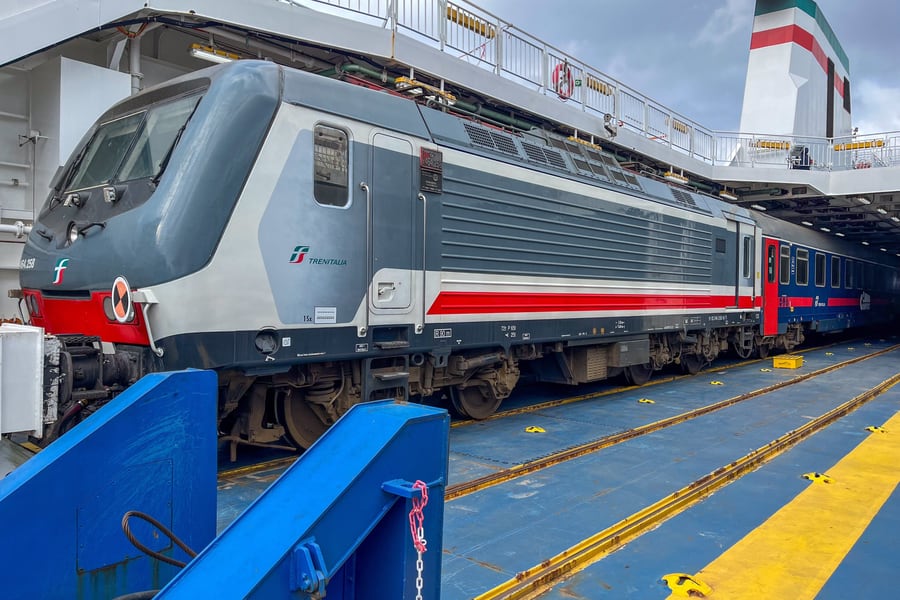
To reach Sicily, this train has to go to sea. On the second afternoon of the journey from Rome, at Villa San Giovanni on the toe of Italy, the La Dolce Vita Orient Express is uncoupled into sections and pushed aboard a ship, which carries it across the Strait of Messina; in Sicily it is put back together and runs on to Taormina and Palermo. Guests can step out on deck for the crossing. Railway coaches have crossed the strait this way since 1901, and no bridge has replaced the ship.
The train itself is new and old at once. It first ran on 4 April 2025, the first train of Orient Express and the Italian company Arsenale, which plan a fleet of six. Its carriages began life as Z1 coaches, the workhorses of Italy's InterCity trains from 1985, and were rebuilt in workshops at Brindisi and Palermo into 31 cabins with private showers, a restaurant car and a bar car, dressed by the Milan studio Dimorestudio in homage to Italian design of the 1960s.
It runs some twenty itineraries, from a day trip to Venice to five days to Istanbul. This page rides the one that crosses the strait: three days and two nights from Rome to Palermo, by way of Maratea on the Tyrrhenian coast and Taormina above the Ionian Sea, with menus by the chef Heinz Beck.
The Journey
The journey starts at the train's own lounge inside Roma Ostiense, where guests are driven from their hotel or the airport. The train leaves in the morning and runs south through Lazio and Campania while lunch is served in the restaurant car. In the afternoon it reaches Maratea, the only town of Basilicata on the Tyrrhenian Sea, where local guides meet the train; the evening departure is followed by dinner and live music in the bar car, and the train runs on through the night.
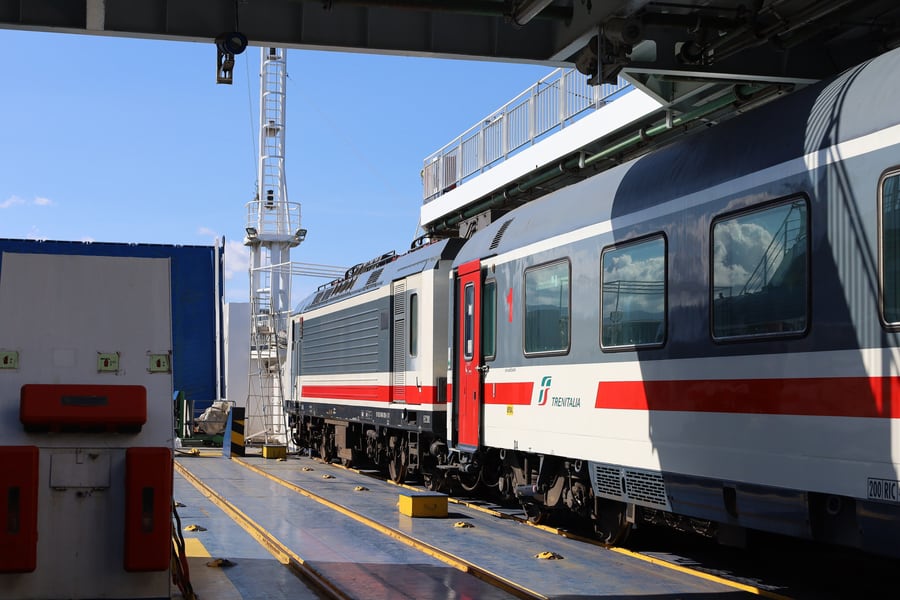
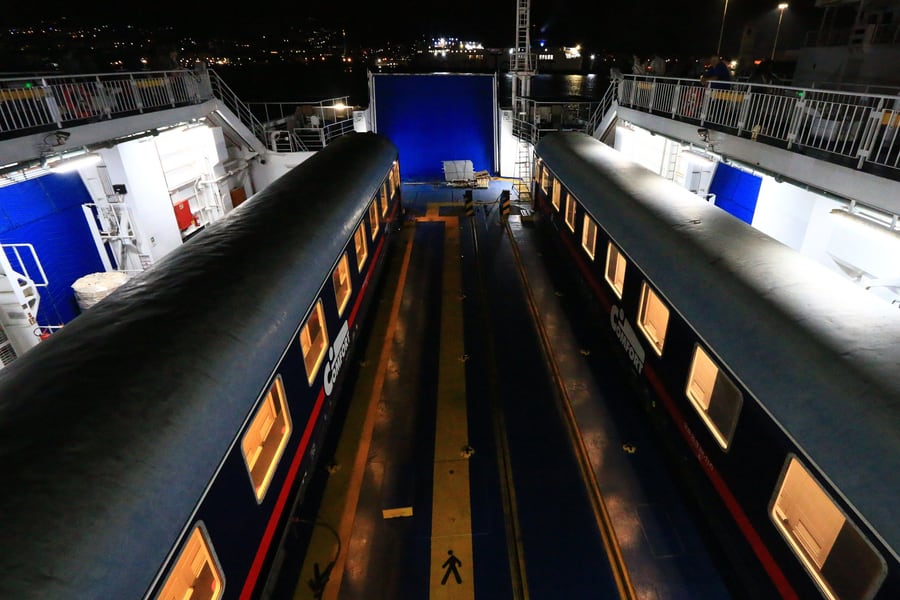
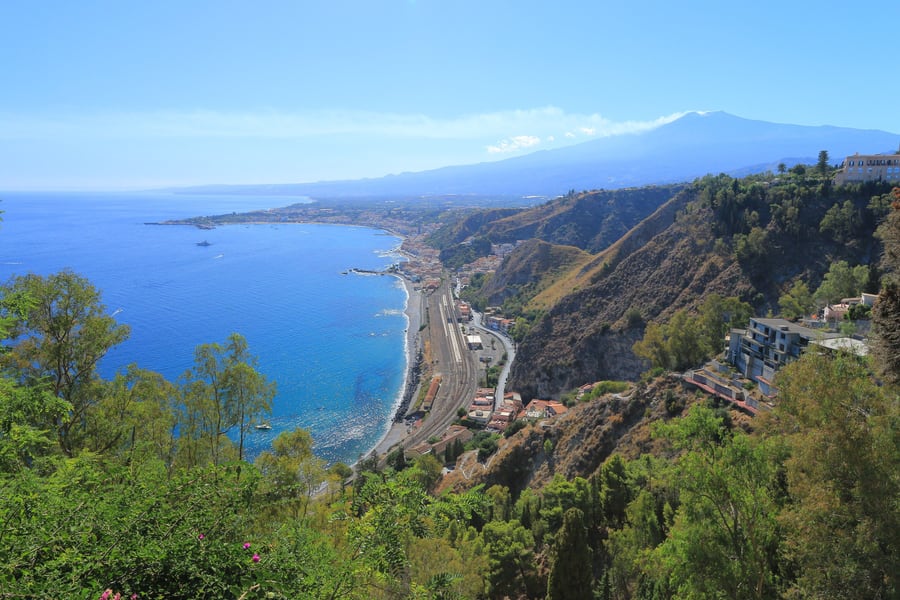
On the second afternoon comes the crossing. At Villa San Giovanni the train is uncoupled and loaded onto a train ferry for the Strait of Messina: the ferry's bow opens onto a bridge of rails, shunting locomotives push the coaches aboard in sections, and the sections are spread evenly across the tracks on deck so that the ship does not list. On the far side, at Messina, the train is reassembled and runs south along the Ionian shore to Taormina, below the town and within sight of Etna. Guests have the late afternoon there before dinner on board; by the third morning the train is in Palermo, where the journey ends after breakfast.
The train
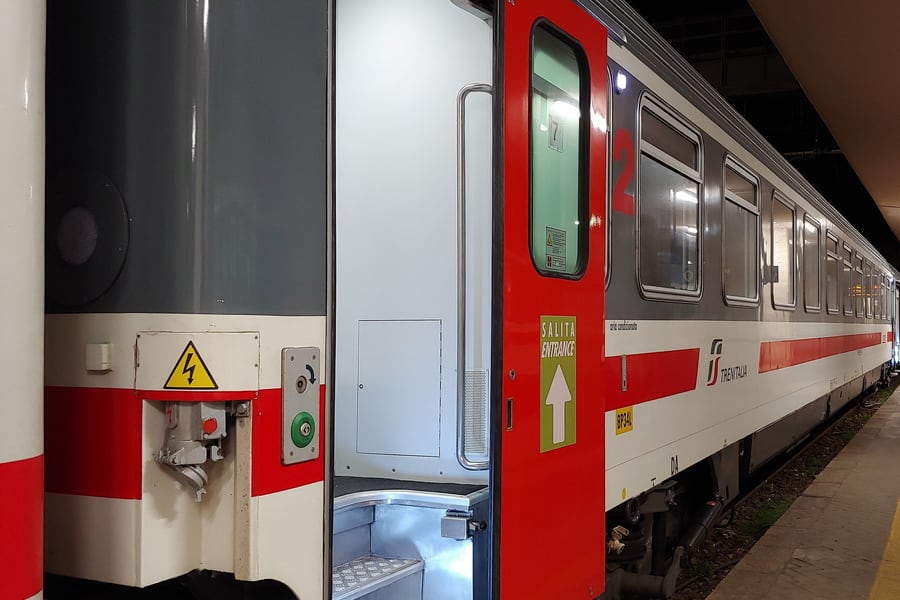
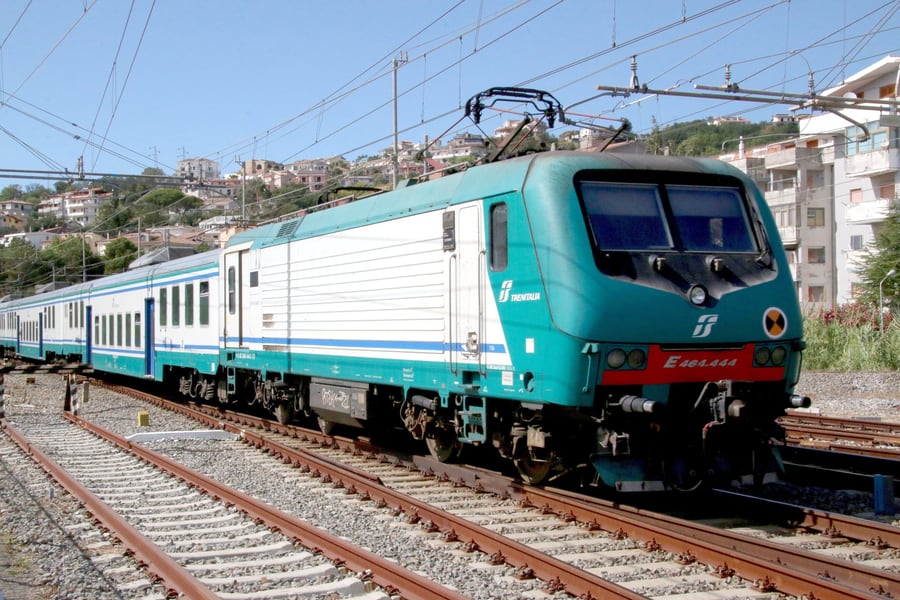
The coaches were built as Z1s, the standard InterCity and EuroCity coach of the Italian state railways, ordered from 1985 with six-seat compartments. Retired from Trenitalia's fleet, they were rebuilt between Brindisi and Palermo into seven sleeping cars, a restaurant car with 40 seats, a bar car and two cars for the crew. There are 12 Deluxe cabins of 7 m², 18 Suites of 11 m² and one La Dolce Vita Suite of 27 m², each with its own shower. The interiors, by Dimorestudio, borrow from Gio Ponti, Nanda Vigo, Gae Aulenti and Osvaldo Borsani. On the Sicilian coast in June 2026 the train was hauled by an E.464 electric locomotive in the colours of FS Treni Turistici Italiani, the state railways' tourist-train company, which supports the project.
A pianist plays in the bar car every evening, and a band follows dinner. The windows do not open, the corridors are 61 cm wide, and one suite near the common cars is adapted for guests with reduced mobility. Children under 12 are not carried.
Along the route
 CAPTAIN RAJU / Wikimedia Commons · CC BY-SA 4.0
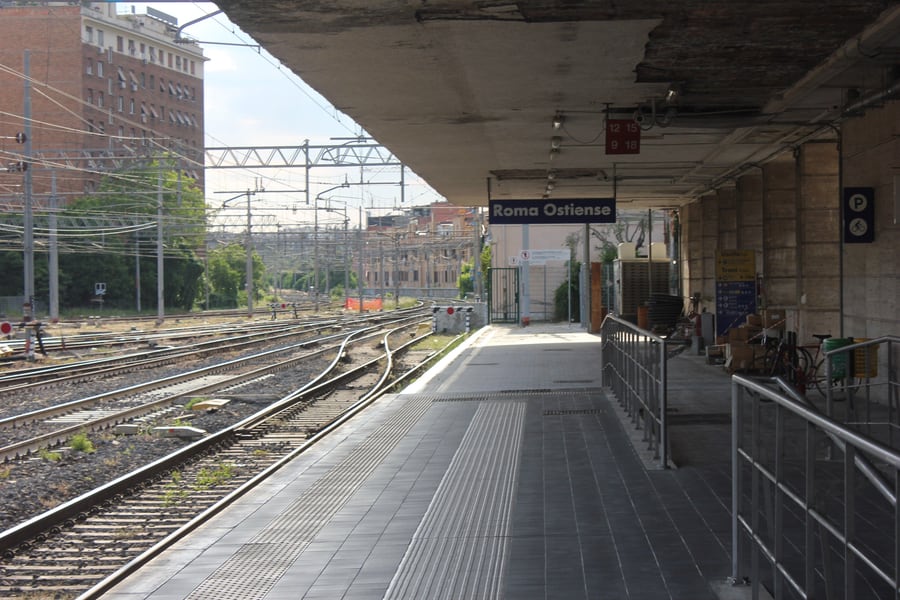
Roma Ostiense, not Termini
The train leaves from Ostiense, south of the centre beside the Porta San Paolo, where it has its own lounge inside the station. Guests are driven there from their hotel or the airport, and luggage not needed on board stays behind at the lounge.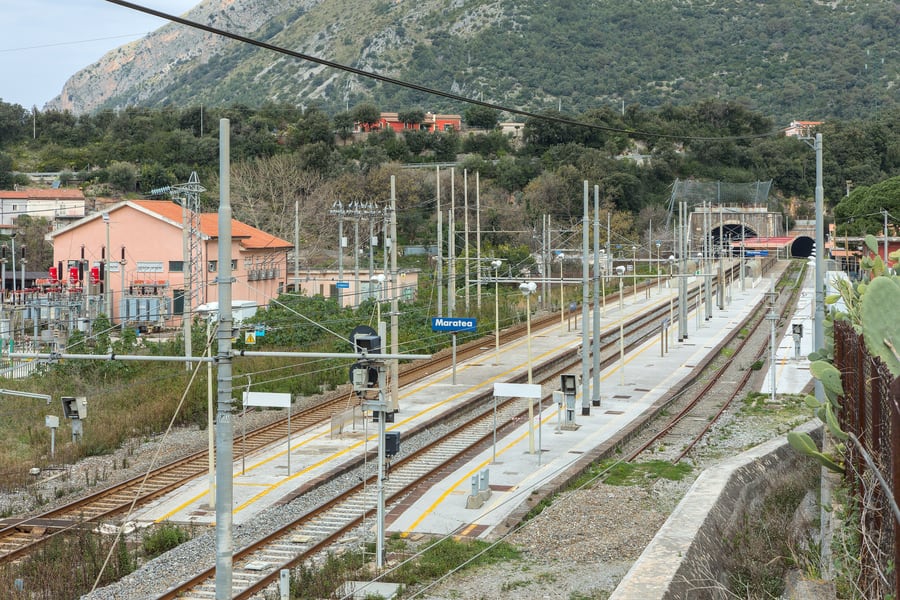 Benjamin Smith / Wikimedia Commons · CC BY-SA 4.0
Maratea, half inside a tunnel
The first afternoon ends at Maratea, Basilicata's only town on the Tyrrhenian Sea. Its station of 1894 was rebuilt when the line was doubled in the 1950s, and for lack of room part of it now lies inside a tunnel in the mountain.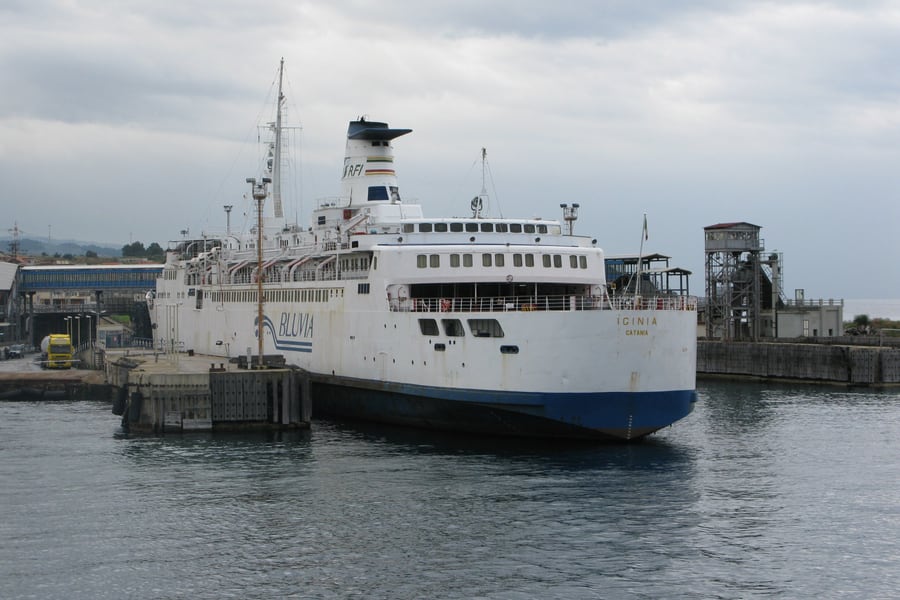 Jacopo Werther / Wikimedia Commons · CC BY-SA 3.0 · cropped
Across the strait by ship
At Villa San Giovanni the train is uncoupled into sections and pushed onto a ship, its coaches split evenly across the deck tracks so the vessel does not list. Passenger coaches have crossed the strait this way since 1901.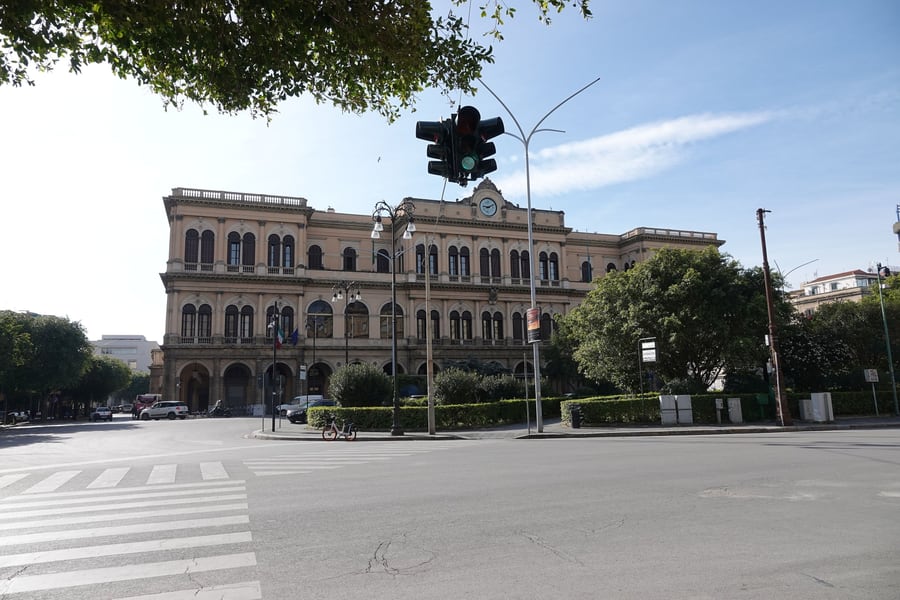 Nenea hartia / Wikimedia Commons · CC BY-SA 4.0
Palermo Centrale
The journey ends on the third morning at Palermo's main station, a short drive from the cathedral and the old city. Guests can stay on in Sicily, or take the reverse journey, which leaves from here for Rome.A bit of history
Culture & experiences along the way
 Eleassar / Wikimedia Commons · CC BY-SA 4.0 · cropped
Etna with a volcanologist
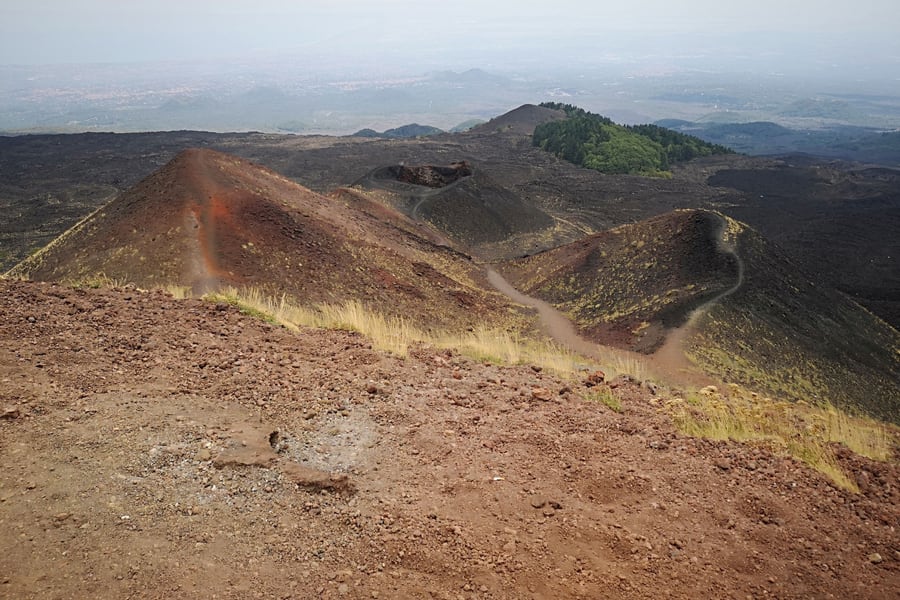
At Taormina the train offers a jeep excursion and a walk on Mount Etna, Europe's highest active volcano, among old craters and bare lunar ground, led by a volcanologist who explains how the mountain was built and what grows on it. Booked as an optional extra.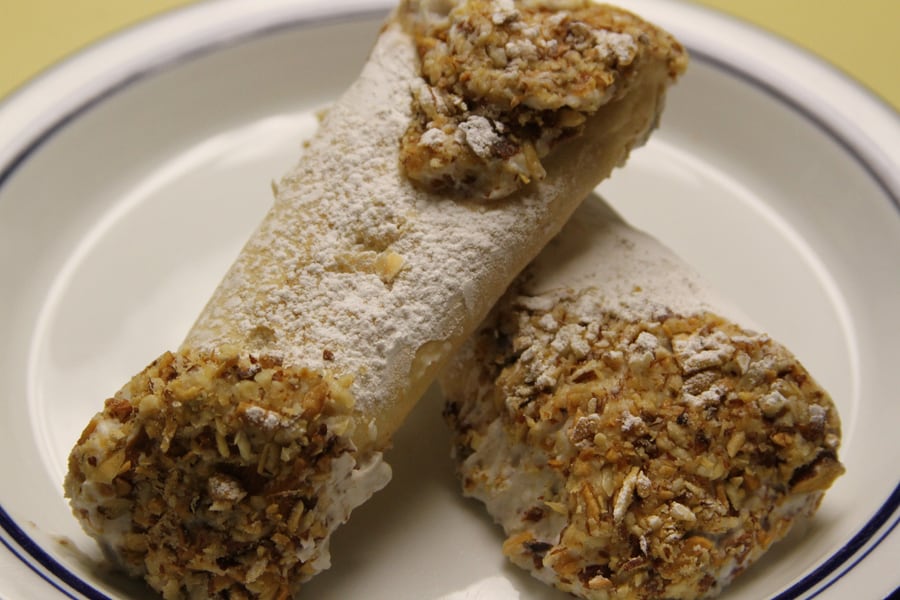 @joefoodie / Wikimedia Commons · CC BY 2.0
Making cannoli
After a walk through Castelmola and Taormina, the afternoon ends in a pastry workshop, learning to fry the crisp shells of the cannolo and fill them with sweet ricotta. Sicily's best-known pastry was once made only for Carnival; Palermo's convents and pastry shops gave it the form it has today.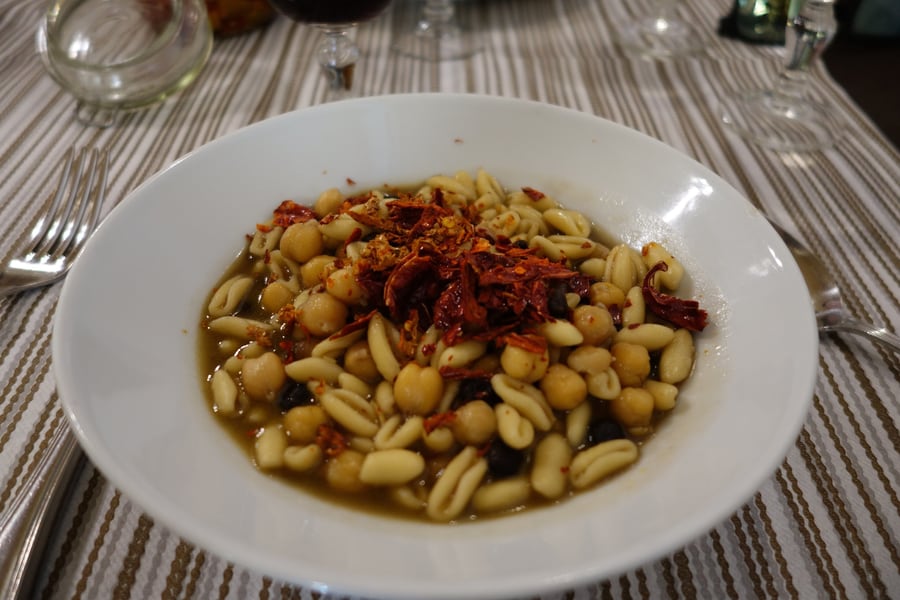 Kars Alfrink / Wikimedia Commons · CC BY 2.0
Cooking Lucanian at Maratea
At Maratea one of the optional afternoons is a cooking class at the Santavenere hotel, with an aperitivo and dinner over the sea. Basilicata's signature is the peperone crusco, a sweet red pepper dried in strings until it shatters, then fried crisp and crumbled over pasta.Timetables
The train runs on fixed departure dates, sold as packages; there is no daily service. The journey on this page, From Rome to Sicily, leaves Roma Ostiense in the morning (the operator gives boarding times with the booking; check-in opens three hours before) and reaches Palermo on the morning of the third day. From Sicily to Rome leaves Palermo in the morning and arrives at Roma Ostiense on the third morning.
Departures that cross the Strait of Messina
| Itinerary | Route | Length | Departures |
|---|---|---|---|
| From Rome to Sicily | Rome – Maratea – Taormina – Palermo | 3 days / 2 nights | 20 May, 18 June, 8 July, 1 September, 5 October 2027 |
| From Sicily to Rome | Palermo – Taormina – Maratea – Rome | 3 days / 2 nights | 25 April, 23 May, 21 June, 11 July, 4 September, 8 October 2027 |
| Rome to Sicily via Naples | Rome – Naples – Taormina – Palermo | 3 days / 2 nights | 6 November 2026, 22 April 2027 |
| Sicily to Rome via Naples | Palermo – Taormina – Naples – Rome | 3 days / 2 nights | 9 November 2026 |
| The Grand Tour | Rome – Venice – Matera – Taormina – Palermo – Rome | 5 days / 4 nights | 8 May, 25 June, 14 September 2027 |
The via-Naples journey leaves Ostiense in the early afternoon and reaches Palermo at 10:00 on the third day. The Grand Tour leaves Ostiense at 10:30 and is back at 10:30 on the fifth morning, crossing the strait in both directions.
The same train also runs to Venice, Tuscany, Piedmont and Matera, and each October between Rome and Istanbul. Times can change with the weather or local regulations, and the train spends its nights at secondary stations allotted by the national rail network.
Dates as of October 2026, from the operator's departure calendar (opens in a new tab).
Tickets
Every journey is sold as a package by Orient Express, online or through its reservation centre, and priced per person sharing a cabin. The price covers the transfer to the departure station, the cabin, all meals on board, selected wines, spirits and soft drinks, and the music. Excursions ashore are optional extras; premium wines, insurance and tips are not included. Prices change with the date and the cabin, Deluxe or Suite; the lowest published for the Rome-to-Sicily journey in 2027 is €7,880.
Book months ahead: there are 31 cabins and only a handful of departures each season. Smart clothes are expected on board, and evening wear at dinner. Prices as of October 2026.
Book your tickets
From Rome to Sicily
3 days / 2 nights · Rome, Maratea, Taormina, Palermo
The journey on this page, with the train ferried across the Strait of Messina on day two.
Book Tickets (opens in a new tab, on Orient Express)via Orient ExpressFrom Sicily to Rome
3 days / 2 nights · Palermo, Taormina, Maratea, Rome
The same route the other way, leaving Palermo in the morning.
Book Tickets (opens in a new tab, on Orient Express)via Orient ExpressThe Grand Tour
5 days / 4 nights · round trip from Rome
Venice, Matera, Taormina and Palermo, crossing the strait both ways.
Book Tickets (opens in a new tab, on Orient Express)via Orient ExpressRail Passes
No rail pass covers La Dolce Vita Orient Express. It is sold only as an all-inclusive package by Orient Express, cabin, meals and drinks together, so there is no seat for a pass to buy, and it is not among the Italian railways in Interrail's table of covered companies.
A pass can still be useful around it: Interrail and Eurail cover Trenitalia's Frecce, Intercity and regional trains, which reach Rome before the journey and leave Palermo after it.
Checked October 2026 against Interrail's table of railway companies (opens in a new tab).
Places to Visit
Each stop comes with a transfer from the station to the centre and free time, or one of the train's own excursions at extra cost; guests must leave the train at every stop while it is serviced.
 Mike McBey / Wikimedia Commons · CC BY 2.0 · cropped
The Pyramid of Cestius
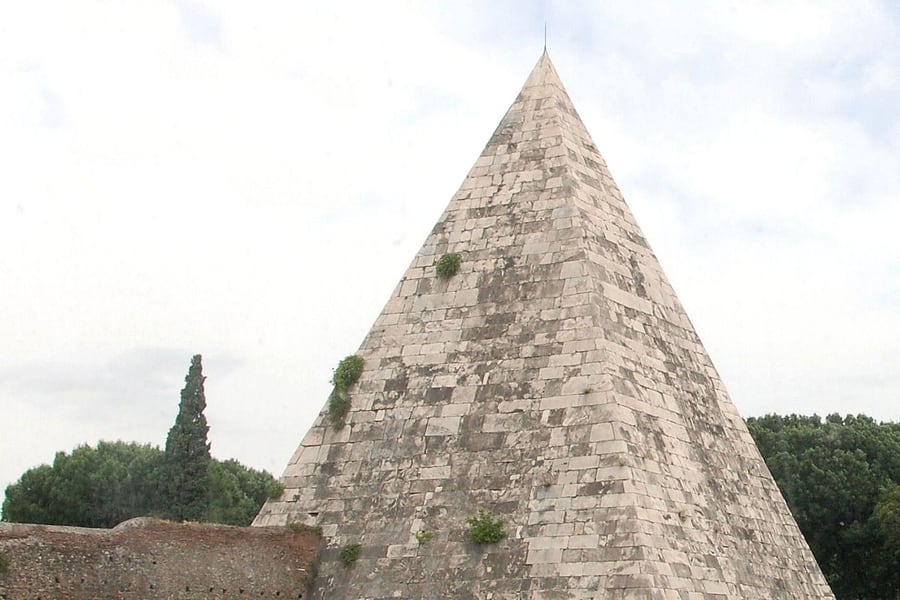
A marble-clad pyramid 37 metres high, built around 18–12 BC as the tomb of Gaius Cestius, a Roman magistrate, at the fork of two ancient roads. Later walled into the city's fortifications next to the Porta San Paolo, it is one of the best-preserved ancient buildings in Rome, and stands a short walk from the station the train leaves from.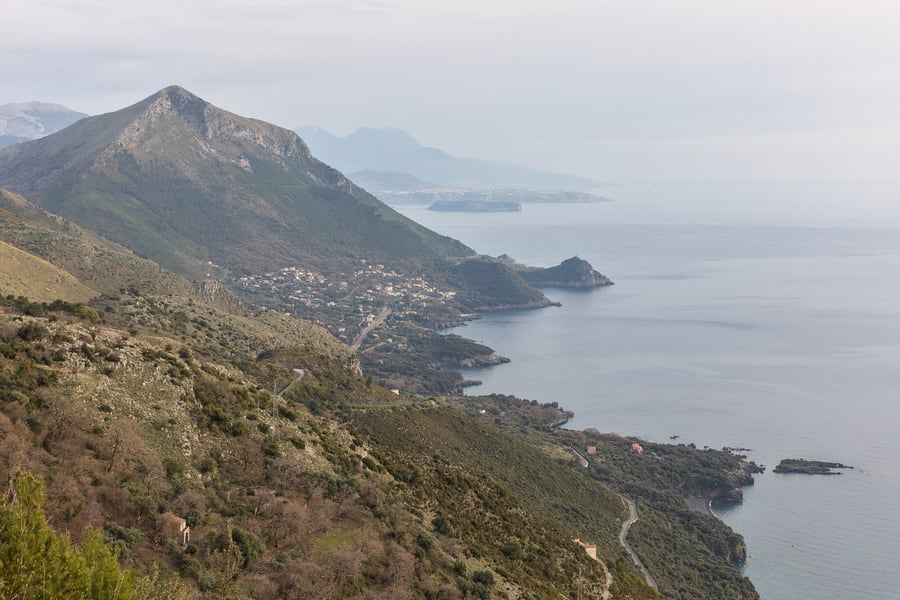 Benjamin Smith / Wikimedia Commons · CC BY-SA 4.0
Maratea
Basilicata's only town on the Tyrrhenian Sea, with some 32 kilometres of rocky coast and more than twenty beaches below the slopes of Monte San Biagio. The old town is known for its churches and chapels, enough to earn it the name "the town of 44 churches", and the 21-metre statue of the Redeemer has watched over it from the summit since 1965.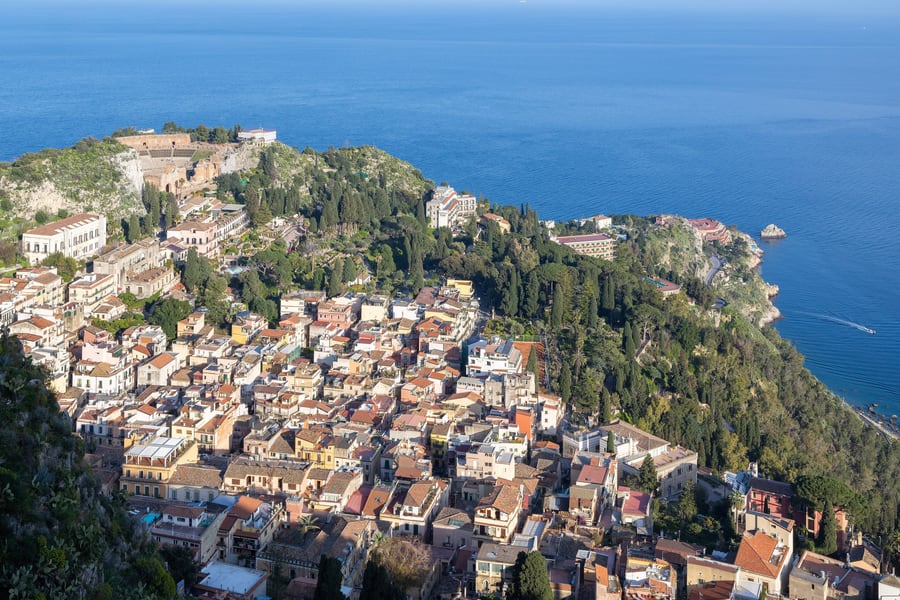 Diego Delso, delso.photo, License CC BY-SA · Wikimedia Commons
Taormina
A hill town above the Ionian Sea, with Etna to the south-west. At its top edge lies the ancient theatre, Greek in origin from the third century BC and rebuilt by the Romans, 107 metres across and once seating around 10,000; it still hosts the Taormina Film Festival. Local guides meet the train and lead guests up to the centre.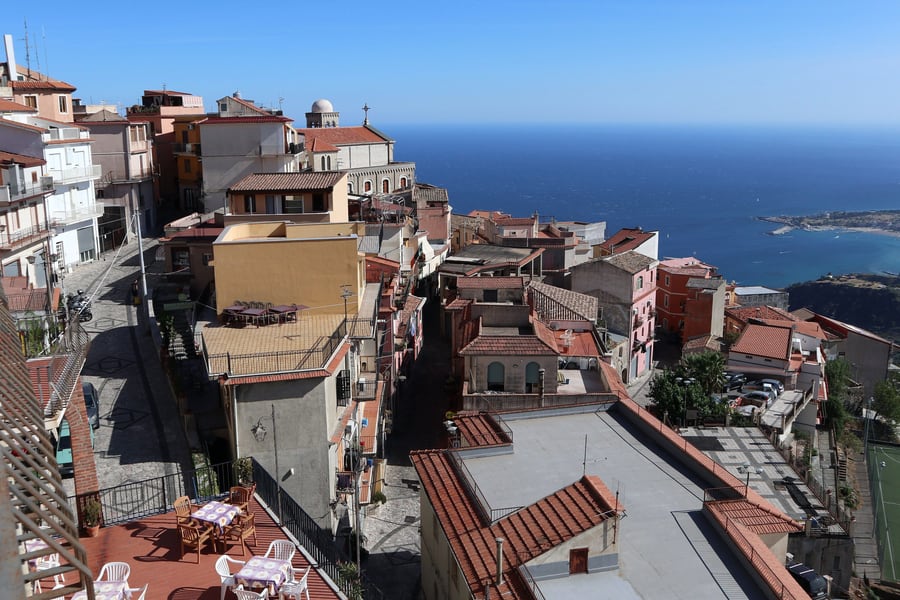 Lucamato / Wikimedia Commons · CC BY-SA 4.0
Castelmola
A village on the rock above Taormina, once its acropolis, now counted among the most beautiful villages in Italy. Its lanes, small churches and terraces look down over Taormina to the sea. Greek in origin, it fills its main square with local bands every 1 May for the Castelrock festival. The train's pastry excursion begins here before walking down through Taormina.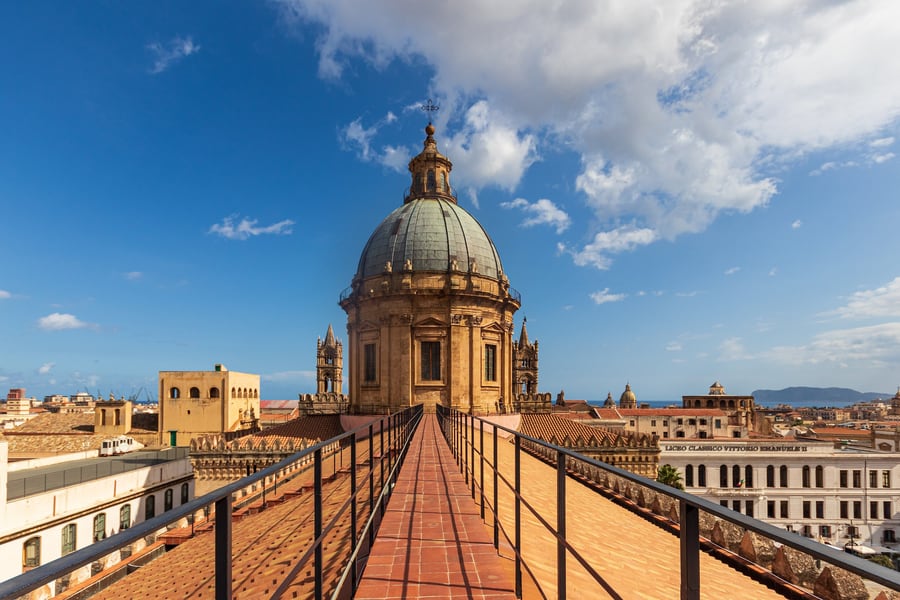 Matthias Süßen / Wikimedia Commons · CC BY-SA 4.0 · cropped
Palermo Cathedral
Founded in 1185 by Walter Ophamil, the Norman archbishop, and part of the Arab-Norman Palermo UNESCO site. Inside lie the tombs of Roger II, the first king of Sicily, and of the emperors Henry VI and Frederick II, and the treasury keeps the golden crown of Constance of Aragon, found in her tomb in 1491. A separate ticket opens a walk across the roofs, with views over the city to the sea.Where to Sleep
For two nights the train is the hotel. The operator recommends arriving in Rome the day before departure; in Palermo, the journey ends in the morning, with the city still to see.
Where to stay
 Blackcat / Wikimedia Commons · CC BY-SA 4.0 · cropped
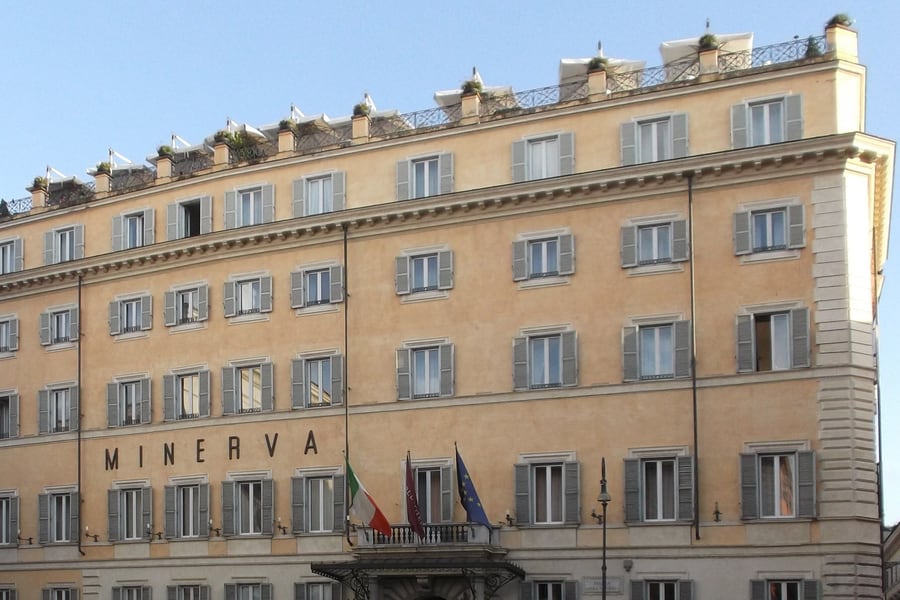
Orient Express La Minerva
Piazza della Minerva, Rome
A 17th-century palace by the Pantheon, run by Orient Express, with a rooftop restaurant seven storeys above the square.
Check Availability (opens in a new tab, on orient-express.com)via orient-express.com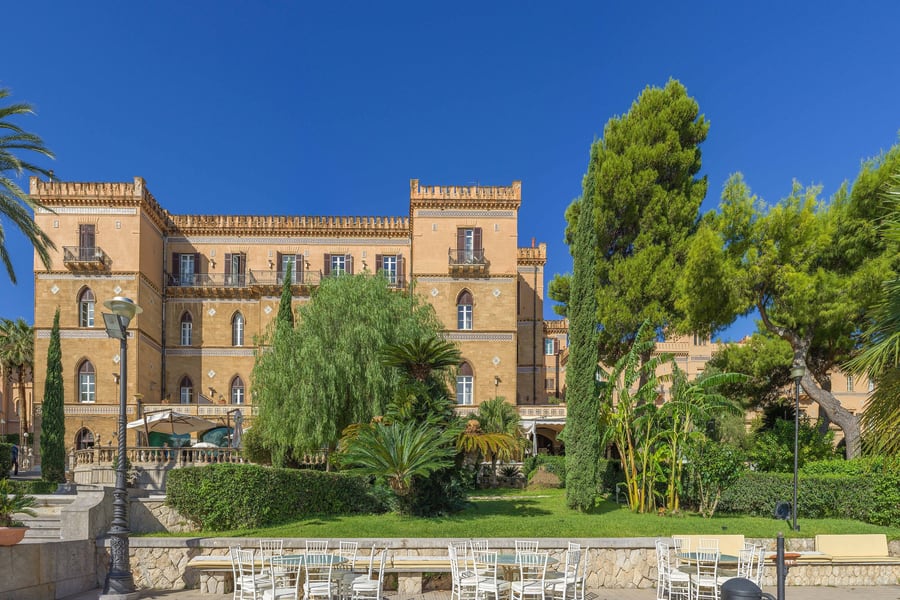 Wolfgang Moroder / Wikimedia Commons · CC BY-SA 3.0 · cropped
Villa Igiea
On the sea below Monte Pellegrino, Palermo
Bought by Ignazio Florio to be a sanatorium named after Hygieia, goddess of health, and opened as a hotel instead in 1900.
Check Availability (opens in a new tab, on roccofortehotels.com)via roccofortehotels.comQuestions or corrections
Planning this trip and stuck on something, or spotted a time, fare or detail that has changed? Send us a message about La Dolce Vita Orient Express. We read every one, and we update this page when something has changed.