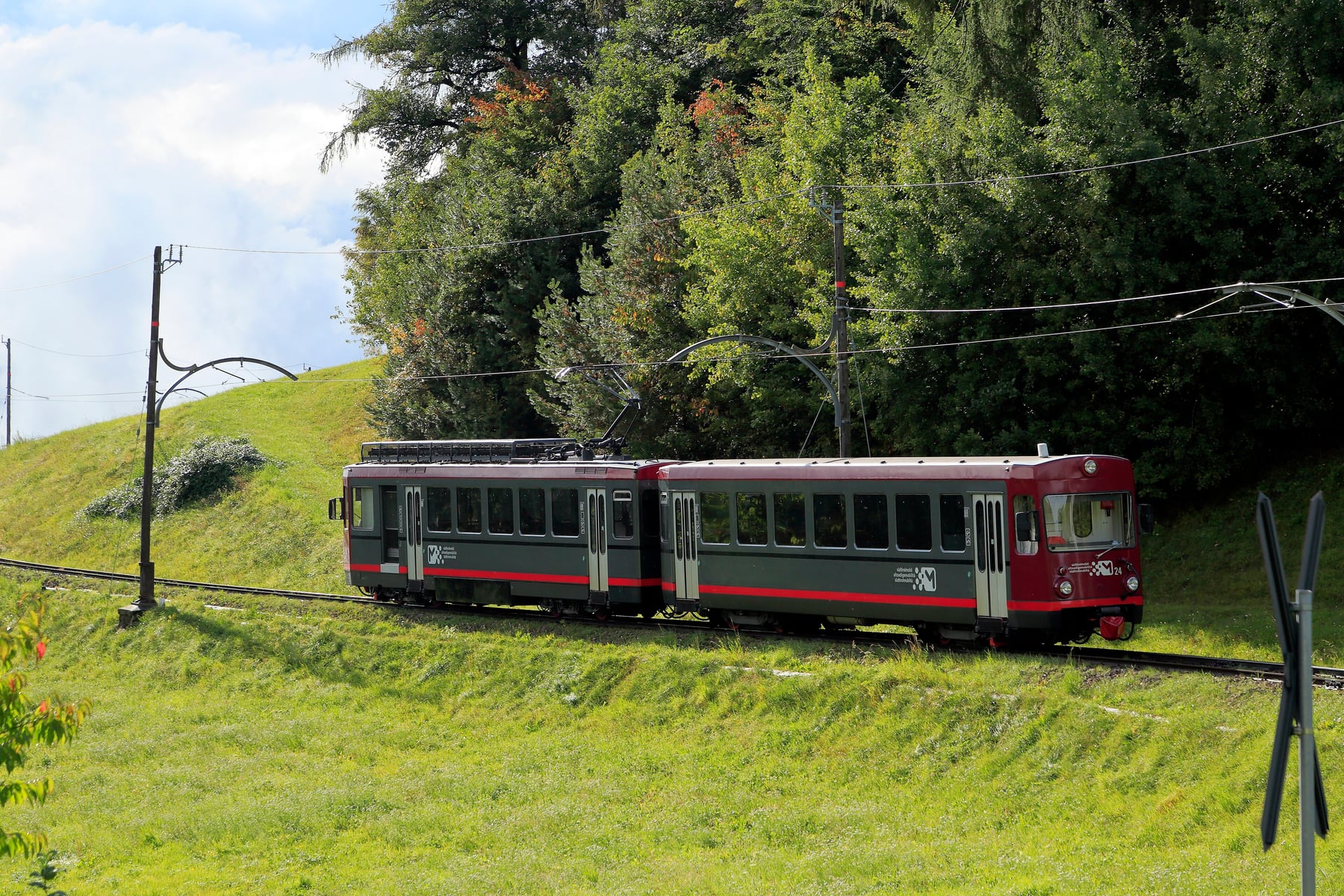
Rittner Bahn
Falk2 / Wikimedia Commons · CC BY-SA 4.0 · cropped
- Distance6.8 km
- Duration18 minutes from Oberbozen to Klobenstein; 22 from Maria Himmelfahrt
- Best seasonAll year; every half hour by day, hourly early and late
Introduction
The Rittner Bahn is a railway that no other railway reaches. Since 1967 not a metre of track has joined it to the rest of the network: you arrive by cable car, and every train it has acquired since has had to come up the mountain by road.
It was not built that way. When it opened on 13 August 1907, its trains left from Walther Square in the centre of Bolzano, ran through the streets to the edge of the city and then climbed 910 metres on a rack, pushed by electric locomotives: the first electric rack railway in Tyrol. At the top they went on by adhesion across the Ritten plateau to Klobenstein, carrying the townspeople of Bolzano to their Sommerfrische, the summer retreat in the cool air above the city. In 1966 a cable car replaced the rack, the street section was replaced by buses, and the climb was abandoned and its track lifted. The top of the line was all that was left.
It nearly went too. In the early 1980s a committee of local people fought to keep it, the track was renewed in 1984–85, and since 2009, when a bigger cable car nearly tripled the crowds, it has run every half hour. The railcars of 1907 and 1908 are still in the depot and still come out; the everyday trains are second-hand units from a Swiss interurban line, and their successors, retired trams from Heidelberg, arrived in 2026.
The Journey
The journey begins in Bolzano, at the valley station of the Ritten cable car on Via Renon, a short walk from the main railway station. Gondolas leave every few minutes and climb 950 metres in about twelve minutes, up the slope the rack railway once climbed, to Oberbozen. The railway station is next door.
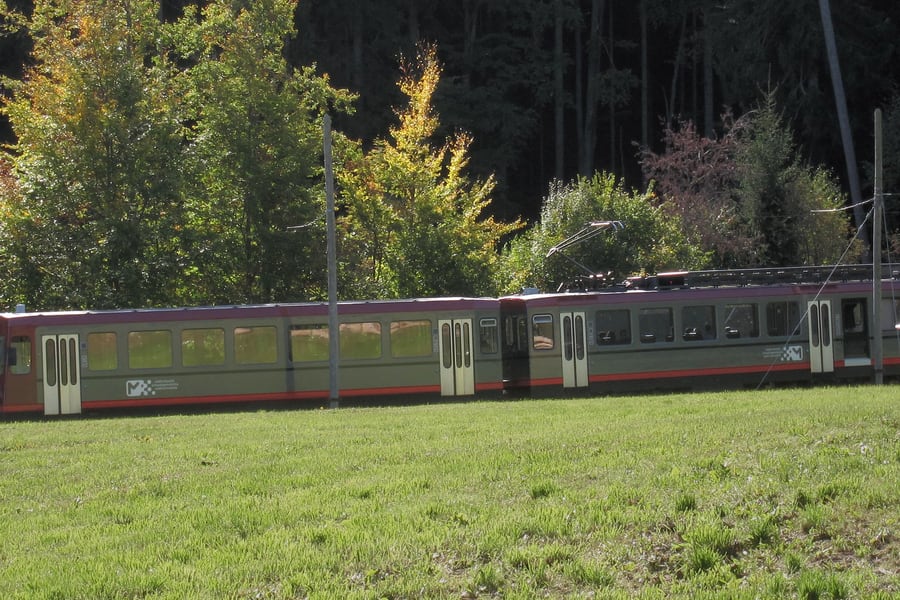
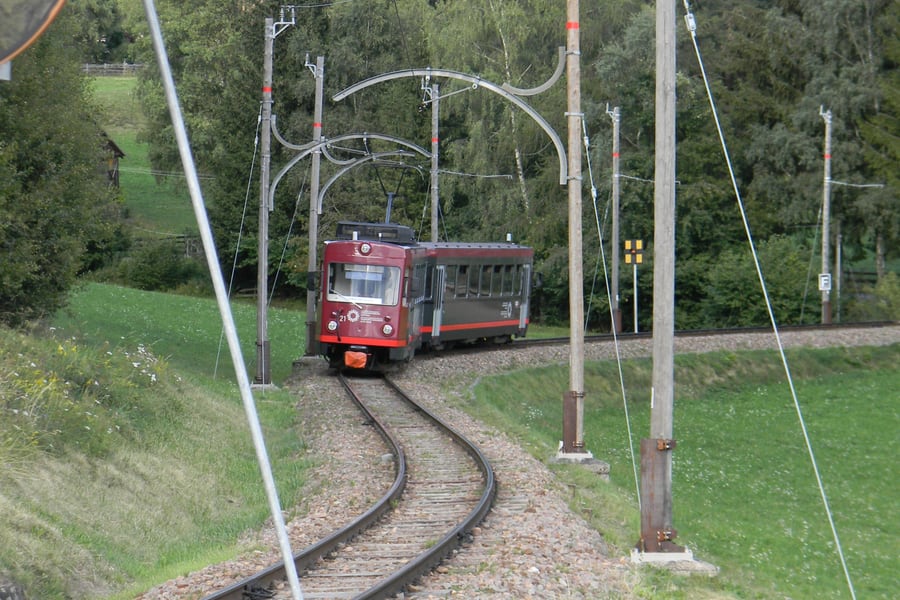
From Oberbozen a few trains a day run four minutes back to Maria Himmelfahrt, the halt in the woods where the rack locomotives were once uncoupled; most head the other way. The metre-gauge line runs entirely off the road, through mountain meadows and woods of larch, on wooden poles that still carry the overhead wire in their historic shape. It passes Wolfsgruben, for the lake, and climbs gently to Lichtenstern, at 1,250 metres the highest point, where the trains pass each other. To the right the view opens on the western Dolomites: the Latemar, the Rosengarten, the Schlern and the Geisler peaks. After Rappersbichl the line drops gently to Klobenstein, the main village of the Ritten, 18 minutes from Oberbozen. Four of the small halts are request stops, and every train carries a conductor, who sells tickets and passes on requests to stop.
The trains
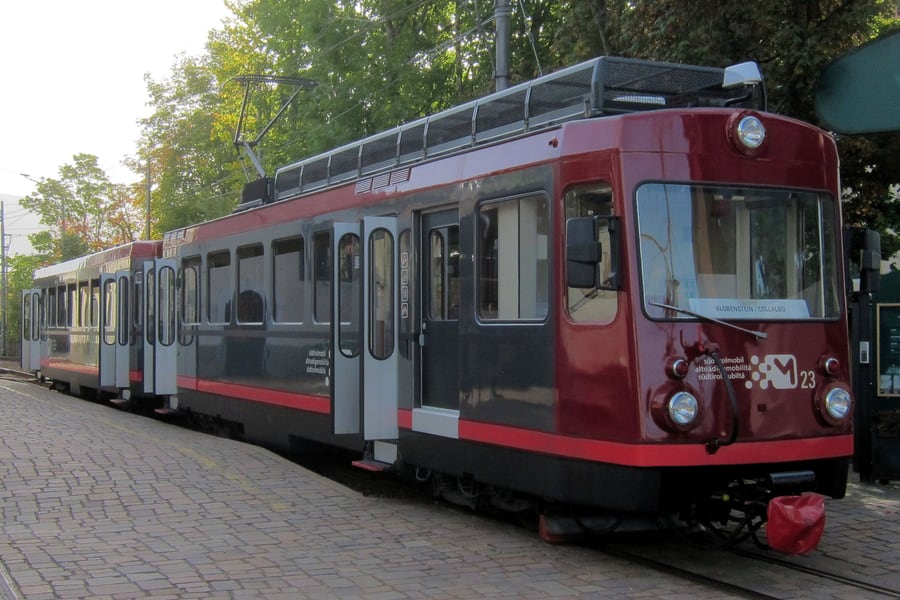
The everyday trains are the Trogener: two-car units built in 1975–77 at Altenrhein for the St. Gallen–Trogen railway in Switzerland, bought in 2009 and in service here since 2010, now in dark red and grey. Before them came a 1958 tram from Esslingen in Germany, bought in 1981 and still kept in reserve. In spring 2026 four trams retired from Heidelberg arrived: three to take over from the Trogeners and give the line step-free boarding, one for spare parts.
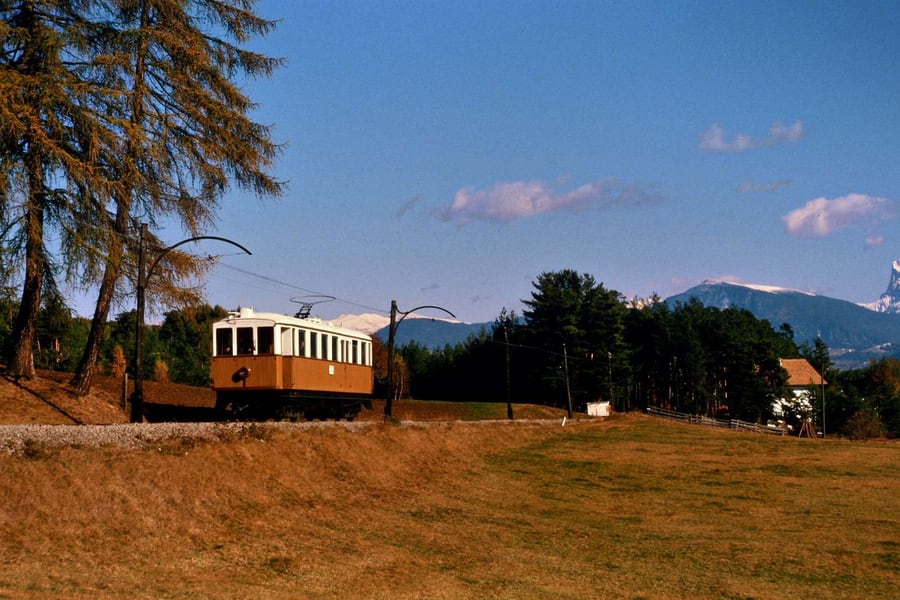
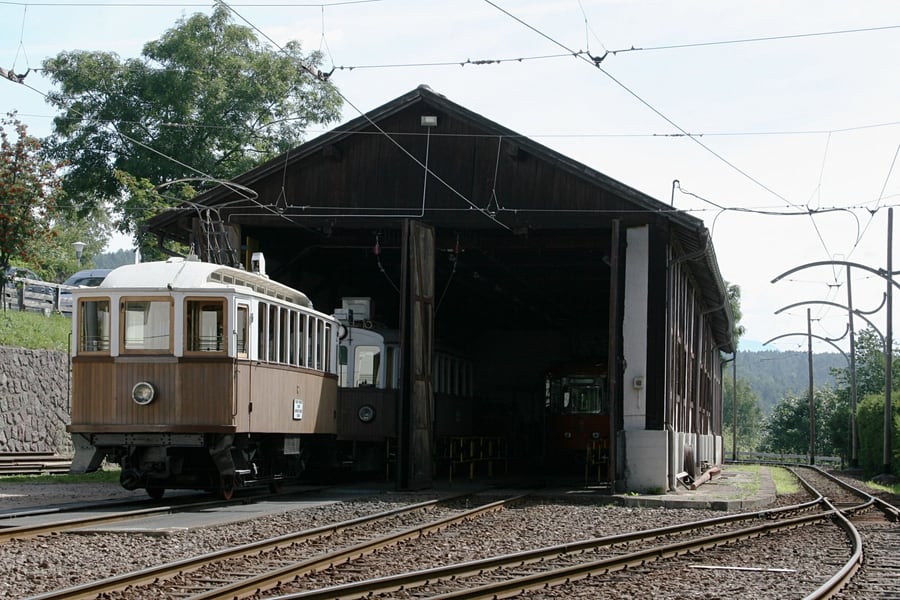
The oldest cars are the line's own: railcars 2 and 12, delivered in 1907–08, and 105, the "Alioth", built in 1910 for the Dermulo–Mendel railway in the Val di Non and on the Ritten since 1937. All three are still listed by the tourist board as scheduled historic railcars, with wooden bodies and wooden benches.
Along the route
 Linie29 / Wikimedia Commons · CC BY 4.0 · cropped
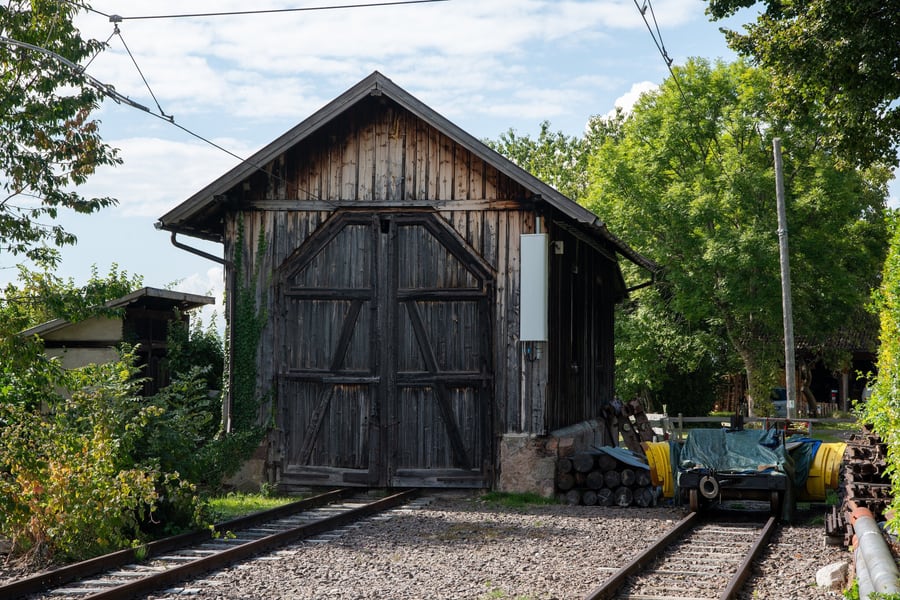
Maria Himmelfahrt, where the rack ended
The line starts at a halt in the woods. Until 1966 this was where trains climbing from Bolzano dropped their rack locomotive; the wooden engine shed still stands beside the track. Only a few trains a day run through from here.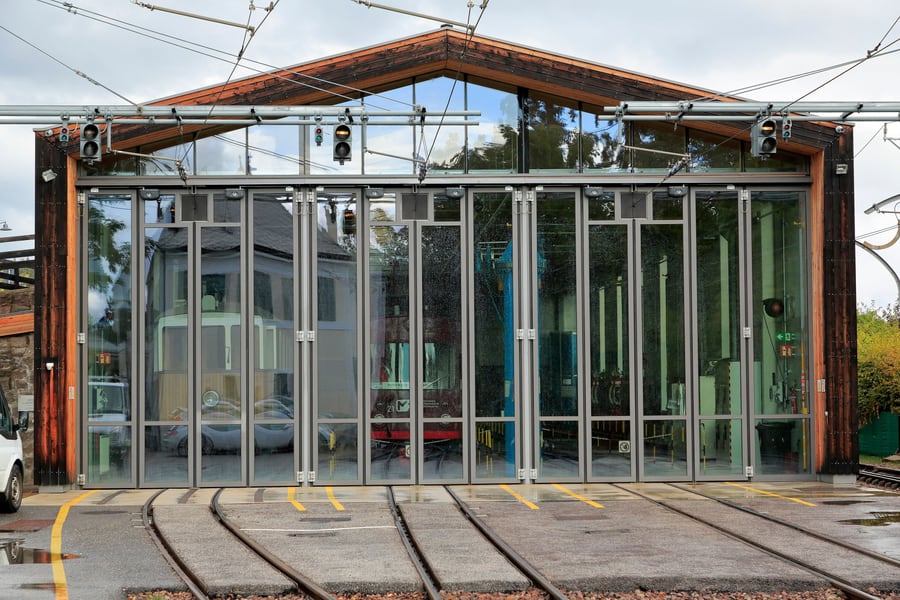 Falk2 / Wikimedia Commons · CC BY-SA 4.0 · cropped
Oberbozen, cable car to train
The cable car from Bolzano lands beside Oberbozen station, the hub of the line, a dozen minutes after leaving the valley floor. The glass-fronted depot here is the line's workshop, and home to historic railcars that still come out on the line.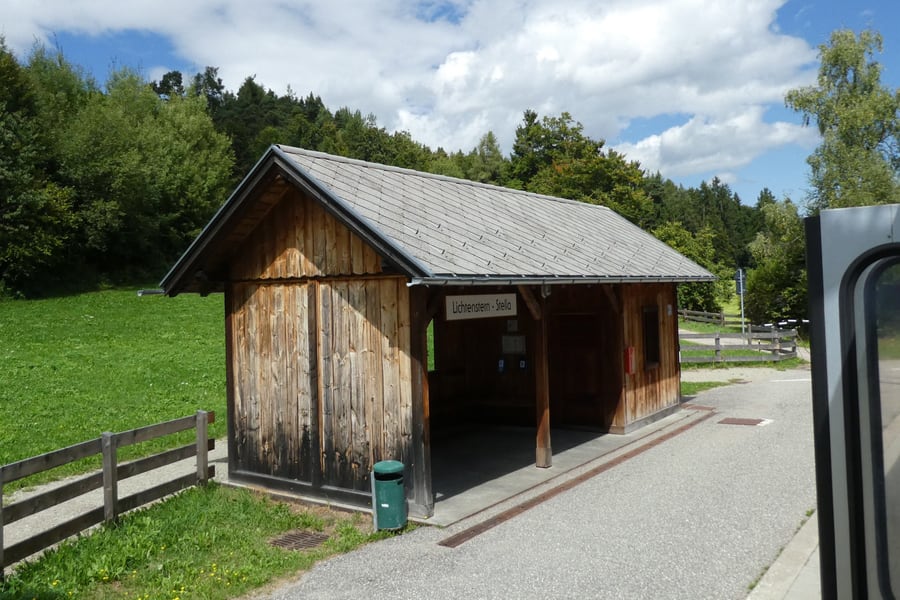 Syrio / Wikimedia Commons · CC BY-SA 4.0 · cropped
Lichtenstern, the high point
At 1,250 metres, Lichtenstern is the summit of the line and the place where trains pass. With no signals on the route, the two drivers swap trains here, so that each driver only ever works one half of the line.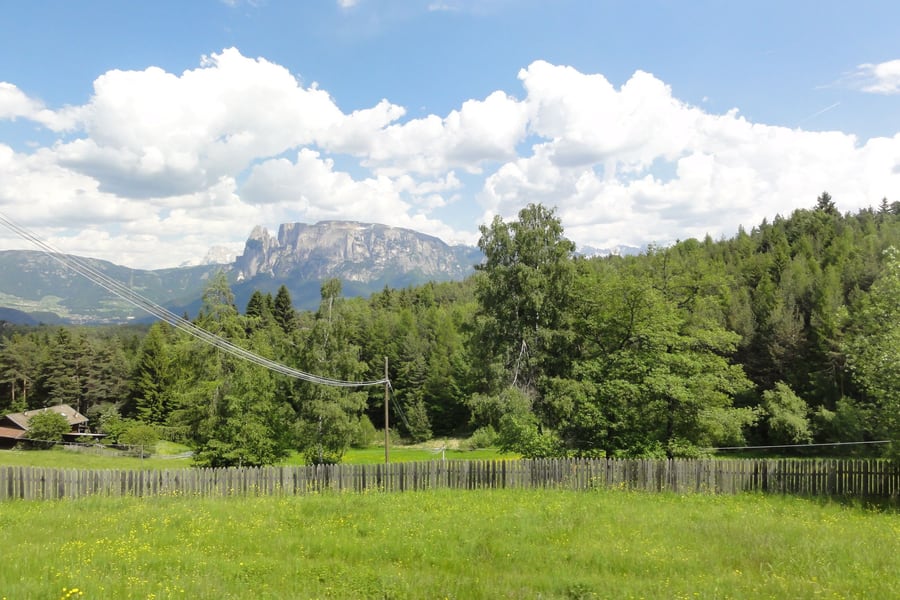 Mattes / Wikimedia Commons · public domain · cropped
The Dolomites to the right
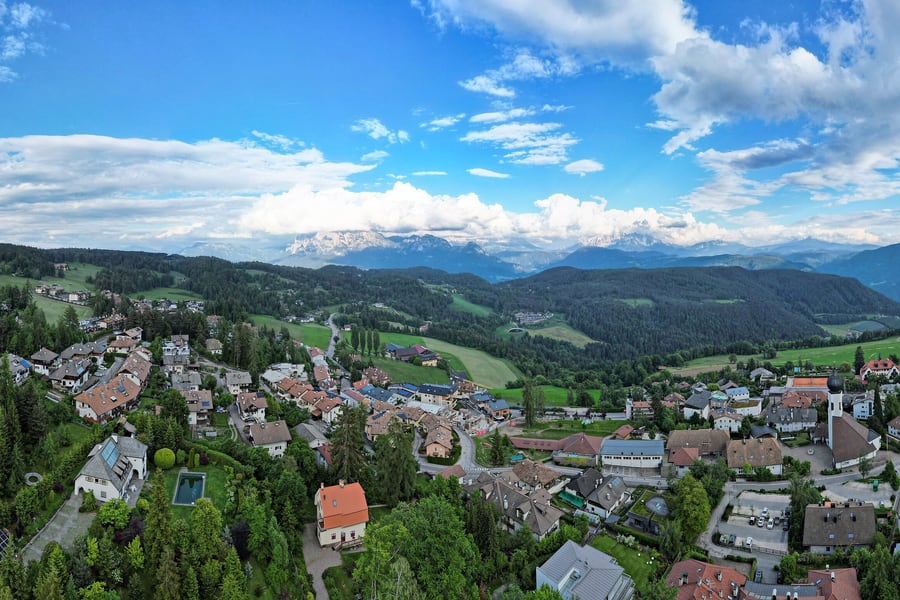
Between the meadows and larch woods, the view opens on the right towards the western Dolomites: the Latemar, the Rosengarten, the long wall of the Schlern and the Geisler peaks.A bit of history
Culture & experiences along the way
 Tkarcher / Wikimedia Commons · CC BY-SA 4.0 · cropped
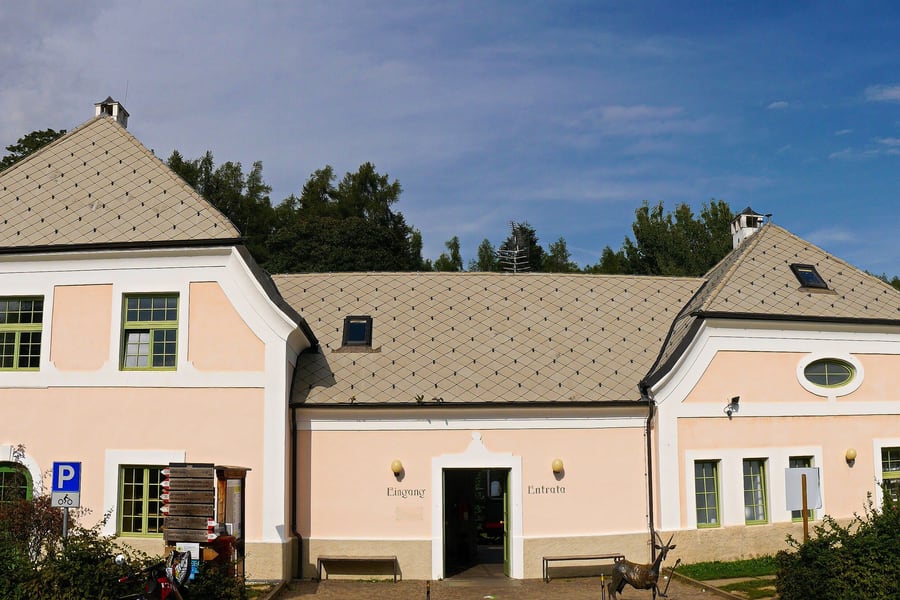
The railway's story at Klobenstein station
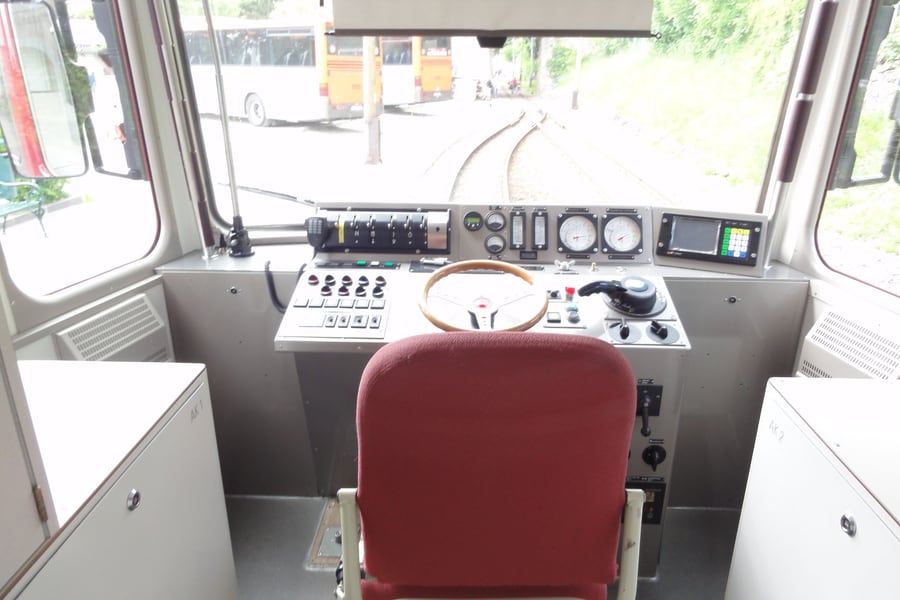
The listed station building at Klobenstein holds an exhibition on more than 120 years of the line: a ten-minute documentary built from old film and documents, historic photographs and plans, a driver's cab, a handcar once used by track workers and a model railway. A visit takes about twenty minutes.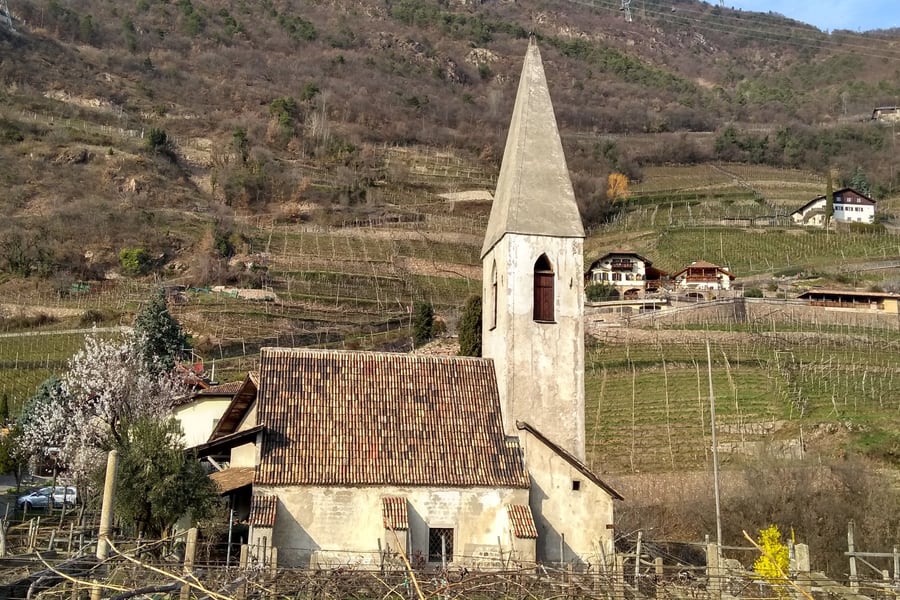 Plentn / Wikimedia Commons · CC0 · cropped
St. Magdalener, the colour of the trains
The vineyards on the slopes between Bolzano and the plateau grow St. Magdalener: a light, fruity, ruby-red wine made from Vernatsch with a little Lagrein, protected as a DOC since 1971. The trains wear a dark red known as Magdalener red, after it.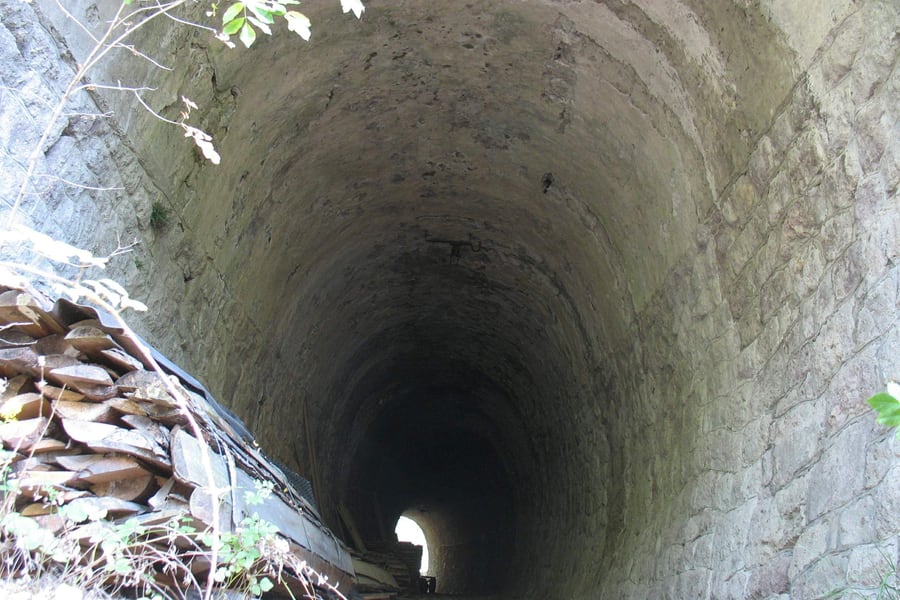 Radapanda / Wikimedia Commons · public domain · cropped
Walking the lost rack line
When the rack section closed, its track was lifted, and parts of the trackbed survive as a footpath through the vineyards and woods, tunnels included. The tourist board runs guided hikes with a railway historian from Bolzano via St. Magdalena up to Maria Himmelfahrt; booking is required.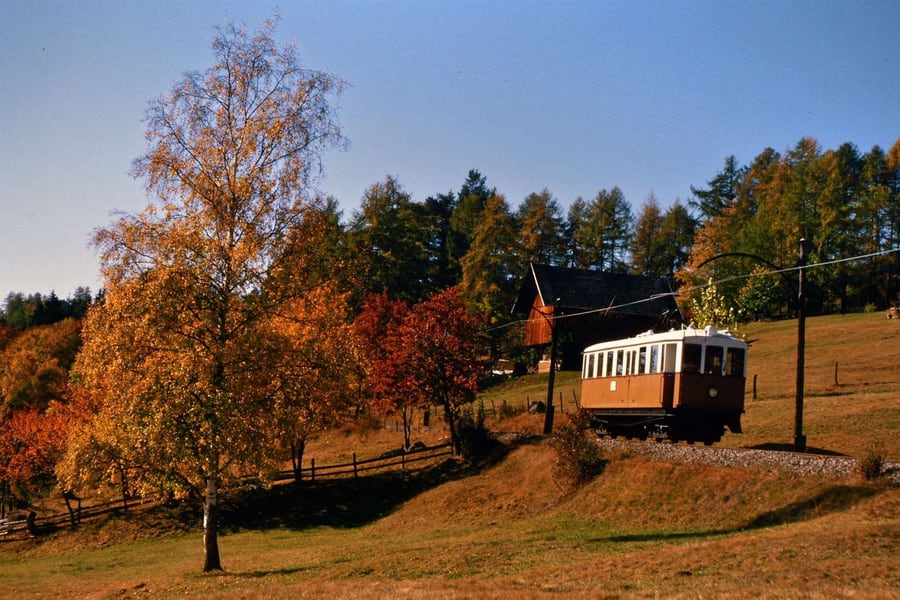 Frank Nowotny / Wikimedia Commons · CC BY-SA 4.0 · cropped
Dinner on the historic railcar
On a few summer evenings the tourist board runs a culinary night ride on one of the historic railcars. The train stops at four stations, and at each a different Ritten restaurateur serves one course of five, with local wines and mountain apple juice and a band on board. Places must be booked.Timetables
The line runs every day, all year. Between Oberbozen and Klobenstein there is a train every half hour from about 10:00 to 18:30, and hourly in the early morning and evening; the last leaves Oberbozen at 23:00. A few trains each day run through to or from Maria Himmelfahrt. The trip takes 18 minutes from Oberbozen to Klobenstein and 22 from Maria Himmelfahrt. The first two trains each way run on working days only.
Oberbozen to Klobenstein
| Maria Himmelfahrt | Oberbozen | Lichtenstern | Klobenstein |
|---|---|---|---|
| — | 06:26 | 06:35 | 06:42 |
| — | 07:02 | 07:11 | 07:18 |
| — | 07:38 | 07:47 | 07:54 |
| 08:30 | 08:36 | 08:45 | 08:52 |
| — | 09:36 | 09:45 | 09:52 |
| — | 10:06, then every 30 minutes | :15 and :45 | :22 and :52 |
| 12:30 and 13:30 | 12:36 and 13:36 | 12:45 and 13:45 | 12:52 and 13:52 |
| 18:30 | 18:36 | 18:45 | 18:52 |
| 19:30 | 19:36 | 19:45 | 19:52 |
| — | 20:36, 22:00, 23:00 | 20:45, 22:09, 23:09 | 20:52, 22:16, 23:16 |
Klobenstein to Oberbozen
| Klobenstein | Lichtenstern | Oberbozen | Maria Himmelfahrt |
|---|---|---|---|
| 06:08 | 06:16 | 06:24 | — |
| 06:44 | 06:52 | 07:00 | — |
| 07:20 | 07:28 | 07:36 | — |
| 08:08 | 08:16 | 08:24 | 08:28 |
| 09:08 | 09:16 | 09:24 | — |
| 10:06, then every 30 minutes | :16 and :46 | :24 and :54 | — |
| 12:06 and 13:06 | 12:16 and 13:16 | 12:24 and 13:24 | 12:28 and 13:28 |
| 18:06 | 18:16 | 18:24 | 18:28 |
| 19:08 | 19:16 | 19:24 | 19:28 |
| 20:08, 21:08, 22:20 | 20:16, 21:16, 22:28 | 20:24, 21:24, 22:36 | — |
The cable car, and when it is shut
The Ritten cable car runs from Bolzano to Oberbozen every 4 minutes until 19:00 and every 4 to 12 minutes after that, from 6:30 (7:02 on Sundays and holidays) to 21:48, with single runs at 22:15 and 22:45. From 9 to 24 November 2026 it closes for maintenance: replacement buses run from Bolzano, and the train runs hourly instead of every half hour. A new timetable starts on 13 December 2026.
Times as of October 2026, from südtirolmobil's timetables for the Rittner Bahn and the cable car (opens in a new tab) (tables 160 and 161), valid from 14 December 2025 to 12 December 2026.
Tickets
The railway is part of South Tyrol's public transport network, so its tickets work like a bus ticket: buy at the station machines or in the südtirolmobil app and validate before boarding, or buy a single from the conductor on the train. A single costs €5.50 and a return €8.50, valid the same day; with the cable car from Bolzano, the whole trip is €12.50 single or €20.50 return. Children under six travel free. Seats cannot be booked, and bicycles are not carried.
For a longer stay the Mobilcard covers the railway, the cable car and every bus and regional train in the province, from €22 for a day. Many hotels on the Ritten give guests a free Südtirol Guest Pass, which covers the same. Fares as of October 2026.
Book your tickets
Rittner Bahn single or return
€5.50 single · €8.50 return the same day
Sold at the machines, in the südtirolmobil app and by the conductor on the train.
Book Tickets (opens in a new tab, on südtirolmobil)via südtirolmobilCable car and railway together
€12.50 single · €20.50 return the same day
Bolzano to Oberbozen by cable car and on across the plateau by train, on one ticket.
Book Tickets (opens in a new tab, on südtirolmobil)via südtirolmobilMobilcard
1, 3 or 7 days · €22 to €52
Unlimited travel on South Tyrol's public transport, this railway and the cable car included.
Book Tickets (opens in a new tab, on südtirolmobil)via südtirolmobilRail Passes
Interrail and Eurail do not cover this line. The Rittner Bahn is not among the Italian railways the pass is valid on; it does cover Trenitalia's regional trains and the EuroCity and Railjet trains over the Brenner to Bolzano.
South Tyrol's own passes do. The Mobilcard gives 1, 3 or 7 days of unlimited travel on the province's buses, regional trains, cable cars and this railway, from €22 for a day. Guests of many hotels and guesthouses get the Südtirol Guest Pass free for the length of their stay, and it covers the same.
For the railway alone, a pass is worth buying only if you will also ride the cable car and a bus or two that day: the train and cable car together cost €20.50 return.
Checked October 2026 against Interrail's table of railway companies (opens in a new tab) and südtirolmobil (opens in a new tab).
Places to Visit
The Ritten is walking country, and the railway is how people get between the walks: most of what is worth seeing lies a short stroll from one of its stations, with the city of Bolzano at the foot of the cable car and the Rittner Horn a bus ride beyond Klobenstein.
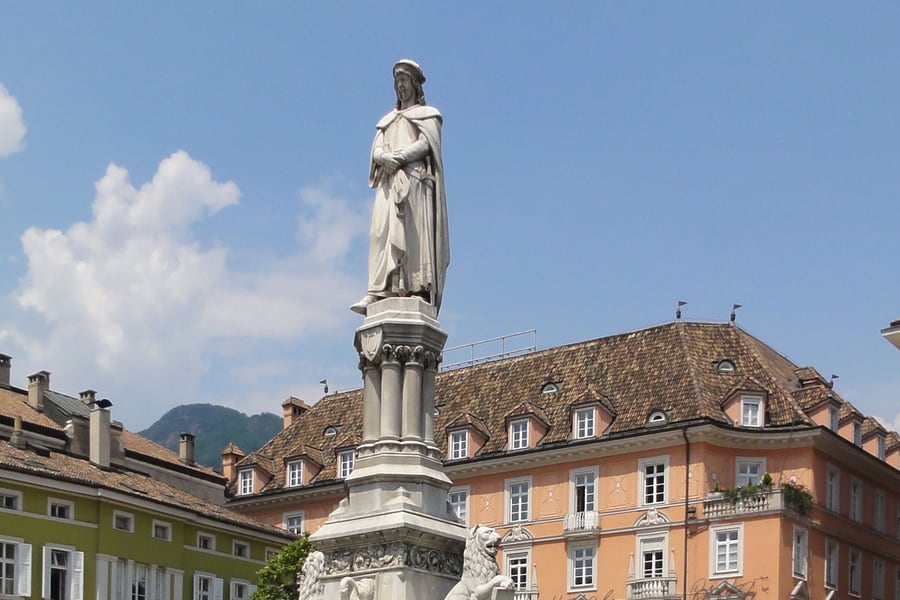 Mattes / Wikimedia Commons · public domain · cropped
Bolzano and Walther Square
From 1907 to 1966 the railway began on Walther Square, the city's main square, and ran through the streets to the foot of the rack. The square takes its name from the medieval poet Walther von der Vogelweide, whose marble monument by Heinrich Natter stands in the middle, with the cathedral at its southern edge and the arcaded old town behind.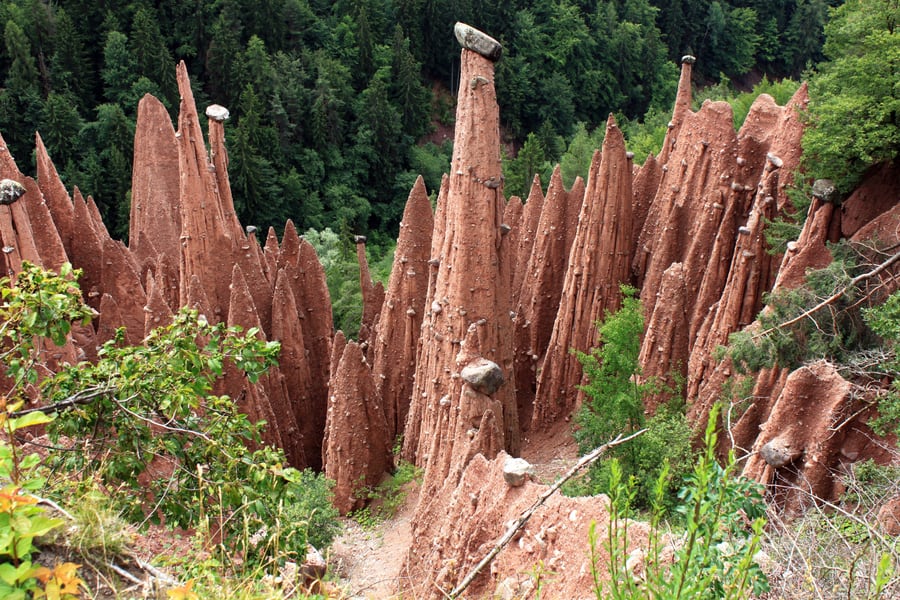 Uwelino / Wikimedia Commons · CC BY-SA 4.0 · cropped
The earth pyramids below Oberbozen
Pillars of moraine clay, each capped by a boulder, left by the glaciers of the last Ice Age. The clay sets hard in dry weather and turns to mud in rain; where a stone shields it, a pillar rises as the slope around it washes away. When the stone falls, the pillar crumbles. The path from the station is graded medium.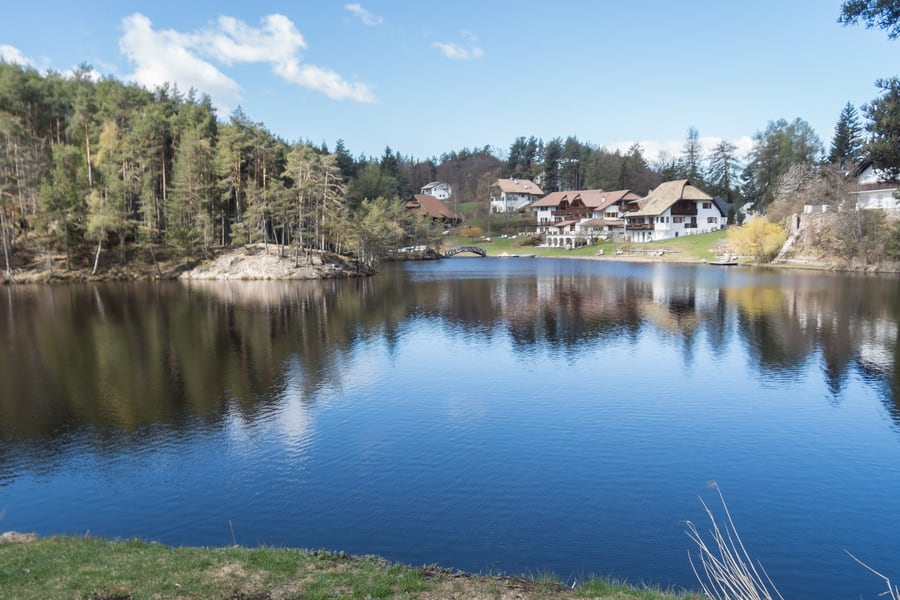 Hermann Hammer / Wikimedia Commons · CC0 · cropped
Wolfsgruben Lake
A small lake among wooded hills, a short walk from the railway, or 30 to 35 minutes on trail 15 from the centre of Oberbozen. In summer people swim in it, anglers fish for carp, pike and tench, and a path circles the shore; when it freezes in winter, it becomes a skating rink.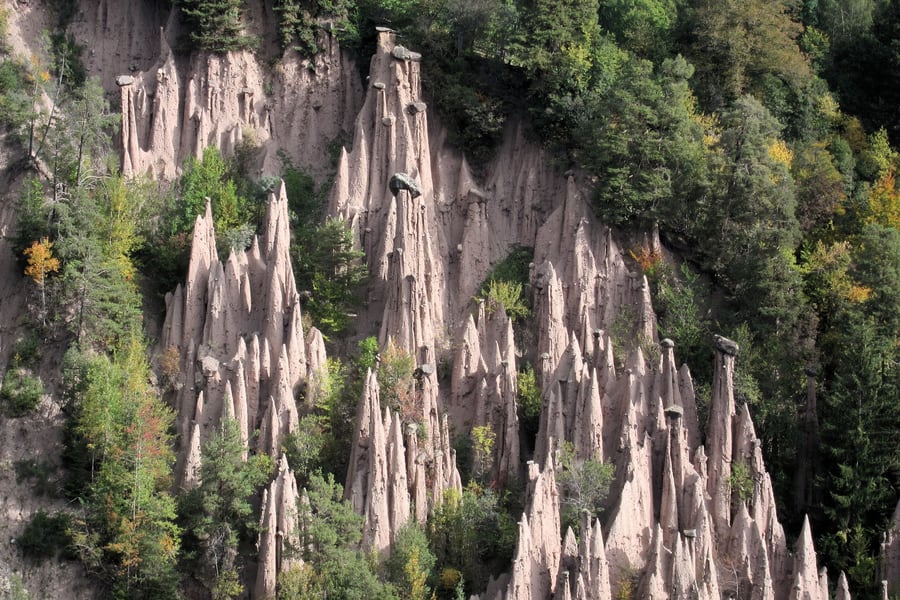 Stefan Oemisch / Wikimedia Commons · CC BY-SA 4.0 · cropped
The earth pyramids of Lengmoos
The tourist board calls the Ritten's earth pyramids the tallest in Europe, and one group stands in the gorge below Lengmoos, a forest of pale spires, many still wearing their capstones. An easy path leads there from Klobenstein station, the end of the line. They are one of three groups on the plateau; the others stand below Oberbozen and Unterinn.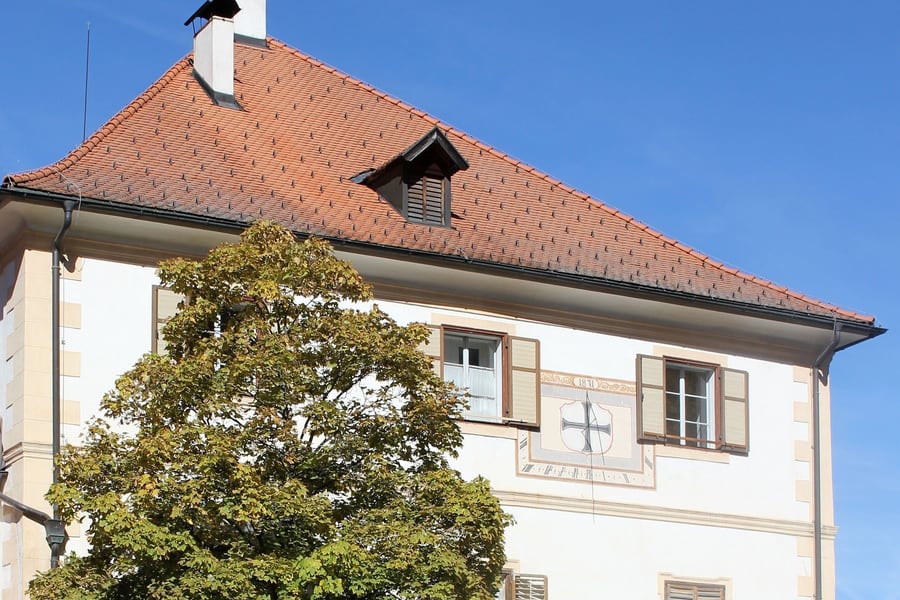 ManfredK / Wikimedia Commons · CC BY-SA 4.0 · cropped
The Commandery of Lengmoos
A hospice for pilgrims on the old emperors' road to Rome, given to the Teutonic Order in 1235. Sacked in the Peasants' War of 1525, it was rebuilt with baroque state rooms in the 17th century, which open from May to October, 4 to 6 pm. Its courtyard hosts the Ritten Summer Stage, an open-air theatre season.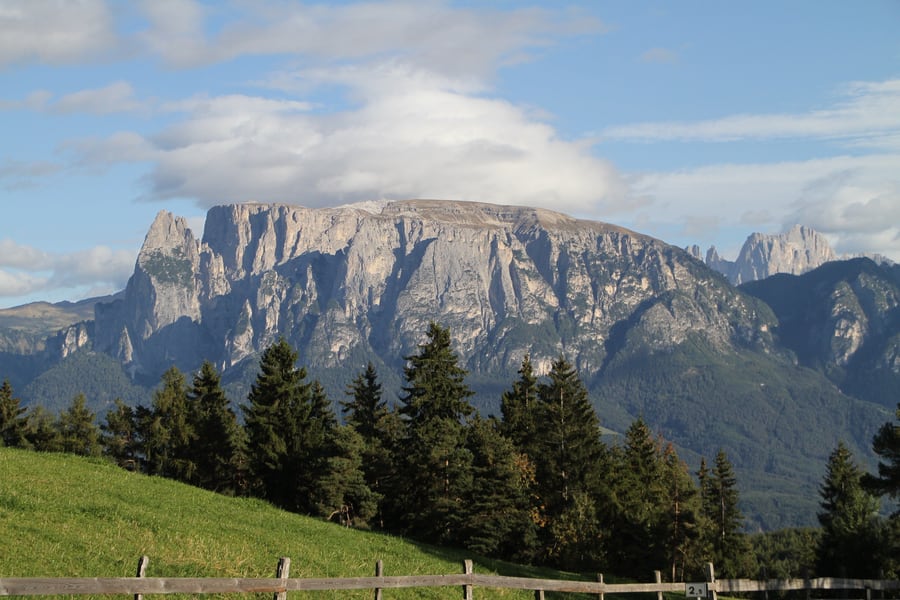 HaSt / Wikimedia Commons · CC BY-SA 4.0 · cropped
The Rittner Horn
The plateau's own summit, with a view the tourist board calls the finest 360° panorama in South Tyrol: the Dolomites from the Peitlerkofel and the Geisler round to the Schlern, the Rosengarten and the Latemar. Whoever "wishes to see all of Tyrol at one sight shall climb these heights", wrote the mountaineer Ludwig Purtscheller. The lift runs from mid-May to early November and in the ski season.Where to Sleep
Bolzano has the widest choice and puts the cable car a short walk away. To stay up on the plateau, Oberbozen is the hub of the line, and many places to stay there give guests the Südtirol Guest Pass.
Where to stay
 Vollmond11 / Wikimedia Commons · CC BY-SA 3.0 · cropped
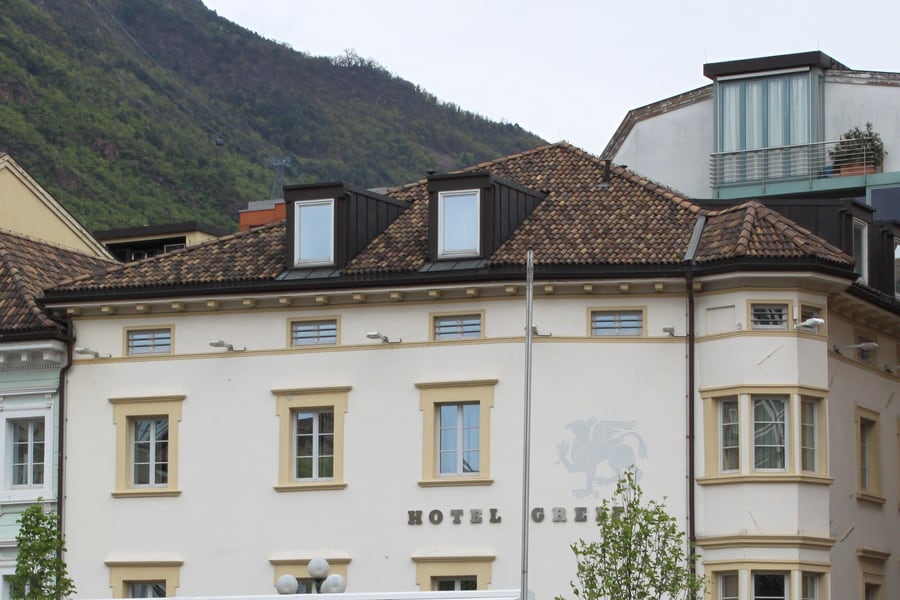
Hotel Greif
Walther Square, Bolzano
On the square where the railway once began, with 33 rooms, each furnished by a different artist.
Check Availability (opens in a new tab, on greif.it)via greif.it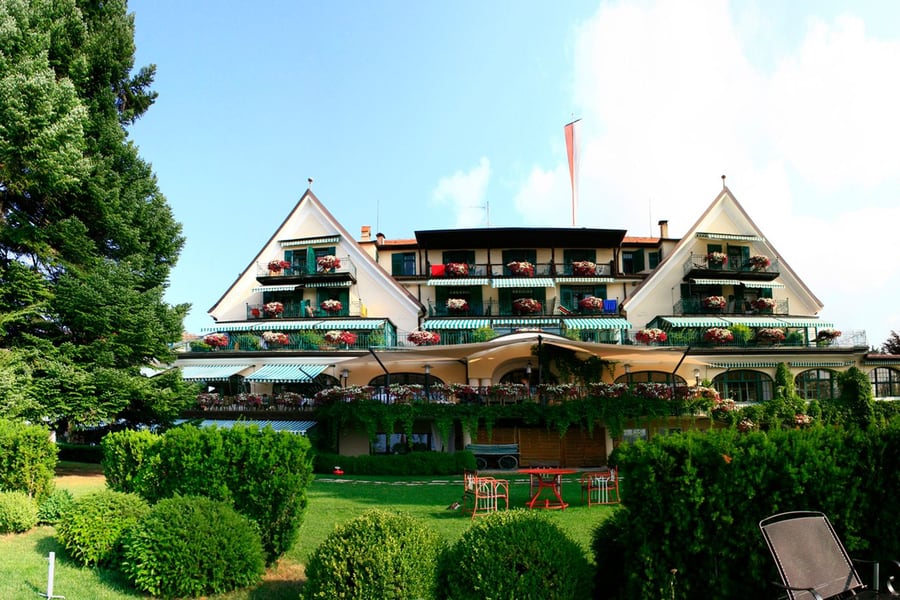 Maria.holzner / Wikimedia Commons · public domain · cropped
Parkhotel Holzner
Opposite Oberbozen station
Built by the railway company as its hotel at Oberbozen for the opening of the line, and run by the Holzner family for four generations.
Check Availability (opens in a new tab, on parkhotel-holzner.com)via parkhotel-holzner.comQuestions or corrections
Planning this trip and stuck on something, or spotted a time, fare or detail that has changed? Send us a message about Rittner Bahn. We read every one, and we update this page when something has changed.