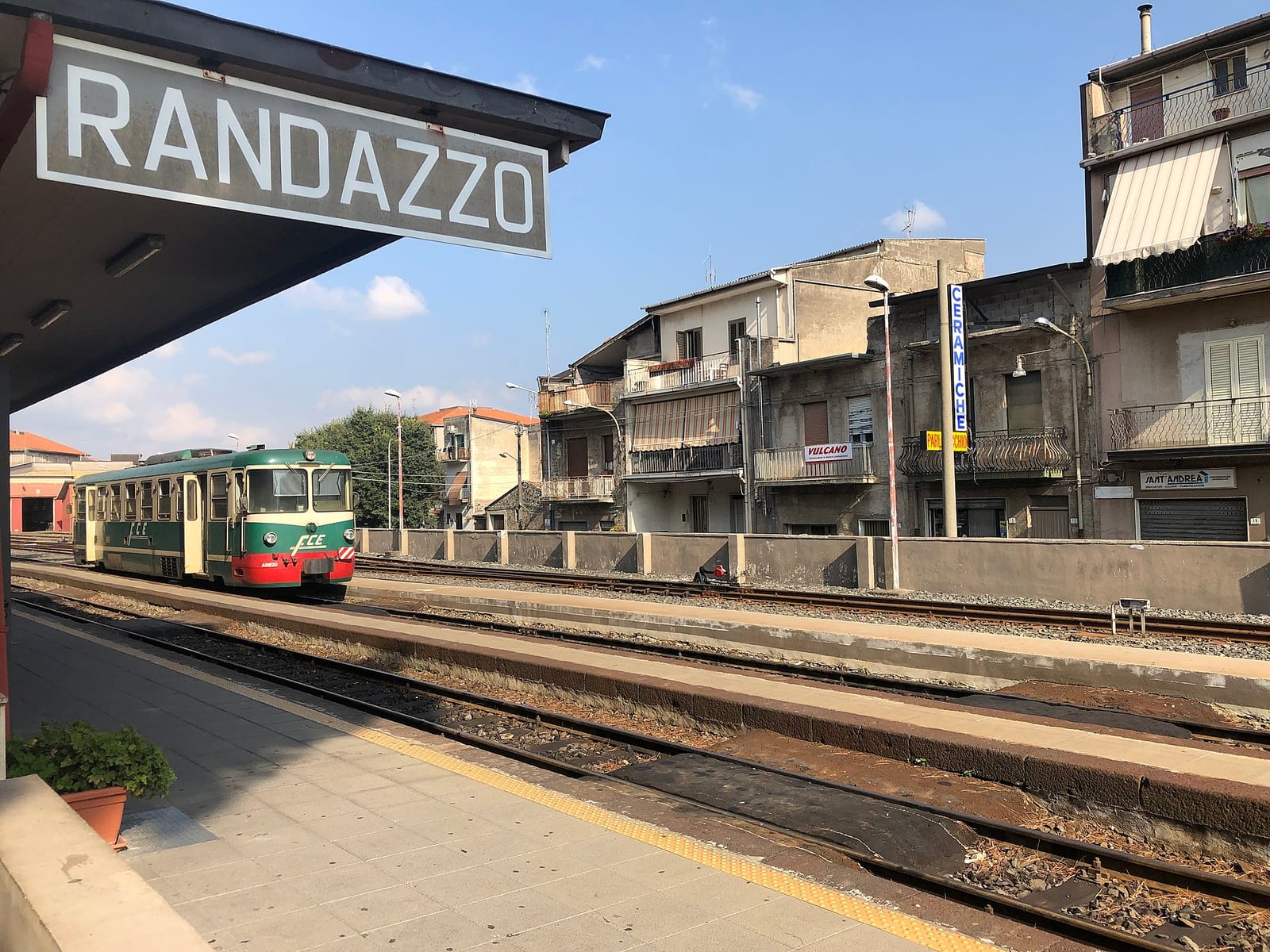
Ferrovia Circumetnea
Bruno Brunning / Wikimedia Commons · CC BY-SA 4.0
- Distance110 km around Etna — trains now run S. Maria di Licodia Sud–Randazzo
- DurationA full day for the Catania–Catania circuit
- Best seasonApril–June & September–October
Introduction
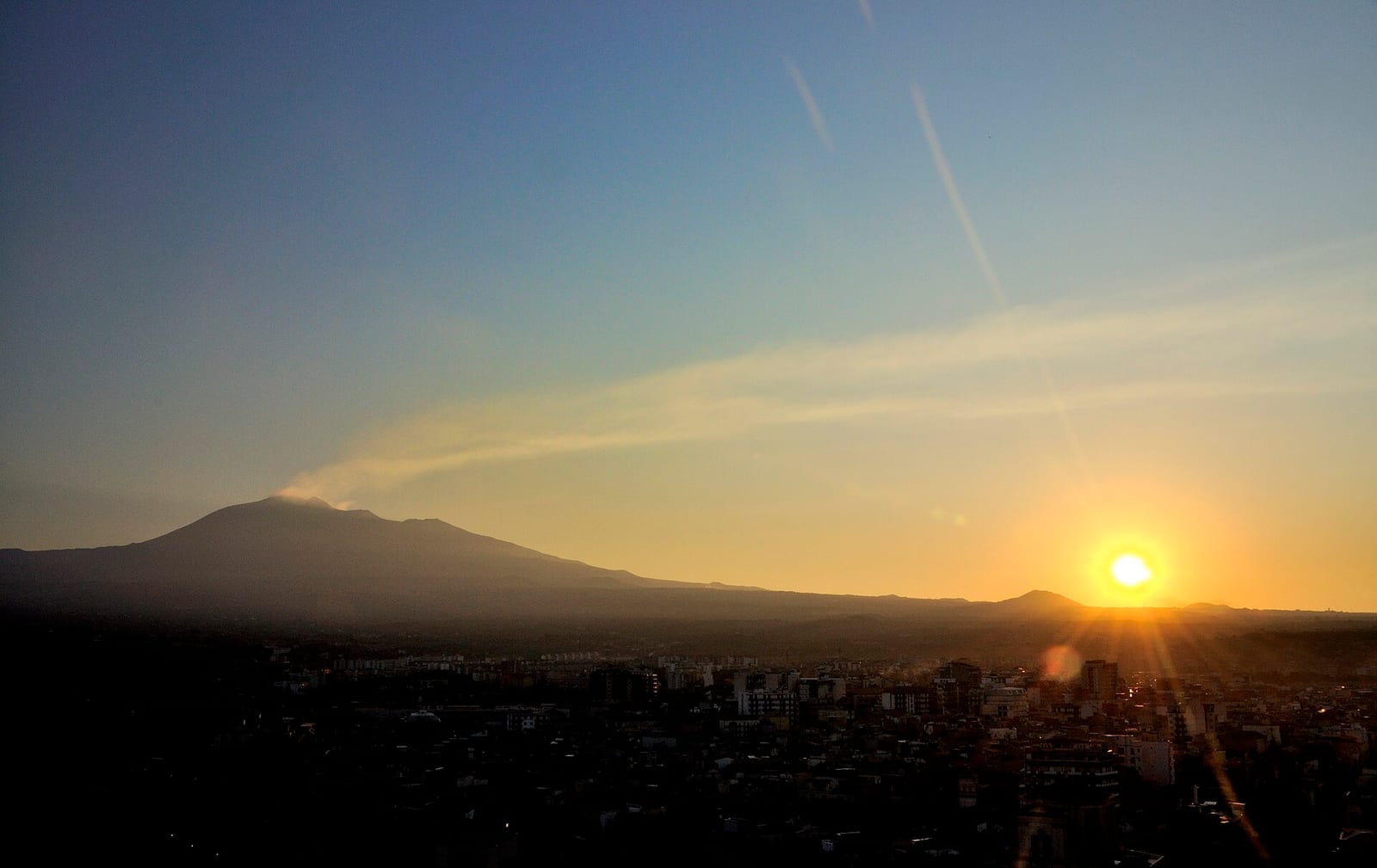
There is a railway in Sicily that goes all the way around a volcano. Not up it — around it. The Ferrovia Circumetnea was laid between 1895 and 1898 on a tight 950 mm narrow gauge, and for 110 kilometres it traces the foot of Mount Etna, the most active volcano in Europe, through lava fields still black and sharp from eruptions within living memory.
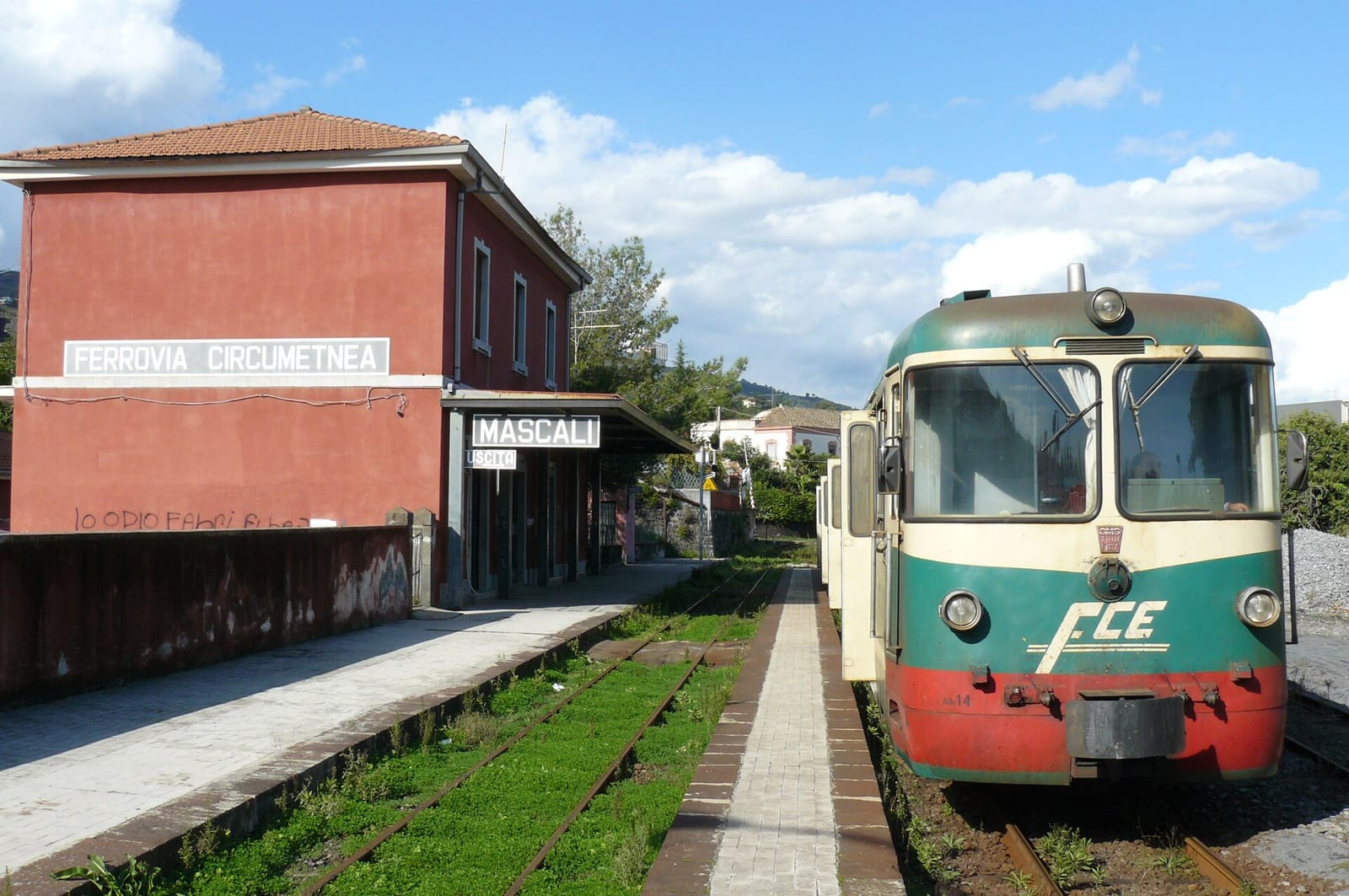
It is not a grand train. It is usually one diesel railcar, one driver, and a set of manual doors — clattering past back gardens and pistachio terraces, stopping at towns built entirely from the mountain's own black stone. That is exactly the appeal. The Circumetnea has never been a tourist railway; it is a local line that happens to run through some of the most extraordinary landscape in the Mediterranean, and it has been quietly doing so for more than 125 years.
But you need to know something before you plan a day around it, because almost everything written about this line is now out of date. You can no longer ride the full circle, and you can no longer start from Catania by train. The city end of the railway is being turned into a metro: the historic Catania Borgo–Paternò section went in June 2024, and in March 2026 the trains stopped at Paternò–Santa Maria di Licodia as well, so that the new Misterbianco–Paternò metro could be built.
What survives is the best bit. Trains still climb the volcano's western flank from Santa Maria di Licodia Sud through Adrano, Bronte — the line's high point at 835 metres — and Maletto, to the lava-built town of Randazzo. The rest of the ring is now covered by the operator's own coaches. It is a stranger, more awkward journey than it used to be. It is also still worth the day.
The Journey
Start, as the operator now tells you to, on the Catania metro — a line that is, with some irony, the Circumetnea's own child. In the 1990s the final four kilometres into Catania Borgo were regauged to standard gauge and buried underground to become the city's metro, and the same company, FCE, still runs both. Ride it to Nesima, where an FCE coach is waiting to carry you out past Misterbianco and Paternò — across the ground the trains used to cover — to Santa Maria di Licodia Sud.
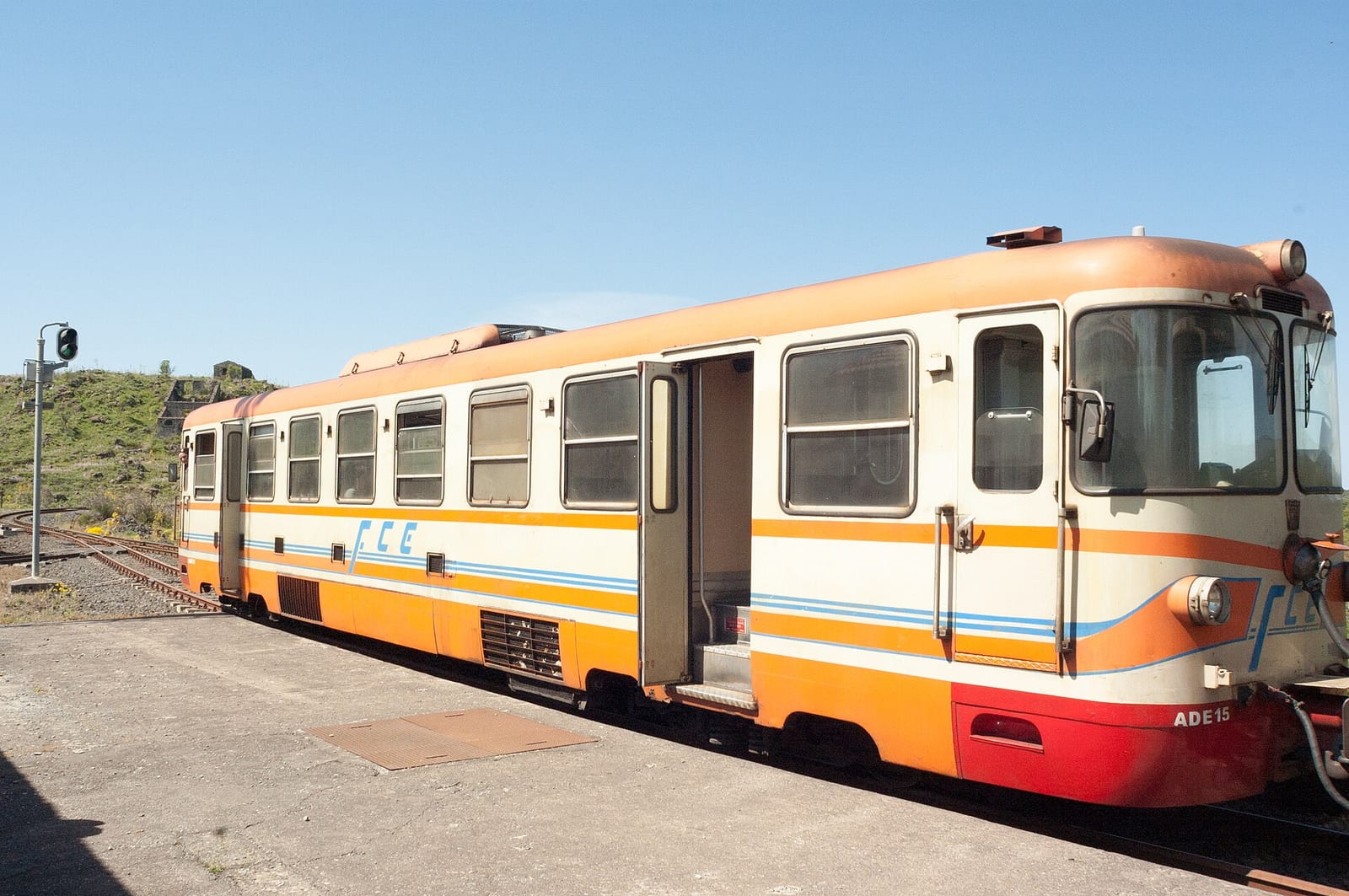
There the railway begins. The train is a single ADe railcar, and the gauge is so narrow that the whole thing feels like a toy that has been left out in the sun for a century. It sets off climbing almost at once, and within minutes the landscape does the thing that makes this line famous: it turns black. These are the lava flows, some of them centuries old and now colonised by prickly pear and broom, some of them raw and still looking like they cooled last week. The track threads between them, because there was nowhere else to put it.
Biancavilla and Adrano come and go, agricultural towns with the volcano filling every window on the right-hand side. Then the line climbs to Bronte, at 835 metres the highest station on the whole 110 km ring. Bronte grows pistachios — on the lava, which is the point, since the same rock that periodically destroys the town also makes its soil worth more per hectare than almost anything else in Sicily. The nuts are small, intensely green and sold in every window.
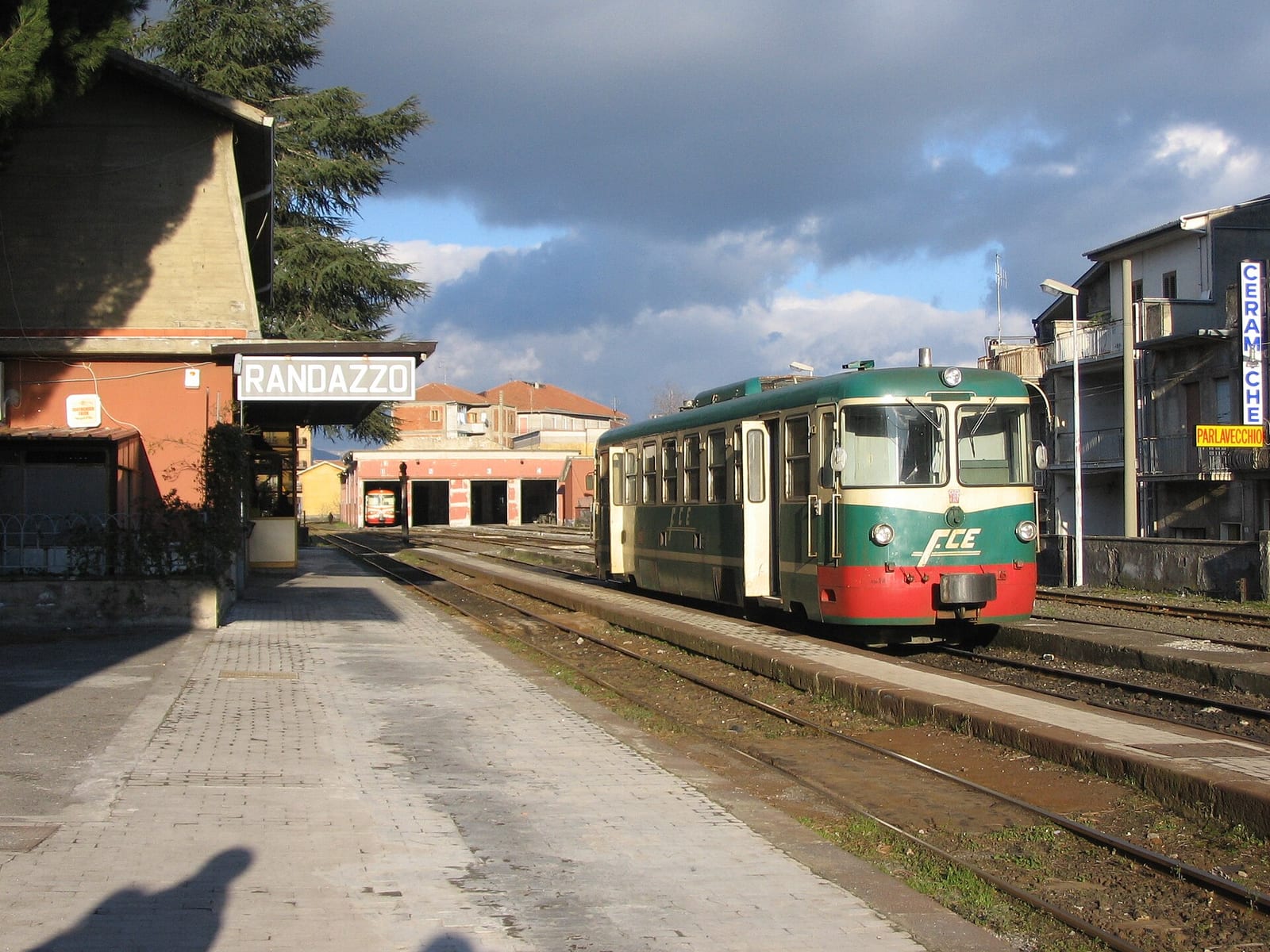
Beyond Bronte the country opens out into high, empty pasture around Maletto and Gurrida, and Etna stops being a backdrop and becomes the entire horizon. The train finishes at Randazzo, a town built almost wholly of black lava masonry — churches, palaces, paving, all of it the mountain reused. It sits closer to the summit than any other inhabited place on Etna and, by some geological luck, the flows have always divided around it.
From Randazzo, if you want to close the ring, another FCE coach runs down the eastern side to Giarre and Riposto — a stretch that until recently had trains of its own. From Giarre, a Trenitalia service takes about half an hour back into Catania. It is a circuit made of four different tickets and one small, stubborn railway. It is not tidy. But you will have gone all the way around a live volcano, which is not a sentence many railways can offer.
Along the route
gnuckx / Wikimedia Commons · CC BY 2.0A railway around a live volcano
Etna is the most active volcano in Europe and the Circumetnea simply goes around it — 110 km of 950 mm narrow gauge laid between 1895 and 1898, threading the black lava flows, the pistachio terraces and the citrus groves that grow so well on ground the mountain keeps rebuilding.Konstantin Malanchev / Wikimedia Commons · CC BY 2.0Bronte, at 835 metres
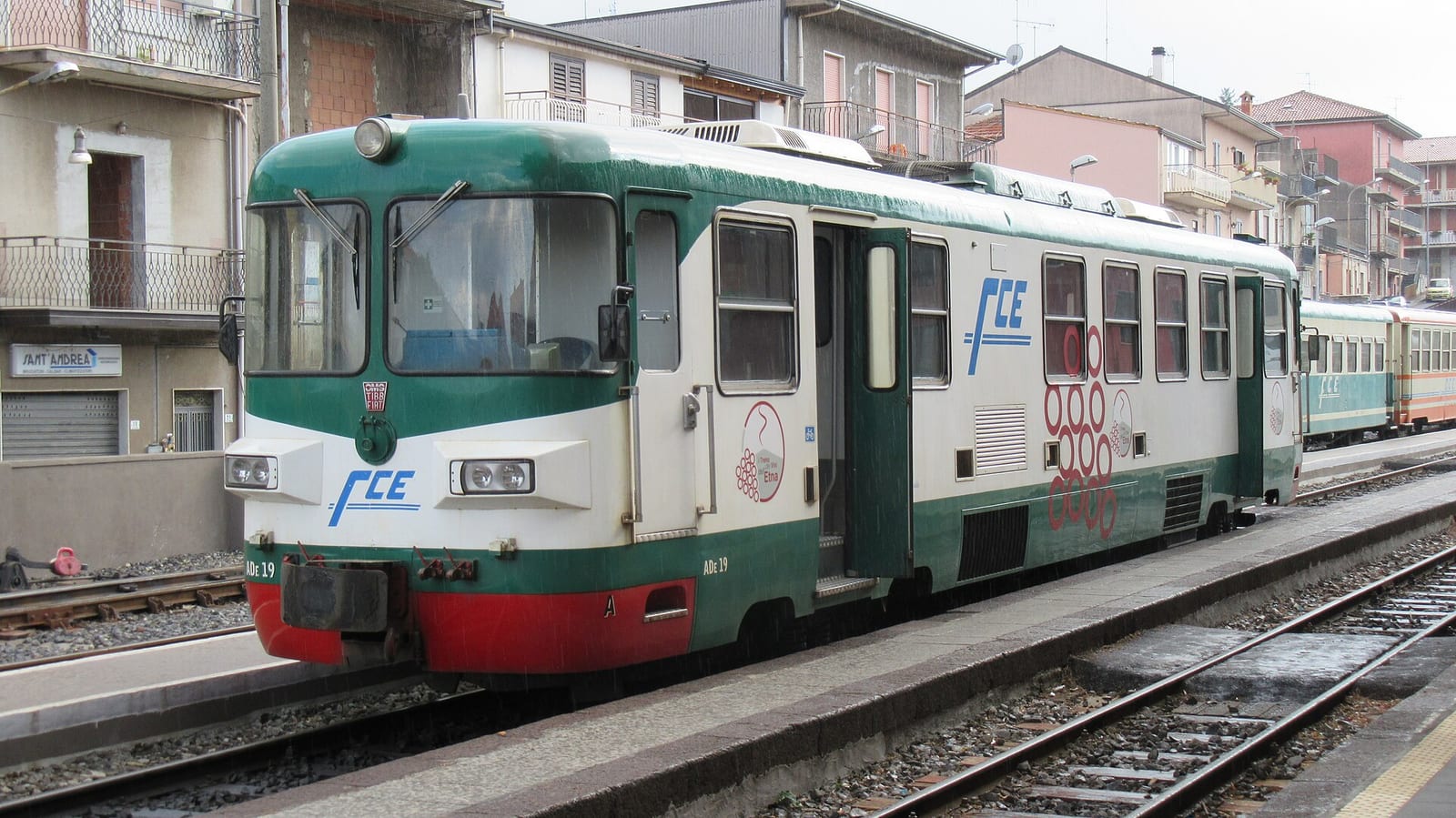
The line's highest station sits above the pistachio town of Bronte, on Etna's western flank. It is the summit of the ride and — happily — still very much on the section trains actually serve.Myuktrains80 / Wikimedia Commons · CC BY-SA 4.0One car, one driver
Forget grand expresses. The Circumetnea is a single diesel railcar rattling through back gardens and lava fields, stopping wherever Sicily asks it to — one of the last railways in Europe that still feels entirely unbothered by tourism.A bit of history
Culture & experiences along the way
LuckyLisp / Wikimedia Commons · CC BY-SA 3.0The half-train, half-bus circuit
The operator's own advice is a loop: metro to Nesima, FCE coach to Santa Maria di Licodia Sud, the train up to Randazzo, an FCE coach on to Giarre, and a Trenitalia train back into Catania. It takes a day, it needs planning — and it is still one of the great cheap days out in Sicily.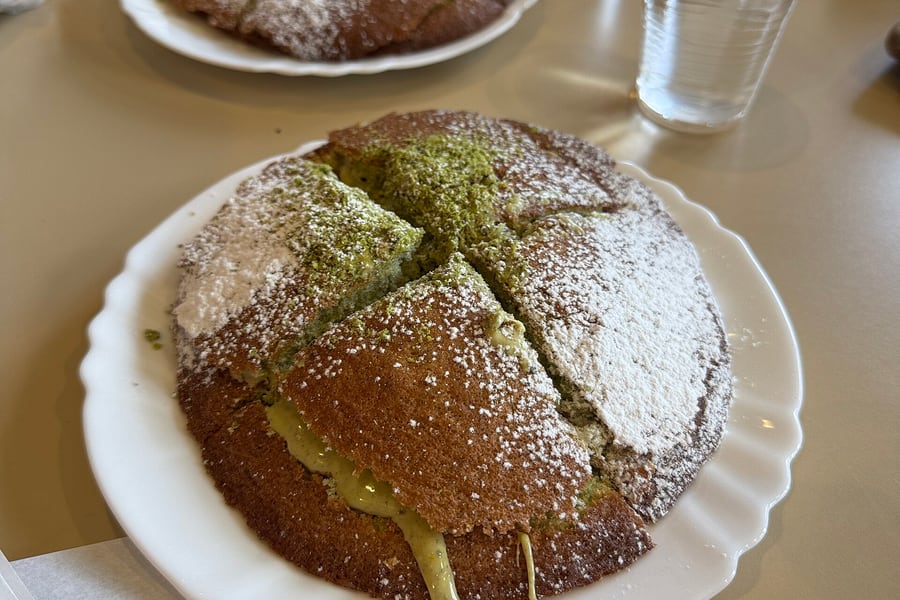 Codas / Wikimedia Commons · CC BY-SA 4.0 · cropped
Pistachios at Bronte
Bronte's pistachios are grown on the lava itself and the town trades on little else. The station is the line's high point at 835 m, and the walk down into town is the reason a lot of people ride at all.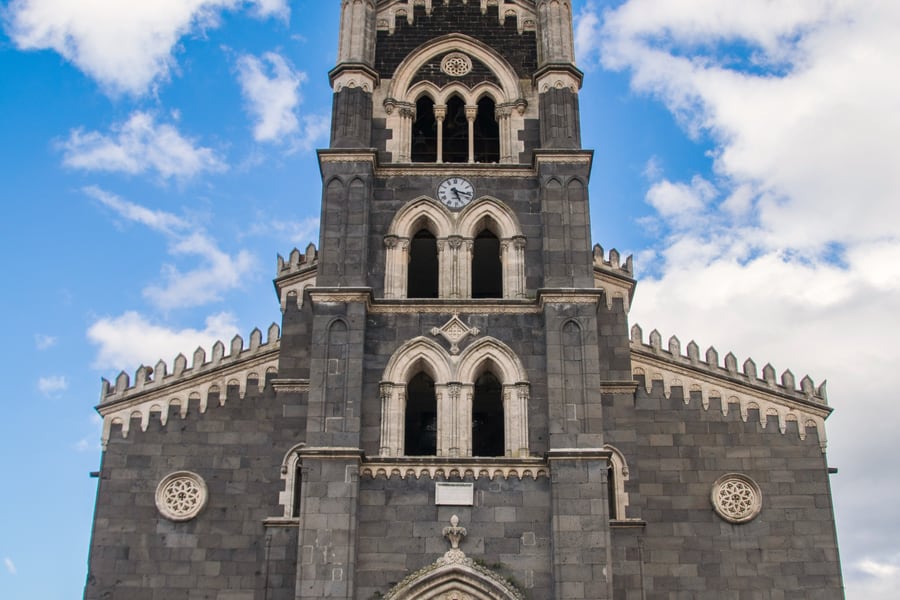 Antonio Pignato / Wikimedia Commons · CC BY-SA 4.0 · cropped
Randazzo in black stone
The northern terminus is a town built almost entirely out of Etna — black lava masonry, medieval churches, and the volcano filling the sky behind it. It is the closest inhabited town to the summit, and it has survived every eruption so far.Timetables
The Circumetnea runs a workaday local timetable, not a tourist one, and the single most important thing to know is that there are no trains on Sundays or public holidays. Turning up on a Sunday is the classic mistake.
The current timetable took effect on 16 March 2026 — the same day the Paternò–Santa Maria di Licodia section closed for metro works — and FCE publishes it as a downloadable PDF rather than a searchable journey planner. There is no online booking.
As of the operator's published guidance, the pieces of the day fit together like this:
| Leg | Operator | Departures |
|---|---|---|
| Nesima (metro) → S. Maria di Licodia Sud | FCE coach | 06:15 · 08:00 · 09:40 · 12:00 · 13:05 · 14:30 · 15:30 |
| S. Maria di Licodia Sud → Randazzo | FCE train | 07:24 · 09:06 · 10:45 · 13:05 · 14:13 · 15:39 · 16:37 |
| Randazzo → Giarre & Riposto | FCE coach | 06:30 · 11:50 · 15:20 |
| Giarre → Catania Centrale | Trenitalia | every ~35 min, about 30 min |
Read that table as a warning as much as a plan: only the middle row is a train. The coach and train departures are not tightly matched to each other, so the practical approach is to pick your train first and then work backwards to the coach that gets you there in time — and to check the return coach from Randazzo before you commit, because there are only three of them.
Times taken 17 July 2026 from the operator's own diagram, "Come utilizzare la linea ferroviaria partendo da Catania" (opens in a new tab). FCE publishes both the diagram and its timetables as images and PDFs that change without much notice, so confirm on circumetnea.it (opens in a new tab) or by phone on +39 095 541111 before you travel.
Tickets
The Circumetnea is a public transport railway, so ticketing is refreshingly unglamorous: you buy a fare and you get on. There is no online booking, no reservation and no first class — tickets come from FCE offices and authorised sellers, the tobacconists and bars near the stations. Buy the return before you set off, because the smaller stations up the line are unstaffed.
The awkwardness is not the ticket but the stitching. The circuit round Etna is now four separate legs under three operators, and nobody sells "a ticket round Etna" however much the internet implies otherwise. If you only want the railway — and the railway is the point — the simple version is a return from Santa Maria di Licodia Sud to Randazzo. Checked against circumetnea.it (opens in a new tab), July 2026.
Book your tickets
FCE railway ticket
Santa Maria di Licodia Sud – Randazzo
The surviving train ride, up Etna's western flank through Adrano, Bronte and Maletto to Randazzo. Seven departures a day, no service on Sundays or public holidays. Tickets from FCE ticket offices and authorised sellers — there is no online booking.
Book Tickets (opens in a new tab, on Ferrovia Circumetnea)via Ferrovia CircumetneaThe full Etna circuit
Metro + FCE coach + train + Trenitalia
FCE publishes a step-by-step diagram for doing the whole ring from Catania using its coaches either side of the surviving railway, with a Trenitalia train home from Giarre. Read it before you go — the connections are the whole puzzle.
Book Tickets (opens in a new tab, on Ferrovia Circumetnea)via Ferrovia CircumetneaRail Passes
No rail pass covers the Circumetnea. Interrail's table of railway companies names the Ferrovia Circumetnea among the trains excluded in Italy. Every fare is bought from FCE or its authorised sellers.
A pass still gets you to Catania. Trenitalia's regional and InterCity trains in Sicily are included, so a pass covers the run into Catania, and the Circumetnea is a cheap local fare on top.
Checked October 2026 against interrail.com (opens in a new tab).
Places to Visit
The Circumetnea runs through a landscape that is entirely the product of one mountain, and the towns along it are worth getting off for. Randazzo is the reason to ride to the end; Bronte is the reason to arrive hungry. Walking either of them after an hour on a narrow-gauge railcar is a genuinely strange experience — everything is the same colour as the volcano you have just been circling.
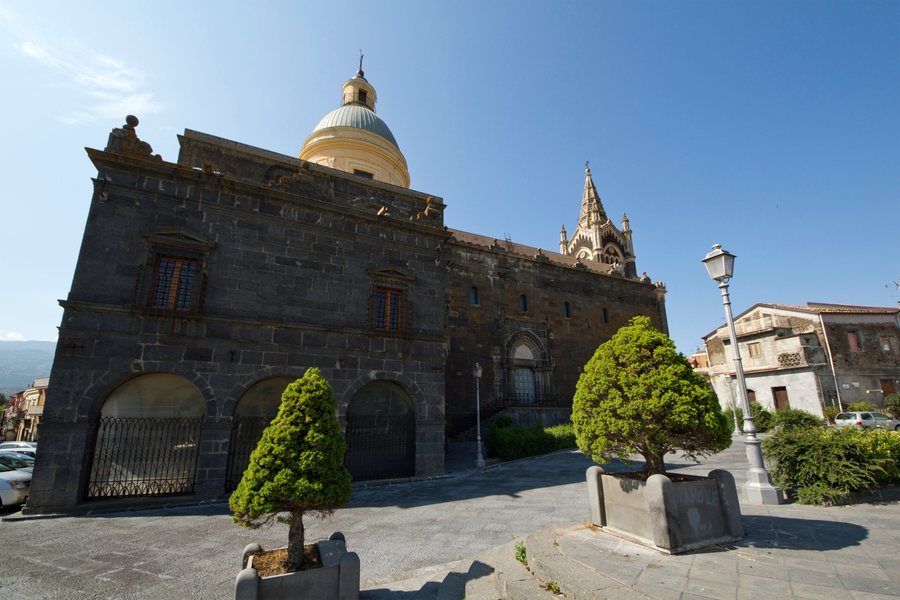 trolvag / Wikimedia Commons · CC BY-SA 3.0 · cropped
Randazzo
The reason to ride to the end of the line. Randazzo is built almost entirely out of Etna — black lava masonry from the church doorways down to the kerbstones — and stands closer to the summit than any other inhabited place on the volcano, yet the flows have so far always parted around it. Three great churches, each once serving a different linguistic community (Latin, Greek and Lombard), sit within a few streets of each other.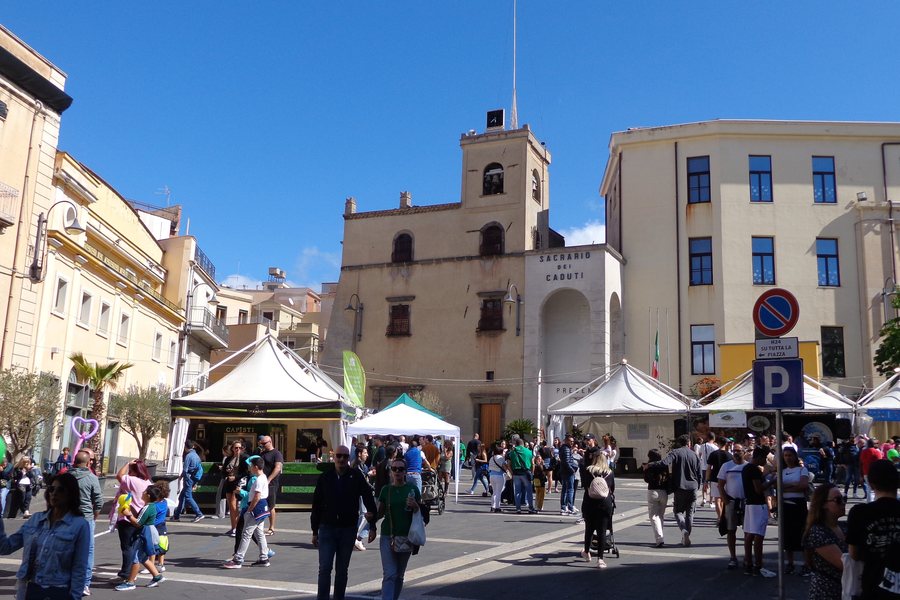 Effems / Wikimedia Commons · CC0 · cropped
Bronte
The line's high point at 835 metres, and a one-crop town that is unapologetic about it. Bronte's pistachios grow directly on the old lava, which is why they are worth what they are and why every shop window is a variation on the same green theme. The harvest is biennial, in odd-numbered years, and the town is at its liveliest around the late-September Sagra del Pistacchio.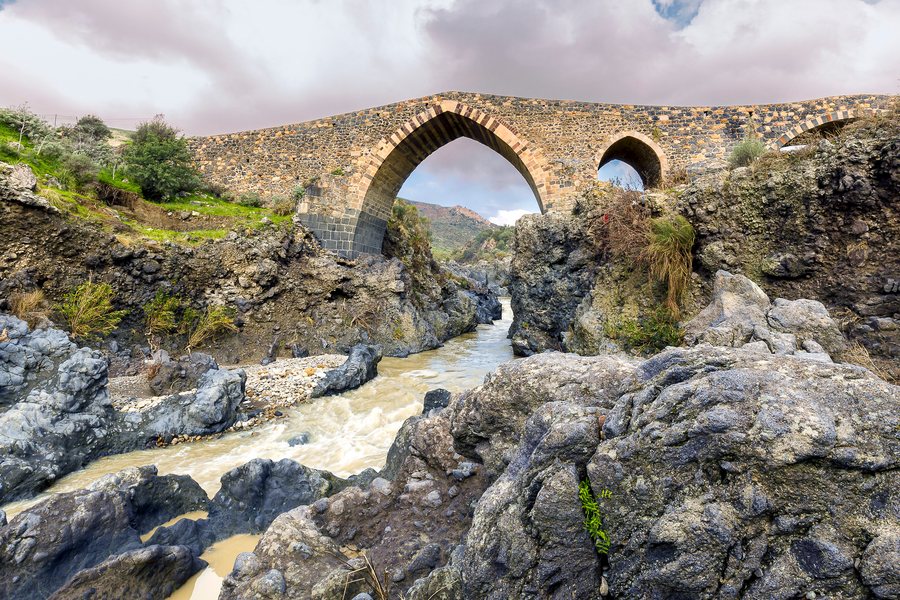 Vincenzo Miconi / Wikimedia Commons · CC BY-SA 4.0 · cropped
Ponte dei Saraceni
A single pointed medieval arch thrown across the Simeto near Adrano, a short way off the line, on foundations older still. It is a beautiful and slightly forgotten thing — a stone bridge in a gorge of black rock with the river running clear beneath it, and almost nobody there.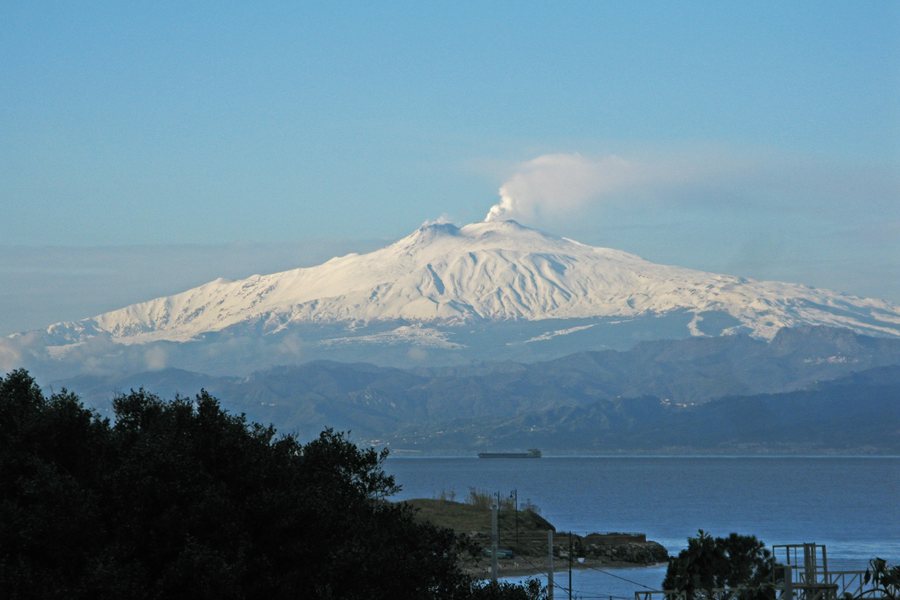 Jacopo Werther / Wikimedia Commons · CC BY-SA 4.0 · cropped
Etna
The railway spends all day introducing you to Etna and never once climbs it. ⚠️ The cable car and the guided summit trips go from Rifugio Sapienza on the southern side, reached by bus from Catania and not from anywhere on this line — so the Circumetnea and the summit are two separate days out. What the railway gives you instead is the volcano's flanks: its farms, its towns, and the astonishing black ground they are all built on.Where to Sleep
Most people ride the Circumetnea as a day trip from Catania, and that is the sensible plan. The city has the widest choice of rooms in eastern Sicily at every price, it is where the metro leg of the circuit begins, and it puts you within reach of the airport. Stay anywhere near the Giovanni XXIII or Stesicoro metro stops and the early FCE coach from Nesima becomes easy rather than heroic.
If you would rather wake up on the mountain, Randazzo is the atmospheric choice — small, black-stoned, and quiet once the day visitors have gone. There are B&Bs and agriturismi in and around the town, several of them working farms on the lava, and staying over turns the awkward coach connection back to Giarre from a problem into tomorrow's plan. Bronte offers something similar on the western flank, usually with pistachio groves attached.
For a softer landing, the Ionian coast around Giarre, Riposto and Taormina sits at the far end of the ring, where FCE's coaches meet the Trenitalia main line. It is a good base if you want the volcano by day and the sea in the evening, and it makes the circuit easy to ride in the opposite direction — coach up to Randazzo, train down to Santa Maria di Licodia, metro into Catania.
One practical note wherever you stay: the railway does not run on Sundays or public holidays, so build your nights around that rather than discovering it at a locked station.
Questions or corrections
Planning this trip and stuck on something, or spotted a time, fare or detail that has changed? Send us a message about Ferrovia Circumetnea. We read every one, and we update this page when something has changed.