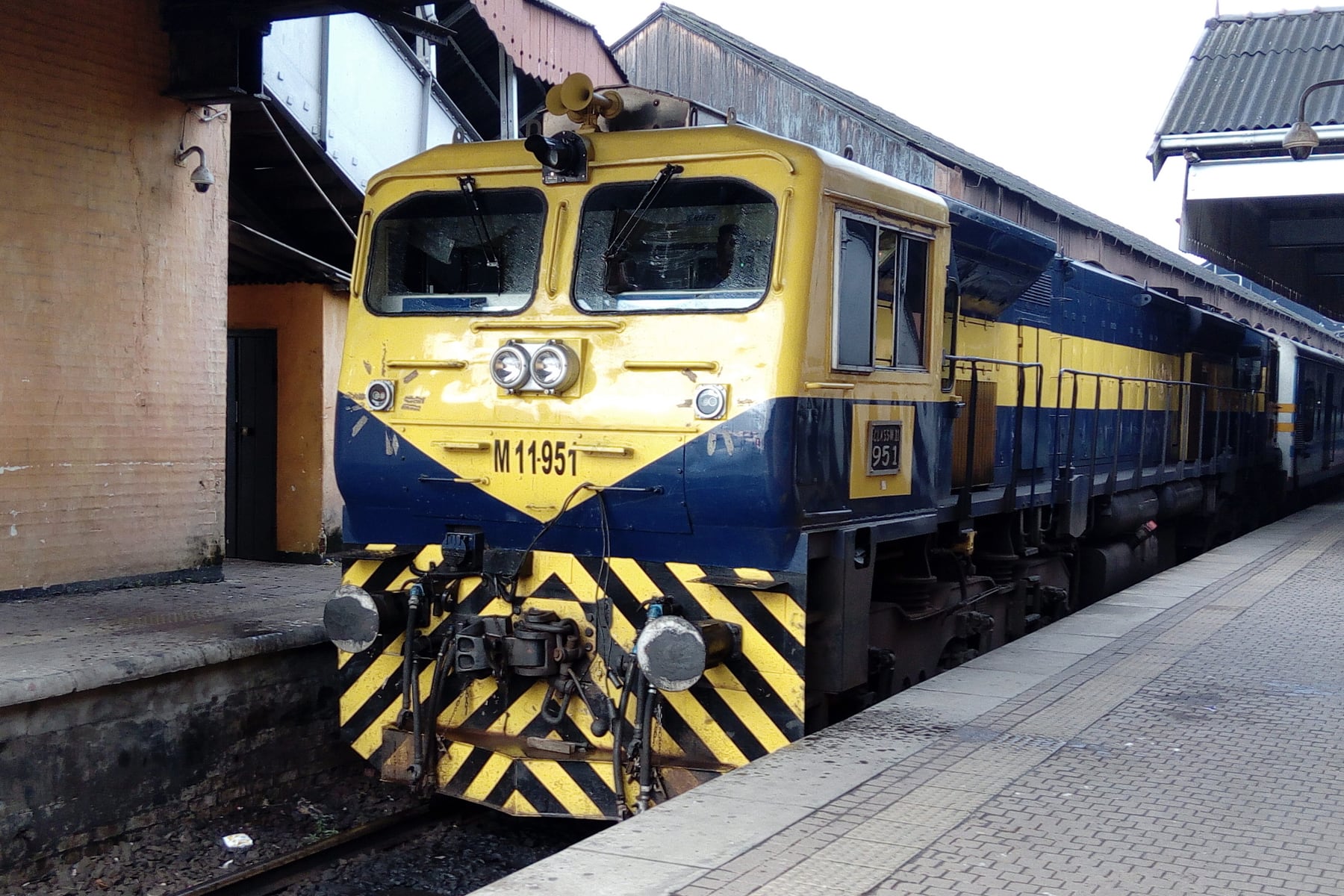
The Batticaloa Line
Dilshan / Wikimedia Commons · CC BY-SA 4.0 · 2019 · cropped
- DistanceAbout 350 km
- Duration8 hr 51 min
- Best seasonThree trains each way, daily · all seats reserved
Introduction
For six and a half years there were no trains east of Polonnaruwa. The line to Batticaloa closed on 31 October 1996 and did not carry a passenger again until 12 April 2003, and when Cyclone Ditwa tore the network apart in November 2025 it was shut a second time — reopened to Polonnaruwa that December and through to the coast in the new year. It is a railway that has had to be given back to the east twice in thirty years.
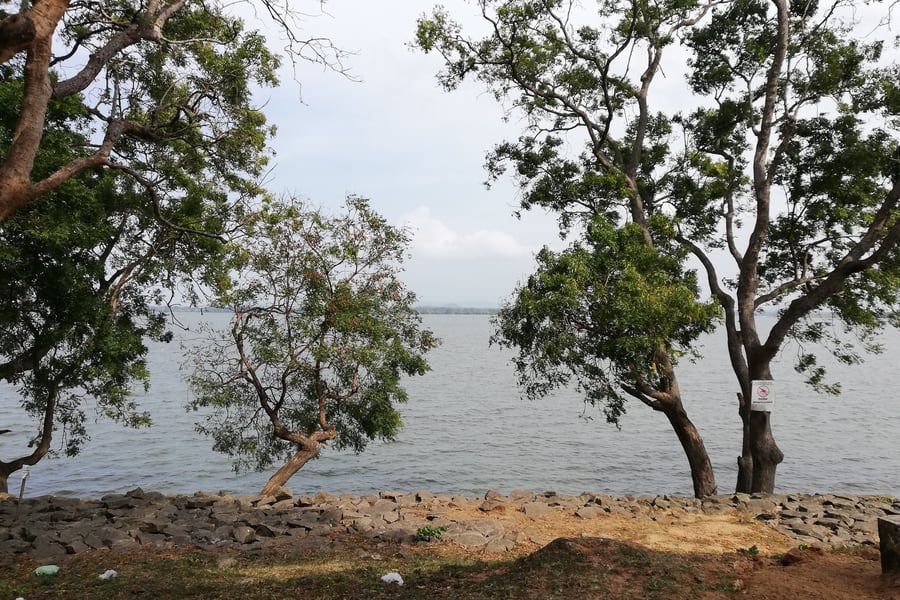
What it crosses is the part of Sri Lanka nobody photographs. The Batticaloa line leaves the Colombo–Jaffna main line at Maho, 138 kilometres out, and turns east into the dry zone: no tea, no hairpins, no viaducts in the mist. Instead there are the great irrigation tanks — Kala Wewa, Minneriya, Parakrama Samudra — built between the fifth and twelfth centuries and still holding water; scrub forest with elephants in it; the ruined capital at Polonnaruwa; and the Mahaweli, the island's longest river, crossed on a girder bridge at Manampitiya. It opened in 1928 as a light railway, built for locomotives with light axle loads, and was rebuilt for broad-gauge working in the 1950s.
About 350 kilometres end to end, and three trains a day each way. The quickest does it in eight hours and fifty minutes; the slowest is the one most people take, because it runs overnight with reclining sleeperette seats and puts you on the east coast before five in the morning.
The Journey
The first ninety minutes are not on this line at all. Trains leave Colombo Fort and run north up the Main Line through Gampaha to Polgahawela, where the Kandy trains turn right for the hills, and then on to Kurunegala at 95.3 kilometres — a town under a line of bare gneiss domes, the biggest of which is called the elephant rock. This is the busy, green, coconut-and-paddy half of the country, and it is the last of it you will see.
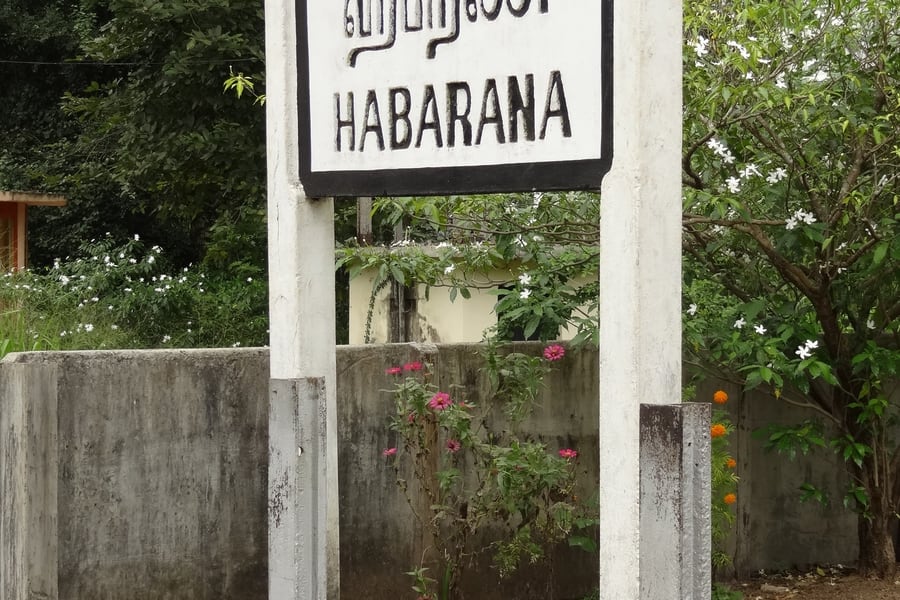
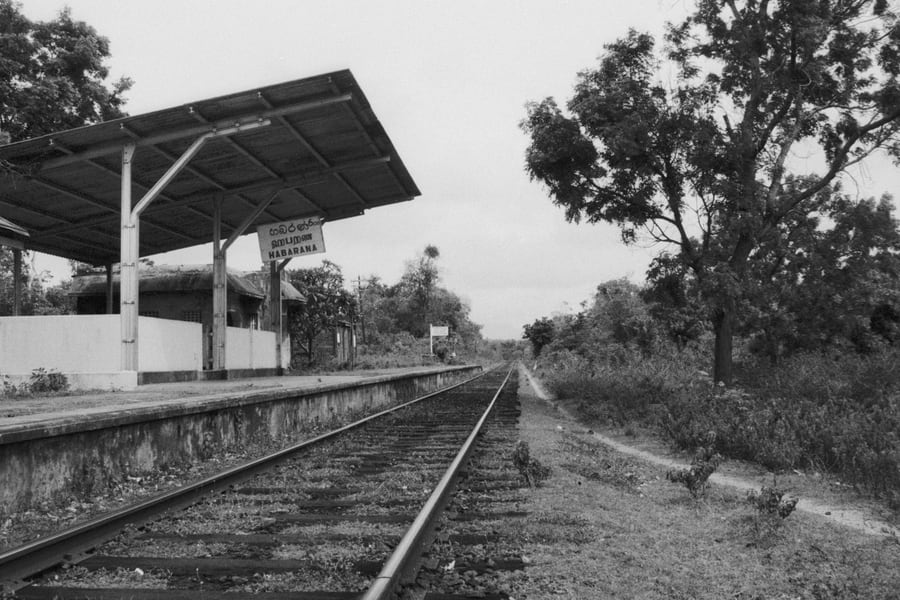
At Maho, 138.6 kilometres out, the Jaffna line carries straight on north and the Batticaloa line swings east. The change is immediate. Within half an hour the train is in the dry zone: thin forest, red earth, palmyra and tamarind, and the long low bunds of tanks that were old when Anuradhapura was new. Kalawewa and Awukana are request-sized halts on the edge of a fifth-century reservoir; Kekirawa is the junction for Anuradhapura by road; Habarana is where everyone with a booking at Sigiriya gets off, and its platform is a strip of concrete, a corrugated canopy and a nameboard in three scripts.
Gal Oya, Polonnaruwa and the Mahaweli
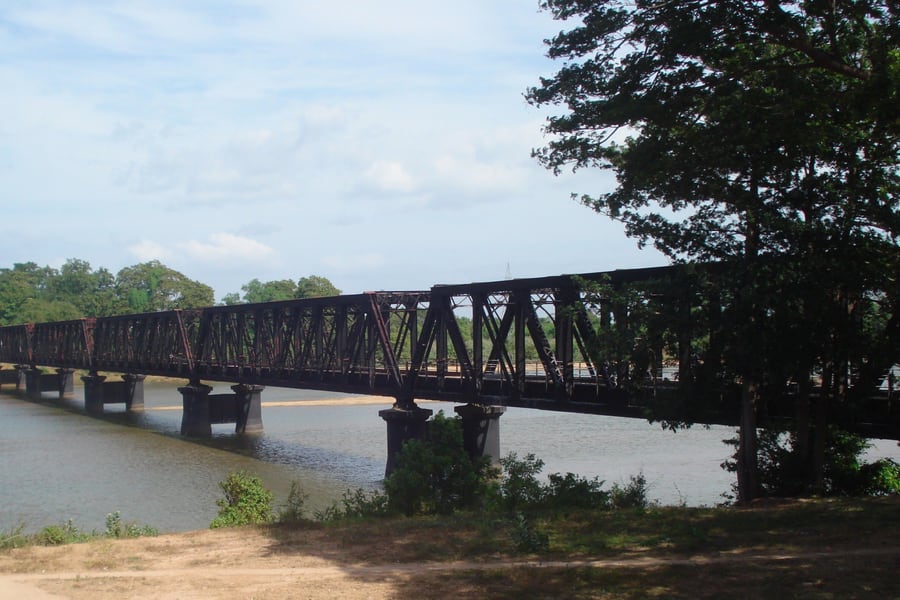
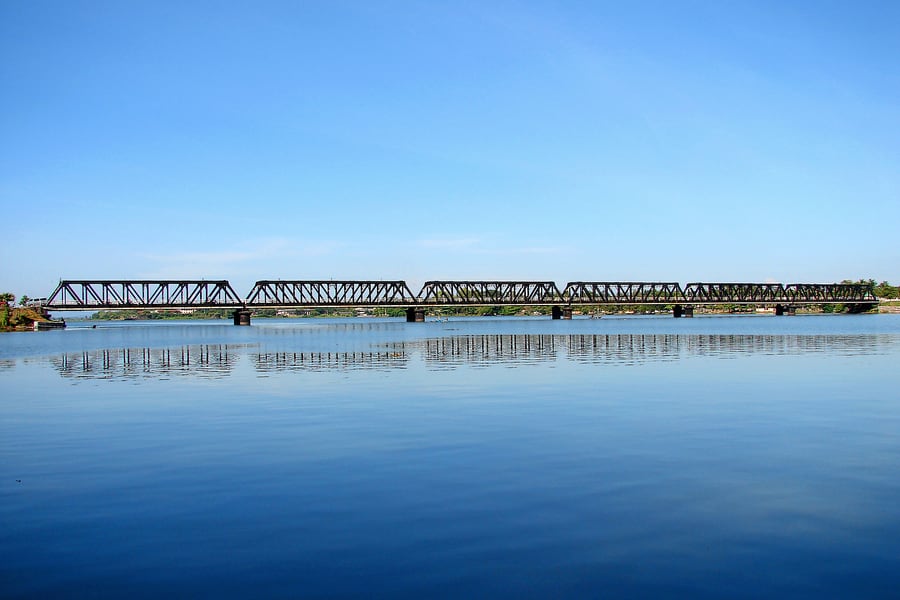
Gal Oya Junction is the only junction on the branch, and the Trincomalee line leaves there for the north-east coast. Beyond it the railway runs down into the old irrigated heartland: Hingurakgoda, then Polonnaruwa, capital of the island for a century and a half from 1070 and now a World Heritage site of brick dagobas and carved rock. A few minutes further on the line crosses the Mahaweli at Manampitiya on a steel girder bridge on masonry piers — the longest river in Sri Lanka, and the one real engineering set-piece of the route.
The last eighty kilometres are the emptiest. Welikanda and Punani sit in country that was fought over and then abandoned; the scrub comes to the ballast shoulder; the line is single track, and the points at the passing loops are still thrown by hand from a lever frame beside the rails. Then the land flattens, the coconut comes back, and at Valachchenai — the paper-mill town, and the road turn for the Pasikuda beaches — you are on the coast. Eravur, and then the rails end at Batticaloa, on a spit between the Indian Ocean and a lagoon seventy kilometres long.
What runs
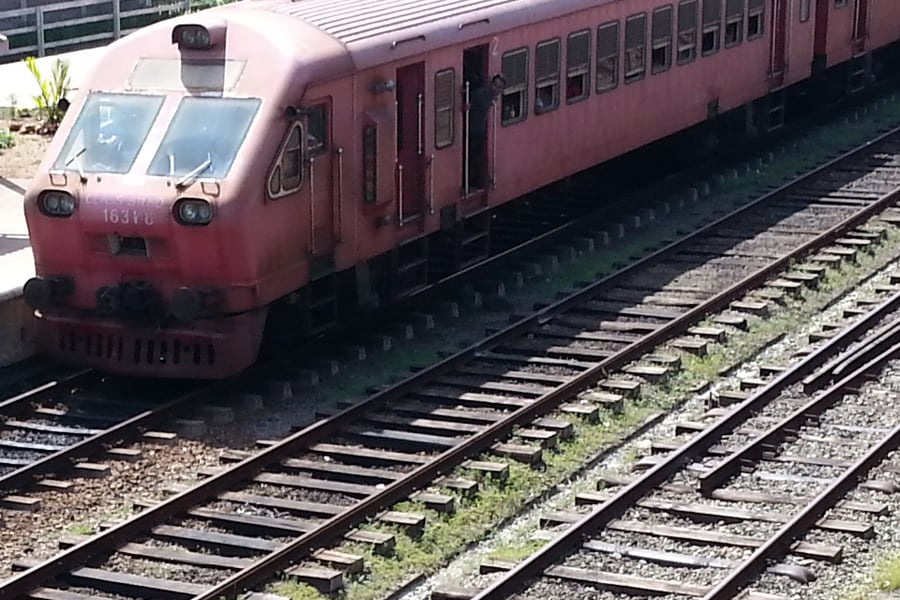
There is no special stock and no observation car. The day train is a reserved second-class formation; the afternoon Batticaloa Special carries third-class reserved seats and, on some dates, an air-conditioned saloon; the night intercity, the Meenagaya, has one air-conditioned first-class carriage and two carriages of second-class sleeperettes — reclining seats, not berths. Motive power is whatever the depot has, from the Class M11s — the newest diesel-electrics on the network, and the class that stands at the head of the train in the photograph above — back through the M8s and M10s to power cars old enough to have faded from maroon to pink.
Along the route
 Daibo Taku / Wikimedia Commons · CC BY 3.0 · 2012 · cropped
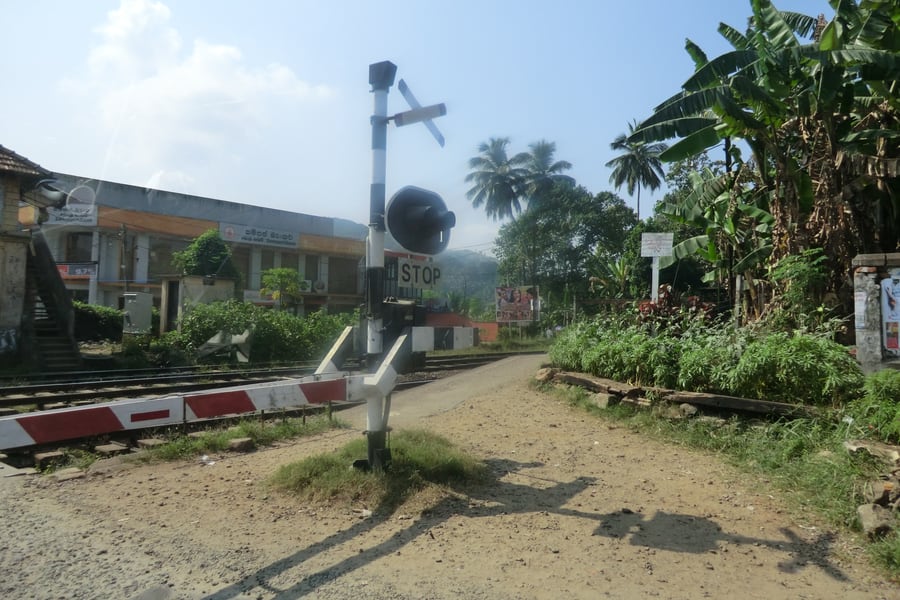
A branch, not a main line
The Batticaloa line leaves the Colombo–Jaffna rails at Maho, 138.6 kilometres out, and runs 212 kilometres east. Everything before that is shared with the northern trains.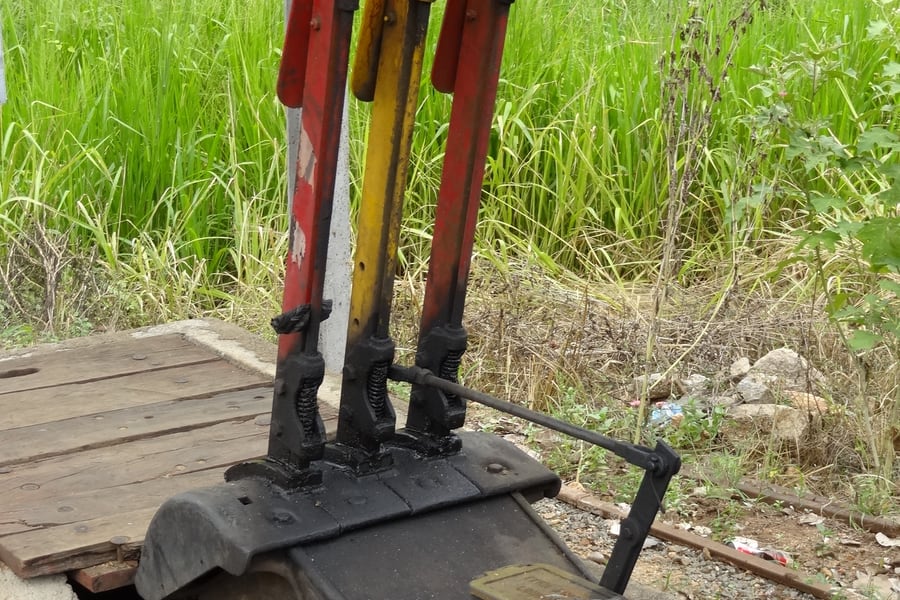 Cherubino / Wikimedia Commons · CC BY-SA 3.0 · 2013 · cropped
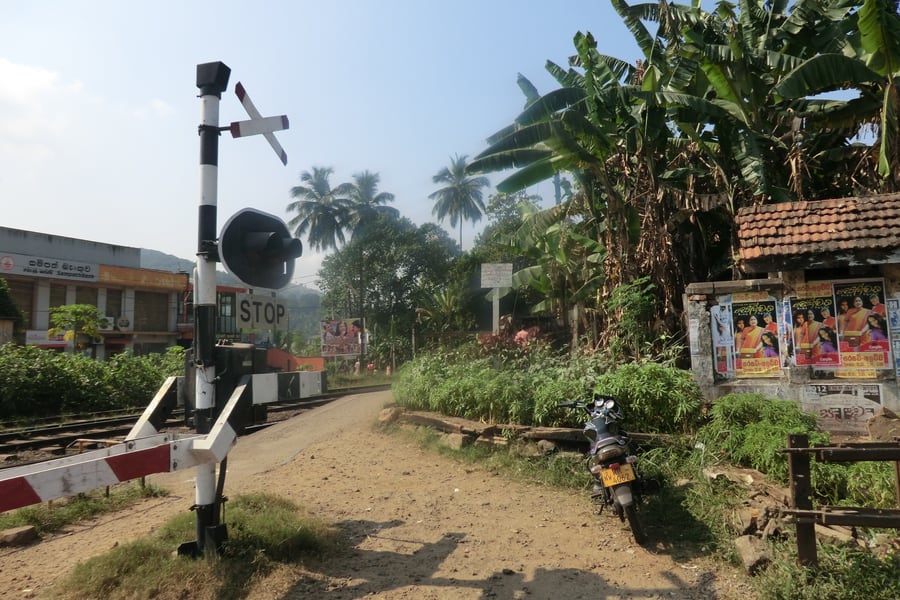
Thrown by hand
It is single track the whole way, and the points at the passing loops are still worked from a lever frame standing in the grass beside the rails.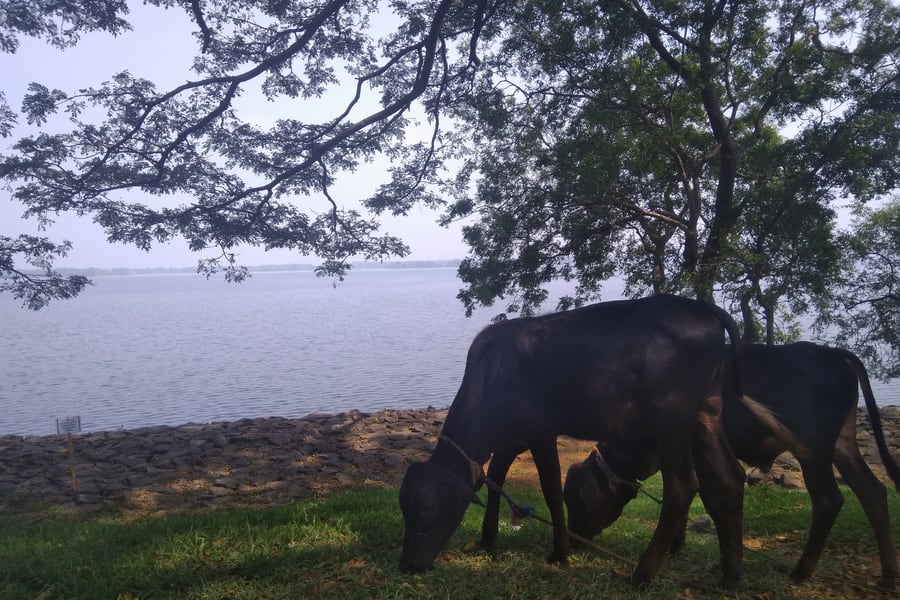 Movinnnyaaa / Wikimedia Commons · CC BY-SA 4.0 · 2018 · cropped
The tank country
From Maho the train is in the dry zone, running past reservoirs built between the fifth and twelfth centuries and still irrigating the paddy either side of the line.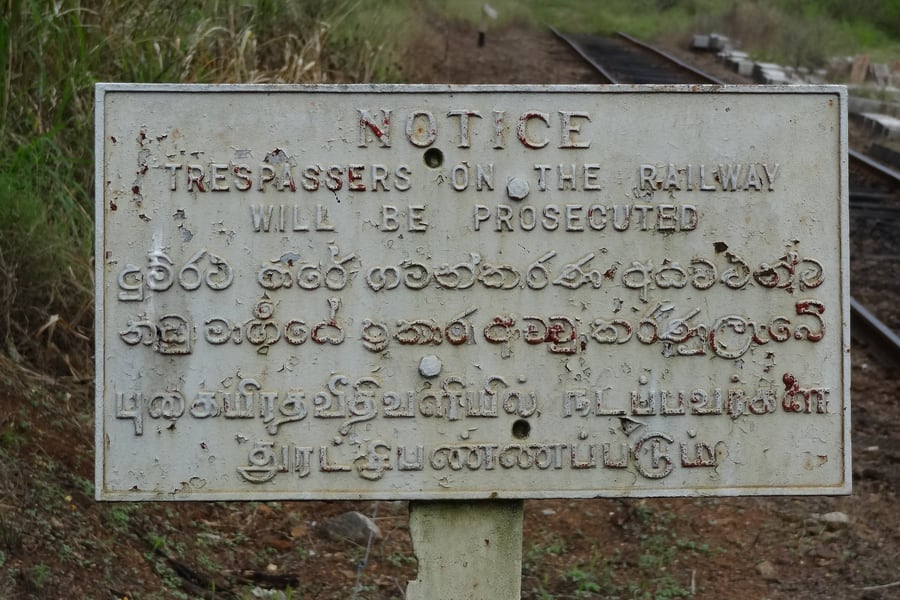 Cherubino / Wikimedia Commons · CC BY-SA 3.0 · 2013 · cropped
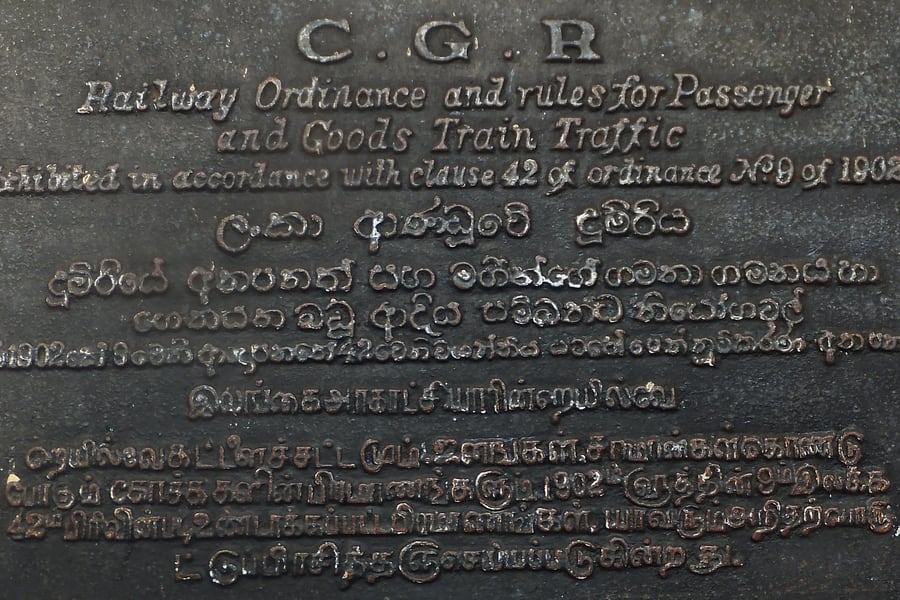
Trespassers will be prosecuted
Cast-iron notices in Sinhala, Tamil and English still stand at the lineside, put there when this was the Ceylon Government Railway and left where they were.A bit of history
Culture & experiences along the way
 Anton Croos / Wikimedia Commons · CC BY-SA 4.0 · 2010 · cropped
The singing fish
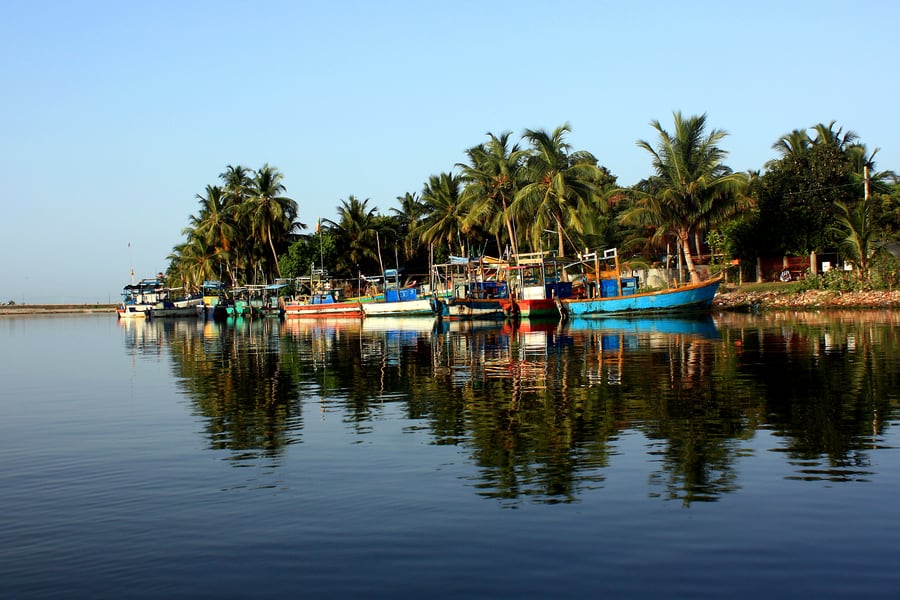
Batticaloa calls itself the land of the singing fish, for a sound heard from the lagoon by the Kallady bridge on still moonlit nights between about April and September — a plucked note that carries up an oar blade held to the ear. Two priests recorded it in 1954 and Radio Ceylon broadcast the tape; nobody has settled what makes it.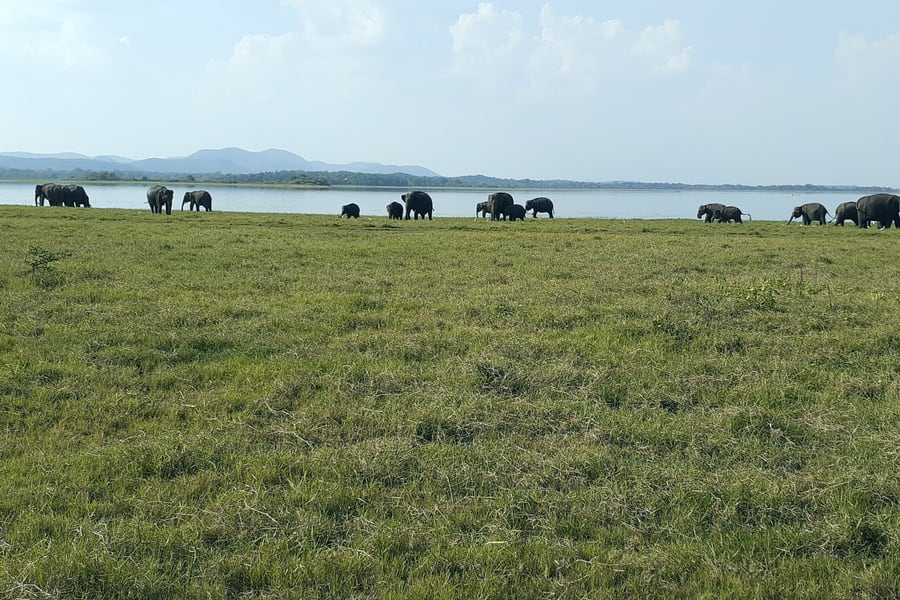 GNethma / Wikimedia Commons · CC BY-SA 4.0 · 2019 · cropped
The Gathering at Minneriya
When the dry season draws the tank down, hundreds of elephants come out of the surrounding forest onto the grass that the falling water leaves behind, and feed there in the open. It is one of the largest assemblies of wild Asian elephants anywhere, and it happens within a short drive of Habarana station.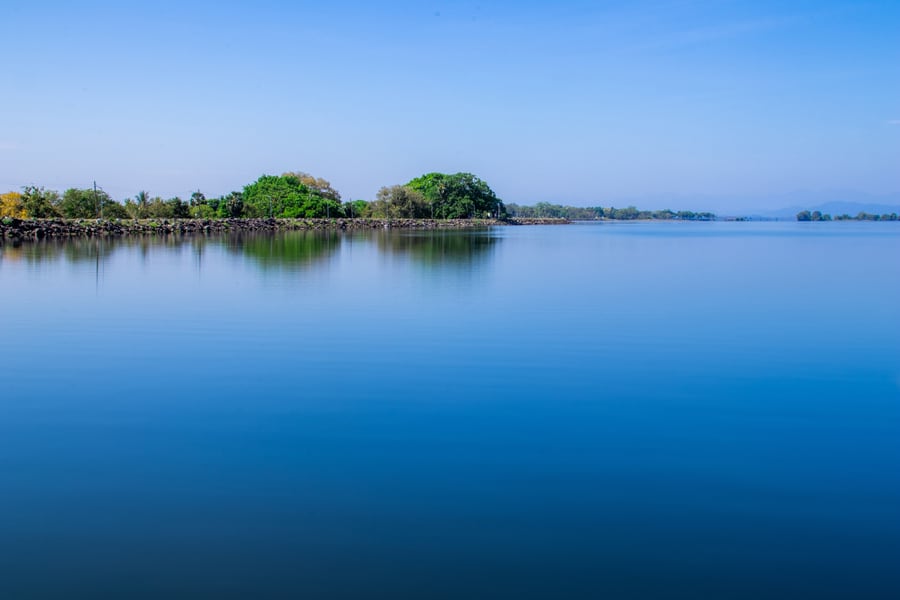 Samal Nadeeshan / Wikimedia Commons · CC BY-SA 4.0 · 2019 · cropped
Parakrama Samudra
The Sea of Parakrama, built in the twelfth century by joining older reservoirs into one sheet of water at Polonnaruwa, and still irrigating the fields it was dug for. Walking the bund at dusk, with the water on one side and the ruined capital on the other, is the thing to do with an evening here.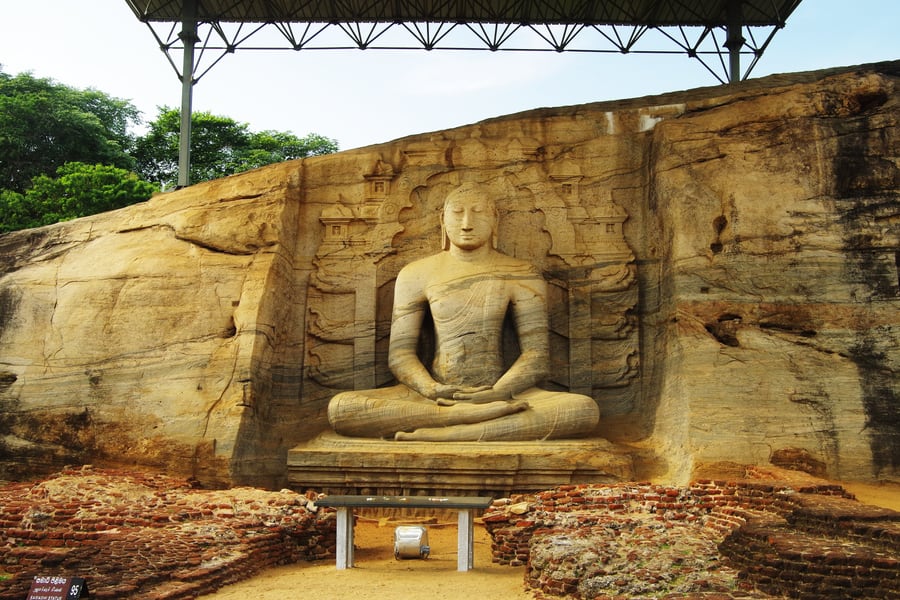 Balou46 / Wikimedia Commons · CC BY-SA 3.0 · 2014 · cropped
Gal Vihara
Four Buddhas cut from a single wall of granite on the northern edge of Polonnaruwa — seated, standing, reclining fourteen metres, and one more in a cave hollowed out of the same rock. The grain of the stone runs straight through the figures, which is the whole point of them.Timetables
Three trains work the whole line each way, every day. Sri Lanka Railways publishes no general timetable — its schedule page has read "Page Under Development" since June 2026 — so the times below come from its own reservation system, read on 23 September 2026, backed by the media notice it issued on 23 February 2026 to restart the night intercity. Seats are sold at seatreservation.railway.gov.lk (opens in a new tab).
East — Colombo Fort to Batticaloa
| Station | 6011 Intercity | 6075 Batticaloa Special | 6079 Meenagaya |
|---|---|---|---|
| Colombo Fort | 06:00 | 15:15 | 19:00 |
| Kurunegala | 08:06 | 16:51 | 20:47 |
| Polonnaruwa | 12:30 | 21:13 | 01:45 |
| Batticaloa | 14:51 | 23:34 | 04:47 |
West — Batticaloa to Colombo Fort
| Station | 6076 Batticaloa Special | 6012 Intercity | 6080 Meenagaya |
|---|---|---|---|
| Batticaloa | 01:30 | 06:10 | 20:00 |
| Polonnaruwa | 03:29 | 08:24 | 22:30 |
| Kurunegala | 07:16 | 13:06 | 03:22 |
| Colombo Fort | 08:45 | 14:58 | 05:17 |
Colombo Fort figures are departures and the rest are arrivals, which is how the reservation system quotes them. The booking system prints the two Meenagaya workings as 6679 and 6680.
The night train, station by station
The Meenagaya is the only one of the three whose full timetable the department has published. This is its own notice of 23 February 2026, and these are departure times:
| Eastbound, 6079 | Departs | Westbound, 6080 | Departs |
|---|---|---|---|
| Colombo Fort | 19:00 | Batticaloa | 20:00 |
| Gampaha | 19:33 | Eravur | 20:21 |
| Polgahawela | 20:24 | Valachchenai | 20:51 |
| Kurunegala | 20:49 | Punani | 21:20 |
| Maho | 22:13 | Welikanda | 22:02 |
| Moragollagama | 22:47 | Manampitiya | 22:28 |
| Awukana | 23:13 | Polonnaruwa | 22:44 |
| Kalawewa | 23:25 | Hingurakgoda | 23:13 |
| Kekirawa | 23:42 | Gal Oya | 23:48 |
| Gal Oya | 01:17 | Kekirawa | 00:53 |
| Hingurakgoda | 01:48 | Kalawewa | 01:08 |
| Polonnaruwa | 02:14 | Awukana | 01:14 |
| Manampitiya | 02:30 | Moragollagama | 01:40 |
| Welikanda | 03:04 | Maho | 02:50 |
| Punani | 03:33 | Kurunegala | 03:36 |
| Valachchenai | 04:02 | Polgahawela | 04:01 |
| Eravur | 04:32 | Gampaha | 04:55 |
| Batticaloa | 04:51 | Colombo Fort | 05:31 |
⚠️ These are seven months old and the reservation system now shows the train a few minutes earlier at most stops, and half an hour earlier into Polonnaruwa. Treat the intermediate times as the shape of the run rather than the minute.
Which one to take
The Intercity, 6011 and 6012, is the daylight train and the fastest: 8 hr 51 min out, 8 hr 48 min back, all of it reserved second class. The Meenagaya is the one to book — it is the only train on the line with sleeperette seats and an air-conditioned first-class carriage, and it gets you to either end at the start of a day rather than the end of one. The Batticaloa Special is the cheapest and the least convenient: third class reserved, out in the late afternoon and in at half past eleven at night, back at half past one in the morning.
⚠️ This railway closes. Cyclone Ditwa cut it in November 2025; services returned to Polonnaruwa on 18 December 2025 and the department's own recovery programme set 1 January 2026 for the whole line. Closures are posted on its media notices page (opens in a new tab), usually in Sinhala and Tamil, and that page is worth a look before you book.
Tickets
Every seat worth having on this line is reserved and sold per train through the department's own booking site, which works without an account: you can search, see the classes and count the seats left before you sign in. Fares below were read from it on 23 September 2026.
The three trains carry different stock, so choosing a class is really choosing a train. Only the Batticaloa Special sells third class; only the Meenagaya sells sleeperettes; the daylight Intercity is reserved second class and nothing else. An air-conditioned saloon appears on the Special and on the night train on some dates and not others, which is the reservation system allocating carriages rather than a pattern you can plan around.
Book your tickets
H.M. Lahiru Udara / Wikimedia Commons · CC BY-SA 4.0 · 2017 · croppedReserved second class, the daylight Intercity
LKR 2,000 to Batticaloa · LKR 1,600 to Polonnaruwa · LKR 1,300 to Kurunegala
Fifty-six numbered seats, and the only class 6011 and 6012 carry.
Book Tickets (opens in a new tab, on railway.gov.lk)via railway.gov.lkAstronomyinertia / Wikimedia Commons · CC BY-SA 3.0 · 2011 · croppedSecond-class sleeperette, the Meenagaya
LKR 2,000 to Batticaloa, Polonnaruwa or Kurunegala
Ninety-six reclining seats on the night train, and the scarcest thing on this railway.
Book Tickets (opens in a new tab, on railway.gov.lk)via railway.gov.lkCherubino / Wikimedia Commons · CC BY-SA 3.0 · 2013 · croppedThird class reserved, the Batticaloa Special
LKR 1,400 to Batticaloa · LKR 1,200 to Polonnaruwa · LKR 1,000 to Kurunegala
Ninety seats on 6075 and 6076, the cheapest way through and the slowest hours to travel.
Book Tickets (opens in a new tab, on railway.gov.lk)via railway.gov.lkRail Passes
There is no rail pass for Sri Lanka, and none would help here.
Sri Lanka Railways is a single state operator with no national rover ticket and no part in any international pass scheme. Interrail and Eurail do not reach the country and the Indian passes stop at the Palk Strait. Besides the ordinary passenger, the department's booking system recognises only warrant holders, pension warrant holders and season-ticket holders, and all three are domestic entitlements rather than products a visitor can buy.
Nor would a pass pay for itself. The whole 350 kilometres from Colombo Fort to Batticaloa costs LKR 2,000 in reserved second class and LKR 1,400 in third, and the sleeperette on the night train is LKR 2,000 — among the cheapest long-distance rail travel anywhere. With three trains a day there is nothing to hop on and off.
What matters on this line is the seat, not the fare. Every class sold here is reserved and allocated per train, the night train's sleeperettes are the scarcest thing on it, and the ticket window at Batticaloa is no substitute for a booking made before the train left Colombo.
Checked against Sri Lanka Railways' reservation system, September 2026.
Places to Visit
This is the one Sri Lankan railway that runs through the whole of the ancient irrigated interior. Between Maho and the coast it passes within a few kilometres of a fifth-century colossal Buddha, a thirteenth-century rock capital, a twelfth-century one, and three reservoirs old enough that the engineering in them is studied rather than admired. Everything below is reachable from a station on the line — though not every one of those stations is a booked stop for the through trains, and Yapahuwa in particular is reached from Maho rather than from its own platform.
 A.Savin, Wikipedia · Free Art License · 2020 · cropped
Kurunegala
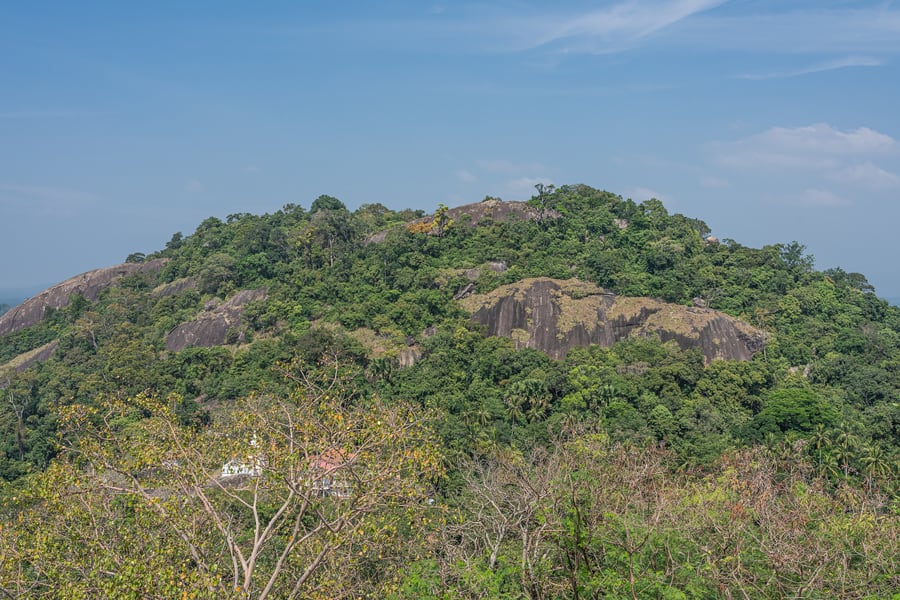
A town in the lap of a line of bare gneiss domes named for the animals people thought they resembled. Ethagala, the elephant rock, is the big one and you can walk up it for the view over the tank and the town. Kurunegala was the island's capital for about fifty years at the turn of the fourteenth century — long enough to leave ruins, not long enough to leave a city.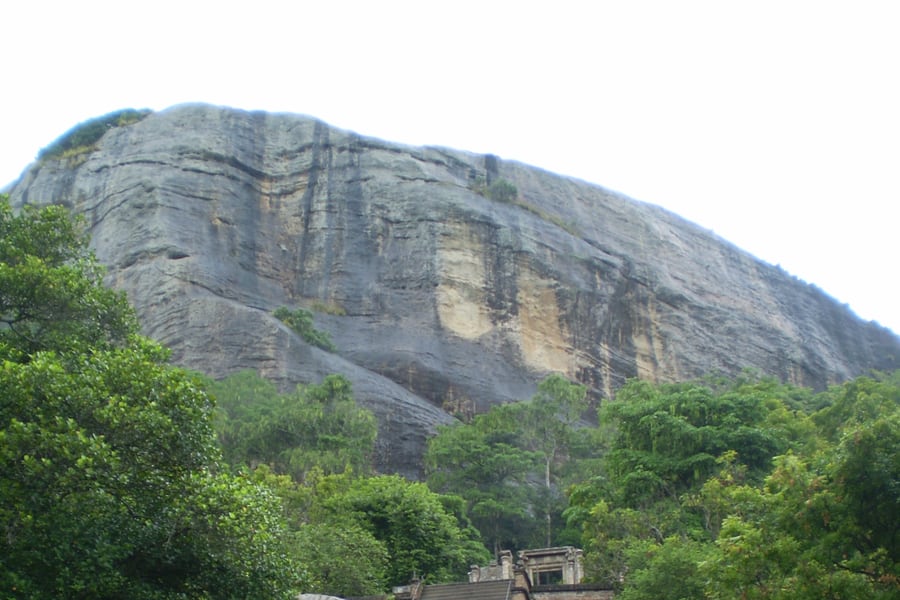 Chindemaya / Wikimedia Commons · Public domain · cropped
Yapahuwa
A granite outcrop rising ninety metres out of flat country, fortified in the 1270s as a refuge for the Tooth Relic and abandoned barely a decade later. What survives is the ornamental stairway up the south face, carved with lions and dancers, and the walls and ditches that ring the base. It is a short road journey from Maho, where the line turns east.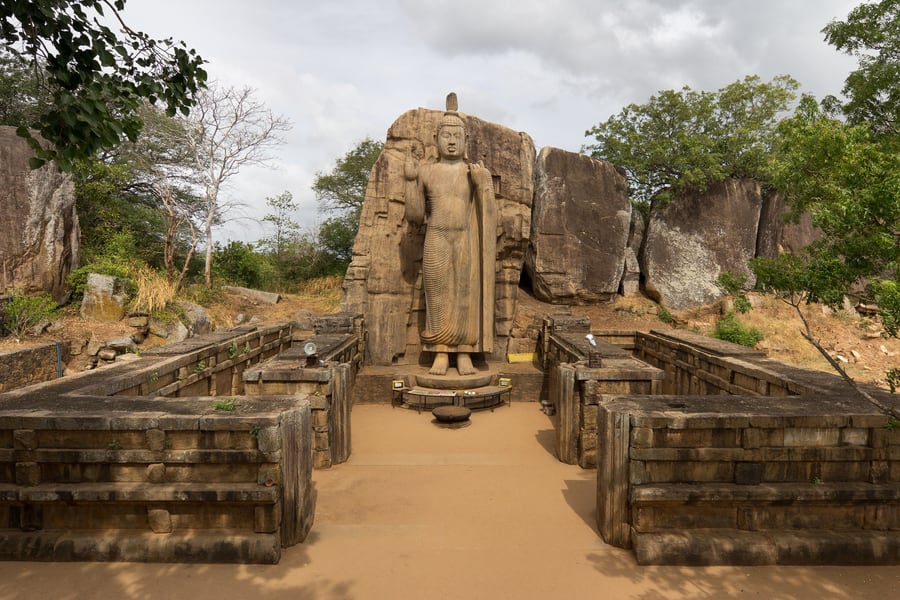 Carlos Delgado / Wikimedia Commons · CC BY-SA 4.0 · 2014 · cropped
Avukana
A standing Buddha twelve metres high, cut from the living granite of the quarry it stands against and left joined to the rock behind it. It dates from the fifth century and looks out over Kala Wewa, the reservoir built at the same time. The station is called Awukana and the statue is a walk from the platform.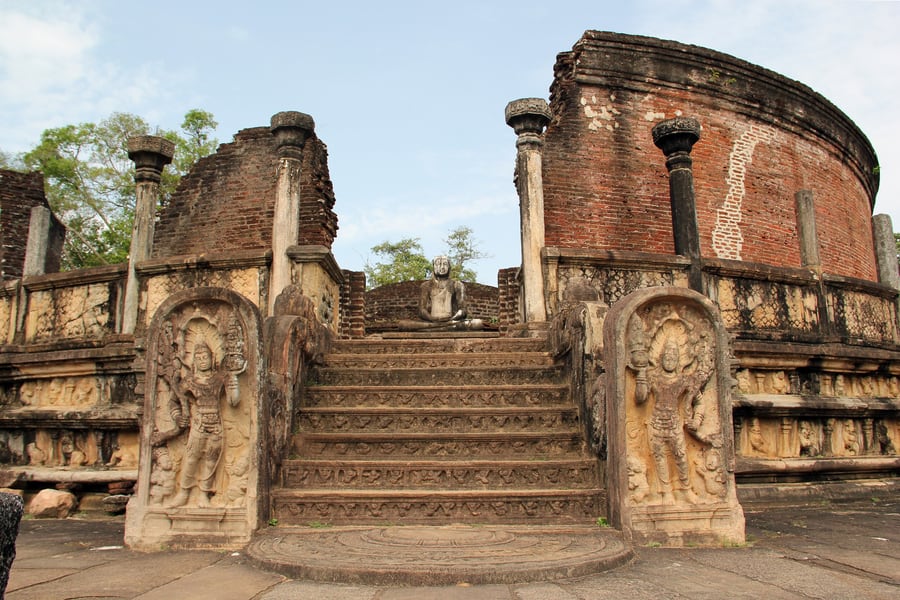 Antony Stanley / Wikimedia Commons · CC BY-SA 2.0 · 2012 · cropped
Polonnaruwa
Capital of the island from 1070 for a century and a half, and the reason to break this journey. The quadrangle holds the Vatadage, a circular relic house with guardstones and a moonstone at every stair; around it are the audience hall, the brick dagobas and the irrigation works of a city that fed itself. A World Heritage site, and the station is in the modern town beside it.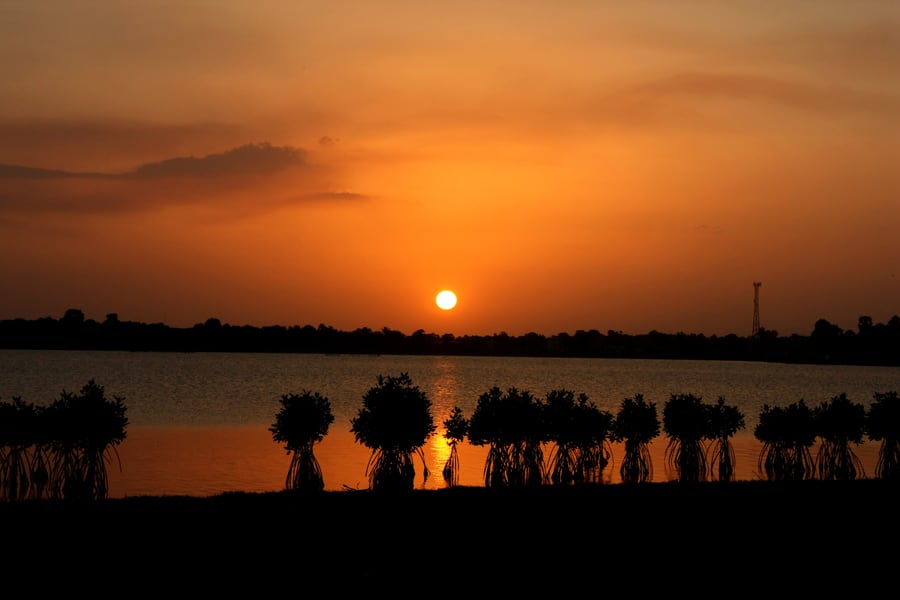 Anton Croos / Wikimedia Commons · CC BY-SA 4.0 · 2010 · cropped
Batticaloa
A town on a spit between the Indian Ocean and a lagoon seventy kilometres long, reached over the old iron bridge at Kallady. It is the provincial capital of the east, Tamil-, Muslim- and Sinhala-speaking in turn, and it was cut off from the railway for more than six years of the war. The lagoon is what people come for, and what they come to hear.Where to Sleep
The line makes two obvious overnight stops besides its ends. Habarana is the one everybody uses, because it is the station for Sigiriya, Dambulla and the Minneriya elephant gathering, and because it is eight hours from Colombo and three from the coast. Valachchenai is the station for the Pasikuda beaches, twenty minutes short of Batticaloa and the reason most people are on the train at all.
At the Colombo end the useful thing is to be able to walk to the train. The 06:00 Intercity and the 19:00 Meenagaya both start from Colombo Fort, and the Fort district has somewhere to sleep two minutes from the concourse.
Where to stay
Grand Oriental Hotel
2 York Street, Colombo — beside Colombo Fort station
The hotel's own account of itself: built in 1837, a Dutch hospital before it became a hotel, on York Street in the Fort district with many of its rooms looking over the working port. Colombo Fort station, where the Intercity and the Meenagaya both start, is two minutes' walk.
Check Availability (opens in a new tab, on grandoriental.lk)via grandoriental.lkCinnamon Lodge Habarana
Habarana — beside the lake, for Sigiriya and Minneriya
A hundred and thirty-eight rooms in wooded grounds beside a tank, with forest trails and a butterfly garden, within reach of Sigiriya, Dambulla and the Minneriya elephant gathering. Habarana station is the halfway stop on this line.
Check Availability (opens in a new tab, on cinnamonhotels.com)via cinnamonhotels.comThe Bay, an Uga Experience
Pasikuda — on the beach, twenty minutes from the terminus
Studios, suites and villas on what the resort calls three kilometres of private beach on the east coast, with Polonnaruwa and Batticaloa both within reach. Valachchenai, the station for Pasikuda, is the last stop before Batticaloa.
Check Availability (opens in a new tab, on ugaresorts.com)via ugaresorts.comQuestions or corrections
Planning this trip and stuck on something, or spotted a time, fare or detail that has changed? Send us a message about The Batticaloa Line. We read every one, and we update this page when something has changed.