Sri Lanka
Bergentroll / Wikimedia Commons · CC0 · cropped
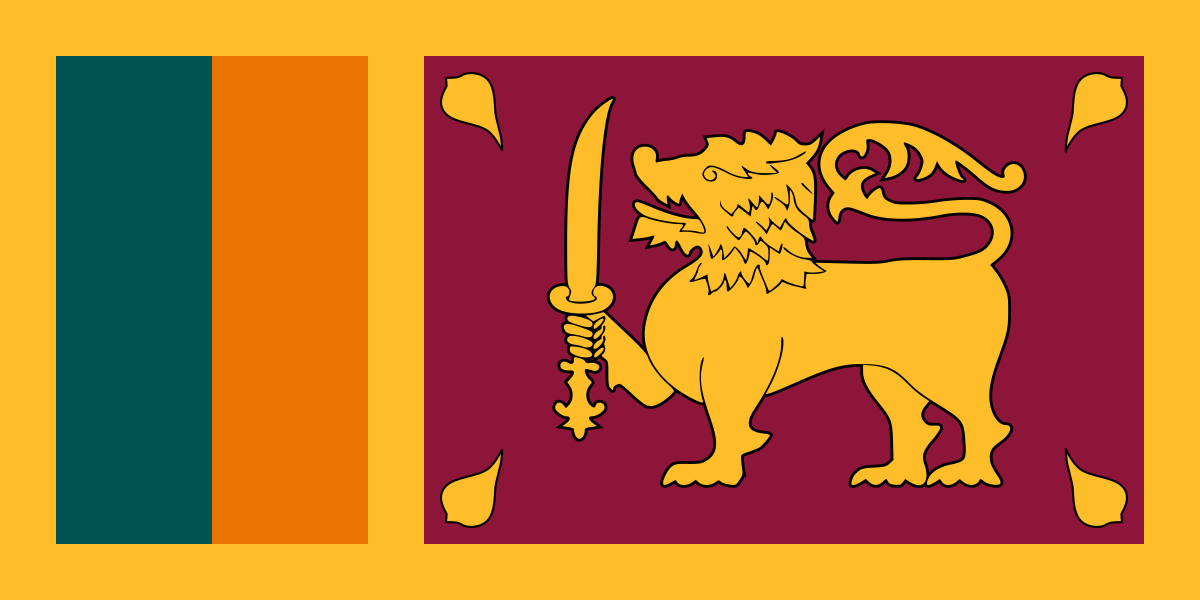
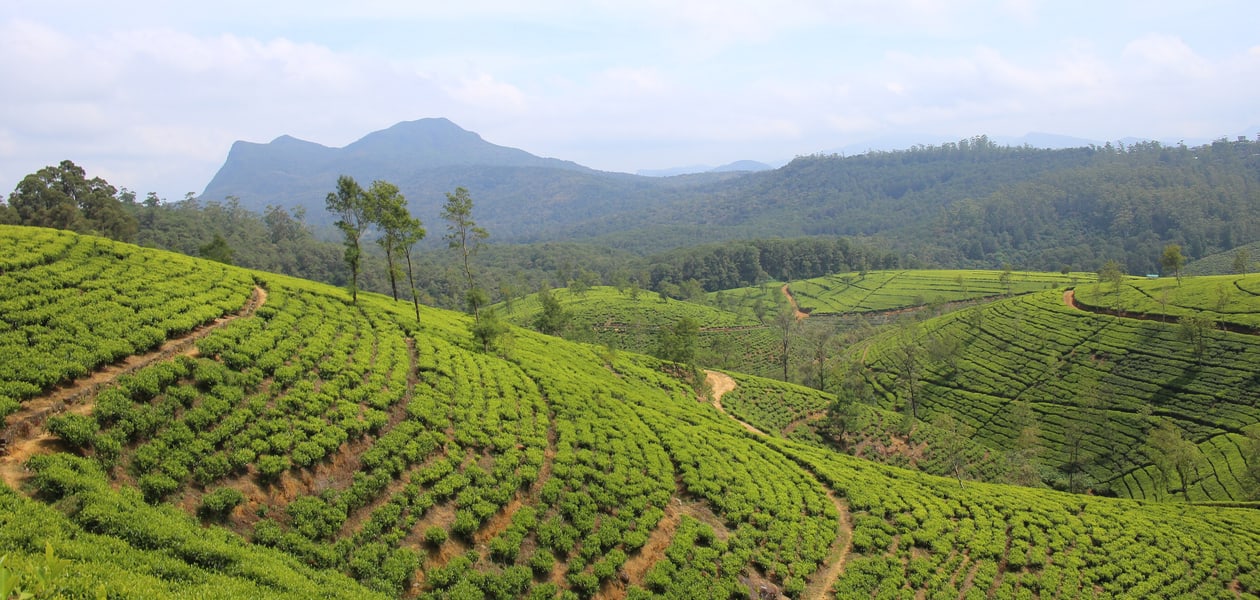
Sri Lanka is an island of 65,610 km² in the Indian Ocean, separated from southern India by the Gulf of Mannar and the Palk Strait, with a population of about 22 million. Colombo is the executive and judicial capital and the largest city; the legislature sits next door at Sri Jayawardenepura Kotte. Coastal plain runs almost all the way round the island, and the interior rises into a compact block of hill country, topping out at 2,524 m on Pidurutalagala — cool, wet, and terraced with the tea estates the British planted after coffee failed. The Sinhalese are about three-quarters of the population and Tamils about a seventh.
Rail travel here is an inheritance from that tea economy and it is still one of the country's great pleasures. Sri Lanka Railways was founded in 1858 as the Ceylon Government Railway and runs the whole network today: 1,508 km of 1,676 mm broad gauge, radiating from Colombo to the north, the east and the hill country. The Main Line's climb into the hills past waterfalls, tea estates and pine forest is the reason many people come, and the operator markets scenic trains of its own over it.
Rail journeys in Sri Lanka
The Batticaloa Line
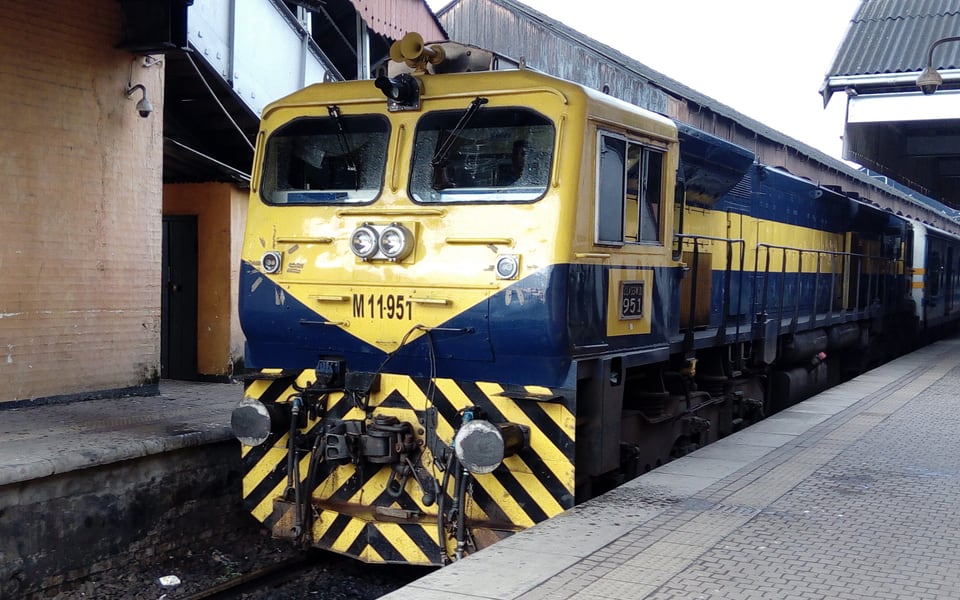
Colombo to the east coast across the dry zone — the line the war closed for six and a half years, and a night train with sleeperette seats.
View journey →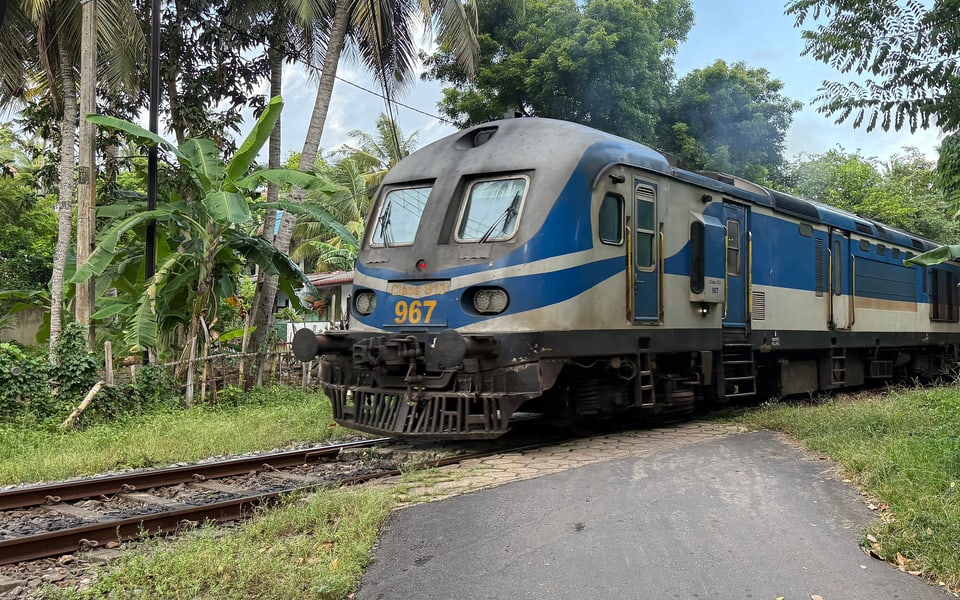
The Coast Line
A hundred and fifty-seven kilometres down the Indian Ocean shore, Colombo Fort to Matara, on a railway that doubles as the island's sea wall.
View journey →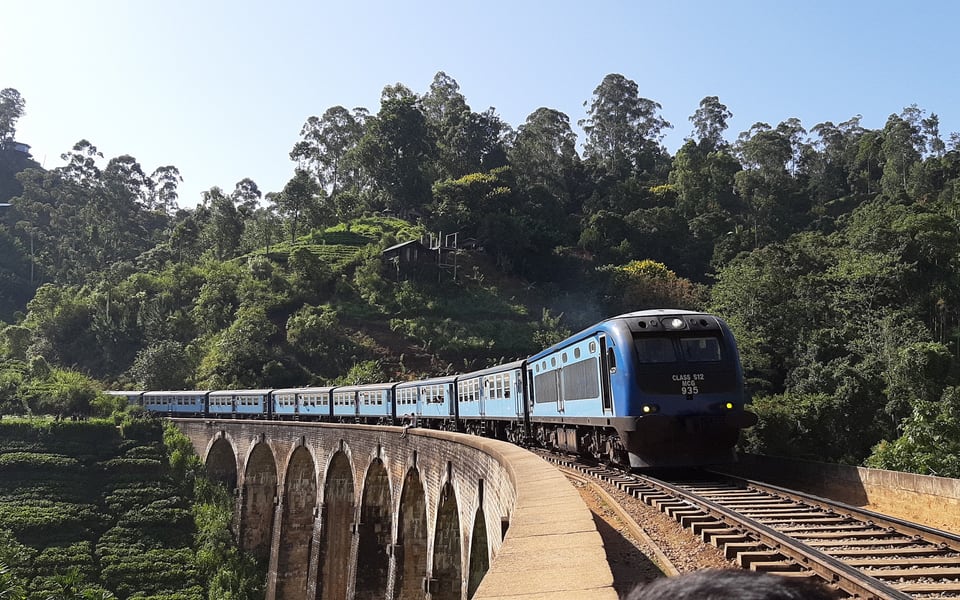
The Hill Country Line
Eighty-five kilometres of broad gauge over the roof of Sri Lanka, across the summit at Pattipola and down through the tea to Ella and Badulla.
View journey →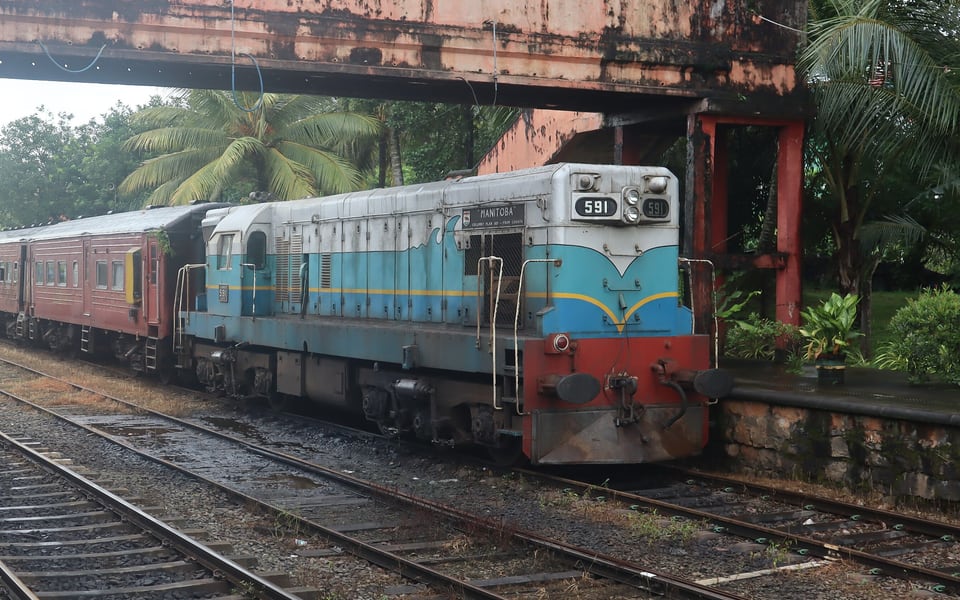
The Kelani Valley Line
Colombo's commuter railway into the rubber country — built narrow gauge in 1902, rebuilt broad in the 1990s, and still ending at Avissawella.
View journey →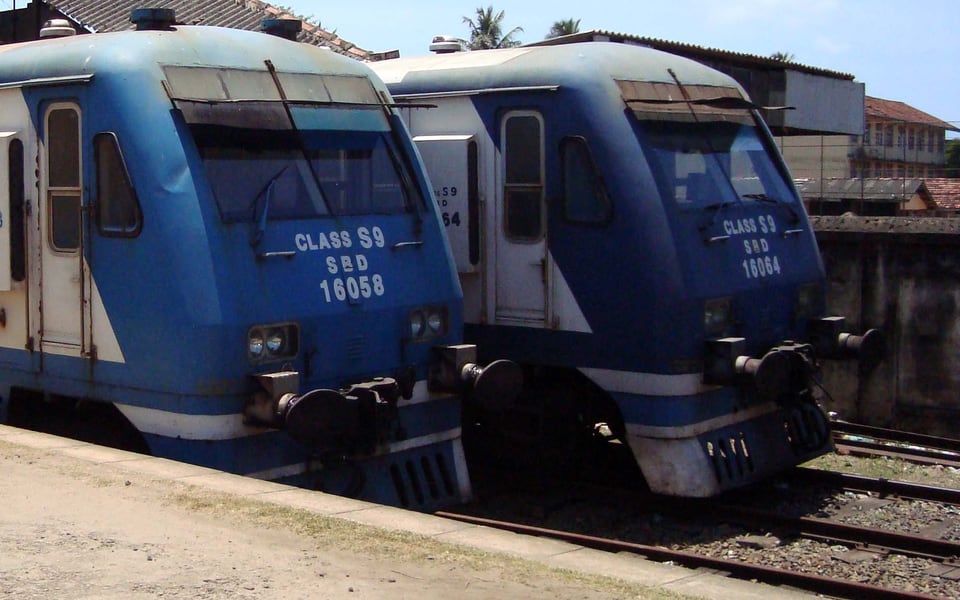
The Puttalam Line
Colombo's line up the north-west coast, past the airport and the Negombo lagoon to Chilaw and the salt flats of Puttalam — LKR 260 for 135 km.
View journey →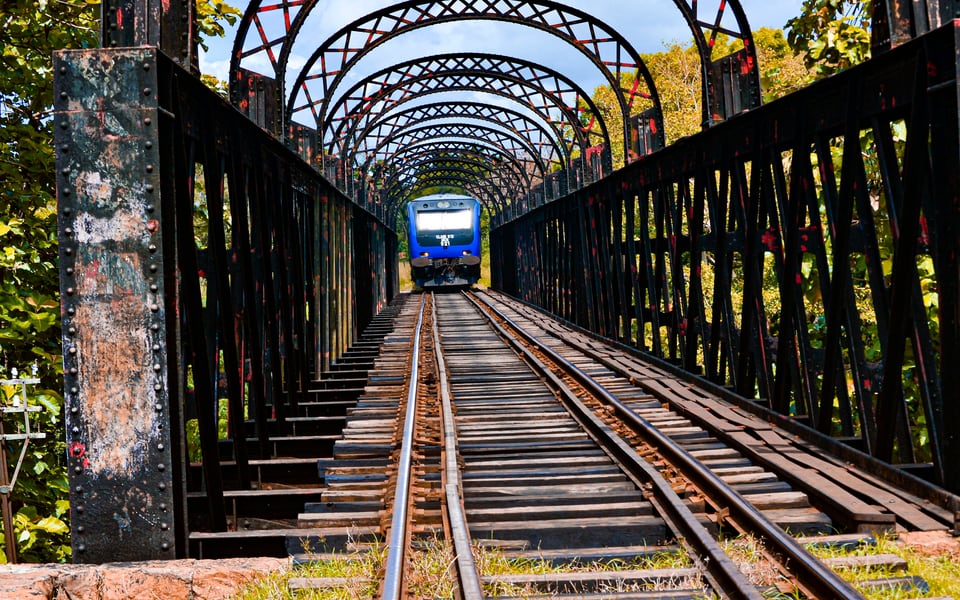
The Talaimannar Line
Colombo to the pier where the boat train to India once met the ferry — the rails reach the sea, and nothing has sailed from them since the early 1980s.
View journey →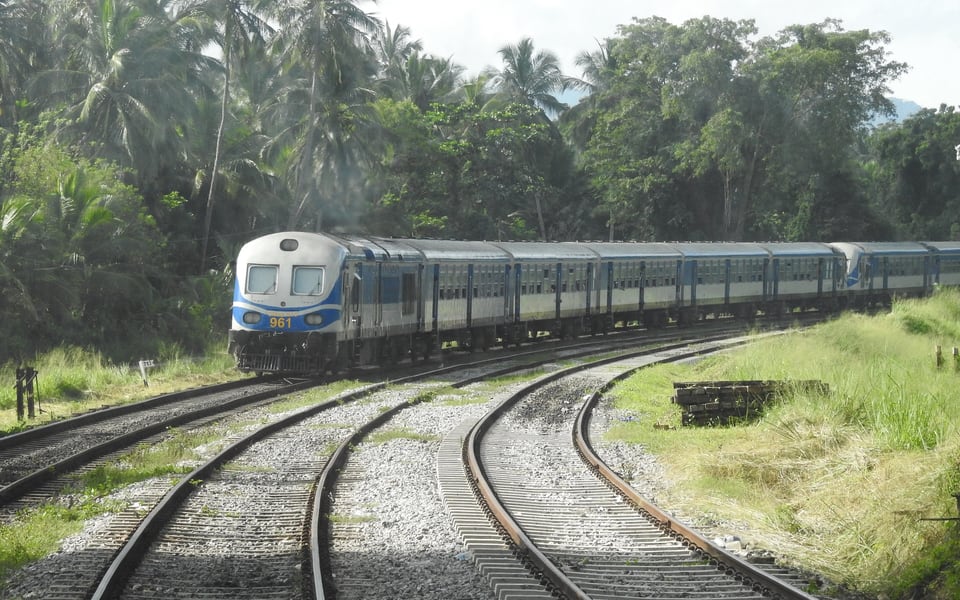
The Yal Devi
Colombo to Jaffna on the line the war closed for twenty-four years — the last train in could not come back, and it was 2014 before another one did.
View journey →Good to know
Why was the railway built?
To move the crop down from the hills. The Ceylon Government Railway opened in 1858, first to serve the coffee plantations of the interior and then, after coffee leaf rust arrived in Ceylon in 1867 and ruined that industry, the tea estates that replaced it. The alignment was driven up into the highlands for commercial reasons; the fact that it is one of the most beautiful railway rides in Asia was a by-product.
Which capital is the capital?
Both, in different senses. Colombo is the executive and judicial capital, the largest city and the commercial centre; the parliament sits at Sri Jayawardenepura Kotte, a neighbouring town, which is the legislative capital. Nearly everything a visitor deals with, including the main railway station, is in Colombo.
What languages will I meet on the railway?
Sinhala and Tamil are both official, and English is widely used and is the language Sri Lanka Railways publishes in on its own website. Station nameboards are commonly trilingual, which makes finding your stop easier here than in most of South Asia.
Are there rail passes for Sri Lanka?
No formal pass scheme, and none is needed: fares on the network are famously low and tickets are bought for the individual train, by class. Reserved seats in observation and first-class carriages on the popular hill-country services are the exception — they sell out well ahead and are worth booking rather than leaving to the day.