The Puttalam Line
Hafiz Issadeen / Wikimedia Commons · CC BY 2.0 · 2008 · cropped
- Distance135.1 km
- Duration3 hr 49 min – 4 hr 58 min
- Best seasonDaily · no reservations · floods can shut the far end in the rains
Introduction
Works on this railway began at Ragama, just outside Colombo, in July 1907, and the first passenger trains ran the following year. It reached Negombo in 1909 and Chilaw in 1916, and the extension to Puttalam opened on 12 May 1926. It was called the North-Western Line then, and it was built for the coconut coast between Colombo and the lagoons of the north-west.
The Second World War took part of it away. In 1943 the rails between Bangadeniya and Puttalam were lifted for use on lines that mattered more to the war, and they were not relaid until 1946, when Puttalam got a new station outside the town.
Today it is two railways in one. As far as Negombo it is one of Colombo's busiest commuter lines, running past Ja-Ela and the international airport at Katunayake. Beyond Negombo it becomes single track and much quieter, working up the coast through Nattandiya and Madampe to Chilaw, then past the old irrigation tanks of Anawilundawa to Puttalam, 135 kilometres from Colombo Fort. Nothing on it is reserved, and the whole ride costs LKR 260.
The Journey
Trains start at Colombo Fort and run out along the Main Line as far as Ragama, where the Puttalam Line turns away to the north-west. As far as Negombo it is double track, through Kandana and Ja-Ela, and crowded at the peaks. At Katunayake, 33 kilometres out, there is a station for the international airport, and at Negombo, 39 kilometres from Fort, most of the commuter trains turn back.
From Negombo the line is single track. It runs on through Kochchikade, Lunuwila and Nattandiya, and crosses the country between Kudawewa and Madampe where Cyclone Ditwa washed the track away in November 2025. Chilaw, 82 kilometres out, is the other big terminus: more trains end here than go on.
Chilaw to Puttalam
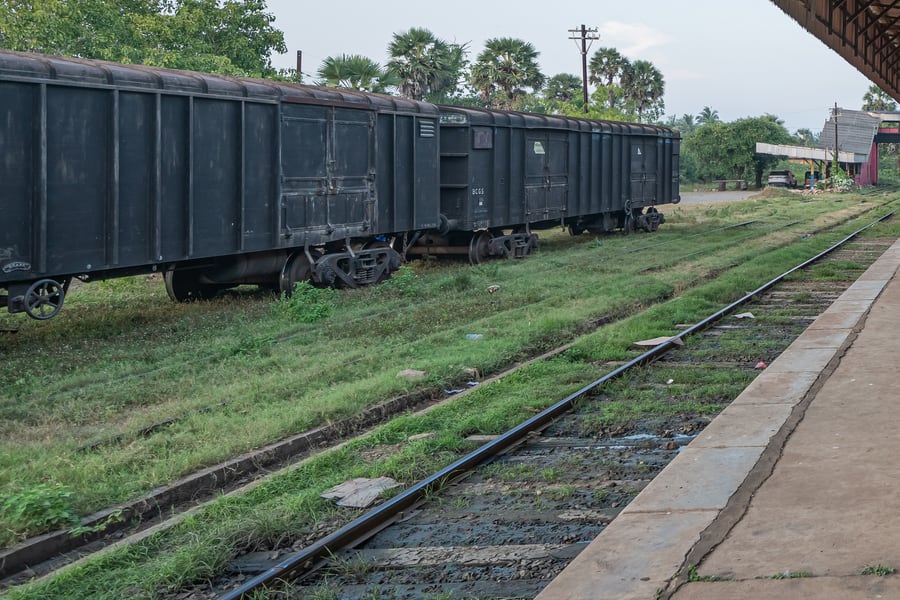
The last 53 kilometres carry only a handful of trains a day. They pass Bangadeniya, where the wartime lifting of 1943 began, and Anawilundawa, whose station stands beside a chain of old irrigation tanks that is now a protected wetland. Beyond Mundal and Palavi the train reaches Puttalam, 135.1 kilometres from Colombo Fort by the department's station table, on the shore of a 327-square-kilometre lagoon. A few passenger trains carry on 4 kilometres to Noor Nagar; beyond it the rails serve a cement works' quarry traffic.
What runs
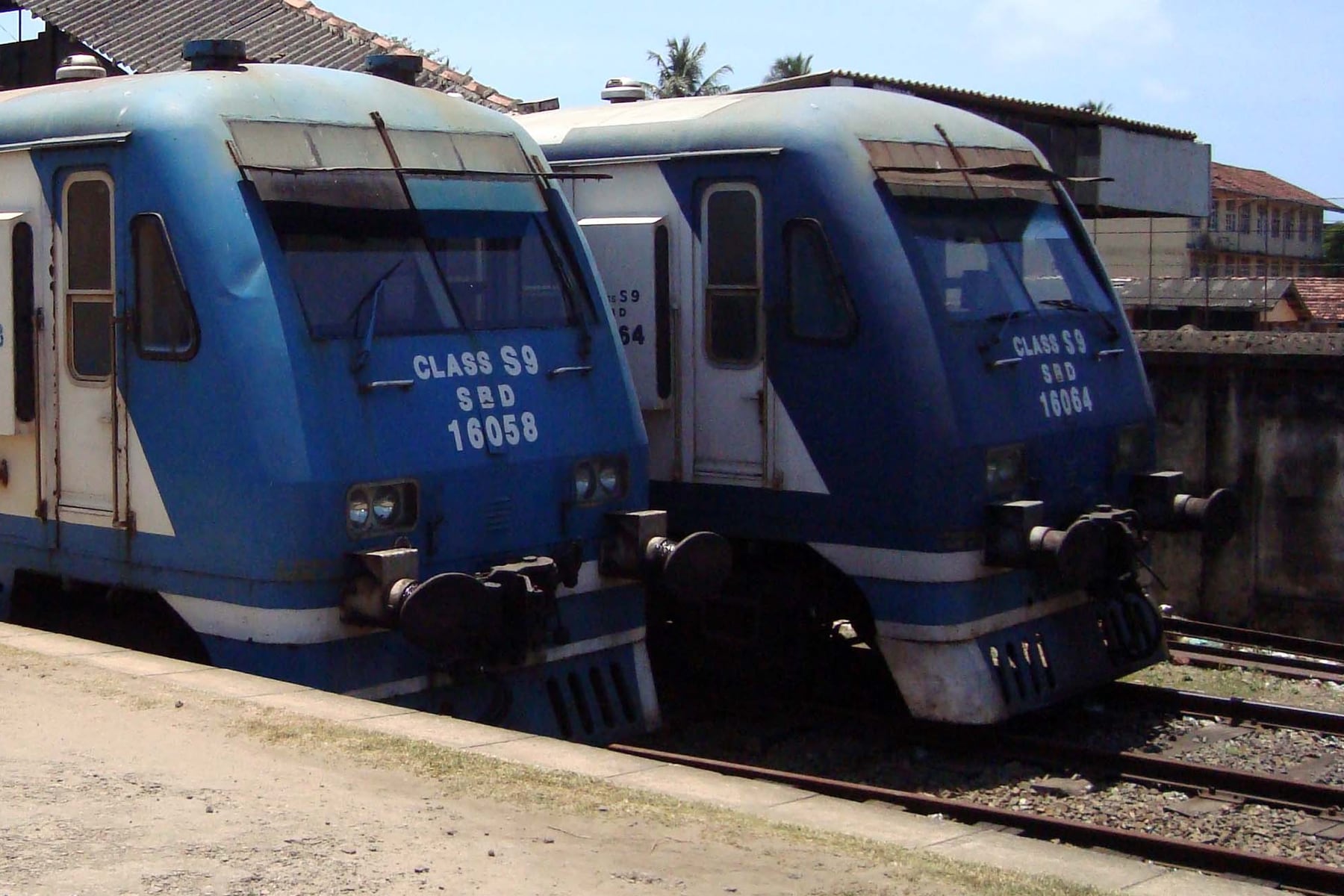
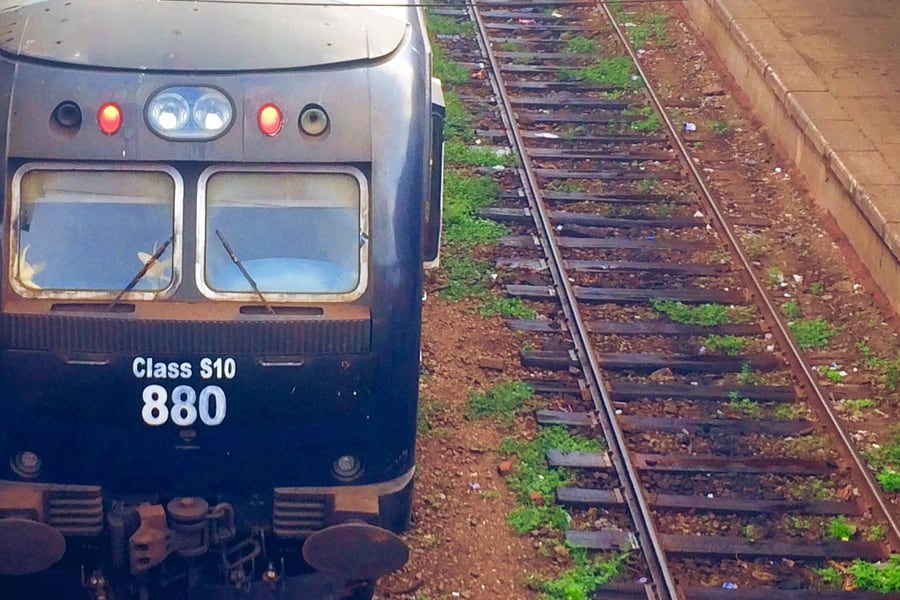
The daytime trains are mostly diesel multiple units of classes S8 and S9, with the newer sets helping at the peaks and some trains hauled by M2 or M4 locomotives. The pair in the header are Chinese-built S9 sets; the S10 in the gallery was photographed at Negombo.
⚠️ The far end floods. The line beyond Chilaw was shut from Cyclone Ditwa until 16 February 2026, and was cut back to Chilaw again for two days in May 2026 when water covered the track near Thilladi.
Along the route
 Steffen Schmitz / Wikimedia Commons · CC BY-SA 4.0 · 2025 · cropped
Past the airport and the lagoon
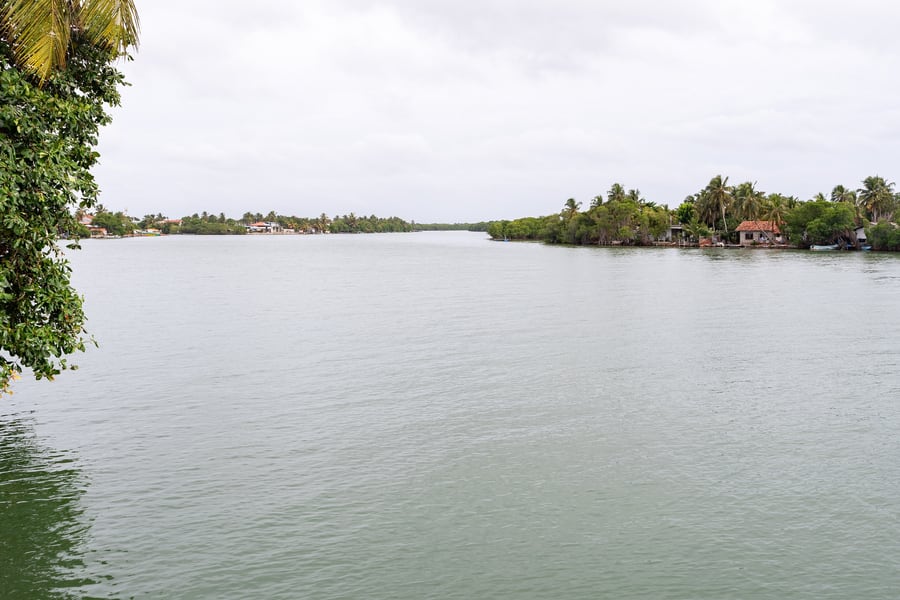
Beyond Ja-Ela the line runs past Katunayake, with its own station for the international airport, and reaches Negombo 39 kilometres out, the lagoon town where most commuter trains turn back.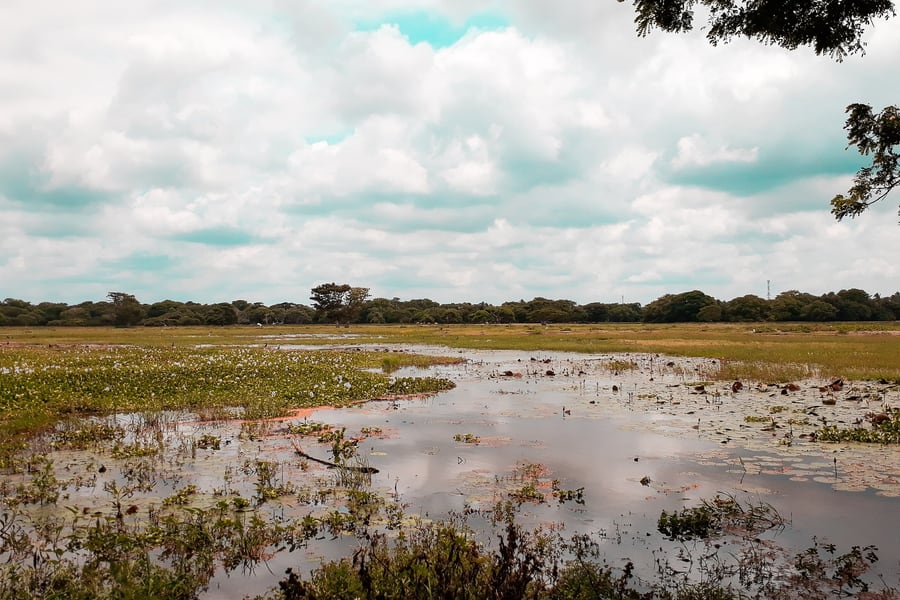 Gobalakrishnan Thuvaragan / Wikimedia Commons · CC BY-SA 4.0 · 2019 · cropped
The tanks of Anawilundawa
North of Chilaw the line passes a chain of old irrigation tanks. Anawilundawa, 100 kilometres out, has a station of its own, beside Sri Lanka's second wetland of international importance.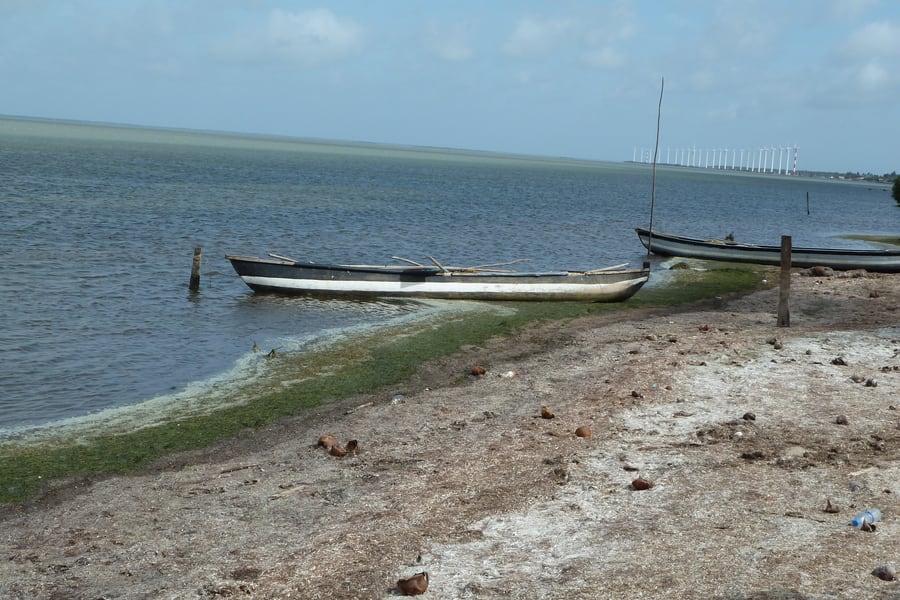 anjana.sudam / Wikimedia Commons · CC BY-SA 3.0 · 2011 · cropped
Down to Puttalam Lagoon
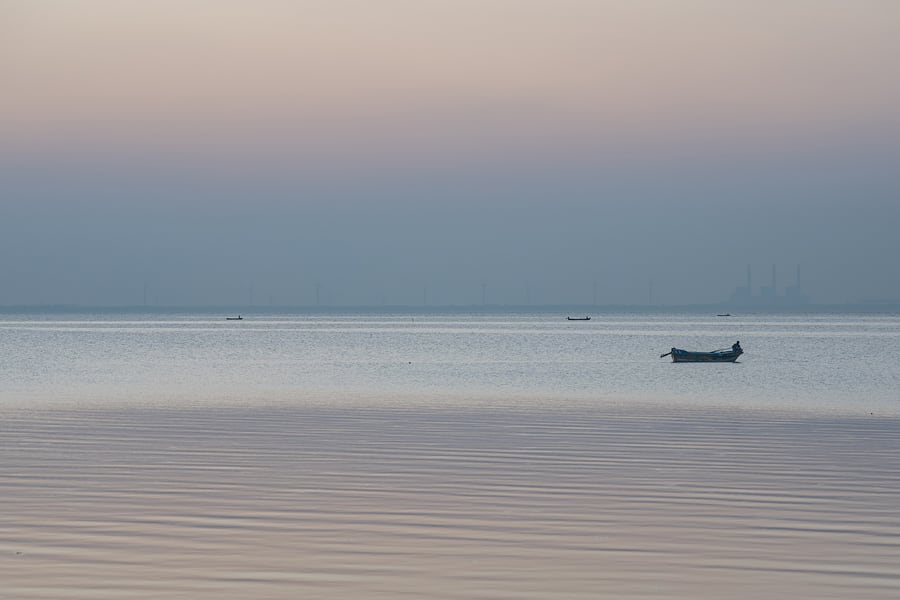
The last stretch runs north through Mundal and Palavi to Puttalam, on a shallow lagoon worked for prawns and salt, with a line of wind turbines on its far shore.A bit of history
Culture & experiences along the way
 A.Savin, Wikipedia · FAL · 2020 · cropped
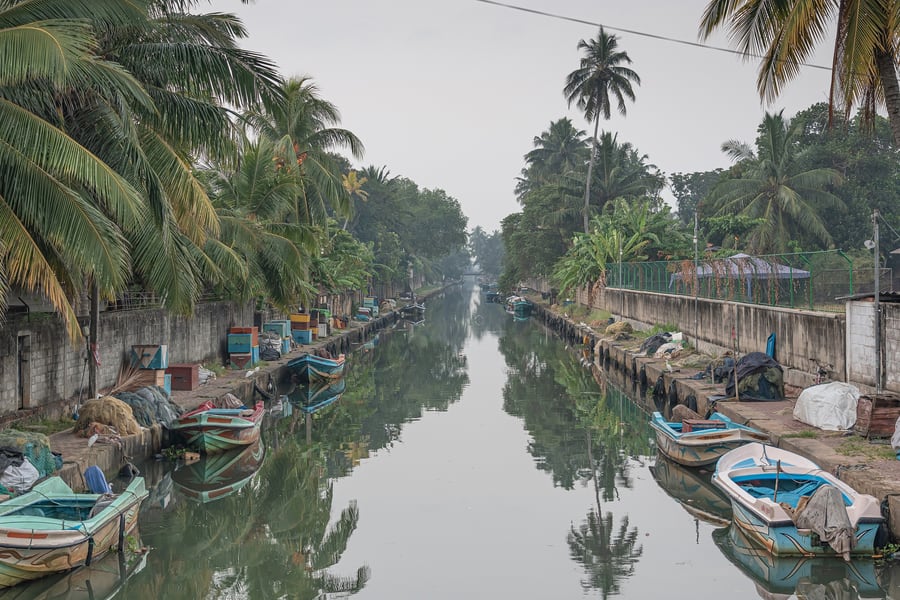
The Dutch canal
Negombo's canal, known locally as the Dutch canal, was dug by the British in 1802–1804 and named after Gavin Hamilton, a colonial revenue official. It is the busy end of an old chain of waterways along this coast, and its banks are lined with the town's fishing boats.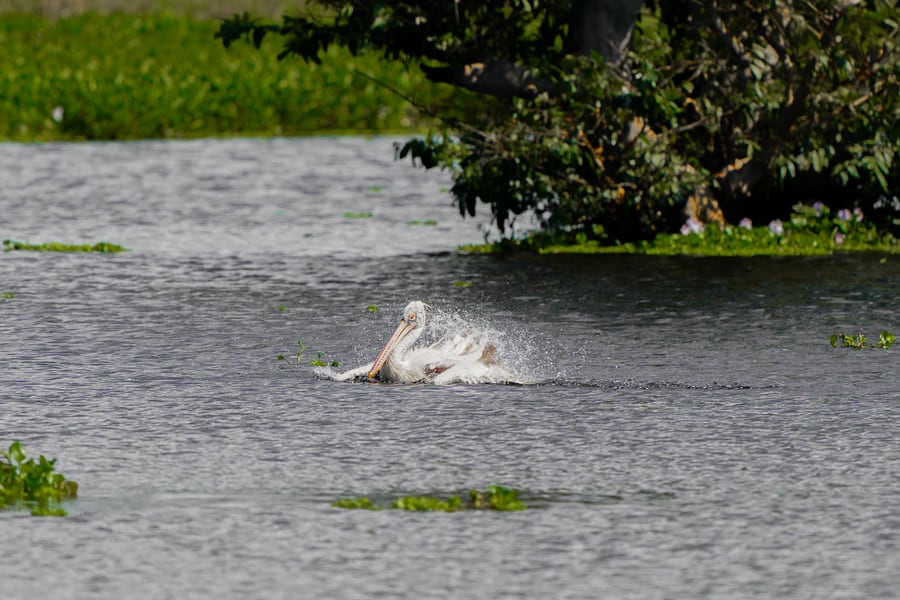 Shaluka Herath / Wikimedia Commons · CC BY-SA 4.0 · 2025 · cropped
Water birds of Anawilundawa
Six large irrigation tanks, linked into one system, make up the Anawilundawa sanctuary, named Sri Lanka's second Ramsar wetland in 2001. It is a wintering ground for migratory water birds, and pelicans, storks and cormorants feed on the open water.Timetables
Four trains each way run the whole way between Colombo Fort and Puttalam on weekdays, fewer at weekends; many more stop short at Negombo or Chilaw. The through trains take 3 hr 49 min to 4 hr 58 min. Sri Lanka Railways' own April 2026 timetable prints the 07:40 and 17:18 out and the 04:30 and 16:45 back; the other departures and all the arrival times below are those scheduled for late September 2026. As of September 2026.
From Colombo Fort
| Departs | Arrives Puttalam | Days |
|---|---|---|
| 04:00 | 08:19 | Daily — runs on to Noor Nagar |
| 07:40 | 12:38 | Daily |
| 12:05 | 16:05 | Monday to Friday |
| 17:18 | 21:07 | Daily — 21:26 at weekends |
To Colombo Fort
| Departs Puttalam | Arrives | Days |
|---|---|---|
| 04:30 | 08:20 | Not Saturdays |
| 09:55 | 14:24 | Daily |
| 13:30 | 18:22 | Monday to Friday |
| 16:45 | 20:34 | Daily — 21:25 at weekends |
Four more afternoon and evening trains from Colombo Fort run only as far as Chilaw, at 14:35, 16:30, 18:05 and 20:20 in the department's April timetable.
Planning around it
The 07:40 from Colombo Fort is the train for a visitor: it reaches Puttalam just after midday, and the 16:45 brings you back the same evening. To break the journey at Negombo or Chilaw, any train will do, since tickets are sold for the day rather than for a train.
There are no reservations on this line: the department's booking system does not sell Puttalam, and you simply buy a ticket and board.
⚠️ Check before you travel, especially in the rains: floods have closed the line beyond Chilaw twice since November 2025. Changes are posted on the department's media notices page (opens in a new tab), often in Sinhala and Tamil only.
Tickets
Nothing on this line is reserved. Tickets are sold for the day rather than for a train, at the station window or through the department's commuter ticketing site, and you board whichever train comes. Fares below were read from that site on 23 September 2026.
The fares are very low: LKR 260 third class from Colombo Fort to Puttalam, and LKR 180 to Chilaw. There is nothing to book ahead and nothing to gain by it.
Book your tickets
Nimanka Mahesh / Wikimedia Commons · CC BY-SA 4.0 · 2017 · croppedThird class, unreserved
LKR 260 to Puttalam · LKR 180 to Chilaw
Bought for the day at the window or online, and good on whichever train comes.
Book Tickets (opens in a new tab, on pravesha.lk)via pravesha.lkRail Passes
There is no rail pass for Sri Lanka, and none would help here.
Sri Lanka Railways is a single state operator with no national rover ticket and no part in any international pass scheme; Interrail and Eurail do not reach the country. Besides the ordinary passenger, the department's systems recognise only warrant holders, pension warrant holders and season-ticket holders, and all three are domestic entitlements rather than products a visitor can buy.
Nor would a pass pay for itself. The whole 135 kilometres from Colombo Fort to Puttalam costs LKR 260 in third class, and there are no seats to reserve.
Checked against Sri Lanka Railways' commuter ticketing and reservation systems, September 2026.
Places to Visit
The line has two ends worth stopping at, and they are nothing alike. Negombo, 39 kilometres from Colombo, is a busy fishing town on a lagoon, with a canal running through it. Puttalam, at the far end, is the district capital, on a shallow lagoon of salt pans and prawn farms, four hours up the coast.
 Steffen Schmitz / Wikimedia Commons · CC BY-SA 4.0 · 2025 · cropped
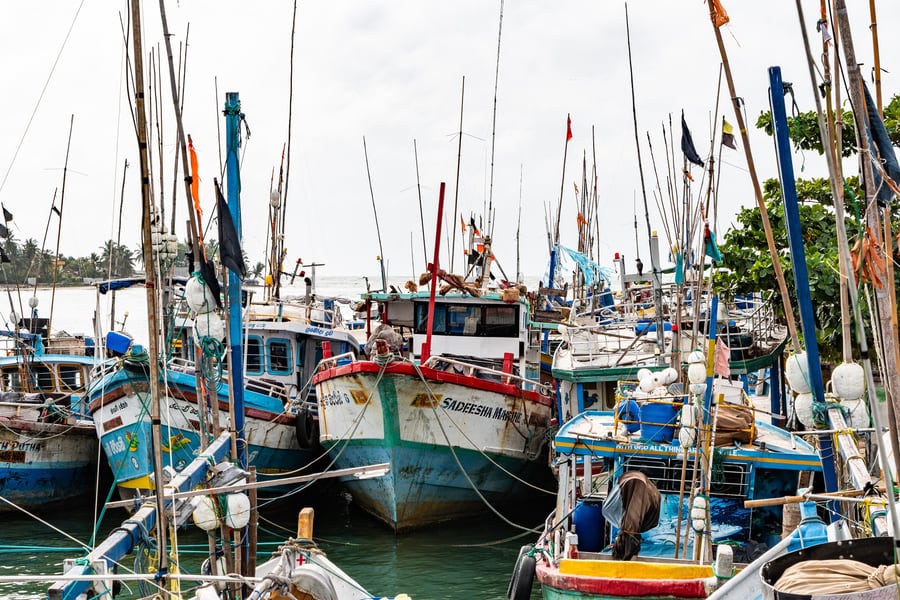
Negombo
A fishing town at the mouth of the Negombo Lagoon, about 9 kilometres from the international airport. The lagoon is fed by the Hamilton Canal and ringed by mangroves, and the fishing fleet moors in the channel under the Pitipana bridge. Most of Colombo's commuter trains on this line turn back here.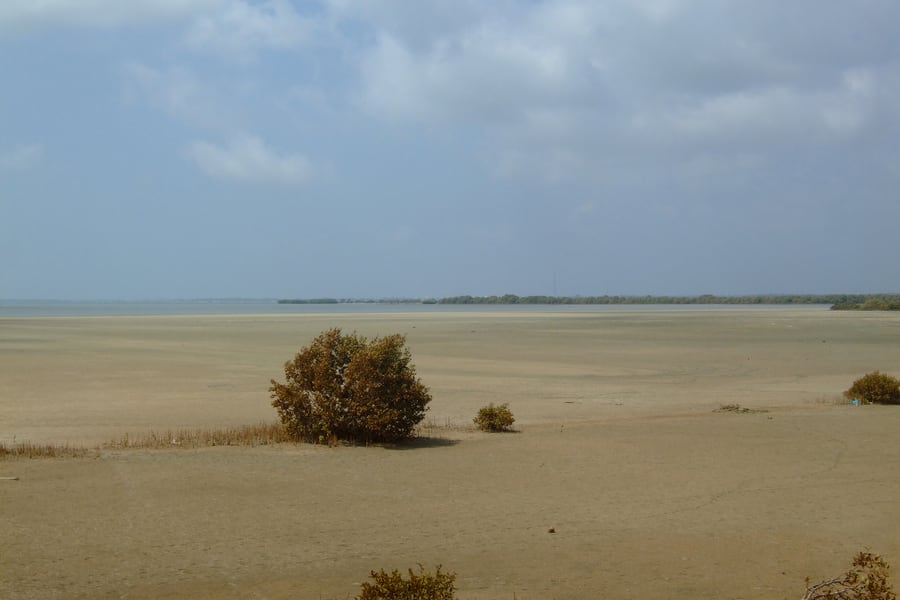 Rehman / Wikimedia Commons · CC BY-SA 4.0 · 2009 · cropped
Puttalam
The district capital, at the head of a 327-square-kilometre lagoon fed by the Kala Oya and the Mi Oya. The land around it is given over to salt pans, prawn farms and paddy, and the shore of the lagoon is mangrove, seagrass and salt marsh.Where to Sleep
Every through train on this line starts or ends at Colombo Fort, and the one a visitor is likely to take out leaves at twenty to eight in the morning, so the natural base is the Fort district, a couple of minutes' walk from the station.
Where to stay
Grand Oriental Hotel
2 York Street, Colombo — beside Colombo Fort station
The hotel's own account of itself: built in 1837, a Dutch hospital before it became a hotel, on York Street in the Fort district, a couple of minutes' walk from the station where every Puttalam train starts.
Check Availability (opens in a new tab, on grandoriental.lk)via grandoriental.lkQuestions or corrections
Planning this trip and stuck on something, or spotted a time, fare or detail that has changed? Send us a message about The Puttalam Line. We read every one, and we update this page when something has changed.