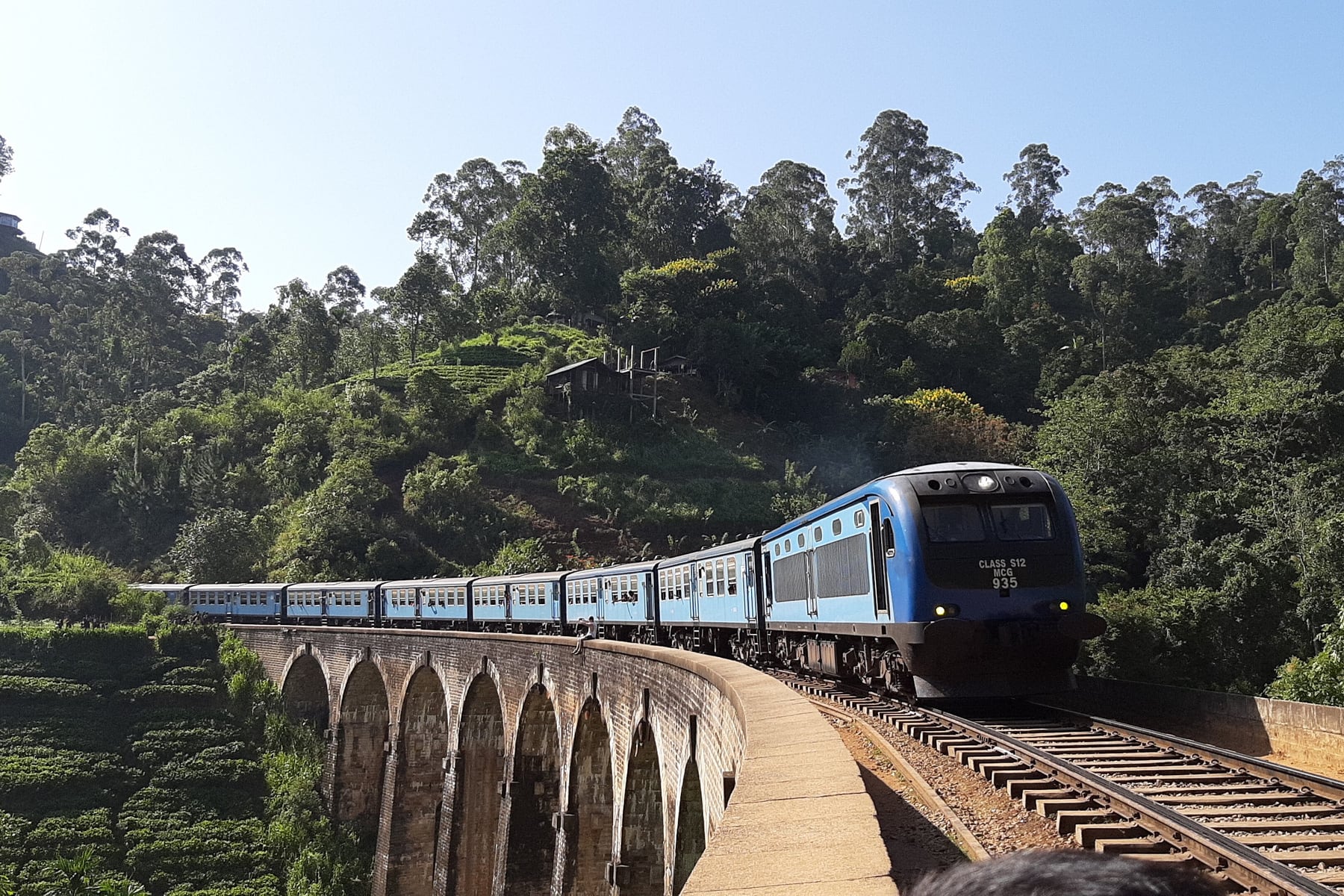
The Hill Country Line
Ravindu Thaksara / Wikimedia Commons · CC BY-SA 4.0 · 2019 · cropped
- Distance85 km
- Duration3 hr 16 min
- Best seasonTwo departures each way, daily · the Ella Odyssey on Wednesdays
Introduction
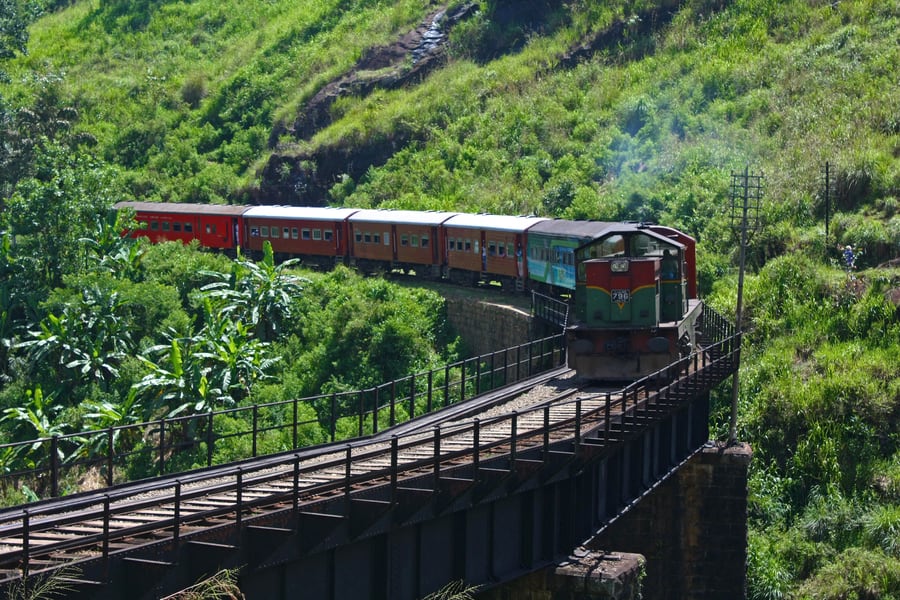
Sri Lanka's Main Line was built to bring a crop down a mountain. It left Colombo in 1864 for the coffee estates of the interior, and when coffee leaf rust destroyed that industry it carried tea instead, climbing year by year until it reached Badulla in 1924. The highest eighty-five kilometres of it — Nanu Oya to Badulla, over the summit at Pattipola and down through Ella — is the part people fly to Sri Lanka to ride. It is a working railway with third-class carriages and open doorways, not a heritage line, and it still does the job it was built for.
Cyclone Ditwa cut the line in November 2025. Sri Lanka Railways reopened the top of it on 20 June 2026, after rebuilding a stretch of the Ambewela–Nanu Oya section that had dropped away to a depth of sixty-five feet, and three pairs of trains now work Nanu Oya to Badulla and back. One of them is the operator's own Ella Odyssey, which runs on Wednesdays with observation saloons and stops at the viewpoints. The rest of the Main Line, from Rambukkana up to Nanu Oya, is still shut for repairs, so the ride begins where the road from Nuwara Eliya delivers you — at Nanu Oya station, where the platform still has the look of a terminus, because for six years that is what it was.
The Journey
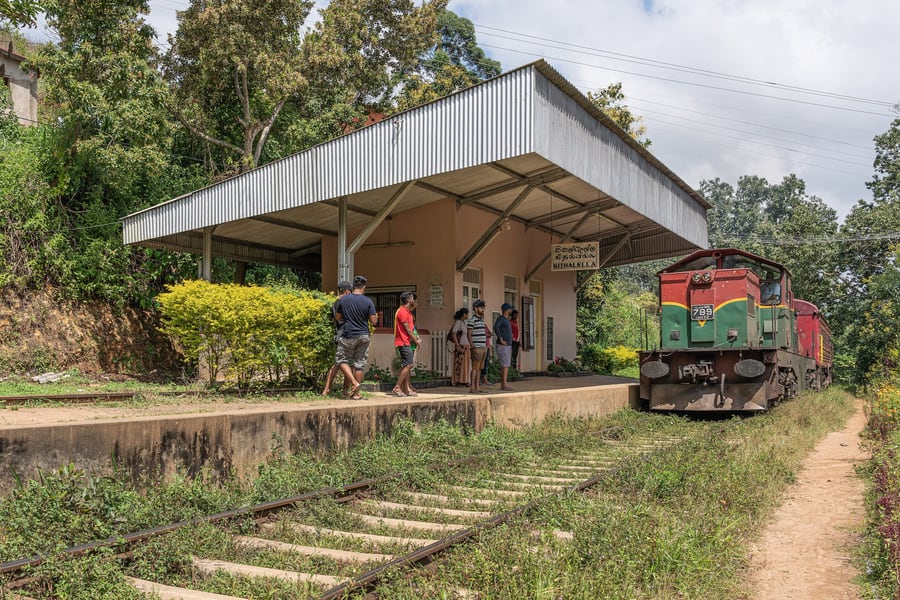
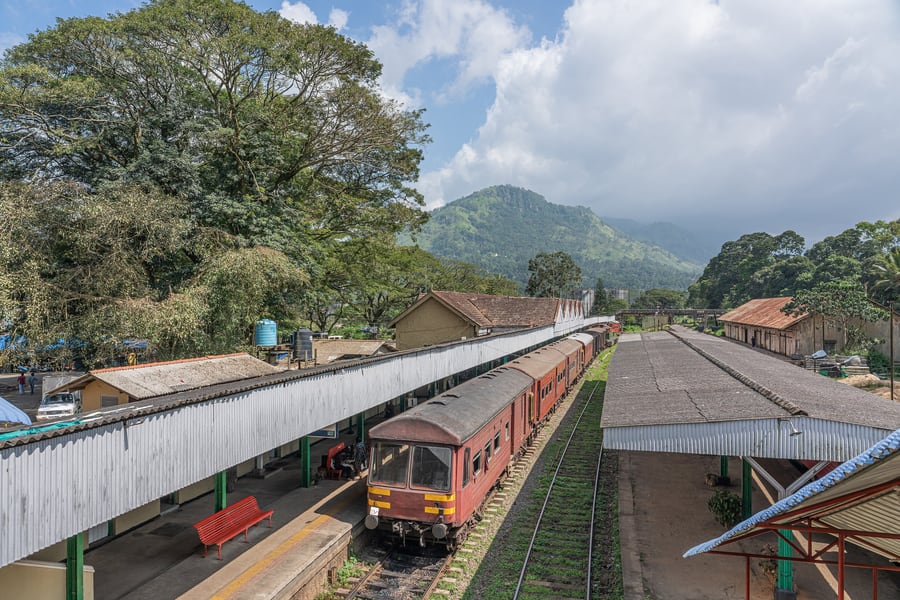
Nanu Oya sits at the point where the railway stopped for six years. The line reached it in 1885 as the end of a thirty-one kilometre extension from Hatton, and stayed there until the engineers found a way further east. It became a junction in 1903, when the two-foot-six-inch Udupussellawa railway struck off north through Nuwara Eliya to Ragala; that line was closed in 1948 and its rails lifted, and nothing of it now meets the platform. What remains is a long island platform under a canopy, the nameboard in Sinhala, Tamil and English, and a canteen counter on the platform for people waiting for the up train.
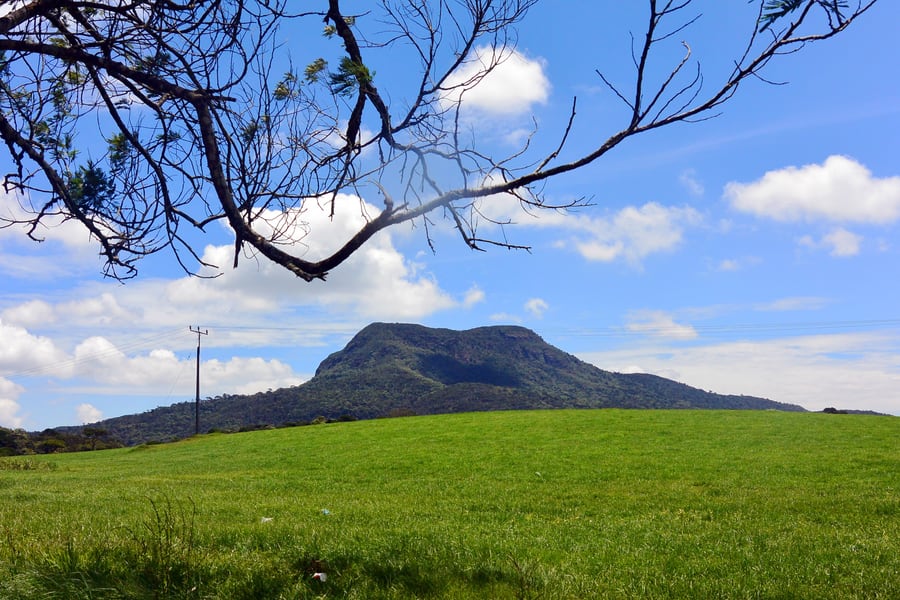
From here the train climbs. Ambewela, half an hour out, is the reason this stretch is nicknamed Little New Zealand: the tea gives way to open grass, black-and-white Friesians graze in fields that belong to a state dairy, and the temperature drops enough that the eucalyptus looks like it means it. Eight minutes further on the line tops out.
The summit, and the two stations nobody arrives at
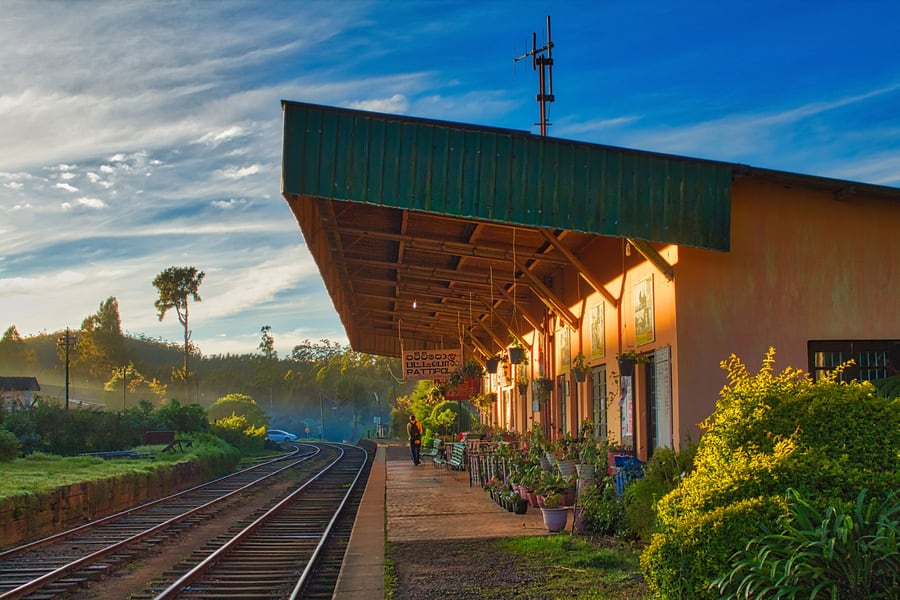
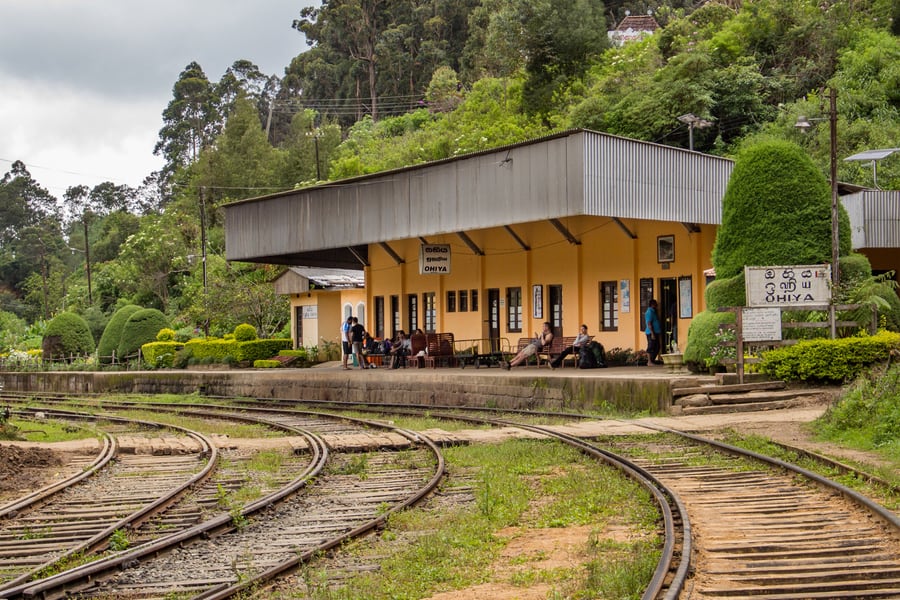
Pattipola, at 1,897.5 metres, is the highest railway station in Sri Lanka. It is a single platform with a passing loop, a pink-washed building and a board that gives the height in feet, and almost everyone who gets off is walking to Horton Plains. Beyond it the railway threads the summit tunnel and comes out on the other side of the watershed at Ohiya, the third-highest station on the network at 1,774 metres, where the tracks curve away through cloud forest and the yellow station building looks like it was dropped there by mistake.
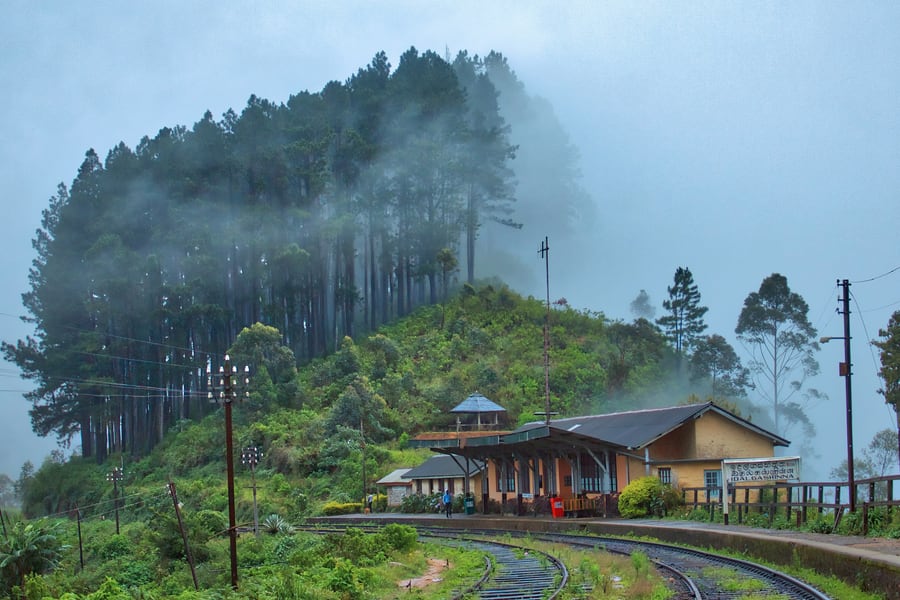
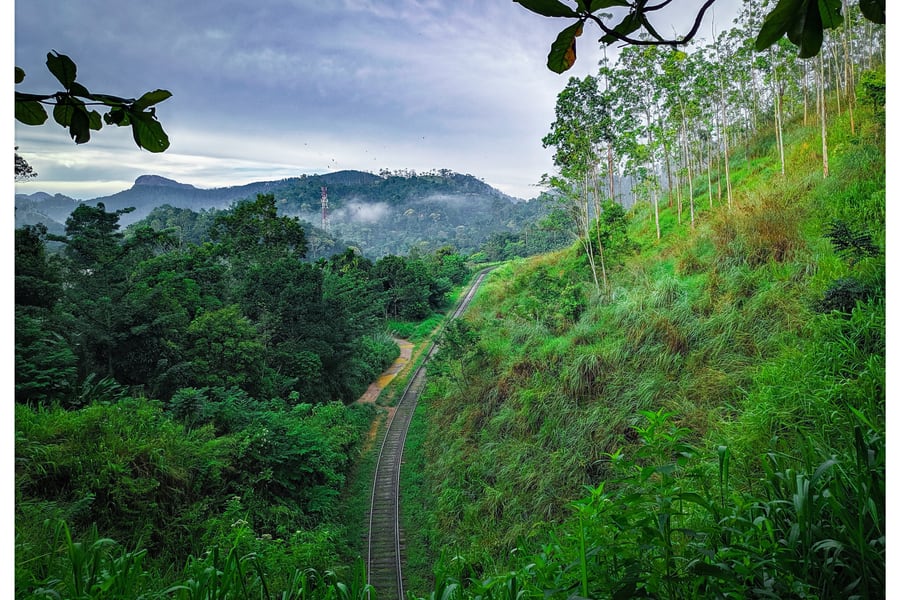
Then Idalgashinna, at about 1,615 metres, which is the stretch that people who have ridden the line remember: the railway runs along the crest of the Haputale ridge with the ground falling away on both sides at once, and on a clear morning you can see the southern plains on one hand and the Uva basin on the other. In mist, which is more often, the nameboard — IDALGASHINNA, and beneath it FEET 5300 — appears out of the white and is gone again in a few seconds.
Tea, and the drop into Uva
Haputale is where the tea comes back, and it comes back all at once: the town sits on a saddle at 1,431 metres with estates on every slope below it, and the railway leaves along a ledge cut into the hillside above them. Diyatalawa, a garrison town since the Boer War, and Bandarawela follow within twenty minutes of each other, and by then the train has lost six hundred metres of height without doing anything dramatic to earn it.
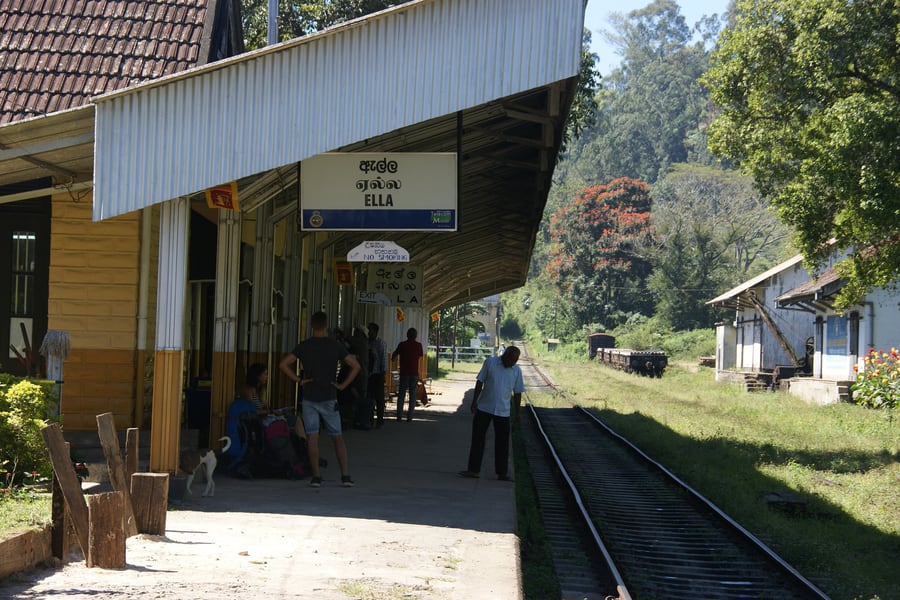
Ella, at 1,041 metres, is the stop the carriages empty at. The station opened in July 1918 and is still a single platform with a tiled canopy; the town below it has become the busiest small place in the hill country, and the walk to Little Adam's Peak starts a few minutes from the ticket window.
The bridge, and the station on top of a tunnel
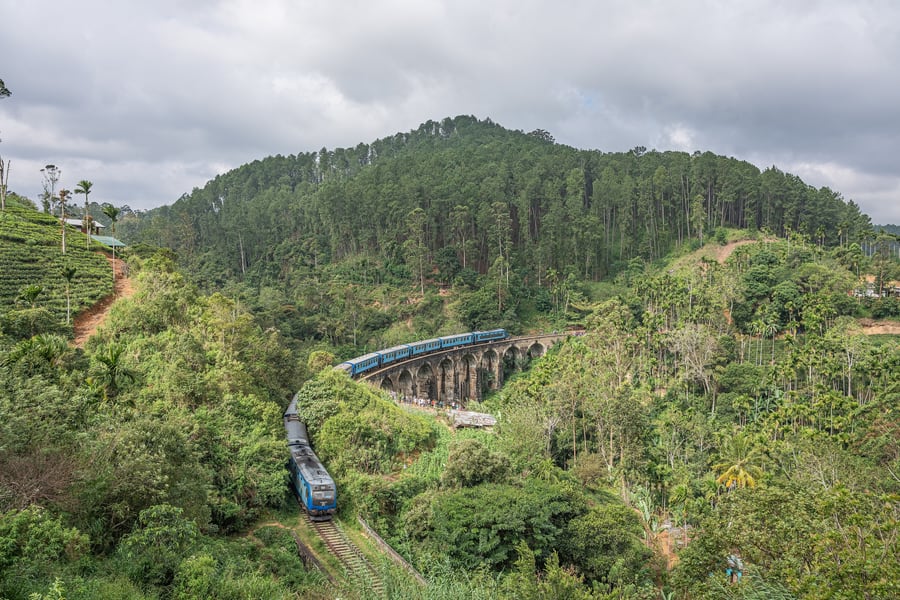
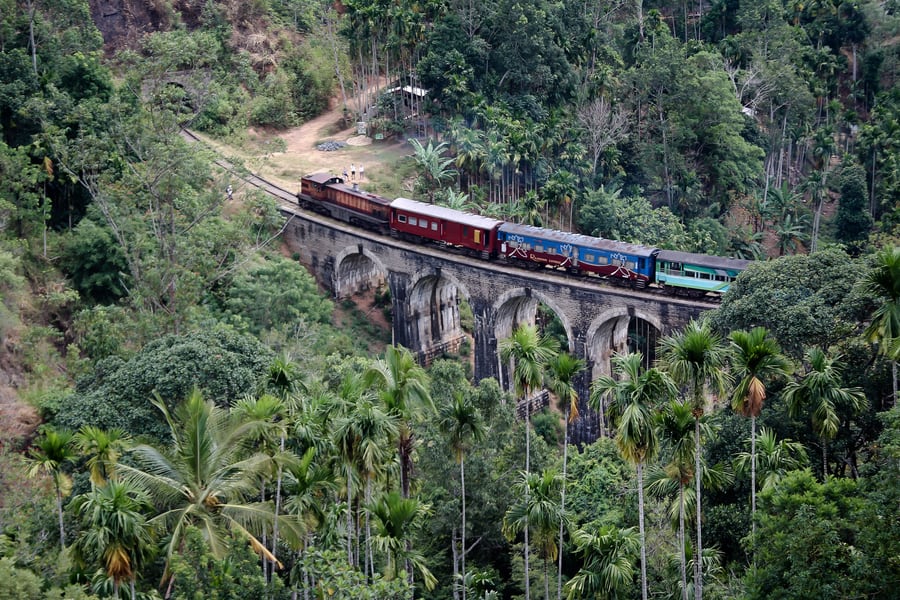
Between Ella and Demodara the line crosses the Nine Arch Bridge, and this is the photograph everyone has already seen: nine arches of stone, brick and cement, ninety-one metres long and twenty-four metres above the floor of the valley, thrown across a gap on a curve. It was completed in 1919 to the design of Harold Cuthbert Marwood, and it was gazetted an Archaeological Protected Monument on 1 February 2023. The story told locally is that the steel for it was diverted to the war and the builders finished it in masonry instead. There is no documentation for that; what is documented is that Marwood wrote the whole thing up for the Institution of Engineers, Ceylon, in 1922 as a concrete railway viaduct.
Six kilometres further on the railway does the other thing it is famous for. The engineers building the last stretch to Badulla found more height between the hills at Demodara than a gradient of one in forty-four could absorb, so they turned the line through a spiral about nine hundred metres long and drove a three-hundred-and-twenty-metre tunnel underneath it. The train comes into Demodara station, leaves, curves right round through the woods, and passes back under the platform it has just left. The local telling has it that an engineer worked it out while watching an estate supervisor unwind his turban and wind it back round his head.
What runs, and what pulls it
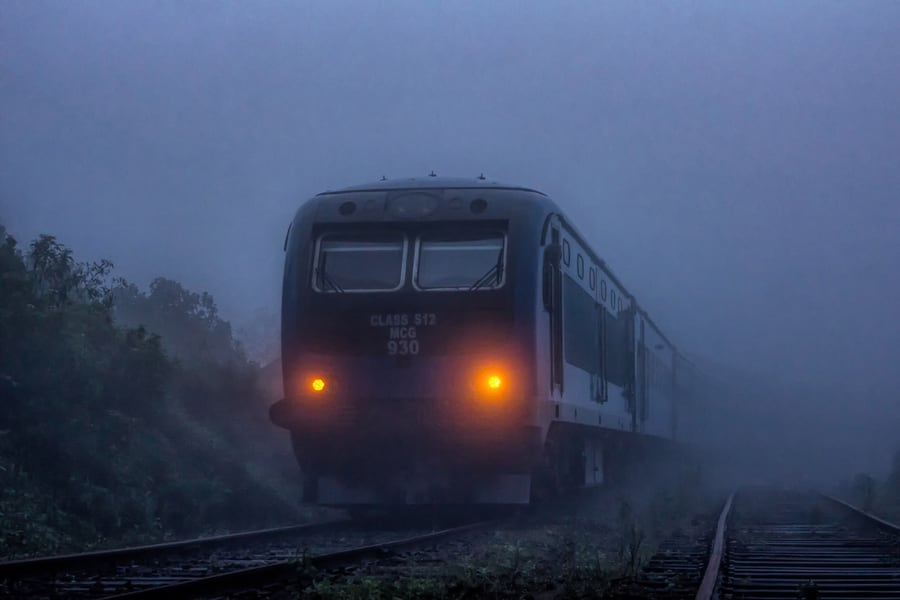
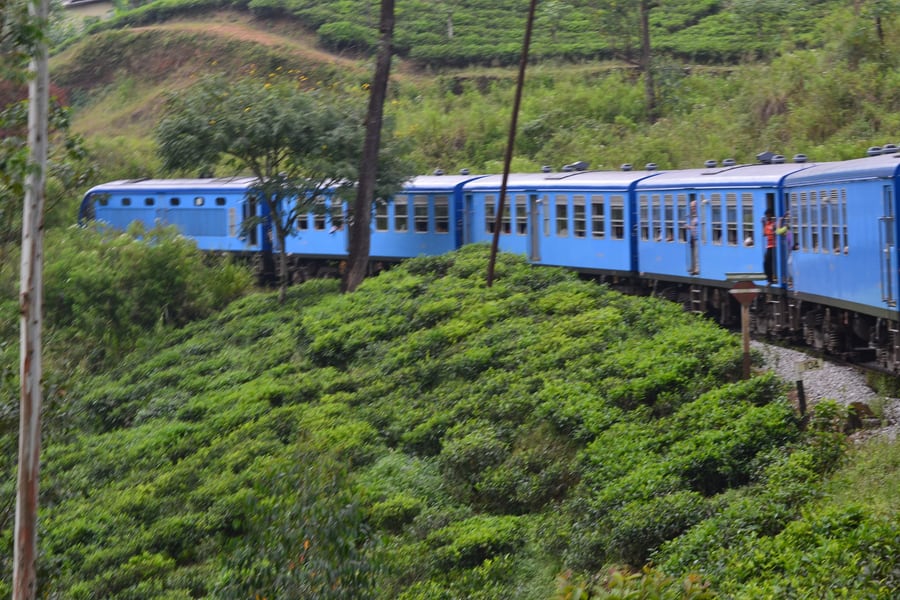
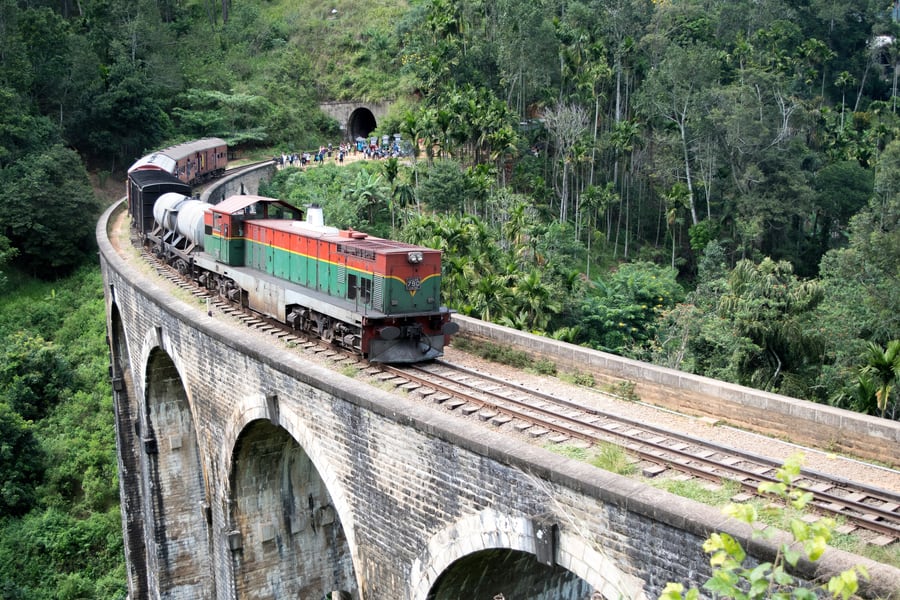
The three daily pairs are formed of class S12 diesel multiple units — the sets Sri Lanka Railways bought from CSR in China in 2012 specifically for these gradients, and the ones with CLASS S12 painted on the nose in white — and of loco-hauled stock behind a class M6, sixteen A1A-A1A diesel-electrics numbered 783 to 798, built by Thyssen-Henschel under licence from EMD and in traffic here since September 1979. There is nothing preserved about any of it. The last eight kilometres down to Badulla, the capital of Uva Province, run through paddy and market gardens to a low terminus with an arcaded frontage, where the stock stands under the canopy until it is due to go back up.
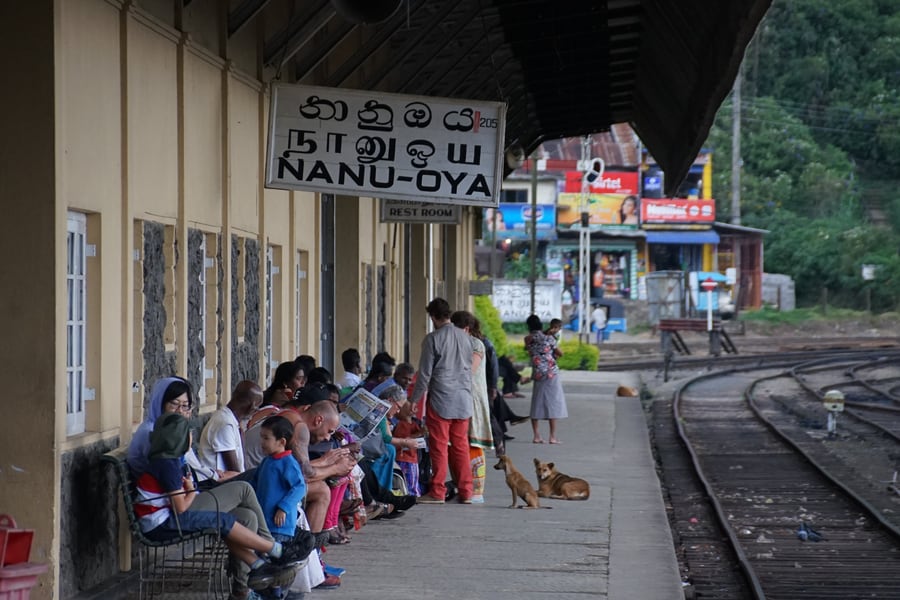
Along the route
 Nisal Senanayaka / Wikimedia Commons · CC BY-SA 4.0 · 2019 · cropped
The station that stands on its own tunnel
At Demodara the engineers found more height between the hills than a gradient of one in forty-four could absorb. The answer was a spiral about nine hundred metres round and a tunnel beneath it: the train leaves the station, curves through the woods and passes back under the platform it has just left.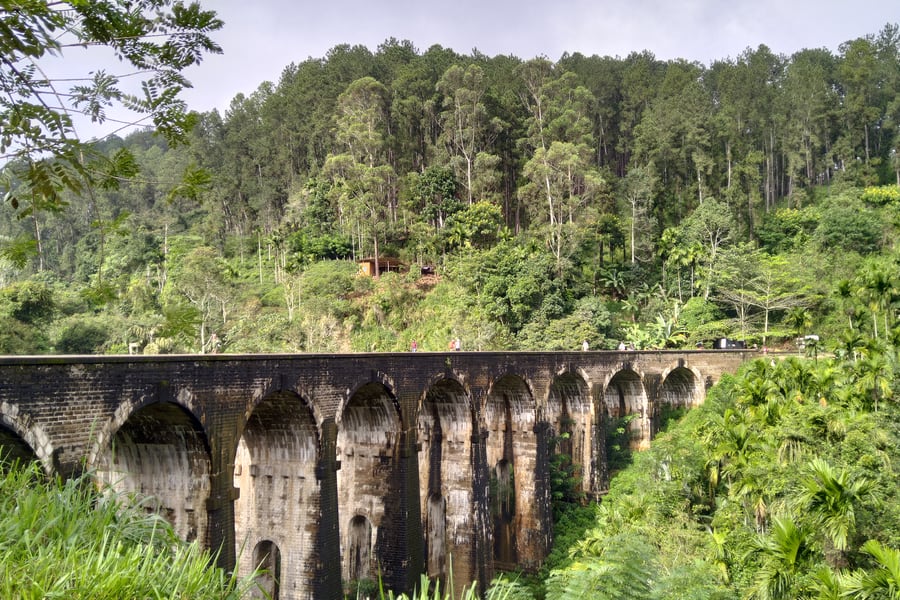 Jonashtand / Wikimedia Commons · CC BY-SA 4.0 · 2023 · cropped
Nine arches and no steel
The viaduct between Ella and Demodara is ninety-one metres long, twenty-four high and set on a curve, completed in 1919. Ella tells you the steel meant for it went to the war; what its engineer wrote up in 1922 was a concrete railway viaduct.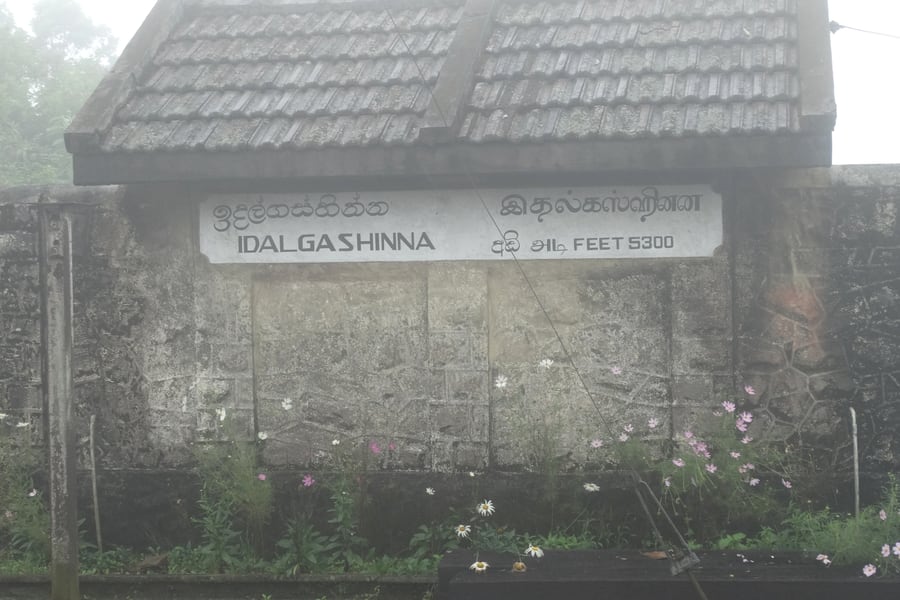 Adam Jones / Wikimedia Commons · CC BY-SA 2.0 · 2014 · cropped
The heights are still in feet
Every station on the climb carries its altitude on the nameboard, and the railway has never converted them. Idalgashinna's reads FEET 5300 under the Sinhala and Tamil — the clearest surviving sign that this is a British-built tea railway never re-equipped.A bit of history
Culture & experiences along the way
 V. Epiney / Wikimedia Commons · CC BY-SA 2.0 · 2016 · cropped
The Wednesday train
The Ella Odyssey is Sri Lanka Railways' own tourist train and it runs one day a week: 1043 down from Nanu Oya at 13:00, 1044 back up from Badulla at 07:45, Wednesdays only. It has observation saloons, 359 reserved seats against the 208 of the ordinary specials, and it waits at the viewpoints, which is why it takes half an hour longer than they do. It is also the only train on this section with seats still on sale a fortnight ahead. Imantha025 / Wikimedia Commons · CC BY-SA 4.0 · 2019 · cropped
Lipton's Seat, above Haputale
A lookout on the ridge at Dambatenne, in the tea country above Haputale, named for Sir Thomas Lipton, who used it as his vantage point over the estates. From it the ground falls away across five provinces — Uva, Southern, Sabaragamuwa, Central and Eastern. The lane up starts at the Dambatenne tea factory and climbs through the plantation, and the walk is done at first light for a reason: cloud comes up the escarpment during the morning and fills the view from below.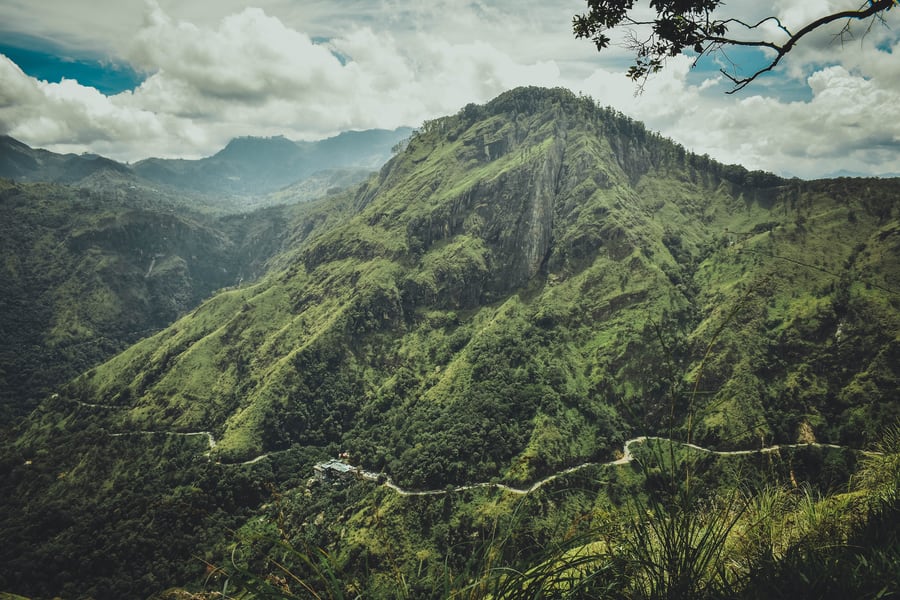 TP hettiarachchi / Wikimedia Commons · CC BY-SA 4.0 · 2019 · cropped
Little Adam's Peak, twenty minutes from Ella station
The pyramid at the head of the Ella Gap is 1,141 metres and the walk up it starts a few minutes from the ticket window — steps most of the way, an hour at a gentle pace, and the Ella Gap opening south towards the plains at the top. It is named for the far larger and far harder Adam's Peak to the west, which is the point of the name: this one is a walk, not a pilgrimage.Timetables
Three pairs of trains work Nanu Oya to Badulla and back. The times below are the ones Sri Lanka Railways published in its own notice of June 2026, when the section reopened, and they are the times the operator's booking system was still selling in August 2026.
Everything on this stretch is a special — the train numbers begin at 1000 and the booking system prefixes them SPL — because the through workings from Colombo cannot yet reach the hill country.
Nanu Oya to Badulla
| Station | 1005 · daily | 1043 · Wed only | 1015 · not Wed |
|---|---|---|---|
| Nanu Oya | 09:00 | 13:00 | 14:30 |
| Ambewela | 09:30 | 13:32 | 15:00 |
| Pattipola | 09:38 | 13:42 | 15:08 |
| Ohiya | 09:53 | 13:56 | 15:23 |
| Idalgashinna | 10:12 | 14:14 | 15:42 |
| Haputale | 10:28 | 14:29 | 15:58 |
| Diyatalawa | 10:40 | 14:40 | 16:10 |
| Bandarawela | 10:56 | 14:55 | 16:26 |
| Ella | 11:27 | 15:21 | 16:57 |
| Demodara | 11:41 | 15:39 | 17:11 |
| Badulla | 12:16 | 16:12 | 17:46 |
Badulla to Nanu Oya
| Station | 1044 · Wed only | 1016 · not Wed | 1006 · daily |
|---|---|---|---|
| Badulla | 07:45 | 09:00 | 15:00 |
| Demodara | 08:19 | 09:37 | 15:37 |
| Ella | 08:43 | 09:52 | 15:52 |
| Bandarawela | 09:11 | 10:23 | 16:23 |
| Diyatalawa | 09:27 | 10:37 | 16:37 |
| Haputale | 09:39 | 10:49 | 16:49 |
| Idalgashinna | 10:15 | 11:05 | 17:05 |
| Ohiya | 10:33 | 11:24 | 17:24 |
| Pattipola | 10:47 | 11:39 | 17:39 |
| Ambewela | 11:00 | 11:47 | 17:47 |
| Nanu Oya | 11:29 | 12:16 | 18:06 |
1043 and 1044 are the Ella Odyssey, and they run on Wednesdays only. 1015 and 1016 run every day except Wednesday. The pair swap places, so whatever the day there are two departures each way: the daily 1005/1006, and either the Odyssey or the ordinary 1015/1016. The Odyssey is the slowest of the six — 3 hr 44 min from Badulla up to Nanu Oya, against 3 hr 16 min on 1016 — because it waits at the viewpoints.
⚠️ One discrepancy worth knowing about. The June notice gives train 1006 into Nanu Oya at 18:06; the operator's booking system in August 2026 shows it arriving at 18:23. The notice is the pattern, the booking system is the authority for the day you travel.
What is not running
The rest of the Main Line is still closed. Cyclone Ditwa damaged the Colombo–Badulla route in more than two hundred places on 27 November 2025, and as of August 2026 trains run from Colombo Fort only as far as Rambukkana; Rambukkana to Nanu Oya, including the branch to Kandy, has no service. The worst of it is at Peradeniya, where a pier of the Kalu Palama — the Black Bridge — tilted seven to eight degrees. The Ministry of Transport's stated target for reopening the whole line is 31 December 2026.
Reaching Nanu Oya therefore means road. It is the railhead for Nuwara Eliya, a short drive up the hill, and buses and taxis work from the station forecourt.
Times as published by Sri Lanka Railways in June 2026 and checked against the operator's reservation system on 26 August 2026 — railway.gov.lk (opens in a new tab).
Tickets
Everything on this section is sold as a reserved seat, in three classes, through Sri Lanka Railways' own booking system at seatreservation.railway.gov.lk (opens in a new tab) or at a station counter with mTicketing. There is no pass, no rover and no supplement to work out — a seat on a named train, at a fixed price, and that is the whole tariff.
The direction matters more than the fare does. Queried on 26 August 2026 for seven Nanu Oya → Badulla dates over four weeks, the ordinary trains were sold out on every one of them; the only seats left were on the Wednesday Ella Odyssey, and it was those that were still there a fortnight out. Badulla → Nanu Oya had room to spare on the same dates. The pressure is all on the downhill run into Ella, so the sane plan is built around a Wednesday. Fares and capacities read from the operator's reservation system, 26 August 2026.
Book your tickets
Samantha Weerasinghe / Wikimedia Commons · CC BY 2.0 · 2017 · croppedReserved seat, trains 1005 / 1006 and 1015 / 1016
LKR 1,200 third class · LKR 1,700 second · LKR 2,500 first, air-conditioned
The ordinary specials over the reopened section — cheapest, and the first to sell out.
Book Tickets (opens in a new tab, on railway.gov.lk)via railway.gov.lkV. Epiney / Wikimedia Commons · CC BY-SA 2.0 · 2016 · croppedElla Odyssey, trains 1043 / 1044
LKR 5,000 to 7,000 down to Badulla · LKR 2,500 to 3,500 back up
The observation-saloon train, Wednesdays only, stopping at the viewpoints.
Book Tickets (opens in a new tab, on railway.gov.lk)via railway.gov.lkRail Passes
There is no rail pass for Sri Lanka, and none would help here.
Sri Lanka Railways is a single state operator with no national rover ticket, no tourist card and no membership of any of the international pass schemes. Interrail and Eurail do not reach the country; the Indian passes stop at the Palk Strait. Every journey on the network is bought as a ticket for a named train, either unreserved at the station window or, on this section, as a reserved seat through the operator's booking system.
That is not a gap in the offering. A pass earns its price where fares are high and trains are frequent, and Sri Lanka is the opposite of both: the fares are among the lowest in Asia, and on the hill country line there are two departures a day in each direction. What matters here is not the cost of the seat but whether there is one — see the availability pattern under Tickets.
The one thing worth carrying is the reservation itself. On trains 1005, 1015, 1043 and their return workings the whole accommodation on offer is reserved, so a ticket bought at Nanu Oya on the morning of travel is not a substitute for a booking made in advance.
Checked against Sri Lanka Railways' published tariffs and reservation system, August 2026.
Places to Visit
The stops on this stretch are eleven, and most of them are a platform, a nameboard and a track back into the trees. What follows is the six worth leaving the train for — the hill stations the railway was built past, and the country it was built through.
 Dan arndt / Wikimedia Commons · CC BY-SA 4.0 · 2016 · cropped
Nuwara Eliya
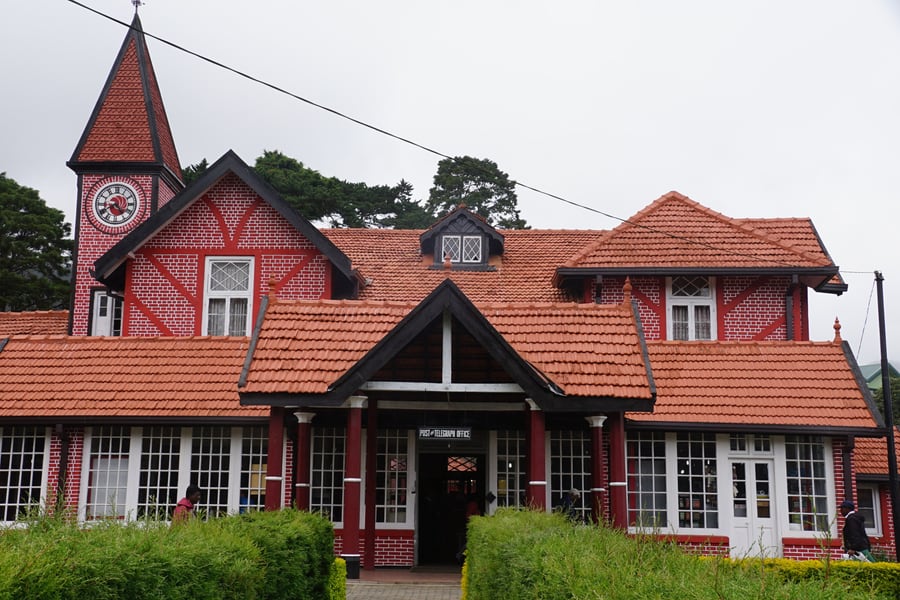
The hill station the railway was really built for, and the reason Nanu Oya exists. Nuwara Eliya sits at 1,868 metres under Pidurutalagala, the highest mountain in the country, and is the coolest place on the island — which is why the British put a racecourse, a golf course and a lot of mock-Tudor in it. The building everyone photographs is the post office, red brick with a clock spire, put up in 1815 and handed to the Postal Department in 1894. Lake Gregory is a short walk from it.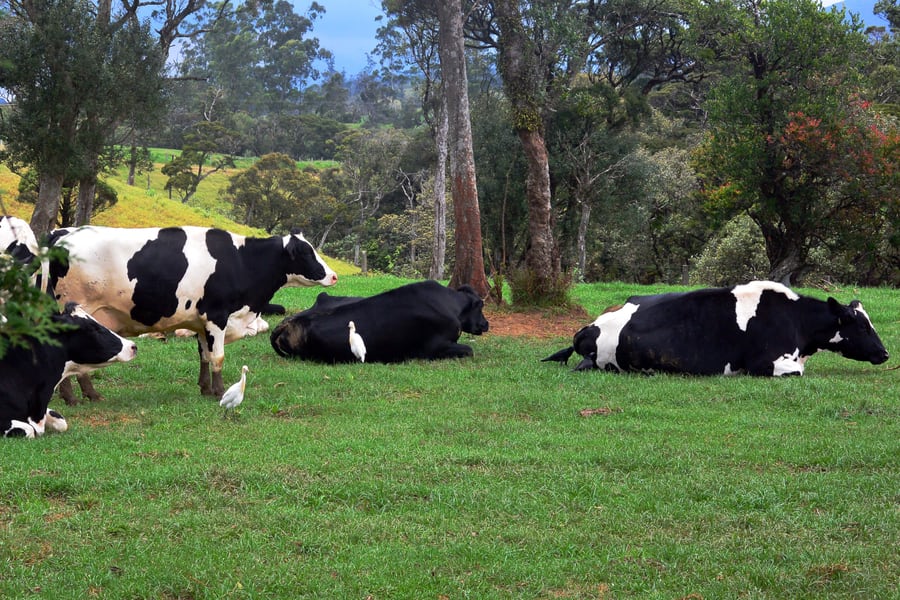 A-wiki-guest-user / Wikimedia Commons · CC BY-SA 4.0 · 2019 · cropped
Ambewela
A village of open grass and dairy farms in a country of tea, high enough that the estates give out altogether, where black-and-white Friesians graze under eucalyptus a few minutes' walk from the platform. The nickname is Little New Zealand and it is not entirely unearned. Ambewela is also the service centre for the New Galway tea planting district, which is what it did before anybody thought of it as a view.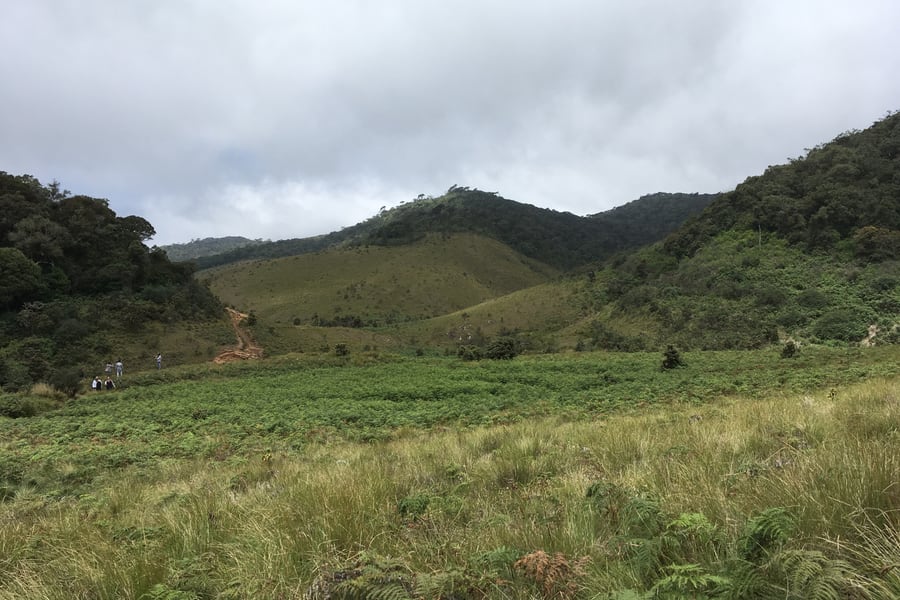 Sameera Withanage / Wikimedia Commons · CC BY-SA 4.0 · 2017 · cropped
Horton Plains
A national park of montane grassland and cloud forest on the plateau above the line, designated in 1988 and covering thirty-one square kilometres between 2,100 and 2,300 metres. The circular walk takes in Baker's Falls and World's End, where the plateau simply stops and the ground drops away towards the southern plains. Ohiya is the nearest station, about eight kilometres below; Pattipola is the other way in.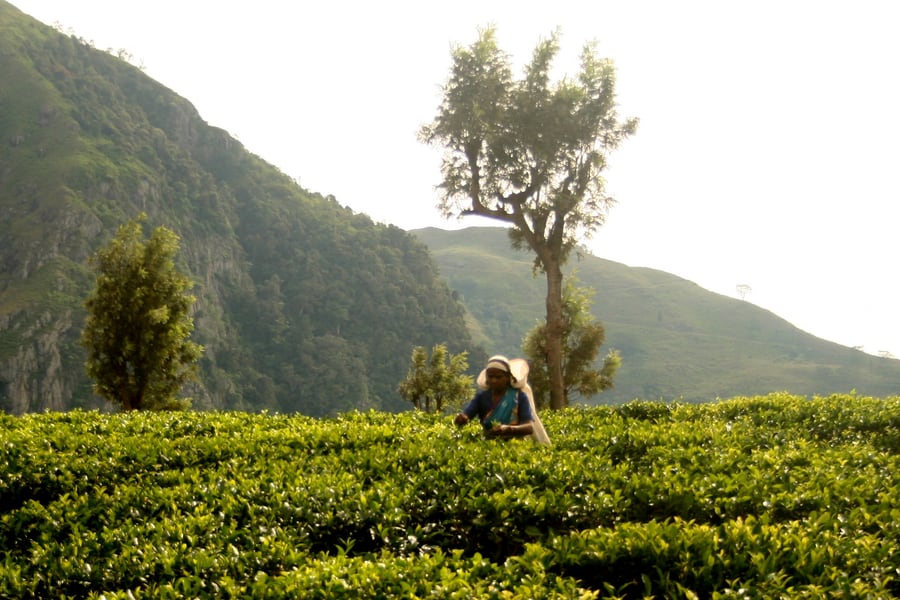 Primenik / Wikimedia Commons · CC BY-SA 4.0 · 2010 · cropped
Haputale
Haputale sits on a saddle at 1,431 metres with estates falling away on every side, and it is the place on this line where the tea is not scenery but the whole economy. The Dambatenne plantation lies above the town and the road to Lipton's Seat runs up through it. The town's own draw is the Haputale pass, which frames the southern plains when the cloud allows, and Adisham Bungalow, a country house on the ridge that is now a monastery.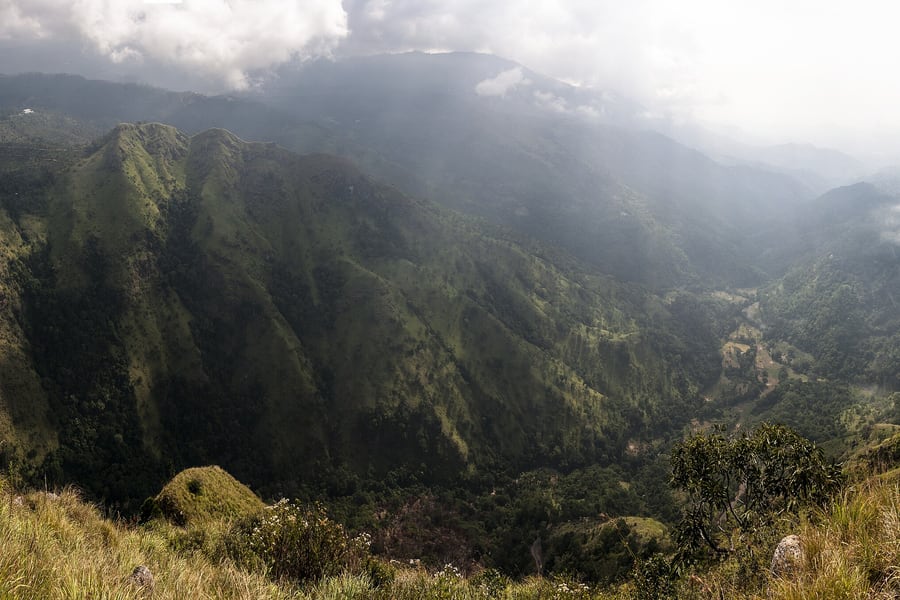 KennyOMG / Wikimedia Commons · CC BY-SA 4.0 · 2009 · cropped
Ella
A small town that the railway and the view have between them turned into the busiest place in the hill country. The Ella Gap is the notch in the escarpment that opens south, and on a clear day the southern plains show through it. Little Adam's Peak and Ella Rock are the two walks; the Ravana Ella waterfall, twenty-five metres of it, is about six kilometres out; the Nine Arch Bridge is a walk from the station.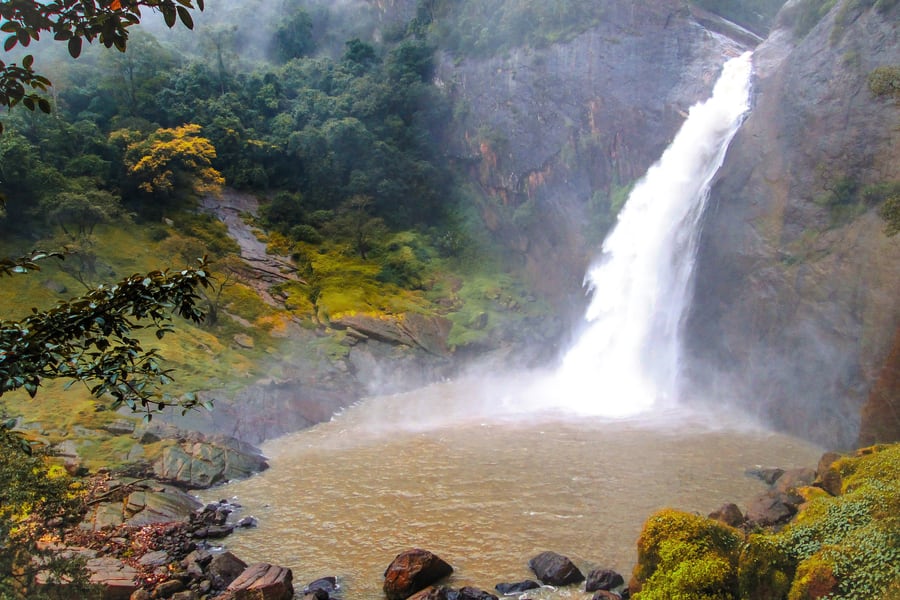 Nethmi Hasara / Wikimedia Commons · CC BY-SA 4.0 · 2019 · cropped
Badulla
The terminus, and a working provincial capital rather than a resort — the administrative centre of Uva Province, with the ancient Muthiyangana temple in the middle of it. What most people carry on past the station for is the Dunhinda Falls, about five kilometres out on the Mahiyangana road and then a kilometre on foot, where the Badulu Oya drops sixty-four metres in one go. The name comes from the Sinhala dun, mist or smoke, for the spray that hangs at the bottom of it.Where to Sleep
Both ends of this section are hill stations the British built to get out of the heat, and both still have the hotels that went with them. Nanu Oya is the railhead for Nuwara Eliya, a short drive up the hill, where the grand colonial houses are; Ella has the newer end of the market, built on tea slopes for people who came for the view. Badulla, the terminus, is a working provincial capital rather than a resort.
Three houses are described below. All three were opened and read in August 2026, and each links to its own site. No price, no rating and no star count appears here, because none of that has been verified — what is quoted is what the hotel says about itself.
⚠️ Two hotels often named for this line are not here. The Bandarawela Hotel, the 1893 planters' club, no longer appears in the portfolio of the group listed as running it, so there is no current site to send anyone to. And a Badulla hotel that does have a site was left out after reading it: its own pages give two different room counts, two different guest ratings, "since 2010" alongside "over five decades", and a paragraph with a botched find-and-replace left in the text.
Where to stay
 Dan arndt / Wikimedia Commons · CC BY-SA 4.0 · 2016 · cropped
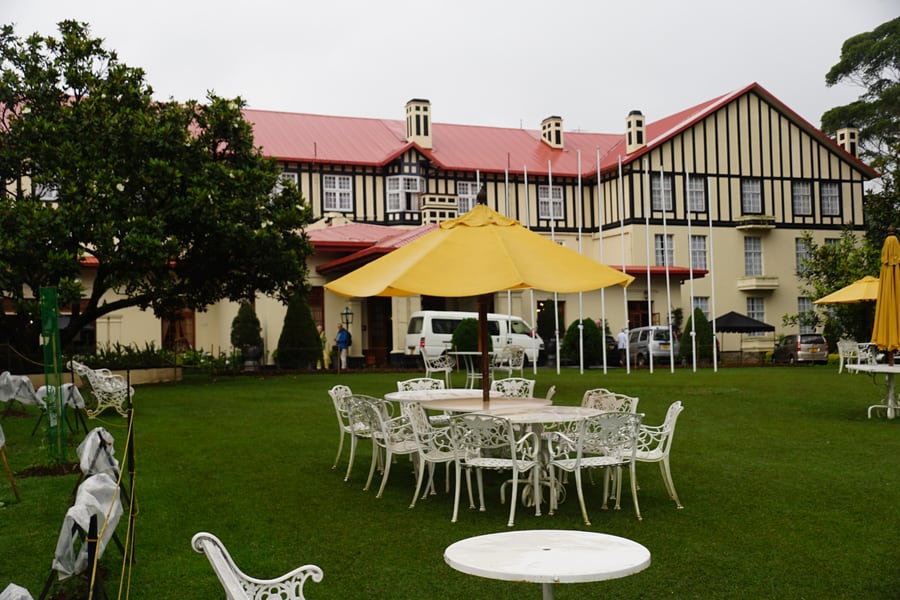
The Grand Hotel
Grand Hotel Road, Nuwara Eliya
The hotel's own account of itself: Barnes Hall was built by Governor Sir Edward Barnes in 1827 and transferred to the Nuwara Eliya Hotels Company Limited in 1891, which is the date it counts as its founding. It is the mock-Tudor pile behind the lawn in the middle of Nuwara Eliya, with nine places to eat, a spa, and the Queens Corridor — a passage between the Piano Lounge and the Public Bar hung with photographs of the people who have stayed. Nanu Oya station is a short drive down the hill.
Check Availability (opens in a new tab, on thegrandhotelnuwaraeliya.com)via thegrandhotelnuwaraeliya.comHeritance Tea Factory
Kandapola, above Nuwara Eliya
A nineteenth-century tea factory converted into a hotel, standing on its own in the estates at Kandapola with tea on every side. The house describes itself as being above 2,000 metres and sits on the twenty-second stage of the Pekoe Trail, the long-distance walking route through the hill country; the kitchen builds tea into the menus, and the estate walks and bike rides start at the door. It is a drive up from Nanu Oya, on the far side of Nuwara Eliya.
Check Availability (opens in a new tab, on heritancehotels.com)via heritancehotels.com98 Acres Resort & Spa
On a tea estate above Ella
Forty-six chalets built into a working tea estate on the slope above Ella, each with a deck and a view down the valley, and an infinity pool looking the same way. The resort's own location map puts Little Adam's Peak, the Nine Arch Bridge, Ella Rock and Ravana Falls within walking or short driving distance, which is the practical case for staying up here rather than in the town. Ella station is below.
Check Availability (opens in a new tab, on resort98acres.com)via resort98acres.comQuestions or corrections
Planning this trip and stuck on something, or spotted a time, fare or detail that has changed? Send us a message about The Hill Country Line. We read every one, and we update this page when something has changed.