The Talaimannar Line
Wishva Dilshan / Wikimedia Commons · CC BY-SA 4.0 · 2017 · cropped
- DistanceAbout 337 km
- Duration6 hr 38 min
- Best seasonOne train each way, daily · all seats reserved
Introduction
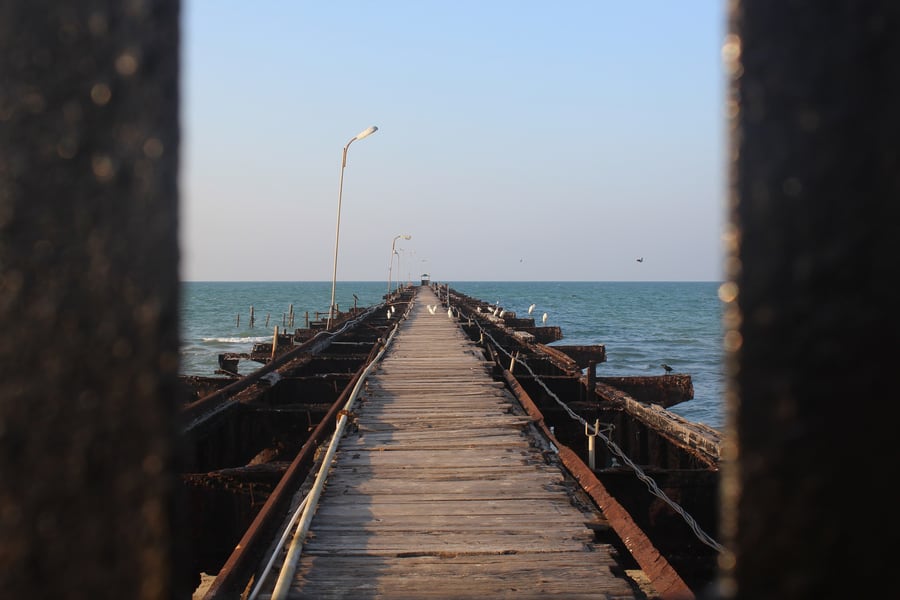
This railway was built to catch a boat. When the line to Talaimannar opened in 1914 it ran onto a pier at the north-western tip of Mannar Island, and at the end of the pier a ferry crossed the Palk Strait to Dhanushkodi, where another train went on to Madras. For half a century you could buy one ticket from Colombo to the Indian mainland. The ferry moved to Rameswaram after a cyclone destroyed Dhanushkodi in 1964, stopped altogether in the early 1980s as the civil war began, and in June 1990 the trains stopped too. The track, the stations and the pier line were destroyed in the fighting that followed.
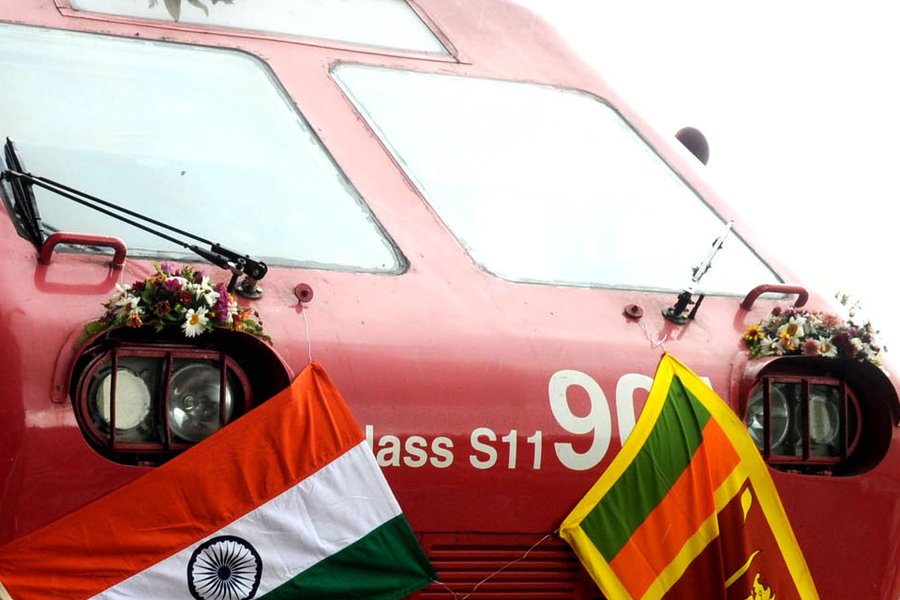
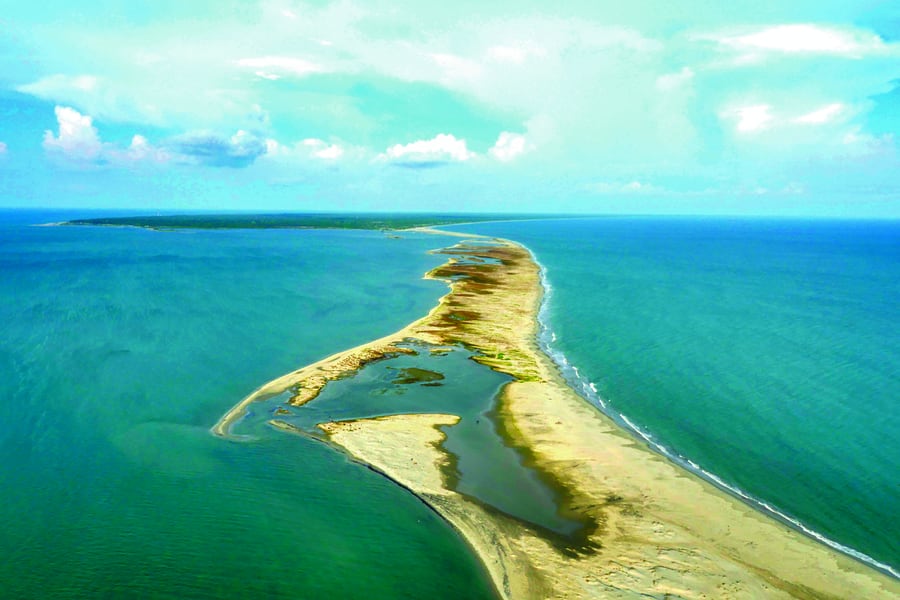
It came back in pieces. Indian money and an Indian contractor rebuilt it, the first section as far as Madhu Road reopened in May 2013, and on 14 March 2015 a train ran onto the pier again. Nothing waits for it there. The rails still end at the water, the lighthouse still looks out along the sandbanks of Adam's Bridge towards India, and the passengers get off and go home.
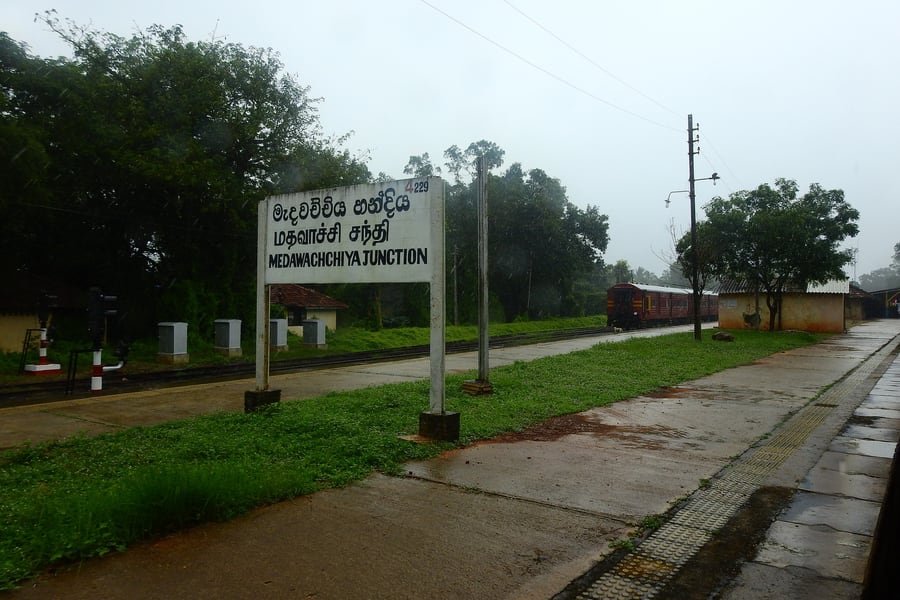
About 337 kilometres, one train a day each way. It follows the Jaffna line for the first 231 kilometres, through Kurunegala and Anuradhapura, then turns west at Medawachchiya into the dry scrub of the Mannar District, crosses to the island and runs its length to the pier: six hours and thirty-eight minutes, arriving at half past ten at night.
The Journey
The afternoon train leaves Colombo Fort at 15:50 and spends its first four hours on rails it shares with everything bound for the north. It runs up the Main Line through Gampaha and Polgahawela to Kurunegala, 95 kilometres out, then on the Northern Line through Maho, where the Batticaloa trains turn east, and across the flat paddy and tank country to Anuradhapura, the old capital, just before eight in the evening.
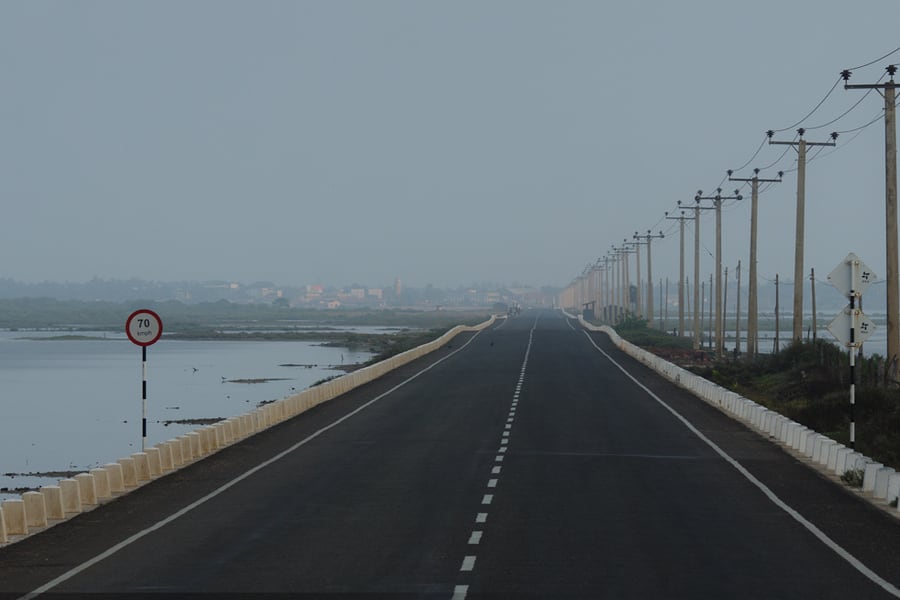
At Medawachchiya, 231 kilometres from Colombo, the Jaffna line carries straight on and the Mannar branch turns north-west. This is the part of the journey that is the line's own, and the train does it in the dark: about a hundred kilometres of single track through the scrub and forest of the Northern Province, past the stations at Cheddikulam, Madhu Road — named for the Catholic shrine at Madhu — and Murunkan. Then the land drops to lagoon and salt marsh, and the railway crosses the shallows to Mannar Island on a bridge of its own beside the road causeway.
The island
Mannar is the island's town, reached at 21:55. From there the line runs the length of the island through palmyra and sand, past the fishing village of Pesalai on the north shore, to Talaimannar, and then on to the pier. Talaimannar Pier station, rebuilt for the 2015 reopening, sits beside the white 1915 lighthouse at the island's tip, and the train arrives at 22:28. The boat it was built to meet has not sailed since the early 1980s.
What runs
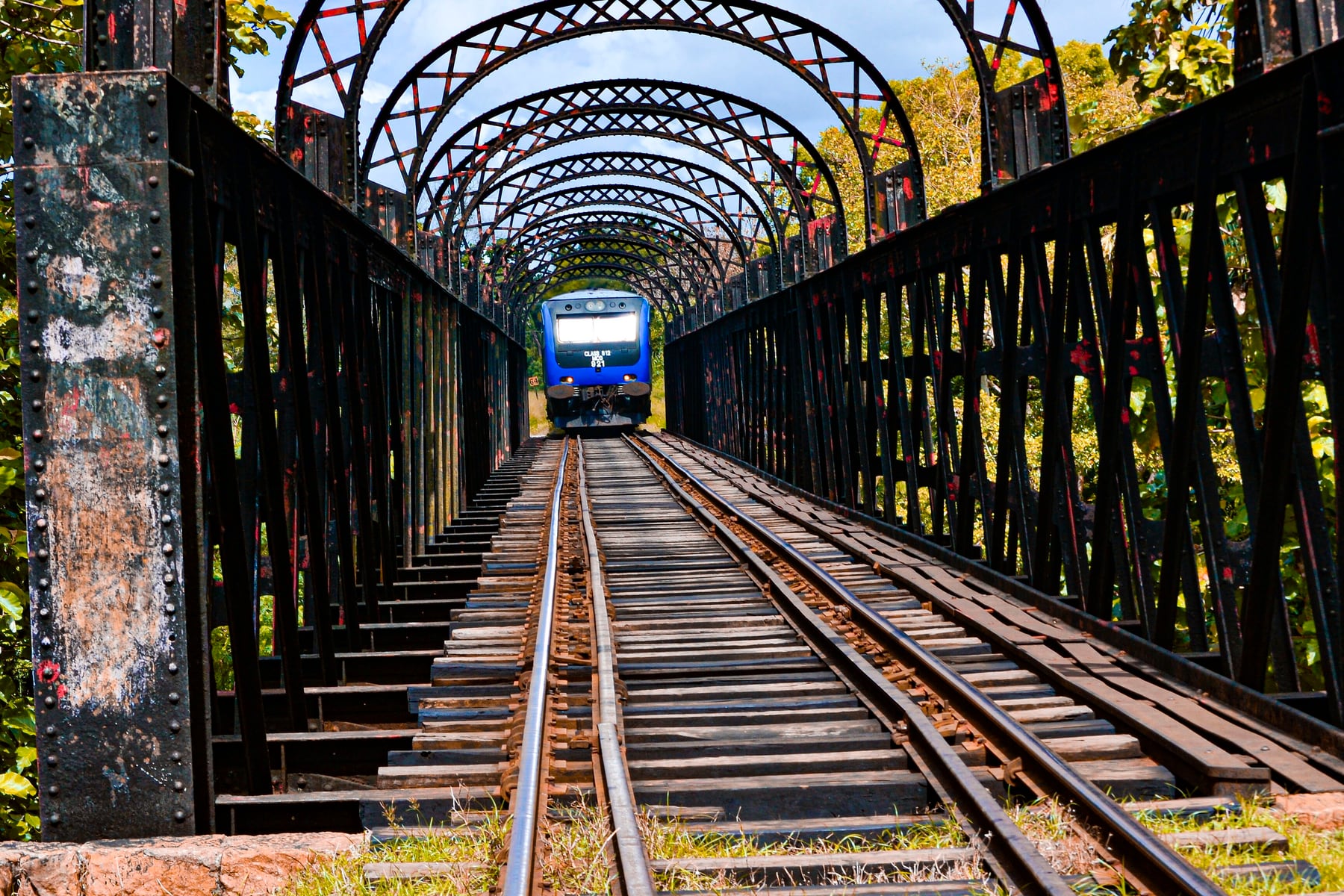
The booking system sells one class on this train, an air-conditioned saloon of ninety-six numbered seats, and gives the train the number 550003 outbound and 550004 back. It does not say what hauls it or what else is in the formation. The Class S11 in the photograph above is the set that opened the rebuilt line on 14 March 2015; the train in the header is a Class S12 on the shared section at Anuradhapura.
Along the route
 Thimindu Goonatillake / Wikimedia Commons · CC BY-SA 2.0 · 2011 · cropped
Over the causeway
Mannar is an island. The railway crosses the shallows to it on a bridge of its own, running alongside the long road causeway, with open water on both sides.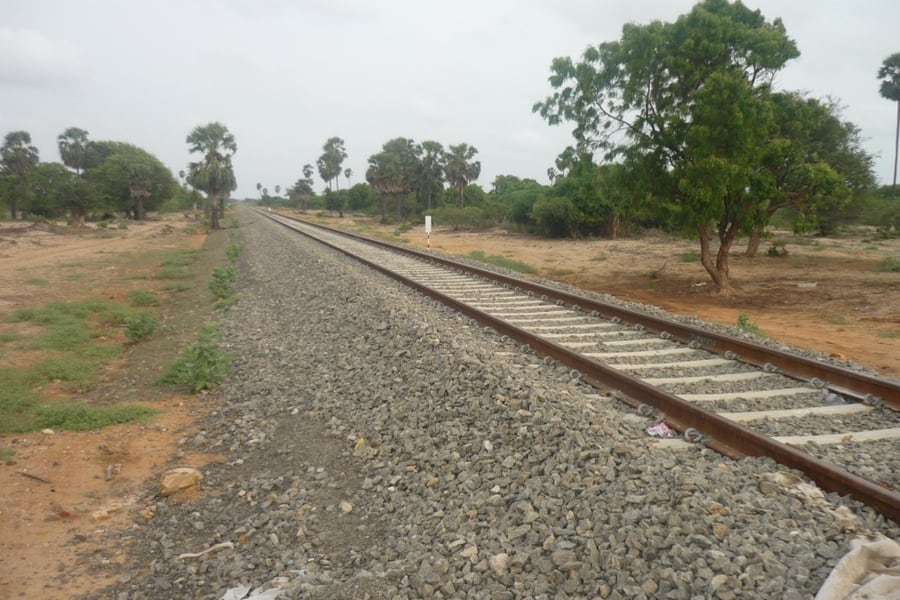 ALHATHIR / Wikimedia Commons · CC BY-SA 3.0 · 2014 · cropped
Across the island
From Mannar town the rails run the length of the island through palmyra, scrub and red sand, on track relaid by Ircon, India's state railway builder, and reopened in 2015.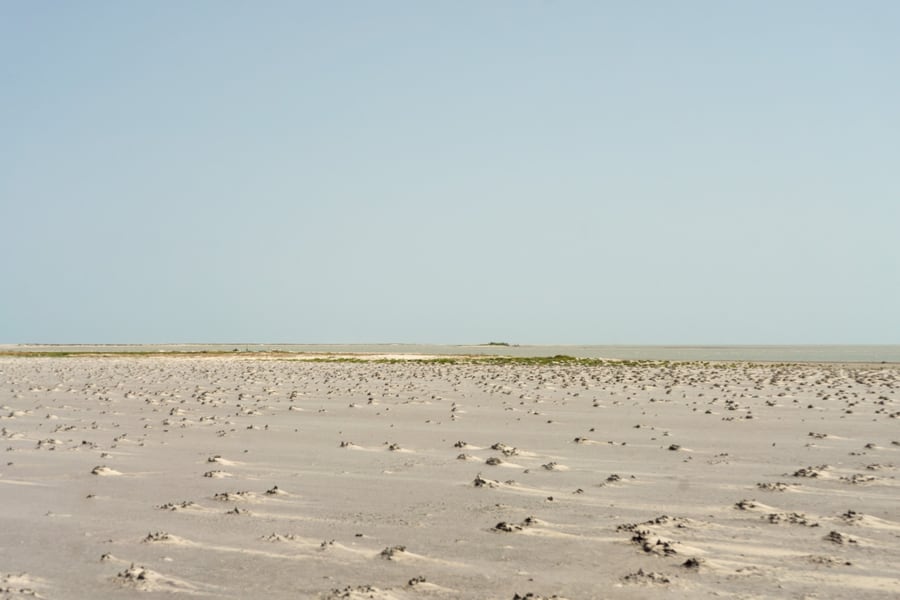 Alexey Komarov / Wikimedia Commons · CC BY-SA 4.0 · 2023 · cropped
Where the land runs out
Past the pier the island ends in a flat of sand and shallow water, and a chain of sandbanks, Adam's Bridge, carries on across the strait towards India.A bit of history
Culture & experiences along the way
 Alexey Komarov / Wikimedia Commons · CC BY-SA 4.0 · 2023 · cropped
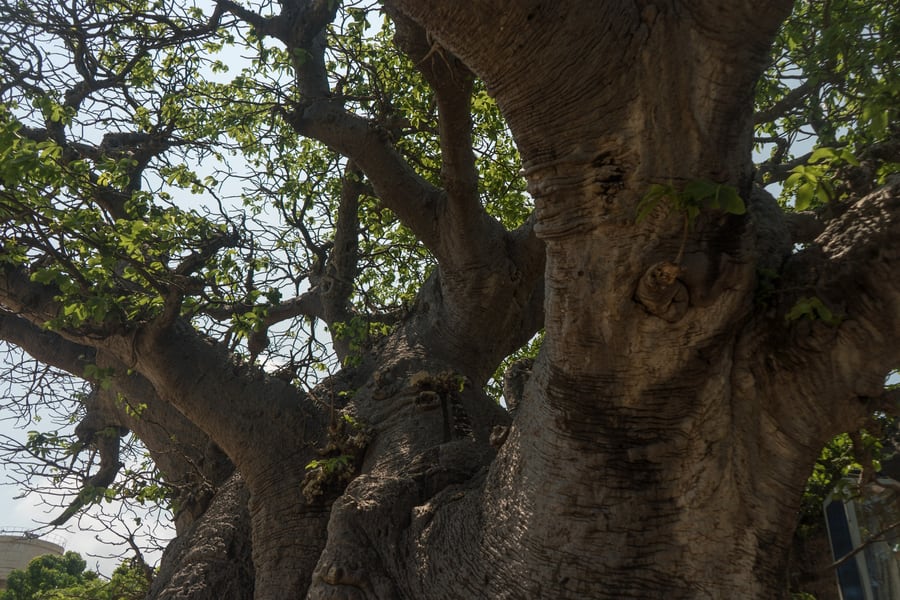
The baobabs of Mannar
An African tree on a Sri Lankan island. The baobabs of Mannar are said to have been brought by Arab traders centuries ago, and the biggest, at Pallimunai on the edge of town, has a trunk so broad that it is fenced off and visited like a monument.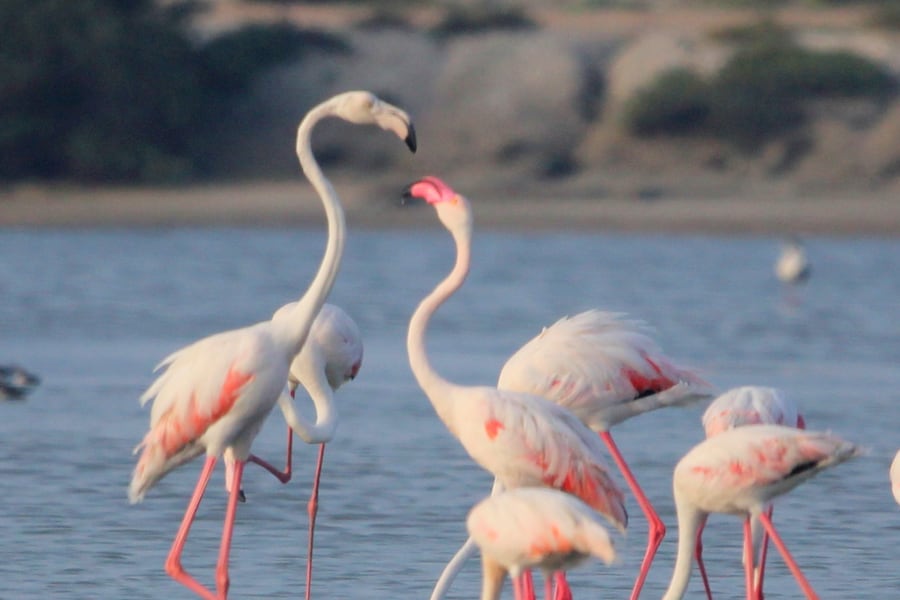 Anuradha Amarakoon / Wikimedia Commons · CC BY-SA 4.0 · 2019 · cropped
Flamingos at Vankalai
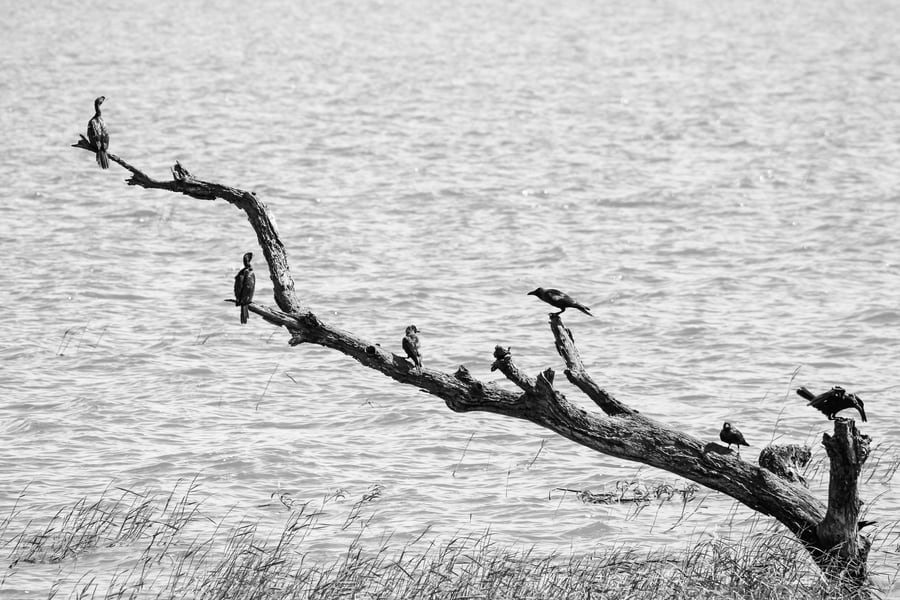
The lagoons, mangroves and salt marshes on the mainland just south of the island are the Vankalai Sanctuary, a Ramsar wetland since 2010 with more than 150 bird species recorded, greater flamingos among them. The island sits on the Central Asian Flyway, and the migrants come down it every northern winter.Timetables
One train works the whole line each way, every day. Sri Lanka Railways publishes no general timetable and no notice for this train, so the times below come from its own reservation system, read on 23 September 2026 across fourteen dates, 24 September to 7 October. Seats are sold at seatreservation.railway.gov.lk (opens in a new tab).
| Station | 550003 outbound | Station | 550004 back |
|---|---|---|---|
| Colombo Fort | 15:50 | Talaimannar Pier | 04:10 |
| Kurunegala | 17:28 | Mannar | 04:42 |
| Maho | 18:18 | Medawachchiya | 06:11 |
| Anuradhapura | 19:52 | Anuradhapura | 06:35 |
| Medawachchiya | 20:24 | Colombo Fort | 10:44 |
| Mannar | 21:55 | ||
| Talaimannar Pier | 22:28 |
The first time in each column is a departure and the rest are arrivals, which is how the reservation system quotes them. Outbound takes 6 hr 38 min, back 6 hr 34 min.
Which dates it runs
Every day. On a few dates close to travel the booking board came back empty — the outbound on 24–26 September and the return on 26–28 September — and full, with the same times, on every other date. That is the reservation system allocating carriages, not a day the train does not run; try another date or another pair of stations before concluding the train is off.
Planning around it
The times do not suit sightseeing. Outbound you reach the island after dark and the pier at half past ten at night; the return leaves the pier at ten past four in the morning. The practical way to see Talaimannar is to sleep in Mannar and go out to the lighthouse by road in daylight.
⚠️ This railway closes. Cyclone Ditwa cut the network in November 2025, and the department's recovery programme set 1 February 2026 for reopening this line. Closures are posted on its media notices page (opens in a new tab), usually in Sinhala and Tamil, and that page is worth a look before you book.
Tickets
Every seat on this train is reserved and sold through the department's own booking site, which works without an account: you can search, see the class and count the seats left before you sign in. Fares below were read from it on 23 September 2026.
There is only one thing to buy. The reservation system sells a single class on 550003 and 550004, an air-conditioned saloon, and prices it at LKR 2,800 from Colombo Fort to Mannar or to the pier. Shorter hops cost nearly as much — LKR 2,000 for the last stretch from Medawachchiya to Mannar — so there is little to save by joining part-way.
Book your tickets
Rehman Abubakr / Wikimedia Commons · CC BY-SA 4.0 · 2019 · croppedAir-conditioned saloon, the whole way
LKR 2,800 Colombo Fort to Talaimannar Pier or Mannar
Ninety-six numbered seats, and the only class the reservation system sells on 550003 and 550004.
Book Tickets (opens in a new tab, on railway.gov.lk)via railway.gov.lkGavin karunaratne / Wikimedia Commons · CC BY-SA 4.0 · 2019 · croppedAir-conditioned saloon, part of the way
LKR 2,000 Medawachchiya–Mannar · LKR 2,100 Anuradhapura–the pier · LKR 2,400 Kurunegala–Mannar
The same seat bought for a shorter hop, which costs nearly as much as the whole run.
Book Tickets (opens in a new tab, on railway.gov.lk)via railway.gov.lkRail Passes
There is no rail pass for Sri Lanka, and none would help here.
Sri Lanka Railways is a single state operator with no national rover ticket and no part in any international pass scheme. Interrail and Eurail do not reach the country, and the Indian passes stop at the Palk Strait. Besides the ordinary passenger, the department's booking system recognises only warrant holders, pension warrant holders and season-ticket holders, and all three are domestic entitlements rather than products a visitor can buy.
Nor would a pass pay for itself. The whole 337 kilometres from Colombo Fort to Talaimannar Pier costs LKR 2,800 in the air-conditioned saloon, and there is one train a day each way, so there is nothing to hop on and off.
What matters on this line is the seat, not the fare. It is the only class sold, it is reserved and allocated per train, and on the dates close to travel the board is often empty. Book as soon as your date opens.
Checked against Sri Lanka Railways' reservation system, September 2026.
Places to Visit
The line has two halves, and they could hardly be more different. The first runs through the old kingdom of the dry zone, and Anuradhapura is the one stop on it worth breaking the journey for. The second is the Mannar District: lagoons, salt marsh, a Portuguese fort, African trees and the empty north-western tip of Sri Lanka. Everything below is on the line or a short road journey from a station on it.
The shrine at Madhu, the holiest Catholic site on the island and the goal of a pilgrimage every August, is a road journey from Madhu Road station.
 Indrajith Withanage / Wikimedia Commons · CC BY-SA 4.0 · 2020 · cropped
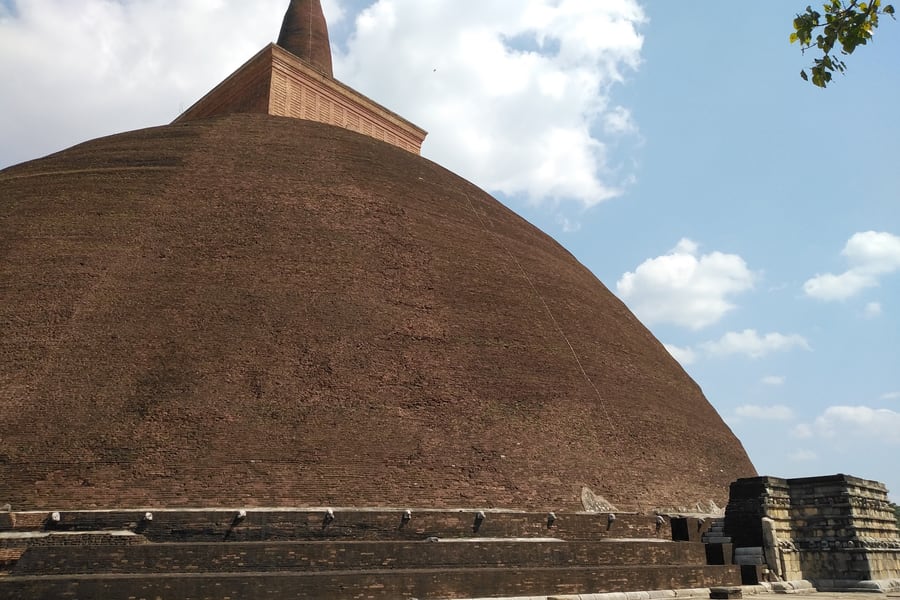
Anuradhapura
The island's first great capital, and now a World Heritage site of brick stupas, bathing ponds and monastery ruins spread through parkland north of the modern town. Abhayagiri, founded in the second century BC, was the largest of its five great monasteries and once kept the Tooth Relic. The train stops here about four hours out of Colombo.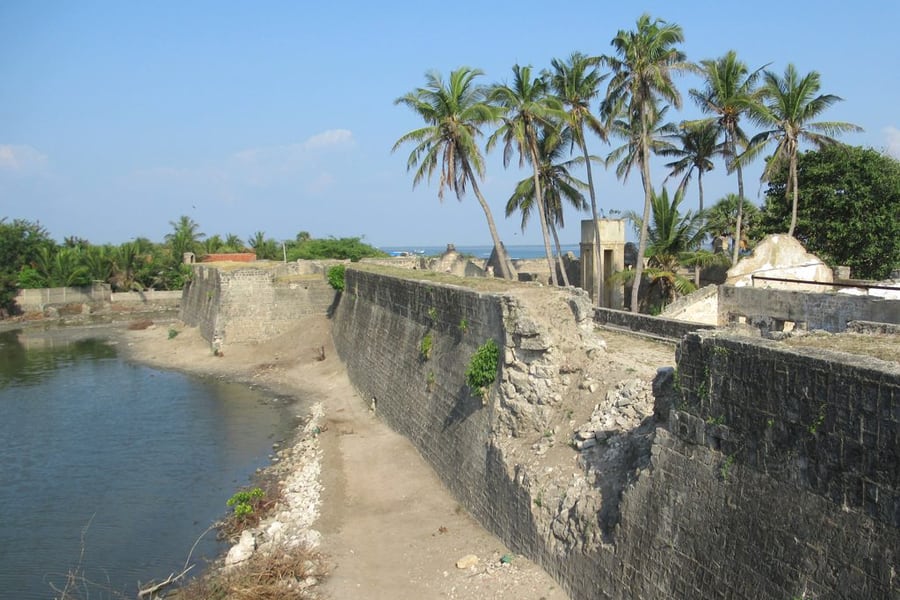 David Stanley / Wikimedia Commons · CC BY 2.0 · 2018 · cropped
Mannar
The main town of the island, a pearl-fishing centre mentioned in the second century and known now for its baobabs and its fort. The Portuguese built the fort in 1560, the Dutch took it in 1658 and rebuilt it, and its ramparts and four bastions still stand beside the bridge to the mainland. Mannar is also the jumping-off point for the Vankalai bird sanctuary.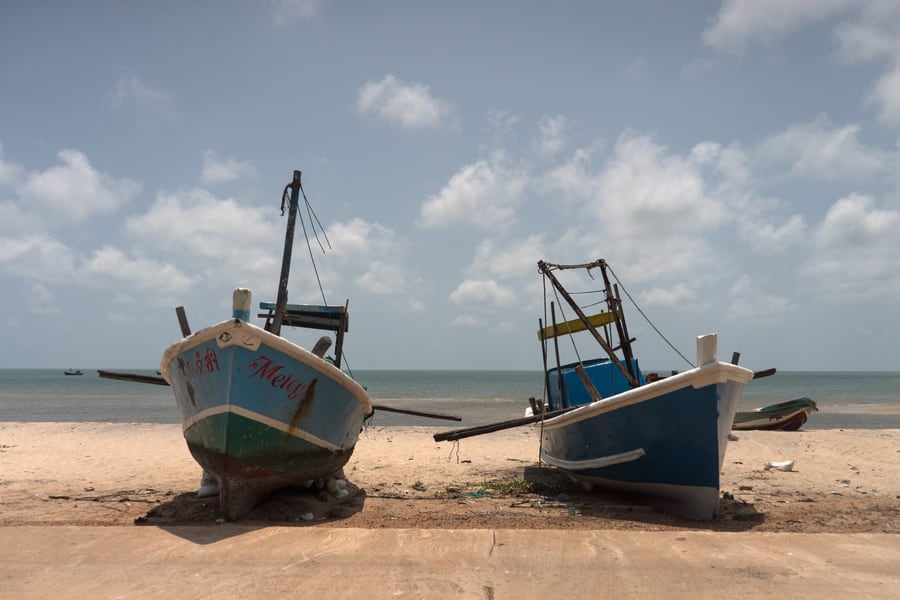 Alexey Komarov / Wikimedia Commons · CC BY-SA 4.0 · 2023 · cropped
Pesalai
A fishing village of about eight thousand people on the northern coast of the island, most of them Catholic, with its boats drawn up on the sand facing the Palk Bay. It has a station of its own on the line between Mannar and Talaimannar.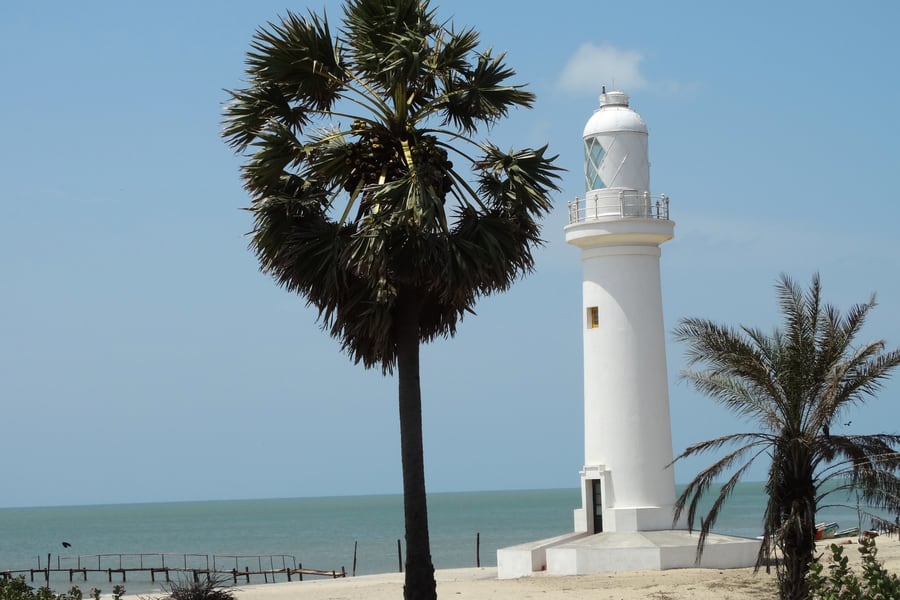 Adam Jones / Wikimedia Commons · CC BY-SA 2.0 · 2014 · cropped
Talaimannar
A settlement at the north-western tip of the island, and the reason the railway exists. The white lighthouse was built in 1915 and looks straight out along Adam's Bridge; beside it are the old ferry pier and the pier station, where the train now turns round. The place is windy enough to draw kitesurfers.Where to Sleep
The timetable decides this. The outbound train reaches Mannar at five to ten at night and the return leaves it at twenty to five in the morning, so anyone who wants to see the island in daylight sleeps on it, in or near Mannar town, and goes out to Talaimannar by road.
At the Colombo end the 15:50 starts from Colombo Fort, and the Fort district has somewhere to sleep two minutes from the concourse.
Where to stay
Grand Oriental Hotel
2 York Street, Colombo — beside Colombo Fort station
The hotel's own account of itself: built in 1837, a Dutch hospital before it became a hotel, on York Street in the Fort district. Colombo Fort station, where the 15:50 to Talaimannar starts and the morning train back ends, is two minutes' walk.
Check Availability (opens in a new tab, on grandoriental.lk)via grandoriental.lkPalmyrah House
Mannar Island — for birders and the end of the line
Fourteen rooms, two of them suites, with a pool and a library, set in fourteen hectares of forest near the Mannar beach and pitched at birdwatchers. Mannar station is thirty-three minutes short of the pier.
Check Availability (opens in a new tab, on serendipityretreats.com)via serendipityretreats.comQuestions or corrections
Planning this trip and stuck on something, or spotted a time, fare or detail that has changed? Send us a message about The Talaimannar Line. We read every one, and we update this page when something has changed.