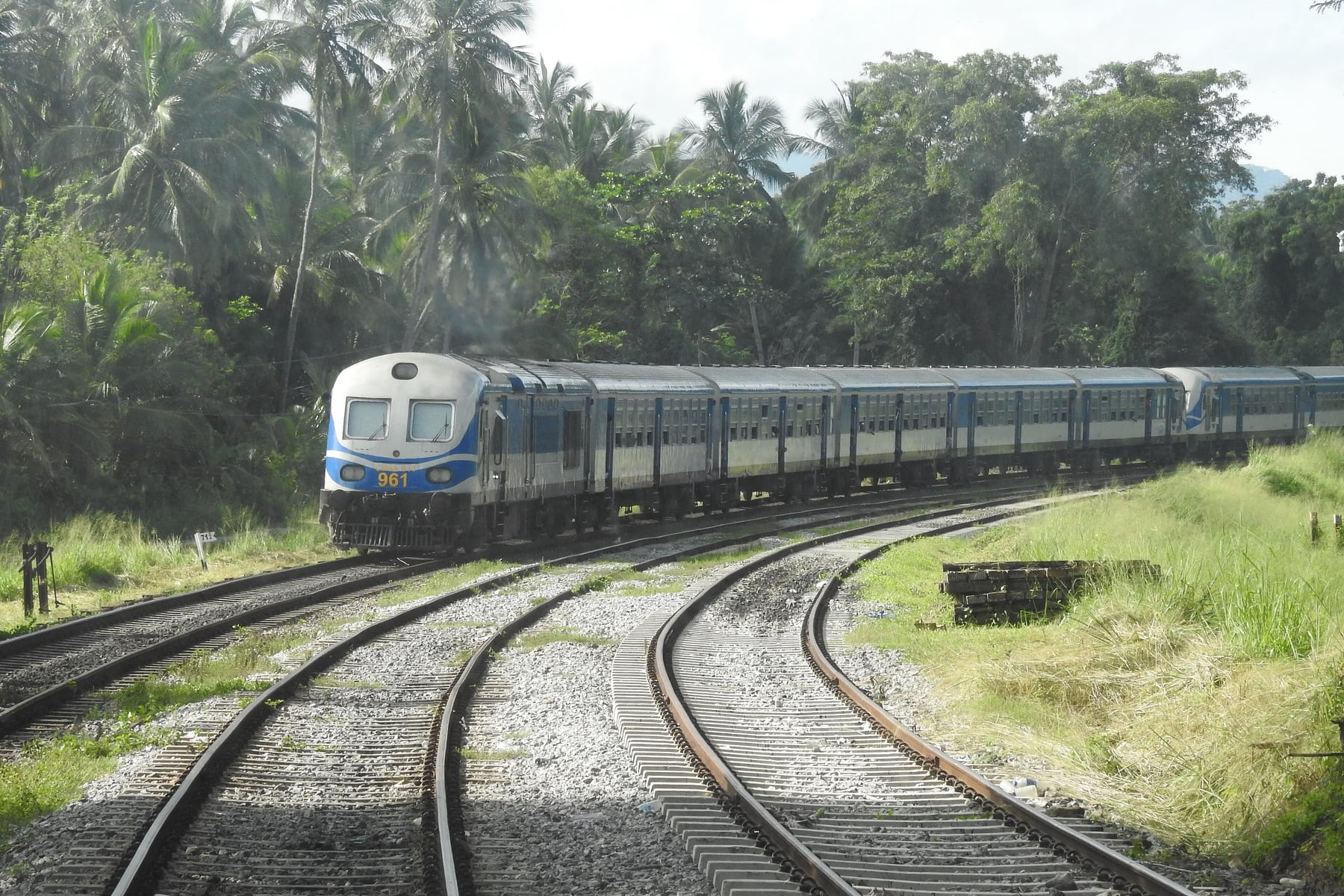
The Yal Devi
Rehman Abubakr / Wikimedia Commons · CC BY-SA 4.0 · 2019 · cropped
- DistanceAbout 413 km
- Duration7 hr 53 min
- Best seasonThree trains each way, daily · reserved seats only
Introduction
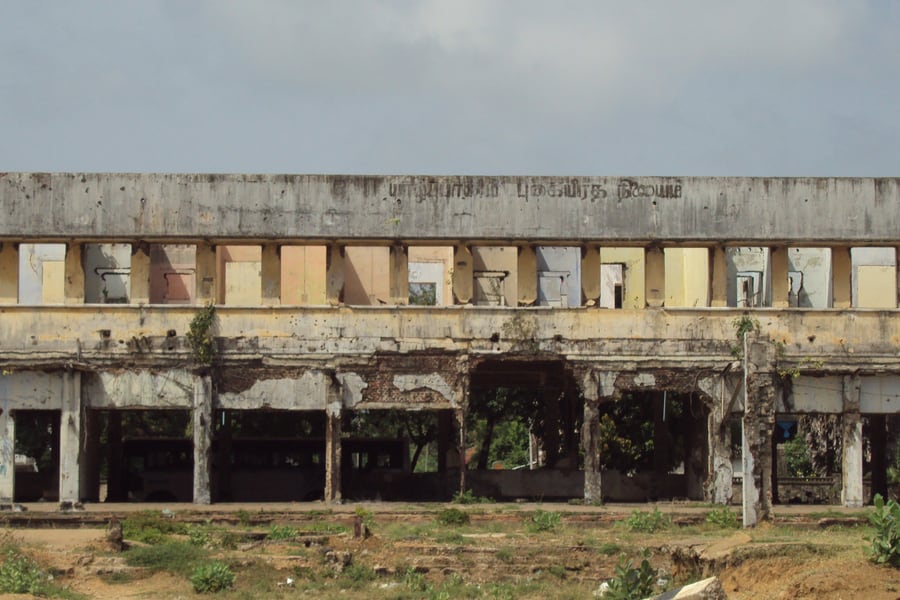
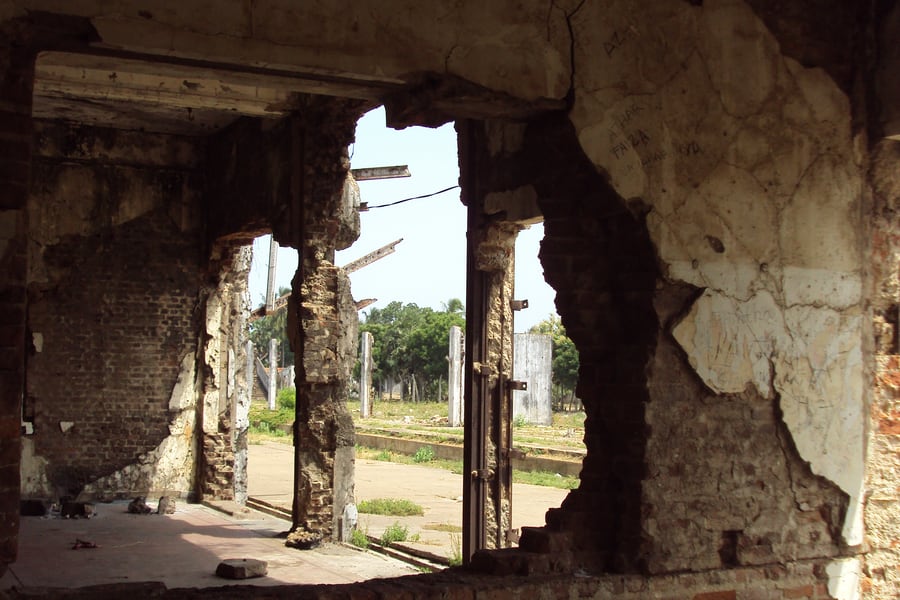
On 13 June 1990 the Yal Devi ran into Jaffna and stopped. It could not go back: the track behind it had been lifted and blown, the war had closed on the line, and the express that had carried the north to Colombo since the 1950s simply ended there. For the next twenty-four years the Northern Line stopped at Vavuniya, and what lay beyond it — a hundred and forty-six kilometres of formation, stations, signals and bridges — went back to scrub.
It is all there again. Indian money and an Indian contractor rebuilt the railway between 2009 and 2015, section by section, and on 13 October 2014 a train reached Jaffna for the first time in twenty-four years. The Yal Devi runs the whole way now, Colombo Fort at 06:40 to Kankesanthurai at 14:33, and two other trains do the same road — a nine-coach air-conditioned intercity in the morning and the night mail after dark.
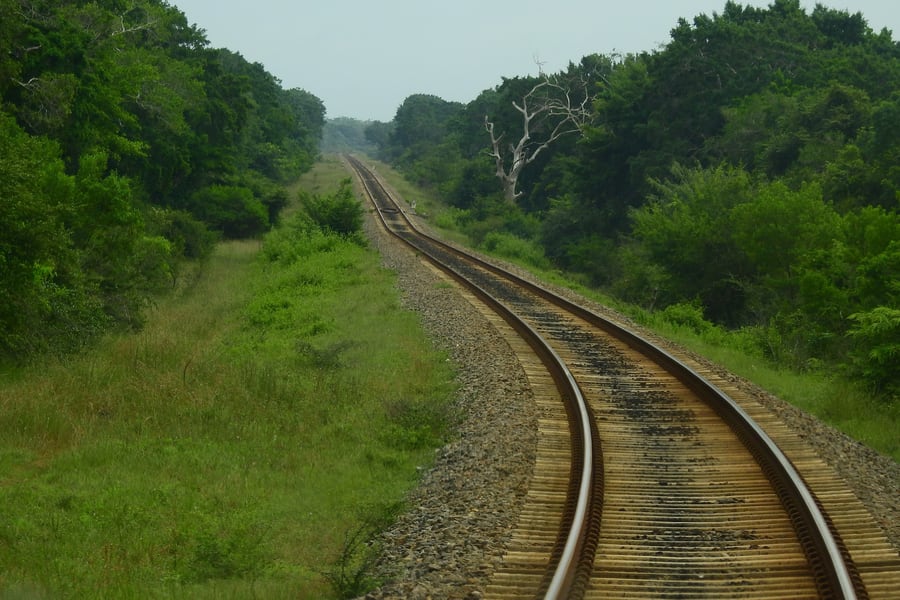
It is not a scenic railway in the way the hill line is. It is a fast, flat, straight one, laid for a hundred and twenty kilometres an hour across the dry zone and the palmyra country, and the reason to ride it is what it crosses and the fact that it can be ridden at all.
The Journey
The Northern Line is not a line out of Colombo. It is a branch of the Main Line, and it begins at Polgahawela Junction, 73.8 kilometres inland, where the rails to Kandy and the hill country swing right and these ones go straight on. From there it is 339 kilometres to Kankesanthurai on the far north coast, which makes the whole run from Colombo Fort about 413 kilometres — the longest through working on the island, and the only one that crosses it end to end.
The first hour and a half is the Main Line, out through the Colombo suburbs and the coconut country to Polgahawela. After the junction the character changes at once. The train runs to Kurunegala, 95.3 kilometres out, under the bare rock domes that stand over that town; then to Maho, where the Trincomalee and Batticaloa lines peel away east; and then into the dry zone, where the paddy gives out and the scrub takes over and the horizon flattens for the next two hundred kilometres.
Anuradhapura and the old front line
Anuradhapura is 204.9 kilometres from Colombo Fort and is the one intermediate stop that is a destination in itself — the island's first capital, a sacred city of stupas that were the largest brick structures on earth when they were built. The Yal Devi is there by mid-morning.
North of it the line thins. Medawachchiya at 230.9 kilometres is the junction for Talaimannar and the old ferry to India. Vavuniya at 254.4 kilometres is where the department's own station table stops printing distances, and that is not an accident of typesetting: for twenty-four years Vavuniya was the end of the railway. Everything past it — Omantai, Puliyankulama, Mankulam, Kilinochchi, Paranthan, Elephant Pass, Pallai, Kodikamam, Chavakachcheri — is rebuilt track on a rebuilt formation, and the A9 road runs alongside it for most of the way.
Elephant Pass
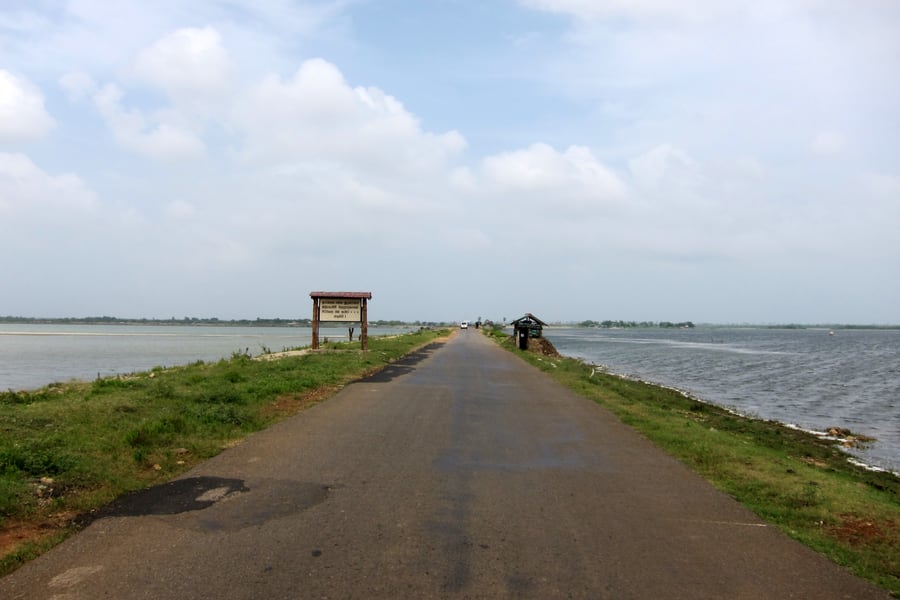
At Elephant Pass the island runs out. The Jaffna peninsula is joined to the rest of Sri Lanka by a causeway a few hundred metres wide with salt lagoon on both sides, seven metres above sea level, and the railway and the road cross it side by side. It is the reason the peninsula was fought over for thirty years and it is the most striking thing on the journey: flat white salt flats to the horizon on either hand, and a train on an embankment in the middle of them.
Beyond it the palmyra begins — the fan palm that stands in lines across every field in the north, and that the peninsula lived off when it could live off nothing else. Jaffna station is reached at 13:58 and the train goes on another seventeen kilometres to Kankesanthurai, the northernmost station in Sri Lanka, at 14:33.
What runs it
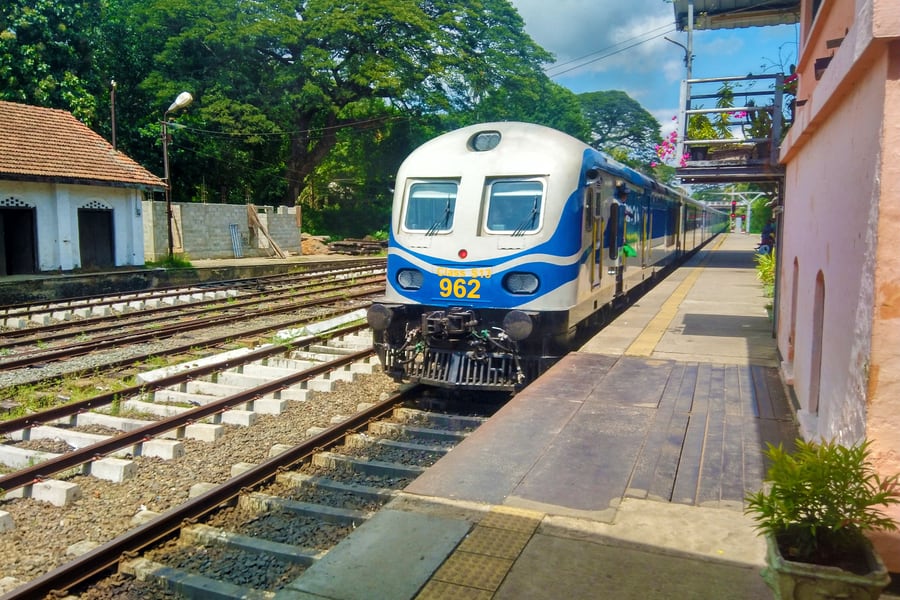
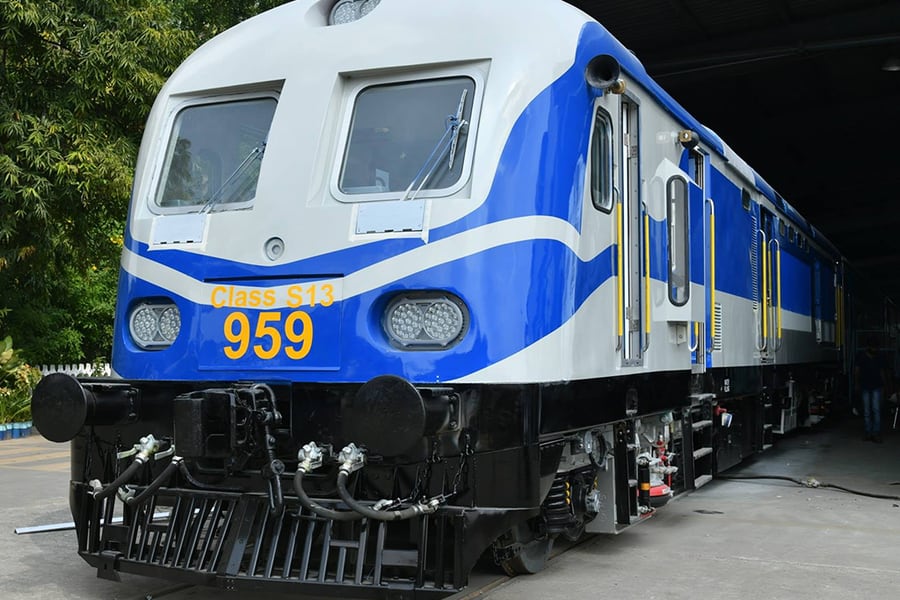
The trains on this line are Class S13 and S13A diesel-electric multiple units, built in China and delivered from 2012, and they are what makes a 413-kilometre day trip possible at all: the line was rebuilt for 120 km/h and these are the sets that can use it. Sri Lanka Railways runs a nine-carriage air-conditioned intercity, the Yal Devi with two air-conditioned carriages and reserved second class behind them, and the Kankesanthurai night mail with four.
Who rebuilt it, and twice
The reconstruction was Indian. Ircon International built it, and India lent the money: US$185 million for Omanthai to Pallai and a further US$150 million from the Export-Import Bank of India for Pallai to Kankesanthurai. The sections opened one at a time — Omanthai to Kilinochchi on 14 September 2013, Kilinochchi to Pallai on 4 March 2014, Pallai to Jaffna on 13 October 2014 and Jaffna to Kankesanthurai on 2 January 2015. Separately, Ircon has been renewing the 128 kilometres from Maho to Omanthai under a US$91.27 million contract, which is why parts of the line south of Vavuniya have been closed for months at a time since 2024.
Then Cyclone Ditwa arrived on 27 November 2025 and damaged the Northern Line in fourteen places. Temporary repairs got trains to Jaffna again on 24 December 2025, slowly; the line was shut once more on 19 January 2026 so the fourteen sites could be rebuilt properly, on a US$5 million grant from the Government of India, along with five bridges and an elephant underpass on the Maho–Omanthai renewal. It reopened on 9 April 2026. The Yal Devi itself restarted the day after.
Along the route
 T.Thevananth's Photos / Wikimedia Commons · CC BY 2.0 · 2010 · cropped
The train that could not come back
On 13 June 1990 the Yal Devi reached Jaffna and was stranded: the track behind it had been destroyed and it never returned to Colombo. Services north of Vavuniya stopped that year and did not resume for twenty-four.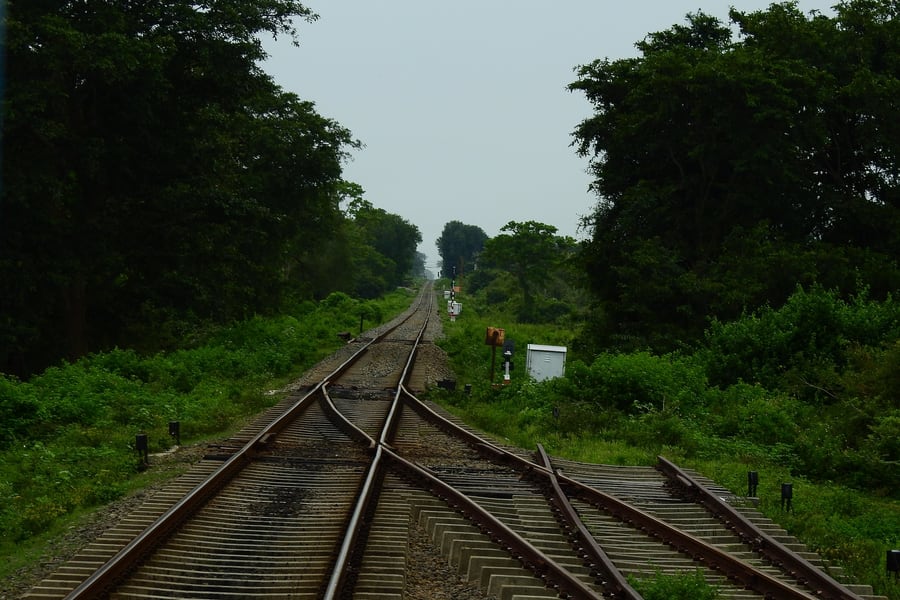 Rehman Abubakr / Wikimedia Commons · CC BY-SA 4.0 · 2019 · cropped
India rebuilt it
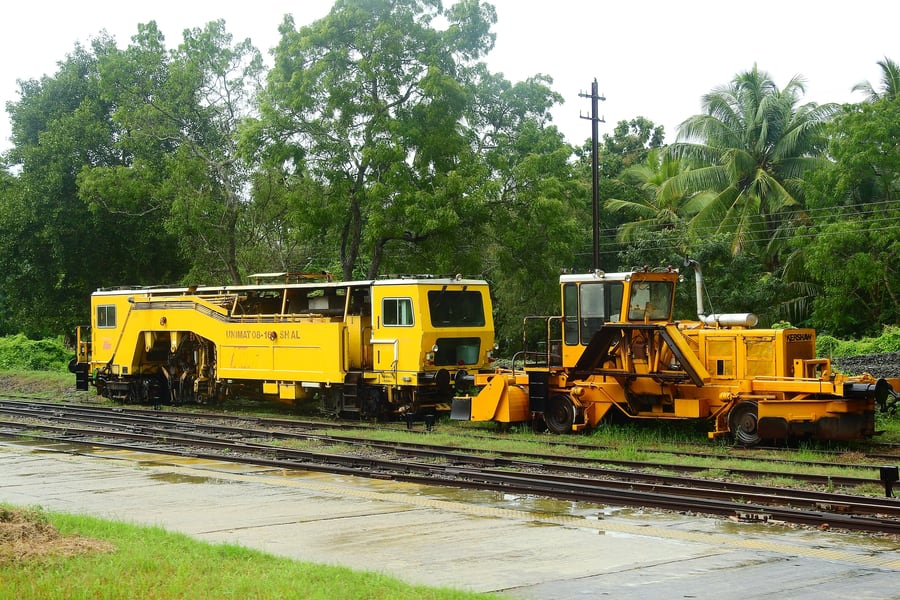
Ircon International relaid 146 kilometres from Omanthai to Kankesanthurai on Indian loans — US$185 million to Pallai, US$150 million beyond it — and is still renewing the 128 kilometres from Maho to Omanthai under a separate US$91.27 million contract.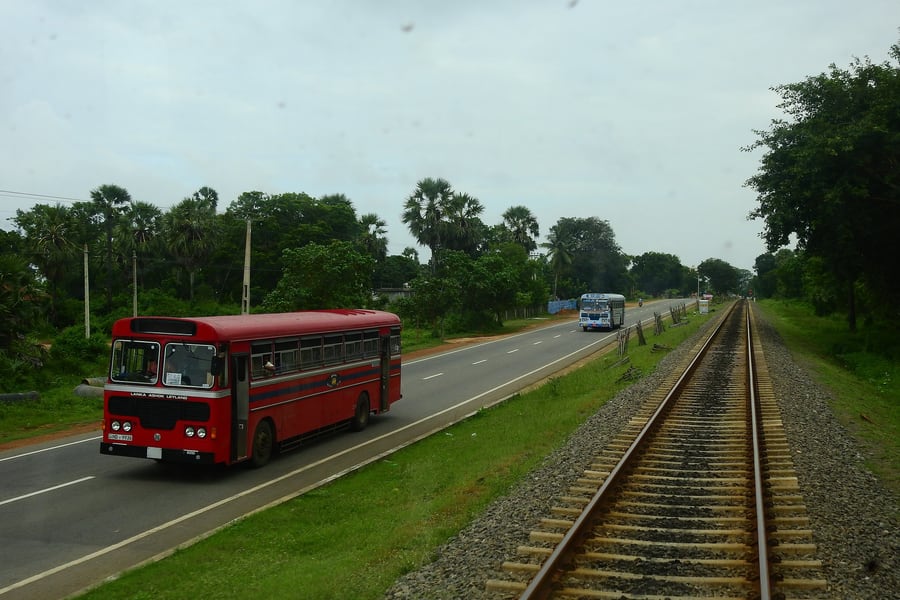 Rehman Abubakr / Wikimedia Commons · CC BY-SA 4.0 · 2019 · cropped
The A9 runs beside it
For most of the way north of Vavuniya the railway and the A9 trunk road share the same corridor, close enough to watch the buses. Both were cut for the same thirty years and both were reopened as the same act of reconstruction.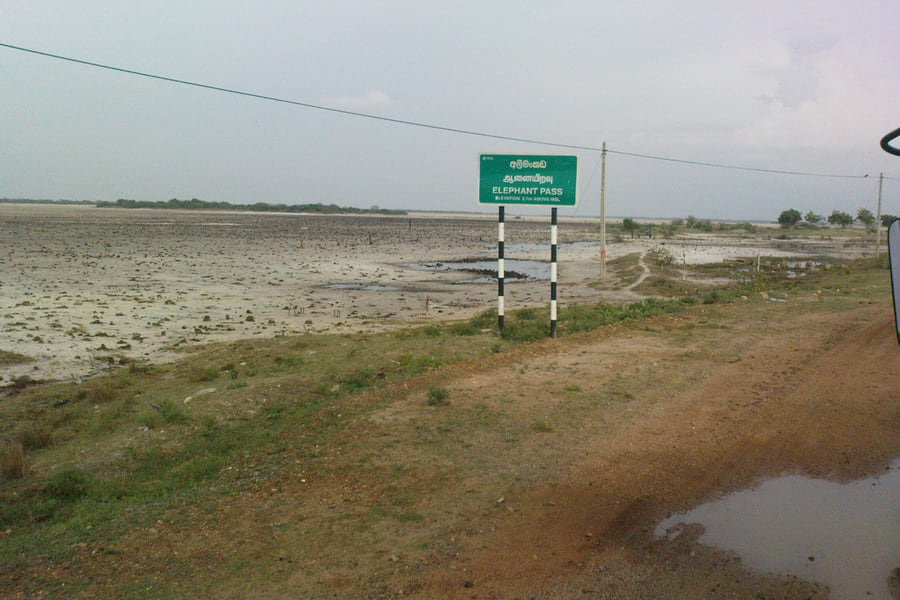 Shaakunthala / Wikimedia Commons · CC BY-SA 3.0 · 2010 · cropped
Seven metres above the sea
Elephant Pass is the only land route to the peninsula: a causeway between two lagoons with the road and the railway on it, and a board at the edge of the salt flats giving the elevation as seven metres. It is the summit of this journey.A bit of history
Culture & experiences along the way
 Mayooresan / Wikimedia Commons · CC BY-SA 3.0 · 2013 · cropped
Jaffna rice and curry
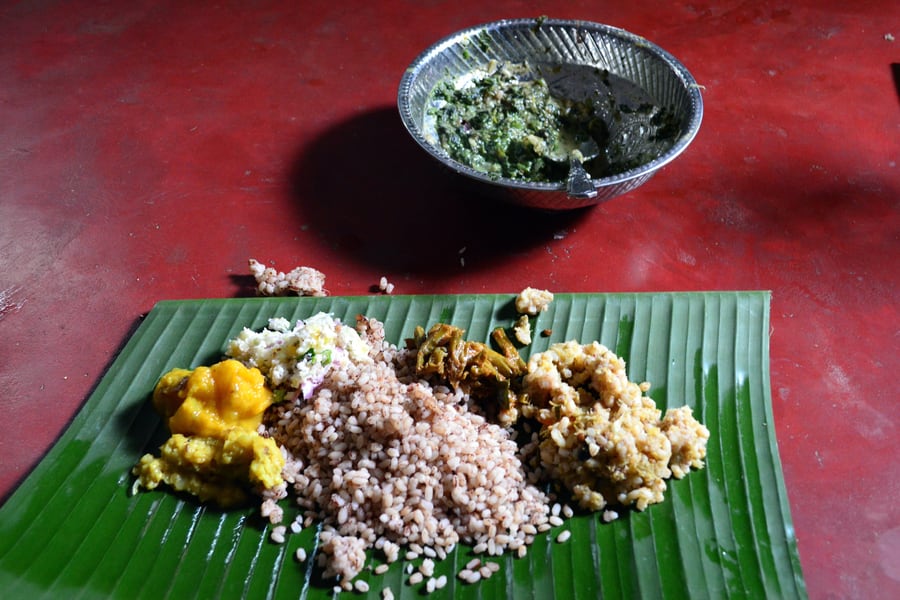
The north cooks differently from the south — more chilli, more tamarind, more of the sea. A Jaffna meal comes out on a banana leaf with crab curry, odiyal kool thickened with palmyra-root flour, and dried fish, and it is the single most obvious way the peninsula tells you that you have crossed into a different country's kitchen.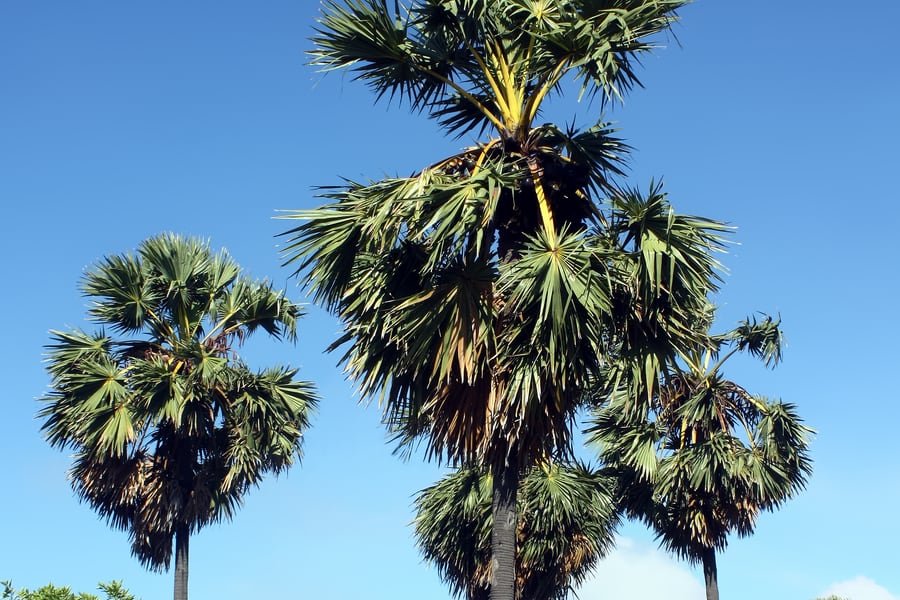 AntanO / Wikimedia Commons · CC BY-SA 4.0 · 2015 · cropped
The palmyra, and what the north lives on
Borassus flabellifer stands in lines across every field north of Elephant Pass. Its sap is drawn for toddy and boiled down for jaggery, its root is milled into the flour that thickens kool, its leaves roof houses and weave baskets, and its trunk is timber. It is the reason the peninsula could feed itself on very little soil.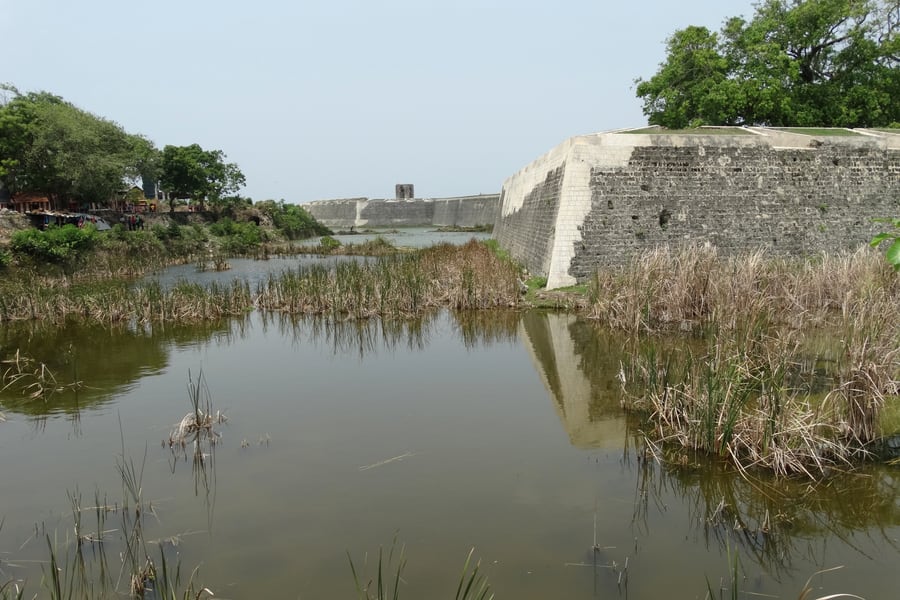 Adam Jones / Wikimedia Commons · CC BY-SA 2.0 · 2014 · cropped
The Dutch fort you can walk into
The Portuguese built the first fort at Jaffna in 1618 and the Dutch replaced it after 1658 with a five-pointed star in coral and limestone, a moat around it and a second outer ring of ravelins. It was fought over again in the 1990s and has been under restoration since; the ramparts are open and you can walk the whole circuit.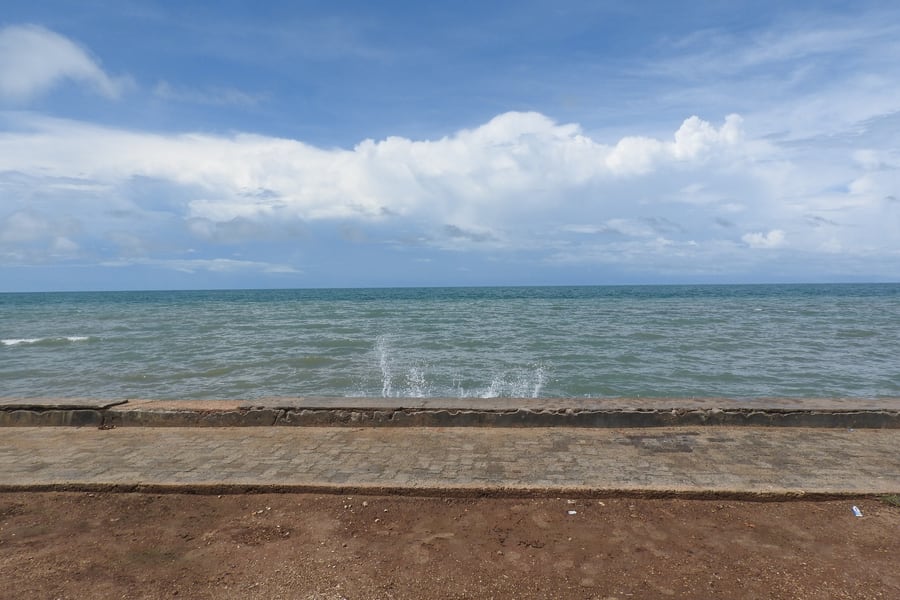 Yercaud-elango / Wikimedia Commons · CC BY-SA 4.0 · 2019 · cropped
Keerimalai, where the springs meet the sea
A freshwater spring rises a few metres from the Indian Ocean on the north coast, walled into bathing tanks beside the shore, and people have come to wash in it for as long as anyone has written anything down about this coast. Kankesanthurai station is a short ride away, which makes it the obvious thing to do at the end of the line.Timetables
Three trains work the whole line each way, every day. Times below are Sri Lanka Railways' own, from the notice it issued on 7 April 2026 to reopen the Northern Line, and they still match its reservation system to the minute in September 2026. Seats are sold at seatreservation.railway.gov.lk (opens in a new tab).
North — Colombo to Kankesanthurai
| Station | Intercity | Yal Devi | Night Mail |
|---|---|---|---|
| Mount Lavinia | 05:15 | — | — |
| Moratuwa | — | — | 18:55 |
| Colombo Fort | 05:45 | 06:40 | 20:00 |
| Anuradhapura | 09:25 | 10:51 | 00:05 |
| Vavuniya | 10:04 | 11:39 | 01:09 |
| Jaffna | 11:56 | 14:10 | 03:55 |
| Kankesanthurai | 12:14 | 14:33 | 04:24 |
South — Kankesanthurai to Colombo
| Station | Yal Devi | Intercity | Night Mail |
|---|---|---|---|
| Kankesanthurai | 10:30 | 13:50 | 20:00 |
| Jaffna | 11:00 | 14:15 | 20:35 |
| Vavuniya | 13:36 | 16:05 | 23:15 |
| Anuradhapura | 14:40 | 17:00 | 00:09 |
| Colombo Fort | 19:03 | 20:34 | 04:45 |
| Mount Lavinia | — | 21:15 | — |
| Moratuwa | — | — | 05:25 |
The figures are departure times; the reservation system quotes arrivals, which run a few minutes earlier — Jaffna at 13:58 rather than 14:10 on the Yal Devi, for instance. In the booking system the three appear as 444421/444422 (Intercity Express), 44477/44478 (Yal Devi) and 44089/44090 (Kankasanthure Night Mail).
Which one to take
The Intercity is the fast one: 6 hr 29 min Colombo Fort to Kankesanthurai against the Yal Devi's 7 hr 53 min, and it is nine air-conditioned carriages with nothing else on the train. The Yal Devi is the one with the name and the mixed formation — two air-conditioned carriages and reserved second class behind — and it is the one that arrives in Jaffna in daylight with the afternoon still to use. The night mail leaves Colombo at eight in the evening and is in Jaffna before four in the morning, which is a real overnight but an awkward arrival.
⚠️ The booking board does not always show all three. On some dates only one or two of them come back for a given pair of stations, on others all three do — the times are the same either way. That is the reservation system's stock allocation, not the timetable; check a neighbouring date before concluding a train is not running.
⚠️ This railway closes. It shut for six months in 2024 for the Maho–Omanthai renewal, again after Cyclone Ditwa in November 2025, and again from 19 January to 9 April 2026 while fourteen damaged sites were rebuilt. Sri Lanka Railways posts closures on its media notices page (opens in a new tab), usually in Sinhala and Tamil, and that page is worth a look before you book.
Tickets
Every seat worth having on this line is reserved and sold per train, through the department's own booking site, and it is one of the few Sri Lankan railway systems that works without an account: you can search, see the classes and count the seats left before you sign in. Fares below were read from it in September 2026 and are the same to Jaffna as to Kankesanthurai.
The three trains carry different stock, so the choice of class is really a choice of train. The Intercity is nothing but air-conditioned saloon, 520 seats of it. The Yal Devi and the night mail each have 192 air-conditioned seats and 100 reserved second class behind them. Those are the only classes the booking system offers on this route; anything else is a matter for the ticket window.
Book your tickets
GKP77 / Wikimedia Commons · CC BY-SA 4.0 · 2021 · croppedReserved second class, Yal Devi and night mail
LKR 1,900 to Jaffna or Kankesanthurai · LKR 1,200 to Anuradhapura
A hundred numbered seats behind the air-conditioned cars, and the cheapest way through.
Book Tickets (opens in a new tab, on railway.gov.lk)via railway.gov.lkH.M. Lahiru Udara / Wikimedia Commons · CC BY-SA 4.0 · 2019 · croppedAir-conditioned saloon, Yal Devi and night mail
LKR 2,800 to Jaffna or Kankesanthurai · LKR 2,000 to Anuradhapura
A hundred and ninety-two seats on the named express, or on the sleeper-hour mail.
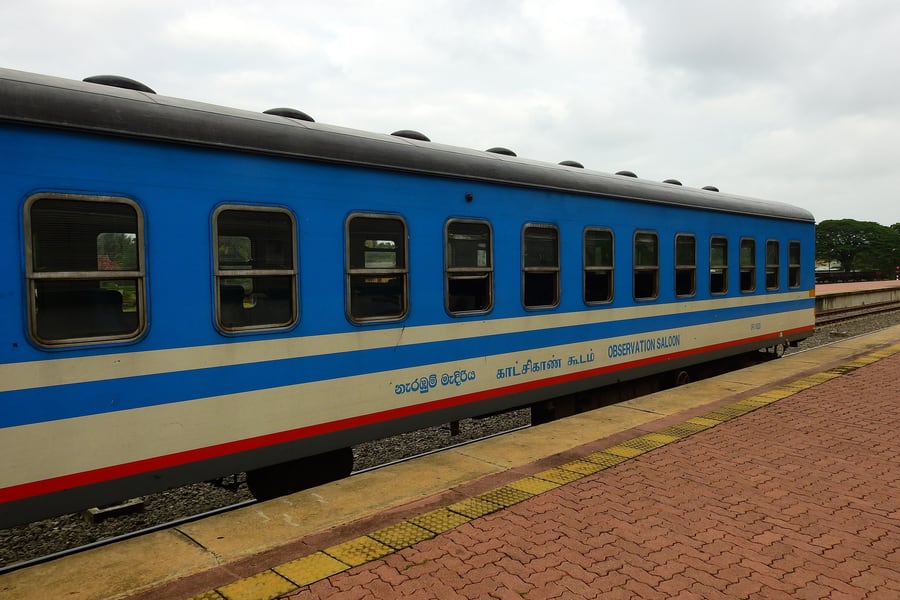
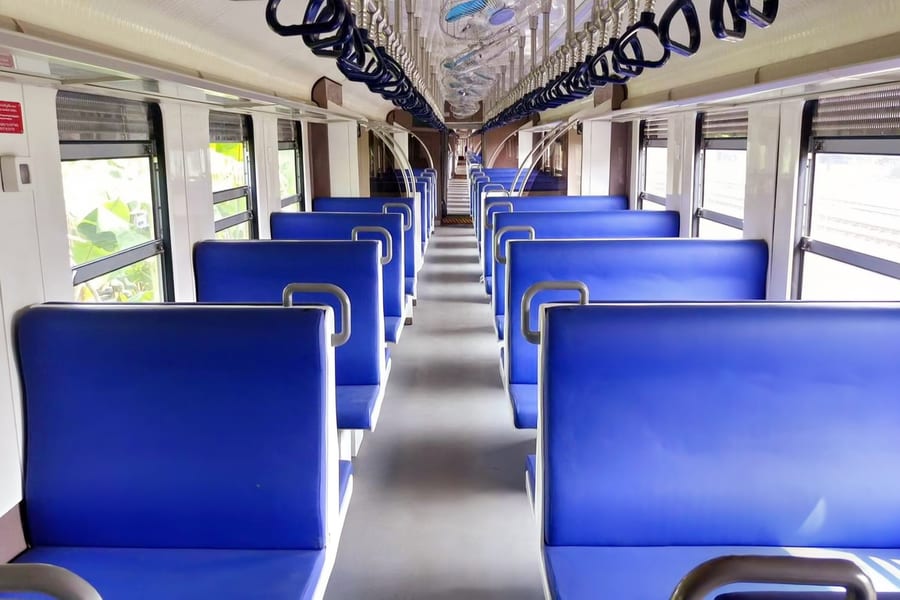
Book Tickets (opens in a new tab, on railway.gov.lk)via railway.gov.lkDilanTharindu / Wikimedia Commons · CC BY-SA 4.0 · 2018 · croppedAir-conditioned saloon, Jaffna Intercity
LKR 3,200 to Jaffna or Kankesanthurai · LKR 2,400 to Anuradhapura
Nine air-conditioned carriages, 520 seats and the fastest run on the line.
Book Tickets (opens in a new tab, on railway.gov.lk)via railway.gov.lkRail Passes
There is no rail pass for Sri Lanka, and none would help here.
Sri Lanka Railways is a single state operator with no national rover ticket, no tourist card and no part in any of the international pass schemes. Interrail and Eurail do not reach the country; the Indian passes stop at the Palk Strait. The department's own booking system offers exactly three kinds of customer besides the ordinary passenger — warrant holders, pension warrant holders and season-ticket holders — and all three are domestic entitlements, not products a visitor can buy.
Nor would a pass pay for itself. The whole 413 kilometres from Colombo Fort to Kankesanthurai costs LKR 2,800 in an air-conditioned seat and LKR 1,900 in reserved second class, which is among the cheapest long-distance rail travel anywhere; and with three trains a day there is nothing much to hop on and off.
What matters on this line is not the price of the seat but securing one. Every class the booking system sells here is reserved and allocated per train, so book the specific working you want — and book it before you travel, because the ticket window at Kankesanthurai is not a substitute for a seat on a train that left Colombo full.
Checked against Sri Lanka Railways' reservation system, September 2026.
Places to Visit
Five stops, south to north, from the rock town where the line turns inland to the beach at the top of the island. Anuradhapura alone is worth breaking the journey for; everything past Vavuniya is a place that had no visitors at all for a generation and has them again.
 Hasindu2008 / Wikimedia Commons · CC BY-SA 3.0 · 2012 · cropped
Kurunegala
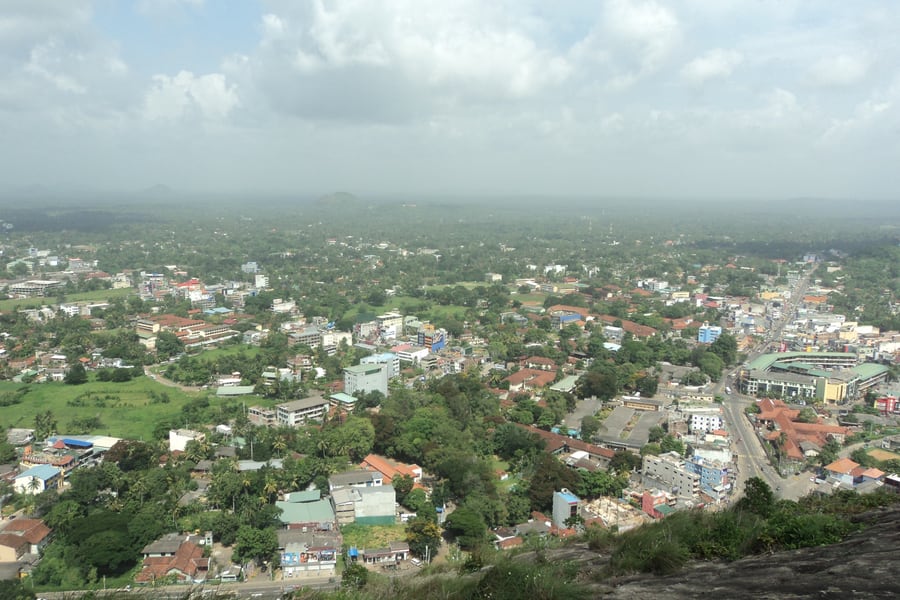
The first stop that is properly off the Main Line, and a town that sits in the lap of a line of bare gneiss domes named for the animals people thought they looked like — Ethagala the elephant rock is the big one, and you can walk up it. Kurunegala was the island's capital for about fifty years at the turn of the fourteenth century, which is long enough to leave ruins and not long enough to leave a city.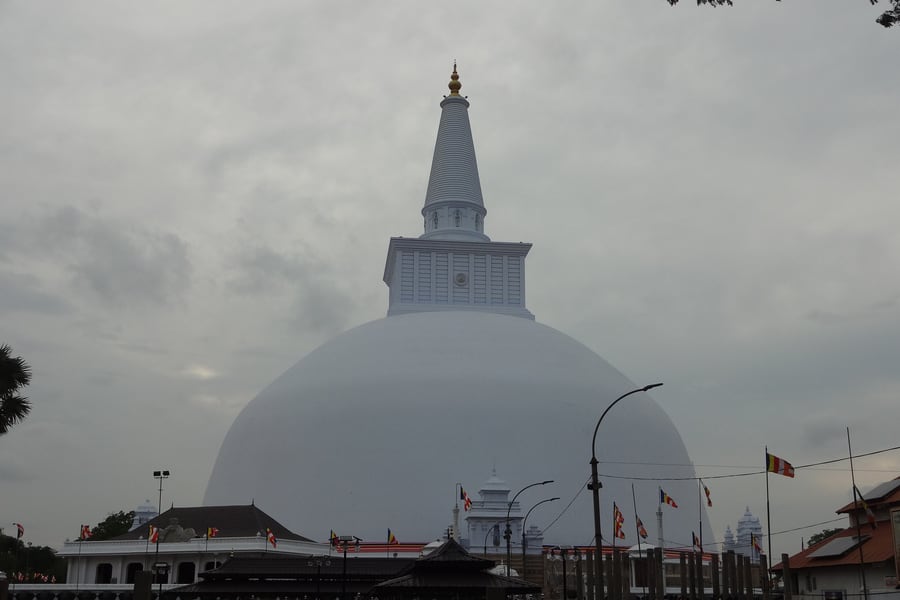 Z thomas / Wikimedia Commons · CC BY-SA 4.0 · 2017 · cropped
Anuradhapura
Sri Lanka's capital for more than a thousand years and the reason to break this journey. The sacred city is a landscape of dagobas the size of small hills — Ruwanwelisaya, Jetavanaramaya, Abhayagiri — set among monastery ruins, bathing ponds and irrigation tanks older than anything comparable in Europe. The Jaya Sri Maha Bodhi, grown from a cutting of the tree the Buddha sat under, has been tended here since the third century BC.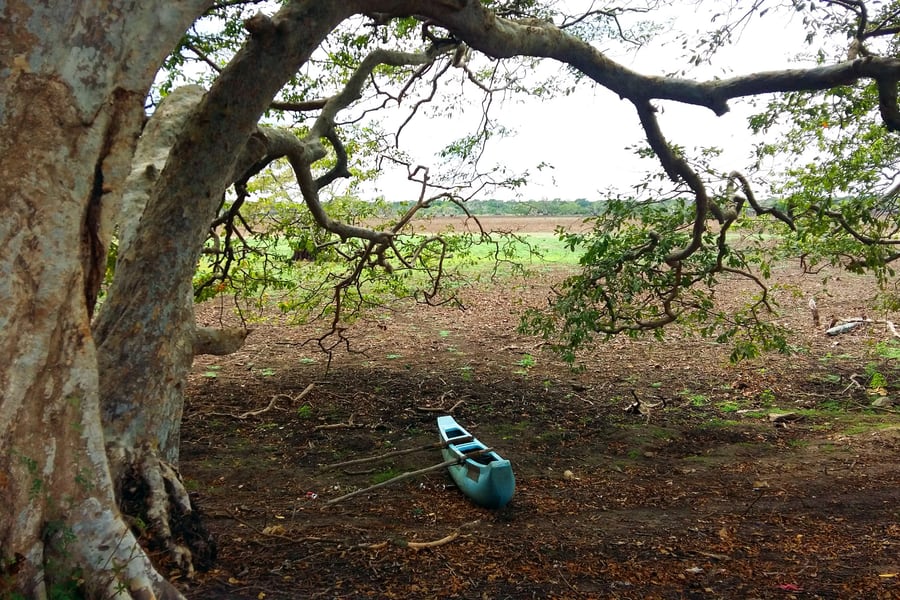 KSKarthikSiva / Wikimedia Commons · CC BY-SA 4.0 · 2019 · cropped
Kilinochchi
The administrative town of the Vanni, and the place the war ended hardest: it was the de facto capital of the Tamil Tigers and was taken in January 2009 with almost nothing left standing. What you see from the train now is a working town of new buildings and, around it, the great irrigation tanks of the dry zone — full in the north-east monsoon, cracked and walkable in the drought, with the boats left where the water was.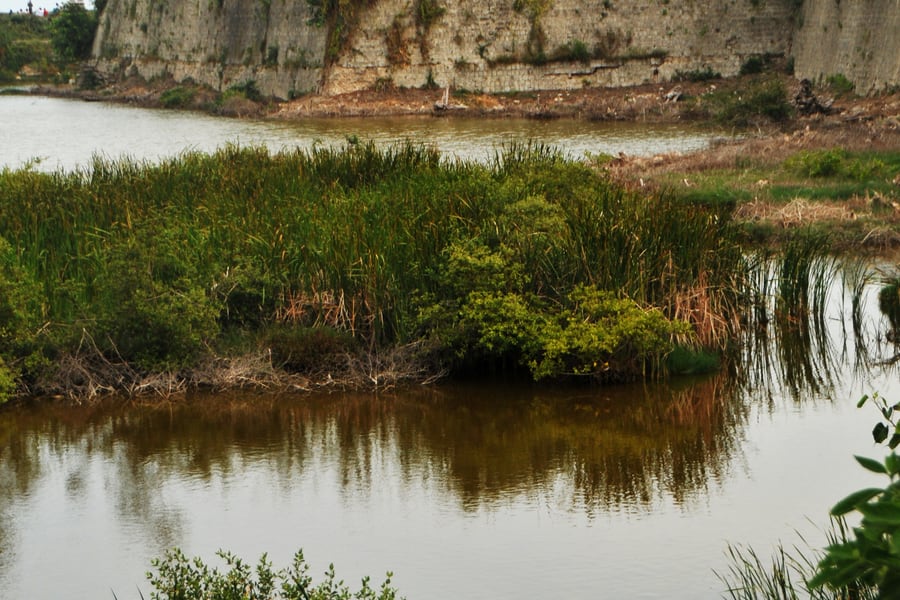 Gane Kumaraswamy / Wikimedia Commons · CC BY-SA 2.0 · 2010 · cropped
Jaffna
Yal Devi means the princess of Yalpanam, and this is Yalpanam: a low, hot, salt-edged city of Tamil Saivite temples, palmyra, Portuguese and Dutch fortification and a library whose burning in 1981 is still the wound everyone names first. It was cut off from the rest of the country for most of thirty years. It is now four hours from Anuradhapura and eight from Colombo, and it feels like neither of them.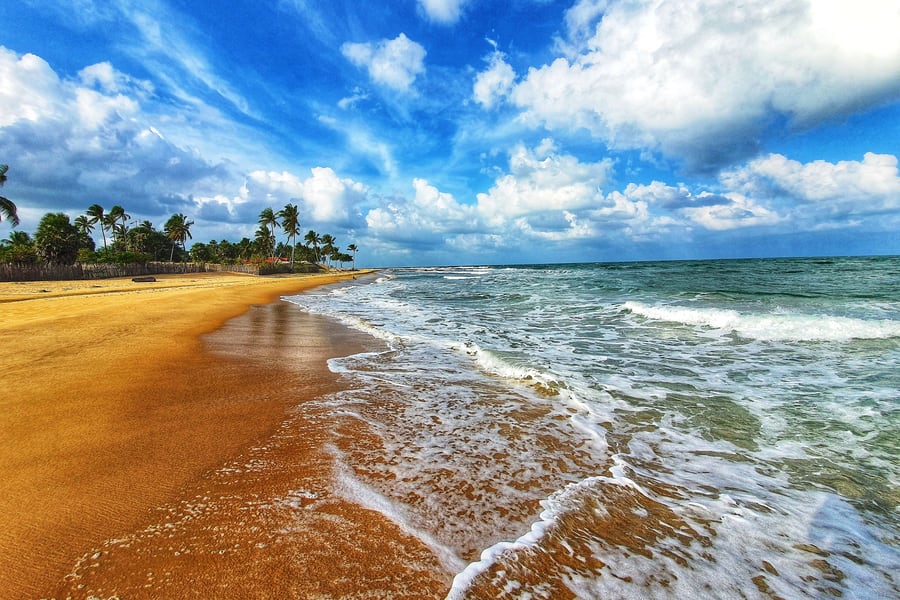 NavaaneethaSarma MurugananthaSarma / Wikimedia Commons · CC BY-SA 4.0 · 2019 · cropped
Point Pedro
The northernmost town in Sri Lanka, a fishing port on a long open beach about twenty kilometres east of Kankesanthurai along the peninsula road. There is nothing between here and India but the Palk Strait, and the beach runs for kilometres with palmyra behind it and outrigger boats drawn up on the sand. It is the natural full stop after a day on the train.Where to Sleep
The line gives you three obvious places to stop: the night before at Colombo Fort, a break at Anuradhapura roughly half way, and Jaffna at the end. Colombo Fort is the easiest of the three, because the departure is at a quarter to six in the morning for the Intercity and twenty to seven for the Yal Devi, and the hotels in the Fort district are a few minutes from the platform.
No prices or ratings here — we have checked neither. Each card links to the hotel's own site.
Where to stay
Grand Oriental Hotel
York Street, Colombo — facing the harbour, beside Colombo Fort station
The hotel's own account of itself: a building of 1837 that began as a Dutch hospital and was turned into a hotel, on York Street in the Fort district with many of its rooms looking over the working port. Its Harbour Room restaurant faces the same water. Colombo Fort station, where all three northern trains call, is a few minutes' walk.
Check Availability (opens in a new tab, on grandoriental.lk)via grandoriental.lkUga Ulagalla
Thirappane, Anuradhapura — the half-way stop
Built around what the resort describes as a 150-year-old mansion, once the home of a village chieftain, on an estate of 58 acres with twenty-five villas, each with its own pool. The house offers horse riding, kayaking, nature walks and guided Anuradhapura tours. Anuradhapura is 204.9 kilometres from Colombo Fort and the Yal Devi is there by mid-morning.
Check Availability (opens in a new tab, on ugaresorts.com)via ugaresorts.comJetwing Jaffna
In the middle of Jaffna, with a rooftop bar
The hotel calls itself the gateway to Sri Lanka's undiscovered northern province and puts its rooftop bar, overlooking the water, at the front of everything it says about itself. It cooks with South Indian influences, which in Jaffna is the point. The station is in the same city and the train from Colombo is in at 13:58.
Check Availability (opens in a new tab, on jetwinghotels.com)via jetwinghotels.comQuestions or corrections
Planning this trip and stuck on something, or spotted a time, fare or detail that has changed? Send us a message about The Yal Devi. We read every one, and we update this page when something has changed.