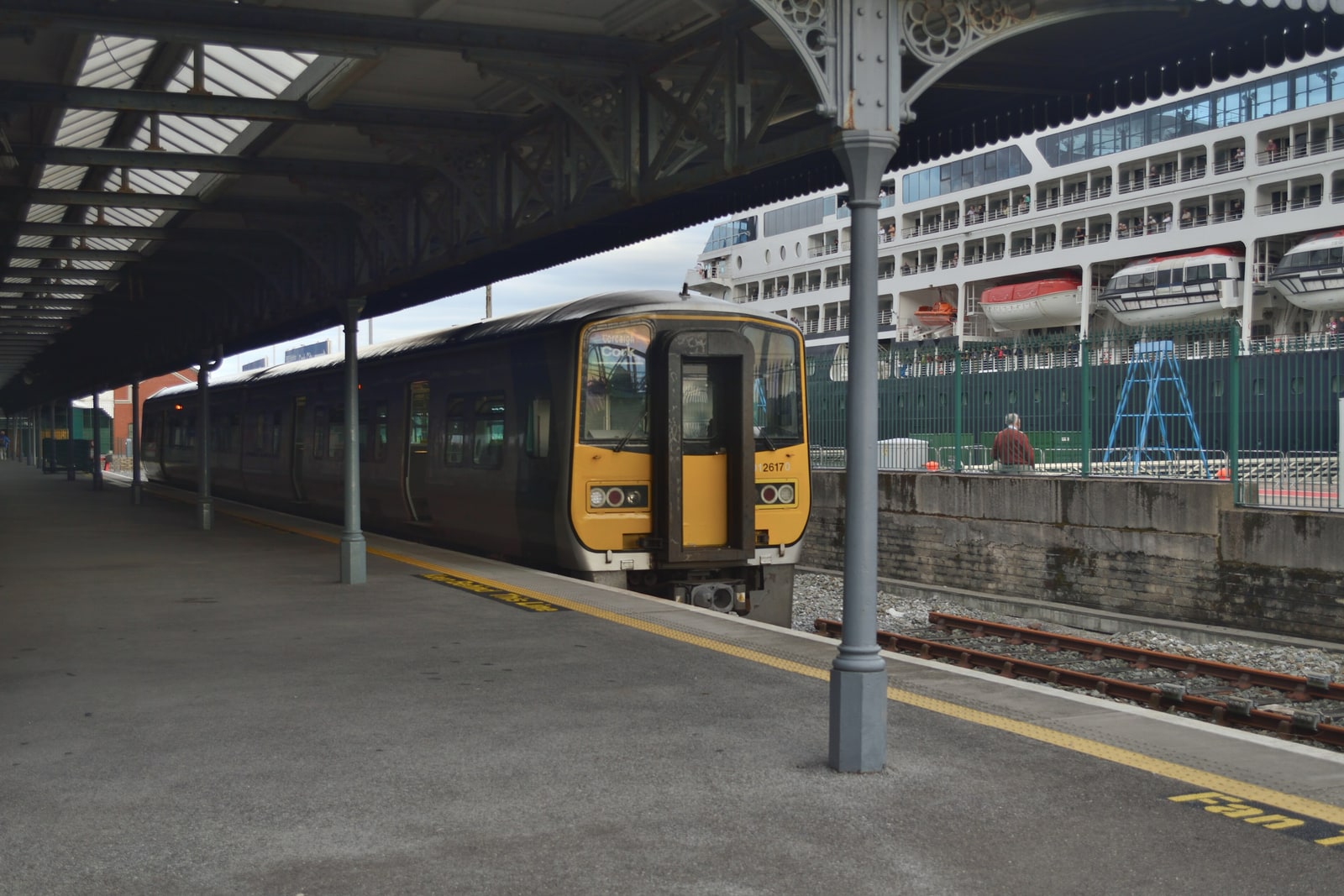
Cork to Cobh
Phil Richards / Wikimedia Commons · CC BY-SA 2.0
- DistanceCork–Cobh · about 24 km
- DurationAbout 25 minutes
- Best seasonYear-round; the harbour is at its best May–September
Introduction
It is one of the shortest journeys in this whole collection — twenty-five minutes, five stops, a train you can catch every half hour without a thought. And yet few rides anywhere carry so much history in so little distance. This little branch line runs out of Cork, hops across two islands in one of the world's great natural harbours, and sets you down at Cobh — the small, steep, colourful town that was, for a hundred years, the last piece of Ireland that millions of people ever saw.
They called it Queenstown then, a name given in 1849 for a visit by Queen Victoria and kept until 1920. From its quays the emigrant ships sailed for America, and the numbers are staggering: of the roughly six million Irish people who crossed the Atlantic between 1848 and 1950, two and a half million left from this one harbour — Famine refugees, hopeful young families, the countless who would never come home. For many of them the branch train, or the horse and cart down to the tender, was the very last leg of their life in Ireland.
And it was here, on 11 April 1912, that the RMS Titanic made her final stop. She anchored out in the deep water off the town, tenders carried a hundred and twenty-three last passengers out to her, and then she sailed west into legend. Three years later the Lusitania was torpedoed just down the coast, and Cobh buried her dead. The town wears all of this lightly and proudly — in a waterfront museum, a heritage centre at the station, and the great cathedral that watches over the harbour.
You do not need to be a historian to love the ride, though. The train slips out along the River Lee, skims across the water on low bridges to Fota Island — with its famous wildlife park at the platform — and rolls down to a little terminus hard against the sea, beneath a hillside of painted houses and the soaring spire of St Colman's Cathedral. Short, cheap, and quietly unforgettable.
The Journey
The train leaves from Cork Kent, the city's fine stone terminus on the north bank, and for the first few minutes runs east through a tunnel and out along the River Lee, with the water widening beside you as the city gives way to mudflats, reed beds and wading birds. This is the head of Cork Harbour, one of the largest natural harbours on earth, and the whole of the rest of the journey takes place around and across it.
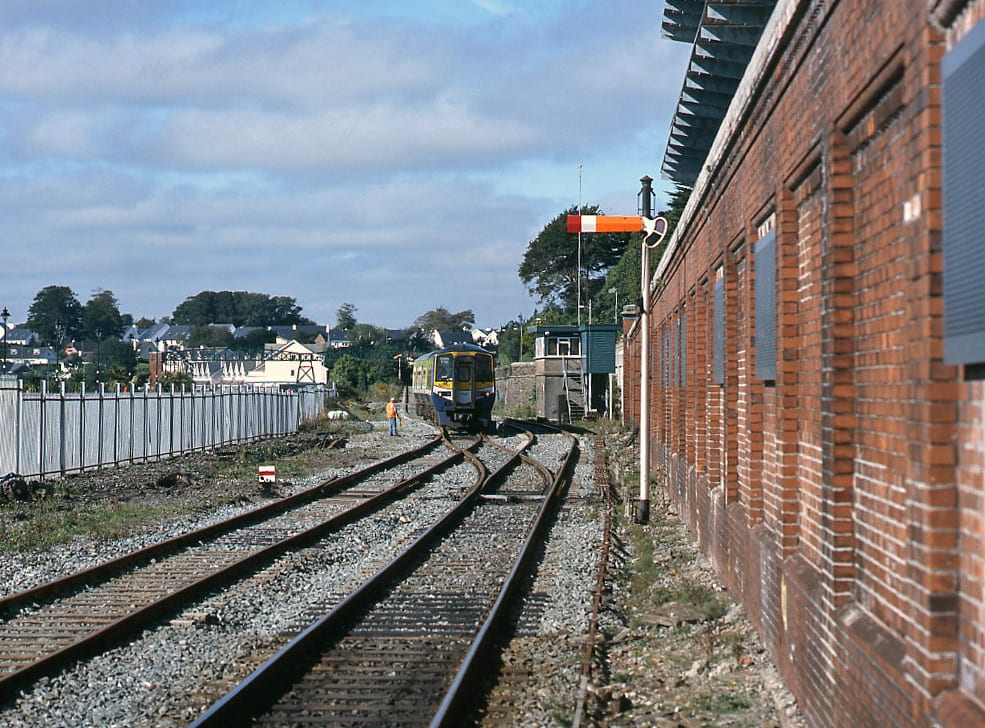
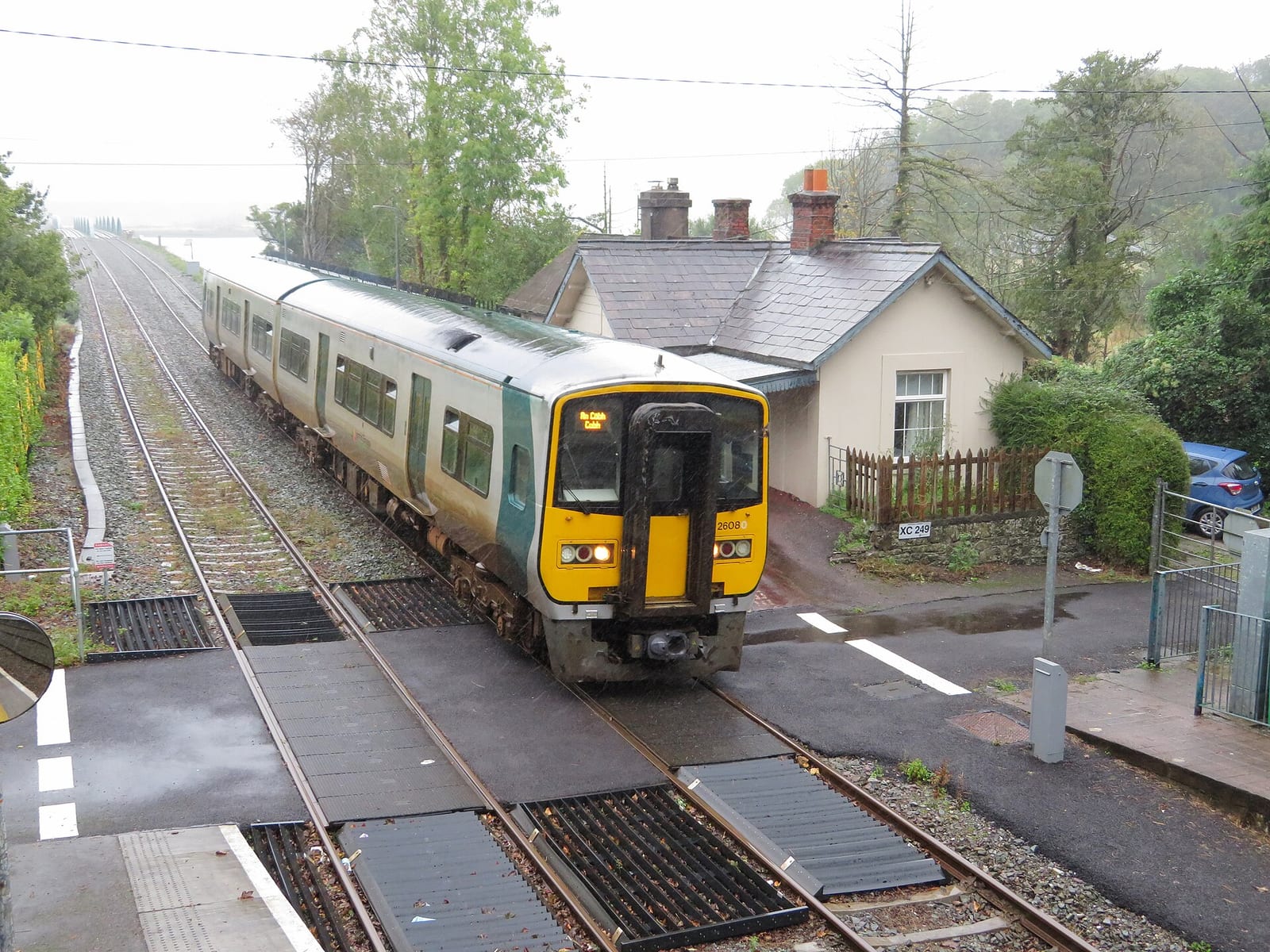
At Glounthaune the line divides. This was once Cobh Junction, where the branch to Queenstown left the old Cork & Youghal Railway — a company that opened its main line in 1859 and reached the harbour town in 1862. The Youghal trains are long gone, but the junction is busy again: one track carries on east to Midleton, reopened in 2009 after decades of closure, while ours swings south for the harbour.
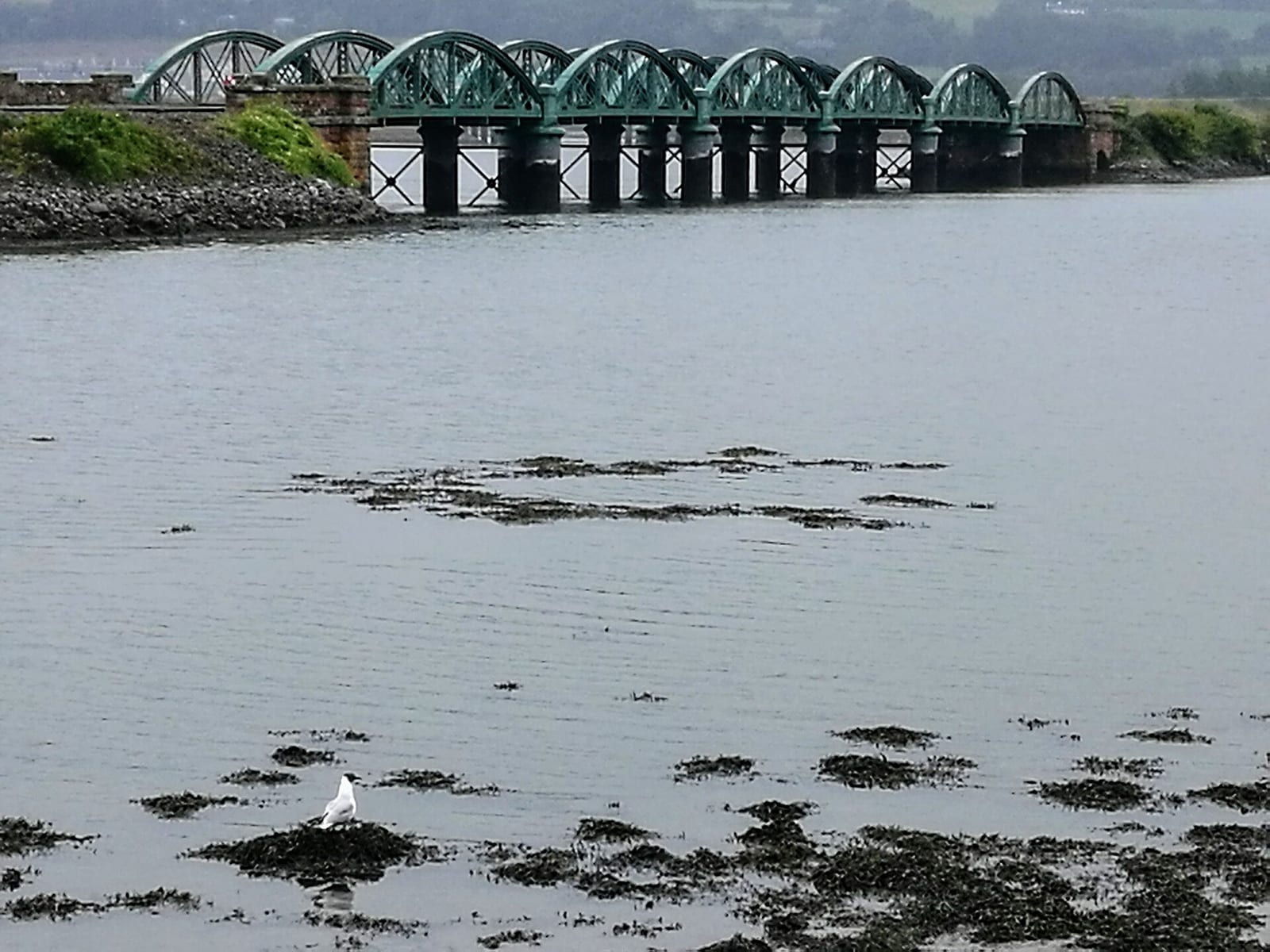
Now comes the prettiest part. The railway strikes out across the water on a low bridge onto Fota Island, a green private demesne in the middle of the estuary. The station here is a simple platform, but it is the gateway to Fota Wildlife Park and the Regency Fota House, and on a summer morning half the train gets off with picnic bags and children in tow. Beyond it the line crosses a second channel — the narrow neck at Belvelly — onto Great Island, and Cobh's world begins.
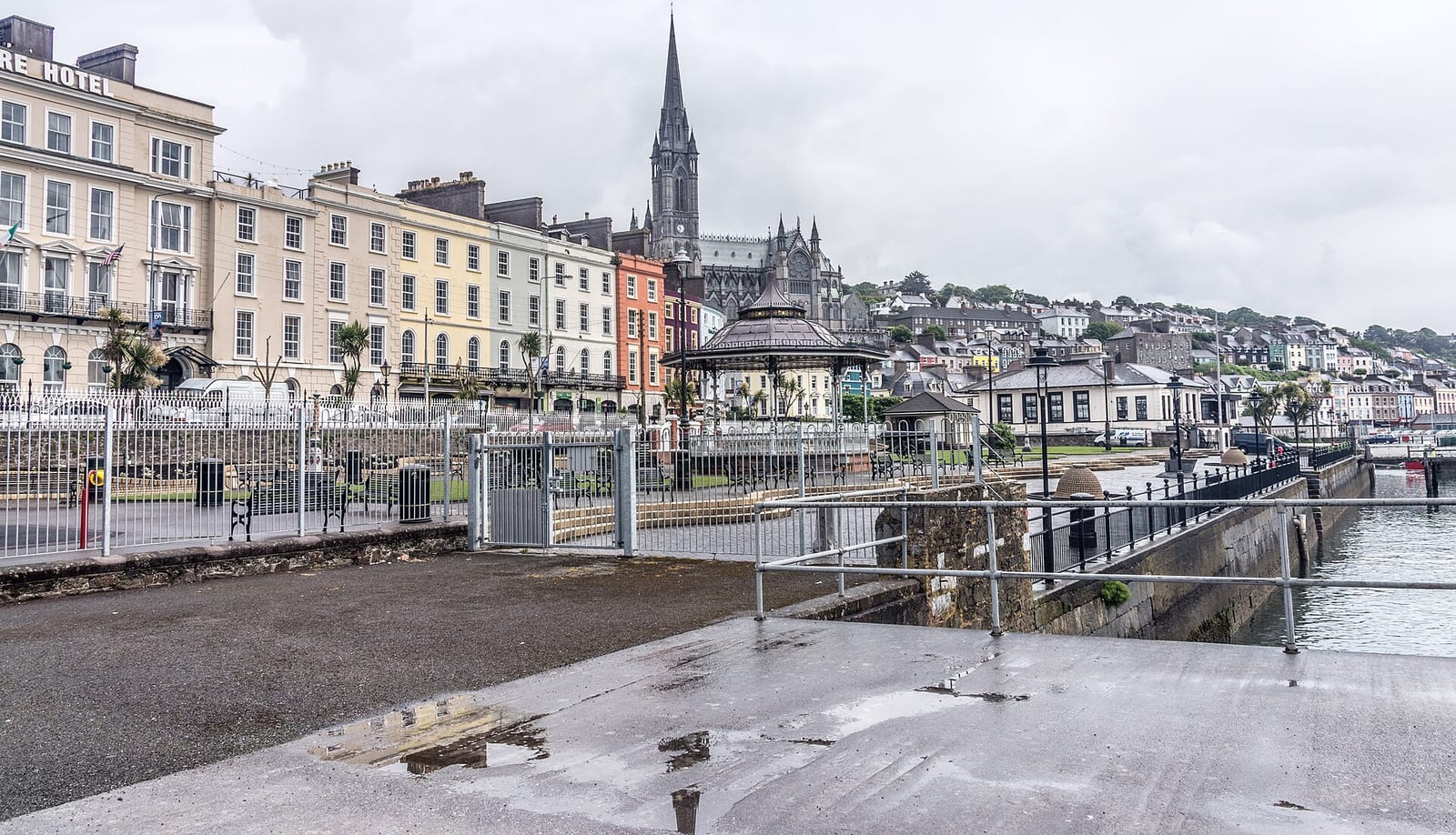
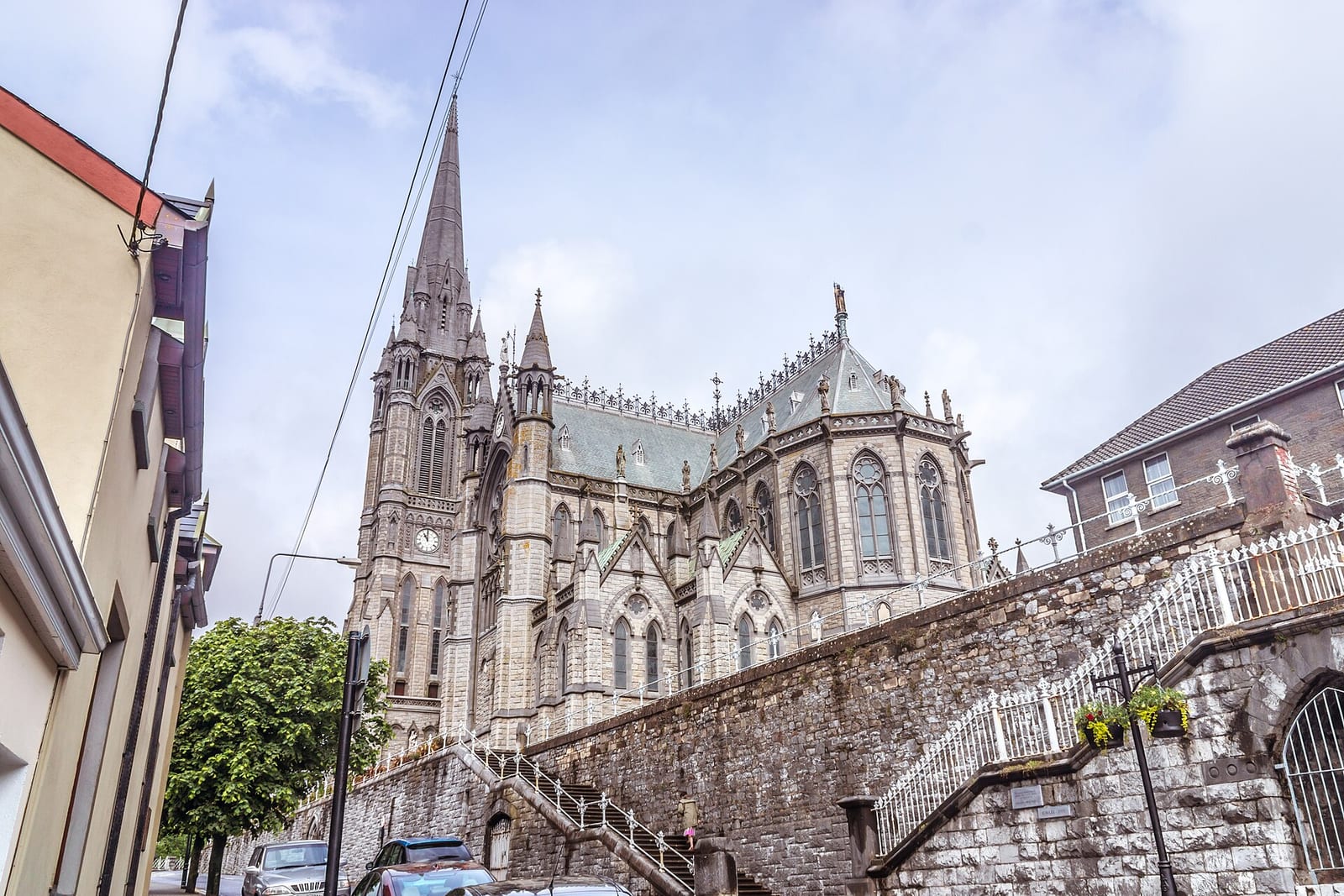
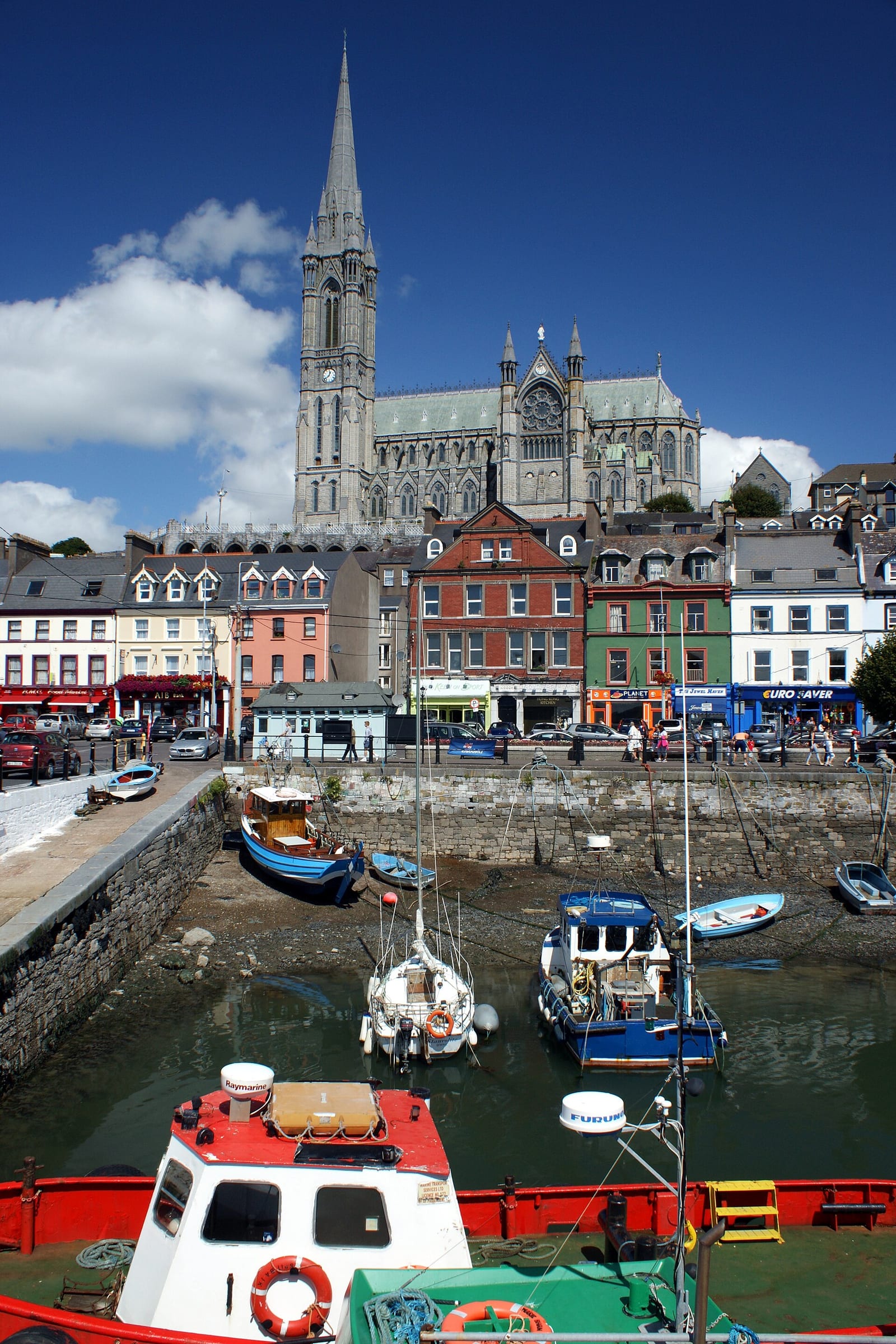
The last stops come quickly: Carrigaloe, where a little car ferry crosses to the far shore, and Rushbrooke, with its boatyards and dockyard cranes. Then the town itself appears across the water, and it is a genuine gasp of a view — tiers of brightly painted houses climbing a steep hillside, all of them dwarfed by the immense Gothic spire of St Colman's Cathedral standing 91 metres above the roofs.
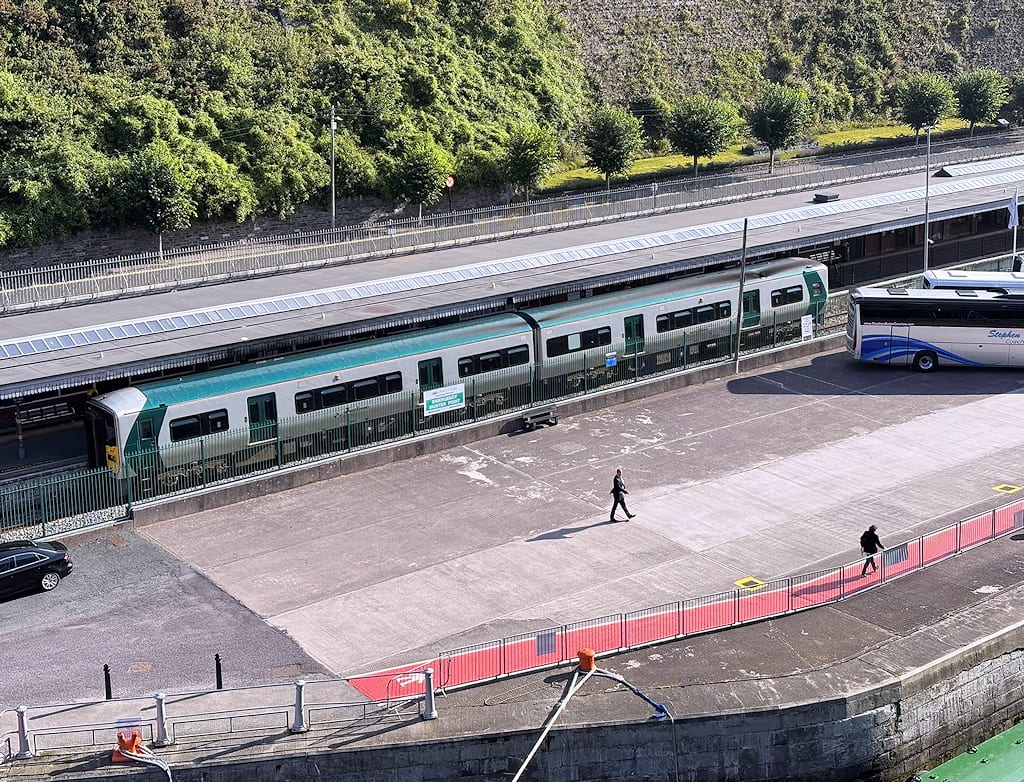
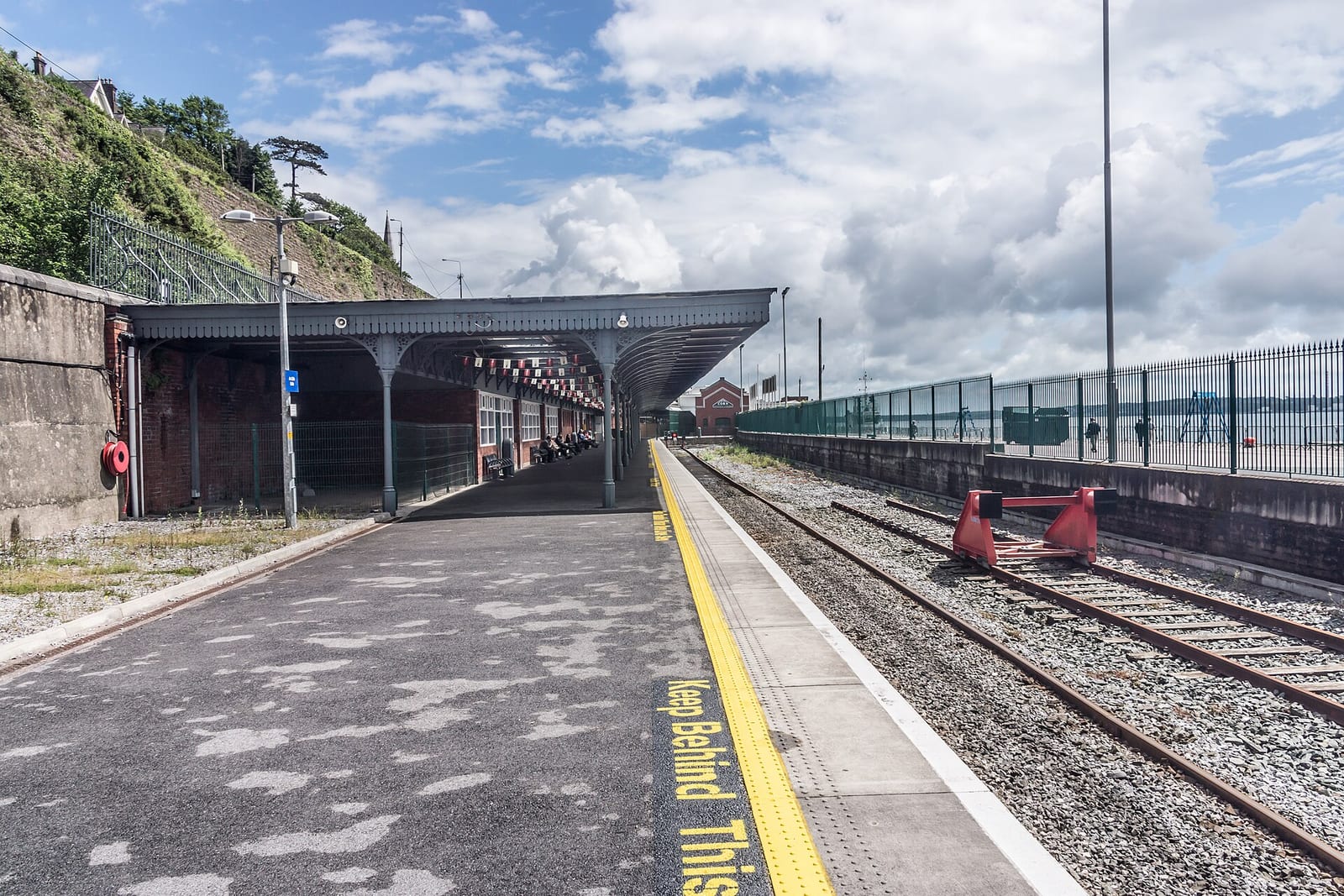
The train runs the final yards along the waterfront and stops at Cobh station, a handsome Victorian building on the quay with the harbour lapping just beyond the buffers. It is the perfect terminus: you step off the train, walk twenty paces, and you are standing on the very quayside where the tenders loaded for the Titanic, where the emigrant ships took on their passengers, and where the deep-water anchorage still receives the cruise liners today. Few stations in Europe put you so immediately into the middle of the story.
Along the route
William Murphy / Wikimedia Commons · CC BY-SA 2.0The Titanic's last port of call
On 11 April 1912 the Titanic anchored off Cobh — then Queenstown — to take on her final passengers. 123 people boarded here; only 44 survived. The old White Star Line ticket office on the quay is now a museum.David Dixon / Wikimedia Commons · CC BY-SA 2.0The gateway of the emigrants
For a century Cobh was the great door out of Ireland. Of the roughly six million Irish who emigrated to North America between 1848 and 1950, two and a half million sailed from this one harbour, most of them never to return.Gaoithe / Wikimedia Commons · CC BY-SA 4.0A ride across the islands
Leaving Cork the train runs along the River Lee, then leaps out across the water on low bridges to Fota Island and Great Island, threading between the arms of one of the world's largest natural harbours. Twenty-five minutes, and a complete change of world.A bit of history
Culture & experiences along the way
The Carlisle Kid / Wikimedia Commons · CC BY-SA 2.0Stand where the Titanic paused
Cobh station and the old quays sit exactly where the tenders America and Ireland carried the last passengers out to the anchored liner. The Titanic Experience, in the original White Star ticket office, and the Cobh Heritage Centre at the station itself tell the whole story — the emigrants, the Titanic, and the Lusitania, torpedoed off this coast in 1915 and mourned in the town's cemeteries to this day.Gareth James / Wikimedia Commons · CC BY-SA 2.0A morning at Fota
Break the journey at Fota, the island station in the middle of the branch. A few minutes' walk away is Fota Wildlife Park, where cheetahs, giraffes and kangaroos roam in open paddocks, and the beautiful Fota House and its Victorian arboretum. It is one of the best family days out in Munster, and the train drops you at the gate.Kondephy / Wikimedia Commons · CC BY-SA 4.0The town that climbs the hill
Cobh is one of the prettiest towns in Ireland, its brightly painted houses stacked up the steep hillside beneath the vast Gothic bulk of St Colman's Cathedral. Climb the famous "Deck of Cards" terrace, listen for the cathedral's great carillon of bells, and take in the view over the harbour where the great ships once lay at anchor.Timetables
This is a frequent, everyday suburban service, so there is no need to build your day around it — but here is what to expect.
Monday to Saturday, trains leave Cork Kent for Cobh roughly every 30 minutes, at about :00 and :30 past each hour, from early morning until late at night. (The trains at :15 and :45 go to Midleton instead, so check the destination on the platform.) The journey takes about 25 minutes.
A representative selection of weekday departures, as of the timetable valid from December 2025:
| Cork Kent | Fota | Cobh |
|---|---|---|
| 05:30 | 05:45 | 05:56 |
| 07:00 | 07:15 | 07:26 |
| 09:00 | 09:15 | 09:26 |
| 12:00 | 12:15 | 12:26 |
| 15:00 | 15:15 | 15:26 |
| 18:00 | 18:15 | 18:26 |
| 21:00 | 21:15 | 21:26 |
| 23:00 | 23:15 | 23:26 |
Coming back, trains leave Cobh for Cork at about :00 and :30 past the hour, with the first around 06:00 and the last at 23:30, arriving in the city 25 minutes later.
On Sundays the service is roughly hourly rather than half-hourly, with trains leaving Cobh at about :30 past the hour from around 08:30 until 23:30.
No reservation is needed — turn up, tap in and go.
Operator: Iarnród Éireann (Irish Rail) — irishrail.ie (opens in a new tab). See the Mallow–Cork–Midleton–Cobh timetable or the Journey Planner for exact times.
Tickets
Tickets are as simple as it gets. This is an ordinary commuter railway, so a single or return from Cork Kent to Cobh costs only a few euro and needs no advance booking.
The easiest way to pay is a Leap card, Ireland's reusable travel card, which works across the Cork commuter network and gives a cheaper fare than a paper ticket — just tap on at the gate and tap off at the other end. Otherwise, buy from the ticket machines or the office at Cork Kent, or through the Irish Rail app.
If you are planning to stop at Fota for the wildlife park on the way, buy to Fota and then a separate ticket onward to Cobh, or simply buy a return to Cobh and break your journey — but check the current rules on the day, as they change.
Fares are set by Iarnród Éireann (Irish Rail). Note that admission to Fota Wildlife Park, the Titanic Experience and the Cobh Heritage Centre is separate and paid at each attraction; combined rail-and-entry offers occasionally appear, so it is worth a look at the Irish Rail site before you travel.
Check times and fares at irishrail.ie (opens in a new tab).
Book your tickets
Cork to Cobh · Commuter
Cork Kent to the harbour
The everyday suburban train from Cork Kent station out to Cobh, roughly every half hour through the day, calling at Fota for the wildlife park. Pay with a Leap card or buy a single or return from Irish Rail — one of the best-value short journeys in Ireland.
Book Tickets (opens in a new tab, on Iarnród Éireann (Irish Rail))via Iarnród Éireann (Irish Rail)Timetable · Cork Commuter Rail
Cobh, Midleton and Mallow lines
Live times for the whole Cork suburban network, including the Cobh branch and its sister line to Midleton, which share the tracks as far as Glounthaune. Check the schedule before you travel, especially for evening and Sunday services.
Book Tickets (opens in a new tab, on Iarnród Éireann (Irish Rail))via Iarnród Éireann (Irish Rail)Rail Passes
Interrail passes are valid. Irish Rail is in Interrail's table of included companies, so the Cobh train is covered by a one-country Interrail Ireland Pass, which also covers Northern Ireland, or a Global Pass. No reservation is needed.
For this journey alone, a pass is not worth buying. It is a short commuter ride on an ordinary fare, and a Leap card makes it cheaper still. A pass pays only when Cobh is a side trip from a longer tour of Ireland by train.
Checked October 2026 against interrail.com (opens in a new tab) and Interrail's Ireland page (opens in a new tab).
Places to Visit
Almost everything worth seeing on this journey is within walking distance of a station, which makes it an unusually easy day out.
One Cobh landmark is not listed below because it needs no directions: the "Deck of Cards", the stepped row of brightly painted houses on West View tumbling down the hill beneath the cathedral. It is the most photographed street in the town and you will walk past it on the way up to St Colman's. Everything else here is a short walk from the quays, or one stop back up the line.
 William Murphy / Wikimedia Commons · CC BY-SA 2.0 · cropped
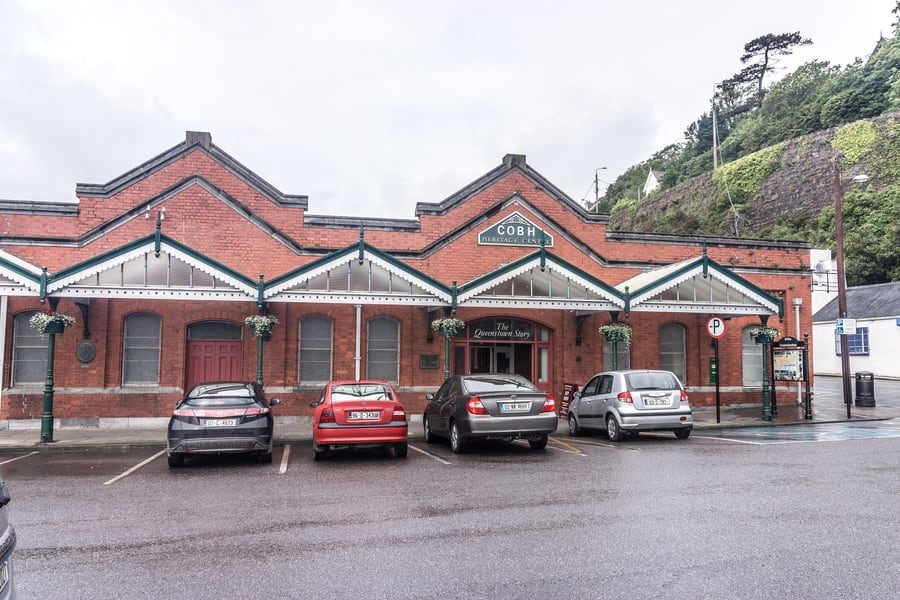
Cobh Heritage Centre
"The Queenstown Story", housed in the restored Victorian station itself, so you can hardly miss it. Between 1848 and 1950 some 2.5 million of the six million Irish who left for North America sailed from this quay. It covers the convict ships to Australia and the Titanic and Lusitania too. The town was Queenstown from Queen Victoria's visit in 1849 until it voted itself back to Cobh on 2 July 1920.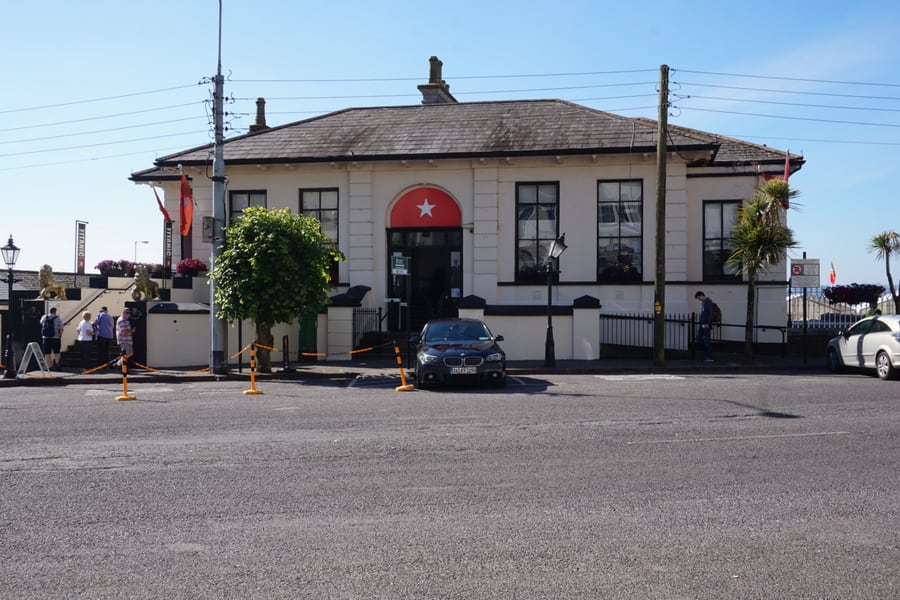 Ian S / Geograph Britain and Ireland / Wikimedia Commons · CC BY-SA 2.0 · cropped
Titanic Experience Cobh
On the waterfront in the original White Star Line ticket office — the actual building from which the last passengers were sent out to the tenders on 11 April 1912. 123 boarded here, and only 44 survived. It is a short visit and a well-made one, and what makes it land is not the exhibits but the fact that you are standing in the room where it happened.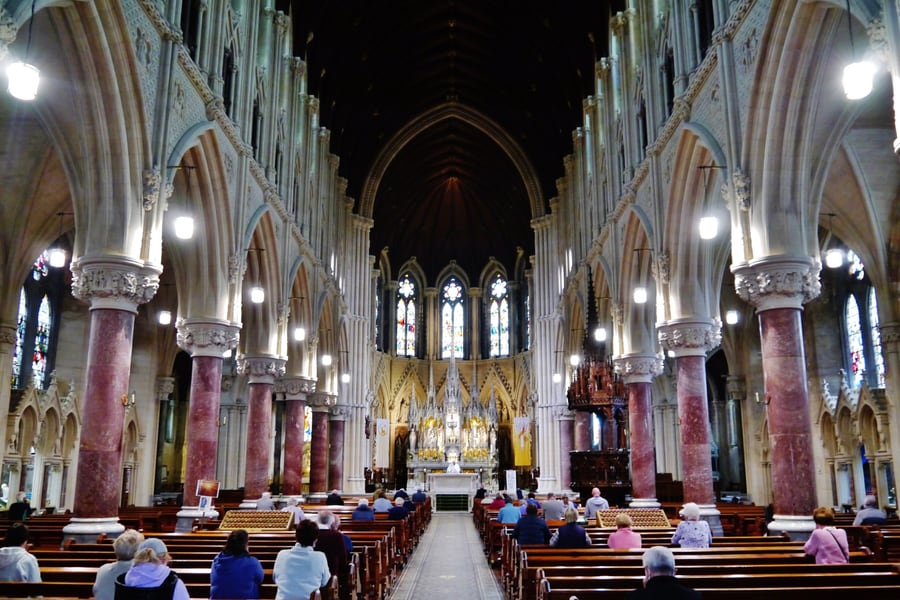 Zairon / Wikimedia Commons · CC BY 4.0 · cropped
St Colman's Cathedral
Pugin and Ashlin's great neo-Gothic cathedral, begun on 30 September 1868 and not consecrated until 24 August 1919 — fifty-one years, and £235,000. The spire rises 90 metres, and the tower carries 49 bells: Ireland's only carillon, and the largest number of any in these islands. The climb up through the streets is steep. The interior justifies it, and so does the view back over the harbour.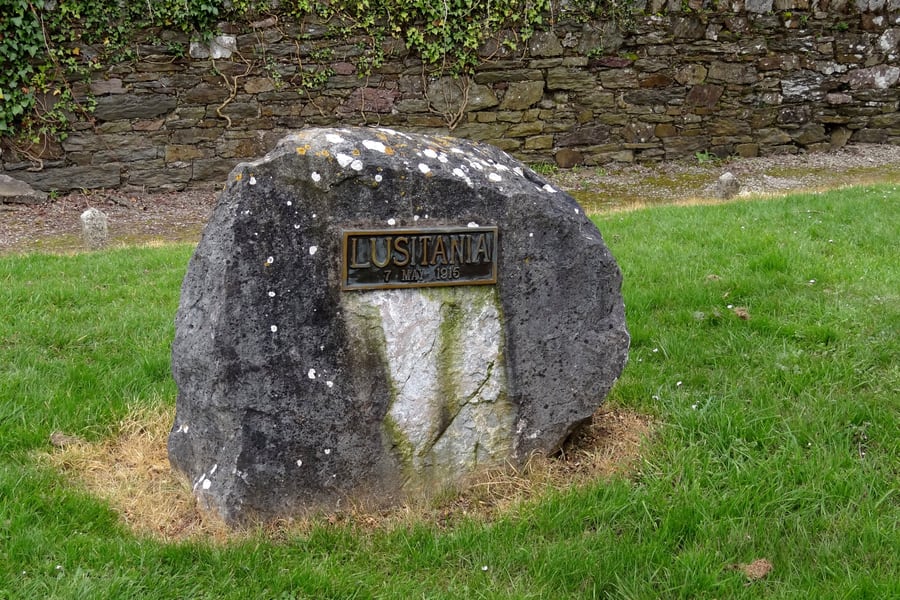 Bjørn Christian Tørrissen / Wikimedia Commons · CC BY-SA 3.0 · cropped
The Old Church Cemetery
A short walk north of the centre, where over a hundred of the 1,198 who died when the Lusitania was torpedoed off this coast on 7 May 1915 lie in communal graves. Survivors and bodies alike were landed here, and the town dealt with both. There is very little to see — a boulder, some plain stones and a lot of grass — and that is rather the point. Far less visited than the museums.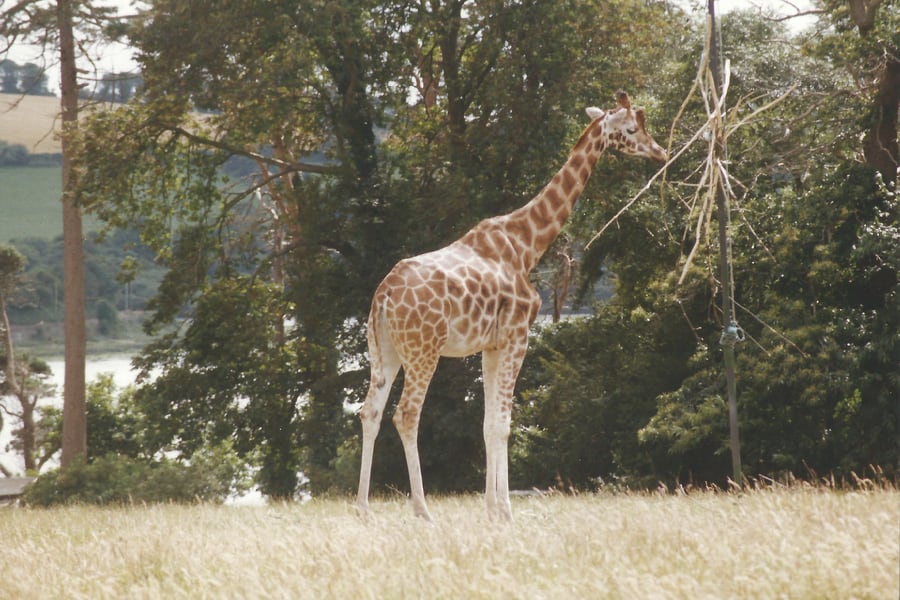 Ardfern / Wikimedia Commons · CC BY-SA 3.0 · cropped
Fota Wildlife Park
Opened in the summer of 1983 on 100 acres of Fota Island, and it does the thing properly: 106 species in wide paddocks rather than cages, with ring-tailed lemurs and wallabies loose among the visitors. It runs the European endangered species programme for the Sudan cheetah. Easily half a day — and the station is at the gate, which is the whole trick of this line.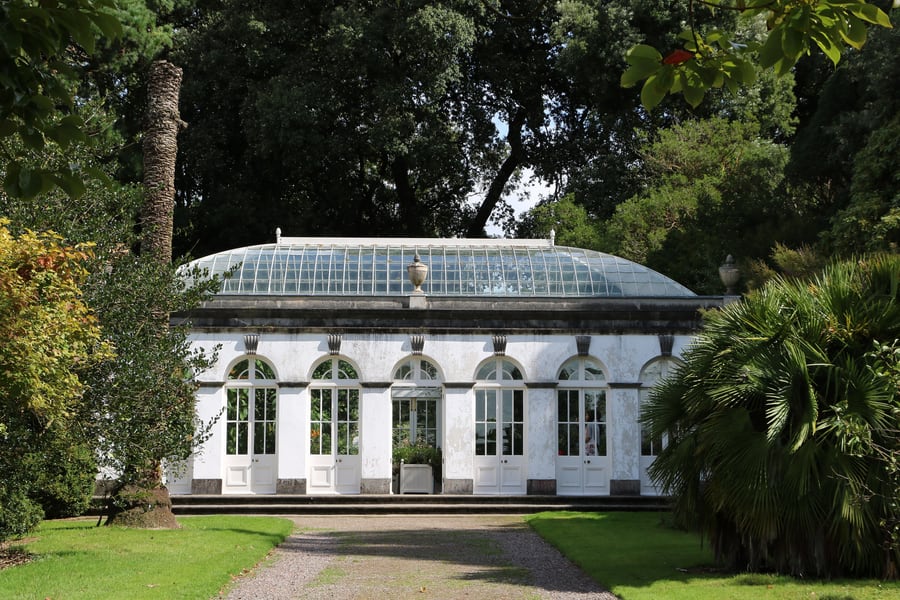 Rosanne Donovan / Wikimedia Commons · CC BY-SA 4.0 · cropped
Fota House and the arboretum
Next door, and much quieter. A hunting lodge turned into a 70-room Regency mansion in the 1820s by Richard Morrison and his son, for the Smith-Barry family. The real draw is outside: an arboretum begun in the 1840s and recorded plant by plant for over a century, full of things from Asia and South America that had no business surviving in Ireland and did.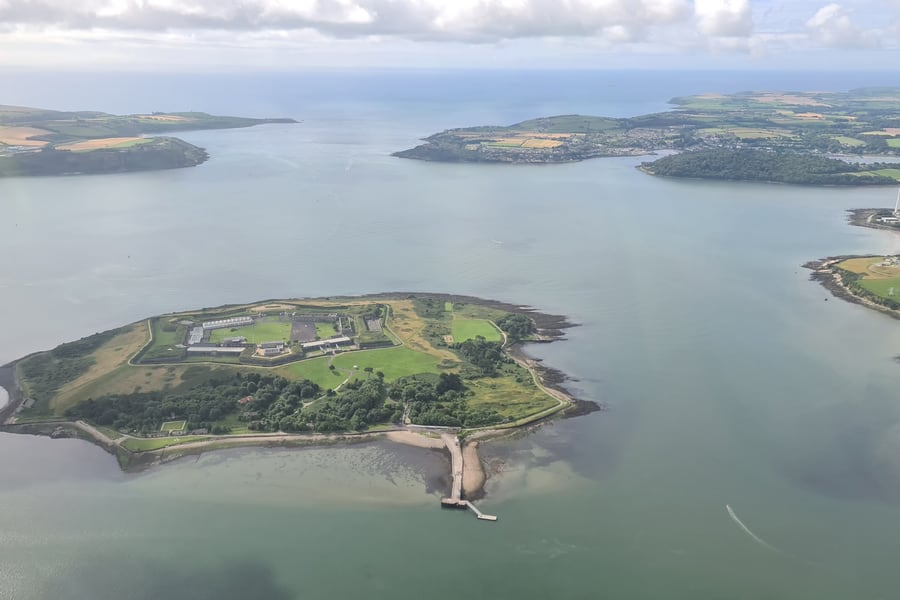 Caoimheen3 / Wikimedia Commons · CC BY-SA 4.0 · cropped
Spike Island
A ferry from Kennedy Pier runs out to the island in the harbour: a monastery said to go back to the 7th century, the star-shaped Fort Mitchel begun in 1804, and a prison that held over 1,400 men at its Famine-era peak — arguably the largest in the British Empire. It only stopped being a prison in 2004, and was voted Europe's Leading Tourist Attraction in 2017.Where to Sleep
Because the branch is so short and so frequent, you can stay at either end and see everything comfortably.
Cork city is the practical base, with the widest choice on this stretch of coast: business and boutique hotels around the centre and along the South Mall, characterful guesthouses in the Victorian streets above the river, and a lively food and pub scene — Cork takes its eating and its music seriously. Kent station is a walk or short bus ride from most of it, and the Cobh trains run late.
Cobh itself is the more romantic choice. It is a small town, so the choice is smaller too, but there are seafront hotels with harbour views, some lovely guesthouses and B&Bs in the tall Victorian houses climbing the hill, and a few self-catering places. Waking up to the view over the anchorage, with the cathedral bells above you, is worth the trade.
Around the harbour there are country-house hotels and golf resorts on the far shores, and the seaside villages of east Cork — Midleton, on the sister branch line, is a pleasant alternative with the Jameson distillery on its doorstep.
We don't book accommodation, and there are no affiliate hotel deals on this page — we would rather steer you to the right sort of place and let you choose for yourself. For train times between Cork and Cobh, see the timetable above.
Questions or corrections
Planning this trip and stuck on something, or spotted a time, fare or detail that has changed? Send us a message about Cork to Cobh. We read every one, and we update this page when something has changed.