Ireland
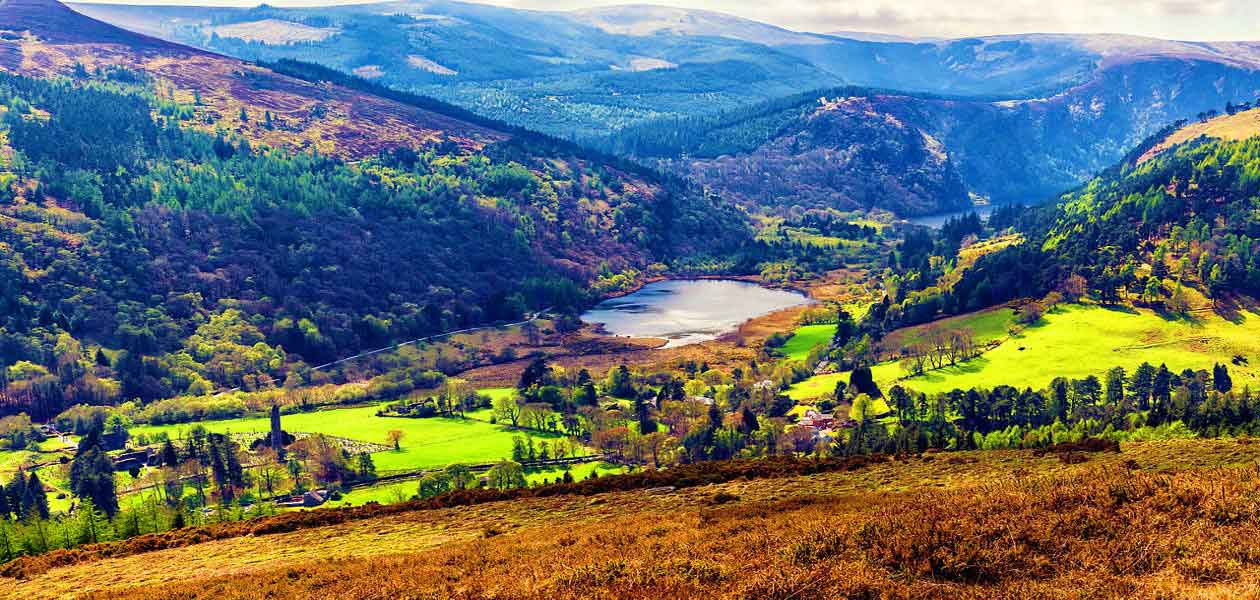
Ireland is a country of about 5.4 million people occupying twenty-six of the thirty-two counties of the island, with the Atlantic to the west, the Irish Sea to the east and its only land border shared with Northern Ireland. Dublin, on the east coast, is the capital and holds more than 1.5 million of them; Cork, Galway and Limerick are the other main cities. In between lies the landscape the railways were built through — sea cliffs, wooded river valleys and the harbours that generations of emigrants left from.
The railways match the scale of the place. There are no high-speed lines and no journey takes a day: Iarnród Éireann radiates from Dublin to Cork, Galway, Belfast and the ferry port at Rosslare, Translink runs the network around Belfast, and the two share an hourly cross-border service between the capitals. What Irish railways offer instead of distance is age and coastline — trains have run here since the 1830s, on some of the oldest passenger track anywhere in the world, and several routes run right along the sea. Most of the best of it can be ridden and returned from in a single day out of Dublin or Cork.
Rail journeys in Ireland
Cork to Cobh
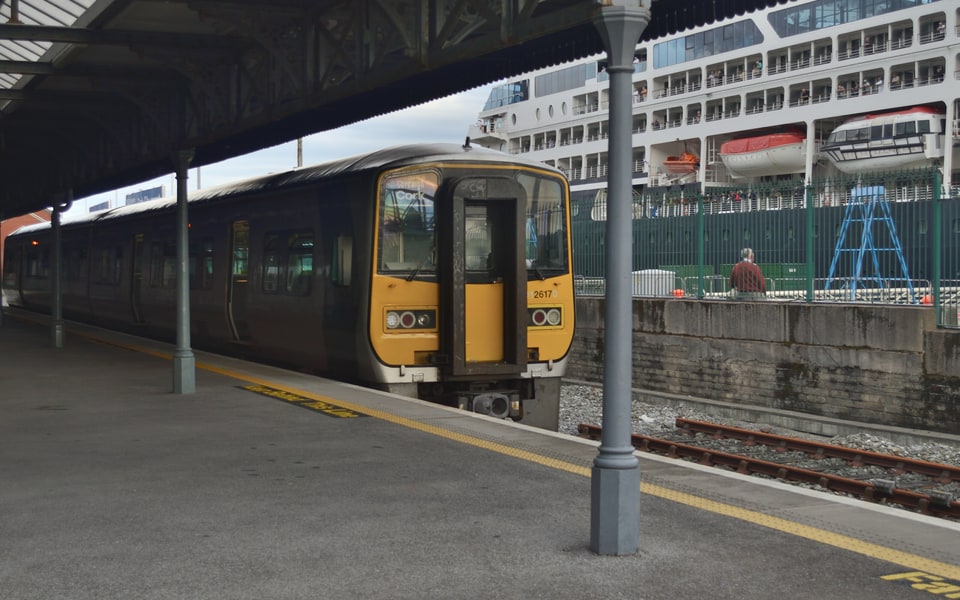
A short ride with a vast history — twenty-five minutes out of Cork to the harbour that was the Titanic's last port of call, and the emigrants' last sight.
View journey →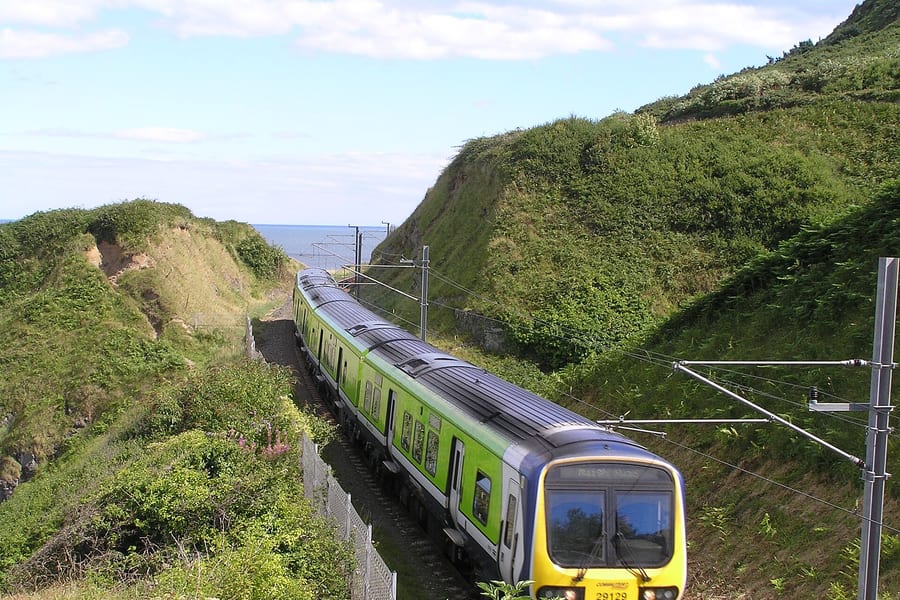
The Wicklow Coast Line
Ireland's most dramatic railway clings to the sea cliffs of Bray Head — Brunel's Folly, rebuilt three times, and still fighting the Irish Sea today.
View journey →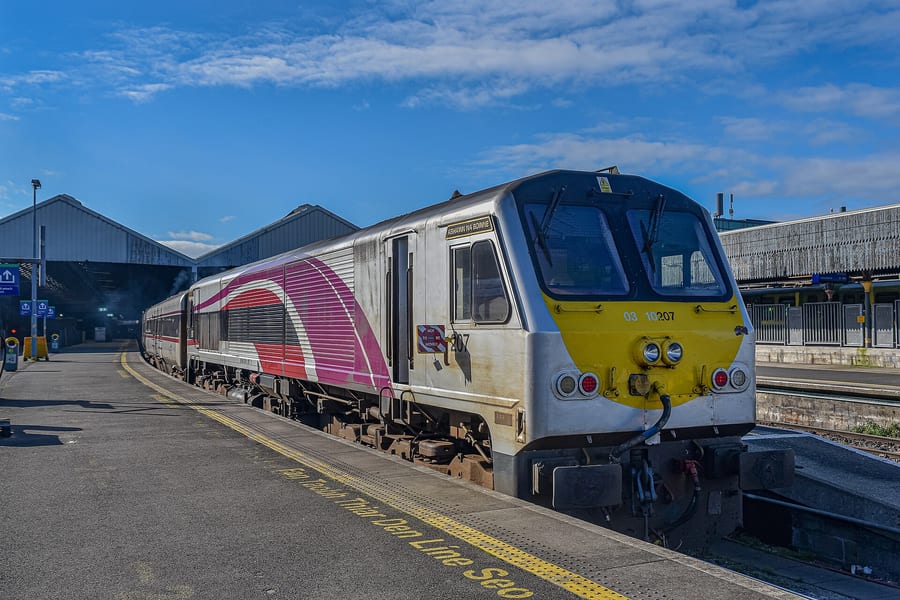
The Enterprise
The only train that crosses the Irish border — hourly, two hours, Dublin to Belfast over two of the greatest Victorian viaducts in Ireland.
View journey →Good to know
What are the best train journeys in Ireland?
Ireland's journeys are short but memorable. The Dublin–Rosslare line gives you the finest coastal railway in the country, clinging to the sea cliffs of Bray Head in County Wicklow on a route so eroded that Brunel's original had to be rebuilt three times. The Cork–Cobh branch is a twenty-five-minute ride out to the emigration harbour that was the Titanic's last port of call. And the cross-border Enterprise links Dublin and Belfast in about two hours, crossing the great Boyne and Craigmore viaducts on the way.
Is there a train between Dublin and Belfast?
Yes — the Enterprise, jointly run by Irish Rail and Translink, connects Dublin Connolly and Belfast Grand Central in roughly 2 hours 5 minutes to 2 hours 20 minutes. Since October 2024 it has run hourly on weekdays and Saturdays, and it is the only railway that crosses the border between the Republic of Ireland and the United Kingdom. It first ran in 1947 and was named to capture the "enterprising" spirit of keeping the two cities linked despite the frontier.
Who runs the railways in Ireland, and what gauge are they?
There are two operators. Iarnród Éireann (Irish Rail) runs the network in the Republic of Ireland, spreading out from Dublin to Cork, Galway, Rosslare and the border; Translink / NI Railways runs the lines in Northern Ireland around Belfast. Both use the broad Irish gauge of 5 ft 3 in (1,600 mm), wider than the standard gauge used across most of Europe. The two systems meet on the cross-border Enterprise service between Dublin and Belfast.
How old are Ireland's railways?
Very old. Ireland's first railway, the Dublin & Kingstown, opened on 17 December 1834, running from Westland Row (now Dublin Pearse) to Kingstown, today Dún Laoghaire — one of the earliest passenger railways in the world, and for a decade it even ran an experimental "atmospheric" railway out to Dalkey, propelled by air pressure rather than a locomotive. Much of the coastal line south of Dublin, including the spectacular section around Bray Head, dates from the 1850s and was engineered by Isambard Kingdom Brunel.