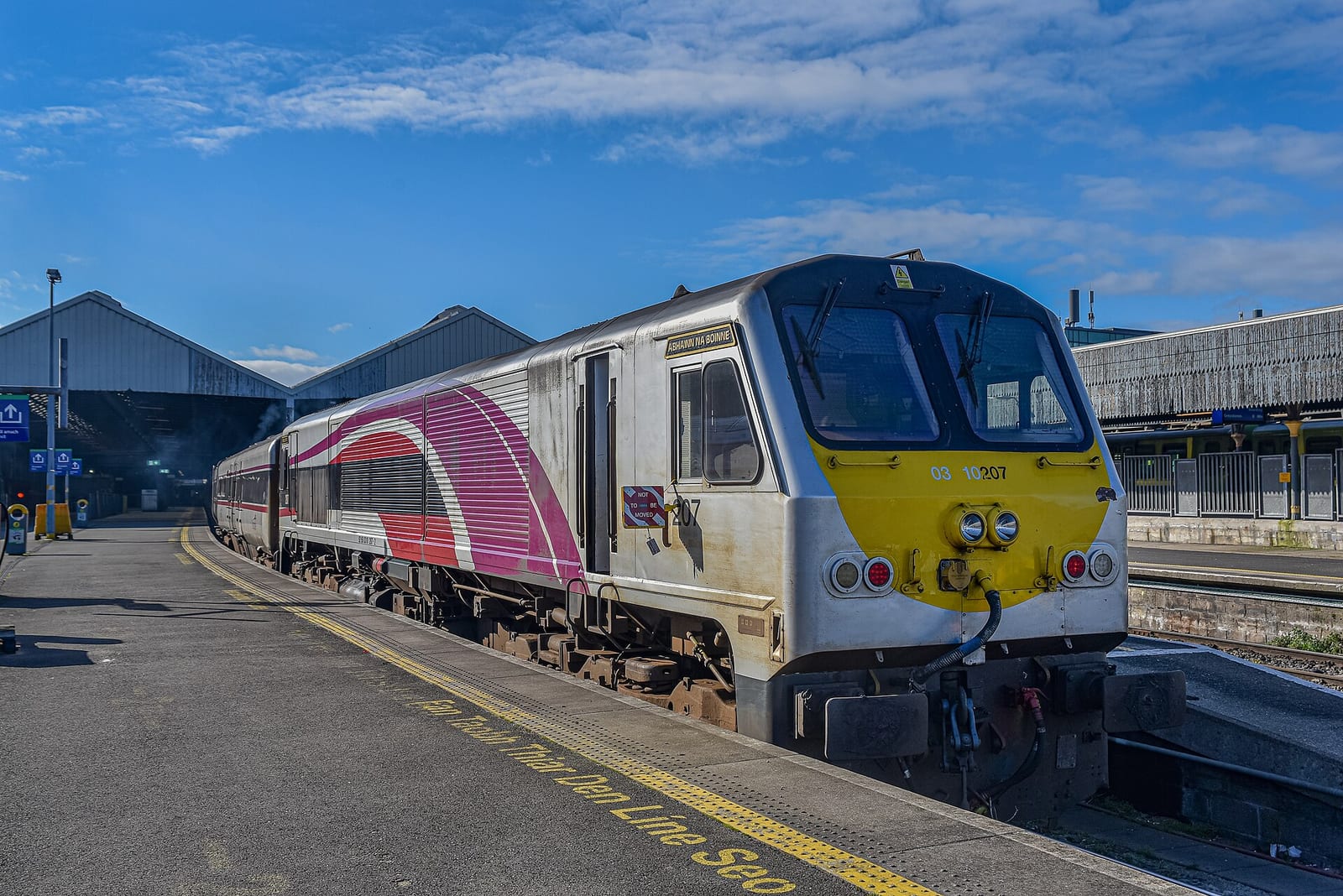
The Enterprise
The Nikon User / Wikimedia Commons · CC BY 2.0
- DistanceDublin–Belfast · 181 km
- DurationAbout 2 hours 5 minutes
- Best seasonYear-round; runs hourly all year
Introduction
Somewhere in the quiet drumlin country between Dundalk and Newry, the train crosses a line that has shaped a century of Irish history — and absolutely nothing happens. No halt, no barrier, no uniformed officer walking the corridor. Your phone hops to a different network, the road signs beyond the window change from kilometres to miles, and the buffet trolley carries on down the aisle. This is the only railway in the world that crosses the border between the Republic of Ireland and the United Kingdom, and the fact that you can now do it without noticing is, in its own understated way, the whole point of the Enterprise.
The train has been running since 11 August 1947, when the old Great Northern Railway launched it as the "Enterprise Express" — the name chosen to capture the enterprising determination to keep Dublin and Belfast joined despite the customs posts that partition had planted between them. It cut the journey from nearly four hours to a little over two, and it has been the flagship of the island's railways ever since, running on through decades of political upheaval when very little else did.
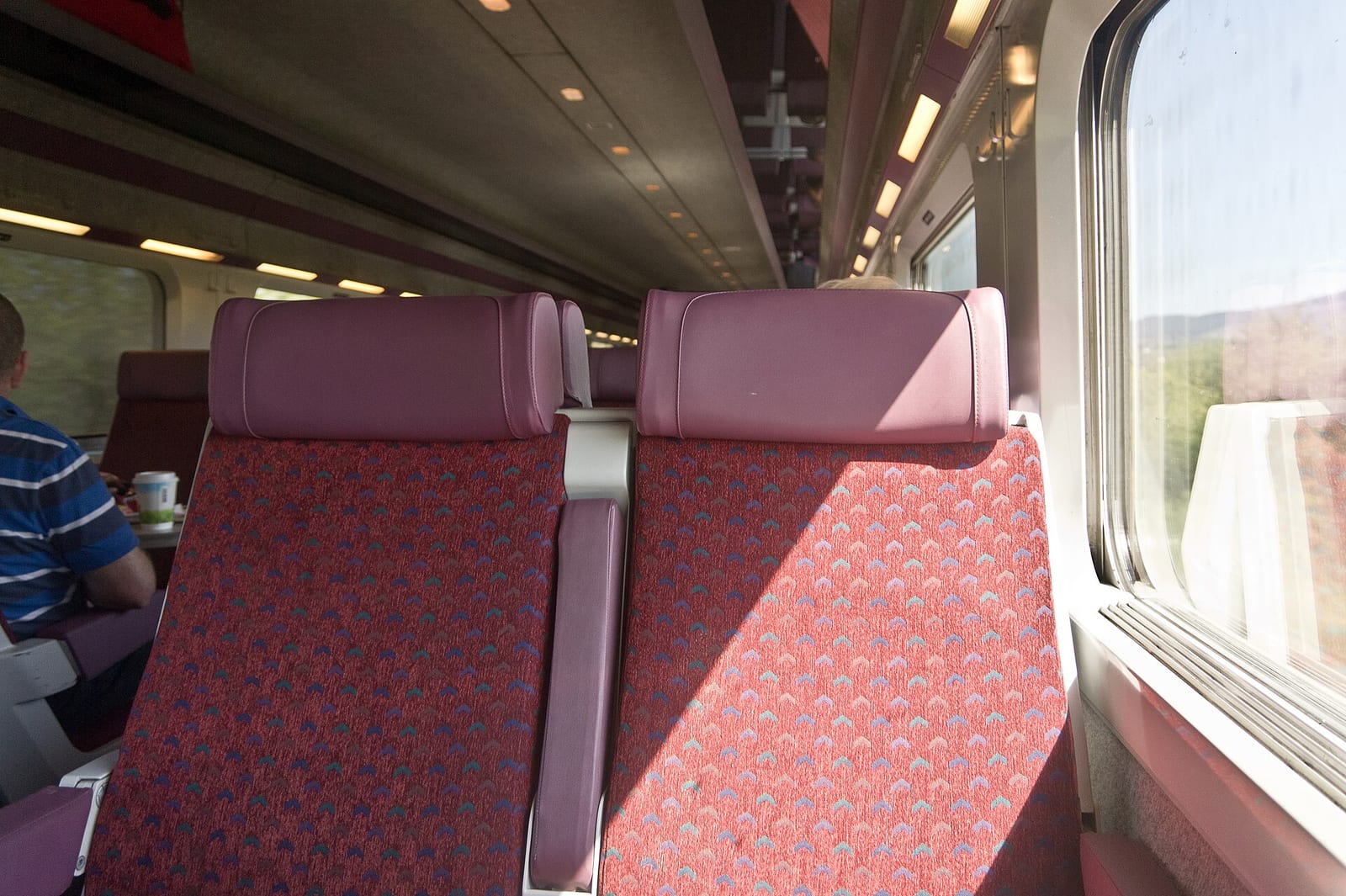
Today it is simply an excellent modern intercity. Since October 2024 it has gone hourly — fifteen trains a day in each direction — covering the 181 kilometres between the two capitals in about two hours and five minutes, with table seats, big windows and a coffee. At the northern end it now arrives at Belfast Grand Central, a vast new terminus opened in 2024, right in the middle of the city.
But do not let the everyday efficiency fool you: this is a Victorian masterpiece of a route. Twice on the journey the train climbs onto engineering of real magnificence — the Boyne Viaduct at Drogheda, striding thirty metres above the river, and the extraordinary Craigmore Viaduct near Newry, eighteen granite arches marching across a valley, the tallest railway viaduct in Ireland. Both were designed by the same man, Sir John MacNeill, in the 1840s and 1850s. Nearly two centuries on, the Enterprise still runs over them every hour, all day.
The Journey
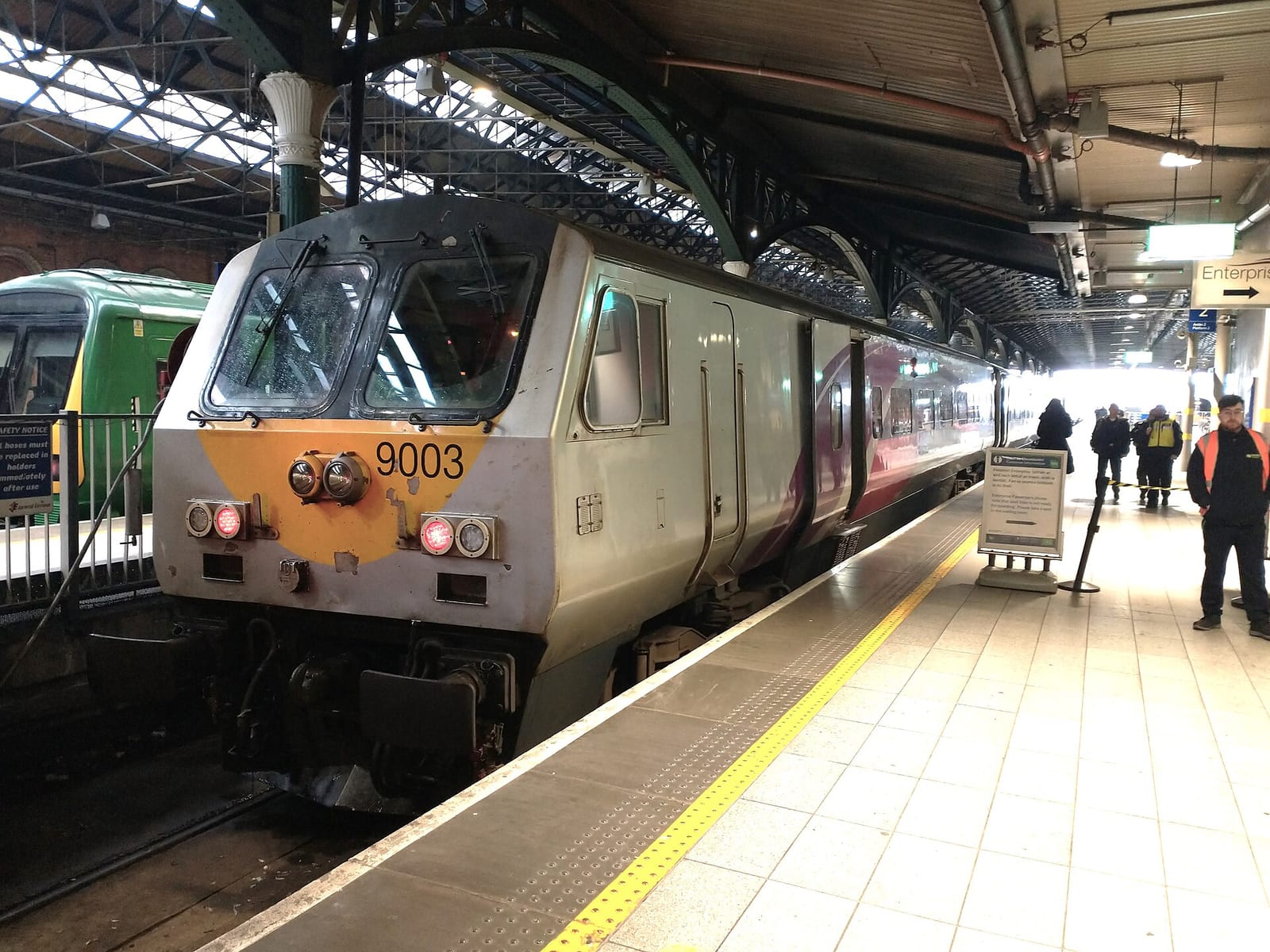
The journey starts at Dublin Connolly, the city's northern terminus, where the Enterprise loads under the long train shed and pulls out past the Victorian streets of the north inner city. Almost at once the line runs out to the coast, and for the first half hour you get one of the finest bits of urban railway anywhere — the track running right along the shore of Dublin Bay through Clontarf and Malahide, crossing the estuary on a low viaduct with wading birds below and the Howth peninsula out to the right.
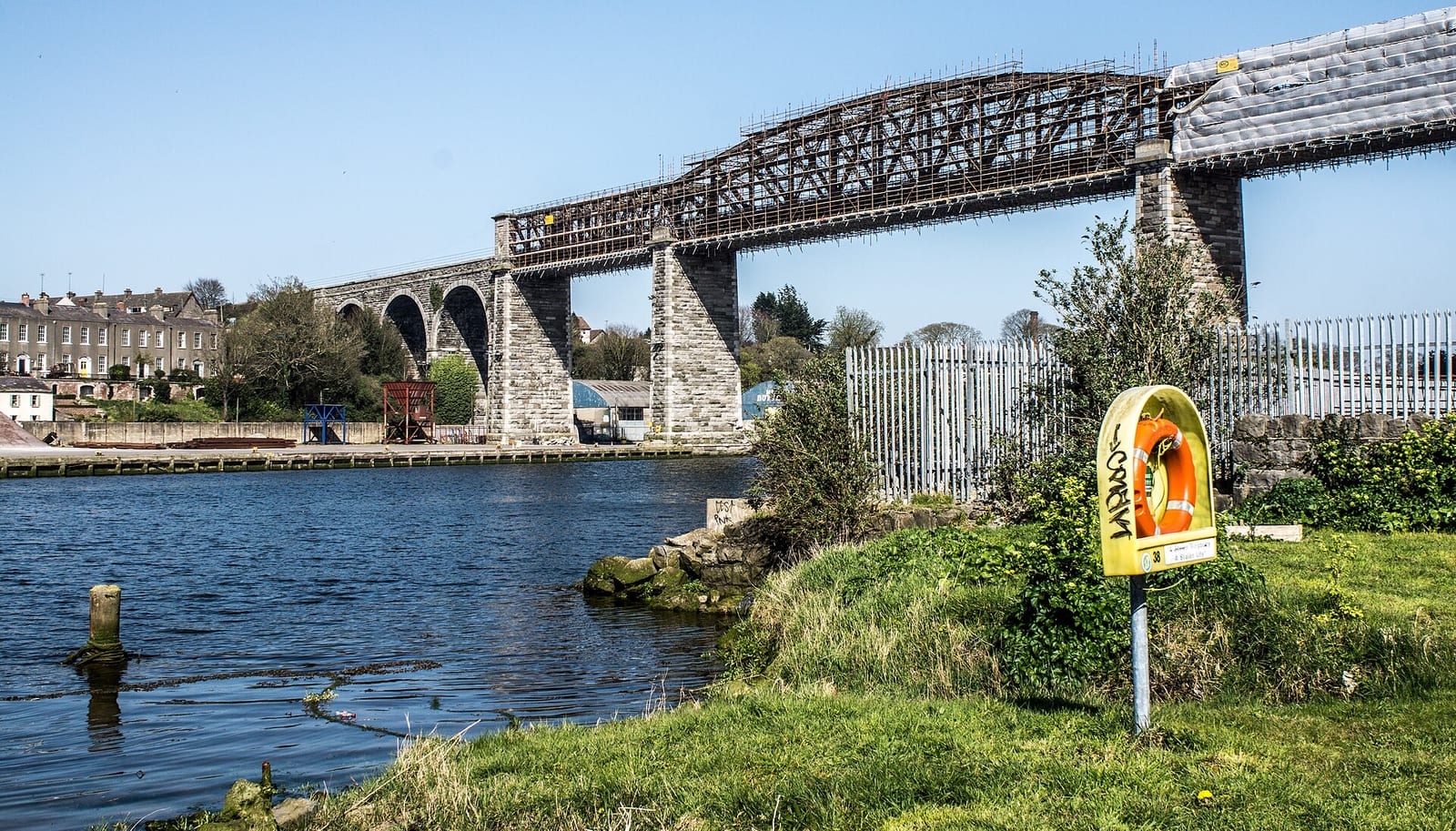
Then comes the first great set piece. Approaching Drogheda the train climbs steadily, the town appears below, and you find yourself out on the Boyne Viaduct — a lattice of iron slung between tall stone arches, carrying the railway thirty metres above the River Boyne with the port, the estuary and the medieval streets laid out beneath you. It was the last link in the chain: opened in 1855, it finally joined the separate railways from Dublin and Belfast into a single through route. The iron spans you cross today were renewed in 1932 and thoroughly rebuilt again in 2015, but MacNeill's masonry is the original.
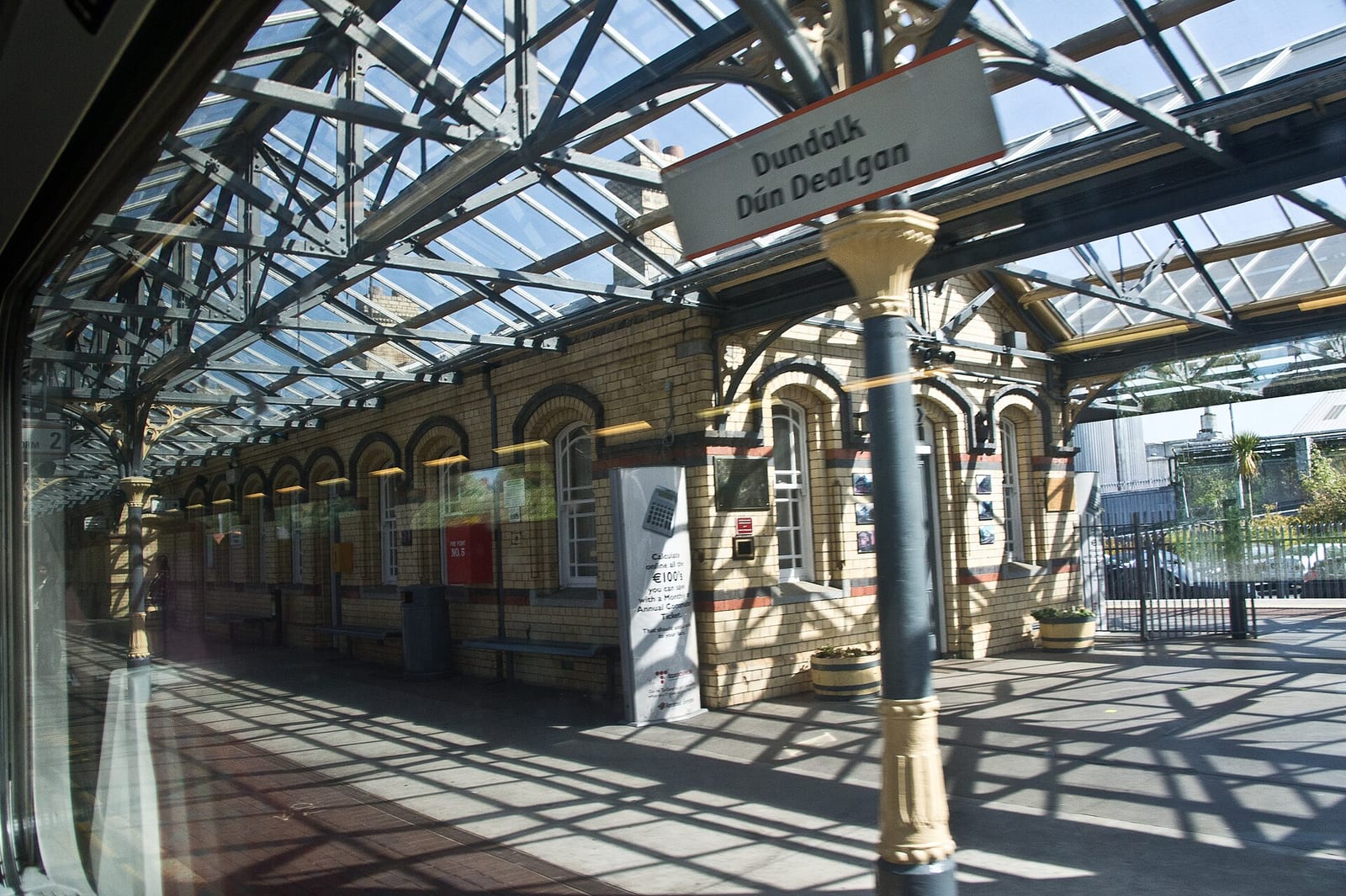
North of Drogheda the country opens into the rich farmland of County Louth, and the train calls at Dundalk Clarke, a handsome ironwork station and the last stop in the Republic. Beyond it the landscape rumples into the little rounded hills — drumlins — of the border country, with the Cooley Mountains and the Mourne Mountains rising blue to the east. And then, undramatically, you are in the United Kingdom.
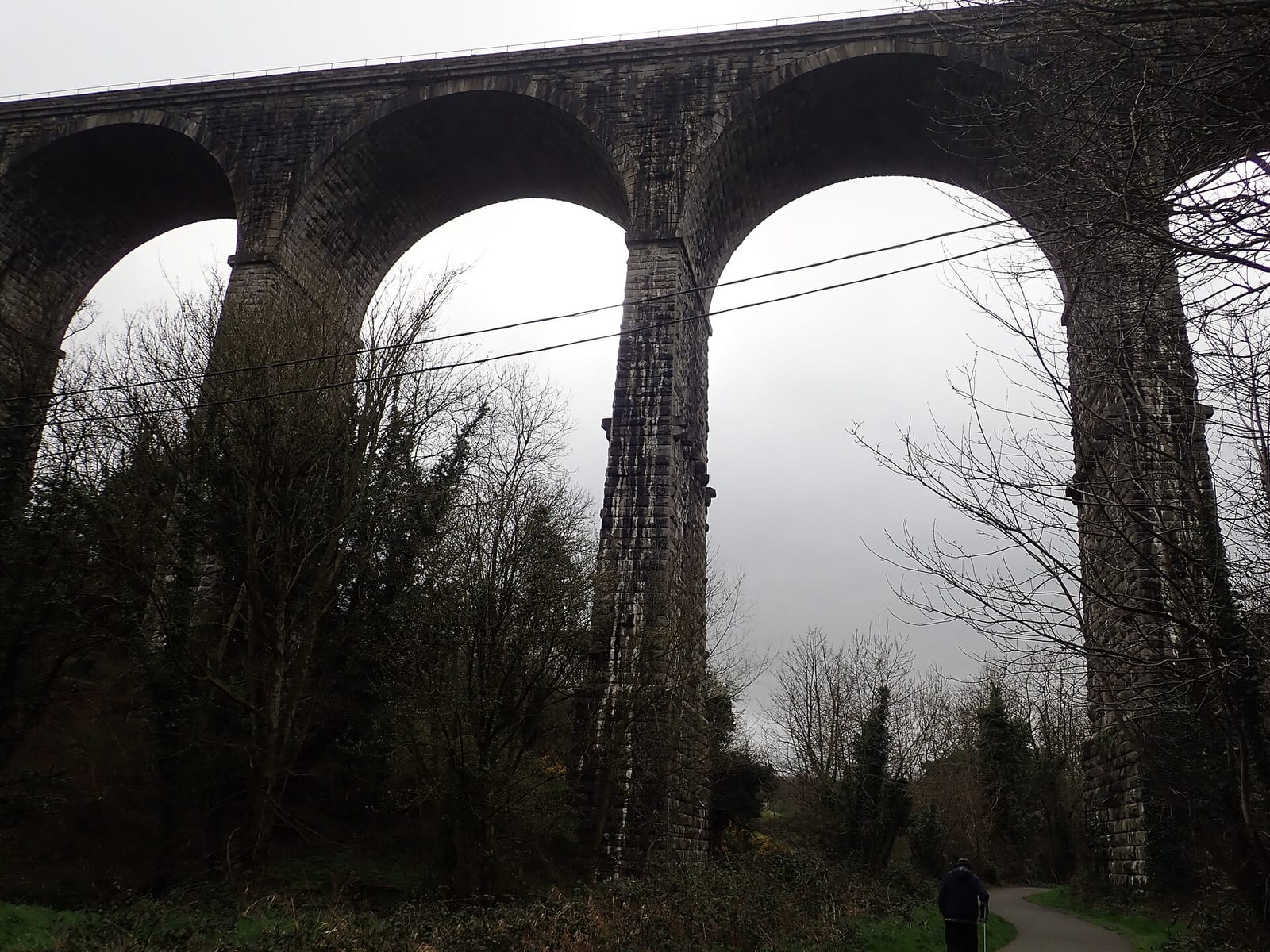
Newry comes next, its station high above the town, and immediately afterwards the second masterpiece. The line strides out onto the Craigmore Viaduct near Bessbrook: eighteen arches of sixty-foot span built from granite quarried a few miles away at Goraghwood, running a quarter of a mile across the valley, the tallest arch standing 126 feet above the ground. Begun in 1849 and opened in 1852, it is the tallest viaduct in Ireland, and locals have always known it as "the 18 Arches". From inside the carriage you get the sudden sensation of flying; from the fields below it is one of the great sights of Irish engineering.
The last stretch runs through Portadown and the orchard country of County Armagh, then down the Lagan valley past Lisburn and into the suburbs of Belfast. The train ends at Belfast Grand Central, opened in 2024 — eight platforms, a bus interchange alongside, and the largest transport hub on the island. Two hours and five minutes after leaving Dublin, you step out into the middle of another capital city, having crossed an international frontier, two rivers and two of the finest viaducts in these islands, without once getting out of your seat.
Along the route
Eric Jones / Wikimedia Commons · CC BY-SA 2.0The only train across the border
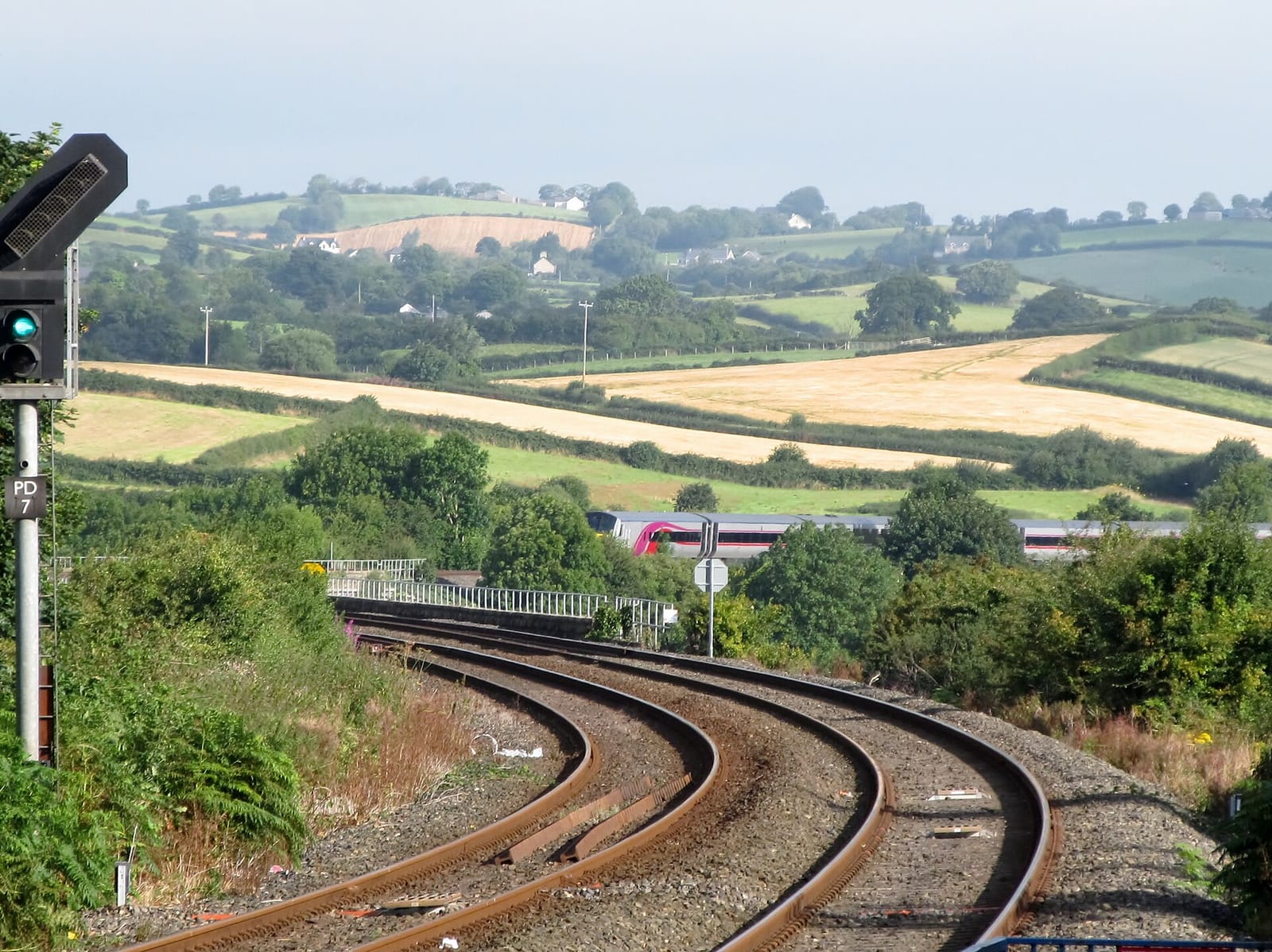
This is the only railway that crosses the frontier between the Republic and the United Kingdom. There is no ceremony to it now — just quiet countryside where the phone network changes and the speed-limit signs switch from kilometres to miles. Given the history, that ordinariness is the remarkable part.Eric Jones / Wikimedia Commons · CC BY-SA 2.0The eighteen arches of Craigmore
North of Newry the train runs out onto the Craigmore Viaduct: eighteen granite arches striding a quarter of a mile across the valley, the tallest 126 feet high. Opened in 1852, it is the tallest viaduct in Ireland, and locals still call it "the 18 Arches".William Murphy / Wikimedia Commons · CC BY-SA 2.0A train every hour
Since October 2024 the Enterprise has run hourly, which has quietly turned it from a service you planned around into one you simply turn up for. Two hours and five minutes between two capital cities, with a buffet and a window seat.A bit of history
Culture & experiences along the way
William Murphy / Wikimedia Commons · CC BY-SA 2.0Over the Boyne
Just north of Drogheda the train climbs onto the Boyne Viaduct and crosses the river nearly 30 metres up, with the town, the port and the estuary spread out below — one of the great views from any train in Ireland. Opened in 1855, it was the bridge that finally completed the through route and made a Dublin–Belfast railway possible.William Murphy / Wikimedia Commons · CC BY-SA 2.0A service older than the peace
The Enterprise first ran on 11 August 1947, named for the "enterprising" spirit of a railway determined to keep the two cities linked despite the customs posts on the new frontier. It cut the journey from nearly four hours to little over two. It has survived partition, decades of disruption and the Troubles, and it is still here — an unbroken thread between Dublin and Belfast for nearly eighty years.Rossographer / Wikimedia Commons · CC BY-SA 2.0Into Belfast's new front door
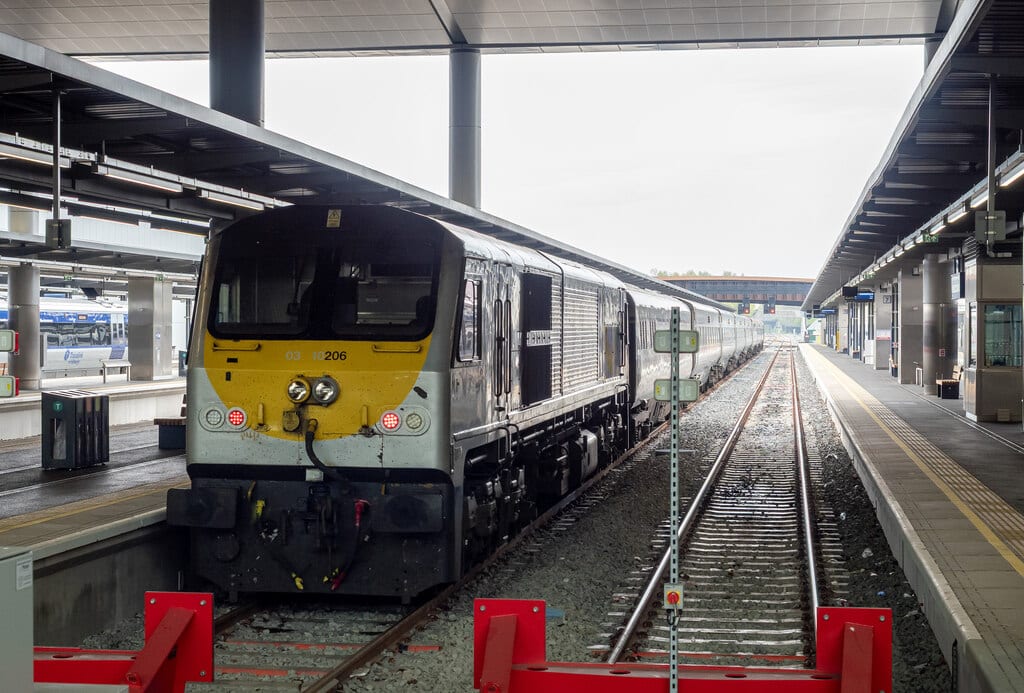
The northern end of the journey changed completely in 2024, when the Enterprise began running into Belfast Grand Central — a huge new station with eight platforms and a bus interchange alongside, replacing the old Great Victoria Street terminus. It is the largest transport hub on the island, and the trains arrive right in the heart of the city.Timetables
Since October 2024 the Enterprise has run hourly, which makes it one of the most convenient international train services anywhere. There are fifteen trains each way Monday to Saturday, and eight on Sundays. The journey takes about 2 hours 5 minutes, a little longer on some services.
Southbound and northbound, the pattern is easy to remember: trains leave Dublin Connolly at :50 past the hour, and Belfast Grand Central on the hour.
Dublin Connolly → Belfast Grand Central (Monday–Friday, as of the timetable valid from December 2025):
| Dublin Connolly | Drogheda | Dundalk | Newry | Belfast Grand Central |
|---|---|---|---|---|
| 05:50 | 06:28 | 06:50 | 07:08 | 07:58 |
| 07:40 | 08:23 | 08:48 | 09:08 | 09:58 |
| 09:50 | 10:28 | 10:50 | 11:08 | 11:58 |
| 12:50 | 13:28 | 13:50 | 14:08 | 14:58 |
| 15:50 | 16:28 | 16:50 | 17:08 | 18:00 |
| 18:50 | 19:28 | 19:50 | 20:08 | 20:58 |
| 20:50 | 21:28 | 21:50 | 22:08 | 22:58 |
…and hourly at :50 in between, from 05:50 through to 20:50.
Belfast Grand Central → Dublin Connolly (Monday–Friday): departures on the hour from 06:00 to 19:00, plus a late train at 21:00, arriving in Dublin at :13 past (for example, Belfast 09:00 → Portadown 09:30 → Newry 09:53 → Dundalk 10:13 → Drogheda 10:37 → Dublin Connolly 11:13).
Saturdays follow almost the same hourly pattern. Sundays are reduced: roughly eight trains each way, southbound from Belfast at about 08:05, 10:05, 12:05, 14:05, 16:05, 17:05, 18:05 and 20:05.
All trains call at Drogheda MacBride, Dundalk Clarke, Newry and Portadown; a few late services also stop at Lurgan and Lisburn.
Operators: Iarnród Éireann — irishrail.ie (opens in a new tab) — and Translink NI Railways — translink.co.uk (opens in a new tab). Check live times before travelling.
Tickets
The Enterprise is a normal intercity service with normal intercity tickets — no compulsory reservation, but booking ahead online is much cheaper than paying at the station on the day. Because the train is run jointly by Iarnród Éireann and Translink, you can buy from either and the ticket is the same: Irish Rail if you are starting in Dublin, Translink if you are starting in Belfast or continuing on NI Railways. Standard has tables and power sockets; Enterprise Plus adds a larger seat and an at-seat service.
One practical note: you are crossing from the euro zone into the pound sterling zone, and the two operators' fares do not always convert to the same number, so it is worth comparing. There is no passport check and no customs stop on the train, though it is sensible to carry identification.
Book your tickets
Enterprise · Dublin to Belfast
Hourly cross-border intercity
The through train between Dublin Connolly and Belfast Grand Central, hourly on weekdays and Saturdays, in about two hours and five minutes. Standard and Plus (first class) seating, with a catering service on board. Advance online fares are the cheapest way to travel.
Book Tickets (opens in a new tab, on Iarnród Éireann (Irish Rail))via Iarnród Éireann (Irish Rail)Enterprise · Belfast to Dublin
Booked through Translink
The same train, booked from the northern end through Translink, which operates the service jointly with Irish Rail. Useful if you are starting in Belfast or travelling on to Derry, Portrush or Bangor on connecting NI Railways services.
Book Tickets (opens in a new tab, on Translink NI Railways)via Translink NI RailwaysRail Passes
Interrail passes are valid, on both sides of the border. Interrail's table of included companies lists the Enterprise under Irish Rail, and Translink for Northern Ireland, and the one-country Interrail Ireland Pass covers Northern Ireland and the Republic together. Reservations on InterCity trains in the Republic are optional; in Northern Ireland they are not required.
For this journey alone, a pass is not worth buying. The Enterprise is cheapest booked ahead online. A pass pays when the train is one leg of a tour of the whole island, and it saves working out two operators' fares in two currencies.
Checked October 2026 against interrail.com (opens in a new tab) and Interrail's Ireland page (opens in a new tab).
Places to Visit
The Enterprise makes it easy to see two capitals in a day, and there is plenty worth stopping for in between.
The stops below are all on the line or a short bus from it, and a single ticket to Belfast lets you break the journey. Two of the line's own landmarks are covered elsewhere on this page — the Boyne Viaduct at Drogheda and the Craigmore Viaduct near Bessbrook, the latter best seen from the country roads around it rather than from the train.
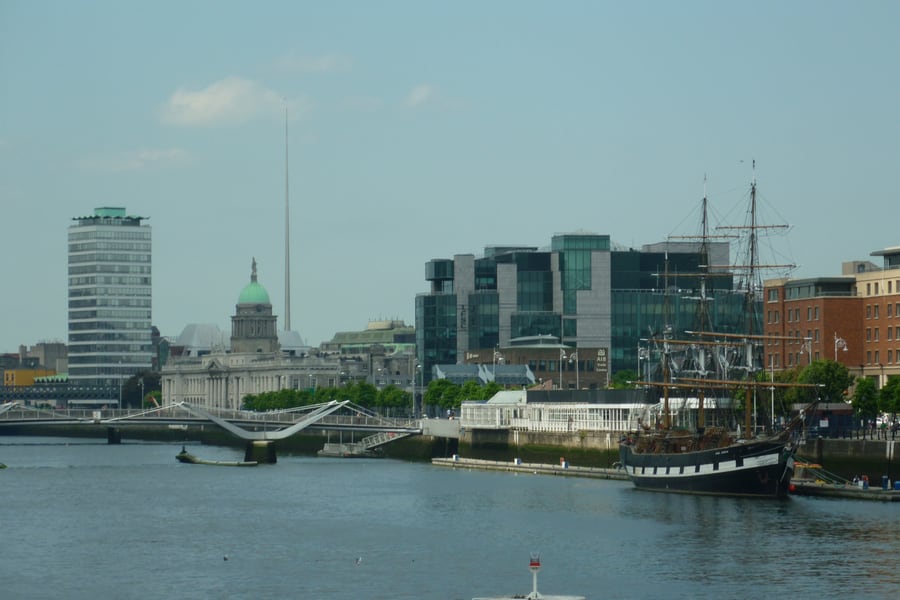 Carroll Pierce / Geograph Britain and Ireland / Wikimedia Commons · CC BY-SA 2.0 · cropped
Dublin
Connolly is a short walk from the Custom House, the quays and Temple Bar, with Trinity College and the Book of Kells, the National Museum and Gallery, Kilmainham Gaol and the Guinness Storehouse all within reach on foot or a short tram ride. The station also puts you straight onto the DART for the coast, which is the best half-day in Dublin that most visitors never take.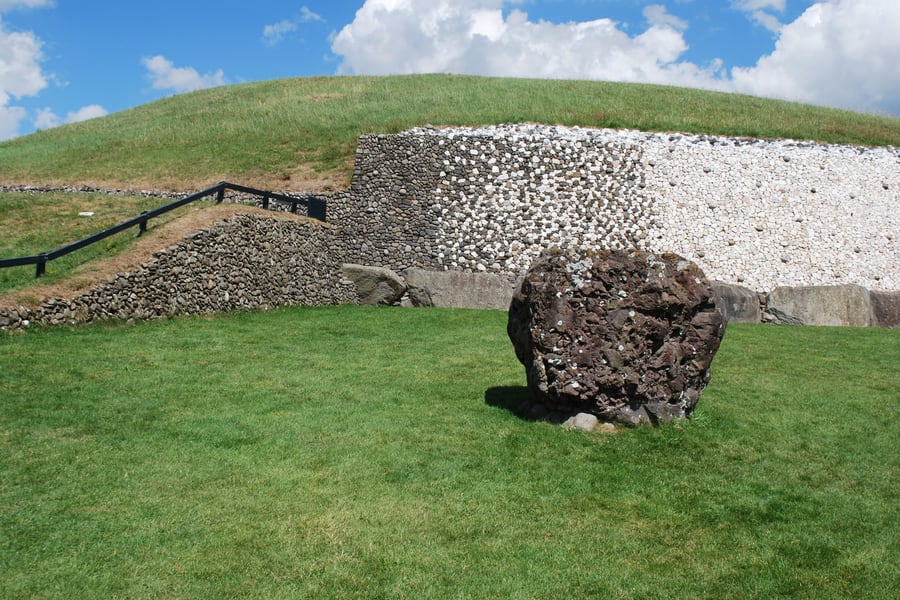 Jean Housen / Wikimedia Commons · CC BY-SA 3.0 · cropped
Brú na Bóinne
Get off at Drogheda for one of the most extraordinary archaeological landscapes in Europe. The passage tombs of Newgrange, Knowth and Dowth were built between roughly 3300 and 2900 BC — a good six centuries before Giza — and were UNESCO-listed in 1993. Access is by guided tour only, from the visitor centre at Donore, with a shuttle bus across the Boyne. You cannot simply turn up at the mound and walk in.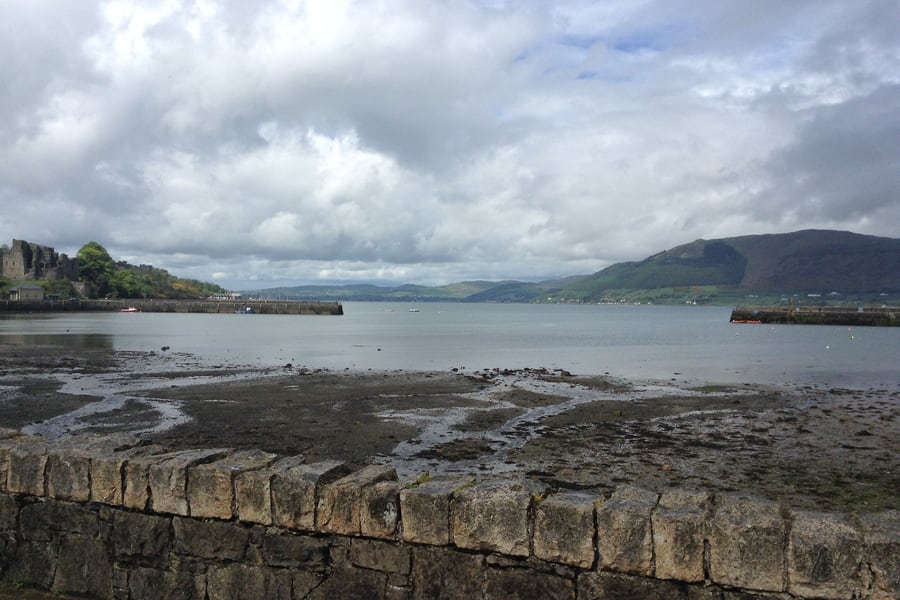 Colmmc / Wikimedia Commons · CC BY-SA 4.0 · cropped
Dundalk and the Cooley Peninsula
Dundalk is the final stop in the Republic, at the foot of the Cooley Mountains — the setting of the Táin Bó Cúailnge, the greatest of the old Irish epics, in which the whole war is fought over one bull. The coast road round the peninsula is lovely, and Carlingford at the end of it is a medieval village of narrow lanes with a Norman castle standing over the lough.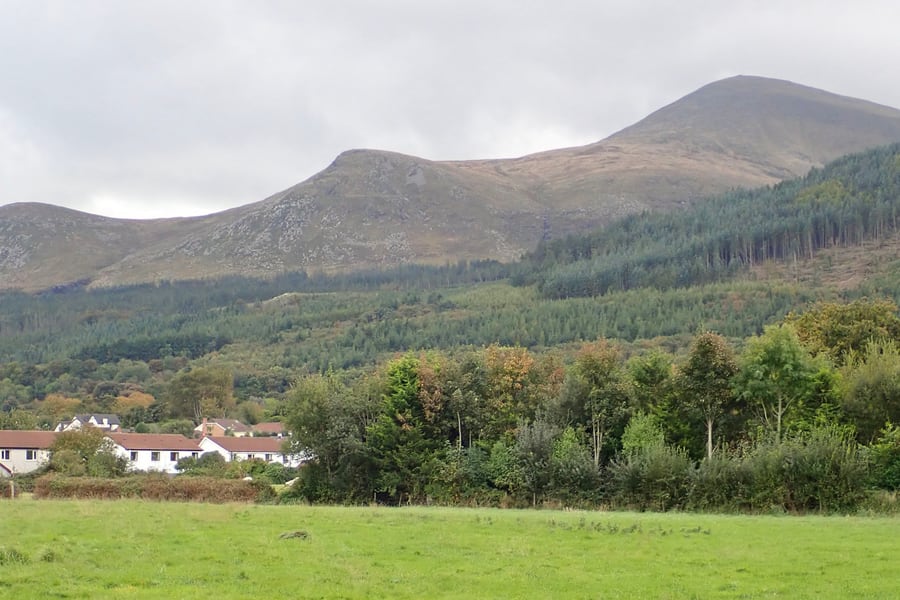 Eric Jones / Geograph Britain and Ireland / Wikimedia Commons · CC BY-SA 2.0 · cropped
Newry and the Mournes
Newry sits at the head of Carlingford Lough and is the way in to the Mourne Mountains, the granite range that gave C. S. Lewis his Narnia and Percy French his song of 1896. Slieve Donard is 850 m, the highest in Ulster. Running over the tops is the Mourne Wall — 31.4 km of dry stone, built between 1904 and 1922, and still the best walk in the range.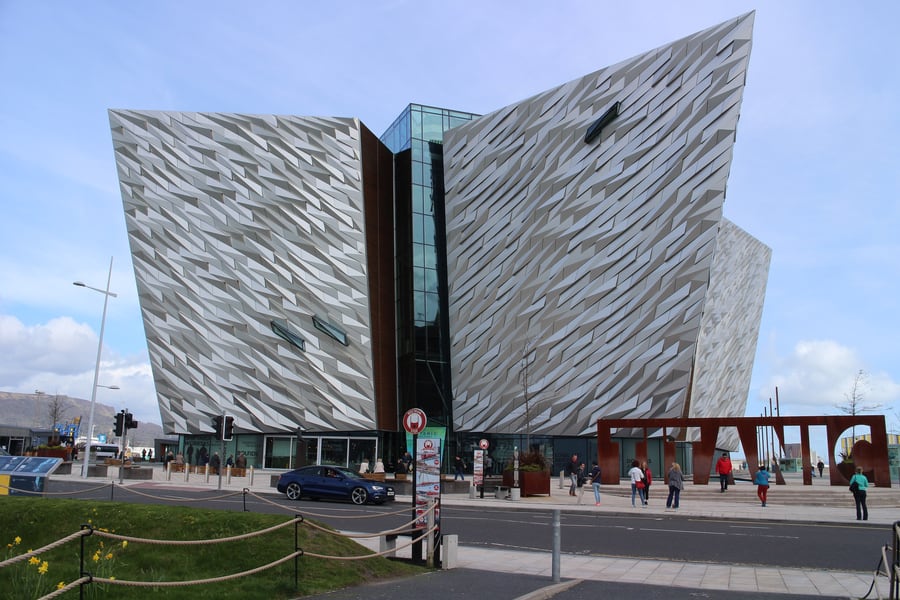 Suicasmo / Wikimedia Commons · CC BY-SA 4.0 · cropped
Belfast
Titanic Belfast opened on 31 March 2012 on the Harland & Wolff slipways where the ship was actually built — 38 metres high, the exact height of Titanic's hull, clad in 3,000 aluminium shards, nine galleries. Beyond it: the Victorian Grand Opera House and the Crown Liquor Saloon, the Ulster Museum in the Botanic Gardens, and the political murals of the Falls and Shankill roads.Where to Sleep
With an hourly train and a two-hour ride, most people base themselves in one city and treat the other as a day trip — but both ends, and several places in between, reward an overnight stay.
Dublin has by far the widest choice on the island, from international hotels along the quays and around St Stephen's Green to Georgian townhouse guesthouses and a large hostel scene. Staying near Connolly station or the IFSC puts you a few minutes from the Belfast departures; the Temple Bar and Camden Street areas are livelier but noisier.
Belfast is smaller, cheaper and increasingly good. The Cathedral Quarter is the pick for atmosphere — restored warehouses, boutique hotels and the best of the city's bars and music — while the Titanic Quarter has newer waterfront hotels beside the shipyards, and the university end around Botanic has friendly guesthouses and B&Bs. Grand Central station is central to all of it.
In between, Drogheda makes a practical base for exploring the Boyne Valley and Newgrange, with a handful of town hotels and country houses nearby. Carlingford, near Dundalk, is a charming medieval village on the lough with small hotels and inns, and Newry or the Mourne villages suit walkers heading for the mountains.
We don't book accommodation and carry no affiliate hotel deals on this page — we would rather point you at the right sort of place and let you choose. For train times between the two cities, see the timetable above.
Questions or corrections
Planning this trip and stuck on something, or spotted a time, fare or detail that has changed? Send us a message about The Enterprise. We read every one, and we update this page when something has changed.