The Wicklow Coast Line
Terence wiki / Wikimedia Commons · CC BY-SA 3.0
- DistanceDublin–Rosslare Europort · 168 km
- DurationAbout 3 hours end to end · Bray Head in under an hour from Dublin
- Best seasonYear-round; clear days on the coast, May–September, are best
Introduction
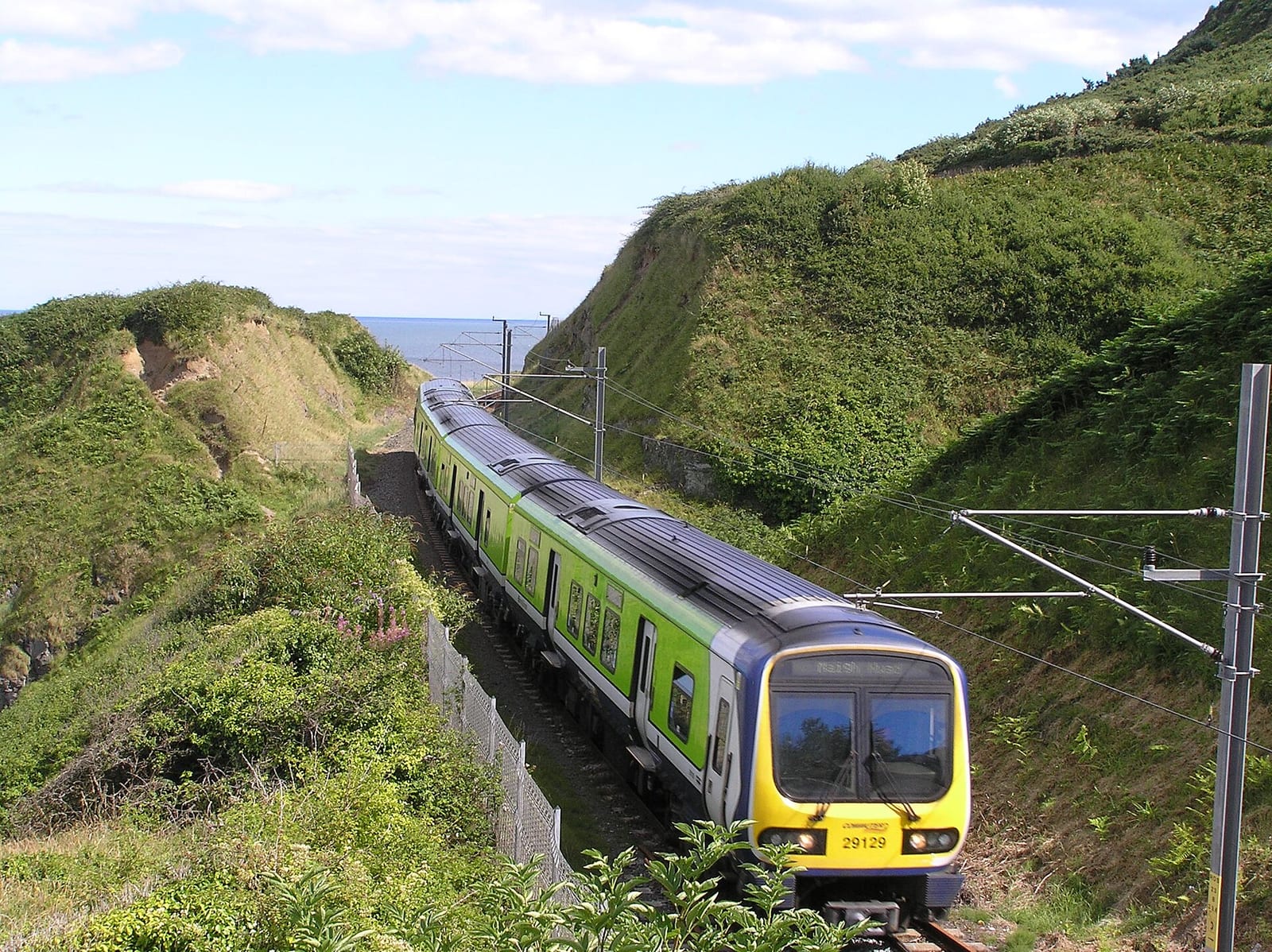
There is a moment, not long after the train leaves Bray, when the land simply falls away. One second you are running behind gardens and back walls; the next the carriage is out on a ledge halfway up a cliff, and there is nothing between you and the Irish Sea but a few yards of rock and a long drop. This is Bray Head, and the railway that clings to it is the most dramatic stretch of line in Ireland — a piece of Victorian daring that you can still ride today on an ordinary commuter ticket.
The line is old. Its Dublin end grew out of the Dublin & Kingstown Railway of 1834 — the first passenger railway in Ireland, and one of the oldest anywhere in the world — which carried the city's citizens out along the shore to take the sea air at Kingstown, now Dún Laoghaire. In the 1850s the tracks pushed south around the great obstacle of Bray Head, and the man they called in to do it was the most famous engineer of the age: Isambard Kingdom Brunel.
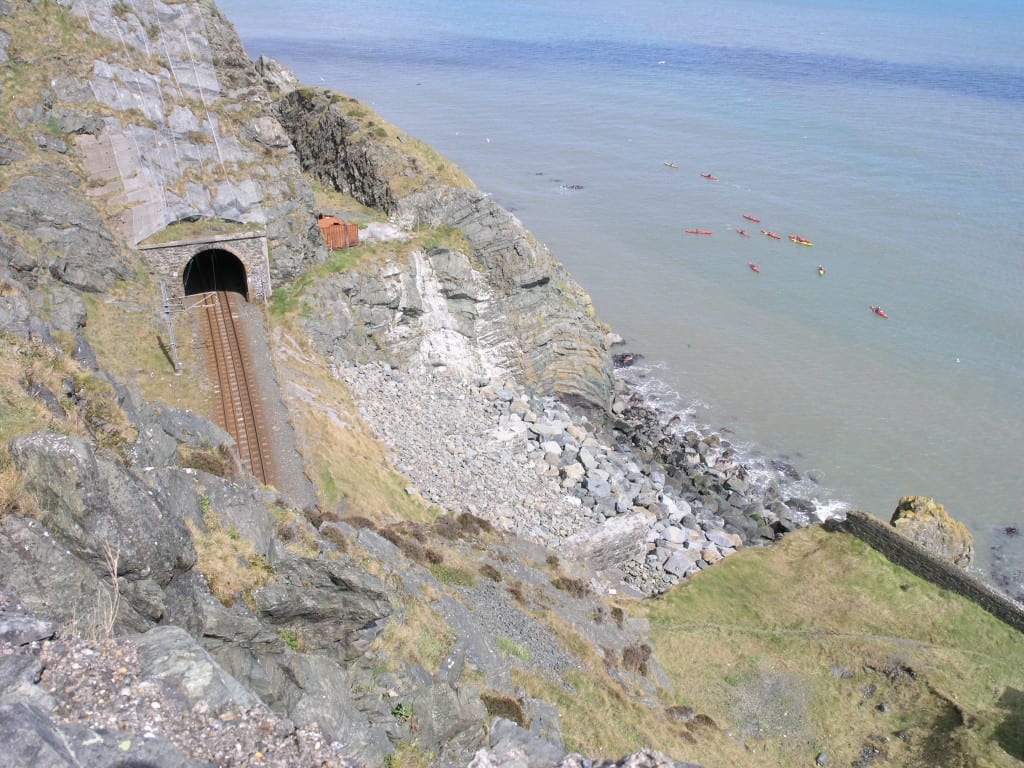
Brunel's solution was to blast a shelf into the cliff and drive tunnels through the headland. It was audacious, and it was fragile. The sea hated it. Storms tore away his viaducts, the soft cliff crumbled from beneath the rails, and again and again the line had to be pulled back and rebuilt further inland — three major times over sixty years. Railwaymen and locals gave the whole heroic, doomed struggle a nickname that stuck: "Brunel's Folly".
And the fight goes on. The coast here is eroding faster than ever, and Irish Rail is now armouring the line against the rising sea to keep it open for another century. Ride it while you can appreciate exactly what that means — a working railway, more than 170 years old, still holding its ground on the edge of the ocean, carrying you south past the tunnels and the waves toward the "sunny south-east" and, at the very end of the line, the ferries at Rosslare.
The Journey
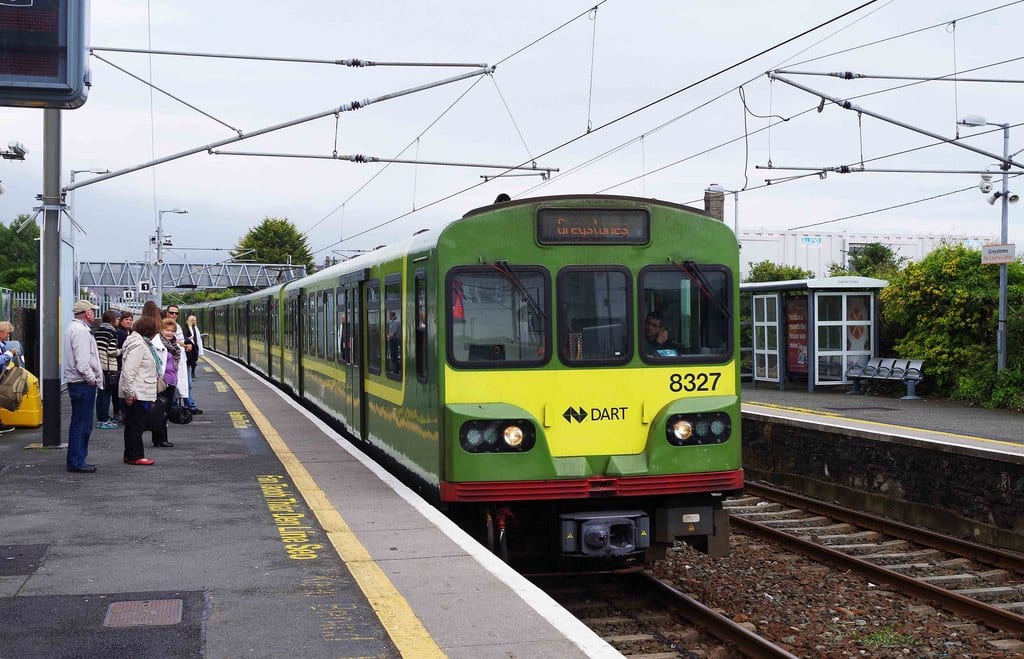
The journey begins at Dublin Connolly, the handsome Italianate terminus on the north side of the city, though most travellers pick the line up further along at Tara Street or Pearse, in the heart of Dublin. From here south to Greystones the trains are DART — the Dublin Area Rapid Transit, the city's green electric railway — and the ride is lovely from the start. The line swings down to the coast and runs along the edge of Dublin Bay, past Dún Laoghaire with its great granite harbour piers, and on beneath the wooded hill of Killiney, where Victorian villas look down on a curve of shingle so pretty it was nicknamed "the Bay of Naples of Ireland".
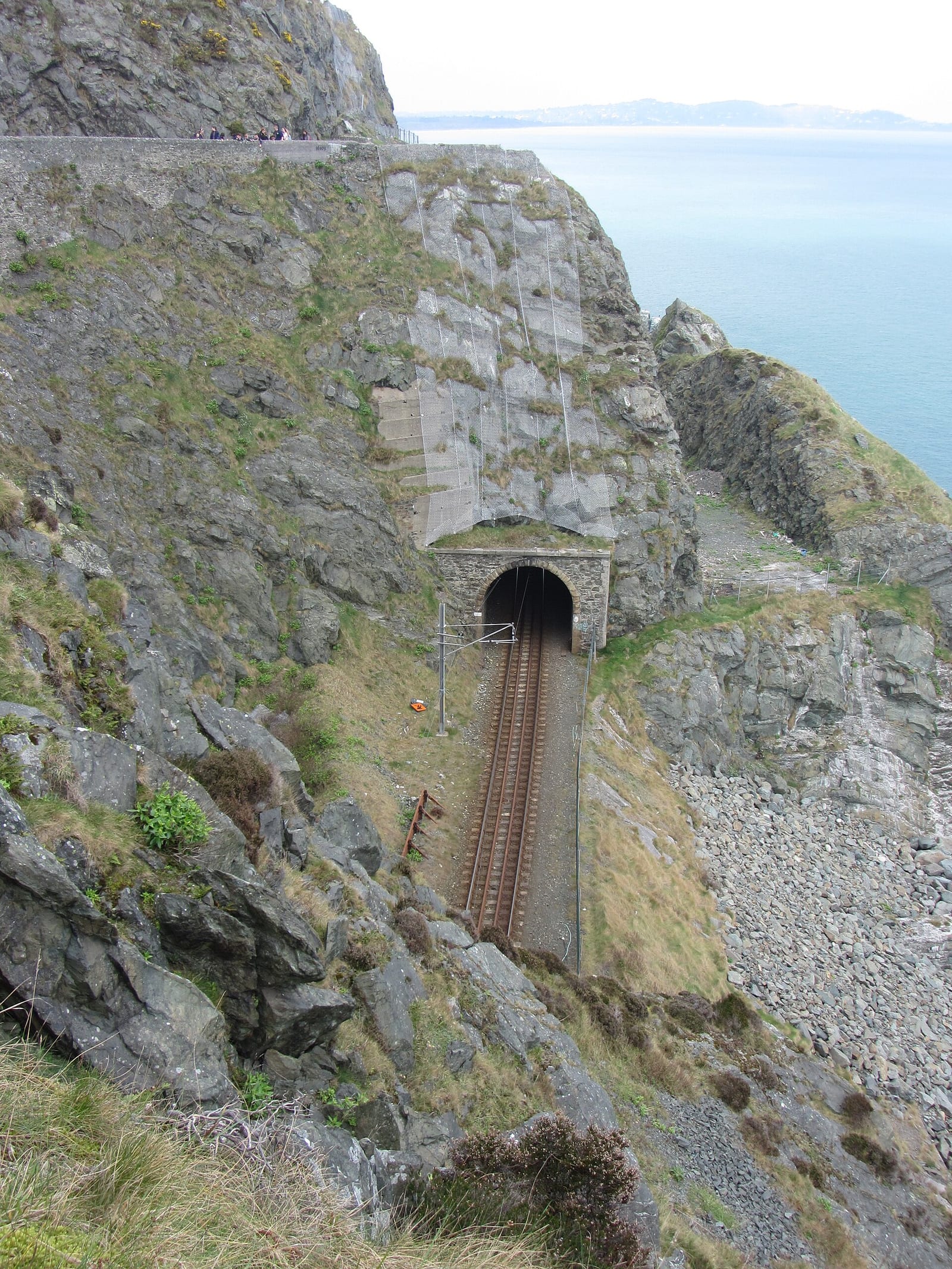
Then comes Bray, a cheerful old seaside resort, and beyond it the main event. The train slips behind the town, climbs a little, and swings out onto the face of Bray Head. For the next few minutes it is pure theatre: the carriage runs on a narrow shelf high above the water, plunging into short tunnels cut through the living rock and bursting out again into the light, the sea breaking on the boulders far below. There are four bores through the headland now — the survivors and successors of Brunel's originals, the Brabazon, the Brandy Hole and the Cable Rock — and between them the line hangs in the open air with the whole sweep of the coast laid out ahead.
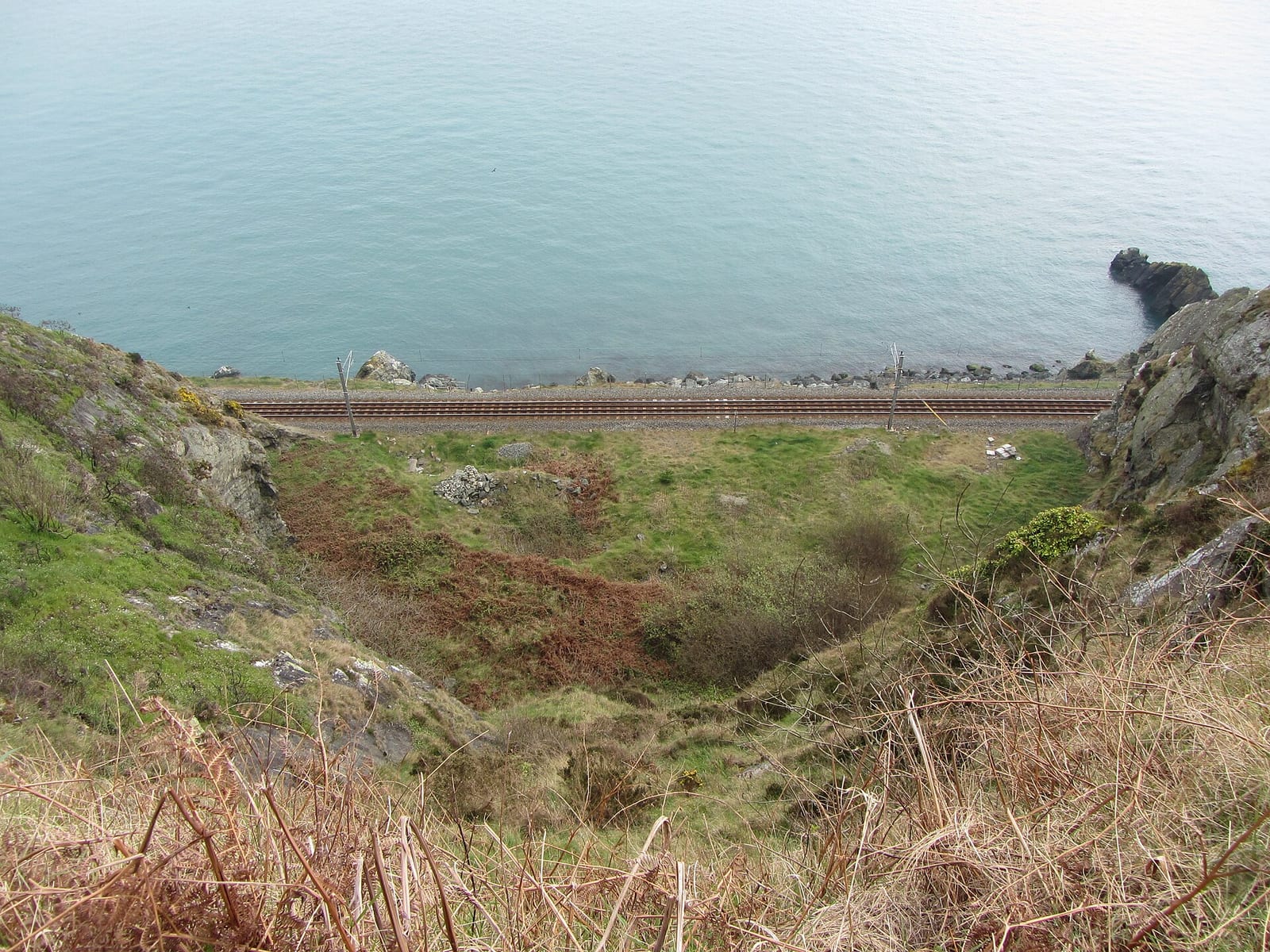
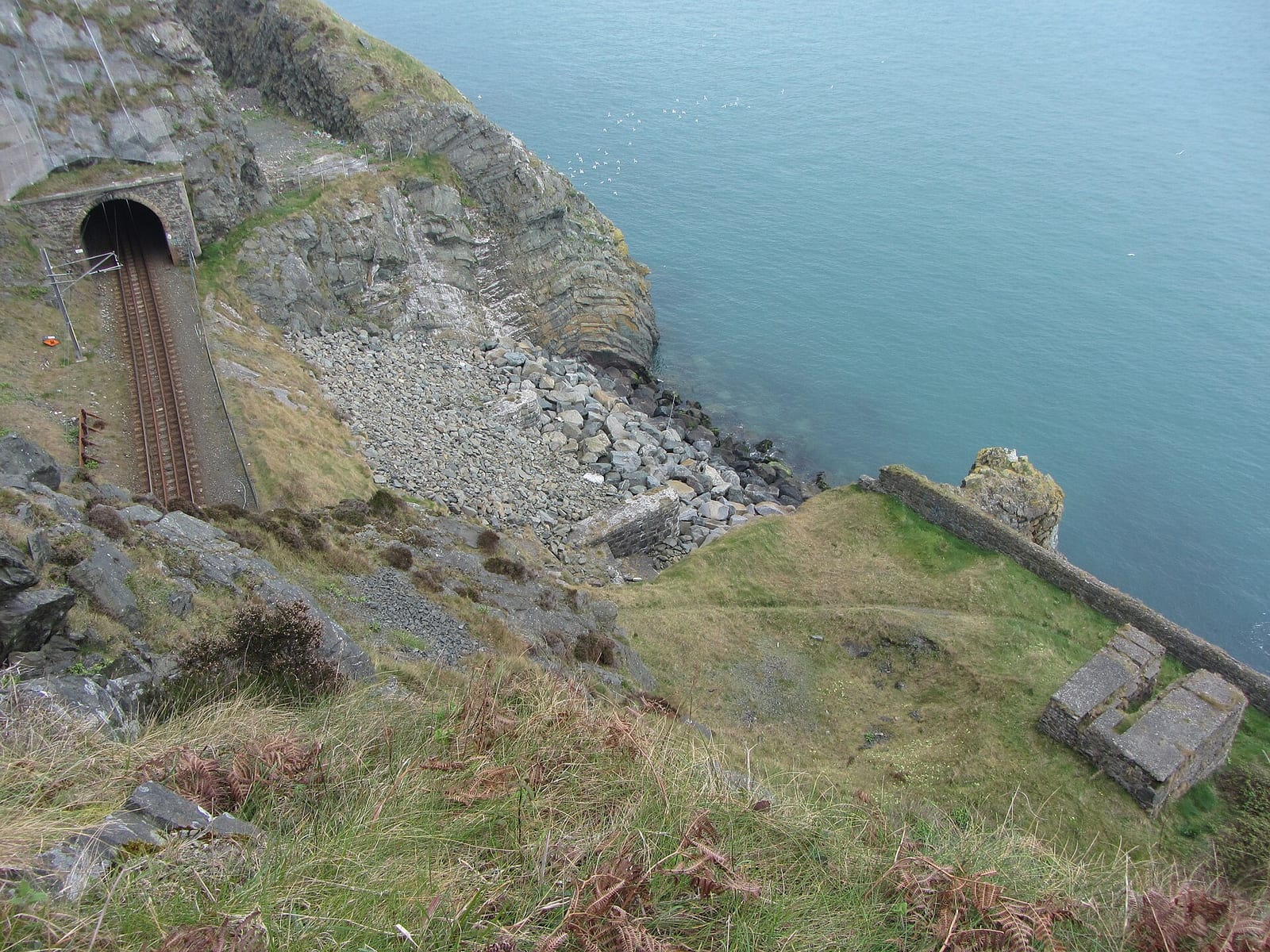
Look carefully on the seaward side and you can still spot the ghosts of Brunel's Folly: fragments of earlier alignment, a tunnel mouth going nowhere, the stumps of a bridge swept away in a storm. Each marks a place where the sea won and the railway had to retreat inland. The most drastic retreat came in the great diversion of 1912 to 1917, when a new tunnel over a thousand yards long — the longest on the whole line — was bored deep into the headland to carry the tracks safely behind the crumbling cliff.
The drama eases at Greystones, a bright commuter town that marks the end of the electric wires. Here the DART trains turn back, and the through service to Rosslare carries on as a single-track country railway, diesel-hauled, rolling south through gentler scenery. It calls at Wicklow, at Rathdrum on the edge of the wooded Vale of Avoca, and at the seaside town of Arklow, then runs down into County Wexford and the flat, sunlit farmland of the south-east. At Wexford town the train does something you rarely see any more — it trundles slowly along the quayside, on rails laid in the open beside the harbour road and the moored boats, with the water on one side and the town on the other, before continuing to its journey's end at Rosslare Europort, where the big ferries load for Wales and France. From the cliffs of Bray Head to the deck of a ship, in a single afternoon.
Along the route
Terence wiki / Wikimedia Commons · CC BY-SA 3.0The cliffs of Bray Head
For a few minutes the railway leaves the land behind and runs along the very edge of Bray Head, on a ledge cut into the cliff, diving through tunnels with nothing but waves below the window. By common consent the most spectacular stretch of railway in Ireland — for the price of an ordinary ticket.Gareth James / Wikimedia Commons · CC BY-SA 2.0Brunel's Folly
The line round the headland was engineered by Isambard Kingdom Brunel, who drove three tunnels through the rock in the 1850s. The sea would not leave it alone: storms swept away his viaducts and the route had to be rebuilt three times.瑞丽江的河水 / Wikimedia Commons · CC BY-SA 4.0Down to the sunny south-east
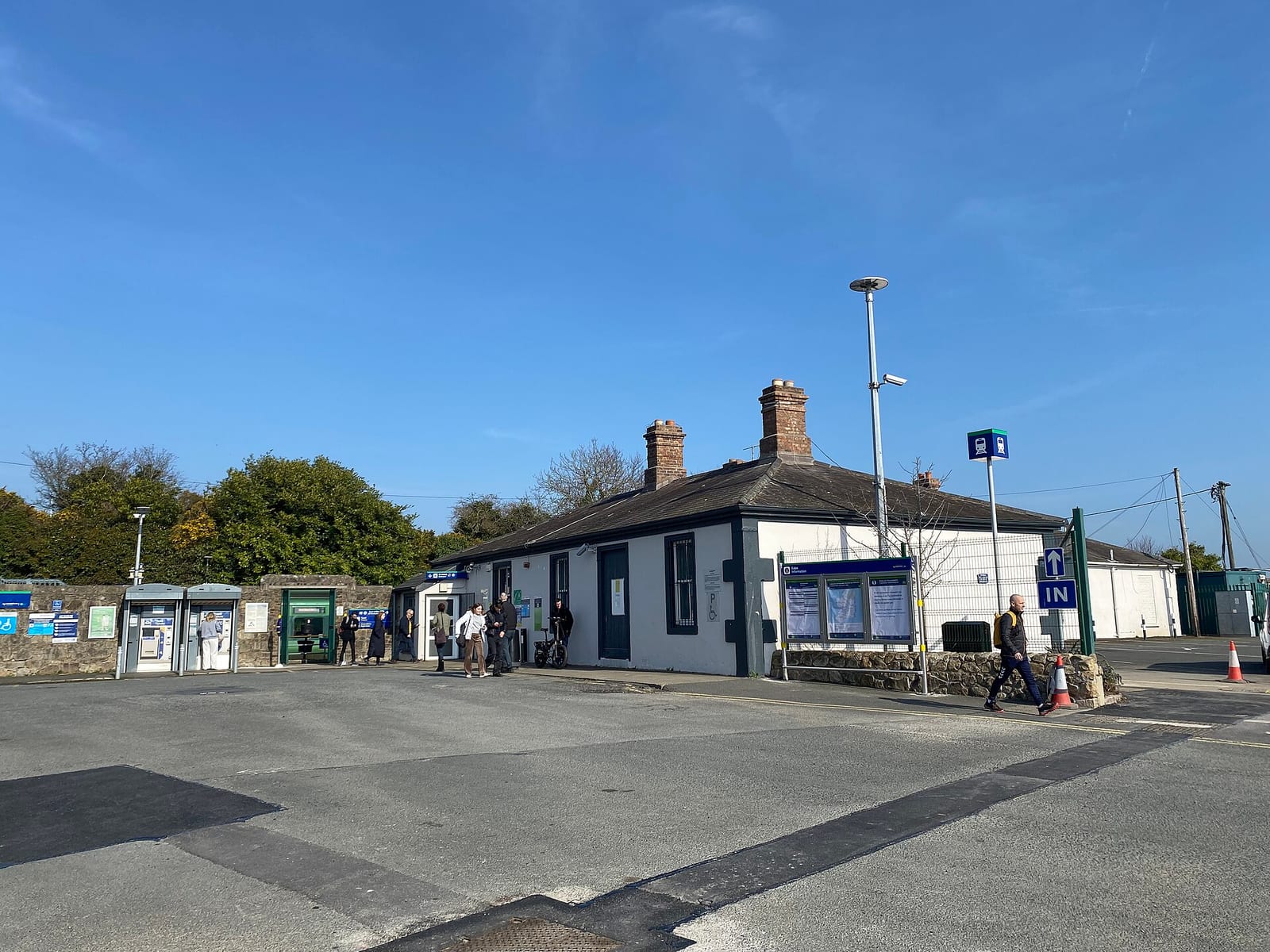
Beyond Greystones the crowds thin and the train becomes a proper country railway, on single track through Wicklow and Arklow to Wexford — where it runs in the open along the town's quayside — and on to the ferry port.A bit of history
Culture & experiences along the way
William Murphy / Wikimedia Commons · CC BY-SA 2.0Ride the DART along the bay
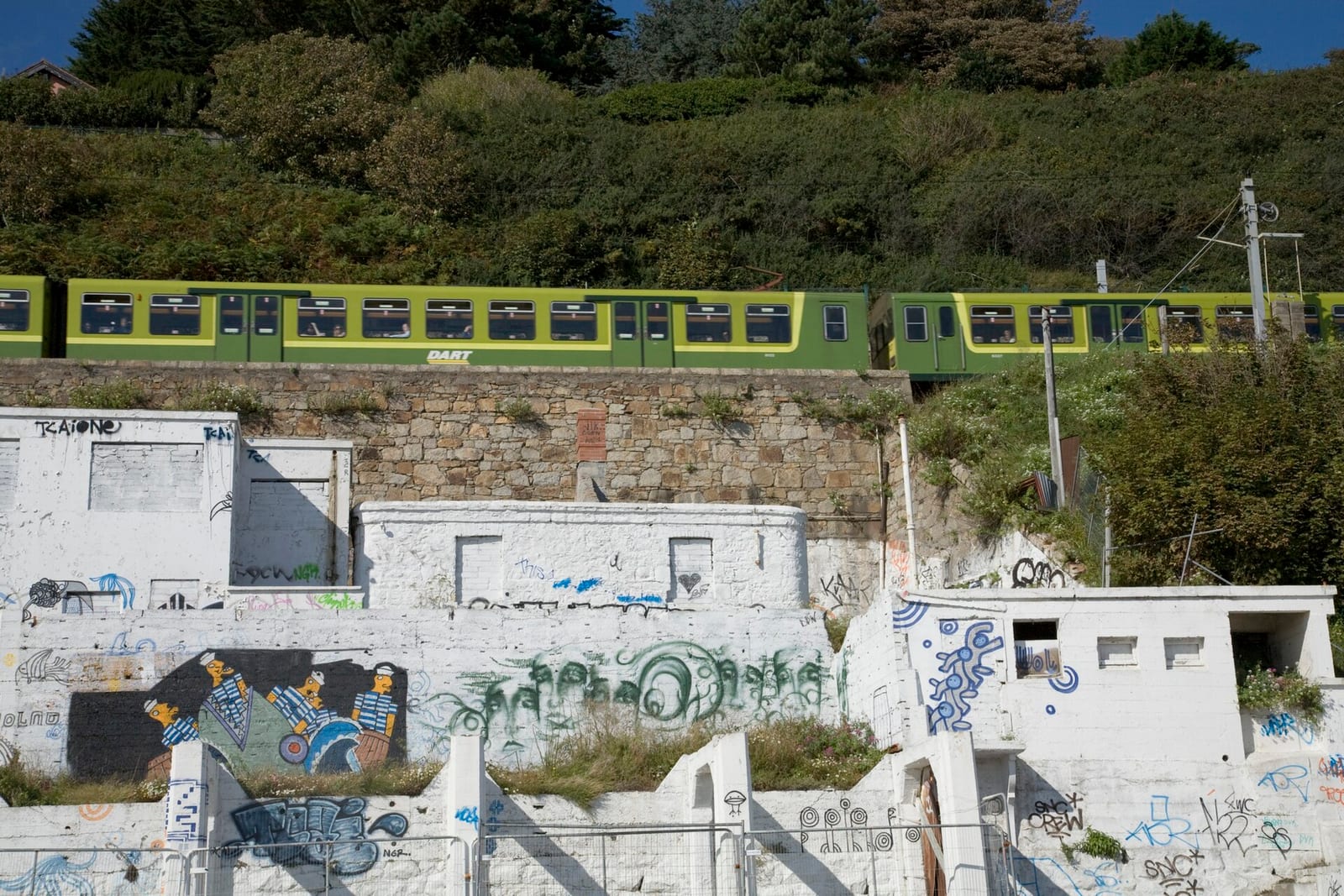
The Dublin end of the line is the DART — Dublin's electric coastal railway — and it is a joy in its own right. From the city it curves along the shore of Dublin Bay through Dún Laoghaire and beneath the villas of Killiney, "the Bay of Naples of Ireland", before reaching Bray. Turn-up-and-go, every few minutes, with the sea beside you the whole way.Gareth James / Wikimedia Commons · CC BY-SA 2.0Walk the Bray to Greystones cliff path
The famous cliff walk around Bray Head shadows the railway the whole way — about 7 kilometres of easy path between the seaside towns of Bray and Greystones, high above the tunnels and the track. Do the classic thing: take the train one way and walk back the other, watching the carriages thread the cliffs beneath your feet.Gareth James / Wikimedia Commons · CC BY-SA 2.0A railway still fighting the sea
Brunel's battle is not over. The coast here is eroding fast — Irish Rail says some stretches have lost 20 to 30 metres in a decade, and the Bray Head tunnel now sits about 30 metres further inland than it did a century ago. A major coastal-protection programme is under way to armour the line against rising seas and storms and keep the trains running for another hundred years.Timetables
The line carries two very different services, so how you ride it depends on how far south you are going.
To Bray Head, Bray and Greystones — the DART. The scenic cliff section is on the electrified commuter railway, and the DART runs it frequently all day: roughly every 10 minutes at peak and about every 20 minutes off-peak, from early morning until late evening, in each direction between Dublin (Connolly/Tara Street/Pearse) and Greystones. There is no need to plan around a timetable — turn up and go. Dublin to Bray takes about 40 minutes; Greystones, just beyond Bray Head, about 50–55 minutes.
All the way to Rosslare — the Intercity. Only a handful of longer-distance trains run the full length of the line to the ferry port each day, so these are worth planning around. The times below are the Monday–Friday through services (as of the timetable valid from December 2025):
| Dublin Connolly | Bray | Greystones | Wicklow | Rosslare Europort |
|---|---|---|---|---|
| 09:35 | 10:23 | 10:33 | 10:50 | 12:38 |
| 13:28 | 14:18 | 14:28 | 14:45 | 16:32 |
| 16:28 | 17:18 | 17:28 | 17:44 | 19:31 |
| 17:28 | 18:19 | 18:29 | 18:46 | 20:39 |
The end-to-end run takes about 3 hours. Northbound, trains leave Rosslare Europort for Dublin at roughly 05:35, 07:10, 12:50 and 17:55 on weekdays, timed in part to connect with the ferries. A reduced service runs on Saturdays and Sundays (typically three trains each way), and additional trains run the shorter Dublin–Gorey commuter section.
Always check the live times before you travel, as departures shift with the seasons and the ferry schedules.
Operator: Iarnród Éireann (Irish Rail) — irishrail.ie (opens in a new tab). Use the Journey Planner or the Dublin Connolly–Rosslare and DART route timetables for exact times.
Tickets
This is an everyday public railway, not a tourist special, which is the beauty of it: the finest coastal ride in Ireland costs no more than a normal fare. For the scenic section around Bray Head you want the DART, paid for most simply with a Leap card — tap on and tap off — or with a single from the machines or the Irish Rail app. A classic day out is the DART to Bray, the cliff path to Greystones, and the train back.
For the full run to Rosslare Europort you need an Intercity ticket on one of the through trains, cheaper booked in advance through Irish Rail. If you are heading for the ferries, check that the arrival lines up with the sailing. Cross-Dublin transfers to Heuston for trains west are easy, but allow time.
Book your tickets
DART & Commuter · Dublin to Bray & Greystones
The electric coastal railway
The frequent, turn-up-and-go way to reach the scenery: the DART runs along Dublin Bay from the city centre to Bray and Greystones every few minutes, taking in Killiney Bay and the approach to Bray Head. Pay as you go with a Leap card or buy a single from Irish Rail.
Book Tickets (opens in a new tab, on Iarnród Éireann (Irish Rail))via Iarnród Éireann (Irish Rail)Intercity · Dublin Connolly to Rosslare Europort
The full run down the south-east coast
The through service that carries on past Greystones around Bray Head and down the Wicklow and Wexford coast to the ferry port at Rosslare — a handful of trains a day, reserved or walk-up, booked through Irish Rail. Sit on the left leaving Dublin for the sea.
Book Tickets (opens in a new tab, on Iarnród Éireann (Irish Rail))via Iarnród Éireann (Irish Rail)Rail Passes
Interrail passes are valid. Irish Rail is in Interrail's table of included companies, with the DART and its InterCity trains both listed, so the whole run from Dublin to Rosslare Europort is covered by a one-country Interrail Ireland Pass or a Global Pass. Reservations on InterCity trains are optional, and can be made through Irish Rail.
Interrail also gives pass holders a discount on Irish Ferries and Stena Line, which matters at a ferry port.
For this journey alone, a pass is not worth buying. The DART to Bray is a commuter fare, and the run to Rosslare is cheaper booked in advance. A pass pays when the line is the first or last leg of a longer trip, arriving or leaving by ferry.
Checked October 2026 against interrail.com (opens in a new tab) and Interrail's Ireland page (opens in a new tab).
Places to Visit
The line strings together some of the most rewarding day trips within easy reach of Dublin, all of them reachable on the same ticket.
The DART covers the first four on its own, and an intercity ticket carries you the rest of the way south. If you only have one day, the classic is to ride out to Bray, walk the cliff path to Greystones and take the train home — but the Wicklow Mountains and the far south-east are what reward a second and a third.
 isol / Wikimedia Commons · CC BY-SA 3.0 · cropped
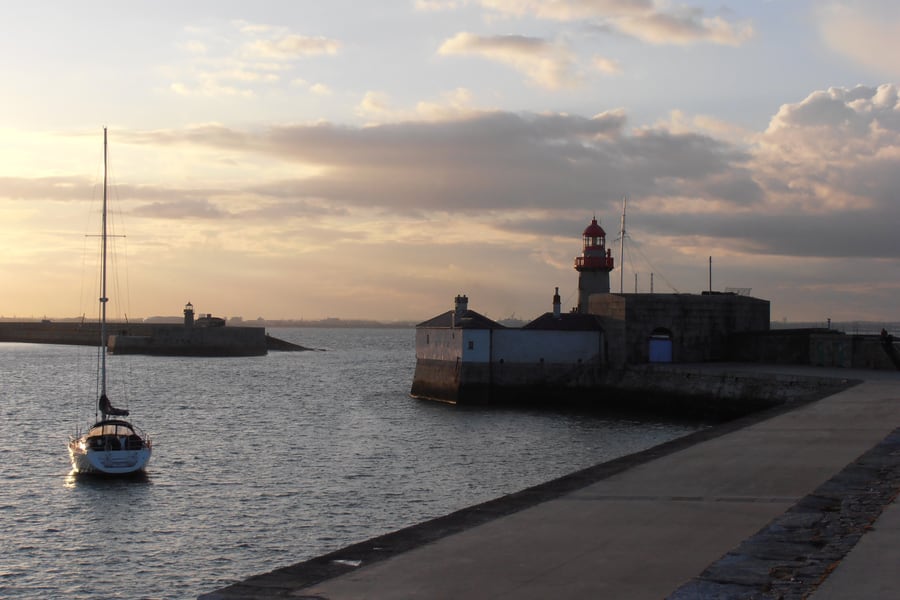
Dún Laoghaire
A grand Victorian harbour town on Dublin Bay. The harbour took from 1817 to 1859 to build, and its two granite arms — the East Pier at 3,500 feet, the West at 4,950 — are still the point of coming: walking them is a Dublin institution. The National Maritime Museum is in the old Mariners' Church, inland from the East Pier. Like Cobh, it dropped its royal name, Kingstown, in 1920.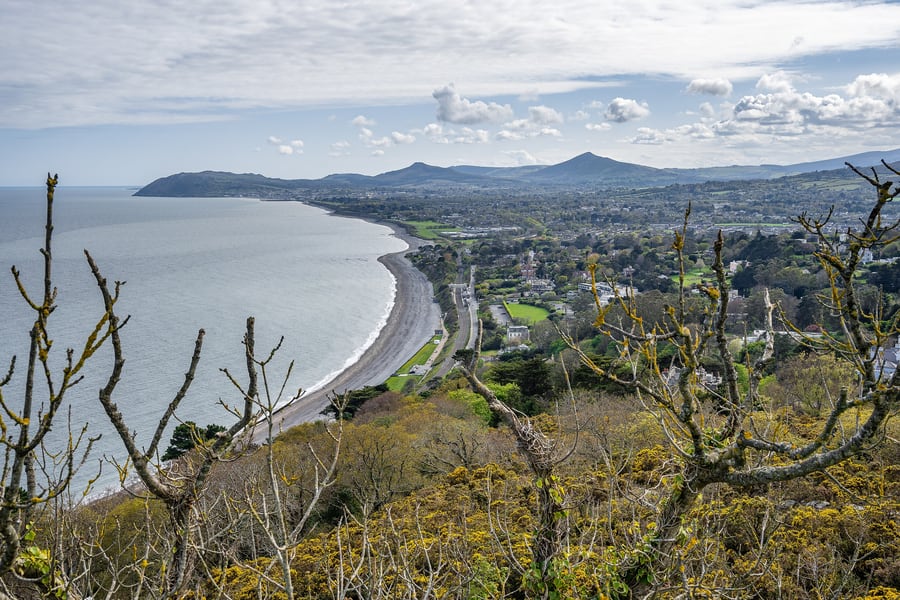 Denzillacey / Wikimedia Commons · CC BY-SA 4.0 · cropped
Killiney Hill
A short climb from Killiney or Dalkey station and you have one of the great views in Ireland: the whole sweep of Killiney Bay running south to Bray Head, with the Wicklow Mountains behind it. Somebody in the eighteenth century decided it looked like the Bay of Naples and the name stuck. Dalkey itself is a village of pubs and a small medieval castle, and worth an hour on the way back.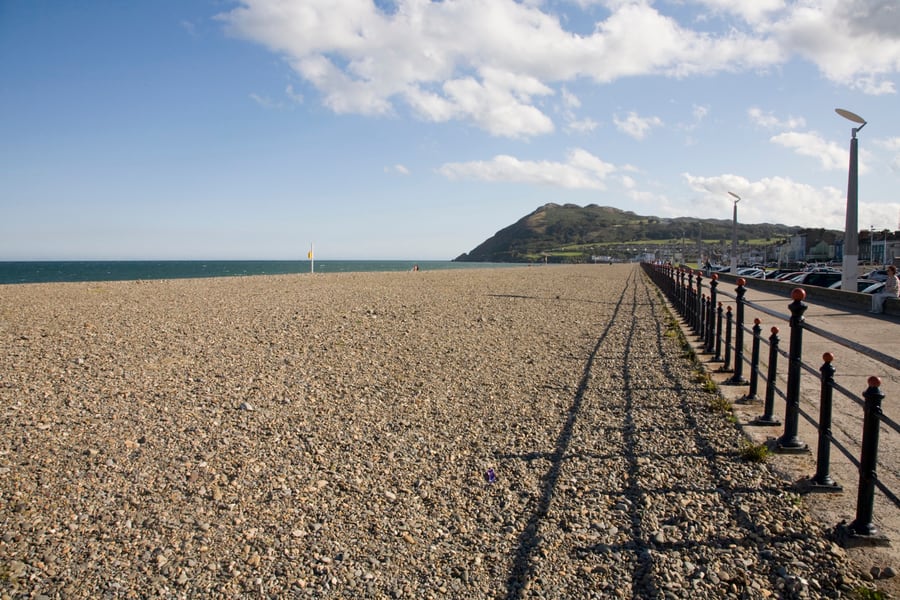 William Murphy / Wikimedia Commons · CC BY-SA 2.0 · cropped
Bray and the cliff walk
Bray is a lively old resort with a long shingle seafront under Bray Head. The cliff walk to Greystones — about 7 km, easy, well made, roughly two hours — shadows the railway the entire way, so you get the tunnels and the track from above and the sea below. Ride one way and walk the other; there is a station at each end and no need to double back.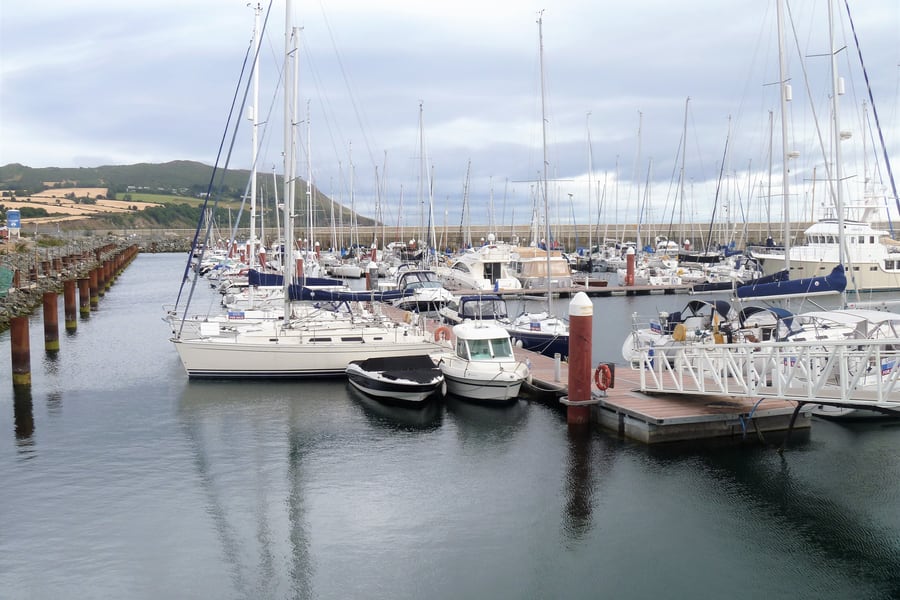 Michael Dibb / Geograph Britain and Ireland / Wikimedia Commons · CC BY-SA 2.0 · cropped
Greystones
A bright little seaside town at the southern end of the electrified line, with a harbour and marina, good beaches and a genuinely good crop of cafés and food shops. It is where the cliff walk deposits you, and it is a much better place to end a walk than to start one — lunch, a look at the boats, and the train home from a platform two minutes from the harbour.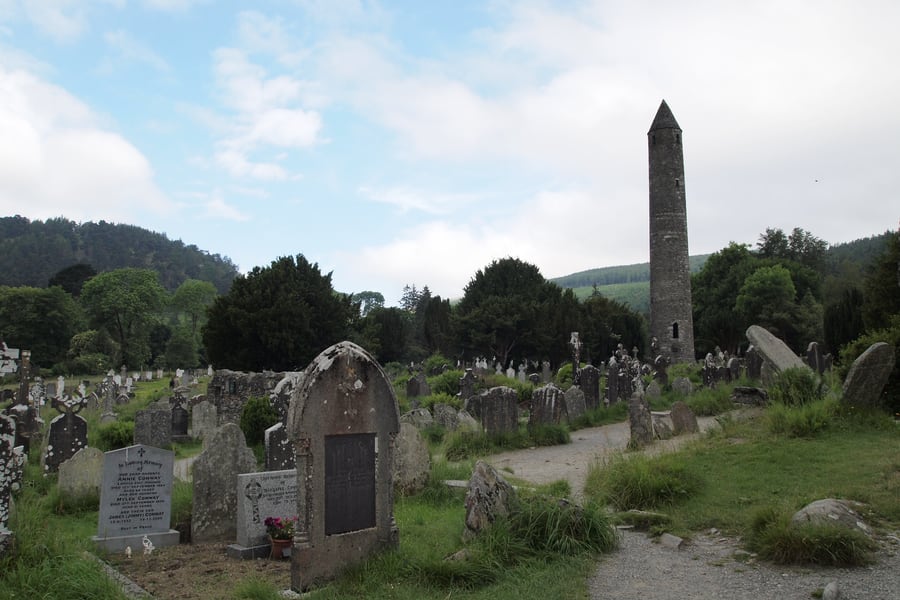 Brataffe / Wikimedia Commons · CC BY-SA 4.0 · cropped
Glendalough
Gleann Dá Loch, the valley of two lakes, where St Kevin founded a monastery in the 6th century. The 30-metre round tower still stands above a graveyard of leaning slabs, though the English burned the settlement in 1398. Rathdrum is the nearest station and you will need a bus or taxi from there — it is not a walk. Go early; the car parks fill.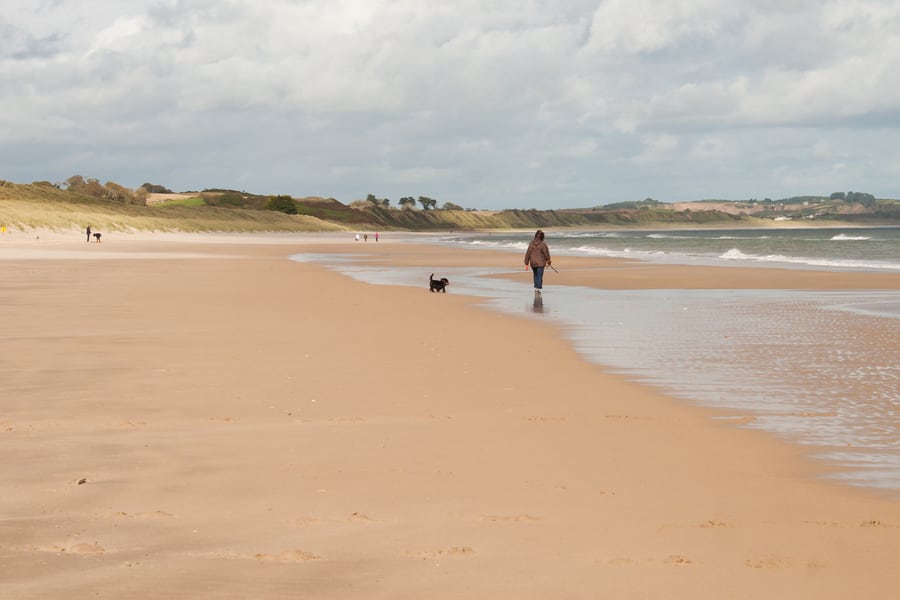 Andreas F. Borchert / Wikimedia Commons · CC BY-SA 4.0 · cropped
Wexford and the sunny south-east
Wexford town is a warren of narrow medieval lanes above its quays, famous out of all proportion for its opera festival. The reason to keep going, though, is the coast: this corner gets the warmest and driest weather in Ireland and some of its best beaches. Curracloe is the great one — miles of firm sand, and where Spielberg shot the D-Day landings in 1997.Where to Sleep
Because the whole line is an easy hop from Dublin, most travellers ride it as a day trip and stay in the city — but the coast towns make a lovely, quieter alternative, and there is a good spread of choice all the way south.
Dublin is the obvious base, with the largest range of hotels, guesthouses and hostels in the country and the DART on your doorstep. Staying near the coastal stations — around Sandymount, Blackrock or Dún Laoghaire — gives you the sea air and a short run into town.
Bray and Greystones both make relaxed seaside bases within the commuter belt: Bray has traditional seafront hotels and B&Bs beneath the Head, while Greystones has a handful of smart small hotels and guesthouses and a good food scene, perfect if you want to walk the cliff path at dawn or dusk.
Further south the choice turns to country hotels, farmhouse B&Bs and self-catering cottages. Wicklow town and the villages of the Vale of Avoca suit walkers heading for Glendalough, while Wexford and the resort villages of the south-east coast — Rosslare Strand among them — have beach hotels and guesthouses handy for the ferry.
We don't book accommodation, and we keep no affiliate hotel deals on this page — we would rather point you to the right sort of place and let you choose. For train times and connections to any of these towns, see the timetable above.
Questions or corrections
Planning this trip and stuck on something, or spotted a time, fare or detail that has changed? Send us a message about The Wicklow Coast Line. We read every one, and we update this page when something has changed.